Luis Valdez Claims the Spotlight in ‘American Pachuco’
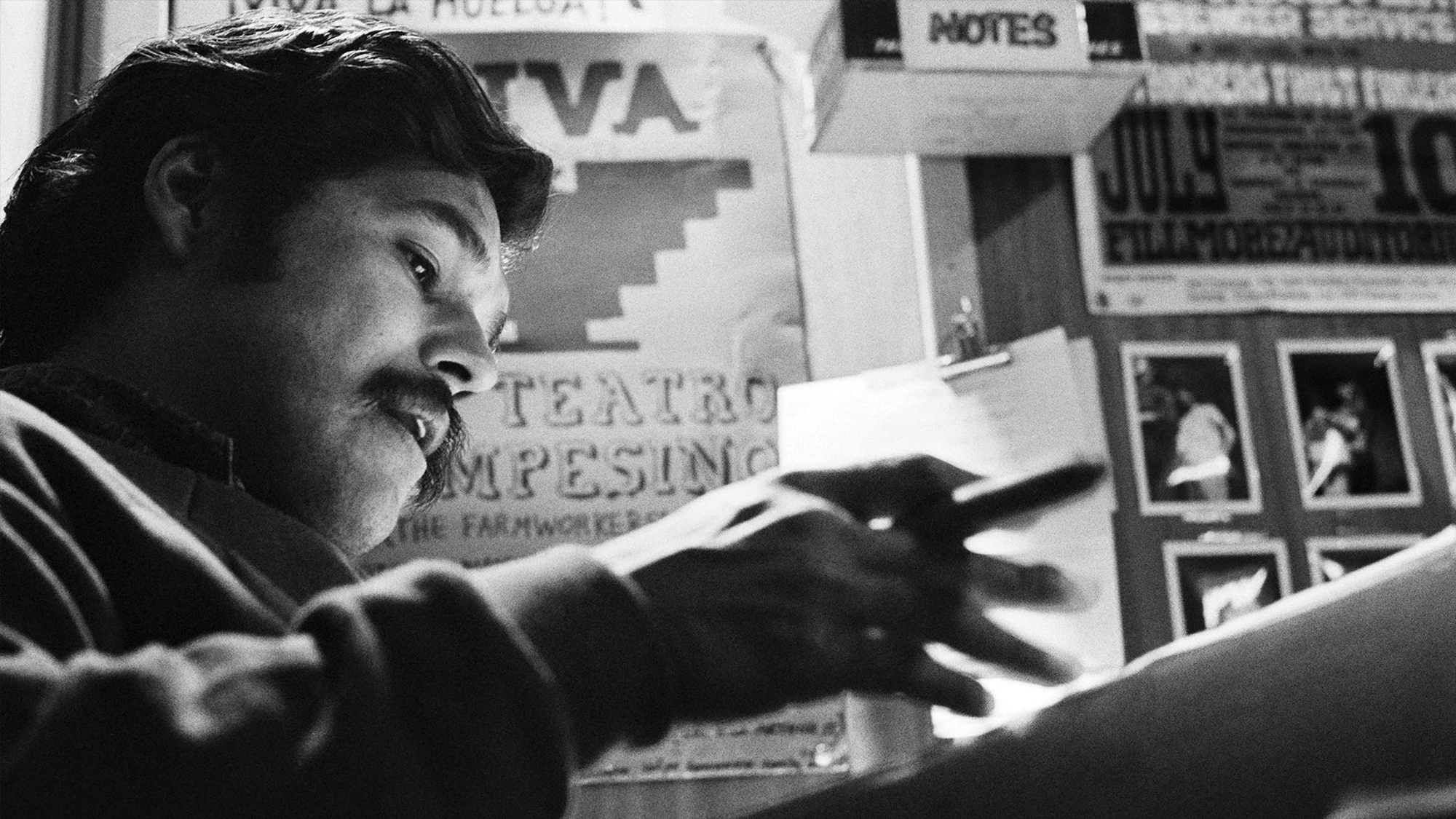
Luis Valdez was just a young boy when he landed his first theatrical role. Before he could join his classmates on stage, however, his family was evicted on short notice, and forced to move.
All these years later, Valdez, one of 10 children of California migrant farmworkers, still remembers the pain. He could have slipped down the hole of disappointment. Instead, he says, “It became the hungry mouth of my creativity.”
In David Alvarado’s crisply entertaining documentary American Pachuco: The Legend of Luis Valdez, ample justice is given to a gifted artist who transcended his circumstances and carved new trails. The film, which earlier this year won an Audience Award at Sundance, opens Friday, July 31 at the Roxie Theater with director David Alvarado and Valdez himself on hand.
The Delano, California-born Valdez wrote and directed plays for El Teatro Campesino (The Farm Workers Theatre), which he founded in his early 20s and led for decades. His major works include Zoot Suit (the first Chicano play on Broadway, later adapted into a film) and Corridos! Tales of Passion and Revolution, a hit at San Francisco’s Marines Memorial Theater in the early ’80s (and which Valdez adapted a few years later for PBS).
Valdez’s most widely seen work, however, is La Bamba, the 1987 biopic of Chicano rock ‘n’ roller Richie Valens that Valdez researched, wrote and directed. (Among its other lasting merits, the film also yielded Los Lobos’ hit cover of the title track.)
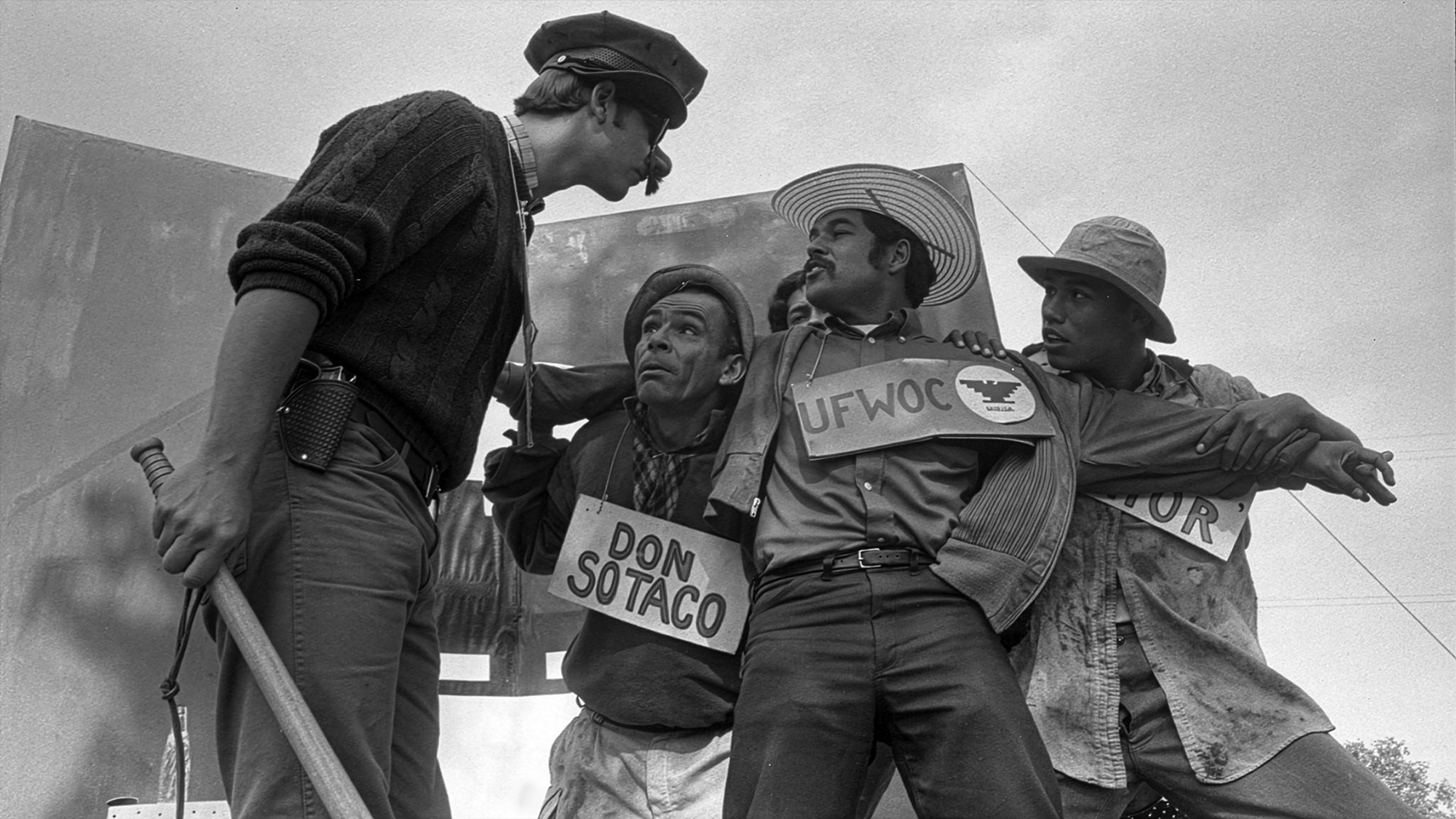
American Pachuco: The Legend of Luis Valdez employs two narrators. Valdez, sharp and jovial in his mid-80s, recalls his youthful stint with the San Francisco Mime Troupe before getting involved in the nascent National Farm Workers Association (NFWA) founded by Cesar Chavez in 1962. The Mime Troupe’s influence colors Valdez’s early plays like The Shrunken Head of Pancho Villa, which used absurdist comedy to depict the economic and social situation of Mexican and Mexican-American laborers and their families.
During the catalytic NFWA march to Sacramento in the spring of 1966, El Teatro Campesino performed in many places along the route, attracting new participants to the cause. Chavez, meanwhile, decided he needed organizers and activists for NFWA’s expanding national campaign more than he needed actors, and Valdez and his cohorts set off on their own, making San Juan Bautista their base.
David Alvarado illustrates this splendid oral history with acres of compelling archival footage — the young Valdez, sporting an omnipresent Che Guevara-esque cigar, is charming and charismatic. Alvarado bolsters this through interviews with NFWA luminary Dolores Huerta, as well as Valdez’s brother and wife, who performed with El Teatro Campesino.
Alvarado also makes an unexpected and rather risky choice. He invites a second narrator, a streetwise commentator, to this genially mannered affair: a pachuco, similar to the swaggering L.A. protagonist of Zoot Suit, a 1940s “street cat with style.”
For that play, Valdez drew on grim, forgotten events in Southern California history, namely the Sleepy Lagoon murder that preceded the Zoot Suit Riots of 1943. The riots consisted of servicemen and sailors attacking Mexican-American youths and ripping off their clothes – their justification being that zoot suits used an excessive and “unpatriotic” amount of fabric during wartime rationing.
It was blatant racism, of course. The zoot suit, in the ’40s and in Valdez’s play, was an expression of identity and style. It was adopted by guys whose parents worked menial jobs to make a better life for their kids. (Like the fieldwork of the ’60s and the stockyard labor of today, the jobs were essential, arduous and largely performed by immigrants.)
This is the quintessential American phenomenon — children of immigrants navigating racist treatment on the slow path to assimilation. The zoot suiters of the ’40s, just like the newly minted Chicanos of the ’60s, were simply trying to make their way.
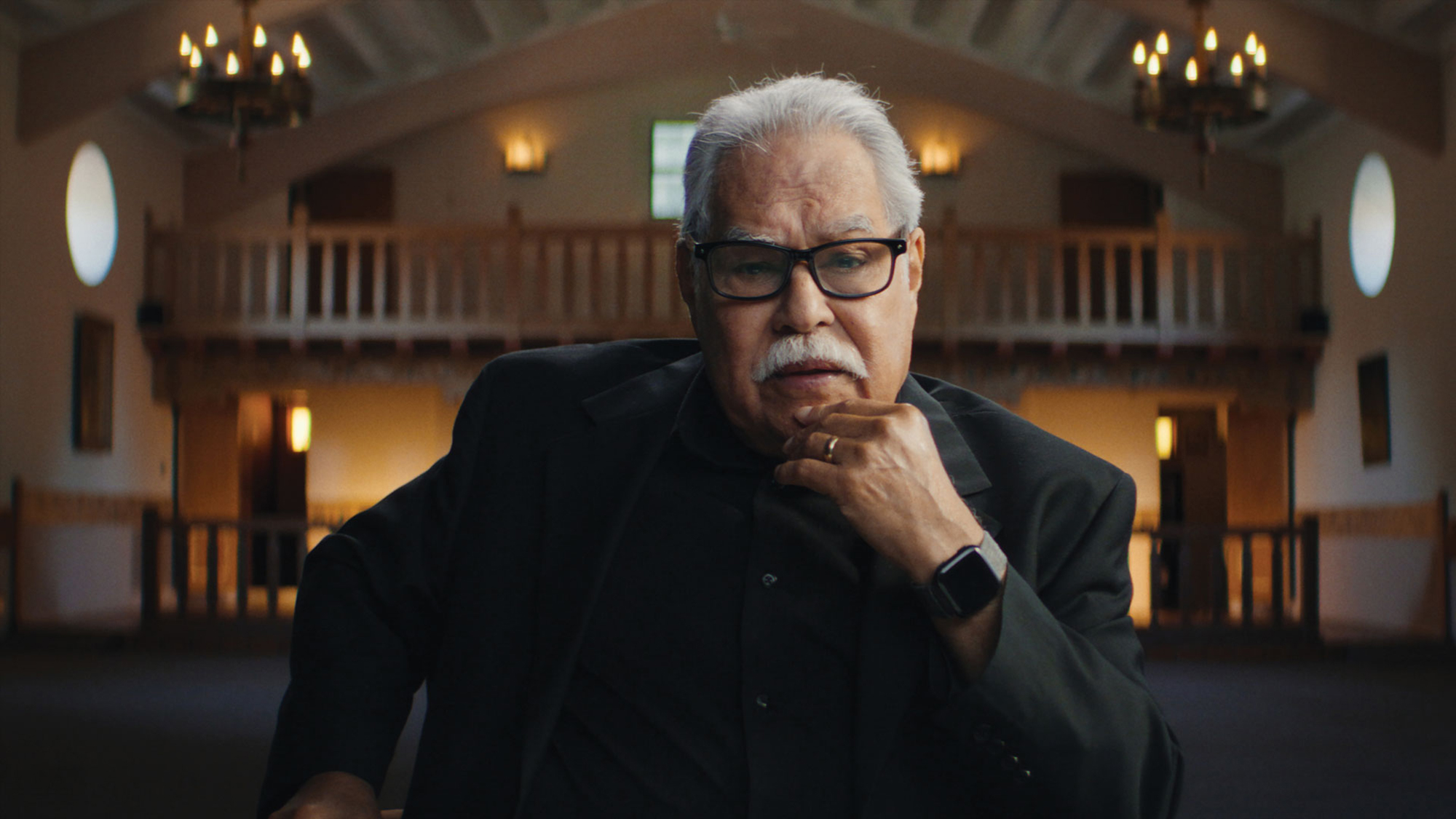
A recurring thread of American Pachuco is the divergent path of Luis Valdez’s older brother Frank, a science whiz who became an Air Force engineer. Frank believed that achieving the American dream was his ticket to burying and denying his roots as a child of farmworkers. No matter what he accomplished, though, the racism he encountered reminded him that many people saw him as Mexican, not American.
One of the functions of the documentary’s pachuco commentator (voiced by Zoot Suit star Edward James Olmos) is to mirror Valdez’s affection for knocking down the fourth wall separating the audience from the performers. His early plays included improvisation and audience participation. The protagonist of Zoot Suit famously addresses and confronts the audience directly.
By including the pachuco, I think Alvarado is nodding to Valdez’s sophistication as a writer and director. He was not only well-versed in the dynamics of agitprop and commedia del’arte, but in the theory and philosophy of theater. This intellectual component of Valdez’s practice — alluded to when the visionary director Peter Brook visits El Teatro Campesino — is downplayed in the documentary, as if it might distract us from the hard lessons of the fields and the streets.
The second half of American Pachuco walks us backstage for Valdez’s greatest hits, Zoot Suit and La Bamba. The L.A. triumph of Zoot Suit is the film’s highpoint, a moment of public celebration of Chicanos as well as of Valdez, while the New York reviewers’ failure to connect with the culture and language led to them criticizing what they couldn’t understand.
In the wake of the pachucos, Richie Valens emerged in the ’50s with, as one interviewee notes, “Different threads. Different beats. But he had the same swagger.” It’s fair to say that Luis Valdez got past his devastating childhood letdown the same way: through talent and swagger.
‘American Pachuco: The Legend of Luis Valdez’ opens Friday, July 31, at the Roxie Theater (3116 16th St., San Francisco). Following the 6:10 p.m. screening, Roberto Hernandez moderates a Q&A with Luis Valdez and filmmakers David Alvarado, Everett Katigbak and Lauren DeFilippo.
Further Q&As with Alvarado take place on Saturday, Aug. 1 at the Smith Rafael Film Center in San Rafael; Saturday and Sunday, Aug. 1 and 2, at Rialto Cinemas Elmwood in Berkeley; and Sunday, Aug. 2, again at the Roxie.