Orlando Smith’s Urgent Dispatches From San Quentin Arrive at SFMOMA
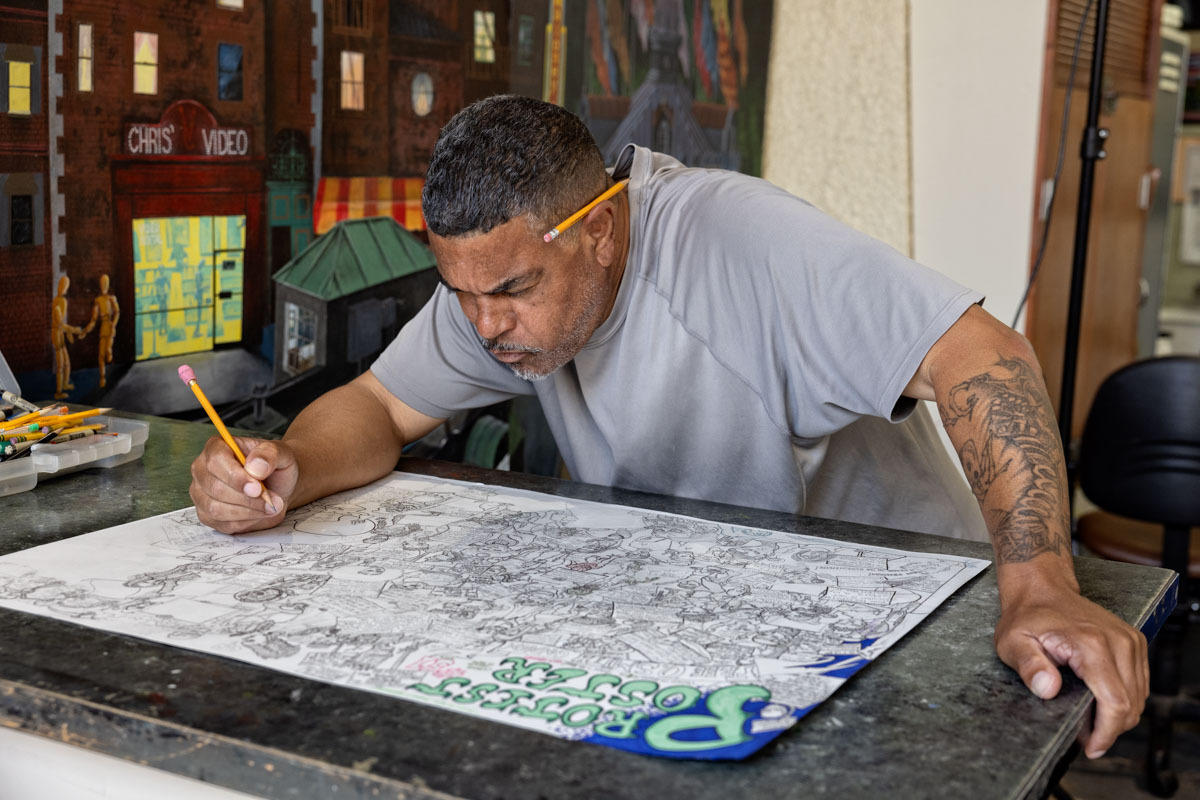
Orlando Smith is just starting to explain how he became an “artivist,” as his new exhibit at the San Francisco Museum of Modern Art is called, when a robotic voice cuts him off: “You have one minute left.”
Smith is an illustrator and visual journalist whose richly detailed drawings offer firsthand accounts from San Quentin State Prison, where he’s been a resident for 25 years. A member of the Society of Professional Journalists, he’s been published in the Columbia Journalism Review and has exhibited his art in dozens of galleries, universities and museums. O. Smith: Artivist at SFMOMA, opening to the public July 25, will be the museum’s first solo show by a currently incarcerated artist.
“When they said SFMOMA and a solo exhibit, man, it was mind blowing,” says Smith during a recent phone call, audibly still processing it. “It was just one of those achievements to where — especially in my position, right? I live in a concrete box, you know? So it brought to mind that whatever you work for and you work hard, you can achieve.”
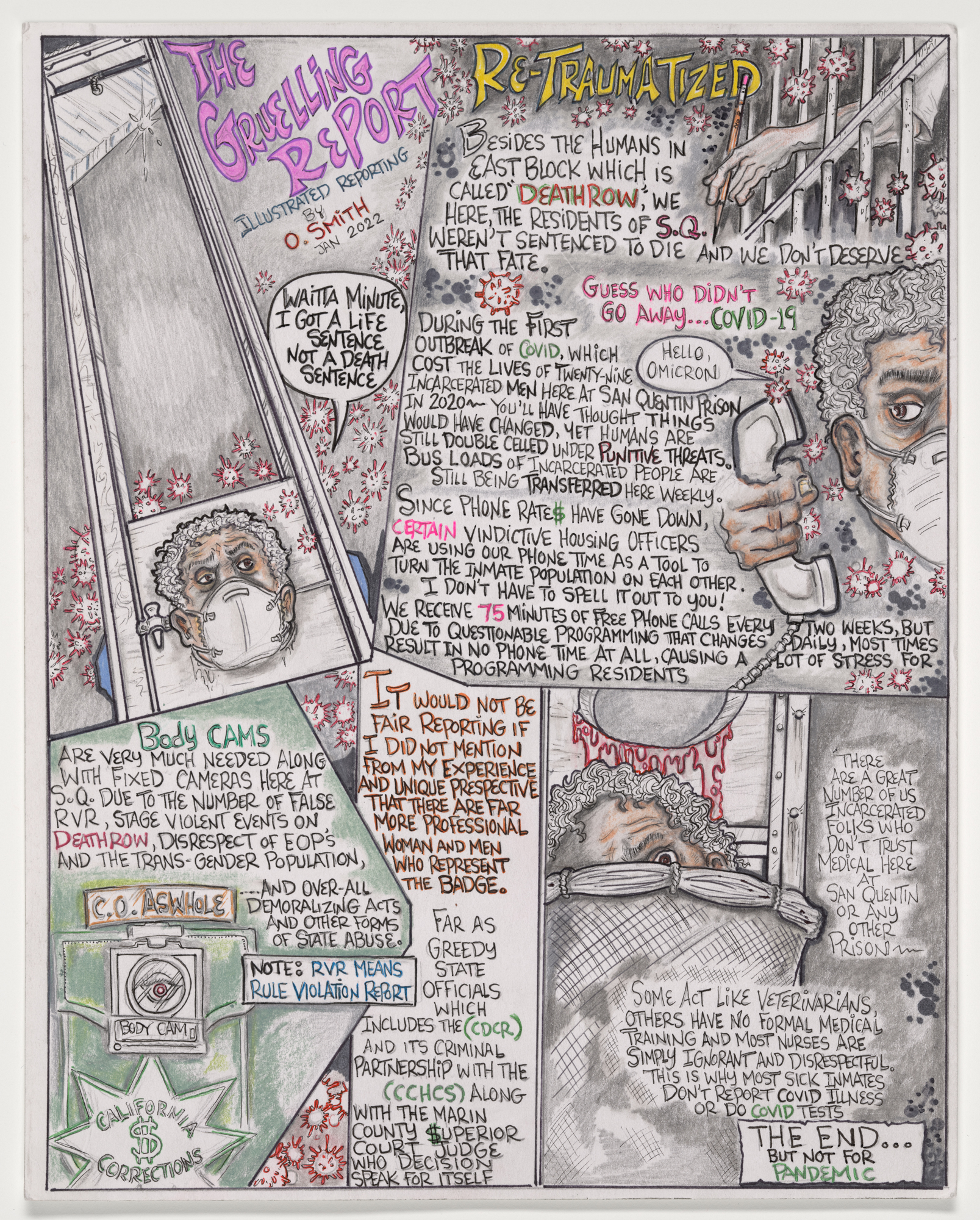
Smith was already a prolific graphic novelist and illustrator when he found his calling as a visual journalist at the onset of the COVID-19 pandemic. He watched panic over the virus spread through the overcrowded facility. By July 2020, with no vaccine yet available, 75% of San Quentin’s population had been infected.
Twenty-nine people died, and the prison went into a months-long lockdown. In a lawsuit, a judge ruled that California prison officials had inflicted cruel and unusual punishment.
“Whatever was hard for people out there, it was even crazier inside of a prison environment,” Smith recalls. “There was no way to really get down to the phones. We didn’t have tablets then.”
With no way to communicate with people on the outside, he put pen to paper. “I would just illustrate different stories, starting off with the routine of being locked down — housed in a double cell at that time, how stressful it was,” he says.
With chiseled linework and soft watercolor flourishes, he drew cramped cells and showers that made it impossible to socially distance, and illustrated officers flouting public health protocols. (With more than 20% of San Quentin’s population over the age of 55, many residents are immunocompromised.)
He sent his work to the Prison Journalism Project, and it was eventually published in over a dozen news outlets. “I felt I had to speak for people who didn’t have a platform,” Smith says.
Galleries and museums came calling. A piece of Smith’s was featured in the Oakland Museum of California’s Afrofuturism exhibit, which caught the eye of SFMOMA curator Nancy Lim.
“Ever since I first saw his work, it stayed with me,” Lim says. “He has such a rare clarity, a voice and conviction and this really rare combination of artistry and research. And I felt very compelled to see those works in concentration and density.”
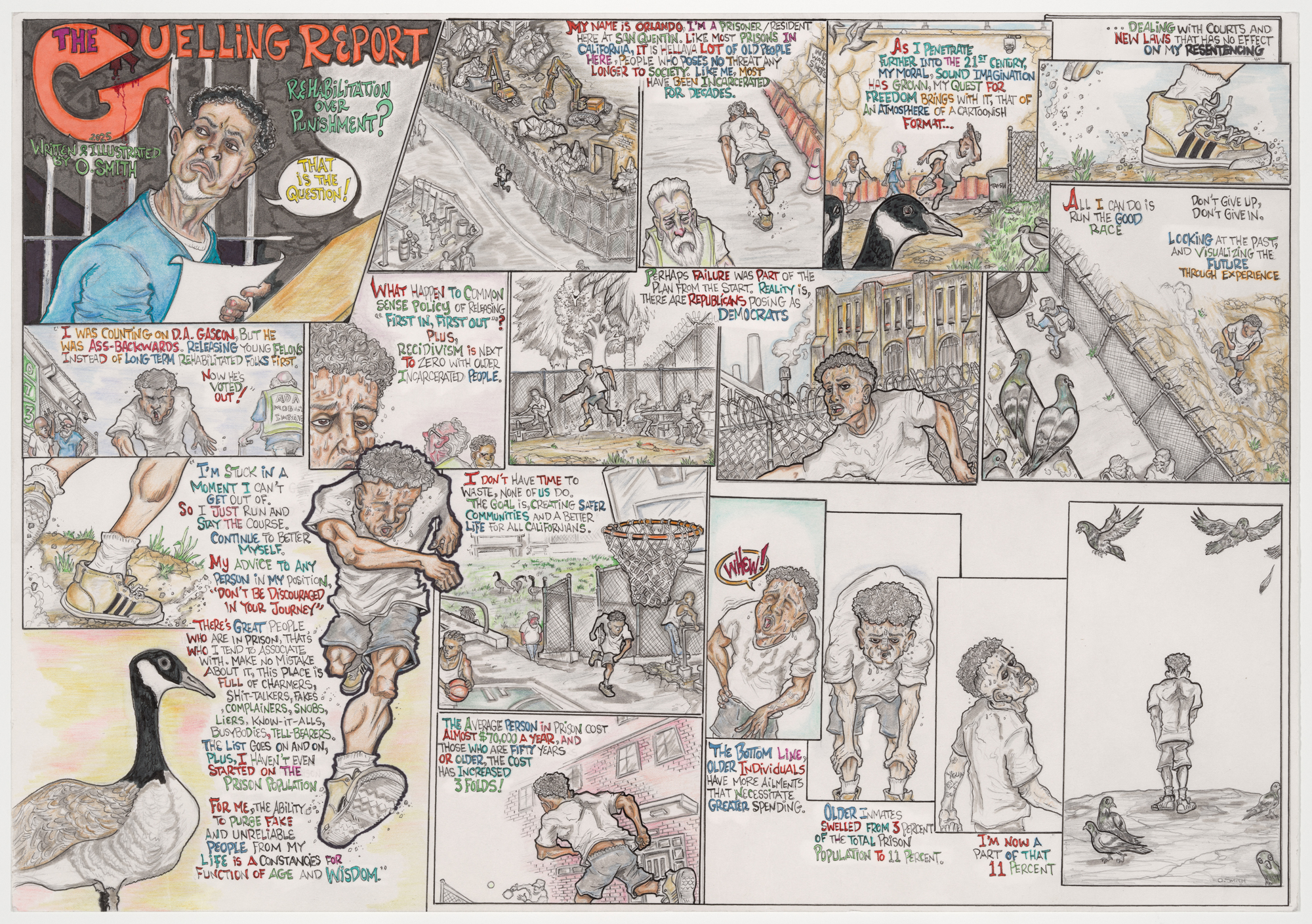
Four years later, Smith is not only getting his SFMOMA solo show, but the museum also acquired several of his pieces for its collection. His more recent work shines a light on San Quentin’s aging population. Research suggests that people over 55 — many of them sentenced for crimes they committed decades ago — have an extremely low recidivism rate, and prison reform advocates argue that they no longer pose a threat to public safety.
“Look, you have to understand that people do change and they change for the better if you give them that opportunity,” Smith says.
Now in his late 50s, Smith counts himself among that group. He’s been in prison since 1999 for robberies he committed as a young man; under California’s three-strikes law, he was sentenced to 250 years in prison. Rahsaan Thomas, whose nonprofit Empowerment Avenue helped organize the SFMOMA exhibit, says punishments like these don’t make society safer.
“California gives out life sentences like candy, and yet somebody’s still gonna get robbed today,” says Thomas, who once served time at San Quentin himself. “What works is making people feel like they’re part of the community. Economic empowerment.”
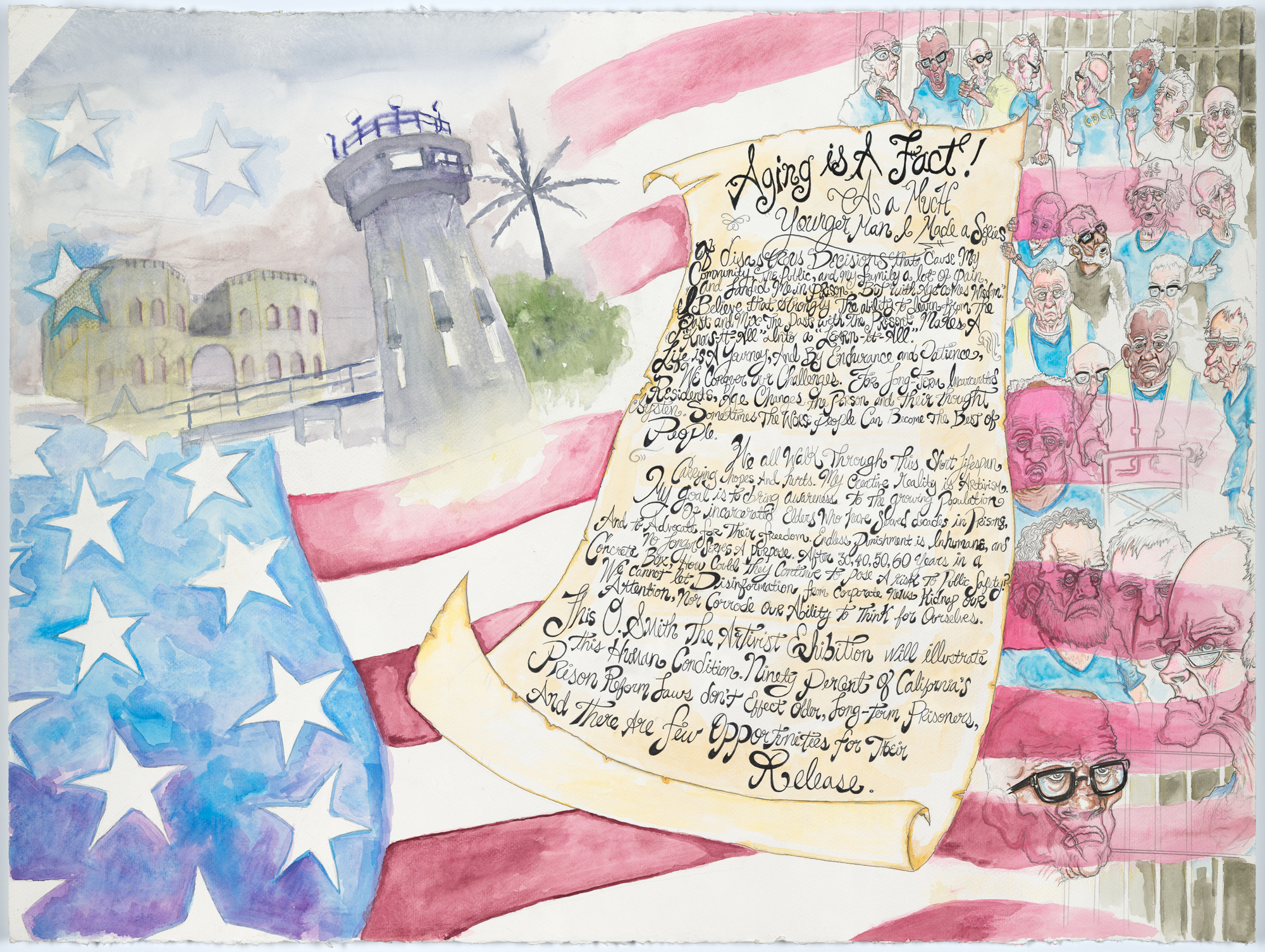
In some of Smith’s comics, he opens up about his personal evolution from the young man he once was. Now he dedicates his time to serving others, both as a journalist and as an arts educator inside San Quentin. He’s contributed protest posters to social justice organizations like the Ella Baker Center and used his art to raise money for breast cancer treatment. A Change.org petition calling for his commutation has collected over 1,000 signatures.
“Orlando has no place in prison,” says Christine Lashaw, who directs Empowerment Avenue’s Visual Arts for Liberation program.
With his exhibit poised to reach thousands of SFMOMA visitors during its year-long run, Lashaw hopes O. Smith: Artivist will challenge people’s assumptions about mass incarceration.
“When you hear artists telling their own stories and sharing a perspective that has not been in the dominant narrative, then it connects people,” she says. “And that shifts the narrative in the mainstream.”
‘O Smith: Artivist’ is on view at the San Francisco Museum of Modern Art (151 3rd St., San Francisco) July 25, 2026–June 20, 2027.