Speaking Out
PROFILE OF A TRANSGENDER MEDIA ACTIVIST
Shelly Prevost is changing the public's image of her community.
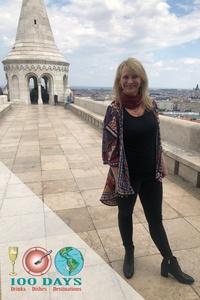
When Shelly Prevost learned about the killing of Newark, California, Transgender teen Gwen Araujo, the tragedy resonated with her as a neighbor, a parent and a Transgender person herself. An organizer of the annual San Jose Transgender Day of Remembrance dedicated to Transgender victims of violence, Prevost had already been active in anti-hate work. But Araujo's killing motivated her to become even more involved. She joined the organizing efforts of Not in Newark, a group of concerned residents, and met with local media outlets in an attempt to raise public awareness about Transgender issues. Still frustrated by the lack of fair and accurate media portrayals of Transgender people, the computer scientist decided to get training in video production herself. She has been documenting the events around Araujo's killing and plans to produce her own documentary. Not In Our Town, Northern California producer Kelly Whalen sat down with Prevost to talk about her media activism and challenges for the Transgender community.
When did you first learn about Gwen Araujo's death?
I was going through the newspaper and I saw an article; it was about a "man dressed as a woman." That's very typical of how a Transgender person is described. The media and the police departments don't know the vocabulary, so it usually is "man dressed as a woman." So we fear that, because usually it means one of us, and we're a pretty small community ... Anytime somebody like this dies, we know it could have been any one of us. That's a scary thing.
What was your reaction when you found out who the victim was and the circumstances of the crime?
When I heard about Gwen's murder -- I have a 17-year-old daughter almost the same age as Gwen, and my worst nightmare is something happening to my kids. My heart just went out to Sylvia [Guerrero, Gwen's mother]. And I was so devastated, because there was another young Transgender person, Alina Barragan, who died in San Jose [in 1999] under similar circumstances. So when I read about this, one of the feelings I had was, here it happened again, the same kind of circumstances, and most likely going to continue to happen. I was really devastated and really saddened [by] the fact that I didn't see anything changing. ... It was the same thing over and over again.
The other part that bothered me was the sheer brutality of [the crime] and the length of time it occurred over and the number of people involved. You'd kind of understand if one person lost control and did something, but [it was] a whole party full of people, and nobody was strong enough to say "no." Any one of those people could have stopped it, and nobody did. What makes people like that? How is that OK in our society? And that's part of my media activism; these are the kinds of questions I want to ask.
How do you think the greater community of Newark dealt with Gwen Araujo's killing?
I think a lot of people were really shocked. Newark is not a violent place. People feel safe there, and to have so many people partake in such a violent murder really shocked the town, I think. It really shook people. How could this happen? I think people really showed their support by attending the funeral, having marches and rallies. ...
I think also it resonated with a lot of parents of children that are different. You could have a child who is obese or handicapped and they are picked on and I think parents understood this at a very gut level [and thought], "This could have been my child, because my child is different."
Some community members have expressed disagreement with the prosecution's assertion that Gwen's killing was a hate crime. They say Gwen was being deceptive. How do you respond to this attitude?
That shows the acceptance of the paradigm -- that we are pretending, that we are trying to fool people, that we are deceiving -- rather than look at it as we do: that this is just the natural expression of our gender. This is who we are. We're just going about our lives and trying to be happy and authentic. And when you violently react to somebody when you find out that they're Transgender, that's usually symptomatic of hatred. The basis of that hatred is usually found in how they were raised and how they were taught through their lifetime, and they just exploded. [The young men who attacked Gwen] exploded. And with better communication about what's really happening, they could have responded much better, I think.
Why do you think this argument of deception surfaces in so many cases in which Transgender people are victims of violence?
Well, if you think about it, Hollywood has portrayed Transgender people as always deceiving, always psychotic and crazy. It's been a favorite thing for Hollywood to go to the Transgender as the bad guy in the movie. And so you don't have to spend a lot of time on the setup. Unfortunately, when the public is always seeing this or seeing the Jerry Springer show, where they have subtitles on there like "He's really a guy and is going to tell his boyfriend he's a man," it sets the tone for people to believe that kind of stuff. ... And I'm fairly certain that the accused murderers felt this way, that it was OK [to think], this is just a Transgender person who is deceiving them, fooling them, and they felt self-righteous about what they did.
We have no voice. The people who are being killed have no voice in the media.
What was your personal experience of transitioning from male to female like?
I've known all my life that I was Transgender. ... When I was growing up, I talked to the priest about it, and the priest said, "You can choose; you don't have to be this way." He didn't know what Transgender was. ...As I grew older, my issues of Transgenderness grew stronger and stronger. It got harder and harder ... so at some point, it really got to be a crisis, and I had to make a decision about what to do.
When you go to a transitional therapist, they'll tell you to be prepared to lose your job, your family situation, your financial situation, your church. Every support system that you usually have for you -- you are going to lose all of them. And I did. Six months after I transitioned, I didn't have a job. I didn't have my family. They all stopped speaking with me and wouldn't associate with me. My church turned their back on me. I was renting a bedroom in a house. My financial situation, when I addressed financial needs for surgery and things like that, pretty much took away my savings. So, yeah, all that came true.
And I was devastated. Of all that stuff, I could give up my house, my car. But I needed my kids. And that was really hard. [At first] they refused to address me as Shelly or Michelle. They were told that if they accepted that they would lose their dad. Well, they loved their dad, and they didn't want to lose him.
That was the worst thing that ever happened to me in my life. So I just held on and kept trying to be there for them. I kept sending them birthday cards; I kept talking to them, and finally, after a while, they started calling. Over time they got to know me. They got to understand me. Fortunately, it's been almost six years since I've transitioned, and we've rebuilt those bridges. The relationship isn't the same, but it's good. It's very close.
You've participated in the community group Not in Newark, which has targeted the city and area schools for reform on Transgender issues. What are the biggest challenges for Transgender youth in the schools?
[Not in Newark] did a survey [of students at Newark Memorial High School] and found that discrimination was rampant -- that Gay, Lesbian and Transgender youth experience it on a daily basis at that high school.
A 15-year-old coming to a teacher and asking to be called a different name or pronoun is going to run into a problem. Because it's not the legal name in the school records, that teacher is very likely not going to risk their job in order to stand up for a Transgender youth. And that's very problematic for acceptance in the rest of the student body. Secondly, she'll have no place to go to the bathroom. Sometimes schools set up a separate bathroom for her to go and use, but that still segregates her, makes her feel different.
When the [schools] understand our needs better, I think they will be able to respond to it better. I really believe that they want to change. It's just a matter of committing to it and doing the hard work to make that change.
What do you hope to achieve in your media work?
I want to stop the hatred, the violence and the killing of Transgender people. I think in my videos, I have my own voice and I really understand the issues. I know how people are treated, and what I'm trying to do is change America. And that's a pretty formidable goal. But it's exciting. I want to make a difference. And I really believe in America. I know this country doesn't tolerate discrimination, and what it really takes is education. When people learn about the issues, they will not discriminate. I've watched other groups -- African Americans, women, Gays and Lesbians -- and I've seen America respond in a very positive way. And I want to see this country respond the same way to Transgender people.
RESOURCES AND SUPPORT ORGANIZATIONS FOR THE TRANSGENDER COMMUNITY AND THEIR FAMILIES
Transgender Day of Remembrance
http://www.rememberingourdead.org/day/
The Transgender Day of Remembrance, observed annually in November, memorializes those who were killed by anti-Transgender hatred or prejudice. Sparked by the 1998 unsolved murder of Boston Transgender Rita Hester, the event has inspired memorials in dozens of cities around the world.
Transgender San Francisco
http://www.tgsf.org/
Transgender San Francisco (TGSF) sponsors a variety of programs, including monthly socials, an annual cotillion, monthly educational seminars, a telephone hotline, a newsletter and a speakers' bureau.
TransBay
http://www.transbay.org/
A monthly social group for Transgender people in the San Francisco Bay Area, TransBay also hosts a Web site with information and contacts for local Transgender support services.
TransFamily
http://www.transfamily.org/
A support group for Transgendered and Transsexual people, their parents, partners, children, other family members, friends, and supportive others, TransFamily provides referrals, literature and telephone information on all Transgender issues.
PLFAG Transgender Network
http://www.youth-guard.org/pflag-tnet/
In 2002, the Parents, Families and Friends of Lesbians and Gays Transgender Network (TNET) became the first special affiliate of PFLAG (Parents, Families and Friends of Lesbians and Gays), recognized as having the same privileges and responsibilities as PFLAG chapters. TNET focuses specifically on promoting the health and well-being of Transgendered persons, their families and their friends, and provides resources to PFLAG chapters and to the organization's national office.