KQED Curriculum Bank

Search or browse KQED Education Network's library of lesson plans, educator guides and student activities inspired by programming from KQED television, radio and interactive.

Trainings and Events

hands with books

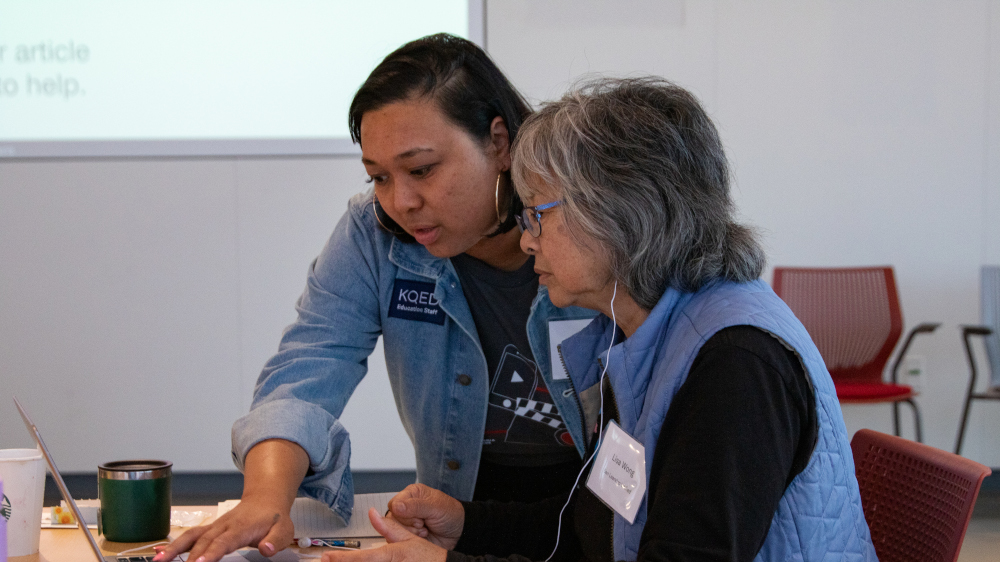
Find out about and sign up for trainings and events to enhance your professional practice.

More from KQED

Educators

Engage your learners with high quality, content standards-aligned KQED multimedia and curricula integrating 21st century literacies. Join with other Bay Area educators in trainings and events designed to support your use of these resources.

Discover the delicate balance of the kelp forest ecosystem. Students write narratives about the kelp forest in the accompanying lesson “Imagine a Kelp Forest” from Jean-Michel Cousteau: Ocean Adventures.

blogging students

Featured Lesson Plan:

Welcome to the Blogosphere

Now that the election is over, encourage students to stay involved with issues of importance to them. In this PBS Teachers lesson plan, students create their own blogs and multimedia content.

Andy Warhol

Featured Event:

Andy Warhol and Music

Did you know that Warhol designed 46 album covers, and was a pioneer in light and sound shows? Educators are invited to explore Warhol's influence on the music industry in a workshop at the de Young on Fri, Feb 20.

 
Resources by Content Area
spark logo
Arts

KQED's resources for arts educators highlight local artists of all disciplines and may be used to develop arts curricula, create arts assessment rubrics, and deepen students' experience of art.

hohkraum closeup
Science

Generate interest in Science and stimulate students' imagination with KQED's free standards-aligned science education resources.

soldier portrait
Social Studies - Language Arts

Bring an array of voices and histories to your students with KQED training and curricular resources for Social Studies and Language Arts teachers.

smiling young man
Post Secondary Education

KQED offers an array of trainings and resources for bringing the principles of media literacy into the curriculum for novice and veteran educators and instructors in adult schools, community colleges, and universities.

kid looks up
PBS.org/Teachers

Multimedia resources and professional development for America's preK-12 educators from PBS.

 
Integrating Media and Technology Into Your Teaching
girl with camera
Digital Media Center

The place to explore, create and showcase media for and by the community.

human body
Teachers' Domain

A database of local and national multimedia resources based on popular PBS programming.

wall of tv screens
Media Literacy

Foster independent thinking and 21st century literacy skills with KQED Media Literacy resources.

Learn more: EdServices@kqed.org, 800.723.3566

Blog: learning.now @ PBS Teachers
  • Education Reform and the Freedom to Mod

    Last month, I asked readers to give me their thoughts on what school reform truly looks like, so I could begin a conversation on the topic that was to take place at the Educon 2.1 conference in Philadelphia. Both online and in person, I heard a range of thoughtful perspectives - and students were always at the center of it.

  • What Does School Reform Look Like?

    This weekend, I’ll be moderating a discussion at the second annual EduCon conference in which we tackle the question, “What does school reform look like?” It’s such a big topic that no discussion panel could ever capture the full scope of it. So in the spirit of the conversational nature of the EduCon conference, let’s start talking about it now.

  • Students Use Social Media to Cover the Inauguration

    A group of students from Massachusetts will make the journey to DC to take part in President-elect Obama?s inauguration ceremony. And they?ll be more than mere spectators, as they?re going to use Web 2.0 tools to teach students back home about the experience.

Blog: media.infusion @ PBS Teachers
  • Four Weeks to a Flatter You

    Students Using Computers In 2005, Thomas Friedman’s book, The World Is Flat, sent a wake up call to the United States, with a message of particular urgency for educators: We must stop preparing our students for careers that will no longer exist for them in the 21st Century.

    Our country no longer occupies a role of dominance in the global economy, with little competition, as it has for the past 50 or so years. The playing field has been “flattened” due to such forces as the Internet, and any job that can be automated or outsourced will be.

    We are training our students for an unknown future, having little idea of what jobs will exist when they graduate college. What we do know is that they will have to compete globally and at a higher level than the market calls for now. Any job that can be automated or outsourced will be, and what will remain are those jobs/tasks that need specialization that can’t be found elsewhere or can only be done by a “localized touch,” rather than the long arm of overseas, cheaper labor.

    Welcome to the Flat World! Fasten your seatbelts: it’s going to be a bumpy ride.

Sponsored by

Sponsored by