KQED Food is your home for stories about all of the Bay Area’s vibrant food cultures: the taco truck, omakase counter, grocery co-op and driveway pupusa stand. Our news stories, essays, shows and features document the food scene’s latest trends and changemakers—and help guide you to your next delicious meal.
Latest Stories
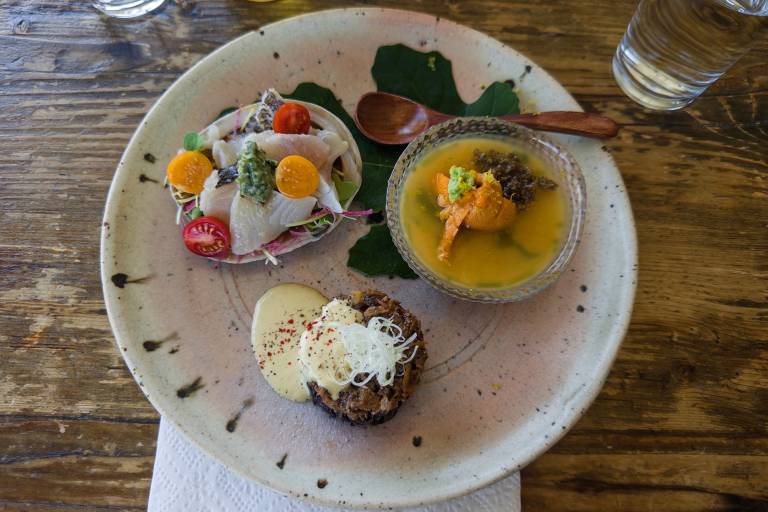
The Fanciest Japanese Pop-Up in Oakland You Haven’t Heard Of
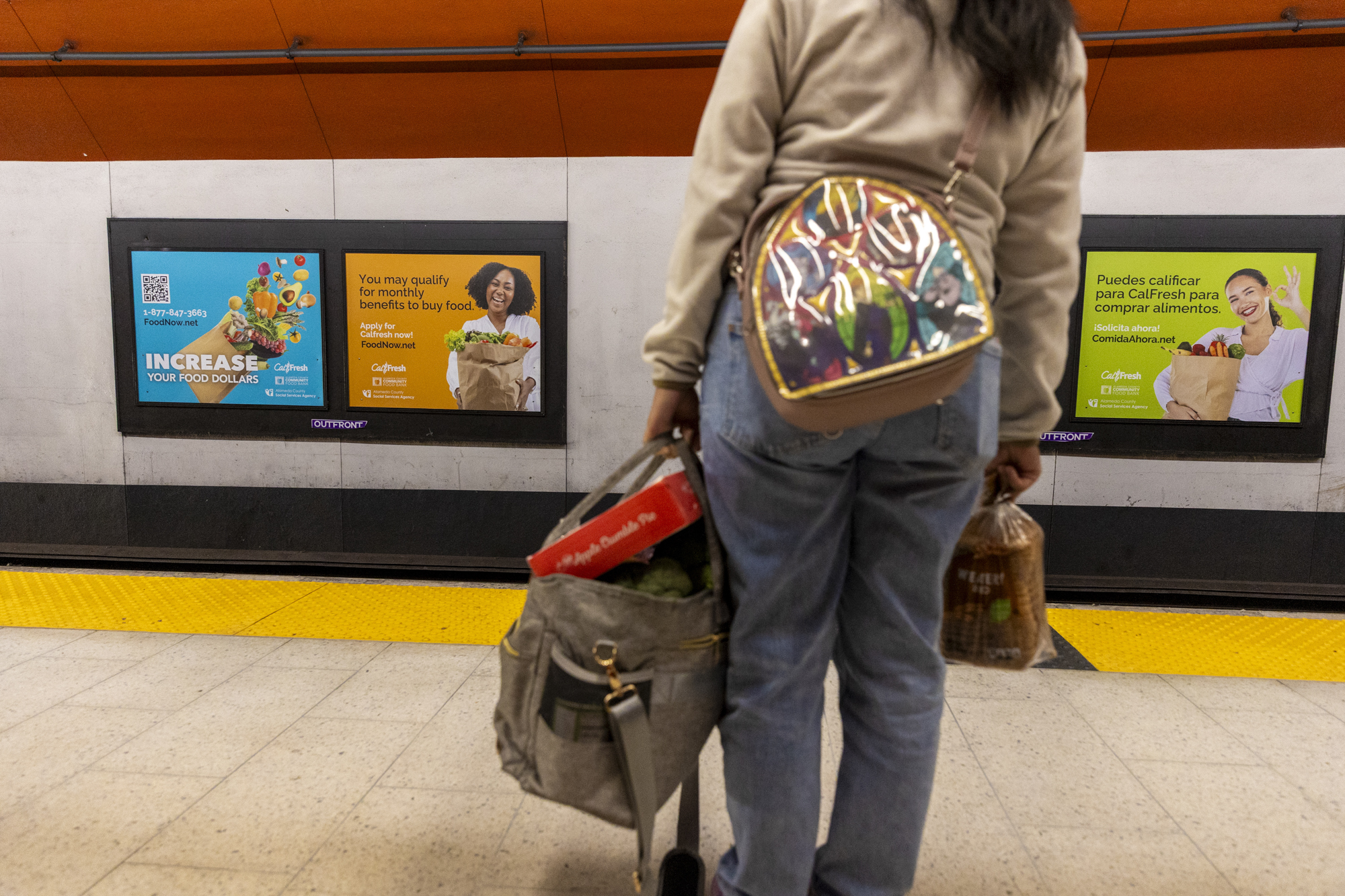
On CalFresh? You Can Once Again Get $60 of Free Fruits and Vegetables Monthly — for a Limited Time
After a Devastating Fire, Oakland’s Only Puerto Rican Restaurant Returns to Its Roots
San Francisco Supervisors Push to Legalize Home Kitchens
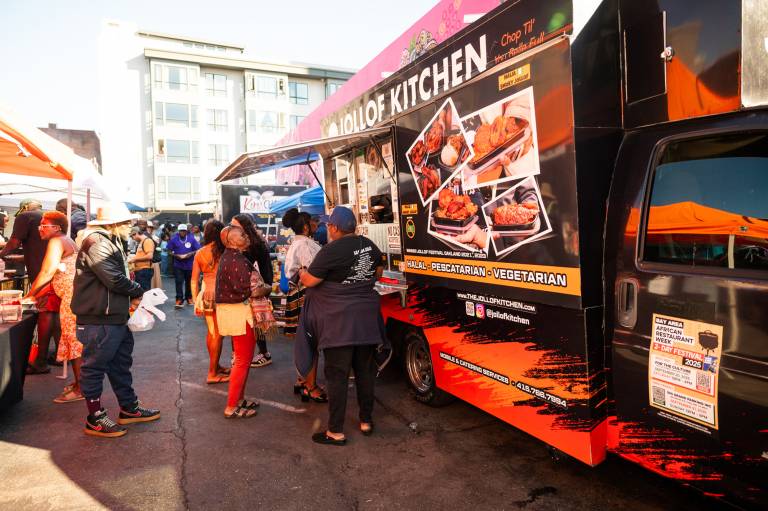
This Year’s African Restaurant Week Shines a Spotlight On Lesser-Known Dishes
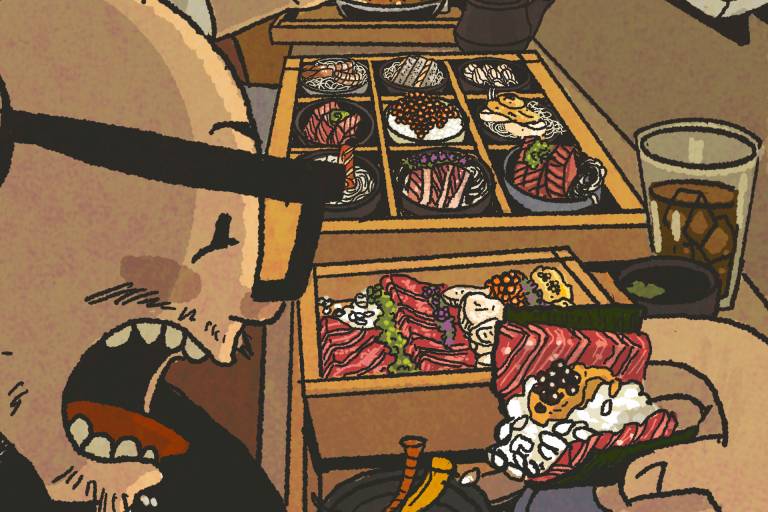
Nobuya Brings Elegant Late-Night Sushi Boxes to the East Bay Suburbs
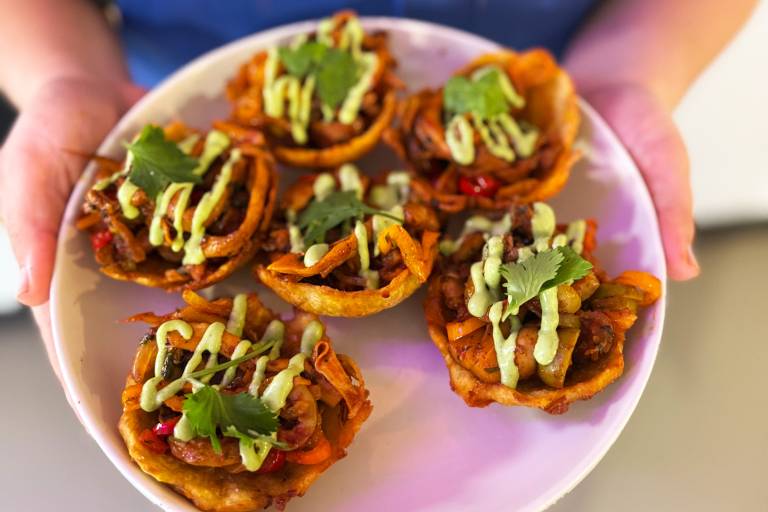
A New Pop-Up Is the Bay Area’s Tastiest Panamanian Secret
T-Pain’s Coming to Golden Gate Park Thanks to This BBQ-Filled Party
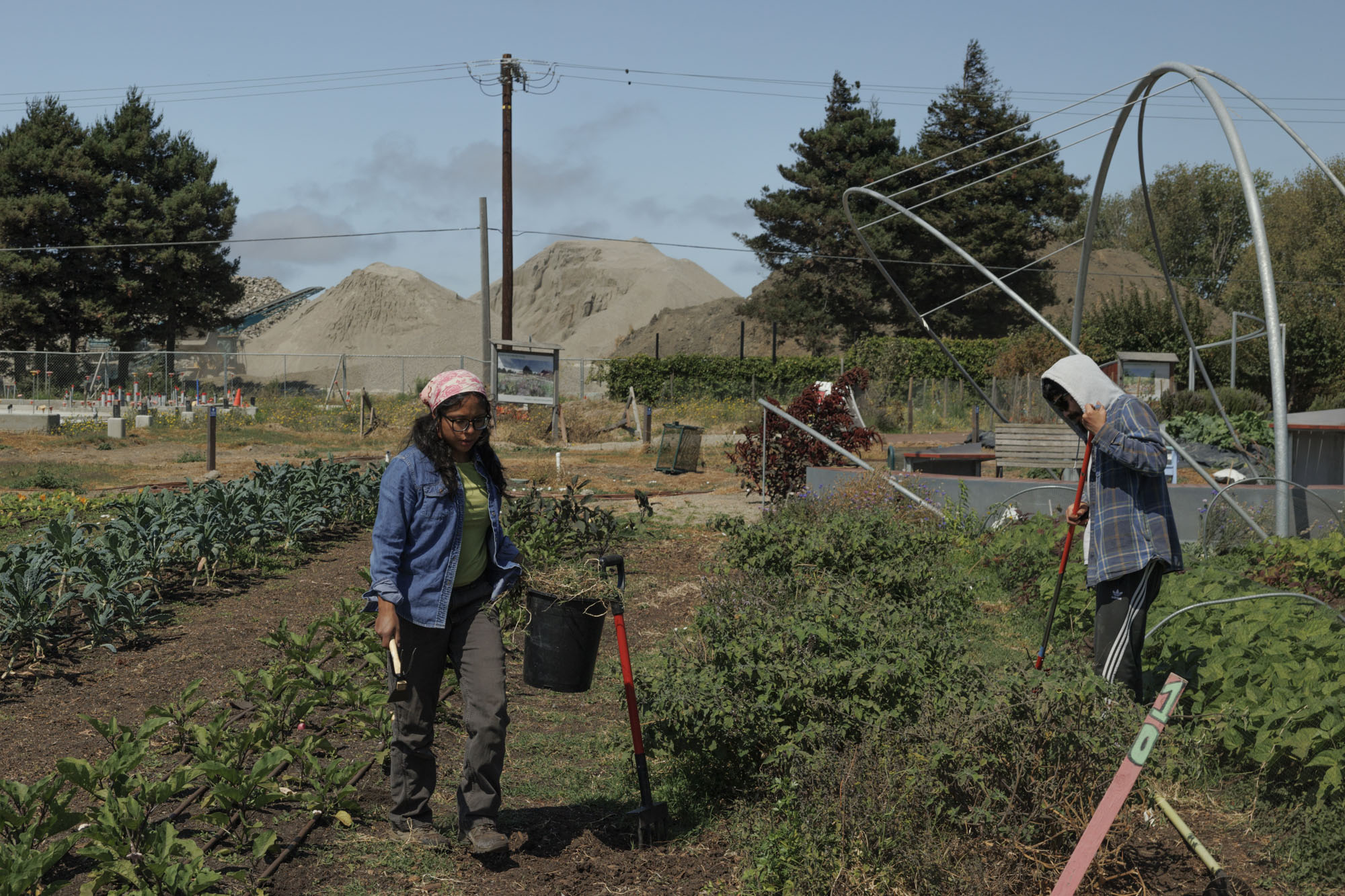
A North Richmond Farm Expands Food Access as CalFresh Cuts Deepen Hunger in East Bay
Beyond The Menu
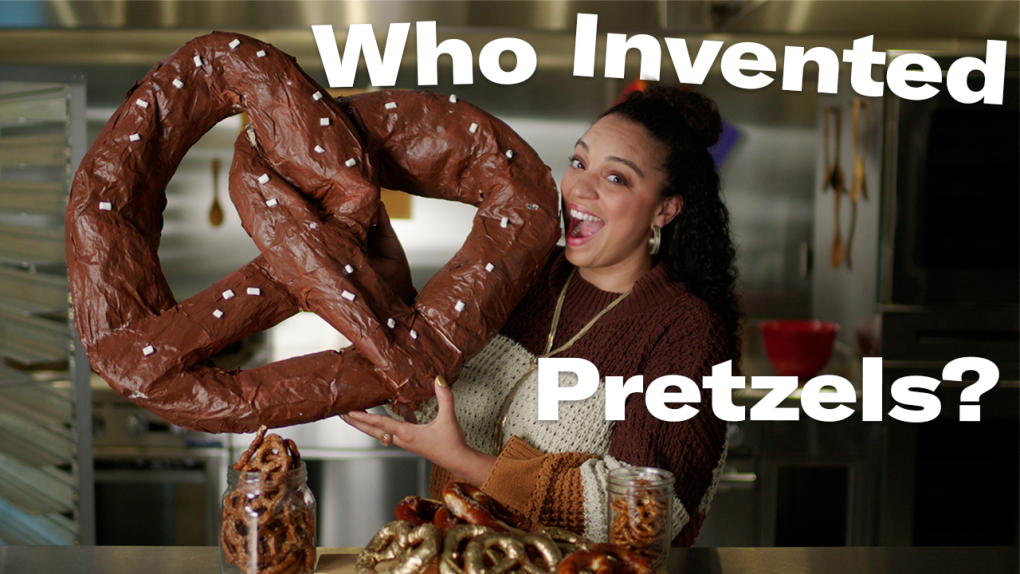
How Pretzels Went From Human Sacrifice To Beer Gardens
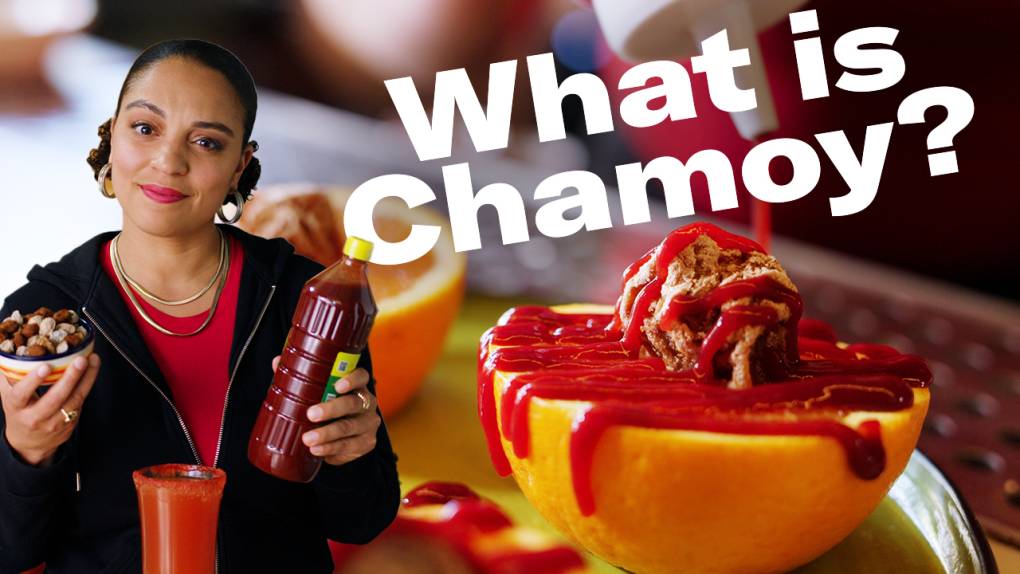
It’s Mexican, Asian, a Candy, a Sauce…It’s Chamoy
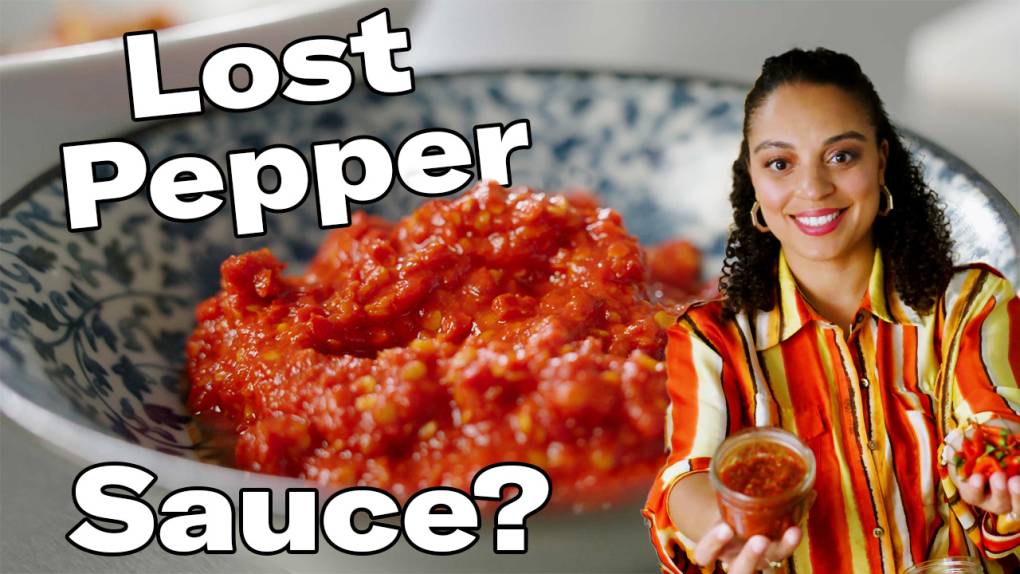
This Fiery Hot Sauce Uses a Pepper Lost To History
Chicken and Waffles: from Amish Country to Harlem
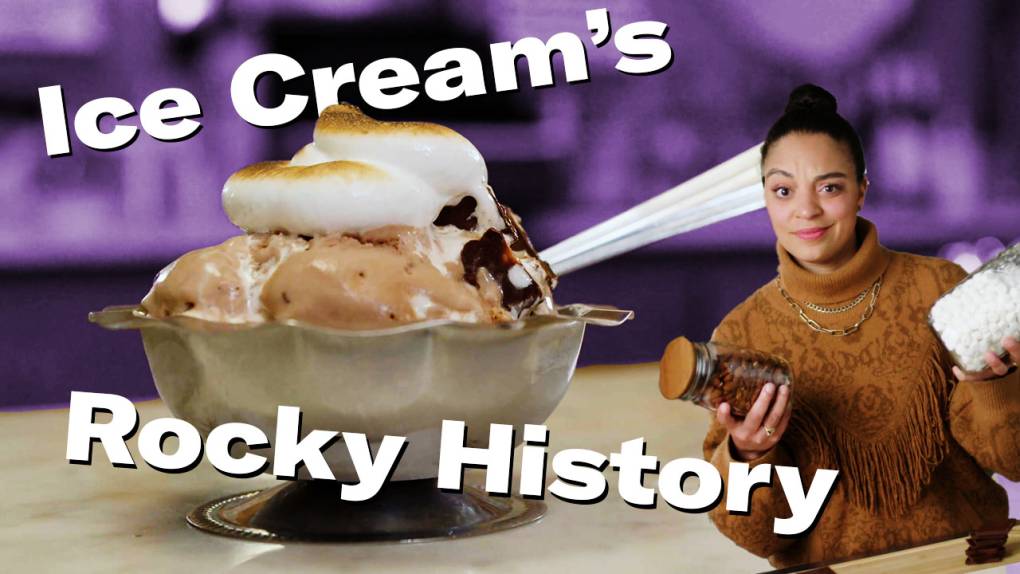
The Chilling History of Ice Cream
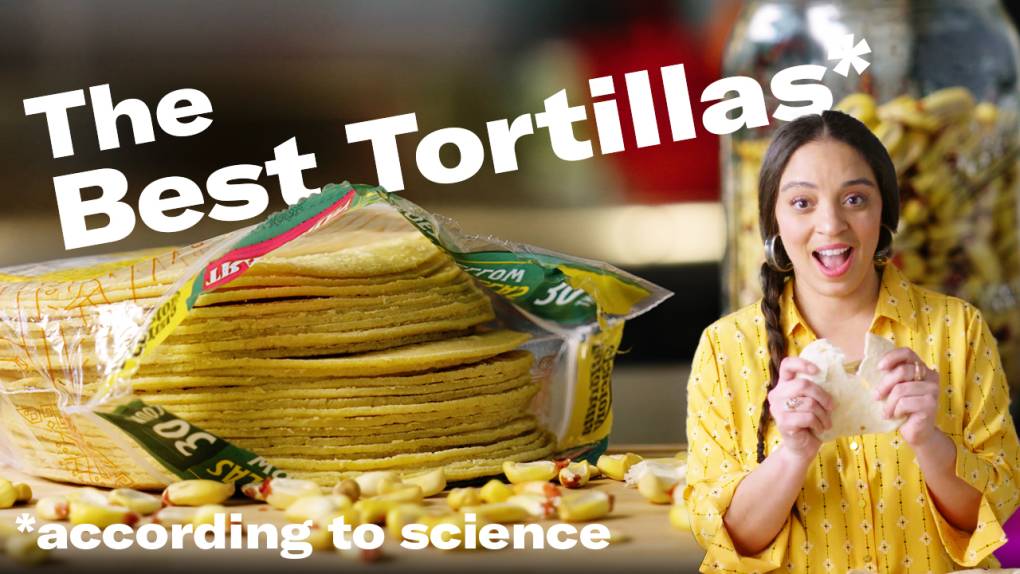
Your Corn Tortilla Sucks…Science Can Fix It
Check, Please! Bay Area
Check, Please! Bay Area reviews: La Cheve Bakery and Brews, Copper Mug, Bacogai
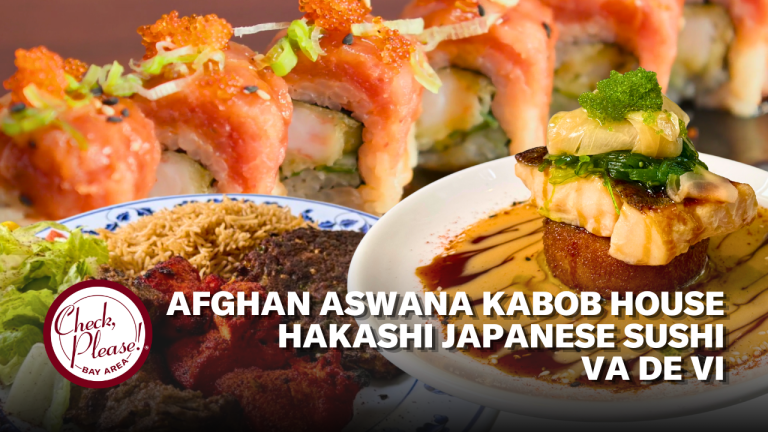
Check, Please! Bay Area reviews: Afghan Awasana Kabob House, Hakashi Japanese Sushi Bar & Grill, Va de Vi
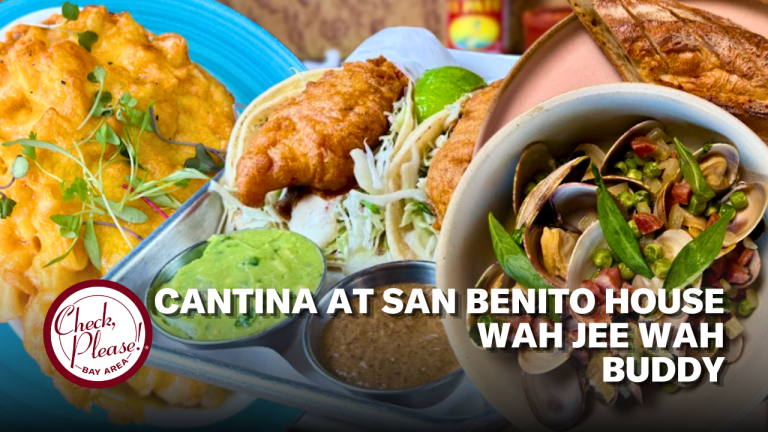
Check, Please! Bay Area reviews: Cantina at San Benito House, Wah Jee Wah, Buddy
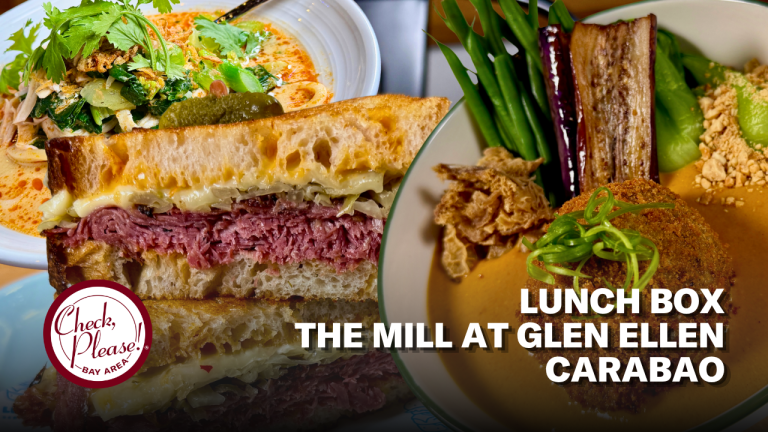
Check, Please! Bay Area reviews: Lunch Box, The Mill at Glen Ellen, Carabao
Check, Please! Bay Area Returns in July With a Wine Country Special
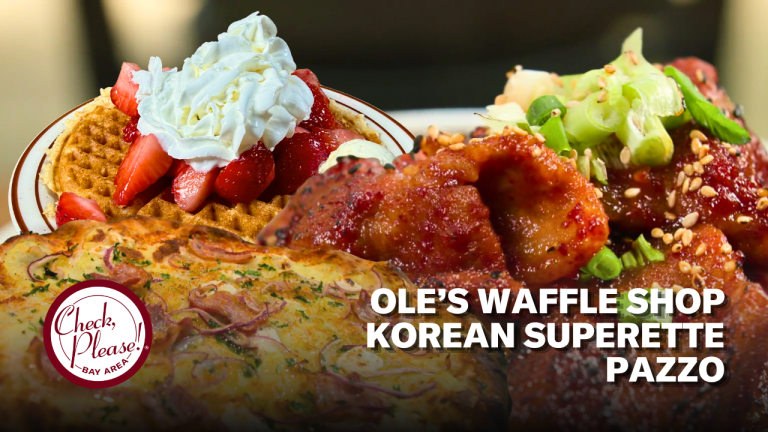
Check, Please! Bay Area reviews: Ole's Waffle Shop, Korean Superette, Pazzo
Recipes
We Take on Rancho Gordo's Fussiest Heirloom Bean (with Apologies to Kelly Clarkson)
We Recreate Maya Angelou's Magic Lemon Meringue Pie
Creep Out Your Halloween Party Guests With These "Horrors d'oeuvres"
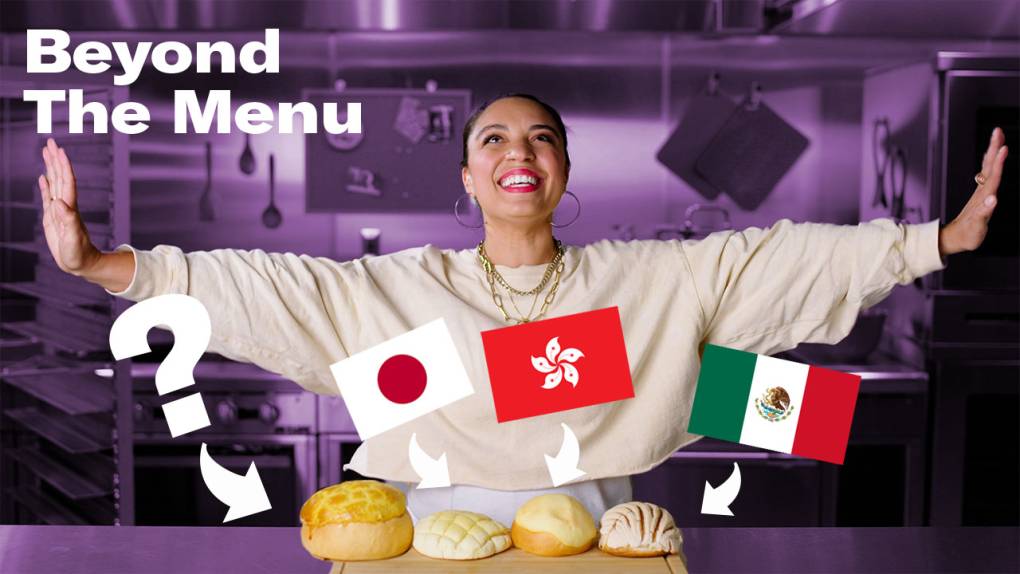
Hong Kong’s Most Popular Treat Has A Surprising Backstory
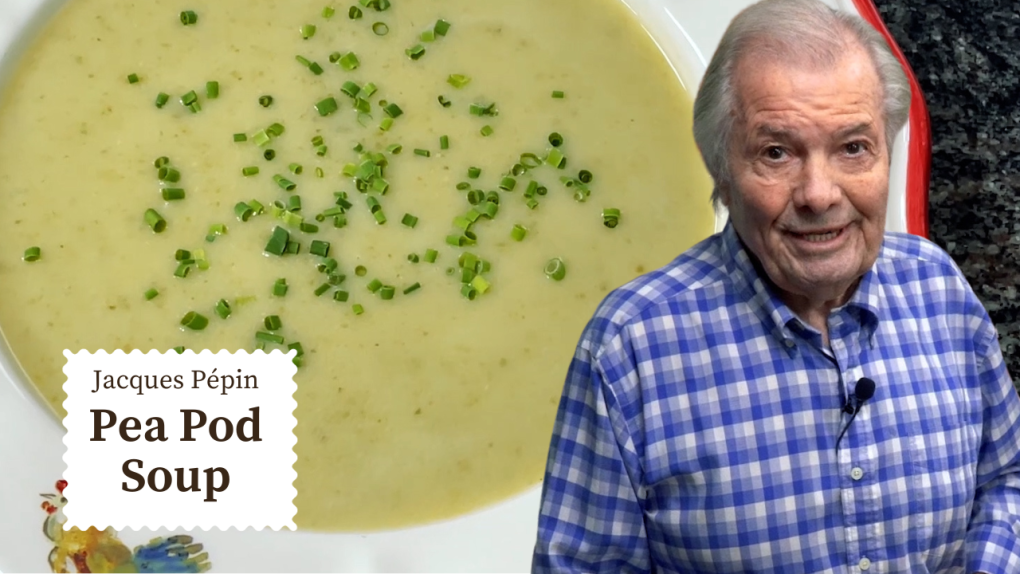
Get Cozy with Jacques Pépin's Pea Pod Soup Recipe
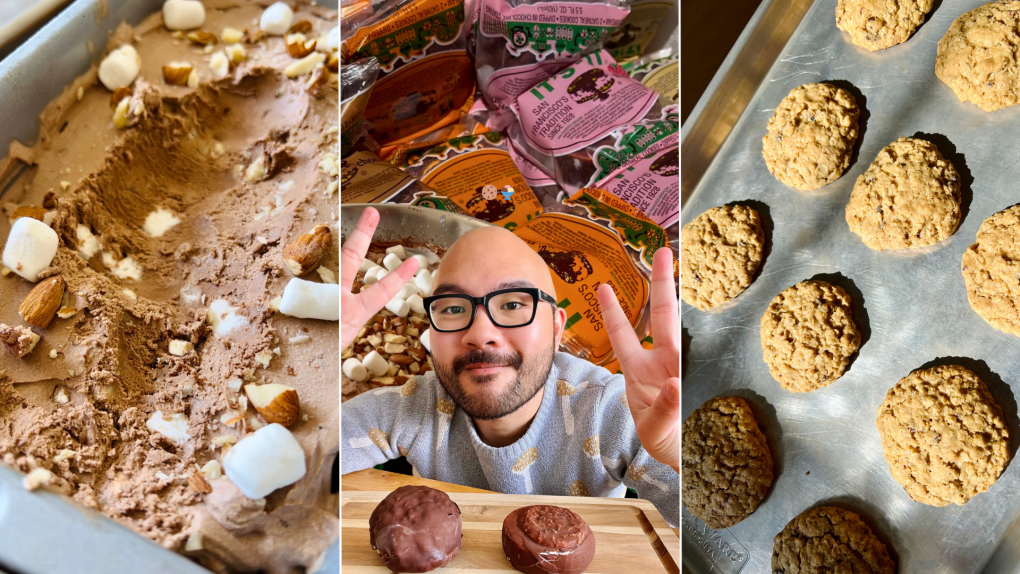
We Recreated an It's-It Ice Cream Sandwich at Home — With an Oakland Twist.
Golden State Plate
Bay Area Foodie Culture Goes Way Further Back Than California Cuisine
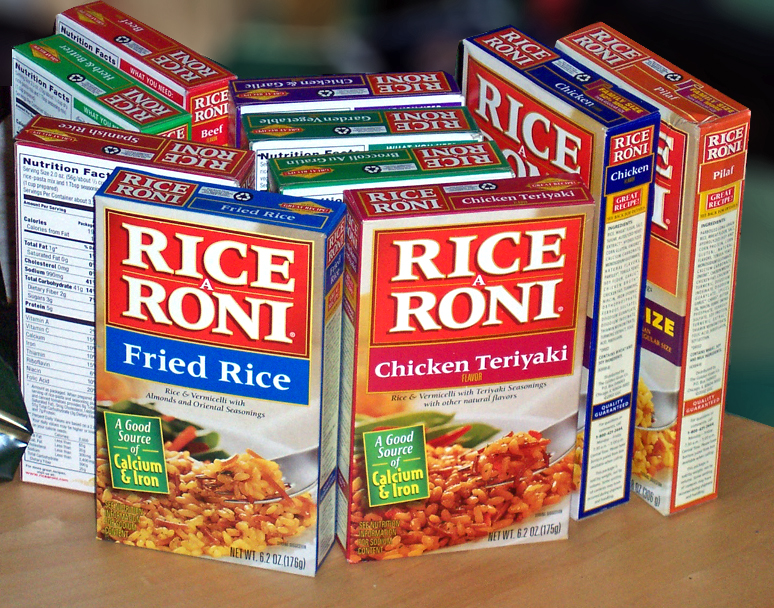
How Rice-A-Roni Became The San Francisco Treat
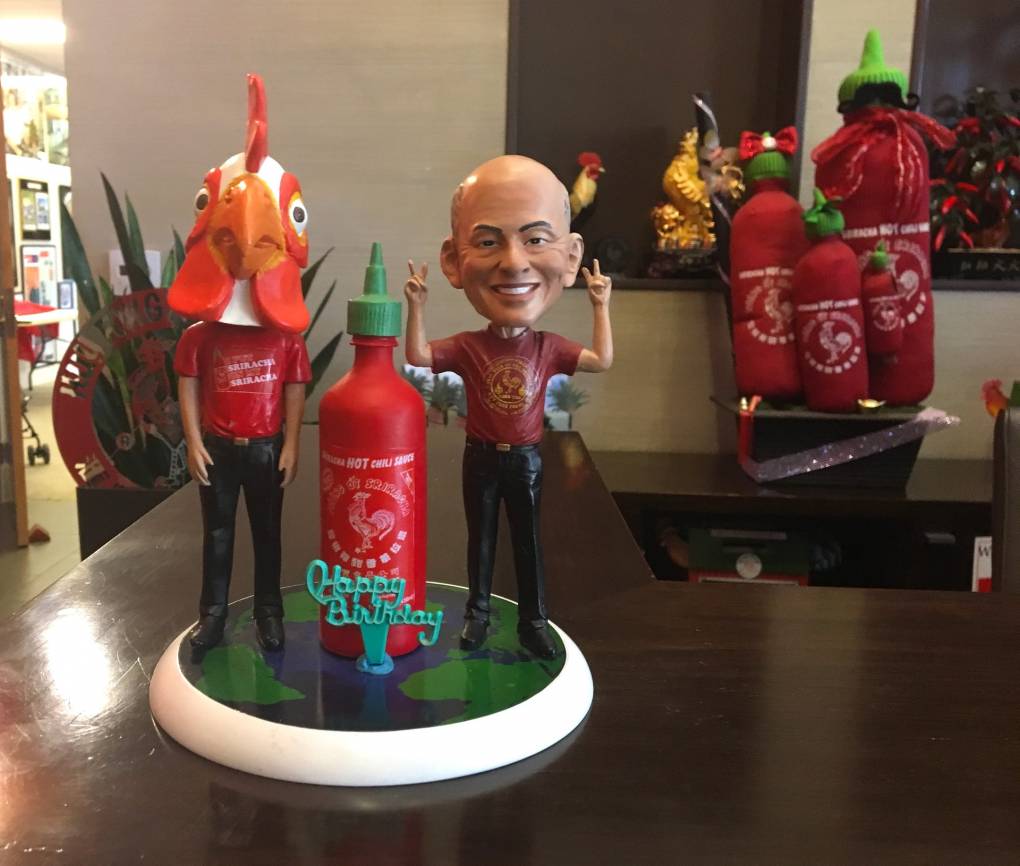
Golden State Plate: Sriracha’s Journey From Southeast Asia to Southern California
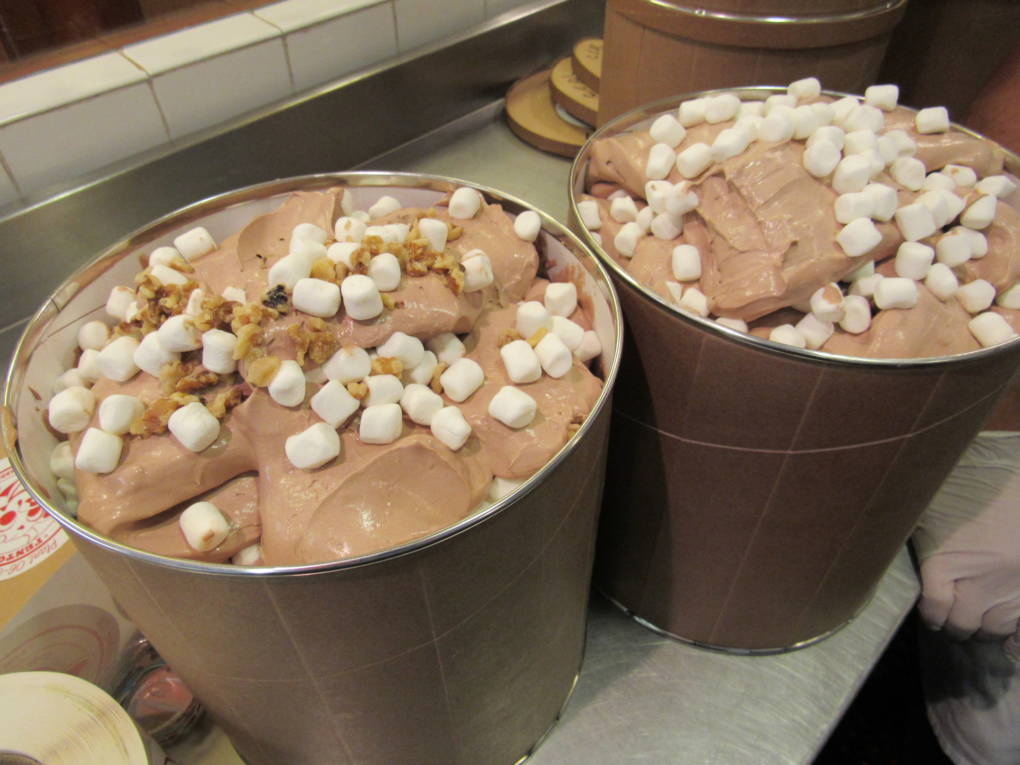
Golden State Plate: Rocky Road Ice Cream's Bumpy History
Golden State Plate – The Backstory Behind California-Born Food and Drinks
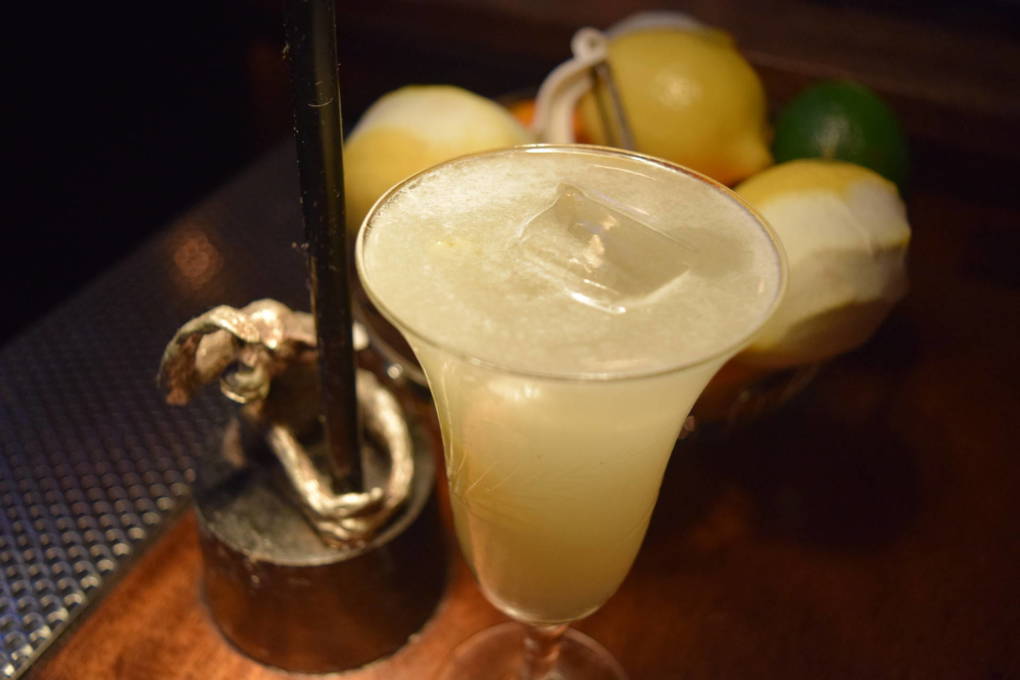
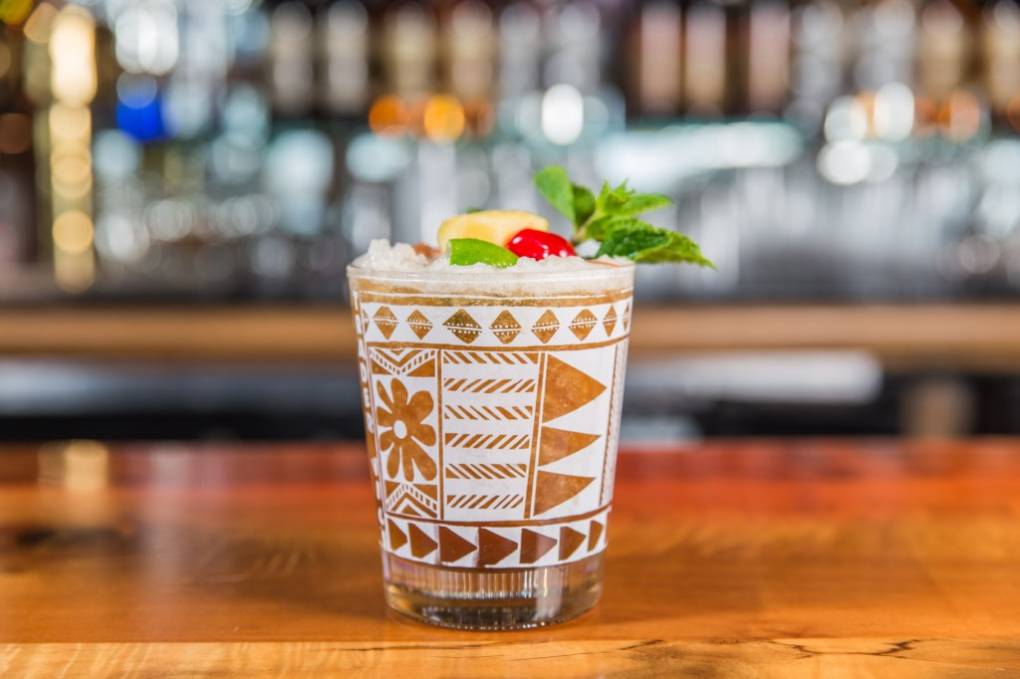
Yes, Your 'Tropical' Mai Tai Was Invented Here in Oakland
Player sponsored by
window.__IS_SSR__=true
window.__INITIAL_STATE__={
"attachmentsReducer": {
"audio_0": {
"type": "attachments",
"id": "audio_0",
"imgSizes": {
"kqedFullSize": {
"file": "https://ww2.kqed.org/news/wp-content/themes/KQED-unified/img/audio_bgs/background0.jpg"
}
}
},
"audio_1": {
"type": "attachments",
"id": "audio_1",
"imgSizes": {
"kqedFullSize": {
"file": "https://ww2.kqed.org/news/wp-content/themes/KQED-unified/img/audio_bgs/background1.jpg"
}
}
},
"audio_2": {
"type": "attachments",
"id": "audio_2",
"imgSizes": {
"kqedFullSize": {
"file": "https://ww2.kqed.org/news/wp-content/themes/KQED-unified/img/audio_bgs/background2.jpg"
}
}
},
"audio_3": {
"type": "attachments",
"id": "audio_3",
"imgSizes": {
"kqedFullSize": {
"file": "https://ww2.kqed.org/news/wp-content/themes/KQED-unified/img/audio_bgs/background3.jpg"
}
}
},
"audio_4": {
"type": "attachments",
"id": "audio_4",
"imgSizes": {
"kqedFullSize": {
"file": "https://ww2.kqed.org/news/wp-content/themes/KQED-unified/img/audio_bgs/background4.jpg"
}
}
},
"placeholder": {
"type": "attachments",
"id": "placeholder",
"imgSizes": {
"thumbnail": {
"file": "https://cdn.kqed.org/wp-content/uploads/2024/12/KQED-Default-Image-816638274-2000x1333-1-160x107.jpg",
"width": 160,
"height": 107,
"mimeType": "image/jpeg"
},
"medium": {
"file": "https://cdn.kqed.org/wp-content/uploads/2024/12/KQED-Default-Image-816638274-2000x1333-1-800x533.jpg",
"width": 800,
"height": 533,
"mimeType": "image/jpeg"
},
"medium_large": {
"file": "https://cdn.kqed.org/wp-content/uploads/2024/12/KQED-Default-Image-816638274-2000x1333-1-768x512.jpg",
"width": 768,
"height": 512,
"mimeType": "image/jpeg"
},
"large": {
"file": "https://cdn.kqed.org/wp-content/uploads/2024/12/KQED-Default-Image-816638274-2000x1333-1-1020x680.jpg",
"width": 1020,
"height": 680,
"mimeType": "image/jpeg"
},
"1536x1536": {
"file": "https://cdn.kqed.org/wp-content/uploads/2024/12/KQED-Default-Image-816638274-2000x1333-1-1536x1024.jpg",
"width": 1536,
"height": 1024,
"mimeType": "image/jpeg"
},
"fd-lrg": {
"file": "https://cdn.kqed.org/wp-content/uploads/2024/12/KQED-Default-Image-816638274-2000x1333-1-1536x1024.jpg",
"width": 1536,
"height": 1024,
"mimeType": "image/jpeg"
},
"fd-med": {
"file": "https://cdn.kqed.org/wp-content/uploads/2024/12/KQED-Default-Image-816638274-2000x1333-1-1020x680.jpg",
"width": 1020,
"height": 680,
"mimeType": "image/jpeg"
},
"fd-sm": {
"file": "https://cdn.kqed.org/wp-content/uploads/2024/12/KQED-Default-Image-816638274-2000x1333-1-800x533.jpg",
"width": 800,
"height": 533,
"mimeType": "image/jpeg"
},
"post-thumbnail": {
"file": "https://cdn.kqed.org/wp-content/uploads/2024/12/KQED-Default-Image-816638274-2000x1333-1-672x372.jpg",
"width": 672,
"height": 372,
"mimeType": "image/jpeg"
},
"twentyfourteen-full-width": {
"file": "https://cdn.kqed.org/wp-content/uploads/2024/12/KQED-Default-Image-816638274-2000x1333-1-1038x576.jpg",
"width": 1038,
"height": 576,
"mimeType": "image/jpeg"
},
"xxsmall": {
"file": "https://cdn.kqed.org/wp-content/uploads/2024/12/KQED-Default-Image-816638274-2000x1333-1-160x107.jpg",
"width": 160,
"height": 107,
"mimeType": "image/jpeg"
},
"xsmall": {
"file": "https://cdn.kqed.org/wp-content/uploads/2024/12/KQED-Default-Image-816638274-2000x1333-1-672x372.jpg",
"width": 672,
"height": 372,
"mimeType": "image/jpeg"
},
"small": {
"file": "https://cdn.kqed.org/wp-content/uploads/2024/12/KQED-Default-Image-816638274-2000x1333-1-672x372.jpg",
"width": 672,
"height": 372,
"mimeType": "image/jpeg"
},
"xlarge": {
"file": "https://cdn.kqed.org/wp-content/uploads/2024/12/KQED-Default-Image-816638274-2000x1333-1-1020x680.jpg",
"width": 1020,
"height": 680,
"mimeType": "image/jpeg"
},
"full-width": {
"file": "https://cdn.kqed.org/wp-content/uploads/2024/12/KQED-Default-Image-816638274-2000x1333-1-1920x1280.jpg",
"width": 1920,
"height": 1280,
"mimeType": "image/jpeg"
},
"guest-author-32": {
"file": "https://cdn.kqed.org/wp-content/uploads/2025/01/KQED-Default-Image-816638274-1333x1333-1-160x160.jpg",
"width": 32,
"height": 32,
"mimeType": "image/jpeg"
},
"guest-author-50": {
"file": "https://cdn.kqed.org/wp-content/uploads/2025/01/KQED-Default-Image-816638274-1333x1333-1-160x160.jpg",
"width": 50,
"height": 50,
"mimeType": "image/jpeg"
},
"guest-author-64": {
"file": "https://cdn.kqed.org/wp-content/uploads/2025/01/KQED-Default-Image-816638274-1333x1333-1-160x160.jpg",
"width": 64,
"height": 64,
"mimeType": "image/jpeg"
},
"guest-author-96": {
"file": "https://cdn.kqed.org/wp-content/uploads/2025/01/KQED-Default-Image-816638274-1333x1333-1-160x160.jpg",
"width": 96,
"height": 96,
"mimeType": "image/jpeg"
},
"guest-author-128": {
"file": "https://cdn.kqed.org/wp-content/uploads/2025/01/KQED-Default-Image-816638274-1333x1333-1-160x160.jpg",
"width": 128,
"height": 128,
"mimeType": "image/jpeg"
},
"detail": {
"file": "https://cdn.kqed.org/wp-content/uploads/2025/01/KQED-Default-Image-816638274-1333x1333-1-160x160.jpg",
"width": 160,
"height": 160,
"mimeType": "image/jpeg"
},
"kqedFullSize": {
"file": "https://cdn.kqed.org/wp-content/uploads/2024/12/KQED-Default-Image-816638274-2000x1333-1.jpg",
"width": 2000,
"height": 1333
}
}
},
"root-site_24654": {
"type": "attachments",
"id": "root-site_24654",
"meta": {
"index": "attachments_1716263798",
"site": "root-site",
"id": "24654",
"found": true
},
"parent": 0,
"imgSizes": {
"twentyfourteen-full-width": {
"file": "https://cdn.kqed.org/wp-content/uploads/2024/03/KC-W1_Lechon-Kawali-Tacos_Mestiza_credit-Albert-Law-1020x681-1-1020x576.jpeg",
"width": 1020,
"mimeType": "image/jpeg",
"height": 576
},
"thumbnail": {
"file": "https://cdn.kqed.org/wp-content/uploads/2024/03/KC-W1_Lechon-Kawali-Tacos_Mestiza_credit-Albert-Law-1020x681-1-160x107.jpeg",
"width": 160,
"mimeType": "image/jpeg",
"height": 107
},
"post-thumbnail": {
"file": "https://cdn.kqed.org/wp-content/uploads/2024/03/KC-W1_Lechon-Kawali-Tacos_Mestiza_credit-Albert-Law-1020x681-1-672x372.jpeg",
"width": 672,
"mimeType": "image/jpeg",
"height": 372
},
"kqedFullSize": {
"file": "https://cdn.kqed.org/wp-content/uploads/2024/03/KC-W1_Lechon-Kawali-Tacos_Mestiza_credit-Albert-Law-1020x681-1.jpeg",
"width": 1020,
"height": 681
},
"medium": {
"file": "https://cdn.kqed.org/wp-content/uploads/2024/03/KC-W1_Lechon-Kawali-Tacos_Mestiza_credit-Albert-Law-1020x681-1-800x534.jpeg",
"width": 800,
"mimeType": "image/jpeg",
"height": 534
},
"medium_large": {
"file": "https://cdn.kqed.org/wp-content/uploads/2024/03/KC-W1_Lechon-Kawali-Tacos_Mestiza_credit-Albert-Law-1020x681-1-768x513.jpeg",
"width": 768,
"mimeType": "image/jpeg",
"height": 513
}
},
"publishDate": 1711753666,
"modified": 1711753666,
"caption": null,
"description": null,
"title": "KC-W1_Lechon-Kawali-Tacos_Mestiza_credit-Albert-Law-1020x681",
"credit": null,
"status": "inherit",
"altTag": null,
"isLoading": false,
"fetchFailed": false
},
"arts_13994423": {
"type": "attachments",
"id": "arts_13994423",
"meta": {
"index": "attachments_1716263798",
"site": "arts",
"id": "13994423",
"found": true
},
"title": "plenty plus appetizers",
"publishDate": 1790881829,
"status": "inherit",
"parent": 13994419,
"modified": 1790882041,
"caption": "The first course at the August 2026 edition of Plenty+ was a trio of chilled appetizers: assorted sashimi, chawanmushi topped with Hokkaido uni and maguro \"head cheese.\" The prix-fixe pop-up takes place roughly one weekend a month at Plenty, a casual cafe in Uptown Oakland.",
"credit": "Luke Tsai/KQED",
"altTag": "A trio of Japanese appetizers on a plate: sashimi, egg custard and a pate-like head cheese.",
"description": null,
"imgSizes": {
"thumbnail": {
"file": "https://cdn.kqed.org/wp-content/uploads/sites/2/2026/10/plenty-plus-appetizers-160x107.jpg",
"width": 160,
"height": 107,
"mimeType": "image/jpeg"
},
"medium_large": {
"file": "https://cdn.kqed.org/wp-content/uploads/sites/2/2026/10/plenty-plus-appetizers-768x512.jpg",
"width": 768,
"height": 512,
"mimeType": "image/jpeg"
},
"1536x1536": {
"file": "https://cdn.kqed.org/wp-content/uploads/sites/2/2026/10/plenty-plus-appetizers-1536x1024.jpg",
"width": 1536,
"height": 1024,
"mimeType": "image/jpeg"
},
"post-thumbnail": {
"file": "https://cdn.kqed.org/wp-content/uploads/sites/2/2026/10/plenty-plus-appetizers-672x372.jpg",
"width": 672,
"height": 372,
"mimeType": "image/jpeg"
},
"twentyfourteen-full-width": {
"file": "https://cdn.kqed.org/wp-content/uploads/sites/2/2026/10/plenty-plus-appetizers-1038x576.jpg",
"width": 1038,
"height": 576,
"mimeType": "image/jpeg"
},
"npr-cds-wide": {
"file": "https://cdn.kqed.org/wp-content/uploads/sites/2/2026/10/plenty-plus-appetizers-1200x675.jpg",
"width": 1200,
"height": 675,
"mimeType": "image/jpeg"
},
"npr-cds-square": {
"file": "https://cdn.kqed.org/wp-content/uploads/sites/2/2026/10/plenty-plus-appetizers-600x600.jpg",
"width": 600,
"height": 600,
"mimeType": "image/jpeg"
},
"kqedFullSize": {
"file": "https://cdn.kqed.org/wp-content/uploads/sites/2/2026/10/plenty-plus-appetizers.jpg",
"width": 2000,
"height": 1333
}
},
"isLoading": false,
"fetchFailed": false
},
"news_12064448": {
"type": "attachments",
"id": "news_12064448",
"meta": {
"index": "attachments_1716263798",
"site": "news",
"id": "12064448",
"found": true
},
"title": "251113-SNAPDELAYSFEATURE01284_TV-KQED",
"publishDate": 1763420218,
"status": "inherit",
"parent": 12064126,
"modified": 1790877953,
"caption": "A person stands across from advertisements for CalFresh as she holds her groceries from the Alameda Food Bank at the 12th Street BART Station in Oakland on Nov. 14, 2025. ",
"credit": "Tâm Vũ/KQED",
"altTag": null,
"description": null,
"imgSizes": {
"thumbnail": {
"file": "https://cdn.kqed.org/wp-content/uploads/sites/10/2025/11/251113-SNAPDELAYSFEATURE01284_TV-KQED-160x107.jpg",
"width": 160,
"height": 107,
"mimeType": "image/jpeg"
},
"1536x1536": {
"file": "https://cdn.kqed.org/wp-content/uploads/sites/10/2025/11/251113-SNAPDELAYSFEATURE01284_TV-KQED-1536x1024.jpg",
"width": 1536,
"height": 1024,
"mimeType": "image/jpeg"
},
"post-thumbnail": {
"file": "https://cdn.kqed.org/wp-content/uploads/sites/10/2025/11/251113-SNAPDELAYSFEATURE01284_TV-KQED-672x372.jpg",
"width": 672,
"height": 372,
"mimeType": "image/jpeg"
},
"twentyfourteen-full-width": {
"file": "https://cdn.kqed.org/wp-content/uploads/sites/10/2025/11/251113-SNAPDELAYSFEATURE01284_TV-KQED-1038x576.jpg",
"width": 1038,
"height": 576,
"mimeType": "image/jpeg"
},
"npr-cds-wide": {
"file": "https://cdn.kqed.org/wp-content/uploads/sites/10/2025/11/251113-SNAPDELAYSFEATURE01284_TV-KQED-1200x675.jpg",
"width": 1200,
"height": 675,
"mimeType": "image/jpeg"
},
"kqedFullSize": {
"file": "https://cdn.kqed.org/wp-content/uploads/sites/10/2025/11/251113-SNAPDELAYSFEATURE01284_TV-KQED.jpg",
"width": 2000,
"height": 1333
}
},
"isLoading": false,
"fetchFailed": false
},
"arts_13977966": {
"type": "attachments",
"id": "arts_13977966",
"meta": {
"index": "attachments_1716263798",
"site": "arts",
"id": "13977966",
"found": true
},
"title": "Chef Behind Legendary Puerto Rican Takeout Spot",
"publishDate": 1750810268,
"status": "inherit",
"parent": 13977950,
"modified": 1750813828,
"caption": "Chefs Eric Rivera (center) and Chris Lopez and stand on the roof of Puerto Rican Street Cuisine, Rivera’s new restaurant on 23rd Avenue in Oakland on Saturday, June 21, 2025.",
"credit": "Estefany Gonzalez for KQED",
"altTag": "Two men stand on the roof of a restaurant holding a large Puerto Rican flag. The sign on the restaurant reads, \"Puerto Rican Street Cuisine.\"",
"description": null,
"imgSizes": {
"thumbnail": {
"file": "https://cdn.kqed.org/wp-content/uploads/sites/2/2025/06/Puerto-Rican-Street-Cuisine_EG_27_qed-160x107.jpg",
"width": 160,
"height": 107,
"mimeType": "image/jpeg"
},
"medium_large": {
"file": "https://cdn.kqed.org/wp-content/uploads/sites/2/2025/06/Puerto-Rican-Street-Cuisine_EG_27_qed-768x512.jpg",
"width": 768,
"height": 512,
"mimeType": "image/jpeg"
},
"1536x1536": {
"file": "https://cdn.kqed.org/wp-content/uploads/sites/2/2025/06/Puerto-Rican-Street-Cuisine_EG_27_qed-1536x1024.jpg",
"width": 1536,
"height": 1024,
"mimeType": "image/jpeg"
},
"post-thumbnail": {
"file": "https://cdn.kqed.org/wp-content/uploads/sites/2/2025/06/Puerto-Rican-Street-Cuisine_EG_27_qed-672x372.jpg",
"width": 672,
"height": 372,
"mimeType": "image/jpeg"
},
"twentyfourteen-full-width": {
"file": "https://cdn.kqed.org/wp-content/uploads/sites/2/2025/06/Puerto-Rican-Street-Cuisine_EG_27_qed-1038x576.jpg",
"width": 1038,
"height": 576,
"mimeType": "image/jpeg"
},
"kqedFullSize": {
"file": "https://cdn.kqed.org/wp-content/uploads/sites/2/2025/06/Puerto-Rican-Street-Cuisine_EG_27_qed.jpg",
"width": 1999,
"height": 1333
}
},
"isLoading": false,
"fetchFailed": false
},
"news_12100965": {
"type": "attachments",
"id": "news_12100965",
"meta": {
"index": "attachments_1716263798",
"site": "news",
"id": "12100965",
"found": true
},
"title": "091426-SFDataCenterBan-32-MC_qed",
"publishDate": 1790103686,
"status": "inherit",
"parent": 12100945,
"modified": 1790118492,
"caption": "San Francisco District 9 Supervisor Jackie Fielder announces that she will vote for a 45-day moratorium on approving new data center construction in the city outside of San Francisco City Hall on Sept. 14, 2026.",
"credit": "Miles Cull/KQED",
"altTag": null,
"description": null,
"imgSizes": {
"thumbnail": {
"file": "https://cdn.kqed.org/wp-content/uploads/sites/10/2026/09/091426-SFDataCenterBan-32-MC_qed-160x107.jpg",
"width": 160,
"height": 107,
"mimeType": "image/jpeg"
},
"1536x1536": {
"file": "https://cdn.kqed.org/wp-content/uploads/sites/10/2026/09/091426-SFDataCenterBan-32-MC_qed-1536x1024.jpg",
"width": 1536,
"height": 1024,
"mimeType": "image/jpeg"
},
"post-thumbnail": {
"file": "https://cdn.kqed.org/wp-content/uploads/sites/10/2026/09/091426-SFDataCenterBan-32-MC_qed-672x372.jpg",
"width": 672,
"height": 372,
"mimeType": "image/jpeg"
},
"twentyfourteen-full-width": {
"file": "https://cdn.kqed.org/wp-content/uploads/sites/10/2026/09/091426-SFDataCenterBan-32-MC_qed-1038x576.jpg",
"width": 1038,
"height": 576,
"mimeType": "image/jpeg"
},
"npr-cds-wide": {
"file": "https://cdn.kqed.org/wp-content/uploads/sites/10/2026/09/091426-SFDataCenterBan-32-MC_qed-1200x675.jpg",
"width": 1200,
"height": 675,
"mimeType": "image/jpeg"
},
"npr-cds-square": {
"file": "https://cdn.kqed.org/wp-content/uploads/sites/10/2026/09/091426-SFDataCenterBan-32-MC_qed-600x600.jpg",
"width": 600,
"height": 600,
"mimeType": "image/jpeg"
},
"kqedFullSize": {
"file": "https://cdn.kqed.org/wp-content/uploads/sites/10/2026/09/091426-SFDataCenterBan-32-MC_qed.jpg",
"width": 2000,
"height": 1333
}
},
"isLoading": false,
"fetchFailed": false
},
"arts_13994070": {
"type": "attachments",
"id": "arts_13994070",
"meta": {
"index": "attachments_1716263798",
"site": "arts",
"id": "13994070",
"found": true
},
"title": "African Resturant Weekend 2025-11",
"publishDate": 1790037464,
"status": "inherit",
"parent": 13994066,
"modified": 1790037618,
"caption": "Customers line up to buy food from the Jollof Kitchen food truck at the closing festival for the 2025 edition of African Restaurant Week. This year's festival will once again take place at For the Culture in Oakland.",
"credit": "Courtesy of African Restaurant Week",
"altTag": "Customers lined up to buy food from the Jollof Kitchen food truck.",
"description": null,
"imgSizes": {
"thumbnail": {
"file": "https://cdn.kqed.org/wp-content/uploads/sites/2/2026/09/African-Resturant-Weekend-2025-11-160x106.jpg",
"width": 160,
"height": 106,
"mimeType": "image/jpeg"
},
"medium_large": {
"file": "https://cdn.kqed.org/wp-content/uploads/sites/2/2026/09/African-Resturant-Weekend-2025-11-768x511.jpg",
"width": 768,
"height": 511,
"mimeType": "image/jpeg"
},
"1536x1536": {
"file": "https://cdn.kqed.org/wp-content/uploads/sites/2/2026/09/African-Resturant-Weekend-2025-11-1536x1022.jpg",
"width": 1536,
"height": 1022,
"mimeType": "image/jpeg"
},
"post-thumbnail": {
"file": "https://cdn.kqed.org/wp-content/uploads/sites/2/2026/09/African-Resturant-Weekend-2025-11-672x372.jpg",
"width": 672,
"height": 372,
"mimeType": "image/jpeg"
},
"twentyfourteen-full-width": {
"file": "https://cdn.kqed.org/wp-content/uploads/sites/2/2026/09/African-Resturant-Weekend-2025-11-1038x576.jpg",
"width": 1038,
"height": 576,
"mimeType": "image/jpeg"
},
"npr-cds-wide": {
"file": "https://cdn.kqed.org/wp-content/uploads/sites/2/2026/09/African-Resturant-Weekend-2025-11-1200x675.jpg",
"width": 1200,
"height": 675,
"mimeType": "image/jpeg"
},
"npr-cds-square": {
"file": "https://cdn.kqed.org/wp-content/uploads/sites/2/2026/09/African-Resturant-Weekend-2025-11-600x600.jpg",
"width": 600,
"height": 600,
"mimeType": "image/jpeg"
},
"kqedFullSize": {
"file": "https://cdn.kqed.org/wp-content/uploads/sites/2/2026/09/African-Resturant-Weekend-2025-11.jpg",
"width": 2000,
"height": 1331
}
},
"isLoading": false,
"fetchFailed": false
},
"arts_13994004": {
"type": "attachments",
"id": "arts_13994004",
"meta": {
"index": "attachments_1716263798",
"site": "arts",
"id": "13994004",
"found": true
},
"title": "nobuya2-crop",
"publishDate": 1789691413,
"status": "inherit",
"parent": 13994001,
"modified": 1789691497,
"caption": "Nobuya, a newish izakaya and sushi restaurant in Pleasant Hill, is known for its elegant sushi boxes.",
"credit": "Thien Pham",
"altTag": "Illustration: Two men seated at a sushi bar devouring large quantities of sashimi served in elegant wooden boxes.",
"description": null,
"imgSizes": {
"thumbnail": {
"file": "https://cdn.kqed.org/wp-content/uploads/sites/2/2026/09/nobuya2-crop-160x107.jpg",
"width": 160,
"height": 107,
"mimeType": "image/jpeg"
},
"medium_large": {
"file": "https://cdn.kqed.org/wp-content/uploads/sites/2/2026/09/nobuya2-crop-768x512.jpg",
"width": 768,
"height": 512,
"mimeType": "image/jpeg"
},
"1536x1536": {
"file": "https://cdn.kqed.org/wp-content/uploads/sites/2/2026/09/nobuya2-crop-1536x1024.jpg",
"width": 1536,
"height": 1024,
"mimeType": "image/jpeg"
},
"post-thumbnail": {
"file": "https://cdn.kqed.org/wp-content/uploads/sites/2/2026/09/nobuya2-crop-672x372.jpg",
"width": 672,
"height": 372,
"mimeType": "image/jpeg"
},
"twentyfourteen-full-width": {
"file": "https://cdn.kqed.org/wp-content/uploads/sites/2/2026/09/nobuya2-crop-1038x576.jpg",
"width": 1038,
"height": 576,
"mimeType": "image/jpeg"
},
"npr-cds-wide": {
"file": "https://cdn.kqed.org/wp-content/uploads/sites/2/2026/09/nobuya2-crop-1200x675.jpg",
"width": 1200,
"height": 675,
"mimeType": "image/jpeg"
},
"npr-cds-square": {
"file": "https://cdn.kqed.org/wp-content/uploads/sites/2/2026/09/nobuya2-crop-600x600.jpg",
"width": 600,
"height": 600,
"mimeType": "image/jpeg"
},
"kqedFullSize": {
"file": "https://cdn.kqed.org/wp-content/uploads/sites/2/2026/09/nobuya2-crop.jpg",
"width": 1920,
"height": 1280
}
},
"isLoading": false,
"fetchFailed": false
},
"arts_13993945": {
"type": "attachments",
"id": "arts_13993945",
"meta": {
"index": "attachments_1716263798",
"site": "arts",
"id": "13993945",
"found": true
},
"title": "Chiricana-Patacon Relleno crop",
"publishDate": 1789595161,
"status": "inherit",
"parent": 13993924,
"modified": 1789595437,
"caption": "Chiricana chef Dani Solis holds a plate of Panamanian patacones — fried green plantains loaded with oyster mushrooms, olives and peppers. Solis' pop-up and catering company is one of the Bay Area's only Panamanian food businesses.",
"credit": "Courtesy of La Cocina",
"altTag": "Hands holding a plate of loaded Panamanian patacones (fried green plantains).",
"description": null,
"imgSizes": {
"thumbnail": {
"file": "https://cdn.kqed.org/wp-content/uploads/sites/2/2026/09/Chiricana-Patacon-Relleno-crop-160x107.jpg",
"width": 160,
"height": 107,
"mimeType": "image/jpeg"
},
"medium_large": {
"file": "https://cdn.kqed.org/wp-content/uploads/sites/2/2026/09/Chiricana-Patacon-Relleno-crop-768x512.jpg",
"width": 768,
"height": 512,
"mimeType": "image/jpeg"
},
"1536x1536": {
"file": "https://cdn.kqed.org/wp-content/uploads/sites/2/2026/09/Chiricana-Patacon-Relleno-crop-1536x1024.jpg",
"width": 1536,
"height": 1024,
"mimeType": "image/jpeg"
},
"post-thumbnail": {
"file": "https://cdn.kqed.org/wp-content/uploads/sites/2/2026/09/Chiricana-Patacon-Relleno-crop-672x372.jpg",
"width": 672,
"height": 372,
"mimeType": "image/jpeg"
},
"twentyfourteen-full-width": {
"file": "https://cdn.kqed.org/wp-content/uploads/sites/2/2026/09/Chiricana-Patacon-Relleno-crop-1038x576.jpg",
"width": 1038,
"height": 576,
"mimeType": "image/jpeg"
},
"npr-cds-wide": {
"file": "https://cdn.kqed.org/wp-content/uploads/sites/2/2026/09/Chiricana-Patacon-Relleno-crop-1200x675.jpg",
"width": 1200,
"height": 675,
"mimeType": "image/jpeg"
},
"npr-cds-square": {
"file": "https://cdn.kqed.org/wp-content/uploads/sites/2/2026/09/Chiricana-Patacon-Relleno-crop-600x600.jpg",
"width": 600,
"height": 600,
"mimeType": "image/jpeg"
},
"kqedFullSize": {
"file": "https://cdn.kqed.org/wp-content/uploads/sites/2/2026/09/Chiricana-Patacon-Relleno-crop.jpg",
"width": 2000,
"height": 1333
}
},
"isLoading": false,
"fetchFailed": false
},
"arts_13993933": {
"type": "attachments",
"id": "arts_13993933",
"meta": {
"index": "attachments_1716263798",
"site": "arts",
"id": "13993933",
"found": true
},
"title": "tpain_2000",
"publishDate": 1789593480,
"status": "inherit",
"parent": 13993917,
"modified": 1789593574,
"caption": "T-Pain and Ari Lennox will perform at Golden Gate Park on Oct. 17 as part of the R&B and Ribs party that launched at El Rio.",
"credit": "Marilyn Nguyen",
"altTag": "two Black performers on stage",
"description": null,
"imgSizes": {
"thumbnail": {
"file": "https://cdn.kqed.org/wp-content/uploads/sites/2/2026/09/tpain_2000-160x107.jpg",
"width": 160,
"height": 107,
"mimeType": "image/jpeg"
},
"medium_large": {
"file": "https://cdn.kqed.org/wp-content/uploads/sites/2/2026/09/tpain_2000-768x512.jpg",
"width": 768,
"height": 512,
"mimeType": "image/jpeg"
},
"1536x1536": {
"file": "https://cdn.kqed.org/wp-content/uploads/sites/2/2026/09/tpain_2000-1536x1024.jpg",
"width": 1536,
"height": 1024,
"mimeType": "image/jpeg"
},
"post-thumbnail": {
"file": "https://cdn.kqed.org/wp-content/uploads/sites/2/2026/09/tpain_2000-672x372.jpg",
"width": 672,
"height": 372,
"mimeType": "image/jpeg"
},
"twentyfourteen-full-width": {
"file": "https://cdn.kqed.org/wp-content/uploads/sites/2/2026/09/tpain_2000-1038x576.jpg",
"width": 1038,
"height": 576,
"mimeType": "image/jpeg"
},
"npr-cds-wide": {
"file": "https://cdn.kqed.org/wp-content/uploads/sites/2/2026/09/tpain_2000-1200x675.jpg",
"width": 1200,
"height": 675,
"mimeType": "image/jpeg"
},
"npr-cds-square": {
"file": "https://cdn.kqed.org/wp-content/uploads/sites/2/2026/09/tpain_2000-600x600.jpg",
"width": 600,
"height": 600,
"mimeType": "image/jpeg"
},
"kqedFullSize": {
"file": "https://cdn.kqed.org/wp-content/uploads/sites/2/2026/09/tpain_2000.jpg",
"width": 2000,
"height": 1333
}
},
"isLoading": false,
"fetchFailed": false
},
"news_12097663": {
"type": "attachments",
"id": "news_12097663",
"meta": {
"index": "attachments_1716263798",
"site": "news",
"id": "12097663",
"found": true
},
"title": "260811-UrbanTilth-JY-15-KQED",
"publishDate": 1788206407,
"status": "inherit",
"parent": 0,
"modified": 1788206475,
"caption": "North Richmond farm co-managers Cathy Sandoval, left, and Luis Jacobo, right, weed pathways at Urban Tilth Farm in Richmond on Tuesday, Aug. 11, 2026.",
"credit": "Juliana Yamada/KQED",
"altTag": null,
"description": null,
"imgSizes": {
"thumbnail": {
"file": "https://cdn.kqed.org/wp-content/uploads/sites/10/2026/08/260811-UrbanTilth-JY-15-KQED-160x107.jpg",
"width": 160,
"height": 107,
"mimeType": "image/jpeg"
},
"1536x1536": {
"file": "https://cdn.kqed.org/wp-content/uploads/sites/10/2026/08/260811-UrbanTilth-JY-15-KQED-1536x1024.jpg",
"width": 1536,
"height": 1024,
"mimeType": "image/jpeg"
},
"post-thumbnail": {
"file": "https://cdn.kqed.org/wp-content/uploads/sites/10/2026/08/260811-UrbanTilth-JY-15-KQED-672x372.jpg",
"width": 672,
"height": 372,
"mimeType": "image/jpeg"
},
"twentyfourteen-full-width": {
"file": "https://cdn.kqed.org/wp-content/uploads/sites/10/2026/08/260811-UrbanTilth-JY-15-KQED-1038x576.jpg",
"width": 1038,
"height": 576,
"mimeType": "image/jpeg"
},
"npr-cds-wide": {
"file": "https://cdn.kqed.org/wp-content/uploads/sites/10/2026/08/260811-UrbanTilth-JY-15-KQED-1200x675.jpg",
"width": 1200,
"height": 675,
"mimeType": "image/jpeg"
},
"npr-cds-square": {
"file": "https://cdn.kqed.org/wp-content/uploads/sites/10/2026/08/260811-UrbanTilth-JY-15-KQED-600x600.jpg",
"width": 600,
"height": 600,
"mimeType": "image/jpeg"
},
"kqedFullSize": {
"file": "https://cdn.kqed.org/wp-content/uploads/sites/10/2026/08/260811-UrbanTilth-JY-15-KQED.jpg",
"width": 2000,
"height": 1333
}
},
"isLoading": false,
"fetchFailed": false
},
"food_1337833": {
"type": "attachments",
"id": "food_1337833",
"meta": {
"index": "attachments_1716263798",
"site": "food",
"id": "1337833",
"found": true
},
"title": "Pretzels 2_2",
"publishDate": 1733179370,
"status": "inherit",
"parent": 1337824,
"modified": 1733179404,
"caption": "Host of Beyond the Menu Cecilia Philips holds up a giant paper mache pretzel and pretends to eat it. ",
"credit": null,
"altTag": "Host of Beyond the Menu, Cecilia Philips is holding a giant paper mache pretzel pretending to eat it. The text on the image reads 'Who Invented Pretzels?'",
"description": "Host of Beyond the Menu Cecilia Philips holds up a giant pretzel and pretends to eat it. ",
"imgSizes": {
"medium": {
"file": "https://cdn.kqed.org/wp-content/uploads/sites/41/2024/12/Pretzels-2_2-800x450.png",
"width": 800,
"height": 450,
"mimeType": "image/png"
},
"large": {
"file": "https://cdn.kqed.org/wp-content/uploads/sites/41/2024/12/Pretzels-2_2-1020x574.png",
"width": 1020,
"height": 574,
"mimeType": "image/png"
},
"thumbnail": {
"file": "https://cdn.kqed.org/wp-content/uploads/sites/41/2024/12/Pretzels-2_2-160x90.png",
"width": 160,
"height": 90,
"mimeType": "image/png"
},
"medium_large": {
"file": "https://cdn.kqed.org/wp-content/uploads/sites/41/2024/12/Pretzels-2_2-768x432.png",
"width": 768,
"height": 432,
"mimeType": "image/png"
},
"post-thumbnail": {
"file": "https://cdn.kqed.org/wp-content/uploads/sites/41/2024/12/Pretzels-2_2-672x372.png",
"width": 672,
"height": 372,
"mimeType": "image/png"
},
"twentyfourteen-full-width": {
"file": "https://cdn.kqed.org/wp-content/uploads/sites/41/2024/12/Pretzels-2_2-1038x576.png",
"width": 1038,
"height": 576,
"mimeType": "image/png"
},
"kqedFullSize": {
"file": "https://cdn.kqed.org/wp-content/uploads/sites/41/2024/12/Pretzels-2_2.png",
"width": 1280,
"height": 720
}
},
"isLoading": false,
"fetchFailed": false
},
"food_1337651": {
"type": "attachments",
"id": "food_1337651",
"meta": {
"index": "attachments_1716263798",
"site": "food",
"id": "1337651",
"found": true
},
"title": "History of Chamoy",
"publishDate": 1718990545,
"status": "inherit",
"parent": 1337646,
"modified": 1718990594,
"caption": "The Asian origins of chamoy, one of Mexico's most beloved condiments",
"credit": "Matt Piniol",
"altTag": "A young light-skinned black woman stands in the foreground holding a bottle of chamoy. In the background, a large bottle of chamoy sauce is squeezed onto half an orange.",
"description": null,
"imgSizes": {
"medium": {
"file": "https://cdn.kqed.org/wp-content/uploads/sites/41/2024/06/Chamoy_thumbnail_text2-800x450.jpg",
"width": 800,
"height": 450,
"mimeType": "image/jpeg"
},
"large": {
"file": "https://cdn.kqed.org/wp-content/uploads/sites/41/2024/06/Chamoy_thumbnail_text2-1020x574.jpg",
"width": 1020,
"height": 574,
"mimeType": "image/jpeg"
},
"thumbnail": {
"file": "https://cdn.kqed.org/wp-content/uploads/sites/41/2024/06/Chamoy_thumbnail_text2-160x90.jpg",
"width": 160,
"height": 90,
"mimeType": "image/jpeg"
},
"medium_large": {
"file": "https://cdn.kqed.org/wp-content/uploads/sites/41/2024/06/Chamoy_thumbnail_text2-768x432.jpg",
"width": 768,
"height": 432,
"mimeType": "image/jpeg"
},
"post-thumbnail": {
"file": "https://cdn.kqed.org/wp-content/uploads/sites/41/2024/06/Chamoy_thumbnail_text2-672x372.jpg",
"width": 672,
"height": 372,
"mimeType": "image/jpeg"
},
"twentyfourteen-full-width": {
"file": "https://cdn.kqed.org/wp-content/uploads/sites/41/2024/06/Chamoy_thumbnail_text2-1038x576.jpg",
"width": 1038,
"height": 576,
"mimeType": "image/jpeg"
},
"kqedFullSize": {
"file": "https://cdn.kqed.org/wp-content/uploads/sites/41/2024/06/Chamoy_thumbnail_text2.jpg",
"width": 1280,
"height": 720
}
},
"isLoading": false,
"fetchFailed": false
},
"food_1337641": {
"type": "attachments",
"id": "food_1337641",
"meta": {
"index": "attachments_1716263798",
"site": "food",
"id": "1337641",
"found": true
},
"title": "Sambal",
"publishDate": 1717789888,
"status": "inherit",
"parent": 1337639,
"modified": 1717790318,
"caption": "Cecilia Phillips explores the roots sambal, a fiery Indonesian hot sauce similar to sriracha.",
"credit": "Matt Piniol",
"altTag": "A young light-skinned black woman with long hair holds chile peppers in two outstretched hands. There is a bowl of spicy chile paste behind her.",
"description": "Cecilia Phillips explores the roots sambal, a fiery Indonesian hot sauce similar to sriracha.",
"imgSizes": {
"medium": {
"file": "https://cdn.kqed.org/wp-content/uploads/sites/41/2024/06/Sambal_Host-800x450.jpg",
"width": 800,
"height": 450,
"mimeType": "image/jpeg"
},
"large": {
"file": "https://cdn.kqed.org/wp-content/uploads/sites/41/2024/06/Sambal_Host-1020x574.jpg",
"width": 1020,
"height": 574,
"mimeType": "image/jpeg"
},
"thumbnail": {
"file": "https://cdn.kqed.org/wp-content/uploads/sites/41/2024/06/Sambal_Host-160x90.jpg",
"width": 160,
"height": 90,
"mimeType": "image/jpeg"
},
"medium_large": {
"file": "https://cdn.kqed.org/wp-content/uploads/sites/41/2024/06/Sambal_Host-768x432.jpg",
"width": 768,
"height": 432,
"mimeType": "image/jpeg"
},
"post-thumbnail": {
"file": "https://cdn.kqed.org/wp-content/uploads/sites/41/2024/06/Sambal_Host-672x372.jpg",
"width": 672,
"height": 372,
"mimeType": "image/jpeg"
},
"twentyfourteen-full-width": {
"file": "https://cdn.kqed.org/wp-content/uploads/sites/41/2024/06/Sambal_Host-1038x576.jpg",
"width": 1038,
"height": 576,
"mimeType": "image/jpeg"
},
"kqedFullSize": {
"file": "https://cdn.kqed.org/wp-content/uploads/sites/41/2024/06/Sambal_Host.jpg",
"width": 1280,
"height": 720
}
},
"isLoading": false,
"fetchFailed": false
},
"food_1337636": {
"type": "attachments",
"id": "food_1337636",
"meta": {
"index": "attachments_1716263798",
"site": "food",
"id": "1337636",
"found": true
},
"title": "CW_ThumbsArtboard 4",
"publishDate": 1716592753,
"status": "inherit",
"parent": 1337630,
"modified": 1716593030,
"caption": "Cecilia Phillips is excited to uncover the savory saga of chicken and waffles",
"credit": "Matt Piniol",
"altTag": "A plate with a piece of fried chicken sitting on top of a waffle next to the show's host, Cecilia Phillips",
"description": "Cecilia Phillips is excited to uncover the savory saga of chicken and waffles",
"imgSizes": {
"medium": {
"file": "https://cdn.kqed.org/wp-content/uploads/sites/41/2024/05/CW_ThumbsArtboard-4-800x450.jpg",
"width": 800,
"height": 450,
"mimeType": "image/jpeg"
},
"large": {
"file": "https://cdn.kqed.org/wp-content/uploads/sites/41/2024/05/CW_ThumbsArtboard-4-1020x574.jpg",
"width": 1020,
"height": 574,
"mimeType": "image/jpeg"
},
"thumbnail": {
"file": "https://cdn.kqed.org/wp-content/uploads/sites/41/2024/05/CW_ThumbsArtboard-4-160x90.jpg",
"width": 160,
"height": 90,
"mimeType": "image/jpeg"
},
"medium_large": {
"file": "https://cdn.kqed.org/wp-content/uploads/sites/41/2024/05/CW_ThumbsArtboard-4-768x432.jpg",
"width": 768,
"height": 432,
"mimeType": "image/jpeg"
},
"post-thumbnail": {
"file": "https://cdn.kqed.org/wp-content/uploads/sites/41/2024/05/CW_ThumbsArtboard-4-672x372.jpg",
"width": 672,
"height": 372,
"mimeType": "image/jpeg"
},
"twentyfourteen-full-width": {
"file": "https://cdn.kqed.org/wp-content/uploads/sites/41/2024/05/CW_ThumbsArtboard-4-1038x576.jpg",
"width": 1038,
"height": 576,
"mimeType": "image/jpeg"
},
"kqedFullSize": {
"file": "https://cdn.kqed.org/wp-content/uploads/sites/41/2024/05/CW_ThumbsArtboard-4.jpg",
"width": 1280,
"height": 720
}
},
"isLoading": false,
"fetchFailed": false
},
"food_1337603": {
"type": "attachments",
"id": "food_1337603",
"meta": {
"index": "attachments_1716263798",
"site": "food",
"id": "1337603",
"found": true
},
"parent": 1337599,
"imgSizes": {
"twentyfourteen-full-width": {
"file": "https://cdn.kqed.org/wp-content/uploads/sites/41/2024/05/Rocky_Road_Thumbs_4-1038x576.jpg",
"width": 1038,
"mimeType": "image/jpeg",
"height": 576
},
"thumbnail": {
"file": "https://cdn.kqed.org/wp-content/uploads/sites/41/2024/05/Rocky_Road_Thumbs_4-160x90.jpg",
"width": 160,
"mimeType": "image/jpeg",
"height": 90
},
"post-thumbnail": {
"file": "https://cdn.kqed.org/wp-content/uploads/sites/41/2024/05/Rocky_Road_Thumbs_4-672x372.jpg",
"width": 672,
"mimeType": "image/jpeg",
"height": 372
},
"kqedFullSize": {
"file": "https://cdn.kqed.org/wp-content/uploads/sites/41/2024/05/Rocky_Road_Thumbs_4.jpg",
"width": 1280,
"height": 720
},
"large": {
"file": "https://cdn.kqed.org/wp-content/uploads/sites/41/2024/05/Rocky_Road_Thumbs_4-1020x574.jpg",
"width": 1020,
"mimeType": "image/jpeg",
"height": 574
},
"medium": {
"file": "https://cdn.kqed.org/wp-content/uploads/sites/41/2024/05/Rocky_Road_Thumbs_4-800x450.jpg",
"width": 800,
"mimeType": "image/jpeg",
"height": 450
},
"medium_large": {
"file": "https://cdn.kqed.org/wp-content/uploads/sites/41/2024/05/Rocky_Road_Thumbs_4-768x432.jpg",
"width": 768,
"mimeType": "image/jpeg",
"height": 432
}
},
"publishDate": 1715643148,
"modified": 1715643458,
"caption": "Cecilia Phillips dives into ice cream's rocky history in the rocky road episode of Beyond The Menu.",
"description": "Cecilia Phillips dives into ice cream's rocky history in the rocky road episode of Beyond The Menu.",
"title": "Rocky_Road_Thumbs_4",
"credit": "Matt Piniol",
"status": "inherit",
"altTag": "A close-up of a metal serving dish with rocky road ice cream scoops topped with marshmallow fluff next to a woman holding a jar of mini marshmallows and almonds in each hand.",
"isLoading": false,
"fetchFailed": false
},
"food_1337594": {
"type": "attachments",
"id": "food_1337594",
"meta": {
"index": "attachments_1716263798",
"site": "food",
"id": "1337594",
"found": true
},
"parent": 1337589,
"imgSizes": {
"twentyfourteen-full-width": {
"file": "https://cdn.kqed.org/wp-content/uploads/sites/41/2024/04/Nixtal_ThumbsArtboard_9-1038x576.jpg",
"width": 1038,
"mimeType": "image/jpeg",
"height": 576
},
"thumbnail": {
"file": "https://cdn.kqed.org/wp-content/uploads/sites/41/2024/04/Nixtal_ThumbsArtboard_9-160x90.jpg",
"width": 160,
"mimeType": "image/jpeg",
"height": 90
},
"post-thumbnail": {
"file": "https://cdn.kqed.org/wp-content/uploads/sites/41/2024/04/Nixtal_ThumbsArtboard_9-672x372.jpg",
"width": 672,
"mimeType": "image/jpeg",
"height": 372
},
"kqedFullSize": {
"file": "https://cdn.kqed.org/wp-content/uploads/sites/41/2024/04/Nixtal_ThumbsArtboard_9.jpg",
"width": 1280,
"height": 720
},
"large": {
"file": "https://cdn.kqed.org/wp-content/uploads/sites/41/2024/04/Nixtal_ThumbsArtboard_9-1020x574.jpg",
"width": 1020,
"mimeType": "image/jpeg",
"height": 574
},
"medium": {
"file": "https://cdn.kqed.org/wp-content/uploads/sites/41/2024/04/Nixtal_ThumbsArtboard_9-800x450.jpg",
"width": 800,
"mimeType": "image/jpeg",
"height": 450
},
"medium_large": {
"file": "https://cdn.kqed.org/wp-content/uploads/sites/41/2024/04/Nixtal_ThumbsArtboard_9-768x432.jpg",
"width": 768,
"mimeType": "image/jpeg",
"height": 432
}
},
"publishDate": 1714176764,
"modified": 1714177065,
"caption": "Cecilia Phillips is excited to tell you about nixtamalization—the ancient science that unlocks the corn tortilla.",
"description": "Cecilia Phillips is excited to tell you about nixtamalization—the ancient science that unlocks the corn tortilla.",
"title": "Nixtal_ThumbsArtboard_9",
"credit": "Matt Piniol",
"status": "inherit",
"altTag": "A close-up of a bag with store-bought corn tortillas next to a woman tearing up a tortilla with her hands.",
"isLoading": false,
"fetchFailed": false
},
"checkplease_23875": {
"type": "attachments",
"id": "checkplease_23875",
"meta": {
"index": "attachments_1716263798",
"site": "checkplease",
"id": "23875",
"found": true
},
"title": "CPBA_2108_YOUTUBE_ALT (1)",
"publishDate": 1786658301,
"status": "inherit",
"parent": 23872,
"modified": 1786658301,
"caption": null,
"credit": null,
"altTag": null,
"description": null,
"imgSizes": {
"thumbnail": {
"file": "https://cdn.kqed.org/wp-content/uploads/sites/40/2026/08/CPBA_2108_YOUTUBE_ALT-1-160x90.png",
"width": 160,
"height": 90,
"mimeType": "image/png"
},
"medium_large": {
"file": "https://cdn.kqed.org/wp-content/uploads/sites/40/2026/08/CPBA_2108_YOUTUBE_ALT-1-768x432.png",
"width": 768,
"height": 432,
"mimeType": "image/png"
},
"post-thumbnail": {
"file": "https://cdn.kqed.org/wp-content/uploads/sites/40/2026/08/CPBA_2108_YOUTUBE_ALT-1-672x372.png",
"width": 672,
"height": 372,
"mimeType": "image/png"
},
"twentyfourteen-full-width": {
"file": "https://cdn.kqed.org/wp-content/uploads/sites/40/2026/08/CPBA_2108_YOUTUBE_ALT-1-1038x576.png",
"width": 1038,
"height": 576,
"mimeType": "image/png"
},
"kqedFullSize": {
"file": "https://cdn.kqed.org/wp-content/uploads/sites/40/2026/08/CPBA_2108_YOUTUBE_ALT-1.png",
"width": 1280,
"height": 720
}
},
"isLoading": false,
"fetchFailed": false
},
"checkplease_23878": {
"type": "attachments",
"id": "checkplease_23878",
"meta": {
"index": "attachments_1716263798",
"site": "checkplease",
"id": "23878",
"found": true
},
"title": "CPBA_2107_YOUTUBE_ALT (4)",
"publishDate": 1786659175,
"status": "inherit",
"parent": 23863,
"modified": 1786659175,
"caption": null,
"credit": null,
"altTag": null,
"description": null,
"imgSizes": {
"thumbnail": {
"file": "https://cdn.kqed.org/wp-content/uploads/sites/40/2026/08/CPBA_2107_YOUTUBE_ALT-4-160x90.png",
"width": 160,
"height": 90,
"mimeType": "image/png"
},
"medium_large": {
"file": "https://cdn.kqed.org/wp-content/uploads/sites/40/2026/08/CPBA_2107_YOUTUBE_ALT-4-768x432.png",
"width": 768,
"height": 432,
"mimeType": "image/png"
},
"post-thumbnail": {
"file": "https://cdn.kqed.org/wp-content/uploads/sites/40/2026/08/CPBA_2107_YOUTUBE_ALT-4-672x372.png",
"width": 672,
"height": 372,
"mimeType": "image/png"
},
"twentyfourteen-full-width": {
"file": "https://cdn.kqed.org/wp-content/uploads/sites/40/2026/08/CPBA_2107_YOUTUBE_ALT-4-1038x576.png",
"width": 1038,
"height": 576,
"mimeType": "image/png"
},
"kqedFullSize": {
"file": "https://cdn.kqed.org/wp-content/uploads/sites/40/2026/08/CPBA_2107_YOUTUBE_ALT-4.png",
"width": 1280,
"height": 720
}
},
"isLoading": false,
"fetchFailed": false
},
"checkplease_23856": {
"type": "attachments",
"id": "checkplease_23856",
"meta": {
"index": "attachments_1716263798",
"site": "checkplease",
"id": "23856",
"found": true
},
"title": "CPBA_2106_PBS",
"publishDate": 1785464635,
"status": "inherit",
"parent": 23854,
"modified": 1785464635,
"caption": null,
"credit": null,
"altTag": null,
"description": null,
"imgSizes": {
"thumbnail": {
"file": "https://cdn.kqed.org/wp-content/uploads/sites/40/2026/07/CPBA_2106_PBS-160x90.png",
"width": 160,
"height": 90,
"mimeType": "image/png"
},
"medium_large": {
"file": "https://cdn.kqed.org/wp-content/uploads/sites/40/2026/07/CPBA_2106_PBS-768x432.png",
"width": 768,
"height": 432,
"mimeType": "image/png"
},
"post-thumbnail": {
"file": "https://cdn.kqed.org/wp-content/uploads/sites/40/2026/07/CPBA_2106_PBS-672x372.png",
"width": 672,
"height": 372,
"mimeType": "image/png"
},
"twentyfourteen-full-width": {
"file": "https://cdn.kqed.org/wp-content/uploads/sites/40/2026/07/CPBA_2106_PBS-1038x576.png",
"width": 1038,
"height": 576,
"mimeType": "image/png"
},
"kqedFullSize": {
"file": "https://cdn.kqed.org/wp-content/uploads/sites/40/2026/07/CPBA_2106_PBS.png",
"width": 1280,
"height": 720
}
},
"isLoading": false,
"fetchFailed": false
},
"checkplease_23848": {
"type": "attachments",
"id": "checkplease_23848",
"meta": {
"index": "attachments_1716263798",
"site": "checkplease",
"id": "23848",
"found": true
},
"title": "CPBA_2105_PBS",
"publishDate": 1784860526,
"status": "inherit",
"parent": 23846,
"modified": 1784860526,
"caption": null,
"credit": null,
"altTag": null,
"description": null,
"imgSizes": {
"thumbnail": {
"file": "https://cdn.kqed.org/wp-content/uploads/sites/40/2026/07/CPBA_2105_PBS-160x90.png",
"width": 160,
"height": 90,
"mimeType": "image/png"
},
"medium_large": {
"file": "https://cdn.kqed.org/wp-content/uploads/sites/40/2026/07/CPBA_2105_PBS-768x432.png",
"width": 768,
"height": 432,
"mimeType": "image/png"
},
"post-thumbnail": {
"file": "https://cdn.kqed.org/wp-content/uploads/sites/40/2026/07/CPBA_2105_PBS-672x372.png",
"width": 672,
"height": 372,
"mimeType": "image/png"
},
"twentyfourteen-full-width": {
"file": "https://cdn.kqed.org/wp-content/uploads/sites/40/2026/07/CPBA_2105_PBS-1038x576.png",
"width": 1038,
"height": 576,
"mimeType": "image/png"
},
"kqedFullSize": {
"file": "https://cdn.kqed.org/wp-content/uploads/sites/40/2026/07/CPBA_2105_PBS.png",
"width": 1280,
"height": 720
}
},
"isLoading": false,
"fetchFailed": false
},
"checkplease_23833": {
"type": "attachments",
"id": "checkplease_23833",
"meta": {
"index": "attachments_1716263798",
"site": "checkplease",
"id": "23833",
"found": true
},
"title": "2105_b_NAPA",
"publishDate": 1782857246,
"status": "inherit",
"parent": 23832,
"modified": 1784859732,
"caption": "Host Leslie Sbrocco joins guests Reino Cruz, Jenifer Griffin and Devin Scharff from KQED in San Francisco.",
"credit": null,
"altTag": null,
"description": null,
"imgSizes": {
"thumbnail": {
"file": "https://cdn.kqed.org/wp-content/uploads/sites/40/2026/06/2105_b_NAPA-160x90.png",
"width": 160,
"height": 90,
"mimeType": "image/png"
},
"medium_large": {
"file": "https://cdn.kqed.org/wp-content/uploads/sites/40/2026/06/2105_b_NAPA-768x432.png",
"width": 768,
"height": 432,
"mimeType": "image/png"
},
"1536x1536": {
"file": "https://cdn.kqed.org/wp-content/uploads/sites/40/2026/06/2105_b_NAPA-1536x864.png",
"width": 1536,
"height": 864,
"mimeType": "image/png"
},
"post-thumbnail": {
"file": "https://cdn.kqed.org/wp-content/uploads/sites/40/2026/06/2105_b_NAPA-672x372.png",
"width": 672,
"height": 372,
"mimeType": "image/png"
},
"twentyfourteen-full-width": {
"file": "https://cdn.kqed.org/wp-content/uploads/sites/40/2026/06/2105_b_NAPA-1038x576.png",
"width": 1038,
"height": 576,
"mimeType": "image/png"
},
"kqedFullSize": {
"file": "https://cdn.kqed.org/wp-content/uploads/sites/40/2026/06/2105_b_NAPA.png",
"width": 1920,
"height": 1080
}
},
"isLoading": false,
"fetchFailed": false
},
"checkplease_23814": {
"type": "attachments",
"id": "checkplease_23814",
"meta": {
"index": "attachments_1716263798",
"site": "checkplease",
"id": "23814",
"found": true
},
"title": "CPBA_2104_PBS",
"publishDate": 1778801800,
"status": "inherit",
"parent": 23756,
"modified": 1778801800,
"caption": null,
"credit": null,
"altTag": null,
"description": null,
"imgSizes": {
"thumbnail": {
"file": "https://cdn.kqed.org/wp-content/uploads/sites/40/2026/04/CPBA_2104_PBS-160x90.png",
"width": 160,
"height": 90,
"mimeType": "image/png"
},
"medium_large": {
"file": "https://cdn.kqed.org/wp-content/uploads/sites/40/2026/04/CPBA_2104_PBS-768x432.png",
"width": 768,
"height": 432,
"mimeType": "image/png"
},
"post-thumbnail": {
"file": "https://cdn.kqed.org/wp-content/uploads/sites/40/2026/04/CPBA_2104_PBS-672x372.png",
"width": 672,
"height": 372,
"mimeType": "image/png"
},
"twentyfourteen-full-width": {
"file": "https://cdn.kqed.org/wp-content/uploads/sites/40/2026/04/CPBA_2104_PBS-1038x576.png",
"width": 1038,
"height": 576,
"mimeType": "image/png"
},
"kqedFullSize": {
"file": "https://cdn.kqed.org/wp-content/uploads/sites/40/2026/04/CPBA_2104_PBS.png",
"width": 1280,
"height": 720
}
},
"isLoading": false,
"fetchFailed": false
},
"food_1337956": {
"type": "attachments",
"id": "food_1337956",
"meta": {
"index": "attachments_1716263798",
"site": "food",
"id": "1337956",
"found": true
},
"title": "Shrimp U Bean Gone",
"publishDate": 1741307875,
"status": "inherit",
"parent": 1337955,
"modified": 1741309075,
"caption": "We Face-Off with the Queen Bee of Beans",
"credit": "Josh Decolongon",
"altTag": "An array of Rancho Gordo's bagged dry white beans line the background. A silver bowl with cooked shrimp and beans with parsley are in the foreground next to Josh Decolongon, a young bald Filipino man with facial hair and glasses",
"description": null,
"imgSizes": {
"medium": {
"file": "https://cdn.kqed.org/wp-content/uploads/sites/41/2025/03/NoCrumbs_RanchoGordo-800x450.png",
"width": 800,
"height": 450,
"mimeType": "image/png"
},
"large": {
"file": "https://cdn.kqed.org/wp-content/uploads/sites/41/2025/03/NoCrumbs_RanchoGordo-1020x574.png",
"width": 1020,
"height": 574,
"mimeType": "image/png"
},
"thumbnail": {
"file": "https://cdn.kqed.org/wp-content/uploads/sites/41/2025/03/NoCrumbs_RanchoGordo-160x90.png",
"width": 160,
"height": 90,
"mimeType": "image/png"
},
"medium_large": {
"file": "https://cdn.kqed.org/wp-content/uploads/sites/41/2025/03/NoCrumbs_RanchoGordo-768x432.png",
"width": 768,
"height": 432,
"mimeType": "image/png"
},
"1536x1536": {
"file": "https://cdn.kqed.org/wp-content/uploads/sites/41/2025/03/NoCrumbs_RanchoGordo-1536x864.png",
"width": 1536,
"height": 864,
"mimeType": "image/png"
},
"post-thumbnail": {
"file": "https://cdn.kqed.org/wp-content/uploads/sites/41/2025/03/NoCrumbs_RanchoGordo-672x372.png",
"width": 672,
"height": 372,
"mimeType": "image/png"
},
"twentyfourteen-full-width": {
"file": "https://cdn.kqed.org/wp-content/uploads/sites/41/2025/03/NoCrumbs_RanchoGordo-1038x576.png",
"width": 1038,
"height": 576,
"mimeType": "image/png"
},
"kqedFullSize": {
"file": "https://cdn.kqed.org/wp-content/uploads/sites/41/2025/03/NoCrumbs_RanchoGordo.png",
"width": 1920,
"height": 1080
}
},
"isLoading": false,
"fetchFailed": false
},
"food_1337944": {
"type": "attachments",
"id": "food_1337944",
"meta": {
"index": "attachments_1716263798",
"site": "food",
"id": "1337944",
"found": true
},
"title": "NoCrumbs_mayaangelou_pie",
"publishDate": 1740693107,
"status": "inherit",
"parent": 1337943,
"modified": 1740693222,
"caption": "No Crumbs' Josh Decolongon tries his hand at Maya Angelou's lemon meringue pie.",
"credit": "Josh Decolongon",
"altTag": "A variety of lemon meringue pies are collaged alongside images of Josh Decolongon, a young bald Filipino man with glasses. Maya Angelou's cookbook is in the lower right corner of the image.",
"description": null,
"imgSizes": {
"medium": {
"file": "https://cdn.kqed.org/wp-content/uploads/sites/41/2025/02/NoCrumbs_mayaangelou_pie-800x450.png",
"width": 800,
"height": 450,
"mimeType": "image/png"
},
"large": {
"file": "https://cdn.kqed.org/wp-content/uploads/sites/41/2025/02/NoCrumbs_mayaangelou_pie-1020x574.png",
"width": 1020,
"height": 574,
"mimeType": "image/png"
},
"thumbnail": {
"file": "https://cdn.kqed.org/wp-content/uploads/sites/41/2025/02/NoCrumbs_mayaangelou_pie-160x90.png",
"width": 160,
"height": 90,
"mimeType": "image/png"
},
"medium_large": {
"file": "https://cdn.kqed.org/wp-content/uploads/sites/41/2025/02/NoCrumbs_mayaangelou_pie-768x432.png",
"width": 768,
"height": 432,
"mimeType": "image/png"
},
"1536x1536": {
"file": "https://cdn.kqed.org/wp-content/uploads/sites/41/2025/02/NoCrumbs_mayaangelou_pie-1536x864.png",
"width": 1536,
"height": 864,
"mimeType": "image/png"
},
"post-thumbnail": {
"file": "https://cdn.kqed.org/wp-content/uploads/sites/41/2025/02/NoCrumbs_mayaangelou_pie-672x372.png",
"width": 672,
"height": 372,
"mimeType": "image/png"
},
"twentyfourteen-full-width": {
"file": "https://cdn.kqed.org/wp-content/uploads/sites/41/2025/02/NoCrumbs_mayaangelou_pie-1038x576.png",
"width": 1038,
"height": 576,
"mimeType": "image/png"
},
"kqedFullSize": {
"file": "https://cdn.kqed.org/wp-content/uploads/sites/41/2025/02/NoCrumbs_mayaangelou_pie.png",
"width": 1920,
"height": 1080
}
},
"isLoading": false,
"fetchFailed": false
},
"food_1337763": {
"type": "attachments",
"id": "food_1337763",
"meta": {
"index": "attachments_1716263798",
"site": "food",
"id": "1337763",
"found": true
},
"title": "No Crumbs Halloween Appetizer",
"publishDate": 1727895377,
"status": "inherit",
"parent": 1337762,
"modified": 1727895540,
"caption": "Josh shows off his deliciously disgusting Halloween party appetizer.",
"credit": "Josh Decolongon",
"altTag": "Young bearded Filipino man wears a green Super Mario Brothers hat. On the left is a plastic skull covered in deli meat slices. Molinari Delicatessen sign in the background.",
"description": null,
"imgSizes": {
"medium": {
"file": "https://cdn.kqed.org/wp-content/uploads/sites/41/2024/10/NoCrumbs_Halloween_horsdouevres-800x450.png",
"width": 800,
"height": 450,
"mimeType": "image/png"
},
"large": {
"file": "https://cdn.kqed.org/wp-content/uploads/sites/41/2024/10/NoCrumbs_Halloween_horsdouevres-1020x574.png",
"width": 1020,
"height": 574,
"mimeType": "image/png"
},
"thumbnail": {
"file": "https://cdn.kqed.org/wp-content/uploads/sites/41/2024/10/NoCrumbs_Halloween_horsdouevres-160x90.png",
"width": 160,
"height": 90,
"mimeType": "image/png"
},
"medium_large": {
"file": "https://cdn.kqed.org/wp-content/uploads/sites/41/2024/10/NoCrumbs_Halloween_horsdouevres-768x432.png",
"width": 768,
"height": 432,
"mimeType": "image/png"
},
"1536x1536": {
"file": "https://cdn.kqed.org/wp-content/uploads/sites/41/2024/10/NoCrumbs_Halloween_horsdouevres-1536x864.png",
"width": 1536,
"height": 864,
"mimeType": "image/png"
},
"post-thumbnail": {
"file": "https://cdn.kqed.org/wp-content/uploads/sites/41/2024/10/NoCrumbs_Halloween_horsdouevres-672x372.png",
"width": 672,
"height": 372,
"mimeType": "image/png"
},
"twentyfourteen-full-width": {
"file": "https://cdn.kqed.org/wp-content/uploads/sites/41/2024/10/NoCrumbs_Halloween_horsdouevres-1038x576.png",
"width": 1038,
"height": 576,
"mimeType": "image/png"
},
"kqedFullSize": {
"file": "https://cdn.kqed.org/wp-content/uploads/sites/41/2024/10/NoCrumbs_Halloween_horsdouevres.png",
"width": 1920,
"height": 1080
}
},
"isLoading": false,
"fetchFailed": false
},
"food_1337521": {
"type": "attachments",
"id": "food_1337521",
"meta": {
"index": "attachments_1716263798",
"site": "food",
"id": "1337521",
"found": true
},
"parent": 1337517,
"imgSizes": {
"twentyfourteen-full-width": {
"file": "https://cdn.kqed.org/wp-content/uploads/sites/41/2024/03/BTM102_Pineapple_Buns_Thumb_Alt1-1-1038x576.jpg",
"width": 1038,
"mimeType": "image/jpeg",
"height": 576
},
"thumbnail": {
"file": "https://cdn.kqed.org/wp-content/uploads/sites/41/2024/03/BTM102_Pineapple_Buns_Thumb_Alt1-1-160x90.jpg",
"width": 160,
"mimeType": "image/jpeg",
"height": 90
},
"post-thumbnail": {
"file": "https://cdn.kqed.org/wp-content/uploads/sites/41/2024/03/BTM102_Pineapple_Buns_Thumb_Alt1-1-672x372.jpg",
"width": 672,
"mimeType": "image/jpeg",
"height": 372
},
"kqedFullSize": {
"file": "https://cdn.kqed.org/wp-content/uploads/sites/41/2024/03/BTM102_Pineapple_Buns_Thumb_Alt1-1.jpg",
"width": 1280,
"height": 720
},
"large": {
"file": "https://cdn.kqed.org/wp-content/uploads/sites/41/2024/03/BTM102_Pineapple_Buns_Thumb_Alt1-1-1020x574.jpg",
"width": 1020,
"mimeType": "image/jpeg",
"height": 574
},
"medium": {
"file": "https://cdn.kqed.org/wp-content/uploads/sites/41/2024/03/BTM102_Pineapple_Buns_Thumb_Alt1-1-800x450.jpg",
"width": 800,
"mimeType": "image/jpeg",
"height": 450
},
"medium_large": {
"file": "https://cdn.kqed.org/wp-content/uploads/sites/41/2024/03/BTM102_Pineapple_Buns_Thumb_Alt1-1-768x432.jpg",
"width": 768,
"mimeType": "image/jpeg",
"height": 432
}
},
"publishDate": 1711131292,
"modified": 1711131707,
"caption": "Beyond The Menu's host Cecilia Phillips and a collection of sweet buns that resemble each other (from left to right): pineapple bun, melonpan, Mexico bun, and concha.",
"description": "Beyond The Menu's host Cecilia Phillips and a collection of sweet buns that resemble each other (from left to right): pineapple bun, melonpan, Mexico bun, and concha.",
"title": "BTM102_Pineapple_Buns_Thumb_Alt1 (1)",
"credit": "Matt Piniol",
"status": "inherit",
"altTag": "A smiling woman is standing in the kitchen in front of four different sweet buns that each have a flag from their country of origin next to them.",
"isLoading": false,
"fetchFailed": false
},
"food_1337485": {
"type": "attachments",
"id": "food_1337485",
"meta": {
"index": "attachments_1716263798",
"site": "food",
"id": "1337485",
"found": true
},
"parent": 1337484,
"imgSizes": {
"twentyfourteen-full-width": {
"file": "https://ww2.kqed.org/app/uploads/sites/41/2023/10/jpcah229_jacquespepin_peapodsoup-1038x576.png",
"width": 1038,
"mimeType": "image/png",
"height": 576
},
"thumbnail": {
"file": "https://ww2.kqed.org/app/uploads/sites/41/2023/10/jpcah229_jacquespepin_peapodsoup-160x90.png",
"width": 160,
"mimeType": "image/png",
"height": 90
},
"post-thumbnail": {
"file": "https://ww2.kqed.org/app/uploads/sites/41/2023/10/jpcah229_jacquespepin_peapodsoup-672x372.png",
"width": 672,
"mimeType": "image/png",
"height": 372
},
"kqedFullSize": {
"file": "https://ww2.kqed.org/app/uploads/sites/41/2023/10/jpcah229_jacquespepin_peapodsoup.png",
"width": 1280,
"height": 720
},
"large": {
"file": "https://ww2.kqed.org/app/uploads/sites/41/2023/10/jpcah229_jacquespepin_peapodsoup-1020x574.png",
"width": 1020,
"mimeType": "image/png",
"height": 574
},
"medium": {
"file": "https://ww2.kqed.org/app/uploads/sites/41/2023/10/jpcah229_jacquespepin_peapodsoup-800x450.png",
"width": 800,
"mimeType": "image/png",
"height": 450
},
"medium_large": {
"file": "https://ww2.kqed.org/app/uploads/sites/41/2023/10/jpcah229_jacquespepin_peapodsoup-768x432.png",
"width": 768,
"mimeType": "image/png",
"height": 432
}
},
"publishDate": 1696611600,
"modified": 1696611691,
"caption": "Jacques Pepin's Pea Pod Soup",
"description": null,
"title": "Jacques Pepin's Pea Soup",
"credit": "Jacques Pepin Foundation",
"status": "inherit",
"altTag": "A big bowl of green pea soup with chives in the background. Jacques pepin stands in the foreground in a blue plaid shirt",
"isLoading": false,
"fetchFailed": false
},
"food_1337459": {
"type": "attachments",
"id": "food_1337459",
"meta": {
"index": "attachments_1716263798",
"site": "food",
"id": "1337459",
"found": true
},
"parent": 1337457,
"imgSizes": {
"twentyfourteen-full-width": {
"file": "https://ww2.kqed.org/app/uploads/sites/41/2023/08/NoCrumbs_ItsIt_01-1038x576.png",
"width": 1038,
"mimeType": "image/png",
"height": 576
},
"thumbnail": {
"file": "https://ww2.kqed.org/app/uploads/sites/41/2023/08/NoCrumbs_ItsIt_01-160x90.png",
"width": 160,
"mimeType": "image/png",
"height": 90
},
"post-thumbnail": {
"file": "https://ww2.kqed.org/app/uploads/sites/41/2023/08/NoCrumbs_ItsIt_01-672x372.png",
"width": 672,
"mimeType": "image/png",
"height": 372
},
"kqedFullSize": {
"file": "https://ww2.kqed.org/app/uploads/sites/41/2023/08/NoCrumbs_ItsIt_01.png",
"width": 1920,
"height": 1080
},
"large": {
"file": "https://ww2.kqed.org/app/uploads/sites/41/2023/08/NoCrumbs_ItsIt_01-1020x574.png",
"width": 1020,
"mimeType": "image/png",
"height": 574
},
"1536x1536": {
"file": "https://ww2.kqed.org/app/uploads/sites/41/2023/08/NoCrumbs_ItsIt_01-1536x864.png",
"width": 1536,
"mimeType": "image/png",
"height": 864
},
"medium": {
"file": "https://ww2.kqed.org/app/uploads/sites/41/2023/08/NoCrumbs_ItsIt_01-800x450.png",
"width": 800,
"mimeType": "image/png",
"height": 450
},
"medium_large": {
"file": "https://ww2.kqed.org/app/uploads/sites/41/2023/08/NoCrumbs_ItsIt_01-768x432.png",
"width": 768,
"mimeType": "image/png",
"height": 432
}
},
"publishDate": 1691018088,
"modified": 1691018240,
"caption": "Josh Decolongon recreates the famous San Francisco It’s-It using homemade rocky road ice cream, a flavor that was invented in Oakland.",
"description": null,
"title": "No Crumbs - It's-It",
"credit": "Josh Decolongon",
"status": "inherit",
"altTag": "A triptych image with a close up of rocky road ice cream on the left, a tray of oatmeal cookies on the right, and a young bald Filipino man with glasses standing over a chocolate ice cream sandwich in the middle",
"isLoading": false,
"fetchFailed": false
},
"news_11431556": {
"type": "attachments",
"id": "news_11431556",
"meta": {
"index": "attachments_1716263798",
"site": "news",
"id": "11431556",
"found": true
},
"parent": 11401794,
"imgSizes": {
"small": {
"file": "https://ww2.kqed.org/app/uploads/sites/10/2017/04/GettyImages-80811914-520x347.jpg",
"width": 520,
"mimeType": "image/jpeg",
"height": 347
},
"twentyfourteen-full-width": {
"file": "https://ww2.kqed.org/app/uploads/sites/10/2017/04/GettyImages-80811914-1024x576.jpg",
"width": 1024,
"mimeType": "image/jpeg",
"height": 576
},
"thumbnail": {
"file": "https://ww2.kqed.org/app/uploads/sites/10/2017/04/GettyImages-80811914-160x107.jpg",
"width": 160,
"mimeType": "image/jpeg",
"height": 107
},
"fd-sm": {
"file": "https://ww2.kqed.org/app/uploads/sites/10/2017/04/GettyImages-80811914-960x640.jpg",
"width": 960,
"mimeType": "image/jpeg",
"height": 640
},
"post-thumbnail": {
"file": "https://ww2.kqed.org/app/uploads/sites/10/2017/04/GettyImages-80811914-672x372.jpg",
"width": 672,
"mimeType": "image/jpeg",
"height": 372
},
"xsmall": {
"file": "https://ww2.kqed.org/app/uploads/sites/10/2017/04/GettyImages-80811914-375x250.jpg",
"width": 375,
"mimeType": "image/jpeg",
"height": 250
},
"kqedFullSize": {
"file": "https://ww2.kqed.org/app/uploads/sites/10/2017/04/GettyImages-80811914.jpg",
"width": 1024,
"height": 683
},
"large": {
"file": "https://ww2.kqed.org/app/uploads/sites/10/2017/04/GettyImages-80811914-1020x680.jpg",
"width": 1020,
"mimeType": "image/jpeg",
"height": 680
},
"guest-author-50": {
"file": "https://ww2.kqed.org/app/uploads/sites/10/2017/04/GettyImages-80811914-50x50.jpg",
"width": 50,
"mimeType": "image/jpeg",
"height": 50
},
"guest-author-96": {
"file": "https://ww2.kqed.org/app/uploads/sites/10/2017/04/GettyImages-80811914-96x96.jpg",
"width": 96,
"mimeType": "image/jpeg",
"height": 96
},
"medium": {
"file": "https://ww2.kqed.org/app/uploads/sites/10/2017/04/GettyImages-80811914-800x534.jpg",
"width": 800,
"mimeType": "image/jpeg",
"height": 534
},
"guest-author-64": {
"file": "https://ww2.kqed.org/app/uploads/sites/10/2017/04/GettyImages-80811914-64x64.jpg",
"width": 64,
"mimeType": "image/jpeg",
"height": 64
},
"guest-author-32": {
"file": "https://ww2.kqed.org/app/uploads/sites/10/2017/04/GettyImages-80811914-32x32.jpg",
"width": 32,
"mimeType": "image/jpeg",
"height": 32
},
"detail": {
"file": "https://ww2.kqed.org/app/uploads/sites/10/2017/04/GettyImages-80811914-150x150.jpg",
"width": 150,
"mimeType": "image/jpeg",
"height": 150
},
"guest-author-128": {
"file": "https://ww2.kqed.org/app/uploads/sites/10/2017/04/GettyImages-80811914-128x128.jpg",
"width": 128,
"mimeType": "image/jpeg",
"height": 128
},
"xxsmall": {
"file": "https://ww2.kqed.org/app/uploads/sites/10/2017/04/GettyImages-80811914-240x160.jpg",
"width": 240,
"mimeType": "image/jpeg",
"height": 160
}
},
"publishDate": 1493406908,
"modified": 1493406928,
"caption": "Freshly baked loaves of sourdough bread are displayed at Boudin Bakery.",
"description": "Freshly baked loaves of sourdough bread are displayed at Boudin Bakery.",
"title": "Flour Scarcity Affects San Francisco Sourdough Bread Bakers",
"credit": "Justin Sullivan/Getty Images",
"status": "inherit",
"isLoading": false,
"fetchFailed": false
},
"news_11817540": {
"type": "attachments",
"id": "news_11817540",
"meta": {
"index": "attachments_1716263798",
"site": "news",
"id": "11817540",
"found": true
},
"parent": 11819923,
"imgSizes": {
"apple_news_ca_square_4_0": {
"file": "https://ww2.kqed.org/app/uploads/sites/10/2020/05/Rice-A-Roni-470x470.jpg",
"width": 470,
"mimeType": "image/jpeg",
"height": 470
},
"twentyfourteen-full-width": {
"file": "https://ww2.kqed.org/app/uploads/sites/10/2020/05/Rice-A-Roni-774x576.jpg",
"width": 774,
"mimeType": "image/jpeg",
"height": 576
},
"thumbnail": {
"file": "https://ww2.kqed.org/app/uploads/sites/10/2020/05/Rice-A-Roni-160x126.jpg",
"width": 160,
"mimeType": "image/jpeg",
"height": 126
},
"post-thumbnail": {
"file": "https://ww2.kqed.org/app/uploads/sites/10/2020/05/Rice-A-Roni-672x372.jpg",
"width": 672,
"mimeType": "image/jpeg",
"height": 372
},
"kqedFullSize": {
"file": "https://ww2.kqed.org/app/uploads/sites/10/2020/05/Rice-A-Roni.jpg",
"width": 774,
"height": 608
},
"apple_news_ca_landscape_4_7": {
"file": "https://ww2.kqed.org/app/uploads/sites/10/2020/05/Rice-A-Roni-632x474.jpg",
"width": 632,
"mimeType": "image/jpeg",
"height": 474
},
"apple_news_ca_portrait_4_7": {
"file": "https://ww2.kqed.org/app/uploads/sites/10/2020/05/Rice-A-Roni-414x552.jpg",
"width": 414,
"mimeType": "image/jpeg",
"height": 552
},
"apple_news_ca_portrait_5_5": {
"file": "https://ww2.kqed.org/app/uploads/sites/10/2020/05/Rice-A-Roni-687x608.jpg",
"width": 687,
"mimeType": "image/jpeg",
"height": 608
},
"apple_news_ca_square_4_7": {
"file": "https://ww2.kqed.org/app/uploads/sites/10/2020/05/Rice-A-Roni-550x550.jpg",
"width": 550,
"mimeType": "image/jpeg",
"height": 550
},
"apple_news_ca_landscape_4_0": {
"file": "https://ww2.kqed.org/app/uploads/sites/10/2020/05/Rice-A-Roni-536x402.jpg",
"width": 536,
"mimeType": "image/jpeg",
"height": 402
},
"apple_news_ca_portrait_4_0": {
"file": "https://ww2.kqed.org/app/uploads/sites/10/2020/05/Rice-A-Roni-354x472.jpg",
"width": 354,
"mimeType": "image/jpeg",
"height": 472
}
},
"publishDate": 1589226869,
"modified": 1590086560,
"caption": "Rice-A-Roni is a common household item with a surprising San Francisco origin story.",
"description": null,
"title": "Rice-A-Roni",
"credit": "Boereck 13:27, 25 September 2006 (UTC) / CC BY-SA ",
"status": "inherit",
"isLoading": false,
"fetchFailed": false
},
"news_11796240": {
"type": "attachments",
"id": "news_11796240",
"meta": {
"index": "attachments_1716263798",
"site": "news",
"id": "11796240",
"found": true
},
"parent": 11796231,
"imgSizes": {
"apple_news_ca_landscape_5_5": {
"file": "https://ww2.kqed.org/app/uploads/sites/10/2020/01/RS40736_IMG_8237-qut-1044x783.jpg",
"width": 1044,
"mimeType": "image/jpeg",
"height": 783
},
"apple_news_ca_square_4_0": {
"file": "https://ww2.kqed.org/app/uploads/sites/10/2020/01/RS40736_IMG_8237-qut-470x470.jpg",
"width": 470,
"mimeType": "image/jpeg",
"height": 470
},
"twentyfourteen-full-width": {
"file": "https://ww2.kqed.org/app/uploads/sites/10/2020/01/RS40736_IMG_8237-qut-1038x576.jpg",
"width": 1038,
"mimeType": "image/jpeg",
"height": 576
},
"thumbnail": {
"file": "https://ww2.kqed.org/app/uploads/sites/10/2020/01/RS40736_IMG_8237-qut-160x136.jpg",
"width": 160,
"mimeType": "image/jpeg",
"height": 136
},
"post-thumbnail": {
"file": "https://ww2.kqed.org/app/uploads/sites/10/2020/01/RS40736_IMG_8237-qut-672x372.jpg",
"width": 672,
"mimeType": "image/jpeg",
"height": 372
},
"kqedFullSize": {
"file": "https://ww2.kqed.org/app/uploads/sites/10/2020/01/RS40736_IMG_8237-qut.jpg",
"width": 1920,
"height": 1630
},
"apple_news_ca_landscape_4_7": {
"file": "https://ww2.kqed.org/app/uploads/sites/10/2020/01/RS40736_IMG_8237-qut-632x474.jpg",
"width": 632,
"mimeType": "image/jpeg",
"height": 474
},
"large": {
"file": "https://ww2.kqed.org/app/uploads/sites/10/2020/01/RS40736_IMG_8237-qut-1020x866.jpg",
"width": 1020,
"mimeType": "image/jpeg",
"height": 866
},
"complete_open_graph": {
"file": "https://ww2.kqed.org/app/uploads/sites/10/2020/01/RS40736_IMG_8237-qut-1200x1019.jpg",
"width": 1200,
"mimeType": "image/jpeg",
"height": 1019
},
"apple_news_ca_landscape_4_0": {
"file": "https://ww2.kqed.org/app/uploads/sites/10/2020/01/RS40736_IMG_8237-qut-536x402.jpg",
"width": 536,
"mimeType": "image/jpeg",
"height": 402
},
"apple_news_ca_portrait_12_9": {
"file": "https://ww2.kqed.org/app/uploads/sites/10/2020/01/RS40736_IMG_8237-qut-1122x1496.jpg",
"width": 1122,
"mimeType": "image/jpeg",
"height": 1496
},
"medium": {
"file": "https://ww2.kqed.org/app/uploads/sites/10/2020/01/RS40736_IMG_8237-qut-800x679.jpg",
"width": 800,
"mimeType": "image/jpeg",
"height": 679
},
"apple_news_ca_portrait_4_0": {
"file": "https://ww2.kqed.org/app/uploads/sites/10/2020/01/RS40736_IMG_8237-qut-354x472.jpg",
"width": 354,
"mimeType": "image/jpeg",
"height": 472
},
"apple_news_ca_portrait_9_7": {
"file": "https://ww2.kqed.org/app/uploads/sites/10/2020/01/RS40736_IMG_8237-qut-840x1120.jpg",
"width": 840,
"mimeType": "image/jpeg",
"height": 1120
},
"apple_news_ca_landscape_12_9": {
"file": "https://ww2.kqed.org/app/uploads/sites/10/2020/01/RS40736_IMG_8237-qut-1832x1374.jpg",
"width": 1832,
"mimeType": "image/jpeg",
"height": 1374
},
"apple_news_ca_square_9_7": {
"file": "https://ww2.kqed.org/app/uploads/sites/10/2020/01/RS40736_IMG_8237-qut-1104x1104.jpg",
"width": 1104,
"mimeType": "image/jpeg",
"height": 1104
},
"apple_news_ca_portrait_4_7": {
"file": "https://ww2.kqed.org/app/uploads/sites/10/2020/01/RS40736_IMG_8237-qut-414x552.jpg",
"width": 414,
"mimeType": "image/jpeg",
"height": 552
},
"apple_news_ca_square_12_9": {
"file": "https://ww2.kqed.org/app/uploads/sites/10/2020/01/RS40736_IMG_8237-qut-1472x1472.jpg",
"width": 1472,
"mimeType": "image/jpeg",
"height": 1472
},
"apple_news_ca_portrait_5_5": {
"file": "https://ww2.kqed.org/app/uploads/sites/10/2020/01/RS40736_IMG_8237-qut-687x916.jpg",
"width": 687,
"mimeType": "image/jpeg",
"height": 916
},
"full-width": {
"file": "https://ww2.kqed.org/app/uploads/sites/10/2020/01/RS40736_IMG_8237-qut-1920x1630.jpg",
"width": 1920,
"mimeType": "image/jpeg",
"height": 1630
},
"apple_news_ca_square_4_7": {
"file": "https://ww2.kqed.org/app/uploads/sites/10/2020/01/RS40736_IMG_8237-qut-550x550.jpg",
"width": 550,
"mimeType": "image/jpeg",
"height": 550
},
"apple_news_ca_landscape_9_7": {
"file": "https://ww2.kqed.org/app/uploads/sites/10/2020/01/RS40736_IMG_8237-qut-1376x1032.jpg",
"width": 1376,
"mimeType": "image/jpeg",
"height": 1032
},
"apple_news_ca_square_5_5": {
"file": "https://ww2.kqed.org/app/uploads/sites/10/2020/01/RS40736_IMG_8237-qut-912x912.jpg",
"width": 912,
"mimeType": "image/jpeg",
"height": 912
}
},
"publishDate": 1579129236,
"modified": 1579296879,
"caption": "The Huy Fong factory waiting room includes unique items, like a David Tran bobblehead. ",
"description": null,
"title": "RS40736_IMG_8237-qut",
"credit": "Avishay Artsy/KQED News",
"status": "inherit",
"isLoading": false,
"fetchFailed": false
},
"news_11775051": {
"type": "attachments",
"id": "news_11775051",
"meta": {
"index": "attachments_1716263798",
"site": "news",
"id": "11775051",
"found": true
},
"parent": 11774993,
"imgSizes": {
"apple_news_ca_landscape_5_5": {
"file": "https://ww2.kqed.org/app/uploads/sites/10/2019/09/RS39125_fresh-rocky-road-at-Fentons-2-qut-1044x783.jpg",
"width": 1044,
"mimeType": "image/jpeg",
"height": 783
},
"apple_news_ca_square_4_0": {
"file": "https://ww2.kqed.org/app/uploads/sites/10/2019/09/RS39125_fresh-rocky-road-at-Fentons-2-qut-470x470.jpg",
"width": 470,
"mimeType": "image/jpeg",
"height": 470
},
"twentyfourteen-full-width": {
"file": "https://ww2.kqed.org/app/uploads/sites/10/2019/09/RS39125_fresh-rocky-road-at-Fentons-2-qut-1038x576.jpg",
"width": 1038,
"mimeType": "image/jpeg",
"height": 576
},
"thumbnail": {
"file": "https://ww2.kqed.org/app/uploads/sites/10/2019/09/RS39125_fresh-rocky-road-at-Fentons-2-qut-160x120.jpg",
"width": 160,
"mimeType": "image/jpeg",
"height": 120
},
"post-thumbnail": {
"file": "https://ww2.kqed.org/app/uploads/sites/10/2019/09/RS39125_fresh-rocky-road-at-Fentons-2-qut-672x372.jpg",
"width": 672,
"mimeType": "image/jpeg",
"height": 372
},
"kqedFullSize": {
"file": "https://ww2.kqed.org/app/uploads/sites/10/2019/09/RS39125_fresh-rocky-road-at-Fentons-2-qut.jpg",
"width": 1920,
"height": 1440
},
"apple_news_ca_landscape_4_7": {
"file": "https://ww2.kqed.org/app/uploads/sites/10/2019/09/RS39125_fresh-rocky-road-at-Fentons-2-qut-632x474.jpg",
"width": 632,
"mimeType": "image/jpeg",
"height": 474
},
"large": {
"file": "https://ww2.kqed.org/app/uploads/sites/10/2019/09/RS39125_fresh-rocky-road-at-Fentons-2-qut-1020x765.jpg",
"width": 1020,
"mimeType": "image/jpeg",
"height": 765
},
"complete_open_graph": {
"file": "https://ww2.kqed.org/app/uploads/sites/10/2019/09/RS39125_fresh-rocky-road-at-Fentons-2-qut-1200x900.jpg",
"width": 1200,
"mimeType": "image/jpeg",
"height": 900
},
"apple_news_ca_landscape_4_0": {
"file": "https://ww2.kqed.org/app/uploads/sites/10/2019/09/RS39125_fresh-rocky-road-at-Fentons-2-qut-536x402.jpg",
"width": 536,
"mimeType": "image/jpeg",
"height": 402
},
"apple_news_ca_portrait_12_9": {
"file": "https://ww2.kqed.org/app/uploads/sites/10/2019/09/RS39125_fresh-rocky-road-at-Fentons-2-qut-1122x1440.jpg",
"width": 1122,
"mimeType": "image/jpeg",
"height": 1440
},
"medium": {
"file": "https://ww2.kqed.org/app/uploads/sites/10/2019/09/RS39125_fresh-rocky-road-at-Fentons-2-qut-800x600.jpg",
"width": 800,
"mimeType": "image/jpeg",
"height": 600
},
"apple_news_ca_portrait_4_0": {
"file": "https://ww2.kqed.org/app/uploads/sites/10/2019/09/RS39125_fresh-rocky-road-at-Fentons-2-qut-354x472.jpg",
"width": 354,
"mimeType": "image/jpeg",
"height": 472
},
"apple_news_ca_portrait_9_7": {
"file": "https://ww2.kqed.org/app/uploads/sites/10/2019/09/RS39125_fresh-rocky-road-at-Fentons-2-qut-840x1120.jpg",
"width": 840,
"mimeType": "image/jpeg",
"height": 1120
},
"apple_news_ca_landscape_12_9": {
"file": "https://ww2.kqed.org/app/uploads/sites/10/2019/09/RS39125_fresh-rocky-road-at-Fentons-2-qut-1832x1374.jpg",
"width": 1832,
"mimeType": "image/jpeg",
"height": 1374
},
"apple_news_ca_square_9_7": {
"file": "https://ww2.kqed.org/app/uploads/sites/10/2019/09/RS39125_fresh-rocky-road-at-Fentons-2-qut-1104x1104.jpg",
"width": 1104,
"mimeType": "image/jpeg",
"height": 1104
},
"apple_news_ca_portrait_4_7": {
"file": "https://ww2.kqed.org/app/uploads/sites/10/2019/09/RS39125_fresh-rocky-road-at-Fentons-2-qut-414x552.jpg",
"width": 414,
"mimeType": "image/jpeg",
"height": 552
},
"apple_news_ca_square_12_9": {
"file": "https://ww2.kqed.org/app/uploads/sites/10/2019/09/RS39125_fresh-rocky-road-at-Fentons-2-qut-1472x1440.jpg",
"width": 1472,
"mimeType": "image/jpeg",
"height": 1440
},
"apple_news_ca_portrait_5_5": {
"file": "https://ww2.kqed.org/app/uploads/sites/10/2019/09/RS39125_fresh-rocky-road-at-Fentons-2-qut-687x916.jpg",
"width": 687,
"mimeType": "image/jpeg",
"height": 916
},
"full-width": {
"file": "https://ww2.kqed.org/app/uploads/sites/10/2019/09/RS39125_fresh-rocky-road-at-Fentons-2-qut-1920x1440.jpg",
"width": 1920,
"mimeType": "image/jpeg",
"height": 1440
},
"apple_news_ca_square_4_7": {
"file": "https://ww2.kqed.org/app/uploads/sites/10/2019/09/RS39125_fresh-rocky-road-at-Fentons-2-qut-550x550.jpg",
"width": 550,
"mimeType": "image/jpeg",
"height": 550
},
"apple_news_ca_landscape_9_7": {
"file": "https://ww2.kqed.org/app/uploads/sites/10/2019/09/RS39125_fresh-rocky-road-at-Fentons-2-qut-1376x1032.jpg",
"width": 1376,
"mimeType": "image/jpeg",
"height": 1032
},
"apple_news_ca_square_5_5": {
"file": "https://ww2.kqed.org/app/uploads/sites/10/2019/09/RS39125_fresh-rocky-road-at-Fentons-2-qut-912x912.jpg",
"width": 912,
"mimeType": "image/jpeg",
"height": 912
}
},
"publishDate": 1568839292,
"modified": 1569092998,
"caption": "Fenton's Creamery still makes its ice cream in small batches, by hand. The creamery claims to have invented Rocky Road in 1929. So does Dryer's, which was headquartered just down the road in Oakland. ",
"description": "Two small batches of rocky road ice cream, with marshmallows and walnuts",
"title": "RS39125_fresh rocky road at Fenton's 2-qut",
"credit": "Sasha Khokha/KQED",
"status": "inherit",
"isLoading": false,
"fetchFailed": false
},
"news_11729451": {
"type": "attachments",
"id": "news_11729451",
"meta": {
"index": "attachments_1716263798",
"site": "news",
"id": "11729451",
"found": true
},
"parent": 11729394,
"imgSizes": {
"twentyfourteen-full-width": {
"file": "https://ww2.kqed.org/app/uploads/sites/10/2019/02/RS34810_DSC_1228-qut-1920x1280-1038x576.jpg",
"width": 1038,
"mimeType": "image/jpeg",
"height": 576
},
"thumbnail": {
"file": "https://ww2.kqed.org/app/uploads/sites/10/2019/02/RS34810_DSC_1228-qut-1920x1280-160x107.jpg",
"width": 160,
"mimeType": "image/jpeg",
"height": 107
},
"post-thumbnail": {
"file": "https://ww2.kqed.org/app/uploads/sites/10/2019/02/RS34810_DSC_1228-qut-1920x1280-672x372.jpg",
"width": 672,
"mimeType": "image/jpeg",
"height": 372
},
"kqedFullSize": {
"file": "https://ww2.kqed.org/app/uploads/sites/10/2019/02/RS34810_DSC_1228-qut-1920x1280.jpg",
"width": 1920,
"height": 1280
},
"large": {
"file": "https://ww2.kqed.org/app/uploads/sites/10/2019/02/RS34810_DSC_1228-qut-1920x1280-1020x680.jpg",
"width": 1020,
"mimeType": "image/jpeg",
"height": 680
},
"complete_open_graph": {
"file": "https://ww2.kqed.org/app/uploads/sites/10/2019/02/RS34810_DSC_1228-qut-1920x1280-1200x800.jpg",
"width": 1200,
"mimeType": "image/jpeg",
"height": 800
},
"guest-author-50": {
"file": "https://ww2.kqed.org/app/uploads/sites/10/2019/02/RS34810_DSC_1228-qut-1920x1280-50x50.jpg",
"width": 50,
"mimeType": "image/jpeg",
"height": 50
},
"guest-author-96": {
"file": "https://ww2.kqed.org/app/uploads/sites/10/2019/02/RS34810_DSC_1228-qut-1920x1280-96x96.jpg",
"width": 96,
"mimeType": "image/jpeg",
"height": 96
},
"medium": {
"file": "https://ww2.kqed.org/app/uploads/sites/10/2019/02/RS34810_DSC_1228-qut-1920x1280-800x533.jpg",
"width": 800,
"mimeType": "image/jpeg",
"height": 533
},
"guest-author-64": {
"file": "https://ww2.kqed.org/app/uploads/sites/10/2019/02/RS34810_DSC_1228-qut-1920x1280-64x64.jpg",
"width": 64,
"mimeType": "image/jpeg",
"height": 64
},
"guest-author-32": {
"file": "https://ww2.kqed.org/app/uploads/sites/10/2019/02/RS34810_DSC_1228-qut-1920x1280-32x32.jpg",
"width": 32,
"mimeType": "image/jpeg",
"height": 32
},
"full-width": {
"file": "https://ww2.kqed.org/app/uploads/sites/10/2019/02/RS34810_DSC_1228-qut-1920x1280-1920x1280.jpg",
"width": 1920,
"mimeType": "image/jpeg",
"height": 1280
},
"guest-author-128": {
"file": "https://ww2.kqed.org/app/uploads/sites/10/2019/02/RS34810_DSC_1228-qut-1920x1280-128x128.jpg",
"width": 128,
"mimeType": "image/jpeg",
"height": 128
}
},
"publishDate": 1551298872,
"modified": 1551298919,
"caption": "In the late 1800s, Pisco Punch wasn’t just a drink. Ordering a glass was a status symbol.",
"description": "In the late 1800s, Pisco Punch wasn’t just a drink. Ordering a glass was a status symbol.",
"title": "RS34810_DSC_1228-qut-1920x1280",
"credit": "Carly Severn/KQED",
"status": "inherit",
"isLoading": false,
"fetchFailed": false
},
"news_11759000": {
"type": "attachments",
"id": "news_11759000",
"meta": {
"index": "attachments_1716263798",
"site": "news",
"id": "11759000",
"found": true
},
"parent": 11758996,
"imgSizes": {
"apple_news_ca_square_4_0": {
"file": "https://ww2.kqed.org/app/uploads/sites/10/2019/07/Trader-Vics-Mai-Tai-470x470.jpg",
"width": 470,
"mimeType": "image/jpeg",
"height": 470
},
"twentyfourteen-full-width": {
"file": "https://ww2.kqed.org/app/uploads/sites/10/2019/07/Trader-Vics-Mai-Tai-1024x576.jpg",
"width": 1024,
"mimeType": "image/jpeg",
"height": 576
},
"thumbnail": {
"file": "https://ww2.kqed.org/app/uploads/sites/10/2019/07/Trader-Vics-Mai-Tai-160x107.jpg",
"width": 160,
"mimeType": "image/jpeg",
"height": 107
},
"post-thumbnail": {
"file": "https://ww2.kqed.org/app/uploads/sites/10/2019/07/Trader-Vics-Mai-Tai-672x372.jpg",
"width": 672,
"mimeType": "image/jpeg",
"height": 372
},
"kqedFullSize": {
"file": "https://ww2.kqed.org/app/uploads/sites/10/2019/07/Trader-Vics-Mai-Tai.jpg",
"width": 1024,
"height": 682
},
"apple_news_ca_landscape_4_7": {
"file": "https://ww2.kqed.org/app/uploads/sites/10/2019/07/Trader-Vics-Mai-Tai-632x474.jpg",
"width": 632,
"mimeType": "image/jpeg",
"height": 474
},
"large": {
"file": "https://ww2.kqed.org/app/uploads/sites/10/2019/07/Trader-Vics-Mai-Tai-1020x679.jpg",
"width": 1020,
"mimeType": "image/jpeg",
"height": 679
},
"apple_news_ca_landscape_4_0": {
"file": "https://ww2.kqed.org/app/uploads/sites/10/2019/07/Trader-Vics-Mai-Tai-536x402.jpg",
"width": 536,
"mimeType": "image/jpeg",
"height": 402
},
"medium": {
"file": "https://ww2.kqed.org/app/uploads/sites/10/2019/07/Trader-Vics-Mai-Tai-800x533.jpg",
"width": 800,
"mimeType": "image/jpeg",
"height": 533
},
"apple_news_ca_portrait_4_0": {
"file": "https://ww2.kqed.org/app/uploads/sites/10/2019/07/Trader-Vics-Mai-Tai-354x472.jpg",
"width": 354,
"mimeType": "image/jpeg",
"height": 472
},
"apple_news_ca_portrait_9_7": {
"file": "https://ww2.kqed.org/app/uploads/sites/10/2019/07/Trader-Vics-Mai-Tai-840x682.jpg",
"width": 840,
"mimeType": "image/jpeg",
"height": 682
},
"apple_news_ca_portrait_4_7": {
"file": "https://ww2.kqed.org/app/uploads/sites/10/2019/07/Trader-Vics-Mai-Tai-414x552.jpg",
"width": 414,
"mimeType": "image/jpeg",
"height": 552
},
"apple_news_ca_portrait_5_5": {
"file": "https://ww2.kqed.org/app/uploads/sites/10/2019/07/Trader-Vics-Mai-Tai-687x682.jpg",
"width": 687,
"mimeType": "image/jpeg",
"height": 682
},
"apple_news_ca_square_4_7": {
"file": "https://ww2.kqed.org/app/uploads/sites/10/2019/07/Trader-Vics-Mai-Tai-550x550.jpg",
"width": 550,
"mimeType": "image/jpeg",
"height": 550
},
"apple_news_ca_square_5_5": {
"file": "https://ww2.kqed.org/app/uploads/sites/10/2019/07/Trader-Vics-Mai-Tai-912x682.jpg",
"width": 912,
"mimeType": "image/jpeg",
"height": 682
}
},
"publishDate": 1562196386,
"modified": 1562196420,
"caption": "The Mai Tai may have a tropical sounding name, but it's origins are right here in the Bay Area. ",
"description": "The Mai Tai may have a tropical sounding name, but it's origins are right here in the Bay Area. ",
"title": "Trader-Vics-Mai-Tai",
"credit": "Courtesy of Trader Vics.",
"status": "inherit",
"isLoading": false,
"fetchFailed": false
}
},
"audioPlayerReducer": {
"postId": "stream_live",
"isPaused": true,
"isPlaying": false,
"pfsActive": false,
"pledgeModalIsOpen": true,
"playerDrawerIsOpen": false,
"liveAudioPlayStartedAt": 0,
"liveAudioPlayContext": ""
},
"authorsReducer": {
"byline_news_12100945": {
"type": "authors",
"id": "byline_news_12100945",
"meta": {
"override": true
},
"slug": "byline_news_12100945",
"name": "Jose Velazquez",
"isLoading": false
},
"nvoynovskaya": {
"type": "authors",
"id": "11387",
"meta": {
"index": "authors_1716337520",
"id": "11387",
"found": true
},
"name": "Nastia Voynovskaya",
"firstName": "Nastia",
"lastName": "Voynovskaya",
"slug": "nvoynovskaya",
"email": "nvoynovskaya@kqed.org",
"display_author_email": false,
"staff_mastheads": [
"arts"
],
"title": "Editor and reporter",
"bio": "Nastia Voynovskaya is a reporter, editor and host at KQED Arts & Culture. She's been covering the arts in the Bay Area for over a decade, with a focus on music, queer culture, labor issues and grassroots organizing. She has edited KQED story series such as Trans Bay: A History of San Francisco's Gender-Diverse Community, and co-created KQED's Bay Area hip-hop history project, That's My Word. Nastia's work has been recognized by the Society of Professional Journalists and San Francisco Press Club. She regularly appears on podcasts and radio programs, including NPR's All Songs Considered, and hosts live events where music, culture and conversation meet.",
"avatar": "https://secure.gravatar.com/avatar/5025ee460e5a85d69ca20ea6c6f2f80d7e17795c828f61ea3aecfcd924e9042e?s=600&d=blank&r=g",
"twitter": null,
"bluesky": null,
"facebook": null,
"instagram": "https://www.instagram.com/nananastia/",
"linkedin": null,
"sites": [
{
"site": "",
"roles": [
"editor"
]
},
{
"site": "arts",
"roles": [
"administrator"
]
},
{
"site": "news",
"roles": [
"editor"
]
},
{
"site": "pop",
"roles": [
"administrator"
]
},
{
"site": "bayareabites",
"roles": [
"editor"
]
},
{
"site": "podcasts",
"roles": [
"editor"
]
},
{
"site": "hiphop",
"roles": [
"editor"
]
}
],
"headData": {
"title": "Nastia Voynovskaya | KQED",
"description": "Editor and reporter",
"ogImgSrc": "https://secure.gravatar.com/avatar/5025ee460e5a85d69ca20ea6c6f2f80d7e17795c828f61ea3aecfcd924e9042e?s=600&d=blank&r=g",
"twImgSrc": "https://secure.gravatar.com/avatar/5025ee460e5a85d69ca20ea6c6f2f80d7e17795c828f61ea3aecfcd924e9042e?s=600&d=blank&r=g"
},
"isLoading": false,
"link": "/author/nvoynovskaya"
},
"ltsai": {
"type": "authors",
"id": "11743",
"meta": {
"index": "authors_1716337520",
"id": "11743",
"found": true
},
"name": "Luke Tsai",
"firstName": "Luke",
"lastName": "Tsai",
"slug": "ltsai",
"email": "ltsai@kqed.org",
"display_author_email": true,
"staff_mastheads": [
"arts"
],
"title": "Food Editor",
"bio": "Luke Tsai is KQED's food editor and resident stinky tofu connoisseur. Prior to KQED, he was an editor at Eater SF, \u003cem>San Francisco \u003c/em>magazine, and the \u003cem>East Bay Express\u003c/em>, and his work has also appeared in TASTE, the \u003cem>San Francisco Chronicle\u003c/em>, and the \u003cem>Best Food Writing\u003c/em> anthology. When he isn't writing or editing, you'll find him eating most everything he can get his hands on.",
"avatar": "https://secure.gravatar.com/avatar/1e59b45bf191526e7339d6ba46e33a57b2030d25c27660ecc64ea3cb863e34f7?s=600&d=blank&r=g",
"twitter": "theluketsai",
"bluesky": null,
"facebook": null,
"instagram": null,
"linkedin": null,
"sites": [
{
"site": "",
"roles": [
"editor"
]
},
{
"site": "arts",
"roles": [
"administrator"
]
},
{
"site": "news",
"roles": [
"editor",
"contributor"
]
},
{
"site": "bayareabites",
"roles": [
"editor"
]
},
{
"site": "food",
"roles": [
"editor"
]
}
],
"headData": {
"title": "Luke Tsai | KQED",
"description": "Food Editor",
"ogImgSrc": "https://secure.gravatar.com/avatar/1e59b45bf191526e7339d6ba46e33a57b2030d25c27660ecc64ea3cb863e34f7?s=600&d=blank&r=g",
"twImgSrc": "https://secure.gravatar.com/avatar/1e59b45bf191526e7339d6ba46e33a57b2030d25c27660ecc64ea3cb863e34f7?s=600&d=blank&r=g"
},
"isLoading": false,
"link": "/author/ltsai"
},
"achazaro": {
"type": "authors",
"id": "11748",
"meta": {
"index": "authors_1716337520",
"id": "11748",
"found": true
},
"name": "Alan Chazaro",
"firstName": "Alan",
"lastName": "Chazaro",
"slug": "achazaro",
"email": "agchazaro@gmail.com",
"display_author_email": true,
"staff_mastheads": [],
"title": "Food Writer and Reporter",
"bio": "Alan Chazaro is the author of \u003cem>This Is Not a Frank Ocean Cover Album\u003c/em> (Black Lawrence Press, 2019), \u003cem>Piñata Theory\u003c/em> (Black Lawrence Press, 2020), and \u003cem>Notes from the Eastern Span of the Bay Bridge\u003c/em> (Ghost City Press, 2021). He is a graduate of June Jordan’s Poetry for the People program at UC Berkeley and a former Lawrence Ferlinghetti Fellow at the University of San Francisco. He writes about sports, food, art, music, education, and culture while repping the Bay on \u003ca href=\"https://twitter.com/alan_chazaro\">Twitter\u003c/a> and \u003ca href=\"https://www.instagram.com/alan_chazaro/?hl=en\">Instagram\u003c/a> at @alan_chazaro.",
"avatar": "https://secure.gravatar.com/avatar/ea8b6dd970fc5c29e7a188e7d5861df7?s=600&d=blank&r=g",
"twitter": "alan_chazaro",
"facebook": null,
"instagram": null,
"linkedin": null,
"sites": [
{
"site": "arts",
"roles": [
"contributor"
]
},
{
"site": "news",
"roles": [
"editor"
]
}
],
"headData": {
"title": "Alan Chazaro | KQED",
"description": "Food Writer and Reporter",
"ogImgSrc": "https://secure.gravatar.com/avatar/ea8b6dd970fc5c29e7a188e7d5861df7?s=600&d=blank&r=g",
"twImgSrc": "https://secure.gravatar.com/avatar/ea8b6dd970fc5c29e7a188e7d5861df7?s=600&d=blank&r=g"
},
"isLoading": false,
"link": "/author/achazaro"
},
"tpham": {
"type": "authors",
"id": "11753",
"meta": {
"index": "authors_1716337520",
"id": "11753",
"found": true
},
"name": "Thien Pham",
"firstName": "Thien",
"lastName": "Pham",
"slug": "tpham",
"email": "thiendog@gmail.com",
"display_author_email": false,
"staff_mastheads": [],
"title": "KQED Contributor",
"bio": null,
"avatar": "https://secure.gravatar.com/avatar/a5b4729969ad46d88e7b9ec9dd4f3fa6af84dd0fa8fa91f01d8d9481694999bc?s=600&d=blank&r=g",
"twitter": null,
"bluesky": null,
"facebook": null,
"instagram": null,
"linkedin": null,
"sites": [
{
"site": "arts",
"roles": [
"contributor"
]
}
],
"headData": {
"title": "Thien Pham | KQED",
"description": "KQED Contributor",
"ogImgSrc": "https://secure.gravatar.com/avatar/a5b4729969ad46d88e7b9ec9dd4f3fa6af84dd0fa8fa91f01d8d9481694999bc?s=600&d=blank&r=g",
"twImgSrc": "https://secure.gravatar.com/avatar/a5b4729969ad46d88e7b9ec9dd4f3fa6af84dd0fa8fa91f01d8d9481694999bc?s=600&d=blank&r=g"
},
"isLoading": false,
"link": "/author/tpham"
},
"nkhan": {
"type": "authors",
"id": "11867",
"meta": {
"index": "authors_1716337520",
"id": "11867",
"found": true
},
"name": "Nisa Khan",
"firstName": "Nisa",
"lastName": "Khan",
"slug": "nkhan",
"email": "nkhan@kqed.org",
"display_author_email": false,
"staff_mastheads": [],
"title": "KQED Contributor",
"bio": "Nisa Khan is a reporter for KQED's Audience News Desk. She was formerly a data reporter at Michigan Radio. She earned a Bachelor of Science in Information from the University of Michigan and a Master of Arts in Communication from Stanford University.",
"avatar": "https://secure.gravatar.com/avatar/8720459eef081ff64582b3506b124d58523e80e120704a0cbd9892533c914991?s=600&d=blank&r=g",
"twitter": "mnisakhan",
"bluesky": null,
"facebook": null,
"instagram": null,
"linkedin": null,
"sites": [
{
"site": "arts",
"roles": [
"editor"
]
},
{
"site": "news",
"roles": [
"editor"
]
},
{
"site": "science",
"roles": [
"editor",
"author"
]
},
{
"site": "forum",
"roles": [
"editor"
]
},
{
"site": "liveblog",
"roles": [
"contributor"
]
}
],
"headData": {
"title": "Nisa Khan | KQED",
"description": "KQED Contributor",
"ogImgSrc": "https://secure.gravatar.com/avatar/8720459eef081ff64582b3506b124d58523e80e120704a0cbd9892533c914991?s=600&d=blank&r=g",
"twImgSrc": "https://secure.gravatar.com/avatar/8720459eef081ff64582b3506b124d58523e80e120704a0cbd9892533c914991?s=600&d=blank&r=g"
},
"isLoading": false,
"link": "/author/nkhan"
},
"aaliahmad": {
"type": "authors",
"id": "11986",
"meta": {
"index": "authors_1716337520",
"id": "11986",
"found": true
},
"name": "Ayah Ali-Ahmad",
"firstName": "Ayah",
"lastName": "Ali-Ahmad",
"slug": "aaliahmad",
"email": "aaliahmad@KQED.org",
"display_author_email": false,
"staff_mastheads": [],
"title": "KQED Contributor",
"bio": null,
"avatar": "https://secure.gravatar.com/avatar/1cf54f187a5e1064b2cfef3f3d2f1e4f93e453395d56912aca6382a6071ec3ed?s=600&d=blank&r=g",
"twitter": "ayahaliahmad",
"bluesky": null,
"facebook": null,
"instagram": null,
"linkedin": null,
"sites": [
{
"site": "news",
"roles": [
"subscriber"
]
}
],
"headData": {
"title": "Ayah Ali-Ahmad | KQED",
"description": "KQED Contributor",
"ogImgSrc": "https://secure.gravatar.com/avatar/1cf54f187a5e1064b2cfef3f3d2f1e4f93e453395d56912aca6382a6071ec3ed?s=600&d=blank&r=g",
"twImgSrc": "https://secure.gravatar.com/avatar/1cf54f187a5e1064b2cfef3f3d2f1e4f93e453395d56912aca6382a6071ec3ed?s=600&d=blank&r=g"
},
"isLoading": false,
"link": "/author/aaliahmad"
},
"byline_food_1337824": {
"type": "authors",
"id": "byline_food_1337824",
"meta": {
"override": true
},
"slug": "byline_food_1337824",
"name": "Manjula Varghese",
"isLoading": false
},
"byline_food_1337646": {
"type": "authors",
"id": "byline_food_1337646",
"meta": {
"override": true
},
"slug": "byline_food_1337646",
"name": "Manjula Varghese",
"isLoading": false
},
"byline_food_1337630": {
"type": "authors",
"id": "byline_food_1337630",
"meta": {
"override": true
},
"slug": "byline_food_1337630",
"name": "Manjula Varghese",
"isLoading": false
},
"byline_food_1337599": {
"type": "authors",
"id": "byline_food_1337599",
"meta": {
"override": true
},
"slug": "byline_food_1337599",
"name": "Myles Bess",
"isLoading": false
},
"dlartaud": {
"type": "authors",
"id": "10621",
"meta": {
"index": "authors_1716337520",
"id": "10621",
"found": true
},
"name": "Derek Lartaud",
"firstName": "Derek",
"lastName": "Lartaud",
"slug": "dlartaud",
"email": "dlartaud@kqed.org",
"display_author_email": true,
"staff_mastheads": [],
"title": "KQED Contributor",
"bio": "Derek Lartaud came to the Bay Area after nearly five years of researching schizophrenia and diabetes at Yale University. Determined to tell visual stories, he’s worked for the BBC, Al Jazeera America, TIME, PBS, and the Center for Investigative Reporting. He has a bachelor’s degree in neuroscience and a master’s degree in journalism. When not holding a camera or editing a story, he’s trying to rebuild his 1969 Honda CL350.",
"avatar": "https://secure.gravatar.com/avatar/e03912790b9252d0f67d68120966e449?s=600&d=mm&r=g",
"twitter": null,
"facebook": null,
"instagram": null,
"linkedin": null,
"sites": [
{
"site": "education",
"roles": [
"contributor"
]
},
{
"site": "quest",
"roles": [
"contributor"
]
},
{
"site": "food",
"roles": [
"editor"
]
}
],
"headData": {
"title": "Derek Lartaud | KQED",
"description": "KQED Contributor",
"ogImgSrc": "https://secure.gravatar.com/avatar/e03912790b9252d0f67d68120966e449?s=600&d=mm&r=g",
"twImgSrc": "https://secure.gravatar.com/avatar/e03912790b9252d0f67d68120966e449?s=600&d=mm&r=g"
},
"isLoading": false,
"link": "/author/dlartaud"
},
"checkplease": {
"type": "authors",
"id": "11084",
"meta": {
"index": "authors_1716337520",
"id": "11084",
"found": true
},
"name": "Check, Please! Bay Area",
"firstName": "Check, Please! Bay Area",
"lastName": null,
"slug": "checkplease",
"email": "checkplease@kqed.org",
"display_author_email": false,
"staff_mastheads": [],
"title": null,
"bio": null,
"avatar": "https://secure.gravatar.com/avatar/787e1f7f2e1ac24c9d71bc7e2951e0e4?s=600&d=blank&r=g",
"twitter": null,
"facebook": null,
"instagram": null,
"linkedin": null,
"sites": [
{
"site": "checkplease",
"roles": [
"editor"
]
},
{
"site": "food",
"roles": [
"author"
]
}
],
"headData": {
"title": "Check, Please! Bay Area | KQED",
"description": null,
"ogImgSrc": "https://secure.gravatar.com/avatar/787e1f7f2e1ac24c9d71bc7e2951e0e4?s=600&d=blank&r=g",
"twImgSrc": "https://secure.gravatar.com/avatar/787e1f7f2e1ac24c9d71bc7e2951e0e4?s=600&d=blank&r=g"
},
"isLoading": false,
"link": "/author/checkplease"
},
"byline_food_1337955": {
"type": "authors",
"id": "byline_food_1337955",
"meta": {
"override": true
},
"slug": "byline_food_1337955",
"name": "KQED Food Staff",
"isLoading": false
},
"byline_food_1337943": {
"type": "authors",
"id": "byline_food_1337943",
"meta": {
"override": true
},
"slug": "byline_food_1337943",
"name": "KQED Food Staff",
"isLoading": false
},
"byline_food_1337762": {
"type": "authors",
"id": "byline_food_1337762",
"meta": {
"override": true
},
"slug": "byline_food_1337762",
"name": "KQED Food Staff",
"isLoading": false
},
"bayareabites": {
"type": "authors",
"id": "5083",
"meta": {
"index": "authors_1716337520",
"id": "5083",
"found": true
},
"name": "KQED Food Staff",
"firstName": "Bay Area",
"lastName": "Bites",
"slug": "bayareabites",
"email": "bayareabites@kqed.org",
"display_author_email": false,
"staff_mastheads": [],
"title": "KQED Contributor",
"bio": "Bay Area Bites (BAB), KQED's public media food blog, feeds you visually compelling food-related stories, news, recipes and reviews from the San Francisco Bay Area and beyond.",
"avatar": "https://secure.gravatar.com/avatar/1e91f8b8c3d54b061392cbdc4323f3cda789b96488fbcac74b3616d27f92a95f?s=600&d=blank&r=g",
"twitter": "bayareabites",
"bluesky": null,
"facebook": "bayareabites",
"instagram": null,
"linkedin": null,
"sites": [
{
"site": "arts",
"roles": [
"contributor"
]
},
{
"site": "bayareabites",
"roles": [
"administrator"
]
},
{
"site": "food",
"roles": [
"author"
]
}
],
"headData": {
"title": "KQED Food Staff | KQED",
"description": "KQED Contributor",
"ogImgSrc": "https://secure.gravatar.com/avatar/1e91f8b8c3d54b061392cbdc4323f3cda789b96488fbcac74b3616d27f92a95f?s=600&d=blank&r=g",
"twImgSrc": "https://secure.gravatar.com/avatar/1e91f8b8c3d54b061392cbdc4323f3cda789b96488fbcac74b3616d27f92a95f?s=600&d=blank&r=g"
},
"isLoading": false,
"link": "/author/bayareabites"
},
"jdecolongon": {
"type": "authors",
"id": "11828",
"meta": {
"index": "authors_1716337520",
"id": "11828",
"found": true
},
"name": "Josh Decolongon",
"firstName": "Josh",
"lastName": "Decolongon",
"slug": "jdecolongon",
"email": "jdecolongon@kqed.org",
"display_author_email": true,
"staff_mastheads": [
"arts"
],
"title": "Audience Engagement Producer, KQED Food",
"bio": "Josh Decolongon is the audience engagement producer for KQED Food and \u003ci>Check, Please! Bay Area\u003c/i> as well as the host and producer of \u003ci>No Crumbs\u003c/i>, KQED's first vertical video Food series. His flavorful adventures have been featured in \u003ci>The Wall Street Journal\u003c/i>, \u003ci>Vice News\u003c/i>, \u003ci>SFGate\u003c/i> and \u003ci>Thrillist\u003c/i>. On his spare time, Josh enjoys experimenting with flavors for a new cocktail or finding the next exciting wine pairing.",
"avatar": "https://secure.gravatar.com/avatar/4fa7cfd9beceb2866723b319d5b427fe?s=600&d=blank&r=g",
"twitter": null,
"facebook": null,
"instagram": "sommeligay",
"linkedin": null,
"sites": [
{
"site": "",
"roles": [
"editor"
]
},
{
"site": "arts",
"roles": [
"editor"
]
},
{
"site": "bayareabites",
"roles": [
"editor"
]
},
{
"site": "checkplease",
"roles": [
"editor"
]
},
{
"site": "food",
"roles": [
"editor"
]
}
],
"headData": {
"title": "Josh Decolongon | KQED",
"description": "Audience Engagement Producer, KQED Food",
"ogImgSrc": "https://secure.gravatar.com/avatar/4fa7cfd9beceb2866723b319d5b427fe?s=600&d=blank&r=g",
"twImgSrc": "https://secure.gravatar.com/avatar/4fa7cfd9beceb2866723b319d5b427fe?s=600&d=blank&r=g"
},
"isLoading": false,
"link": "/author/jdecolongon"
},
"byline_news_11816328": {
"type": "authors",
"id": "byline_news_11816328",
"meta": {
"override": true
},
"slug": "byline_news_11816328",
"name": "The Kitchen Sisters, Asal Ehsanipour",
"isLoading": false
},
"byline_news_11796231": {
"type": "authors",
"id": "byline_news_11796231",
"meta": {
"override": true
},
"slug": "byline_news_11796231",
"name": "Avishay Artsy",
"isLoading": false
},
"sracho": {
"type": "authors",
"id": "107",
"meta": {
"index": "authors_1716337520",
"id": "107",
"found": true
},
"name": "Suzie Racho",
"firstName": "Suzie",
"lastName": "Racho",
"slug": "sracho",
"email": "SRacho@KQED.org",
"display_author_email": false,
"staff_mastheads": [
"news"
],
"title": "KQED Contributor",
"bio": "Suzie Racho is a correspondent-producer with \u003cem>The California Report Magazine\u003c/em>\u003cem>. S\u003c/em>he has also worked with several other KQED productions, including Bay Curious, Truth Be Told, The Do List and KQED News.\r\n\r\nSuzie came to KQED in 1996 after receiving a BA in journalism from San Francisco State University and spending several years working in the music industry. As part of \u003cem>The California Report\u003c/em> team, her work has been recognized by the Society for Professional Journalists, National Federation of Community Broadcasters and Public Radio News Directors Incorporated, among others. She was recognized with a national Gracie Award in 2019. She spends her free time baking, listening to K-pop and rooting for the Giants and Valkyries.",
"avatar": "https://secure.gravatar.com/avatar/842e457a9830b0f3c1ce3ab70ed3518d616d1e25e315c6292eab8cd611d98601?s=600&d=blank&r=g",
"twitter": null,
"bluesky": null,
"facebook": null,
"instagram": null,
"linkedin": null,
"sites": [
{
"site": "arts",
"roles": [
"editor"
]
},
{
"site": "news",
"roles": [
"editor"
]
}
],
"headData": {
"title": "Suzie Racho | KQED",
"description": "KQED Contributor",
"ogImgSrc": "https://secure.gravatar.com/avatar/842e457a9830b0f3c1ce3ab70ed3518d616d1e25e315c6292eab8cd611d98601?s=600&d=blank&r=g",
"twImgSrc": "https://secure.gravatar.com/avatar/842e457a9830b0f3c1ce3ab70ed3518d616d1e25e315c6292eab8cd611d98601?s=600&d=blank&r=g"
},
"isLoading": false,
"link": "/author/sracho"
},
"kqed": {
"type": "authors",
"id": "236",
"meta": {
"index": "authors_1716337520",
"id": "236",
"found": true
},
"name": "KQED News Staff",
"firstName": "KQED News Staff",
"lastName": null,
"slug": "kqed",
"email": "faq@kqed.org",
"display_author_email": false,
"staff_mastheads": [],
"title": null,
"bio": null,
"avatar": "https://secure.gravatar.com/avatar/ef0e801a68c4c54afa9180db14084167?s=600&d=blank&r=g",
"twitter": null,
"facebook": null,
"instagram": null,
"linkedin": null,
"sites": [
{
"site": "arts",
"roles": [
"contributor"
]
},
{
"site": "news",
"roles": [
"editor"
]
},
{
"site": "futureofyou",
"roles": [
"author"
]
}
],
"headData": {
"title": "KQED News Staff | KQED",
"description": null,
"ogImgSrc": "https://secure.gravatar.com/avatar/ef0e801a68c4c54afa9180db14084167?s=600&d=blank&r=g",
"twImgSrc": "https://secure.gravatar.com/avatar/ef0e801a68c4c54afa9180db14084167?s=600&d=blank&r=g"
},
"isLoading": false,
"link": "/author/kqed"
},
"sasha-khokha": {
"type": "authors",
"id": "254",
"meta": {
"index": "authors_1716337520",
"id": "254",
"found": true
},
"name": "Sasha Khokha",
"firstName": "Sasha",
"lastName": "Khokha",
"slug": "sasha-khokha",
"email": "skhokha@kqed.org",
"display_author_email": true,
"staff_mastheads": [
"news"
],
"title": "Host, The California Report Magazine",
"bio": "Sasha Khokha is the host of \u003cem>The California Report's \u003c/em> weekly magazine program, which takes listeners on sound-rich excursions to meet the people that make the Golden State unique -- through audio documentaries and long-form stories. As \u003cem>The California Report's\u003c/em> Central Valley Bureau Chief based in Fresno for nearly a dozen years, Sasha brought the lives and concerns of rural Californians to listeners around the state. Her reporting helped expose the hidden price immigrant women janitors and farmworkers may pay to keep their jobs: sexual assault at work. It inspired two new California laws to protect them from sexual harassment. She was a key member of the reporting team for the Frontline film \u003cem>Rape on the Night Shift, \u003c/em>which was nominated for two national Emmys. Sasha has also won a national Edward R. Murrow and a national PRNDI award for investigative reporting, as well as multiple prizes from the Society for Professional Journalists. Sasha is a proud alum of the UC Berkeley Graduate School of Journalism and Brown University and a member of the South Asian Journalists Association.",
"avatar": "https://secure.gravatar.com/avatar/e4b5e1541aaeea2aa356aa1fb2a68950?s=600&d=blank&r=g",
"twitter": "KQEDSashaKhokha",
"facebook": null,
"instagram": null,
"linkedin": null,
"sites": [
{
"site": "news",
"roles": [
"editor"
]
},
{
"site": "stateofhealth",
"roles": [
"author"
]
},
{
"site": "science",
"roles": [
"author"
]
},
{
"site": "quest",
"roles": [
"subscriber"
]
}
],
"headData": {
"title": "Sasha Khokha | KQED",
"description": "Host, The California Report Magazine",
"ogImgSrc": "https://secure.gravatar.com/avatar/e4b5e1541aaeea2aa356aa1fb2a68950?s=600&d=blank&r=g",
"twImgSrc": "https://secure.gravatar.com/avatar/e4b5e1541aaeea2aa356aa1fb2a68950?s=600&d=blank&r=g"
},
"isLoading": false,
"link": "/author/sasha-khokha"
},
"aehsanipour": {
"type": "authors",
"id": "11580",
"meta": {
"index": "authors_1716337520",
"id": "11580",
"found": true
},
"name": "Asal Ehsanipour",
"firstName": "Asal",
"lastName": "Ehsanipour",
"slug": "aehsanipour",
"email": "aehsanipour@kqed.org",
"display_author_email": false,
"staff_mastheads": [],
"title": "Reporter and Producer",
"bio": "Asal Ehsanipour is a producer and reporter for Rightnowish, Bay Curious and The California Report Magazine. She is also a producer for \u003ca href=\"https://www.thedoubleshift.com/\">The Double Shift\u003c/a>, a podcast about a new generation of working mothers. In 2018, Asal was named an Emerging Journalist Fellow by the Journalism and Women’s Symposium. Her work has appeared on KQED, KALW, PRI’s The World, and in several food and travel publications.",
"avatar": "https://secure.gravatar.com/avatar/c0e210438f5dca1b76921ff9f0eada52?s=600&d=blank&r=g",
"twitter": null,
"facebook": null,
"instagram": null,
"linkedin": null,
"sites": [
{
"site": "arts",
"roles": []
},
{
"site": "news",
"roles": [
"author",
"edit_others_posts"
]
}
],
"headData": {
"title": "Asal Ehsanipour | KQED",
"description": "Reporter and Producer",
"ogImgSrc": "https://secure.gravatar.com/avatar/c0e210438f5dca1b76921ff9f0eada52?s=600&d=blank&r=g",
"twImgSrc": "https://secure.gravatar.com/avatar/c0e210438f5dca1b76921ff9f0eada52?s=600&d=blank&r=g"
},
"isLoading": false,
"link": "/author/aehsanipour"
}
},
"pagesReducer": {
"root-site_kqedfood": {
"type": "pages",
"id": "root-site_24656",
"meta": {
"index": "pages_1716337520",
"site": "root-site",
"id": "24656",
"score": 0
},
"slug": "kqedfood",
"title": "Food",
"headTitle": "Food | KQED",
"pagePath": "kqedfood",
"pageMeta": {
"sticky": false,
"WpPageTemplate": "page-topic-editorial",
"adSlotOverride": "300x250_food",
"excludeFromSiteSearch": "Include"
},
"headData": {
"title": "Food | KQED",
"description": "There is no place like the Bay Area for food in all its forms, and KQED tells culinary stories of culture, family, cooking, restaurants and more. From the long-running favorite TV series Check, Please! Bay Area to a smattering of food news, features, recipes, guides and essays, we’ve got your plate covered.",
"ogTitle": "",
"ogDescription": "There is no place like the Bay Area for food in all its forms, and KQED tells culinary stories of culture, family, cooking, restaurants and more. From the long-running favorite TV series Check, Please! Bay Area to a smattering of food news, features, recipes, guides and essays, we’ve got your plate covered.",
"ogImgId": "root-site_24654",
"twTitle": "",
"twDescription": "There is no place like the Bay Area for food in all its forms, and KQED tells culinary stories of culture, family, cooking, restaurants and more. From the long-running favorite TV series Check, Please! Bay Area to a smattering of food news, features, recipes, guides and essays, we’ve got your plate covered.",
"twImgId": "root-site_24654",
"socialDescription": "There is no place like the Bay Area for food in all its forms, and KQED tells culinary stories of culture, family, cooking, restaurants and more. From the long-running favorite TV series Check, Please! Bay Area to a smattering of food news, features, recipes, guides and essays, we’ve got your plate covered.",
"canonicalUrl": "https://www.kqed.org/food"
},
"labelTerm": {
"site": ""
},
"publishDate": 1711757547,
"content": "\u003cp>KQED Food is your home for stories about all of the Bay Area’s vibrant food cultures: the taco truck, omakase counter, grocery co-op and driveway pupusa stand. Our news stories, essays, shows and features document the food scene’s latest trends and changemakers—and help guide you to your next delicious meal.\u003c/p>\n\n\n\n\n\n\n\n\n\n\n\n\n\u003cp>[ad fullwidth]\u003c/p>\u003cp>\u003c/p>\n",
"blocks": [
{
"blockName": "core/paragraph",
"attrs": [],
"innerBlocks": [],
"innerHTML": "\n\u003cp>KQED Food is your home for stories about all of the Bay Area’s vibrant food cultures: the taco truck, omakase counter, grocery co-op and driveway pupusa stand. Our news stories, essays, shows and features document the food scene’s latest trends and changemakers—and help guide you to your next delicious meal.\u003c/p>\n",
"innerContent": [
"\n\u003cp>KQED Food is your home for stories about all of the Bay Area’s vibrant food cultures: the taco truck, omakase counter, grocery co-op and driveway pupusa stand. Our news stories, essays, shows and features document the food scene’s latest trends and changemakers—and help guide you to your next delicious meal.\u003c/p>\n"
]
},
{
"blockName": "kqed/post-list",
"attrs": {
"layout": "cardArticle2",
"query": "posts/bayareabites,arts,news?category=food&queryId=16755e8e086",
"title": "Latest Stories",
"seeMore": true,
"sizeBase": 9
},
"innerBlocks": [],
"innerHTML": "",
"innerContent": []
},
{
"blockName": "kqed/post-list",
"attrs": {
"layout": "cardArticle2",
"query": "posts/?tag=beyond-the-menu&queryId=200e8edba1",
"title": "Beyond The Menu",
"seeMore": true,
"sizeBase": 6
},
"innerBlocks": [],
"innerHTML": "",
"innerContent": []
},
{
"blockName": "kqed/post-list",
"attrs": {
"layout": "cardArticle2",
"query": "posts/checkplease?&queryId=1986c977608",
"title": "Check, Please! Bay Area",
"seeMore": true,
"sizeBase": 6
},
"innerBlocks": [],
"innerHTML": "",
"innerContent": []
},
{
"blockName": "kqed/post-list",
"attrs": {
"layout": "cardArticle2",
"query": "posts/food,bayareabites?tag=recipe,recipes&queryId=31e967ea9",
"title": "Recipes",
"seeMore": true,
"sizeBase": 6
},
"innerBlocks": [],
"innerHTML": "",
"innerContent": []
},
{
"blockName": "kqed/post-list",
"attrs": {
"layout": "cardArticle2",
"query": "posts/news?tag=golden-state-plate&queryId=b4a0c2f209",
"title": "Golden State Plate",
"seeMore": true,
"sizeBase": 6
},
"innerBlocks": [],
"innerHTML": "",
"innerContent": []
},
{
"blockName": "kqed/ad",
"attrs": [],
"innerBlocks": [],
"innerHTML": "",
"innerContent": []
}
],
"status": "publish",
"parent": 0,
"modified": 1717179766,
"format": "standard",
"path": "/food",
"redirect": {
"type": "internal",
"url": "/food"
},
"audioTrackLength": null,
"parsedContent": [
{
"type": "contentString",
"content": "\u003cdiv class=\"post-body\">\u003cp>\u003cp>KQED Food is your home for stories about all of the Bay Area’s vibrant food cultures: the taco truck, omakase counter, grocery co-op and driveway pupusa stand. Our news stories, essays, shows and features document the food scene’s latest trends and changemakers—and help guide you to your next delicious meal.\u003c/p>\n\n\n\n\n\n\n\n\n\n\n\n\n\u003cp>\u003c/p>\u003c/div>",
"attributes": {
"named": {},
"numeric": []
}
},
{
"type": "component",
"content": "",
"name": "ad",
"attributes": {
"named": {
"label": "fullwidth"
},
"numeric": [
"fullwidth"
]
}
},
{
"type": "contentString",
"content": "\u003cdiv class=\"post-body\">\u003cp>\u003c/p>\u003cp>\u003c/p>\n\u003c/div>\u003c/p>",
"attributes": {
"named": {},
"numeric": []
}
}
],
"label": "root-site",
"isLoading": false
}
},
"pfsSessionReducer": {},
"postsReducer": {
"stream_live": {
"type": "live",
"id": "stream_live",
"audioUrl": "https://streams.kqed.org/kqedradio",
"title": "Live Stream",
"excerpt": "Live Stream information currently unavailable.",
"link": "/radio",
"featImg": "",
"label": {
"name": "KQED Live",
"link": "/"
}
},
"stream_kqedNewscast": {
"type": "posts",
"id": "stream_kqedNewscast",
"audioUrl": "https://www.kqed.org/.stream/anon/radio/RDnews/newscast.mp3?_=1",
"title": "KQED Newscast",
"featImg": "",
"label": {
"name": "88.5 FM",
"link": "/"
}
},
"arts_13994419": {
"type": "posts",
"id": "arts_13994419",
"meta": {
"index": "posts_1716263798",
"site": "arts",
"id": "13994419",
"score": null,
"sort": [
1790883168000
]
},
"guestAuthors": [],
"slug": "best-japanese-pop-up-oakland-plenty-plus-asuka-uchida",
"title": "The Fanciest Japanese Pop-Up in Oakland You Haven’t Heard Of ",
"publishDate": 1790883168,
"format": "standard",
"headTitle": "The Fanciest Japanese Pop-Up in Oakland You Haven’t Heard Of | KQED",
"labelTerm": {},
"content": "\n\u003cp>During the week, \u003ca href=\"https://www.instagram.com/plentyoakland/\">Plenty\u003c/a> is an understated little cafe that has become a lunchtime staple for scores of Uptown Oakland office workers. Regulars might come two or three times a week to get their fix of butter-miso salmon, avocado toast or any of a half-dozen \u003ca href=\"https://www.kqed.org/arts/tag/japanese-food\">Japanese\u003c/a>-inflected grain bowls.\u003c/p>\n\n\n\n\u003cp>In other words: It’s a lovely everyday restaurant. But not exactly someplace you’d think to go for a special celebration.\u003c/p>\n\n\n\n\u003cp>When I visited Plenty on a Sunday afternoon in August, however, I experienced the most elegant multi-course Japanese meal I’d eaten in many months. The airiest tempura, made with seasonal farmers market vegetables. Pristine sashimi. A tuna’s head picked clean and gelatinized to form the most amazing maguro “head cheese.” \u003c/p>\n\n\n\n\u003cp>Dish after artfully plated dish came out, all served in a casual, intimate setting. Every other table, except one, was empty the whole time we were there. It felt like we were dining in a friend’s living room — if said friend’s bar happened to be stocked with a killer sake and shochu collection.\u003c/p>\n\n\n\n\u003cfigure class=\"wp-block-image size-full\">\u003cimg loading=\"lazy\" decoding=\"async\" width=\"2000\" height=\"1333\" src=\"https://cdn.kqed.org/wp-content/uploads/sites/2/2026/10/plenty-plus-tempura.jpg\" alt=\"Overhead view of a tempura rice bowl, artfully drizzled with thick soy sauce.\" class=\"wp-image-13994424\" srcset=\"https://cdn.kqed.org/wp-content/uploads/sites/2/2026/10/plenty-plus-tempura.jpg 2000w, https://cdn.kqed.org/wp-content/uploads/sites/2/2026/10/plenty-plus-tempura-160x107.jpg 160w, https://cdn.kqed.org/wp-content/uploads/sites/2/2026/10/plenty-plus-tempura-768x512.jpg 768w, https://cdn.kqed.org/wp-content/uploads/sites/2/2026/10/plenty-plus-tempura-1536x1024.jpg 1536w\" sizes=\"auto, (max-width: 2000px) 100vw, 2000px\" />\u003cfigcaption class=\"wp-element-caption\">Chef Asuka Uchida’s take on ten-don, or a tempura rice bowl. (Luke Tsai/KQED)\u003c/figcaption>\u003c/figure>\n\n\n\n\u003cp>As it turns out, this special prix-fixe lunch pop-up, known as \u003ca href=\"https://www.instagram.com/plentyplusoakland/\">Plenty Plus\u003c/a> (or Plenty+), takes over the restaurant just one Saturday and Sunday each month. It comes courtesy of chef Asuka Uchida, whose cooking I’ve gone out of my way to seek since her days at B-Dama, where she made the most comforting pork belly and mizuna hot pot. Later, at the \u003ca href=\"https://www.sfchronicle.com/food/restaurants/article/fish-and-bird-izakaya-closing-22264629.php\">recently closed\u003c/a> Fish & Bird Izakaya, her gravy-drenched hamburg steak was my single favorite pandemic-era heat-and-eat dish. Over the past decade, she’s quietly made a name for herself as one of the Bay Area’s most respected Japanese chefs.\u003c/p>\n\n\n\n\u003cp>Uchida and Plenty owner and co-chef Jack Lin came up with the idea for Plenty+ in 2025, after Uchida had already been working at Plenty for a couple of years. She’d taken the job after suffering a knee injury at Fish & Bird, and the more casual cafe gig offered some respite from the 13-hour shifts she used to work. Lin, who describes himself as Uchida’s “biggest fan,” says the food on Plenty’s day-to-day menu became much more refined as soon as she came on board. But he also felt like it was a waste for such a skilled chef to spend her days \u003cem>only\u003c/em> cooking katsu bowls and fried chicken sandwiches. \u003c/p>\n\n\n\n\u003cp>“I wanted to showcase her talents,” Lin says.\u003c/p>\n\n\n\n\u003cp>So, the two began to plan occasional pop-ups on weekends, when the restaurant is normally closed. Lin gave Uchida full creative control over the more upscale prix-fixe meals (currently priced at $80 a person). She builds each month’s menu out of seafood that’s in season at Tokyo’s \u003ca href=\"https://en.wikipedia.org/wiki/Toyosu_Market\">Toyosu Market\u003c/a> and whatever produce catches her eye at the Old Oakland farmers market. \u003c/p>\n\n\n\n\u003cp>“I never make the same dish twice,” Uchida says. “It’s my feeling every time.”\u003c/p>\n\n\n\n\u003cfigure class=\"wp-block-image size-full\">\u003cimg loading=\"lazy\" decoding=\"async\" width=\"2000\" height=\"1333\" src=\"https://cdn.kqed.org/wp-content/uploads/sites/2/2026/10/plenty-plus-miso-soup.jpg\" alt=\"A bowl of dark miso soup loaded with assorted green vegetables.\" class=\"wp-image-13994425\" srcset=\"https://cdn.kqed.org/wp-content/uploads/sites/2/2026/10/plenty-plus-miso-soup.jpg 2000w, https://cdn.kqed.org/wp-content/uploads/sites/2/2026/10/plenty-plus-miso-soup-160x107.jpg 160w, https://cdn.kqed.org/wp-content/uploads/sites/2/2026/10/plenty-plus-miso-soup-768x512.jpg 768w, https://cdn.kqed.org/wp-content/uploads/sites/2/2026/10/plenty-plus-miso-soup-1536x1024.jpg 1536w\" sizes=\"auto, (max-width: 2000px) 100vw, 2000px\" />\u003cfigcaption class=\"wp-element-caption\">The soup base was dark, savory Hatcho miso and a dashi made with both bonito and dried flying fish shavings. (Luke Tsai/KQED)\u003c/figcaption>\u003c/figure>\n\n\n\n\u003cp>During my lunch visit, the meal started with a trio of cold dishes. There was toothsome \u003ca href=\"https://tsurizukan.com/en/fish/isaki/\">Isaki\u003c/a> (chicken grunt) sashimi topped with sweet cherry tomatoes and a slurry of numbing sansho pepper. There was an extra-jiggly version of chawanmushi crowned with sweet, peak-season Hokkaido uni. My favorite was the aforementioned head cheese — a thunder blast of earthy umami with squishy, pleasingly gelatinous bits from the fish’s eyes.\u003c/p>\n\n\n\n\u003cp>Every dish had some element of surprise and delight. The second course was probably the most texturally interesting bowl of miso soup I’ve ever eaten, loaded with spongy taro stems, a super-slippery variety of seaweed and the wispy tendrils of a kabocha squash plant. \u003c/p>\n\n\n\n\u003cp>For the entree, Uchida served her take on a tempura rice bowl, or ten-don. Instead of your standard shrimp or sweet potato tempura, the bowl was built around interesting seasonal vegetables: beef and pea shoots, sweet manganji peppers stuffed with Gulf shrimp, and pork tenderloin wrapped around a stack of green beans and eggplant. We marveled at the deep-frying precision that allowed us to bite cleanly through each crisp bundle of meat and vegetables. \u003c/p>\n\n\n\n\u003cfigure class=\"wp-block-image size-full\">\u003cimg loading=\"lazy\" decoding=\"async\" width=\"2000\" height=\"1333\" src=\"https://cdn.kqed.org/wp-content/uploads/sites/2/2026/10/plenty-plus-beef-and-pea-shoot-tempura.jpg\" alt=\"Close-up of the cross section of beef-wrapped pea shoot tempura.\" class=\"wp-image-13994426\" srcset=\"https://cdn.kqed.org/wp-content/uploads/sites/2/2026/10/plenty-plus-beef-and-pea-shoot-tempura.jpg 2000w, https://cdn.kqed.org/wp-content/uploads/sites/2/2026/10/plenty-plus-beef-and-pea-shoot-tempura-160x107.jpg 160w, https://cdn.kqed.org/wp-content/uploads/sites/2/2026/10/plenty-plus-beef-and-pea-shoot-tempura-768x512.jpg 768w, https://cdn.kqed.org/wp-content/uploads/sites/2/2026/10/plenty-plus-beef-and-pea-shoot-tempura-1536x1024.jpg 1536w\" sizes=\"auto, (max-width: 2000px) 100vw, 2000px\" />\u003cfigcaption class=\"wp-element-caption\">The tempura was a showcase for Uchida’s deep-frying skills. (Luke Tsai/KQED)\u003c/figcaption>\u003c/figure>\n\n\n\n\u003cp>Here in the Bay Area, most Japanese restaurants tend to specialize in clearly defined categories of dishes — the tempuras and sushi rolls and assorted grilled skewers. But even as Uchida works within those same basic frameworks, the cooking at Plenty+ feels more modern and idiosyncratic, like what you’d find at a little unmarked izakaya you might stumble upon in some alleyway in Japan.\u003c/p>\n\n\n\n\u003cp>On Plenty+ days, Lin plays the part of “server and glorified dishwasher,” as he puts it. But the service, too, is part of what makes the meal feel so special and intimate. Lin says they intentionally stagger their \u003ca href=\"https://plentyoakland.wixsite.com/website/reservations\">reservations\u003c/a> so there are no more than a couple of tables at a time. Every time he dropped off a dish for us, he’d spend several minutes offering detailed commentary about the provenance of the ingredients (e.g., the young ginger you can only procure at the farmers market at 5 a.m.) and the specific precepts of cooking wizardry deployed. “Take the shiso leaf and slap it in your hand before adding it to the cocktail,” he instructed us at one point. \u003c/p>\n\n\n\n\u003cfigure class=\"wp-block-image size-full\">\u003cimg loading=\"lazy\" decoding=\"async\" width=\"2000\" height=\"1333\" src=\"https://cdn.kqed.org/wp-content/uploads/sites/2/2026/10/plenty-plus-dessert.jpg\" alt=\"Two small jars of bright purple shaved ice.\" class=\"wp-image-13994427\" srcset=\"https://cdn.kqed.org/wp-content/uploads/sites/2/2026/10/plenty-plus-dessert.jpg 2000w, https://cdn.kqed.org/wp-content/uploads/sites/2/2026/10/plenty-plus-dessert-160x107.jpg 160w, https://cdn.kqed.org/wp-content/uploads/sites/2/2026/10/plenty-plus-dessert-768x512.jpg 768w, https://cdn.kqed.org/wp-content/uploads/sites/2/2026/10/plenty-plus-dessert-1536x1024.jpg 1536w\" sizes=\"auto, (max-width: 2000px) 100vw, 2000px\" />\u003cfigcaption class=\"wp-element-caption\">Dessert was Kyoho grape granita served over lemon-thyme sponge cake. (Luke Tsai/KQED)\u003c/figcaption>\u003c/figure>\n\n\n\n\u003cp>It’s the kind of narration you expect at a fine dining restaurant — but in a jeans-and-hoodies kind of setting and, while not inexpensive at $80 a person, a much lower price point than what you’d pay for a comparably delicious, labor-intensive tasting menu at a fancier Japanese restaurant. Lin says they’re able to keep the price relatively low because he and Uchida are the only ones who work the pop-ups. \u003c/p>\n\n\n\n\n\n\u003cp>As soon as one month’s edition is over, Uchida immediately starts planning for the next.\u003c/p>\n\n\n\n\u003cp>For Oct. 10–11, Uchida is serving her version of another comfort food classic: stuffed cabbage rolls served in a clear broth. The rest of the menu is a work in progress, but Lin says they’re trying to source hatahata (sandfish) and sanma (Pacific saury) from Japan to make karaage and sashimi, respectively. Dessert is chestnut cake with roasted apple ice cream.\u003c/p>\n\n\n\n\u003cp>“But as far as how it all gets plated,” Lin says, “it’s always a surprise.”\u003c/p>\n\n\n\n\u003chr class=\"wp-block-separator has-alpha-channel-opacity\"/>\n\n\n\n\u003cp>\u003ca href=\"https://plentyoakland.wixsite.com/website/plenty-plus\">\u003cem>Plenty+\u003c/em>\u003c/a>\u003cem> takes place roughly one weekend a month, Saturday and Sunday from noon to 6 p.m., at Plenty (1825 San Pablo Ave., Oakland). The next edition will be on Oct. 10 and 11. The current price is $80 per person; \u003c/em>\u003ca href=\"https://plentyoakland.wixsite.com/website/reservations\">\u003cem>advance reservations\u003c/em>\u003c/a>\u003cem> are required.\u003c/em>\u003c/p>\n",
"blocks": [
{
"blockName": "core/paragraph",
"attrs": {
"dropCap": false
},
"innerHTML": "\n\u003cp>During the week, \u003ca href=\"https://www.instagram.com/plentyoakland/\">Plenty\u003c/a> is an understated little cafe that has become a lunchtime staple for scores of Uptown Oakland office workers. Regulars might come two or three times a week to get their fix of butter-miso salmon, avocado toast or any of a half-dozen \u003ca href=\"https://www.kqed.org/arts/tag/japanese-food\">Japanese\u003c/a>-inflected grain bowls.\u003c/p>\n",
"innerContent": [
"\n\u003cp>During the week, \u003ca href=\"https://www.instagram.com/plentyoakland/\">Plenty\u003c/a> is an understated little cafe that has become a lunchtime staple for scores of Uptown Oakland office workers. Regulars might come two or three times a week to get their fix of butter-miso salmon, avocado toast or any of a half-dozen \u003ca href=\"https://www.kqed.org/arts/tag/japanese-food\">Japanese\u003c/a>-inflected grain bowls.\u003c/p>\n"
],
"innerBlocks": []
},
{
"blockName": "core/paragraph",
"attrs": {
"dropCap": false
},
"innerHTML": "\n\u003cp>In other words: It’s a lovely everyday restaurant. But not exactly someplace you’d think to go for a special celebration.\u003c/p>\n",
"innerContent": [
"\n\u003cp>In other words: It’s a lovely everyday restaurant. But not exactly someplace you’d think to go for a special celebration.\u003c/p>\n"
],
"innerBlocks": []
},
{
"blockName": "core/paragraph",
"attrs": {
"dropCap": false
},
"innerHTML": "\n\u003cp>When I visited Plenty on a Sunday afternoon in August, however, I experienced the most elegant multi-course Japanese meal I’d eaten in many months. The airiest tempura, made with seasonal farmers market vegetables. Pristine sashimi. A tuna’s head picked clean and gelatinized to form the most amazing maguro “head cheese.” \u003c/p>\n",
"innerContent": [
"\n\u003cp>When I visited Plenty on a Sunday afternoon in August, however, I experienced the most elegant multi-course Japanese meal I’d eaten in many months. The airiest tempura, made with seasonal farmers market vegetables. Pristine sashimi. A tuna’s head picked clean and gelatinized to form the most amazing maguro “head cheese.” \u003c/p>\n"
],
"innerBlocks": []
},
{
"blockName": "core/paragraph",
"attrs": {
"dropCap": false
},
"innerHTML": "\n\u003cp>Dish after artfully plated dish came out, all served in a casual, intimate setting. Every other table, except one, was empty the whole time we were there. It felt like we were dining in a friend’s living room — if said friend’s bar happened to be stocked with a killer sake and shochu collection.\u003c/p>\n",
"innerContent": [
"\n\u003cp>Dish after artfully plated dish came out, all served in a casual, intimate setting. Every other table, except one, was empty the whole time we were there. It felt like we were dining in a friend’s living room — if said friend’s bar happened to be stocked with a killer sake and shochu collection.\u003c/p>\n"
],
"innerBlocks": []
},
{
"blockName": "core/image",
"attrs": {
"id": 13994424,
"sizeSlug": "full",
"linkDestination": "none",
"alt": "Overhead view of a tempura rice bowl, artfully drizzled with thick soy sauce.",
"srcset": "https://cdn.kqed.org/wp-content/uploads/sites/2/2026/10/plenty-plus-tempura.jpg 2000w, https://cdn.kqed.org/wp-content/uploads/sites/2/2026/10/plenty-plus-tempura-160x107.jpg 160w, https://cdn.kqed.org/wp-content/uploads/sites/2/2026/10/plenty-plus-tempura-768x512.jpg 768w, https://cdn.kqed.org/wp-content/uploads/sites/2/2026/10/plenty-plus-tempura-1536x1024.jpg 1536w",
"sizes": "(min-width: 992px) min(100vw, 1536px), (min-width: 768px) min(100vw, 1280px), min(100vw, 1020px)"
},
"innerHTML": "\n\u003cfigure class=\"wp-block-image size-full\">\u003cimg src=\"https://cdn.kqed.org/wp-content/uploads/sites/2/2026/10/plenty-plus-tempura.jpg\" alt=\"Overhead view of a tempura rice bowl, artfully drizzled with thick soy sauce.\" class=\"wp-image-13994424\" srcset=\"https://cdn.kqed.org/wp-content/uploads/sites/2/2026/10/plenty-plus-tempura.jpg 2000w, https://cdn.kqed.org/wp-content/uploads/sites/2/2026/10/plenty-plus-tempura-160x107.jpg 160w, https://cdn.kqed.org/wp-content/uploads/sites/2/2026/10/plenty-plus-tempura-768x512.jpg 768w, https://cdn.kqed.org/wp-content/uploads/sites/2/2026/10/plenty-plus-tempura-1536x1024.jpg 1536w\" sizes=\"(min-width: 992px) min(100vw, 1536px), (min-width: 768px) min(100vw, 1280px), min(100vw, 1020px)\"/>\u003cfigcaption class=\"wp-element-caption\">Chef Asuka Uchida’s take on ten-don, or a tempura rice bowl. \u003ccite class=\"wp-inline-image-credit\"> (Luke Tsai/KQED)\u003c/cite>\u003c/figcaption>\u003c/figure>\n",
"innerContent": [
"\n\u003cfigure class=\"wp-block-image size-full\">\u003cimg src=\"https://cdn.kqed.org/wp-content/uploads/sites/2/2026/10/plenty-plus-tempura.jpg\" alt=\"Overhead view of a tempura rice bowl, artfully drizzled with thick soy sauce.\" class=\"wp-image-13994424\"/>\u003cfigcaption class=\"wp-element-caption\">Chef Asuka Uchida’s take on ten-don, or a tempura rice bowl. \u003ccite class=\"wp-inline-image-credit\"> (Luke Tsai/KQED)\u003c/cite>\u003c/figcaption>\u003c/figure>\n"
],
"innerBlocks": []
},
{
"blockName": "core/paragraph",
"attrs": {
"dropCap": false
},
"innerHTML": "\n\u003cp>As it turns out, this special prix-fixe lunch pop-up, known as \u003ca href=\"https://www.instagram.com/plentyplusoakland/\">Plenty Plus\u003c/a> (or Plenty+), takes over the restaurant just one Saturday and Sunday each month. It comes courtesy of chef Asuka Uchida, whose cooking I’ve gone out of my way to seek since her days at B-Dama, where she made the most comforting pork belly and mizuna hot pot. Later, at the \u003ca href=\"https://www.sfchronicle.com/food/restaurants/article/fish-and-bird-izakaya-closing-22264629.php\">recently closed\u003c/a> Fish & Bird Izakaya, her gravy-drenched hamburg steak was my single favorite pandemic-era heat-and-eat dish. Over the past decade, she’s quietly made a name for herself as one of the Bay Area’s most respected Japanese chefs.\u003c/p>\n",
"innerContent": [
"\n\u003cp>As it turns out, this special prix-fixe lunch pop-up, known as \u003ca href=\"https://www.instagram.com/plentyplusoakland/\">Plenty Plus\u003c/a> (or Plenty+), takes over the restaurant just one Saturday and Sunday each month. It comes courtesy of chef Asuka Uchida, whose cooking I’ve gone out of my way to seek since her days at B-Dama, where she made the most comforting pork belly and mizuna hot pot. Later, at the \u003ca href=\"https://www.sfchronicle.com/food/restaurants/article/fish-and-bird-izakaya-closing-22264629.php\">recently closed\u003c/a> Fish & Bird Izakaya, her gravy-drenched hamburg steak was my single favorite pandemic-era heat-and-eat dish. Over the past decade, she’s quietly made a name for herself as one of the Bay Area’s most respected Japanese chefs.\u003c/p>\n"
],
"innerBlocks": []
},
{
"blockName": "core/paragraph",
"attrs": {
"dropCap": false
},
"innerHTML": "\n\u003cp>Uchida and Plenty owner and co-chef Jack Lin came up with the idea for Plenty+ in 2025, after Uchida had already been working at Plenty for a couple of years. She’d taken the job after suffering a knee injury at Fish & Bird, and the more casual cafe gig offered some respite from the 13-hour shifts she used to work. Lin, who describes himself as Uchida’s “biggest fan,” says the food on Plenty’s day-to-day menu became much more refined as soon as she came on board. But he also felt like it was a waste for such a skilled chef to spend her days \u003cem>only\u003c/em> cooking katsu bowls and fried chicken sandwiches. \u003c/p>\n",
"innerContent": [
"\n\u003cp>Uchida and Plenty owner and co-chef Jack Lin came up with the idea for Plenty+ in 2025, after Uchida had already been working at Plenty for a couple of years. She’d taken the job after suffering a knee injury at Fish & Bird, and the more casual cafe gig offered some respite from the 13-hour shifts she used to work. Lin, who describes himself as Uchida’s “biggest fan,” says the food on Plenty’s day-to-day menu became much more refined as soon as she came on board. But he also felt like it was a waste for such a skilled chef to spend her days \u003cem>only\u003c/em> cooking katsu bowls and fried chicken sandwiches. \u003c/p>\n"
],
"innerBlocks": []
},
{
"blockName": "core/paragraph",
"attrs": {
"dropCap": false
},
"innerHTML": "\n\u003cp>“I wanted to showcase her talents,” Lin says.\u003c/p>\n",
"innerContent": [
"\n\u003cp>“I wanted to showcase her talents,” Lin says.\u003c/p>\n"
],
"innerBlocks": []
},
{
"blockName": "core/paragraph",
"attrs": {
"dropCap": false
},
"innerHTML": "\n\u003cp>So, the two began to plan occasional pop-ups on weekends, when the restaurant is normally closed. Lin gave Uchida full creative control over the more upscale prix-fixe meals (currently priced at $80 a person). She builds each month’s menu out of seafood that’s in season at Tokyo’s \u003ca href=\"https://en.wikipedia.org/wiki/Toyosu_Market\">Toyosu Market\u003c/a> and whatever produce catches her eye at the Old Oakland farmers market. \u003c/p>\n",
"innerContent": [
"\n\u003cp>So, the two began to plan occasional pop-ups on weekends, when the restaurant is normally closed. Lin gave Uchida full creative control over the more upscale prix-fixe meals (currently priced at $80 a person). She builds each month’s menu out of seafood that’s in season at Tokyo’s \u003ca href=\"https://en.wikipedia.org/wiki/Toyosu_Market\">Toyosu Market\u003c/a> and whatever produce catches her eye at the Old Oakland farmers market. \u003c/p>\n"
],
"innerBlocks": []
},
{
"blockName": "core/paragraph",
"attrs": {
"dropCap": false
},
"innerHTML": "\n\u003cp>“I never make the same dish twice,” Uchida says. “It’s my feeling every time.”\u003c/p>\n",
"innerContent": [
"\n\u003cp>“I never make the same dish twice,” Uchida says. “It’s my feeling every time.”\u003c/p>\n"
],
"innerBlocks": []
},
{
"blockName": "core/image",
"attrs": {
"id": 13994425,
"sizeSlug": "full",
"linkDestination": "none",
"alt": "A bowl of dark miso soup loaded with assorted green vegetables.",
"srcset": "https://cdn.kqed.org/wp-content/uploads/sites/2/2026/10/plenty-plus-miso-soup.jpg 2000w, https://cdn.kqed.org/wp-content/uploads/sites/2/2026/10/plenty-plus-miso-soup-160x107.jpg 160w, https://cdn.kqed.org/wp-content/uploads/sites/2/2026/10/plenty-plus-miso-soup-768x512.jpg 768w, https://cdn.kqed.org/wp-content/uploads/sites/2/2026/10/plenty-plus-miso-soup-1536x1024.jpg 1536w",
"sizes": "(min-width: 992px) min(100vw, 1536px), (min-width: 768px) min(100vw, 1280px), min(100vw, 1020px)"
},
"innerHTML": "\n\u003cfigure class=\"wp-block-image size-full\">\u003cimg src=\"https://cdn.kqed.org/wp-content/uploads/sites/2/2026/10/plenty-plus-miso-soup.jpg\" alt=\"A bowl of dark miso soup loaded with assorted green vegetables.\" class=\"wp-image-13994425\" srcset=\"https://cdn.kqed.org/wp-content/uploads/sites/2/2026/10/plenty-plus-miso-soup.jpg 2000w, https://cdn.kqed.org/wp-content/uploads/sites/2/2026/10/plenty-plus-miso-soup-160x107.jpg 160w, https://cdn.kqed.org/wp-content/uploads/sites/2/2026/10/plenty-plus-miso-soup-768x512.jpg 768w, https://cdn.kqed.org/wp-content/uploads/sites/2/2026/10/plenty-plus-miso-soup-1536x1024.jpg 1536w\" sizes=\"(min-width: 992px) min(100vw, 1536px), (min-width: 768px) min(100vw, 1280px), min(100vw, 1020px)\"/>\u003cfigcaption class=\"wp-element-caption\">The soup base was dark, savory Hatcho miso and a dashi made with both bonito and dried flying fish shavings.\u003ccite class=\"wp-inline-image-credit\"> (Luke Tsai/KQED)\u003c/cite>\u003c/figcaption>\u003c/figure>\n",
"innerContent": [
"\n\u003cfigure class=\"wp-block-image size-full\">\u003cimg src=\"https://cdn.kqed.org/wp-content/uploads/sites/2/2026/10/plenty-plus-miso-soup.jpg\" alt=\"A bowl of dark miso soup loaded with assorted green vegetables.\" class=\"wp-image-13994425\"/>\u003cfigcaption class=\"wp-element-caption\">The soup base was dark, savory Hatcho miso and a dashi made with both bonito and dried flying fish shavings.\u003ccite class=\"wp-inline-image-credit\"> (Luke Tsai/KQED)\u003c/cite>\u003c/figcaption>\u003c/figure>\n"
],
"innerBlocks": []
},
{
"blockName": "core/paragraph",
"attrs": {
"dropCap": false
},
"innerHTML": "\n\u003cp>During my lunch visit, the meal started with a trio of cold dishes. There was toothsome \u003ca href=\"https://tsurizukan.com/en/fish/isaki/\">Isaki\u003c/a> (chicken grunt) sashimi topped with sweet cherry tomatoes and a slurry of numbing sansho pepper. There was an extra-jiggly version of chawanmushi crowned with sweet, peak-season Hokkaido uni. My favorite was the aforementioned head cheese — a thunder blast of earthy umami with squishy, pleasingly gelatinous bits from the fish’s eyes.\u003c/p>\n",
"innerContent": [
"\n\u003cp>During my lunch visit, the meal started with a trio of cold dishes. There was toothsome \u003ca href=\"https://tsurizukan.com/en/fish/isaki/\">Isaki\u003c/a> (chicken grunt) sashimi topped with sweet cherry tomatoes and a slurry of numbing sansho pepper. There was an extra-jiggly version of chawanmushi crowned with sweet, peak-season Hokkaido uni. My favorite was the aforementioned head cheese — a thunder blast of earthy umami with squishy, pleasingly gelatinous bits from the fish’s eyes.\u003c/p>\n"
],
"innerBlocks": []
},
{
"blockName": "core/paragraph",
"attrs": {
"dropCap": false
},
"innerHTML": "\n\u003cp>Every dish had some element of surprise and delight. The second course was probably the most texturally interesting bowl of miso soup I’ve ever eaten, loaded with spongy taro stems, a super-slippery variety of seaweed and the wispy tendrils of a kabocha squash plant. \u003c/p>\n",
"innerContent": [
"\n\u003cp>Every dish had some element of surprise and delight. The second course was probably the most texturally interesting bowl of miso soup I’ve ever eaten, loaded with spongy taro stems, a super-slippery variety of seaweed and the wispy tendrils of a kabocha squash plant. \u003c/p>\n"
],
"innerBlocks": []
},
{
"blockName": "core/paragraph",
"attrs": {
"dropCap": false
},
"innerHTML": "\n\u003cp>For the entree, Uchida served her take on a tempura rice bowl, or ten-don. Instead of your standard shrimp or sweet potato tempura, the bowl was built around interesting seasonal vegetables: beef and pea shoots, sweet manganji peppers stuffed with Gulf shrimp, and pork tenderloin wrapped around a stack of green beans and eggplant. We marveled at the deep-frying precision that allowed us to bite cleanly through each crisp bundle of meat and vegetables. \u003c/p>\n",
"innerContent": [
"\n\u003cp>For the entree, Uchida served her take on a tempura rice bowl, or ten-don. Instead of your standard shrimp or sweet potato tempura, the bowl was built around interesting seasonal vegetables: beef and pea shoots, sweet manganji peppers stuffed with Gulf shrimp, and pork tenderloin wrapped around a stack of green beans and eggplant. We marveled at the deep-frying precision that allowed us to bite cleanly through each crisp bundle of meat and vegetables. \u003c/p>\n"
],
"innerBlocks": []
},
{
"blockName": "core/image",
"attrs": {
"id": 13994426,
"sizeSlug": "full",
"linkDestination": "none",
"alt": "Close-up of the cross section of beef-wrapped pea shoot tempura.",
"srcset": "https://cdn.kqed.org/wp-content/uploads/sites/2/2026/10/plenty-plus-beef-and-pea-shoot-tempura.jpg 2000w, https://cdn.kqed.org/wp-content/uploads/sites/2/2026/10/plenty-plus-beef-and-pea-shoot-tempura-160x107.jpg 160w, https://cdn.kqed.org/wp-content/uploads/sites/2/2026/10/plenty-plus-beef-and-pea-shoot-tempura-768x512.jpg 768w, https://cdn.kqed.org/wp-content/uploads/sites/2/2026/10/plenty-plus-beef-and-pea-shoot-tempura-1536x1024.jpg 1536w",
"sizes": "(min-width: 992px) min(100vw, 1536px), (min-width: 768px) min(100vw, 1280px), min(100vw, 1020px)"
},
"innerHTML": "\n\u003cfigure class=\"wp-block-image size-full\">\u003cimg src=\"https://cdn.kqed.org/wp-content/uploads/sites/2/2026/10/plenty-plus-beef-and-pea-shoot-tempura.jpg\" alt=\"Close-up of the cross section of beef-wrapped pea shoot tempura.\" class=\"wp-image-13994426\" srcset=\"https://cdn.kqed.org/wp-content/uploads/sites/2/2026/10/plenty-plus-beef-and-pea-shoot-tempura.jpg 2000w, https://cdn.kqed.org/wp-content/uploads/sites/2/2026/10/plenty-plus-beef-and-pea-shoot-tempura-160x107.jpg 160w, https://cdn.kqed.org/wp-content/uploads/sites/2/2026/10/plenty-plus-beef-and-pea-shoot-tempura-768x512.jpg 768w, https://cdn.kqed.org/wp-content/uploads/sites/2/2026/10/plenty-plus-beef-and-pea-shoot-tempura-1536x1024.jpg 1536w\" sizes=\"(min-width: 992px) min(100vw, 1536px), (min-width: 768px) min(100vw, 1280px), min(100vw, 1020px)\"/>\u003cfigcaption class=\"wp-element-caption\">The tempura was a showcase for Uchida’s deep-frying skills.\u003ccite class=\"wp-inline-image-credit\"> (Luke Tsai/KQED)\u003c/cite>\u003c/figcaption>\u003c/figure>\n",
"innerContent": [
"\n\u003cfigure class=\"wp-block-image size-full\">\u003cimg src=\"https://cdn.kqed.org/wp-content/uploads/sites/2/2026/10/plenty-plus-beef-and-pea-shoot-tempura.jpg\" alt=\"Close-up of the cross section of beef-wrapped pea shoot tempura.\" class=\"wp-image-13994426\"/>\u003cfigcaption class=\"wp-element-caption\">The tempura was a showcase for Uchida’s deep-frying skills.\u003ccite class=\"wp-inline-image-credit\"> (Luke Tsai/KQED)\u003c/cite>\u003c/figcaption>\u003c/figure>\n"
],
"innerBlocks": []
},
{
"blockName": "core/paragraph",
"attrs": {
"dropCap": false
},
"innerHTML": "\n\u003cp>Here in the Bay Area, most Japanese restaurants tend to specialize in clearly defined categories of dishes — the tempuras and sushi rolls and assorted grilled skewers. But even as Uchida works within those same basic frameworks, the cooking at Plenty+ feels more modern and idiosyncratic, like what you’d find at a little unmarked izakaya you might stumble upon in some alleyway in Japan.\u003c/p>\n",
"innerContent": [
"\n\u003cp>Here in the Bay Area, most Japanese restaurants tend to specialize in clearly defined categories of dishes — the tempuras and sushi rolls and assorted grilled skewers. But even as Uchida works within those same basic frameworks, the cooking at Plenty+ feels more modern and idiosyncratic, like what you’d find at a little unmarked izakaya you might stumble upon in some alleyway in Japan.\u003c/p>\n"
],
"innerBlocks": []
},
{
"blockName": "core/paragraph",
"attrs": {
"dropCap": false
},
"innerHTML": "\n\u003cp>On Plenty+ days, Lin plays the part of “server and glorified dishwasher,” as he puts it. But the service, too, is part of what makes the meal feel so special and intimate. Lin says they intentionally stagger their \u003ca href=\"https://plentyoakland.wixsite.com/website/reservations\">reservations\u003c/a> so there are no more than a couple of tables at a time. Every time he dropped off a dish for us, he’d spend several minutes offering detailed commentary about the provenance of the ingredients (e.g., the young ginger you can only procure at the farmers market at 5 a.m.) and the specific precepts of cooking wizardry deployed. “Take the shiso leaf and slap it in your hand before adding it to the cocktail,” he instructed us at one point. \u003c/p>\n",
"innerContent": [
"\n\u003cp>On Plenty+ days, Lin plays the part of “server and glorified dishwasher,” as he puts it. But the service, too, is part of what makes the meal feel so special and intimate. Lin says they intentionally stagger their \u003ca href=\"https://plentyoakland.wixsite.com/website/reservations\">reservations\u003c/a> so there are no more than a couple of tables at a time. Every time he dropped off a dish for us, he’d spend several minutes offering detailed commentary about the provenance of the ingredients (e.g., the young ginger you can only procure at the farmers market at 5 a.m.) and the specific precepts of cooking wizardry deployed. “Take the shiso leaf and slap it in your hand before adding it to the cocktail,” he instructed us at one point. \u003c/p>\n"
],
"innerBlocks": []
},
{
"blockName": "core/image",
"attrs": {
"id": 13994427,
"sizeSlug": "full",
"linkDestination": "none",
"alt": "Two small jars of bright purple shaved ice.",
"srcset": "https://cdn.kqed.org/wp-content/uploads/sites/2/2026/10/plenty-plus-dessert.jpg 2000w, https://cdn.kqed.org/wp-content/uploads/sites/2/2026/10/plenty-plus-dessert-160x107.jpg 160w, https://cdn.kqed.org/wp-content/uploads/sites/2/2026/10/plenty-plus-dessert-768x512.jpg 768w, https://cdn.kqed.org/wp-content/uploads/sites/2/2026/10/plenty-plus-dessert-1536x1024.jpg 1536w",
"sizes": "(min-width: 992px) min(100vw, 1536px), (min-width: 768px) min(100vw, 1280px), min(100vw, 1020px)"
},
"innerHTML": "\n\u003cfigure class=\"wp-block-image size-full\">\u003cimg src=\"https://cdn.kqed.org/wp-content/uploads/sites/2/2026/10/plenty-plus-dessert.jpg\" alt=\"Two small jars of bright purple shaved ice.\" class=\"wp-image-13994427\" srcset=\"https://cdn.kqed.org/wp-content/uploads/sites/2/2026/10/plenty-plus-dessert.jpg 2000w, https://cdn.kqed.org/wp-content/uploads/sites/2/2026/10/plenty-plus-dessert-160x107.jpg 160w, https://cdn.kqed.org/wp-content/uploads/sites/2/2026/10/plenty-plus-dessert-768x512.jpg 768w, https://cdn.kqed.org/wp-content/uploads/sites/2/2026/10/plenty-plus-dessert-1536x1024.jpg 1536w\" sizes=\"(min-width: 992px) min(100vw, 1536px), (min-width: 768px) min(100vw, 1280px), min(100vw, 1020px)\"/>\u003cfigcaption class=\"wp-element-caption\">Dessert was Kyoho grape granita served over lemon-thyme sponge cake.\u003ccite class=\"wp-inline-image-credit\"> (Luke Tsai/KQED)\u003c/cite>\u003c/figcaption>\u003c/figure>\n",
"innerContent": [
"\n\u003cfigure class=\"wp-block-image size-full\">\u003cimg src=\"https://cdn.kqed.org/wp-content/uploads/sites/2/2026/10/plenty-plus-dessert.jpg\" alt=\"Two small jars of bright purple shaved ice.\" class=\"wp-image-13994427\"/>\u003cfigcaption class=\"wp-element-caption\">Dessert was Kyoho grape granita served over lemon-thyme sponge cake.\u003ccite class=\"wp-inline-image-credit\"> (Luke Tsai/KQED)\u003c/cite>\u003c/figcaption>\u003c/figure>\n"
],
"innerBlocks": []
},
{
"blockName": "core/paragraph",
"attrs": {
"dropCap": false
},
"innerHTML": "\n\u003cp>It’s the kind of narration you expect at a fine dining restaurant — but in a jeans-and-hoodies kind of setting and, while not inexpensive at $80 a person, a much lower price point than what you’d pay for a comparably delicious, labor-intensive tasting menu at a fancier Japanese restaurant. Lin says they’re able to keep the price relatively low because he and Uchida are the only ones who work the pop-ups. \u003c/p>\n",
"innerContent": [
"\n\u003cp>It’s the kind of narration you expect at a fine dining restaurant — but in a jeans-and-hoodies kind of setting and, while not inexpensive at $80 a person, a much lower price point than what you’d pay for a comparably delicious, labor-intensive tasting menu at a fancier Japanese restaurant. Lin says they’re able to keep the price relatively low because he and Uchida are the only ones who work the pop-ups. \u003c/p>\n"
],
"innerBlocks": []
},
{
"blockName": "kqed-v2/related-articles",
"attrs": {
"postIds": [
"arts_13988765",
"arts_13994001"
],
"labelWasCleared": true,
"query": "",
"label": "",
"maxPosts": 3,
"showImages": true,
"heroImage": "",
"heroImageAlt": "",
"heroImageLink": "",
"labelLink": "",
"alignment": "right",
"target": "_self",
"manualLinks": [],
"posts": []
},
"innerHTML": "",
"innerContent": [],
"innerBlocks": []
},
{
"blockName": "core/paragraph",
"attrs": {
"dropCap": false
},
"innerHTML": "\n\u003cp>As soon as one month’s edition is over, Uchida immediately starts planning for the next.\u003c/p>\n",
"innerContent": [
"\n\u003cp>As soon as one month’s edition is over, Uchida immediately starts planning for the next.\u003c/p>\n"
],
"innerBlocks": []
},
{
"blockName": "core/paragraph",
"attrs": {
"dropCap": false
},
"innerHTML": "\n\u003cp>For Oct. 10–11, Uchida is serving her version of another comfort food classic: stuffed cabbage rolls served in a clear broth. The rest of the menu is a work in progress, but Lin says they’re trying to source hatahata (sandfish) and sanma (Pacific saury) from Japan to make karaage and sashimi, respectively. Dessert is chestnut cake with roasted apple ice cream.\u003c/p>\n",
"innerContent": [
"\n\u003cp>For Oct. 10–11, Uchida is serving her version of another comfort food classic: stuffed cabbage rolls served in a clear broth. The rest of the menu is a work in progress, but Lin says they’re trying to source hatahata (sandfish) and sanma (Pacific saury) from Japan to make karaage and sashimi, respectively. Dessert is chestnut cake with roasted apple ice cream.\u003c/p>\n"
],
"innerBlocks": []
},
{
"blockName": "core/paragraph",
"attrs": {
"dropCap": false
},
"innerHTML": "\n\u003cp>“But as far as how it all gets plated,” Lin says, “it’s always a surprise.”\u003c/p>\n",
"innerContent": [
"\n\u003cp>“But as far as how it all gets plated,” Lin says, “it’s always a surprise.”\u003c/p>\n"
],
"innerBlocks": []
},
{
"blockName": "core/separator",
"attrs": {
"opacity": "alpha-channel",
"tagName": "hr"
},
"innerHTML": "\n\u003chr class=\"wp-block-separator has-alpha-channel-opacity\"/>\n",
"innerContent": [
"\n\u003chr class=\"wp-block-separator has-alpha-channel-opacity\"/>\n"
],
"innerBlocks": []
},
{
"blockName": "core/paragraph",
"attrs": {
"dropCap": false
},
"innerHTML": "\n\u003cp>\u003ca href=\"https://plentyoakland.wixsite.com/website/plenty-plus\">\u003cem>Plenty+\u003c/em>\u003c/a>\u003cem> takes place roughly one weekend a month, Saturday and Sunday from noon to 6 p.m., at Plenty (1825 San Pablo Ave., Oakland). The next edition will be on Oct. 10 and 11. The current price is $80 per person; \u003c/em>\u003ca href=\"https://plentyoakland.wixsite.com/website/reservations\">\u003cem>advance reservations\u003c/em>\u003c/a>\u003cem> are required.\u003c/em>\u003c/p>\n",
"innerContent": [
"\n\u003cp>\u003ca href=\"https://plentyoakland.wixsite.com/website/plenty-plus\">\u003cem>Plenty+\u003c/em>\u003c/a>\u003cem> takes place roughly one weekend a month, Saturday and Sunday from noon to 6 p.m., at Plenty (1825 San Pablo Ave., Oakland). The next edition will be on Oct. 10 and 11. The current price is $80 per person; \u003c/em>\u003ca href=\"https://plentyoakland.wixsite.com/website/reservations\">\u003cem>advance reservations\u003c/em>\u003c/a>\u003cem> are required.\u003c/em>\u003c/p>\n"
],
"innerBlocks": []
}
],
"excerpt": "The monthly prix-fixe feasts at Plenty Plus are the brainchild of chef Asuka Uchida.",
"status": "publish",
"parent": 0,
"modified": 1790885119,
"stats": {
"hasAudio": false,
"hasVideo": false,
"hasChartOrMap": false,
"iframeSrcs": [],
"hasGoogleForm": false,
"hasGallery": false,
"hasHearkenModule": false,
"hasPolis": false,
"paragraphCount": 19,
"wordCount": 1171
},
"headData": {
"title": "Plenty Plus Is Oakland's Most Delicious Japanese Pop-Up | KQED",
"description": "The monthly prix-fixe feasts at Plenty Plus are the brainchild of chef Asuka Uchida.",
"ogTitle": "The Fanciest Japanese Pop-Up in Oakland You Haven’t Heard Of ",
"ogDescription": "",
"ogImgId": "",
"twTitle": "The Fanciest Japanese Pop-Up in Oakland You Haven’t Heard Of ",
"twDescription": "",
"twImgId": "",
"socialTitle": "Plenty Plus Is Oakland's Most Delicious Japanese Pop-Up %%page%% %%sep%% KQED",
"schema": {
"@context": "https://schema.org",
"@type": "Article",
"headline": "The Fanciest Japanese Pop-Up in Oakland You Haven’t Heard Of ",
"datePublished": "2026-10-01T12:32:48-07:00",
"dateModified": "2026-10-01T13:05:19-07:00",
"image": "https://cdn.kqed.org/wp-content/uploads/2020/02/KQED-OG-Image@1x.png"
}
},
"primaryCategory": {
"termId": 12276,
"slug": "food",
"name": "Food"
},
"source": "Food",
"sourceUrl": "https://www.kqed.org/food",
"sticky": false,
"nprStoryId": "kqed-13994419",
"templateType": "standard",
"featuredImageType": "standard",
"excludeFromSiteSearch": "Include",
"articleAge": "0",
"path": "/arts/13994419/best-japanese-pop-up-oakland-plenty-plus-asuka-uchida",
"audioTrackLength": null,
"parsedContent": [
{
"type": "contentString",
"content": "\u003cdiv class=\"post-body\">\u003cp>\n\u003cp>During the week, \u003ca href=\"https://www.instagram.com/plentyoakland/\">Plenty\u003c/a> is an understated little cafe that has become a lunchtime staple for scores of Uptown Oakland office workers. Regulars might come two or three times a week to get their fix of butter-miso salmon, avocado toast or any of a half-dozen \u003ca href=\"https://www.kqed.org/arts/tag/japanese-food\">Japanese\u003c/a>-inflected grain bowls.\u003c/p>\n\n\n\n\u003cp>In other words: It’s a lovely everyday restaurant. But not exactly someplace you’d think to go for a special celebration.\u003c/p>\n\n\n\n\u003cp>When I visited Plenty on a Sunday afternoon in August, however, I experienced the most elegant multi-course Japanese meal I’d eaten in many months. The airiest tempura, made with seasonal farmers market vegetables. Pristine sashimi. A tuna’s head picked clean and gelatinized to form the most amazing maguro “head cheese.” \u003c/p>\n\n\n\n\u003cp>Dish after artfully plated dish came out, all served in a casual, intimate setting. Every other table, except one, was empty the whole time we were there. It felt like we were dining in a friend’s living room — if said friend’s bar happened to be stocked with a killer sake and shochu collection.\u003c/p>\n\n\n\n\u003cfigure class=\"wp-block-image size-full\">\u003cimg loading=\"lazy\" decoding=\"async\" width=\"2000\" height=\"1333\" src=\"https://cdn.kqed.org/wp-content/uploads/sites/2/2026/10/plenty-plus-tempura.jpg\" alt=\"Overhead view of a tempura rice bowl, artfully drizzled with thick soy sauce.\" class=\"wp-image-13994424\" srcset=\"https://cdn.kqed.org/wp-content/uploads/sites/2/2026/10/plenty-plus-tempura.jpg 2000w, https://cdn.kqed.org/wp-content/uploads/sites/2/2026/10/plenty-plus-tempura-160x107.jpg 160w, https://cdn.kqed.org/wp-content/uploads/sites/2/2026/10/plenty-plus-tempura-768x512.jpg 768w, https://cdn.kqed.org/wp-content/uploads/sites/2/2026/10/plenty-plus-tempura-1536x1024.jpg 1536w\" sizes=\"auto, (max-width: 2000px) 100vw, 2000px\" />\u003cfigcaption class=\"wp-element-caption\">Chef Asuka Uchida’s take on ten-don, or a tempura rice bowl. (Luke Tsai/KQED)\u003c/figcaption>\u003c/figure>\n\n\n\n\u003cp>As it turns out, this special prix-fixe lunch pop-up, known as \u003ca href=\"https://www.instagram.com/plentyplusoakland/\">Plenty Plus\u003c/a> (or Plenty+), takes over the restaurant just one Saturday and Sunday each month. It comes courtesy of chef Asuka Uchida, whose cooking I’ve gone out of my way to seek since her days at B-Dama, where she made the most comforting pork belly and mizuna hot pot. Later, at the \u003ca href=\"https://www.sfchronicle.com/food/restaurants/article/fish-and-bird-izakaya-closing-22264629.php\">recently closed\u003c/a> Fish & Bird Izakaya, her gravy-drenched hamburg steak was my single favorite pandemic-era heat-and-eat dish. Over the past decade, she’s quietly made a name for herself as one of the Bay Area’s most respected Japanese chefs.\u003c/p>\n\n\n\n\u003cp>Uchida and Plenty owner and co-chef Jack Lin came up with the idea for Plenty+ in 2025, after Uchida had already been working at Plenty for a couple of years. She’d taken the job after suffering a knee injury at Fish & Bird, and the more casual cafe gig offered some respite from the 13-hour shifts she used to work. Lin, who describes himself as Uchida’s “biggest fan,” says the food on Plenty’s day-to-day menu became much more refined as soon as she came on board. But he also felt like it was a waste for such a skilled chef to spend her days \u003cem>only\u003c/em> cooking katsu bowls and fried chicken sandwiches. \u003c/p>\n\n\n\n\u003cp>“I wanted to showcase her talents,” Lin says.\u003c/p>\n\n\n\n\u003cp>So, the two began to plan occasional pop-ups on weekends, when the restaurant is normally closed. Lin gave Uchida full creative control over the more upscale prix-fixe meals (currently priced at $80 a person). She builds each month’s menu out of seafood that’s in season at Tokyo’s \u003ca href=\"https://en.wikipedia.org/wiki/Toyosu_Market\">Toyosu Market\u003c/a> and whatever produce catches her eye at the Old Oakland farmers market. \u003c/p>\n\n\n\n\u003cp>“I never make the same dish twice,” Uchida says. “It’s my feeling every time.”\u003c/p>\n\n\n\n\u003cfigure class=\"wp-block-image size-full\">\u003cimg loading=\"lazy\" decoding=\"async\" width=\"2000\" height=\"1333\" src=\"https://cdn.kqed.org/wp-content/uploads/sites/2/2026/10/plenty-plus-miso-soup.jpg\" alt=\"A bowl of dark miso soup loaded with assorted green vegetables.\" class=\"wp-image-13994425\" srcset=\"https://cdn.kqed.org/wp-content/uploads/sites/2/2026/10/plenty-plus-miso-soup.jpg 2000w, https://cdn.kqed.org/wp-content/uploads/sites/2/2026/10/plenty-plus-miso-soup-160x107.jpg 160w, https://cdn.kqed.org/wp-content/uploads/sites/2/2026/10/plenty-plus-miso-soup-768x512.jpg 768w, https://cdn.kqed.org/wp-content/uploads/sites/2/2026/10/plenty-plus-miso-soup-1536x1024.jpg 1536w\" sizes=\"auto, (max-width: 2000px) 100vw, 2000px\" />\u003cfigcaption class=\"wp-element-caption\">The soup base was dark, savory Hatcho miso and a dashi made with both bonito and dried flying fish shavings. (Luke Tsai/KQED)\u003c/figcaption>\u003c/figure>\n\n\n\n\u003cp>During my lunch visit, the meal started with a trio of cold dishes. There was toothsome \u003ca href=\"https://tsurizukan.com/en/fish/isaki/\">Isaki\u003c/a> (chicken grunt) sashimi topped with sweet cherry tomatoes and a slurry of numbing sansho pepper. There was an extra-jiggly version of chawanmushi crowned with sweet, peak-season Hokkaido uni. My favorite was the aforementioned head cheese — a thunder blast of earthy umami with squishy, pleasingly gelatinous bits from the fish’s eyes.\u003c/p>\n\n\n\n\u003cp>Every dish had some element of surprise and delight. The second course was probably the most texturally interesting bowl of miso soup I’ve ever eaten, loaded with spongy taro stems, a super-slippery variety of seaweed and the wispy tendrils of a kabocha squash plant. \u003c/p>\n\n\n\n\u003cp>For the entree, Uchida served her take on a tempura rice bowl, or ten-don. Instead of your standard shrimp or sweet potato tempura, the bowl was built around interesting seasonal vegetables: beef and pea shoots, sweet manganji peppers stuffed with Gulf shrimp, and pork tenderloin wrapped around a stack of green beans and eggplant. We marveled at the deep-frying precision that allowed us to bite cleanly through each crisp bundle of meat and vegetables. \u003c/p>\n\n\n\n\u003cfigure class=\"wp-block-image size-full\">\u003cimg loading=\"lazy\" decoding=\"async\" width=\"2000\" height=\"1333\" src=\"https://cdn.kqed.org/wp-content/uploads/sites/2/2026/10/plenty-plus-beef-and-pea-shoot-tempura.jpg\" alt=\"Close-up of the cross section of beef-wrapped pea shoot tempura.\" class=\"wp-image-13994426\" srcset=\"https://cdn.kqed.org/wp-content/uploads/sites/2/2026/10/plenty-plus-beef-and-pea-shoot-tempura.jpg 2000w, https://cdn.kqed.org/wp-content/uploads/sites/2/2026/10/plenty-plus-beef-and-pea-shoot-tempura-160x107.jpg 160w, https://cdn.kqed.org/wp-content/uploads/sites/2/2026/10/plenty-plus-beef-and-pea-shoot-tempura-768x512.jpg 768w, https://cdn.kqed.org/wp-content/uploads/sites/2/2026/10/plenty-plus-beef-and-pea-shoot-tempura-1536x1024.jpg 1536w\" sizes=\"auto, (max-width: 2000px) 100vw, 2000px\" />\u003cfigcaption class=\"wp-element-caption\">The tempura was a showcase for Uchida’s deep-frying skills. (Luke Tsai/KQED)\u003c/figcaption>\u003c/figure>\n\n\n\n\u003cp>Here in the Bay Area, most Japanese restaurants tend to specialize in clearly defined categories of dishes — the tempuras and sushi rolls and assorted grilled skewers. But even as Uchida works within those same basic frameworks, the cooking at Plenty+ feels more modern and idiosyncratic, like what you’d find at a little unmarked izakaya you might stumble upon in some alleyway in Japan.\u003c/p>\n\n\n\n\u003cp>On Plenty+ days, Lin plays the part of “server and glorified dishwasher,” as he puts it. But the service, too, is part of what makes the meal feel so special and intimate. Lin says they intentionally stagger their \u003ca href=\"https://plentyoakland.wixsite.com/website/reservations\">reservations\u003c/a> so there are no more than a couple of tables at a time. Every time he dropped off a dish for us, he’d spend several minutes offering detailed commentary about the provenance of the ingredients (e.g., the young ginger you can only procure at the farmers market at 5 a.m.) and the specific precepts of cooking wizardry deployed. “Take the shiso leaf and slap it in your hand before adding it to the cocktail,” he instructed us at one point. \u003c/p>\n\n\n\n\u003cfigure class=\"wp-block-image size-full\">\u003cimg loading=\"lazy\" decoding=\"async\" width=\"2000\" height=\"1333\" src=\"https://cdn.kqed.org/wp-content/uploads/sites/2/2026/10/plenty-plus-dessert.jpg\" alt=\"Two small jars of bright purple shaved ice.\" class=\"wp-image-13994427\" srcset=\"https://cdn.kqed.org/wp-content/uploads/sites/2/2026/10/plenty-plus-dessert.jpg 2000w, https://cdn.kqed.org/wp-content/uploads/sites/2/2026/10/plenty-plus-dessert-160x107.jpg 160w, https://cdn.kqed.org/wp-content/uploads/sites/2/2026/10/plenty-plus-dessert-768x512.jpg 768w, https://cdn.kqed.org/wp-content/uploads/sites/2/2026/10/plenty-plus-dessert-1536x1024.jpg 1536w\" sizes=\"auto, (max-width: 2000px) 100vw, 2000px\" />\u003cfigcaption class=\"wp-element-caption\">Dessert was Kyoho grape granita served over lemon-thyme sponge cake. (Luke Tsai/KQED)\u003c/figcaption>\u003c/figure>\n\n\n\n\u003cp>It’s the kind of narration you expect at a fine dining restaurant — but in a jeans-and-hoodies kind of setting and, while not inexpensive at $80 a person, a much lower price point than what you’d pay for a comparably delicious, labor-intensive tasting menu at a fancier Japanese restaurant. Lin says they’re able to keep the price relatively low because he and Uchida are the only ones who work the pop-ups. \u003c/p>\n\n\n\n\n\n\u003cp>As soon as one month’s edition is over, Uchida immediately starts planning for the next.\u003c/p>\n\n\n\n\u003cp>For Oct. 10–11, Uchida is serving her version of another comfort food classic: stuffed cabbage rolls served in a clear broth. The rest of the menu is a work in progress, but Lin says they’re trying to source hatahata (sandfish) and sanma (Pacific saury) from Japan to make karaage and sashimi, respectively. Dessert is chestnut cake with roasted apple ice cream.\u003c/p>\n\n\n\n\u003cp>“But as far as how it all gets plated,” Lin says, “it’s always a surprise.”\u003c/p>\n\n\n\n\u003chr class=\"wp-block-separator has-alpha-channel-opacity\"/>\n\n\n\n\u003cp>\u003ca href=\"https://plentyoakland.wixsite.com/website/plenty-plus\">\u003cem>Plenty+\u003c/em>\u003c/a>\u003cem> takes place roughly one weekend a month, Saturday and Sunday from noon to 6 p.m., at Plenty (1825 San Pablo Ave., Oakland). The next edition will be on Oct. 10 and 11. The current price is $80 per person; \u003c/em>\u003ca href=\"https://plentyoakland.wixsite.com/website/reservations\">\u003cem>advance reservations\u003c/em>\u003c/a>\u003cem> are required.\u003c/em>\u003c/p>\n\u003c/div>\u003c/p>",
"attributes": {
"named": {},
"numeric": []
}
}
],
"link": "/arts/13994419/best-japanese-pop-up-oakland-plenty-plus-asuka-uchida",
"authors": [
"11743"
],
"programs": [
"arts_140"
],
"categories": [
"arts_1",
"arts_12276",
"arts_235"
],
"tags": [
"arts_10278",
"arts_21732",
"arts_1143",
"arts_14089",
"arts_585"
],
"featImg": "arts_13994423",
"label": "source_arts_13994419"
},
"news_12102320": {
"type": "posts",
"id": "news_12102320",
"meta": {
"index": "posts_1716263798",
"site": "news",
"id": "12102320",
"score": null,
"sort": [
1790873579000
]
},
"guestAuthors": [],
"slug": "on-calfresh-you-can-once-again-get-60-of-free-fruits-and-vegetables-monthly-for-a-limited-time",
"title": "On CalFresh? You Can Once Again Get $60 of Free Fruits and Vegetables Monthly — for a Limited Time",
"publishDate": 1790873579,
"format": "standard",
"headTitle": "On CalFresh? You Can Once Again Get $60 of Free Fruits and Vegetables Monthly — for a Limited Time | KQED",
"labelTerm": {
"site": "news"
},
"content": "\n\u003cp>A paused state program providing extra money for families to buy fruits and vegetables if they use CalFresh — California’s version of the Supplemental Nutrition Assistance Program, or SNAP — is up and running again, for now. \u003c/p>\n\n\n\n\u003cp>The \u003ca href=\"https://www.kqed.org/news/12066120/calfresh-snap-benefits-free-food-stamps-fruit-vegetables-ebt-program\">CalFresh Fruit and Vegetable EBT Program\u003c/a> works like this: When customers purchase food at \u003ca href=\"https://www.cdss.ca.gov/inforesources/cdss-programs/ebt/california-fruit-vegetable-ebt-pilot-project/calfresh-fruit-vegetable-ebt-pilot-project-locations\">participating markets\u003c/a>, they just swipe their Electronic Benefit Transfer (EBT) card. For every purchase of fresh fruits and vegetables with that card, up to $60, customers receive an instant rebate each month applied to the card. \u003c/p>\n\n\n\n\u003cp>This makes any produce purchased with an EBT card effectively free at the register — and leaves the customer with more funds left on their card that they can then spend on any other items covered by CalFresh. Check out KQED’s \u003ca href=\"https://www.kqed.org/news/12066120/calfresh-snap-benefits-free-food-stamps-fruit-vegetables-ebt-program\">detailed guide on how to use the program\u003c/a> if you have an EBT card. \u003c/p>\n\n\n\n\u003cp>The Fruit and Vegetable EBT Program was suspended in June due to lack of funds, and food security advocates began \u003ca href=\"https://www.kqed.org/news/12086730/a-california-program-providing-fruits-and-veggies-to-low-income-families-is-running-out\">ringing the alarm\u003c/a> about the program’s long-term future. \u003c/p>\n\n\n\n\n\n\u003cp>But in July, Fremont Assemblymember Alex Lee announced that \u003ca href=\"https://www.kqed.org/news/12089686/funding-secured-for-california-program-providing-fruits-and-veggies-to-low-income-families\">$20 million had been set aside\u003c/a> in the 2026-27 state budget to keep the program alive. \u003c/p>\n\n\n\n\u003cp>The revived program, which restarts Thursday, “will be running very slowly, as it has always,” said Grecia Marquez-Nieblas, senior manager at food policy nonprofit \u003ca href=\"https://www.fullwell.us/fruit-vegetable-supplemental-benefits\">Fullwell\u003c/a>, which helps administer the program. “There will be no changes. They’ll still be able to earn [that] $60 per month.” \u003c/p>\n\n\n\n\u003cp>Marquez-Nieblas emphasized that recipients do not need to sign up for anything, since the instant rebate is automatically applied to anyone on CalFresh. \u003c/p>\n\n\n\n\u003cp>“They’ll be able to do their regular shopping,” she said. “All they have to do is to go to one of those participating locations.” \u003c/p>\n\n\n\n\u003cp>Over 80 locations — from retailers to farmer’s markets — are involved with the Fruit and Vegetable EBT Program. In the Bay Area, these locations are all either in \u003ca href=\"https://www.cdss.ca.gov/inforesources/cdss-programs/ebt/california-fruit-vegetable-ebt-pilot-project/calfresh-fruit-vegetable-ebt-pilot-project-locations\">Alameda or Santa Clara County\u003c/a>. \u003c/p>\n\n\n\n\u003cp>The California Department of Social Services’ website advises that participants call the location first to make sure it is \u003ca href=\"https://www.cdss.ca.gov/inforesources/cdss-programs/ebt/california-fruit-vegetable-ebt-pilot-project/calfresh-fruit-vegetable-ebt-pilot-project-locations\">still operating the program\u003c/a>, given the pause over the summer. But according to \u003ca href=\"https://www.cdss.ca.gov/inforesources/ebt/california-fruit-vegetable-ebt-pilot-project\">CDSS,\u003c/a> the program “is not being expanded to new retail locations.”\u003c/p>\n\n\n\n\u003ch2 class=\"wp-block-heading\">Back for a limited time\u003c/h2>\n\n\n\n\u003cp>Since the funds that restarted the Fruit and Vegetable EBT Program were a one-time allocation in the state’s budget, the program has only returned for an unspecified limited period. \u003c/p>\n\n\n\n\u003cp>Advocates estimate it “will be running at least through the end of the year, perhaps into the early January before it pauses,” Marquez-Nieblas said. \u003c/p>\n\n\n\n\u003cfigure class=\"wp-block-embed is-type-rich is-provider-instagram wp-block-embed-instagram\">\u003cdiv class=\"wp-block-embed__wrapper\">\nhttps://www.instagram.com/reel/DSX8MAaD3Ky/\n\u003c/div>\u003c/figure>\n\n\n\n\u003cp>But the money being available now is nonetheless vital: Marquez-Nieblas said not having the program active during the summer was difficult for families — especially with \u003ca href=\"https://www.kqed.org/news/12086417/as-calfresh-guidelines-expand-where-can-students-who-rely-on-school-meals-go\">kids out of school missing free breakfast and lunch meals\u003c/a>. At the time the Fruit and Vegetable EBT Program was last operating in June, there were around 99,00 families participating across the state, she said.\u003c/p>\n\n\n\n\u003cp>“We’ve been hearing since June: ‘When is it going to come back? When will the program be active?’” she said. “I’m excited that we can have an answer now.\u003c/p>\n\n\n\n\u003cp>“We can start getting those dollars out the door as soon as we can.”\u003c/p>\n",
"blocks": [
{
"blockName": "core/paragraph",
"attrs": {
"dropCap": false
},
"innerHTML": "\n\u003cp>A paused state program providing extra money for families to buy fruits and vegetables if they use CalFresh — California’s version of the Supplemental Nutrition Assistance Program, or SNAP — is up and running again, for now. \u003c/p>\n",
"innerContent": [
"\n\u003cp>A paused state program providing extra money for families to buy fruits and vegetables if they use CalFresh — California’s version of the Supplemental Nutrition Assistance Program, or SNAP — is up and running again, for now. \u003c/p>\n"
],
"innerBlocks": []
},
{
"blockName": "core/paragraph",
"attrs": {
"dropCap": false
},
"innerHTML": "\n\u003cp>The \u003ca href=\"https://www.kqed.org/news/12066120/calfresh-snap-benefits-free-food-stamps-fruit-vegetables-ebt-program\">CalFresh Fruit and Vegetable EBT Program\u003c/a> works like this: When customers purchase food at \u003ca href=\"https://www.cdss.ca.gov/inforesources/cdss-programs/ebt/california-fruit-vegetable-ebt-pilot-project/calfresh-fruit-vegetable-ebt-pilot-project-locations\">participating markets\u003c/a>, they just swipe their Electronic Benefit Transfer (EBT) card. For every purchase of fresh fruits and vegetables with that card, up to $60, customers receive an instant rebate each month applied to the card. \u003c/p>\n",
"innerContent": [
"\n\u003cp>The \u003ca href=\"https://www.kqed.org/news/12066120/calfresh-snap-benefits-free-food-stamps-fruit-vegetables-ebt-program\">CalFresh Fruit and Vegetable EBT Program\u003c/a> works like this: When customers purchase food at \u003ca href=\"https://www.cdss.ca.gov/inforesources/cdss-programs/ebt/california-fruit-vegetable-ebt-pilot-project/calfresh-fruit-vegetable-ebt-pilot-project-locations\">participating markets\u003c/a>, they just swipe their Electronic Benefit Transfer (EBT) card. For every purchase of fresh fruits and vegetables with that card, up to $60, customers receive an instant rebate each month applied to the card. \u003c/p>\n"
],
"innerBlocks": []
},
{
"blockName": "core/paragraph",
"attrs": {
"dropCap": false
},
"innerHTML": "\n\u003cp>This makes any produce purchased with an EBT card effectively free at the register — and leaves the customer with more funds left on their card that they can then spend on any other items covered by CalFresh. Check out KQED’s \u003ca href=\"https://www.kqed.org/news/12066120/calfresh-snap-benefits-free-food-stamps-fruit-vegetables-ebt-program\">detailed guide on how to use the program\u003c/a> if you have an EBT card. \u003c/p>\n",
"innerContent": [
"\n\u003cp>This makes any produce purchased with an EBT card effectively free at the register — and leaves the customer with more funds left on their card that they can then spend on any other items covered by CalFresh. Check out KQED’s \u003ca href=\"https://www.kqed.org/news/12066120/calfresh-snap-benefits-free-food-stamps-fruit-vegetables-ebt-program\">detailed guide on how to use the program\u003c/a> if you have an EBT card. \u003c/p>\n"
],
"innerBlocks": []
},
{
"blockName": "core/paragraph",
"attrs": {
"dropCap": false
},
"innerHTML": "\n\u003cp>The Fruit and Vegetable EBT Program was suspended in June due to lack of funds, and food security advocates began \u003ca href=\"https://www.kqed.org/news/12086730/a-california-program-providing-fruits-and-veggies-to-low-income-families-is-running-out\">ringing the alarm\u003c/a> about the program’s long-term future. \u003c/p>\n",
"innerContent": [
"\n\u003cp>The Fruit and Vegetable EBT Program was suspended in June due to lack of funds, and food security advocates began \u003ca href=\"https://www.kqed.org/news/12086730/a-california-program-providing-fruits-and-veggies-to-low-income-families-is-running-out\">ringing the alarm\u003c/a> about the program’s long-term future. \u003c/p>\n"
],
"innerBlocks": []
},
{
"blockName": "kqed-v2/related-articles",
"attrs": {
"postIds": [
"news_12066120"
],
"label": "Related Articles",
"maxPosts": 1,
"showImages": false,
"heroImage": "https://cdn.kqed.org/wp-content/uploads/sites/10/2025/12/CalFreshGetty.jpg",
"query": "",
"labelWasCleared": false,
"heroImageAlt": "",
"heroImageLink": "",
"labelLink": "",
"alignment": "right",
"target": "_self",
"manualLinks": [],
"posts": []
},
"innerHTML": "",
"innerContent": [],
"innerBlocks": []
},
{
"blockName": "core/paragraph",
"attrs": {
"dropCap": false
},
"innerHTML": "\n\u003cp>But in July, Fremont Assemblymember Alex Lee announced that \u003ca href=\"https://www.kqed.org/news/12089686/funding-secured-for-california-program-providing-fruits-and-veggies-to-low-income-families\">$20 million had been set aside\u003c/a> in the 2026-27 state budget to keep the program alive. \u003c/p>\n",
"innerContent": [
"\n\u003cp>But in July, Fremont Assemblymember Alex Lee announced that \u003ca href=\"https://www.kqed.org/news/12089686/funding-secured-for-california-program-providing-fruits-and-veggies-to-low-income-families\">$20 million had been set aside\u003c/a> in the 2026-27 state budget to keep the program alive. \u003c/p>\n"
],
"innerBlocks": []
},
{
"blockName": "core/paragraph",
"attrs": {
"dropCap": false
},
"innerHTML": "\n\u003cp>The revived program, which restarts Thursday, “will be running very slowly, as it has always,” said Grecia Marquez-Nieblas, senior manager at food policy nonprofit \u003ca href=\"https://www.fullwell.us/fruit-vegetable-supplemental-benefits\">Fullwell\u003c/a>, which helps administer the program. “There will be no changes. They’ll still be able to earn [that] $60 per month.” \u003c/p>\n",
"innerContent": [
"\n\u003cp>The revived program, which restarts Thursday, “will be running very slowly, as it has always,” said Grecia Marquez-Nieblas, senior manager at food policy nonprofit \u003ca href=\"https://www.fullwell.us/fruit-vegetable-supplemental-benefits\">Fullwell\u003c/a>, which helps administer the program. “There will be no changes. They’ll still be able to earn [that] $60 per month.” \u003c/p>\n"
],
"innerBlocks": []
},
{
"blockName": "core/paragraph",
"attrs": {
"dropCap": false
},
"innerHTML": "\n\u003cp>Marquez-Nieblas emphasized that recipients do not need to sign up for anything, since the instant rebate is automatically applied to anyone on CalFresh. \u003c/p>\n",
"innerContent": [
"\n\u003cp>Marquez-Nieblas emphasized that recipients do not need to sign up for anything, since the instant rebate is automatically applied to anyone on CalFresh. \u003c/p>\n"
],
"innerBlocks": []
},
{
"blockName": "core/paragraph",
"attrs": {
"dropCap": false
},
"innerHTML": "\n\u003cp>“They’ll be able to do their regular shopping,” she said. “All they have to do is to go to one of those participating locations.” \u003c/p>\n",
"innerContent": [
"\n\u003cp>“They’ll be able to do their regular shopping,” she said. “All they have to do is to go to one of those participating locations.” \u003c/p>\n"
],
"innerBlocks": []
},
{
"blockName": "core/paragraph",
"attrs": {
"dropCap": false
},
"innerHTML": "\n\u003cp>Over 80 locations — from retailers to farmer’s markets — are involved with the Fruit and Vegetable EBT Program. In the Bay Area, these locations are all either in \u003ca href=\"https://www.cdss.ca.gov/inforesources/cdss-programs/ebt/california-fruit-vegetable-ebt-pilot-project/calfresh-fruit-vegetable-ebt-pilot-project-locations\">Alameda or Santa Clara County\u003c/a>. \u003c/p>\n",
"innerContent": [
"\n\u003cp>Over 80 locations — from retailers to farmer’s markets — are involved with the Fruit and Vegetable EBT Program. In the Bay Area, these locations are all either in \u003ca href=\"https://www.cdss.ca.gov/inforesources/cdss-programs/ebt/california-fruit-vegetable-ebt-pilot-project/calfresh-fruit-vegetable-ebt-pilot-project-locations\">Alameda or Santa Clara County\u003c/a>. \u003c/p>\n"
],
"innerBlocks": []
},
{
"blockName": "core/paragraph",
"attrs": {
"dropCap": false
},
"innerHTML": "\n\u003cp>The California Department of Social Services’ website advises that participants call the location first to make sure it is \u003ca href=\"https://www.cdss.ca.gov/inforesources/cdss-programs/ebt/california-fruit-vegetable-ebt-pilot-project/calfresh-fruit-vegetable-ebt-pilot-project-locations\">still operating the program\u003c/a>, given the pause over the summer. But according to \u003ca href=\"https://www.cdss.ca.gov/inforesources/ebt/california-fruit-vegetable-ebt-pilot-project\">CDSS,\u003c/a> the program “is not being expanded to new retail locations.”\u003c/p>\n",
"innerContent": [
"\n\u003cp>The California Department of Social Services’ website advises that participants call the location first to make sure it is \u003ca href=\"https://www.cdss.ca.gov/inforesources/cdss-programs/ebt/california-fruit-vegetable-ebt-pilot-project/calfresh-fruit-vegetable-ebt-pilot-project-locations\">still operating the program\u003c/a>, given the pause over the summer. But according to \u003ca href=\"https://www.cdss.ca.gov/inforesources/ebt/california-fruit-vegetable-ebt-pilot-project\">CDSS,\u003c/a> the program “is not being expanded to new retail locations.”\u003c/p>\n"
],
"innerBlocks": []
},
{
"blockName": "core/heading",
"attrs": {
"text": "Back for a limited time",
"level": 2
},
"innerHTML": "\n\u003ch2 class=\"wp-block-heading\">Back for a limited time\u003c/h2>\n",
"innerContent": [
"\n\u003ch2 class=\"wp-block-heading\">Back for a limited time\u003c/h2>\n"
],
"innerBlocks": []
},
{
"blockName": "core/paragraph",
"attrs": {
"dropCap": false
},
"innerHTML": "\n\u003cp>Since the funds that restarted the Fruit and Vegetable EBT Program were a one-time allocation in the state’s budget, the program has only returned for an unspecified limited period. \u003c/p>\n",
"innerContent": [
"\n\u003cp>Since the funds that restarted the Fruit and Vegetable EBT Program were a one-time allocation in the state’s budget, the program has only returned for an unspecified limited period. \u003c/p>\n"
],
"innerBlocks": []
},
{
"blockName": "core/paragraph",
"attrs": {
"dropCap": false
},
"innerHTML": "\n\u003cp>Advocates estimate it “will be running at least through the end of the year, perhaps into the early January before it pauses,” Marquez-Nieblas said. \u003c/p>\n",
"innerContent": [
"\n\u003cp>Advocates estimate it “will be running at least through the end of the year, perhaps into the early January before it pauses,” Marquez-Nieblas said. \u003c/p>\n"
],
"innerBlocks": []
},
{
"blockName": "core/embed",
"attrs": {
"url": "https://www.instagram.com/reel/DSX8MAaD3Ky/",
"type": "rich",
"providerNameSlug": "instagram",
"responsive": true,
"allowResponsive": true,
"previewable": true
},
"innerHTML": "\n\u003cfigure class=\"wp-block-embed is-type-rich is-provider-instagram wp-block-embed-instagram\">\u003cdiv class=\"wp-block-embed__wrapper\">\nhttps://www.instagram.com/reel/DSX8MAaD3Ky/\n\u003c/div>\u003c/figure>\n",
"innerContent": [
"\n\u003cfigure class=\"wp-block-embed is-type-rich is-provider-instagram wp-block-embed-instagram\">\u003cdiv class=\"wp-block-embed__wrapper\">\nhttps://www.instagram.com/reel/DSX8MAaD3Ky/\n\u003c/div>\u003c/figure>\n"
],
"innerBlocks": [],
"resolvedEmbed": "\u003cblockquote class=\"instagram-media\" data-instgrm-captioned data-instgrm-permalink=\"https://www.instagram.com/reel/DSX8MAaD3Ky/?utm_source=ig_embed&utm_campaign=loading\" data-instgrm-version=\"14\" style=\" background:#FFF; border:0; border-radius:3px; box-shadow:0 0 1px 0 rgba(0,0,0,0.5),0 1px 10px 0 rgba(0,0,0,0.15); margin: 1px; max-width:640px; min-width:326px; padding:0; width:99.375%; width:-webkit-calc(100% - 2px); width:calc(100% - 2px);\">\u003cdiv style=\"padding:16px;\"> \u003ca href=\"https://www.instagram.com/reel/DSX8MAaD3Ky/?utm_source=ig_embed&utm_campaign=loading\" style=\" background:#FFFFFF; line-height:0; padding:0 0; text-align:center; text-decoration:none; width:100%;\" target=\"_blank\"> \u003cdiv style=\" display: flex; flex-direction: row; align-items: center;\"> \u003cdiv style=\"background-color: #F4F4F4; border-radius: 50%; flex-grow: 0; height: 40px; margin-right: 14px; width: 40px;\">\u003c/div> \u003cdiv style=\"display: flex; flex-direction: column; flex-grow: 1; justify-content: center;\"> \u003cdiv style=\" background-color: #F4F4F4; border-radius: 4px; flex-grow: 0; height: 14px; margin-bottom: 6px; width: 100px;\">\u003c/div> \u003cdiv style=\" background-color: #F4F4F4; border-radius: 4px; flex-grow: 0; height: 14px; width: 60px;\">\u003c/div>\u003c/div>\u003c/div>\u003cdiv style=\"padding: 19% 0;\">\u003c/div> \u003cdiv style=\"display:block; height:50px; margin:0 auto 12px; width:50px;\">\u003csvg width=\"50px\" height=\"50px\" viewBox=\"0 0 60 60\" version=\"1.1\" xmlns=\"https://www.w3.org/2000/svg\" xmlns:xlink=\"https://www.w3.org/1999/xlink\">\u003cg stroke=\"none\" stroke-width=\"1\" fill=\"none\" fill-rule=\"evenodd\">\u003cg transform=\"translate(-511.000000, -20.000000)\" fill=\"#000000\">\u003cg>\u003cpath d=\"M556.869,30.41 C554.814,30.41 553.148,32.076 553.148,34.131 C553.148,36.186 554.814,37.852 556.869,37.852 C558.924,37.852 560.59,36.186 560.59,34.131 C560.59,32.076 558.924,30.41 556.869,30.41 M541,60.657 C535.114,60.657 530.342,55.887 530.342,50 C530.342,44.114 535.114,39.342 541,39.342 C546.887,39.342 551.658,44.114 551.658,50 C551.658,55.887 546.887,60.657 541,60.657 M541,33.886 C532.1,33.886 524.886,41.1 524.886,50 C524.886,58.899 532.1,66.113 541,66.113 C549.9,66.113 557.115,58.899 557.115,50 C557.115,41.1 549.9,33.886 541,33.886 M565.378,62.101 C565.244,65.022 564.756,66.606 564.346,67.663 C563.803,69.06 563.154,70.057 562.106,71.106 C561.058,72.155 560.06,72.803 558.662,73.347 C557.607,73.757 556.021,74.244 553.102,74.378 C549.944,74.521 548.997,74.552 541,74.552 C533.003,74.552 532.056,74.521 528.898,74.378 C525.979,74.244 524.393,73.757 523.338,73.347 C521.94,72.803 520.942,72.155 519.894,71.106 C518.846,70.057 518.197,69.06 517.654,67.663 C517.244,66.606 516.755,65.022 516.623,62.101 C516.479,58.943 516.448,57.996 516.448,50 C516.448,42.003 516.479,41.056 516.623,37.899 C516.755,34.978 517.244,33.391 517.654,32.338 C518.197,30.938 518.846,29.942 519.894,28.894 C520.942,27.846 521.94,27.196 523.338,26.654 C524.393,26.244 525.979,25.756 528.898,25.623 C532.057,25.479 533.004,25.448 541,25.448 C548.997,25.448 549.943,25.479 553.102,25.623 C556.021,25.756 557.607,26.244 558.662,26.654 C560.06,27.196 561.058,27.846 562.106,28.894 C563.154,29.942 563.803,30.938 564.346,32.338 C564.756,33.391 565.244,34.978 565.378,37.899 C565.522,41.056 565.552,42.003 565.552,50 C565.552,57.996 565.522,58.943 565.378,62.101 M570.82,37.631 C570.674,34.438 570.167,32.258 569.425,30.349 C568.659,28.377 567.633,26.702 565.965,25.035 C564.297,23.368 562.623,22.342 560.652,21.575 C558.743,20.834 556.562,20.326 553.369,20.18 C550.169,20.033 549.148,20 541,20 C532.853,20 531.831,20.033 528.631,20.18 C525.438,20.326 523.257,20.834 521.349,21.575 C519.376,22.342 517.703,23.368 516.035,25.035 C514.368,26.702 513.342,28.377 512.574,30.349 C511.834,32.258 511.326,34.438 511.181,37.631 C511.035,40.831 511,41.851 511,50 C511,58.147 511.035,59.17 511.181,62.369 C511.326,65.562 511.834,67.743 512.574,69.651 C513.342,71.625 514.368,73.296 516.035,74.965 C517.703,76.634 519.376,77.658 521.349,78.425 C523.257,79.167 525.438,79.673 528.631,79.82 C531.831,79.965 532.853,80.001 541,80.001 C549.148,80.001 550.169,79.965 553.369,79.82 C556.562,79.673 558.743,79.167 560.652,78.425 C562.623,77.658 564.297,76.634 565.965,74.965 C567.633,73.296 568.659,71.625 569.425,69.651 C570.167,67.743 570.674,65.562 570.82,62.369 C570.966,59.17 571,58.147 571,50 C571,41.851 570.966,40.831 570.82,37.631\">\u003c/path>\u003c/g>\u003c/g>\u003c/g>\u003c/svg>\u003c/div>\u003cdiv style=\"padding-top: 8px;\"> \u003cdiv style=\" color:#3897f0; font-family:Arial,sans-serif; font-size:14px; font-style:normal; font-weight:550; line-height:18px;\">View this post on Instagram\u003c/div>\u003c/div>\u003cdiv style=\"padding: 12.5% 0;\">\u003c/div> \u003cdiv style=\"display: flex; flex-direction: row; margin-bottom: 14px; align-items: center;\">\u003cdiv> \u003cdiv style=\"background-color: #F4F4F4; border-radius: 50%; height: 12.5px; width: 12.5px; transform: translateX(0px) translateY(7px);\">\u003c/div> \u003cdiv style=\"background-color: #F4F4F4; height: 12.5px; transform: rotate(-45deg) translateX(3px) translateY(1px); width: 12.5px; flex-grow: 0; margin-right: 14px; margin-left: 2px;\">\u003c/div> \u003cdiv style=\"background-color: #F4F4F4; border-radius: 50%; height: 12.5px; width: 12.5px; transform: translateX(9px) translateY(-18px);\">\u003c/div>\u003c/div>\u003cdiv style=\"margin-left: 8px;\"> \u003cdiv style=\" background-color: #F4F4F4; border-radius: 50%; flex-grow: 0; height: 20px; width: 20px;\">\u003c/div> \u003cdiv style=\" width: 0; height: 0; border-top: 2px solid transparent; border-left: 6px solid #f4f4f4; border-bottom: 2px solid transparent; transform: translateX(16px) translateY(-4px) rotate(30deg)\">\u003c/div>\u003c/div>\u003cdiv style=\"margin-left: auto;\"> \u003cdiv style=\" width: 0px; border-top: 8px solid #F4F4F4; border-right: 8px solid transparent; transform: translateY(16px);\">\u003c/div> \u003cdiv style=\" background-color: #F4F4F4; flex-grow: 0; height: 12px; width: 16px; transform: translateY(-4px);\">\u003c/div> \u003cdiv style=\" width: 0; height: 0; border-top: 8px solid #F4F4F4; border-left: 8px solid transparent; transform: translateY(-4px) translateX(8px);\">\u003c/div>\u003c/div>\u003c/div> \u003cdiv style=\"display: flex; flex-direction: column; flex-grow: 1; justify-content: center; margin-bottom: 24px;\"> \u003cdiv style=\" background-color: #F4F4F4; border-radius: 4px; flex-grow: 0; height: 14px; margin-bottom: 6px; width: 224px;\">\u003c/div> \u003cdiv style=\" background-color: #F4F4F4; border-radius: 4px; flex-grow: 0; height: 14px; width: 144px;\">\u003c/div>\u003c/div>\u003c/a>\u003c/div>\u003c/blockquote>\u003cscript async src=\"//platform.instagram.com/en_US/embeds.js\">\u003c/script>"
},
{
"blockName": "core/paragraph",
"attrs": {
"dropCap": false
},
"innerHTML": "\n\u003cp>But the money being available now is nonetheless vital: Marquez-Nieblas said not having the program active during the summer was difficult for families — especially with \u003ca href=\"https://www.kqed.org/news/12086417/as-calfresh-guidelines-expand-where-can-students-who-rely-on-school-meals-go\">kids out of school missing free breakfast and lunch meals\u003c/a>. At the time the Fruit and Vegetable EBT Program was last operating in June, there were around 99,00 families participating across the state, she said.\u003c/p>\n",
"innerContent": [
"\n\u003cp>But the money being available now is nonetheless vital: Marquez-Nieblas said not having the program active during the summer was difficult for families — especially with \u003ca href=\"https://www.kqed.org/news/12086417/as-calfresh-guidelines-expand-where-can-students-who-rely-on-school-meals-go\">kids out of school missing free breakfast and lunch meals\u003c/a>. At the time the Fruit and Vegetable EBT Program was last operating in June, there were around 99,00 families participating across the state, she said.\u003c/p>\n"
],
"innerBlocks": []
},
{
"blockName": "core/paragraph",
"attrs": {
"dropCap": false
},
"innerHTML": "\n\u003cp>“We’ve been hearing since June: ‘When is it going to come back? When will the program be active?’” she said. “I’m excited that we can have an answer now.\u003c/p>\n",
"innerContent": [
"\n\u003cp>“We’ve been hearing since June: ‘When is it going to come back? When will the program be active?’” she said. “I’m excited that we can have an answer now.\u003c/p>\n"
],
"innerBlocks": []
},
{
"blockName": "core/paragraph",
"attrs": {
"dropCap": false
},
"innerHTML": "\n\u003cp>“We can start getting those dollars out the door as soon as we can.”\u003c/p>\n",
"innerContent": [
"\n\u003cp>“We can start getting those dollars out the door as soon as we can.”\u003c/p>\n"
],
"innerBlocks": []
}
],
"excerpt": "A program dedicated to providing low-income California residents with extra money for fruits and vegetables has returned this month after facing financial troubles this summer.\n",
"status": "publish",
"parent": 0,
"modified": 1790879032,
"stats": {
"hasAudio": false,
"hasVideo": false,
"hasChartOrMap": false,
"iframeSrcs": [],
"hasGoogleForm": false,
"hasGallery": false,
"hasHearkenModule": false,
"hasPolis": false,
"paragraphCount": 15,
"wordCount": 559
},
"headData": {
"title": "On CalFresh? You Can Once Again Get $60 of Free Fruits and Vegetables Monthly — for a Limited Time | KQED",
"description": "A program dedicated to providing low-income California residents with extra money for fruits and vegetables has returned this month after facing financial troubles this summer.\n",
"ogTitle": "",
"ogDescription": "",
"ogImgId": "",
"twTitle": "",
"twDescription": "",
"twImgId": "",
"schema": {
"@context": "https://schema.org",
"@type": "NewsArticle",
"headline": "On CalFresh? You Can Once Again Get $60 of Free Fruits and Vegetables Monthly — for a Limited Time",
"datePublished": "2026-10-01T09:52:59-07:00",
"dateModified": "2026-10-01T11:23:52-07:00",
"image": "https://cdn.kqed.org/wp-content/uploads/2020/02/KQED-OG-Image@1x.png",
"isAccessibleForFree": "True",
"publisher": {
"@type": "NewsMediaOrganization",
"@id": "https://www.kqed.org/#organization",
"name": "KQED",
"logo": "https://cdn.kqed.org/wp-content/uploads/2020/02/KQED-OG-Image@1x.png",
"url": "https://www.kqed.org",
"sameAs": [
"https://www.facebook.com/KQED",
"https://twitter.com/KQED",
"https://www.instagram.com/kqed/",
"https://www.tiktok.com/@kqedofficial",
"https://www.linkedin.com/company/kqed",
"https://www.youtube.com/channel/UCeC0IOo7i1P_61zVUWbJ4nw"
]
}
}
},
"primaryCategory": {
"termId": 34168,
"slug": "guides-and-explainers",
"name": "Guides and Explainers"
},
"sticky": false,
"nprStoryId": "kqed-12102320",
"templateType": "standard",
"featuredImageType": "standard",
"excludeFromSiteSearch": "Include",
"articleAge": "0",
"path": "/news/12102320/on-calfresh-you-can-once-again-get-60-of-free-fruits-and-vegetables-monthly-for-a-limited-time",
"audioTrackLength": null,
"parsedContent": [
{
"type": "contentString",
"content": "\u003cdiv class=\"post-body\">\u003cp>\n\u003cp>A paused state program providing extra money for families to buy fruits and vegetables if they use CalFresh — California’s version of the Supplemental Nutrition Assistance Program, or SNAP — is up and running again, for now. \u003c/p>\n\n\n\n\u003cp>The \u003ca href=\"https://www.kqed.org/news/12066120/calfresh-snap-benefits-free-food-stamps-fruit-vegetables-ebt-program\">CalFresh Fruit and Vegetable EBT Program\u003c/a> works like this: When customers purchase food at \u003ca href=\"https://www.cdss.ca.gov/inforesources/cdss-programs/ebt/california-fruit-vegetable-ebt-pilot-project/calfresh-fruit-vegetable-ebt-pilot-project-locations\">participating markets\u003c/a>, they just swipe their Electronic Benefit Transfer (EBT) card. For every purchase of fresh fruits and vegetables with that card, up to $60, customers receive an instant rebate each month applied to the card. \u003c/p>\n\n\n\n\u003cp>This makes any produce purchased with an EBT card effectively free at the register — and leaves the customer with more funds left on their card that they can then spend on any other items covered by CalFresh. Check out KQED’s \u003ca href=\"https://www.kqed.org/news/12066120/calfresh-snap-benefits-free-food-stamps-fruit-vegetables-ebt-program\">detailed guide on how to use the program\u003c/a> if you have an EBT card. \u003c/p>\n\n\n\n\u003cp>The Fruit and Vegetable EBT Program was suspended in June due to lack of funds, and food security advocates began \u003ca href=\"https://www.kqed.org/news/12086730/a-california-program-providing-fruits-and-veggies-to-low-income-families-is-running-out\">ringing the alarm\u003c/a> about the program’s long-term future. \u003c/p>\n\n\n\n\n\n\u003cp>But in July, Fremont Assemblymember Alex Lee announced that \u003ca href=\"https://www.kqed.org/news/12089686/funding-secured-for-california-program-providing-fruits-and-veggies-to-low-income-families\">$20 million had been set aside\u003c/a> in the 2026-27 state budget to keep the program alive. \u003c/p>\n\n\n\n\u003cp>The revived program, which restarts Thursday, “will be running very slowly, as it has always,” said Grecia Marquez-Nieblas, senior manager at food policy nonprofit \u003ca href=\"https://www.fullwell.us/fruit-vegetable-supplemental-benefits\">Fullwell\u003c/a>, which helps administer the program. “There will be no changes. They’ll still be able to earn [that] $60 per month.” \u003c/p>\n\n\n\n\u003cp>Marquez-Nieblas emphasized that recipients do not need to sign up for anything, since the instant rebate is automatically applied to anyone on CalFresh. \u003c/p>\n\n\n\n\u003cp>“They’ll be able to do their regular shopping,” she said. “All they have to do is to go to one of those participating locations.” \u003c/p>\n\n\n\n\u003cp>Over 80 locations — from retailers to farmer’s markets — are involved with the Fruit and Vegetable EBT Program. In the Bay Area, these locations are all either in \u003ca href=\"https://www.cdss.ca.gov/inforesources/cdss-programs/ebt/california-fruit-vegetable-ebt-pilot-project/calfresh-fruit-vegetable-ebt-pilot-project-locations\">Alameda or Santa Clara County\u003c/a>. \u003c/p>\n\n\n\n\u003cp>The California Department of Social Services’ website advises that participants call the location first to make sure it is \u003ca href=\"https://www.cdss.ca.gov/inforesources/cdss-programs/ebt/california-fruit-vegetable-ebt-pilot-project/calfresh-fruit-vegetable-ebt-pilot-project-locations\">still operating the program\u003c/a>, given the pause over the summer. But according to \u003ca href=\"https://www.cdss.ca.gov/inforesources/ebt/california-fruit-vegetable-ebt-pilot-project\">CDSS,\u003c/a> the program “is not being expanded to new retail locations.”\u003c/p>\n\n\n\n\u003ch2 class=\"wp-block-heading\">Back for a limited time\u003c/h2>\n\n\n\n\u003cp>Since the funds that restarted the Fruit and Vegetable EBT Program were a one-time allocation in the state’s budget, the program has only returned for an unspecified limited period. \u003c/p>\n\n\n\n\u003cp>Advocates estimate it “will be running at least through the end of the year, perhaps into the early January before it pauses,” Marquez-Nieblas said. \u003c/p>\n\n\n\n\u003cfigure class=\"wp-block-embed is-type-rich is-provider-instagram wp-block-embed-instagram\">\u003cdiv class=\"wp-block-embed__wrapper\">\u003c/p>\u003c/div>",
"attributes": {
"named": {},
"numeric": []
}
},
{
"type": "component",
"content": "",
"name": "instagramLink",
"attributes": {
"named": {
"instagramUrl": "https://www.instagram.com/reel/DSX8MAaD3Ky/"
},
"numeric": []
}
},
{
"type": "contentString",
"content": "\u003cdiv class=\"post-body\">\u003cp>\u003c/div>\u003c/figure>\n\n\n\n\u003cp>But the money being available now is nonetheless vital: Marquez-Nieblas said not having the program active during the summer was difficult for families — especially with \u003ca href=\"https://www.kqed.org/news/12086417/as-calfresh-guidelines-expand-where-can-students-who-rely-on-school-meals-go\">kids out of school missing free breakfast and lunch meals\u003c/a>. At the time the Fruit and Vegetable EBT Program was last operating in June, there were around 99,00 families participating across the state, she said.\u003c/p>\n\n\n\n\u003cp>“We’ve been hearing since June: ‘When is it going to come back? When will the program be active?’” she said. “I’m excited that we can have an answer now.\u003c/p>\n\n\n\n\u003cp>“We can start getting those dollars out the door as soon as we can.”\u003c/p>\n\u003c/div>\u003c/p>",
"attributes": {
"named": {},
"numeric": []
}
}
],
"link": "/news/12102320/on-calfresh-you-can-once-again-get-60-of-free-fruits-and-vegetables-monthly-for-a-limited-time",
"authors": [
"11867"
],
"categories": [
"news_31795",
"news_24114",
"news_34168",
"news_457",
"news_8"
],
"tags": [
"news_32707",
"news_1386",
"news_22578",
"news_18538",
"news_29806",
"news_35888",
"news_23122",
"news_20337",
"news_21602",
"news_22992",
"news_36039"
],
"featImg": "news_12064448",
"label": "news"
},
"arts_13994217": {
"type": "posts",
"id": "arts_13994217",
"meta": {
"index": "posts_1716263798",
"site": "arts",
"id": "13994217",
"score": null,
"sort": [
1790369132000
]
},
"guestAuthors": [],
"slug": "puerto-rican-restaurant-fire-oakland-reopening-two-star-market-dimond",
"title": "After a Devastating Fire, Oakland’s Only Puerto Rican Restaurant Returns to Its Roots",
"publishDate": 1790369132,
"format": "standard",
"headTitle": "After a Devastating Fire, Oakland’s Only Puerto Rican Restaurant Returns to Its Roots | KQED",
"labelTerm": {},
"content": "\n\u003cp>Even the most suspenseful \u003ca href=\"https://knowyourmeme.com/memes/preparing-for-my-netflix-documentary\">Netflix docuseries\u003c/a> would be hard-pressed to match the tumultuous, up-and-down career of chef Eric Rivera. In the 2010s, Rivera co-founded Borinquen Soul, one of Oakland’s first and most beloved \u003ca href=\"https://www.kqed.org/arts/tag/puerto-rico\">Puerto Rican\u003c/a> food businesses — and then, at the peak of his success, wound up spending seven years in jail and state prison \u003ca href=\"https://www.kqed.org/arts/13977950/puerto-rican-restaurant-oakland-borinquen-soul-eric-rivera-comeback-santa-rita-jail\">for a crime he says he didn’t commit\u003c/a>. \u003c/p>\n\n\n\n\n\n\u003cp>Now, a year after the chef’s triumphant return with a new restaurant, \u003ca href=\"https://www.instagram.com/puertoricanstreetcuisine/\">Puerto Rican Street Cuisine\u003c/a>, disaster has struck again. A few weeks ago, a \u003ca href=\"https://www.instagram.com/p/Dc4uUK3Ghpp/\">huge fire\u003c/a> broke out behind the East Oakland restaurant, destroying its back wall, its newly remodeled backyard (designed to look like a traditional Puerto Rican house, or “\u003ca href=\"https://www.nytimes.com/2025/09/10/realestate/bad-bunny-puerto-rico-residency-casita.html\">casita\u003c/a>”), its walk-in fridge and Rivera’s personal office. All told, it’ll be a minimum of six to eight months of repairs before Rivera can even think about reopening what is, for the time being, the only full-fledged Puerto Rican restaurant in Oakland. \u003c/p>\n\n\n\n\u003cp>For fans of Puerto Rican Street Cuisine’s fragrant arroz con gandules and garlicky, slow-roasted pernil, there is a sliver of good news. It didn’t take Rivera long to find a new, temporary location for the restaurant — and there’s a bit of poetic symmetry to it as well. On Oct. 3, Puerto Rican Street Cuisine will reopen inside the \u003ca href=\"https://www.instagram.com/2starmarket_oakland/\">Two Star Market\u003c/a> in Oakland’s Dimond District. That’s the exact same corner store where Rivera opened his first restaurant, \u003ca href=\"https://eastbayexpress.com/borinquen-soul-dishes-out-puerto-rican-grandma-food-inside-an-oakland-convenience-store-2-1/\">Borinquen Soul\u003c/a>, more than a decade ago. \u003c/p>\n\n\n\n\u003cfigure class=\"wp-block-gallery has-nested-images columns-default is-cropped wp-block-gallery-3 is-layout-flex wp-block-gallery-is-layout-flex\">\n\u003cfigure class=\"wp-block-image size-full\">\u003cimg loading=\"lazy\" decoding=\"async\" width=\"1500\" height=\"2000\" data-id=\"13994222\" src=\"https://cdn.kqed.org/wp-content/uploads/sites/2/2026/09/puerto-rican-street-cuisine-fire-1.jpg\" alt=\"The charred remains of a burned building.\" class=\"wp-image-13994222\" srcset=\"https://cdn.kqed.org/wp-content/uploads/sites/2/2026/09/puerto-rican-street-cuisine-fire-1.jpg 1500w, https://cdn.kqed.org/wp-content/uploads/sites/2/2026/09/puerto-rican-street-cuisine-fire-1-160x213.jpg 160w, https://cdn.kqed.org/wp-content/uploads/sites/2/2026/09/puerto-rican-street-cuisine-fire-1-768x1024.jpg 768w, https://cdn.kqed.org/wp-content/uploads/sites/2/2026/09/puerto-rican-street-cuisine-fire-1-1152x1536.jpg 1152w\" sizes=\"auto, (max-width: 1500px) 100vw, 1500px\" />\u003cfigcaption class=\"wp-element-caption\">The charred remains of part of the restaurant. (Courtesy of Eric Rivera)\u003c/figcaption>\u003c/figure>\n\n\n\n\u003cfigure class=\"wp-block-image size-full\">\u003cimg loading=\"lazy\" decoding=\"async\" width=\"1500\" height=\"2000\" data-id=\"13994221\" src=\"https://cdn.kqed.org/wp-content/uploads/sites/2/2026/09/puerto-rican-street-cuisine-fire-2.jpg\" alt=\"Remains of a restaurant's back patio after a fire, with a banner and a Puerto Rican flag fallen to the ground.\" class=\"wp-image-13994221\" srcset=\"https://cdn.kqed.org/wp-content/uploads/sites/2/2026/09/puerto-rican-street-cuisine-fire-2.jpg 1500w, https://cdn.kqed.org/wp-content/uploads/sites/2/2026/09/puerto-rican-street-cuisine-fire-2-160x213.jpg 160w, https://cdn.kqed.org/wp-content/uploads/sites/2/2026/09/puerto-rican-street-cuisine-fire-2-768x1024.jpg 768w, https://cdn.kqed.org/wp-content/uploads/sites/2/2026/09/puerto-rican-street-cuisine-fire-2-1152x1536.jpg 1152w\" sizes=\"auto, (max-width: 1500px) 100vw, 1500px\" />\u003cfigcaption class=\"wp-element-caption\">A view of the damage to the restaurant’s backyard after the fire. (Courtesy of Eric Rivera)\u003c/figcaption>\u003c/figure>\n\u003c/figure>\n\n\n\n\u003cp>As it turns out, the owner of Two Star Market had recently started looking for a new tenant for the small kitchen inside the convenience store. When he heard about the fire, he reached out to Rivera right away. \u003c/p>\n\n\n\n\u003cp>“He was like, ‘Bro, this is your kitchen. This is where you started your first takeout. Come back,’” Rivera recalls.\u003c/p>\n\n\n\n\u003cp>So, the new restaurant will be a homecoming of sorts. As Rivera puts it, “I know this neighborhood loves me.” And though he’ll be constrained by the limited kitchen setup, he still plans on offering more or less the full Puerto Rican Street Cuisine menu. He’ll offer all of his combo plates, including the fan favorite pollo encebollado (grilled chicken with caramelized onions), served on a bed of white rice or yellow rice flecked with pigeon peas. He’ll have alpacurrias (stuffed plantain fritters) and Puerto Rican–style empanadas, and pasteles for the holidays. He’ll sell pernil, Puerto Rico’s iconic crispy-skinned roast pork dish, every day the restaurant is open.\u003c/p>\n\n\n\n\u003cfigure class=\"wp-block-image size-full\">\u003cimg loading=\"lazy\" decoding=\"async\" width=\"2000\" height=\"1333\" src=\"https://cdn.kqed.org/wp-content/uploads/sites/2/2025/06/Puerto-Rican-Street-Cuisine_EG_15_qed.jpg\" alt=\"Chef in a red jacket ladles chicken stew into a large aluminum catering tray.\" class=\"wp-image-13977967\" srcset=\"https://cdn.kqed.org/wp-content/uploads/sites/2/2025/06/Puerto-Rican-Street-Cuisine_EG_15_qed.jpg 2000w, https://cdn.kqed.org/wp-content/uploads/sites/2/2025/06/Puerto-Rican-Street-Cuisine_EG_15_qed-160x107.jpg 160w, https://cdn.kqed.org/wp-content/uploads/sites/2/2025/06/Puerto-Rican-Street-Cuisine_EG_15_qed-768x512.jpg 768w, https://cdn.kqed.org/wp-content/uploads/sites/2/2025/06/Puerto-Rican-Street-Cuisine_EG_15_qed-1536x1024.jpg 1536w\" sizes=\"auto, (max-width: 2000px) 100vw, 2000px\" />\u003cfigcaption class=\"wp-element-caption\">Rivera prepares a tray of pollo guisado, a stewed chicken dish for a catering order. (Estefany Gonzalez for KQED)\u003c/figcaption>\u003c/figure>\n\n\n\n\u003cp>Importantly, securing a new kitchen so quickly means Rivera won’t have to cancel the dozens of catering gigs he’s already booked for the coming months. And because the convenience store is open late, he plans to keep his kitchen open for the \u003ca href=\"https://www.kqed.org/arts/tag/the-midnight-diners\">night owls\u003c/a> as well, selling food from noon to midnight six days a week. \u003c/p>\n\n\n\n\u003cp>As for his flagship East Oakland location on 23rd Avenue, Rivera says he’s just thankful that no one was hurt: “Anything that was lost can be replaced.” The fire happened on a Friday afternoon, when the restaurant was open for lunch service. According to Rivera, the fire department’s preliminary assessment was that it started outside, behind the restaurant, due to a power cord that overheated and erupted in flames.\u003c/p>\n\n\n\n\u003cfigure class=\"wp-block-image size-full\">\u003cimg loading=\"lazy\" decoding=\"async\" width=\"2000\" height=\"1333\" src=\"https://cdn.kqed.org/wp-content/uploads/sites/2/2026/09/two-star-market.jpg\" alt=\"Exterior of a convenience store lit up at night.\" class=\"wp-image-13994223\" srcset=\"https://cdn.kqed.org/wp-content/uploads/sites/2/2026/09/two-star-market.jpg 2000w, https://cdn.kqed.org/wp-content/uploads/sites/2/2026/09/two-star-market-160x107.jpg 160w, https://cdn.kqed.org/wp-content/uploads/sites/2/2026/09/two-star-market-768x512.jpg 768w, https://cdn.kqed.org/wp-content/uploads/sites/2/2026/09/two-star-market-1536x1024.jpg 1536w\" sizes=\"auto, (max-width: 2000px) 100vw, 2000px\" />\u003cfigcaption class=\"wp-element-caption\">Two Star Market in March 2025, when a different restaurant operated the kitchen inside. (Luke Tsai/KQED)\u003c/figcaption>\u003c/figure>\n\n\n\n\u003cp>Perhaps the biggest setback, Rivera says, is that he’d only just opened up the restaurant’s backyard to customers on weekends. He’d put a cigar lounge back there and set the whole thing up to look like diners had been transported to Puerto Rico, including the facade of a little yellow house, which he’d dubbed “La Casita.” (Miraculously, he says, the casita is the only structure in the backyard that didn’t burn down.)\u003c/p>\n\n\n\n\u003cp>“We converted the space to look beautiful,” Rivera says. “On weekends, customers would come all the way from Watsonville and Redding. I had weddings booked.”\u003c/p>\n\n\n\n\u003cfigure class=\"wp-block-image size-full\">\u003cimg loading=\"lazy\" decoding=\"async\" width=\"1500\" height=\"2000\" src=\"https://cdn.kqed.org/wp-content/uploads/sites/2/2026/09/la-casita.jpg\" alt=\"Facade of a yellow traditional Puerto Rican style house, with two plastic patio chairs in front.\" class=\"wp-image-13994224\" srcset=\"https://cdn.kqed.org/wp-content/uploads/sites/2/2026/09/la-casita.jpg 1500w, https://cdn.kqed.org/wp-content/uploads/sites/2/2026/09/la-casita-160x213.jpg 160w, https://cdn.kqed.org/wp-content/uploads/sites/2/2026/09/la-casita-768x1024.jpg 768w, https://cdn.kqed.org/wp-content/uploads/sites/2/2026/09/la-casita-1152x1536.jpg 1152w\" sizes=\"auto, (max-width: 1500px) 100vw, 1500px\" />\u003cfigcaption class=\"wp-element-caption\">“La Casita,” in its pre-fire glory. (Courtesy of Eric Rivera)\u003c/figcaption>\u003c/figure>\n\n\n\n\u003cp>So, while Rivera has signed a lease to stay in the Two Star Market for at least a year, his long-term goal is to reopen the East Oakland restaurant as a gathering place for the community. And he’s hopeful that he’ll be able to make it happen. After all, in the course of Rivera’s rise-and-fall-and-rise-again career, he says he’s always tried to look for the silver lining.\u003c/p>\n\n\n\n\u003cp>“You could be positive or you could be negative,” he says. “I choose to get up every day and keep going, man.” \u003c/p>\n\n\n\n\u003chr class=\"wp-block-separator has-alpha-channel-opacity\"/>\n\n\n\n\u003cp>\u003ca href=\"https://www.instagram.com/puertoricanstreetcuisine/\">\u003cem>Puerto Rican Street Cuisine\u003c/em>\u003c/a>\u003cem> at Two Star Market will open on Saturday, Oct. 3, with a grand opening promotion of a free empanadilla with the purchase of a combo plate. The corner store location will be open from roughly noon to midnight six days a week — it will be closed on either Sundays or Mondays, exact hours TBD.\u003c/em>\u003c/p>\n",
"blocks": [
{
"blockName": "core/paragraph",
"attrs": {
"dropCap": false
},
"innerHTML": "\n\u003cp>Even the most suspenseful \u003ca href=\"https://knowyourmeme.com/memes/preparing-for-my-netflix-documentary\">Netflix docuseries\u003c/a> would be hard-pressed to match the tumultuous, up-and-down career of chef Eric Rivera. In the 2010s, Rivera co-founded Borinquen Soul, one of Oakland’s first and most beloved \u003ca href=\"https://www.kqed.org/arts/tag/puerto-rico\">Puerto Rican\u003c/a> food businesses — and then, at the peak of his success, wound up spending seven years in jail and state prison \u003ca href=\"https://www.kqed.org/arts/13977950/puerto-rican-restaurant-oakland-borinquen-soul-eric-rivera-comeback-santa-rita-jail\">for a crime he says he didn’t commit\u003c/a>. \u003c/p>\n",
"innerContent": [
"\n\u003cp>Even the most suspenseful \u003ca href=\"https://knowyourmeme.com/memes/preparing-for-my-netflix-documentary\">Netflix docuseries\u003c/a> would be hard-pressed to match the tumultuous, up-and-down career of chef Eric Rivera. In the 2010s, Rivera co-founded Borinquen Soul, one of Oakland’s first and most beloved \u003ca href=\"https://www.kqed.org/arts/tag/puerto-rico\">Puerto Rican\u003c/a> food businesses — and then, at the peak of his success, wound up spending seven years in jail and state prison \u003ca href=\"https://www.kqed.org/arts/13977950/puerto-rican-restaurant-oakland-borinquen-soul-eric-rivera-comeback-santa-rita-jail\">for a crime he says he didn’t commit\u003c/a>. \u003c/p>\n"
],
"innerBlocks": []
},
{
"blockName": "kqed-v2/related-articles",
"attrs": {
"postIds": [
"arts_13977950",
"arts_13972834"
],
"labelWasCleared": true,
"query": "",
"label": "",
"maxPosts": 3,
"showImages": true,
"heroImage": "",
"heroImageAlt": "",
"heroImageLink": "",
"labelLink": "",
"alignment": "right",
"target": "_self",
"manualLinks": [],
"posts": []
},
"innerHTML": "",
"innerContent": [],
"innerBlocks": []
},
{
"blockName": "core/paragraph",
"attrs": {
"dropCap": false
},
"innerHTML": "\n\u003cp>Now, a year after the chef’s triumphant return with a new restaurant, \u003ca href=\"https://www.instagram.com/puertoricanstreetcuisine/\">Puerto Rican Street Cuisine\u003c/a>, disaster has struck again. A few weeks ago, a \u003ca href=\"https://www.instagram.com/p/Dc4uUK3Ghpp/\">huge fire\u003c/a> broke out behind the East Oakland restaurant, destroying its back wall, its newly remodeled backyard (designed to look like a traditional Puerto Rican house, or “\u003ca href=\"https://www.nytimes.com/2025/09/10/realestate/bad-bunny-puerto-rico-residency-casita.html\">casita\u003c/a>”), its walk-in fridge and Rivera’s personal office. All told, it’ll be a minimum of six to eight months of repairs before Rivera can even think about reopening what is, for the time being, the only full-fledged Puerto Rican restaurant in Oakland. \u003c/p>\n",
"innerContent": [
"\n\u003cp>Now, a year after the chef’s triumphant return with a new restaurant, \u003ca href=\"https://www.instagram.com/puertoricanstreetcuisine/\">Puerto Rican Street Cuisine\u003c/a>, disaster has struck again. A few weeks ago, a \u003ca href=\"https://www.instagram.com/p/Dc4uUK3Ghpp/\">huge fire\u003c/a> broke out behind the East Oakland restaurant, destroying its back wall, its newly remodeled backyard (designed to look like a traditional Puerto Rican house, or “\u003ca href=\"https://www.nytimes.com/2025/09/10/realestate/bad-bunny-puerto-rico-residency-casita.html\">casita\u003c/a>”), its walk-in fridge and Rivera’s personal office. All told, it’ll be a minimum of six to eight months of repairs before Rivera can even think about reopening what is, for the time being, the only full-fledged Puerto Rican restaurant in Oakland. \u003c/p>\n"
],
"innerBlocks": []
},
{
"blockName": "core/paragraph",
"attrs": {
"dropCap": false
},
"innerHTML": "\n\u003cp>For fans of Puerto Rican Street Cuisine’s fragrant arroz con gandules and garlicky, slow-roasted pernil, there is a sliver of good news. It didn’t take Rivera long to find a new, temporary location for the restaurant — and there’s a bit of poetic symmetry to it as well. On Oct. 3, Puerto Rican Street Cuisine will reopen inside the \u003ca href=\"https://www.instagram.com/2starmarket_oakland/\">Two Star Market\u003c/a> in Oakland’s Dimond District. That’s the exact same corner store where Rivera opened his first restaurant, \u003ca href=\"https://eastbayexpress.com/borinquen-soul-dishes-out-puerto-rican-grandma-food-inside-an-oakland-convenience-store-2-1/\">Borinquen Soul\u003c/a>, more than a decade ago. \u003c/p>\n",
"innerContent": [
"\n\u003cp>For fans of Puerto Rican Street Cuisine’s fragrant arroz con gandules and garlicky, slow-roasted pernil, there is a sliver of good news. It didn’t take Rivera long to find a new, temporary location for the restaurant — and there’s a bit of poetic symmetry to it as well. On Oct. 3, Puerto Rican Street Cuisine will reopen inside the \u003ca href=\"https://www.instagram.com/2starmarket_oakland/\">Two Star Market\u003c/a> in Oakland’s Dimond District. That’s the exact same corner store where Rivera opened his first restaurant, \u003ca href=\"https://eastbayexpress.com/borinquen-soul-dishes-out-puerto-rican-grandma-food-inside-an-oakland-convenience-store-2-1/\">Borinquen Soul\u003c/a>, more than a decade ago. \u003c/p>\n"
],
"innerBlocks": []
},
{
"blockName": "core/gallery",
"attrs": {
"linkTo": "none",
"sizeSlug": "full",
"images": [],
"ids": [],
"shortCodeTransforms": [],
"imageCrop": true,
"randomOrder": false,
"fixedHeight": true,
"allowResize": false,
"aspectRatio": "auto"
},
"innerHTML": "\n\u003cfigure class=\"wp-block-gallery has-nested-images columns-default is-cropped\">\n\n\u003c/figure>\n",
"innerContent": [
"\n\u003cfigure class=\"wp-block-gallery has-nested-images columns-default is-cropped\">",
null,
"\n\n",
null,
"\u003c/figure>\n"
],
"innerBlocks": [
{
"blockName": "core/image",
"attrs": {
"id": 13994222,
"sizeSlug": "full",
"linkDestination": "none",
"alt": ""
},
"innerBlocks": [],
"innerHTML": "\n\u003cfigure class=\"wp-block-image size-full\">\u003cimg src=\"https://cdn.kqed.org/wp-content/uploads/sites/2/2026/09/puerto-rican-street-cuisine-fire-1.jpg\" alt=\"The charred remains of a burned building.\" class=\"wp-image-13994222\"/>\u003cfigcaption class=\"wp-element-caption\">The charred remains of part of the restaurant.\u003c/figcaption>\u003c/figure>\n",
"innerContent": [
"\n\u003cfigure class=\"wp-block-image size-full\">\u003cimg src=\"https://cdn.kqed.org/wp-content/uploads/sites/2/2026/09/puerto-rican-street-cuisine-fire-1.jpg\" alt=\"The charred remains of a burned building.\" class=\"wp-image-13994222\"/>\u003cfigcaption class=\"wp-element-caption\">The charred remains of part of the restaurant.\u003c/figcaption>\u003c/figure>\n"
]
},
{
"blockName": "core/image",
"attrs": {
"id": 13994221,
"sizeSlug": "full",
"linkDestination": "none",
"alt": ""
},
"innerBlocks": [],
"innerHTML": "\n\u003cfigure class=\"wp-block-image size-full\">\u003cimg src=\"https://cdn.kqed.org/wp-content/uploads/sites/2/2026/09/puerto-rican-street-cuisine-fire-2.jpg\" alt=\"Remains of a restaurant's back patio after a fire, with a banner and a Puerto Rican flag fallen to the ground.\" class=\"wp-image-13994221\"/>\u003cfigcaption class=\"wp-element-caption\">A view of the damage to the restaurant’s backyard after the fire.\u003c/figcaption>\u003c/figure>\n",
"innerContent": [
"\n\u003cfigure class=\"wp-block-image size-full\">\u003cimg src=\"https://cdn.kqed.org/wp-content/uploads/sites/2/2026/09/puerto-rican-street-cuisine-fire-2.jpg\" alt=\"Remains of a restaurant's back patio after a fire, with a banner and a Puerto Rican flag fallen to the ground.\" class=\"wp-image-13994221\"/>\u003cfigcaption class=\"wp-element-caption\">A view of the damage to the restaurant’s backyard after the fire.\u003c/figcaption>\u003c/figure>\n"
]
}
]
},
{
"blockName": "core/paragraph",
"attrs": {
"dropCap": false
},
"innerHTML": "\n\u003cp>As it turns out, the owner of Two Star Market had recently started looking for a new tenant for the small kitchen inside the convenience store. When he heard about the fire, he reached out to Rivera right away. \u003c/p>\n",
"innerContent": [
"\n\u003cp>As it turns out, the owner of Two Star Market had recently started looking for a new tenant for the small kitchen inside the convenience store. When he heard about the fire, he reached out to Rivera right away. \u003c/p>\n"
],
"innerBlocks": []
},
{
"blockName": "core/paragraph",
"attrs": {
"dropCap": false
},
"innerHTML": "\n\u003cp>“He was like, ‘Bro, this is your kitchen. This is where you started your first takeout. Come back,’” Rivera recalls.\u003c/p>\n",
"innerContent": [
"\n\u003cp>“He was like, ‘Bro, this is your kitchen. This is where you started your first takeout. Come back,’” Rivera recalls.\u003c/p>\n"
],
"innerBlocks": []
},
{
"blockName": "core/paragraph",
"attrs": {
"dropCap": false
},
"innerHTML": "\n\u003cp>So, the new restaurant will be a homecoming of sorts. As Rivera puts it, “I know this neighborhood loves me.” And though he’ll be constrained by the limited kitchen setup, he still plans on offering more or less the full Puerto Rican Street Cuisine menu. He’ll offer all of his combo plates, including the fan favorite pollo encebollado (grilled chicken with caramelized onions), served on a bed of white rice or yellow rice flecked with pigeon peas. He’ll have alpacurrias (stuffed plantain fritters) and Puerto Rican–style empanadas, and pasteles for the holidays. He’ll sell pernil, Puerto Rico’s iconic crispy-skinned roast pork dish, every day the restaurant is open.\u003c/p>\n",
"innerContent": [
"\n\u003cp>So, the new restaurant will be a homecoming of sorts. As Rivera puts it, “I know this neighborhood loves me.” And though he’ll be constrained by the limited kitchen setup, he still plans on offering more or less the full Puerto Rican Street Cuisine menu. He’ll offer all of his combo plates, including the fan favorite pollo encebollado (grilled chicken with caramelized onions), served on a bed of white rice or yellow rice flecked with pigeon peas. He’ll have alpacurrias (stuffed plantain fritters) and Puerto Rican–style empanadas, and pasteles for the holidays. He’ll sell pernil, Puerto Rico’s iconic crispy-skinned roast pork dish, every day the restaurant is open.\u003c/p>\n"
],
"innerBlocks": []
},
{
"blockName": "core/image",
"attrs": {
"id": 13977967,
"sizeSlug": "full",
"linkDestination": "none",
"alt": "Chef in a red jacket ladles chicken stew into a large aluminum catering tray.",
"srcset": "https://cdn.kqed.org/wp-content/uploads/sites/2/2025/06/Puerto-Rican-Street-Cuisine_EG_15_qed.jpg 2000w, https://cdn.kqed.org/wp-content/uploads/sites/2/2025/06/Puerto-Rican-Street-Cuisine_EG_15_qed-160x107.jpg 160w, https://cdn.kqed.org/wp-content/uploads/sites/2/2025/06/Puerto-Rican-Street-Cuisine_EG_15_qed-768x512.jpg 768w, https://cdn.kqed.org/wp-content/uploads/sites/2/2025/06/Puerto-Rican-Street-Cuisine_EG_15_qed-1536x1024.jpg 1536w",
"sizes": "(min-width: 992px) min(100vw, 1536px), (min-width: 768px) min(100vw, 1280px), min(100vw, 1020px)"
},
"innerHTML": "\n\u003cfigure class=\"wp-block-image size-full\">\u003cimg src=\"https://cdn.kqed.org/wp-content/uploads/sites/2/2025/06/Puerto-Rican-Street-Cuisine_EG_15_qed.jpg\" alt=\"Chef in a red jacket ladles chicken stew into a large aluminum catering tray.\" class=\"wp-image-13977967\" srcset=\"https://cdn.kqed.org/wp-content/uploads/sites/2/2025/06/Puerto-Rican-Street-Cuisine_EG_15_qed.jpg 2000w, https://cdn.kqed.org/wp-content/uploads/sites/2/2025/06/Puerto-Rican-Street-Cuisine_EG_15_qed-160x107.jpg 160w, https://cdn.kqed.org/wp-content/uploads/sites/2/2025/06/Puerto-Rican-Street-Cuisine_EG_15_qed-768x512.jpg 768w, https://cdn.kqed.org/wp-content/uploads/sites/2/2025/06/Puerto-Rican-Street-Cuisine_EG_15_qed-1536x1024.jpg 1536w\" sizes=\"(min-width: 992px) min(100vw, 1536px), (min-width: 768px) min(100vw, 1280px), min(100vw, 1020px)\"/>\u003cfigcaption class=\"wp-element-caption\">Rivera prepares a tray of pollo guisado, a stewed chicken dish for a catering order.\u003ccite class=\"wp-inline-image-credit\"> (Estefany Gonzalez for KQED)\u003c/cite>\u003c/figcaption>\u003c/figure>\n",
"innerContent": [
"\n\u003cfigure class=\"wp-block-image size-full\">\u003cimg src=\"https://cdn.kqed.org/wp-content/uploads/sites/2/2025/06/Puerto-Rican-Street-Cuisine_EG_15_qed.jpg\" alt=\"Chef in a red jacket ladles chicken stew into a large aluminum catering tray.\" class=\"wp-image-13977967\"/>\u003cfigcaption class=\"wp-element-caption\">Rivera prepares a tray of pollo guisado, a stewed chicken dish for a catering order.\u003ccite class=\"wp-inline-image-credit\"> (Estefany Gonzalez for KQED)\u003c/cite>\u003c/figcaption>\u003c/figure>\n"
],
"innerBlocks": []
},
{
"blockName": "core/paragraph",
"attrs": {
"dropCap": false
},
"innerHTML": "\n\u003cp>Importantly, securing a new kitchen so quickly means Rivera won’t have to cancel the dozens of catering gigs he’s already booked for the coming months. And because the convenience store is open late, he plans to keep his kitchen open for the \u003ca href=\"https://www.kqed.org/arts/tag/the-midnight-diners\">night owls\u003c/a> as well, selling food from noon to midnight six days a week. \u003c/p>\n",
"innerContent": [
"\n\u003cp>Importantly, securing a new kitchen so quickly means Rivera won’t have to cancel the dozens of catering gigs he’s already booked for the coming months. And because the convenience store is open late, he plans to keep his kitchen open for the \u003ca href=\"https://www.kqed.org/arts/tag/the-midnight-diners\">night owls\u003c/a> as well, selling food from noon to midnight six days a week. \u003c/p>\n"
],
"innerBlocks": []
},
{
"blockName": "core/paragraph",
"attrs": {
"dropCap": false
},
"innerHTML": "\n\u003cp>As for his flagship East Oakland location on 23rd Avenue, Rivera says he’s just thankful that no one was hurt: “Anything that was lost can be replaced.” The fire happened on a Friday afternoon, when the restaurant was open for lunch service. According to Rivera, the fire department’s preliminary assessment was that it started outside, behind the restaurant, due to a power cord that overheated and erupted in flames.\u003c/p>\n",
"innerContent": [
"\n\u003cp>As for his flagship East Oakland location on 23rd Avenue, Rivera says he’s just thankful that no one was hurt: “Anything that was lost can be replaced.” The fire happened on a Friday afternoon, when the restaurant was open for lunch service. According to Rivera, the fire department’s preliminary assessment was that it started outside, behind the restaurant, due to a power cord that overheated and erupted in flames.\u003c/p>\n"
],
"innerBlocks": []
},
{
"blockName": "core/image",
"attrs": {
"id": 13994223,
"sizeSlug": "full",
"linkDestination": "none",
"alt": "Exterior of a convenience store lit up at night.",
"srcset": "https://cdn.kqed.org/wp-content/uploads/sites/2/2026/09/two-star-market.jpg 2000w, https://cdn.kqed.org/wp-content/uploads/sites/2/2026/09/two-star-market-160x107.jpg 160w, https://cdn.kqed.org/wp-content/uploads/sites/2/2026/09/two-star-market-768x512.jpg 768w, https://cdn.kqed.org/wp-content/uploads/sites/2/2026/09/two-star-market-1536x1024.jpg 1536w",
"sizes": "(min-width: 992px) min(100vw, 1536px), (min-width: 768px) min(100vw, 1280px), min(100vw, 1020px)"
},
"innerHTML": "\n\u003cfigure class=\"wp-block-image size-full\">\u003cimg src=\"https://cdn.kqed.org/wp-content/uploads/sites/2/2026/09/two-star-market.jpg\" alt=\"Exterior of a convenience store lit up at night.\" class=\"wp-image-13994223\" srcset=\"https://cdn.kqed.org/wp-content/uploads/sites/2/2026/09/two-star-market.jpg 2000w, https://cdn.kqed.org/wp-content/uploads/sites/2/2026/09/two-star-market-160x107.jpg 160w, https://cdn.kqed.org/wp-content/uploads/sites/2/2026/09/two-star-market-768x512.jpg 768w, https://cdn.kqed.org/wp-content/uploads/sites/2/2026/09/two-star-market-1536x1024.jpg 1536w\" sizes=\"(min-width: 992px) min(100vw, 1536px), (min-width: 768px) min(100vw, 1280px), min(100vw, 1020px)\"/>\u003cfigcaption class=\"wp-element-caption\">Two Star Market in March 2025, when a different restaurant operated the kitchen inside.\u003ccite class=\"wp-inline-image-credit\"> (Luke Tsai/KQED)\u003c/cite>\u003c/figcaption>\u003c/figure>\n",
"innerContent": [
"\n\u003cfigure class=\"wp-block-image size-full\">\u003cimg src=\"https://cdn.kqed.org/wp-content/uploads/sites/2/2026/09/two-star-market.jpg\" alt=\"Exterior of a convenience store lit up at night.\" class=\"wp-image-13994223\"/>\u003cfigcaption class=\"wp-element-caption\">Two Star Market in March 2025, when a different restaurant operated the kitchen inside.\u003ccite class=\"wp-inline-image-credit\"> (Luke Tsai/KQED)\u003c/cite>\u003c/figcaption>\u003c/figure>\n"
],
"innerBlocks": []
},
{
"blockName": "core/paragraph",
"attrs": {
"dropCap": false
},
"innerHTML": "\n\u003cp>Perhaps the biggest setback, Rivera says, is that he’d only just opened up the restaurant’s backyard to customers on weekends. He’d put a cigar lounge back there and set the whole thing up to look like diners had been transported to Puerto Rico, including the facade of a little yellow house, which he’d dubbed “La Casita.” (Miraculously, he says, the casita is the only structure in the backyard that didn’t burn down.)\u003c/p>\n",
"innerContent": [
"\n\u003cp>Perhaps the biggest setback, Rivera says, is that he’d only just opened up the restaurant’s backyard to customers on weekends. He’d put a cigar lounge back there and set the whole thing up to look like diners had been transported to Puerto Rico, including the facade of a little yellow house, which he’d dubbed “La Casita.” (Miraculously, he says, the casita is the only structure in the backyard that didn’t burn down.)\u003c/p>\n"
],
"innerBlocks": []
},
{
"blockName": "core/paragraph",
"attrs": {
"dropCap": false
},
"innerHTML": "\n\u003cp>“We converted the space to look beautiful,” Rivera says. “On weekends, customers would come all the way from Watsonville and Redding. I had weddings booked.”\u003c/p>\n",
"innerContent": [
"\n\u003cp>“We converted the space to look beautiful,” Rivera says. “On weekends, customers would come all the way from Watsonville and Redding. I had weddings booked.”\u003c/p>\n"
],
"innerBlocks": []
},
{
"blockName": "core/image",
"attrs": {
"id": 13994224,
"sizeSlug": "full",
"linkDestination": "none",
"alt": "Facade of a yellow traditional Puerto Rican style house, with two plastic patio chairs in front.",
"srcset": "https://cdn.kqed.org/wp-content/uploads/sites/2/2026/09/la-casita.jpg 1500w, https://cdn.kqed.org/wp-content/uploads/sites/2/2026/09/la-casita-160x213.jpg 160w, https://cdn.kqed.org/wp-content/uploads/sites/2/2026/09/la-casita-768x1024.jpg 768w, https://cdn.kqed.org/wp-content/uploads/sites/2/2026/09/la-casita-1152x1536.jpg 1152w",
"sizes": "(min-width: 992px) min(100vw, 1536px), (min-width: 768px) min(100vw, 1280px), min(100vw, 1020px)"
},
"innerHTML": "\n\u003cfigure class=\"wp-block-image size-full\">\u003cimg src=\"https://cdn.kqed.org/wp-content/uploads/sites/2/2026/09/la-casita.jpg\" alt=\"Facade of a yellow traditional Puerto Rican style house, with two plastic patio chairs in front.\" class=\"wp-image-13994224\" srcset=\"https://cdn.kqed.org/wp-content/uploads/sites/2/2026/09/la-casita.jpg 1500w, https://cdn.kqed.org/wp-content/uploads/sites/2/2026/09/la-casita-160x213.jpg 160w, https://cdn.kqed.org/wp-content/uploads/sites/2/2026/09/la-casita-768x1024.jpg 768w, https://cdn.kqed.org/wp-content/uploads/sites/2/2026/09/la-casita-1152x1536.jpg 1152w\" sizes=\"(min-width: 992px) min(100vw, 1536px), (min-width: 768px) min(100vw, 1280px), min(100vw, 1020px)\"/>\u003cfigcaption class=\"wp-element-caption\">“La Casita,” in its pre-fire glory.\u003ccite class=\"wp-inline-image-credit\"> (Courtesy of Eric Rivera)\u003c/cite>\u003c/figcaption>\u003c/figure>\n",
"innerContent": [
"\n\u003cfigure class=\"wp-block-image size-full\">\u003cimg src=\"https://cdn.kqed.org/wp-content/uploads/sites/2/2026/09/la-casita.jpg\" alt=\"Facade of a yellow traditional Puerto Rican style house, with two plastic patio chairs in front.\" class=\"wp-image-13994224\"/>\u003cfigcaption class=\"wp-element-caption\">“La Casita,” in its pre-fire glory.\u003ccite class=\"wp-inline-image-credit\"> (Courtesy of Eric Rivera)\u003c/cite>\u003c/figcaption>\u003c/figure>\n"
],
"innerBlocks": []
},
{
"blockName": "core/paragraph",
"attrs": {
"dropCap": false
},
"innerHTML": "\n\u003cp>So, while Rivera has signed a lease to stay in the Two Star Market for at least a year, his long-term goal is to reopen the East Oakland restaurant as a gathering place for the community. And he’s hopeful that he’ll be able to make it happen. After all, in the course of Rivera’s rise-and-fall-and-rise-again career, he says he’s always tried to look for the silver lining.\u003c/p>\n",
"innerContent": [
"\n\u003cp>So, while Rivera has signed a lease to stay in the Two Star Market for at least a year, his long-term goal is to reopen the East Oakland restaurant as a gathering place for the community. And he’s hopeful that he’ll be able to make it happen. After all, in the course of Rivera’s rise-and-fall-and-rise-again career, he says he’s always tried to look for the silver lining.\u003c/p>\n"
],
"innerBlocks": []
},
{
"blockName": "core/paragraph",
"attrs": {
"dropCap": false
},
"innerHTML": "\n\u003cp>“You could be positive or you could be negative,” he says. “I choose to get up every day and keep going, man.” \u003c/p>\n",
"innerContent": [
"\n\u003cp>“You could be positive or you could be negative,” he says. “I choose to get up every day and keep going, man.” \u003c/p>\n"
],
"innerBlocks": []
},
{
"blockName": "core/separator",
"attrs": {
"opacity": "alpha-channel",
"tagName": "hr"
},
"innerHTML": "\n\u003chr class=\"wp-block-separator has-alpha-channel-opacity\"/>\n",
"innerContent": [
"\n\u003chr class=\"wp-block-separator has-alpha-channel-opacity\"/>\n"
],
"innerBlocks": []
},
{
"blockName": "core/paragraph",
"attrs": {
"dropCap": false
},
"innerHTML": "\n\u003cp>\u003ca href=\"https://www.instagram.com/puertoricanstreetcuisine/\">\u003cem>Puerto Rican Street Cuisine\u003c/em>\u003c/a>\u003cem> at Two Star Market will open on Saturday, Oct. 3, with a grand opening promotion of a free empanadilla with the purchase of a combo plate. The corner store location will be open from roughly noon to midnight six days a week — it will be closed on either Sundays or Mondays, exact hours TBD.\u003c/em>\u003c/p>\n",
"innerContent": [
"\n\u003cp>\u003ca href=\"https://www.instagram.com/puertoricanstreetcuisine/\">\u003cem>Puerto Rican Street Cuisine\u003c/em>\u003c/a>\u003cem> at Two Star Market will open on Saturday, Oct. 3, with a grand opening promotion of a free empanadilla with the purchase of a combo plate. The corner store location will be open from roughly noon to midnight six days a week — it will be closed on either Sundays or Mondays, exact hours TBD.\u003c/em>\u003c/p>\n"
],
"innerBlocks": []
}
],
"excerpt": "Puerto Rican Street Cuisine will reopen at its original corner store location in the Dimond District.",
"status": "publish",
"parent": 0,
"modified": 1790369257,
"stats": {
"hasAudio": false,
"hasVideo": false,
"hasChartOrMap": false,
"iframeSrcs": [],
"hasGoogleForm": false,
"hasGallery": false,
"hasHearkenModule": false,
"hasPolis": false,
"paragraphCount": 13,
"wordCount": 905
},
"headData": {
"title": "After Fire, Oakland’s Only Puerto Rican Restaurant Reopens in a Corner Store | KQED",
"description": "Puerto Rican Street Cuisine will reopen at its original corner store location in the Dimond District.",
"ogTitle": "After a Devastating Fire, Oakland’s Only Puerto Rican Restaurant Returns to Its Roots",
"ogDescription": "",
"ogImgId": "",
"twTitle": "After a Devastating Fire, Oakland’s Only Puerto Rican Restaurant Returns to Its Roots",
"twDescription": "",
"twImgId": "",
"socialTitle": "After Fire, Oakland’s Only Puerto Rican Restaurant Reopens in a Corner Store %%page%% %%sep%% KQED",
"schema": {
"@context": "https://schema.org",
"@type": "Article",
"headline": "After a Devastating Fire, Oakland’s Only Puerto Rican Restaurant Returns to Its Roots",
"datePublished": "2026-09-25T13:45:32-07:00",
"dateModified": "2026-09-25T13:47:37-07:00",
"image": "https://cdn.kqed.org/wp-content/uploads/2020/02/KQED-OG-Image@1x.png"
}
},
"primaryCategory": {
"termId": 12276,
"slug": "food",
"name": "Food"
},
"source": "Food",
"sourceUrl": "https://www.kqed.org/food",
"sticky": false,
"nprStoryId": "kqed-13994217",
"templateType": "standard",
"featuredImageType": "standard",
"excludeFromSiteSearch": "Include",
"articleAge": "0",
"path": "/arts/13994217/puerto-rican-restaurant-fire-oakland-reopening-two-star-market-dimond",
"audioTrackLength": null,
"parsedContent": [
{
"type": "contentString",
"content": "\u003cdiv class=\"post-body\">\u003cp>\n\u003cp>Even the most suspenseful \u003ca href=\"https://knowyourmeme.com/memes/preparing-for-my-netflix-documentary\">Netflix docuseries\u003c/a> would be hard-pressed to match the tumultuous, up-and-down career of chef Eric Rivera. In the 2010s, Rivera co-founded Borinquen Soul, one of Oakland’s first and most beloved \u003ca href=\"https://www.kqed.org/arts/tag/puerto-rico\">Puerto Rican\u003c/a> food businesses — and then, at the peak of his success, wound up spending seven years in jail and state prison \u003ca href=\"https://www.kqed.org/arts/13977950/puerto-rican-restaurant-oakland-borinquen-soul-eric-rivera-comeback-santa-rita-jail\">for a crime he says he didn’t commit\u003c/a>. \u003c/p>\n\n\n\n\n\n\u003cp>Now, a year after the chef’s triumphant return with a new restaurant, \u003ca href=\"https://www.instagram.com/puertoricanstreetcuisine/\">Puerto Rican Street Cuisine\u003c/a>, disaster has struck again. A few weeks ago, a \u003ca href=\"https://www.instagram.com/p/Dc4uUK3Ghpp/\">huge fire\u003c/a> broke out behind the East Oakland restaurant, destroying its back wall, its newly remodeled backyard (designed to look like a traditional Puerto Rican house, or “\u003ca href=\"https://www.nytimes.com/2025/09/10/realestate/bad-bunny-puerto-rico-residency-casita.html\">casita\u003c/a>”), its walk-in fridge and Rivera’s personal office. All told, it’ll be a minimum of six to eight months of repairs before Rivera can even think about reopening what is, for the time being, the only full-fledged Puerto Rican restaurant in Oakland. \u003c/p>\n\n\n\n\u003cp>For fans of Puerto Rican Street Cuisine’s fragrant arroz con gandules and garlicky, slow-roasted pernil, there is a sliver of good news. It didn’t take Rivera long to find a new, temporary location for the restaurant — and there’s a bit of poetic symmetry to it as well. On Oct. 3, Puerto Rican Street Cuisine will reopen inside the \u003ca href=\"https://www.instagram.com/2starmarket_oakland/\">Two Star Market\u003c/a> in Oakland’s Dimond District. That’s the exact same corner store where Rivera opened his first restaurant, \u003ca href=\"https://eastbayexpress.com/borinquen-soul-dishes-out-puerto-rican-grandma-food-inside-an-oakland-convenience-store-2-1/\">Borinquen Soul\u003c/a>, more than a decade ago. \u003c/p>\n\n\n\n\u003cfigure class=\"wp-block-gallery has-nested-images columns-default is-cropped wp-block-gallery-3 is-layout-flex wp-block-gallery-is-layout-flex\">\n\u003cfigure class=\"wp-block-image size-full\">\u003cimg loading=\"lazy\" decoding=\"async\" width=\"1500\" height=\"2000\" data-id=\"13994222\" src=\"https://cdn.kqed.org/wp-content/uploads/sites/2/2026/09/puerto-rican-street-cuisine-fire-1.jpg\" alt=\"The charred remains of a burned building.\" class=\"wp-image-13994222\" srcset=\"https://cdn.kqed.org/wp-content/uploads/sites/2/2026/09/puerto-rican-street-cuisine-fire-1.jpg 1500w, https://cdn.kqed.org/wp-content/uploads/sites/2/2026/09/puerto-rican-street-cuisine-fire-1-160x213.jpg 160w, https://cdn.kqed.org/wp-content/uploads/sites/2/2026/09/puerto-rican-street-cuisine-fire-1-768x1024.jpg 768w, https://cdn.kqed.org/wp-content/uploads/sites/2/2026/09/puerto-rican-street-cuisine-fire-1-1152x1536.jpg 1152w\" sizes=\"auto, (max-width: 1500px) 100vw, 1500px\" />\u003cfigcaption class=\"wp-element-caption\">The charred remains of part of the restaurant. (Courtesy of Eric Rivera)\u003c/figcaption>\u003c/figure>\n\n\n\n\u003cfigure class=\"wp-block-image size-full\">\u003cimg loading=\"lazy\" decoding=\"async\" width=\"1500\" height=\"2000\" data-id=\"13994221\" src=\"https://cdn.kqed.org/wp-content/uploads/sites/2/2026/09/puerto-rican-street-cuisine-fire-2.jpg\" alt=\"Remains of a restaurant's back patio after a fire, with a banner and a Puerto Rican flag fallen to the ground.\" class=\"wp-image-13994221\" srcset=\"https://cdn.kqed.org/wp-content/uploads/sites/2/2026/09/puerto-rican-street-cuisine-fire-2.jpg 1500w, https://cdn.kqed.org/wp-content/uploads/sites/2/2026/09/puerto-rican-street-cuisine-fire-2-160x213.jpg 160w, https://cdn.kqed.org/wp-content/uploads/sites/2/2026/09/puerto-rican-street-cuisine-fire-2-768x1024.jpg 768w, https://cdn.kqed.org/wp-content/uploads/sites/2/2026/09/puerto-rican-street-cuisine-fire-2-1152x1536.jpg 1152w\" sizes=\"auto, (max-width: 1500px) 100vw, 1500px\" />\u003cfigcaption class=\"wp-element-caption\">A view of the damage to the restaurant’s backyard after the fire. (Courtesy of Eric Rivera)\u003c/figcaption>\u003c/figure>\n\u003c/figure>\n\n\n\n\u003cp>As it turns out, the owner of Two Star Market had recently started looking for a new tenant for the small kitchen inside the convenience store. When he heard about the fire, he reached out to Rivera right away. \u003c/p>\n\n\n\n\u003cp>“He was like, ‘Bro, this is your kitchen. This is where you started your first takeout. Come back,’” Rivera recalls.\u003c/p>\n\n\n\n\u003cp>So, the new restaurant will be a homecoming of sorts. As Rivera puts it, “I know this neighborhood loves me.” And though he’ll be constrained by the limited kitchen setup, he still plans on offering more or less the full Puerto Rican Street Cuisine menu. He’ll offer all of his combo plates, including the fan favorite pollo encebollado (grilled chicken with caramelized onions), served on a bed of white rice or yellow rice flecked with pigeon peas. He’ll have alpacurrias (stuffed plantain fritters) and Puerto Rican–style empanadas, and pasteles for the holidays. He’ll sell pernil, Puerto Rico’s iconic crispy-skinned roast pork dish, every day the restaurant is open.\u003c/p>\n\n\n\n\u003cfigure class=\"wp-block-image size-full\">\u003cimg loading=\"lazy\" decoding=\"async\" width=\"2000\" height=\"1333\" src=\"https://cdn.kqed.org/wp-content/uploads/sites/2/2025/06/Puerto-Rican-Street-Cuisine_EG_15_qed.jpg\" alt=\"Chef in a red jacket ladles chicken stew into a large aluminum catering tray.\" class=\"wp-image-13977967\" srcset=\"https://cdn.kqed.org/wp-content/uploads/sites/2/2025/06/Puerto-Rican-Street-Cuisine_EG_15_qed.jpg 2000w, https://cdn.kqed.org/wp-content/uploads/sites/2/2025/06/Puerto-Rican-Street-Cuisine_EG_15_qed-160x107.jpg 160w, https://cdn.kqed.org/wp-content/uploads/sites/2/2025/06/Puerto-Rican-Street-Cuisine_EG_15_qed-768x512.jpg 768w, https://cdn.kqed.org/wp-content/uploads/sites/2/2025/06/Puerto-Rican-Street-Cuisine_EG_15_qed-1536x1024.jpg 1536w\" sizes=\"auto, (max-width: 2000px) 100vw, 2000px\" />\u003cfigcaption class=\"wp-element-caption\">Rivera prepares a tray of pollo guisado, a stewed chicken dish for a catering order. (Estefany Gonzalez for KQED)\u003c/figcaption>\u003c/figure>\n\n\n\n\u003cp>Importantly, securing a new kitchen so quickly means Rivera won’t have to cancel the dozens of catering gigs he’s already booked for the coming months. And because the convenience store is open late, he plans to keep his kitchen open for the \u003ca href=\"https://www.kqed.org/arts/tag/the-midnight-diners\">night owls\u003c/a> as well, selling food from noon to midnight six days a week. \u003c/p>\n\n\n\n\u003cp>As for his flagship East Oakland location on 23rd Avenue, Rivera says he’s just thankful that no one was hurt: “Anything that was lost can be replaced.” The fire happened on a Friday afternoon, when the restaurant was open for lunch service. According to Rivera, the fire department’s preliminary assessment was that it started outside, behind the restaurant, due to a power cord that overheated and erupted in flames.\u003c/p>\n\n\n\n\u003cfigure class=\"wp-block-image size-full\">\u003cimg loading=\"lazy\" decoding=\"async\" width=\"2000\" height=\"1333\" src=\"https://cdn.kqed.org/wp-content/uploads/sites/2/2026/09/two-star-market.jpg\" alt=\"Exterior of a convenience store lit up at night.\" class=\"wp-image-13994223\" srcset=\"https://cdn.kqed.org/wp-content/uploads/sites/2/2026/09/two-star-market.jpg 2000w, https://cdn.kqed.org/wp-content/uploads/sites/2/2026/09/two-star-market-160x107.jpg 160w, https://cdn.kqed.org/wp-content/uploads/sites/2/2026/09/two-star-market-768x512.jpg 768w, https://cdn.kqed.org/wp-content/uploads/sites/2/2026/09/two-star-market-1536x1024.jpg 1536w\" sizes=\"auto, (max-width: 2000px) 100vw, 2000px\" />\u003cfigcaption class=\"wp-element-caption\">Two Star Market in March 2025, when a different restaurant operated the kitchen inside. (Luke Tsai/KQED)\u003c/figcaption>\u003c/figure>\n\n\n\n\u003cp>Perhaps the biggest setback, Rivera says, is that he’d only just opened up the restaurant’s backyard to customers on weekends. He’d put a cigar lounge back there and set the whole thing up to look like diners had been transported to Puerto Rico, including the facade of a little yellow house, which he’d dubbed “La Casita.” (Miraculously, he says, the casita is the only structure in the backyard that didn’t burn down.)\u003c/p>\n\n\n\n\u003cp>“We converted the space to look beautiful,” Rivera says. “On weekends, customers would come all the way from Watsonville and Redding. I had weddings booked.”\u003c/p>\n\n\n\n\u003cfigure class=\"wp-block-image size-full\">\u003cimg loading=\"lazy\" decoding=\"async\" width=\"1500\" height=\"2000\" src=\"https://cdn.kqed.org/wp-content/uploads/sites/2/2026/09/la-casita.jpg\" alt=\"Facade of a yellow traditional Puerto Rican style house, with two plastic patio chairs in front.\" class=\"wp-image-13994224\" srcset=\"https://cdn.kqed.org/wp-content/uploads/sites/2/2026/09/la-casita.jpg 1500w, https://cdn.kqed.org/wp-content/uploads/sites/2/2026/09/la-casita-160x213.jpg 160w, https://cdn.kqed.org/wp-content/uploads/sites/2/2026/09/la-casita-768x1024.jpg 768w, https://cdn.kqed.org/wp-content/uploads/sites/2/2026/09/la-casita-1152x1536.jpg 1152w\" sizes=\"auto, (max-width: 1500px) 100vw, 1500px\" />\u003cfigcaption class=\"wp-element-caption\">“La Casita,” in its pre-fire glory. (Courtesy of Eric Rivera)\u003c/figcaption>\u003c/figure>\n\n\n\n\u003cp>So, while Rivera has signed a lease to stay in the Two Star Market for at least a year, his long-term goal is to reopen the East Oakland restaurant as a gathering place for the community. And he’s hopeful that he’ll be able to make it happen. After all, in the course of Rivera’s rise-and-fall-and-rise-again career, he says he’s always tried to look for the silver lining.\u003c/p>\n\n\n\n\u003cp>“You could be positive or you could be negative,” he says. “I choose to get up every day and keep going, man.” \u003c/p>\n\n\n\n\u003chr class=\"wp-block-separator has-alpha-channel-opacity\"/>\n\n\n\n\u003cp>\u003ca href=\"https://www.instagram.com/puertoricanstreetcuisine/\">\u003cem>Puerto Rican Street Cuisine\u003c/em>\u003c/a>\u003cem> at Two Star Market will open on Saturday, Oct. 3, with a grand opening promotion of a free empanadilla with the purchase of a combo plate. The corner store location will be open from roughly noon to midnight six days a week — it will be closed on either Sundays or Mondays, exact hours TBD.\u003c/em>\u003c/p>\n\u003c/div>\u003c/p>",
"attributes": {
"named": {},
"numeric": []
}
}
],
"link": "/arts/13994217/puerto-rican-restaurant-fire-oakland-reopening-two-star-market-dimond",
"authors": [
"11743"
],
"categories": [
"arts_1",
"arts_12276",
"arts_235"
],
"tags": [
"arts_10278",
"arts_2841",
"arts_1297",
"arts_1143",
"arts_4244",
"arts_10902"
],
"featImg": "arts_13977966",
"label": "source_arts_13994217"
},
"news_12100945": {
"type": "posts",
"id": "news_12100945",
"meta": {
"index": "posts_1716263798",
"site": "news",
"id": "12100945",
"score": null,
"sort": [
1790161200000
]
},
"guestAuthors": [],
"slug": "san-francisco-supervisors-push-to-legalize-home-kitchens",
"title": "San Francisco Supervisors Push to Legalize Home Kitchens",
"publishDate": 1790161200,
"format": "standard",
"headTitle": "San Francisco Supervisors Push to Legalize Home Kitchens | KQED",
"labelTerm": {
"site": "news"
},
"content": "\n\u003cp>\u003ca href=\"https://www.kqed.org/news/tag/san-francisco\">San Francisco\u003c/a> city officials are introducing new legislation that would allow people to cook and sell food out of their homes. \u003c/p>\n\n\n\n\u003cp>\u003ca href=\"https://www.kqed.org/food/1335147/new-law-lets-californians-sell-home-cooked-food\">Assembly Bill 626\u003c/a>, which went into effect in January 2019, gives California cities and counties the option to allow “Microenterprise Home Kitchen Operations” — which would permit citizens to sell hot meals prepared in their own kitchens. \u003c/p>\n\n\n\n\u003cp>Supervisor Jackie Fielder, along with co-sponsors Supervisors Myrna Melgar, Shamann Walton and Bilal Mahmood, on Tuesday introduced the ordinance for San Francisco to opt into the state law.\u003c/p>\n\n\n\n\u003cfigure class=\"wp-block-image size-full\">\u003cimg loading=\"lazy\" decoding=\"async\" width=\"2000\" height=\"1333\" src=\"https://cdn.kqed.org/wp-content/uploads/sites/10/2025/05/250424-DangerDogs-01-BL_qed-1.jpg\" alt=\"\" class=\"wp-image-12040603\" srcset=\"https://cdn.kqed.org/wp-content/uploads/sites/10/2025/05/250424-DangerDogs-01-BL_qed-1.jpg 2000w, https://cdn.kqed.org/wp-content/uploads/sites/10/2025/05/250424-DangerDogs-01-BL_qed-1-800x533.jpg 800w, https://cdn.kqed.org/wp-content/uploads/sites/10/2025/05/250424-DangerDogs-01-BL_qed-1-1020x680.jpg 1020w, https://cdn.kqed.org/wp-content/uploads/sites/10/2025/05/250424-DangerDogs-01-BL_qed-1-160x107.jpg 160w, https://cdn.kqed.org/wp-content/uploads/sites/10/2025/05/250424-DangerDogs-01-BL_qed-1-1536x1024.jpg 1536w, https://cdn.kqed.org/wp-content/uploads/sites/10/2025/05/250424-DangerDogs-01-BL_qed-1-1920x1280.jpg 1920w\" sizes=\"auto, (max-width: 2000px) 100vw, 2000px\" />\u003cfigcaption class=\"wp-element-caption\">A customer holds a bacon-wrapped hot dog from a vendor at Fisherman’s Wharf on April 24, 2025. (Beth LaBerge/KQED)\u003c/figcaption>\u003c/figure>\n\n\n\n\u003cp>A group of supporters — food vendors and advocates — joined Fielder at a press conference outside City Hall on Tuesday, holding signs that read, “Let us cook.”\u003c/p>\n\n\n\n\u003cp>“If we want a San Francisco where small food businesses can start to grow and thrive,” Fielder said, “We have to make room for the people who are not rich to open up a brick-and-mortar location.”\u003c/p>\n\n\n\n\u003cp>\u003ca href=\"https://guava-butterfly-3dtx.squarespace.com/\">The Cook Alliance\u003c/a>, a Bay Area organization that advocates for home cooks and helped pass AB 626, said \u003ca href=\"https://guava-butterfly-3dtx.squarespace.com/researchreport\">79%\u003c/a> of state operators are people of color.\u003c/p>\n\n\n\n\n\n\u003cp>“We work hard, we know how to manage our businesses,” said Andrea Guirola, a food vendor in San Francisco. “But many times the system makes it difficult and expensive for us to have the same opportunities as others.” \u003c/p>\n\n\n\n\u003cp>Guirola said the ordinance will give people like herself, who would never have the financial means to start a business, the opportunity to take care of their families. \u003c/p>\n\n\n\n\u003cp>In order to qualify, home cooks must pass inspections from the city’s health department, receive a food safety manager certificate and abide by all local and state health codes. \u003c/p>\n\n\n\n\u003cp>The home kitchens are restricted to selling 200 meals per week and have a capped $200,000 in annual gross income.\u003c/p>\n\n\n\n\u003cp>If the legislation is approved, San Francisco would join Alameda, Santa Clara, Solano, San Mateo and Sonoma counties, which have already opted into the state law.\u003c/p>\n",
"blocks": [
{
"blockName": "core/paragraph",
"attrs": {
"dropCap": false
},
"innerHTML": "\n\u003cp>\u003ca href=\"https://www.kqed.org/news/tag/san-francisco\">San Francisco\u003c/a> city officials are introducing new legislation that would allow people to cook and sell food out of their homes. \u003c/p>\n",
"innerContent": [
"\n\u003cp>\u003ca href=\"https://www.kqed.org/news/tag/san-francisco\">San Francisco\u003c/a> city officials are introducing new legislation that would allow people to cook and sell food out of their homes. \u003c/p>\n"
],
"innerBlocks": []
},
{
"blockName": "core/paragraph",
"attrs": {
"dropCap": false
},
"innerHTML": "\n\u003cp>\u003ca href=\"https://www.kqed.org/food/1335147/new-law-lets-californians-sell-home-cooked-food\">Assembly Bill 626\u003c/a>, which went into effect in January 2019, gives California cities and counties the option to allow “Microenterprise Home Kitchen Operations” — which would permit citizens to sell hot meals prepared in their own kitchens. \u003c/p>\n",
"innerContent": [
"\n\u003cp>\u003ca href=\"https://www.kqed.org/food/1335147/new-law-lets-californians-sell-home-cooked-food\">Assembly Bill 626\u003c/a>, which went into effect in January 2019, gives California cities and counties the option to allow “Microenterprise Home Kitchen Operations” — which would permit citizens to sell hot meals prepared in their own kitchens. \u003c/p>\n"
],
"innerBlocks": []
},
{
"blockName": "core/paragraph",
"attrs": {
"dropCap": false
},
"innerHTML": "\n\u003cp>Supervisor Jackie Fielder, along with co-sponsors Supervisors Myrna Melgar, Shamann Walton and Bilal Mahmood, on Tuesday introduced the ordinance for San Francisco to opt into the state law.\u003c/p>\n",
"innerContent": [
"\n\u003cp>Supervisor Jackie Fielder, along with co-sponsors Supervisors Myrna Melgar, Shamann Walton and Bilal Mahmood, on Tuesday introduced the ordinance for San Francisco to opt into the state law.\u003c/p>\n"
],
"innerBlocks": []
},
{
"blockName": "core/image",
"attrs": {
"id": 12040603,
"sizeSlug": "full",
"linkDestination": "none",
"alt": "",
"srcset": "https://cdn.kqed.org/wp-content/uploads/sites/10/2025/05/250424-DangerDogs-01-BL_qed-1.jpg 2000w, https://cdn.kqed.org/wp-content/uploads/sites/10/2025/05/250424-DangerDogs-01-BL_qed-1-800x533.jpg 800w, https://cdn.kqed.org/wp-content/uploads/sites/10/2025/05/250424-DangerDogs-01-BL_qed-1-1020x680.jpg 1020w, https://cdn.kqed.org/wp-content/uploads/sites/10/2025/05/250424-DangerDogs-01-BL_qed-1-160x107.jpg 160w, https://cdn.kqed.org/wp-content/uploads/sites/10/2025/05/250424-DangerDogs-01-BL_qed-1-1536x1024.jpg 1536w, https://cdn.kqed.org/wp-content/uploads/sites/10/2025/05/250424-DangerDogs-01-BL_qed-1-1920x1280.jpg 1920w",
"sizes": "(min-width: 992px) min(100vw, 1536px), (min-width: 768px) min(100vw, 1280px), min(100vw, 1020px)"
},
"innerHTML": "\n\u003cfigure class=\"wp-block-image size-full\">\u003cimg src=\"https://cdn.kqed.org/wp-content/uploads/sites/10/2025/05/250424-DangerDogs-01-BL_qed-1.jpg\" alt=\"\" class=\"wp-image-12040603\" srcset=\"https://cdn.kqed.org/wp-content/uploads/sites/10/2025/05/250424-DangerDogs-01-BL_qed-1.jpg 2000w, https://cdn.kqed.org/wp-content/uploads/sites/10/2025/05/250424-DangerDogs-01-BL_qed-1-800x533.jpg 800w, https://cdn.kqed.org/wp-content/uploads/sites/10/2025/05/250424-DangerDogs-01-BL_qed-1-1020x680.jpg 1020w, https://cdn.kqed.org/wp-content/uploads/sites/10/2025/05/250424-DangerDogs-01-BL_qed-1-160x107.jpg 160w, https://cdn.kqed.org/wp-content/uploads/sites/10/2025/05/250424-DangerDogs-01-BL_qed-1-1536x1024.jpg 1536w, https://cdn.kqed.org/wp-content/uploads/sites/10/2025/05/250424-DangerDogs-01-BL_qed-1-1920x1280.jpg 1920w\" sizes=\"(min-width: 992px) min(100vw, 1536px), (min-width: 768px) min(100vw, 1280px), min(100vw, 1020px)\"/>\u003cfigcaption class=\"wp-element-caption\">A customer holds a bacon-wrapped hot dog from a vendor at Fisherman’s Wharf on April 24, 2025.\u003ccite class=\"wp-inline-image-credit\"> (Beth LaBerge/KQED)\u003c/cite>\u003c/figcaption>\u003c/figure>\n",
"innerContent": [
"\n\u003cfigure class=\"wp-block-image size-full\">\u003cimg src=\"https://cdn.kqed.org/wp-content/uploads/sites/10/2025/05/250424-DangerDogs-01-BL_qed-1.jpg\" alt=\"\" class=\"wp-image-12040603\"/>\u003cfigcaption class=\"wp-element-caption\">A customer holds a bacon-wrapped hot dog from a vendor at Fisherman’s Wharf on April 24, 2025.\u003ccite class=\"wp-inline-image-credit\"> (Beth LaBerge/KQED)\u003c/cite>\u003c/figcaption>\u003c/figure>\n"
],
"innerBlocks": []
},
{
"blockName": "core/paragraph",
"attrs": {
"dropCap": false
},
"innerHTML": "\n\u003cp>A group of supporters — food vendors and advocates — joined Fielder at a press conference outside City Hall on Tuesday, holding signs that read, “Let us cook.”\u003c/p>\n",
"innerContent": [
"\n\u003cp>A group of supporters — food vendors and advocates — joined Fielder at a press conference outside City Hall on Tuesday, holding signs that read, “Let us cook.”\u003c/p>\n"
],
"innerBlocks": []
},
{
"blockName": "core/paragraph",
"attrs": {
"dropCap": false
},
"innerHTML": "\n\u003cp>“If we want a San Francisco where small food businesses can start to grow and thrive,” Fielder said, “We have to make room for the people who are not rich to open up a brick-and-mortar location.”\u003c/p>\n",
"innerContent": [
"\n\u003cp>“If we want a San Francisco where small food businesses can start to grow and thrive,” Fielder said, “We have to make room for the people who are not rich to open up a brick-and-mortar location.”\u003c/p>\n"
],
"innerBlocks": []
},
{
"blockName": "core/paragraph",
"attrs": {
"dropCap": false
},
"innerHTML": "\n\u003cp>\u003ca href=\"https://guava-butterfly-3dtx.squarespace.com/\">The Cook Alliance\u003c/a>, a Bay Area organization that advocates for home cooks and helped pass AB 626, said \u003ca href=\"https://guava-butterfly-3dtx.squarespace.com/researchreport\">79%\u003c/a> of state operators are people of color.\u003c/p>\n",
"innerContent": [
"\n\u003cp>\u003ca href=\"https://guava-butterfly-3dtx.squarespace.com/\">The Cook Alliance\u003c/a>, a Bay Area organization that advocates for home cooks and helped pass AB 626, said \u003ca href=\"https://guava-butterfly-3dtx.squarespace.com/researchreport\">79%\u003c/a> of state operators are people of color.\u003c/p>\n"
],
"innerBlocks": []
},
{
"blockName": "kqed-v2/related-articles",
"attrs": {
"postIds": [
"news_12099966"
],
"label": "Related Articles",
"maxPosts": 1,
"showImages": false,
"heroImage": "https://ww2.kqed.org/app/uploads/sites/10/2023/07/230718-CAR-WASH-WAGE-THEFT-Getty-GM-KQED-1920x1280.jpg",
"query": "",
"labelWasCleared": false,
"heroImageAlt": "",
"heroImageLink": "",
"labelLink": "",
"alignment": "right",
"target": "_self",
"manualLinks": [],
"posts": []
},
"innerHTML": "",
"innerContent": [],
"innerBlocks": []
},
{
"blockName": "core/paragraph",
"attrs": {
"dropCap": false
},
"innerHTML": "\n\u003cp>“We work hard, we know how to manage our businesses,” said Andrea Guirola, a food vendor in San Francisco. “But many times the system makes it difficult and expensive for us to have the same opportunities as others.” \u003c/p>\n",
"innerContent": [
"\n\u003cp>“We work hard, we know how to manage our businesses,” said Andrea Guirola, a food vendor in San Francisco. “But many times the system makes it difficult and expensive for us to have the same opportunities as others.” \u003c/p>\n"
],
"innerBlocks": []
},
{
"blockName": "core/paragraph",
"attrs": {
"dropCap": false
},
"innerHTML": "\n\u003cp>Guirola said the ordinance will give people like herself, who would never have the financial means to start a business, the opportunity to take care of their families. \u003c/p>\n",
"innerContent": [
"\n\u003cp>Guirola said the ordinance will give people like herself, who would never have the financial means to start a business, the opportunity to take care of their families. \u003c/p>\n"
],
"innerBlocks": []
},
{
"blockName": "core/paragraph",
"attrs": {
"dropCap": false
},
"innerHTML": "\n\u003cp>In order to qualify, home cooks must pass inspections from the city’s health department, receive a food safety manager certificate and abide by all local and state health codes. \u003c/p>\n",
"innerContent": [
"\n\u003cp>In order to qualify, home cooks must pass inspections from the city’s health department, receive a food safety manager certificate and abide by all local and state health codes. \u003c/p>\n"
],
"innerBlocks": []
},
{
"blockName": "core/paragraph",
"attrs": {
"dropCap": false
},
"innerHTML": "\n\u003cp>The home kitchens are restricted to selling 200 meals per week and have a capped $200,000 in annual gross income.\u003c/p>\n",
"innerContent": [
"\n\u003cp>The home kitchens are restricted to selling 200 meals per week and have a capped $200,000 in annual gross income.\u003c/p>\n"
],
"innerBlocks": []
},
{
"blockName": "core/paragraph",
"attrs": {
"dropCap": false
},
"innerHTML": "\n\u003cp>If the legislation is approved, San Francisco would join Alameda, Santa Clara, Solano, San Mateo and Sonoma counties, which have already opted into the state law.\u003c/p>\n",
"innerContent": [
"\n\u003cp>If the legislation is approved, San Francisco would join Alameda, Santa Clara, Solano, San Mateo and Sonoma counties, which have already opted into the state law.\u003c/p>\n"
],
"innerBlocks": []
}
],
"excerpt": "Assembly Bill 626, which became law in 2019, allows California counties to decide if their residents can sell hot meals out of their own kitchens. ",
"status": "publish",
"parent": 0,
"modified": 1790184901,
"stats": {
"hasAudio": false,
"hasVideo": false,
"hasChartOrMap": false,
"iframeSrcs": [],
"hasGoogleForm": false,
"hasGallery": false,
"hasHearkenModule": false,
"hasPolis": false,
"paragraphCount": 11,
"wordCount": 345
},
"headData": {
"title": "San Francisco Supervisors Push to Legalize Home Kitchens | KQED",
"description": "Assembly Bill 626, which became law in 2019, allows California counties to decide if their residents can sell hot meals out of their own kitchens. ",
"ogTitle": "",
"ogDescription": "",
"ogImgId": "",
"twTitle": "",
"twDescription": "",
"twImgId": "",
"schema": {
"@context": "https://schema.org",
"@type": "NewsArticle",
"headline": "San Francisco Supervisors Push to Legalize Home Kitchens",
"datePublished": "2026-09-23T04:00:00-07:00",
"dateModified": "2026-09-23T10:35:01-07:00",
"image": "https://cdn.kqed.org/wp-content/uploads/2020/02/KQED-OG-Image@1x.png",
"isAccessibleForFree": "True",
"publisher": {
"@type": "NewsMediaOrganization",
"@id": "https://www.kqed.org/#organization",
"name": "KQED",
"logo": "https://cdn.kqed.org/wp-content/uploads/2020/02/KQED-OG-Image@1x.png",
"url": "https://www.kqed.org",
"sameAs": [
"https://www.facebook.com/KQED",
"https://twitter.com/KQED",
"https://www.instagram.com/kqed/",
"https://www.tiktok.com/@kqedofficial",
"https://www.linkedin.com/company/kqed",
"https://www.youtube.com/channel/UCeC0IOo7i1P_61zVUWbJ4nw"
]
}
}
},
"primaryCategory": {
"termId": 28250,
"slug": "local",
"name": "Local"
},
"sticky": false,
"nprByline": "Jose Velazquez",
"nprStoryId": "kqed-12100945",
"templateType": "standard",
"featuredImageType": "standard",
"excludeFromSiteSearch": "Include",
"showOnAuthorArchivePages": "No",
"articleAge": "0",
"path": "/news/12100945/san-francisco-supervisors-push-to-legalize-home-kitchens",
"audioTrackLength": null,
"parsedContent": [
{
"type": "contentString",
"content": "\u003cdiv class=\"post-body\">\u003cp>\n\u003cp>\u003ca href=\"https://www.kqed.org/news/tag/san-francisco\">San Francisco\u003c/a> city officials are introducing new legislation that would allow people to cook and sell food out of their homes. \u003c/p>\n\n\n\n\u003cp>\u003ca href=\"https://www.kqed.org/food/1335147/new-law-lets-californians-sell-home-cooked-food\">Assembly Bill 626\u003c/a>, which went into effect in January 2019, gives California cities and counties the option to allow “Microenterprise Home Kitchen Operations” — which would permit citizens to sell hot meals prepared in their own kitchens. \u003c/p>\n\n\n\n\u003cp>Supervisor Jackie Fielder, along with co-sponsors Supervisors Myrna Melgar, Shamann Walton and Bilal Mahmood, on Tuesday introduced the ordinance for San Francisco to opt into the state law.\u003c/p>\n\n\n\n\u003cfigure class=\"wp-block-image size-full\">\u003cimg loading=\"lazy\" decoding=\"async\" width=\"2000\" height=\"1333\" src=\"https://cdn.kqed.org/wp-content/uploads/sites/10/2025/05/250424-DangerDogs-01-BL_qed-1.jpg\" alt=\"\" class=\"wp-image-12040603\" srcset=\"https://cdn.kqed.org/wp-content/uploads/sites/10/2025/05/250424-DangerDogs-01-BL_qed-1.jpg 2000w, https://cdn.kqed.org/wp-content/uploads/sites/10/2025/05/250424-DangerDogs-01-BL_qed-1-800x533.jpg 800w, https://cdn.kqed.org/wp-content/uploads/sites/10/2025/05/250424-DangerDogs-01-BL_qed-1-1020x680.jpg 1020w, https://cdn.kqed.org/wp-content/uploads/sites/10/2025/05/250424-DangerDogs-01-BL_qed-1-160x107.jpg 160w, https://cdn.kqed.org/wp-content/uploads/sites/10/2025/05/250424-DangerDogs-01-BL_qed-1-1536x1024.jpg 1536w, https://cdn.kqed.org/wp-content/uploads/sites/10/2025/05/250424-DangerDogs-01-BL_qed-1-1920x1280.jpg 1920w\" sizes=\"auto, (max-width: 2000px) 100vw, 2000px\" />\u003cfigcaption class=\"wp-element-caption\">A customer holds a bacon-wrapped hot dog from a vendor at Fisherman’s Wharf on April 24, 2025. (Beth LaBerge/KQED)\u003c/figcaption>\u003c/figure>\n\n\n\n\u003cp>A group of supporters — food vendors and advocates — joined Fielder at a press conference outside City Hall on Tuesday, holding signs that read, “Let us cook.”\u003c/p>\n\n\n\n\u003cp>“If we want a San Francisco where small food businesses can start to grow and thrive,” Fielder said, “We have to make room for the people who are not rich to open up a brick-and-mortar location.”\u003c/p>\n\n\n\n\u003cp>\u003ca href=\"https://guava-butterfly-3dtx.squarespace.com/\">The Cook Alliance\u003c/a>, a Bay Area organization that advocates for home cooks and helped pass AB 626, said \u003ca href=\"https://guava-butterfly-3dtx.squarespace.com/researchreport\">79%\u003c/a> of state operators are people of color.\u003c/p>\n\n\n\n\n\n\u003cp>“We work hard, we know how to manage our businesses,” said Andrea Guirola, a food vendor in San Francisco. “But many times the system makes it difficult and expensive for us to have the same opportunities as others.” \u003c/p>\n\n\n\n\u003cp>Guirola said the ordinance will give people like herself, who would never have the financial means to start a business, the opportunity to take care of their families. \u003c/p>\n\n\n\n\u003cp>In order to qualify, home cooks must pass inspections from the city’s health department, receive a food safety manager certificate and abide by all local and state health codes. \u003c/p>\n\n\n\n\u003cp>The home kitchens are restricted to selling 200 meals per week and have a capped $200,000 in annual gross income.\u003c/p>\n\n\n\n\u003cp>If the legislation is approved, San Francisco would join Alameda, Santa Clara, Solano, San Mateo and Sonoma counties, which have already opted into the state law.\u003c/p>\n\u003c/div>\u003c/p>",
"attributes": {
"named": {},
"numeric": []
}
}
],
"link": "/news/12100945/san-francisco-supervisors-push-to-legalize-home-kitchens",
"authors": [
"byline_news_12100945"
],
"categories": [
"news_24114",
"news_28250",
"news_8"
],
"tags": [
"news_35666",
"news_333",
"news_36120",
"news_36696",
"news_38",
"news_28121",
"news_27734"
],
"featImg": "news_12100965",
"label": "news"
},
"arts_13994066": {
"type": "posts",
"id": "arts_13994066",
"meta": {
"index": "posts_1716263798",
"site": "arts",
"id": "13994066",
"score": null,
"sort": [
1790089200000
]
},
"guestAuthors": [],
"slug": "african-restaurant-week-bay-area-oakland-2026-nigeria-cameroon",
"title": "This Year’s African Restaurant Week Shines a Spotlight On Lesser-Known Dishes",
"publishDate": 1790089200,
"format": "standard",
"headTitle": "This Year’s African Restaurant Week Shines a Spotlight On Lesser-Known Dishes | KQED",
"labelTerm": {},
"content": "\n\u003cp>Despite the Bay Area’s legendary culinary diversity, there are probably only a handful of African dishes that have made it into our region’s mainstream food lexicon. As Kemi Tijaniqudus, chef-owner of Nigerian food truck \u003ca href=\"https://www.instagram.com/jollofkitchen/\">Jollof Kitchen\u003c/a>, tells it, most Bay Area foodies are familiar with a few classic Ethiopian dishes, and they may have at least tried jollof rice. \u003c/p>\n\n\n\n\u003cp>Apart from that, though? There’s a wide array of African cuisines that don’t get nearly as much recognition. \u003c/p>\n\n\n\n\n\n\u003cp>So, the third annual \u003ca href=\"https://africanrestaurantweek.com/bayarea/\">Bay Area African Restaurant Week\u003c/a>, which kicked off last week, aims to offer diners a bit of a culinary education. The event will focus, in part, on promoting the less widely known cuisines of Tanzania, Cameroon and Gambia, for instance. Diaspora cuisines, from countries like Jamaica and Trinidad, will also be highlighted. The promotion runs through Sept. 27.\u003c/p>\n\n\n\n\u003cp>“We want to give more people the spotlight,” says Tijaniqudus, who has co-organized the event for the past three years together with Akin Akinsanya, whose New York–based company promotes similar \u003ca href=\"https://www.instagram.com/africanrestaurantweek/\">African Restaurant Week\u003c/a> events all over the U.S.\u003c/p>\n\n\n\n\u003cfigure class=\"wp-block-image size-full\">\u003cimg loading=\"lazy\" decoding=\"async\" width=\"2000\" height=\"1334\" src=\"https://cdn.kqed.org/wp-content/uploads/sites/2/2026/09/African-Resturant-Weekend-2025-21.jpg\" alt=\"Two smiling food vendors at a food festival.\" class=\"wp-image-13994071\" srcset=\"https://cdn.kqed.org/wp-content/uploads/sites/2/2026/09/African-Resturant-Weekend-2025-21.jpg 2000w, https://cdn.kqed.org/wp-content/uploads/sites/2/2026/09/African-Resturant-Weekend-2025-21-160x107.jpg 160w, https://cdn.kqed.org/wp-content/uploads/sites/2/2026/09/African-Resturant-Weekend-2025-21-768x512.jpg 768w, https://cdn.kqed.org/wp-content/uploads/sites/2/2026/09/African-Resturant-Weekend-2025-21-1536x1025.jpg 1536w\" sizes=\"auto, (max-width: 2000px) 100vw, 2000px\" />\u003cfigcaption class=\"wp-element-caption\">Vendors enjoying a lighthearted moment at last year’s African Restaurant Week closing festival in Oakland. (Courtesy of African Restaurant Week)\u003c/figcaption>\u003c/figure>\n\n\n\n\u003cp>The restaurant week celebration has two different components: one for restaurants and another for pop-ups and catering companies that don’t have a permanent brick-and-mortar space. Several \u003ca href=\"https://africanrestaurantweek.com/bayarea/\">participating restaurants\u003c/a>, including spots KQED readers will recognize like \u003ca href=\"https://www.kqed.org/arts/13987415/late-night-nigerian-oakland-oxtails-jollof-9jagrills\">9jaGrills\u003c/a> (Nigerian) and \u003ca href=\"https://www.kqed.org/arts/13954267/tanzanian-restaurant-swahili-spot-west-oakland-curry\">Swahili Spot\u003c/a> (Tanzanian/East African), are offering a 10% discount through the end of the week. African Restaurant Week is also running a promotion on Instagram where diners can win food vouchers for the closing festival at Oakland’s \u003ca href=\"https://www.instagram.com/fortheculture701/\">For the Culture\u003c/a> on Sunday, Sept. 27, from noon–7 p.m..\u003c/p>\n\n\n\n\u003cp>That festival is the showcase for pop-ups, caterers and food trucks — the non-brick-and-mortar component of the event, which is where you’ll encounter much of the Bay Area’s most dynamic and hard-to-find African cooking. Sunday’s lineup, in particular, embodies that spirit of highlighting lesser-known African dishes. It will include food vendors representing Gambia, Zimbabwe, Ethiopia, Tanzania, Trinidad and Jamaica, along with several Nigerian food businesses.\u003c/p>\n\n\n\n\u003cfigure class=\"wp-block-image size-full\">\u003cimg loading=\"lazy\" decoding=\"async\" width=\"2000\" height=\"1340\" src=\"https://cdn.kqed.org/wp-content/uploads/sites/2/2026/09/grilled-fish.jpg\" alt=\"Grilled fish, fried plantains, hot sauce on a plate.\" class=\"wp-image-13994072\" srcset=\"https://cdn.kqed.org/wp-content/uploads/sites/2/2026/09/grilled-fish.jpg 2000w, https://cdn.kqed.org/wp-content/uploads/sites/2/2026/09/grilled-fish-160x107.jpg 160w, https://cdn.kqed.org/wp-content/uploads/sites/2/2026/09/grilled-fish-768x515.jpg 768w, https://cdn.kqed.org/wp-content/uploads/sites/2/2026/09/grilled-fish-1536x1029.jpg 1536w\" sizes=\"auto, (max-width: 2000px) 100vw, 2000px\" />\u003cfigcaption class=\"wp-element-caption\">Cameroonian grilled fish and plantains, courtesy of Charcoal Smoke Barbecue. (Courtesy of African Restaurant Week)\u003c/figcaption>\u003c/figure>\n\n\n\n\u003cp>One of those, \u003ca href=\"https://www.instagram.com/alake.cuisine/\">Alake Cuisine\u003c/a>, will serve \u003ca href=\"https://www.instagram.com/p/DBxgMWhRGj8/\">amala\u003c/a>, a kind of black \u003ca href=\"https://en.wikipedia.org/wiki/Swallow_(food)\">swallow\u003c/a>, similar in texture to fufu, that’s made with yam skins. A local delicacy in Nigeria, the dish typically accompanies a stew made with jute leaves and salted meat. Another vendor, Charcoal Smoke Barbecue, will serve Cameroonian suya (grilled meat skewers), made with a slightly different spice mix than the Nigerian version. \u003c/p>\n\n\n\n\u003cp>Bay Area actress and comedian \u003ca href=\"https://www.instagram.com/joyofodu/\">Joy Ofodu\u003c/a> will emcee the event, and a full lineup of DJs (\u003ca href=\"https://www.instagram.com/dusky_rebel/\">Dusky Rebel\u003c/a>, \u003ca href=\"https://www.instagram.com/flygerianjeff/\">Flygerian Jeff\u003c/a> and DJ Leon) will be on hand to spin Afrobeats, reggae, dance hall and more.\u003c/p>\n\n\n\n\u003chr class=\"wp-block-separator has-alpha-channel-opacity\"/>\n\n\n\n\u003cp>\u003ca href=\"https://africanrestaurantweek.com/bayarea/\">\u003cem>African Restaurant Week\u003c/em>\u003c/a>\u003cem> will run from Sept. 17–27. The closing festival will take place on Sunday, Sept. 27, noon–7 p.m., at For the Culture (701 Clay St., Oakland). The event is ages 21+ only. \u003c/em>\u003ca href=\"https://www.eventbrite.com/e/bay-area-african-restaurant-week-2026-tickets-1988688087604?aff=oddtdtcreator&keep_tld=true\">\u003cem>Admission\u003c/em>\u003c/a>\u003cem> is free; all food and beverages will be sold a la carte.\u003c/em>\u003c/p>\n",
"blocks": [
{
"blockName": "core/paragraph",
"attrs": {
"dropCap": false
},
"innerHTML": "\n\u003cp>Despite the Bay Area’s legendary culinary diversity, there are probably only a handful of African dishes that have made it into our region’s mainstream food lexicon. As Kemi Tijaniqudus, chef-owner of Nigerian food truck \u003ca href=\"https://www.instagram.com/jollofkitchen/\">Jollof Kitchen\u003c/a>, tells it, most Bay Area foodies are familiar with a few classic Ethiopian dishes, and they may have at least tried jollof rice. \u003c/p>\n",
"innerContent": [
"\n\u003cp>Despite the Bay Area’s legendary culinary diversity, there are probably only a handful of African dishes that have made it into our region’s mainstream food lexicon. As Kemi Tijaniqudus, chef-owner of Nigerian food truck \u003ca href=\"https://www.instagram.com/jollofkitchen/\">Jollof Kitchen\u003c/a>, tells it, most Bay Area foodies are familiar with a few classic Ethiopian dishes, and they may have at least tried jollof rice. \u003c/p>\n"
],
"innerBlocks": []
},
{
"blockName": "core/paragraph",
"attrs": {
"dropCap": false
},
"innerHTML": "\n\u003cp>Apart from that, though? There’s a wide array of African cuisines that don’t get nearly as much recognition. \u003c/p>\n",
"innerContent": [
"\n\u003cp>Apart from that, though? There’s a wide array of African cuisines that don’t get nearly as much recognition. \u003c/p>\n"
],
"innerBlocks": []
},
{
"blockName": "kqed-v2/related-articles",
"attrs": {
"postIds": [
"arts_13987415",
"arts_13978846"
],
"labelWasCleared": true,
"query": "",
"label": "",
"maxPosts": 3,
"showImages": true,
"heroImage": "",
"heroImageAlt": "",
"heroImageLink": "",
"labelLink": "",
"alignment": "right",
"target": "_self",
"manualLinks": [],
"posts": []
},
"innerHTML": "",
"innerContent": [],
"innerBlocks": []
},
{
"blockName": "core/paragraph",
"attrs": {
"dropCap": false
},
"innerHTML": "\n\u003cp>So, the third annual \u003ca href=\"https://africanrestaurantweek.com/bayarea/\">Bay Area African Restaurant Week\u003c/a>, which kicked off last week, aims to offer diners a bit of a culinary education. The event will focus, in part, on promoting the less widely known cuisines of Tanzania, Cameroon and Gambia, for instance. Diaspora cuisines, from countries like Jamaica and Trinidad, will also be highlighted. The promotion runs through Sept. 27.\u003c/p>\n",
"innerContent": [
"\n\u003cp>So, the third annual \u003ca href=\"https://africanrestaurantweek.com/bayarea/\">Bay Area African Restaurant Week\u003c/a>, which kicked off last week, aims to offer diners a bit of a culinary education. The event will focus, in part, on promoting the less widely known cuisines of Tanzania, Cameroon and Gambia, for instance. Diaspora cuisines, from countries like Jamaica and Trinidad, will also be highlighted. The promotion runs through Sept. 27.\u003c/p>\n"
],
"innerBlocks": []
},
{
"blockName": "core/paragraph",
"attrs": {
"dropCap": false
},
"innerHTML": "\n\u003cp>“We want to give more people the spotlight,” says Tijaniqudus, who has co-organized the event for the past three years together with Akin Akinsanya, whose New York–based company promotes similar \u003ca href=\"https://www.instagram.com/africanrestaurantweek/\">African Restaurant Week\u003c/a> events all over the U.S.\u003c/p>\n",
"innerContent": [
"\n\u003cp>“We want to give more people the spotlight,” says Tijaniqudus, who has co-organized the event for the past three years together with Akin Akinsanya, whose New York–based company promotes similar \u003ca href=\"https://www.instagram.com/africanrestaurantweek/\">African Restaurant Week\u003c/a> events all over the U.S.\u003c/p>\n"
],
"innerBlocks": []
},
{
"blockName": "core/image",
"attrs": {
"id": 13994071,
"sizeSlug": "full",
"linkDestination": "none",
"alt": "Two smiling food vendors at a food festival.",
"srcset": "https://cdn.kqed.org/wp-content/uploads/sites/2/2026/09/African-Resturant-Weekend-2025-21.jpg 2000w, https://cdn.kqed.org/wp-content/uploads/sites/2/2026/09/African-Resturant-Weekend-2025-21-160x107.jpg 160w, https://cdn.kqed.org/wp-content/uploads/sites/2/2026/09/African-Resturant-Weekend-2025-21-768x512.jpg 768w, https://cdn.kqed.org/wp-content/uploads/sites/2/2026/09/African-Resturant-Weekend-2025-21-1536x1025.jpg 1536w",
"sizes": "(min-width: 992px) min(100vw, 1536px), (min-width: 768px) min(100vw, 1280px), min(100vw, 1020px)"
},
"innerHTML": "\n\u003cfigure class=\"wp-block-image size-full\">\u003cimg src=\"https://cdn.kqed.org/wp-content/uploads/sites/2/2026/09/African-Resturant-Weekend-2025-21.jpg\" alt=\"Two smiling food vendors at a food festival.\" class=\"wp-image-13994071\" srcset=\"https://cdn.kqed.org/wp-content/uploads/sites/2/2026/09/African-Resturant-Weekend-2025-21.jpg 2000w, https://cdn.kqed.org/wp-content/uploads/sites/2/2026/09/African-Resturant-Weekend-2025-21-160x107.jpg 160w, https://cdn.kqed.org/wp-content/uploads/sites/2/2026/09/African-Resturant-Weekend-2025-21-768x512.jpg 768w, https://cdn.kqed.org/wp-content/uploads/sites/2/2026/09/African-Resturant-Weekend-2025-21-1536x1025.jpg 1536w\" sizes=\"(min-width: 992px) min(100vw, 1536px), (min-width: 768px) min(100vw, 1280px), min(100vw, 1020px)\"/>\u003cfigcaption class=\"wp-element-caption\">Vendors enjoying a lighthearted moment at last year’s African Restaurant Week closing festival in Oakland.\u003ccite class=\"wp-inline-image-credit\"> (Courtesy of African Restaurant Week)\u003c/cite>\u003c/figcaption>\u003c/figure>\n",
"innerContent": [
"\n\u003cfigure class=\"wp-block-image size-full\">\u003cimg src=\"https://cdn.kqed.org/wp-content/uploads/sites/2/2026/09/African-Resturant-Weekend-2025-21.jpg\" alt=\"Two smiling food vendors at a food festival.\" class=\"wp-image-13994071\"/>\u003cfigcaption class=\"wp-element-caption\">Vendors enjoying a lighthearted moment at last year’s African Restaurant Week closing festival in Oakland.\u003ccite class=\"wp-inline-image-credit\"> (Courtesy of African Restaurant Week)\u003c/cite>\u003c/figcaption>\u003c/figure>\n"
],
"innerBlocks": []
},
{
"blockName": "core/paragraph",
"attrs": {
"dropCap": false
},
"innerHTML": "\n\u003cp>The restaurant week celebration has two different components: one for restaurants and another for pop-ups and catering companies that don’t have a permanent brick-and-mortar space. Several \u003ca href=\"https://africanrestaurantweek.com/bayarea/\">participating restaurants\u003c/a>, including spots KQED readers will recognize like \u003ca href=\"https://www.kqed.org/arts/13987415/late-night-nigerian-oakland-oxtails-jollof-9jagrills\">9jaGrills\u003c/a> (Nigerian) and \u003ca href=\"https://www.kqed.org/arts/13954267/tanzanian-restaurant-swahili-spot-west-oakland-curry\">Swahili Spot\u003c/a> (Tanzanian/East African), are offering a 10% discount through the end of the week. African Restaurant Week is also running a promotion on Instagram where diners can win food vouchers for the closing festival at Oakland’s \u003ca href=\"https://www.instagram.com/fortheculture701/\">For the Culture\u003c/a> on Sunday, Sept. 27, from noon–7 p.m..\u003c/p>\n",
"innerContent": [
"\n\u003cp>The restaurant week celebration has two different components: one for restaurants and another for pop-ups and catering companies that don’t have a permanent brick-and-mortar space. Several \u003ca href=\"https://africanrestaurantweek.com/bayarea/\">participating restaurants\u003c/a>, including spots KQED readers will recognize like \u003ca href=\"https://www.kqed.org/arts/13987415/late-night-nigerian-oakland-oxtails-jollof-9jagrills\">9jaGrills\u003c/a> (Nigerian) and \u003ca href=\"https://www.kqed.org/arts/13954267/tanzanian-restaurant-swahili-spot-west-oakland-curry\">Swahili Spot\u003c/a> (Tanzanian/East African), are offering a 10% discount through the end of the week. African Restaurant Week is also running a promotion on Instagram where diners can win food vouchers for the closing festival at Oakland’s \u003ca href=\"https://www.instagram.com/fortheculture701/\">For the Culture\u003c/a> on Sunday, Sept. 27, from noon–7 p.m..\u003c/p>\n"
],
"innerBlocks": []
},
{
"blockName": "core/paragraph",
"attrs": {
"dropCap": false
},
"innerHTML": "\n\u003cp>That festival is the showcase for pop-ups, caterers and food trucks — the non-brick-and-mortar component of the event, which is where you’ll encounter much of the Bay Area’s most dynamic and hard-to-find African cooking. Sunday’s lineup, in particular, embodies that spirit of highlighting lesser-known African dishes. It will include food vendors representing Gambia, Zimbabwe, Ethiopia, Tanzania, Trinidad and Jamaica, along with several Nigerian food businesses.\u003c/p>\n",
"innerContent": [
"\n\u003cp>That festival is the showcase for pop-ups, caterers and food trucks — the non-brick-and-mortar component of the event, which is where you’ll encounter much of the Bay Area’s most dynamic and hard-to-find African cooking. Sunday’s lineup, in particular, embodies that spirit of highlighting lesser-known African dishes. It will include food vendors representing Gambia, Zimbabwe, Ethiopia, Tanzania, Trinidad and Jamaica, along with several Nigerian food businesses.\u003c/p>\n"
],
"innerBlocks": []
},
{
"blockName": "core/image",
"attrs": {
"id": 13994072,
"sizeSlug": "full",
"linkDestination": "none",
"alt": "Grilled fish, fried plantains, hot sauce on a plate.",
"srcset": "https://cdn.kqed.org/wp-content/uploads/sites/2/2026/09/grilled-fish.jpg 2000w, https://cdn.kqed.org/wp-content/uploads/sites/2/2026/09/grilled-fish-160x107.jpg 160w, https://cdn.kqed.org/wp-content/uploads/sites/2/2026/09/grilled-fish-768x515.jpg 768w, https://cdn.kqed.org/wp-content/uploads/sites/2/2026/09/grilled-fish-1536x1029.jpg 1536w",
"sizes": "(min-width: 992px) min(100vw, 1536px), (min-width: 768px) min(100vw, 1280px), min(100vw, 1020px)"
},
"innerHTML": "\n\u003cfigure class=\"wp-block-image size-full\">\u003cimg src=\"https://cdn.kqed.org/wp-content/uploads/sites/2/2026/09/grilled-fish.jpg\" alt=\"Grilled fish, fried plantains, hot sauce on a plate.\" class=\"wp-image-13994072\" srcset=\"https://cdn.kqed.org/wp-content/uploads/sites/2/2026/09/grilled-fish.jpg 2000w, https://cdn.kqed.org/wp-content/uploads/sites/2/2026/09/grilled-fish-160x107.jpg 160w, https://cdn.kqed.org/wp-content/uploads/sites/2/2026/09/grilled-fish-768x515.jpg 768w, https://cdn.kqed.org/wp-content/uploads/sites/2/2026/09/grilled-fish-1536x1029.jpg 1536w\" sizes=\"(min-width: 992px) min(100vw, 1536px), (min-width: 768px) min(100vw, 1280px), min(100vw, 1020px)\"/>\u003cfigcaption class=\"wp-element-caption\">Cameroonian grilled fish and plantains, courtesy of Charcoal Smoke Barbecue.\u003ccite class=\"wp-inline-image-credit\"> (Courtesy of African Restaurant Week)\u003c/cite>\u003c/figcaption>\u003c/figure>\n",
"innerContent": [
"\n\u003cfigure class=\"wp-block-image size-full\">\u003cimg src=\"https://cdn.kqed.org/wp-content/uploads/sites/2/2026/09/grilled-fish.jpg\" alt=\"Grilled fish, fried plantains, hot sauce on a plate.\" class=\"wp-image-13994072\"/>\u003cfigcaption class=\"wp-element-caption\">Cameroonian grilled fish and plantains, courtesy of Charcoal Smoke Barbecue.\u003ccite class=\"wp-inline-image-credit\"> (Courtesy of African Restaurant Week)\u003c/cite>\u003c/figcaption>\u003c/figure>\n"
],
"innerBlocks": []
},
{
"blockName": "core/paragraph",
"attrs": {
"dropCap": false
},
"innerHTML": "\n\u003cp>One of those, \u003ca href=\"https://www.instagram.com/alake.cuisine/\">Alake Cuisine\u003c/a>, will serve \u003ca href=\"https://www.instagram.com/p/DBxgMWhRGj8/\">amala\u003c/a>, a kind of black \u003ca href=\"https://en.wikipedia.org/wiki/Swallow_(food)\">swallow\u003c/a>, similar in texture to fufu, that’s made with yam skins. A local delicacy in Nigeria, the dish typically accompanies a stew made with jute leaves and salted meat. Another vendor, Charcoal Smoke Barbecue, will serve Cameroonian suya (grilled meat skewers), made with a slightly different spice mix than the Nigerian version. \u003c/p>\n",
"innerContent": [
"\n\u003cp>One of those, \u003ca href=\"https://www.instagram.com/alake.cuisine/\">Alake Cuisine\u003c/a>, will serve \u003ca href=\"https://www.instagram.com/p/DBxgMWhRGj8/\">amala\u003c/a>, a kind of black \u003ca href=\"https://en.wikipedia.org/wiki/Swallow_(food)\">swallow\u003c/a>, similar in texture to fufu, that’s made with yam skins. A local delicacy in Nigeria, the dish typically accompanies a stew made with jute leaves and salted meat. Another vendor, Charcoal Smoke Barbecue, will serve Cameroonian suya (grilled meat skewers), made with a slightly different spice mix than the Nigerian version. \u003c/p>\n"
],
"innerBlocks": []
},
{
"blockName": "core/paragraph",
"attrs": {
"dropCap": false
},
"innerHTML": "\n\u003cp>Bay Area actress and comedian \u003ca href=\"https://www.instagram.com/joyofodu/\">Joy Ofodu\u003c/a> will emcee the event, and a full lineup of DJs (\u003ca href=\"https://www.instagram.com/dusky_rebel/\">Dusky Rebel\u003c/a>, \u003ca href=\"https://www.instagram.com/flygerianjeff/\">Flygerian Jeff\u003c/a> and DJ Leon) will be on hand to spin Afrobeats, reggae, dance hall and more.\u003c/p>\n",
"innerContent": [
"\n\u003cp>Bay Area actress and comedian \u003ca href=\"https://www.instagram.com/joyofodu/\">Joy Ofodu\u003c/a> will emcee the event, and a full lineup of DJs (\u003ca href=\"https://www.instagram.com/dusky_rebel/\">Dusky Rebel\u003c/a>, \u003ca href=\"https://www.instagram.com/flygerianjeff/\">Flygerian Jeff\u003c/a> and DJ Leon) will be on hand to spin Afrobeats, reggae, dance hall and more.\u003c/p>\n"
],
"innerBlocks": []
},
{
"blockName": "core/separator",
"attrs": {
"opacity": "alpha-channel",
"tagName": "hr"
},
"innerHTML": "\n\u003chr class=\"wp-block-separator has-alpha-channel-opacity\"/>\n",
"innerContent": [
"\n\u003chr class=\"wp-block-separator has-alpha-channel-opacity\"/>\n"
],
"innerBlocks": []
},
{
"blockName": "core/paragraph",
"attrs": {
"dropCap": false
},
"innerHTML": "\n\u003cp>\u003ca href=\"https://africanrestaurantweek.com/bayarea/\">\u003cem>African Restaurant Week\u003c/em>\u003c/a>\u003cem> will run from Sept. 17–27. The closing festival will take place on Sunday, Sept. 27, noon–7 p.m., at For the Culture (701 Clay St., Oakland). The event is ages 21+ only. \u003c/em>\u003ca href=\"https://www.eventbrite.com/e/bay-area-african-restaurant-week-2026-tickets-1988688087604?aff=oddtdtcreator&keep_tld=true\">\u003cem>Admission\u003c/em>\u003c/a>\u003cem> is free; all food and beverages will be sold a la carte.\u003c/em>\u003c/p>\n",
"innerContent": [
"\n\u003cp>\u003ca href=\"https://africanrestaurantweek.com/bayarea/\">\u003cem>African Restaurant Week\u003c/em>\u003c/a>\u003cem> will run from Sept. 17–27. The closing festival will take place on Sunday, Sept. 27, noon–7 p.m., at For the Culture (701 Clay St., Oakland). The event is ages 21+ only. \u003c/em>\u003ca href=\"https://www.eventbrite.com/e/bay-area-african-restaurant-week-2026-tickets-1988688087604?aff=oddtdtcreator&keep_tld=true\">\u003cem>Admission\u003c/em>\u003c/a>\u003cem> is free; all food and beverages will be sold a la carte.\u003c/em>\u003c/p>\n"
],
"innerBlocks": []
}
],
"excerpt": "Yes, there will be jollof rice — but also amala and Cameroonian suya.",
"status": "publish",
"parent": 0,
"modified": 1790382975,
"stats": {
"hasAudio": false,
"hasVideo": false,
"hasChartOrMap": false,
"iframeSrcs": [],
"hasGoogleForm": false,
"hasGallery": false,
"hasHearkenModule": false,
"hasPolis": false,
"paragraphCount": 9,
"wordCount": 543
},
"headData": {
"title": "This Year’s African Restaurant Week Shines a Spotlight On Lesser-Known Dishes | KQED",
"description": "Yes, there will be jollof rice — but also amala and Cameroonian suya.",
"ogTitle": "",
"ogDescription": "",
"ogImgId": "",
"twTitle": "",
"twDescription": "",
"twImgId": "",
"schema": {
"@context": "https://schema.org",
"@type": "Article",
"headline": "This Year’s African Restaurant Week Shines a Spotlight On Lesser-Known Dishes",
"datePublished": "2026-09-22T08:00:00-07:00",
"dateModified": "2026-09-25T17:36:15-07:00",
"image": "https://cdn.kqed.org/wp-content/uploads/2020/02/KQED-OG-Image@1x.png"
}
},
"primaryCategory": {
"termId": 12276,
"slug": "food",
"name": "Food"
},
"source": "Food",
"sourceUrl": "https://www.kqed.org/food",
"sticky": false,
"nprStoryId": "kqed-13994066",
"templateType": "standard",
"featuredImageType": "standard",
"excludeFromSiteSearch": "Include",
"articleAge": "0",
"path": "/arts/13994066/african-restaurant-week-bay-area-oakland-2026-nigeria-cameroon",
"audioTrackLength": null,
"parsedContent": [
{
"type": "contentString",
"content": "\u003cdiv class=\"post-body\">\u003cp>\n\u003cp>Despite the Bay Area’s legendary culinary diversity, there are probably only a handful of African dishes that have made it into our region’s mainstream food lexicon. As Kemi Tijaniqudus, chef-owner of Nigerian food truck \u003ca href=\"https://www.instagram.com/jollofkitchen/\">Jollof Kitchen\u003c/a>, tells it, most Bay Area foodies are familiar with a few classic Ethiopian dishes, and they may have at least tried jollof rice. \u003c/p>\n\n\n\n\u003cp>Apart from that, though? There’s a wide array of African cuisines that don’t get nearly as much recognition. \u003c/p>\n\n\n\n\n\n\u003cp>So, the third annual \u003ca href=\"https://africanrestaurantweek.com/bayarea/\">Bay Area African Restaurant Week\u003c/a>, which kicked off last week, aims to offer diners a bit of a culinary education. The event will focus, in part, on promoting the less widely known cuisines of Tanzania, Cameroon and Gambia, for instance. Diaspora cuisines, from countries like Jamaica and Trinidad, will also be highlighted. The promotion runs through Sept. 27.\u003c/p>\n\n\n\n\u003cp>“We want to give more people the spotlight,” says Tijaniqudus, who has co-organized the event for the past three years together with Akin Akinsanya, whose New York–based company promotes similar \u003ca href=\"https://www.instagram.com/africanrestaurantweek/\">African Restaurant Week\u003c/a> events all over the U.S.\u003c/p>\n\n\n\n\u003cfigure class=\"wp-block-image size-full\">\u003cimg loading=\"lazy\" decoding=\"async\" width=\"2000\" height=\"1334\" src=\"https://cdn.kqed.org/wp-content/uploads/sites/2/2026/09/African-Resturant-Weekend-2025-21.jpg\" alt=\"Two smiling food vendors at a food festival.\" class=\"wp-image-13994071\" srcset=\"https://cdn.kqed.org/wp-content/uploads/sites/2/2026/09/African-Resturant-Weekend-2025-21.jpg 2000w, https://cdn.kqed.org/wp-content/uploads/sites/2/2026/09/African-Resturant-Weekend-2025-21-160x107.jpg 160w, https://cdn.kqed.org/wp-content/uploads/sites/2/2026/09/African-Resturant-Weekend-2025-21-768x512.jpg 768w, https://cdn.kqed.org/wp-content/uploads/sites/2/2026/09/African-Resturant-Weekend-2025-21-1536x1025.jpg 1536w\" sizes=\"auto, (max-width: 2000px) 100vw, 2000px\" />\u003cfigcaption class=\"wp-element-caption\">Vendors enjoying a lighthearted moment at last year’s African Restaurant Week closing festival in Oakland. (Courtesy of African Restaurant Week)\u003c/figcaption>\u003c/figure>\n\n\n\n\u003cp>The restaurant week celebration has two different components: one for restaurants and another for pop-ups and catering companies that don’t have a permanent brick-and-mortar space. Several \u003ca href=\"https://africanrestaurantweek.com/bayarea/\">participating restaurants\u003c/a>, including spots KQED readers will recognize like \u003ca href=\"https://www.kqed.org/arts/13987415/late-night-nigerian-oakland-oxtails-jollof-9jagrills\">9jaGrills\u003c/a> (Nigerian) and \u003ca href=\"https://www.kqed.org/arts/13954267/tanzanian-restaurant-swahili-spot-west-oakland-curry\">Swahili Spot\u003c/a> (Tanzanian/East African), are offering a 10% discount through the end of the week. African Restaurant Week is also running a promotion on Instagram where diners can win food vouchers for the closing festival at Oakland’s \u003ca href=\"https://www.instagram.com/fortheculture701/\">For the Culture\u003c/a> on Sunday, Sept. 27, from noon–7 p.m..\u003c/p>\n\n\n\n\u003cp>That festival is the showcase for pop-ups, caterers and food trucks — the non-brick-and-mortar component of the event, which is where you’ll encounter much of the Bay Area’s most dynamic and hard-to-find African cooking. Sunday’s lineup, in particular, embodies that spirit of highlighting lesser-known African dishes. It will include food vendors representing Gambia, Zimbabwe, Ethiopia, Tanzania, Trinidad and Jamaica, along with several Nigerian food businesses.\u003c/p>\n\n\n\n\u003cfigure class=\"wp-block-image size-full\">\u003cimg loading=\"lazy\" decoding=\"async\" width=\"2000\" height=\"1340\" src=\"https://cdn.kqed.org/wp-content/uploads/sites/2/2026/09/grilled-fish.jpg\" alt=\"Grilled fish, fried plantains, hot sauce on a plate.\" class=\"wp-image-13994072\" srcset=\"https://cdn.kqed.org/wp-content/uploads/sites/2/2026/09/grilled-fish.jpg 2000w, https://cdn.kqed.org/wp-content/uploads/sites/2/2026/09/grilled-fish-160x107.jpg 160w, https://cdn.kqed.org/wp-content/uploads/sites/2/2026/09/grilled-fish-768x515.jpg 768w, https://cdn.kqed.org/wp-content/uploads/sites/2/2026/09/grilled-fish-1536x1029.jpg 1536w\" sizes=\"auto, (max-width: 2000px) 100vw, 2000px\" />\u003cfigcaption class=\"wp-element-caption\">Cameroonian grilled fish and plantains, courtesy of Charcoal Smoke Barbecue. (Courtesy of African Restaurant Week)\u003c/figcaption>\u003c/figure>\n\n\n\n\u003cp>One of those, \u003ca href=\"https://www.instagram.com/alake.cuisine/\">Alake Cuisine\u003c/a>, will serve \u003ca href=\"https://www.instagram.com/p/DBxgMWhRGj8/\">amala\u003c/a>, a kind of black \u003ca href=\"https://en.wikipedia.org/wiki/Swallow_(food)\">swallow\u003c/a>, similar in texture to fufu, that’s made with yam skins. A local delicacy in Nigeria, the dish typically accompanies a stew made with jute leaves and salted meat. Another vendor, Charcoal Smoke Barbecue, will serve Cameroonian suya (grilled meat skewers), made with a slightly different spice mix than the Nigerian version. \u003c/p>\n\n\n\n\u003cp>Bay Area actress and comedian \u003ca href=\"https://www.instagram.com/joyofodu/\">Joy Ofodu\u003c/a> will emcee the event, and a full lineup of DJs (\u003ca href=\"https://www.instagram.com/dusky_rebel/\">Dusky Rebel\u003c/a>, \u003ca href=\"https://www.instagram.com/flygerianjeff/\">Flygerian Jeff\u003c/a> and DJ Leon) will be on hand to spin Afrobeats, reggae, dance hall and more.\u003c/p>\n\n\n\n\u003chr class=\"wp-block-separator has-alpha-channel-opacity\"/>\n\n\n\n\u003cp>\u003ca href=\"https://africanrestaurantweek.com/bayarea/\">\u003cem>African Restaurant Week\u003c/em>\u003c/a>\u003cem> will run from Sept. 17–27. The closing festival will take place on Sunday, Sept. 27, noon–7 p.m., at For the Culture (701 Clay St., Oakland). The event is ages 21+ only. \u003c/em>\u003ca href=\"https://www.eventbrite.com/e/bay-area-african-restaurant-week-2026-tickets-1988688087604?aff=oddtdtcreator&keep_tld=true\">\u003cem>Admission\u003c/em>\u003c/a>\u003cem> is free; all food and beverages will be sold a la carte.\u003c/em>\u003c/p>\n\u003c/div>\u003c/p>",
"attributes": {
"named": {},
"numeric": []
}
}
],
"link": "/arts/13994066/african-restaurant-week-bay-area-oakland-2026-nigeria-cameroon",
"authors": [
"11743"
],
"programs": [
"arts_140"
],
"categories": [
"arts_1",
"arts_12276"
],
"tags": [
"arts_2438",
"arts_10278",
"arts_1297",
"arts_1143",
"arts_585",
"arts_21774"
],
"featImg": "arts_13994070",
"label": "source_arts_13994066"
},
"arts_13994001": {
"type": "posts",
"id": "arts_13994001",
"meta": {
"index": "posts_1716263798",
"site": "arts",
"id": "13994001",
"score": null,
"sort": [
1789692202000
]
},
"guestAuthors": [],
"slug": "nobuya-late-night-sushi-boxes-izakaya-pleasant-hill",
"title": "Nobuya Brings Elegant Late-Night Sushi Boxes to the East Bay Suburbs",
"publishDate": 1789692202,
"format": "standard",
"headTitle": "Nobuya Brings Elegant Late-Night Sushi Boxes to the East Bay Suburbs | KQED",
"labelTerm": {},
"content": "\n\u003cfigure class=\"wp-block-image size-full\">\u003cimg loading=\"lazy\" decoding=\"async\" width=\"1920\" height=\"1920\" src=\"https://cdn.kqed.org/wp-content/uploads/sites/2/2026/09/nobuya2.jpg\" alt=\"Illustration: Two men seated at a sushi bar devouring large quantities of sashimi served in elegant wooden boxes.\" class=\"wp-image-13994005\" srcset=\"https://cdn.kqed.org/wp-content/uploads/sites/2/2026/09/nobuya2.jpg 1920w, https://cdn.kqed.org/wp-content/uploads/sites/2/2026/09/nobuya2-160x160.jpg 160w, https://cdn.kqed.org/wp-content/uploads/sites/2/2026/09/nobuya2-768x768.jpg 768w, https://cdn.kqed.org/wp-content/uploads/sites/2/2026/09/nobuya2-1536x1536.jpg 1536w, https://cdn.kqed.org/wp-content/uploads/sites/2/2026/09/nobuya2-600x600.jpg 600w\" sizes=\"auto, (max-width: 1920px) 100vw, 1920px\" />\u003cfigcaption class=\"wp-element-caption\">Nobuya, a newish izakaya and sushi restaurant in Pleasant Hill, is known for its elegant sushi boxes. (Thien Pham)\u003c/figcaption>\u003c/figure>\n\n\n\n\u003cp>\u003ca href=\"https://www.kqed.org/arts/tag/the-midnight-diners\">\u003cem>The Midnight Diners\u003c/em>\u003c/a>\u003cem> is a regular collaboration between KQED food editor Luke Tsai and graphic novelist \u003c/em>\u003ca href=\"https://www.instagram.com/thiendog/?hl=en\">\u003cem>Thien Pham\u003c/em>\u003c/a>\u003cem>. Follow them each week as they explore the hot pot restaurants, taco carts and 24-hour casino buffets that make up the Bay Area’s after-hours dining scene. \u003c/em>\u003c/p>\n\n\n\n\u003cp>Everything about \u003ca href=\"https://www.instagram.com/nobuya.sushi/\">Nobuya\u003c/a> is a bit of a surprise. \u003c/p>\n\n\n\n\u003cp>Start with the restaurant’s location on a quiet, semi-residential stretch of Pleasant Hill. We hadn’t previously found \u003cem>any\u003c/em> late-night dining in this particular swath of the \u003ca href=\"https://www.kqed.org/arts/tag/contra-costa-county\">Contra Costa County\u003c/a> suburbs, so when we heard about this newish sushi spot and izakaya, we were surprised to learn that it stays open until 11:30 p.m. on weekends. When we pulled up at a little before 10 on a recent Friday night, we were struck by the casual elegance of the dining room — all paper lanterns and light wood partitions, with quaint little nooks to sit in should you want some privacy. \u003c/p>\n\n\n\n\u003cp>The crowd, at least at this hour, skewed toward older couples and groups of middle-aged businessmen, but the atmosphere — aided by an upbeat \u003ca href=\"https://en.wikipedia.org/wiki/City_pop\">city pop\u003c/a> soundtrack — felt lively and fun.\u003c/p>\n\n\n\n\u003cp>We made a beeline for the sushi counter, where our server immediately dropped off two bowls of piping hot miso soup. The main reason we’d made the trek out to Pleasant Hill is because Nobuya specializes in the kind of ornate wooden sushi boxes that are trendy now on social media — glistening, jewel-like slabs of sashimi, each one artfully arranged in its own little compartment. Here in the Bay Area, we’ve mostly only seen these boxes at higher-end Japanese restaurants in San Francisco or down on the Peninsula. To be able to snag one this far away from the big city at this hour of the night? We knew we had to try it.\u003c/p>\n\n\n\n\u003cp>Meanwhile, our gregarious sushi chef, Carlos, turned out to be a one-man orchestrator of good vibes. He chatted amiably in Spanish with the middle-aged couple seated next to us, then slid enough free bites across the counter — a raw oyster topped with flying fish roe and citrusy soy, a baked scallop in a pool of lemon cream sauce — that we started to worry we’d been recognized. In the end, he really did just come across as an uncommonly friendly dude, eager to chat about his favorite East Bay sushi joints (\u003ca href=\"https://www.instagram.com/utzutzu/\">Utzutzu\u003c/a> in Alameda and \u003ca href=\"https://www.sushi-sho.com/\">Sushi Sho\u003c/a> in El Cerrito — both deep cuts that made it clear that he knew ball).\u003c/p>\n\n\n\n\u003cfigure class=\"wp-block-image size-full\">\u003cimg loading=\"lazy\" decoding=\"async\" width=\"1920\" height=\"1920\" src=\"https://cdn.kqed.org/wp-content/uploads/sites/2/2026/09/nobuya.jpg\" alt=\"Illustration: Exterior of a sushi restaurant lit up at night. The sign above reads, "Nobuya."\" class=\"wp-image-13994008\" srcset=\"https://cdn.kqed.org/wp-content/uploads/sites/2/2026/09/nobuya.jpg 1920w, https://cdn.kqed.org/wp-content/uploads/sites/2/2026/09/nobuya-160x160.jpg 160w, https://cdn.kqed.org/wp-content/uploads/sites/2/2026/09/nobuya-768x768.jpg 768w, https://cdn.kqed.org/wp-content/uploads/sites/2/2026/09/nobuya-1536x1536.jpg 1536w, https://cdn.kqed.org/wp-content/uploads/sites/2/2026/09/nobuya-600x600.jpg 600w\" sizes=\"auto, (max-width: 1920px) 100vw, 1920px\" />\u003cfigcaption class=\"wp-element-caption\">The rare late-night restaurant in the Pleasant Hill area, Nobuya is open until 11:30 p.m. on weekends. (Thien Pham)\u003c/figcaption>\u003c/figure>\n\n\n\n\u003cp>Nobuya isn’t an overly precious sushi restaurant. It doesn’t offer traditional omakase service, and you can do well for yourself whether your raw fish indulgence of choice is simple nigiri or saucy, over-the-top Americanized rolls (the “Chuck Norris” seems to be a popular choice). We started with a Snow Cracker appetizer from the “Today’s Special” section of the menu, where the most interesting izakaya-style small plates are listed. This was the perfect little appetizer, proving that the kitchen doesn’t take itself too seriously: one big jalapeño stuffed with snow crab and cream cheese, coated in panko, deep-fried and cut into bite-size segments, like a tiki bar’s take on a jalapeño popper.\u003c/p>\n\n\n\n\u003cp>The main event was not one but two different, but equally excellent, sushi boxes. First came the Omakase Box, whose nine compartments each contained three generous slices of sashimi: hirame (fluke), sea bream, chutoro, maguro, hamachi, salmon, amaebi (sweet shrimp), uni-topped scallops and, in the center, a mound of roe-topped sushi rice. \u003c/p>\n\n\n\n\u003cp>Every cut was delicious — the clean bite of the hirame, the heavy ocean umami of the sea bream, the delicate sweetness of the shrimp. We were given an unlimited supply of toasted seaweed to make little wraps with, and, since the box included the shrimp, the chef served their deep-fried heads on the side so we could enjoy their pungent crunch. \u003c/p>\n\n\n\n\u003cp>In the end, my favorite item in the box was the one I normally find the most boring: the lean maguro, which came in thick slabs topped with a dab of yuzu kosho pepper paste, and had an impossibly smooth texture and clean, savory flavor.\u003c/p>\n\n\n\n\n\n\u003cp>At $69, the box is a bit of a splurge, but I’ve definitely paid more for smaller portions of lower-quality sushi. The same was true of the kaisen box ($59), which embodied a different form of luxury. For this set, a layer of sushi rice was topped with a whole row of uni. Next to that, a row of ikura, a row of sweet scallops and, finally, a whole row of sliced toro, with little flowers scattered on top to make it pretty. You could stir everything together and eat it \u003ca href=\"https://www.kqed.org/arts/13986360/yaichi-kaisendon-japanese-seafood-bowls-udon-milpitas\">like a rice bowl\u003c/a>, but we opted to pile a bit of this ‘n’ that onto the sheets of nori, rolling the whole thing up and eating it in one bite.\u003c/p>\n\n\n\n\u003cp>Either of the sushi boxes would be easily shareable, just like the oden (fish cake soup) we ordered as a finishing dish. I loved sipping on the rich, peppery broth between bites of sushi to cleanse my palate.\u003c/p>\n\n\n\n\u003cp>Add it all up, and Nobuya really ought to be \u003cem>the\u003c/em> late-night hotspot for this corner of the East Bay suburbs. But the restaurant was nearly half empty for the duration of our visit, and more and more so as the hour crept past 10 p.m.. For now, it seems, the vast majority of Nobuya’s clientele are locals from Pleasant Hill and its immediate surroundings (who all tend to be in bed by 9 o’clock, Carlos confided with a chuckle). The place has yet to be discovered by the legion of twenty- and thirtysomething food influencers always on the lookout for a new spot to hype up. \u003c/p>\n\n\n\n\u003cp>As good as the food at Nobuya is, that almost certainly won’t be the case for much longer. In the meantime, I’m going to relish the opportunity to walk in at 10 o’clock, without a reservation or any prior planning, and luxuriate in one of the most satisfying late-night sashimi dinners in the Bay. \u003c/p>\n\n\n\n\u003chr class=\"wp-block-separator has-alpha-channel-opacity\"/>\n\n\n\n\u003cp>\u003cem>\u003ca href=\"https://www.instagram.com/nobuya.sushi/\">Nobuya\u003c/a> is open Monday through Thursday 11:30 a.m.–3 p.m. and 5–10:15 p.m., and Friday and Saturday 11:30 a.m.–3 p.m. and 5–11:30 p.m. at 1428 Contra Costa Blvd. in Pleasant Hill.\u003c/em>\u003c/p>\n\n\n\n\u003cp>\u003c/p>\n",
"blocks": [
{
"blockName": "core/image",
"attrs": {
"id": 13994005,
"sizeSlug": "full",
"linkDestination": "none",
"alt": "Illustration: Two men seated at a sushi bar devouring large quantities of sashimi served in elegant wooden boxes.",
"srcset": "https://cdn.kqed.org/wp-content/uploads/sites/2/2026/09/nobuya2.jpg 1920w, https://cdn.kqed.org/wp-content/uploads/sites/2/2026/09/nobuya2-160x160.jpg 160w, https://cdn.kqed.org/wp-content/uploads/sites/2/2026/09/nobuya2-768x768.jpg 768w, https://cdn.kqed.org/wp-content/uploads/sites/2/2026/09/nobuya2-1536x1536.jpg 1536w, https://cdn.kqed.org/wp-content/uploads/sites/2/2026/09/nobuya2-600x600.jpg 600w",
"sizes": "(min-width: 992px) min(100vw, 1536px), (min-width: 768px) min(100vw, 1280px), min(100vw, 1020px)"
},
"innerHTML": "\n\u003cfigure class=\"wp-block-image size-full\">\u003cimg src=\"https://cdn.kqed.org/wp-content/uploads/sites/2/2026/09/nobuya2.jpg\" alt=\"Illustration: Two men seated at a sushi bar devouring large quantities of sashimi served in elegant wooden boxes.\" class=\"wp-image-13994005\" srcset=\"https://cdn.kqed.org/wp-content/uploads/sites/2/2026/09/nobuya2.jpg 1920w, https://cdn.kqed.org/wp-content/uploads/sites/2/2026/09/nobuya2-160x160.jpg 160w, https://cdn.kqed.org/wp-content/uploads/sites/2/2026/09/nobuya2-768x768.jpg 768w, https://cdn.kqed.org/wp-content/uploads/sites/2/2026/09/nobuya2-1536x1536.jpg 1536w, https://cdn.kqed.org/wp-content/uploads/sites/2/2026/09/nobuya2-600x600.jpg 600w\" sizes=\"(min-width: 992px) min(100vw, 1536px), (min-width: 768px) min(100vw, 1280px), min(100vw, 1020px)\"/>\u003cfigcaption class=\"wp-element-caption\">Nobuya, a newish izakaya and sushi restaurant in Pleasant Hill, is known for its elegant sushi boxes.\u003ccite class=\"wp-inline-image-credit\"> (Thien Pham)\u003c/cite>\u003c/figcaption>\u003c/figure>\n",
"innerContent": [
"\n\u003cfigure class=\"wp-block-image size-full\">\u003cimg src=\"https://cdn.kqed.org/wp-content/uploads/sites/2/2026/09/nobuya2.jpg\" alt=\"Illustration: Two men seated at a sushi bar devouring large quantities of sashimi served in elegant wooden boxes.\" class=\"wp-image-13994005\"/>\u003cfigcaption class=\"wp-element-caption\">Nobuya, a newish izakaya and sushi restaurant in Pleasant Hill, is known for its elegant sushi boxes.\u003ccite class=\"wp-inline-image-credit\"> (Thien Pham)\u003c/cite>\u003c/figcaption>\u003c/figure>\n"
],
"innerBlocks": []
},
{
"blockName": "core/paragraph",
"attrs": {
"dropCap": false
},
"innerHTML": "\n\u003cp>\u003ca href=\"https://www.kqed.org/arts/tag/the-midnight-diners\">\u003cem>The Midnight Diners\u003c/em>\u003c/a>\u003cem> is a regular collaboration between KQED food editor Luke Tsai and graphic novelist \u003c/em>\u003ca href=\"https://www.instagram.com/thiendog/?hl=en\">\u003cem>Thien Pham\u003c/em>\u003c/a>\u003cem>. Follow them each week as they explore the hot pot restaurants, taco carts and 24-hour casino buffets that make up the Bay Area’s after-hours dining scene. \u003c/em>\u003c/p>\n",
"innerContent": [
"\n\u003cp>\u003ca href=\"https://www.kqed.org/arts/tag/the-midnight-diners\">\u003cem>The Midnight Diners\u003c/em>\u003c/a>\u003cem> is a regular collaboration between KQED food editor Luke Tsai and graphic novelist \u003c/em>\u003ca href=\"https://www.instagram.com/thiendog/?hl=en\">\u003cem>Thien Pham\u003c/em>\u003c/a>\u003cem>. Follow them each week as they explore the hot pot restaurants, taco carts and 24-hour casino buffets that make up the Bay Area’s after-hours dining scene. \u003c/em>\u003c/p>\n"
],
"innerBlocks": []
},
{
"blockName": "core/paragraph",
"attrs": {
"dropCap": false
},
"innerHTML": "\n\u003cp>Everything about \u003ca href=\"https://www.instagram.com/nobuya.sushi/\">Nobuya\u003c/a> is a bit of a surprise. \u003c/p>\n",
"innerContent": [
"\n\u003cp>Everything about \u003ca href=\"https://www.instagram.com/nobuya.sushi/\">Nobuya\u003c/a> is a bit of a surprise. \u003c/p>\n"
],
"innerBlocks": []
},
{
"blockName": "core/paragraph",
"attrs": {
"dropCap": false
},
"innerHTML": "\n\u003cp>Start with the restaurant’s location on a quiet, semi-residential stretch of Pleasant Hill. We hadn’t previously found \u003cem>any\u003c/em> late-night dining in this particular swath of the \u003ca href=\"https://www.kqed.org/arts/tag/contra-costa-county\">Contra Costa County\u003c/a> suburbs, so when we heard about this newish sushi spot and izakaya, we were surprised to learn that it stays open until 11:30 p.m. on weekends. When we pulled up at a little before 10 on a recent Friday night, we were struck by the casual elegance of the dining room — all paper lanterns and light wood partitions, with quaint little nooks to sit in should you want some privacy. \u003c/p>\n",
"innerContent": [
"\n\u003cp>Start with the restaurant’s location on a quiet, semi-residential stretch of Pleasant Hill. We hadn’t previously found \u003cem>any\u003c/em> late-night dining in this particular swath of the \u003ca href=\"https://www.kqed.org/arts/tag/contra-costa-county\">Contra Costa County\u003c/a> suburbs, so when we heard about this newish sushi spot and izakaya, we were surprised to learn that it stays open until 11:30 p.m. on weekends. When we pulled up at a little before 10 on a recent Friday night, we were struck by the casual elegance of the dining room — all paper lanterns and light wood partitions, with quaint little nooks to sit in should you want some privacy. \u003c/p>\n"
],
"innerBlocks": []
},
{
"blockName": "core/paragraph",
"attrs": {
"dropCap": false
},
"innerHTML": "\n\u003cp>The crowd, at least at this hour, skewed toward older couples and groups of middle-aged businessmen, but the atmosphere — aided by an upbeat \u003ca href=\"https://en.wikipedia.org/wiki/City_pop\">city pop\u003c/a> soundtrack — felt lively and fun.\u003c/p>\n",
"innerContent": [
"\n\u003cp>The crowd, at least at this hour, skewed toward older couples and groups of middle-aged businessmen, but the atmosphere — aided by an upbeat \u003ca href=\"https://en.wikipedia.org/wiki/City_pop\">city pop\u003c/a> soundtrack — felt lively and fun.\u003c/p>\n"
],
"innerBlocks": []
},
{
"blockName": "core/paragraph",
"attrs": {
"dropCap": false
},
"innerHTML": "\n\u003cp>We made a beeline for the sushi counter, where our server immediately dropped off two bowls of piping hot miso soup. The main reason we’d made the trek out to Pleasant Hill is because Nobuya specializes in the kind of ornate wooden sushi boxes that are trendy now on social media — glistening, jewel-like slabs of sashimi, each one artfully arranged in its own little compartment. Here in the Bay Area, we’ve mostly only seen these boxes at higher-end Japanese restaurants in San Francisco or down on the Peninsula. To be able to snag one this far away from the big city at this hour of the night? We knew we had to try it.\u003c/p>\n",
"innerContent": [
"\n\u003cp>We made a beeline for the sushi counter, where our server immediately dropped off two bowls of piping hot miso soup. The main reason we’d made the trek out to Pleasant Hill is because Nobuya specializes in the kind of ornate wooden sushi boxes that are trendy now on social media — glistening, jewel-like slabs of sashimi, each one artfully arranged in its own little compartment. Here in the Bay Area, we’ve mostly only seen these boxes at higher-end Japanese restaurants in San Francisco or down on the Peninsula. To be able to snag one this far away from the big city at this hour of the night? We knew we had to try it.\u003c/p>\n"
],
"innerBlocks": []
},
{
"blockName": "core/paragraph",
"attrs": {
"dropCap": false
},
"innerHTML": "\n\u003cp>Meanwhile, our gregarious sushi chef, Carlos, turned out to be a one-man orchestrator of good vibes. He chatted amiably in Spanish with the middle-aged couple seated next to us, then slid enough free bites across the counter — a raw oyster topped with flying fish roe and citrusy soy, a baked scallop in a pool of lemon cream sauce — that we started to worry we’d been recognized. In the end, he really did just come across as an uncommonly friendly dude, eager to chat about his favorite East Bay sushi joints (\u003ca href=\"https://www.instagram.com/utzutzu/\">Utzutzu\u003c/a> in Alameda and \u003ca href=\"https://www.sushi-sho.com/\">Sushi Sho\u003c/a> in El Cerrito — both deep cuts that made it clear that he knew ball).\u003c/p>\n",
"innerContent": [
"\n\u003cp>Meanwhile, our gregarious sushi chef, Carlos, turned out to be a one-man orchestrator of good vibes. He chatted amiably in Spanish with the middle-aged couple seated next to us, then slid enough free bites across the counter — a raw oyster topped with flying fish roe and citrusy soy, a baked scallop in a pool of lemon cream sauce — that we started to worry we’d been recognized. In the end, he really did just come across as an uncommonly friendly dude, eager to chat about his favorite East Bay sushi joints (\u003ca href=\"https://www.instagram.com/utzutzu/\">Utzutzu\u003c/a> in Alameda and \u003ca href=\"https://www.sushi-sho.com/\">Sushi Sho\u003c/a> in El Cerrito — both deep cuts that made it clear that he knew ball).\u003c/p>\n"
],
"innerBlocks": []
},
{
"blockName": "core/image",
"attrs": {
"id": 13994008,
"sizeSlug": "full",
"linkDestination": "none",
"alt": "Illustration: Exterior of a sushi restaurant lit up at night. The sign above reads, \"Nobuya.\"",
"srcset": "https://cdn.kqed.org/wp-content/uploads/sites/2/2026/09/nobuya.jpg 1920w, https://cdn.kqed.org/wp-content/uploads/sites/2/2026/09/nobuya-160x160.jpg 160w, https://cdn.kqed.org/wp-content/uploads/sites/2/2026/09/nobuya-768x768.jpg 768w, https://cdn.kqed.org/wp-content/uploads/sites/2/2026/09/nobuya-1536x1536.jpg 1536w, https://cdn.kqed.org/wp-content/uploads/sites/2/2026/09/nobuya-600x600.jpg 600w",
"sizes": "(min-width: 992px) min(100vw, 1536px), (min-width: 768px) min(100vw, 1280px), min(100vw, 1020px)"
},
"innerHTML": "\n\u003cfigure class=\"wp-block-image size-full\">\u003cimg src=\"https://cdn.kqed.org/wp-content/uploads/sites/2/2026/09/nobuya.jpg\" alt=\"Illustration: Exterior of a sushi restaurant lit up at night. The sign above reads, "Nobuya."\" class=\"wp-image-13994008\" srcset=\"https://cdn.kqed.org/wp-content/uploads/sites/2/2026/09/nobuya.jpg 1920w, https://cdn.kqed.org/wp-content/uploads/sites/2/2026/09/nobuya-160x160.jpg 160w, https://cdn.kqed.org/wp-content/uploads/sites/2/2026/09/nobuya-768x768.jpg 768w, https://cdn.kqed.org/wp-content/uploads/sites/2/2026/09/nobuya-1536x1536.jpg 1536w, https://cdn.kqed.org/wp-content/uploads/sites/2/2026/09/nobuya-600x600.jpg 600w\" sizes=\"(min-width: 992px) min(100vw, 1536px), (min-width: 768px) min(100vw, 1280px), min(100vw, 1020px)\"/>\u003cfigcaption class=\"wp-element-caption\">The rare late-night restaurant in the Pleasant Hill area, Nobuya is open until 11:30 p.m. on weekends.\u003ccite class=\"wp-inline-image-credit\"> (Thien Pham)\u003c/cite>\u003c/figcaption>\u003c/figure>\n",
"innerContent": [
"\n\u003cfigure class=\"wp-block-image size-full\">\u003cimg src=\"https://cdn.kqed.org/wp-content/uploads/sites/2/2026/09/nobuya.jpg\" alt=\"Illustration: Exterior of a sushi restaurant lit up at night. The sign above reads, "Nobuya."\" class=\"wp-image-13994008\"/>\u003cfigcaption class=\"wp-element-caption\">The rare late-night restaurant in the Pleasant Hill area, Nobuya is open until 11:30 p.m. on weekends.\u003ccite class=\"wp-inline-image-credit\"> (Thien Pham)\u003c/cite>\u003c/figcaption>\u003c/figure>\n"
],
"innerBlocks": []
},
{
"blockName": "core/paragraph",
"attrs": {
"dropCap": false
},
"innerHTML": "\n\u003cp>Nobuya isn’t an overly precious sushi restaurant. It doesn’t offer traditional omakase service, and you can do well for yourself whether your raw fish indulgence of choice is simple nigiri or saucy, over-the-top Americanized rolls (the “Chuck Norris” seems to be a popular choice). We started with a Snow Cracker appetizer from the “Today’s Special” section of the menu, where the most interesting izakaya-style small plates are listed. This was the perfect little appetizer, proving that the kitchen doesn’t take itself too seriously: one big jalapeño stuffed with snow crab and cream cheese, coated in panko, deep-fried and cut into bite-size segments, like a tiki bar’s take on a jalapeño popper.\u003c/p>\n",
"innerContent": [
"\n\u003cp>Nobuya isn’t an overly precious sushi restaurant. It doesn’t offer traditional omakase service, and you can do well for yourself whether your raw fish indulgence of choice is simple nigiri or saucy, over-the-top Americanized rolls (the “Chuck Norris” seems to be a popular choice). We started with a Snow Cracker appetizer from the “Today’s Special” section of the menu, where the most interesting izakaya-style small plates are listed. This was the perfect little appetizer, proving that the kitchen doesn’t take itself too seriously: one big jalapeño stuffed with snow crab and cream cheese, coated in panko, deep-fried and cut into bite-size segments, like a tiki bar’s take on a jalapeño popper.\u003c/p>\n"
],
"innerBlocks": []
},
{
"blockName": "core/paragraph",
"attrs": {
"dropCap": false
},
"innerHTML": "\n\u003cp>The main event was not one but two different, but equally excellent, sushi boxes. First came the Omakase Box, whose nine compartments each contained three generous slices of sashimi: hirame (fluke), sea bream, chutoro, maguro, hamachi, salmon, amaebi (sweet shrimp), uni-topped scallops and, in the center, a mound of roe-topped sushi rice. \u003c/p>\n",
"innerContent": [
"\n\u003cp>The main event was not one but two different, but equally excellent, sushi boxes. First came the Omakase Box, whose nine compartments each contained three generous slices of sashimi: hirame (fluke), sea bream, chutoro, maguro, hamachi, salmon, amaebi (sweet shrimp), uni-topped scallops and, in the center, a mound of roe-topped sushi rice. \u003c/p>\n"
],
"innerBlocks": []
},
{
"blockName": "core/paragraph",
"attrs": {
"dropCap": false
},
"innerHTML": "\n\u003cp>Every cut was delicious — the clean bite of the hirame, the heavy ocean umami of the sea bream, the delicate sweetness of the shrimp. We were given an unlimited supply of toasted seaweed to make little wraps with, and, since the box included the shrimp, the chef served their deep-fried heads on the side so we could enjoy their pungent crunch. \u003c/p>\n",
"innerContent": [
"\n\u003cp>Every cut was delicious — the clean bite of the hirame, the heavy ocean umami of the sea bream, the delicate sweetness of the shrimp. We were given an unlimited supply of toasted seaweed to make little wraps with, and, since the box included the shrimp, the chef served their deep-fried heads on the side so we could enjoy their pungent crunch. \u003c/p>\n"
],
"innerBlocks": []
},
{
"blockName": "core/paragraph",
"attrs": {
"dropCap": false
},
"innerHTML": "\n\u003cp>In the end, my favorite item in the box was the one I normally find the most boring: the lean maguro, which came in thick slabs topped with a dab of yuzu kosho pepper paste, and had an impossibly smooth texture and clean, savory flavor.\u003c/p>\n",
"innerContent": [
"\n\u003cp>In the end, my favorite item in the box was the one I normally find the most boring: the lean maguro, which came in thick slabs topped with a dab of yuzu kosho pepper paste, and had an impossibly smooth texture and clean, savory flavor.\u003c/p>\n"
],
"innerBlocks": []
},
{
"blockName": "kqed-v2/related-articles",
"attrs": {
"postIds": [
"arts_13993620",
"arts_13983249",
"arts_13986360"
],
"labelWasCleared": true,
"query": "",
"label": "",
"maxPosts": 3,
"showImages": true,
"heroImage": "",
"heroImageAlt": "",
"heroImageLink": "",
"labelLink": "",
"alignment": "right",
"target": "_self",
"manualLinks": [],
"posts": []
},
"innerHTML": "",
"innerContent": [],
"innerBlocks": []
},
{
"blockName": "core/paragraph",
"attrs": {
"dropCap": false
},
"innerHTML": "\n\u003cp>At $69, the box is a bit of a splurge, but I’ve definitely paid more for smaller portions of lower-quality sushi. The same was true of the kaisen box ($59), which embodied a different form of luxury. For this set, a layer of sushi rice was topped with a whole row of uni. Next to that, a row of ikura, a row of sweet scallops and, finally, a whole row of sliced toro, with little flowers scattered on top to make it pretty. You could stir everything together and eat it \u003ca href=\"https://www.kqed.org/arts/13986360/yaichi-kaisendon-japanese-seafood-bowls-udon-milpitas\">like a rice bowl\u003c/a>, but we opted to pile a bit of this ‘n’ that onto the sheets of nori, rolling the whole thing up and eating it in one bite.\u003c/p>\n",
"innerContent": [
"\n\u003cp>At $69, the box is a bit of a splurge, but I’ve definitely paid more for smaller portions of lower-quality sushi. The same was true of the kaisen box ($59), which embodied a different form of luxury. For this set, a layer of sushi rice was topped with a whole row of uni. Next to that, a row of ikura, a row of sweet scallops and, finally, a whole row of sliced toro, with little flowers scattered on top to make it pretty. You could stir everything together and eat it \u003ca href=\"https://www.kqed.org/arts/13986360/yaichi-kaisendon-japanese-seafood-bowls-udon-milpitas\">like a rice bowl\u003c/a>, but we opted to pile a bit of this ‘n’ that onto the sheets of nori, rolling the whole thing up and eating it in one bite.\u003c/p>\n"
],
"innerBlocks": []
},
{
"blockName": "core/paragraph",
"attrs": {
"dropCap": false
},
"innerHTML": "\n\u003cp>Either of the sushi boxes would be easily shareable, just like the oden (fish cake soup) we ordered as a finishing dish. I loved sipping on the rich, peppery broth between bites of sushi to cleanse my palate.\u003c/p>\n",
"innerContent": [
"\n\u003cp>Either of the sushi boxes would be easily shareable, just like the oden (fish cake soup) we ordered as a finishing dish. I loved sipping on the rich, peppery broth between bites of sushi to cleanse my palate.\u003c/p>\n"
],
"innerBlocks": []
},
{
"blockName": "core/paragraph",
"attrs": {
"dropCap": false
},
"innerHTML": "\n\u003cp>Add it all up, and Nobuya really ought to be \u003cem>the\u003c/em> late-night hotspot for this corner of the East Bay suburbs. But the restaurant was nearly half empty for the duration of our visit, and more and more so as the hour crept past 10 p.m.. For now, it seems, the vast majority of Nobuya’s clientele are locals from Pleasant Hill and its immediate surroundings (who all tend to be in bed by 9 o’clock, Carlos confided with a chuckle). The place has yet to be discovered by the legion of twenty- and thirtysomething food influencers always on the lookout for a new spot to hype up. \u003c/p>\n",
"innerContent": [
"\n\u003cp>Add it all up, and Nobuya really ought to be \u003cem>the\u003c/em> late-night hotspot for this corner of the East Bay suburbs. But the restaurant was nearly half empty for the duration of our visit, and more and more so as the hour crept past 10 p.m.. For now, it seems, the vast majority of Nobuya’s clientele are locals from Pleasant Hill and its immediate surroundings (who all tend to be in bed by 9 o’clock, Carlos confided with a chuckle). The place has yet to be discovered by the legion of twenty- and thirtysomething food influencers always on the lookout for a new spot to hype up. \u003c/p>\n"
],
"innerBlocks": []
},
{
"blockName": "core/paragraph",
"attrs": {
"dropCap": false
},
"innerHTML": "\n\u003cp>As good as the food at Nobuya is, that almost certainly won’t be the case for much longer. In the meantime, I’m going to relish the opportunity to walk in at 10 o’clock, without a reservation or any prior planning, and luxuriate in one of the most satisfying late-night sashimi dinners in the Bay. \u003c/p>\n",
"innerContent": [
"\n\u003cp>As good as the food at Nobuya is, that almost certainly won’t be the case for much longer. In the meantime, I’m going to relish the opportunity to walk in at 10 o’clock, without a reservation or any prior planning, and luxuriate in one of the most satisfying late-night sashimi dinners in the Bay. \u003c/p>\n"
],
"innerBlocks": []
},
{
"blockName": "core/separator",
"attrs": {
"opacity": "alpha-channel",
"tagName": "hr"
},
"innerHTML": "\n\u003chr class=\"wp-block-separator has-alpha-channel-opacity\"/>\n",
"innerContent": [
"\n\u003chr class=\"wp-block-separator has-alpha-channel-opacity\"/>\n"
],
"innerBlocks": []
},
{
"blockName": "core/paragraph",
"attrs": {
"dropCap": false
},
"innerHTML": "\n\u003cp>\u003cem>\u003ca href=\"https://www.instagram.com/nobuya.sushi/\">Nobuya\u003c/a> is open Monday through Thursday 11:30 a.m.–3 p.m. and 5–10:15 p.m., and Friday and Saturday 11:30 a.m.–3 p.m. and 5–11:30 p.m. at 1428 Contra Costa Blvd. in Pleasant Hill.\u003c/em>\u003c/p>\n",
"innerContent": [
"\n\u003cp>\u003cem>\u003ca href=\"https://www.instagram.com/nobuya.sushi/\">Nobuya\u003c/a> is open Monday through Thursday 11:30 a.m.–3 p.m. and 5–10:15 p.m., and Friday and Saturday 11:30 a.m.–3 p.m. and 5–11:30 p.m. at 1428 Contra Costa Blvd. in Pleasant Hill.\u003c/em>\u003c/p>\n"
],
"innerBlocks": []
},
{
"blockName": "core/paragraph",
"attrs": {
"dropCap": false
},
"innerHTML": "\n\u003cp>\u003c/p>\n",
"innerContent": [
"\n\u003cp>\u003c/p>\n"
],
"innerBlocks": []
}
],
"excerpt": "Pleasant Hill finally has a destination for excellent sushi until 11:30 p.m. on weekends. ",
"status": "publish",
"parent": 0,
"modified": 1789692210,
"stats": {
"hasAudio": false,
"hasVideo": false,
"hasChartOrMap": false,
"iframeSrcs": [],
"hasGoogleForm": false,
"hasGallery": false,
"hasHearkenModule": false,
"hasPolis": false,
"paragraphCount": 16,
"wordCount": 1128
},
"headData": {
"title": "Nobuya Brings Elegant Late-Night Sushi Boxes to the East Bay Suburbs | KQED",
"description": "Pleasant Hill finally has a destination for excellent sushi until 11:30 p.m. on weekends. ",
"ogTitle": "",
"ogDescription": "",
"ogImgId": "",
"twTitle": "",
"twDescription": "",
"twImgId": "",
"schema": {
"@context": "https://schema.org",
"@type": "Article",
"headline": "Nobuya Brings Elegant Late-Night Sushi Boxes to the East Bay Suburbs",
"datePublished": "2026-09-17T17:43:22-07:00",
"dateModified": "2026-09-17T17:43:30-07:00",
"image": "https://cdn.kqed.org/wp-content/uploads/2020/02/KQED-OG-Image@1x.png"
}
},
"primaryCategory": {
"termId": 12276,
"slug": "food",
"name": "Food"
},
"source": "The Midnight Diners",
"sourceUrl": "https://www.kqed.org/arts/tag/the-midnight-diners",
"sticky": false,
"nprStoryId": "kqed-13994001",
"templateType": "standard",
"featuredImageType": "none",
"excludeFromSiteSearch": "Include",
"articleAge": "0",
"path": "/arts/13994001/nobuya-late-night-sushi-boxes-izakaya-pleasant-hill",
"audioTrackLength": null,
"parsedContent": [
{
"type": "contentString",
"content": "\u003cdiv class=\"post-body\">\u003cp>\n\u003cfigure class=\"wp-block-image size-full\">\u003cimg loading=\"lazy\" decoding=\"async\" width=\"1920\" height=\"1920\" src=\"https://cdn.kqed.org/wp-content/uploads/sites/2/2026/09/nobuya2.jpg\" alt=\"Illustration: Two men seated at a sushi bar devouring large quantities of sashimi served in elegant wooden boxes.\" class=\"wp-image-13994005\" srcset=\"https://cdn.kqed.org/wp-content/uploads/sites/2/2026/09/nobuya2.jpg 1920w, https://cdn.kqed.org/wp-content/uploads/sites/2/2026/09/nobuya2-160x160.jpg 160w, https://cdn.kqed.org/wp-content/uploads/sites/2/2026/09/nobuya2-768x768.jpg 768w, https://cdn.kqed.org/wp-content/uploads/sites/2/2026/09/nobuya2-1536x1536.jpg 1536w, https://cdn.kqed.org/wp-content/uploads/sites/2/2026/09/nobuya2-600x600.jpg 600w\" sizes=\"auto, (max-width: 1920px) 100vw, 1920px\" />\u003cfigcaption class=\"wp-element-caption\">Nobuya, a newish izakaya and sushi restaurant in Pleasant Hill, is known for its elegant sushi boxes. (Thien Pham)\u003c/figcaption>\u003c/figure>\n\n\n\n\u003cp>\u003ca href=\"https://www.kqed.org/arts/tag/the-midnight-diners\">\u003cem>The Midnight Diners\u003c/em>\u003c/a>\u003cem> is a regular collaboration between KQED food editor Luke Tsai and graphic novelist \u003c/em>\u003ca href=\"https://www.instagram.com/thiendog/?hl=en\">\u003cem>Thien Pham\u003c/em>\u003c/a>\u003cem>. Follow them each week as they explore the hot pot restaurants, taco carts and 24-hour casino buffets that make up the Bay Area’s after-hours dining scene. \u003c/em>\u003c/p>\n\n\n\n\u003cp>Everything about \u003ca href=\"https://www.instagram.com/nobuya.sushi/\">Nobuya\u003c/a> is a bit of a surprise. \u003c/p>\n\n\n\n\u003cp>Start with the restaurant’s location on a quiet, semi-residential stretch of Pleasant Hill. We hadn’t previously found \u003cem>any\u003c/em> late-night dining in this particular swath of the \u003ca href=\"https://www.kqed.org/arts/tag/contra-costa-county\">Contra Costa County\u003c/a> suburbs, so when we heard about this newish sushi spot and izakaya, we were surprised to learn that it stays open until 11:30 p.m. on weekends. When we pulled up at a little before 10 on a recent Friday night, we were struck by the casual elegance of the dining room — all paper lanterns and light wood partitions, with quaint little nooks to sit in should you want some privacy. \u003c/p>\n\n\n\n\u003cp>The crowd, at least at this hour, skewed toward older couples and groups of middle-aged businessmen, but the atmosphere — aided by an upbeat \u003ca href=\"https://en.wikipedia.org/wiki/City_pop\">city pop\u003c/a> soundtrack — felt lively and fun.\u003c/p>\n\n\n\n\u003cp>We made a beeline for the sushi counter, where our server immediately dropped off two bowls of piping hot miso soup. The main reason we’d made the trek out to Pleasant Hill is because Nobuya specializes in the kind of ornate wooden sushi boxes that are trendy now on social media — glistening, jewel-like slabs of sashimi, each one artfully arranged in its own little compartment. Here in the Bay Area, we’ve mostly only seen these boxes at higher-end Japanese restaurants in San Francisco or down on the Peninsula. To be able to snag one this far away from the big city at this hour of the night? We knew we had to try it.\u003c/p>\n\n\n\n\u003cp>Meanwhile, our gregarious sushi chef, Carlos, turned out to be a one-man orchestrator of good vibes. He chatted amiably in Spanish with the middle-aged couple seated next to us, then slid enough free bites across the counter — a raw oyster topped with flying fish roe and citrusy soy, a baked scallop in a pool of lemon cream sauce — that we started to worry we’d been recognized. In the end, he really did just come across as an uncommonly friendly dude, eager to chat about his favorite East Bay sushi joints (\u003ca href=\"https://www.instagram.com/utzutzu/\">Utzutzu\u003c/a> in Alameda and \u003ca href=\"https://www.sushi-sho.com/\">Sushi Sho\u003c/a> in El Cerrito — both deep cuts that made it clear that he knew ball).\u003c/p>\n\n\n\n\u003cfigure class=\"wp-block-image size-full\">\u003cimg loading=\"lazy\" decoding=\"async\" width=\"1920\" height=\"1920\" src=\"https://cdn.kqed.org/wp-content/uploads/sites/2/2026/09/nobuya.jpg\" alt=\"Illustration: Exterior of a sushi restaurant lit up at night. The sign above reads, "Nobuya."\" class=\"wp-image-13994008\" srcset=\"https://cdn.kqed.org/wp-content/uploads/sites/2/2026/09/nobuya.jpg 1920w, https://cdn.kqed.org/wp-content/uploads/sites/2/2026/09/nobuya-160x160.jpg 160w, https://cdn.kqed.org/wp-content/uploads/sites/2/2026/09/nobuya-768x768.jpg 768w, https://cdn.kqed.org/wp-content/uploads/sites/2/2026/09/nobuya-1536x1536.jpg 1536w, https://cdn.kqed.org/wp-content/uploads/sites/2/2026/09/nobuya-600x600.jpg 600w\" sizes=\"auto, (max-width: 1920px) 100vw, 1920px\" />\u003cfigcaption class=\"wp-element-caption\">The rare late-night restaurant in the Pleasant Hill area, Nobuya is open until 11:30 p.m. on weekends. (Thien Pham)\u003c/figcaption>\u003c/figure>\n\n\n\n\u003cp>Nobuya isn’t an overly precious sushi restaurant. It doesn’t offer traditional omakase service, and you can do well for yourself whether your raw fish indulgence of choice is simple nigiri or saucy, over-the-top Americanized rolls (the “Chuck Norris” seems to be a popular choice). We started with a Snow Cracker appetizer from the “Today’s Special” section of the menu, where the most interesting izakaya-style small plates are listed. This was the perfect little appetizer, proving that the kitchen doesn’t take itself too seriously: one big jalapeño stuffed with snow crab and cream cheese, coated in panko, deep-fried and cut into bite-size segments, like a tiki bar’s take on a jalapeño popper.\u003c/p>\n\n\n\n\u003cp>The main event was not one but two different, but equally excellent, sushi boxes. First came the Omakase Box, whose nine compartments each contained three generous slices of sashimi: hirame (fluke), sea bream, chutoro, maguro, hamachi, salmon, amaebi (sweet shrimp), uni-topped scallops and, in the center, a mound of roe-topped sushi rice. \u003c/p>\n\n\n\n\u003cp>Every cut was delicious — the clean bite of the hirame, the heavy ocean umami of the sea bream, the delicate sweetness of the shrimp. We were given an unlimited supply of toasted seaweed to make little wraps with, and, since the box included the shrimp, the chef served their deep-fried heads on the side so we could enjoy their pungent crunch. \u003c/p>\n\n\n\n\u003cp>In the end, my favorite item in the box was the one I normally find the most boring: the lean maguro, which came in thick slabs topped with a dab of yuzu kosho pepper paste, and had an impossibly smooth texture and clean, savory flavor.\u003c/p>\n\n\n\n\n\n\u003cp>At $69, the box is a bit of a splurge, but I’ve definitely paid more for smaller portions of lower-quality sushi. The same was true of the kaisen box ($59), which embodied a different form of luxury. For this set, a layer of sushi rice was topped with a whole row of uni. Next to that, a row of ikura, a row of sweet scallops and, finally, a whole row of sliced toro, with little flowers scattered on top to make it pretty. You could stir everything together and eat it \u003ca href=\"https://www.kqed.org/arts/13986360/yaichi-kaisendon-japanese-seafood-bowls-udon-milpitas\">like a rice bowl\u003c/a>, but we opted to pile a bit of this ‘n’ that onto the sheets of nori, rolling the whole thing up and eating it in one bite.\u003c/p>\n\n\n\n\u003cp>Either of the sushi boxes would be easily shareable, just like the oden (fish cake soup) we ordered as a finishing dish. I loved sipping on the rich, peppery broth between bites of sushi to cleanse my palate.\u003c/p>\n\n\n\n\u003cp>Add it all up, and Nobuya really ought to be \u003cem>the\u003c/em> late-night hotspot for this corner of the East Bay suburbs. But the restaurant was nearly half empty for the duration of our visit, and more and more so as the hour crept past 10 p.m.. For now, it seems, the vast majority of Nobuya’s clientele are locals from Pleasant Hill and its immediate surroundings (who all tend to be in bed by 9 o’clock, Carlos confided with a chuckle). The place has yet to be discovered by the legion of twenty- and thirtysomething food influencers always on the lookout for a new spot to hype up. \u003c/p>\n\n\n\n\u003cp>As good as the food at Nobuya is, that almost certainly won’t be the case for much longer. In the meantime, I’m going to relish the opportunity to walk in at 10 o’clock, without a reservation or any prior planning, and luxuriate in one of the most satisfying late-night sashimi dinners in the Bay. \u003c/p>\n\n\n\n\u003chr class=\"wp-block-separator has-alpha-channel-opacity\"/>\n\n\n\n\u003cp>\u003cem>\u003ca href=\"https://www.instagram.com/nobuya.sushi/\">Nobuya\u003c/a> is open Monday through Thursday 11:30 a.m.–3 p.m. and 5–10:15 p.m., and Friday and Saturday 11:30 a.m.–3 p.m. and 5–11:30 p.m. at 1428 Contra Costa Blvd. in Pleasant Hill.\u003c/em>\u003c/p>\n\n\n\n\u003cp>\u003c/p>\n\u003c/div>\u003c/p>",
"attributes": {
"named": {},
"numeric": []
}
}
],
"link": "/arts/13994001/nobuya-late-night-sushi-boxes-izakaya-pleasant-hill",
"authors": [
"11743",
"11753"
],
"series": [
"arts_22316"
],
"categories": [
"arts_1",
"arts_12276"
],
"tags": [
"arts_22207",
"arts_10278",
"arts_1297",
"arts_21732",
"arts_8805",
"arts_21928"
],
"featImg": "arts_13994004",
"label": "source_arts_13994001"
},
"arts_13993924": {
"type": "posts",
"id": "arts_13993924",
"meta": {
"index": "posts_1716263798",
"site": "arts",
"id": "13993924",
"score": null,
"sort": [
1789600544000
]
},
"guestAuthors": [],
"slug": "chiricana-panamanian-food-oakland-bay-area-pop-up",
"title": "A New Pop-Up Is the Bay Area’s Tastiest Panamanian Secret",
"publishDate": 1789600544,
"format": "standard",
"headTitle": "A New Pop-Up Is the Bay Area’s Tastiest Panamanian Secret | KQED",
"labelTerm": {},
"content": "\n\u003cfigure class=\"wp-block-image size-full\">\u003cimg loading=\"lazy\" decoding=\"async\" width=\"1500\" height=\"2000\" src=\"https://cdn.kqed.org/wp-content/uploads/sites/2/2026/09/Chiricana-Patacon-Relleno_La-Cocina.jpg\" alt=\"Hands holding a plate of loaded Panamanian patacones (fried green plantains).\" class=\"wp-image-13993947\" srcset=\"https://cdn.kqed.org/wp-content/uploads/sites/2/2026/09/Chiricana-Patacon-Relleno_La-Cocina.jpg 1500w, https://cdn.kqed.org/wp-content/uploads/sites/2/2026/09/Chiricana-Patacon-Relleno_La-Cocina-160x213.jpg 160w, https://cdn.kqed.org/wp-content/uploads/sites/2/2026/09/Chiricana-Patacon-Relleno_La-Cocina-768x1024.jpg 768w, https://cdn.kqed.org/wp-content/uploads/sites/2/2026/09/Chiricana-Patacon-Relleno_La-Cocina-1152x1536.jpg 1152w\" sizes=\"auto, (max-width: 1500px) 100vw, 1500px\" />\u003cfigcaption class=\"wp-element-caption\">Chiricana chef Dani Solis holds a plate of Panamanian patacones — fried green plantains loaded with oyster mushrooms, olives and peppers. Solis’ pop-up and catering company is one of the Bay Area’s only Panamanian food businesses. (Courtesy of La Cocina)\u003c/figcaption>\u003c/figure>\n\n\n\n\u003cp>“Let’s get Panamanian food” is a suggestion most Californians aren’t used to hearing. In fact, even the most knowledgeable Bay Area \u003ca href=\"https://www.kqed.org/arts/tag/food\">foodies\u003c/a> may have never even considered Panamanian cuisine as an option at all.\u003c/p>\n\n\n\n\u003cp>Chances are, you don’t know a local spot where you can grab sancocho, Panama’s national dish, which consists of a yam-thickened broth with chicken, yuca, corn and otoe (taro root). And you’ve probably never had the pleasure of eating carimañolas (Panamanian beef patties) or almojábanos (fried corn dough and cheese). Until recently, I hadn’t either.\u003c/p>\n\n\n\n\u003cp>For all of its culinary charms, the Bay has never had much of any Panamanian food scene to speak of. It’s not just the Bay either. Comida Panameña has rarely expanded beyond its own borders into other parts of the world in a noticeable way, and it doesn’t have the same reputation or ubiquity that other diasporic foods from Latin America have been able to cultivate, particularly within California’s diverse foodscape.\u003c/p>\n\n\n\n\u003cp>Recognizing that absence, Dani Solis — a San Jose-raised chef and daughter of Panamanian parents — wants to change that. With \u003ca href=\"https://www.instagram.com/chiri_cana/?hl=en\">Chiricana\u003c/a>, a small pop-up and catering business, she’s putting the Bay onto Panamanian American flavors, one recipe at a time.\u003c/p>\n\n\n\n\u003cfigure class=\"wp-block-image size-full\">\u003cimg loading=\"lazy\" decoding=\"async\" width=\"2000\" height=\"1333\" src=\"https://cdn.kqed.org/wp-content/uploads/sites/2/2026/09/2025-10-09-Pop-up-Night-Market-Dani-Solis-courtesy-La-Cocina.jpg\" alt=\"A smiling chef preps food inside a commercial kitchen.\" class=\"wp-image-13993951\" srcset=\"https://cdn.kqed.org/wp-content/uploads/sites/2/2026/09/2025-10-09-Pop-up-Night-Market-Dani-Solis-courtesy-La-Cocina.jpg 2000w, https://cdn.kqed.org/wp-content/uploads/sites/2/2026/09/2025-10-09-Pop-up-Night-Market-Dani-Solis-courtesy-La-Cocina-160x107.jpg 160w, https://cdn.kqed.org/wp-content/uploads/sites/2/2026/09/2025-10-09-Pop-up-Night-Market-Dani-Solis-courtesy-La-Cocina-768x512.jpg 768w, https://cdn.kqed.org/wp-content/uploads/sites/2/2026/09/2025-10-09-Pop-up-Night-Market-Dani-Solis-courtesy-La-Cocina-1536x1024.jpg 1536w\" sizes=\"auto, (max-width: 2000px) 100vw, 2000px\" />\u003cfigcaption class=\"wp-element-caption\">Solis preps a dish for La Cocina’s pop-up night market in October 2025. (Courtesy of La Cocina)\u003c/figcaption>\u003c/figure>\n\n\n\n\u003cp>“I’m the only one doing this,” says Solis, who was informally trained by her grandmother and mom, who’ve both lived in San Jose together since arriving as immigrants. Chiricana is named after Chiriqui, the region in Panama where Solis’ grandmother was raised.\u003c/p>\n\n\n\n\u003cp>Though Solis is now based in Emeryville and works two part-time jobs outside of the food industry, she notes the role of her family’s close support network: her relatives often travel back to Panama to find materials and ingredients for Chiricana.\u003c/p>\n\n\n\n\u003cp>“I’m privileged to have the choice to be able to pursue this. It’s a gift. I’m sharing my heart. I’m sharing all of my family with you,” she says, fresh off \u003ca href=\"https://www.instagram.com/p/DbZTEwnEsig/?hl=en&img_index=1\">vending Panamanian chicken wings at Outside Lands\u003c/a> for the first time this summer.\u003c/p>\n\n\n\n\u003cp>After graduating from UC Berkeley in 2019 with a degree in Urban Studies and a minor in Food Systems, Solis worked at the National Sustainable Agriculture Coalition. Then, everything flipped during the COVID-19 pandemic. Solis went from preserving foodways and supporting foodmakers to becoming one herself.\u003c/p>\n\n\n\n\u003cfigure class=\"wp-block-image size-full\">\u003cimg loading=\"lazy\" decoding=\"async\" width=\"2000\" height=\"1334\" src=\"https://cdn.kqed.org/wp-content/uploads/sites/2/2026/09/chiricana-spread.jpg\" alt=\"Overhead view of a spread of Panamanian dishes, including corn cheese fritters, rice and beans, and a beet salad. \" class=\"wp-image-13993953\" srcset=\"https://cdn.kqed.org/wp-content/uploads/sites/2/2026/09/chiricana-spread.jpg 2000w, https://cdn.kqed.org/wp-content/uploads/sites/2/2026/09/chiricana-spread-160x107.jpg 160w, https://cdn.kqed.org/wp-content/uploads/sites/2/2026/09/chiricana-spread-768x512.jpg 768w, https://cdn.kqed.org/wp-content/uploads/sites/2/2026/09/chiricana-spread-1536x1025.jpg 1536w\" sizes=\"auto, (max-width: 2000px) 100vw, 2000px\" />\u003cfigcaption class=\"wp-element-caption\">A spread of dishes for an Open Test Kitchen pop-up in 2025. Pictured dishes include almojábanos (corn cheese fritters), arroz con guandú with beet salad, and sancocho de pollo. (Courtesy of Chiricana)\u003c/figcaption>\u003c/figure>\n\n\n\n\u003cp>In 2022, Solis began incubating Chiricana at \u003ca href=\"https://www.kqed.org/arts/13963726/oakland-bloom-open-test-kitchen-incubator-restaurant-understory\">Oakland Bloom\u003c/a>’s test kitchen. Her vision was manifold: to honor the legacy of her family’s migratory journey, and to expose a greater Bay Area audience to Panama’s multicultural history and the slept-on goodness of its food. \u003c/p>\n\n\n\n\u003cp>So what exactly is Panamanian food — and more importantly, what defines it when exported outside of its Central American context?\u003c/p>\n\n\n\n\u003cp>Begin with a basket of crispy, fat-rendered pork chicharrón, mixed with thick wedges of yuca frita. “It’s comfort food,” Solis says. “There’s a big ‘fritura’ culture in Panama. Any Central American kid will tell you they ate this growing up. Fry it, put on a plate with a paper towel to soak up the grease, and then put it on the table for whoever gets first dibs.” \u003c/p>\n\n\n\n\u003cp>It’s accompanied with a side of creamy, mustard-yellow Panamanian salsa made from ají chombo, a relative of the habanero chile. The salsa is a centerpiece in Panamanian food, and might surprise unsuspecting eaters: It delivers enough bite to hint at oncoming pain, even if it never quite crosses the threshold of unbearability. I was personally surprised and delighted as someone who has traveled extensively in Latin America, where, save for in Mexico, it can get tricky to find a fiery meal. The ají chombo — which is native to the Caribbean islands and reached Panama in the 1850s, when workers immigrated to Panama to build railroads and, eventually, the Panama Canal — offers a different, more heat-intensive perspective on Central American gastronomy. Like Panama’s overlooked culinary history itself, the pepper packs a bigger punch than expected.\u003c/p>\n\n\n\n\u003cfigure class=\"wp-block-image size-full\">\u003cimg loading=\"lazy\" decoding=\"async\" width=\"2000\" height=\"1333\" src=\"https://cdn.kqed.org/wp-content/uploads/sites/2/2026/09/panamanian-tamal.jpg\" alt=\"A wooden platter with a tamal, rice and beans, and a mustard-yellow salsa.\" class=\"wp-image-13993956\" srcset=\"https://cdn.kqed.org/wp-content/uploads/sites/2/2026/09/panamanian-tamal.jpg 2000w, https://cdn.kqed.org/wp-content/uploads/sites/2/2026/09/panamanian-tamal-160x107.jpg 160w, https://cdn.kqed.org/wp-content/uploads/sites/2/2026/09/panamanian-tamal-768x512.jpg 768w, https://cdn.kqed.org/wp-content/uploads/sites/2/2026/09/panamanian-tamal-1536x1024.jpg 1536w\" sizes=\"auto, (max-width: 2000px) 100vw, 2000px\" />\u003cfigcaption class=\"wp-element-caption\">A Panamanian tamal plate with ají chombo salsa on the side. (Alan Chazaro)\u003c/figcaption>\u003c/figure>\n\n\n\n\u003cp>To stave off ají chombo’s pepperiness and wash down the richness of the fried yuca and chicharrón, Solis provides a housemade chicha de limón con raspadura, or Panamanian lemonade. Served in a large totuma (a dried, hollowed-out calabash), the bright, citrusy beverage recalls a tropical getaway with just enough sweetness and zest without overdoing it. Made from Rangpur limes and raspadura (unrefined brown sugar made from evaporated sugarcane juice), it contains a floral, malty complexity that you won’t get from your neighborhood lemonade stand.\u003c/p>\n\n\n\n\u003cp>The main dish, when I visited Solis at her shared-use commercial kitchen at \u003ca href=\"https://www.kqed.org/news/11988111/la-cocina-reopens-as-commercial-kitchen-in-the-tenderloin-after-food-hall-closure\">La Cocina on Hyde Street\u003c/a>, was a showstopper: a Panamanian tamal, wrapped in banana and bijao leaves, and served with a side of arroz con guandú (pigeon peas) sauteed in coconut milk. It’s all paired with a fruity, herbaceous salad lightly dressed in a ginger hibiscus vinaigrette inspired by the lush Boquete region of Panama. D’Boca — Panama’s national ají chombo hot sauce — is also provided, to be used at your discretion.\u003c/p>\n\n\n\n\u003cp>In and of itself, the Panamanian tamal is impressive — a “mesoamerican protein bar,” Solis jokes. Weighty and firm yet jiggly and yielding, it’s larger than your standard tamal. The tamal Panameño is juicy, a result of a stewing of the ingredients to make a bone-in chicken broth from scratch. Afterwards, the broth is mixed in with the maíz pilado masa, adding a marrow-rich flavor to the dough. Inside, it’s overloaded with culantro (a staple in Panamanian cuisine), onion, garlic, potatoes, carrots, tomatoes, chicken, olives and — a Solis family specialty — plums. \u003c/p>\n\n\n\n\n\n\u003cp>“Recipes change with immigration. My grandma told me about how the recipe changed for her over time based on whatever ingredients were available,” says Solis. “When she came to the U.S., my grandma found plums and swapped them in for [the traditional] raisins.”\u003c/p>\n\n\n\n\u003cp>“As much as I want to bring Panamanian ingredients, it’s important to also bring my whole self through California produce and recipes that aren’t always super Panamanian in their preparation,” she adds. “But the essence has a Panamanian flair.”\u003c/p>\n\n\n\n\u003cp>The tamal is a delicacy, a labor of love that can take all day to prepare and craft; it’s generally reserved for special occasions and holidays. At Chiricana, it allows Solis to reshape her lineage in the kitchen, across borders and across time, as an edible vessel for identity and cultural preservation that requires — in her own words — a “spiritual approach.”\u003c/p>\n\n\n\n\u003cp>For Solis, the approach has deep connections to her own family history. When she was an undergrad at UC Berkeley, she worked for the \u003ca href=\"https://food.berkeley.edu/\">Berkeley Food Institute\u003c/a> and was inspired by \u003ca href=\"https://viacampesina.org/en/\">La Vía Campesina\u003c/a>, a global grassroots movement of indigenous farm workers. Her own grandmother grew up living off the Panamanian land; Solis documented her grandma’s story as part of an oral history project titled “\u003ca href=\"https://www.gemsoralhistories.com/settingthetable/dani\">Setting the Table\u003c/a>,” in which foodmakers spoke with elders about diasporic recipes. \u003c/p>\n\n\n\n\u003cfigure class=\"wp-block-image size-full\">\u003cimg loading=\"lazy\" decoding=\"async\" width=\"2000\" height=\"2000\" src=\"https://cdn.kqed.org/wp-content/uploads/sites/2/2026/09/flan-de-nance.jpg\" alt=\"Square of flan drizzled with caramel and topped with crumbled cheese.\" class=\"wp-image-13993962\" srcset=\"https://cdn.kqed.org/wp-content/uploads/sites/2/2026/09/flan-de-nance.jpg 2000w, https://cdn.kqed.org/wp-content/uploads/sites/2/2026/09/flan-de-nance-160x160.jpg 160w, https://cdn.kqed.org/wp-content/uploads/sites/2/2026/09/flan-de-nance-768x768.jpg 768w, https://cdn.kqed.org/wp-content/uploads/sites/2/2026/09/flan-de-nance-1536x1536.jpg 1536w, https://cdn.kqed.org/wp-content/uploads/sites/2/2026/09/flan-de-nance-600x600.jpg 600w\" sizes=\"auto, (max-width: 2000px) 100vw, 2000px\" />\u003cfigcaption class=\"wp-element-caption\">Flan de nance — an original Chiricana creation. (Alan Chazaro)\u003c/figcaption>\u003c/figure>\n\n\n\n\u003cp>Luckily, for Bay Area diners, Solis is just getting started. She’s currently toying with a Panamanian flan infused with nance — a yellow, pungent fruit that somewhat resembles a cherry — that is topped with crumbled queso fresco and drizzled with a raspadura crème caramel. The original invention is her interpretive ode to pesada de nance, a traditional Panamanian porridge her grandmother used to make. Solis herself was never crazy about nance, but now she’s translating it — by turning good memories into even better ones — for a Bay Area palate.\u003c/p>\n\n\n\n\u003cp>“If I don’t learn these things, then others won’t be able to learn these [Panamanian] foodways and traditions,” says Solis. “Ingredients like guandú and corn from Panama can be difficult to find, but it’s my mission to seek them out as much as I can to make Chircana as authentic as I can.”\u003c/p>\n\n\n\n\u003chr class=\"wp-block-separator has-alpha-channel-opacity\" />\n\n\n\n\u003cp>\u003ca href=\"https://www.chiricana.com/\">\u003cem>Chiricana Cocina Panameña\u003c/em>\u003c/a>\u003cem> will be at KQED’s \u003c/em>\u003ca href=\"https://www.tixr.com/groups/kqed/events/the-edible-atlas-a-global-street-eats-festival-192748\">\u003cem>Edible Atlas\u003c/em>\u003c/a>\u003cem> global street food festival on Saturday, Sept. 19 from noon to 5 p.m. at Bloc15 (252 2nd St., Oakland). Entrance to the outdoor block party is free; tickets for the indoor market (where Chiricana will be vending) start at $45. Chiricana also does \u003c/em>\u003ca href=\"https://www.chiricana.com/catering\">\u003cem>catering\u003c/em>\u003c/a>\u003cem> with custom menus.\u003c/em>\u003c/p>\n",
"blocks": [
{
"blockName": "core/image",
"attrs": {
"id": 13993947,
"sizeSlug": "full",
"linkDestination": "none",
"alt": "Hands holding a plate of loaded Panamanian patacones (fried green plantains).",
"srcset": "https://cdn.kqed.org/wp-content/uploads/sites/2/2026/09/Chiricana-Patacon-Relleno_La-Cocina.jpg 1500w, https://cdn.kqed.org/wp-content/uploads/sites/2/2026/09/Chiricana-Patacon-Relleno_La-Cocina-160x213.jpg 160w, https://cdn.kqed.org/wp-content/uploads/sites/2/2026/09/Chiricana-Patacon-Relleno_La-Cocina-768x1024.jpg 768w, https://cdn.kqed.org/wp-content/uploads/sites/2/2026/09/Chiricana-Patacon-Relleno_La-Cocina-1152x1536.jpg 1152w",
"sizes": "(min-width: 992px) min(100vw, 1536px), (min-width: 768px) min(100vw, 1280px), min(100vw, 1020px)"
},
"innerHTML": "\n\u003cfigure class=\"wp-block-image size-full\">\u003cimg src=\"https://cdn.kqed.org/wp-content/uploads/sites/2/2026/09/Chiricana-Patacon-Relleno_La-Cocina.jpg\" alt=\"Hands holding a plate of loaded Panamanian patacones (fried green plantains).\" class=\"wp-image-13993947\" srcset=\"https://cdn.kqed.org/wp-content/uploads/sites/2/2026/09/Chiricana-Patacon-Relleno_La-Cocina.jpg 1500w, https://cdn.kqed.org/wp-content/uploads/sites/2/2026/09/Chiricana-Patacon-Relleno_La-Cocina-160x213.jpg 160w, https://cdn.kqed.org/wp-content/uploads/sites/2/2026/09/Chiricana-Patacon-Relleno_La-Cocina-768x1024.jpg 768w, https://cdn.kqed.org/wp-content/uploads/sites/2/2026/09/Chiricana-Patacon-Relleno_La-Cocina-1152x1536.jpg 1152w\" sizes=\"(min-width: 992px) min(100vw, 1536px), (min-width: 768px) min(100vw, 1280px), min(100vw, 1020px)\" />\u003cfigcaption class=\"wp-element-caption\">Chiricana chef Dani Solis holds a plate of Panamanian patacones — fried green plantains loaded with oyster mushrooms, olives and peppers. Solis’ pop-up and catering company is one of the Bay Area’s only Panamanian food businesses.\u003ccite class=\"wp-inline-image-credit\"> (Courtesy of La Cocina)\u003c/cite>\u003c/figcaption>\u003c/figure>\n",
"innerContent": [
"\n\u003cfigure class=\"wp-block-image size-full\">\u003cimg src=\"https://cdn.kqed.org/wp-content/uploads/sites/2/2026/09/Chiricana-Patacon-Relleno_La-Cocina.jpg\" alt=\"Hands holding a plate of loaded Panamanian patacones (fried green plantains).\" class=\"wp-image-13993947\" />\u003cfigcaption class=\"wp-element-caption\">Chiricana chef Dani Solis holds a plate of Panamanian patacones — fried green plantains loaded with oyster mushrooms, olives and peppers. Solis’ pop-up and catering company is one of the Bay Area’s only Panamanian food businesses.\u003ccite class=\"wp-inline-image-credit\"> (Courtesy of La Cocina)\u003c/cite>\u003c/figcaption>\u003c/figure>\n"
],
"innerBlocks": []
},
{
"blockName": "core/paragraph",
"attrs": {
"dropCap": false
},
"innerHTML": "\n\u003cp>“Let’s get Panamanian food” is a suggestion most Californians aren’t used to hearing. In fact, even the most knowledgeable Bay Area \u003ca href=\"https://www.kqed.org/arts/tag/food\">foodies\u003c/a> may have never even considered Panamanian cuisine as an option at all.\u003c/p>\n",
"innerContent": [
"\n\u003cp>“Let’s get Panamanian food” is a suggestion most Californians aren’t used to hearing. In fact, even the most knowledgeable Bay Area \u003ca href=\"https://www.kqed.org/arts/tag/food\">foodies\u003c/a> may have never even considered Panamanian cuisine as an option at all.\u003c/p>\n"
],
"innerBlocks": []
},
{
"blockName": "core/paragraph",
"attrs": {
"dropCap": false
},
"innerHTML": "\n\u003cp>Chances are, you don’t know a local spot where you can grab sancocho, Panama’s national dish, which consists of a yam-thickened broth with chicken, yuca, corn and otoe (taro root). And you’ve probably never had the pleasure of eating carimañolas (Panamanian beef patties) or almojábanos (fried corn dough and cheese). Until recently, I hadn’t either.\u003c/p>\n",
"innerContent": [
"\n\u003cp>Chances are, you don’t know a local spot where you can grab sancocho, Panama’s national dish, which consists of a yam-thickened broth with chicken, yuca, corn and otoe (taro root). And you’ve probably never had the pleasure of eating carimañolas (Panamanian beef patties) or almojábanos (fried corn dough and cheese). Until recently, I hadn’t either.\u003c/p>\n"
],
"innerBlocks": []
},
{
"blockName": "core/paragraph",
"attrs": {
"dropCap": false
},
"innerHTML": "\n\u003cp>For all of its culinary charms, the Bay has never had much of any Panamanian food scene to speak of. It’s not just the Bay either. Comida Panameña has rarely expanded beyond its own borders into other parts of the world in a noticeable way, and it doesn’t have the same reputation or ubiquity that other diasporic foods from Latin America have been able to cultivate, particularly within California’s diverse foodscape.\u003c/p>\n",
"innerContent": [
"\n\u003cp>For all of its culinary charms, the Bay has never had much of any Panamanian food scene to speak of. It’s not just the Bay either. Comida Panameña has rarely expanded beyond its own borders into other parts of the world in a noticeable way, and it doesn’t have the same reputation or ubiquity that other diasporic foods from Latin America have been able to cultivate, particularly within California’s diverse foodscape.\u003c/p>\n"
],
"innerBlocks": []
},
{
"blockName": "core/paragraph",
"attrs": {
"dropCap": false
},
"innerHTML": "\n\u003cp>Recognizing that absence, Dani Solis — a San Jose-raised chef and daughter of Panamanian parents — wants to change that. With \u003ca href=\"https://www.instagram.com/chiri_cana/?hl=en\">Chiricana\u003c/a>, a small pop-up and catering business, she’s putting the Bay onto Panamanian American flavors, one recipe at a time.\u003c/p>\n",
"innerContent": [
"\n\u003cp>Recognizing that absence, Dani Solis — a San Jose-raised chef and daughter of Panamanian parents — wants to change that. With \u003ca href=\"https://www.instagram.com/chiri_cana/?hl=en\">Chiricana\u003c/a>, a small pop-up and catering business, she’s putting the Bay onto Panamanian American flavors, one recipe at a time.\u003c/p>\n"
],
"innerBlocks": []
},
{
"blockName": "core/image",
"attrs": {
"id": 13993951,
"sizeSlug": "full",
"linkDestination": "none",
"alt": "A smiling chef preps food inside a commercial kitchen.",
"srcset": "https://cdn.kqed.org/wp-content/uploads/sites/2/2026/09/2025-10-09-Pop-up-Night-Market-Dani-Solis-courtesy-La-Cocina.jpg 2000w, https://cdn.kqed.org/wp-content/uploads/sites/2/2026/09/2025-10-09-Pop-up-Night-Market-Dani-Solis-courtesy-La-Cocina-160x107.jpg 160w, https://cdn.kqed.org/wp-content/uploads/sites/2/2026/09/2025-10-09-Pop-up-Night-Market-Dani-Solis-courtesy-La-Cocina-768x512.jpg 768w, https://cdn.kqed.org/wp-content/uploads/sites/2/2026/09/2025-10-09-Pop-up-Night-Market-Dani-Solis-courtesy-La-Cocina-1536x1024.jpg 1536w",
"sizes": "(min-width: 992px) min(100vw, 1536px), (min-width: 768px) min(100vw, 1280px), min(100vw, 1020px)"
},
"innerHTML": "\n\u003cfigure class=\"wp-block-image size-full\">\u003cimg src=\"https://cdn.kqed.org/wp-content/uploads/sites/2/2026/09/2025-10-09-Pop-up-Night-Market-Dani-Solis-courtesy-La-Cocina.jpg\" alt=\"A smiling chef preps food inside a commercial kitchen.\" class=\"wp-image-13993951\" srcset=\"https://cdn.kqed.org/wp-content/uploads/sites/2/2026/09/2025-10-09-Pop-up-Night-Market-Dani-Solis-courtesy-La-Cocina.jpg 2000w, https://cdn.kqed.org/wp-content/uploads/sites/2/2026/09/2025-10-09-Pop-up-Night-Market-Dani-Solis-courtesy-La-Cocina-160x107.jpg 160w, https://cdn.kqed.org/wp-content/uploads/sites/2/2026/09/2025-10-09-Pop-up-Night-Market-Dani-Solis-courtesy-La-Cocina-768x512.jpg 768w, https://cdn.kqed.org/wp-content/uploads/sites/2/2026/09/2025-10-09-Pop-up-Night-Market-Dani-Solis-courtesy-La-Cocina-1536x1024.jpg 1536w\" sizes=\"(min-width: 992px) min(100vw, 1536px), (min-width: 768px) min(100vw, 1280px), min(100vw, 1020px)\" />\u003cfigcaption class=\"wp-element-caption\">Solis preps a dish for La Cocina’s pop-up night market in October 2025.\u003ccite class=\"wp-inline-image-credit\"> (Courtesy of La Cocina)\u003c/cite>\u003c/figcaption>\u003c/figure>\n",
"innerContent": [
"\n\u003cfigure class=\"wp-block-image size-full\">\u003cimg src=\"https://cdn.kqed.org/wp-content/uploads/sites/2/2026/09/2025-10-09-Pop-up-Night-Market-Dani-Solis-courtesy-La-Cocina.jpg\" alt=\"A smiling chef preps food inside a commercial kitchen.\" class=\"wp-image-13993951\" />\u003cfigcaption class=\"wp-element-caption\">Solis preps a dish for La Cocina’s pop-up night market in October 2025.\u003ccite class=\"wp-inline-image-credit\"> (Courtesy of La Cocina)\u003c/cite>\u003c/figcaption>\u003c/figure>\n"
],
"innerBlocks": []
},
{
"blockName": "core/paragraph",
"attrs": {
"dropCap": false
},
"innerHTML": "\n\u003cp>“I’m the only one doing this,” says Solis, who was informally trained by her grandmother and mom, who’ve both lived in San Jose together since arriving as immigrants. Chiricana is named after Chiriqui, the region in Panama where Solis’ grandmother was raised.\u003c/p>\n",
"innerContent": [
"\n\u003cp>“I’m the only one doing this,” says Solis, who was informally trained by her grandmother and mom, who’ve both lived in San Jose together since arriving as immigrants. Chiricana is named after Chiriqui, the region in Panama where Solis’ grandmother was raised.\u003c/p>\n"
],
"innerBlocks": []
},
{
"blockName": "core/paragraph",
"attrs": {
"dropCap": false
},
"innerHTML": "\n\u003cp>Though Solis is now based in Emeryville and works two part-time jobs outside of the food industry, she notes the role of her family’s close support network: her relatives often travel back to Panama to find materials and ingredients for Chiricana.\u003c/p>\n",
"innerContent": [
"\n\u003cp>Though Solis is now based in Emeryville and works two part-time jobs outside of the food industry, she notes the role of her family’s close support network: her relatives often travel back to Panama to find materials and ingredients for Chiricana.\u003c/p>\n"
],
"innerBlocks": []
},
{
"blockName": "core/paragraph",
"attrs": {
"dropCap": false
},
"innerHTML": "\n\u003cp>“I’m privileged to have the choice to be able to pursue this. It’s a gift. I’m sharing my heart. I’m sharing all of my family with you,” she says, fresh off \u003ca href=\"https://www.instagram.com/p/DbZTEwnEsig/?hl=en&img_index=1\">vending Panamanian chicken wings at Outside Lands\u003c/a> for the first time this summer.\u003c/p>\n",
"innerContent": [
"\n\u003cp>“I’m privileged to have the choice to be able to pursue this. It’s a gift. I’m sharing my heart. I’m sharing all of my family with you,” she says, fresh off \u003ca href=\"https://www.instagram.com/p/DbZTEwnEsig/?hl=en&img_index=1\">vending Panamanian chicken wings at Outside Lands\u003c/a> for the first time this summer.\u003c/p>\n"
],
"innerBlocks": []
},
{
"blockName": "core/paragraph",
"attrs": {
"dropCap": false
},
"innerHTML": "\n\u003cp>After graduating from UC Berkeley in 2019 with a degree in Urban Studies and a minor in Food Systems, Solis worked at the National Sustainable Agriculture Coalition. Then, everything flipped during the COVID-19 pandemic. Solis went from preserving foodways and supporting foodmakers to becoming one herself.\u003c/p>\n",
"innerContent": [
"\n\u003cp>After graduating from UC Berkeley in 2019 with a degree in Urban Studies and a minor in Food Systems, Solis worked at the National Sustainable Agriculture Coalition. Then, everything flipped during the COVID-19 pandemic. Solis went from preserving foodways and supporting foodmakers to becoming one herself.\u003c/p>\n"
],
"innerBlocks": []
},
{
"blockName": "core/image",
"attrs": {
"id": 13993953,
"sizeSlug": "full",
"linkDestination": "none",
"alt": "Overhead view of a spread of Panamanian dishes, including corn cheese fritters, rice and beans, and a beet salad. ",
"srcset": "https://cdn.kqed.org/wp-content/uploads/sites/2/2026/09/chiricana-spread.jpg 2000w, https://cdn.kqed.org/wp-content/uploads/sites/2/2026/09/chiricana-spread-160x107.jpg 160w, https://cdn.kqed.org/wp-content/uploads/sites/2/2026/09/chiricana-spread-768x512.jpg 768w, https://cdn.kqed.org/wp-content/uploads/sites/2/2026/09/chiricana-spread-1536x1025.jpg 1536w",
"sizes": "(min-width: 992px) min(100vw, 1536px), (min-width: 768px) min(100vw, 1280px), min(100vw, 1020px)"
},
"innerHTML": "\n\u003cfigure class=\"wp-block-image size-full\">\u003cimg src=\"https://cdn.kqed.org/wp-content/uploads/sites/2/2026/09/chiricana-spread.jpg\" alt=\"Overhead view of a spread of Panamanian dishes, including corn cheese fritters, rice and beans, and a beet salad. \" class=\"wp-image-13993953\" srcset=\"https://cdn.kqed.org/wp-content/uploads/sites/2/2026/09/chiricana-spread.jpg 2000w, https://cdn.kqed.org/wp-content/uploads/sites/2/2026/09/chiricana-spread-160x107.jpg 160w, https://cdn.kqed.org/wp-content/uploads/sites/2/2026/09/chiricana-spread-768x512.jpg 768w, https://cdn.kqed.org/wp-content/uploads/sites/2/2026/09/chiricana-spread-1536x1025.jpg 1536w\" sizes=\"(min-width: 992px) min(100vw, 1536px), (min-width: 768px) min(100vw, 1280px), min(100vw, 1020px)\" />\u003cfigcaption class=\"wp-element-caption\">A spread of dishes for an Open Test Kitchen pop-up in 2025. Pictured dishes include almojábanos (corn cheese fritters), arroz con guandú with beet salad, and sancocho de pollo.\u003ccite class=\"wp-inline-image-credit\"> (Courtesy of Chiricana)\u003c/cite>\u003c/figcaption>\u003c/figure>\n",
"innerContent": [
"\n\u003cfigure class=\"wp-block-image size-full\">\u003cimg src=\"https://cdn.kqed.org/wp-content/uploads/sites/2/2026/09/chiricana-spread.jpg\" alt=\"Overhead view of a spread of Panamanian dishes, including corn cheese fritters, rice and beans, and a beet salad. \" class=\"wp-image-13993953\" />\u003cfigcaption class=\"wp-element-caption\">A spread of dishes for an Open Test Kitchen pop-up in 2025. Pictured dishes include almojábanos (corn cheese fritters), arroz con guandú with beet salad, and sancocho de pollo.\u003ccite class=\"wp-inline-image-credit\"> (Courtesy of Chiricana)\u003c/cite>\u003c/figcaption>\u003c/figure>\n"
],
"innerBlocks": []
},
{
"blockName": "core/paragraph",
"attrs": {
"dropCap": false
},
"innerHTML": "\n\u003cp>In 2022, Solis began incubating Chiricana at \u003ca href=\"https://www.kqed.org/arts/13963726/oakland-bloom-open-test-kitchen-incubator-restaurant-understory\">Oakland Bloom\u003c/a>’s test kitchen. Her vision was manifold: to honor the legacy of her family’s migratory journey, and to expose a greater Bay Area audience to Panama’s multicultural history and the slept-on goodness of its food. \u003c/p>\n",
"innerContent": [
"\n\u003cp>In 2022, Solis began incubating Chiricana at \u003ca href=\"https://www.kqed.org/arts/13963726/oakland-bloom-open-test-kitchen-incubator-restaurant-understory\">Oakland Bloom\u003c/a>’s test kitchen. Her vision was manifold: to honor the legacy of her family’s migratory journey, and to expose a greater Bay Area audience to Panama’s multicultural history and the slept-on goodness of its food. \u003c/p>\n"
],
"innerBlocks": []
},
{
"blockName": "core/paragraph",
"attrs": {
"dropCap": false
},
"innerHTML": "\n\u003cp>So what exactly is Panamanian food — and more importantly, what defines it when exported outside of its Central American context?\u003c/p>\n",
"innerContent": [
"\n\u003cp>So what exactly is Panamanian food — and more importantly, what defines it when exported outside of its Central American context?\u003c/p>\n"
],
"innerBlocks": []
},
{
"blockName": "core/paragraph",
"attrs": {
"dropCap": false
},
"innerHTML": "\n\u003cp>Begin with a basket of crispy, fat-rendered pork chicharrón, mixed with thick wedges of yuca frita. “It’s comfort food,” Solis says. “There’s a big ‘fritura’ culture in Panama. Any Central American kid will tell you they ate this growing up. Fry it, put on a plate with a paper towel to soak up the grease, and then put it on the table for whoever gets first dibs.” \u003c/p>\n",
"innerContent": [
"\n\u003cp>Begin with a basket of crispy, fat-rendered pork chicharrón, mixed with thick wedges of yuca frita. “It’s comfort food,” Solis says. “There’s a big ‘fritura’ culture in Panama. Any Central American kid will tell you they ate this growing up. Fry it, put on a plate with a paper towel to soak up the grease, and then put it on the table for whoever gets first dibs.” \u003c/p>\n"
],
"innerBlocks": []
},
{
"blockName": "core/paragraph",
"attrs": {
"dropCap": false
},
"innerHTML": "\n\u003cp>It’s accompanied with a side of creamy, mustard-yellow Panamanian salsa made from ají chombo, a relative of the habanero chile. The salsa is a centerpiece in Panamanian food, and might surprise unsuspecting eaters: It delivers enough bite to hint at oncoming pain, even if it never quite crosses the threshold of unbearability. I was personally surprised and delighted as someone who has traveled extensively in Latin America, where, save for in Mexico, it can get tricky to find a fiery meal. The ají chombo — which is native to the Caribbean islands and reached Panama in the 1850s, when workers immigrated to Panama to build railroads and, eventually, the Panama Canal — offers a different, more heat-intensive perspective on Central American gastronomy. Like Panama’s overlooked culinary history itself, the pepper packs a bigger punch than expected.\u003c/p>\n",
"innerContent": [
"\n\u003cp>It’s accompanied with a side of creamy, mustard-yellow Panamanian salsa made from ají chombo, a relative of the habanero chile. The salsa is a centerpiece in Panamanian food, and might surprise unsuspecting eaters: It delivers enough bite to hint at oncoming pain, even if it never quite crosses the threshold of unbearability. I was personally surprised and delighted as someone who has traveled extensively in Latin America, where, save for in Mexico, it can get tricky to find a fiery meal. The ají chombo — which is native to the Caribbean islands and reached Panama in the 1850s, when workers immigrated to Panama to build railroads and, eventually, the Panama Canal — offers a different, more heat-intensive perspective on Central American gastronomy. Like Panama’s overlooked culinary history itself, the pepper packs a bigger punch than expected.\u003c/p>\n"
],
"innerBlocks": []
},
{
"blockName": "core/image",
"attrs": {
"id": 13993956,
"sizeSlug": "full",
"linkDestination": "none",
"alt": "A wooden platter with a tamal, rice and beans, and a mustard-yellow salsa.",
"srcset": "https://cdn.kqed.org/wp-content/uploads/sites/2/2026/09/panamanian-tamal.jpg 2000w, https://cdn.kqed.org/wp-content/uploads/sites/2/2026/09/panamanian-tamal-160x107.jpg 160w, https://cdn.kqed.org/wp-content/uploads/sites/2/2026/09/panamanian-tamal-768x512.jpg 768w, https://cdn.kqed.org/wp-content/uploads/sites/2/2026/09/panamanian-tamal-1536x1024.jpg 1536w",
"sizes": "(min-width: 992px) min(100vw, 1536px), (min-width: 768px) min(100vw, 1280px), min(100vw, 1020px)"
},
"innerHTML": "\n\u003cfigure class=\"wp-block-image size-full\">\u003cimg src=\"https://cdn.kqed.org/wp-content/uploads/sites/2/2026/09/panamanian-tamal.jpg\" alt=\"A wooden platter with a tamal, rice and beans, and a mustard-yellow salsa.\" class=\"wp-image-13993956\" srcset=\"https://cdn.kqed.org/wp-content/uploads/sites/2/2026/09/panamanian-tamal.jpg 2000w, https://cdn.kqed.org/wp-content/uploads/sites/2/2026/09/panamanian-tamal-160x107.jpg 160w, https://cdn.kqed.org/wp-content/uploads/sites/2/2026/09/panamanian-tamal-768x512.jpg 768w, https://cdn.kqed.org/wp-content/uploads/sites/2/2026/09/panamanian-tamal-1536x1024.jpg 1536w\" sizes=\"(min-width: 992px) min(100vw, 1536px), (min-width: 768px) min(100vw, 1280px), min(100vw, 1020px)\" />\u003cfigcaption class=\"wp-element-caption\">A Panamanian tamal plate with ají chombo salsa on the side.\u003ccite class=\"wp-inline-image-credit\"> (Alan Chazaro)\u003c/cite>\u003c/figcaption>\u003c/figure>\n",
"innerContent": [
"\n\u003cfigure class=\"wp-block-image size-full\">\u003cimg src=\"https://cdn.kqed.org/wp-content/uploads/sites/2/2026/09/panamanian-tamal.jpg\" alt=\"A wooden platter with a tamal, rice and beans, and a mustard-yellow salsa.\" class=\"wp-image-13993956\" />\u003cfigcaption class=\"wp-element-caption\">A Panamanian tamal plate with ají chombo salsa on the side.\u003ccite class=\"wp-inline-image-credit\"> (Alan Chazaro)\u003c/cite>\u003c/figcaption>\u003c/figure>\n"
],
"innerBlocks": []
},
{
"blockName": "core/paragraph",
"attrs": {
"dropCap": false
},
"innerHTML": "\n\u003cp>To stave off ají chombo’s pepperiness and wash down the richness of the fried yuca and chicharrón, Solis provides a housemade chicha de limón con raspadura, or Panamanian lemonade. Served in a large totuma (a dried, hollowed-out calabash), the bright, citrusy beverage recalls a tropical getaway with just enough sweetness and zest without overdoing it. Made from Rangpur limes and raspadura (unrefined brown sugar made from evaporated sugarcane juice), it contains a floral, malty complexity that you won’t get from your neighborhood lemonade stand.\u003c/p>\n",
"innerContent": [
"\n\u003cp>To stave off ají chombo’s pepperiness and wash down the richness of the fried yuca and chicharrón, Solis provides a housemade chicha de limón con raspadura, or Panamanian lemonade. Served in a large totuma (a dried, hollowed-out calabash), the bright, citrusy beverage recalls a tropical getaway with just enough sweetness and zest without overdoing it. Made from Rangpur limes and raspadura (unrefined brown sugar made from evaporated sugarcane juice), it contains a floral, malty complexity that you won’t get from your neighborhood lemonade stand.\u003c/p>\n"
],
"innerBlocks": []
},
{
"blockName": "core/paragraph",
"attrs": {
"dropCap": false
},
"innerHTML": "\n\u003cp>The main dish, when I visited Solis at her shared-use commercial kitchen at \u003ca href=\"https://www.kqed.org/news/11988111/la-cocina-reopens-as-commercial-kitchen-in-the-tenderloin-after-food-hall-closure\">La Cocina on Hyde Street\u003c/a>, was a showstopper: a Panamanian tamal, wrapped in banana and bijao leaves, and served with a side of arroz con guandú (pigeon peas) sauteed in coconut milk. It’s all paired with a fruity, herbaceous salad lightly dressed in a ginger hibiscus vinaigrette inspired by the lush Boquete region of Panama. D’Boca — Panama’s national ají chombo hot sauce — is also provided, to be used at your discretion.\u003c/p>\n",
"innerContent": [
"\n\u003cp>The main dish, when I visited Solis at her shared-use commercial kitchen at \u003ca href=\"https://www.kqed.org/news/11988111/la-cocina-reopens-as-commercial-kitchen-in-the-tenderloin-after-food-hall-closure\">La Cocina on Hyde Street\u003c/a>, was a showstopper: a Panamanian tamal, wrapped in banana and bijao leaves, and served with a side of arroz con guandú (pigeon peas) sauteed in coconut milk. It’s all paired with a fruity, herbaceous salad lightly dressed in a ginger hibiscus vinaigrette inspired by the lush Boquete region of Panama. D’Boca — Panama’s national ají chombo hot sauce — is also provided, to be used at your discretion.\u003c/p>\n"
],
"innerBlocks": []
},
{
"blockName": "core/paragraph",
"attrs": {
"dropCap": false
},
"innerHTML": "\n\u003cp>In and of itself, the Panamanian tamal is impressive — a “mesoamerican protein bar,” Solis jokes. Weighty and firm yet jiggly and yielding, it’s larger than your standard tamal. The tamal Panameño is juicy, a result of a stewing of the ingredients to make a bone-in chicken broth from scratch. Afterwards, the broth is mixed in with the maíz pilado masa, adding a marrow-rich flavor to the dough. Inside, it’s overloaded with culantro (a staple in Panamanian cuisine), onion, garlic, potatoes, carrots, tomatoes, chicken, olives and — a Solis family specialty — plums. \u003c/p>\n",
"innerContent": [
"\n\u003cp>In and of itself, the Panamanian tamal is impressive — a “mesoamerican protein bar,” Solis jokes. Weighty and firm yet jiggly and yielding, it’s larger than your standard tamal. The tamal Panameño is juicy, a result of a stewing of the ingredients to make a bone-in chicken broth from scratch. Afterwards, the broth is mixed in with the maíz pilado masa, adding a marrow-rich flavor to the dough. Inside, it’s overloaded with culantro (a staple in Panamanian cuisine), onion, garlic, potatoes, carrots, tomatoes, chicken, olives and — a Solis family specialty — plums. \u003c/p>\n"
],
"innerBlocks": []
},
{
"blockName": "kqed-v2/related-articles",
"attrs": {
"postIds": [
"arts_13987839",
"arts_13939388"
],
"labelWasCleared": true,
"query": "",
"label": "",
"maxPosts": 3,
"showImages": true,
"heroImage": "",
"heroImageAlt": "",
"heroImageLink": "",
"labelLink": "",
"alignment": "right",
"target": "_self",
"manualLinks": [],
"posts": []
},
"innerHTML": "",
"innerContent": [],
"innerBlocks": []
},
{
"blockName": "core/paragraph",
"attrs": {
"dropCap": false
},
"innerHTML": "\n\u003cp>“Recipes change with immigration. My grandma told me about how the recipe changed for her over time based on whatever ingredients were available,” says Solis. “When she came to the U.S., my grandma found plums and swapped them in for [the traditional] raisins.”\u003c/p>\n",
"innerContent": [
"\n\u003cp>“Recipes change with immigration. My grandma told me about how the recipe changed for her over time based on whatever ingredients were available,” says Solis. “When she came to the U.S., my grandma found plums and swapped them in for [the traditional] raisins.”\u003c/p>\n"
],
"innerBlocks": []
},
{
"blockName": "core/paragraph",
"attrs": {
"dropCap": false
},
"innerHTML": "\n\u003cp>“As much as I want to bring Panamanian ingredients, it’s important to also bring my whole self through California produce and recipes that aren’t always super Panamanian in their preparation,” she adds. “But the essence has a Panamanian flair.”\u003c/p>\n",
"innerContent": [
"\n\u003cp>“As much as I want to bring Panamanian ingredients, it’s important to also bring my whole self through California produce and recipes that aren’t always super Panamanian in their preparation,” she adds. “But the essence has a Panamanian flair.”\u003c/p>\n"
],
"innerBlocks": []
},
{
"blockName": "core/paragraph",
"attrs": {
"dropCap": false
},
"innerHTML": "\n\u003cp>The tamal is a delicacy, a labor of love that can take all day to prepare and craft; it’s generally reserved for special occasions and holidays. At Chiricana, it allows Solis to reshape her lineage in the kitchen, across borders and across time, as an edible vessel for identity and cultural preservation that requires — in her own words — a “spiritual approach.”\u003c/p>\n",
"innerContent": [
"\n\u003cp>The tamal is a delicacy, a labor of love that can take all day to prepare and craft; it’s generally reserved for special occasions and holidays. At Chiricana, it allows Solis to reshape her lineage in the kitchen, across borders and across time, as an edible vessel for identity and cultural preservation that requires — in her own words — a “spiritual approach.”\u003c/p>\n"
],
"innerBlocks": []
},
{
"blockName": "core/paragraph",
"attrs": {
"dropCap": false
},
"innerHTML": "\n\u003cp>For Solis, the approach has deep connections to her own family history. When she was an undergrad at UC Berkeley, she worked for the \u003ca href=\"https://food.berkeley.edu/\">Berkeley Food Institute\u003c/a> and was inspired by \u003ca href=\"https://viacampesina.org/en/\">La Vía Campesina\u003c/a>, a global grassroots movement of indigenous farm workers. Her own grandmother grew up living off the Panamanian land; Solis documented her grandma’s story as part of an oral history project titled “\u003ca href=\"https://www.gemsoralhistories.com/settingthetable/dani\">Setting the Table\u003c/a>,” in which foodmakers spoke with elders about diasporic recipes. \u003c/p>\n",
"innerContent": [
"\n\u003cp>For Solis, the approach has deep connections to her own family history. When she was an undergrad at UC Berkeley, she worked for the \u003ca href=\"https://food.berkeley.edu/\">Berkeley Food Institute\u003c/a> and was inspired by \u003ca href=\"https://viacampesina.org/en/\">La Vía Campesina\u003c/a>, a global grassroots movement of indigenous farm workers. Her own grandmother grew up living off the Panamanian land; Solis documented her grandma’s story as part of an oral history project titled “\u003ca href=\"https://www.gemsoralhistories.com/settingthetable/dani\">Setting the Table\u003c/a>,” in which foodmakers spoke with elders about diasporic recipes. \u003c/p>\n"
],
"innerBlocks": []
},
{
"blockName": "core/image",
"attrs": {
"id": 13993962,
"sizeSlug": "full",
"linkDestination": "none",
"alt": "Square of flan drizzled with caramel and topped with crumbled cheese.",
"srcset": "https://cdn.kqed.org/wp-content/uploads/sites/2/2026/09/flan-de-nance.jpg 2000w, https://cdn.kqed.org/wp-content/uploads/sites/2/2026/09/flan-de-nance-160x160.jpg 160w, https://cdn.kqed.org/wp-content/uploads/sites/2/2026/09/flan-de-nance-768x768.jpg 768w, https://cdn.kqed.org/wp-content/uploads/sites/2/2026/09/flan-de-nance-1536x1536.jpg 1536w, https://cdn.kqed.org/wp-content/uploads/sites/2/2026/09/flan-de-nance-600x600.jpg 600w",
"sizes": "(min-width: 992px) min(100vw, 1536px), (min-width: 768px) min(100vw, 1280px), min(100vw, 1020px)"
},
"innerHTML": "\n\u003cfigure class=\"wp-block-image size-full\">\u003cimg src=\"https://cdn.kqed.org/wp-content/uploads/sites/2/2026/09/flan-de-nance.jpg\" alt=\"Square of flan drizzled with caramel and topped with crumbled cheese.\" class=\"wp-image-13993962\" srcset=\"https://cdn.kqed.org/wp-content/uploads/sites/2/2026/09/flan-de-nance.jpg 2000w, https://cdn.kqed.org/wp-content/uploads/sites/2/2026/09/flan-de-nance-160x160.jpg 160w, https://cdn.kqed.org/wp-content/uploads/sites/2/2026/09/flan-de-nance-768x768.jpg 768w, https://cdn.kqed.org/wp-content/uploads/sites/2/2026/09/flan-de-nance-1536x1536.jpg 1536w, https://cdn.kqed.org/wp-content/uploads/sites/2/2026/09/flan-de-nance-600x600.jpg 600w\" sizes=\"(min-width: 992px) min(100vw, 1536px), (min-width: 768px) min(100vw, 1280px), min(100vw, 1020px)\" />\u003cfigcaption class=\"wp-element-caption\">Flan de nance — an original Chiricana creation.\u003ccite class=\"wp-inline-image-credit\"> (Alan Chazaro)\u003c/cite>\u003c/figcaption>\u003c/figure>\n",
"innerContent": [
"\n\u003cfigure class=\"wp-block-image size-full\">\u003cimg src=\"https://cdn.kqed.org/wp-content/uploads/sites/2/2026/09/flan-de-nance.jpg\" alt=\"Square of flan drizzled with caramel and topped with crumbled cheese.\" class=\"wp-image-13993962\" />\u003cfigcaption class=\"wp-element-caption\">Flan de nance — an original Chiricana creation.\u003ccite class=\"wp-inline-image-credit\"> (Alan Chazaro)\u003c/cite>\u003c/figcaption>\u003c/figure>\n"
],
"innerBlocks": []
},
{
"blockName": "core/paragraph",
"attrs": {
"dropCap": false
},
"innerHTML": "\n\u003cp>Luckily, for Bay Area diners, Solis is just getting started. She’s currently toying with a Panamanian flan infused with nance — a yellow, pungent fruit that somewhat resembles a cherry — that is topped with crumbled queso fresco and drizzled with a raspadura crème caramel. The original invention is her interpretive ode to pesada de nance, a traditional Panamanian porridge her grandmother used to make. Solis herself was never crazy about nance, but now she’s translating it — by turning good memories into even better ones — for a Bay Area palate.\u003c/p>\n",
"innerContent": [
"\n\u003cp>Luckily, for Bay Area diners, Solis is just getting started. She’s currently toying with a Panamanian flan infused with nance — a yellow, pungent fruit that somewhat resembles a cherry — that is topped with crumbled queso fresco and drizzled with a raspadura crème caramel. The original invention is her interpretive ode to pesada de nance, a traditional Panamanian porridge her grandmother used to make. Solis herself was never crazy about nance, but now she’s translating it — by turning good memories into even better ones — for a Bay Area palate.\u003c/p>\n"
],
"innerBlocks": []
},
{
"blockName": "core/paragraph",
"attrs": {
"dropCap": false
},
"innerHTML": "\n\u003cp>“If I don’t learn these things, then others won’t be able to learn these [Panamanian] foodways and traditions,” says Solis. “Ingredients like guandú and corn from Panama can be difficult to find, but it’s my mission to seek them out as much as I can to make Chircana as authentic as I can.”\u003c/p>\n",
"innerContent": [
"\n\u003cp>“If I don’t learn these things, then others won’t be able to learn these [Panamanian] foodways and traditions,” says Solis. “Ingredients like guandú and corn from Panama can be difficult to find, but it’s my mission to seek them out as much as I can to make Chircana as authentic as I can.”\u003c/p>\n"
],
"innerBlocks": []
},
{
"blockName": "core/separator",
"attrs": {
"opacity": "alpha-channel",
"tagName": "hr"
},
"innerHTML": "\n\u003chr class=\"wp-block-separator has-alpha-channel-opacity\" />\n",
"innerContent": [
"\n\u003chr class=\"wp-block-separator has-alpha-channel-opacity\" />\n"
],
"innerBlocks": []
},
{
"blockName": "core/paragraph",
"attrs": {
"dropCap": false
},
"innerHTML": "\n\u003cp>\u003ca href=\"https://www.chiricana.com/\">\u003cem>Chiricana Cocina Panameña\u003c/em>\u003c/a>\u003cem> will be at KQED’s \u003c/em>\u003ca href=\"https://www.tixr.com/groups/kqed/events/the-edible-atlas-a-global-street-eats-festival-192748\">\u003cem>Edible Atlas\u003c/em>\u003c/a>\u003cem> global street food festival on Saturday, Sept. 19 from noon to 5 p.m. at Bloc15 (252 2nd St., Oakland). Entrance to the outdoor block party is free; tickets for the indoor market (where Chiricana will be vending) start at $45. Chiricana also does \u003c/em>\u003ca href=\"https://www.chiricana.com/catering\">\u003cem>catering\u003c/em>\u003c/a>\u003cem> with custom menus.\u003c/em>\u003c/p>\n",
"innerContent": [
"\n\u003cp>\u003ca href=\"https://www.chiricana.com/\">\u003cem>Chiricana Cocina Panameña\u003c/em>\u003c/a>\u003cem> will be at KQED’s \u003c/em>\u003ca href=\"https://www.tixr.com/groups/kqed/events/the-edible-atlas-a-global-street-eats-festival-192748\">\u003cem>Edible Atlas\u003c/em>\u003c/a>\u003cem> global street food festival on Saturday, Sept. 19 from noon to 5 p.m. at Bloc15 (252 2nd St., Oakland). Entrance to the outdoor block party is free; tickets for the indoor market (where Chiricana will be vending) start at $45. Chiricana also does \u003c/em>\u003ca href=\"https://www.chiricana.com/catering\">\u003cem>catering\u003c/em>\u003c/a>\u003cem> with custom menus.\u003c/em>\u003c/p>\n"
],
"innerBlocks": []
}
],
"excerpt": "Chiricana serves hard-to-find dishes from Panama with a California twist.",
"status": "publish",
"parent": 0,
"modified": 1789600554,
"stats": {
"hasAudio": false,
"hasVideo": false,
"hasChartOrMap": false,
"iframeSrcs": [],
"hasGoogleForm": false,
"hasGallery": false,
"hasHearkenModule": false,
"hasPolis": false,
"paragraphCount": 22,
"wordCount": 1501
},
"headData": {
"title": "Chiricana Is the Bay Area’s Tastiest Panamanian Pop-Up | KQED",
"description": "Chiricana serves hard-to-find dishes from Panama with a California twist.",
"ogTitle": "A New Pop-Up Is the Bay Area’s Tastiest Panamanian Secret",
"ogDescription": "",
"ogImgId": "",
"twTitle": "A New Pop-Up Is the Bay Area’s Tastiest Panamanian Secret",
"twDescription": "",
"twImgId": "",
"socialTitle": "Chiricana Is the Bay Area’s Tastiest Panamanian Pop-Up %%page%% %%sep%% KQED",
"schema": {
"@context": "https://schema.org",
"@type": "Article",
"headline": "A New Pop-Up Is the Bay Area’s Tastiest Panamanian Secret",
"datePublished": "2026-09-16T16:15:44-07:00",
"dateModified": "2026-09-16T16:15:54-07:00",
"image": "https://cdn.kqed.org/wp-content/uploads/2020/02/KQED-OG-Image@1x.png"
}
},
"primaryCategory": {
"termId": 12276,
"slug": "food",
"name": "Food"
},
"source": "Food",
"sourceUrl": "https://www.kqed.org/food",
"sticky": false,
"nprStoryId": "kqed-13993924",
"templateType": "standard",
"featuredImageType": "none",
"excludeFromSiteSearch": "Include",
"articleAge": "0",
"path": "/arts/13993924/chiricana-panamanian-food-oakland-bay-area-pop-up",
"audioTrackLength": null,
"parsedContent": [
{
"type": "contentString",
"content": "\u003cdiv class=\"post-body\">\u003cp>\n\u003cfigure class=\"wp-block-image size-full\">\u003cimg loading=\"lazy\" decoding=\"async\" width=\"1500\" height=\"2000\" src=\"https://cdn.kqed.org/wp-content/uploads/sites/2/2026/09/Chiricana-Patacon-Relleno_La-Cocina.jpg\" alt=\"Hands holding a plate of loaded Panamanian patacones (fried green plantains).\" class=\"wp-image-13993947\" srcset=\"https://cdn.kqed.org/wp-content/uploads/sites/2/2026/09/Chiricana-Patacon-Relleno_La-Cocina.jpg 1500w, https://cdn.kqed.org/wp-content/uploads/sites/2/2026/09/Chiricana-Patacon-Relleno_La-Cocina-160x213.jpg 160w, https://cdn.kqed.org/wp-content/uploads/sites/2/2026/09/Chiricana-Patacon-Relleno_La-Cocina-768x1024.jpg 768w, https://cdn.kqed.org/wp-content/uploads/sites/2/2026/09/Chiricana-Patacon-Relleno_La-Cocina-1152x1536.jpg 1152w\" sizes=\"auto, (max-width: 1500px) 100vw, 1500px\" />\u003cfigcaption class=\"wp-element-caption\">Chiricana chef Dani Solis holds a plate of Panamanian patacones — fried green plantains loaded with oyster mushrooms, olives and peppers. Solis’ pop-up and catering company is one of the Bay Area’s only Panamanian food businesses. (Courtesy of La Cocina)\u003c/figcaption>\u003c/figure>\n\n\n\n\u003cp>“Let’s get Panamanian food” is a suggestion most Californians aren’t used to hearing. In fact, even the most knowledgeable Bay Area \u003ca href=\"https://www.kqed.org/arts/tag/food\">foodies\u003c/a> may have never even considered Panamanian cuisine as an option at all.\u003c/p>\n\n\n\n\u003cp>Chances are, you don’t know a local spot where you can grab sancocho, Panama’s national dish, which consists of a yam-thickened broth with chicken, yuca, corn and otoe (taro root). And you’ve probably never had the pleasure of eating carimañolas (Panamanian beef patties) or almojábanos (fried corn dough and cheese). Until recently, I hadn’t either.\u003c/p>\n\n\n\n\u003cp>For all of its culinary charms, the Bay has never had much of any Panamanian food scene to speak of. It’s not just the Bay either. Comida Panameña has rarely expanded beyond its own borders into other parts of the world in a noticeable way, and it doesn’t have the same reputation or ubiquity that other diasporic foods from Latin America have been able to cultivate, particularly within California’s diverse foodscape.\u003c/p>\n\n\n\n\u003cp>Recognizing that absence, Dani Solis — a San Jose-raised chef and daughter of Panamanian parents — wants to change that. With \u003ca href=\"https://www.instagram.com/chiri_cana/?hl=en\">Chiricana\u003c/a>, a small pop-up and catering business, she’s putting the Bay onto Panamanian American flavors, one recipe at a time.\u003c/p>\n\n\n\n\u003cfigure class=\"wp-block-image size-full\">\u003cimg loading=\"lazy\" decoding=\"async\" width=\"2000\" height=\"1333\" src=\"https://cdn.kqed.org/wp-content/uploads/sites/2/2026/09/2025-10-09-Pop-up-Night-Market-Dani-Solis-courtesy-La-Cocina.jpg\" alt=\"A smiling chef preps food inside a commercial kitchen.\" class=\"wp-image-13993951\" srcset=\"https://cdn.kqed.org/wp-content/uploads/sites/2/2026/09/2025-10-09-Pop-up-Night-Market-Dani-Solis-courtesy-La-Cocina.jpg 2000w, https://cdn.kqed.org/wp-content/uploads/sites/2/2026/09/2025-10-09-Pop-up-Night-Market-Dani-Solis-courtesy-La-Cocina-160x107.jpg 160w, https://cdn.kqed.org/wp-content/uploads/sites/2/2026/09/2025-10-09-Pop-up-Night-Market-Dani-Solis-courtesy-La-Cocina-768x512.jpg 768w, https://cdn.kqed.org/wp-content/uploads/sites/2/2026/09/2025-10-09-Pop-up-Night-Market-Dani-Solis-courtesy-La-Cocina-1536x1024.jpg 1536w\" sizes=\"auto, (max-width: 2000px) 100vw, 2000px\" />\u003cfigcaption class=\"wp-element-caption\">Solis preps a dish for La Cocina’s pop-up night market in October 2025. (Courtesy of La Cocina)\u003c/figcaption>\u003c/figure>\n\n\n\n\u003cp>“I’m the only one doing this,” says Solis, who was informally trained by her grandmother and mom, who’ve both lived in San Jose together since arriving as immigrants. Chiricana is named after Chiriqui, the region in Panama where Solis’ grandmother was raised.\u003c/p>\n\n\n\n\u003cp>Though Solis is now based in Emeryville and works two part-time jobs outside of the food industry, she notes the role of her family’s close support network: her relatives often travel back to Panama to find materials and ingredients for Chiricana.\u003c/p>\n\n\n\n\u003cp>“I’m privileged to have the choice to be able to pursue this. It’s a gift. I’m sharing my heart. I’m sharing all of my family with you,” she says, fresh off \u003ca href=\"https://www.instagram.com/p/DbZTEwnEsig/?hl=en&img_index=1\">vending Panamanian chicken wings at Outside Lands\u003c/a> for the first time this summer.\u003c/p>\n\n\n\n\u003cp>After graduating from UC Berkeley in 2019 with a degree in Urban Studies and a minor in Food Systems, Solis worked at the National Sustainable Agriculture Coalition. Then, everything flipped during the COVID-19 pandemic. Solis went from preserving foodways and supporting foodmakers to becoming one herself.\u003c/p>\n\n\n\n\u003cfigure class=\"wp-block-image size-full\">\u003cimg loading=\"lazy\" decoding=\"async\" width=\"2000\" height=\"1334\" src=\"https://cdn.kqed.org/wp-content/uploads/sites/2/2026/09/chiricana-spread.jpg\" alt=\"Overhead view of a spread of Panamanian dishes, including corn cheese fritters, rice and beans, and a beet salad. \" class=\"wp-image-13993953\" srcset=\"https://cdn.kqed.org/wp-content/uploads/sites/2/2026/09/chiricana-spread.jpg 2000w, https://cdn.kqed.org/wp-content/uploads/sites/2/2026/09/chiricana-spread-160x107.jpg 160w, https://cdn.kqed.org/wp-content/uploads/sites/2/2026/09/chiricana-spread-768x512.jpg 768w, https://cdn.kqed.org/wp-content/uploads/sites/2/2026/09/chiricana-spread-1536x1025.jpg 1536w\" sizes=\"auto, (max-width: 2000px) 100vw, 2000px\" />\u003cfigcaption class=\"wp-element-caption\">A spread of dishes for an Open Test Kitchen pop-up in 2025. Pictured dishes include almojábanos (corn cheese fritters), arroz con guandú with beet salad, and sancocho de pollo. (Courtesy of Chiricana)\u003c/figcaption>\u003c/figure>\n\n\n\n\u003cp>In 2022, Solis began incubating Chiricana at \u003ca href=\"https://www.kqed.org/arts/13963726/oakland-bloom-open-test-kitchen-incubator-restaurant-understory\">Oakland Bloom\u003c/a>’s test kitchen. Her vision was manifold: to honor the legacy of her family’s migratory journey, and to expose a greater Bay Area audience to Panama’s multicultural history and the slept-on goodness of its food. \u003c/p>\n\n\n\n\u003cp>So what exactly is Panamanian food — and more importantly, what defines it when exported outside of its Central American context?\u003c/p>\n\n\n\n\u003cp>Begin with a basket of crispy, fat-rendered pork chicharrón, mixed with thick wedges of yuca frita. “It’s comfort food,” Solis says. “There’s a big ‘fritura’ culture in Panama. Any Central American kid will tell you they ate this growing up. Fry it, put on a plate with a paper towel to soak up the grease, and then put it on the table for whoever gets first dibs.” \u003c/p>\n\n\n\n\u003cp>It’s accompanied with a side of creamy, mustard-yellow Panamanian salsa made from ají chombo, a relative of the habanero chile. The salsa is a centerpiece in Panamanian food, and might surprise unsuspecting eaters: It delivers enough bite to hint at oncoming pain, even if it never quite crosses the threshold of unbearability. I was personally surprised and delighted as someone who has traveled extensively in Latin America, where, save for in Mexico, it can get tricky to find a fiery meal. The ají chombo — which is native to the Caribbean islands and reached Panama in the 1850s, when workers immigrated to Panama to build railroads and, eventually, the Panama Canal — offers a different, more heat-intensive perspective on Central American gastronomy. Like Panama’s overlooked culinary history itself, the pepper packs a bigger punch than expected.\u003c/p>\n\n\n\n\u003cfigure class=\"wp-block-image size-full\">\u003cimg loading=\"lazy\" decoding=\"async\" width=\"2000\" height=\"1333\" src=\"https://cdn.kqed.org/wp-content/uploads/sites/2/2026/09/panamanian-tamal.jpg\" alt=\"A wooden platter with a tamal, rice and beans, and a mustard-yellow salsa.\" class=\"wp-image-13993956\" srcset=\"https://cdn.kqed.org/wp-content/uploads/sites/2/2026/09/panamanian-tamal.jpg 2000w, https://cdn.kqed.org/wp-content/uploads/sites/2/2026/09/panamanian-tamal-160x107.jpg 160w, https://cdn.kqed.org/wp-content/uploads/sites/2/2026/09/panamanian-tamal-768x512.jpg 768w, https://cdn.kqed.org/wp-content/uploads/sites/2/2026/09/panamanian-tamal-1536x1024.jpg 1536w\" sizes=\"auto, (max-width: 2000px) 100vw, 2000px\" />\u003cfigcaption class=\"wp-element-caption\">A Panamanian tamal plate with ají chombo salsa on the side. (Alan Chazaro)\u003c/figcaption>\u003c/figure>\n\n\n\n\u003cp>To stave off ají chombo’s pepperiness and wash down the richness of the fried yuca and chicharrón, Solis provides a housemade chicha de limón con raspadura, or Panamanian lemonade. Served in a large totuma (a dried, hollowed-out calabash), the bright, citrusy beverage recalls a tropical getaway with just enough sweetness and zest without overdoing it. Made from Rangpur limes and raspadura (unrefined brown sugar made from evaporated sugarcane juice), it contains a floral, malty complexity that you won’t get from your neighborhood lemonade stand.\u003c/p>\n\n\n\n\u003cp>The main dish, when I visited Solis at her shared-use commercial kitchen at \u003ca href=\"https://www.kqed.org/news/11988111/la-cocina-reopens-as-commercial-kitchen-in-the-tenderloin-after-food-hall-closure\">La Cocina on Hyde Street\u003c/a>, was a showstopper: a Panamanian tamal, wrapped in banana and bijao leaves, and served with a side of arroz con guandú (pigeon peas) sauteed in coconut milk. It’s all paired with a fruity, herbaceous salad lightly dressed in a ginger hibiscus vinaigrette inspired by the lush Boquete region of Panama. D’Boca — Panama’s national ají chombo hot sauce — is also provided, to be used at your discretion.\u003c/p>\n\n\n\n\u003cp>In and of itself, the Panamanian tamal is impressive — a “mesoamerican protein bar,” Solis jokes. Weighty and firm yet jiggly and yielding, it’s larger than your standard tamal. The tamal Panameño is juicy, a result of a stewing of the ingredients to make a bone-in chicken broth from scratch. Afterwards, the broth is mixed in with the maíz pilado masa, adding a marrow-rich flavor to the dough. Inside, it’s overloaded with culantro (a staple in Panamanian cuisine), onion, garlic, potatoes, carrots, tomatoes, chicken, olives and — a Solis family specialty — plums. \u003c/p>\n\n\n\n\n\n\u003cp>“Recipes change with immigration. My grandma told me about how the recipe changed for her over time based on whatever ingredients were available,” says Solis. “When she came to the U.S., my grandma found plums and swapped them in for [the traditional] raisins.”\u003c/p>\n\n\n\n\u003cp>“As much as I want to bring Panamanian ingredients, it’s important to also bring my whole self through California produce and recipes that aren’t always super Panamanian in their preparation,” she adds. “But the essence has a Panamanian flair.”\u003c/p>\n\n\n\n\u003cp>The tamal is a delicacy, a labor of love that can take all day to prepare and craft; it’s generally reserved for special occasions and holidays. At Chiricana, it allows Solis to reshape her lineage in the kitchen, across borders and across time, as an edible vessel for identity and cultural preservation that requires — in her own words — a “spiritual approach.”\u003c/p>\n\n\n\n\u003cp>For Solis, the approach has deep connections to her own family history. When she was an undergrad at UC Berkeley, she worked for the \u003ca href=\"https://food.berkeley.edu/\">Berkeley Food Institute\u003c/a> and was inspired by \u003ca href=\"https://viacampesina.org/en/\">La Vía Campesina\u003c/a>, a global grassroots movement of indigenous farm workers. Her own grandmother grew up living off the Panamanian land; Solis documented her grandma’s story as part of an oral history project titled “\u003ca href=\"https://www.gemsoralhistories.com/settingthetable/dani\">Setting the Table\u003c/a>,” in which foodmakers spoke with elders about diasporic recipes. \u003c/p>\n\n\n\n\u003cfigure class=\"wp-block-image size-full\">\u003cimg loading=\"lazy\" decoding=\"async\" width=\"2000\" height=\"2000\" src=\"https://cdn.kqed.org/wp-content/uploads/sites/2/2026/09/flan-de-nance.jpg\" alt=\"Square of flan drizzled with caramel and topped with crumbled cheese.\" class=\"wp-image-13993962\" srcset=\"https://cdn.kqed.org/wp-content/uploads/sites/2/2026/09/flan-de-nance.jpg 2000w, https://cdn.kqed.org/wp-content/uploads/sites/2/2026/09/flan-de-nance-160x160.jpg 160w, https://cdn.kqed.org/wp-content/uploads/sites/2/2026/09/flan-de-nance-768x768.jpg 768w, https://cdn.kqed.org/wp-content/uploads/sites/2/2026/09/flan-de-nance-1536x1536.jpg 1536w, https://cdn.kqed.org/wp-content/uploads/sites/2/2026/09/flan-de-nance-600x600.jpg 600w\" sizes=\"auto, (max-width: 2000px) 100vw, 2000px\" />\u003cfigcaption class=\"wp-element-caption\">Flan de nance — an original Chiricana creation. (Alan Chazaro)\u003c/figcaption>\u003c/figure>\n\n\n\n\u003cp>Luckily, for Bay Area diners, Solis is just getting started. She’s currently toying with a Panamanian flan infused with nance — a yellow, pungent fruit that somewhat resembles a cherry — that is topped with crumbled queso fresco and drizzled with a raspadura crème caramel. The original invention is her interpretive ode to pesada de nance, a traditional Panamanian porridge her grandmother used to make. Solis herself was never crazy about nance, but now she’s translating it — by turning good memories into even better ones — for a Bay Area palate.\u003c/p>\n\n\n\n\u003cp>“If I don’t learn these things, then others won’t be able to learn these [Panamanian] foodways and traditions,” says Solis. “Ingredients like guandú and corn from Panama can be difficult to find, but it’s my mission to seek them out as much as I can to make Chircana as authentic as I can.”\u003c/p>\n\n\n\n\u003chr class=\"wp-block-separator has-alpha-channel-opacity\" />\n\n\n\n\u003cp>\u003ca href=\"https://www.chiricana.com/\">\u003cem>Chiricana Cocina Panameña\u003c/em>\u003c/a>\u003cem> will be at KQED’s \u003c/em>\u003ca href=\"https://www.tixr.com/groups/kqed/events/the-edible-atlas-a-global-street-eats-festival-192748\">\u003cem>Edible Atlas\u003c/em>\u003c/a>\u003cem> global street food festival on Saturday, Sept. 19 from noon to 5 p.m. at Bloc15 (252 2nd St., Oakland). Entrance to the outdoor block party is free; tickets for the indoor market (where Chiricana will be vending) start at $45. Chiricana also does \u003c/em>\u003ca href=\"https://www.chiricana.com/catering\">\u003cem>catering\u003c/em>\u003c/a>\u003cem> with custom menus.\u003c/em>\u003c/p>\n\u003c/div>\u003c/p>",
"attributes": {
"named": {},
"numeric": []
}
}
],
"link": "/arts/13993924/chiricana-panamanian-food-oakland-bay-area-pop-up",
"authors": [
"11748"
],
"programs": [
"arts_140"
],
"categories": [
"arts_1",
"arts_12276"
],
"tags": [
"arts_10278",
"arts_1297",
"arts_9430",
"arts_14801",
"arts_1143",
"arts_14089",
"arts_585"
],
"featImg": "arts_13993945",
"label": "source_arts_13993924"
},
"arts_13993917": {
"type": "posts",
"id": "arts_13993917",
"meta": {
"index": "posts_1716263798",
"site": "arts",
"id": "13993917",
"score": null,
"sort": [
1789596656000
]
},
"guestAuthors": [],
"slug": "rb-ribs-golden-gate-park-t-pain-ari-lennox",
"title": "T-Pain’s Coming to Golden Gate Park Thanks to This BBQ-Filled Party",
"publishDate": 1789596656,
"format": "standard",
"headTitle": "T-Pain’s Coming to Golden Gate Park Thanks to This BBQ-Filled Party | KQED",
"labelTerm": {},
"content": "\n\u003cp>The concept of \u003ca href=\"https://www.rnbandribs.com/\">R&B and Ribs\u003c/a> is simple: bring people together through good food and good music. The first time \u003ca href=\"https://www.instagram.com/knowpaslaps/\">Knowpa Slaps\u003c/a> (Kelvin Castellanos) threw the party on the El Rio patio, he DJed \u003cem>and\u003c/em> barbecued all the meat himself. \u003c/p>\n\n\n\n\u003cp>Though R&B and Ribs still holds it down regularly on the beloved nightlife institution’s humble patio, the party has exploded into a phenomenon: Earlier this month, it drew tens of thousands of fans to see Soulja Boy at the Midway. And next month, on Oct. 17, the party will expand into Golden Gate Park for the first time, with a show at Robin Williams Meadow by \u003ca href=\"https://www.tixr.com/groups/npulive/events/t-pain-ari-lennox-more-at-golden-gate-park-205722\">T-Pain and Ari Lennox\u003c/a>. \u003c/p>\n\n\n\n\u003cp>It’s not the first time the 2000s hitmaker will have collaborated with R&B and Ribs — they threw a concert with him and Sean Paul at Pier 80 during Super Bowl weekend. “Doing 23,000 people for T-Pain and then looking [out] and just seeing the crowd never end was kind of surreal,” Castellanos says of the party’s growth. “Just seeing T-Pain shout out the party … it’s like, ‘Whoa, you’ve heard of us?’”\u003c/p>\n\n\n\n\u003cfigure class=\"wp-block-image size-full\">\u003cimg loading=\"lazy\" decoding=\"async\" width=\"2000\" height=\"1334\" src=\"https://cdn.kqed.org/wp-content/uploads/sites/2/2026/09/ribs_2000.jpg\" alt=\"three women cheer and eat ribs\" class=\"wp-image-13993932\" srcset=\"https://cdn.kqed.org/wp-content/uploads/sites/2/2026/09/ribs_2000.jpg 2000w, https://cdn.kqed.org/wp-content/uploads/sites/2/2026/09/ribs_2000-160x107.jpg 160w, https://cdn.kqed.org/wp-content/uploads/sites/2/2026/09/ribs_2000-768x512.jpg 768w, https://cdn.kqed.org/wp-content/uploads/sites/2/2026/09/ribs_2000-1536x1025.jpg 1536w\" sizes=\"auto, (max-width: 2000px) 100vw, 2000px\" />\u003cfigcaption class=\"wp-element-caption\">Audience members at an R&B and Ribs party on El Rio’s backyard patio. (Marilyn Nguyen)\u003c/figcaption>\u003c/figure>\n\n\n\n\u003cp>Before he became a force in Bay Area nightlife, Castellanos made his mark in the dining world. Once a chef at the Michelin-starred restaurant State Bird Provisions, he also worked at notable San Francisco eateries like Delfina before deciding to marry his two worlds of food and music. (R&B and Ribs also has an offshoot Latin party, Perreo y Pususas, a nod to Castellanos’ Salvadorian roots).\u003c/p>\n\n\n\n\u003cp>For the Golden Gate Park show with T-Pain and Lennox, R&B and Ribs is partnering with the San Francisco Recreation and Parks Department and NPU Live, one of the producers of \u003ca href=\"https://www.kqed.org/news/12097837/going-to-portola-music-festival-2026-what-to-know-from-bag-policy-to-parking\">Portola Music Festival\u003c/a>. The two organizations assisted with navigating the many layers of permitting bureaucracy. \u003c/p>\n\n\n\n\u003cfigure class=\"wp-block-image size-full\">\u003cimg loading=\"lazy\" decoding=\"async\" width=\"2000\" height=\"1334\" src=\"https://cdn.kqed.org/wp-content/uploads/sites/2/2026/09/elrio_2000.jpg\" alt=\"large crowd in bar backyard, DJ facing them\" class=\"wp-image-13993931\" srcset=\"https://cdn.kqed.org/wp-content/uploads/sites/2/2026/09/elrio_2000.jpg 2000w, https://cdn.kqed.org/wp-content/uploads/sites/2/2026/09/elrio_2000-160x107.jpg 160w, https://cdn.kqed.org/wp-content/uploads/sites/2/2026/09/elrio_2000-768x512.jpg 768w, https://cdn.kqed.org/wp-content/uploads/sites/2/2026/09/elrio_2000-1536x1025.jpg 1536w\" sizes=\"auto, (max-width: 2000px) 100vw, 2000px\" />\u003cfigcaption class=\"wp-element-caption\">A view from the DJ booth into an R&B and Ribs party at El Rio. (Marilyn Nguyen)\u003c/figcaption>\u003c/figure>\n\n\n\n\u003cp>Though R&B and Ribs has enough pull to attract big names, Castellanos says highlighting talented local DJs is still a major emphasis. \u003ca href=\"https://www.kqed.org/arts/13980855/golden-state-valkyries-wnba-bay-area-djs-ladyryan-shellheart-chase-center\">DJ Shellheart and Lady Ryan\u003c/a>, the official selectors for the Golden State Valkyries, will get the crowd hyped for T-Pain and Lennox, along with \u003ca href=\"https://www.instagram.com/djbbcarolz/\">bbcarolz\u003c/a>, who is one of the R&B and Ribs resident DJs along with \u003ca href=\"https://www.instagram.com/djjespinosa/\">J. Espinosa\u003c/a>, \u003ca href=\"https://www.instagram.com/143.tommy/\">143tommy\u003c/a> and \u003ca href=\"https://www.instagram.com/djshawnlooney/\">Shawn Looney\u003c/a>.\u003c/p>\n\n\n\n\u003cp>The audience R&B and Ribs has grown includes people of all backgrounds and ages. Castellanos says those in attendance can range from fresh 21-year-olds to partygoers in their 50s and every decade in between, and every generation gets a shout-out on the mic. The Golden Gate Park event will be all ages. \u003c/p>\n\n\n\n\u003cp>“We’re trying to make everyone feel welcome,” Castellanos says. “We’re trying to hype everybody up.”\u003c/p>\n\n\n\n\u003chr class=\"wp-block-separator has-alpha-channel-opacity\" />\n\n\n\n\u003cp>\u003cem>The R&B and Ribs party featuring \u003ca href=\"https://www.tixr.com/groups/npulive/events/t-pain-ari-lennox-more-at-golden-gate-park-205722\">T-Pain and Ari Lennox\u003c/a> takes place at Golden Gate Park on Oct. 17. Tickets go on sale Sept. 17. \u003c/em>\u003c/p>\n",
"blocks": [
{
"blockName": "core/paragraph",
"attrs": {
"dropCap": false
},
"innerHTML": "\n\u003cp>The concept of \u003ca href=\"https://www.rnbandribs.com/\">R&B and Ribs\u003c/a> is simple: bring people together through good food and good music. The first time \u003ca href=\"https://www.instagram.com/knowpaslaps/\">Knowpa Slaps\u003c/a> (Kelvin Castellanos) threw the party on the El Rio patio, he DJed \u003cem>and\u003c/em> barbecued all the meat himself. \u003c/p>\n",
"innerContent": [
"\n\u003cp>The concept of \u003ca href=\"https://www.rnbandribs.com/\">R&B and Ribs\u003c/a> is simple: bring people together through good food and good music. The first time \u003ca href=\"https://www.instagram.com/knowpaslaps/\">Knowpa Slaps\u003c/a> (Kelvin Castellanos) threw the party on the El Rio patio, he DJed \u003cem>and\u003c/em> barbecued all the meat himself. \u003c/p>\n"
],
"innerBlocks": []
},
{
"blockName": "core/paragraph",
"attrs": {
"dropCap": false
},
"innerHTML": "\n\u003cp>Though R&B and Ribs still holds it down regularly on the beloved nightlife institution’s humble patio, the party has exploded into a phenomenon: Earlier this month, it drew tens of thousands of fans to see Soulja Boy at the Midway. And next month, on Oct. 17, the party will expand into Golden Gate Park for the first time, with a show at Robin Williams Meadow by \u003ca href=\"https://www.tixr.com/groups/npulive/events/t-pain-ari-lennox-more-at-golden-gate-park-205722\">T-Pain and Ari Lennox\u003c/a>. \u003c/p>\n",
"innerContent": [
"\n\u003cp>Though R&B and Ribs still holds it down regularly on the beloved nightlife institution’s humble patio, the party has exploded into a phenomenon: Earlier this month, it drew tens of thousands of fans to see Soulja Boy at the Midway. And next month, on Oct. 17, the party will expand into Golden Gate Park for the first time, with a show at Robin Williams Meadow by \u003ca href=\"https://www.tixr.com/groups/npulive/events/t-pain-ari-lennox-more-at-golden-gate-park-205722\">T-Pain and Ari Lennox\u003c/a>. \u003c/p>\n"
],
"innerBlocks": []
},
{
"blockName": "core/paragraph",
"attrs": {
"dropCap": false
},
"innerHTML": "\n\u003cp>It’s not the first time the 2000s hitmaker will have collaborated with R&B and Ribs — they threw a concert with him and Sean Paul at Pier 80 during Super Bowl weekend. “Doing 23,000 people for T-Pain and then looking [out] and just seeing the crowd never end was kind of surreal,” Castellanos says of the party’s growth. “Just seeing T-Pain shout out the party … it’s like, ‘Whoa, you’ve heard of us?’”\u003c/p>\n",
"innerContent": [
"\n\u003cp>It’s not the first time the 2000s hitmaker will have collaborated with R&B and Ribs — they threw a concert with him and Sean Paul at Pier 80 during Super Bowl weekend. “Doing 23,000 people for T-Pain and then looking [out] and just seeing the crowd never end was kind of surreal,” Castellanos says of the party’s growth. “Just seeing T-Pain shout out the party … it’s like, ‘Whoa, you’ve heard of us?’”\u003c/p>\n"
],
"innerBlocks": []
},
{
"blockName": "core/image",
"attrs": {
"id": 13993932,
"sizeSlug": "full",
"linkDestination": "none",
"alt": "three women cheer and eat ribs",
"srcset": "https://cdn.kqed.org/wp-content/uploads/sites/2/2026/09/ribs_2000.jpg 2000w, https://cdn.kqed.org/wp-content/uploads/sites/2/2026/09/ribs_2000-160x107.jpg 160w, https://cdn.kqed.org/wp-content/uploads/sites/2/2026/09/ribs_2000-768x512.jpg 768w, https://cdn.kqed.org/wp-content/uploads/sites/2/2026/09/ribs_2000-1536x1025.jpg 1536w",
"sizes": "(min-width: 992px) min(100vw, 1536px), (min-width: 768px) min(100vw, 1280px), min(100vw, 1020px)"
},
"innerHTML": "\n\u003cfigure class=\"wp-block-image size-full\">\u003cimg src=\"https://cdn.kqed.org/wp-content/uploads/sites/2/2026/09/ribs_2000.jpg\" alt=\"three women cheer and eat ribs\" class=\"wp-image-13993932\" srcset=\"https://cdn.kqed.org/wp-content/uploads/sites/2/2026/09/ribs_2000.jpg 2000w, https://cdn.kqed.org/wp-content/uploads/sites/2/2026/09/ribs_2000-160x107.jpg 160w, https://cdn.kqed.org/wp-content/uploads/sites/2/2026/09/ribs_2000-768x512.jpg 768w, https://cdn.kqed.org/wp-content/uploads/sites/2/2026/09/ribs_2000-1536x1025.jpg 1536w\" sizes=\"(min-width: 992px) min(100vw, 1536px), (min-width: 768px) min(100vw, 1280px), min(100vw, 1020px)\" />\u003cfigcaption class=\"wp-element-caption\">Audience members at an R&B and Ribs party on El Rio’s backyard patio.\u003ccite class=\"wp-inline-image-credit\"> (Marilyn Nguyen)\u003c/cite>\u003c/figcaption>\u003c/figure>\n",
"innerContent": [
"\n\u003cfigure class=\"wp-block-image size-full\">\u003cimg src=\"https://cdn.kqed.org/wp-content/uploads/sites/2/2026/09/ribs_2000.jpg\" alt=\"three women cheer and eat ribs\" class=\"wp-image-13993932\" />\u003cfigcaption class=\"wp-element-caption\">Audience members at an R&B and Ribs party on El Rio’s backyard patio.\u003ccite class=\"wp-inline-image-credit\"> (Marilyn Nguyen)\u003c/cite>\u003c/figcaption>\u003c/figure>\n"
],
"innerBlocks": []
},
{
"blockName": "core/paragraph",
"attrs": {
"dropCap": false
},
"innerHTML": "\n\u003cp>Before he became a force in Bay Area nightlife, Castellanos made his mark in the dining world. Once a chef at the Michelin-starred restaurant State Bird Provisions, he also worked at notable San Francisco eateries like Delfina before deciding to marry his two worlds of food and music. (R&B and Ribs also has an offshoot Latin party, Perreo y Pususas, a nod to Castellanos’ Salvadorian roots).\u003c/p>\n",
"innerContent": [
"\n\u003cp>Before he became a force in Bay Area nightlife, Castellanos made his mark in the dining world. Once a chef at the Michelin-starred restaurant State Bird Provisions, he also worked at notable San Francisco eateries like Delfina before deciding to marry his two worlds of food and music. (R&B and Ribs also has an offshoot Latin party, Perreo y Pususas, a nod to Castellanos’ Salvadorian roots).\u003c/p>\n"
],
"innerBlocks": []
},
{
"blockName": "core/paragraph",
"attrs": {
"dropCap": false
},
"innerHTML": "\n\u003cp>For the Golden Gate Park show with T-Pain and Lennox, R&B and Ribs is partnering with the San Francisco Recreation and Parks Department and NPU Live, one of the producers of \u003ca href=\"https://www.kqed.org/news/12097837/going-to-portola-music-festival-2026-what-to-know-from-bag-policy-to-parking\">Portola Music Festival\u003c/a>. The two organizations assisted with navigating the many layers of permitting bureaucracy. \u003c/p>\n",
"innerContent": [
"\n\u003cp>For the Golden Gate Park show with T-Pain and Lennox, R&B and Ribs is partnering with the San Francisco Recreation and Parks Department and NPU Live, one of the producers of \u003ca href=\"https://www.kqed.org/news/12097837/going-to-portola-music-festival-2026-what-to-know-from-bag-policy-to-parking\">Portola Music Festival\u003c/a>. The two organizations assisted with navigating the many layers of permitting bureaucracy. \u003c/p>\n"
],
"innerBlocks": []
},
{
"blockName": "core/image",
"attrs": {
"id": 13993931,
"sizeSlug": "full",
"linkDestination": "none",
"alt": "large crowd in bar backyard, DJ facing them",
"srcset": "https://cdn.kqed.org/wp-content/uploads/sites/2/2026/09/elrio_2000.jpg 2000w, https://cdn.kqed.org/wp-content/uploads/sites/2/2026/09/elrio_2000-160x107.jpg 160w, https://cdn.kqed.org/wp-content/uploads/sites/2/2026/09/elrio_2000-768x512.jpg 768w, https://cdn.kqed.org/wp-content/uploads/sites/2/2026/09/elrio_2000-1536x1025.jpg 1536w",
"sizes": "(min-width: 992px) min(100vw, 1536px), (min-width: 768px) min(100vw, 1280px), min(100vw, 1020px)"
},
"innerHTML": "\n\u003cfigure class=\"wp-block-image size-full\">\u003cimg src=\"https://cdn.kqed.org/wp-content/uploads/sites/2/2026/09/elrio_2000.jpg\" alt=\"large crowd in bar backyard, DJ facing them\" class=\"wp-image-13993931\" srcset=\"https://cdn.kqed.org/wp-content/uploads/sites/2/2026/09/elrio_2000.jpg 2000w, https://cdn.kqed.org/wp-content/uploads/sites/2/2026/09/elrio_2000-160x107.jpg 160w, https://cdn.kqed.org/wp-content/uploads/sites/2/2026/09/elrio_2000-768x512.jpg 768w, https://cdn.kqed.org/wp-content/uploads/sites/2/2026/09/elrio_2000-1536x1025.jpg 1536w\" sizes=\"(min-width: 992px) min(100vw, 1536px), (min-width: 768px) min(100vw, 1280px), min(100vw, 1020px)\" />\u003cfigcaption class=\"wp-element-caption\">A view from the DJ booth into an R&B and Ribs party at El Rio.\u003ccite class=\"wp-inline-image-credit\"> (Marilyn Nguyen)\u003c/cite>\u003c/figcaption>\u003c/figure>\n",
"innerContent": [
"\n\u003cfigure class=\"wp-block-image size-full\">\u003cimg src=\"https://cdn.kqed.org/wp-content/uploads/sites/2/2026/09/elrio_2000.jpg\" alt=\"large crowd in bar backyard, DJ facing them\" class=\"wp-image-13993931\" />\u003cfigcaption class=\"wp-element-caption\">A view from the DJ booth into an R&B and Ribs party at El Rio.\u003ccite class=\"wp-inline-image-credit\"> (Marilyn Nguyen)\u003c/cite>\u003c/figcaption>\u003c/figure>\n"
],
"innerBlocks": []
},
{
"blockName": "core/paragraph",
"attrs": {
"dropCap": false
},
"innerHTML": "\n\u003cp>Though R&B and Ribs has enough pull to attract big names, Castellanos says highlighting talented local DJs is still a major emphasis. \u003ca href=\"https://www.kqed.org/arts/13980855/golden-state-valkyries-wnba-bay-area-djs-ladyryan-shellheart-chase-center\">DJ Shellheart and Lady Ryan\u003c/a>, the official selectors for the Golden State Valkyries, will get the crowd hyped for T-Pain and Lennox, along with \u003ca href=\"https://www.instagram.com/djbbcarolz/\">bbcarolz\u003c/a>, who is one of the R&B and Ribs resident DJs along with \u003ca href=\"https://www.instagram.com/djjespinosa/\">J. Espinosa\u003c/a>, \u003ca href=\"https://www.instagram.com/143.tommy/\">143tommy\u003c/a> and \u003ca href=\"https://www.instagram.com/djshawnlooney/\">Shawn Looney\u003c/a>.\u003c/p>\n",
"innerContent": [
"\n\u003cp>Though R&B and Ribs has enough pull to attract big names, Castellanos says highlighting talented local DJs is still a major emphasis. \u003ca href=\"https://www.kqed.org/arts/13980855/golden-state-valkyries-wnba-bay-area-djs-ladyryan-shellheart-chase-center\">DJ Shellheart and Lady Ryan\u003c/a>, the official selectors for the Golden State Valkyries, will get the crowd hyped for T-Pain and Lennox, along with \u003ca href=\"https://www.instagram.com/djbbcarolz/\">bbcarolz\u003c/a>, who is one of the R&B and Ribs resident DJs along with \u003ca href=\"https://www.instagram.com/djjespinosa/\">J. Espinosa\u003c/a>, \u003ca href=\"https://www.instagram.com/143.tommy/\">143tommy\u003c/a> and \u003ca href=\"https://www.instagram.com/djshawnlooney/\">Shawn Looney\u003c/a>.\u003c/p>\n"
],
"innerBlocks": []
},
{
"blockName": "core/paragraph",
"attrs": {
"dropCap": false
},
"innerHTML": "\n\u003cp>The audience R&B and Ribs has grown includes people of all backgrounds and ages. Castellanos says those in attendance can range from fresh 21-year-olds to partygoers in their 50s and every decade in between, and every generation gets a shout-out on the mic. The Golden Gate Park event will be all ages. \u003c/p>\n",
"innerContent": [
"\n\u003cp>The audience R&B and Ribs has grown includes people of all backgrounds and ages. Castellanos says those in attendance can range from fresh 21-year-olds to partygoers in their 50s and every decade in between, and every generation gets a shout-out on the mic. The Golden Gate Park event will be all ages. \u003c/p>\n"
],
"innerBlocks": []
},
{
"blockName": "core/paragraph",
"attrs": {
"dropCap": false
},
"innerHTML": "\n\u003cp>“We’re trying to make everyone feel welcome,” Castellanos says. “We’re trying to hype everybody up.”\u003c/p>\n",
"innerContent": [
"\n\u003cp>“We’re trying to make everyone feel welcome,” Castellanos says. “We’re trying to hype everybody up.”\u003c/p>\n"
],
"innerBlocks": []
},
{
"blockName": "core/separator",
"attrs": {
"opacity": "alpha-channel",
"tagName": "hr"
},
"innerHTML": "\n\u003chr class=\"wp-block-separator has-alpha-channel-opacity\" />\n",
"innerContent": [
"\n\u003chr class=\"wp-block-separator has-alpha-channel-opacity\" />\n"
],
"innerBlocks": []
},
{
"blockName": "core/paragraph",
"attrs": {
"dropCap": false
},
"innerHTML": "\n\u003cp>\u003cem>The R&B and Ribs party featuring \u003ca href=\"https://www.tixr.com/groups/npulive/events/t-pain-ari-lennox-more-at-golden-gate-park-205722\">T-Pain and Ari Lennox\u003c/a> takes place at Golden Gate Park on Oct. 17. Tickets go on sale Sept. 17. \u003c/em>\u003c/p>\n",
"innerContent": [
"\n\u003cp>\u003cem>The R&B and Ribs party featuring \u003ca href=\"https://www.tixr.com/groups/npulive/events/t-pain-ari-lennox-more-at-golden-gate-park-205722\">T-Pain and Ari Lennox\u003c/a> takes place at Golden Gate Park on Oct. 17. Tickets go on sale Sept. 17. \u003c/em>\u003c/p>\n"
],
"innerBlocks": []
}
],
"excerpt": "R&B and Ribs has grown from holding it down on El Rio’s patio to bringing chart-topping acts to San Francisco.",
"status": "publish",
"parent": 0,
"modified": 1789671136,
"stats": {
"hasAudio": false,
"hasVideo": false,
"hasChartOrMap": false,
"iframeSrcs": [],
"hasGoogleForm": false,
"hasGallery": false,
"hasHearkenModule": false,
"hasPolis": false,
"paragraphCount": 9,
"wordCount": 532
},
"headData": {
"title": "Ticket Alert: T-Pain Plays Golden Gate Park Oct. 17 | KQED",
"description": "R&B and Ribs has grown from holding it down on El Rio’s patio to bringing chart-topping acts to San Francisco.",
"ogTitle": "T-Pain’s Coming to Golden Gate Park Thanks to This BBQ-Filled Party",
"ogDescription": "",
"ogImgId": "",
"twTitle": "T-Pain’s Coming to Golden Gate Park Thanks to This BBQ-Filled Party",
"twDescription": "",
"twImgId": "",
"socialTitle": "Ticket Alert: T-Pain Plays Golden Gate Park Oct. 17 %%page%% %%sep%% KQED",
"schema": {
"@context": "https://schema.org",
"@type": "Article",
"headline": "T-Pain’s Coming to Golden Gate Park Thanks to This BBQ-Filled Party",
"datePublished": "2026-09-16T15:10:56-07:00",
"dateModified": "2026-09-17T11:52:16-07:00",
"image": "https://cdn.kqed.org/wp-content/uploads/2020/02/KQED-OG-Image@1x.png"
}
},
"primaryCategory": {
"termId": 1,
"slug": "arts",
"name": "Arts"
},
"source": "The Do List",
"sourceUrl": "https://www.kqed.org/thedolist",
"sticky": false,
"nprStoryId": "kqed-13993917",
"templateType": "standard",
"featuredImageType": "standard",
"excludeFromSiteSearch": "Include",
"articleAge": "0",
"path": "/arts/13993917/rb-ribs-golden-gate-park-t-pain-ari-lennox",
"audioTrackLength": null,
"parsedContent": [
{
"type": "contentString",
"content": "\u003cdiv class=\"post-body\">\u003cp>\n\u003cp>The concept of \u003ca href=\"https://www.rnbandribs.com/\">R&B and Ribs\u003c/a> is simple: bring people together through good food and good music. The first time \u003ca href=\"https://www.instagram.com/knowpaslaps/\">Knowpa Slaps\u003c/a> (Kelvin Castellanos) threw the party on the El Rio patio, he DJed \u003cem>and\u003c/em> barbecued all the meat himself. \u003c/p>\n\n\n\n\u003cp>Though R&B and Ribs still holds it down regularly on the beloved nightlife institution’s humble patio, the party has exploded into a phenomenon: Earlier this month, it drew tens of thousands of fans to see Soulja Boy at the Midway. And next month, on Oct. 17, the party will expand into Golden Gate Park for the first time, with a show at Robin Williams Meadow by \u003ca href=\"https://www.tixr.com/groups/npulive/events/t-pain-ari-lennox-more-at-golden-gate-park-205722\">T-Pain and Ari Lennox\u003c/a>. \u003c/p>\n\n\n\n\u003cp>It’s not the first time the 2000s hitmaker will have collaborated with R&B and Ribs — they threw a concert with him and Sean Paul at Pier 80 during Super Bowl weekend. “Doing 23,000 people for T-Pain and then looking [out] and just seeing the crowd never end was kind of surreal,” Castellanos says of the party’s growth. “Just seeing T-Pain shout out the party … it’s like, ‘Whoa, you’ve heard of us?’”\u003c/p>\n\n\n\n\u003cfigure class=\"wp-block-image size-full\">\u003cimg loading=\"lazy\" decoding=\"async\" width=\"2000\" height=\"1334\" src=\"https://cdn.kqed.org/wp-content/uploads/sites/2/2026/09/ribs_2000.jpg\" alt=\"three women cheer and eat ribs\" class=\"wp-image-13993932\" srcset=\"https://cdn.kqed.org/wp-content/uploads/sites/2/2026/09/ribs_2000.jpg 2000w, https://cdn.kqed.org/wp-content/uploads/sites/2/2026/09/ribs_2000-160x107.jpg 160w, https://cdn.kqed.org/wp-content/uploads/sites/2/2026/09/ribs_2000-768x512.jpg 768w, https://cdn.kqed.org/wp-content/uploads/sites/2/2026/09/ribs_2000-1536x1025.jpg 1536w\" sizes=\"auto, (max-width: 2000px) 100vw, 2000px\" />\u003cfigcaption class=\"wp-element-caption\">Audience members at an R&B and Ribs party on El Rio’s backyard patio. (Marilyn Nguyen)\u003c/figcaption>\u003c/figure>\n\n\n\n\u003cp>Before he became a force in Bay Area nightlife, Castellanos made his mark in the dining world. Once a chef at the Michelin-starred restaurant State Bird Provisions, he also worked at notable San Francisco eateries like Delfina before deciding to marry his two worlds of food and music. (R&B and Ribs also has an offshoot Latin party, Perreo y Pususas, a nod to Castellanos’ Salvadorian roots).\u003c/p>\n\n\n\n\u003cp>For the Golden Gate Park show with T-Pain and Lennox, R&B and Ribs is partnering with the San Francisco Recreation and Parks Department and NPU Live, one of the producers of \u003ca href=\"https://www.kqed.org/news/12097837/going-to-portola-music-festival-2026-what-to-know-from-bag-policy-to-parking\">Portola Music Festival\u003c/a>. The two organizations assisted with navigating the many layers of permitting bureaucracy. \u003c/p>\n\n\n\n\u003cfigure class=\"wp-block-image size-full\">\u003cimg loading=\"lazy\" decoding=\"async\" width=\"2000\" height=\"1334\" src=\"https://cdn.kqed.org/wp-content/uploads/sites/2/2026/09/elrio_2000.jpg\" alt=\"large crowd in bar backyard, DJ facing them\" class=\"wp-image-13993931\" srcset=\"https://cdn.kqed.org/wp-content/uploads/sites/2/2026/09/elrio_2000.jpg 2000w, https://cdn.kqed.org/wp-content/uploads/sites/2/2026/09/elrio_2000-160x107.jpg 160w, https://cdn.kqed.org/wp-content/uploads/sites/2/2026/09/elrio_2000-768x512.jpg 768w, https://cdn.kqed.org/wp-content/uploads/sites/2/2026/09/elrio_2000-1536x1025.jpg 1536w\" sizes=\"auto, (max-width: 2000px) 100vw, 2000px\" />\u003cfigcaption class=\"wp-element-caption\">A view from the DJ booth into an R&B and Ribs party at El Rio. (Marilyn Nguyen)\u003c/figcaption>\u003c/figure>\n\n\n\n\u003cp>Though R&B and Ribs has enough pull to attract big names, Castellanos says highlighting talented local DJs is still a major emphasis. \u003ca href=\"https://www.kqed.org/arts/13980855/golden-state-valkyries-wnba-bay-area-djs-ladyryan-shellheart-chase-center\">DJ Shellheart and Lady Ryan\u003c/a>, the official selectors for the Golden State Valkyries, will get the crowd hyped for T-Pain and Lennox, along with \u003ca href=\"https://www.instagram.com/djbbcarolz/\">bbcarolz\u003c/a>, who is one of the R&B and Ribs resident DJs along with \u003ca href=\"https://www.instagram.com/djjespinosa/\">J. Espinosa\u003c/a>, \u003ca href=\"https://www.instagram.com/143.tommy/\">143tommy\u003c/a> and \u003ca href=\"https://www.instagram.com/djshawnlooney/\">Shawn Looney\u003c/a>.\u003c/p>\n\n\n\n\u003cp>The audience R&B and Ribs has grown includes people of all backgrounds and ages. Castellanos says those in attendance can range from fresh 21-year-olds to partygoers in their 50s and every decade in between, and every generation gets a shout-out on the mic. The Golden Gate Park event will be all ages. \u003c/p>\n\n\n\n\u003cp>“We’re trying to make everyone feel welcome,” Castellanos says. “We’re trying to hype everybody up.”\u003c/p>\n\n\n\n\u003chr class=\"wp-block-separator has-alpha-channel-opacity\" />\n\n\n\n\u003cp>\u003cem>The R&B and Ribs party featuring \u003ca href=\"https://www.tixr.com/groups/npulive/events/t-pain-ari-lennox-more-at-golden-gate-park-205722\">T-Pain and Ari Lennox\u003c/a> takes place at Golden Gate Park on Oct. 17. Tickets go on sale Sept. 17. \u003c/em>\u003c/p>\n\u003c/div>\u003c/p>",
"attributes": {
"named": {},
"numeric": []
}
}
],
"link": "/arts/13993917/rb-ribs-golden-gate-park-t-pain-ari-lennox",
"authors": [
"11387"
],
"programs": [
"arts_140"
],
"categories": [
"arts_1",
"arts_12276",
"arts_69",
"arts_22313"
],
"tags": [
"arts_10278",
"arts_2427",
"arts_22715",
"arts_585"
],
"featImg": "arts_13993933",
"label": "source_arts_13993917"
},
"news_12097279": {
"type": "posts",
"id": "news_12097279",
"meta": {
"index": "posts_1716263798",
"site": "news",
"id": "12097279",
"score": null,
"sort": [
1789228800000
]
},
"guestAuthors": [],
"slug": "a-north-richmond-farm-expands-food-access-as-calfresh-cuts-deepen-hunger-in-east-bay",
"title": "A North Richmond Farm Expands Food Access as CalFresh Cuts Deepen Hunger in East Bay",
"publishDate": 1789228800,
"format": "standard",
"headTitle": "A North Richmond Farm Expands Food Access as CalFresh Cuts Deepen Hunger in East Bay | KQED",
"labelTerm": {
"site": "news"
},
"content": "\n\u003cp>On a sunny Tuesday in August, a group of volunteers rinsed the soil off of freshly harvested greens on an \u003ca href=\"https://www.kqed.org/news/tag/urban-agriculture\">urban farm\u003c/a> in North \u003ca href=\"https://www.kqed.org/news/tag/richmond\">Richmond\u003c/a>, beside beehives and greenhouses. \u003c/p>\n\n\n\n\u003cp>By the week’s end, the vegetables will be packed and delivered to doorsteps across Richmond and San Pablo, or will stock the tables of free farm stands in five neighborhoods. \u003c/p>\n\n\n\n\u003cp>What began as an East Bay nonprofit and community garden in 2005 has grown into a food access program serving hundreds. For some, the North Richmond farm is one of the few places they can reliably get fresh produce. \u003c/p>\n\n\n\n\u003ch2 class=\"wp-block-heading\">A neighborhood with no grocery store\u003c/h2>\n\n\n\n\u003cp>North Richmond has no full-service grocery store and limited infrastructure, said Chinue Fields, who directs food access programs for Urban Tilth, the Richmond nonprofit that runs the farm. \u003c/p>\n\n\n\n\u003cp>Getting to a grocery store means a car or a bus, Fields said, and the neighborhood doesn’t have many sidewalks. Corner stores and liquor stores dot residential streets. The farm is within sight of a landfill and \u003ca href=\"https://www.kqed.org/science/2001777/residents-near-chevrons-richmond-refinery-face-higher-risk-of-cancer-air-district-says\">Chevron refinery\u003c/a>. \u003c/p>\n\n\n\n\u003cp>“The access is gone. The infrastructure is gone,” Fields said.\u003c/p>\n\n\n\n\u003cfigure class=\"wp-block-gallery has-nested-images columns-default is-cropped wp-block-gallery-1 is-layout-flex wp-block-gallery-is-layout-flex\">\n\u003cfigure class=\"wp-block-image size-large\">\u003cimg loading=\"lazy\" decoding=\"async\" width=\"2000\" height=\"1333\" data-id=\"12097662\" src=\"https://cdn.kqed.org/wp-content/uploads/sites/10/2026/08/260811-UrbanTilth-JY-12-KQED.jpg\" alt=\"\" class=\"wp-image-12097662\" srcset=\"https://cdn.kqed.org/wp-content/uploads/sites/10/2026/08/260811-UrbanTilth-JY-12-KQED.jpg 2000w, https://cdn.kqed.org/wp-content/uploads/sites/10/2026/08/260811-UrbanTilth-JY-12-KQED-160x107.jpg 160w, https://cdn.kqed.org/wp-content/uploads/sites/10/2026/08/260811-UrbanTilth-JY-12-KQED-1536x1024.jpg 1536w\" sizes=\"auto, (max-width: 2000px) 100vw, 2000px\" />\u003cfigcaption class=\"wp-element-caption\">CSA coordinator Marco Huerta places bags of produce into a walk-in cooler at Urban Tilth Farm in Richmond on Aug. 11, 2026. (Juliana Yamada/KQED)\u003c/figcaption>\u003c/figure>\n\n\n\n\u003cfigure class=\"wp-block-image size-large\">\u003cimg loading=\"lazy\" decoding=\"async\" width=\"2000\" height=\"1333\" data-id=\"12097660\" src=\"https://cdn.kqed.org/wp-content/uploads/sites/10/2026/08/260811-UrbanTilth-JY-10-KQED.jpg\" alt=\"\" class=\"wp-image-12097660\" srcset=\"https://cdn.kqed.org/wp-content/uploads/sites/10/2026/08/260811-UrbanTilth-JY-10-KQED.jpg 2000w, https://cdn.kqed.org/wp-content/uploads/sites/10/2026/08/260811-UrbanTilth-JY-10-KQED-160x107.jpg 160w, https://cdn.kqed.org/wp-content/uploads/sites/10/2026/08/260811-UrbanTilth-JY-10-KQED-1536x1024.jpg 1536w\" sizes=\"auto, (max-width: 2000px) 100vw, 2000px\" />\u003cfigcaption class=\"wp-element-caption\">Purple carrots in a CSA box at Urban Tilth Farm in Richmond on Aug. 11, 2026. (Juliana Yamada/KQED)\u003c/figcaption>\u003c/figure>\n\u003c/figure>\n\n\n\n\u003cp>The weekly \u003ca href=\"https://www.urbantilthcsa.org/\">produce\u003c/a> share, a community-supported agriculture subscription, reaches more than 400 households across West Contra Costa County. Half of recipients pay nothing. Since need is greater than what the 10-acre farm can grow, the organization buys from about a dozen small farms, prioritizing growers within 200 miles. The free farm stands open four days a week at five sites until the produce runs out.\u003c/p>\n\n\n\n\u003cp>Urban Tilth said turnout at its free farm stands rose roughly 150% in the first quarter of this year, during the coldest and thinnest stretch of the growing calendar, when demand normally sags. Fields said that timing indicated food needs in the area were rising. \u003c/p>\n\n\n\n\u003cp>The goal at each stand is a bag per household, enough for one meal. During those busy weeks, Fields said, when supply is stretched thin, the bags include three to four items. Now, with new federal rules pushing Californians off food assistance, staff say more residents are turning to the farm for sustenance.\u003c/p>\n\n\n\n\u003cp>HR 1, the tax and spending law President Donald Trump signed in 2025, put more than \u003ca href=\"https://www.kqed.org/news/12091819/california-food-banks-brace-for-slow-moving-avalanche-of-snap-cuts\">650,000 Californians\u003c/a> at risk of losing CalFresh — the state’s version of the federal Supplemental Nutrition Assistance Program. The \u003ca href=\"https://www.sfhsa.org/services/jobs/keep-benefits\">changes\u003c/a> took effect on paper in June, but they land household by household as annual recertification deadlines come due. The changes also rolled back exemptions that protected veterans, former foster youth and people experiencing homelessness.\u003c/p>\n\n\n\n\u003cp>County and food bank officials expect the effects to become visible around October and \u003ca href=\"https://www.kqed.org/news/12078490/hundreds-of-thousands-could-be-booted-from-calfresh-and-medi-cal-this-bill-aims-to-help\">continue into next year\u003c/a>. The farm bill, the sprawling federal law that sets both agriculture policy and the rules for SNAP, \u003ca href=\"https://www.naco.org/news/senate-agriculture-committee-holds-farm-bill-markup-remains-committee\">expires Sept. 30\u003c/a>. \u003c/p>\n\n\n\n\u003ch2 class=\"wp-block-heading\">‘It’s survival mode out here’\u003c/h2>\n\n\n\n\u003cp>Last year, \u003ca href=\"https://www.kqed.org/news/12091819/california-food-banks-brace-for-slow-moving-avalanche-of-snap-cuts\">1 in 4\u003c/a> California adults experienced food insecurity. As many as 104,900 Contra Costa County residents rely on CalFresh as of June, according to \u003ca href=\"https://www.cdss.ca.gov/inforesources/data-portal/research-and-data/calfresh-data-dashboard\">state data\u003c/a>. In District 1, which includes Richmond, a county \u003ca href=\"https://contra-costa.legistar.com/View.ashx?M=F&ID=14903929&GUID=9C3B6018-6D20-4170-97F3-739C6E6AE6C4\">presentation\u003c/a> counted 28,035 individuals and 17,399 households — over a quarter of the county’s caseload — as having received CalFresh in September 2025.\u003c/p>\n\n\n\n\u003cp>Urban Tilth’s free weekly delivery has a long waitlist.\u003c/p>\n\n\n\n\u003cp>“Cost of life has gone up. It’s survival mode out here,” said Adam Boisvert, Urban Tilth’s deputy director and director of education programs. “Sometimes we don’t have enough food to give to everybody, and that’s heartbreaking.”\u003c/p>\n\n\n\u003cdiv class=\"wp-block-image\">\n\u003cfigure class=\"aligncenter size-full\">\u003cimg loading=\"lazy\" decoding=\"async\" width=\"2000\" height=\"1333\" src=\"https://cdn.kqed.org/wp-content/uploads/sites/10/2026/08/260811-UrbanTilth-JY-11-KQED.jpg\" alt=\"\" class=\"wp-image-12097661\" srcset=\"https://cdn.kqed.org/wp-content/uploads/sites/10/2026/08/260811-UrbanTilth-JY-11-KQED.jpg 2000w, https://cdn.kqed.org/wp-content/uploads/sites/10/2026/08/260811-UrbanTilth-JY-11-KQED-160x107.jpg 160w, https://cdn.kqed.org/wp-content/uploads/sites/10/2026/08/260811-UrbanTilth-JY-11-KQED-1536x1024.jpg 1536w\" sizes=\"auto, (max-width: 2000px) 100vw, 2000px\" />\u003cfigcaption class=\"wp-element-caption\">CSA coordinator Marco Huerta, left, and procurement specialist Josue Mejia, right, place produce into a walk-in cooler at Urban Tilth Farm in Richmond on Aug. 11, 2026. (Juliana Yamada/KQED)\u003c/figcaption>\u003c/figure>\n\u003c/div>\n\n\n\u003cp>The strain has also started moving up the supply chain. Fields said churches that normally draw their distributions from the regional food bank began calling Urban Tilth directly after the food bank came up short.\u003c/p>\n\n\n\n\u003cp>“That was really eye-opening and a little bit scary, to be honest,” she said. “We consider the cut to SNAP as an emergency.”\u003c/p>\n\n\n\n\u003cp>Costs are climbing on Urban Tilth’s side, too. Fuel surcharges have appeared on top of delivery fees from partner farms, and produce prices have risen. Urban Tilth raised its standard weekly share from $35 to $50 this year. A subsidized share runs $15 for the same bag and the same delivery, Fields said, and a third tier is free for residents who are unemployed, undocumented, unhoused, elderly or disabled.\u003c/p>\n\n\n\n\u003cp>“Folks who really, really need that type of service and wouldn’t otherwise have access to that type or produce,” Fields said.\u003c/p>\n\n\n\n\u003cp>The model Urban Tilth uses — buying from small local growers at full price to feed people who can’t pay — is the same one the federal Local Food Purchase Assistance Program ran until the \u003ca href=\"https://www.kqed.org/news/12088977/a-lifeline-for-californias-small-farms-just-expired-what-comes-next\">Trump administration ended it\u003c/a>. California Governor Gavin Newsom signed a budget in June that includes $15 million to keep the state’s version alive for one more year.\u003c/p>\n\n\n\n\u003ch2 class=\"wp-block-heading\">Food as medicine, and as a job\u003c/h2>\n\n\n\n\u003cp>Through its \u003ca href=\"https://www.urbantilthcsa.org/veggierx\">VeggieRx\u003c/a> program, Urban Tilth delivers free produce to two groups of residents. For patients on Medi-Cal at LifeLong Medical Care, a doctor can decide the produce is part of their care, generally for people managing a chronic illness or recently out of the hospital, and the farm fills it through the same weekly share. A second, state-funded version covers anyone living in Richmond’s Iron Triangle, Santa Fe or Coronado neighborhoods. It runs through July 2027 and is already full, with a waitlist.\u003c/p>\n\n\n\n\u003cp>Fields said people rarely mention a diagnosis when they first come by the stand. There’s shame and stigma around nutrition-related disease, she said, especially in Black and other communities with people of color. \u003c/p>\n\n\n\n\u003cp>But the stands set up in the same spots week after week, year after year, and eventually people volunteer the information themselves: an A1C reading that dropped, a mother who came off her blood-pressure medication.\u003c/p>\n\n\n\u003cdiv class=\"wp-block-image\">\n\u003cfigure class=\"aligncenter size-full\">\u003cimg loading=\"lazy\" decoding=\"async\" width=\"2000\" height=\"1333\" src=\"https://cdn.kqed.org/wp-content/uploads/sites/10/2026/08/260811-UrbanTilth-JY-01-KQED.jpg\" alt=\"\" class=\"wp-image-12097658\" srcset=\"https://cdn.kqed.org/wp-content/uploads/sites/10/2026/08/260811-UrbanTilth-JY-01-KQED.jpg 2000w, https://cdn.kqed.org/wp-content/uploads/sites/10/2026/08/260811-UrbanTilth-JY-01-KQED-160x107.jpg 160w, https://cdn.kqed.org/wp-content/uploads/sites/10/2026/08/260811-UrbanTilth-JY-01-KQED-1536x1024.jpg 1536w\" sizes=\"auto, (max-width: 2000px) 100vw, 2000px\" />\u003cfigcaption class=\"wp-element-caption\">Matthew Mackie fillls CSA boxes with produce at Urban Tilth Farm in Richmond on Aug. 11, 2026. Mackie works with Urban Tilth through nonprofit Vistability, which helps individuals with developmental disabilities and mental health needs. (Juliana Yamada/KQED)\u003c/figcaption>\u003c/figure>\n\u003c/div>\n\n\n\u003cp>“We offer a high level of dignity with our food distribution,” Fields said. “We are there to really engage with people and get to know them on a personal level. We don’t want it to be a transactional relationship.”\u003c/p>\n\n\n\n\u003cp>Staff record what city someone lives in, and more than 90% come from Richmond, North Richmond and San Pablo. They don’t ask about income, need or disability. \u003c/p>\n\n\n\n\u003cp>The volunteers are usually borrowed. Local businesses, nonprofits and school groups schedule time to help pack, Boisvert said.\u003c/p>\n\n\n\n\u003cp>The staff, roughly 85% local, have largely come through the same pipeline: garden lessons at Verde Elementary, the urban agriculture course Boisvert teaches at Richmond High, a summer apprenticeship, a job.\u003c/p>\n\n\n\u003cdiv class=\"wp-block-image\">\n\u003cfigure class=\"aligncenter size-full\">\u003cimg loading=\"lazy\" decoding=\"async\" width=\"2000\" height=\"1333\" src=\"https://cdn.kqed.org/wp-content/uploads/sites/10/2026/08/260811-UrbanTilth-JY-19-KQED.jpg\" alt=\"\" class=\"wp-image-12097666\" srcset=\"https://cdn.kqed.org/wp-content/uploads/sites/10/2026/08/260811-UrbanTilth-JY-19-KQED.jpg 2000w, https://cdn.kqed.org/wp-content/uploads/sites/10/2026/08/260811-UrbanTilth-JY-19-KQED-160x107.jpg 160w, https://cdn.kqed.org/wp-content/uploads/sites/10/2026/08/260811-UrbanTilth-JY-19-KQED-1536x1024.jpg 1536w\" sizes=\"auto, (max-width: 2000px) 100vw, 2000px\" />\u003cfigcaption class=\"wp-element-caption\">North Richmond farm co-manager Cathy Sandoval stands for a portrait at Urban Tilth Farm in Richmond on Aug. 11, 2026. (Juliana Yamada/KQED)\u003c/figcaption>\u003c/figure>\n\u003c/div>\n\n\n\u003cp>Cathy Sandoval came up through Urban Tilth’s Rudy Lozito Fellowship Program four years ago, driving CSA deliveries, and now works in the greenhouses. She said the neighborhood changed how she understood the work. Growing food in a place with little access to organic produce, she said, is “basically political because you are going against what people here in the community are lacking, not having organic food and produce.”\u003c/p>\n\n\n\n\u003cp>“Anytime that I come here to the farm on a bad day, it always ends on a good day, always,” she said.\u003c/p>\n\n\n\n\u003cp>On bad days, she amends a bed, breaking up the rocky soil and aerating it — challenging, physical labor. \u003c/p>\n\n\n\n\u003cp>“You’re giving it life through anger and emotion, sadness, happiness, whatever it is,” she said.\u003c/p>\n\n\n\n\u003cp>Sandoval’s grandfather and father farmed in Mexico, and growing food, in a way, helps her connect to her heritage and family. \u003c/p>\n\n\n\n\u003cp>“We tend to forget about our history and our culture,” she said.\u003c/p>\n\n\n\n\u003ch2 class=\"wp-block-heading\">Uniting neighbors over shared land\u003c/h2>\n\n\n\n\u003cp>More than 20 Japanese American families grew flowers \u003ca href=\"https://richmondmuseum.org/flower-families-in-richmond/\">across Richmond and El Cerrito\u003c/a> for decades, according to the Richmond Museum of History & Culture. In 1942, Executive Order 9066 authorized the forced removal of Japanese Americans. Most of the local flower families were sent to the Topaz War Relocation Center in Utah, where they were incarcerated for four years. \u003c/p>\n\n\n\n\u003cp>When the Nabeta family returned, and their business began to bounce back, their land was \u003ca href=\"https://richmondmuseum.org/flower-families-in-richmond/\">seized\u003c/a> by the state in 1947 to build Interstate 80.\u003c/p>\n\n\n\u003cdiv class=\"wp-block-image\">\n\u003cfigure class=\"aligncenter size-full\">\u003cimg loading=\"lazy\" decoding=\"async\" width=\"2000\" height=\"917\" src=\"https://cdn.kqed.org/wp-content/uploads/sites/10/2026/08/260811-UrbanTilth-JY-21.jpg\" alt=\"\" class=\"wp-image-12097560\" srcset=\"https://cdn.kqed.org/wp-content/uploads/sites/10/2026/08/260811-UrbanTilth-JY-21.jpg 2000w, https://cdn.kqed.org/wp-content/uploads/sites/10/2026/08/260811-UrbanTilth-JY-21-160x73.jpg 160w, https://cdn.kqed.org/wp-content/uploads/sites/10/2026/08/260811-UrbanTilth-JY-21-1536x704.jpg 1536w\" sizes=\"auto, (max-width: 2000px) 100vw, 2000px\" />\u003cfigcaption class=\"wp-element-caption\">Left: North Richmond farm co-manager Cathy Sandoval places weeds into a bucket at Urban Tilth Farm in Richmond on Aug. 11, 2026. Right: Rows of crops at Urban Tilth Farm in Richmond on Aug. 11, 2026. (Juliana Yamada/KQED)\u003c/figcaption>\u003c/figure>\n\u003c/div>\n\n\n\u003cp>They then rebuilt in North Richmond — a Black neighborhood that was brimming with blues clubs and quickly becoming a nightlife hot spot in the Bay Area. \u003c/p>\n\n\n\n\u003cp>Redlining and restrictive covenants had made it one of the few places in the area where Black families could live, according to Urban Tilth’s \u003ca href=\"https://acrobat.adobe.com/id/urn:aaid:sc:VA6C2:363291a1-c927-4b85-884e-508bd4f5bebe\">history\u003c/a> of the neighborhood, and people who came from the South to work in the shipyards built homes there with their wages.\u003c/p>\n\n\n\n\u003cp>The area was also contending with violent crime, and becoming a backdrop to some of the era’s radical politics: In 1967, one of the first pushes of the rising Black Panther Party involved investigating the killing of a North Richmond man by Contra Costa County sheriff’s deputies.\u003c/p>\n\n\n\n\n\n\u003cp>Eventually most of the nurseries closed. In 2022, the Nabeta family decided to \u003ca href=\"https://www.latimes.com/california/story/2022-05-06/questions-of-justice-flare-in-bay-area-warehouse-dispute\">sell their land\u003c/a> to a developer. Urban Tilth, whose farm sat against the property line, learned the plan was a five-story warehouse, said Chito Floriano, the farm programs director.\u003c/p>\n\n\n\n\u003cp>“It [would have been] shaded out by about five to six hours of sunlight,” Floriano said. What followed was what the farm called the “No Shade Campaign”: letters to the developer, letters to the family, a street mural on Brookside Drive.\u003c/p>\n\n\n\n\u003cp>About three months in, Floriano said, members of the Nabeta family walked over. They would rather sell to Urban Tilth if the price could be met, they said. \u003c/p>\n\n\n\n\u003cp>Executive Director Doria Robinson \u003ca href=\"https://www.latimes.com/california/story/2023-08-02/urban-farm-japanese-flower-nursery-warehouse-distribution-center-bay-area\">raised\u003c/a> more than $4.5 million to purchase it. The farm grew from 3 acres to 10.\u003c/p>\n\n\n\n\u003cp>Floriano said Urban Tilth is part of a long lineage of people who have worked the land — the Ohlone, the Black cowboys who once kept horses here and the Japanese American nursery families.\u003c/p>\n\n\n\n\u003cp>“We aren’t the original light bearers of this movement,” he said. “Urban Tilth is gonna be a moment in history now.”\u003c/p>\n\n\n\n\u003ch2 class=\"wp-block-heading\">‘By whatever means necessary’ \u003c/h2>\n\n\n\n\u003cp>In late 2024, Contra Costa County won a federal grant that would have paid for a new resilience center on the farm. The farm planned a solar-powered building where neighbors could wait out a heat wave, a refinery accident or a stretch of dangerous wildfire smoke, stocked with cots, first-aid supplies and portable showers, with a battery system able to run the air-filtration and refrigeration systems for up to three days off the grid. \u003c/p>\n\n\n\n\u003cp>Floriano estimated construction would cost $6 million. It was one of \u003ca href=\"https://urbantilth.org/epa-community-change-grant-status/\">nine\u003c/a> projects across North Richmond covered by a $19 million grant to Contra Costa County from the U.S. Environmental Protection Agency.\u003c/p>\n\n\n\u003cdiv class=\"wp-block-image\">\n\u003cfigure class=\"aligncenter size-full\">\u003cimg loading=\"lazy\" decoding=\"async\" width=\"2000\" height=\"1333\" src=\"https://cdn.kqed.org/wp-content/uploads/sites/10/2026/08/260811-UrbanTilth-JY-07-KQED.jpg\" alt=\"\" class=\"wp-image-12097659\" srcset=\"https://cdn.kqed.org/wp-content/uploads/sites/10/2026/08/260811-UrbanTilth-JY-07-KQED.jpg 2000w, https://cdn.kqed.org/wp-content/uploads/sites/10/2026/08/260811-UrbanTilth-JY-07-KQED-160x107.jpg 160w, https://cdn.kqed.org/wp-content/uploads/sites/10/2026/08/260811-UrbanTilth-JY-07-KQED-1536x1024.jpg 1536w\" sizes=\"auto, (max-width: 2000px) 100vw, 2000px\" />\u003cfigcaption class=\"wp-element-caption\">CSA (community-supported agriculture) coordinator Marco Huerta fills bags with fruit at Urban Tilth Farm in Richmond on Aug. 11, 2026. (Juliana Yamada/KQED)\u003c/figcaption>\u003c/figure>\n\u003c/div>\n\n\n\u003cp>Weeks after the county secured the contract, the federal government pulled the plug. In February 2025, the nonprofit lost contact with the EPA’s grant administrator and later learned the staffer had been fired. The county did not receive formal notice that the EPA had terminated the grant until May of that year.\u003c/p>\n\n\n\n\u003cp>“We took it off the books as soon as we got wind that it wasn’t coming through,” Boisvert said.\u003c/p>\n\n\n\n\u003cp>Five \u003ca href=\"https://acrobat.adobe.com/id/urn:aaid:sc:VA6C2:d8774ef4-9c01-4ae5-b06b-88b18f55d0c9\">new buildings\u003c/a> now stand on the farm, paid for without federal money: a greenhouse, a native plant nursery, a watershed learning center, a toolshed and what Urban Tilth says is the first permitted public composting toilet in an urban area of Contra Costa County. \u003c/p>\n\n\n\n\n\n\u003cp>Urban Tilth says it has raised more than $9.3 million of the roughly $14.3 million this phase will cost. It needs $5 million more to finish.\u003c/p>\n\n\n\n\u003cp>Among the \u003ca href=\"https://urbantilth.org/the-north-richmond-farm-project/\">remaining\u003c/a> line items is $250,000 for a \u003ca href=\"https://acrobat.adobe.com/id/urn:aaid:sc:VA6C2:363291a1-c927-4b85-884e-508bd4f5bebe\">history walk\u003c/a>, a path running the length of the farm that tells the story of the neighborhood: the Ohlone, the blues clubs, the Black Panthers and the Japanese American nursery families, including the Nabetas.\u003c/p>\n\n\n\n\u003cp>Floriano said Urban Tilth receives almost no federal funds now, and is instead carried by state contracts, city creek restoration work, foundations and individual donors.\u003c/p>\n\n\n\n\u003cp>Urban Tilth recently finished two outdoor classrooms, one in the crop rows and one in the orchard, and Boisvert said the spaces get more use as more kids cycle through. His two urban agriculture classes at Richmond High started back up with 80 students, and the farm still runs after-school sessions, senior gardening and a volunteer day every fourth Saturday.\u003c/p>\n\n\n\n\u003cp>“By whatever means necessary, we’re going to see this thing through,” Boisvert said. “Piece by piece, one day at a time, one grant at a time, getting buildings finished, getting projects done.”\u003c/p>\n",
"blocks": [
{
"blockName": "core/paragraph",
"attrs": {
"dropCap": false
},
"innerHTML": "\n\u003cp>On a sunny Tuesday in August, a group of volunteers rinsed the soil off of freshly harvested greens on an \u003ca href=\"https://www.kqed.org/news/tag/urban-agriculture\">urban farm\u003c/a> in North \u003ca href=\"https://www.kqed.org/news/tag/richmond\">Richmond\u003c/a>, beside beehives and greenhouses. \u003c/p>\n",
"innerContent": [
"\n\u003cp>On a sunny Tuesday in August, a group of volunteers rinsed the soil off of freshly harvested greens on an \u003ca href=\"https://www.kqed.org/news/tag/urban-agriculture\">urban farm\u003c/a> in North \u003ca href=\"https://www.kqed.org/news/tag/richmond\">Richmond\u003c/a>, beside beehives and greenhouses. \u003c/p>\n"
],
"innerBlocks": []
},
{
"blockName": "core/paragraph",
"attrs": {
"dropCap": false
},
"innerHTML": "\n\u003cp>By the week’s end, the vegetables will be packed and delivered to doorsteps across Richmond and San Pablo, or will stock the tables of free farm stands in five neighborhoods. \u003c/p>\n",
"innerContent": [
"\n\u003cp>By the week’s end, the vegetables will be packed and delivered to doorsteps across Richmond and San Pablo, or will stock the tables of free farm stands in five neighborhoods. \u003c/p>\n"
],
"innerBlocks": []
},
{
"blockName": "core/paragraph",
"attrs": {
"dropCap": false
},
"innerHTML": "\n\u003cp>What began as an East Bay nonprofit and community garden in 2005 has grown into a food access program serving hundreds. For some, the North Richmond farm is one of the few places they can reliably get fresh produce. \u003c/p>\n",
"innerContent": [
"\n\u003cp>What began as an East Bay nonprofit and community garden in 2005 has grown into a food access program serving hundreds. For some, the North Richmond farm is one of the few places they can reliably get fresh produce. \u003c/p>\n"
],
"innerBlocks": []
},
{
"blockName": "core/heading",
"attrs": {
"text": "A neighborhood with no grocery store",
"level": 2
},
"innerHTML": "\n\u003ch2 class=\"wp-block-heading\">A neighborhood with no grocery store\u003c/h2>\n",
"innerContent": [
"\n\u003ch2 class=\"wp-block-heading\">A neighborhood with no grocery store\u003c/h2>\n"
],
"innerBlocks": []
},
{
"blockName": "core/paragraph",
"attrs": {
"dropCap": false
},
"innerHTML": "\n\u003cp>North Richmond has no full-service grocery store and limited infrastructure, said Chinue Fields, who directs food access programs for Urban Tilth, the Richmond nonprofit that runs the farm. \u003c/p>\n",
"innerContent": [
"\n\u003cp>North Richmond has no full-service grocery store and limited infrastructure, said Chinue Fields, who directs food access programs for Urban Tilth, the Richmond nonprofit that runs the farm. \u003c/p>\n"
],
"innerBlocks": []
},
{
"blockName": "core/paragraph",
"attrs": {
"dropCap": false
},
"innerHTML": "\n\u003cp>Getting to a grocery store means a car or a bus, Fields said, and the neighborhood doesn’t have many sidewalks. Corner stores and liquor stores dot residential streets. The farm is within sight of a landfill and \u003ca href=\"https://www.kqed.org/science/2001777/residents-near-chevrons-richmond-refinery-face-higher-risk-of-cancer-air-district-says\">Chevron refinery\u003c/a>. \u003c/p>\n",
"innerContent": [
"\n\u003cp>Getting to a grocery store means a car or a bus, Fields said, and the neighborhood doesn’t have many sidewalks. Corner stores and liquor stores dot residential streets. The farm is within sight of a landfill and \u003ca href=\"https://www.kqed.org/science/2001777/residents-near-chevrons-richmond-refinery-face-higher-risk-of-cancer-air-district-says\">Chevron refinery\u003c/a>. \u003c/p>\n"
],
"innerBlocks": []
},
{
"blockName": "core/paragraph",
"attrs": {
"dropCap": false
},
"innerHTML": "\n\u003cp>“The access is gone. The infrastructure is gone,” Fields said.\u003c/p>\n",
"innerContent": [
"\n\u003cp>“The access is gone. The infrastructure is gone,” Fields said.\u003c/p>\n"
],
"innerBlocks": []
},
{
"blockName": "core/gallery",
"attrs": {
"linkTo": "none",
"images": [],
"ids": [],
"shortCodeTransforms": [],
"imageCrop": true,
"randomOrder": false,
"fixedHeight": true,
"sizeSlug": "large",
"allowResize": false,
"aspectRatio": "auto"
},
"innerHTML": "\n\u003cfigure class=\"wp-block-gallery has-nested-images columns-default is-cropped\">\n\n\u003c/figure>\n",
"innerContent": [
"\n\u003cfigure class=\"wp-block-gallery has-nested-images columns-default is-cropped\">",
null,
"\n\n",
null,
"\u003c/figure>\n"
],
"innerBlocks": [
{
"blockName": "core/image",
"attrs": {
"id": 12097662,
"sizeSlug": "large",
"linkDestination": "none",
"alt": ""
},
"innerBlocks": [],
"innerHTML": "\n\u003cfigure class=\"wp-block-image size-large\">\u003cimg src=\"https://cdn.kqed.org/wp-content/uploads/sites/10/2026/08/260811-UrbanTilth-JY-12-KQED.jpg\" alt=\"\" class=\"wp-image-12097662\" />\u003cfigcaption class=\"wp-element-caption\">CSA coordinator Marco Huerta places bags of produce into a walk-in cooler at Urban Tilth Farm in Richmond on Aug. 11, 2026.\u003c/figcaption>\u003c/figure>\n",
"innerContent": [
"\n\u003cfigure class=\"wp-block-image size-large\">\u003cimg src=\"https://cdn.kqed.org/wp-content/uploads/sites/10/2026/08/260811-UrbanTilth-JY-12-KQED.jpg\" alt=\"\" class=\"wp-image-12097662\" />\u003cfigcaption class=\"wp-element-caption\">CSA coordinator Marco Huerta places bags of produce into a walk-in cooler at Urban Tilth Farm in Richmond on Aug. 11, 2026.\u003c/figcaption>\u003c/figure>\n"
]
},
{
"blockName": "core/image",
"attrs": {
"id": 12097660,
"sizeSlug": "large",
"linkDestination": "none",
"alt": ""
},
"innerBlocks": [],
"innerHTML": "\n\u003cfigure class=\"wp-block-image size-large\">\u003cimg src=\"https://cdn.kqed.org/wp-content/uploads/sites/10/2026/08/260811-UrbanTilth-JY-10-KQED.jpg\" alt=\"\" class=\"wp-image-12097660\" />\u003cfigcaption class=\"wp-element-caption\">Purple carrots in a CSA box at Urban Tilth Farm in Richmond on Aug. 11, 2026.\u003c/figcaption>\u003c/figure>\n",
"innerContent": [
"\n\u003cfigure class=\"wp-block-image size-large\">\u003cimg src=\"https://cdn.kqed.org/wp-content/uploads/sites/10/2026/08/260811-UrbanTilth-JY-10-KQED.jpg\" alt=\"\" class=\"wp-image-12097660\" />\u003cfigcaption class=\"wp-element-caption\">Purple carrots in a CSA box at Urban Tilth Farm in Richmond on Aug. 11, 2026.\u003c/figcaption>\u003c/figure>\n"
]
}
]
},
{
"blockName": "core/paragraph",
"attrs": {
"dropCap": false
},
"innerHTML": "\n\u003cp>The weekly \u003ca href=\"https://www.urbantilthcsa.org/\">produce\u003c/a> share, a community-supported agriculture subscription, reaches more than 400 households across West Contra Costa County. Half of recipients pay nothing. Since need is greater than what the 10-acre farm can grow, the organization buys from about a dozen small farms, prioritizing growers within 200 miles. The free farm stands open four days a week at five sites until the produce runs out.\u003c/p>\n",
"innerContent": [
"\n\u003cp>The weekly \u003ca href=\"https://www.urbantilthcsa.org/\">produce\u003c/a> share, a community-supported agriculture subscription, reaches more than 400 households across West Contra Costa County. Half of recipients pay nothing. Since need is greater than what the 10-acre farm can grow, the organization buys from about a dozen small farms, prioritizing growers within 200 miles. The free farm stands open four days a week at five sites until the produce runs out.\u003c/p>\n"
],
"innerBlocks": []
},
{
"blockName": "core/paragraph",
"attrs": {
"dropCap": false
},
"innerHTML": "\n\u003cp>Urban Tilth said turnout at its free farm stands rose roughly 150% in the first quarter of this year, during the coldest and thinnest stretch of the growing calendar, when demand normally sags. Fields said that timing indicated food needs in the area were rising. \u003c/p>\n",
"innerContent": [
"\n\u003cp>Urban Tilth said turnout at its free farm stands rose roughly 150% in the first quarter of this year, during the coldest and thinnest stretch of the growing calendar, when demand normally sags. Fields said that timing indicated food needs in the area were rising. \u003c/p>\n"
],
"innerBlocks": []
},
{
"blockName": "core/paragraph",
"attrs": {
"dropCap": false
},
"innerHTML": "\n\u003cp>The goal at each stand is a bag per household, enough for one meal. During those busy weeks, Fields said, when supply is stretched thin, the bags include three to four items. Now, with new federal rules pushing Californians off food assistance, staff say more residents are turning to the farm for sustenance.\u003c/p>\n",
"innerContent": [
"\n\u003cp>The goal at each stand is a bag per household, enough for one meal. During those busy weeks, Fields said, when supply is stretched thin, the bags include three to four items. Now, with new federal rules pushing Californians off food assistance, staff say more residents are turning to the farm for sustenance.\u003c/p>\n"
],
"innerBlocks": []
},
{
"blockName": "core/paragraph",
"attrs": {
"dropCap": false
},
"innerHTML": "\n\u003cp>HR 1, the tax and spending law President Donald Trump signed in 2025, put more than \u003ca href=\"https://www.kqed.org/news/12091819/california-food-banks-brace-for-slow-moving-avalanche-of-snap-cuts\">650,000 Californians\u003c/a> at risk of losing CalFresh — the state’s version of the federal Supplemental Nutrition Assistance Program. The \u003ca href=\"https://www.sfhsa.org/services/jobs/keep-benefits\">changes\u003c/a> took effect on paper in June, but they land household by household as annual recertification deadlines come due. The changes also rolled back exemptions that protected veterans, former foster youth and people experiencing homelessness.\u003c/p>\n",
"innerContent": [
"\n\u003cp>HR 1, the tax and spending law President Donald Trump signed in 2025, put more than \u003ca href=\"https://www.kqed.org/news/12091819/california-food-banks-brace-for-slow-moving-avalanche-of-snap-cuts\">650,000 Californians\u003c/a> at risk of losing CalFresh — the state’s version of the federal Supplemental Nutrition Assistance Program. The \u003ca href=\"https://www.sfhsa.org/services/jobs/keep-benefits\">changes\u003c/a> took effect on paper in June, but they land household by household as annual recertification deadlines come due. The changes also rolled back exemptions that protected veterans, former foster youth and people experiencing homelessness.\u003c/p>\n"
],
"innerBlocks": []
},
{
"blockName": "core/paragraph",
"attrs": {
"dropCap": false
},
"innerHTML": "\n\u003cp>County and food bank officials expect the effects to become visible around October and \u003ca href=\"https://www.kqed.org/news/12078490/hundreds-of-thousands-could-be-booted-from-calfresh-and-medi-cal-this-bill-aims-to-help\">continue into next year\u003c/a>. The farm bill, the sprawling federal law that sets both agriculture policy and the rules for SNAP, \u003ca href=\"https://www.naco.org/news/senate-agriculture-committee-holds-farm-bill-markup-remains-committee\">expires Sept. 30\u003c/a>. \u003c/p>\n",
"innerContent": [
"\n\u003cp>County and food bank officials expect the effects to become visible around October and \u003ca href=\"https://www.kqed.org/news/12078490/hundreds-of-thousands-could-be-booted-from-calfresh-and-medi-cal-this-bill-aims-to-help\">continue into next year\u003c/a>. The farm bill, the sprawling federal law that sets both agriculture policy and the rules for SNAP, \u003ca href=\"https://www.naco.org/news/senate-agriculture-committee-holds-farm-bill-markup-remains-committee\">expires Sept. 30\u003c/a>. \u003c/p>\n"
],
"innerBlocks": []
},
{
"blockName": "core/heading",
"attrs": {
"text": "‘It’s survival mode out here’",
"level": 2
},
"innerHTML": "\n\u003ch2 class=\"wp-block-heading\">‘It’s survival mode out here’\u003c/h2>\n",
"innerContent": [
"\n\u003ch2 class=\"wp-block-heading\">‘It’s survival mode out here’\u003c/h2>\n"
],
"innerBlocks": []
},
{
"blockName": "core/paragraph",
"attrs": {
"dropCap": false
},
"innerHTML": "\n\u003cp>Last year, \u003ca href=\"https://www.kqed.org/news/12091819/california-food-banks-brace-for-slow-moving-avalanche-of-snap-cuts\">1 in 4\u003c/a> California adults experienced food insecurity. As many as 104,900 Contra Costa County residents rely on CalFresh as of June, according to \u003ca href=\"https://www.cdss.ca.gov/inforesources/data-portal/research-and-data/calfresh-data-dashboard\">state data\u003c/a>. In District 1, which includes Richmond, a county \u003ca href=\"https://contra-costa.legistar.com/View.ashx?M=F&ID=14903929&GUID=9C3B6018-6D20-4170-97F3-739C6E6AE6C4\">presentation\u003c/a> counted 28,035 individuals and 17,399 households — over a quarter of the county’s caseload — as having received CalFresh in September 2025.\u003c/p>\n",
"innerContent": [
"\n\u003cp>Last year, \u003ca href=\"https://www.kqed.org/news/12091819/california-food-banks-brace-for-slow-moving-avalanche-of-snap-cuts\">1 in 4\u003c/a> California adults experienced food insecurity. As many as 104,900 Contra Costa County residents rely on CalFresh as of June, according to \u003ca href=\"https://www.cdss.ca.gov/inforesources/data-portal/research-and-data/calfresh-data-dashboard\">state data\u003c/a>. In District 1, which includes Richmond, a county \u003ca href=\"https://contra-costa.legistar.com/View.ashx?M=F&ID=14903929&GUID=9C3B6018-6D20-4170-97F3-739C6E6AE6C4\">presentation\u003c/a> counted 28,035 individuals and 17,399 households — over a quarter of the county’s caseload — as having received CalFresh in September 2025.\u003c/p>\n"
],
"innerBlocks": []
},
{
"blockName": "core/paragraph",
"attrs": {
"dropCap": false
},
"innerHTML": "\n\u003cp>Urban Tilth’s free weekly delivery has a long waitlist.\u003c/p>\n",
"innerContent": [
"\n\u003cp>Urban Tilth’s free weekly delivery has a long waitlist.\u003c/p>\n"
],
"innerBlocks": []
},
{
"blockName": "core/paragraph",
"attrs": {
"dropCap": false
},
"innerHTML": "\n\u003cp>“Cost of life has gone up. It’s survival mode out here,” said Adam Boisvert, Urban Tilth’s deputy director and director of education programs. “Sometimes we don’t have enough food to give to everybody, and that’s heartbreaking.”\u003c/p>\n",
"innerContent": [
"\n\u003cp>“Cost of life has gone up. It’s survival mode out here,” said Adam Boisvert, Urban Tilth’s deputy director and director of education programs. “Sometimes we don’t have enough food to give to everybody, and that’s heartbreaking.”\u003c/p>\n"
],
"innerBlocks": []
},
{
"blockName": "core/image",
"attrs": {
"id": 12097661,
"sizeSlug": "full",
"linkDestination": "none",
"align": "center",
"alt": "",
"srcset": "https://cdn.kqed.org/wp-content/uploads/sites/10/2026/08/260811-UrbanTilth-JY-11-KQED.jpg 2000w, https://cdn.kqed.org/wp-content/uploads/sites/10/2026/08/260811-UrbanTilth-JY-11-KQED-160x107.jpg 160w, https://cdn.kqed.org/wp-content/uploads/sites/10/2026/08/260811-UrbanTilth-JY-11-KQED-1536x1024.jpg 1536w",
"sizes": "(min-width: 992px) min(100vw, 1536px), (min-width: 768px) min(100vw, 1280px), min(100vw, 1020px)"
},
"innerHTML": "\n\u003cfigure class=\"wp-block-image aligncenter size-full\">\u003cimg src=\"https://cdn.kqed.org/wp-content/uploads/sites/10/2026/08/260811-UrbanTilth-JY-11-KQED.jpg\" alt=\"\" class=\"wp-image-12097661\" srcset=\"https://cdn.kqed.org/wp-content/uploads/sites/10/2026/08/260811-UrbanTilth-JY-11-KQED.jpg 2000w, https://cdn.kqed.org/wp-content/uploads/sites/10/2026/08/260811-UrbanTilth-JY-11-KQED-160x107.jpg 160w, https://cdn.kqed.org/wp-content/uploads/sites/10/2026/08/260811-UrbanTilth-JY-11-KQED-1536x1024.jpg 1536w\" sizes=\"(min-width: 992px) min(100vw, 1536px), (min-width: 768px) min(100vw, 1280px), min(100vw, 1020px)\" />\u003cfigcaption class=\"wp-element-caption\">CSA coordinator Marco Huerta, left, and procurement specialist Josue Mejia, right, place produce into a walk-in cooler at Urban Tilth Farm in Richmond on Aug. 11, 2026.\u003ccite class=\"wp-inline-image-credit\"> (Juliana Yamada/KQED)\u003c/cite>\u003c/figcaption>\u003c/figure>\n",
"innerContent": [
"\n\u003cfigure class=\"wp-block-image aligncenter size-full\">\u003cimg src=\"https://cdn.kqed.org/wp-content/uploads/sites/10/2026/08/260811-UrbanTilth-JY-11-KQED.jpg\" alt=\"\" class=\"wp-image-12097661\" />\u003cfigcaption class=\"wp-element-caption\">CSA coordinator Marco Huerta, left, and procurement specialist Josue Mejia, right, place produce into a walk-in cooler at Urban Tilth Farm in Richmond on Aug. 11, 2026.\u003ccite class=\"wp-inline-image-credit\"> (Juliana Yamada/KQED)\u003c/cite>\u003c/figcaption>\u003c/figure>\n"
],
"innerBlocks": []
},
{
"blockName": "core/paragraph",
"attrs": {
"dropCap": false
},
"innerHTML": "\n\u003cp>The strain has also started moving up the supply chain. Fields said churches that normally draw their distributions from the regional food bank began calling Urban Tilth directly after the food bank came up short.\u003c/p>\n",
"innerContent": [
"\n\u003cp>The strain has also started moving up the supply chain. Fields said churches that normally draw their distributions from the regional food bank began calling Urban Tilth directly after the food bank came up short.\u003c/p>\n"
],
"innerBlocks": []
},
{
"blockName": "core/paragraph",
"attrs": {
"dropCap": false
},
"innerHTML": "\n\u003cp>“That was really eye-opening and a little bit scary, to be honest,” she said. “We consider the cut to SNAP as an emergency.”\u003c/p>\n",
"innerContent": [
"\n\u003cp>“That was really eye-opening and a little bit scary, to be honest,” she said. “We consider the cut to SNAP as an emergency.”\u003c/p>\n"
],
"innerBlocks": []
},
{
"blockName": "core/paragraph",
"attrs": {
"dropCap": false
},
"innerHTML": "\n\u003cp>Costs are climbing on Urban Tilth’s side, too. Fuel surcharges have appeared on top of delivery fees from partner farms, and produce prices have risen. Urban Tilth raised its standard weekly share from $35 to $50 this year. A subsidized share runs $15 for the same bag and the same delivery, Fields said, and a third tier is free for residents who are unemployed, undocumented, unhoused, elderly or disabled.\u003c/p>\n",
"innerContent": [
"\n\u003cp>Costs are climbing on Urban Tilth’s side, too. Fuel surcharges have appeared on top of delivery fees from partner farms, and produce prices have risen. Urban Tilth raised its standard weekly share from $35 to $50 this year. A subsidized share runs $15 for the same bag and the same delivery, Fields said, and a third tier is free for residents who are unemployed, undocumented, unhoused, elderly or disabled.\u003c/p>\n"
],
"innerBlocks": []
},
{
"blockName": "core/paragraph",
"attrs": {
"dropCap": false
},
"innerHTML": "\n\u003cp>“Folks who really, really need that type of service and wouldn’t otherwise have access to that type or produce,” Fields said.\u003c/p>\n",
"innerContent": [
"\n\u003cp>“Folks who really, really need that type of service and wouldn’t otherwise have access to that type or produce,” Fields said.\u003c/p>\n"
],
"innerBlocks": []
},
{
"blockName": "core/paragraph",
"attrs": {
"dropCap": false
},
"innerHTML": "\n\u003cp>The model Urban Tilth uses — buying from small local growers at full price to feed people who can’t pay — is the same one the federal Local Food Purchase Assistance Program ran until the \u003ca href=\"https://www.kqed.org/news/12088977/a-lifeline-for-californias-small-farms-just-expired-what-comes-next\">Trump administration ended it\u003c/a>. California Governor Gavin Newsom signed a budget in June that includes $15 million to keep the state’s version alive for one more year.\u003c/p>\n",
"innerContent": [
"\n\u003cp>The model Urban Tilth uses — buying from small local growers at full price to feed people who can’t pay — is the same one the federal Local Food Purchase Assistance Program ran until the \u003ca href=\"https://www.kqed.org/news/12088977/a-lifeline-for-californias-small-farms-just-expired-what-comes-next\">Trump administration ended it\u003c/a>. California Governor Gavin Newsom signed a budget in June that includes $15 million to keep the state’s version alive for one more year.\u003c/p>\n"
],
"innerBlocks": []
},
{
"blockName": "core/heading",
"attrs": {
"text": "Food as medicine, and as a job",
"level": 2
},
"innerHTML": "\n\u003ch2 class=\"wp-block-heading\">Food as medicine, and as a job\u003c/h2>\n",
"innerContent": [
"\n\u003ch2 class=\"wp-block-heading\">Food as medicine, and as a job\u003c/h2>\n"
],
"innerBlocks": []
},
{
"blockName": "core/paragraph",
"attrs": {
"dropCap": false
},
"innerHTML": "\n\u003cp>Through its \u003ca href=\"https://www.urbantilthcsa.org/veggierx\">VeggieRx\u003c/a> program, Urban Tilth delivers free produce to two groups of residents. For patients on Medi-Cal at LifeLong Medical Care, a doctor can decide the produce is part of their care, generally for people managing a chronic illness or recently out of the hospital, and the farm fills it through the same weekly share. A second, state-funded version covers anyone living in Richmond’s Iron Triangle, Santa Fe or Coronado neighborhoods. It runs through July 2027 and is already full, with a waitlist.\u003c/p>\n",
"innerContent": [
"\n\u003cp>Through its \u003ca href=\"https://www.urbantilthcsa.org/veggierx\">VeggieRx\u003c/a> program, Urban Tilth delivers free produce to two groups of residents. For patients on Medi-Cal at LifeLong Medical Care, a doctor can decide the produce is part of their care, generally for people managing a chronic illness or recently out of the hospital, and the farm fills it through the same weekly share. A second, state-funded version covers anyone living in Richmond’s Iron Triangle, Santa Fe or Coronado neighborhoods. It runs through July 2027 and is already full, with a waitlist.\u003c/p>\n"
],
"innerBlocks": []
},
{
"blockName": "core/paragraph",
"attrs": {
"dropCap": false
},
"innerHTML": "\n\u003cp>Fields said people rarely mention a diagnosis when they first come by the stand. There’s shame and stigma around nutrition-related disease, she said, especially in Black and other communities with people of color. \u003c/p>\n",
"innerContent": [
"\n\u003cp>Fields said people rarely mention a diagnosis when they first come by the stand. There’s shame and stigma around nutrition-related disease, she said, especially in Black and other communities with people of color. \u003c/p>\n"
],
"innerBlocks": []
},
{
"blockName": "core/paragraph",
"attrs": {
"dropCap": false
},
"innerHTML": "\n\u003cp>But the stands set up in the same spots week after week, year after year, and eventually people volunteer the information themselves: an A1C reading that dropped, a mother who came off her blood-pressure medication.\u003c/p>\n",
"innerContent": [
"\n\u003cp>But the stands set up in the same spots week after week, year after year, and eventually people volunteer the information themselves: an A1C reading that dropped, a mother who came off her blood-pressure medication.\u003c/p>\n"
],
"innerBlocks": []
},
{
"blockName": "core/image",
"attrs": {
"id": 12097658,
"sizeSlug": "full",
"linkDestination": "none",
"align": "center",
"alt": "",
"srcset": "https://cdn.kqed.org/wp-content/uploads/sites/10/2026/08/260811-UrbanTilth-JY-01-KQED.jpg 2000w, https://cdn.kqed.org/wp-content/uploads/sites/10/2026/08/260811-UrbanTilth-JY-01-KQED-160x107.jpg 160w, https://cdn.kqed.org/wp-content/uploads/sites/10/2026/08/260811-UrbanTilth-JY-01-KQED-1536x1024.jpg 1536w",
"sizes": "(min-width: 992px) min(100vw, 1536px), (min-width: 768px) min(100vw, 1280px), min(100vw, 1020px)"
},
"innerHTML": "\n\u003cfigure class=\"wp-block-image aligncenter size-full\">\u003cimg src=\"https://cdn.kqed.org/wp-content/uploads/sites/10/2026/08/260811-UrbanTilth-JY-01-KQED.jpg\" alt=\"\" class=\"wp-image-12097658\" srcset=\"https://cdn.kqed.org/wp-content/uploads/sites/10/2026/08/260811-UrbanTilth-JY-01-KQED.jpg 2000w, https://cdn.kqed.org/wp-content/uploads/sites/10/2026/08/260811-UrbanTilth-JY-01-KQED-160x107.jpg 160w, https://cdn.kqed.org/wp-content/uploads/sites/10/2026/08/260811-UrbanTilth-JY-01-KQED-1536x1024.jpg 1536w\" sizes=\"(min-width: 992px) min(100vw, 1536px), (min-width: 768px) min(100vw, 1280px), min(100vw, 1020px)\" />\u003cfigcaption class=\"wp-element-caption\">Matthew Mackie fillls CSA boxes with produce at Urban Tilth Farm in Richmond on Aug. 11, 2026. Mackie works with Urban Tilth through nonprofit Vistability, which helps individuals with developmental disabilities and mental health needs.\u003ccite class=\"wp-inline-image-credit\"> (Juliana Yamada/KQED)\u003c/cite>\u003c/figcaption>\u003c/figure>\n",
"innerContent": [
"\n\u003cfigure class=\"wp-block-image aligncenter size-full\">\u003cimg src=\"https://cdn.kqed.org/wp-content/uploads/sites/10/2026/08/260811-UrbanTilth-JY-01-KQED.jpg\" alt=\"\" class=\"wp-image-12097658\" />\u003cfigcaption class=\"wp-element-caption\">Matthew Mackie fillls CSA boxes with produce at Urban Tilth Farm in Richmond on Aug. 11, 2026. Mackie works with Urban Tilth through nonprofit Vistability, which helps individuals with developmental disabilities and mental health needs.\u003ccite class=\"wp-inline-image-credit\"> (Juliana Yamada/KQED)\u003c/cite>\u003c/figcaption>\u003c/figure>\n"
],
"innerBlocks": []
},
{
"blockName": "core/paragraph",
"attrs": {
"dropCap": false
},
"innerHTML": "\n\u003cp>“We offer a high level of dignity with our food distribution,” Fields said. “We are there to really engage with people and get to know them on a personal level. We don’t want it to be a transactional relationship.”\u003c/p>\n",
"innerContent": [
"\n\u003cp>“We offer a high level of dignity with our food distribution,” Fields said. “We are there to really engage with people and get to know them on a personal level. We don’t want it to be a transactional relationship.”\u003c/p>\n"
],
"innerBlocks": []
},
{
"blockName": "core/paragraph",
"attrs": {
"dropCap": false
},
"innerHTML": "\n\u003cp>Staff record what city someone lives in, and more than 90% come from Richmond, North Richmond and San Pablo. They don’t ask about income, need or disability. \u003c/p>\n",
"innerContent": [
"\n\u003cp>Staff record what city someone lives in, and more than 90% come from Richmond, North Richmond and San Pablo. They don’t ask about income, need or disability. \u003c/p>\n"
],
"innerBlocks": []
},
{
"blockName": "core/paragraph",
"attrs": {
"dropCap": false
},
"innerHTML": "\n\u003cp>The volunteers are usually borrowed. Local businesses, nonprofits and school groups schedule time to help pack, Boisvert said.\u003c/p>\n",
"innerContent": [
"\n\u003cp>The volunteers are usually borrowed. Local businesses, nonprofits and school groups schedule time to help pack, Boisvert said.\u003c/p>\n"
],
"innerBlocks": []
},
{
"blockName": "core/paragraph",
"attrs": {
"dropCap": false
},
"innerHTML": "\n\u003cp>The staff, roughly 85% local, have largely come through the same pipeline: garden lessons at Verde Elementary, the urban agriculture course Boisvert teaches at Richmond High, a summer apprenticeship, a job.\u003c/p>\n",
"innerContent": [
"\n\u003cp>The staff, roughly 85% local, have largely come through the same pipeline: garden lessons at Verde Elementary, the urban agriculture course Boisvert teaches at Richmond High, a summer apprenticeship, a job.\u003c/p>\n"
],
"innerBlocks": []
},
{
"blockName": "core/image",
"attrs": {
"id": 12097666,
"sizeSlug": "full",
"linkDestination": "none",
"align": "center",
"alt": "",
"srcset": "https://cdn.kqed.org/wp-content/uploads/sites/10/2026/08/260811-UrbanTilth-JY-19-KQED.jpg 2000w, https://cdn.kqed.org/wp-content/uploads/sites/10/2026/08/260811-UrbanTilth-JY-19-KQED-160x107.jpg 160w, https://cdn.kqed.org/wp-content/uploads/sites/10/2026/08/260811-UrbanTilth-JY-19-KQED-1536x1024.jpg 1536w",
"sizes": "(min-width: 992px) min(100vw, 1536px), (min-width: 768px) min(100vw, 1280px), min(100vw, 1020px)"
},
"innerHTML": "\n\u003cfigure class=\"wp-block-image aligncenter size-full\">\u003cimg src=\"https://cdn.kqed.org/wp-content/uploads/sites/10/2026/08/260811-UrbanTilth-JY-19-KQED.jpg\" alt=\"\" class=\"wp-image-12097666\" srcset=\"https://cdn.kqed.org/wp-content/uploads/sites/10/2026/08/260811-UrbanTilth-JY-19-KQED.jpg 2000w, https://cdn.kqed.org/wp-content/uploads/sites/10/2026/08/260811-UrbanTilth-JY-19-KQED-160x107.jpg 160w, https://cdn.kqed.org/wp-content/uploads/sites/10/2026/08/260811-UrbanTilth-JY-19-KQED-1536x1024.jpg 1536w\" sizes=\"(min-width: 992px) min(100vw, 1536px), (min-width: 768px) min(100vw, 1280px), min(100vw, 1020px)\" />\u003cfigcaption class=\"wp-element-caption\">North Richmond farm co-manager Cathy Sandoval stands for a portrait at Urban Tilth Farm in Richmond on Aug. 11, 2026.\u003ccite class=\"wp-inline-image-credit\"> (Juliana Yamada/KQED)\u003c/cite>\u003c/figcaption>\u003c/figure>\n",
"innerContent": [
"\n\u003cfigure class=\"wp-block-image aligncenter size-full\">\u003cimg src=\"https://cdn.kqed.org/wp-content/uploads/sites/10/2026/08/260811-UrbanTilth-JY-19-KQED.jpg\" alt=\"\" class=\"wp-image-12097666\" />\u003cfigcaption class=\"wp-element-caption\">North Richmond farm co-manager Cathy Sandoval stands for a portrait at Urban Tilth Farm in Richmond on Aug. 11, 2026.\u003ccite class=\"wp-inline-image-credit\"> (Juliana Yamada/KQED)\u003c/cite>\u003c/figcaption>\u003c/figure>\n"
],
"innerBlocks": []
},
{
"blockName": "core/paragraph",
"attrs": {
"dropCap": false
},
"innerHTML": "\n\u003cp>Cathy Sandoval came up through Urban Tilth’s Rudy Lozito Fellowship Program four years ago, driving CSA deliveries, and now works in the greenhouses. She said the neighborhood changed how she understood the work. Growing food in a place with little access to organic produce, she said, is “basically political because you are going against what people here in the community are lacking, not having organic food and produce.”\u003c/p>\n",
"innerContent": [
"\n\u003cp>Cathy Sandoval came up through Urban Tilth’s Rudy Lozito Fellowship Program four years ago, driving CSA deliveries, and now works in the greenhouses. She said the neighborhood changed how she understood the work. Growing food in a place with little access to organic produce, she said, is “basically political because you are going against what people here in the community are lacking, not having organic food and produce.”\u003c/p>\n"
],
"innerBlocks": []
},
{
"blockName": "core/paragraph",
"attrs": {
"dropCap": false
},
"innerHTML": "\n\u003cp>“Anytime that I come here to the farm on a bad day, it always ends on a good day, always,” she said.\u003c/p>\n",
"innerContent": [
"\n\u003cp>“Anytime that I come here to the farm on a bad day, it always ends on a good day, always,” she said.\u003c/p>\n"
],
"innerBlocks": []
},
{
"blockName": "core/paragraph",
"attrs": {
"dropCap": false
},
"innerHTML": "\n\u003cp>On bad days, she amends a bed, breaking up the rocky soil and aerating it — challenging, physical labor. \u003c/p>\n",
"innerContent": [
"\n\u003cp>On bad days, she amends a bed, breaking up the rocky soil and aerating it — challenging, physical labor. \u003c/p>\n"
],
"innerBlocks": []
},
{
"blockName": "core/paragraph",
"attrs": {
"dropCap": false
},
"innerHTML": "\n\u003cp>“You’re giving it life through anger and emotion, sadness, happiness, whatever it is,” she said.\u003c/p>\n",
"innerContent": [
"\n\u003cp>“You’re giving it life through anger and emotion, sadness, happiness, whatever it is,” she said.\u003c/p>\n"
],
"innerBlocks": []
},
{
"blockName": "core/paragraph",
"attrs": {
"dropCap": false
},
"innerHTML": "\n\u003cp>Sandoval’s grandfather and father farmed in Mexico, and growing food, in a way, helps her connect to her heritage and family. \u003c/p>\n",
"innerContent": [
"\n\u003cp>Sandoval’s grandfather and father farmed in Mexico, and growing food, in a way, helps her connect to her heritage and family. \u003c/p>\n"
],
"innerBlocks": []
},
{
"blockName": "core/paragraph",
"attrs": {
"dropCap": false
},
"innerHTML": "\n\u003cp>“We tend to forget about our history and our culture,” she said.\u003c/p>\n",
"innerContent": [
"\n\u003cp>“We tend to forget about our history and our culture,” she said.\u003c/p>\n"
],
"innerBlocks": []
},
{
"blockName": "core/heading",
"attrs": {
"text": "Uniting neighbors over shared land",
"level": 2
},
"innerHTML": "\n\u003ch2 class=\"wp-block-heading\">Uniting neighbors over shared land\u003c/h2>\n",
"innerContent": [
"\n\u003ch2 class=\"wp-block-heading\">Uniting neighbors over shared land\u003c/h2>\n"
],
"innerBlocks": []
},
{
"blockName": "core/paragraph",
"attrs": {
"dropCap": false
},
"innerHTML": "\n\u003cp>More than 20 Japanese American families grew flowers \u003ca href=\"https://richmondmuseum.org/flower-families-in-richmond/\">across Richmond and El Cerrito\u003c/a> for decades, according to the Richmond Museum of History & Culture. In 1942, Executive Order 9066 authorized the forced removal of Japanese Americans. Most of the local flower families were sent to the Topaz War Relocation Center in Utah, where they were incarcerated for four years. \u003c/p>\n",
"innerContent": [
"\n\u003cp>More than 20 Japanese American families grew flowers \u003ca href=\"https://richmondmuseum.org/flower-families-in-richmond/\">across Richmond and El Cerrito\u003c/a> for decades, according to the Richmond Museum of History & Culture. In 1942, Executive Order 9066 authorized the forced removal of Japanese Americans. Most of the local flower families were sent to the Topaz War Relocation Center in Utah, where they were incarcerated for four years. \u003c/p>\n"
],
"innerBlocks": []
},
{
"blockName": "core/paragraph",
"attrs": {
"dropCap": false
},
"innerHTML": "\n\u003cp>When the Nabeta family returned, and their business began to bounce back, their land was \u003ca href=\"https://richmondmuseum.org/flower-families-in-richmond/\">seized\u003c/a> by the state in 1947 to build Interstate 80.\u003c/p>\n",
"innerContent": [
"\n\u003cp>When the Nabeta family returned, and their business began to bounce back, their land was \u003ca href=\"https://richmondmuseum.org/flower-families-in-richmond/\">seized\u003c/a> by the state in 1947 to build Interstate 80.\u003c/p>\n"
],
"innerBlocks": []
},
{
"blockName": "core/image",
"attrs": {
"id": 12097560,
"sizeSlug": "full",
"linkDestination": "none",
"align": "center",
"alt": "",
"srcset": "https://cdn.kqed.org/wp-content/uploads/sites/10/2026/08/260811-UrbanTilth-JY-21.jpg 2000w, https://cdn.kqed.org/wp-content/uploads/sites/10/2026/08/260811-UrbanTilth-JY-21-160x73.jpg 160w, https://cdn.kqed.org/wp-content/uploads/sites/10/2026/08/260811-UrbanTilth-JY-21-1536x704.jpg 1536w",
"sizes": "(min-width: 992px) min(100vw, 1536px), (min-width: 768px) min(100vw, 1280px), min(100vw, 1020px)"
},
"innerHTML": "\n\u003cfigure class=\"wp-block-image aligncenter size-full\">\u003cimg src=\"https://cdn.kqed.org/wp-content/uploads/sites/10/2026/08/260811-UrbanTilth-JY-21.jpg\" alt=\"\" class=\"wp-image-12097560\" srcset=\"https://cdn.kqed.org/wp-content/uploads/sites/10/2026/08/260811-UrbanTilth-JY-21.jpg 2000w, https://cdn.kqed.org/wp-content/uploads/sites/10/2026/08/260811-UrbanTilth-JY-21-160x73.jpg 160w, https://cdn.kqed.org/wp-content/uploads/sites/10/2026/08/260811-UrbanTilth-JY-21-1536x704.jpg 1536w\" sizes=\"(min-width: 992px) min(100vw, 1536px), (min-width: 768px) min(100vw, 1280px), min(100vw, 1020px)\" />\u003cfigcaption class=\"wp-element-caption\">Left: North Richmond farm co-manager Cathy Sandoval places weeds into a bucket at Urban Tilth Farm in Richmond on Aug. 11, 2026. Right: Rows of crops at Urban Tilth Farm in Richmond on Aug. 11, 2026.\u003ccite class=\"wp-inline-image-credit\"> (Juliana Yamada/KQED)\u003c/cite>\u003c/figcaption>\u003c/figure>\n",
"innerContent": [
"\n\u003cfigure class=\"wp-block-image aligncenter size-full\">\u003cimg src=\"https://cdn.kqed.org/wp-content/uploads/sites/10/2026/08/260811-UrbanTilth-JY-21.jpg\" alt=\"\" class=\"wp-image-12097560\" />\u003cfigcaption class=\"wp-element-caption\">Left: North Richmond farm co-manager Cathy Sandoval places weeds into a bucket at Urban Tilth Farm in Richmond on Aug. 11, 2026. Right: Rows of crops at Urban Tilth Farm in Richmond on Aug. 11, 2026.\u003ccite class=\"wp-inline-image-credit\"> (Juliana Yamada/KQED)\u003c/cite>\u003c/figcaption>\u003c/figure>\n"
],
"innerBlocks": []
},
{
"blockName": "core/paragraph",
"attrs": {
"dropCap": false
},
"innerHTML": "\n\u003cp>They then rebuilt in North Richmond — a Black neighborhood that was brimming with blues clubs and quickly becoming a nightlife hot spot in the Bay Area. \u003c/p>\n",
"innerContent": [
"\n\u003cp>They then rebuilt in North Richmond — a Black neighborhood that was brimming with blues clubs and quickly becoming a nightlife hot spot in the Bay Area. \u003c/p>\n"
],
"innerBlocks": []
},
{
"blockName": "core/paragraph",
"attrs": {
"dropCap": false
},
"innerHTML": "\n\u003cp>Redlining and restrictive covenants had made it one of the few places in the area where Black families could live, according to Urban Tilth’s \u003ca href=\"https://acrobat.adobe.com/id/urn:aaid:sc:VA6C2:363291a1-c927-4b85-884e-508bd4f5bebe\">history\u003c/a> of the neighborhood, and people who came from the South to work in the shipyards built homes there with their wages.\u003c/p>\n",
"innerContent": [
"\n\u003cp>Redlining and restrictive covenants had made it one of the few places in the area where Black families could live, according to Urban Tilth’s \u003ca href=\"https://acrobat.adobe.com/id/urn:aaid:sc:VA6C2:363291a1-c927-4b85-884e-508bd4f5bebe\">history\u003c/a> of the neighborhood, and people who came from the South to work in the shipyards built homes there with their wages.\u003c/p>\n"
],
"innerBlocks": []
},
{
"blockName": "core/paragraph",
"attrs": {
"dropCap": false
},
"innerHTML": "\n\u003cp>The area was also contending with violent crime, and becoming a backdrop to some of the era’s radical politics: In 1967, one of the first pushes of the rising Black Panther Party involved investigating the killing of a North Richmond man by Contra Costa County sheriff’s deputies.\u003c/p>\n",
"innerContent": [
"\n\u003cp>The area was also contending with violent crime, and becoming a backdrop to some of the era’s radical politics: In 1967, one of the first pushes of the rising Black Panther Party involved investigating the killing of a North Richmond man by Contra Costa County sheriff’s deputies.\u003c/p>\n"
],
"innerBlocks": []
},
{
"blockName": "kqed-v2/related-articles",
"attrs": {
"postIds": [
"news_12011111"
],
"label": "Related Articles",
"maxPosts": 1,
"showImages": false,
"heroImage": "https://cdn.kqed.org/wp-content/uploads/sites/10/2024/10/Annies-Annuals-3-1920x1440.jpg",
"query": "",
"labelWasCleared": false,
"heroImageAlt": "",
"heroImageLink": "",
"labelLink": "",
"alignment": "right",
"target": "_self",
"manualLinks": [],
"posts": []
},
"innerHTML": "",
"innerContent": [],
"innerBlocks": []
},
{
"blockName": "core/paragraph",
"attrs": {
"dropCap": false
},
"innerHTML": "\n\u003cp>Eventually most of the nurseries closed. In 2022, the Nabeta family decided to \u003ca href=\"https://www.latimes.com/california/story/2022-05-06/questions-of-justice-flare-in-bay-area-warehouse-dispute\">sell their land\u003c/a> to a developer. Urban Tilth, whose farm sat against the property line, learned the plan was a five-story warehouse, said Chito Floriano, the farm programs director.\u003c/p>\n",
"innerContent": [
"\n\u003cp>Eventually most of the nurseries closed. In 2022, the Nabeta family decided to \u003ca href=\"https://www.latimes.com/california/story/2022-05-06/questions-of-justice-flare-in-bay-area-warehouse-dispute\">sell their land\u003c/a> to a developer. Urban Tilth, whose farm sat against the property line, learned the plan was a five-story warehouse, said Chito Floriano, the farm programs director.\u003c/p>\n"
],
"innerBlocks": []
},
{
"blockName": "core/paragraph",
"attrs": {
"dropCap": false
},
"innerHTML": "\n\u003cp>“It [would have been] shaded out by about five to six hours of sunlight,” Floriano said. What followed was what the farm called the “No Shade Campaign”: letters to the developer, letters to the family, a street mural on Brookside Drive.\u003c/p>\n",
"innerContent": [
"\n\u003cp>“It [would have been] shaded out by about five to six hours of sunlight,” Floriano said. What followed was what the farm called the “No Shade Campaign”: letters to the developer, letters to the family, a street mural on Brookside Drive.\u003c/p>\n"
],
"innerBlocks": []
},
{
"blockName": "core/paragraph",
"attrs": {
"dropCap": false
},
"innerHTML": "\n\u003cp>About three months in, Floriano said, members of the Nabeta family walked over. They would rather sell to Urban Tilth if the price could be met, they said. \u003c/p>\n",
"innerContent": [
"\n\u003cp>About three months in, Floriano said, members of the Nabeta family walked over. They would rather sell to Urban Tilth if the price could be met, they said. \u003c/p>\n"
],
"innerBlocks": []
},
{
"blockName": "core/paragraph",
"attrs": {
"dropCap": false
},
"innerHTML": "\n\u003cp>Executive Director Doria Robinson \u003ca href=\"https://www.latimes.com/california/story/2023-08-02/urban-farm-japanese-flower-nursery-warehouse-distribution-center-bay-area\">raised\u003c/a> more than $4.5 million to purchase it. The farm grew from 3 acres to 10.\u003c/p>\n",
"innerContent": [
"\n\u003cp>Executive Director Doria Robinson \u003ca href=\"https://www.latimes.com/california/story/2023-08-02/urban-farm-japanese-flower-nursery-warehouse-distribution-center-bay-area\">raised\u003c/a> more than $4.5 million to purchase it. The farm grew from 3 acres to 10.\u003c/p>\n"
],
"innerBlocks": []
},
{
"blockName": "core/paragraph",
"attrs": {
"dropCap": false
},
"innerHTML": "\n\u003cp>Floriano said Urban Tilth is part of a long lineage of people who have worked the land — the Ohlone, the Black cowboys who once kept horses here and the Japanese American nursery families.\u003c/p>\n",
"innerContent": [
"\n\u003cp>Floriano said Urban Tilth is part of a long lineage of people who have worked the land — the Ohlone, the Black cowboys who once kept horses here and the Japanese American nursery families.\u003c/p>\n"
],
"innerBlocks": []
},
{
"blockName": "core/paragraph",
"attrs": {
"dropCap": false
},
"innerHTML": "\n\u003cp>“We aren’t the original light bearers of this movement,” he said. “Urban Tilth is gonna be a moment in history now.”\u003c/p>\n",
"innerContent": [
"\n\u003cp>“We aren’t the original light bearers of this movement,” he said. “Urban Tilth is gonna be a moment in history now.”\u003c/p>\n"
],
"innerBlocks": []
},
{
"blockName": "core/heading",
"attrs": {
"text": "‘By whatever means necessary’ ",
"level": 2
},
"innerHTML": "\n\u003ch2 class=\"wp-block-heading\">‘By whatever means necessary’ \u003c/h2>\n",
"innerContent": [
"\n\u003ch2 class=\"wp-block-heading\">‘By whatever means necessary’ \u003c/h2>\n"
],
"innerBlocks": []
},
{
"blockName": "core/paragraph",
"attrs": {
"dropCap": false
},
"innerHTML": "\n\u003cp>In late 2024, Contra Costa County won a federal grant that would have paid for a new resilience center on the farm. The farm planned a solar-powered building where neighbors could wait out a heat wave, a refinery accident or a stretch of dangerous wildfire smoke, stocked with cots, first-aid supplies and portable showers, with a battery system able to run the air-filtration and refrigeration systems for up to three days off the grid. \u003c/p>\n",
"innerContent": [
"\n\u003cp>In late 2024, Contra Costa County won a federal grant that would have paid for a new resilience center on the farm. The farm planned a solar-powered building where neighbors could wait out a heat wave, a refinery accident or a stretch of dangerous wildfire smoke, stocked with cots, first-aid supplies and portable showers, with a battery system able to run the air-filtration and refrigeration systems for up to three days off the grid. \u003c/p>\n"
],
"innerBlocks": []
},
{
"blockName": "core/paragraph",
"attrs": {
"dropCap": false
},
"innerHTML": "\n\u003cp>Floriano estimated construction would cost $6 million. It was one of \u003ca href=\"https://urbantilth.org/epa-community-change-grant-status/\">nine\u003c/a> projects across North Richmond covered by a $19 million grant to Contra Costa County from the U.S. Environmental Protection Agency.\u003c/p>\n",
"innerContent": [
"\n\u003cp>Floriano estimated construction would cost $6 million. It was one of \u003ca href=\"https://urbantilth.org/epa-community-change-grant-status/\">nine\u003c/a> projects across North Richmond covered by a $19 million grant to Contra Costa County from the U.S. Environmental Protection Agency.\u003c/p>\n"
],
"innerBlocks": []
},
{
"blockName": "core/image",
"attrs": {
"id": 12097659,
"sizeSlug": "full",
"linkDestination": "none",
"align": "center",
"alt": "",
"srcset": "https://cdn.kqed.org/wp-content/uploads/sites/10/2026/08/260811-UrbanTilth-JY-07-KQED.jpg 2000w, https://cdn.kqed.org/wp-content/uploads/sites/10/2026/08/260811-UrbanTilth-JY-07-KQED-160x107.jpg 160w, https://cdn.kqed.org/wp-content/uploads/sites/10/2026/08/260811-UrbanTilth-JY-07-KQED-1536x1024.jpg 1536w",
"sizes": "(min-width: 992px) min(100vw, 1536px), (min-width: 768px) min(100vw, 1280px), min(100vw, 1020px)"
},
"innerHTML": "\n\u003cfigure class=\"wp-block-image aligncenter size-full\">\u003cimg src=\"https://cdn.kqed.org/wp-content/uploads/sites/10/2026/08/260811-UrbanTilth-JY-07-KQED.jpg\" alt=\"\" class=\"wp-image-12097659\" srcset=\"https://cdn.kqed.org/wp-content/uploads/sites/10/2026/08/260811-UrbanTilth-JY-07-KQED.jpg 2000w, https://cdn.kqed.org/wp-content/uploads/sites/10/2026/08/260811-UrbanTilth-JY-07-KQED-160x107.jpg 160w, https://cdn.kqed.org/wp-content/uploads/sites/10/2026/08/260811-UrbanTilth-JY-07-KQED-1536x1024.jpg 1536w\" sizes=\"(min-width: 992px) min(100vw, 1536px), (min-width: 768px) min(100vw, 1280px), min(100vw, 1020px)\" />\u003cfigcaption class=\"wp-element-caption\">CSA (community-supported agriculture) coordinator Marco Huerta fills bags with fruit at Urban Tilth Farm in Richmond on Aug. 11, 2026.\u003ccite class=\"wp-inline-image-credit\"> (Juliana Yamada/KQED)\u003c/cite>\u003c/figcaption>\u003c/figure>\n",
"innerContent": [
"\n\u003cfigure class=\"wp-block-image aligncenter size-full\">\u003cimg src=\"https://cdn.kqed.org/wp-content/uploads/sites/10/2026/08/260811-UrbanTilth-JY-07-KQED.jpg\" alt=\"\" class=\"wp-image-12097659\" />\u003cfigcaption class=\"wp-element-caption\">CSA (community-supported agriculture) coordinator Marco Huerta fills bags with fruit at Urban Tilth Farm in Richmond on Aug. 11, 2026.\u003ccite class=\"wp-inline-image-credit\"> (Juliana Yamada/KQED)\u003c/cite>\u003c/figcaption>\u003c/figure>\n"
],
"innerBlocks": []
},
{
"blockName": "core/paragraph",
"attrs": {
"dropCap": false
},
"innerHTML": "\n\u003cp>Weeks after the county secured the contract, the federal government pulled the plug. In February 2025, the nonprofit lost contact with the EPA’s grant administrator and later learned the staffer had been fired. The county did not receive formal notice that the EPA had terminated the grant until May of that year.\u003c/p>\n",
"innerContent": [
"\n\u003cp>Weeks after the county secured the contract, the federal government pulled the plug. In February 2025, the nonprofit lost contact with the EPA’s grant administrator and later learned the staffer had been fired. The county did not receive formal notice that the EPA had terminated the grant until May of that year.\u003c/p>\n"
],
"innerBlocks": []
},
{
"blockName": "core/paragraph",
"attrs": {
"dropCap": false
},
"innerHTML": "\n\u003cp>“We took it off the books as soon as we got wind that it wasn’t coming through,” Boisvert said.\u003c/p>\n",
"innerContent": [
"\n\u003cp>“We took it off the books as soon as we got wind that it wasn’t coming through,” Boisvert said.\u003c/p>\n"
],
"innerBlocks": []
},
{
"blockName": "core/paragraph",
"attrs": {
"dropCap": false
},
"innerHTML": "\n\u003cp>Five \u003ca href=\"https://acrobat.adobe.com/id/urn:aaid:sc:VA6C2:d8774ef4-9c01-4ae5-b06b-88b18f55d0c9\">new buildings\u003c/a> now stand on the farm, paid for without federal money: a greenhouse, a native plant nursery, a watershed learning center, a toolshed and what Urban Tilth says is the first permitted public composting toilet in an urban area of Contra Costa County. \u003c/p>\n",
"innerContent": [
"\n\u003cp>Five \u003ca href=\"https://acrobat.adobe.com/id/urn:aaid:sc:VA6C2:d8774ef4-9c01-4ae5-b06b-88b18f55d0c9\">new buildings\u003c/a> now stand on the farm, paid for without federal money: a greenhouse, a native plant nursery, a watershed learning center, a toolshed and what Urban Tilth says is the first permitted public composting toilet in an urban area of Contra Costa County. \u003c/p>\n"
],
"innerBlocks": []
},
{
"blockName": "kqed-v2/related-articles",
"attrs": {
"postIds": [
"news_12096756"
],
"label": "Related Articles",
"maxPosts": 1,
"showImages": false,
"heroImage": "https://cdn.kqed.org/wp-content/uploads/sites/10/2026/07/20260717_FOODBANKSUPDATE_GC-20-KQED-1536x1011.jpg",
"query": "",
"labelWasCleared": false,
"heroImageAlt": "",
"heroImageLink": "",
"labelLink": "",
"alignment": "right",
"target": "_self",
"manualLinks": [],
"posts": []
},
"innerHTML": "",
"innerContent": [],
"innerBlocks": []
},
{
"blockName": "core/paragraph",
"attrs": {
"dropCap": false
},
"innerHTML": "\n\u003cp>Urban Tilth says it has raised more than $9.3 million of the roughly $14.3 million this phase will cost. It needs $5 million more to finish.\u003c/p>\n",
"innerContent": [
"\n\u003cp>Urban Tilth says it has raised more than $9.3 million of the roughly $14.3 million this phase will cost. It needs $5 million more to finish.\u003c/p>\n"
],
"innerBlocks": []
},
{
"blockName": "core/paragraph",
"attrs": {
"dropCap": false
},
"innerHTML": "\n\u003cp>Among the \u003ca href=\"https://urbantilth.org/the-north-richmond-farm-project/\">remaining\u003c/a> line items is $250,000 for a \u003ca href=\"https://acrobat.adobe.com/id/urn:aaid:sc:VA6C2:363291a1-c927-4b85-884e-508bd4f5bebe\">history walk\u003c/a>, a path running the length of the farm that tells the story of the neighborhood: the Ohlone, the blues clubs, the Black Panthers and the Japanese American nursery families, including the Nabetas.\u003c/p>\n",
"innerContent": [
"\n\u003cp>Among the \u003ca href=\"https://urbantilth.org/the-north-richmond-farm-project/\">remaining\u003c/a> line items is $250,000 for a \u003ca href=\"https://acrobat.adobe.com/id/urn:aaid:sc:VA6C2:363291a1-c927-4b85-884e-508bd4f5bebe\">history walk\u003c/a>, a path running the length of the farm that tells the story of the neighborhood: the Ohlone, the blues clubs, the Black Panthers and the Japanese American nursery families, including the Nabetas.\u003c/p>\n"
],
"innerBlocks": []
},
{
"blockName": "core/paragraph",
"attrs": {
"dropCap": false
},
"innerHTML": "\n\u003cp>Floriano said Urban Tilth receives almost no federal funds now, and is instead carried by state contracts, city creek restoration work, foundations and individual donors.\u003c/p>\n",
"innerContent": [
"\n\u003cp>Floriano said Urban Tilth receives almost no federal funds now, and is instead carried by state contracts, city creek restoration work, foundations and individual donors.\u003c/p>\n"
],
"innerBlocks": []
},
{
"blockName": "core/paragraph",
"attrs": {
"dropCap": false
},
"innerHTML": "\n\u003cp>Urban Tilth recently finished two outdoor classrooms, one in the crop rows and one in the orchard, and Boisvert said the spaces get more use as more kids cycle through. His two urban agriculture classes at Richmond High started back up with 80 students, and the farm still runs after-school sessions, senior gardening and a volunteer day every fourth Saturday.\u003c/p>\n",
"innerContent": [
"\n\u003cp>Urban Tilth recently finished two outdoor classrooms, one in the crop rows and one in the orchard, and Boisvert said the spaces get more use as more kids cycle through. His two urban agriculture classes at Richmond High started back up with 80 students, and the farm still runs after-school sessions, senior gardening and a volunteer day every fourth Saturday.\u003c/p>\n"
],
"innerBlocks": []
},
{
"blockName": "core/paragraph",
"attrs": {
"dropCap": false
},
"innerHTML": "\n\u003cp>“By whatever means necessary, we’re going to see this thing through,” Boisvert said. “Piece by piece, one day at a time, one grant at a time, getting buildings finished, getting projects done.”\u003c/p>\n",
"innerContent": [
"\n\u003cp>“By whatever means necessary, we’re going to see this thing through,” Boisvert said. “Piece by piece, one day at a time, one grant at a time, getting buildings finished, getting projects done.”\u003c/p>\n"
],
"innerBlocks": []
}
],
"excerpt": "As new federal rules push hundreds of thousands of Californians off food assistance, an East Bay nonprofit is growing produce from 10 acres wedged between a landfill, a concrete recycler and the Chevron refinery.",
"status": "publish",
"parent": 0,
"modified": 1789228830,
"stats": {
"hasAudio": false,
"hasVideo": false,
"hasChartOrMap": false,
"iframeSrcs": [],
"hasGoogleForm": false,
"hasGallery": false,
"hasHearkenModule": false,
"hasPolis": false,
"paragraphCount": 53,
"wordCount": 2274
},
"headData": {
"title": "A North Richmond Farm Expands Food Access as CalFresh Cuts Deepen Hunger in East Bay | KQED",
"description": "As new federal rules push hundreds of thousands of Californians off food assistance, an East Bay nonprofit is growing produce from 10 acres wedged between a landfill, a concrete recycler and the Chevron refinery.",
"ogTitle": "",
"ogDescription": "",
"ogImgId": "",
"twTitle": "",
"twDescription": "",
"twImgId": "",
"schema": {
"@context": "https://schema.org",
"@type": "NewsArticle",
"headline": "A North Richmond Farm Expands Food Access as CalFresh Cuts Deepen Hunger in East Bay",
"datePublished": "2026-09-12T09:00:00-07:00",
"dateModified": "2026-09-12T09:00:30-07:00",
"image": "https://cdn.kqed.org/wp-content/uploads/2020/02/KQED-OG-Image@1x.png",
"isAccessibleForFree": "True",
"publisher": {
"@type": "NewsMediaOrganization",
"@id": "https://www.kqed.org/#organization",
"name": "KQED",
"logo": "https://cdn.kqed.org/wp-content/uploads/2020/02/KQED-OG-Image@1x.png",
"url": "https://www.kqed.org",
"sameAs": [
"https://www.facebook.com/KQED",
"https://twitter.com/KQED",
"https://www.instagram.com/kqed/",
"https://www.tiktok.com/@kqedofficial",
"https://www.linkedin.com/company/kqed",
"https://www.youtube.com/channel/UCeC0IOo7i1P_61zVUWbJ4nw"
]
}
}
},
"primaryCategory": {
"termId": 28250,
"slug": "local",
"name": "Local"
},
"audioUrl": "https://traffic.omny.fm/d/clips/0af137ef-751e-4b19-a055-aaef00d2d578/ffca7e9f-6831-41c5-bcaf-aaef00f5a073/ebb6749f-574b-4617-8068-b4c101110c3b/audio.mp3",
"sticky": false,
"nprStoryId": "kqed-12097279",
"templateType": "standard",
"featuredImageType": "standard",
"excludeFromSiteSearch": "Include",
"articleAge": "0",
"path": "/news/12097279/a-north-richmond-farm-expands-food-access-as-calfresh-cuts-deepen-hunger-in-east-bay",
"audioTrackLength": null,
"parsedContent": [
{
"type": "contentString",
"content": "\u003cdiv class=\"post-body\">\u003cp>\n\u003cp>On a sunny Tuesday in August, a group of volunteers rinsed the soil off of freshly harvested greens on an \u003ca href=\"https://www.kqed.org/news/tag/urban-agriculture\">urban farm\u003c/a> in North \u003ca href=\"https://www.kqed.org/news/tag/richmond\">Richmond\u003c/a>, beside beehives and greenhouses. \u003c/p>\n\n\n\n\u003cp>By the week’s end, the vegetables will be packed and delivered to doorsteps across Richmond and San Pablo, or will stock the tables of free farm stands in five neighborhoods. \u003c/p>\n\n\n\n\u003cp>What began as an East Bay nonprofit and community garden in 2005 has grown into a food access program serving hundreds. For some, the North Richmond farm is one of the few places they can reliably get fresh produce. \u003c/p>\n\n\n\n\u003ch2 class=\"wp-block-heading\">A neighborhood with no grocery store\u003c/h2>\n\n\n\n\u003cp>North Richmond has no full-service grocery store and limited infrastructure, said Chinue Fields, who directs food access programs for Urban Tilth, the Richmond nonprofit that runs the farm. \u003c/p>\n\n\n\n\u003cp>Getting to a grocery store means a car or a bus, Fields said, and the neighborhood doesn’t have many sidewalks. Corner stores and liquor stores dot residential streets. The farm is within sight of a landfill and \u003ca href=\"https://www.kqed.org/science/2001777/residents-near-chevrons-richmond-refinery-face-higher-risk-of-cancer-air-district-says\">Chevron refinery\u003c/a>. \u003c/p>\n\n\n\n\u003cp>“The access is gone. The infrastructure is gone,” Fields said.\u003c/p>\n\n\n\n\u003cfigure class=\"wp-block-gallery has-nested-images columns-default is-cropped wp-block-gallery-1 is-layout-flex wp-block-gallery-is-layout-flex\">\n\u003cfigure class=\"wp-block-image size-large\">\u003cimg loading=\"lazy\" decoding=\"async\" width=\"2000\" height=\"1333\" data-id=\"12097662\" src=\"https://cdn.kqed.org/wp-content/uploads/sites/10/2026/08/260811-UrbanTilth-JY-12-KQED.jpg\" alt=\"\" class=\"wp-image-12097662\" srcset=\"https://cdn.kqed.org/wp-content/uploads/sites/10/2026/08/260811-UrbanTilth-JY-12-KQED.jpg 2000w, https://cdn.kqed.org/wp-content/uploads/sites/10/2026/08/260811-UrbanTilth-JY-12-KQED-160x107.jpg 160w, https://cdn.kqed.org/wp-content/uploads/sites/10/2026/08/260811-UrbanTilth-JY-12-KQED-1536x1024.jpg 1536w\" sizes=\"auto, (max-width: 2000px) 100vw, 2000px\" />\u003cfigcaption class=\"wp-element-caption\">CSA coordinator Marco Huerta places bags of produce into a walk-in cooler at Urban Tilth Farm in Richmond on Aug. 11, 2026. (Juliana Yamada/KQED)\u003c/figcaption>\u003c/figure>\n\n\n\n\u003cfigure class=\"wp-block-image size-large\">\u003cimg loading=\"lazy\" decoding=\"async\" width=\"2000\" height=\"1333\" data-id=\"12097660\" src=\"https://cdn.kqed.org/wp-content/uploads/sites/10/2026/08/260811-UrbanTilth-JY-10-KQED.jpg\" alt=\"\" class=\"wp-image-12097660\" srcset=\"https://cdn.kqed.org/wp-content/uploads/sites/10/2026/08/260811-UrbanTilth-JY-10-KQED.jpg 2000w, https://cdn.kqed.org/wp-content/uploads/sites/10/2026/08/260811-UrbanTilth-JY-10-KQED-160x107.jpg 160w, https://cdn.kqed.org/wp-content/uploads/sites/10/2026/08/260811-UrbanTilth-JY-10-KQED-1536x1024.jpg 1536w\" sizes=\"auto, (max-width: 2000px) 100vw, 2000px\" />\u003cfigcaption class=\"wp-element-caption\">Purple carrots in a CSA box at Urban Tilth Farm in Richmond on Aug. 11, 2026. (Juliana Yamada/KQED)\u003c/figcaption>\u003c/figure>\n\u003c/figure>\n\n\n\n\u003cp>The weekly \u003ca href=\"https://www.urbantilthcsa.org/\">produce\u003c/a> share, a community-supported agriculture subscription, reaches more than 400 households across West Contra Costa County. Half of recipients pay nothing. Since need is greater than what the 10-acre farm can grow, the organization buys from about a dozen small farms, prioritizing growers within 200 miles. The free farm stands open four days a week at five sites until the produce runs out.\u003c/p>\n\n\n\n\u003cp>Urban Tilth said turnout at its free farm stands rose roughly 150% in the first quarter of this year, during the coldest and thinnest stretch of the growing calendar, when demand normally sags. Fields said that timing indicated food needs in the area were rising. \u003c/p>\n\n\n\n\u003cp>The goal at each stand is a bag per household, enough for one meal. During those busy weeks, Fields said, when supply is stretched thin, the bags include three to four items. Now, with new federal rules pushing Californians off food assistance, staff say more residents are turning to the farm for sustenance.\u003c/p>\n\n\n\n\u003cp>HR 1, the tax and spending law President Donald Trump signed in 2025, put more than \u003ca href=\"https://www.kqed.org/news/12091819/california-food-banks-brace-for-slow-moving-avalanche-of-snap-cuts\">650,000 Californians\u003c/a> at risk of losing CalFresh — the state’s version of the federal Supplemental Nutrition Assistance Program. The \u003ca href=\"https://www.sfhsa.org/services/jobs/keep-benefits\">changes\u003c/a> took effect on paper in June, but they land household by household as annual recertification deadlines come due. The changes also rolled back exemptions that protected veterans, former foster youth and people experiencing homelessness.\u003c/p>\n\n\n\n\u003cp>County and food bank officials expect the effects to become visible around October and \u003ca href=\"https://www.kqed.org/news/12078490/hundreds-of-thousands-could-be-booted-from-calfresh-and-medi-cal-this-bill-aims-to-help\">continue into next year\u003c/a>. The farm bill, the sprawling federal law that sets both agriculture policy and the rules for SNAP, \u003ca href=\"https://www.naco.org/news/senate-agriculture-committee-holds-farm-bill-markup-remains-committee\">expires Sept. 30\u003c/a>. \u003c/p>\n\n\n\n\u003ch2 class=\"wp-block-heading\">‘It’s survival mode out here’\u003c/h2>\n\n\n\n\u003cp>Last year, \u003ca href=\"https://www.kqed.org/news/12091819/california-food-banks-brace-for-slow-moving-avalanche-of-snap-cuts\">1 in 4\u003c/a> California adults experienced food insecurity. As many as 104,900 Contra Costa County residents rely on CalFresh as of June, according to \u003ca href=\"https://www.cdss.ca.gov/inforesources/data-portal/research-and-data/calfresh-data-dashboard\">state data\u003c/a>. In District 1, which includes Richmond, a county \u003ca href=\"https://contra-costa.legistar.com/View.ashx?M=F&ID=14903929&GUID=9C3B6018-6D20-4170-97F3-739C6E6AE6C4\">presentation\u003c/a> counted 28,035 individuals and 17,399 households — over a quarter of the county’s caseload — as having received CalFresh in September 2025.\u003c/p>\n\n\n\n\u003cp>Urban Tilth’s free weekly delivery has a long waitlist.\u003c/p>\n\n\n\n\u003cp>“Cost of life has gone up. It’s survival mode out here,” said Adam Boisvert, Urban Tilth’s deputy director and director of education programs. “Sometimes we don’t have enough food to give to everybody, and that’s heartbreaking.”\u003c/p>\n\n\n\u003cdiv class=\"wp-block-image\">\n\u003cfigure class=\"aligncenter size-full\">\u003cimg loading=\"lazy\" decoding=\"async\" width=\"2000\" height=\"1333\" src=\"https://cdn.kqed.org/wp-content/uploads/sites/10/2026/08/260811-UrbanTilth-JY-11-KQED.jpg\" alt=\"\" class=\"wp-image-12097661\" srcset=\"https://cdn.kqed.org/wp-content/uploads/sites/10/2026/08/260811-UrbanTilth-JY-11-KQED.jpg 2000w, https://cdn.kqed.org/wp-content/uploads/sites/10/2026/08/260811-UrbanTilth-JY-11-KQED-160x107.jpg 160w, https://cdn.kqed.org/wp-content/uploads/sites/10/2026/08/260811-UrbanTilth-JY-11-KQED-1536x1024.jpg 1536w\" sizes=\"auto, (max-width: 2000px) 100vw, 2000px\" />\u003cfigcaption class=\"wp-element-caption\">CSA coordinator Marco Huerta, left, and procurement specialist Josue Mejia, right, place produce into a walk-in cooler at Urban Tilth Farm in Richmond on Aug. 11, 2026. (Juliana Yamada/KQED)\u003c/figcaption>\u003c/figure>\n\u003c/div>\n\n\n\u003cp>The strain has also started moving up the supply chain. Fields said churches that normally draw their distributions from the regional food bank began calling Urban Tilth directly after the food bank came up short.\u003c/p>\n\n\n\n\u003cp>“That was really eye-opening and a little bit scary, to be honest,” she said. “We consider the cut to SNAP as an emergency.”\u003c/p>\n\n\n\n\u003cp>Costs are climbing on Urban Tilth’s side, too. Fuel surcharges have appeared on top of delivery fees from partner farms, and produce prices have risen. Urban Tilth raised its standard weekly share from $35 to $50 this year. A subsidized share runs $15 for the same bag and the same delivery, Fields said, and a third tier is free for residents who are unemployed, undocumented, unhoused, elderly or disabled.\u003c/p>\n\n\n\n\u003cp>“Folks who really, really need that type of service and wouldn’t otherwise have access to that type or produce,” Fields said.\u003c/p>\n\n\n\n\u003cp>The model Urban Tilth uses — buying from small local growers at full price to feed people who can’t pay — is the same one the federal Local Food Purchase Assistance Program ran until the \u003ca href=\"https://www.kqed.org/news/12088977/a-lifeline-for-californias-small-farms-just-expired-what-comes-next\">Trump administration ended it\u003c/a>. California Governor Gavin Newsom signed a budget in June that includes $15 million to keep the state’s version alive for one more year.\u003c/p>\n\n\n\n\u003ch2 class=\"wp-block-heading\">Food as medicine, and as a job\u003c/h2>\n\n\n\n\u003cp>Through its \u003ca href=\"https://www.urbantilthcsa.org/veggierx\">VeggieRx\u003c/a> program, Urban Tilth delivers free produce to two groups of residents. For patients on Medi-Cal at LifeLong Medical Care, a doctor can decide the produce is part of their care, generally for people managing a chronic illness or recently out of the hospital, and the farm fills it through the same weekly share. A second, state-funded version covers anyone living in Richmond’s Iron Triangle, Santa Fe or Coronado neighborhoods. It runs through July 2027 and is already full, with a waitlist.\u003c/p>\n\n\n\n\u003cp>Fields said people rarely mention a diagnosis when they first come by the stand. There’s shame and stigma around nutrition-related disease, she said, especially in Black and other communities with people of color. \u003c/p>\n\n\n\n\u003cp>But the stands set up in the same spots week after week, year after year, and eventually people volunteer the information themselves: an A1C reading that dropped, a mother who came off her blood-pressure medication.\u003c/p>\n\n\n\u003cdiv class=\"wp-block-image\">\n\u003cfigure class=\"aligncenter size-full\">\u003cimg loading=\"lazy\" decoding=\"async\" width=\"2000\" height=\"1333\" src=\"https://cdn.kqed.org/wp-content/uploads/sites/10/2026/08/260811-UrbanTilth-JY-01-KQED.jpg\" alt=\"\" class=\"wp-image-12097658\" srcset=\"https://cdn.kqed.org/wp-content/uploads/sites/10/2026/08/260811-UrbanTilth-JY-01-KQED.jpg 2000w, https://cdn.kqed.org/wp-content/uploads/sites/10/2026/08/260811-UrbanTilth-JY-01-KQED-160x107.jpg 160w, https://cdn.kqed.org/wp-content/uploads/sites/10/2026/08/260811-UrbanTilth-JY-01-KQED-1536x1024.jpg 1536w\" sizes=\"auto, (max-width: 2000px) 100vw, 2000px\" />\u003cfigcaption class=\"wp-element-caption\">Matthew Mackie fillls CSA boxes with produce at Urban Tilth Farm in Richmond on Aug. 11, 2026. Mackie works with Urban Tilth through nonprofit Vistability, which helps individuals with developmental disabilities and mental health needs. (Juliana Yamada/KQED)\u003c/figcaption>\u003c/figure>\n\u003c/div>\n\n\n\u003cp>“We offer a high level of dignity with our food distribution,” Fields said. “We are there to really engage with people and get to know them on a personal level. We don’t want it to be a transactional relationship.”\u003c/p>\n\n\n\n\u003cp>Staff record what city someone lives in, and more than 90% come from Richmond, North Richmond and San Pablo. They don’t ask about income, need or disability. \u003c/p>\n\n\n\n\u003cp>The volunteers are usually borrowed. Local businesses, nonprofits and school groups schedule time to help pack, Boisvert said.\u003c/p>\n\n\n\n\u003cp>The staff, roughly 85% local, have largely come through the same pipeline: garden lessons at Verde Elementary, the urban agriculture course Boisvert teaches at Richmond High, a summer apprenticeship, a job.\u003c/p>\n\n\n\u003cdiv class=\"wp-block-image\">\n\u003cfigure class=\"aligncenter size-full\">\u003cimg loading=\"lazy\" decoding=\"async\" width=\"2000\" height=\"1333\" src=\"https://cdn.kqed.org/wp-content/uploads/sites/10/2026/08/260811-UrbanTilth-JY-19-KQED.jpg\" alt=\"\" class=\"wp-image-12097666\" srcset=\"https://cdn.kqed.org/wp-content/uploads/sites/10/2026/08/260811-UrbanTilth-JY-19-KQED.jpg 2000w, https://cdn.kqed.org/wp-content/uploads/sites/10/2026/08/260811-UrbanTilth-JY-19-KQED-160x107.jpg 160w, https://cdn.kqed.org/wp-content/uploads/sites/10/2026/08/260811-UrbanTilth-JY-19-KQED-1536x1024.jpg 1536w\" sizes=\"auto, (max-width: 2000px) 100vw, 2000px\" />\u003cfigcaption class=\"wp-element-caption\">North Richmond farm co-manager Cathy Sandoval stands for a portrait at Urban Tilth Farm in Richmond on Aug. 11, 2026. (Juliana Yamada/KQED)\u003c/figcaption>\u003c/figure>\n\u003c/div>\n\n\n\u003cp>Cathy Sandoval came up through Urban Tilth’s Rudy Lozito Fellowship Program four years ago, driving CSA deliveries, and now works in the greenhouses. She said the neighborhood changed how she understood the work. Growing food in a place with little access to organic produce, she said, is “basically political because you are going against what people here in the community are lacking, not having organic food and produce.”\u003c/p>\n\n\n\n\u003cp>“Anytime that I come here to the farm on a bad day, it always ends on a good day, always,” she said.\u003c/p>\n\n\n\n\u003cp>On bad days, she amends a bed, breaking up the rocky soil and aerating it — challenging, physical labor. \u003c/p>\n\n\n\n\u003cp>“You’re giving it life through anger and emotion, sadness, happiness, whatever it is,” she said.\u003c/p>\n\n\n\n\u003cp>Sandoval’s grandfather and father farmed in Mexico, and growing food, in a way, helps her connect to her heritage and family. \u003c/p>\n\n\n\n\u003cp>“We tend to forget about our history and our culture,” she said.\u003c/p>\n\n\n\n\u003ch2 class=\"wp-block-heading\">Uniting neighbors over shared land\u003c/h2>\n\n\n\n\u003cp>More than 20 Japanese American families grew flowers \u003ca href=\"https://richmondmuseum.org/flower-families-in-richmond/\">across Richmond and El Cerrito\u003c/a> for decades, according to the Richmond Museum of History & Culture. In 1942, Executive Order 9066 authorized the forced removal of Japanese Americans. Most of the local flower families were sent to the Topaz War Relocation Center in Utah, where they were incarcerated for four years. \u003c/p>\n\n\n\n\u003cp>When the Nabeta family returned, and their business began to bounce back, their land was \u003ca href=\"https://richmondmuseum.org/flower-families-in-richmond/\">seized\u003c/a> by the state in 1947 to build Interstate 80.\u003c/p>\n\n\n\u003cdiv class=\"wp-block-image\">\n\u003cfigure class=\"aligncenter size-full\">\u003cimg loading=\"lazy\" decoding=\"async\" width=\"2000\" height=\"917\" src=\"https://cdn.kqed.org/wp-content/uploads/sites/10/2026/08/260811-UrbanTilth-JY-21.jpg\" alt=\"\" class=\"wp-image-12097560\" srcset=\"https://cdn.kqed.org/wp-content/uploads/sites/10/2026/08/260811-UrbanTilth-JY-21.jpg 2000w, https://cdn.kqed.org/wp-content/uploads/sites/10/2026/08/260811-UrbanTilth-JY-21-160x73.jpg 160w, https://cdn.kqed.org/wp-content/uploads/sites/10/2026/08/260811-UrbanTilth-JY-21-1536x704.jpg 1536w\" sizes=\"auto, (max-width: 2000px) 100vw, 2000px\" />\u003cfigcaption class=\"wp-element-caption\">Left: North Richmond farm co-manager Cathy Sandoval places weeds into a bucket at Urban Tilth Farm in Richmond on Aug. 11, 2026. Right: Rows of crops at Urban Tilth Farm in Richmond on Aug. 11, 2026. (Juliana Yamada/KQED)\u003c/figcaption>\u003c/figure>\n\u003c/div>\n\n\n\u003cp>They then rebuilt in North Richmond — a Black neighborhood that was brimming with blues clubs and quickly becoming a nightlife hot spot in the Bay Area. \u003c/p>\n\n\n\n\u003cp>Redlining and restrictive covenants had made it one of the few places in the area where Black families could live, according to Urban Tilth’s \u003ca href=\"https://acrobat.adobe.com/id/urn:aaid:sc:VA6C2:363291a1-c927-4b85-884e-508bd4f5bebe\">history\u003c/a> of the neighborhood, and people who came from the South to work in the shipyards built homes there with their wages.\u003c/p>\n\n\n\n\u003cp>The area was also contending with violent crime, and becoming a backdrop to some of the era’s radical politics: In 1967, one of the first pushes of the rising Black Panther Party involved investigating the killing of a North Richmond man by Contra Costa County sheriff’s deputies.\u003c/p>\n\n\n\n\n\n\u003cp>Eventually most of the nurseries closed. In 2022, the Nabeta family decided to \u003ca href=\"https://www.latimes.com/california/story/2022-05-06/questions-of-justice-flare-in-bay-area-warehouse-dispute\">sell their land\u003c/a> to a developer. Urban Tilth, whose farm sat against the property line, learned the plan was a five-story warehouse, said Chito Floriano, the farm programs director.\u003c/p>\n\n\n\n\u003cp>“It [would have been] shaded out by about five to six hours of sunlight,” Floriano said. What followed was what the farm called the “No Shade Campaign”: letters to the developer, letters to the family, a street mural on Brookside Drive.\u003c/p>\n\n\n\n\u003cp>About three months in, Floriano said, members of the Nabeta family walked over. They would rather sell to Urban Tilth if the price could be met, they said. \u003c/p>\n\n\n\n\u003cp>Executive Director Doria Robinson \u003ca href=\"https://www.latimes.com/california/story/2023-08-02/urban-farm-japanese-flower-nursery-warehouse-distribution-center-bay-area\">raised\u003c/a> more than $4.5 million to purchase it. The farm grew from 3 acres to 10.\u003c/p>\n\n\n\n\u003cp>Floriano said Urban Tilth is part of a long lineage of people who have worked the land — the Ohlone, the Black cowboys who once kept horses here and the Japanese American nursery families.\u003c/p>\n\n\n\n\u003cp>“We aren’t the original light bearers of this movement,” he said. “Urban Tilth is gonna be a moment in history now.”\u003c/p>\n\n\n\n\u003ch2 class=\"wp-block-heading\">‘By whatever means necessary’ \u003c/h2>\n\n\n\n\u003cp>In late 2024, Contra Costa County won a federal grant that would have paid for a new resilience center on the farm. The farm planned a solar-powered building where neighbors could wait out a heat wave, a refinery accident or a stretch of dangerous wildfire smoke, stocked with cots, first-aid supplies and portable showers, with a battery system able to run the air-filtration and refrigeration systems for up to three days off the grid. \u003c/p>\n\n\n\n\u003cp>Floriano estimated construction would cost $6 million. It was one of \u003ca href=\"https://urbantilth.org/epa-community-change-grant-status/\">nine\u003c/a> projects across North Richmond covered by a $19 million grant to Contra Costa County from the U.S. Environmental Protection Agency.\u003c/p>\n\n\n\u003cdiv class=\"wp-block-image\">\n\u003cfigure class=\"aligncenter size-full\">\u003cimg loading=\"lazy\" decoding=\"async\" width=\"2000\" height=\"1333\" src=\"https://cdn.kqed.org/wp-content/uploads/sites/10/2026/08/260811-UrbanTilth-JY-07-KQED.jpg\" alt=\"\" class=\"wp-image-12097659\" srcset=\"https://cdn.kqed.org/wp-content/uploads/sites/10/2026/08/260811-UrbanTilth-JY-07-KQED.jpg 2000w, https://cdn.kqed.org/wp-content/uploads/sites/10/2026/08/260811-UrbanTilth-JY-07-KQED-160x107.jpg 160w, https://cdn.kqed.org/wp-content/uploads/sites/10/2026/08/260811-UrbanTilth-JY-07-KQED-1536x1024.jpg 1536w\" sizes=\"auto, (max-width: 2000px) 100vw, 2000px\" />\u003cfigcaption class=\"wp-element-caption\">CSA (community-supported agriculture) coordinator Marco Huerta fills bags with fruit at Urban Tilth Farm in Richmond on Aug. 11, 2026. (Juliana Yamada/KQED)\u003c/figcaption>\u003c/figure>\n\u003c/div>\n\n\n\u003cp>Weeks after the county secured the contract, the federal government pulled the plug. In February 2025, the nonprofit lost contact with the EPA’s grant administrator and later learned the staffer had been fired. The county did not receive formal notice that the EPA had terminated the grant until May of that year.\u003c/p>\n\n\n\n\u003cp>“We took it off the books as soon as we got wind that it wasn’t coming through,” Boisvert said.\u003c/p>\n\n\n\n\u003cp>Five \u003ca href=\"https://acrobat.adobe.com/id/urn:aaid:sc:VA6C2:d8774ef4-9c01-4ae5-b06b-88b18f55d0c9\">new buildings\u003c/a> now stand on the farm, paid for without federal money: a greenhouse, a native plant nursery, a watershed learning center, a toolshed and what Urban Tilth says is the first permitted public composting toilet in an urban area of Contra Costa County. \u003c/p>\n\n\n\n\n\n\u003cp>Urban Tilth says it has raised more than $9.3 million of the roughly $14.3 million this phase will cost. It needs $5 million more to finish.\u003c/p>\n\n\n\n\u003cp>Among the \u003ca href=\"https://urbantilth.org/the-north-richmond-farm-project/\">remaining\u003c/a> line items is $250,000 for a \u003ca href=\"https://acrobat.adobe.com/id/urn:aaid:sc:VA6C2:363291a1-c927-4b85-884e-508bd4f5bebe\">history walk\u003c/a>, a path running the length of the farm that tells the story of the neighborhood: the Ohlone, the blues clubs, the Black Panthers and the Japanese American nursery families, including the Nabetas.\u003c/p>\n\n\n\n\u003cp>Floriano said Urban Tilth receives almost no federal funds now, and is instead carried by state contracts, city creek restoration work, foundations and individual donors.\u003c/p>\n\n\n\n\u003cp>Urban Tilth recently finished two outdoor classrooms, one in the crop rows and one in the orchard, and Boisvert said the spaces get more use as more kids cycle through. His two urban agriculture classes at Richmond High started back up with 80 students, and the farm still runs after-school sessions, senior gardening and a volunteer day every fourth Saturday.\u003c/p>\n\n\n\n\u003cp>“By whatever means necessary, we’re going to see this thing through,” Boisvert said. “Piece by piece, one day at a time, one grant at a time, getting buildings finished, getting projects done.”\u003c/p>\n\u003c/div>\u003c/p>",
"attributes": {
"named": {},
"numeric": []
}
}
],
"link": "/news/12097279/a-north-richmond-farm-expands-food-access-as-calfresh-cuts-deepen-hunger-in-east-bay",
"authors": [
"11986"
],
"categories": [
"news_31795",
"news_24114",
"news_457",
"news_28250",
"news_8"
],
"tags": [
"news_22578",
"news_1323",
"news_18352",
"news_34683",
"news_27626",
"news_23122",
"news_21602",
"news_3424",
"news_37310",
"news_3195",
"news_579",
"news_22992",
"news_36039"
],
"featImg": "news_12097663",
"label": "news"
},
"food_1337824": {
"type": "posts",
"id": "food_1337824",
"meta": {
"index": "posts_1716263798",
"site": "food",
"id": "1337824",
"score": null,
"sort": [
1733178627000
]
},
"guestAuthors": [],
"slug": "pretzels",
"title": "How Pretzels Went From Human Sacrifice To Beer Gardens",
"publishDate": 1733178627,
"format": "video",
"headTitle": "How Pretzels Went From Human Sacrifice To Beer Gardens | KQED",
"labelTerm": {},
"content": "\u003cp>Who doesn’t enjoy the unmistakable aroma of warm, buttery pretzels – you know the one – that delicious scent that stops you in your tracks at a mall, airport, or ballpark? But have you ever wondered about its peculiar shape? Or maybe where it came from and who invented it? Well, this twisted piece of delicious dough has been working its magic on humans for centuries and in this episode of Beyond the Menu we unravel the history of this delicious snack. From ancient Celtic fertility rites to Italian monks and prohibition movements here in the U.S., join us as we unravel centuries of pretzel lore that will make you appreciate this staple snack in a whole new way. And let’s just say there is nothing stale about this tale.\u003c/p>\n\u003cp>Subscribe to \u003ca href=\"https://www.youtube.com/@KQEDFood\" target=\"_blank\" rel=\"noopener\">KQED Food’s YouTube channel\u003c/a> to watch more Beyond The Menu videos.\u003c/p>\n\u003cp>Support for this program comes from Krishnan Shah Family Foundation and supporters of the KQED Studios Fund\u003c/p>\n\u003cp>Read More:\u003c/p>\n\u003cp>\u003ca href=\"https://squabisch.com/\">Squabisch\u003c/a>\u003cbr>\n\u003ca href=\"https://www.heinzelcheese.de/lesen/\">Ursula Heinzelmann\u003c/a>\u003cbr>\n\u003ca href=\"https://www.williamwoysweaverepicurewithhoe.com/\">Dr. William Woys Weaver\u003c/a>\u003cbr>\n\u003ca href=\"https://www.heinzhistorycenter.org/blog/western-pennsylvania-history-pretzels-and-prohibition/#_ednref1\">Leslie Przybylek\u003c/a>\u003cbr>\n\u003ca href=\"https://theconversation.com/how-the-pretzel-went-from-soft-to-hard-and-other-little-known-facts-about-one-of-the-worlds-favorite-snacks-95409\">Jeffrey Miller\u003c/a>\u003c/p>\n\u003cp>[ad fullwidth]\u003c/p>\u003cp>\u003c/p>\n",
"blocks": [],
"excerpt": null,
"status": "publish",
"parent": 0,
"modified": 1733189164,
"stats": {
"hasAudio": false,
"hasVideo": false,
"hasChartOrMap": false,
"iframeSrcs": [],
"hasGoogleForm": false,
"hasGallery": false,
"hasHearkenModule": false,
"hasPolis": false,
"paragraphCount": 7,
"wordCount": 182
},
"headData": {
"title": "How Pretzels Went From Human Sacrifice To Beer Gardens | KQED",
"description": "Who doesn’t enjoy the unmistakable aroma of warm, buttery pretzels - you know the one - that delicious scent that stops you in your tracks at a mall, airport, or ballpark? But have you ever wondered about its peculiar shape? Or maybe where it came from and who invented it? Well, this twisted piece of delicious dough has been working its magic on humans for centuries and in this episode of Beyond the Menu we unravel the history of this delicious snack. From ancient Celtic fertility rites to Italian monks and prohibition movements here in the U.S., join us as",
"ogTitle": "",
"ogDescription": "",
"ogImgId": "",
"twTitle": "",
"twDescription": "",
"twImgId": "",
"schema": {
"@context": "https://schema.org",
"@type": "Article",
"headline": "How Pretzels Went From Human Sacrifice To Beer Gardens",
"datePublished": "2024-12-02T14:30:27-08:00",
"dateModified": "2024-12-02T17:26:04-08:00",
"image": "https://cdn.kqed.org/wp-content/uploads/2020/02/KQED-OG-Image@1x.png"
}
},
"videoEmbed": "https://youtu.be/2iJEdUjfOs4?si=TrFETlD6g7Rlog0M",
"source": "Food",
"sourceUrl": "https://www.kqed.org/food",
"sticky": false,
"WpOldSlug": "how-pretzels-went-from-human-sacrifice-to-beer-gardens",
"nprByline": "Manjula Varghese",
"excludeFromSiteSearch": "Include",
"showOnAuthorArchivePages": "Yes",
"articleAge": "0",
"path": "/food/1337824/pretzels",
"audioTrackLength": null,
"parsedContent": [
{
"type": "contentString",
"content": "\u003cdiv class=\"post-body\">\u003cp>\u003cp>Who doesn’t enjoy the unmistakable aroma of warm, buttery pretzels – you know the one – that delicious scent that stops you in your tracks at a mall, airport, or ballpark? But have you ever wondered about its peculiar shape? Or maybe where it came from and who invented it? Well, this twisted piece of delicious dough has been working its magic on humans for centuries and in this episode of Beyond the Menu we unravel the history of this delicious snack. From ancient Celtic fertility rites to Italian monks and prohibition movements here in the U.S., join us as we unravel centuries of pretzel lore that will make you appreciate this staple snack in a whole new way. And let’s just say there is nothing stale about this tale.\u003c/p>\n\u003cp>Subscribe to \u003ca href=\"https://www.youtube.com/@KQEDFood\" target=\"_blank\" rel=\"noopener\">KQED Food’s YouTube channel\u003c/a> to watch more Beyond The Menu videos.\u003c/p>\n\u003cp>Support for this program comes from Krishnan Shah Family Foundation and supporters of the KQED Studios Fund\u003c/p>\n\u003cp>Read More:\u003c/p>\n\u003cp>\u003ca href=\"https://squabisch.com/\">Squabisch\u003c/a>\u003cbr>\n\u003ca href=\"https://www.heinzelcheese.de/lesen/\">Ursula Heinzelmann\u003c/a>\u003cbr>\n\u003ca href=\"https://www.williamwoysweaverepicurewithhoe.com/\">Dr. William Woys Weaver\u003c/a>\u003cbr>\n\u003ca href=\"https://www.heinzhistorycenter.org/blog/western-pennsylvania-history-pretzels-and-prohibition/#_ednref1\">Leslie Przybylek\u003c/a>\u003cbr>\n\u003ca href=\"https://theconversation.com/how-the-pretzel-went-from-soft-to-hard-and-other-little-known-facts-about-one-of-the-worlds-favorite-snacks-95409\">Jeffrey Miller\u003c/a>\u003c/p>\n\u003cp>\u003c/p>\u003c/div>",
"attributes": {
"named": {},
"numeric": []
}
},
{
"type": "component",
"content": "",
"name": "ad",
"attributes": {
"named": {
"label": "fullwidth"
},
"numeric": [
"fullwidth"
]
}
},
{
"type": "contentString",
"content": "\u003cdiv class=\"post-body\">\u003cp>\u003c/p>\u003cp>\u003c/p>\n\u003c/div>\u003c/p>",
"attributes": {
"named": {},
"numeric": []
}
}
],
"link": "/food/1337824/pretzels",
"authors": [
"byline_food_1337824"
],
"series": [
"food_311"
],
"categories": [
"food_1"
],
"tags": [
"food_313",
"food_312",
"food_328",
"food_319"
],
"featImg": "food_1337833",
"label": "source_food_1337824"
},
"food_1337646": {
"type": "posts",
"id": "food_1337646",
"meta": {
"index": "posts_1716263798",
"site": "food",
"id": "1337646",
"score": null,
"sort": [
1719245656000
]
},
"guestAuthors": [],
"slug": "its-mexican-asian-a-candy-a-sauceits-chamoy",
"title": "It’s Mexican, Asian, a Candy, a Sauce…It’s Chamoy",
"publishDate": 1719245656,
"format": "video",
"headTitle": "It’s Mexican, Asian, a Candy, a Sauce…It’s Chamoy | KQED",
"labelTerm": {},
"content": "\u003cp>On a scorching summer day, the quest for the perfect Michelada leads us on an exploration of one of Mexico’s most beloved condiments: chamoy. The irresistible blend of salty, sweet, and spicy flavors found in this sauce has become a star in Mexican cuisine, enhancing everything from fruits and candy to drinks. But where did chamoy come from? Was it introduced by Filipino-Chinese immigrants or the Japanese? And what exactly is its connection to Hawaii? Join us on this delicious journey as we uncover the global roots of this popular Mexican condiment that will leave your taste buds tingling and your mind buzzing with curiosity.\u003c/p>\n\u003cp>Subscribe to \u003ca href=\"https://www.youtube.com/@KQEDFood\" target=\"_blank\" rel=\"noopener\">KQED Food’s YouTube channel\u003c/a> to watch more Beyond The Menu videos.\u003c/p>\n\u003cp>Support for this program comes from Krishnan Shah Family Foundation and supporters of the KQED Studios Fund\u003c/p>\n\u003cp>Read More:\u003c/p>\n\u003cul>\n\u003cli>\u003ca href=\"https://tastecooking.com/spicy-sour-ruby-red-appeal-chamoy/\">The Spicy, Sour, Ruby-Red Appeal of Chamoy\u003c/a>\u003c/li>\n\u003cli>\u003ca href=\"https://www.rachellaudan.com/2016/06/molli-chamoy-sauce-go-figure.html\">Molli Chamoy Sauce: Go Figure\u003c/a>\u003c/li>\n\u003cli> \u003ca href=\"https://masaamerica.com/2021/06/17/chamoy/\">History, The Kitchen – Chamoy\u003c/a>\u003c/li>\n\u003cli>\u003ca href=\"https://www.eater.com/2017/3/6/14809056/chamoy-how-to-use\">Why Chefs Are Turning the Spotlight on Chamoy\u003c/a>\u003c/li>\n\u003cli> \u003ca href=\"https://www.npr.org/sections/thesalt/2017/01/17/508395673/chamoy-is-mexico-s-flavor-fiesta-condiment-courtesy-of-china\">Chamoy Is Mexico’s Flavor Fiesta Condiment, Courtesy Of China\u003c/a>\u003c/li>\n\u003cli>\u003ca href=\"https://heritagesofmigration.wordpress.com/wp-content/uploads/2016/11/icich-buenos-aires-argentina-20171.pdf\">The Intangible Heritage of Migration: Challenges and Possibilities\u003c/a>\u003c/li>\n\u003cli>\u003ca href=\"https://www.expressnews.com/food/article/Chamoy-the-salty-candy-vs-chamoy-the-sauce-16268627.php\">Chamoy the salty candy vs. chamoy the sauce: How it evolved from Asian immigrants in Mexico to total San Antonio condiment domination\u003c/a>\u003c/li>\n\u003cli> \u003ca href=\"https://www.chicanonuevo.com\">Abraham Nuñez\u003c/a>\u003c/li>\n\u003cli> \u003ca href=\"http://www.lesleytellez.com\">Lesley Tellez\u003c/a>\u003c/li>\n\u003cli>\u003ca href=\"https://www.amazon.com/Books-Ellen-Riojas-Clark/s?rh=n%3A283155%2Cp_27%3AEllen+Riojas+Clark\">Ellen Riojas Clark\u003c/a>\u003c/li>\n\u003cli>\u003ca href=\"https://www.rachellaudan.com\">Rachel Lauden\u003c/a>\u003c/li>\n\u003c/ul>\n\u003cp>\u003cstrong>About Beyond The Menu:\u003c/strong>\u003cbr>\nThe story of the food on your plate is more than just the recipe. Each ingredient and every cooking technique goes back hundreds if not thousands of years, traversing the globe on a wildly delicious cross-cultural adventure. In KQED’s new digital food series Beyond The Menu, host Cecilia Phillips interviews chefs, authors, and other experts to dig up surprising facts on the cultural pathways of today’s most popular dishes. It’s a history show, it’s a mystery series, it’s a celebration of multicultural cuisine, sometimes it’s even a science program, all set against the backdrop of mouth-watering food cinematography.\u003c/p>\n\u003cp>[ad fullwidth]\u003c/p>\u003cp>\u003c/p>\n",
"blocks": [],
"excerpt": null,
"status": "publish",
"parent": 0,
"modified": 1727470587,
"stats": {
"hasAudio": false,
"hasVideo": false,
"hasChartOrMap": false,
"iframeSrcs": [],
"hasGoogleForm": false,
"hasGallery": false,
"hasHearkenModule": false,
"hasPolis": false,
"paragraphCount": 7,
"wordCount": 343
},
"headData": {
"title": "It’s Mexican, Asian, a Candy, a Sauce…It’s Chamoy | KQED",
"description": "Sweet, salty, spicy chamoy has become one of Mexico's favorite condiments. But where did it come from? Discover the history behind chamoy.",
"ogTitle": "",
"ogDescription": "",
"ogImgId": "",
"twTitle": "",
"twDescription": "",
"twImgId": "",
"socialDescription": "Sweet, salty, spicy chamoy has become one of Mexico's favorite condiments. But where did it come from? Discover the history behind chamoy.",
"schema": {
"@context": "https://schema.org",
"@type": "Article",
"headline": "It’s Mexican, Asian, a Candy, a Sauce…It’s Chamoy",
"datePublished": "2024-06-24T09:14:16-07:00",
"dateModified": "2024-09-27T13:56:27-07:00",
"image": "https://cdn.kqed.org/wp-content/uploads/2020/02/KQED-OG-Image@1x.png"
}
},
"videoEmbed": "https://youtu.be/KP4-cCVC6yk",
"source": "Food",
"sourceUrl": "https://www.kqed.org/food",
"sticky": false,
"nprByline": "Manjula Varghese",
"excludeFromSiteSearch": "Include",
"showOnAuthorArchivePages": "Yes",
"articleAge": "0",
"path": "/food/1337646/its-mexican-asian-a-candy-a-sauceits-chamoy",
"audioTrackLength": null,
"parsedContent": [
{
"type": "contentString",
"content": "\u003cdiv class=\"post-body\">\u003cp>\u003cp>On a scorching summer day, the quest for the perfect Michelada leads us on an exploration of one of Mexico’s most beloved condiments: chamoy. The irresistible blend of salty, sweet, and spicy flavors found in this sauce has become a star in Mexican cuisine, enhancing everything from fruits and candy to drinks. But where did chamoy come from? Was it introduced by Filipino-Chinese immigrants or the Japanese? And what exactly is its connection to Hawaii? Join us on this delicious journey as we uncover the global roots of this popular Mexican condiment that will leave your taste buds tingling and your mind buzzing with curiosity.\u003c/p>\n\u003cp>Subscribe to \u003ca href=\"https://www.youtube.com/@KQEDFood\" target=\"_blank\" rel=\"noopener\">KQED Food’s YouTube channel\u003c/a> to watch more Beyond The Menu videos.\u003c/p>\n\u003cp>Support for this program comes from Krishnan Shah Family Foundation and supporters of the KQED Studios Fund\u003c/p>\n\u003cp>Read More:\u003c/p>\n\u003cul>\n\u003cli>\u003ca href=\"https://tastecooking.com/spicy-sour-ruby-red-appeal-chamoy/\">The Spicy, Sour, Ruby-Red Appeal of Chamoy\u003c/a>\u003c/li>\n\u003cli>\u003ca href=\"https://www.rachellaudan.com/2016/06/molli-chamoy-sauce-go-figure.html\">Molli Chamoy Sauce: Go Figure\u003c/a>\u003c/li>\n\u003cli> \u003ca href=\"https://masaamerica.com/2021/06/17/chamoy/\">History, The Kitchen – Chamoy\u003c/a>\u003c/li>\n\u003cli>\u003ca href=\"https://www.eater.com/2017/3/6/14809056/chamoy-how-to-use\">Why Chefs Are Turning the Spotlight on Chamoy\u003c/a>\u003c/li>\n\u003cli> \u003ca href=\"https://www.npr.org/sections/thesalt/2017/01/17/508395673/chamoy-is-mexico-s-flavor-fiesta-condiment-courtesy-of-china\">Chamoy Is Mexico’s Flavor Fiesta Condiment, Courtesy Of China\u003c/a>\u003c/li>\n\u003cli>\u003ca href=\"https://heritagesofmigration.wordpress.com/wp-content/uploads/2016/11/icich-buenos-aires-argentina-20171.pdf\">The Intangible Heritage of Migration: Challenges and Possibilities\u003c/a>\u003c/li>\n\u003cli>\u003ca href=\"https://www.expressnews.com/food/article/Chamoy-the-salty-candy-vs-chamoy-the-sauce-16268627.php\">Chamoy the salty candy vs. chamoy the sauce: How it evolved from Asian immigrants in Mexico to total San Antonio condiment domination\u003c/a>\u003c/li>\n\u003cli> \u003ca href=\"https://www.chicanonuevo.com\">Abraham Nuñez\u003c/a>\u003c/li>\n\u003cli> \u003ca href=\"http://www.lesleytellez.com\">Lesley Tellez\u003c/a>\u003c/li>\n\u003cli>\u003ca href=\"https://www.amazon.com/Books-Ellen-Riojas-Clark/s?rh=n%3A283155%2Cp_27%3AEllen+Riojas+Clark\">Ellen Riojas Clark\u003c/a>\u003c/li>\n\u003cli>\u003ca href=\"https://www.rachellaudan.com\">Rachel Lauden\u003c/a>\u003c/li>\n\u003c/ul>\n\u003cp>\u003cstrong>About Beyond The Menu:\u003c/strong>\u003cbr>\nThe story of the food on your plate is more than just the recipe. Each ingredient and every cooking technique goes back hundreds if not thousands of years, traversing the globe on a wildly delicious cross-cultural adventure. In KQED’s new digital food series Beyond The Menu, host Cecilia Phillips interviews chefs, authors, and other experts to dig up surprising facts on the cultural pathways of today’s most popular dishes. It’s a history show, it’s a mystery series, it’s a celebration of multicultural cuisine, sometimes it’s even a science program, all set against the backdrop of mouth-watering food cinematography.\u003c/p>\n\u003cp>\u003c/p>\u003c/div>",
"attributes": {
"named": {},
"numeric": []
}
},
{
"type": "component",
"content": "",
"name": "ad",
"attributes": {
"named": {
"label": "fullwidth"
},
"numeric": [
"fullwidth"
]
}
},
{
"type": "contentString",
"content": "\u003cdiv class=\"post-body\">\u003cp>\u003c/p>\u003cp>\u003c/p>\n\u003c/div>\u003c/p>",
"attributes": {
"named": {},
"numeric": []
}
}
],
"link": "/food/1337646/its-mexican-asian-a-candy-a-sauceits-chamoy",
"authors": [
"byline_food_1337646"
],
"series": [
"food_311"
],
"categories": [
"food_1"
],
"tags": [
"food_313",
"food_312",
"food_354",
"food_328"
],
"featImg": "food_1337651",
"label": "source_food_1337646"
},
"food_1337639": {
"type": "posts",
"id": "food_1337639",
"meta": {
"index": "posts_1716263798",
"site": "food",
"id": "1337639",
"score": null,
"sort": [
1718296860000
]
},
"guestAuthors": [],
"slug": "this-fiery-hot-sauce-uses-a-pepper-lost-to-history",
"title": "This Fiery Hot Sauce Uses a Pepper Lost To History",
"publishDate": 1718296860,
"format": "video",
"headTitle": "This Fiery Hot Sauce Uses a Pepper Lost To History | KQED",
"labelTerm": {},
"content": "\u003cp>There is no “right” way to make sambal. Although there are over 200 different varieties of this spicy hot sauce in Indonesia alone, the chile pepper has been the sole common key ingredient in every recipe for centuries . Or so we thought. There’s evidence of sambal hundreds of years before the chile pepper arrived in Asia. So what the heck did they put in sambal back then? Watch the latest episode of Beyond the Menu to find out.\u003c/p>\n\u003cp>Thanks to Siska Silitonga, owner of ChiliCali, for taking us on a delicious sambal journey.\u003c/p>\n\u003cp>Subscribe to \u003ca href=\"https://www.youtube.com/@KQEDFood\" target=\"_blank\" rel=\"noopener\">KQED Food’s YouTube channel\u003c/a> to watch more Beyond The Menu videos.\u003c/p>\n\u003cp>\u003cstrong>About Beyond The Menu:\u003c/strong>\u003cbr>\nThe story of the food on your plate is more than just the recipe. Each ingredient and every cooking technique goes back hundreds if not thousands of years, traversing the globe on a wildly delicious cross-cultural adventure. In KQED’s new digital food series Beyond The Menu, host Cecilia Phillips interviews chefs, authors, and other experts to dig up surprising facts on the cultural pathways of today’s most popular dishes. It’s a history show, it’s a mystery series, it’s a celebration of multicultural cuisine, sometimes it’s even a science program, all set against the backdrop of mouth-watering food cinematography.\u003c/p>\n\u003cp>[ad fullwidth]\u003c/p>\u003cp>\u003c/p>\n",
"blocks": [],
"excerpt": null,
"status": "publish",
"parent": 0,
"modified": 1760994723,
"stats": {
"hasAudio": false,
"hasVideo": false,
"hasChartOrMap": false,
"iframeSrcs": [],
"hasGoogleForm": false,
"hasGallery": false,
"hasHearkenModule": false,
"hasPolis": false,
"paragraphCount": 6,
"wordCount": 231
},
"headData": {
"title": "This Fiery Hot Sauce Uses a Pepper Lost To History | KQED",
"description": "Cecilia Phillips explores the roots of sambal, a fiery Indonesian hot sauce similar to sriracha. Watch a new episode of Beyond the Menu.",
"ogTitle": "",
"ogDescription": "",
"ogImgId": "",
"twTitle": "",
"twDescription": "",
"twImgId": "",
"socialDescription": "Cecilia Phillips explores the roots of sambal, a fiery Indonesian hot sauce similar to sriracha. Watch a new episode of Beyond the Menu.",
"schema": {
"@context": "https://schema.org",
"@type": "Article",
"headline": "This Fiery Hot Sauce Uses a Pepper Lost To History",
"datePublished": "2024-06-13T09:41:00-07:00",
"dateModified": "2025-10-20T14:12:03-07:00",
"image": "https://cdn.kqed.org/wp-content/uploads/2020/02/KQED-OG-Image@1x.png"
}
},
"primaryCategory": {
"termId": 1,
"slug": "food",
"name": "food"
},
"videoEmbed": "https://youtu.be/yZfFPH803co",
"source": "Food",
"sourceUrl": "https://www.kqed.org/food",
"sticky": false,
"templateType": "standard",
"featuredImageType": "standard",
"excludeFromSiteSearch": "Include",
"showOnAuthorArchivePages": "Yes",
"articleAge": "0",
"path": "/food/1337639/this-fiery-hot-sauce-uses-a-pepper-lost-to-history",
"audioTrackLength": null,
"parsedContent": [
{
"type": "contentString",
"content": "\u003cdiv class=\"post-body\">\u003cp>\u003cp>There is no “right” way to make sambal. Although there are over 200 different varieties of this spicy hot sauce in Indonesia alone, the chile pepper has been the sole common key ingredient in every recipe for centuries . Or so we thought. There’s evidence of sambal hundreds of years before the chile pepper arrived in Asia. So what the heck did they put in sambal back then? Watch the latest episode of Beyond the Menu to find out.\u003c/p>\n\u003cp>Thanks to Siska Silitonga, owner of ChiliCali, for taking us on a delicious sambal journey.\u003c/p>\n\u003cp>Subscribe to \u003ca href=\"https://www.youtube.com/@KQEDFood\" target=\"_blank\" rel=\"noopener\">KQED Food’s YouTube channel\u003c/a> to watch more Beyond The Menu videos.\u003c/p>\n\u003cp>\u003cstrong>About Beyond The Menu:\u003c/strong>\u003cbr>\nThe story of the food on your plate is more than just the recipe. Each ingredient and every cooking technique goes back hundreds if not thousands of years, traversing the globe on a wildly delicious cross-cultural adventure. In KQED’s new digital food series Beyond The Menu, host Cecilia Phillips interviews chefs, authors, and other experts to dig up surprising facts on the cultural pathways of today’s most popular dishes. It’s a history show, it’s a mystery series, it’s a celebration of multicultural cuisine, sometimes it’s even a science program, all set against the backdrop of mouth-watering food cinematography.\u003c/p>\n\u003cp>\u003c/p>\u003c/div>",
"attributes": {
"named": {},
"numeric": []
}
},
{
"type": "component",
"content": "",
"name": "ad",
"attributes": {
"named": {
"label": "fullwidth"
},
"numeric": [
"fullwidth"
]
}
},
{
"type": "contentString",
"content": "\u003cdiv class=\"post-body\">\u003cp>\u003c/p>\u003cp>\u003c/p>\n\u003c/div>\u003c/p>",
"attributes": {
"named": {},
"numeric": []
}
}
],
"link": "/food/1337639/this-fiery-hot-sauce-uses-a-pepper-lost-to-history",
"authors": [
"10621"
],
"series": [
"food_311"
],
"categories": [
"food_1"
],
"tags": [
"food_313",
"food_312",
"food_328",
"food_352"
],
"featImg": "food_1337641",
"label": "source_food_1337639"
},
"food_1337630": {
"type": "posts",
"id": "food_1337630",
"meta": {
"index": "posts_1716263798",
"site": "food",
"id": "1337630",
"score": null,
"sort": [
1716912023000
]
},
"guestAuthors": [],
"slug": "chicken-and-waffles",
"title": "Chicken and Waffles: from Amish Country to Harlem",
"publishDate": 1716912023,
"format": "video",
"headTitle": "Chicken and Waffles: from Amish Country to Harlem | KQED",
"labelTerm": {},
"content": "\u003cp>The delicious duo of crispy, golden fried chicken, perfectly seasoned and nestled atop a fluffy waffle, had to go through quite the journey before it became the iconic Southern comfort food that we all love today. Join us as we trace the roots of this American culinary masterpiece from the arrival of the first Pilgrims in the 1600s to the supper clubs of the Harlem Renaissance to a soul food restaurant chain in Hollywood. Follow along as we learn how this delicious pairing stood the test of time.\u003c/p>\n\u003cp>Thanks to Chef Geoff Davis, James Beard-nominated founder of \u003ca href=\"https://www.burdelloakland.com/\" target=\"_blank\" rel=\"noopener\">Burdell Soul Food\u003c/a> in Oakland, for sharing his story and showing us his take on chicken and waffles.\u003c/p>\n\u003cp>Subscribe to \u003ca href=\"https://www.youtube.com/@KQEDFood\" target=\"_blank\" rel=\"noopener\">KQED Food’s YouTube channel\u003c/a> to watch more Beyond The Menu videos.\u003c/p>\n\u003cp>Read more:\u003cbr>\n\u003ca href=\"https://eccentricculinary.com/chicken-and-waffles-the-most-complete-expression-of-southern-culinary-skill-part-1/\" target=\"_blank\" rel=\"noopener\">Chicken and Waffles: The Most Complete Expression of Southern Culinary Skill, Part 1\u003c/a>\u003cbr>\n\u003ca href=\"https://eccentricculinary.com/chicken-and-waffles-the-most-complete-expression-of-southern-culinary-skills-part-2/\" target=\"_blank\" rel=\"noopener\">Chicken and Waffles: The Most Complete Expression of Southern Culinary Skill, Part 2\u003c/a>\u003cbr>\n\u003ca href=\"https://www.harlemworldmagazine.com/wells-restaurant-in-harlem-the-best-chicken-and-waffles-in-the-world-1938-1982/\" target=\"_blank\" rel=\"noopener\">Well’s Restaurant In Harlem, The Best Chicken And Waffles In The World 1938-1982\u003c/a>\u003cbr>\n\u003ca href=\"https://harlembespoke.blogspot.com/2009/11/remember-home-of-chicken-and-waffles.html\" target=\"_blank\" rel=\"noopener\">REMEMBER: The Home of Chicken and Waffles\u003c/a>\u003cbr>\n\u003ca href=\"https://www.roscoeschickenandwaffles.com/\" target=\"_blank\" rel=\"noopener\">Roscoe’s House of Chicken’ n Waffles\u003c/a>\u003cbr>\n\u003ca href=\"https://www.burdelloakland.com/people-and-partners\" target=\"_blank\" rel=\"noopener\">Chef Geoff Davis\u003c/a>\u003cbr>\n\u003ca href=\"https://www.thefoodgriot.com/\" target=\"_blank\" rel=\"noopener\">Tonya Hopkins\u003c/a>\u003cbr>\n\u003ca href=\"https://eccentricculinary.com/author/hdmiller/\" target=\"_blank\" rel=\"noopener\">Howard Miller\u003c/a>\u003cbr>\n\u003ca href=\"https://www.williamwoysweaverepicurewithhoe.com/\" target=\"_blank\" rel=\"noopener\">William Woy Weaver\u003c/a>\u003cbr>\n\u003ca href=\"https://www.andrewlawler.com/chicken-book/\" target=\"_blank\" rel=\"noopener\">Andrew Lawler\u003c/a>\u003c/p>\n\u003cp>\u003cstrong>About Beyond The Menu:\u003c/strong>\u003cbr>\nThe story of the food on your plate is more than just the recipe. Each ingredient and every cooking technique goes back hundreds if not thousands of years, traversing the globe on a wildly delicious cross-cultural adventure. In KQED’s new digital food series Beyond The Menu, host Cecilia Phillips interviews chefs, authors, and other experts to dig up surprising facts on the cultural pathways of today’s trendiest dishes. It’s a history show, it’s a mystery series, it’s a celebration of multicultural cuisine, sometimes it’s even a science program, all set against the backdrop of mouth-watering food cinematography.\u003c/p>\n\u003cp>[ad fullwidth]\u003c/p>\u003cp>\u003c/p>\n",
"blocks": [],
"excerpt": null,
"status": "publish",
"parent": 0,
"modified": 1727470744,
"stats": {
"hasAudio": false,
"hasVideo": false,
"hasChartOrMap": false,
"iframeSrcs": [],
"hasGoogleForm": false,
"hasGallery": false,
"hasHearkenModule": false,
"hasPolis": false,
"paragraphCount": 7,
"wordCount": 320
},
"headData": {
"title": "Chicken and Waffles: from Amish Country to Harlem | KQED",
"description": "The delicious duo of crispy, golden fried chicken, perfectly seasoned and nestled atop a fluffy waffle, had to go through quite the journey before it became the iconic Southern comfort food that we all love today. Join us as we trace the roots of this American culinary masterpiece from the arrival of the first Pilgrims in the 1600s to the supper clubs of the Harlem Renaissance to a soul food restaurant chain in Hollywood. Follow along as we learn how this delicious pairing stood the test of time. Thanks to Chef Geoff Davis, James Beard-nominated founder of Burdell Soul Food",
"ogTitle": "",
"ogDescription": "",
"ogImgId": "",
"twTitle": "",
"twDescription": "",
"twImgId": "",
"schema": {
"@context": "https://schema.org",
"@type": "Article",
"headline": "Chicken and Waffles: from Amish Country to Harlem",
"datePublished": "2024-05-28T09:00:23-07:00",
"dateModified": "2024-09-27T13:59:04-07:00",
"image": "https://cdn.kqed.org/wp-content/uploads/2020/02/KQED-OG-Image@1x.png"
}
},
"videoEmbed": "https://youtu.be/-rcnjlnQlLU",
"source": "Food",
"sourceUrl": "https://www.kqed.org/food",
"sticky": false,
"nprByline": "Manjula Varghese",
"subhead": "Uncover the savory saga of chicken and waffles, where Pennsylvania Dutch tradition meets Southern soul, tracing its journey from colonial America to Hollywood glamor.",
"excludeFromSiteSearch": "Include",
"showOnAuthorArchivePages": "Yes",
"articleAge": "0",
"path": "/food/1337630/chicken-and-waffles",
"audioTrackLength": null,
"parsedContent": [
{
"type": "contentString",
"content": "\u003cdiv class=\"post-body\">\u003cp>\u003cp>The delicious duo of crispy, golden fried chicken, perfectly seasoned and nestled atop a fluffy waffle, had to go through quite the journey before it became the iconic Southern comfort food that we all love today. Join us as we trace the roots of this American culinary masterpiece from the arrival of the first Pilgrims in the 1600s to the supper clubs of the Harlem Renaissance to a soul food restaurant chain in Hollywood. Follow along as we learn how this delicious pairing stood the test of time.\u003c/p>\n\u003cp>Thanks to Chef Geoff Davis, James Beard-nominated founder of \u003ca href=\"https://www.burdelloakland.com/\" target=\"_blank\" rel=\"noopener\">Burdell Soul Food\u003c/a> in Oakland, for sharing his story and showing us his take on chicken and waffles.\u003c/p>\n\u003cp>Subscribe to \u003ca href=\"https://www.youtube.com/@KQEDFood\" target=\"_blank\" rel=\"noopener\">KQED Food’s YouTube channel\u003c/a> to watch more Beyond The Menu videos.\u003c/p>\n\u003cp>Read more:\u003cbr>\n\u003ca href=\"https://eccentricculinary.com/chicken-and-waffles-the-most-complete-expression-of-southern-culinary-skill-part-1/\" target=\"_blank\" rel=\"noopener\">Chicken and Waffles: The Most Complete Expression of Southern Culinary Skill, Part 1\u003c/a>\u003cbr>\n\u003ca href=\"https://eccentricculinary.com/chicken-and-waffles-the-most-complete-expression-of-southern-culinary-skills-part-2/\" target=\"_blank\" rel=\"noopener\">Chicken and Waffles: The Most Complete Expression of Southern Culinary Skill, Part 2\u003c/a>\u003cbr>\n\u003ca href=\"https://www.harlemworldmagazine.com/wells-restaurant-in-harlem-the-best-chicken-and-waffles-in-the-world-1938-1982/\" target=\"_blank\" rel=\"noopener\">Well’s Restaurant In Harlem, The Best Chicken And Waffles In The World 1938-1982\u003c/a>\u003cbr>\n\u003ca href=\"https://harlembespoke.blogspot.com/2009/11/remember-home-of-chicken-and-waffles.html\" target=\"_blank\" rel=\"noopener\">REMEMBER: The Home of Chicken and Waffles\u003c/a>\u003cbr>\n\u003ca href=\"https://www.roscoeschickenandwaffles.com/\" target=\"_blank\" rel=\"noopener\">Roscoe’s House of Chicken’ n Waffles\u003c/a>\u003cbr>\n\u003ca href=\"https://www.burdelloakland.com/people-and-partners\" target=\"_blank\" rel=\"noopener\">Chef Geoff Davis\u003c/a>\u003cbr>\n\u003ca href=\"https://www.thefoodgriot.com/\" target=\"_blank\" rel=\"noopener\">Tonya Hopkins\u003c/a>\u003cbr>\n\u003ca href=\"https://eccentricculinary.com/author/hdmiller/\" target=\"_blank\" rel=\"noopener\">Howard Miller\u003c/a>\u003cbr>\n\u003ca href=\"https://www.williamwoysweaverepicurewithhoe.com/\" target=\"_blank\" rel=\"noopener\">William Woy Weaver\u003c/a>\u003cbr>\n\u003ca href=\"https://www.andrewlawler.com/chicken-book/\" target=\"_blank\" rel=\"noopener\">Andrew Lawler\u003c/a>\u003c/p>\n\u003cp>\u003cstrong>About Beyond The Menu:\u003c/strong>\u003cbr>\nThe story of the food on your plate is more than just the recipe. Each ingredient and every cooking technique goes back hundreds if not thousands of years, traversing the globe on a wildly delicious cross-cultural adventure. In KQED’s new digital food series Beyond The Menu, host Cecilia Phillips interviews chefs, authors, and other experts to dig up surprising facts on the cultural pathways of today’s trendiest dishes. It’s a history show, it’s a mystery series, it’s a celebration of multicultural cuisine, sometimes it’s even a science program, all set against the backdrop of mouth-watering food cinematography.\u003c/p>\n\u003cp>\u003c/p>\u003c/div>",
"attributes": {
"named": {},
"numeric": []
}
},
{
"type": "component",
"content": "",
"name": "ad",
"attributes": {
"named": {
"label": "fullwidth"
},
"numeric": [
"fullwidth"
]
}
},
{
"type": "contentString",
"content": "\u003cdiv class=\"post-body\">\u003cp>\u003c/p>\u003cp>\u003c/p>\n\u003c/div>\u003c/p>",
"attributes": {
"named": {},
"numeric": []
}
}
],
"link": "/food/1337630/chicken-and-waffles",
"authors": [
"byline_food_1337630"
],
"series": [
"food_311"
],
"categories": [
"food_1"
],
"tags": [
"food_114",
"food_313",
"food_312",
"food_328",
"food_150"
],
"featImg": "food_1337636",
"label": "source_food_1337630"
},
"food_1337599": {
"type": "posts",
"id": "food_1337599",
"meta": {
"index": "posts_1716263798",
"site": "food",
"id": "1337599",
"score": null,
"sort": [
1715643778000
]
},
"parent": 0,
"labelTerm": {},
"blocks": [],
"publishDate": 1715643778,
"format": "video",
"title": "The Chilling History of Ice Cream",
"headTitle": "The Chilling History of Ice Cream | KQED",
"content": "\u003cp>Uncover the sweet saga behind Rocky Road ice cream. We dive into this iconic treat’s roots and discover how the tumultuous 1920s, Prohibition, and World War II all played a pivotal role in transforming ice cream into the ultimate American comfort food. From humble beginnings to becoming a nationwide sensation, explore how Rocky Road became not just a flavor, but a symbol of resilience and indulgence in the face of adversity.\u003c/p>\n\u003cp>Thank you to Juliet Pries, owner of \u003ca href=\"https://www.theicecreambarsf.com/\" target=\"_blank\" rel=\"noopener\">The Ice Cream Bar\u003c/a>, for sharing her rocky road ice cream with marshmallow fluff.\u003c/p>\n\u003cp>Subscribe to \u003ca href=\"https://www.youtube.com/@KQEDFood\" target=\"_blank\" rel=\"noopener\">KQED Food’s YouTube channel\u003c/a> to watch more Beyond The Menu videos.\u003c/p>\n\u003cp>Read more:\u003cbr>\n\u003ca href=\"https://qz.com/quartzy/1376713/who-invented-rocky-road-ice-cream-its-complicated\" target=\"_blank\" rel=\"noopener\">Who Invented Rocky Road ice cream? It’s complicated.\u003c/a>\u003cbr>\n\u003ca href=\"https://www.theatlantic.com/health/archive/2017/08/ice-cream-military/535980/\" target=\"_blank\" rel=\"noopener\">How Ice Cream Helped America at War\u003c/a>\u003cbr>\n\u003ca href=\"https://www.loc.gov/resource/mtj1.056_0146_0146/\" target=\"_blank\" rel=\"noopener\">Thomas Jefferson’s Original Ice Cream Recipe\u003c/a>\u003c/p>\n\u003cp>\u003cstrong>About Beyond The Menu:\u003c/strong>\u003cbr>\nThe story of the food on your plate is more than just the recipe. Each ingredient and every cooking technique goes back hundreds if not thousands of years, traversing the globe on a wildly delicious cross-cultural adventure. In KQED’s new digital food series Beyond The Menu, host Cecilia Phillips interviews chefs, authors, and other experts to dig up surprising facts on the cultural pathways of today’s trendiest dishes. It’s a history show, it’s a mystery series, it’s a celebration of multicultural cuisine, sometimes it’s even a science program, all set against the backdrop of mouth-watering food cinematography.\u003c/p>\n\u003cp>[ad fullwidth]\u003c/p>\u003cp>\u003c/p>\n",
"stats": {
"hasVideo": false,
"hasChartOrMap": false,
"hasAudio": false,
"hasPolis": false,
"wordCount": 253,
"hasGoogleForm": false,
"hasGallery": false,
"hasHearkenModule": false,
"iframeSrcs": [],
"paragraphCount": 7
},
"modified": 1715707072,
"excerpt": null,
"headData": {
"twImgId": "",
"twTitle": "",
"ogTitle": "",
"ogImgId": "",
"twDescription": "",
"description": "Uncover the sweet saga behind Rocky Road ice cream. We dive into this iconic treat’s roots and discover how the tumultuous 1920s, Prohibition, and World War II all played a pivotal role in transforming ice cream into the ultimate American comfort food. From humble beginnings to becoming a nationwide sensation, explore how Rocky Road became not just a flavor, but a symbol of resilience and indulgence in the face of adversity. Thank you to Juliet Pries, owner of The Ice Cream Bar, for sharing her rocky road ice cream with marshmallow fluff. Subscribe to KQED Food’s YouTube channel to watch",
"title": "The Chilling History of Ice Cream | KQED",
"ogDescription": "",
"schema": {
"@context": "https://schema.org",
"@type": "Article",
"headline": "The Chilling History of Ice Cream",
"datePublished": "2024-05-13T16:42:58-07:00",
"dateModified": "2024-05-14T10:17:52-07:00",
"image": "https://cdn.kqed.org/wp-content/uploads/2020/02/KQED-OG-Image@1x.png"
}
},
"guestAuthors": [],
"slug": "rocky-road-ice-cream",
"status": "publish",
"sourceUrl": "https://www.kqed.org/food",
"videoEmbed": "https://youtu.be/We53t1xfCSU?si=g9xTxquLDrbUujd9",
"nprByline": "Myles Bess",
"excludeFromSiteSearch": "Include",
"sticky": false,
"subhead": "The delicious origins of Rocky Road ice cream involve The Great Depression and Prohibition.",
"source": "Food",
"showOnAuthorArchivePages": "Yes",
"articleAge": "0",
"path": "/food/1337599/rocky-road-ice-cream",
"audioTrackLength": null,
"parsedContent": [
{
"type": "contentString",
"content": "\u003cdiv class=\"post-body\">\u003cp>\u003cp>Uncover the sweet saga behind Rocky Road ice cream. We dive into this iconic treat’s roots and discover how the tumultuous 1920s, Prohibition, and World War II all played a pivotal role in transforming ice cream into the ultimate American comfort food. From humble beginnings to becoming a nationwide sensation, explore how Rocky Road became not just a flavor, but a symbol of resilience and indulgence in the face of adversity.\u003c/p>\n\u003cp>Thank you to Juliet Pries, owner of \u003ca href=\"https://www.theicecreambarsf.com/\" target=\"_blank\" rel=\"noopener\">The Ice Cream Bar\u003c/a>, for sharing her rocky road ice cream with marshmallow fluff.\u003c/p>\n\u003cp>Subscribe to \u003ca href=\"https://www.youtube.com/@KQEDFood\" target=\"_blank\" rel=\"noopener\">KQED Food’s YouTube channel\u003c/a> to watch more Beyond The Menu videos.\u003c/p>\n\u003cp>Read more:\u003cbr>\n\u003ca href=\"https://qz.com/quartzy/1376713/who-invented-rocky-road-ice-cream-its-complicated\" target=\"_blank\" rel=\"noopener\">Who Invented Rocky Road ice cream? It’s complicated.\u003c/a>\u003cbr>\n\u003ca href=\"https://www.theatlantic.com/health/archive/2017/08/ice-cream-military/535980/\" target=\"_blank\" rel=\"noopener\">How Ice Cream Helped America at War\u003c/a>\u003cbr>\n\u003ca href=\"https://www.loc.gov/resource/mtj1.056_0146_0146/\" target=\"_blank\" rel=\"noopener\">Thomas Jefferson’s Original Ice Cream Recipe\u003c/a>\u003c/p>\n\u003cp>\u003cstrong>About Beyond The Menu:\u003c/strong>\u003cbr>\nThe story of the food on your plate is more than just the recipe. Each ingredient and every cooking technique goes back hundreds if not thousands of years, traversing the globe on a wildly delicious cross-cultural adventure. In KQED’s new digital food series Beyond The Menu, host Cecilia Phillips interviews chefs, authors, and other experts to dig up surprising facts on the cultural pathways of today’s trendiest dishes. It’s a history show, it’s a mystery series, it’s a celebration of multicultural cuisine, sometimes it’s even a science program, all set against the backdrop of mouth-watering food cinematography.\u003c/p>\n\u003cp>\u003c/p>\u003c/div>",
"attributes": {
"named": {},
"numeric": []
}
},
{
"type": "component",
"content": "",
"name": "ad",
"attributes": {
"named": {
"label": "fullwidth"
},
"numeric": [
"fullwidth"
]
}
},
{
"type": "contentString",
"content": "\u003cdiv class=\"post-body\">\u003cp>\u003c/p>\u003cp>\u003c/p>\n\u003c/div>\u003c/p>",
"attributes": {
"named": {},
"numeric": []
}
}
],
"link": "/food/1337599/rocky-road-ice-cream",
"authors": [
"byline_food_1337599"
],
"series": [
"food_311"
],
"categories": [
"food_1"
],
"tags": [
"food_114",
"food_313",
"food_312",
"food_328",
"food_176"
],
"featImg": "food_1337603",
"label": "source_food_1337599"
},
"food_1337589": {
"type": "posts",
"id": "food_1337589",
"meta": {
"index": "posts_1716263798",
"site": "food",
"id": "1337589",
"score": null,
"sort": [
1714406452000
]
},
"guestAuthors": [],
"slug": "corn-tortilla",
"title": "Your Corn Tortilla Sucks…Science Can Fix It",
"publishDate": 1714406452,
"format": "video",
"headTitle": "Your Corn Tortilla Sucks…Science Can Fix It | KQED",
"labelTerm": {},
"content": "\u003cp>You might think that corn tortilla from your favorite Mexican restaurant is as good as it gets, but chances are it’s made from a mass-produced corn powder. But fear not! A better corn tortilla exists and has existed for thousands of years. All you need is fresh corn and an ancient science that’s almost as old as civilization itself!\u003c/p>\n\u003cp>Thanks to Emmanuel Galvan, owner of \u003ca href=\"https://www.bolitamasa.com/\" target=\"_blank\" rel=\"noopener\">Bolita Masa\u003c/a>, for unlocking the magic of corn tortillas.\u003c/p>\n\u003cp>Subscribe to \u003ca href=\"https://www.youtube.com/@KQEDFood\" target=\"_blank\" rel=\"noopener\">KQED Food’s YouTube channel\u003c/a> to watch more Beyond The Menu videos.\u003c/p>\n\u003cp>Read more:\u003cbr>\n\u003ca href=\"https://masienda.com/products/masa-book\" target=\"_blank\" rel=\"noopener\">Masa by Jorge Gaviria\u003c/a>\u003cbr>\n\u003ca href=\"https://www.epicurious.com/ingredients/what-is-nixtamal-article\" target=\"_blank\" rel=\"noopener\">What is nixtamal?\u003c/a>\u003cbr>\n\u003ca href=\"https://www.biorxiv.org/content/10.1101/2023.01.31.526540v1.full\" target=\"_blank\" rel=\"noopener\">How corn became corn\u003c/a>\u003cbr>\n\u003ca href=\"https://grist.org/technology/masa/\" target=\"_blank\" rel=\"noopener\">How the corn tortilla went corporate\u003c/a>\u003cbr>\n\u003ca href=\"https://www.texasmonthly.com/food/masa-masters-texas/\" target=\"_blank\" rel=\"noopener\">The masters of masa\u003c/a>\u003c/p>\n\u003cp>\u003cstrong>About Beyond The Menu:\u003c/strong>\u003cbr>\nThe story of the food on your plate is more than just the recipe. Each ingredient and every cooking technique goes back hundreds if not thousands of years, traversing the globe on a wildly delicious cross-cultural adventure. In KQED’s new digital food series Beyond The Menu, host Cecilia Phillips interviews chefs, authors, and other experts to dig up surprising facts on the cultural pathways of today’s trendiest dishes. It’s a history show, it’s a mystery series, it’s a celebration of multicultural cuisine, sometimes it’s even a science program, all set against the backdrop of mouth-watering food cinematography.\u003c/p>\n\u003cp>[ad fullwidth]\u003c/p>\u003cp>\u003c/p>\n",
"blocks": [],
"excerpt": null,
"status": "publish",
"parent": 0,
"modified": 1760995690,
"stats": {
"hasAudio": false,
"hasVideo": false,
"hasChartOrMap": false,
"iframeSrcs": [],
"hasGoogleForm": false,
"hasGallery": false,
"hasHearkenModule": false,
"hasPolis": false,
"paragraphCount": 7,
"wordCount": 234
},
"headData": {
"title": "Your Corn Tortilla Sucks…Science Can Fix It | KQED",
"description": "You might think that corn tortilla from your favorite Mexican restaurant is as good as it gets, but chances are it’s made from a mass-produced corn powder. But fear not! A better corn tortilla exists and has existed for thousands of years. All you need is fresh corn and an ancient science that’s almost as old as civilization itself! Thanks to Emmanuel Galvan, owner of Bolita Masa, for unlocking the magic of corn tortillas. Subscribe to KQED Food’s YouTube channel to watch more Beyond The Menu videos. Read more: Masa by Jorge Gaviria What is nixtamal? How corn became corn",
"ogTitle": "",
"ogDescription": "",
"ogImgId": "",
"twTitle": "",
"twDescription": "",
"twImgId": "",
"schema": {
"@context": "https://schema.org",
"@type": "Article",
"headline": "Your Corn Tortilla Sucks…Science Can Fix It",
"datePublished": "2024-04-29T09:00:52-07:00",
"dateModified": "2025-10-20T14:28:10-07:00",
"image": "https://cdn.kqed.org/wp-content/uploads/2020/02/KQED-OG-Image@1x.png"
}
},
"primaryCategory": {
"termId": 1,
"slug": "food",
"name": "food"
},
"videoEmbed": "https://youtu.be/Ht1NVEHLgCs",
"source": "Food",
"sourceUrl": "https://www.kqed.org/food",
"sticky": false,
"templateType": "standard",
"featuredImageType": "standard",
"excludeFromSiteSearch": "Include",
"showOnAuthorArchivePages": "Yes",
"articleAge": "0",
"path": "/food/1337589/corn-tortilla",
"audioTrackLength": null,
"parsedContent": [
{
"type": "contentString",
"content": "\u003cdiv class=\"post-body\">\u003cp>\u003cp>You might think that corn tortilla from your favorite Mexican restaurant is as good as it gets, but chances are it’s made from a mass-produced corn powder. But fear not! A better corn tortilla exists and has existed for thousands of years. All you need is fresh corn and an ancient science that’s almost as old as civilization itself!\u003c/p>\n\u003cp>Thanks to Emmanuel Galvan, owner of \u003ca href=\"https://www.bolitamasa.com/\" target=\"_blank\" rel=\"noopener\">Bolita Masa\u003c/a>, for unlocking the magic of corn tortillas.\u003c/p>\n\u003cp>Subscribe to \u003ca href=\"https://www.youtube.com/@KQEDFood\" target=\"_blank\" rel=\"noopener\">KQED Food’s YouTube channel\u003c/a> to watch more Beyond The Menu videos.\u003c/p>\n\u003cp>Read more:\u003cbr>\n\u003ca href=\"https://masienda.com/products/masa-book\" target=\"_blank\" rel=\"noopener\">Masa by Jorge Gaviria\u003c/a>\u003cbr>\n\u003ca href=\"https://www.epicurious.com/ingredients/what-is-nixtamal-article\" target=\"_blank\" rel=\"noopener\">What is nixtamal?\u003c/a>\u003cbr>\n\u003ca href=\"https://www.biorxiv.org/content/10.1101/2023.01.31.526540v1.full\" target=\"_blank\" rel=\"noopener\">How corn became corn\u003c/a>\u003cbr>\n\u003ca href=\"https://grist.org/technology/masa/\" target=\"_blank\" rel=\"noopener\">How the corn tortilla went corporate\u003c/a>\u003cbr>\n\u003ca href=\"https://www.texasmonthly.com/food/masa-masters-texas/\" target=\"_blank\" rel=\"noopener\">The masters of masa\u003c/a>\u003c/p>\n\u003cp>\u003cstrong>About Beyond The Menu:\u003c/strong>\u003cbr>\nThe story of the food on your plate is more than just the recipe. Each ingredient and every cooking technique goes back hundreds if not thousands of years, traversing the globe on a wildly delicious cross-cultural adventure. In KQED’s new digital food series Beyond The Menu, host Cecilia Phillips interviews chefs, authors, and other experts to dig up surprising facts on the cultural pathways of today’s trendiest dishes. It’s a history show, it’s a mystery series, it’s a celebration of multicultural cuisine, sometimes it’s even a science program, all set against the backdrop of mouth-watering food cinematography.\u003c/p>\n\u003cp>\u003c/p>\u003c/div>",
"attributes": {
"named": {},
"numeric": []
}
},
{
"type": "component",
"content": "",
"name": "ad",
"attributes": {
"named": {
"label": "fullwidth"
},
"numeric": [
"fullwidth"
]
}
},
{
"type": "contentString",
"content": "\u003cdiv class=\"post-body\">\u003cp>\u003c/p>\u003cp>\u003c/p>\n\u003c/div>\u003c/p>",
"attributes": {
"named": {},
"numeric": []
}
}
],
"link": "/food/1337589/corn-tortilla",
"authors": [
"10621"
],
"series": [
"food_311"
],
"categories": [
"food_1"
],
"tags": [
"food_114",
"food_313",
"food_312",
"food_143",
"food_328"
],
"featImg": "food_1337594",
"label": "source_food_1337589"
},
"checkplease_23872": {
"type": "posts",
"id": "checkplease_23872",
"meta": {
"index": "posts_1716263798",
"site": "checkplease",
"id": "23872",
"score": null,
"sort": [
1786658425000
]
},
"guestAuthors": [],
"slug": "check-please-bay-area-reviews-la-cheve-bakery-and-brews-copper-mug-bacogai",
"title": "Check, Please! Bay Area reviews: La Cheve Bakery and Brews, Copper Mug, Bacogai",
"publishDate": 1786658425,
"format": "video",
"headTitle": "Check, Please! Bay Area reviews: La Cheve Bakery and Brews, Copper Mug, Bacogai | KQED",
"labelTerm": {
"term": 9339,
"site": "checkplease"
},
"content": "\u003cp>\u003cem>Check, Please! Bay Area, \u003c/em>season 21, episode 8, airs Thursday, August 13, at 7:30 pm, on KQED 9. See other \u003ca href=\"http://www.kqed.org/tv/programs/index.jsp?pgmid=14084\" target=\"_blank\" rel=\"noopener noreferrer\">television airtimes\u003c/a>.\u003c/p>\n\u003cp>In Napa, \u003cstrong>La Cheve Bakery and Brews\u003c/strong> offers big brunches, craft beers and creative cocktails with a Mexican twist. Our guests indulge in classic chilaquiles, fresh ceviche, and creative takes on Mexican pastries, like the arroz con leche-stuffed concha. Over in El Sobrante, guests enjoy Indian, Nepalese and American bar bites at \u003cstrong>Copper Mug\u003c/strong>, a lively spot centered on community connection. The restaurant serves juicy wings in a variety of flavors, crispy fried catfish and chips, veggie momos alongside their specialty Moscow mules. The adventure wraps up in Alameda at \u003cstrong>Bacogai\u003c/strong>, a Vietnamese hot pot spot founded on friendship. Guests dine on hot pot with fall-off-the-bone, slow-cooked oxtail, crispy Mama Rose’s crab cha gio and Bacogai chicken wings, and wash it all down with barley iced tea.\u003c/p>\n\u003cfigure id=\"attachment_23874\" class=\"wp-caption alignnone\" style=\"max-width: 1920px\">\u003cimg loading=\"lazy\" decoding=\"async\" class=\"size-full wp-image-23874\" src=\"https://cdn.kqed.org/wp-content/uploads/sites/40/2026/08/2108_b.png\" alt=\"\" width=\"1920\" height=\"1080\" srcset=\"https://cdn.kqed.org/wp-content/uploads/sites/40/2026/08/2108_b.png 1920w, https://cdn.kqed.org/wp-content/uploads/sites/40/2026/08/2108_b-160x90.png 160w, https://cdn.kqed.org/wp-content/uploads/sites/40/2026/08/2108_b-768x432.png 768w, https://cdn.kqed.org/wp-content/uploads/sites/40/2026/08/2108_b-1536x864.png 1536w\" sizes=\"auto, (max-width: 1920px) 100vw, 1920px\" />\u003cfigcaption class=\"wp-caption-text\">Host Leslie Sbrocco joins guests Tamar Weir, Tamla Robinson and Fabian Ma from KQED in San Francisco.\u003c/figcaption>\u003c/figure>\n\u003cp>\u003cspan style=\"color: #2b2b2b;\">Get Restaurant Information:\u003c/span>\u003c/p>\n\u003cul>\n\u003cli>\u003ca href=\"https://www.ilovelacheve.com/\">\u003cstrong>La Cheve\u003c/strong> (Napa)\u003c/a>\u003c/li>\n\u003cli>\u003ca href=\"https://www.instagram.com/copper_mug_elsobrante/\">\u003cstrong>Copper Mug\u003c/strong> (El Sobrante)\u003c/a>\u003c/li>\n\u003cli>\u003ca href=\"https://bacogai.com/\">\u003cstrong>Bacogai \u003c/strong>(Alameda)\u003c/a>\u003c/li>\n\u003c/ul>\n",
"blocks": [],
"excerpt": null,
"status": "publish",
"parent": 0,
"modified": 1790118720,
"stats": {
"hasAudio": false,
"hasVideo": false,
"hasChartOrMap": false,
"iframeSrcs": [],
"hasGoogleForm": false,
"hasGallery": false,
"hasHearkenModule": false,
"hasPolis": false,
"paragraphCount": 3,
"wordCount": 185
},
"headData": {
"title": "Check, Please! Bay Area reviews: La Cheve Bakery and Brews, Copper Mug, Bacogai | KQED",
"description": "Bay Area locals try Mexican brunch and brews in Napa, Indian-Nepalese cuisine in El Sobrante and Vietnamese hot pot in Alameda.",
"ogTitle": "",
"ogDescription": "",
"ogImgId": "",
"twTitle": "",
"twDescription": "",
"twImgId": "",
"socialDescription": "Bay Area locals try Mexican brunch and brews in Napa, Indian-Nepalese cuisine in El Sobrante and Vietnamese hot pot in Alameda.",
"schema": {
"@context": "https://schema.org",
"@type": "Article",
"headline": "Check, Please! Bay Area reviews: La Cheve Bakery and Brews, Copper Mug, Bacogai",
"datePublished": "2026-08-13T15:00:25-07:00",
"dateModified": "2026-09-22T16:12:00-07:00",
"image": "https://cdn.kqed.org/wp-content/uploads/2020/02/KQED-OG-Image@1x.png"
}
},
"primaryCategory": {
"termId": 9200,
"slug": "food",
"name": "food"
},
"videoEmbed": "https://www.youtube.com/watch?v=x6WpNdLx194",
"sticky": false,
"templateType": "standard",
"featuredImageType": "standard",
"excludeFromSiteSearch": "Include",
"articleAge": "0",
"path": "/checkplease/23872/check-please-bay-area-reviews-la-cheve-bakery-and-brews-copper-mug-bacogai",
"audioTrackLength": null,
"parsedContent": [
{
"type": "contentString",
"content": "\u003cdiv class=\"post-body\">\u003cp>\u003cp>\u003cem>Check, Please! Bay Area, \u003c/em>season 21, episode 8, airs Thursday, August 13, at 7:30 pm, on KQED 9. See other \u003ca href=\"http://www.kqed.org/tv/programs/index.jsp?pgmid=14084\" target=\"_blank\" rel=\"noopener noreferrer\">television airtimes\u003c/a>.\u003c/p>\n\u003cp>In Napa, \u003cstrong>La Cheve Bakery and Brews\u003c/strong> offers big brunches, craft beers and creative cocktails with a Mexican twist. Our guests indulge in classic chilaquiles, fresh ceviche, and creative takes on Mexican pastries, like the arroz con leche-stuffed concha. Over in El Sobrante, guests enjoy Indian, Nepalese and American bar bites at \u003cstrong>Copper Mug\u003c/strong>, a lively spot centered on community connection. The restaurant serves juicy wings in a variety of flavors, crispy fried catfish and chips, veggie momos alongside their specialty Moscow mules. The adventure wraps up in Alameda at \u003cstrong>Bacogai\u003c/strong>, a Vietnamese hot pot spot founded on friendship. Guests dine on hot pot with fall-off-the-bone, slow-cooked oxtail, crispy Mama Rose’s crab cha gio and Bacogai chicken wings, and wash it all down with barley iced tea.\u003c/p>\n\u003cfigure id=\"attachment_23874\" class=\"wp-caption alignnone\" style=\"max-width: 1920px\">\u003cimg loading=\"lazy\" decoding=\"async\" class=\"size-full wp-image-23874\" src=\"https://cdn.kqed.org/wp-content/uploads/sites/40/2026/08/2108_b.png\" alt=\"\" width=\"1920\" height=\"1080\" srcset=\"https://cdn.kqed.org/wp-content/uploads/sites/40/2026/08/2108_b.png 1920w, https://cdn.kqed.org/wp-content/uploads/sites/40/2026/08/2108_b-160x90.png 160w, https://cdn.kqed.org/wp-content/uploads/sites/40/2026/08/2108_b-768x432.png 768w, https://cdn.kqed.org/wp-content/uploads/sites/40/2026/08/2108_b-1536x864.png 1536w\" sizes=\"auto, (max-width: 1920px) 100vw, 1920px\" />\u003cfigcaption class=\"wp-caption-text\">Host Leslie Sbrocco joins guests Tamar Weir, Tamla Robinson and Fabian Ma from KQED in San Francisco.\u003c/figcaption>\u003c/figure>\n\u003cp>\u003cspan style=\"color: #2b2b2b;\">Get Restaurant Information:\u003c/span>\u003c/p>\n\u003cul>\n\u003cli>\u003ca href=\"https://www.ilovelacheve.com/\">\u003cstrong>La Cheve\u003c/strong> (Napa)\u003c/a>\u003c/li>\n\u003cli>\u003ca href=\"https://www.instagram.com/copper_mug_elsobrante/\">\u003cstrong>Copper Mug\u003c/strong> (El Sobrante)\u003c/a>\u003c/li>\n\u003cli>\u003ca href=\"https://bacogai.com/\">\u003cstrong>Bacogai \u003c/strong>(Alameda)\u003c/a>\u003c/li>\n\u003c/ul>\n\u003c/div>\u003c/p>",
"attributes": {
"named": {},
"numeric": []
}
}
],
"link": "/checkplease/23872/check-please-bay-area-reviews-la-cheve-bakery-and-brews-copper-mug-bacogai",
"authors": [
"11084"
],
"programs": [
"checkplease_9339"
],
"categories": [
"checkplease_7989",
"checkplease_3845",
"checkplease_3392",
"checkplease_3750",
"checkplease_3730",
"checkplease_3740",
"checkplease_9210",
"checkplease_8922",
"checkplease_3731",
"checkplease_9200",
"checkplease_3849",
"checkplease_3871",
"checkplease_3753",
"checkplease_9274",
"checkplease_9275",
"checkplease_3472",
"checkplease_3742",
"checkplease_10",
"checkplease_9453",
"checkplease_3848"
],
"tags": [
"checkplease_8715",
"checkplease_8879",
"checkplease_8873",
"checkplease_8581",
"checkplease_9091",
"checkplease_8573",
"checkplease_8579",
"checkplease_9466",
"checkplease_9467",
"checkplease_8675",
"checkplease_8662"
],
"featImg": "checkplease_23875",
"label": "checkplease_9339"
},
"checkplease_23863": {
"type": "posts",
"id": "checkplease_23863",
"meta": {
"index": "posts_1716263798",
"site": "checkplease",
"id": "23863",
"score": null,
"sort": [
1786069204000
]
},
"guestAuthors": [],
"slug": "check-please-bay-area-reviews-afghan-awasana-kabob-house-hakashi-japanese-sushi-bar-grill-va-de-vi",
"title": "Check, Please! Bay Area reviews: Afghan Awasana Kabob House, Hakashi Japanese Sushi Bar & Grill, Va de Vi",
"publishDate": 1786069204,
"format": "video",
"headTitle": "Check, Please! Bay Area reviews: Afghan Awasana Kabob House, Hakashi Japanese Sushi Bar & Grill, Va de Vi | KQED",
"labelTerm": {
"term": 9339,
"site": "checkplease"
},
"content": "\u003cp>\u003cem>Check, Please! Bay Area, \u003c/em>season 21, episode 7, airs Thursday, August 6, at 7:30 pm, on KQED 9. See other \u003ca href=\"http://www.kqed.org/tv/programs/index.jsp?pgmid=14084\" target=\"_blank\" rel=\"noopener noreferrer\">television airtimes\u003c/a>.\u003c/p>\n\u003cp>\u003cspan style=\"font-weight: 400;\">In Fremont’s Little Kabul neighborhood, \u003c/span>\u003cb>Afghan Awasana Kabob House\u003c/b>\u003cspan style=\"font-weight: 400;\"> dishes up huge portions of grilled meats and traditional Afghan plates. Guests devour a variety of bolani, tender kabobs and fragrant Qabuli palow. In San Francisco’s SoMa district, guests experience chef-guided omakase at \u003c/span>\u003cb>Hakashi Japanese Sushi Bar & Grill\u003c/b>\u003cspan style=\"font-weight: 400;\">. They savor creative sushi rolls and umami-rich oyster shooters, and complement their meal with sake. To wrap it up, guests dine at \u003c/span>\u003cb>Va de Vi\u003c/b>\u003cspan style=\"font-weight: 400;\"> in Walnut Creek, an eclectic small-plates menu inspired by Spanish, Italian, French and Filipino flavors. The dish list includes silky-smooth burrata, paella with crispy saffron rice and quesabirria tacos paired with a rich consommé. And for “Cecilia Tries It,” Cecilia Phillips celebrates more than a century of cherry-loving traditions at the \u003c/span>\u003cb>San Leandro Cherry Festival\u003c/b>\u003cspan style=\"font-weight: 400;\">, complete with a pie eating contest.\u003c/span>\u003c/p>\n\u003cfigure id=\"attachment_23864\" class=\"wp-caption alignnone\" style=\"max-width: 1920px\">\u003cimg loading=\"lazy\" decoding=\"async\" class=\"wp-image-23864 size-full\" src=\"https://cdn.kqed.org/wp-content/uploads/sites/40/2026/08/2107_b.png\" alt=\"\" width=\"1920\" height=\"1080\" srcset=\"https://cdn.kqed.org/wp-content/uploads/sites/40/2026/08/2107_b.png 1920w, https://cdn.kqed.org/wp-content/uploads/sites/40/2026/08/2107_b-160x90.png 160w, https://cdn.kqed.org/wp-content/uploads/sites/40/2026/08/2107_b-768x432.png 768w, https://cdn.kqed.org/wp-content/uploads/sites/40/2026/08/2107_b-1536x864.png 1536w\" sizes=\"auto, (max-width: 1920px) 100vw, 1920px\" />\u003cfigcaption class=\"wp-caption-text\">Host Leslie Sbrocco joins guests Lily Sekera, Taran Khera and Yvonne Ng from KQED in San Francisco.\u003c/figcaption>\u003c/figure>\n\u003cp>\u003cspan style=\"color: #2b2b2b;\">Get Restaurant Information:\u003c/span>\u003c/p>\n\u003cul>\n\u003cli>\u003ca href=\"https://www.clover.com/online-ordering/afghan-awasana-kabob-fremont\">\u003cstrong>Afghan Awasana Kabob House\u003c/strong> (Fremont)\u003c/a>\u003c/li>\n\u003cli>\u003ca href=\"https://hakashisushi.com/\">\u003cstrong>Hakashi Japanese Sushi Bar & Grill\u003c/strong> (San Francisco)\u003c/a>\u003c/li>\n\u003cli>\u003ca href=\"https://vadevi.com/\">\u003cstrong>Va de Vi \u003c/strong>(Walnut Creek)\u003c/a>\u003c/li>\n\u003cli>\u003ca href=\"https://www.sanleandro.org/852/Cherry-Festival\">\u003cstrong>San Leandro Cherry Festival \u003c/strong>(San Leandro)\u003c/a>\u003c/li>\n\u003c/ul>\n",
"blocks": [],
"excerpt": null,
"status": "publish",
"parent": 0,
"modified": 1790118749,
"stats": {
"hasAudio": false,
"hasVideo": false,
"hasChartOrMap": false,
"iframeSrcs": [],
"hasGoogleForm": false,
"hasGallery": false,
"hasHearkenModule": false,
"hasPolis": false,
"paragraphCount": 3,
"wordCount": 208
},
"headData": {
"title": "Check, Please! Bay Area reviews: Afghan Awasana Kabob House, Hakashi Japanese Sushi Bar & Grill, Va de Vi | KQED",
"description": "Bay Area locals try traditional Afghan plates in Fremont, Japanese omakase in San Francisco and eclectic small plates in Walnut Creek.",
"ogTitle": "",
"ogDescription": "",
"ogImgId": "",
"twTitle": "",
"twDescription": "",
"twImgId": "",
"socialDescription": "Bay Area locals try traditional Afghan plates in Fremont, Japanese omakase in San Francisco and eclectic small plates in Walnut Creek.",
"schema": {
"@context": "https://schema.org",
"@type": "Article",
"headline": "Check, Please! Bay Area reviews: Afghan Awasana Kabob House, Hakashi Japanese Sushi Bar & Grill, Va de Vi",
"datePublished": "2026-08-06T19:20:04-07:00",
"dateModified": "2026-09-22T16:12:29-07:00",
"image": "https://cdn.kqed.org/wp-content/uploads/2020/02/KQED-OG-Image@1x.png"
}
},
"primaryCategory": {
"termId": 9200,
"slug": "food",
"name": "food"
},
"videoEmbed": "https://youtu.be/eZ1mh5QhoB8",
"sticky": false,
"templateType": "standard",
"featuredImageType": "standard",
"excludeFromSiteSearch": "Include",
"articleAge": "0",
"path": "/checkplease/23863/check-please-bay-area-reviews-afghan-awasana-kabob-house-hakashi-japanese-sushi-bar-grill-va-de-vi",
"audioTrackLength": null,
"parsedContent": [
{
"type": "contentString",
"content": "\u003cdiv class=\"post-body\">\u003cp>\u003cp>\u003cem>Check, Please! Bay Area, \u003c/em>season 21, episode 7, airs Thursday, August 6, at 7:30 pm, on KQED 9. See other \u003ca href=\"http://www.kqed.org/tv/programs/index.jsp?pgmid=14084\" target=\"_blank\" rel=\"noopener noreferrer\">television airtimes\u003c/a>.\u003c/p>\n\u003cp>\u003cspan style=\"font-weight: 400;\">In Fremont’s Little Kabul neighborhood, \u003c/span>\u003cb>Afghan Awasana Kabob House\u003c/b>\u003cspan style=\"font-weight: 400;\"> dishes up huge portions of grilled meats and traditional Afghan plates. Guests devour a variety of bolani, tender kabobs and fragrant Qabuli palow. In San Francisco’s SoMa district, guests experience chef-guided omakase at \u003c/span>\u003cb>Hakashi Japanese Sushi Bar & Grill\u003c/b>\u003cspan style=\"font-weight: 400;\">. They savor creative sushi rolls and umami-rich oyster shooters, and complement their meal with sake. To wrap it up, guests dine at \u003c/span>\u003cb>Va de Vi\u003c/b>\u003cspan style=\"font-weight: 400;\"> in Walnut Creek, an eclectic small-plates menu inspired by Spanish, Italian, French and Filipino flavors. The dish list includes silky-smooth burrata, paella with crispy saffron rice and quesabirria tacos paired with a rich consommé. And for “Cecilia Tries It,” Cecilia Phillips celebrates more than a century of cherry-loving traditions at the \u003c/span>\u003cb>San Leandro Cherry Festival\u003c/b>\u003cspan style=\"font-weight: 400;\">, complete with a pie eating contest.\u003c/span>\u003c/p>\n\u003cfigure id=\"attachment_23864\" class=\"wp-caption alignnone\" style=\"max-width: 1920px\">\u003cimg loading=\"lazy\" decoding=\"async\" class=\"wp-image-23864 size-full\" src=\"https://cdn.kqed.org/wp-content/uploads/sites/40/2026/08/2107_b.png\" alt=\"\" width=\"1920\" height=\"1080\" srcset=\"https://cdn.kqed.org/wp-content/uploads/sites/40/2026/08/2107_b.png 1920w, https://cdn.kqed.org/wp-content/uploads/sites/40/2026/08/2107_b-160x90.png 160w, https://cdn.kqed.org/wp-content/uploads/sites/40/2026/08/2107_b-768x432.png 768w, https://cdn.kqed.org/wp-content/uploads/sites/40/2026/08/2107_b-1536x864.png 1536w\" sizes=\"auto, (max-width: 1920px) 100vw, 1920px\" />\u003cfigcaption class=\"wp-caption-text\">Host Leslie Sbrocco joins guests Lily Sekera, Taran Khera and Yvonne Ng from KQED in San Francisco.\u003c/figcaption>\u003c/figure>\n\u003cp>\u003cspan style=\"color: #2b2b2b;\">Get Restaurant Information:\u003c/span>\u003c/p>\n\u003cul>\n\u003cli>\u003ca href=\"https://www.clover.com/online-ordering/afghan-awasana-kabob-fremont\">\u003cstrong>Afghan Awasana Kabob House\u003c/strong> (Fremont)\u003c/a>\u003c/li>\n\u003cli>\u003ca href=\"https://hakashisushi.com/\">\u003cstrong>Hakashi Japanese Sushi Bar & Grill\u003c/strong> (San Francisco)\u003c/a>\u003c/li>\n\u003cli>\u003ca href=\"https://vadevi.com/\">\u003cstrong>Va de Vi \u003c/strong>(Walnut Creek)\u003c/a>\u003c/li>\n\u003cli>\u003ca href=\"https://www.sanleandro.org/852/Cherry-Festival\">\u003cstrong>San Leandro Cherry Festival \u003c/strong>(San Leandro)\u003c/a>\u003c/li>\n\u003c/ul>\n\u003c/div>\u003c/p>",
"attributes": {
"named": {},
"numeric": []
}
}
],
"link": "/checkplease/23863/check-please-bay-area-reviews-afghan-awasana-kabob-house-hakashi-japanese-sushi-bar-grill-va-de-vi",
"authors": [
"11084"
],
"programs": [
"checkplease_9339"
],
"categories": [
"checkplease_8038",
"checkplease_3845",
"checkplease_250",
"checkplease_3750",
"checkplease_3730",
"checkplease_3740",
"checkplease_9210",
"checkplease_3731",
"checkplease_93",
"checkplease_9200",
"checkplease_8180",
"checkplease_3761",
"checkplease_8116",
"checkplease_3751",
"checkplease_3847",
"checkplease_3871",
"checkplease_3738",
"checkplease_10",
"checkplease_3729",
"checkplease_3739",
"checkplease_9209",
"checkplease_9453",
"checkplease_1477",
"checkplease_7949",
"checkplease_8044"
],
"tags": [
"checkplease_9460",
"checkplease_8585",
"checkplease_8971",
"checkplease_8565",
"checkplease_8676",
"checkplease_8602",
"checkplease_8865",
"checkplease_9162",
"checkplease_8566",
"checkplease_9245",
"checkplease_8794",
"checkplease_8518",
"checkplease_9400",
"checkplease_8571",
"checkplease_8569"
],
"featImg": "checkplease_23878",
"label": "checkplease_9339"
},
"checkplease_23854": {
"type": "posts",
"id": "checkplease_23854",
"meta": {
"index": "posts_1716263798",
"site": "checkplease",
"id": "23854",
"score": null,
"sort": [
1785464828000
]
},
"guestAuthors": [],
"slug": "check-please-bay-area-reviews-cantina-at-san-benito-house-wah-jee-wah-buddy",
"title": "Check, Please! Bay Area reviews: Cantina at San Benito House, Wah Jee Wah, Buddy",
"publishDate": 1785464828,
"format": "video",
"headTitle": "Check, Please! Bay Area reviews: Cantina at San Benito House, Wah Jee Wah, Buddy | KQED",
"labelTerm": {
"term": 9339,
"site": "checkplease"
},
"content": "\u003cp>\u003cem>Check, Please! Bay Area, \u003c/em>season 21, episode 6, airs Thursday, July 30, at 7:30 pm, on KQED 9. See other \u003ca href=\"http://www.kqed.org/tv/programs/index.jsp?pgmid=14084\" target=\"_blank\" rel=\"noopener noreferrer\">television airtimes\u003c/a>.\u003c/p>\n\u003cp>Our guests start in Half Moon Bay, where \u003cstrong>Cantina at San Benito House\u003c/strong> serves classic Mexican fare inside one of the town’s oldest buildings. Diners dig into Baja-style fish tacos, shrimp ceviche, chicken chili verde and massive enchilada-style carne asada burritos. The journey continues in Milpitas at \u003cstrong>Wah Jee Wah\u003c/strong>, an open-flame Indian spot where smoky skewers, lamb chops, and chicken tikka share the table with chaat favorites like aloo tikki and masala mac. Finally, in San Francisco’s Mission District, \u003cstrong>Buddy\u003c/strong> offers a relaxed, neighborhood-bar vibe with thoughtful small plates and a curated beverage list featuring natural wines. Guests enjoy dishes like steamed clams with Chinese sausage and fennel, fried chicken wings kissed with passion fruit and fish sauce, and trumpet mushrooms drizzled with truffle honey and walnut salsa macha.\u003c/p>\n\u003cfigure id=\"attachment_23855\" class=\"wp-caption alignnone\" style=\"max-width: 1920px\">\u003cimg loading=\"lazy\" decoding=\"async\" class=\"wp-image-23855 size-full\" src=\"https://cdn.kqed.org/wp-content/uploads/sites/40/2026/07/2106_b.png\" alt=\"\" width=\"1920\" height=\"1080\" srcset=\"https://cdn.kqed.org/wp-content/uploads/sites/40/2026/07/2106_b.png 1920w, https://cdn.kqed.org/wp-content/uploads/sites/40/2026/07/2106_b-160x90.png 160w, https://cdn.kqed.org/wp-content/uploads/sites/40/2026/07/2106_b-768x432.png 768w, https://cdn.kqed.org/wp-content/uploads/sites/40/2026/07/2106_b-1536x864.png 1536w\" sizes=\"auto, (max-width: 1920px) 100vw, 1920px\" />\u003cfigcaption class=\"wp-caption-text\">Host Leslie Sbrocco joins guests Robert David, Monisha Bajaj and Isabella Alcaraz from KQED in San Francisco.\u003c/figcaption>\u003c/figure>\n\u003cp>\u003cspan style=\"color: #2b2b2b;\">Get Restaurant Information:\u003c/span>\u003c/p>\n\u003cul>\n\u003cli>\u003ca href=\"https://sanbenitohouse.com/cantina\">\u003cstrong>Cantina at San Benito House\u003c/strong> (Half Moon Bay)\u003c/a>\u003c/li>\n\u003cli>\u003ca href=\"https://mywahjeewah.com/\">\u003cstrong>Wah Jee Wah\u003c/strong> (Milpitas)\u003c/a>\u003c/li>\n\u003cli>\u003ca href=\"https://www.buddythebar.com/\">\u003cstrong>Buddy \u003c/strong>(San Francisco)\u003c/a>\u003c/li>\n\u003c/ul>\n",
"blocks": [],
"excerpt": null,
"status": "publish",
"parent": 0,
"modified": 1790118768,
"stats": {
"hasAudio": false,
"hasVideo": false,
"hasChartOrMap": false,
"iframeSrcs": [],
"hasGoogleForm": false,
"hasGallery": false,
"hasHearkenModule": false,
"hasPolis": false,
"paragraphCount": 3,
"wordCount": 194
},
"headData": {
"title": "Check, Please! Bay Area reviews: Cantina at San Benito House, Wah Jee Wah, Buddy | KQED",
"description": "Bay Area locals try classic Mexican fare in Half Moon Bay, smoky Indian cuisine in Milpitas and curated wine pairings in San Francisco.",
"ogTitle": "",
"ogDescription": "",
"ogImgId": "",
"twTitle": "",
"twDescription": "",
"twImgId": "",
"socialDescription": "Bay Area locals try classic Mexican fare in Half Moon Bay, smoky Indian cuisine in Milpitas and curated wine pairings in San Francisco.",
"schema": {
"@context": "https://schema.org",
"@type": "Article",
"headline": "Check, Please! Bay Area reviews: Cantina at San Benito House, Wah Jee Wah, Buddy",
"datePublished": "2026-07-30T19:27:08-07:00",
"dateModified": "2026-09-22T16:12:48-07:00",
"image": "https://cdn.kqed.org/wp-content/uploads/2020/02/KQED-OG-Image@1x.png"
}
},
"primaryCategory": {
"termId": 9200,
"slug": "food",
"name": "food"
},
"videoEmbed": "https://www.youtube.com/watch?v=RfZ57I65ASg",
"sticky": false,
"templateType": "standard",
"featuredImageType": "standard",
"excludeFromSiteSearch": "Include",
"articleAge": "0",
"path": "/checkplease/23854/check-please-bay-area-reviews-cantina-at-san-benito-house-wah-jee-wah-buddy",
"audioTrackLength": null,
"parsedContent": [
{
"type": "contentString",
"content": "\u003cdiv class=\"post-body\">\u003cp>\u003cp>\u003cem>Check, Please! Bay Area, \u003c/em>season 21, episode 6, airs Thursday, July 30, at 7:30 pm, on KQED 9. See other \u003ca href=\"http://www.kqed.org/tv/programs/index.jsp?pgmid=14084\" target=\"_blank\" rel=\"noopener noreferrer\">television airtimes\u003c/a>.\u003c/p>\n\u003cp>Our guests start in Half Moon Bay, where \u003cstrong>Cantina at San Benito House\u003c/strong> serves classic Mexican fare inside one of the town’s oldest buildings. Diners dig into Baja-style fish tacos, shrimp ceviche, chicken chili verde and massive enchilada-style carne asada burritos. The journey continues in Milpitas at \u003cstrong>Wah Jee Wah\u003c/strong>, an open-flame Indian spot where smoky skewers, lamb chops, and chicken tikka share the table with chaat favorites like aloo tikki and masala mac. Finally, in San Francisco’s Mission District, \u003cstrong>Buddy\u003c/strong> offers a relaxed, neighborhood-bar vibe with thoughtful small plates and a curated beverage list featuring natural wines. Guests enjoy dishes like steamed clams with Chinese sausage and fennel, fried chicken wings kissed with passion fruit and fish sauce, and trumpet mushrooms drizzled with truffle honey and walnut salsa macha.\u003c/p>\n\u003cfigure id=\"attachment_23855\" class=\"wp-caption alignnone\" style=\"max-width: 1920px\">\u003cimg loading=\"lazy\" decoding=\"async\" class=\"wp-image-23855 size-full\" src=\"https://cdn.kqed.org/wp-content/uploads/sites/40/2026/07/2106_b.png\" alt=\"\" width=\"1920\" height=\"1080\" srcset=\"https://cdn.kqed.org/wp-content/uploads/sites/40/2026/07/2106_b.png 1920w, https://cdn.kqed.org/wp-content/uploads/sites/40/2026/07/2106_b-160x90.png 160w, https://cdn.kqed.org/wp-content/uploads/sites/40/2026/07/2106_b-768x432.png 768w, https://cdn.kqed.org/wp-content/uploads/sites/40/2026/07/2106_b-1536x864.png 1536w\" sizes=\"auto, (max-width: 1920px) 100vw, 1920px\" />\u003cfigcaption class=\"wp-caption-text\">Host Leslie Sbrocco joins guests Robert David, Monisha Bajaj and Isabella Alcaraz from KQED in San Francisco.\u003c/figcaption>\u003c/figure>\n\u003cp>\u003cspan style=\"color: #2b2b2b;\">Get Restaurant Information:\u003c/span>\u003c/p>\n\u003cul>\n\u003cli>\u003ca href=\"https://sanbenitohouse.com/cantina\">\u003cstrong>Cantina at San Benito House\u003c/strong> (Half Moon Bay)\u003c/a>\u003c/li>\n\u003cli>\u003ca href=\"https://mywahjeewah.com/\">\u003cstrong>Wah Jee Wah\u003c/strong> (Milpitas)\u003c/a>\u003c/li>\n\u003cli>\u003ca href=\"https://www.buddythebar.com/\">\u003cstrong>Buddy \u003c/strong>(San Francisco)\u003c/a>\u003c/li>\n\u003c/ul>\n\u003c/div>\u003c/p>",
"attributes": {
"named": {},
"numeric": []
}
}
],
"link": "/checkplease/23854/check-please-bay-area-reviews-cantina-at-san-benito-house-wah-jee-wah-buddy",
"authors": [
"11084"
],
"programs": [
"checkplease_9339"
],
"categories": [
"checkplease_3758",
"checkplease_3845",
"checkplease_3750",
"checkplease_3731",
"checkplease_9200",
"checkplease_8003",
"checkplease_3849",
"checkplease_3871",
"checkplease_3753",
"checkplease_8098",
"checkplease_3741",
"checkplease_3738",
"checkplease_10",
"checkplease_3729",
"checkplease_3739",
"checkplease_9209",
"checkplease_9453",
"checkplease_91"
],
"tags": [
"checkplease_8957",
"checkplease_8574",
"checkplease_8510",
"checkplease_8873",
"checkplease_8581",
"checkplease_9091",
"checkplease_8573",
"checkplease_9462",
"checkplease_8518"
],
"featImg": "checkplease_23856",
"label": "checkplease_9339"
},
"checkplease_23846": {
"type": "posts",
"id": "checkplease_23846",
"meta": {
"index": "posts_1716263798",
"site": "checkplease",
"id": "23846",
"score": null,
"sort": [
1784860851000
]
},
"guestAuthors": [],
"slug": "check-please-bay-area-reviews-lunch-box-the-mill-at-glen-ellen-carabao",
"title": "Check, Please! Bay Area reviews: Lunch Box, The Mill at Glen Ellen, Carabao",
"publishDate": 1784860851,
"format": "video",
"headTitle": "Check, Please! Bay Area reviews: Lunch Box, The Mill at Glen Ellen, Carabao | KQED",
"labelTerm": {
"term": 9339,
"site": "checkplease"
},
"content": "\u003cp>\u003cem>Check, Please! Bay Area, \u003c/em>season 21, episode 5, airs Thursday, July 23, at 7:30 pm, on KQED 9. See other \u003ca href=\"http://www.kqed.org/tv/programs/index.jsp?pgmid=14084\" target=\"_blank\" rel=\"noopener noreferrer\">television airtimes\u003c/a>.\u003c/p>\n\u003cp>Check, Please! Bay Area heads to Wine Country! In Sebastopol, guests dig into stacked burgers and over-the-top sandwiches at \u003cstrong>Lunch Box\u003c/strong>, a Sonoma County spot known for big flavor and even bigger appetites. They try the Oklahoma fried onion burger, a griddled mortadella sando and dirty fries topped with bacon and confit garlic. Over in Glen Ellen, guests dine at \u003cstrong>The Mill at Glen Ellen\u003c/strong>, a historic restaurant serving American and Mediterranean comfort food with scenic Sonoma charm. The table fills up with grilled prawns with chimichurri, vegetarian pizzas, and Malaysian laksa. The adventure wraps up in Napa at \u003cstrong>Carabao\u003c/strong>, where chef Jade Cunningham brings bold Filipino flavors and fine dining technique to Wine Country. Guests feast on lumpia, sizzling sisig, pansit palabok, crispy kare kare and cassava cake. And in this week’s “Cecilia Tries It,” Cecilia Phillips follows the \u003cstrong>Napa Taco Trail\u003c/strong> for a taste of the valley’s tortilla-wrapped treasures.\u003c/p>\n\u003cfigure id=\"attachment_23833\" class=\"wp-caption alignnone\" style=\"max-width: 1920px\">\u003cimg loading=\"lazy\" decoding=\"async\" class=\"size-full wp-image-23833\" src=\"https://cdn.kqed.org/wp-content/uploads/sites/40/2026/06/2105_b_NAPA.png\" alt=\"\" width=\"1920\" height=\"1080\" srcset=\"https://cdn.kqed.org/wp-content/uploads/sites/40/2026/06/2105_b_NAPA.png 1920w, https://cdn.kqed.org/wp-content/uploads/sites/40/2026/06/2105_b_NAPA-160x90.png 160w, https://cdn.kqed.org/wp-content/uploads/sites/40/2026/06/2105_b_NAPA-768x432.png 768w, https://cdn.kqed.org/wp-content/uploads/sites/40/2026/06/2105_b_NAPA-1536x864.png 1536w\" sizes=\"auto, (max-width: 1920px) 100vw, 1920px\" />\u003cfigcaption class=\"wp-caption-text\">Host Leslie Sbrocco joins guests Reino Cruz, Jenifer Griffin and Devin Scharff from KQED in San Francisco.\u003c/figcaption>\u003c/figure>\n\u003cp>\u003cspan style=\"color: #2b2b2b;\">Get Restaurant Information:\u003c/span>\u003c/p>\n\u003cul>\n\u003cli>\u003ca href=\"https://lunchboxsonomacounty.com/\">\u003cstrong>Lunch Box\u003c/strong> (Sebastopol)\u003c/a>\u003c/li>\n\u003cli>\u003ca href=\"https://themillatglenellen.com/\">\u003cstrong>The Mill at Glen Ellen\u003c/strong> (Glen Ellen)\u003c/a>\u003c/li>\n\u003cli>\u003ca href=\"https://carabaonapa.com/\">\u003cstrong>Carabao \u003c/strong>(Napa)\u003c/a>\u003c/li>\n\u003cli>\u003ca href=\"https://www.visitnapavalley.com/blog/post/the-napa-valley-taco-trail/\">\u003cstrong>Napa Taco Trail \u003c/strong>(Napa)\u003c/a>\u003c/li>\n\u003c/ul>\n\u003cfigure id=\"attachment_20123\" class=\"wp-caption alignnone\" style=\"max-width: 800px\">\u003cimg loading=\"lazy\" decoding=\"async\" class=\"size-medium wp-image-20123\" src=\"https://cdn.kqed.org/wp-content/uploads/sites/40/2019/04/Leslie-Headshot-Smokey-copy-800x540.jpg\" alt=\"Host Leslie Sbrocco sipping wine\" width=\"800\" height=\"540\" />\u003cfigcaption class=\"wp-caption-text\">Host Leslie Sbrocco sipping wine \u003ccite>(Courtesy of Leslie Sbrocco)\u003c/cite>\u003c/figcaption>\u003c/figure>\n\u003cp>My name is Leslie Sbrocco, and I’m the \u003ca href=\"http://ww2.kqed.org/checkplease/host-biography/\" target=\"_blank\" rel=\"noopener noreferrer\">host\u003c/a> of \u003cem>Check, Please! Bay Area\u003c/em>. Each week, I’ll share my tasting notes about the wine, beer and spirits the guests and I drank on set during the taping of the show.\u003c/p>\n\u003cp>\u003cimg loading=\"lazy\" decoding=\"async\" class=\"alignnone size-full wp-image-23847\" src=\"https://cdn.kqed.org/wp-content/uploads/sites/40/2026/07/2105_WINES.png\" alt=\"\" width=\"1280\" height=\"720\" srcset=\"https://cdn.kqed.org/wp-content/uploads/sites/40/2026/07/2105_WINES.png 1280w, https://cdn.kqed.org/wp-content/uploads/sites/40/2026/07/2105_WINES-160x90.png 160w, https://cdn.kqed.org/wp-content/uploads/sites/40/2026/07/2105_WINES-768x432.png 768w\" sizes=\"auto, (max-width: 1280px) 100vw, 1280px\" />\u003c/p>\n\u003cp class=\"isSelectedEnd\">After a decades-long career visiting wineries around the globe, I find it takes something special to really excite me. My recent visit to V. Sattui in Napa Valley had me smiling with joy. I hadn’t been to the property in nearly 20 years and finally decided it was time to revisit this historic destination on its 50th anniversary. It’s hard to miss the winery while driving along the valley’s main thoroughfare, Highway 29. The sprawling lawn, dotted with smiling visitors at picnic tables, children running around laughing and dogs frolicking in the grass, is framed by a distinguished old stone building surrounded by vines.\u003c/p>\n\u003cp class=\"isSelectedEnd\">The winery’s history dates to 1885, when Italian immigrant Vittorio Sattui set up a wine shop in downtown San Francisco. During Prohibition, the small operation ceased, but in 1975, Vittorio’s great-grandson, Dario Sattui, brought the family business back to life in Napa Valley. Today, it is one of the best spots to visit. Its recently renovated market, Mercato del Gusto, is a hot spot for tasting its extensive wine offerings, noshing on gourmet sandwiches and cheese platters, and even enjoying custom chocolates and gelato from on-site chefs.\u003c/p>\n\u003cp class=\"isSelectedEnd\">Head there Tuesday, Wednesday and Thursday to enjoy a free tasting flight of three wines, a rarity in Napa Valley these days. The extensive list of wines it makes is impressive and offers something for everyone, from complex dry reds to unique whites and even sparkling, sweet and nonalcoholic options. Check out the wine roster and tasting experiences at \u003ca href=\"http://www.VSattui.com\">www.VSattui.com\u003c/a>.\u003c/p>\n\u003cp>Here are several standout bottlings from my recent visit:\u003c/p>\n\u003cp>\u003cspan style=\"color: #339966;\">\u003cstrong>V. Sattui 2022 Cabernet Franc\u003c/strong>\u003c/span>\u003cbr />\nAlexander Valley, Sonoma County, California, $80\u003cbr />\nAs a fan of Cabernet Franc, I’m constantly on the lookout for new bottles of the classic variety. A centuries-old vine from France’s Bordeaux region, Cabernet Franc is one of the parents (the other being the white grape Sauvignon Blanc) of the noted red grape Cabernet Sauvignon. V. Sattui’s expression showcases sultry aromas of dark fruits, tea leaves and rose petals. Once you sip it, the earthy, savory notes are layered with a lush yet lovely texture.\u003c/p>\n\u003cp>\u003cspan style=\"color: #339966;\">\u003cstrong>V. Sattui 2025 Chenin Blanc\u003c/strong>\u003c/span>\u003cbr />\nLos Carneros, Napa Valley, California, $38\u003cbr />\nLooking for a perfect white to quench your thirst regardless of the season? This one is it. Chenin Blanc is a grape known in France’s Loire Valley, but it’s also grown in limited amounts in California. V. Sattui’s vineyard in the cool Los Carneros growing area, which straddles Napa and Sonoma, gives the vines plenty of time to ripen while maintaining acidity and freshness. Crisp and juicy with hints of citrus and orange blossom, it’s enchanting to smell and sip.\u003c/p>\n",
"blocks": [],
"excerpt": null,
"status": "publish",
"parent": 0,
"modified": 1790118786,
"stats": {
"hasAudio": false,
"hasVideo": false,
"hasChartOrMap": false,
"iframeSrcs": [],
"hasGoogleForm": false,
"hasGallery": false,
"hasHearkenModule": false,
"hasPolis": false,
"paragraphCount": 8,
"wordCount": 723
},
"headData": {
"title": "Check, Please! Bay Area reviews: Lunch Box, The Mill at Glen Ellen, Carabao | KQED",
"description": "Bay Area locals try satisfying burgers in Sebastopol, creekside fusion in Glen Ellen and Filipino cuisine with a Wine Country twist in Napa.",
"ogTitle": "",
"ogDescription": "",
"ogImgId": "",
"twTitle": "",
"twDescription": "",
"twImgId": "",
"socialDescription": "Bay Area locals try satisfying burgers in Sebastopol, creekside fusion in Glen Ellen and Filipino cuisine with a Wine Country twist in Napa.",
"schema": {
"@context": "https://schema.org",
"@type": "Article",
"headline": "Check, Please! Bay Area reviews: Lunch Box, The Mill at Glen Ellen, Carabao",
"datePublished": "2026-07-23T19:40:51-07:00",
"dateModified": "2026-09-22T16:13:06-07:00",
"image": "https://cdn.kqed.org/wp-content/uploads/2020/02/KQED-OG-Image@1x.png"
}
},
"primaryCategory": {
"termId": 9200,
"slug": "food",
"name": "food"
},
"videoEmbed": "https://www.youtube.com/watch?v=icEgbnvdKFk",
"sticky": false,
"templateType": "standard",
"featuredImageType": "standard",
"excludeFromSiteSearch": "Include",
"articleAge": "0",
"path": "/checkplease/23846/check-please-bay-area-reviews-lunch-box-the-mill-at-glen-ellen-carabao",
"audioTrackLength": null,
"parsedContent": [
{
"type": "contentString",
"content": "\u003cdiv class=\"post-body\">\u003cp>\u003cp>\u003cem>Check, Please! Bay Area, \u003c/em>season 21, episode 5, airs Thursday, July 23, at 7:30 pm, on KQED 9. See other \u003ca href=\"http://www.kqed.org/tv/programs/index.jsp?pgmid=14084\" target=\"_blank\" rel=\"noopener noreferrer\">television airtimes\u003c/a>.\u003c/p>\n\u003cp>Check, Please! Bay Area heads to Wine Country! In Sebastopol, guests dig into stacked burgers and over-the-top sandwiches at \u003cstrong>Lunch Box\u003c/strong>, a Sonoma County spot known for big flavor and even bigger appetites. They try the Oklahoma fried onion burger, a griddled mortadella sando and dirty fries topped with bacon and confit garlic. Over in Glen Ellen, guests dine at \u003cstrong>The Mill at Glen Ellen\u003c/strong>, a historic restaurant serving American and Mediterranean comfort food with scenic Sonoma charm. The table fills up with grilled prawns with chimichurri, vegetarian pizzas, and Malaysian laksa. The adventure wraps up in Napa at \u003cstrong>Carabao\u003c/strong>, where chef Jade Cunningham brings bold Filipino flavors and fine dining technique to Wine Country. Guests feast on lumpia, sizzling sisig, pansit palabok, crispy kare kare and cassava cake. And in this week’s “Cecilia Tries It,” Cecilia Phillips follows the \u003cstrong>Napa Taco Trail\u003c/strong> for a taste of the valley’s tortilla-wrapped treasures.\u003c/p>\n\u003cfigure id=\"attachment_23833\" class=\"wp-caption alignnone\" style=\"max-width: 1920px\">\u003cimg loading=\"lazy\" decoding=\"async\" class=\"size-full wp-image-23833\" src=\"https://cdn.kqed.org/wp-content/uploads/sites/40/2026/06/2105_b_NAPA.png\" alt=\"\" width=\"1920\" height=\"1080\" srcset=\"https://cdn.kqed.org/wp-content/uploads/sites/40/2026/06/2105_b_NAPA.png 1920w, https://cdn.kqed.org/wp-content/uploads/sites/40/2026/06/2105_b_NAPA-160x90.png 160w, https://cdn.kqed.org/wp-content/uploads/sites/40/2026/06/2105_b_NAPA-768x432.png 768w, https://cdn.kqed.org/wp-content/uploads/sites/40/2026/06/2105_b_NAPA-1536x864.png 1536w\" sizes=\"auto, (max-width: 1920px) 100vw, 1920px\" />\u003cfigcaption class=\"wp-caption-text\">Host Leslie Sbrocco joins guests Reino Cruz, Jenifer Griffin and Devin Scharff from KQED in San Francisco.\u003c/figcaption>\u003c/figure>\n\u003cp>\u003cspan style=\"color: #2b2b2b;\">Get Restaurant Information:\u003c/span>\u003c/p>\n\u003cul>\n\u003cli>\u003ca href=\"https://lunchboxsonomacounty.com/\">\u003cstrong>Lunch Box\u003c/strong> (Sebastopol)\u003c/a>\u003c/li>\n\u003cli>\u003ca href=\"https://themillatglenellen.com/\">\u003cstrong>The Mill at Glen Ellen\u003c/strong> (Glen Ellen)\u003c/a>\u003c/li>\n\u003cli>\u003ca href=\"https://carabaonapa.com/\">\u003cstrong>Carabao \u003c/strong>(Napa)\u003c/a>\u003c/li>\n\u003cli>\u003ca href=\"https://www.visitnapavalley.com/blog/post/the-napa-valley-taco-trail/\">\u003cstrong>Napa Taco Trail \u003c/strong>(Napa)\u003c/a>\u003c/li>\n\u003c/ul>\n\u003cfigure id=\"attachment_20123\" class=\"wp-caption alignnone\" style=\"max-width: 800px\">\u003cimg loading=\"lazy\" decoding=\"async\" class=\"size-medium wp-image-20123\" src=\"https://cdn.kqed.org/wp-content/uploads/sites/40/2019/04/Leslie-Headshot-Smokey-copy-800x540.jpg\" alt=\"Host Leslie Sbrocco sipping wine\" width=\"800\" height=\"540\" />\u003cfigcaption class=\"wp-caption-text\">Host Leslie Sbrocco sipping wine \u003ccite>(Courtesy of Leslie Sbrocco)\u003c/cite>\u003c/figcaption>\u003c/figure>\n\u003cp>My name is Leslie Sbrocco, and I’m the \u003ca href=\"http://ww2.kqed.org/checkplease/host-biography/\" target=\"_blank\" rel=\"noopener noreferrer\">host\u003c/a> of \u003cem>Check, Please! Bay Area\u003c/em>. Each week, I’ll share my tasting notes about the wine, beer and spirits the guests and I drank on set during the taping of the show.\u003c/p>\n\u003cp>\u003cimg loading=\"lazy\" decoding=\"async\" class=\"alignnone size-full wp-image-23847\" src=\"https://cdn.kqed.org/wp-content/uploads/sites/40/2026/07/2105_WINES.png\" alt=\"\" width=\"1280\" height=\"720\" srcset=\"https://cdn.kqed.org/wp-content/uploads/sites/40/2026/07/2105_WINES.png 1280w, https://cdn.kqed.org/wp-content/uploads/sites/40/2026/07/2105_WINES-160x90.png 160w, https://cdn.kqed.org/wp-content/uploads/sites/40/2026/07/2105_WINES-768x432.png 768w\" sizes=\"auto, (max-width: 1280px) 100vw, 1280px\" />\u003c/p>\n\u003cp class=\"isSelectedEnd\">After a decades-long career visiting wineries around the globe, I find it takes something special to really excite me. My recent visit to V. Sattui in Napa Valley had me smiling with joy. I hadn’t been to the property in nearly 20 years and finally decided it was time to revisit this historic destination on its 50th anniversary. It’s hard to miss the winery while driving along the valley’s main thoroughfare, Highway 29. The sprawling lawn, dotted with smiling visitors at picnic tables, children running around laughing and dogs frolicking in the grass, is framed by a distinguished old stone building surrounded by vines.\u003c/p>\n\u003cp class=\"isSelectedEnd\">The winery’s history dates to 1885, when Italian immigrant Vittorio Sattui set up a wine shop in downtown San Francisco. During Prohibition, the small operation ceased, but in 1975, Vittorio’s great-grandson, Dario Sattui, brought the family business back to life in Napa Valley. Today, it is one of the best spots to visit. Its recently renovated market, Mercato del Gusto, is a hot spot for tasting its extensive wine offerings, noshing on gourmet sandwiches and cheese platters, and even enjoying custom chocolates and gelato from on-site chefs.\u003c/p>\n\u003cp class=\"isSelectedEnd\">Head there Tuesday, Wednesday and Thursday to enjoy a free tasting flight of three wines, a rarity in Napa Valley these days. The extensive list of wines it makes is impressive and offers something for everyone, from complex dry reds to unique whites and even sparkling, sweet and nonalcoholic options. Check out the wine roster and tasting experiences at \u003ca href=\"http://www.VSattui.com\">www.VSattui.com\u003c/a>.\u003c/p>\n\u003cp>Here are several standout bottlings from my recent visit:\u003c/p>\n\u003cp>\u003cspan style=\"color: #339966;\">\u003cstrong>V. Sattui 2022 Cabernet Franc\u003c/strong>\u003c/span>\u003cbr />\nAlexander Valley, Sonoma County, California, $80\u003cbr />\nAs a fan of Cabernet Franc, I’m constantly on the lookout for new bottles of the classic variety. A centuries-old vine from France’s Bordeaux region, Cabernet Franc is one of the parents (the other being the white grape Sauvignon Blanc) of the noted red grape Cabernet Sauvignon. V. Sattui’s expression showcases sultry aromas of dark fruits, tea leaves and rose petals. Once you sip it, the earthy, savory notes are layered with a lush yet lovely texture.\u003c/p>\n\u003cp>\u003cspan style=\"color: #339966;\">\u003cstrong>V. Sattui 2025 Chenin Blanc\u003c/strong>\u003c/span>\u003cbr />\nLos Carneros, Napa Valley, California, $38\u003cbr />\nLooking for a perfect white to quench your thirst regardless of the season? This one is it. Chenin Blanc is a grape known in France’s Loire Valley, but it’s also grown in limited amounts in California. V. Sattui’s vineyard in the cool Los Carneros growing area, which straddles Napa and Sonoma, gives the vines plenty of time to ripen while maintaining acidity and freshness. Crisp and juicy with hints of citrus and orange blossom, it’s enchanting to smell and sip.\u003c/p>\n\u003c/div>\u003c/p>",
"attributes": {
"named": {},
"numeric": []
}
}
],
"link": "/checkplease/23846/check-please-bay-area-reviews-lunch-box-the-mill-at-glen-ellen-carabao",
"authors": [
"11084"
],
"programs": [
"checkplease_9339"
],
"categories": [
"checkplease_3758",
"checkplease_3845",
"checkplease_8009",
"checkplease_3750",
"checkplease_3731",
"checkplease_93",
"checkplease_9200",
"checkplease_9459",
"checkplease_3871",
"checkplease_9407",
"checkplease_3754",
"checkplease_9275",
"checkplease_3472",
"checkplease_3742",
"checkplease_3738",
"checkplease_10",
"checkplease_9453",
"checkplease_9458"
],
"tags": [
"checkplease_8957",
"checkplease_8574",
"checkplease_8971",
"checkplease_8565",
"checkplease_8976",
"checkplease_8579",
"checkplease_9461",
"checkplease_9464"
],
"featImg": "checkplease_23848",
"label": "checkplease_9339"
},
"checkplease_23832": {
"type": "posts",
"id": "checkplease_23832",
"meta": {
"index": "posts_1716263798",
"site": "checkplease",
"id": "23832",
"score": null,
"sort": [
1782857526000
]
},
"guestAuthors": [],
"slug": "check-please-bay-area-returns-in-july-with-a-wine-country-special",
"title": "Check, Please! Bay Area Returns in July With a Wine Country Special",
"publishDate": 1782857526,
"format": "image",
"headTitle": "Check, Please! Bay Area Returns in July With a Wine Country Special | KQED",
"labelTerm": {
"term": 9339,
"site": "checkplease"
},
"content": "\u003cp>\u003cspan style=\"font-weight: 400;\">Ready for some summer dining inspiration? The James Beard and Emmy Award-winning series \u003c/span>\u003ci>\u003cspan style=\"font-weight: 400;\">Check, Please! Bay Area\u003c/span>\u003c/i>\u003cspan style=\"font-weight: 400;\"> continues its 21st season and heads north on July 23 for a Wine Country episode that travels from Sebastopol to Glen Ellen to Napa, with stops for stacked burgers, Sonoma comfort food and bold Filipino flavors. The season continues with a flavor-packed lineup from traditional Afghan plates in Fremont, to thoughtful small plates paired with natural wine in San Francisco, to fall-off-the-bone, slow-cooked oxtail in Alameda.\u003c/span>\u003c/p>\n\u003cp>\u003cspan style=\"font-weight: 400;\">Local diners bring their personal favorites to the table, joining host Leslie Sbrocco to compare notes, make their case and dig into what makes each restaurant worth a visit. Plus, reporter Cecilia Phillips follows the Napa Taco Trail for a tortilla-wrapped tour of the valley, then heads to the San Leandro Cherry Festival to celebrate more than a century of cherry-loving traditions, complete with a pie eating contest.\u003c/span>\u003c/p>\n\u003cp>\u003cspan style=\"font-weight: 400;\">Don’t miss four brand-new episodes, \u003c/span>\u003cb>Thursdays at 7:30 PM on KQED 9, starting July 23\u003c/b>\u003cspan style=\"font-weight: 400;\">.\u003c/span>\u003c/p>\n\u003cp>Want to be one of the first to watch our special Wine Country episode? \u003ca href=\"https://www.kqed.org/event/6590/check-please-bay-area-wine-country-edition-premiere-and-tasting\">Join us\u003c/a> and host Leslie Sbrocco for a screening followed by a conversation with some of the featured restaurants along with bites and expertly curated wines at the Culinary Institute of America at Copia in Napa.\u003c/p>\n\u003cp>\u003cspan style=\"font-weight: 400;\">Here’s what’s on our summer menu:\u003c/span>\u003c/p>\n\u003cp>https://www.youtube.com/watch?v=s1DZDumyrUQ\u003c/p>\n\u003cp>\u003cstrong>July 23\u003c/strong>\u003c/p>\n\u003cul>\n\u003cli>\u003cspan style=\"font-weight: 400;\"> In \u003c/span>\u003cb>Sebastopol\u003c/b>\u003cspan style=\"font-weight: 400;\">, \u003c/span>\u003cb>Lunch Box\u003c/b>\u003cspan style=\"font-weight: 400;\"> serves over-the-top sandwiches and stacked burgers built for big Sonoma County appetites.\u003c/span>\u003c/li>\n\u003cli>\u003cspan style=\"font-weight: 400;\">At \u003c/span>\u003cb>The Mill at Glen Ellen\u003c/b>\u003cspan style=\"font-weight: 400;\">, scenic Wine Country charm meets comfort food with American, Mediterranean and Malaysian influences.\u003c/span>\u003c/li>\n\u003cli>\u003cspan style=\"font-weight: 400;\">At \u003c/span>\u003cb>Carabao\u003c/b>\u003cspan style=\"font-weight: 400;\"> in \u003c/span>\u003cb>Napa\u003c/b>\u003cspan style=\"font-weight: 400;\">, chef Jade Cunningham brings bold Filipino flavors and fine dining technique to Wine Country.\u003c/span>\u003c/li>\n\u003cli>\u003cspan style=\"font-weight: 400;\">Cecilia Phillips follows the \u003c/span>\u003cb>Napa Taco Trail\u003c/b>\u003cspan style=\"font-weight: 400;\"> for a taste of the valley’s tortilla-wrapped treasures.\u003c/span>\u003c/li>\n\u003c/ul>\n\u003cp>\u003cstrong>July 30\u003c/strong>\u003c/p>\n\u003cul>\n\u003cli>\u003cspan style=\"font-weight: 400;\"> In \u003c/span>\u003cb>Half Moon Bay\u003c/b>\u003cspan style=\"font-weight: 400;\">, \u003c/span>\u003cb>Cantina at San Benito House\u003c/b>\u003cspan style=\"font-weight: 400;\"> serves classic Mexican fare inside one of the town’s oldest buildings.\u003c/span>\u003c/li>\n\u003cli>\u003cspan style=\"font-weight: 400;\">At \u003c/span>\u003cb>Wah Jee Wah\u003c/b>\u003cspan style=\"font-weight: 400;\"> in \u003c/span>\u003cb>Milpitas\u003c/b>\u003cspan style=\"font-weight: 400;\">, smoky Indian skewers and chaat favorites bring big open-flame flavor to the table.\u003c/span>\u003c/li>\n\u003cli>\u003cspan style=\"font-weight: 400;\">In \u003c/span>\u003cb>San Francisco\u003c/b>\u003cspan style=\"font-weight: 400;\">’s Mission District, \u003c/span>\u003cb>Buddy\u003c/b>\u003cspan style=\"font-weight: 400;\"> pairs a relaxed neighborhood-bar vibe with thoughtful small plates and natural wines.\u003c/span>\u003c/li>\n\u003c/ul>\n\u003cp>\u003cstrong>August 6\u003c/strong>\u003c/p>\n\u003cul>\n\u003cli>\u003cspan style=\"font-weight: 400;\"> In \u003c/span>\u003cb>Fremont\u003c/b>\u003cspan style=\"font-weight: 400;\">’s Little Kabul neighborhood, \u003c/span>\u003cb>Afghan Awasana Kabob House\u003c/b>\u003cspan style=\"font-weight: 400;\"> serves generous portions of grilled meats and traditional Afghan plates.\u003c/span>\u003c/li>\n\u003cli>\u003cspan style=\"font-weight: 400;\">At \u003c/span>\u003cb>Hakashi Japanese Sushi Bar & Grill\u003c/b>\u003cspan style=\"font-weight: 400;\"> in \u003c/span>\u003cb>San Francisco\u003c/b>\u003cspan style=\"font-weight: 400;\">’s SoMa district, guests settle in for chef-guided omakase and creative sushi.\u003c/span>\u003c/li>\n\u003cli>\u003cspan style=\"font-weight: 400;\">In \u003c/span>\u003cb>Walnut Creek\u003c/b>\u003cspan style=\"font-weight: 400;\">, \u003c/span>\u003cb>Va de Vi\u003c/b>\u003cspan style=\"font-weight: 400;\"> brings global inspiration to an eclectic small-plates menu.\u003c/span>\u003c/li>\n\u003cli>\u003cspan style=\"font-weight: 400;\">Cecilia Phillips celebrates cherry-loving traditions at the \u003c/span>\u003cb>San Leandro Cherry Festival\u003c/b>\u003cspan style=\"font-weight: 400;\">, complete with a pie-eating contest.\u003c/span>\u003c/li>\n\u003c/ul>\n\u003cp>\u003cstrong>August 13\u003c/strong>\u003c/p>\n\u003cul>\n\u003cli>\u003cspan style=\"font-weight: 400;\"> In \u003c/span>\u003cb>Napa\u003c/b>\u003cspan style=\"font-weight: 400;\">, \u003c/span>\u003cb>La Cheve\u003c/b>\u003cspan style=\"font-weight: 400;\"> serves big brunches, craft beers and Mexican pastries with a creative twist.\u003c/span>\u003c/li>\n\u003cli>\u003cspan style=\"font-weight: 400;\">At \u003c/span>\u003cb>Copper Mug\u003c/b>\u003cspan style=\"font-weight: 400;\"> in \u003c/span>\u003cb>El Sobrante\u003c/b>\u003cspan style=\"font-weight: 400;\">, Indian, Nepalese and American bar bites come together in a lively neighborhood setting.\u003c/span>\u003c/li>\n\u003cli>\u003cspan style=\"font-weight: 400;\">In \u003c/span>\u003cb>Alameda\u003c/b>\u003cspan style=\"font-weight: 400;\">, \u003c/span>\u003cb>Bacogai\u003c/b>\u003cspan style=\"font-weight: 400;\"> turns Vietnamese hot pot into a celebration of friendship, comfort and slow-cooked flavor.\u003c/span>\u003c/li>\n\u003c/ul>\n\u003cp>\u003cspan style=\"font-weight: 400;\">Have a restaurant you think deserves the spotlight? Nominate your favorite spots and apply to be a guest at \u003ca href=\"http://kqed.org/checkplease/apply\">kqed.org/checkplease/apply\u003c/a>.\u003c/span>\u003c/p>\n",
"blocks": [],
"excerpt": null,
"status": "publish",
"parent": 0,
"modified": 1790118804,
"stats": {
"hasAudio": false,
"hasVideo": true,
"hasChartOrMap": false,
"iframeSrcs": [],
"hasGoogleForm": false,
"hasGallery": false,
"hasHearkenModule": false,
"hasPolis": false,
"paragraphCount": 10,
"wordCount": 534
},
"headData": {
"title": "Check, Please! Bay Area Returns in July With a Wine Country Special | KQED",
"description": "Check, Please! Bay Area continues its 21st season with four brand-new episodes in July, led by host Leslie Sbrocco.",
"ogTitle": "",
"ogDescription": "",
"ogImgId": "",
"twTitle": "",
"twDescription": "",
"twImgId": "",
"socialDescription": "Check, Please! Bay Area continues its 21st season with four brand-new episodes in July, led by host Leslie Sbrocco.",
"schema": {
"@context": "https://schema.org",
"@type": "Article",
"headline": "Check, Please! Bay Area Returns in July With a Wine Country Special",
"datePublished": "2026-06-30T15:12:06-07:00",
"dateModified": "2026-09-22T16:13:24-07:00",
"image": "https://cdn.kqed.org/wp-content/uploads/2020/02/KQED-OG-Image@1x.png"
}
},
"primaryCategory": {
"termId": 9200,
"slug": "food",
"name": "food"
},
"sticky": false,
"templateType": "standard",
"featuredImageType": "standard",
"excludeFromSiteSearch": "Include",
"articleAge": "0",
"path": "/checkplease/23832/check-please-bay-area-returns-in-july-with-a-wine-country-special",
"audioTrackLength": null,
"parsedContent": [
{
"type": "contentString",
"content": "\u003cdiv class=\"post-body\">\u003cp>\u003cp>\u003cspan style=\"font-weight: 400;\">Ready for some summer dining inspiration? The James Beard and Emmy Award-winning series \u003c/span>\u003ci>\u003cspan style=\"font-weight: 400;\">Check, Please! Bay Area\u003c/span>\u003c/i>\u003cspan style=\"font-weight: 400;\"> continues its 21st season and heads north on July 23 for a Wine Country episode that travels from Sebastopol to Glen Ellen to Napa, with stops for stacked burgers, Sonoma comfort food and bold Filipino flavors. The season continues with a flavor-packed lineup from traditional Afghan plates in Fremont, to thoughtful small plates paired with natural wine in San Francisco, to fall-off-the-bone, slow-cooked oxtail in Alameda.\u003c/span>\u003c/p>\n\u003cp>\u003cspan style=\"font-weight: 400;\">Local diners bring their personal favorites to the table, joining host Leslie Sbrocco to compare notes, make their case and dig into what makes each restaurant worth a visit. Plus, reporter Cecilia Phillips follows the Napa Taco Trail for a tortilla-wrapped tour of the valley, then heads to the San Leandro Cherry Festival to celebrate more than a century of cherry-loving traditions, complete with a pie eating contest.\u003c/span>\u003c/p>\n\u003cp>\u003cspan style=\"font-weight: 400;\">Don’t miss four brand-new episodes, \u003c/span>\u003cb>Thursdays at 7:30 PM on KQED 9, starting July 23\u003c/b>\u003cspan style=\"font-weight: 400;\">.\u003c/span>\u003c/p>\n\u003cp>Want to be one of the first to watch our special Wine Country episode? \u003ca href=\"https://www.kqed.org/event/6590/check-please-bay-area-wine-country-edition-premiere-and-tasting\">Join us\u003c/a> and host Leslie Sbrocco for a screening followed by a conversation with some of the featured restaurants along with bites and expertly curated wines at the Culinary Institute of America at Copia in Napa.\u003c/p>\n\u003cp>\u003cspan style=\"font-weight: 400;\">Here’s what’s on our summer menu:\u003c/span>\u003c/p>\u003c/p>\u003cp>\u003cspan class='utils-parseShortcode-shortcodes-__youtubeShortcode__embedYoutube'>\n \u003cspan class='utils-parseShortcode-shortcodes-__youtubeShortcode__embedYoutubeInside'>\n \u003ciframe\n loading='lazy'\n class='utils-parseShortcode-shortcodes-__youtubeShortcode__youtubePlayer'\n type='text/html'\n src='//www.youtube.com/embed/s1DZDumyrUQ'\n title='//www.youtube.com/embed/s1DZDumyrUQ'\n allowfullscreen='true'\n style='border:0;'>\u003c/iframe>\n \u003c/span>\n \u003c/span>\u003c/p>\u003cp>\u003cp>\u003cstrong>July 23\u003c/strong>\u003c/p>\n\u003cul>\n\u003cli>\u003cspan style=\"font-weight: 400;\"> In \u003c/span>\u003cb>Sebastopol\u003c/b>\u003cspan style=\"font-weight: 400;\">, \u003c/span>\u003cb>Lunch Box\u003c/b>\u003cspan style=\"font-weight: 400;\"> serves over-the-top sandwiches and stacked burgers built for big Sonoma County appetites.\u003c/span>\u003c/li>\n\u003cli>\u003cspan style=\"font-weight: 400;\">At \u003c/span>\u003cb>The Mill at Glen Ellen\u003c/b>\u003cspan style=\"font-weight: 400;\">, scenic Wine Country charm meets comfort food with American, Mediterranean and Malaysian influences.\u003c/span>\u003c/li>\n\u003cli>\u003cspan style=\"font-weight: 400;\">At \u003c/span>\u003cb>Carabao\u003c/b>\u003cspan style=\"font-weight: 400;\"> in \u003c/span>\u003cb>Napa\u003c/b>\u003cspan style=\"font-weight: 400;\">, chef Jade Cunningham brings bold Filipino flavors and fine dining technique to Wine Country.\u003c/span>\u003c/li>\n\u003cli>\u003cspan style=\"font-weight: 400;\">Cecilia Phillips follows the \u003c/span>\u003cb>Napa Taco Trail\u003c/b>\u003cspan style=\"font-weight: 400;\"> for a taste of the valley’s tortilla-wrapped treasures.\u003c/span>\u003c/li>\n\u003c/ul>\n\u003cp>\u003cstrong>July 30\u003c/strong>\u003c/p>\n\u003cul>\n\u003cli>\u003cspan style=\"font-weight: 400;\"> In \u003c/span>\u003cb>Half Moon Bay\u003c/b>\u003cspan style=\"font-weight: 400;\">, \u003c/span>\u003cb>Cantina at San Benito House\u003c/b>\u003cspan style=\"font-weight: 400;\"> serves classic Mexican fare inside one of the town’s oldest buildings.\u003c/span>\u003c/li>\n\u003cli>\u003cspan style=\"font-weight: 400;\">At \u003c/span>\u003cb>Wah Jee Wah\u003c/b>\u003cspan style=\"font-weight: 400;\"> in \u003c/span>\u003cb>Milpitas\u003c/b>\u003cspan style=\"font-weight: 400;\">, smoky Indian skewers and chaat favorites bring big open-flame flavor to the table.\u003c/span>\u003c/li>\n\u003cli>\u003cspan style=\"font-weight: 400;\">In \u003c/span>\u003cb>San Francisco\u003c/b>\u003cspan style=\"font-weight: 400;\">’s Mission District, \u003c/span>\u003cb>Buddy\u003c/b>\u003cspan style=\"font-weight: 400;\"> pairs a relaxed neighborhood-bar vibe with thoughtful small plates and natural wines.\u003c/span>\u003c/li>\n\u003c/ul>\n\u003cp>\u003cstrong>August 6\u003c/strong>\u003c/p>\n\u003cul>\n\u003cli>\u003cspan style=\"font-weight: 400;\"> In \u003c/span>\u003cb>Fremont\u003c/b>\u003cspan style=\"font-weight: 400;\">’s Little Kabul neighborhood, \u003c/span>\u003cb>Afghan Awasana Kabob House\u003c/b>\u003cspan style=\"font-weight: 400;\"> serves generous portions of grilled meats and traditional Afghan plates.\u003c/span>\u003c/li>\n\u003cli>\u003cspan style=\"font-weight: 400;\">At \u003c/span>\u003cb>Hakashi Japanese Sushi Bar & Grill\u003c/b>\u003cspan style=\"font-weight: 400;\"> in \u003c/span>\u003cb>San Francisco\u003c/b>\u003cspan style=\"font-weight: 400;\">’s SoMa district, guests settle in for chef-guided omakase and creative sushi.\u003c/span>\u003c/li>\n\u003cli>\u003cspan style=\"font-weight: 400;\">In \u003c/span>\u003cb>Walnut Creek\u003c/b>\u003cspan style=\"font-weight: 400;\">, \u003c/span>\u003cb>Va de Vi\u003c/b>\u003cspan style=\"font-weight: 400;\"> brings global inspiration to an eclectic small-plates menu.\u003c/span>\u003c/li>\n\u003cli>\u003cspan style=\"font-weight: 400;\">Cecilia Phillips celebrates cherry-loving traditions at the \u003c/span>\u003cb>San Leandro Cherry Festival\u003c/b>\u003cspan style=\"font-weight: 400;\">, complete with a pie-eating contest.\u003c/span>\u003c/li>\n\u003c/ul>\n\u003cp>\u003cstrong>August 13\u003c/strong>\u003c/p>\n\u003cul>\n\u003cli>\u003cspan style=\"font-weight: 400;\"> In \u003c/span>\u003cb>Napa\u003c/b>\u003cspan style=\"font-weight: 400;\">, \u003c/span>\u003cb>La Cheve\u003c/b>\u003cspan style=\"font-weight: 400;\"> serves big brunches, craft beers and Mexican pastries with a creative twist.\u003c/span>\u003c/li>\n\u003cli>\u003cspan style=\"font-weight: 400;\">At \u003c/span>\u003cb>Copper Mug\u003c/b>\u003cspan style=\"font-weight: 400;\"> in \u003c/span>\u003cb>El Sobrante\u003c/b>\u003cspan style=\"font-weight: 400;\">, Indian, Nepalese and American bar bites come together in a lively neighborhood setting.\u003c/span>\u003c/li>\n\u003cli>\u003cspan style=\"font-weight: 400;\">In \u003c/span>\u003cb>Alameda\u003c/b>\u003cspan style=\"font-weight: 400;\">, \u003c/span>\u003cb>Bacogai\u003c/b>\u003cspan style=\"font-weight: 400;\"> turns Vietnamese hot pot into a celebration of friendship, comfort and slow-cooked flavor.\u003c/span>\u003c/li>\n\u003c/ul>\n\u003cp>\u003cspan style=\"font-weight: 400;\">Have a restaurant you think deserves the spotlight? Nominate your favorite spots and apply to be a guest at \u003ca href=\"http://kqed.org/checkplease/apply\">kqed.org/checkplease/apply\u003c/a>.\u003c/span>\u003c/p>\n\u003c/div>\u003c/p>",
"attributes": {
"named": {},
"numeric": []
}
}
],
"link": "/checkplease/23832/check-please-bay-area-returns-in-july-with-a-wine-country-special",
"authors": [
"11084"
],
"programs": [
"checkplease_9339"
],
"categories": [
"checkplease_7989",
"checkplease_3758",
"checkplease_3845",
"checkplease_3873",
"checkplease_8009",
"checkplease_3730",
"checkplease_3740",
"checkplease_8922",
"checkplease_3731",
"checkplease_93",
"checkplease_9200",
"checkplease_8180",
"checkplease_9459",
"checkplease_8003",
"checkplease_3849",
"checkplease_3847",
"checkplease_3871",
"checkplease_3753",
"checkplease_9186",
"checkplease_8098",
"checkplease_9275",
"checkplease_3742",
"checkplease_3472",
"checkplease_3741",
"checkplease_3738",
"checkplease_10",
"checkplease_3739",
"checkplease_3729",
"checkplease_9209",
"checkplease_8160",
"checkplease_9453",
"checkplease_9458",
"checkplease_91",
"checkplease_3848",
"checkplease_7949"
],
"tags": [
"checkplease_9460",
"checkplease_8585",
"checkplease_8715",
"checkplease_8957",
"checkplease_8574",
"checkplease_8633",
"checkplease_1368",
"checkplease_9398",
"checkplease_763",
"checkplease_8879",
"checkplease_8971",
"checkplease_8565",
"checkplease_8676",
"checkplease_8976",
"checkplease_8510",
"checkplease_8873",
"checkplease_8581",
"checkplease_9245",
"checkplease_8794",
"checkplease_9091",
"checkplease_8573",
"checkplease_9462",
"checkplease_8579",
"checkplease_8518",
"checkplease_8596",
"checkplease_9461",
"checkplease_8675",
"checkplease_8662",
"checkplease_8569"
],
"featImg": "checkplease_23833",
"label": "checkplease_9339"
},
"checkplease_23756": {
"type": "posts",
"id": "checkplease_23756",
"meta": {
"index": "posts_1716263798",
"site": "checkplease",
"id": "23756",
"score": null,
"sort": [
1778812123000
]
},
"guestAuthors": [],
"slug": "check-please-bay-area-reviews-oles-waffle-shop-korean-superette-pazzo",
"title": "Check, Please! Bay Area reviews: Ole's Waffle Shop, Korean Superette, Pazzo",
"publishDate": 1778812123,
"format": "video",
"headTitle": "Check, Please! Bay Area reviews: Ole’s Waffle Shop, Korean Superette, Pazzo | KQED",
"labelTerm": {
"term": 9339,
"site": "checkplease"
},
"content": "\u003cp>\u003cem>Check, Please! Bay Area, \u003c/em>season 21, episode 4, airs Thursday, May 14, at 7:30 pm, on KQED 9. See other \u003ca href=\"http://www.kqed.org/tv/programs/index.jsp?pgmid=14084\" target=\"_blank\" rel=\"noopener noreferrer\">television airtimes\u003c/a>.\u003c/p>\n\u003cp>\u003cspan style=\"font-weight: 400\">In Alameda, \u003c/span>\u003cb>Ole’s Waffle Shop\u003c/b>\u003cspan style=\"font-weight: 400\"> has been keeping breakfast traditions alive since 1927 in a retro diner setting, where locals start the day with walnut and pecan waffles, crispy bacon and eggs, fresh-squeezed orange juice, and hearty plates like Southern fried chicken with mashed potatoes and gravy. Over In Berkeley at \u003c/span>\u003cb>Korean Superette\u003c/b>\u003cspan style=\"font-weight: 400\">, a stylish Korean eatery serving bold flavors in dishes like rose rice cakes, spicy beef doenjang stew, dupp bop with spicy pork belly, all complemented by banchan, roasted corn silk tea, and Korean iced lattes. The journey wraps up in San Carlos, where \u003c/span>\u003cb>Pazzo\u003c/b>\u003cspan style=\"font-weight: 400\"> delivers Italian comfort with a modern touch, serving dishes like cavatelli with slow-braised pork ragu, crispy cauliflower with currants, and potato pizza topped with smoked mozzarella and rosemary. Reporter Cecilia Phillips wraps up the episode with “Cecilia Tries It” at the \u003c/span>\u003cb>West Oakland Farmers Market\u003c/b>\u003cspan style=\"font-weight: 400\">, soaking up the neighborhood energy before heading next door to check out the Oakland Ballers, where she asks fans what foods they’d love to see at a baseball game while sampling some classic ballpark-style barbecue.\u003c/span>\u003c/p>\n\u003cfigure id=\"attachment_23812\" class=\"wp-caption alignnone\" style=\"max-width: 1920px\">\u003cimg loading=\"lazy\" decoding=\"async\" class=\"wp-image-23812 size-full\" src=\"https://cdn.kqed.org/wp-content/uploads/sites/40/2026/04/2104_f.png\" alt=\"\" width=\"1920\" height=\"1080\" srcset=\"https://cdn.kqed.org/wp-content/uploads/sites/40/2026/04/2104_f.png 1920w, https://cdn.kqed.org/wp-content/uploads/sites/40/2026/04/2104_f-160x90.png 160w, https://cdn.kqed.org/wp-content/uploads/sites/40/2026/04/2104_f-768x432.png 768w, https://cdn.kqed.org/wp-content/uploads/sites/40/2026/04/2104_f-1536x864.png 1536w\" sizes=\"auto, (max-width: 1920px) 100vw, 1920px\">\u003cfigcaption class=\"wp-caption-text\">Host Leslie Sbrocco joins guests Shreya Adiraju, Alina Wong and Dave Brannigan from KQED in San Francisco.\u003c/figcaption>\u003c/figure>\n\u003cp>\u003cspan style=\"color: #2b2b2b\">Get Restaurant Information:\u003c/span>\u003c/p>\n\u003cul>\n\u003cli>\u003ca href=\"https://www.instagram.com/oleswaffleshop/\">\u003cstrong>Ole’s Waffle Shop\u003c/strong> (Alameda)\u003c/a>\u003c/li>\n\u003cli>\u003ca href=\"https://korean-superette.com/\">\u003cstrong>Korean Superette\u003c/strong> (Berkeley)\u003c/a>\u003c/li>\n\u003cli>\u003ca href=\"https://pazzosancarlos.com/\">\u003cstrong>Pazzo \u003c/strong>(San Carlos)\u003c/a>\u003c/li>\n\u003c/ul>\n\u003cfigure id=\"attachment_20123\" class=\"wp-caption alignnone\" style=\"max-width: 800px\">\u003cimg loading=\"lazy\" decoding=\"async\" class=\"size-medium wp-image-20123\" src=\"https://cdn.kqed.org/wp-content/uploads/sites/40/2019/04/Leslie-Headshot-Smokey-copy-800x540.jpg\" alt=\"Host Leslie Sbrocco sipping wine\" width=\"800\" height=\"540\">\u003cfigcaption class=\"wp-caption-text\">Host Leslie Sbrocco sipping wine \u003ccite>(Courtesy of Leslie Sbrocco)\u003c/cite>\u003c/figcaption>\u003c/figure>\n\u003cp>My name is Leslie Sbrocco, and I’m the \u003ca href=\"http://ww2.kqed.org/checkplease/host-biography/\" target=\"_blank\" rel=\"noopener noreferrer\">host\u003c/a> of \u003cem>Check, Please! Bay Area\u003c/em>. Each week, I’ll share my tasting notes about the wine, beer and spirits the guests and I drank on set during the taping of the show.\u003c/p>\n\u003cp>\u003cimg loading=\"lazy\" decoding=\"async\" class=\"alignnone size-medium wp-image-23813\" src=\"https://cdn.kqed.org/wp-content/uploads/sites/40/2026/04/2104Wines-2000x2449.jpeg\" alt=\"\" width=\"2000\" height=\"2449\" srcset=\"https://cdn.kqed.org/wp-content/uploads/sites/40/2026/04/2104Wines-2000x2449.jpeg 2000w, https://cdn.kqed.org/wp-content/uploads/sites/40/2026/04/2104Wines-160x196.jpeg 160w, https://cdn.kqed.org/wp-content/uploads/sites/40/2026/04/2104Wines-768x940.jpeg 768w, https://cdn.kqed.org/wp-content/uploads/sites/40/2026/04/2104Wines-1255x1536.jpeg 1255w, https://cdn.kqed.org/wp-content/uploads/sites/40/2026/04/2104Wines-1673x2048.jpeg 1673w\" sizes=\"auto, (max-width: 2000px) 100vw, 2000px\">\u003c/p>\n\u003cp>[ad fullwidth]\u003c/p>\n\u003cp>\u003ca href=\"https://www.davisestates.com/\">\u003cspan style=\"color: #339966\">\u003cstrong>Davis Estates 2024 “Private Reserve” Sauvignon Blanc\u003c/strong>\u003c/span>\u003c/a>\u003cbr>\n\u003cem>Napa Valley, California, $58\u003c/em>\u003cbr>\nThere are a handful of Napa Valley wineries now getting lauded for not just red Cabernet Sauvignon, but its related white grape, Sauvignon Blanc. These expressions focus on bright, intense citrus notes and lush texture without an overt herbal character. This bottling from Davis Estates captures a zesty freshness complemented by an edge of taut minerality. With a rounded mouthfeel from a touch of neutral oak barrel usage, it’s a palate pleaser.\u003c/p>\n\u003cp>Davis Estates is one of Napa’s in-the-know treasures. Founded by Mike and Sandy Davis as a personal passion project, the estate combines majestic views with a rustically elegant winery that feels like entering a family home. It’s a destination for special experiences and stylish wines.\u003c/p>\n\u003cp>\u003ca href=\"https://www.frankfamilyvineyards.com/\">\u003cspan style=\"color: #339966\">\u003cstrong>Frank Family Vineyards 2020 Brut Rosé\u003c/strong>\u003c/span>\u003c/a>\u003cbr>\n\u003cem>Carneros, Napa Valley, California, $60\u003c/em>\u003cbr>\nWhen it comes to California sparkling wine, Frank Family Vineyards has inherited a legacy. In the late 1950s, esteemed winemaker Hanns Kornell began making high-quality sparkling wine at the historic Larkmead property. Then, in 1992, Rich Frank — formerly president of Disney Studios and Paramount Television — acquired the estate.\u003c/p>\n\u003cp>Frank Family’s sparkling rosé is crafted primarily from Pinot Noir grapes grown in its Lewis Vineyard in the cool Carneros area at the southern end of Napa Valley. A kiss of Chardonnay grapes lends depth to its pink bubbly, which is aged on its lees for nearly four years. This aging process adds creaminess and texture while still maintaining its vibrantly floral character.\u003c/p>\n\u003cp>\u003ca href=\"https://www.quintadovesuvio.com/wine-cat/douro-doc-wines/1\">\u003cspan style=\"color: #339966\">\u003cstrong>Quinta do Vesuvio 2022 “Pombal do Vesuvio”\u003c/strong>\u003c/span>\u003c/a>\u003cbr>\n\u003cem>Douro, Portugal, $32\u003c/em>\u003cbr>\nIf you’re ever lucky enough to visit the majestic Douro Valley, home to Portugal’s famous Port wines, you will remember it as a place filled with awe-inspiring vineyard and river views lined with historic properties. One of the most iconic estates in the Douro is Quinta do Vesuvio. I’ve had the fortune of visiting this stunning estate, which dates to 1827 and produces world-class Vintage Port. But the Douro Valley is not only home to powerful sweet wines; it’s become a magnet for those looking to sip unique dry wines from Portugal.\u003c/p>\n\u003cp>Vineyards are planted on ancient, terraced hillsides with varieties such as Touriga Nacional and Touriga Franca, which thrive in the rugged, sunbaked landscape. Pombal do Vesuvio is crafted from those grapes, with a dash of Tinta Amarela, into a dry red that captures the deep, earthy flavors and intense dark fruit notes that are hallmarks of the Douro. Pombal refers to the terraced vineyards that surround the estate’s historic towerlike structure called a dovecote, or pombal.\u003c/p>\n\u003cp>Take a virtual visit to the Douro by uncorking this amazingly affordable beauty.\u003c/p>\n\u003ch2>Episode Transcript\u003c/h2>\n\u003cp class=\"p1\">\u003cb>Sbrocco:\u003c/b> New Haven-style pizzas in San Carlos…\u003c/p>\n\u003cp class=\"p1\">\u003cb>Adiraju:\u003c/b> The char — It’s all about the char.\u003c/p>\n\u003cp class=\"p1\">\u003cb>Sbrocco:\u003c/b> …old-school diner fare in Alameda…\u003c/p>\n\u003cp class=\"p1\">\u003cb>Brannigan:\u003c/b> Everybody loves the waffles.\u003c/p>\n\u003cp class=\"p1\">\u003cb>Sbrocco:\u003c/b> …and Korean comforts in Berkeley.\u003c/p>\n\u003cp class=\"p1\">\u003cb>Wong:\u003c/b> It’s just melt in your mouth.\u003c/p>\n\u003cp class=\"p1\">\u003cb>Phillips:\u003c/b> It’s baller.\u003c/p>\n\u003cp class=\"p1\">\u003cb>Williams:\u003c/b> Oh, yeah.\u003c/p>\n\u003cp class=\"p1\">\u003cb>Sbrocco:\u003c/b> Just ahead on “Check, Please! Bay Area.” And are you a spice guy? Do you like it hot?\u003c/p>\n\u003cp class=\"p1\">\u003cb>Brannigan:\u003c/b> No. I do not.\u003c/p>\n\u003cp class=\"p1\">[ Indistinct conversations ]\u003c/p>\n\u003cp class=\"p1\">\u003cb>Sbrocco:\u003c/b> Hi. I’m Leslie Sbrocco. Welcome to “Check, Please! Bay Area,” the show where Bay Area residents review and talk about their favorite restaurants. Now, we have three guests, and each one recommends one of their favorite spots, and the other two go check ’em out to see what they think. Joining me at the “Check, Please” table today are financial services policy leader Shreya Adiraju, fire chief Dave Brannigan, and brand manager Alina Wong. Welcome, everyone. Are you ready?\u003c/p>\n\u003cp class=\"p1\">\u003cb>Wong:\u003c/b> Yes.\u003c/p>\n\u003cp class=\"p1\">\u003cb>Adiraju:\u003c/b> Oh, yeah.\u003c/p>\n\u003cp class=\"p1\">\u003cb>Sbrocco:\u003c/b> Gonna be fun.\u003c/p>\n\u003cp class=\"p1\">\u003cb>Brannigan:\u003c/b> Oh, yeah.\u003c/p>\n\u003cp class=\"p1\">\u003cb>Sbrocco:\u003c/b> Dave’s pick is a legendary diner where the breakfasts are hearty, the waffles are perfectly crisp, and the recipes haven’t changed for generations. Serving the community in the heart of Alameda since 1927, this is Ole’s Waffle Shop.\u003c/p>\n\u003cp class=\"p1\">\u003cb>Man:\u003c/b> I have a small table for two. Welcome to Ole’s.\u003c/p>\n\u003cp class=\"p1\">\u003cb>Woman:\u003c/b> Thank you.\u003c/p>\n\u003cp class=\"p1\">♪♪\u003c/p>\n\u003cp class=\"p1\">\u003cb>Ken:\u003c/b> Ole’s Waffle Shop to me is a meeting place. It’s a place to go where you feel comfortable. Here you go. We’re building relationships here and friendships. How’s it going? Been good? Excellent. Ole’s has a phenomenal history going back to 1927. A Swedish couple started the business.\u003c/p>\n\u003cp class=\"p1\">\u003cb>Vickie:\u003c/b> My parents bought it in 1972. When I was in high school, I came here to work as a bus girl and I just kept on doing it. I love what I do here.\u003c/p>\n\u003cp class=\"p1\">♪♪\u003c/p>\n\u003cp class=\"p1\">On the menu is, like,\u003c/p>\n\u003cp class=\"p1\">classic diner food.\u003c/p>\n\u003cp class=\"p1\">\u003cb>Ken:\u003c/b> We probably have one of the best hamburgers anywhere around.\u003c/p>\n\u003cp class=\"p1\">\u003cb>Vickie:\u003c/b> For dinner, I really like the fried chicken.\u003c/p>\n\u003cp class=\"p1\">\u003cb>Ken:\u003c/b> On a weekend, it could be anywhere from 300 to 600 waffles and pancakes that we move every day.\u003c/p>\n\u003cp class=\"p1\">\u003cb>Vickie:\u003c/b> Our waffles are so special because of the secret ingredients that we put in it. It’s been the same recipe since…\u003c/p>\n\u003cp class=\"p1\">\u003cb>Ken:\u003c/b> 1927.\u003c/p>\n\u003cp class=\"p1\">\u003cb>Vickie:\u003c/b> …1927.\u003c/p>\n\u003cp class=\"p1\">\u003cb>Ken:\u003c/b> If it isn’t broke, why fix it?\u003c/p>\n\u003cp class=\"p1\">\u003cb>Vickie:\u003c/b> Yeah.\u003c/p>\n\u003cp class=\"p1\">\u003cb>Woman:\u003c/b> Would you like any whipped cream on that?\u003c/p>\n\u003cp class=\"p1\">\u003cb>Ken:\u003c/b> Our staff is very important to us.\u003c/p>\n\u003cp class=\"p1\">\u003cb>Vickie:\u003c/b> They have a lot of compassion, and they love the customers.\u003c/p>\n\u003cp class=\"p1\">\u003cb>Ken:\u003c/b> We have paintings of our staff members because it took an amazing staff for almost a hundred years to keep this business going. It takes a community that supports you.\u003c/p>\n\u003cp class=\"p1\">\u003cb>Vickie:\u003c/b> When people leave, it feels very satisfying to see them leave happy. If my dad could see Ole’s now, he would be very proud.\u003c/p>\n\u003cp class=\"p1\">\u003cb>Woman:\u003c/b> Cheers.\u003c/p>\n\u003cp class=\"p1\">\u003cb>All:\u003c/b> Ole’s!\u003c/p>\n\u003cp class=\"p1\">\u003cb>Sbrocco:\u003c/b> Now, I think it’s interesting, Dave, that Ole’s has been around since 1927. 99 years it’s been around.\u003c/p>\n\u003cp class=\"p1\">\u003cb>Brannigan:\u003c/b> Yeah.\u003c/p>\n\u003cp class=\"p1\">\u003cb>Sbrocco:\u003c/b> How long have you been going? Certainly not 99 years.\u003c/p>\n\u003cp class=\"p1\">\u003cb>Brannigan:\u003c/b> Not 99 years. I’ve been going since the late ’90s.\u003c/p>\n\u003cp class=\"p1\">\u003cb>Sbrocco:\u003c/b> Wow. Okay.\u003c/p>\n\u003cp class=\"p1\">\u003cb>Brannigan:\u003c/b> Yeah.\u003c/p>\n\u003cp class=\"p1\">\u003cb>Sbrocco:\u003c/b> And has the menu or what you’ve ordered changed over the years?\u003c/p>\n\u003cp class=\"p1\">\u003cb>Brannigan:\u003c/b> I don’t think anything has changed over the years. One of my favorite features is you can get fresh-squeezed orange juice.\u003c/p>\n\u003cp class=\"p1\">\u003cb>Sbrocco:\u003c/b> Right.\u003c/p>\n\u003cp class=\"p1\">\u003cb>Brannigan:\u003c/b> And there’s actually a machine that has the oranges in a hopper, and it comes down, and they give you a pint of orange juice.\u003c/p>\n\u003cp class=\"p1\">\u003cb>Sbrocco:\u003c/b> Instead of a pint of beer.\u003c/p>\n\u003cp class=\"p1\">\u003cb>Brannigan:\u003c/b> Exactly, yeah.\u003c/p>\n\u003cp class=\"p1\">\u003cb>Sbrocco:\u003c/b> And what did you order?\u003c/p>\n\u003cp class=\"p1\">\u003cb>Brannigan:\u003c/b> Everybody loves the waffles.\u003c/p>\n\u003cp class=\"p1\">\u003cb>Sbrocco:\u003c/b> Yeah.\u003c/p>\n\u003cp class=\"p1\">\u003cb>Brannigan:\u003c/b> They’re crisp and they hold anything you put on it. So I would usually get the Bobby Max Special with the ham steak and a fried egg. So the steak itself is a lot.\u003c/p>\n\u003cp class=\"p1\">\u003cb>Sbrocco:\u003c/b> Yeah.\u003c/p>\n\u003cp class=\"p1\">\u003cb>Brannigan:\u003c/b> But it’s delicious. And I put the egg on top of the waffle. So you get sort of that blend of flavors.\u003c/p>\n\u003cp class=\"p1\">\u003cb>Sbrocco:\u003c/b> Right.\u003c/p>\n\u003cp class=\"p1\">\u003cb>Brannigan:\u003c/b> The kids would get, you know, the whipped cream and strawberries and things like that.\u003c/p>\n\u003cp class=\"p1\">\u003cb>Wong:\u003c/b> Oh, yeah.\u003c/p>\n\u003cp class=\"p1\">\u003cb>Sbrocco:\u003c/b> Alright, Alina, what was your experience there?\u003c/p>\n\u003cp class=\"p1\">\u003cb>Wong:\u003c/b> It was a great experience.\u003c/p>\n\u003cp class=\"p1\">\u003cb>Sbrocco:\u003c/b> Yeah.\u003c/p>\n\u003cp class=\"p1\">\u003cb>Wong:\u003c/b> I had the waffle combo with a scrambled egg…\u003c/p>\n\u003cp class=\"p1\">\u003cb>Sbrocco:\u003c/b> Okay.\u003c/p>\n\u003cp class=\"p1\">\u003cb>Wong:\u003c/b> …the bacon, and the waffle. And it comes with butter and hot maple syrup, which I loved pouring that over. The waffle is so crispy and soft inside.\u003c/p>\n\u003cp class=\"p1\">\u003cb>Sbrocco:\u003c/b> And that bacon gives a nice little salty touch to the sweetness.\u003c/p>\n\u003cp class=\"p1\">\u003cb>Wong:\u003c/b> Exactly. Yeah. Sweet and savory.\u003c/p>\n\u003cp class=\"p1\">\u003cb>Sbrocco:\u003c/b> Alright, Shreya.\u003c/p>\n\u003cp class=\"p1\">\u003cb>Adiraju:\u003c/b> I’m a big breakfast food fan, so I was in my happy place the minute we walked in for sure. I got the walnut waffle with the two large eggs. And then, like, the way to my heart is, like, a big dollop of salted butter right in the middle, which totally hit the spot.\u003c/p>\n\u003cp class=\"p1\">\u003cb>Wong:\u003c/b> So good. Yeah.\u003c/p>\n\u003cp class=\"p1\">\u003cb>Adiraju:\u003c/b> And I have to say, the waffle was surprisingly thin but also very fulfilling. I loved that it had, like you described, the crisp on the outside. It still retained the softness on the inside. And then I forced my husband to get the pecan waffle, and he got the waffle combo —\u003c/p>\n\u003cp class=\"p1\">\u003cb>Sbrocco:\u003c/b> So you can share.\u003c/p>\n\u003cp class=\"p1\">\u003cb>Adiraju:\u003c/b> Of course, right, ’cause we’re sharing. The nut crumble was like the perfect amount of nuts and the perfect size of crumble. We had the hash browns on the side, and those were delicious, like, light, just a little bit of crisp. You got just the right amount of potato but not big and chunky. So that complemented the waffle really well, as well.\u003c/p>\n\u003cp class=\"p1\">\u003cb>Sbrocco:\u003c/b> And is there any other kind of items that you would draw attention to if people are going there?\u003c/p>\n\u003cp class=\"p1\">\u003cb>Brannigan:\u003c/b> Well, there’s a whole other menu for lunch and dinner, which we don’t go to as often, but the burgers are always great.\u003c/p>\n\u003cp class=\"p1\">\u003cb>Wong:\u003c/b> We ordered the Southern fried chicken, actually.\u003c/p>\n\u003cp class=\"p1\">\u003cb>Sbrocco:\u003c/b> Okay.\u003c/p>\n\u003cp class=\"p1\">\u003cb>Wong:\u003c/b> Comes with mashed potatoes, gravy, and steamed vegetables. It was super crispy and had this, like, cornflake crust on it and kept the moisture inside. We ordered two dark-meat pieces and then one breast, and it was so good.\u003c/p>\n\u003cp class=\"p1\">\u003cb>Sbrocco:\u003c/b> Yeah.\u003c/p>\n\u003cp class=\"p1\">\u003cb>Wong:\u003c/b> It was delicious.\u003c/p>\n\u003cp class=\"p1\">\u003cb>Sbrocco:\u003c/b> What do you think of the service there?\u003c/p>\n\u003cp class=\"p1\">\u003cb>Wong:\u003c/b> Service was great, yeah.\u003c/p>\n\u003cp class=\"p1\">\u003cb>Sbrocco:\u003c/b> Yeah.\u003c/p>\n\u003cp class=\"p1\">\u003cb>Wong:\u003c/b> They welcomed us in and sat us immediately and kept on checking in on us and seeing how things were. Great service.\u003c/p>\n\u003cp class=\"p1\">\u003cb>Sbrocco:\u003c/b> That’s good. Well, they’ve had almost 100 years to figure it out, right?\u003c/p>\n\u003cp class=\"p1\">\u003cb>Wong:\u003c/b> Yes.\u003c/p>\n\u003cp class=\"p1\">\u003cb>Sbrocco:\u003c/b> [ Laughs ] Alright. So you’d go back?\u003c/p>\n\u003cp class=\"p1\">\u003cb>Wong:\u003c/b> Yes, I would. Yes.\u003c/p>\n\u003cp class=\"p1\">\u003cb>Brannigan:\u003c/b> It’s old-school diner food. You’re going to, you know, walk in with those expectations and you’re going to be delighted.\u003c/p>\n\u003cp class=\"p1\">\u003cb>Sbrocco:\u003c/b> Alright, if you would like to try Ole’s Waffle Shop, it’s located on Park Street in Alameda. And the average multi-course tab per person without drinks is around $25. From sizzling soups to street-style snacks, Alina’s spot dishes out all the Korean comforts she craves. And if that wasn’t enough, the in-house market is stocked with plenty of pantry favorites to go. Tucked away in Berkeley, it’s more than a meal. It’s Korean Superette.\u003c/p>\n\u003cp class=\"p1\">♪♪\u003c/p>\n\u003cp class=\"p1\">\u003cb>Cody:\u003c/b> Korean Superette is restaurant and market. We serve homestyle Korean dishes to bring the Busan-style original flavor in Berkeley. I came here from Busan to study interior design. But eating Korean food is biggest passion. The Busan-style food has kick, like the people.\u003c/p>\n\u003cp class=\"p1\">[ Laughs ]\u003c/p>\n\u003cp class=\"p1\">Stronger flavor profile.\u003c/p>\n\u003cp class=\"p1\">For example, like,\u003c/p>\n\u003cp class=\"p1\">doenjang stew,\u003c/p>\n\u003cp class=\"p1\">I mix with gochujang.\u003c/p>\n\u003cp class=\"p1\">And my mom’s recipe is spicy\u003c/p>\n\u003cp class=\"p1\">[laughs] but not too spicy.\u003c/p>\n\u003cp class=\"p1\">One of most proud dish\u003c/p>\n\u003cp class=\"p1\">that I made is bapsang,\u003c/p>\n\u003cp class=\"p1\">and I do for lunch special\u003c/p>\n\u003cp class=\"p1\">because it gives you energy.\u003c/p>\n\u003cp class=\"p1\">You can survive\u003c/p>\n\u003cp class=\"p1\">until the end of the day.\u003c/p>\n\u003cp class=\"p1\">It brings together rice, soup,\u003c/p>\n\u003cp class=\"p1\">protein, and banchan.\u003c/p>\n\u003cp class=\"p1\">Banchan is not just a side dish.\u003c/p>\n\u003cp class=\"p1\">Banchan is essential\u003c/p>\n\u003cp class=\"p1\">to be a complete Korean meal.\u003c/p>\n\u003cp class=\"p1\">[ Speaks Korean ]\u003c/p>\n\u003cp class=\"p1\">Koreans love snacking.\u003c/p>\n\u003cp class=\"p1\">When you go to Korea, there’s\u003c/p>\n\u003cp class=\"p1\">a lot of convenience stores.\u003c/p>\n\u003cp class=\"p1\">You can eat quick, satisfy,\u003c/p>\n\u003cp class=\"p1\">leave.\u003c/p>\n\u003cp class=\"p1\">That concept is here.\u003c/p>\n\u003cp class=\"p1\">Here we go.\u003c/p>\n\u003cp class=\"p1\">I’m so passionate\u003c/p>\n\u003cp class=\"p1\">about sharing Korean food\u003c/p>\n\u003cp class=\"p1\">with American family.\u003c/p>\n\u003cp class=\"p1\">And when that kind of person\u003c/p>\n\u003cp class=\"p1\">comes, eats and is satisfied\u003c/p>\n\u003cp class=\"p1\">and say thank you,\u003c/p>\n\u003cp class=\"p1\">that makes me not stop.\u003c/p>\n\u003cp class=\"p1\">[ Laughs ]\u003c/p>\n\u003cp class=\"p1\">\u003cb>Sbrocco:\u003c/b> Alright, Alina, you got to love this spot, right? You can get food to go. You can get all these great dishes. Tell us about kind of the space, because it is very inviting, isn’t it?\u003c/p>\n\u003cp class=\"p1\">\u003cb>Wong:\u003c/b> Yes, it is. It’s really nice to go in and see the market at first, and then they’ll bring you outside if you want to sit outside in the patio, and inside is great, too. You’re surrounded by all this delicious Korean food and snacks.\u003c/p>\n\u003cp class=\"p1\">\u003cb>Sbrocco:\u003c/b> It’s lining the walls, right? It lines the walls.\u003c/p>\n\u003cp class=\"p1\">\u003cb>Wong:\u003c/b> It does.\u003c/p>\n\u003cp class=\"p1\">\u003cb>Sbrocco:\u003c/b> And is there a first bite that you go to?\u003c/p>\n\u003cp class=\"p1\">\u003cb>Wong:\u003c/b> Yes, I always will share the rosé rice cakes with whoever I’m going with.\u003c/p>\n\u003cp class=\"p1\">\u003cb>Sbrocco:\u003c/b> Shreya’s over there going, “Yes.”\u003c/p>\n\u003cp class=\"p1\">\u003cb>Wong:\u003c/b> Delicious thick rice cakes covered in this, like, creamy gochujang sauce. So it’s a little spicy, a little sweet, very creamy, and mozzarella cheese melted on top with green onions. It’s just melt in your mouth and —\u003c/p>\n\u003cp class=\"p1\">\u003cb>Sbrocco:\u003c/b> And I can see you agree.\u003c/p>\n\u003cp class=\"p1\">\u003cb>Adiraju:\u003c/b> Oh, yes. Yes, 100%. I will say, I was a little skeptical of the cheese on the rice.\u003c/p>\n\u003cp class=\"p1\">\u003cb>Sbrocco:\u003c/b> It does seem a little strange, doesn’t it?\u003c/p>\n\u003cp class=\"p1\">\u003cb>Adiraju:\u003c/b> Yeah, yeah, I was like, “Okay, savory, spicy tomato curry, and, you know, mozzarella cheese. I’m not sure,” and I have to give credit, you know, on this one occasion to my husband for pushing us to get this dish to start with. It blew my mind. It was so delicious, so perfect. I could, like, bathe in that sauce. It was so good.\u003c/p>\n\u003cp class=\"p1\">\u003cb>Wong:\u003c/b> Me too.\u003c/p>\n\u003cp class=\"p1\">\u003cb>Sbrocco:\u003c/b> Did you have this? Are we going to —\u003c/p>\n\u003cp class=\"p1\">\u003cb>Brannigan:\u003c/b> No, I did not have this. I went with two friends, and none of us ordered it. Now I got to go back.\u003c/p>\n\u003cp class=\"p1\">\u003cb>Sbrocco:\u003c/b> Okay. Alright. What did you start with?\u003c/p>\n\u003cp class=\"p1\">\u003cb>Brannigan:\u003c/b> We started with the fried chicken bits, and they were unbelievably good. I mean, the batter was almost tempura-like. It was really light and kind of fluffy. And then the sauce that they included with it, we had two. We had kind of a sweeter soy-based sauce and then a very spicy pepper sauce. And the combination of those, you could go back and forth on either one.\u003c/p>\n\u003cp class=\"p1\">\u003cb>Adiraju:\u003c/b> Right.\u003c/p>\n\u003cp class=\"p1\">\u003cb>Sbrocco:\u003c/b> Yeah. And do you eat a lot of Korean food? Is this kind of a newer experience?\u003c/p>\n\u003cp class=\"p1\">\u003cb>Brannigan:\u003c/b> I eat very little Korean food. This was my first time to a Korean restaurant.\u003c/p>\n\u003cp class=\"p1\">\u003cb>Sbrocco:\u003c/b> Okay, and are you a spice guy? Do you like it —\u003c/p>\n\u003cp class=\"p1\">\u003cb>Brannigan:\u003c/b> I am not a spice guy.\u003c/p>\n\u003cp class=\"p1\">\u003cb>Sbrocco:\u003c/b> Do you like it hot?\u003c/p>\n\u003cp class=\"p1\">\u003cb>Brannigan:\u003c/b> No. I do not. Yeah. I’ve been working up to it.\u003c/p>\n\u003cp class=\"p1\">\u003cb>Adiraju:\u003c/b> Yeah.\u003c/p>\n\u003cp class=\"p1\">\u003cb>Brannigan:\u003c/b> There were a few things that were very hot for me, but a lot of it was manageable.\u003c/p>\n\u003cp class=\"p1\">\u003cb>Sbrocco:\u003c/b> Yeah.\u003c/p>\n\u003cp class=\"p1\">\u003cb>Wong:\u003c/b> I for main sometimes get the naengmyeon, which is a cold buckwheat noodle dish in a beef consommé with some veggies on it. And you add, like, vinegar and mustard. It’s a little spicy, got a kick, but it’s delicious, especially in hot weather.\u003c/p>\n\u003cp class=\"p1\">\u003cb>Sbrocco:\u003c/b> Yeah.\u003c/p>\n\u003cp class=\"p1\">\u003cb>Wong:\u003c/b> We always, always share the dupp bop, as well. It’s like this rice bowl with any meat topping that you want. And my husband always gets the spicy pork belly because it’s a heaping portion of this, like, delicious melt-in-your-mouth pork belly.\u003c/p>\n\u003cp class=\"p1\">\u003cb>Sbrocco:\u003c/b> Talk about umami right there.\u003c/p>\n\u003cp class=\"p1\">\u003cb>Wong:\u003c/b> Yeah. And with the banchan pickles on the side, it just, like, adds that crunch. And there’s always just four or five little dishes to pair with the meal.\u003c/p>\n\u003cp class=\"p1\">\u003cb>Brannigan:\u003c/b> For the main, I got the bulgogi comfort pot, which was incredible. The number of ingredients that were packed into that little pot — I mean, it had a topping of these tiny little mushrooms. They almost looked like sprouts. They were just gorgeous. And then the broth itself was spicy, but it was very rich, really delicious.\u003c/p>\n\u003cp class=\"p1\">\u003cb>Wong:\u003c/b> I usually get one of their soups, and it’s always so warming when it’s a little chilly outside. I, this time around, got the beef doenjang stew, which is — doenjang is like a Korean fermented soybean paste. So it’s a lot of umami flavor and it’s really savory. But pieces of beef, vegetable, tofu in the stew, and there’s actual shreds of saffron in the soup, as well, which add this, like, nuttiness as you’re eating into it. That is always my go-to. Yeah.\u003c/p>\n\u003cp class=\"p1\">\u003cb>Adiraju:\u003c/b> I had the seafood tofu stew. It’s a big chunk of really smooth, luxurious, silky tofu in the middle. And the broth was very light. The little shrimps complemented the little veggies, and the tofu kind of brought it all together really nicely, so…\u003c/p>\n\u003cp class=\"p1\">\u003cb>Brannigan:\u003c/b> My friend ordered the jang pasta with pork belly, and this really stole the show. It was very different than anything else we ordered. The sauce was creamy, and, I mean, pork belly — What doesn’t taste good with pork belly in it?\u003c/p>\n\u003cp class=\"p1\">\u003cb>Sbrocco:\u003c/b> Right. Everything’s better with pork belly.\u003c/p>\n\u003cp class=\"p1\">\u003cb>Brannigan:\u003c/b> Yeah, we all kind of fought over it. It was the one thing we didn’t have any leftovers of at the end.\u003c/p>\n\u003cp class=\"p1\">\u003cb>Sbrocco:\u003c/b> Who got the last bite?\u003c/p>\n\u003cp class=\"p1\">\u003cb>Brannigan:\u003c/b> Oh, I got the last bite. It’s for research for this.\u003c/p>\n\u003cp class=\"p1\">\u003cb>Sbrocco:\u003c/b> Of course.\u003c/p>\n\u003cp class=\"p1\">\u003cb>Brannigan:\u003c/b> Yeah, and the flavor just came through amazingly. And the noodles were just such a great texture.\u003c/p>\n\u003cp class=\"p1\">\u003cb>Sbrocco:\u003c/b> Yeah.\u003c/p>\n\u003cp class=\"p1\">\u003cb>Cody:\u003c/b> Medium spicy? Okay.\u003c/p>\n\u003cp class=\"p1\">\u003cb>Sbrocco:\u003c/b> What did you find, Shreya, in terms of service?\u003c/p>\n\u003cp class=\"p1\">\u003cb>Adiraju:\u003c/b> Service was exceptional. They were really, really kind and came and asked us if we had questions and told us a little bit about, like, “Oh, it’s going to be a lot of food. Like, you know, here’s how you pair things together.” So I can’t say enough good things.\u003c/p>\n\u003cp class=\"p1\">\u003cb>Sbrocco:\u003c/b> So they kind of course it out for you.\u003c/p>\n\u003cp class=\"p1\">\u003cb>Adiraju:\u003c/b> Yeah.\u003c/p>\n\u003cp class=\"p1\">\u003cb>Brannigan:\u003c/b> They also had an instructional video playing of all kinds of different food and how it’s cooked, which was really fun to watch.\u003c/p>\n\u003cp class=\"p1\">\u003cb>Sbrocco:\u003c/b> That’s great. That’s fantastic. Yeah. Alright, so you’d go back?\u003c/p>\n\u003cp class=\"p1\">\u003cb>Adiraju:\u003c/b> 100%.\u003c/p>\n\u003cp class=\"p1\">\u003cb>Sbrocco:\u003c/b> Yeah.\u003c/p>\n\u003cp class=\"p1\">\u003cb>Wong:\u003c/b> I always go back.\u003c/p>\n\u003cp class=\"p1\">\u003cb>Sbrocco:\u003c/b> Now you’re a Korean food fan.\u003c/p>\n\u003cp class=\"p1\">\u003cb>Brannigan:\u003c/b> Exactly.\u003c/p>\n\u003cp class=\"p1\">\u003cb>Sbrocco:\u003c/b> There we go. If you would like to try Korean Superette, it’s located on Solano Avenue in Berkeley. The average multi-course tab per person without drinks is around $40. As a former East Coast resident, Shreya sets the bar high when it comes to pizza. Whenever she’s craving the classic Neapolitan-style pies of her childhood, she heads to San Carlos, home to Pazzo.\u003c/p>\n\u003cp class=\"p1\">♪♪\u003c/p>\n\u003cp class=\"p1\">\u003cb>Gambardella:\u003c/b> “Pazzo” means “crazy” in Italian. It usually takes like one Friday night for people to kind of understand why I chose Pazzo to name it. The food here is a blend of East Coast Italian.\u003c/p>\n\u003cp class=\"p1\">\u003cb>Man:\u003c/b> This is our pasta chili crab.\u003c/p>\n\u003cp class=\"p1\">\u003cb>Gambardella:\u003c/b> My parents have had restaurants in the Bay Area Peninsula for 40-plus years, so I was born right into the game. I work with my dad every day. It’s his recipes, his cooking, his heart and pride and soul that he puts into everything around here. One of our most popular appetizers is the crispy cauliflower. My dad invented that. It’s a bit of agrodolce. It’s got a little bit of sweet, a little bit of sour, with the champagne vinaigrette and the currants. Every pasta that we serve here we make in-house. My family roots come from southern Italy, specifically Amalfi. They then immigrated here to New Haven, like a lot of immigrants from Amalfi. In New Haven, pizza’s kind of like church. Everybody kind of meets up there. In New Haven, they actually don’t eat pizza. They eat apizza. It’s pretty much the most rustic form of a pizza — thin, crispy, charred, and chewy. In the beginning, I’m trying to get, like, a nice puff from throwing the dough into a really hot spot. It kind of lets the whole pizza kind of form. The next goal is to get the bottom as cooked as possible. We also cook at a slightly slower and lower temperature than like a typical Neapolitan pizza would do. Pretty much everything that we add, if it’s not a fresh ingredient, we make in-house, so our sausage, our bacon, pancettas, any of that stuff. We don’t make uniform pizzas whatsoever. I think there’s a real beauty to kind of just slapping together pies and throwing them in and out of the oven. We’re going to be doing this all night. Best way to eat the pizza is in-house. You want to be right here when it comes out. Maybe wait a second so it doesn’t burn your mouth. Knives and forks are not allowed. You just grab it and go for hot pies on the table, and there’s no way to bring a family closer than just all sharing. Pazzo is for the people. We’re going to try our best to wow you or just leave you happy.\u003c/p>\n\u003cp class=\"p1\">\u003cb>Sbrocco:\u003c/b> Alright, so we’re talking pizza. Who doesn’t love pizza, right? What is it about that sort of New Haven style — New Haven, Connecticut, of course — that really appeals to you?\u003c/p>\n\u003cp class=\"p1\">\u003cb>Adiraju:\u003c/b> So it’s got the Neapolitan thin crust, but the char — It’s all about the char. And you’d think, like, “Ah, a burnt crisp, like, a burnt edge of a crust, like, how can that be tasty?” But if the toppings are right, it goes perfectly, ’cause the bit of char adds almost like a smokiness to the pizza. For me, I’m a tomato pie person, ’cause nothing can hide in a tomato pie Like, the sauce has to be on point. The crust has to be on point. There’s always a little bit of, like, a light coating of Parmesan on top.\u003c/p>\n\u003cp class=\"p1\">\u003cb>Sbrocco:\u003c/b> Right.\u003c/p>\n\u003cp class=\"p1\">\u003cb>Adiraju:\u003c/b> Authentic, pure, true to form is definitely the way to go with the New Haven tomato pie.\u003c/p>\n\u003cp class=\"p1\">\u003cb>Wong:\u003c/b> I am a huge pizza lover. It’s my favorite food, especially thin-crust pizza. And this was the thinnest crust I’ve ever seen and experienced. And it was so good. I had the potato pizza, and so it was a white-sauce pizza. It had mozzarella, very thinly sliced potatoes, rosemary, and herbs on it. And it was so good all together.\u003c/p>\n\u003cp class=\"p1\">\u003cb>Adiraju:\u003c/b> I got the roasted shiitake mushroom salad most recently. You’d think if they’re going to do roasted shiitake mushrooms, you’d get these sort of big chunks of mushroom on the salad.\u003c/p>\n\u003cp class=\"p1\">\u003cb>Sbrocco:\u003c/b> Right.\u003c/p>\n\u003cp class=\"p1\">\u003cb>Adiraju:\u003c/b> But it’s not like that. It almost feels like they could be Parmesan crisps. And then they put these little, like, wedges of ricotta salata around the plate of it. So salad is definitely a go-to. The only other thing I love, which is decadent to eat before pizza, is the arancini — perfectly fried, very gooey, had the perfect cheese pull, and it comes with almost like a blue cheesy aioli on the side, which is really delicious.\u003c/p>\n\u003cp class=\"p1\">\u003cb>Brannigan:\u003c/b> We started with the crispy fried cauliflower. It’s got a honey glaze to it, and to have the crispy outside of the cauliflower with a nice soft, hot inside, I mean, we ate those…\u003c/p>\n\u003cp class=\"p1\">\u003cb>Sbrocco:\u003c/b> You loved them.\u003c/p>\n\u003cp class=\"p1\">\u003cb>Brannigan:\u003c/b> …quick.\u003c/p>\n\u003cp class=\"p1\">\u003cb>Sbrocco:\u003c/b> Any other dish for you?\u003c/p>\n\u003cp class=\"p1\">\u003cb>Wong:\u003c/b> Yes, I had the cavatelli, which is one of their homemade pastas. It’s these rich pillows of pasta enveloped in this tomato sauce with a slow-roasted pork ragù, Parmesan cheese on top, and it just melts in your mouth. Each bite was so good, just a great little mid appetizer.\u003c/p>\n\u003cp class=\"p1\">\u003cb>Brannigan:\u003c/b> So I had the bucatini. It was a special that night.\u003c/p>\n\u003cp class=\"p1\">\u003cb>Sbrocco:\u003c/b> So you said, “Forget the pizza, baby. I’m going for the pasta.”\u003c/p>\n\u003cp class=\"p1\">\u003cb>Brannigan:\u003c/b> I went straight in. Well, it was described as having crab meat, crab fat butter. Oh, my God. What is that?\u003c/p>\n\u003cp class=\"p1\">\u003cb>Sbrocco:\u003c/b> Right.\u003c/p>\n\u003cp class=\"p1\">\u003cb>Brannigan:\u003c/b> But I want more of it.\u003c/p>\n\u003cp class=\"p1\">\u003cb>Sbrocco:\u003c/b> Yeah.\u003c/p>\n\u003cp class=\"p1\">\u003cb>Brannigan:\u003c/b> And a garlic sauce. And the pasta itself was just perfectly cooked. And it was all I could do not to just wolf it down.\u003c/p>\n\u003cp class=\"p1\">\u003cb>Sbrocco:\u003c/b> [ Laughs ] And did you have anything to drink alongside your food?\u003c/p>\n\u003cp class=\"p1\">\u003cb>Brannigan:\u003c/b> I did. They had a line of sodas, the Foxon Park from New Haven. And so I tried their cream soda, which, you know, is a simple cream soda, but it was delicious. Yeah, and my wife got a Hazy IPA.\u003c/p>\n\u003cp class=\"p1\">\u003cb>Sbrocco:\u003c/b> Did anybody have room for dessert?\u003c/p>\n\u003cp class=\"p1\">\u003cb>Wong:\u003c/b> I was too full for dessert. But I will go back for the tiramisu. It looked incredible.\u003c/p>\n\u003cp class=\"p1\">\u003cb>Sbrocco:\u003c/b> Yeah.\u003c/p>\n\u003cp class=\"p1\">\u003cb>Adiraju:\u003c/b> One thing I will say is it’s not a classic tiramisu. I actually love tiramisus, typically, that have a little more coffee soak and, like, are a little more dredged in the overall coffee flavor. And I like the cream a little thinner, but as a really delicious fresh dessert to have after pizza, especially ’cause it’s, like, nice and cold, it’s a perfect slice. They put an ample amount of cocoa powder on top, which you have to have on a tiramisu. It’s very delicious and worth eating there or taking home.\u003c/p>\n\u003cp class=\"p1\">\u003cb>Brannigan:\u003c/b> I lived in Philly for a while, and cannoli is a go-to dessert, so it was delicious, the crust. It was small. Sometimes they’re big and packed, but this was really small, fried really nicely. It was really delicious. That with a cappuccino — It was a good classic cappuccino, nice foamy top, nice strong espresso.\u003c/p>\n\u003cp class=\"p1\">\u003cb>Sbrocco:\u003c/b> So save room for dessert is what you two are saying.\u003c/p>\n\u003cp class=\"p1\">\u003cb>Adiraju:\u003c/b> Yes.\u003c/p>\n\u003cp class=\"p1\">\u003cb>Sbrocco:\u003c/b> [ Laughs ] Absolutely. And service — What did you think about that?\u003c/p>\n\u003cp class=\"p1\">\u003cb>Wong:\u003c/b> Service was great. I actually did sit at the back bar with my husband and, you know, saw the pizzas being baked in the oven. It was beautiful.\u003c/p>\n\u003cp class=\"p1\">\u003cb>Adiraju:\u003c/b> Service is typically great. Actually, the only thing that I’ve ever experienced is sometimes if you go on the weekend, it can get pretty busy, and it’s a small place. You can wait a little bit. So if you’re trying to get in and get out quickly, time it, like, right\u003c/p>\n\u003cp class=\"p1\">\u003cb>when they open at 4:\u003c/b> 00 or something like that.\u003c/p>\n\u003cp class=\"p1\">\u003cb>Sbrocco:\u003c/b> Alright. If you would like to try Pazzo, it’s located on Laurel Street in San Carlos. And the average multi-course tab per person without drinks is around $45.\u003c/p>\n\u003cp class=\"p1\">\u003cb>Phillips:\u003c/b> That’s so beautiful.\u003c/p>\n\u003cp class=\"p1\">\u003cb>Sbrocco:\u003c/b> And now reporter Cecilia Phillips has more Bay Area bites you’ve just got to try. She’s headed to West Oakland for a market that’s bringing life to a former food desert.\u003c/p>\n\u003cp class=\"p1\">♪♪\u003c/p>\n\u003cp class=\"p1\">\u003cb>Phillips:\u003c/b> The West Oakland Farmers Market, this is one of the newest markets in Oakland. Why is it so crucial to do things like this in a place like West Oakland?\u003c/p>\n\u003cp class=\"p1\">\u003cb>Singh:\u003c/b> You know, West Oakland Farmers Market serves the immediate community. We want people to feel the Oakland love and pride — locally grown fruits and vegetables, fresh baked goods, pasture-raised meats, a really community-centered farmers market.\u003c/p>\n\u003cp class=\"p1\">♪♪\u003c/p>\n\u003cp class=\"p1\">\u003cb>Phillips:\u003c/b> This is beautiful, and I love chilaquiles. So what’s in it?\u003c/p>\n\u003cp class=\"p1\">\u003cb>Guerrero:\u003c/b> So, this one is scrambled eggs with chorizo, green tomatillo salsa, red onions, sour cream, and queso fresco.\u003c/p>\n\u003cp class=\"p1\">\u003cb>Phillips:\u003c/b> I got to tell you, with a name like Delicioso, okay, it’s pretty high standard.\u003c/p>\n\u003cp class=\"p1\">\u003cb>Guerrero:\u003c/b> Yes.\u003c/p>\n\u003cp class=\"p1\">\u003cb>Woman:\u003c/b> Here you go.\u003c/p>\n\u003cp class=\"p1\">\u003cb>Man:\u003c/b> Thank you very much.\u003c/p>\n\u003cp class=\"p1\">\u003cb>Guerrero:\u003c/b> But a lot of people that taste my food, they say, “Oh, yeah, that’s delicioso.”\u003c/p>\n\u003cp class=\"p1\">\u003cb>Phillips:\u003c/b> Okay.\u003c/p>\n\u003cp class=\"p1\">\u003cb>Guerrero:\u003c/b> So I hope you say the same word at the end of your trying.\u003c/p>\n\u003cp class=\"p1\">\u003cb>Phillips:\u003c/b> I know, I know. I’m like, “Let’s get ready to do this.” Oh, it looks hot.\u003c/p>\n\u003cp class=\"p1\">\u003cb>Guerrero:\u003c/b> Mm-hmm. Delicioso?\u003c/p>\n\u003cp class=\"p1\">[ Laughs ]\u003c/p>\n\u003cp class=\"p1\">\u003cb>Phillips:\u003c/b> It’s delicioso. So, Pho Vy, it’s Vietnamese cuisine. What do you specialize in?\u003c/p>\n\u003cp class=\"p1\">\u003cb>Nguyen:\u003c/b> So one of the specialized dishes we do is actually these beef stew tacos.\u003c/p>\n\u003cp class=\"p1\">\u003cb>Phillips:\u003c/b> Beef stew tacos.\u003c/p>\n\u003cp class=\"p1\">\u003cb>Nguyen:\u003c/b> Yeah. So the beef stew is five generations of recipes. And then nowadays, you know, everything with fusion, why not, you know, put our food and other cultures together and have, like, one crispy Vietnamese taco kind of like on the go, like “pho on the go” taco.\u003c/p>\n\u003cp class=\"p1\">\u003cb>Phillips:\u003c/b> “Pho on the go,” I love that.\u003c/p>\n\u003cp class=\"p1\">\u003cb>Nguyen:\u003c/b> We cook it with brisket, we do cheese, and then we garnish it with the traditional toppings on the pho. There’s like the basil, onion, cilantro, green onions. Go, dip it in. Get all that.\u003c/p>\n\u003cp class=\"p1\">\u003cb>Phillips:\u003c/b> [ Laughs ] We got to do the lean, right?\u003c/p>\n\u003cp class=\"p1\">\u003cb>Nguyen:\u003c/b> Yes, ma’am.\u003c/p>\n\u003cp class=\"p1\">\u003cb>Phillips:\u003c/b> It tastes like pho in a taco.\u003c/p>\n\u003cp class=\"p1\">\u003cb>Nguyen:\u003c/b> Pretty much pho on the go.\u003c/p>\n\u003cp class=\"p1\">\u003cb>Phillips:\u003c/b> Pho on the go.\u003c/p>\n\u003cp class=\"p1\">\u003cb>Nguyen:\u003c/b> Yeah.\u003c/p>\n\u003cp class=\"p1\">[ Crowd cheering ]\u003c/p>\n\u003cp class=\"p1\">\u003cb>Singh:\u003c/b> Sundays are super fun here. The Oakland Ballers playing down the street. Hang out here, listen to some music, and then hit the ballgame.\u003c/p>\n\u003cp class=\"p1\">\u003cb>Phillips:\u003c/b> The Oakland Ballers, what does this organization mean for the community?\u003c/p>\n\u003cp class=\"p1\">\u003cb>Pratt:\u003c/b> Yeah, when the Oakland A’s were leaving town, a lot of people were heartbroken. And so the Oakland Ballers stepped up to give people a reason to get back together again as a community. There’s great food, there’s great beer, there’s great baseball. We’re the best team in all of professional baseball by win percentage at any level.\u003c/p>\n\u003cp class=\"p1\">\u003cb>Williams:\u003c/b> This truck is called Scrappy’s Test Kitchen, and the concept was allow small local businesses an opportunity to test out their concept.\u003c/p>\n\u003cp class=\"p1\">\u003cb>Phillips:\u003c/b> Alright, so Triple T, I’m going to go ahead and take a guess. Is it tasty, tantalizing, and tempting?\u003c/p>\n\u003cp class=\"p1\">\u003cb>Williams:\u003c/b> No, Triple T is taste, texture, and tenderness.\u003c/p>\n\u003cp class=\"p1\">\u003cb>Phillips:\u003c/b> I was not far off.\u003c/p>\n\u003cp class=\"p1\">\u003cb>Williams:\u003c/b> You were far off.\u003c/p>\n\u003cp class=\"p1\">[ Both laugh ]\u003c/p>\n\u003cp class=\"p1\">Today our special’s\u003c/p>\n\u003cp class=\"p1\">mac and meat.\u003c/p>\n\u003cp class=\"p1\">Got mac with brisket.\u003c/p>\n\u003cp class=\"p1\">You can see the marbling.\u003c/p>\n\u003cp class=\"p1\">I’m from Alabama.\u003c/p>\n\u003cp class=\"p1\">I cook with real wood.\u003c/p>\n\u003cp class=\"p1\">I don’t cook\u003c/p>\n\u003cp class=\"p1\">with a propane oven.\u003c/p>\n\u003cp class=\"p1\">You know, we call that an\u003c/p>\n\u003cp class=\"p1\">Easy-Bake Oven where I’m from.\u003c/p>\n\u003cp class=\"p1\">\u003cb>Phillips:\u003c/b> This piece here. This is the fatty piece. This is my favorite.\u003c/p>\n\u003cp class=\"p1\">\u003cb>Williams:\u003c/b> I knew, I knew. Something told me.\u003c/p>\n\u003cp class=\"p1\">\u003cb>Phillips:\u003c/b> You could tell. It’s so good. Alright, here we go.\u003c/p>\n\u003cp class=\"p1\">\u003cb>Williams:\u003c/b> Alright, here we go.\u003c/p>\n\u003cp class=\"p1\">\u003cb>Phillips:\u003c/b> Oh, my gosh. It is so tender. You might know how to cook some brisket in Alabama.\u003c/p>\n\u003cp class=\"p1\">\u003cb>Williams:\u003c/b> We do okay.\u003c/p>\n\u003cp class=\"p1\">\u003cb>Phillips:\u003c/b> It’s baller.\u003c/p>\n\u003cp class=\"p1\">\u003cb>Williams:\u003c/b> Oh, yeah.\u003c/p>\n\u003cp class=\"p1\">\u003cb>Man:\u003c/b> Let’s go, man. Let’s go.\u003c/p>\n\u003cp class=\"p1\">\u003cb>Singh:\u003c/b> Oakland love, Oakland pride, Oakland baseball, baby. Let’s go!\u003c/p>\n\u003cp class=\"p1\">\u003cb>Sbrocco:\u003c/b> I have to thank my fantastic guests on this week’s show — Shreya Adiraju, who always saves room for the tiramisu at Pazzo in San Carlos, Dave Brannigan, who took us back in time to Ole’s Waffle Shop in Alameda, and Alina Wong, who raved about the rosé rice cakes at Berkeley’s Korean Superette. Join us next time, when three more guests will recommend their favorite spots right here on “Check, Please! Bay Area.” I’m Leslie Sbrocco, and I’ll see you then. Cheers. Cheers to you.\u003c/p>\n\u003cp class=\"p1\">\u003cb>Wong:\u003c/b> Cheers!\u003c/p>\n\u003cp class=\"p1\">\u003cb>Sbrocco:\u003c/b> Did you have fun?\u003c/p>\n\u003cp class=\"p1\">\u003cb>Adiraju:\u003c/b> Yes, so much fun.\u003c/p>\n\u003cp class=\"p1\">\u003cb>Sbrocco:\u003c/b> Oh, that’s great. You guys were fantastic.\u003c/p>\n\u003cp class=\"p1\">\u003cb>Wong:\u003c/b> Cheers.\u003c/p>\n\u003cp class=\"p1\">\u003cb>Phillips:\u003c/b> If you could have any food at the ballpark brought in that’s not, like, the traditional food found at a stadium, what would you want?\u003c/p>\n\u003cp class=\"p1\">\u003cb>Woman:\u003c/b> A gluten-free burger or hot dog.\u003c/p>\n\u003cp class=\"p1\">\u003cb>Woman:\u003c/b> Filipino food is always great. I feel like a Filipino corn dog.\u003c/p>\n\u003cp class=\"p1\">\u003cb>Phillips:\u003c/b> That would be amazing.\u003c/p>\n\u003cp class=\"p1\">\u003cb>Williams:\u003c/b> I want to make brisket the new ballpark food.\u003c/p>\n\u003cp class=\"p1\">\u003cb>Man:\u003c/b> Sushi. No question. No question. No question.\u003c/p>\n\u003cp class=\"p1\">\u003cb>Phillips:\u003c/b> That’s mine, too.\u003c/p>\n\u003cp class=\"p1\">\u003cb>Man:\u003c/b> So, yeah.\u003c/p>\n\u003cp class=\"p1\">\u003cb>Girl:\u003c/b> Veggie straws.\u003c/p>\n\u003cp class=\"p1\">\u003cb>Man:\u003c/b> Veggie straws.\u003c/p>\n\u003cp>[ad floatright]\u003c/p>\n\u003cp class=\"p1\">\u003cb>Phillips:\u003c/b> Veggie straws. That’s — That’s a really healthy option.\u003c/p>\n\n",
"blocks": [],
"excerpt": null,
"status": "publish",
"parent": 0,
"modified": 1778802139,
"stats": {
"hasAudio": false,
"hasVideo": false,
"hasChartOrMap": false,
"iframeSrcs": [],
"hasGoogleForm": false,
"hasGallery": false,
"hasHearkenModule": false,
"hasPolis": false,
"paragraphCount": 14,
"wordCount": 5847
},
"headData": {
"title": "Check, Please! Bay Area reviews: Ole's Waffle Shop, Korean Superette, Pazzo | KQED",
"description": "Bay Area locals try retro breakfasts in Alameda, spicy Korean dishes in Berkeley and New Haven-style wood-fired pizzas in San Carlos.",
"ogTitle": "",
"ogDescription": "",
"ogImgId": "",
"twTitle": "",
"twDescription": "",
"twImgId": "",
"socialDescription": "Bay Area locals try retro breakfasts in Alameda, spicy Korean dishes in Berkeley and New Haven-style wood-fired pizzas in San Carlos.",
"schema": {
"@context": "https://schema.org",
"@type": "Article",
"headline": "Check, Please! Bay Area reviews: Ole's Waffle Shop, Korean Superette, Pazzo",
"datePublished": "2026-05-14T19:28:43-07:00",
"dateModified": "2026-05-14T16:42:19-07:00",
"image": "https://cdn.kqed.org/wp-content/uploads/2020/02/KQED-OG-Image@1x.png"
}
},
"primaryCategory": {
"termId": 3731,
"slug": "episodes",
"name": "episodes"
},
"videoEmbed": "https://www.youtube.com/watch?v=cwDC-O5uDTQ",
"sticky": false,
"templateType": "standard",
"featuredImageType": "standard",
"excludeFromSiteSearch": "Include",
"articleAge": "0",
"path": "/checkplease/23756/check-please-bay-area-reviews-oles-waffle-shop-korean-superette-pazzo",
"audioTrackLength": null,
"parsedContent": [
{
"type": "contentString",
"content": "\u003cdiv class=\"post-body\">\u003cp>\u003cp>\u003cem>Check, Please! Bay Area, \u003c/em>season 21, episode 4, airs Thursday, May 14, at 7:30 pm, on KQED 9. See other \u003ca href=\"http://www.kqed.org/tv/programs/index.jsp?pgmid=14084\" target=\"_blank\" rel=\"noopener noreferrer\">television airtimes\u003c/a>.\u003c/p>\n\u003cp>\u003cspan style=\"font-weight: 400\">In Alameda, \u003c/span>\u003cb>Ole’s Waffle Shop\u003c/b>\u003cspan style=\"font-weight: 400\"> has been keeping breakfast traditions alive since 1927 in a retro diner setting, where locals start the day with walnut and pecan waffles, crispy bacon and eggs, fresh-squeezed orange juice, and hearty plates like Southern fried chicken with mashed potatoes and gravy. Over In Berkeley at \u003c/span>\u003cb>Korean Superette\u003c/b>\u003cspan style=\"font-weight: 400\">, a stylish Korean eatery serving bold flavors in dishes like rose rice cakes, spicy beef doenjang stew, dupp bop with spicy pork belly, all complemented by banchan, roasted corn silk tea, and Korean iced lattes. The journey wraps up in San Carlos, where \u003c/span>\u003cb>Pazzo\u003c/b>\u003cspan style=\"font-weight: 400\"> delivers Italian comfort with a modern touch, serving dishes like cavatelli with slow-braised pork ragu, crispy cauliflower with currants, and potato pizza topped with smoked mozzarella and rosemary. Reporter Cecilia Phillips wraps up the episode with “Cecilia Tries It” at the \u003c/span>\u003cb>West Oakland Farmers Market\u003c/b>\u003cspan style=\"font-weight: 400\">, soaking up the neighborhood energy before heading next door to check out the Oakland Ballers, where she asks fans what foods they’d love to see at a baseball game while sampling some classic ballpark-style barbecue.\u003c/span>\u003c/p>\n\u003cfigure id=\"attachment_23812\" class=\"wp-caption alignnone\" style=\"max-width: 1920px\">\u003cimg loading=\"lazy\" decoding=\"async\" class=\"wp-image-23812 size-full\" src=\"https://cdn.kqed.org/wp-content/uploads/sites/40/2026/04/2104_f.png\" alt=\"\" width=\"1920\" height=\"1080\" srcset=\"https://cdn.kqed.org/wp-content/uploads/sites/40/2026/04/2104_f.png 1920w, https://cdn.kqed.org/wp-content/uploads/sites/40/2026/04/2104_f-160x90.png 160w, https://cdn.kqed.org/wp-content/uploads/sites/40/2026/04/2104_f-768x432.png 768w, https://cdn.kqed.org/wp-content/uploads/sites/40/2026/04/2104_f-1536x864.png 1536w\" sizes=\"auto, (max-width: 1920px) 100vw, 1920px\">\u003cfigcaption class=\"wp-caption-text\">Host Leslie Sbrocco joins guests Shreya Adiraju, Alina Wong and Dave Brannigan from KQED in San Francisco.\u003c/figcaption>\u003c/figure>\n\u003cp>\u003cspan style=\"color: #2b2b2b\">Get Restaurant Information:\u003c/span>\u003c/p>\n\u003cul>\n\u003cli>\u003ca href=\"https://www.instagram.com/oleswaffleshop/\">\u003cstrong>Ole’s Waffle Shop\u003c/strong> (Alameda)\u003c/a>\u003c/li>\n\u003cli>\u003ca href=\"https://korean-superette.com/\">\u003cstrong>Korean Superette\u003c/strong> (Berkeley)\u003c/a>\u003c/li>\n\u003cli>\u003ca href=\"https://pazzosancarlos.com/\">\u003cstrong>Pazzo \u003c/strong>(San Carlos)\u003c/a>\u003c/li>\n\u003c/ul>\n\u003cfigure id=\"attachment_20123\" class=\"wp-caption alignnone\" style=\"max-width: 800px\">\u003cimg loading=\"lazy\" decoding=\"async\" class=\"size-medium wp-image-20123\" src=\"https://cdn.kqed.org/wp-content/uploads/sites/40/2019/04/Leslie-Headshot-Smokey-copy-800x540.jpg\" alt=\"Host Leslie Sbrocco sipping wine\" width=\"800\" height=\"540\">\u003cfigcaption class=\"wp-caption-text\">Host Leslie Sbrocco sipping wine \u003ccite>(Courtesy of Leslie Sbrocco)\u003c/cite>\u003c/figcaption>\u003c/figure>\n\u003cp>My name is Leslie Sbrocco, and I’m the \u003ca href=\"http://ww2.kqed.org/checkplease/host-biography/\" target=\"_blank\" rel=\"noopener noreferrer\">host\u003c/a> of \u003cem>Check, Please! Bay Area\u003c/em>. Each week, I’ll share my tasting notes about the wine, beer and spirits the guests and I drank on set during the taping of the show.\u003c/p>\n\u003cp>\u003cimg loading=\"lazy\" decoding=\"async\" class=\"alignnone size-medium wp-image-23813\" src=\"https://cdn.kqed.org/wp-content/uploads/sites/40/2026/04/2104Wines-2000x2449.jpeg\" alt=\"\" width=\"2000\" height=\"2449\" srcset=\"https://cdn.kqed.org/wp-content/uploads/sites/40/2026/04/2104Wines-2000x2449.jpeg 2000w, https://cdn.kqed.org/wp-content/uploads/sites/40/2026/04/2104Wines-160x196.jpeg 160w, https://cdn.kqed.org/wp-content/uploads/sites/40/2026/04/2104Wines-768x940.jpeg 768w, https://cdn.kqed.org/wp-content/uploads/sites/40/2026/04/2104Wines-1255x1536.jpeg 1255w, https://cdn.kqed.org/wp-content/uploads/sites/40/2026/04/2104Wines-1673x2048.jpeg 1673w\" sizes=\"auto, (max-width: 2000px) 100vw, 2000px\">\u003c/p>\n\u003cp>\u003c/p>\u003c/div>",
"attributes": {
"named": {},
"numeric": []
}
},
{
"type": "component",
"content": "",
"name": "ad",
"attributes": {
"named": {
"label": "fullwidth"
},
"numeric": [
"fullwidth"
]
}
},
{
"type": "contentString",
"content": "\u003cdiv class=\"post-body\">\u003cp>\u003c/p>\n\u003cp>\u003ca href=\"https://www.davisestates.com/\">\u003cspan style=\"color: #339966\">\u003cstrong>Davis Estates 2024 “Private Reserve” Sauvignon Blanc\u003c/strong>\u003c/span>\u003c/a>\u003cbr>\n\u003cem>Napa Valley, California, $58\u003c/em>\u003cbr>\nThere are a handful of Napa Valley wineries now getting lauded for not just red Cabernet Sauvignon, but its related white grape, Sauvignon Blanc. These expressions focus on bright, intense citrus notes and lush texture without an overt herbal character. This bottling from Davis Estates captures a zesty freshness complemented by an edge of taut minerality. With a rounded mouthfeel from a touch of neutral oak barrel usage, it’s a palate pleaser.\u003c/p>\n\u003cp>Davis Estates is one of Napa’s in-the-know treasures. Founded by Mike and Sandy Davis as a personal passion project, the estate combines majestic views with a rustically elegant winery that feels like entering a family home. It’s a destination for special experiences and stylish wines.\u003c/p>\n\u003cp>\u003ca href=\"https://www.frankfamilyvineyards.com/\">\u003cspan style=\"color: #339966\">\u003cstrong>Frank Family Vineyards 2020 Brut Rosé\u003c/strong>\u003c/span>\u003c/a>\u003cbr>\n\u003cem>Carneros, Napa Valley, California, $60\u003c/em>\u003cbr>\nWhen it comes to California sparkling wine, Frank Family Vineyards has inherited a legacy. In the late 1950s, esteemed winemaker Hanns Kornell began making high-quality sparkling wine at the historic Larkmead property. Then, in 1992, Rich Frank — formerly president of Disney Studios and Paramount Television — acquired the estate.\u003c/p>\n\u003cp>Frank Family’s sparkling rosé is crafted primarily from Pinot Noir grapes grown in its Lewis Vineyard in the cool Carneros area at the southern end of Napa Valley. A kiss of Chardonnay grapes lends depth to its pink bubbly, which is aged on its lees for nearly four years. This aging process adds creaminess and texture while still maintaining its vibrantly floral character.\u003c/p>\n\u003cp>\u003ca href=\"https://www.quintadovesuvio.com/wine-cat/douro-doc-wines/1\">\u003cspan style=\"color: #339966\">\u003cstrong>Quinta do Vesuvio 2022 “Pombal do Vesuvio”\u003c/strong>\u003c/span>\u003c/a>\u003cbr>\n\u003cem>Douro, Portugal, $32\u003c/em>\u003cbr>\nIf you’re ever lucky enough to visit the majestic Douro Valley, home to Portugal’s famous Port wines, you will remember it as a place filled with awe-inspiring vineyard and river views lined with historic properties. One of the most iconic estates in the Douro is Quinta do Vesuvio. I’ve had the fortune of visiting this stunning estate, which dates to 1827 and produces world-class Vintage Port. But the Douro Valley is not only home to powerful sweet wines; it’s become a magnet for those looking to sip unique dry wines from Portugal.\u003c/p>\n\u003cp>Vineyards are planted on ancient, terraced hillsides with varieties such as Touriga Nacional and Touriga Franca, which thrive in the rugged, sunbaked landscape. Pombal do Vesuvio is crafted from those grapes, with a dash of Tinta Amarela, into a dry red that captures the deep, earthy flavors and intense dark fruit notes that are hallmarks of the Douro. Pombal refers to the terraced vineyards that surround the estate’s historic towerlike structure called a dovecote, or pombal.\u003c/p>\n\u003cp>Take a virtual visit to the Douro by uncorking this amazingly affordable beauty.\u003c/p>\n\u003ch2>Episode Transcript\u003c/h2>\n\u003cp class=\"p1\">\u003cb>Sbrocco:\u003c/b> New Haven-style pizzas in San Carlos…\u003c/p>\n\u003cp class=\"p1\">\u003cb>Adiraju:\u003c/b> The char — It’s all about the char.\u003c/p>\n\u003cp class=\"p1\">\u003cb>Sbrocco:\u003c/b> …old-school diner fare in Alameda…\u003c/p>\n\u003cp class=\"p1\">\u003cb>Brannigan:\u003c/b> Everybody loves the waffles.\u003c/p>\n\u003cp class=\"p1\">\u003cb>Sbrocco:\u003c/b> …and Korean comforts in Berkeley.\u003c/p>\n\u003cp class=\"p1\">\u003cb>Wong:\u003c/b> It’s just melt in your mouth.\u003c/p>\n\u003cp class=\"p1\">\u003cb>Phillips:\u003c/b> It’s baller.\u003c/p>\n\u003cp class=\"p1\">\u003cb>Williams:\u003c/b> Oh, yeah.\u003c/p>\n\u003cp class=\"p1\">\u003cb>Sbrocco:\u003c/b> Just ahead on “Check, Please! Bay Area.” And are you a spice guy? Do you like it hot?\u003c/p>\n\u003cp class=\"p1\">\u003cb>Brannigan:\u003c/b> No. I do not.\u003c/p>\n\u003cp class=\"p1\">[ Indistinct conversations ]\u003c/p>\n\u003cp class=\"p1\">\u003cb>Sbrocco:\u003c/b> Hi. I’m Leslie Sbrocco. Welcome to “Check, Please! Bay Area,” the show where Bay Area residents review and talk about their favorite restaurants. Now, we have three guests, and each one recommends one of their favorite spots, and the other two go check ’em out to see what they think. Joining me at the “Check, Please” table today are financial services policy leader Shreya Adiraju, fire chief Dave Brannigan, and brand manager Alina Wong. Welcome, everyone. Are you ready?\u003c/p>\n\u003cp class=\"p1\">\u003cb>Wong:\u003c/b> Yes.\u003c/p>\n\u003cp class=\"p1\">\u003cb>Adiraju:\u003c/b> Oh, yeah.\u003c/p>\n\u003cp class=\"p1\">\u003cb>Sbrocco:\u003c/b> Gonna be fun.\u003c/p>\n\u003cp class=\"p1\">\u003cb>Brannigan:\u003c/b> Oh, yeah.\u003c/p>\n\u003cp class=\"p1\">\u003cb>Sbrocco:\u003c/b> Dave’s pick is a legendary diner where the breakfasts are hearty, the waffles are perfectly crisp, and the recipes haven’t changed for generations. Serving the community in the heart of Alameda since 1927, this is Ole’s Waffle Shop.\u003c/p>\n\u003cp class=\"p1\">\u003cb>Man:\u003c/b> I have a small table for two. Welcome to Ole’s.\u003c/p>\n\u003cp class=\"p1\">\u003cb>Woman:\u003c/b> Thank you.\u003c/p>\n\u003cp class=\"p1\">♪♪\u003c/p>\n\u003cp class=\"p1\">\u003cb>Ken:\u003c/b> Ole’s Waffle Shop to me is a meeting place. It’s a place to go where you feel comfortable. Here you go. We’re building relationships here and friendships. How’s it going? Been good? Excellent. Ole’s has a phenomenal history going back to 1927. A Swedish couple started the business.\u003c/p>\n\u003cp class=\"p1\">\u003cb>Vickie:\u003c/b> My parents bought it in 1972. When I was in high school, I came here to work as a bus girl and I just kept on doing it. I love what I do here.\u003c/p>\n\u003cp class=\"p1\">♪♪\u003c/p>\n\u003cp class=\"p1\">On the menu is, like,\u003c/p>\n\u003cp class=\"p1\">classic diner food.\u003c/p>\n\u003cp class=\"p1\">\u003cb>Ken:\u003c/b> We probably have one of the best hamburgers anywhere around.\u003c/p>\n\u003cp class=\"p1\">\u003cb>Vickie:\u003c/b> For dinner, I really like the fried chicken.\u003c/p>\n\u003cp class=\"p1\">\u003cb>Ken:\u003c/b> On a weekend, it could be anywhere from 300 to 600 waffles and pancakes that we move every day.\u003c/p>\n\u003cp class=\"p1\">\u003cb>Vickie:\u003c/b> Our waffles are so special because of the secret ingredients that we put in it. It’s been the same recipe since…\u003c/p>\n\u003cp class=\"p1\">\u003cb>Ken:\u003c/b> 1927.\u003c/p>\n\u003cp class=\"p1\">\u003cb>Vickie:\u003c/b> …1927.\u003c/p>\n\u003cp class=\"p1\">\u003cb>Ken:\u003c/b> If it isn’t broke, why fix it?\u003c/p>\n\u003cp class=\"p1\">\u003cb>Vickie:\u003c/b> Yeah.\u003c/p>\n\u003cp class=\"p1\">\u003cb>Woman:\u003c/b> Would you like any whipped cream on that?\u003c/p>\n\u003cp class=\"p1\">\u003cb>Ken:\u003c/b> Our staff is very important to us.\u003c/p>\n\u003cp class=\"p1\">\u003cb>Vickie:\u003c/b> They have a lot of compassion, and they love the customers.\u003c/p>\n\u003cp class=\"p1\">\u003cb>Ken:\u003c/b> We have paintings of our staff members because it took an amazing staff for almost a hundred years to keep this business going. It takes a community that supports you.\u003c/p>\n\u003cp class=\"p1\">\u003cb>Vickie:\u003c/b> When people leave, it feels very satisfying to see them leave happy. If my dad could see Ole’s now, he would be very proud.\u003c/p>\n\u003cp class=\"p1\">\u003cb>Woman:\u003c/b> Cheers.\u003c/p>\n\u003cp class=\"p1\">\u003cb>All:\u003c/b> Ole’s!\u003c/p>\n\u003cp class=\"p1\">\u003cb>Sbrocco:\u003c/b> Now, I think it’s interesting, Dave, that Ole’s has been around since 1927. 99 years it’s been around.\u003c/p>\n\u003cp class=\"p1\">\u003cb>Brannigan:\u003c/b> Yeah.\u003c/p>\n\u003cp class=\"p1\">\u003cb>Sbrocco:\u003c/b> How long have you been going? Certainly not 99 years.\u003c/p>\n\u003cp class=\"p1\">\u003cb>Brannigan:\u003c/b> Not 99 years. I’ve been going since the late ’90s.\u003c/p>\n\u003cp class=\"p1\">\u003cb>Sbrocco:\u003c/b> Wow. Okay.\u003c/p>\n\u003cp class=\"p1\">\u003cb>Brannigan:\u003c/b> Yeah.\u003c/p>\n\u003cp class=\"p1\">\u003cb>Sbrocco:\u003c/b> And has the menu or what you’ve ordered changed over the years?\u003c/p>\n\u003cp class=\"p1\">\u003cb>Brannigan:\u003c/b> I don’t think anything has changed over the years. One of my favorite features is you can get fresh-squeezed orange juice.\u003c/p>\n\u003cp class=\"p1\">\u003cb>Sbrocco:\u003c/b> Right.\u003c/p>\n\u003cp class=\"p1\">\u003cb>Brannigan:\u003c/b> And there’s actually a machine that has the oranges in a hopper, and it comes down, and they give you a pint of orange juice.\u003c/p>\n\u003cp class=\"p1\">\u003cb>Sbrocco:\u003c/b> Instead of a pint of beer.\u003c/p>\n\u003cp class=\"p1\">\u003cb>Brannigan:\u003c/b> Exactly, yeah.\u003c/p>\n\u003cp class=\"p1\">\u003cb>Sbrocco:\u003c/b> And what did you order?\u003c/p>\n\u003cp class=\"p1\">\u003cb>Brannigan:\u003c/b> Everybody loves the waffles.\u003c/p>\n\u003cp class=\"p1\">\u003cb>Sbrocco:\u003c/b> Yeah.\u003c/p>\n\u003cp class=\"p1\">\u003cb>Brannigan:\u003c/b> They’re crisp and they hold anything you put on it. So I would usually get the Bobby Max Special with the ham steak and a fried egg. So the steak itself is a lot.\u003c/p>\n\u003cp class=\"p1\">\u003cb>Sbrocco:\u003c/b> Yeah.\u003c/p>\n\u003cp class=\"p1\">\u003cb>Brannigan:\u003c/b> But it’s delicious. And I put the egg on top of the waffle. So you get sort of that blend of flavors.\u003c/p>\n\u003cp class=\"p1\">\u003cb>Sbrocco:\u003c/b> Right.\u003c/p>\n\u003cp class=\"p1\">\u003cb>Brannigan:\u003c/b> The kids would get, you know, the whipped cream and strawberries and things like that.\u003c/p>\n\u003cp class=\"p1\">\u003cb>Wong:\u003c/b> Oh, yeah.\u003c/p>\n\u003cp class=\"p1\">\u003cb>Sbrocco:\u003c/b> Alright, Alina, what was your experience there?\u003c/p>\n\u003cp class=\"p1\">\u003cb>Wong:\u003c/b> It was a great experience.\u003c/p>\n\u003cp class=\"p1\">\u003cb>Sbrocco:\u003c/b> Yeah.\u003c/p>\n\u003cp class=\"p1\">\u003cb>Wong:\u003c/b> I had the waffle combo with a scrambled egg…\u003c/p>\n\u003cp class=\"p1\">\u003cb>Sbrocco:\u003c/b> Okay.\u003c/p>\n\u003cp class=\"p1\">\u003cb>Wong:\u003c/b> …the bacon, and the waffle. And it comes with butter and hot maple syrup, which I loved pouring that over. The waffle is so crispy and soft inside.\u003c/p>\n\u003cp class=\"p1\">\u003cb>Sbrocco:\u003c/b> And that bacon gives a nice little salty touch to the sweetness.\u003c/p>\n\u003cp class=\"p1\">\u003cb>Wong:\u003c/b> Exactly. Yeah. Sweet and savory.\u003c/p>\n\u003cp class=\"p1\">\u003cb>Sbrocco:\u003c/b> Alright, Shreya.\u003c/p>\n\u003cp class=\"p1\">\u003cb>Adiraju:\u003c/b> I’m a big breakfast food fan, so I was in my happy place the minute we walked in for sure. I got the walnut waffle with the two large eggs. And then, like, the way to my heart is, like, a big dollop of salted butter right in the middle, which totally hit the spot.\u003c/p>\n\u003cp class=\"p1\">\u003cb>Wong:\u003c/b> So good. Yeah.\u003c/p>\n\u003cp class=\"p1\">\u003cb>Adiraju:\u003c/b> And I have to say, the waffle was surprisingly thin but also very fulfilling. I loved that it had, like you described, the crisp on the outside. It still retained the softness on the inside. And then I forced my husband to get the pecan waffle, and he got the waffle combo —\u003c/p>\n\u003cp class=\"p1\">\u003cb>Sbrocco:\u003c/b> So you can share.\u003c/p>\n\u003cp class=\"p1\">\u003cb>Adiraju:\u003c/b> Of course, right, ’cause we’re sharing. The nut crumble was like the perfect amount of nuts and the perfect size of crumble. We had the hash browns on the side, and those were delicious, like, light, just a little bit of crisp. You got just the right amount of potato but not big and chunky. So that complemented the waffle really well, as well.\u003c/p>\n\u003cp class=\"p1\">\u003cb>Sbrocco:\u003c/b> And is there any other kind of items that you would draw attention to if people are going there?\u003c/p>\n\u003cp class=\"p1\">\u003cb>Brannigan:\u003c/b> Well, there’s a whole other menu for lunch and dinner, which we don’t go to as often, but the burgers are always great.\u003c/p>\n\u003cp class=\"p1\">\u003cb>Wong:\u003c/b> We ordered the Southern fried chicken, actually.\u003c/p>\n\u003cp class=\"p1\">\u003cb>Sbrocco:\u003c/b> Okay.\u003c/p>\n\u003cp class=\"p1\">\u003cb>Wong:\u003c/b> Comes with mashed potatoes, gravy, and steamed vegetables. It was super crispy and had this, like, cornflake crust on it and kept the moisture inside. We ordered two dark-meat pieces and then one breast, and it was so good.\u003c/p>\n\u003cp class=\"p1\">\u003cb>Sbrocco:\u003c/b> Yeah.\u003c/p>\n\u003cp class=\"p1\">\u003cb>Wong:\u003c/b> It was delicious.\u003c/p>\n\u003cp class=\"p1\">\u003cb>Sbrocco:\u003c/b> What do you think of the service there?\u003c/p>\n\u003cp class=\"p1\">\u003cb>Wong:\u003c/b> Service was great, yeah.\u003c/p>\n\u003cp class=\"p1\">\u003cb>Sbrocco:\u003c/b> Yeah.\u003c/p>\n\u003cp class=\"p1\">\u003cb>Wong:\u003c/b> They welcomed us in and sat us immediately and kept on checking in on us and seeing how things were. Great service.\u003c/p>\n\u003cp class=\"p1\">\u003cb>Sbrocco:\u003c/b> That’s good. Well, they’ve had almost 100 years to figure it out, right?\u003c/p>\n\u003cp class=\"p1\">\u003cb>Wong:\u003c/b> Yes.\u003c/p>\n\u003cp class=\"p1\">\u003cb>Sbrocco:\u003c/b> [ Laughs ] Alright. So you’d go back?\u003c/p>\n\u003cp class=\"p1\">\u003cb>Wong:\u003c/b> Yes, I would. Yes.\u003c/p>\n\u003cp class=\"p1\">\u003cb>Brannigan:\u003c/b> It’s old-school diner food. You’re going to, you know, walk in with those expectations and you’re going to be delighted.\u003c/p>\n\u003cp class=\"p1\">\u003cb>Sbrocco:\u003c/b> Alright, if you would like to try Ole’s Waffle Shop, it’s located on Park Street in Alameda. And the average multi-course tab per person without drinks is around $25. From sizzling soups to street-style snacks, Alina’s spot dishes out all the Korean comforts she craves. And if that wasn’t enough, the in-house market is stocked with plenty of pantry favorites to go. Tucked away in Berkeley, it’s more than a meal. It’s Korean Superette.\u003c/p>\n\u003cp class=\"p1\">♪♪\u003c/p>\n\u003cp class=\"p1\">\u003cb>Cody:\u003c/b> Korean Superette is restaurant and market. We serve homestyle Korean dishes to bring the Busan-style original flavor in Berkeley. I came here from Busan to study interior design. But eating Korean food is biggest passion. The Busan-style food has kick, like the people.\u003c/p>\n\u003cp class=\"p1\">[ Laughs ]\u003c/p>\n\u003cp class=\"p1\">Stronger flavor profile.\u003c/p>\n\u003cp class=\"p1\">For example, like,\u003c/p>\n\u003cp class=\"p1\">doenjang stew,\u003c/p>\n\u003cp class=\"p1\">I mix with gochujang.\u003c/p>\n\u003cp class=\"p1\">And my mom’s recipe is spicy\u003c/p>\n\u003cp class=\"p1\">[laughs] but not too spicy.\u003c/p>\n\u003cp class=\"p1\">One of most proud dish\u003c/p>\n\u003cp class=\"p1\">that I made is bapsang,\u003c/p>\n\u003cp class=\"p1\">and I do for lunch special\u003c/p>\n\u003cp class=\"p1\">because it gives you energy.\u003c/p>\n\u003cp class=\"p1\">You can survive\u003c/p>\n\u003cp class=\"p1\">until the end of the day.\u003c/p>\n\u003cp class=\"p1\">It brings together rice, soup,\u003c/p>\n\u003cp class=\"p1\">protein, and banchan.\u003c/p>\n\u003cp class=\"p1\">Banchan is not just a side dish.\u003c/p>\n\u003cp class=\"p1\">Banchan is essential\u003c/p>\n\u003cp class=\"p1\">to be a complete Korean meal.\u003c/p>\n\u003cp class=\"p1\">[ Speaks Korean ]\u003c/p>\n\u003cp class=\"p1\">Koreans love snacking.\u003c/p>\n\u003cp class=\"p1\">When you go to Korea, there’s\u003c/p>\n\u003cp class=\"p1\">a lot of convenience stores.\u003c/p>\n\u003cp class=\"p1\">You can eat quick, satisfy,\u003c/p>\n\u003cp class=\"p1\">leave.\u003c/p>\n\u003cp class=\"p1\">That concept is here.\u003c/p>\n\u003cp class=\"p1\">Here we go.\u003c/p>\n\u003cp class=\"p1\">I’m so passionate\u003c/p>\n\u003cp class=\"p1\">about sharing Korean food\u003c/p>\n\u003cp class=\"p1\">with American family.\u003c/p>\n\u003cp class=\"p1\">And when that kind of person\u003c/p>\n\u003cp class=\"p1\">comes, eats and is satisfied\u003c/p>\n\u003cp class=\"p1\">and say thank you,\u003c/p>\n\u003cp class=\"p1\">that makes me not stop.\u003c/p>\n\u003cp class=\"p1\">[ Laughs ]\u003c/p>\n\u003cp class=\"p1\">\u003cb>Sbrocco:\u003c/b> Alright, Alina, you got to love this spot, right? You can get food to go. You can get all these great dishes. Tell us about kind of the space, because it is very inviting, isn’t it?\u003c/p>\n\u003cp class=\"p1\">\u003cb>Wong:\u003c/b> Yes, it is. It’s really nice to go in and see the market at first, and then they’ll bring you outside if you want to sit outside in the patio, and inside is great, too. You’re surrounded by all this delicious Korean food and snacks.\u003c/p>\n\u003cp class=\"p1\">\u003cb>Sbrocco:\u003c/b> It’s lining the walls, right? It lines the walls.\u003c/p>\n\u003cp class=\"p1\">\u003cb>Wong:\u003c/b> It does.\u003c/p>\n\u003cp class=\"p1\">\u003cb>Sbrocco:\u003c/b> And is there a first bite that you go to?\u003c/p>\n\u003cp class=\"p1\">\u003cb>Wong:\u003c/b> Yes, I always will share the rosé rice cakes with whoever I’m going with.\u003c/p>\n\u003cp class=\"p1\">\u003cb>Sbrocco:\u003c/b> Shreya’s over there going, “Yes.”\u003c/p>\n\u003cp class=\"p1\">\u003cb>Wong:\u003c/b> Delicious thick rice cakes covered in this, like, creamy gochujang sauce. So it’s a little spicy, a little sweet, very creamy, and mozzarella cheese melted on top with green onions. It’s just melt in your mouth and —\u003c/p>\n\u003cp class=\"p1\">\u003cb>Sbrocco:\u003c/b> And I can see you agree.\u003c/p>\n\u003cp class=\"p1\">\u003cb>Adiraju:\u003c/b> Oh, yes. Yes, 100%. I will say, I was a little skeptical of the cheese on the rice.\u003c/p>\n\u003cp class=\"p1\">\u003cb>Sbrocco:\u003c/b> It does seem a little strange, doesn’t it?\u003c/p>\n\u003cp class=\"p1\">\u003cb>Adiraju:\u003c/b> Yeah, yeah, I was like, “Okay, savory, spicy tomato curry, and, you know, mozzarella cheese. I’m not sure,” and I have to give credit, you know, on this one occasion to my husband for pushing us to get this dish to start with. It blew my mind. It was so delicious, so perfect. I could, like, bathe in that sauce. It was so good.\u003c/p>\n\u003cp class=\"p1\">\u003cb>Wong:\u003c/b> Me too.\u003c/p>\n\u003cp class=\"p1\">\u003cb>Sbrocco:\u003c/b> Did you have this? Are we going to —\u003c/p>\n\u003cp class=\"p1\">\u003cb>Brannigan:\u003c/b> No, I did not have this. I went with two friends, and none of us ordered it. Now I got to go back.\u003c/p>\n\u003cp class=\"p1\">\u003cb>Sbrocco:\u003c/b> Okay. Alright. What did you start with?\u003c/p>\n\u003cp class=\"p1\">\u003cb>Brannigan:\u003c/b> We started with the fried chicken bits, and they were unbelievably good. I mean, the batter was almost tempura-like. It was really light and kind of fluffy. And then the sauce that they included with it, we had two. We had kind of a sweeter soy-based sauce and then a very spicy pepper sauce. And the combination of those, you could go back and forth on either one.\u003c/p>\n\u003cp class=\"p1\">\u003cb>Adiraju:\u003c/b> Right.\u003c/p>\n\u003cp class=\"p1\">\u003cb>Sbrocco:\u003c/b> Yeah. And do you eat a lot of Korean food? Is this kind of a newer experience?\u003c/p>\n\u003cp class=\"p1\">\u003cb>Brannigan:\u003c/b> I eat very little Korean food. This was my first time to a Korean restaurant.\u003c/p>\n\u003cp class=\"p1\">\u003cb>Sbrocco:\u003c/b> Okay, and are you a spice guy? Do you like it —\u003c/p>\n\u003cp class=\"p1\">\u003cb>Brannigan:\u003c/b> I am not a spice guy.\u003c/p>\n\u003cp class=\"p1\">\u003cb>Sbrocco:\u003c/b> Do you like it hot?\u003c/p>\n\u003cp class=\"p1\">\u003cb>Brannigan:\u003c/b> No. I do not. Yeah. I’ve been working up to it.\u003c/p>\n\u003cp class=\"p1\">\u003cb>Adiraju:\u003c/b> Yeah.\u003c/p>\n\u003cp class=\"p1\">\u003cb>Brannigan:\u003c/b> There were a few things that were very hot for me, but a lot of it was manageable.\u003c/p>\n\u003cp class=\"p1\">\u003cb>Sbrocco:\u003c/b> Yeah.\u003c/p>\n\u003cp class=\"p1\">\u003cb>Wong:\u003c/b> I for main sometimes get the naengmyeon, which is a cold buckwheat noodle dish in a beef consommé with some veggies on it. And you add, like, vinegar and mustard. It’s a little spicy, got a kick, but it’s delicious, especially in hot weather.\u003c/p>\n\u003cp class=\"p1\">\u003cb>Sbrocco:\u003c/b> Yeah.\u003c/p>\n\u003cp class=\"p1\">\u003cb>Wong:\u003c/b> We always, always share the dupp bop, as well. It’s like this rice bowl with any meat topping that you want. And my husband always gets the spicy pork belly because it’s a heaping portion of this, like, delicious melt-in-your-mouth pork belly.\u003c/p>\n\u003cp class=\"p1\">\u003cb>Sbrocco:\u003c/b> Talk about umami right there.\u003c/p>\n\u003cp class=\"p1\">\u003cb>Wong:\u003c/b> Yeah. And with the banchan pickles on the side, it just, like, adds that crunch. And there’s always just four or five little dishes to pair with the meal.\u003c/p>\n\u003cp class=\"p1\">\u003cb>Brannigan:\u003c/b> For the main, I got the bulgogi comfort pot, which was incredible. The number of ingredients that were packed into that little pot — I mean, it had a topping of these tiny little mushrooms. They almost looked like sprouts. They were just gorgeous. And then the broth itself was spicy, but it was very rich, really delicious.\u003c/p>\n\u003cp class=\"p1\">\u003cb>Wong:\u003c/b> I usually get one of their soups, and it’s always so warming when it’s a little chilly outside. I, this time around, got the beef doenjang stew, which is — doenjang is like a Korean fermented soybean paste. So it’s a lot of umami flavor and it’s really savory. But pieces of beef, vegetable, tofu in the stew, and there’s actual shreds of saffron in the soup, as well, which add this, like, nuttiness as you’re eating into it. That is always my go-to. Yeah.\u003c/p>\n\u003cp class=\"p1\">\u003cb>Adiraju:\u003c/b> I had the seafood tofu stew. It’s a big chunk of really smooth, luxurious, silky tofu in the middle. And the broth was very light. The little shrimps complemented the little veggies, and the tofu kind of brought it all together really nicely, so…\u003c/p>\n\u003cp class=\"p1\">\u003cb>Brannigan:\u003c/b> My friend ordered the jang pasta with pork belly, and this really stole the show. It was very different than anything else we ordered. The sauce was creamy, and, I mean, pork belly — What doesn’t taste good with pork belly in it?\u003c/p>\n\u003cp class=\"p1\">\u003cb>Sbrocco:\u003c/b> Right. Everything’s better with pork belly.\u003c/p>\n\u003cp class=\"p1\">\u003cb>Brannigan:\u003c/b> Yeah, we all kind of fought over it. It was the one thing we didn’t have any leftovers of at the end.\u003c/p>\n\u003cp class=\"p1\">\u003cb>Sbrocco:\u003c/b> Who got the last bite?\u003c/p>\n\u003cp class=\"p1\">\u003cb>Brannigan:\u003c/b> Oh, I got the last bite. It’s for research for this.\u003c/p>\n\u003cp class=\"p1\">\u003cb>Sbrocco:\u003c/b> Of course.\u003c/p>\n\u003cp class=\"p1\">\u003cb>Brannigan:\u003c/b> Yeah, and the flavor just came through amazingly. And the noodles were just such a great texture.\u003c/p>\n\u003cp class=\"p1\">\u003cb>Sbrocco:\u003c/b> Yeah.\u003c/p>\n\u003cp class=\"p1\">\u003cb>Cody:\u003c/b> Medium spicy? Okay.\u003c/p>\n\u003cp class=\"p1\">\u003cb>Sbrocco:\u003c/b> What did you find, Shreya, in terms of service?\u003c/p>\n\u003cp class=\"p1\">\u003cb>Adiraju:\u003c/b> Service was exceptional. They were really, really kind and came and asked us if we had questions and told us a little bit about, like, “Oh, it’s going to be a lot of food. Like, you know, here’s how you pair things together.” So I can’t say enough good things.\u003c/p>\n\u003cp class=\"p1\">\u003cb>Sbrocco:\u003c/b> So they kind of course it out for you.\u003c/p>\n\u003cp class=\"p1\">\u003cb>Adiraju:\u003c/b> Yeah.\u003c/p>\n\u003cp class=\"p1\">\u003cb>Brannigan:\u003c/b> They also had an instructional video playing of all kinds of different food and how it’s cooked, which was really fun to watch.\u003c/p>\n\u003cp class=\"p1\">\u003cb>Sbrocco:\u003c/b> That’s great. That’s fantastic. Yeah. Alright, so you’d go back?\u003c/p>\n\u003cp class=\"p1\">\u003cb>Adiraju:\u003c/b> 100%.\u003c/p>\n\u003cp class=\"p1\">\u003cb>Sbrocco:\u003c/b> Yeah.\u003c/p>\n\u003cp class=\"p1\">\u003cb>Wong:\u003c/b> I always go back.\u003c/p>\n\u003cp class=\"p1\">\u003cb>Sbrocco:\u003c/b> Now you’re a Korean food fan.\u003c/p>\n\u003cp class=\"p1\">\u003cb>Brannigan:\u003c/b> Exactly.\u003c/p>\n\u003cp class=\"p1\">\u003cb>Sbrocco:\u003c/b> There we go. If you would like to try Korean Superette, it’s located on Solano Avenue in Berkeley. The average multi-course tab per person without drinks is around $40. As a former East Coast resident, Shreya sets the bar high when it comes to pizza. Whenever she’s craving the classic Neapolitan-style pies of her childhood, she heads to San Carlos, home to Pazzo.\u003c/p>\n\u003cp class=\"p1\">♪♪\u003c/p>\n\u003cp class=\"p1\">\u003cb>Gambardella:\u003c/b> “Pazzo” means “crazy” in Italian. It usually takes like one Friday night for people to kind of understand why I chose Pazzo to name it. The food here is a blend of East Coast Italian.\u003c/p>\n\u003cp class=\"p1\">\u003cb>Man:\u003c/b> This is our pasta chili crab.\u003c/p>\n\u003cp class=\"p1\">\u003cb>Gambardella:\u003c/b> My parents have had restaurants in the Bay Area Peninsula for 40-plus years, so I was born right into the game. I work with my dad every day. It’s his recipes, his cooking, his heart and pride and soul that he puts into everything around here. One of our most popular appetizers is the crispy cauliflower. My dad invented that. It’s a bit of agrodolce. It’s got a little bit of sweet, a little bit of sour, with the champagne vinaigrette and the currants. Every pasta that we serve here we make in-house. My family roots come from southern Italy, specifically Amalfi. They then immigrated here to New Haven, like a lot of immigrants from Amalfi. In New Haven, pizza’s kind of like church. Everybody kind of meets up there. In New Haven, they actually don’t eat pizza. They eat apizza. It’s pretty much the most rustic form of a pizza — thin, crispy, charred, and chewy. In the beginning, I’m trying to get, like, a nice puff from throwing the dough into a really hot spot. It kind of lets the whole pizza kind of form. The next goal is to get the bottom as cooked as possible. We also cook at a slightly slower and lower temperature than like a typical Neapolitan pizza would do. Pretty much everything that we add, if it’s not a fresh ingredient, we make in-house, so our sausage, our bacon, pancettas, any of that stuff. We don’t make uniform pizzas whatsoever. I think there’s a real beauty to kind of just slapping together pies and throwing them in and out of the oven. We’re going to be doing this all night. Best way to eat the pizza is in-house. You want to be right here when it comes out. Maybe wait a second so it doesn’t burn your mouth. Knives and forks are not allowed. You just grab it and go for hot pies on the table, and there’s no way to bring a family closer than just all sharing. Pazzo is for the people. We’re going to try our best to wow you or just leave you happy.\u003c/p>\n\u003cp class=\"p1\">\u003cb>Sbrocco:\u003c/b> Alright, so we’re talking pizza. Who doesn’t love pizza, right? What is it about that sort of New Haven style — New Haven, Connecticut, of course — that really appeals to you?\u003c/p>\n\u003cp class=\"p1\">\u003cb>Adiraju:\u003c/b> So it’s got the Neapolitan thin crust, but the char — It’s all about the char. And you’d think, like, “Ah, a burnt crisp, like, a burnt edge of a crust, like, how can that be tasty?” But if the toppings are right, it goes perfectly, ’cause the bit of char adds almost like a smokiness to the pizza. For me, I’m a tomato pie person, ’cause nothing can hide in a tomato pie Like, the sauce has to be on point. The crust has to be on point. There’s always a little bit of, like, a light coating of Parmesan on top.\u003c/p>\n\u003cp class=\"p1\">\u003cb>Sbrocco:\u003c/b> Right.\u003c/p>\n\u003cp class=\"p1\">\u003cb>Adiraju:\u003c/b> Authentic, pure, true to form is definitely the way to go with the New Haven tomato pie.\u003c/p>\n\u003cp class=\"p1\">\u003cb>Wong:\u003c/b> I am a huge pizza lover. It’s my favorite food, especially thin-crust pizza. And this was the thinnest crust I’ve ever seen and experienced. And it was so good. I had the potato pizza, and so it was a white-sauce pizza. It had mozzarella, very thinly sliced potatoes, rosemary, and herbs on it. And it was so good all together.\u003c/p>\n\u003cp class=\"p1\">\u003cb>Adiraju:\u003c/b> I got the roasted shiitake mushroom salad most recently. You’d think if they’re going to do roasted shiitake mushrooms, you’d get these sort of big chunks of mushroom on the salad.\u003c/p>\n\u003cp class=\"p1\">\u003cb>Sbrocco:\u003c/b> Right.\u003c/p>\n\u003cp class=\"p1\">\u003cb>Adiraju:\u003c/b> But it’s not like that. It almost feels like they could be Parmesan crisps. And then they put these little, like, wedges of ricotta salata around the plate of it. So salad is definitely a go-to. The only other thing I love, which is decadent to eat before pizza, is the arancini — perfectly fried, very gooey, had the perfect cheese pull, and it comes with almost like a blue cheesy aioli on the side, which is really delicious.\u003c/p>\n\u003cp class=\"p1\">\u003cb>Brannigan:\u003c/b> We started with the crispy fried cauliflower. It’s got a honey glaze to it, and to have the crispy outside of the cauliflower with a nice soft, hot inside, I mean, we ate those…\u003c/p>\n\u003cp class=\"p1\">\u003cb>Sbrocco:\u003c/b> You loved them.\u003c/p>\n\u003cp class=\"p1\">\u003cb>Brannigan:\u003c/b> …quick.\u003c/p>\n\u003cp class=\"p1\">\u003cb>Sbrocco:\u003c/b> Any other dish for you?\u003c/p>\n\u003cp class=\"p1\">\u003cb>Wong:\u003c/b> Yes, I had the cavatelli, which is one of their homemade pastas. It’s these rich pillows of pasta enveloped in this tomato sauce with a slow-roasted pork ragù, Parmesan cheese on top, and it just melts in your mouth. Each bite was so good, just a great little mid appetizer.\u003c/p>\n\u003cp class=\"p1\">\u003cb>Brannigan:\u003c/b> So I had the bucatini. It was a special that night.\u003c/p>\n\u003cp class=\"p1\">\u003cb>Sbrocco:\u003c/b> So you said, “Forget the pizza, baby. I’m going for the pasta.”\u003c/p>\n\u003cp class=\"p1\">\u003cb>Brannigan:\u003c/b> I went straight in. Well, it was described as having crab meat, crab fat butter. Oh, my God. What is that?\u003c/p>\n\u003cp class=\"p1\">\u003cb>Sbrocco:\u003c/b> Right.\u003c/p>\n\u003cp class=\"p1\">\u003cb>Brannigan:\u003c/b> But I want more of it.\u003c/p>\n\u003cp class=\"p1\">\u003cb>Sbrocco:\u003c/b> Yeah.\u003c/p>\n\u003cp class=\"p1\">\u003cb>Brannigan:\u003c/b> And a garlic sauce. And the pasta itself was just perfectly cooked. And it was all I could do not to just wolf it down.\u003c/p>\n\u003cp class=\"p1\">\u003cb>Sbrocco:\u003c/b> [ Laughs ] And did you have anything to drink alongside your food?\u003c/p>\n\u003cp class=\"p1\">\u003cb>Brannigan:\u003c/b> I did. They had a line of sodas, the Foxon Park from New Haven. And so I tried their cream soda, which, you know, is a simple cream soda, but it was delicious. Yeah, and my wife got a Hazy IPA.\u003c/p>\n\u003cp class=\"p1\">\u003cb>Sbrocco:\u003c/b> Did anybody have room for dessert?\u003c/p>\n\u003cp class=\"p1\">\u003cb>Wong:\u003c/b> I was too full for dessert. But I will go back for the tiramisu. It looked incredible.\u003c/p>\n\u003cp class=\"p1\">\u003cb>Sbrocco:\u003c/b> Yeah.\u003c/p>\n\u003cp class=\"p1\">\u003cb>Adiraju:\u003c/b> One thing I will say is it’s not a classic tiramisu. I actually love tiramisus, typically, that have a little more coffee soak and, like, are a little more dredged in the overall coffee flavor. And I like the cream a little thinner, but as a really delicious fresh dessert to have after pizza, especially ’cause it’s, like, nice and cold, it’s a perfect slice. They put an ample amount of cocoa powder on top, which you have to have on a tiramisu. It’s very delicious and worth eating there or taking home.\u003c/p>\n\u003cp class=\"p1\">\u003cb>Brannigan:\u003c/b> I lived in Philly for a while, and cannoli is a go-to dessert, so it was delicious, the crust. It was small. Sometimes they’re big and packed, but this was really small, fried really nicely. It was really delicious. That with a cappuccino — It was a good classic cappuccino, nice foamy top, nice strong espresso.\u003c/p>\n\u003cp class=\"p1\">\u003cb>Sbrocco:\u003c/b> So save room for dessert is what you two are saying.\u003c/p>\n\u003cp class=\"p1\">\u003cb>Adiraju:\u003c/b> Yes.\u003c/p>\n\u003cp class=\"p1\">\u003cb>Sbrocco:\u003c/b> [ Laughs ] Absolutely. And service — What did you think about that?\u003c/p>\n\u003cp class=\"p1\">\u003cb>Wong:\u003c/b> Service was great. I actually did sit at the back bar with my husband and, you know, saw the pizzas being baked in the oven. It was beautiful.\u003c/p>\n\u003cp class=\"p1\">\u003cb>Adiraju:\u003c/b> Service is typically great. Actually, the only thing that I’ve ever experienced is sometimes if you go on the weekend, it can get pretty busy, and it’s a small place. You can wait a little bit. So if you’re trying to get in and get out quickly, time it, like, right\u003c/p>\n\u003cp class=\"p1\">\u003cb>when they open at 4:\u003c/b> 00 or something like that.\u003c/p>\n\u003cp class=\"p1\">\u003cb>Sbrocco:\u003c/b> Alright. If you would like to try Pazzo, it’s located on Laurel Street in San Carlos. And the average multi-course tab per person without drinks is around $45.\u003c/p>\n\u003cp class=\"p1\">\u003cb>Phillips:\u003c/b> That’s so beautiful.\u003c/p>\n\u003cp class=\"p1\">\u003cb>Sbrocco:\u003c/b> And now reporter Cecilia Phillips has more Bay Area bites you’ve just got to try. She’s headed to West Oakland for a market that’s bringing life to a former food desert.\u003c/p>\n\u003cp class=\"p1\">♪♪\u003c/p>\n\u003cp class=\"p1\">\u003cb>Phillips:\u003c/b> The West Oakland Farmers Market, this is one of the newest markets in Oakland. Why is it so crucial to do things like this in a place like West Oakland?\u003c/p>\n\u003cp class=\"p1\">\u003cb>Singh:\u003c/b> You know, West Oakland Farmers Market serves the immediate community. We want people to feel the Oakland love and pride — locally grown fruits and vegetables, fresh baked goods, pasture-raised meats, a really community-centered farmers market.\u003c/p>\n\u003cp class=\"p1\">♪♪\u003c/p>\n\u003cp class=\"p1\">\u003cb>Phillips:\u003c/b> This is beautiful, and I love chilaquiles. So what’s in it?\u003c/p>\n\u003cp class=\"p1\">\u003cb>Guerrero:\u003c/b> So, this one is scrambled eggs with chorizo, green tomatillo salsa, red onions, sour cream, and queso fresco.\u003c/p>\n\u003cp class=\"p1\">\u003cb>Phillips:\u003c/b> I got to tell you, with a name like Delicioso, okay, it’s pretty high standard.\u003c/p>\n\u003cp class=\"p1\">\u003cb>Guerrero:\u003c/b> Yes.\u003c/p>\n\u003cp class=\"p1\">\u003cb>Woman:\u003c/b> Here you go.\u003c/p>\n\u003cp class=\"p1\">\u003cb>Man:\u003c/b> Thank you very much.\u003c/p>\n\u003cp class=\"p1\">\u003cb>Guerrero:\u003c/b> But a lot of people that taste my food, they say, “Oh, yeah, that’s delicioso.”\u003c/p>\n\u003cp class=\"p1\">\u003cb>Phillips:\u003c/b> Okay.\u003c/p>\n\u003cp class=\"p1\">\u003cb>Guerrero:\u003c/b> So I hope you say the same word at the end of your trying.\u003c/p>\n\u003cp class=\"p1\">\u003cb>Phillips:\u003c/b> I know, I know. I’m like, “Let’s get ready to do this.” Oh, it looks hot.\u003c/p>\n\u003cp class=\"p1\">\u003cb>Guerrero:\u003c/b> Mm-hmm. Delicioso?\u003c/p>\n\u003cp class=\"p1\">[ Laughs ]\u003c/p>\n\u003cp class=\"p1\">\u003cb>Phillips:\u003c/b> It’s delicioso. So, Pho Vy, it’s Vietnamese cuisine. What do you specialize in?\u003c/p>\n\u003cp class=\"p1\">\u003cb>Nguyen:\u003c/b> So one of the specialized dishes we do is actually these beef stew tacos.\u003c/p>\n\u003cp class=\"p1\">\u003cb>Phillips:\u003c/b> Beef stew tacos.\u003c/p>\n\u003cp class=\"p1\">\u003cb>Nguyen:\u003c/b> Yeah. So the beef stew is five generations of recipes. And then nowadays, you know, everything with fusion, why not, you know, put our food and other cultures together and have, like, one crispy Vietnamese taco kind of like on the go, like “pho on the go” taco.\u003c/p>\n\u003cp class=\"p1\">\u003cb>Phillips:\u003c/b> “Pho on the go,” I love that.\u003c/p>\n\u003cp class=\"p1\">\u003cb>Nguyen:\u003c/b> We cook it with brisket, we do cheese, and then we garnish it with the traditional toppings on the pho. There’s like the basil, onion, cilantro, green onions. Go, dip it in. Get all that.\u003c/p>\n\u003cp class=\"p1\">\u003cb>Phillips:\u003c/b> [ Laughs ] We got to do the lean, right?\u003c/p>\n\u003cp class=\"p1\">\u003cb>Nguyen:\u003c/b> Yes, ma’am.\u003c/p>\n\u003cp class=\"p1\">\u003cb>Phillips:\u003c/b> It tastes like pho in a taco.\u003c/p>\n\u003cp class=\"p1\">\u003cb>Nguyen:\u003c/b> Pretty much pho on the go.\u003c/p>\n\u003cp class=\"p1\">\u003cb>Phillips:\u003c/b> Pho on the go.\u003c/p>\n\u003cp class=\"p1\">\u003cb>Nguyen:\u003c/b> Yeah.\u003c/p>\n\u003cp class=\"p1\">[ Crowd cheering ]\u003c/p>\n\u003cp class=\"p1\">\u003cb>Singh:\u003c/b> Sundays are super fun here. The Oakland Ballers playing down the street. Hang out here, listen to some music, and then hit the ballgame.\u003c/p>\n\u003cp class=\"p1\">\u003cb>Phillips:\u003c/b> The Oakland Ballers, what does this organization mean for the community?\u003c/p>\n\u003cp class=\"p1\">\u003cb>Pratt:\u003c/b> Yeah, when the Oakland A’s were leaving town, a lot of people were heartbroken. And so the Oakland Ballers stepped up to give people a reason to get back together again as a community. There’s great food, there’s great beer, there’s great baseball. We’re the best team in all of professional baseball by win percentage at any level.\u003c/p>\n\u003cp class=\"p1\">\u003cb>Williams:\u003c/b> This truck is called Scrappy’s Test Kitchen, and the concept was allow small local businesses an opportunity to test out their concept.\u003c/p>\n\u003cp class=\"p1\">\u003cb>Phillips:\u003c/b> Alright, so Triple T, I’m going to go ahead and take a guess. Is it tasty, tantalizing, and tempting?\u003c/p>\n\u003cp class=\"p1\">\u003cb>Williams:\u003c/b> No, Triple T is taste, texture, and tenderness.\u003c/p>\n\u003cp class=\"p1\">\u003cb>Phillips:\u003c/b> I was not far off.\u003c/p>\n\u003cp class=\"p1\">\u003cb>Williams:\u003c/b> You were far off.\u003c/p>\n\u003cp class=\"p1\">[ Both laugh ]\u003c/p>\n\u003cp class=\"p1\">Today our special’s\u003c/p>\n\u003cp class=\"p1\">mac and meat.\u003c/p>\n\u003cp class=\"p1\">Got mac with brisket.\u003c/p>\n\u003cp class=\"p1\">You can see the marbling.\u003c/p>\n\u003cp class=\"p1\">I’m from Alabama.\u003c/p>\n\u003cp class=\"p1\">I cook with real wood.\u003c/p>\n\u003cp class=\"p1\">I don’t cook\u003c/p>\n\u003cp class=\"p1\">with a propane oven.\u003c/p>\n\u003cp class=\"p1\">You know, we call that an\u003c/p>\n\u003cp class=\"p1\">Easy-Bake Oven where I’m from.\u003c/p>\n\u003cp class=\"p1\">\u003cb>Phillips:\u003c/b> This piece here. This is the fatty piece. This is my favorite.\u003c/p>\n\u003cp class=\"p1\">\u003cb>Williams:\u003c/b> I knew, I knew. Something told me.\u003c/p>\n\u003cp class=\"p1\">\u003cb>Phillips:\u003c/b> You could tell. It’s so good. Alright, here we go.\u003c/p>\n\u003cp class=\"p1\">\u003cb>Williams:\u003c/b> Alright, here we go.\u003c/p>\n\u003cp class=\"p1\">\u003cb>Phillips:\u003c/b> Oh, my gosh. It is so tender. You might know how to cook some brisket in Alabama.\u003c/p>\n\u003cp class=\"p1\">\u003cb>Williams:\u003c/b> We do okay.\u003c/p>\n\u003cp class=\"p1\">\u003cb>Phillips:\u003c/b> It’s baller.\u003c/p>\n\u003cp class=\"p1\">\u003cb>Williams:\u003c/b> Oh, yeah.\u003c/p>\n\u003cp class=\"p1\">\u003cb>Man:\u003c/b> Let’s go, man. Let’s go.\u003c/p>\n\u003cp class=\"p1\">\u003cb>Singh:\u003c/b> Oakland love, Oakland pride, Oakland baseball, baby. Let’s go!\u003c/p>\n\u003cp class=\"p1\">\u003cb>Sbrocco:\u003c/b> I have to thank my fantastic guests on this week’s show — Shreya Adiraju, who always saves room for the tiramisu at Pazzo in San Carlos, Dave Brannigan, who took us back in time to Ole’s Waffle Shop in Alameda, and Alina Wong, who raved about the rosé rice cakes at Berkeley’s Korean Superette. Join us next time, when three more guests will recommend their favorite spots right here on “Check, Please! Bay Area.” I’m Leslie Sbrocco, and I’ll see you then. Cheers. Cheers to you.\u003c/p>\n\u003cp class=\"p1\">\u003cb>Wong:\u003c/b> Cheers!\u003c/p>\n\u003cp class=\"p1\">\u003cb>Sbrocco:\u003c/b> Did you have fun?\u003c/p>\n\u003cp class=\"p1\">\u003cb>Adiraju:\u003c/b> Yes, so much fun.\u003c/p>\n\u003cp class=\"p1\">\u003cb>Sbrocco:\u003c/b> Oh, that’s great. You guys were fantastic.\u003c/p>\n\u003cp class=\"p1\">\u003cb>Wong:\u003c/b> Cheers.\u003c/p>\n\u003cp class=\"p1\">\u003cb>Phillips:\u003c/b> If you could have any food at the ballpark brought in that’s not, like, the traditional food found at a stadium, what would you want?\u003c/p>\n\u003cp class=\"p1\">\u003cb>Woman:\u003c/b> A gluten-free burger or hot dog.\u003c/p>\n\u003cp class=\"p1\">\u003cb>Woman:\u003c/b> Filipino food is always great. I feel like a Filipino corn dog.\u003c/p>\n\u003cp class=\"p1\">\u003cb>Phillips:\u003c/b> That would be amazing.\u003c/p>\n\u003cp class=\"p1\">\u003cb>Williams:\u003c/b> I want to make brisket the new ballpark food.\u003c/p>\n\u003cp class=\"p1\">\u003cb>Man:\u003c/b> Sushi. No question. No question. No question.\u003c/p>\n\u003cp class=\"p1\">\u003cb>Phillips:\u003c/b> That’s mine, too.\u003c/p>\n\u003cp class=\"p1\">\u003cb>Man:\u003c/b> So, yeah.\u003c/p>\n\u003cp class=\"p1\">\u003cb>Girl:\u003c/b> Veggie straws.\u003c/p>\n\u003cp class=\"p1\">\u003cb>Man:\u003c/b> Veggie straws.\u003c/p>\n\u003cp>\u003c/p>\u003c/div>",
"attributes": {
"named": {},
"numeric": []
}
},
{
"type": "component",
"content": "",
"name": "ad",
"attributes": {
"named": {
"label": "floatright"
},
"numeric": [
"floatright"
]
}
},
{
"type": "contentString",
"content": "\u003cdiv class=\"post-body\">\u003cp>\u003c/p>\n\u003cp class=\"p1\">\u003cb>Phillips:\u003c/b> Veggie straws. That’s — That’s a really healthy option.\u003c/p>\n\n\u003c/div>\u003c/p>",
"attributes": {
"named": {},
"numeric": []
}
}
],
"link": "/checkplease/23756/check-please-bay-area-reviews-oles-waffle-shop-korean-superette-pazzo",
"authors": [
"11084"
],
"programs": [
"checkplease_9339"
],
"categories": [
"checkplease_7989",
"checkplease_3758",
"checkplease_3845",
"checkplease_3392",
"checkplease_3763",
"checkplease_3873",
"checkplease_3750",
"checkplease_3730",
"checkplease_3740",
"checkplease_9210",
"checkplease_3731",
"checkplease_9200",
"checkplease_3751",
"checkplease_494",
"checkplease_3871",
"checkplease_9212",
"checkplease_9211",
"checkplease_3741",
"checkplease_443",
"checkplease_3738",
"checkplease_10",
"checkplease_7954",
"checkplease_9453"
],
"tags": [
"checkplease_8715",
"checkplease_8957",
"checkplease_8574",
"checkplease_8508",
"checkplease_8633",
"checkplease_1368",
"checkplease_9162",
"checkplease_8566",
"checkplease_9382",
"checkplease_8821",
"checkplease_8587"
],
"featImg": "checkplease_23814",
"label": "checkplease_9339"
},
"food_1337955": {
"type": "posts",
"id": "food_1337955",
"meta": {
"index": "posts_1716263798",
"site": "food",
"id": "1337955",
"score": null,
"sort": [
1741368349000
]
},
"guestAuthors": [],
"slug": "we-take-on-rancho-gordos-fussiest-heirloom-bean-with-apologies-to-kelly-clarkson",
"title": "We Take on Rancho Gordo's Fussiest Heirloom Bean (with Apologies to Kelly Clarkson)",
"publishDate": 1741368349,
"format": "video",
"headTitle": "We Take on Rancho Gordo’s Fussiest Heirloom Bean (with Apologies to Kelly Clarkson) | KQED",
"labelTerm": {},
"content": "\u003cp>Heirloom beans are having a moment and perhaps no one understands that better than Steve Sando, founder and CEO of \u003ca href=\"https://www.ranchogordo.com/\">Rancho Gordo\u003c/a>, a company who specializes in preserving and promoting rare and traditional bean varieties. When Steve stopped by KQED Forum recently, we couldn’t pass up the opportunity to ask him: Which bean is the MOST dramatic?\u003c/p>\n\u003cp>He didn’t pause for an instant before answering: The Royal Corona. This massive, creamy heirloom bean has a history as wild as its attitude. It originates from Oaxaca, bred in Italy, grown in Poland, and is now beloved by bean enthusiasts everywhere.\u003c/p>\n\u003cp>But can Josh handle its high-maintenance diva energy? After tracking down a bag, he gave them the royal treatment — soaking, stewing, and baking them into a dish that would hopefully let their personality shine. And because we love a high-risk kitchen move, we paired them with shrimp. Because why not pair something that’s easy to overcook with something that’s easy to undercook?\u003c/p>\n\u003cp>Listen to the \u003ca href=\"https://www.kqed.org/forum/2010101908445/all-hail-the-humble-and-glorious-bean\">KQED Forum interview\u003c/a> with Rancho Gordo founder Steve Sando.\u003c/p>\n\u003cp>Subscribe to KQED Food’s \u003cstrong>\u003ca href=\"http://youtube.com/@KQEDFood?sub_confirmation=1\">YouTube channel\u003c/a> \u003c/strong>and follow us on \u003cstrong>\u003ca href=\"http://instagram.com/KQEDFood\">social\u003c/a>.\u003c/strong>\u003c/p>\n\u003cp>[ad fullwidth]\u003c/p>\n\u003cp>\u003c/p>\n\u003cp>\u003cstrong>About No Crumbs:\u003c/strong> In KQED’s vertical video series No Crumbs, host Josh Decolongon is a foodie field reporter, uncovering histories and celebrating the culture behind the Bay Area’s exciting and diverse culinary landscape. No Crumbs will inspire new perspectives on the Bay Area food scene you thought you knew. No Crumbs is produced by Josh Decolongon and Janelle Hessig for KQED.\u003c/p>\n\n",
"blocks": [],
"excerpt": null,
"status": "publish",
"parent": 0,
"modified": 1741368349,
"stats": {
"hasAudio": false,
"hasVideo": false,
"hasChartOrMap": false,
"iframeSrcs": [],
"hasGoogleForm": false,
"hasGallery": false,
"hasHearkenModule": false,
"hasPolis": false,
"paragraphCount": 8,
"wordCount": 268
},
"headData": {
"title": "We Take on Rancho Gordo's Fussiest Heirloom Bean (with Apologies to Kelly Clarkson) | KQED",
"description": "Heirloom beans are having a moment. After a quick chat with Rancho Gordo founder Steve Sando, we try their fussiest bean, the Royal Corona.",
"ogTitle": "",
"ogDescription": "",
"ogImgId": "",
"twTitle": "",
"twDescription": "",
"twImgId": "",
"socialDescription": "Heirloom beans are having a moment. After a quick chat with Rancho Gordo founder Steve Sando, we try their fussiest bean, the Royal Corona.",
"schema": {
"@context": "https://schema.org",
"@type": "Article",
"headline": "We Take on Rancho Gordo's Fussiest Heirloom Bean (with Apologies to Kelly Clarkson)",
"datePublished": "2025-03-07T09:25:49-08:00",
"dateModified": "2025-03-07T09:25:49-08:00",
"image": "https://cdn.kqed.org/wp-content/uploads/2020/02/KQED-OG-Image@1x.png"
}
},
"videoEmbed": "https://youtu.be/gm4NEroqk8E?feature=shared",
"source": "Food",
"sourceUrl": "https://www.kqed.org/food",
"sticky": false,
"nprByline": "KQED Food Staff",
"templateType": "standard",
"featuredImageType": "standard",
"excludeFromSiteSearch": "Include",
"showOnAuthorArchivePages": "No",
"articleAge": "0",
"path": "/food/1337955/we-take-on-rancho-gordos-fussiest-heirloom-bean-with-apologies-to-kelly-clarkson",
"audioTrackLength": null,
"parsedContent": [
{
"type": "contentString",
"content": "\u003cdiv class=\"post-body\">\u003cp>\u003cp>Heirloom beans are having a moment and perhaps no one understands that better than Steve Sando, founder and CEO of \u003ca href=\"https://www.ranchogordo.com/\">Rancho Gordo\u003c/a>, a company who specializes in preserving and promoting rare and traditional bean varieties. When Steve stopped by KQED Forum recently, we couldn’t pass up the opportunity to ask him: Which bean is the MOST dramatic?\u003c/p>\n\u003cp>He didn’t pause for an instant before answering: The Royal Corona. This massive, creamy heirloom bean has a history as wild as its attitude. It originates from Oaxaca, bred in Italy, grown in Poland, and is now beloved by bean enthusiasts everywhere.\u003c/p>\n\u003cp>But can Josh handle its high-maintenance diva energy? After tracking down a bag, he gave them the royal treatment — soaking, stewing, and baking them into a dish that would hopefully let their personality shine. And because we love a high-risk kitchen move, we paired them with shrimp. Because why not pair something that’s easy to overcook with something that’s easy to undercook?\u003c/p>\n\u003cp>Listen to the \u003ca href=\"https://www.kqed.org/forum/2010101908445/all-hail-the-humble-and-glorious-bean\">KQED Forum interview\u003c/a> with Rancho Gordo founder Steve Sando.\u003c/p>\n\u003cp>Subscribe to KQED Food’s \u003cstrong>\u003ca href=\"http://youtube.com/@KQEDFood?sub_confirmation=1\">YouTube channel\u003c/a> \u003c/strong>and follow us on \u003cstrong>\u003ca href=\"http://instagram.com/KQEDFood\">social\u003c/a>.\u003c/strong>\u003c/p>\n\u003cp>\u003c/p>\u003c/div>",
"attributes": {
"named": {},
"numeric": []
}
},
{
"type": "component",
"content": "",
"name": "ad",
"attributes": {
"named": {
"label": "fullwidth"
},
"numeric": [
"fullwidth"
]
}
},
{
"type": "contentString",
"content": "\u003cdiv class=\"post-body\">\u003cp>\u003c/p>\n\u003cp>\u003c/p>\n\u003cp>\u003cstrong>About No Crumbs:\u003c/strong> In KQED’s vertical video series No Crumbs, host Josh Decolongon is a foodie field reporter, uncovering histories and celebrating the culture behind the Bay Area’s exciting and diverse culinary landscape. No Crumbs will inspire new perspectives on the Bay Area food scene you thought you knew. No Crumbs is produced by Josh Decolongon and Janelle Hessig for KQED.\u003c/p>\n\n\u003c/div>\u003c/p>",
"attributes": {
"named": {},
"numeric": []
}
}
],
"link": "/food/1337955/we-take-on-rancho-gordos-fussiest-heirloom-bean-with-apologies-to-kelly-clarkson",
"authors": [
"byline_food_1337955"
],
"series": [
"food_331"
],
"categories": [
"food_1"
],
"tags": [
"food_136",
"food_261",
"food_397",
"food_138"
],
"featImg": "food_1337956",
"label": "source_food_1337955"
},
"food_1337943": {
"type": "posts",
"id": "food_1337943",
"meta": {
"index": "posts_1716263798",
"site": "food",
"id": "1337943",
"score": null,
"sort": [
1740702526000
]
},
"guestAuthors": [],
"slug": "we-recreate-maya-angelous-magic-lemon-meringue-pie",
"title": "We Recreate Maya Angelou's Magic Lemon Meringue Pie",
"publishDate": 1740702526,
"format": "video",
"headTitle": "We Recreate Maya Angelou’s Magic Lemon Meringue Pie | KQED",
"labelTerm": {},
"content": "\u003cp>Did you know that not only was Maya Angelou a poet, author, and activist, she was also an accomplished baker? We recently discovered her cookbook \u003ca href=\"https://en.wikipedia.org/wiki/Hallelujah!_The_Welcome_Table\">\u003cem>Hallelujah! The Welcome Table: A Lifetime of Memories With Recipe \u003c/em>\u003c/a>and couldn’t wait to dig in. Each chapter is rich with personal essays tied to recipes — including her time spent living in San Francisco. When we reached the chapter about an irresistible lemon meringue pie passed along from Angelou’s grandmother —who claimed it would “make a rabbit hug a hound” and “make a preacher lay his bible down” — how could we not try it?\u003c/p>\n\u003cp>Subscribe to KQED Food’s \u003cstrong>\u003ca href=\"http://youtube.com/@KQEDFood?sub_confirmation=1\">YouTube channel\u003c/a> \u003c/strong>and follow us on \u003cstrong>\u003ca href=\"http://instagram.com/KQEDFood\">social\u003c/a>.\u003c/strong>\u003c/p>\n\u003cp>\u003cstrong>About No Crumbs:\u003c/strong> In KQED’s vertical video series No Crumbs, host Josh Decolongon is a foodie field reporter, uncovering histories and celebrating the culture behind the Bay Area’s exciting and diverse culinary landscape. No Crumbs will inspire new perspectives on the Bay Area food scene you thought you knew. No Crumbs is produced by Josh Decolongon and Janelle Hessig for KQED.\u003c/p>\n\u003cp>[ad fullwidth]\u003c/p>\u003cp>\u003c/p>\n",
"blocks": [],
"excerpt": null,
"status": "publish",
"parent": 0,
"modified": 1740702526,
"stats": {
"hasAudio": false,
"hasVideo": false,
"hasChartOrMap": false,
"iframeSrcs": [],
"hasGoogleForm": false,
"hasGallery": false,
"hasHearkenModule": false,
"hasPolis": false,
"paragraphCount": 5,
"wordCount": 195
},
"headData": {
"title": "We Recreate Maya Angelou's Magic Lemon Meringue Pie | KQED",
"description": "Not only was Maya Angelou a poet, author, and activist, she was also an accomplished baker. We recreate a lemon meringue pie from her cookbook.",
"ogTitle": "",
"ogDescription": "",
"ogImgId": "",
"twTitle": "",
"twDescription": "",
"twImgId": "",
"socialDescription": "Not only was Maya Angelou a poet, author, and activist, she was also an accomplished baker. We recreate a lemon meringue pie from her cookbook.",
"schema": {
"@context": "https://schema.org",
"@type": "Article",
"headline": "We Recreate Maya Angelou's Magic Lemon Meringue Pie",
"datePublished": "2025-02-27T16:28:46-08:00",
"dateModified": "2025-02-27T16:28:46-08:00",
"image": "https://cdn.kqed.org/wp-content/uploads/2020/02/KQED-OG-Image@1x.png"
}
},
"videoEmbed": "https://youtu.be/ruXcU34rnDQ?feature=shared",
"source": "Food",
"sourceUrl": "https://www.kqed.org/food",
"sticky": false,
"nprByline": "KQED Food Staff",
"templateType": "standard",
"featuredImageType": "standard",
"excludeFromSiteSearch": "Include",
"showOnAuthorArchivePages": "No",
"articleAge": "0",
"path": "/food/1337943/we-recreate-maya-angelous-magic-lemon-meringue-pie",
"audioTrackLength": null,
"parsedContent": [
{
"type": "contentString",
"content": "\u003cdiv class=\"post-body\">\u003cp>\u003cp>Did you know that not only was Maya Angelou a poet, author, and activist, she was also an accomplished baker? We recently discovered her cookbook \u003ca href=\"https://en.wikipedia.org/wiki/Hallelujah!_The_Welcome_Table\">\u003cem>Hallelujah! The Welcome Table: A Lifetime of Memories With Recipe \u003c/em>\u003c/a>and couldn’t wait to dig in. Each chapter is rich with personal essays tied to recipes — including her time spent living in San Francisco. When we reached the chapter about an irresistible lemon meringue pie passed along from Angelou’s grandmother —who claimed it would “make a rabbit hug a hound” and “make a preacher lay his bible down” — how could we not try it?\u003c/p>\n\u003cp>Subscribe to KQED Food’s \u003cstrong>\u003ca href=\"http://youtube.com/@KQEDFood?sub_confirmation=1\">YouTube channel\u003c/a> \u003c/strong>and follow us on \u003cstrong>\u003ca href=\"http://instagram.com/KQEDFood\">social\u003c/a>.\u003c/strong>\u003c/p>\n\u003cp>\u003cstrong>About No Crumbs:\u003c/strong> In KQED’s vertical video series No Crumbs, host Josh Decolongon is a foodie field reporter, uncovering histories and celebrating the culture behind the Bay Area’s exciting and diverse culinary landscape. No Crumbs will inspire new perspectives on the Bay Area food scene you thought you knew. No Crumbs is produced by Josh Decolongon and Janelle Hessig for KQED.\u003c/p>\n\u003cp>\u003c/p>\u003c/div>",
"attributes": {
"named": {},
"numeric": []
}
},
{
"type": "component",
"content": "",
"name": "ad",
"attributes": {
"named": {
"label": "fullwidth"
},
"numeric": [
"fullwidth"
]
}
},
{
"type": "contentString",
"content": "\u003cdiv class=\"post-body\">\u003cp>\u003c/p>\u003cp>\u003c/p>\n\u003c/div>\u003c/p>",
"attributes": {
"named": {},
"numeric": []
}
}
],
"link": "/food/1337943/we-recreate-maya-angelous-magic-lemon-meringue-pie",
"authors": [
"byline_food_1337943"
],
"series": [
"food_331"
],
"categories": [
"food_1"
],
"tags": [
"food_387",
"food_393",
"food_261",
"food_394",
"food_138"
],
"featImg": "food_1337944",
"label": "source_food_1337943"
},
"food_1337762": {
"type": "posts",
"id": "food_1337762",
"meta": {
"index": "posts_1716263798",
"site": "food",
"id": "1337762",
"score": null,
"sort": [
1728593685000
]
},
"guestAuthors": [],
"slug": "creep-out-your-halloween-party-guests-with-these-horrors-doeuvres",
"title": "Creep Out Your Halloween Party Guests With These \"Horrors d'oeuvres\"",
"publishDate": 1728593685,
"format": "video",
"headTitle": "Creep Out Your Halloween Party Guests With These “Horrors d’oeuvres” | KQED",
"labelTerm": {},
"content": "\u003cp>October has come around again and that means it’s time for one of the Bay Area’s favorite holidays: Halloween. If you are planning a party this year and want to go beyond just dropping dry ice in a punchbowl, try this fun and easy cold cuts skeleton appetizer. All you’ll need to recreate this party platter is a plastic skull from any crafts store, an array of cold cuts, and a couple of green olives. Because we like being extra, we bought our cold cuts from Molinari’s Delicatessen in North Beach, one of San Francisco’s oldest and most beloved delis. Just because it is adorning a hideous plastic skull, doesn’t mean your snacks can’t be high quality. This spooky twist to charcuterie is sure to make this year’s party spread especially memorable.\u003c/p>\n\u003cp>Subscribe to KQED Food’s \u003cstrong>\u003ca href=\"http://youtube.com/@KQEDFood?sub_confirmation=1\">YouTube channel\u003c/a> \u003c/strong>and follow us on \u003cstrong>\u003ca href=\"http://instagram.com/KQEDFood\">social\u003c/a>.\u003c/strong>\u003c/p>\n\u003cp>\u003cstrong>About No Crumbs:\u003c/strong> In KQED’s No Crumbs, host Josh Decolongon is a foodie field reporter, uncovering histories and celebrating the culture behind the Bay Area’s exciting and diverse culinary landscape. No Crumbs will inspire new perspectives on the Bay Area food scene you thought you knew. No Crumbs is produced by Josh Decolongon and Janelle Hessig for KQED.\u003c/p>\n\u003cp> \u003c/p>\n\u003cp>[ad fullwidth]\u003c/p>\u003cp>\u003c/p>\n",
"blocks": [],
"excerpt": null,
"status": "publish",
"parent": 0,
"modified": 1728593685,
"stats": {
"hasAudio": false,
"hasVideo": false,
"hasChartOrMap": false,
"iframeSrcs": [],
"hasGoogleForm": false,
"hasGallery": false,
"hasHearkenModule": false,
"hasPolis": false,
"paragraphCount": 5,
"wordCount": 230
},
"headData": {
"title": "Creep Out Your Halloween Party Guests With These \"Horrors d'oeuvres\" | KQED",
"description": "If you're planning to go extra hard on your Halloween party hors d'ouevres this year, try this fun and easy cold cuts skeleton platter.",
"ogTitle": "",
"ogDescription": "",
"ogImgId": "",
"twTitle": "",
"twDescription": "",
"twImgId": "",
"socialDescription": "If you're planning to go extra hard on your Halloween party hors d'ouevres this year, try this fun and easy cold cuts skeleton platter.",
"schema": {
"@context": "https://schema.org",
"@type": "Article",
"headline": "Creep Out Your Halloween Party Guests With These \"Horrors d'oeuvres\"",
"datePublished": "2024-10-10T13:54:45-07:00",
"dateModified": "2024-10-10T13:54:45-07:00",
"image": "https://cdn.kqed.org/wp-content/uploads/2020/02/KQED-OG-Image@1x.png"
}
},
"videoEmbed": "https://youtu.be/XSHwuWBi2Wc?feature=shared",
"source": "Food",
"sourceUrl": "https://www.kqed.org/food",
"sticky": false,
"nprByline": "KQED Food Staff",
"excludeFromSiteSearch": "Include",
"showOnAuthorArchivePages": "No",
"articleAge": "0",
"path": "/food/1337762/creep-out-your-halloween-party-guests-with-these-horrors-doeuvres",
"audioTrackLength": null,
"parsedContent": [
{
"type": "contentString",
"content": "\u003cdiv class=\"post-body\">\u003cp>\u003cp>October has come around again and that means it’s time for one of the Bay Area’s favorite holidays: Halloween. If you are planning a party this year and want to go beyond just dropping dry ice in a punchbowl, try this fun and easy cold cuts skeleton appetizer. All you’ll need to recreate this party platter is a plastic skull from any crafts store, an array of cold cuts, and a couple of green olives. Because we like being extra, we bought our cold cuts from Molinari’s Delicatessen in North Beach, one of San Francisco’s oldest and most beloved delis. Just because it is adorning a hideous plastic skull, doesn’t mean your snacks can’t be high quality. This spooky twist to charcuterie is sure to make this year’s party spread especially memorable.\u003c/p>\n\u003cp>Subscribe to KQED Food’s \u003cstrong>\u003ca href=\"http://youtube.com/@KQEDFood?sub_confirmation=1\">YouTube channel\u003c/a> \u003c/strong>and follow us on \u003cstrong>\u003ca href=\"http://instagram.com/KQEDFood\">social\u003c/a>.\u003c/strong>\u003c/p>\n\u003cp>\u003cstrong>About No Crumbs:\u003c/strong> In KQED’s No Crumbs, host Josh Decolongon is a foodie field reporter, uncovering histories and celebrating the culture behind the Bay Area’s exciting and diverse culinary landscape. No Crumbs will inspire new perspectives on the Bay Area food scene you thought you knew. No Crumbs is produced by Josh Decolongon and Janelle Hessig for KQED.\u003c/p>\n\u003cp> \u003c/p>\n\u003cp>\u003c/p>\u003c/div>",
"attributes": {
"named": {},
"numeric": []
}
},
{
"type": "component",
"content": "",
"name": "ad",
"attributes": {
"named": {
"label": "fullwidth"
},
"numeric": [
"fullwidth"
]
}
},
{
"type": "contentString",
"content": "\u003cdiv class=\"post-body\">\u003cp>\u003c/p>\u003cp>\u003c/p>\n\u003c/div>\u003c/p>",
"attributes": {
"named": {},
"numeric": []
}
}
],
"link": "/food/1337762/creep-out-your-halloween-party-guests-with-these-horrors-doeuvres",
"authors": [
"byline_food_1337762"
],
"series": [
"food_331"
],
"categories": [
"food_1"
],
"tags": [
"food_102",
"food_212",
"food_261",
"food_175"
],
"featImg": "food_1337763",
"label": "source_food_1337762"
},
"food_1337517": {
"type": "posts",
"id": "food_1337517",
"meta": {
"index": "posts_1716263798",
"site": "food",
"id": "1337517",
"score": null,
"sort": [
1711132262000
]
},
"guestAuthors": [],
"slug": "pineapple-buns",
"title": "Hong Kong’s Most Popular Treat Has A Surprising Backstory",
"publishDate": 1711132262,
"format": "video",
"headTitle": "Hong Kong’s Most Popular Treat Has A Surprising Backstory | KQED",
"labelTerm": {},
"content": "\u003cp>You can’t tell the full story of Hong Kong without the iconic pineapple bun, yet how it appeared on the scene in the first place remains a mystery. One of the city’s oldest bakeries has been serving it since 1943, but before that, the story gets murky. Some say it all began in the 1920s with an Armenian pastry chef working at the Imperial Hotel in Tokyo. Others say it originated with a family deported from Mexico in the 1930s. Watch the video for a delicious, cross-continental journey to get to the bottom of everything.\u003c/p>\n\u003cp>Thanks to \u003ca href=\"https://eatchofood.com/\" target=\"_blank\" rel=\"noopener\">Kristina Cho\u003c/a>, James Beard award-winning author of ‘Mooncakes & Milk Bread’, for sharing her story and showing us how to make pineapple buns from scratch.\u003c/p>\n\u003cp>Subscribe to \u003ca href=\"https://www.youtube.com/@KQEDFood\" target=\"_blank\" rel=\"noopener\">KQED Food’s YouTube channel\u003c/a> to watch more Beyond The Menu videos.\u003c/p>\n\u003cp>Read more:\u003cbr>\n\u003ca href=\"https://www.tastingtable.com/998515/what-hong-kong-style-pineapple-buns-are-really-made-of/\" target=\"_blank\" rel=\"noopener\">Pineapple bun basics\u003c/a>\u003cbr>\n\u003ca href=\"https://www.tokyoweekender.com/food-and-drink/melon-pan/\" target=\"_blank\" rel=\"noopener\">History of Japanese melonpan\u003c/a>\u003cbr>\n\u003ca href=\"https://zolimacitymag.com/the-origin-of-hong-kongs-mexico-bun-a-story-of-exile-and-return/\" target=\"_blank\" rel=\"noopener\">Origin of the Hong Kong Mexico bun\u003c/a>\u003cbr>\n\u003ca href=\"https://www.eater.com/2016/2/19/11054298/conchas-mexico-pastry\" target=\"_blank\" rel=\"noopener\">Everything you need to know about Mexican conchas\u003c/a>\u003c/p>\n\u003cp>\u003cstrong>About Beyond The Menu:\u003c/strong>\u003cbr>\nThe story of the food on your plate is more than just the recipe. Each ingredient and every cooking technique goes back hundreds if not thousands of years, traversing the globe on a wildly delicious cross-cultural adventure. In KQED’s new digital food series Beyond The Menu, host Cecilia Phillips interviews chefs, authors, and other experts to dig up surprising facts on the cultural pathways of today’s trendiest dishes. It’s a history show, it’s a mystery series, it’s a celebration of multicultural cuisine, sometimes it’s even a science program, all set against the backdrop of mouth-watering food cinematography.\u003c/p>\n\u003cp>[ad fullwidth]\u003c/p>\u003cp>\u003c/p>\n",
"blocks": [],
"excerpt": null,
"status": "publish",
"parent": 0,
"modified": 1760994808,
"stats": {
"hasAudio": false,
"hasVideo": false,
"hasChartOrMap": false,
"iframeSrcs": [],
"hasGoogleForm": false,
"hasGallery": false,
"hasHearkenModule": false,
"hasPolis": false,
"paragraphCount": 7,
"wordCount": 288
},
"headData": {
"title": "Hong Kong’s Most Popular Treat Has A Surprising Backstory | KQED",
"description": "You can’t tell the full story of Hong Kong without the iconic pineapple bun, yet how it appeared on the scene in the first place remains a mystery. One of the city’s oldest bakeries has been serving it since 1943, but before that, the story gets murky. Some say it all began in the 1920s with an Armenian pastry chef working at the Imperial Hotel in Tokyo. Others say it originated with a family deported from Mexico in the 1930s. Watch the video for a delicious, cross-continental journey to get to the bottom of everything. Thanks to Kristina Cho, James",
"ogTitle": "",
"ogDescription": "",
"ogImgId": "",
"twTitle": "",
"twDescription": "",
"twImgId": "",
"schema": {
"@context": "https://schema.org",
"@type": "Article",
"headline": "Hong Kong’s Most Popular Treat Has A Surprising Backstory",
"datePublished": "2024-03-22T11:31:02-07:00",
"dateModified": "2025-10-20T14:13:28-07:00",
"image": "https://cdn.kqed.org/wp-content/uploads/2020/02/KQED-OG-Image@1x.png"
}
},
"primaryCategory": {
"termId": 1,
"slug": "food",
"name": "food"
},
"videoEmbed": "https://www.youtube.com/watch?v=pHMkrB6TXnw",
"source": "Food",
"sourceUrl": "https://www.kqed.org/food",
"sticky": false,
"templateType": "standard",
"featuredImageType": "standard",
"excludeFromSiteSearch": "Include",
"showOnAuthorArchivePages": "Yes",
"articleAge": "0",
"path": "/food/1337517/pineapple-buns",
"audioTrackLength": null,
"parsedContent": [
{
"type": "contentString",
"content": "\u003cdiv class=\"post-body\">\u003cp>\u003cp>You can’t tell the full story of Hong Kong without the iconic pineapple bun, yet how it appeared on the scene in the first place remains a mystery. One of the city’s oldest bakeries has been serving it since 1943, but before that, the story gets murky. Some say it all began in the 1920s with an Armenian pastry chef working at the Imperial Hotel in Tokyo. Others say it originated with a family deported from Mexico in the 1930s. Watch the video for a delicious, cross-continental journey to get to the bottom of everything.\u003c/p>\n\u003cp>Thanks to \u003ca href=\"https://eatchofood.com/\" target=\"_blank\" rel=\"noopener\">Kristina Cho\u003c/a>, James Beard award-winning author of ‘Mooncakes & Milk Bread’, for sharing her story and showing us how to make pineapple buns from scratch.\u003c/p>\n\u003cp>Subscribe to \u003ca href=\"https://www.youtube.com/@KQEDFood\" target=\"_blank\" rel=\"noopener\">KQED Food’s YouTube channel\u003c/a> to watch more Beyond The Menu videos.\u003c/p>\n\u003cp>Read more:\u003cbr>\n\u003ca href=\"https://www.tastingtable.com/998515/what-hong-kong-style-pineapple-buns-are-really-made-of/\" target=\"_blank\" rel=\"noopener\">Pineapple bun basics\u003c/a>\u003cbr>\n\u003ca href=\"https://www.tokyoweekender.com/food-and-drink/melon-pan/\" target=\"_blank\" rel=\"noopener\">History of Japanese melonpan\u003c/a>\u003cbr>\n\u003ca href=\"https://zolimacitymag.com/the-origin-of-hong-kongs-mexico-bun-a-story-of-exile-and-return/\" target=\"_blank\" rel=\"noopener\">Origin of the Hong Kong Mexico bun\u003c/a>\u003cbr>\n\u003ca href=\"https://www.eater.com/2016/2/19/11054298/conchas-mexico-pastry\" target=\"_blank\" rel=\"noopener\">Everything you need to know about Mexican conchas\u003c/a>\u003c/p>\n\u003cp>\u003cstrong>About Beyond The Menu:\u003c/strong>\u003cbr>\nThe story of the food on your plate is more than just the recipe. Each ingredient and every cooking technique goes back hundreds if not thousands of years, traversing the globe on a wildly delicious cross-cultural adventure. In KQED’s new digital food series Beyond The Menu, host Cecilia Phillips interviews chefs, authors, and other experts to dig up surprising facts on the cultural pathways of today’s trendiest dishes. It’s a history show, it’s a mystery series, it’s a celebration of multicultural cuisine, sometimes it’s even a science program, all set against the backdrop of mouth-watering food cinematography.\u003c/p>\n\u003cp>\u003c/p>\u003c/div>",
"attributes": {
"named": {},
"numeric": []
}
},
{
"type": "component",
"content": "",
"name": "ad",
"attributes": {
"named": {
"label": "fullwidth"
},
"numeric": [
"fullwidth"
]
}
},
{
"type": "contentString",
"content": "\u003cdiv class=\"post-body\">\u003cp>\u003c/p>\u003cp>\u003c/p>\n\u003c/div>\u003c/p>",
"attributes": {
"named": {},
"numeric": []
}
}
],
"link": "/food/1337517/pineapple-buns",
"authors": [
"10621"
],
"series": [
"food_311"
],
"categories": [
"food_1"
],
"tags": [
"food_114",
"food_313",
"food_312",
"food_143",
"food_138"
],
"featImg": "food_1337521",
"label": "source_food_1337517"
},
"food_1337484": {
"type": "posts",
"id": "food_1337484",
"meta": {
"index": "posts_1716263798",
"site": "food",
"id": "1337484",
"score": null,
"sort": [
1696611779000
]
},
"parent": 0,
"labelTerm": {},
"blocks": [],
"publishDate": 1696611779,
"format": "video",
"title": "Get Cozy with Jacques Pépin's Pea Pod Soup Recipe",
"headTitle": "Get Cozy with Jacques Pépin’s Pea Pod Soup Recipe | KQED",
"content": "\u003cp>\u003cspan class=\"yt-core-attributed-string--link-inherit-color\">Jacques Pepin’s budget-friendly pea pod soup recipe is perfect for every season. It’s bright and refreshing in the springtime, warm and cozy in the Fall. \u003c/span>\u003c/p>\n\u003cp>\u003cspan class=\"yt-core-attributed-string--link-inherit-color\">\u003cstrong>What you’ll need:\u003c/strong> 4 cups water or chicken stock, 2 tsp chicken bouillon, 1 lb potatoes, 1 lb pea pods, 1 small onion, salt (to taste), 1/3 cup cream, chives \u003c/span>\u003c/p>\n\u003cp>\u003cspan class=\"yt-core-attributed-string--link-inherit-color\"> Subscribe to\u003ca href=\"https://www.youtube.com/kqed?sub_conf....\"> KQED’s YouTube channel\u003c/a> to watch more Jacques Pépin videos.\u003c/span>\u003c/p>\n\u003cp>\u003cstrong>\u003cspan class=\"yt-core-attributed-string--link-inherit-color\">About Jacques Pépin Cooking At Home: \u003c/span>\u003c/strong>\u003c/p>\n\u003cp>\u003cspan class=\"yt-core-attributed-string--link-inherit-color\">Jacques Pépin Cooking At Home features short recipe videos that transform readily-available ingredients into exciting new dishes, perfect for newly-anointed home cooks and seasoned chefs alike. Presented by the Jacques Pépin Foundation, an organization dedicated to enriching lives and strengthening communities through the power of culinary education. \u003c/span>\u003cspan class=\"yt-core-attributed-string--link-inherit-color\">\u003ca class=\"yt-core-attributed-string__link yt-core-attributed-string__link--display-type yt-core-attributed-string__link--call-to-action-color\" href=\"https://www.youtube.com/redirect?event=video_description&redir_token=QUFFLUhqbE9wVUlkUVRJNDZUZ28zazdmNkRWeERFNmROUXxBQ3Jtc0trNnBpRGY5OXBIenMwQTNNTmxkaXBpN2FvcVVNTHdhVG9nVGh2R0d0d2R2dENJcDkzaTh3dkdjdWEtc0FsWUFhLW1DdndWQ21rYTNDbVZiUzJCLWMyUXNISlpXdVNHbWpKbU1tN0ZWc2lqMlNHeHFPOA&q=https%3A%2F%2Fjp.foundation%2F%E2%80%8B%E2%80%8B%E2%80%8B&v=0at3Qqh6JRg\" target=\"_blank\" rel=\"nofollow noopener\">https://jp.foundation/\u003c/a>\u003c/span>\u003c/p>\n\u003cp>[ad fullwidth]\u003c/p>\u003cp>\u003c/p>\n",
"stats": {
"hasVideo": false,
"hasChartOrMap": false,
"hasAudio": false,
"hasPolis": false,
"wordCount": 148,
"hasGoogleForm": false,
"hasGallery": false,
"hasHearkenModule": false,
"iframeSrcs": [],
"paragraphCount": 7
},
"modified": 1696613244,
"excerpt": null,
"headData": {
"twImgId": "",
"twTitle": "",
"ogTitle": "",
"ogImgId": "",
"twDescription": "",
"description": "Jacques Pepin's budget-friendly pea pod soup recipe is perfect for every season. It's bright and refreshing in the springtime, warm and cozy in the Fall. What you'll need: 4 cups water or chicken stock, 2 tsp chicken bouillon, 1 lb potatoes, 1 lb pea pods, 1 small onion, salt (to taste), 1/3 cup cream, chives ",
"title": "Get Cozy with Jacques Pépin's Pea Pod Soup Recipe | KQED",
"ogDescription": "",
"schema": {
"@context": "https://schema.org",
"@type": "Article",
"headline": "Get Cozy with Jacques Pépin's Pea Pod Soup Recipe",
"datePublished": "2023-10-06T10:02:59-07:00",
"dateModified": "2023-10-06T10:27:24-07:00",
"image": "https://cdn.kqed.org/wp-content/uploads/2020/02/KQED-OG-Image@1x.png"
}
},
"guestAuthors": [],
"slug": "get-cozy-with-jacques-pepins-pea-pod-soup-recipe",
"status": "publish",
"sourceUrl": "/food/",
"videoEmbed": "https://youtu.be/0at3Qqh6JRg?si=Ry4H4OGjE7jdiz9i",
"excludeFromSiteSearch": "Include",
"source": "Food",
"articleAge": "0",
"path": "/food/1337484/get-cozy-with-jacques-pepins-pea-pod-soup-recipe",
"audioTrackLength": null,
"parsedContent": [
{
"type": "contentString",
"content": "\u003cdiv class=\"post-body\">\u003cp>\u003cp>\u003cspan class=\"yt-core-attributed-string--link-inherit-color\">Jacques Pepin’s budget-friendly pea pod soup recipe is perfect for every season. It’s bright and refreshing in the springtime, warm and cozy in the Fall. \u003c/span>\u003c/p>\n\u003cp>\u003cspan class=\"yt-core-attributed-string--link-inherit-color\">\u003cstrong>What you’ll need:\u003c/strong> 4 cups water or chicken stock, 2 tsp chicken bouillon, 1 lb potatoes, 1 lb pea pods, 1 small onion, salt (to taste), 1/3 cup cream, chives \u003c/span>\u003c/p>\n\u003cp>\u003cspan class=\"yt-core-attributed-string--link-inherit-color\"> Subscribe to\u003ca href=\"https://www.youtube.com/kqed?sub_conf....\"> KQED’s YouTube channel\u003c/a> to watch more Jacques Pépin videos.\u003c/span>\u003c/p>\n\u003cp>\u003cstrong>\u003cspan class=\"yt-core-attributed-string--link-inherit-color\">About Jacques Pépin Cooking At Home: \u003c/span>\u003c/strong>\u003c/p>\n\u003cp>\u003cspan class=\"yt-core-attributed-string--link-inherit-color\">Jacques Pépin Cooking At Home features short recipe videos that transform readily-available ingredients into exciting new dishes, perfect for newly-anointed home cooks and seasoned chefs alike. Presented by the Jacques Pépin Foundation, an organization dedicated to enriching lives and strengthening communities through the power of culinary education. \u003c/span>\u003cspan class=\"yt-core-attributed-string--link-inherit-color\">\u003ca class=\"yt-core-attributed-string__link yt-core-attributed-string__link--display-type yt-core-attributed-string__link--call-to-action-color\" href=\"https://www.youtube.com/redirect?event=video_description&redir_token=QUFFLUhqbE9wVUlkUVRJNDZUZ28zazdmNkRWeERFNmROUXxBQ3Jtc0trNnBpRGY5OXBIenMwQTNNTmxkaXBpN2FvcVVNTHdhVG9nVGh2R0d0d2R2dENJcDkzaTh3dkdjdWEtc0FsWUFhLW1DdndWQ21rYTNDbVZiUzJCLWMyUXNISlpXdVNHbWpKbU1tN0ZWc2lqMlNHeHFPOA&q=https%3A%2F%2Fjp.foundation%2F%E2%80%8B%E2%80%8B%E2%80%8B&v=0at3Qqh6JRg\" target=\"_blank\" rel=\"nofollow noopener\">https://jp.foundation/\u003c/a>\u003c/span>\u003c/p>\n\u003cp>\u003c/p>\u003c/div>",
"attributes": {
"named": {},
"numeric": []
}
},
{
"type": "component",
"content": "",
"name": "ad",
"attributes": {
"named": {
"label": "fullwidth"
},
"numeric": [
"fullwidth"
]
}
},
{
"type": "contentString",
"content": "\u003cdiv class=\"post-body\">\u003cp>\u003c/p>\u003cp>\u003c/p>\n\u003c/div>\u003c/p>",
"attributes": {
"named": {},
"numeric": []
}
}
],
"link": "/food/1337484/get-cozy-with-jacques-pepins-pea-pod-soup-recipe",
"authors": [
"5083"
],
"series": [
"food_162"
],
"categories": [
"food_1",
"food_165"
],
"tags": [
"food_158",
"food_166",
"food_138",
"food_268"
],
"featImg": "food_1337485",
"label": "source_food_1337484"
},
"food_1337457": {
"type": "posts",
"id": "food_1337457",
"meta": {
"index": "posts_1716263798",
"site": "food",
"id": "1337457",
"score": null,
"sort": [
1691020868000
]
},
"parent": 0,
"labelTerm": {},
"blocks": [],
"publishDate": 1691020868,
"format": "standard",
"title": "We Recreated an It's-It Ice Cream Sandwich at Home — With an Oakland Twist.",
"headTitle": "We Recreated an It’s-It Ice Cream Sandwich at Home — With an Oakland Twist. | KQED",
"content": "\u003cp>https://youtu.be/S4EHUfG3JAo?feature=shared\u003c/p>\n\u003cp> \u003c/p>\n\u003cp>A list of things that are very San Francisco are never complete without the It’s-It ice cream sandwich. Invented by Playland-at-the-Beach amusement park owner George Whitney in 1928, an It’s-It is a scoop of ice cream sandwiched by two oatmeal cookies and then dipped into chocolate. In my opinion, the key components are the oatmeal cookies (where there are raisins: I’ve checked!), which provide a soft snap that somehow lightens the load of a regular cookie while also giving me the comfort and warmth of my grandma’s oatmeal cookies — perhaps a reminder that San Francisco is never as warm as an American summer promises. But I’m okay with that.\u003c/p>\n\u003cp>Any recreation experiment begs the question: why make your own? We’re spoiled with choice and availability in the Bay, so I’d absolutely be able to run blindfolded in any direction for half an hour before bumping into the storied ice cream treat. But, aside from the fact that I like to give myself a challenge, I simply like to create new flavor combinations. It’s-Its come in vanilla, chocolate, mint, and cappuccino, along with seasonal strawberry and pumpkin flavors, but I went off-script to make a version that was even more of an ode to the Bay Area with rocky road ice cream, a flavor that was actually invented in Oakland. In the 1920s, ice cream entrepreneur William Dreyer wanted to raise people’s spirits during the Great Depression and decided the best way to do so was with a combination of chocolate ice cream, nuts, and marshmallows.\u003c/p>\n\u003cp>First of all, I’m not going to stop you from doing your own thing. You can find your own oatmeal cookie recipe (or buy them), your own ice cream recipe (or buy it), and your own chocolate shell recipe (or buy it) and call it a day, but this is what \u003cem>I\u003c/em> did. Many recipes veer fancy in order to get as close to an It’s-It as possible, but again: why recreate it when you can re-interpret it? If the Bay Area has taught me anything, it’s that there’s room for all flavors to exist here.\u003c/p>\n\u003cp>[ad fullwidth]\u003c/p>\n\u003cp>You can go up to a cup for each ingredient for the rocky road ice cream, but sometimes the dual textures of the hard almonds and soft marshmallows throws people off. I am not one of those people, obviously.\u003c/p>\n\u003cfigure id=\"attachment_1337463\" class=\"wp-caption alignnone\" style=\"max-width: 800px\">\u003ca href=\"https://ww2.kqed.org/app/uploads/sites/41/2023/08/NoCrumbs_ItsIt_02.png\">\u003cimg loading=\"lazy\" decoding=\"async\" class=\"size-medium wp-image-1337463\" src=\"https://ww2.kqed.org/app/uploads/sites/41/2023/08/NoCrumbs_ItsIt_02-800x450.png\" alt=\"A triptych image with a close up of rocky road ice cream on the left, a homemade It's-It's ice cream sandwiches on the right, and a a cross-section of both the homemade It's-It and real It's-It in the middle\" width=\"800\" height=\"450\" srcset=\"https://cdn.kqed.org/wp-content/uploads/sites/41/2023/08/NoCrumbs_ItsIt_02-800x450.png 800w, https://cdn.kqed.org/wp-content/uploads/sites/41/2023/08/NoCrumbs_ItsIt_02-1020x574.png 1020w, https://cdn.kqed.org/wp-content/uploads/sites/41/2023/08/NoCrumbs_ItsIt_02-160x90.png 160w, https://cdn.kqed.org/wp-content/uploads/sites/41/2023/08/NoCrumbs_ItsIt_02-768x432.png 768w, https://cdn.kqed.org/wp-content/uploads/sites/41/2023/08/NoCrumbs_ItsIt_02-1536x864.png 1536w, https://cdn.kqed.org/wp-content/uploads/sites/41/2023/08/NoCrumbs_ItsIt_02.png 1920w\" sizes=\"(max-width: 800px) 100vw, 800px\">\u003c/a>\u003cfigcaption class=\"wp-caption-text\">Recreating the storied It’s-It ice cream sandwich from scratch requires several stages: making the ice cream, making the oatmeal cookies, and dipping them in chocolate. \u003ccite>(Josh Decolongon)\u003c/cite>\u003c/figcaption>\u003c/figure>\n\u003cp>Ingredients for the oatmeal cookies:\u003c/p>\n\u003cul>\n\u003cli style=\"font-weight: 400;\">\u003cspan style=\"font-weight: 400;\">¾ cup all-purpose flour\u003c/span>\u003c/li>\n\u003cli style=\"font-weight: 400;\">\u003cspan style=\"font-weight: 400;\">½ teaspoon ground cinnamon (preferably Ceylon)\u003c/span>\u003c/li>\n\u003cli style=\"font-weight: 400;\">\u003cspan style=\"font-weight: 400;\">½ teaspoon baking soda\u003c/span>\u003c/li>\n\u003cli style=\"font-weight: 400;\">\u003cspan style=\"font-weight: 400;\">¼ teaspoon baking powder\u003c/span>\u003c/li>\n\u003cli style=\"font-weight: 400;\">\u003cspan style=\"font-weight: 400;\">¼ teaspoon salt\u003c/span>\u003c/li>\n\u003cli style=\"font-weight: 400;\">\u003cspan style=\"font-weight: 400;\">½ cup unsalted butter\u003c/span>\u003c/li>\n\u003cli style=\"font-weight: 400;\">\u003cspan style=\"font-weight: 400;\">¾ cup brown sugar\u003c/span>\u003c/li>\n\u003cli style=\"font-weight: 400;\">\u003cspan style=\"font-weight: 400;\">¼ cup white sugar\u003c/span>\u003c/li>\n\u003cli style=\"font-weight: 400;\">\u003cspan style=\"font-weight: 400;\">1 egg\u003c/span>\u003c/li>\n\u003cli style=\"font-weight: 400;\">\u003cspan style=\"font-weight: 400;\">½ tsp vanilla extract\u003c/span>\u003c/li>\n\u003cli style=\"font-weight: 400;\">\u003cspan style=\"font-weight: 400;\">1 ½ cups quick cook oats (e.g. Quaker Oats Quick 1-Minute Oats)\u003c/span>\u003c/li>\n\u003cli style=\"font-weight: 400;\">\u003cspan style=\"font-weight: 400;\">¼ cup chopped raisins\u003c/span>\u003c/li>\n\u003c/ul>\n\u003col>\n\u003cli style=\"font-weight: 400;\">\u003cspan style=\"font-weight: 400;\">Preheat oven to 350°F.\u003c/span>\u003c/li>\n\u003cli style=\"font-weight: 400;\">\u003cspan style=\"font-weight: 400;\">In a medium bowl, combine the flour, ground cinnamon, baking soda, baking powder, and salt. Combine well – it always takes longer than you think it does!\u003c/span>\u003c/li>\n\u003cli style=\"font-weight: 400;\">\u003cspan style=\"font-weight: 400;\">In a large bowl, cream together the butter, brown sugar, and white sugar for around 5 minutes. Along with the rising agents, creaming this mixture creates a fluffier and softer cookie — just make sure your butter isn’t too warm, because it’ll be harder to create these micro-pockets of air. Add the egg and vanilla, and continue to beat together until combined. With a spatula, gradually add the flour mixture to the creamed mixture.\u003c/span>\u003c/li>\n\u003cli style=\"font-weight: 400;\">\u003cspan style=\"font-weight: 400;\">Combine the oats and raisins, the latter which, again, are definitely there in the original.\u003c/span>\u003c/li>\n\u003cli style=\"font-weight: 400;\">\u003cspan style=\"font-weight: 400;\">Shape into balls around an inch or so in diameter — you should have roughly enough dough for 22 cookies. Bake for around 12 minutes, and then cool them on wire racks.\u003c/span>\u003c/li>\n\u003cli style=\"font-weight: 400;\">\u003cspan style=\"font-weight: 400;\">Optionally, you can flatten the cookies slightly with a flat kitchen utensil (like a flat spatula), but that’s totally up to you.\u003c/span>\u003c/li>\n\u003c/ol>\n\u003cp>Ingredients for the rocky road ice cream:\u003c/p>\n\u003cul>\n\u003cli style=\"font-weight: 400;\">\u003cspan style=\"font-weight: 400;\">1 pint (16oz / ~480mL) heavy cream, cold\u003c/span>\u003c/li>\n\u003cli style=\"font-weight: 400;\">\u003cspan style=\"font-weight: 400;\">1 can (14oz / ~400g) sweetened condensed Milk\u003c/span>\u003c/li>\n\u003cli style=\"font-weight: 400;\">\u003cspan style=\"font-weight: 400;\">½ cup cocoa powder\u003c/span>\u003c/li>\n\u003cli style=\"font-weight: 400;\">\u003cspan style=\"font-weight: 400;\">½ cup (or up to 1 cup) crushed almonds \u003c/span>\u003c/li>\n\u003cli style=\"font-weight: 400;\">\u003cspan style=\"font-weight: 400;\">½ cup (or up to 1 cup) mini marshmallows (or cut up large marshmallows)\u003c/span>\u003c/li>\n\u003c/ul>\n\u003col>\n\u003cli style=\"font-weight: 400;\">\u003cspan style=\"font-weight: 400;\">Whip heavy cream until there are stiff peaks.\u003c/span>\u003c/li>\n\u003cli style=\"font-weight: 400;\">\u003cspan style=\"font-weight: 400;\">Add sweetened condensed milk and cocoa powder. Beat on low speed until the mixture is homogeneous.\u003c/span>\u003c/li>\n\u003cli style=\"font-weight: 400;\">\u003cspan style=\"font-weight: 400;\">Add the crushed almonds (I like putting them in a ziplock bag and mashing them with the handle of my rolling pin) and mini marshmallows to the mixture. Gentle combine with spatula.\u003c/span>\u003c/li>\n\u003cli style=\"font-weight: 400;\">\u003cspan style=\"font-weight: 400;\">Add the mixture to a container and top with more crushed almonds and mini marshmallows, if you’d like.\u003c/span>\u003c/li>\n\u003cli style=\"font-weight: 400;\">\u003cspan style=\"font-weight: 400;\">Cover and freeze overnight.\u003c/span>\u003c/li>\n\u003cli style=\"font-weight: 400;\">\u003cspan style=\"font-weight: 400;\">Lick spatula.\u003c/span>\u003c/li>\n\u003c/ol>\n\u003cp>Ingredients for the chocolate shell:\u003c/p>\n\u003cul>\n\u003cli style=\"font-weight: 400;\">\u003cspan style=\"font-weight: 400;\">14 oz bittersweet chocolate (but you can vary the ratio with semisweet chocolate, which I did)\u003c/span>\u003c/li>\n\u003cli style=\"font-weight: 400;\">\u003cspan style=\"font-weight: 400;\">¼ cup coconut oil\u003c/span>\u003c/li>\n\u003c/ul>\n\u003col>\n\u003cli style=\"font-weight: 400;\">\u003cspan style=\"font-weight: 400;\">Heat up water in a saucepan or pot.\u003c/span>\u003c/li>\n\u003cli style=\"font-weight: 400;\">\u003cspan style=\"font-weight: 400;\">Place both the chocolate and oil into a metal bowl that can fit on top of a saucepan or pot without being able to fall in completely. The water should have contact with most of the bowl.\u003c/span>\u003c/li>\n\u003cli style=\"font-weight: 400;\">\u003cspan style=\"font-weight: 400;\">Stir the mixture occasionally until it is homogeneous.\u003c/span>\u003c/li>\n\u003cli style=\"font-weight: 400;\">\u003cspan style=\"font-weight: 400;\">Let the mixture cool for 20 minutes or so. We want it to be cool enough to coat our homemade It’s-Its without melting the ice cream, but warm enough so that it can cover them easily.\u003c/span>\u003c/li>\n\u003c/ol>\n\u003cp>To assemble:\u003c/p>\n\u003col>\n\u003cli style=\"font-weight: 400;\">\u003cspan style=\"font-weight: 400;\">Now that you have all your ingredients, remove the ice cream from the fridge and let it warm up for 10 minutes or so to soften it up slightly.\u003c/span>\u003c/li>\n\u003cli style=\"font-weight: 400;\">\u003cspan style=\"font-weight: 400;\">Scoop ice cream and press onto the flat side of the oatmeal cookie until your heart’s desire. You want around an inch of thickness of ice cream. Sandwich the ice cream with another cookie.\u003c/span>\u003c/li>\n\u003cli style=\"font-weight: 400;\">\u003cspan style=\"font-weight: 400;\">Using an ice cream spatula, or a spoon, take more ice cream and fill the sides of the ice cream sandwich, smoothing out bumps and filling the empty spaces as you rotate it. When you’re happy with it, immediately transfer them to the freezer for around an hour.\u003c/span>\u003c/li>\n\u003cli style=\"font-weight: 400;\">\u003cspan style=\"font-weight: 400;\">Using tongs, dip and flip your ice cream sandwich into the melted chocolate shell mixture and let it briefly rest on a wire rack. You can scrape excess chocolate off if you’d like a thinner shell.\u003c/span>\u003c/li>\n\u003cli style=\"font-weight: 400;\">\u003cspan style=\"font-weight: 400;\">When the chocolate has hardened and takes on a more matte texture, transfer immediately to the freezer.\u003c/span>\u003c/li>\n\u003c/ol>\n\u003cp>[ad floatright]\u003c/p>\n\u003cp>\u003cem>Josh Decolongon is a certified sommelier and holds the WSET Level 4 Diploma. He is the host and producer of “No Crumbs,” a new digital video series from KQED. Find it on Instagram \u003ca href=\"https://instagram.com/kqedfood\">@KQEDFood\u003c/a>. Follow Josh on Instagram at \u003ca href=\"https://www.instagram.com/sommeligay/\">@sommeligay\u003c/a>.\u003c/em>\u003c/p>\n\n",
"stats": {
"hasVideo": false,
"hasChartOrMap": false,
"hasAudio": false,
"hasPolis": false,
"wordCount": 1177,
"hasGoogleForm": false,
"hasGallery": false,
"hasHearkenModule": false,
"iframeSrcs": [],
"paragraphCount": 11
},
"modified": 1702666153,
"excerpt": null,
"headData": {
"twImgId": "",
"twTitle": "",
"ogTitle": "",
"ogImgId": "",
"twDescription": "",
"description": "It’s-It ice cream sandwiches: they’re easy to eat and easy to love, but are they easy to make? KQED's Josh Decolongon finds out.",
"socialDescription": "It’s-It ice cream sandwiches: they’re easy to eat and easy to love, but are they easy to make? KQED's Josh Decolongon finds out.",
"title": "We Recreated an It's-It Ice Cream Sandwich at Home — With an Oakland Twist. | KQED",
"ogDescription": "",
"schema": {
"@context": "https://schema.org",
"@type": "Article",
"headline": "We Recreated an It's-It Ice Cream Sandwich at Home — With an Oakland Twist.",
"datePublished": "2023-08-02T17:01:08-07:00",
"dateModified": "2023-12-15T10:49:13-08:00",
"image": "https://cdn.kqed.org/wp-content/uploads/2020/02/KQED-OG-Image@1x.png"
}
},
"guestAuthors": [],
"slug": "we-recreated-an-its-it-ice-cream-sandwich-at-home-with-an-oakland-twist",
"status": "publish",
"excludeFromSiteSearch": "Include",
"sticky": false,
"source": "Food",
"articleAge": "0",
"path": "/food/1337457/we-recreated-an-its-it-ice-cream-sandwich-at-home-with-an-oakland-twist",
"audioTrackLength": null,
"parsedContent": [
{
"type": "contentString",
"content": "\u003cdiv class=\"post-body\">\u003cp>\u003c/p>\u003cp>\u003cspan class='utils-parseShortcode-shortcodes-__youtubeShortcode__embedYoutube'>\n \u003cspan class='utils-parseShortcode-shortcodes-__youtubeShortcode__embedYoutubeInside'>\n \u003ciframe\n loading='lazy'\n class='utils-parseShortcode-shortcodes-__youtubeShortcode__youtubePlayer'\n type='text/html'\n src='//www.youtube.com/embed/S4EHUfG3JAo'\n title='//www.youtube.com/embed/S4EHUfG3JAo'\n allowfullscreen='true'\n style='border:0;'>\u003c/iframe>\n \u003c/span>\n \u003c/span>\u003c/p>\u003cp>\u003cp> \u003c/p>\n\u003cp>A list of things that are very San Francisco are never complete without the It’s-It ice cream sandwich. Invented by Playland-at-the-Beach amusement park owner George Whitney in 1928, an It’s-It is a scoop of ice cream sandwiched by two oatmeal cookies and then dipped into chocolate. In my opinion, the key components are the oatmeal cookies (where there are raisins: I’ve checked!), which provide a soft snap that somehow lightens the load of a regular cookie while also giving me the comfort and warmth of my grandma’s oatmeal cookies — perhaps a reminder that San Francisco is never as warm as an American summer promises. But I’m okay with that.\u003c/p>\n\u003cp>Any recreation experiment begs the question: why make your own? We’re spoiled with choice and availability in the Bay, so I’d absolutely be able to run blindfolded in any direction for half an hour before bumping into the storied ice cream treat. But, aside from the fact that I like to give myself a challenge, I simply like to create new flavor combinations. It’s-Its come in vanilla, chocolate, mint, and cappuccino, along with seasonal strawberry and pumpkin flavors, but I went off-script to make a version that was even more of an ode to the Bay Area with rocky road ice cream, a flavor that was actually invented in Oakland. In the 1920s, ice cream entrepreneur William Dreyer wanted to raise people’s spirits during the Great Depression and decided the best way to do so was with a combination of chocolate ice cream, nuts, and marshmallows.\u003c/p>\n\u003cp>First of all, I’m not going to stop you from doing your own thing. You can find your own oatmeal cookie recipe (or buy them), your own ice cream recipe (or buy it), and your own chocolate shell recipe (or buy it) and call it a day, but this is what \u003cem>I\u003c/em> did. Many recipes veer fancy in order to get as close to an It’s-It as possible, but again: why recreate it when you can re-interpret it? If the Bay Area has taught me anything, it’s that there’s room for all flavors to exist here.\u003c/p>\n\u003cp>\u003c/p>\u003c/div>",
"attributes": {
"named": {},
"numeric": []
}
},
{
"type": "component",
"content": "",
"name": "ad",
"attributes": {
"named": {
"label": "fullwidth"
},
"numeric": [
"fullwidth"
]
}
},
{
"type": "contentString",
"content": "\u003cdiv class=\"post-body\">\u003cp>\u003c/p>\n\u003cp>You can go up to a cup for each ingredient for the rocky road ice cream, but sometimes the dual textures of the hard almonds and soft marshmallows throws people off. I am not one of those people, obviously.\u003c/p>\n\u003cfigure id=\"attachment_1337463\" class=\"wp-caption alignnone\" style=\"max-width: 800px\">\u003ca href=\"https://ww2.kqed.org/app/uploads/sites/41/2023/08/NoCrumbs_ItsIt_02.png\">\u003cimg loading=\"lazy\" decoding=\"async\" class=\"size-medium wp-image-1337463\" src=\"https://ww2.kqed.org/app/uploads/sites/41/2023/08/NoCrumbs_ItsIt_02-800x450.png\" alt=\"A triptych image with a close up of rocky road ice cream on the left, a homemade It's-It's ice cream sandwiches on the right, and a a cross-section of both the homemade It's-It and real It's-It in the middle\" width=\"800\" height=\"450\" srcset=\"https://cdn.kqed.org/wp-content/uploads/sites/41/2023/08/NoCrumbs_ItsIt_02-800x450.png 800w, https://cdn.kqed.org/wp-content/uploads/sites/41/2023/08/NoCrumbs_ItsIt_02-1020x574.png 1020w, https://cdn.kqed.org/wp-content/uploads/sites/41/2023/08/NoCrumbs_ItsIt_02-160x90.png 160w, https://cdn.kqed.org/wp-content/uploads/sites/41/2023/08/NoCrumbs_ItsIt_02-768x432.png 768w, https://cdn.kqed.org/wp-content/uploads/sites/41/2023/08/NoCrumbs_ItsIt_02-1536x864.png 1536w, https://cdn.kqed.org/wp-content/uploads/sites/41/2023/08/NoCrumbs_ItsIt_02.png 1920w\" sizes=\"(max-width: 800px) 100vw, 800px\">\u003c/a>\u003cfigcaption class=\"wp-caption-text\">Recreating the storied It’s-It ice cream sandwich from scratch requires several stages: making the ice cream, making the oatmeal cookies, and dipping them in chocolate. \u003ccite>(Josh Decolongon)\u003c/cite>\u003c/figcaption>\u003c/figure>\n\u003cp>Ingredients for the oatmeal cookies:\u003c/p>\n\u003cul>\n\u003cli style=\"font-weight: 400;\">\u003cspan style=\"font-weight: 400;\">¾ cup all-purpose flour\u003c/span>\u003c/li>\n\u003cli style=\"font-weight: 400;\">\u003cspan style=\"font-weight: 400;\">½ teaspoon ground cinnamon (preferably Ceylon)\u003c/span>\u003c/li>\n\u003cli style=\"font-weight: 400;\">\u003cspan style=\"font-weight: 400;\">½ teaspoon baking soda\u003c/span>\u003c/li>\n\u003cli style=\"font-weight: 400;\">\u003cspan style=\"font-weight: 400;\">¼ teaspoon baking powder\u003c/span>\u003c/li>\n\u003cli style=\"font-weight: 400;\">\u003cspan style=\"font-weight: 400;\">¼ teaspoon salt\u003c/span>\u003c/li>\n\u003cli style=\"font-weight: 400;\">\u003cspan style=\"font-weight: 400;\">½ cup unsalted butter\u003c/span>\u003c/li>\n\u003cli style=\"font-weight: 400;\">\u003cspan style=\"font-weight: 400;\">¾ cup brown sugar\u003c/span>\u003c/li>\n\u003cli style=\"font-weight: 400;\">\u003cspan style=\"font-weight: 400;\">¼ cup white sugar\u003c/span>\u003c/li>\n\u003cli style=\"font-weight: 400;\">\u003cspan style=\"font-weight: 400;\">1 egg\u003c/span>\u003c/li>\n\u003cli style=\"font-weight: 400;\">\u003cspan style=\"font-weight: 400;\">½ tsp vanilla extract\u003c/span>\u003c/li>\n\u003cli style=\"font-weight: 400;\">\u003cspan style=\"font-weight: 400;\">1 ½ cups quick cook oats (e.g. Quaker Oats Quick 1-Minute Oats)\u003c/span>\u003c/li>\n\u003cli style=\"font-weight: 400;\">\u003cspan style=\"font-weight: 400;\">¼ cup chopped raisins\u003c/span>\u003c/li>\n\u003c/ul>\n\u003col>\n\u003cli style=\"font-weight: 400;\">\u003cspan style=\"font-weight: 400;\">Preheat oven to 350°F.\u003c/span>\u003c/li>\n\u003cli style=\"font-weight: 400;\">\u003cspan style=\"font-weight: 400;\">In a medium bowl, combine the flour, ground cinnamon, baking soda, baking powder, and salt. Combine well – it always takes longer than you think it does!\u003c/span>\u003c/li>\n\u003cli style=\"font-weight: 400;\">\u003cspan style=\"font-weight: 400;\">In a large bowl, cream together the butter, brown sugar, and white sugar for around 5 minutes. Along with the rising agents, creaming this mixture creates a fluffier and softer cookie — just make sure your butter isn’t too warm, because it’ll be harder to create these micro-pockets of air. Add the egg and vanilla, and continue to beat together until combined. With a spatula, gradually add the flour mixture to the creamed mixture.\u003c/span>\u003c/li>\n\u003cli style=\"font-weight: 400;\">\u003cspan style=\"font-weight: 400;\">Combine the oats and raisins, the latter which, again, are definitely there in the original.\u003c/span>\u003c/li>\n\u003cli style=\"font-weight: 400;\">\u003cspan style=\"font-weight: 400;\">Shape into balls around an inch or so in diameter — you should have roughly enough dough for 22 cookies. Bake for around 12 minutes, and then cool them on wire racks.\u003c/span>\u003c/li>\n\u003cli style=\"font-weight: 400;\">\u003cspan style=\"font-weight: 400;\">Optionally, you can flatten the cookies slightly with a flat kitchen utensil (like a flat spatula), but that’s totally up to you.\u003c/span>\u003c/li>\n\u003c/ol>\n\u003cp>Ingredients for the rocky road ice cream:\u003c/p>\n\u003cul>\n\u003cli style=\"font-weight: 400;\">\u003cspan style=\"font-weight: 400;\">1 pint (16oz / ~480mL) heavy cream, cold\u003c/span>\u003c/li>\n\u003cli style=\"font-weight: 400;\">\u003cspan style=\"font-weight: 400;\">1 can (14oz / ~400g) sweetened condensed Milk\u003c/span>\u003c/li>\n\u003cli style=\"font-weight: 400;\">\u003cspan style=\"font-weight: 400;\">½ cup cocoa powder\u003c/span>\u003c/li>\n\u003cli style=\"font-weight: 400;\">\u003cspan style=\"font-weight: 400;\">½ cup (or up to 1 cup) crushed almonds \u003c/span>\u003c/li>\n\u003cli style=\"font-weight: 400;\">\u003cspan style=\"font-weight: 400;\">½ cup (or up to 1 cup) mini marshmallows (or cut up large marshmallows)\u003c/span>\u003c/li>\n\u003c/ul>\n\u003col>\n\u003cli style=\"font-weight: 400;\">\u003cspan style=\"font-weight: 400;\">Whip heavy cream until there are stiff peaks.\u003c/span>\u003c/li>\n\u003cli style=\"font-weight: 400;\">\u003cspan style=\"font-weight: 400;\">Add sweetened condensed milk and cocoa powder. Beat on low speed until the mixture is homogeneous.\u003c/span>\u003c/li>\n\u003cli style=\"font-weight: 400;\">\u003cspan style=\"font-weight: 400;\">Add the crushed almonds (I like putting them in a ziplock bag and mashing them with the handle of my rolling pin) and mini marshmallows to the mixture. Gentle combine with spatula.\u003c/span>\u003c/li>\n\u003cli style=\"font-weight: 400;\">\u003cspan style=\"font-weight: 400;\">Add the mixture to a container and top with more crushed almonds and mini marshmallows, if you’d like.\u003c/span>\u003c/li>\n\u003cli style=\"font-weight: 400;\">\u003cspan style=\"font-weight: 400;\">Cover and freeze overnight.\u003c/span>\u003c/li>\n\u003cli style=\"font-weight: 400;\">\u003cspan style=\"font-weight: 400;\">Lick spatula.\u003c/span>\u003c/li>\n\u003c/ol>\n\u003cp>Ingredients for the chocolate shell:\u003c/p>\n\u003cul>\n\u003cli style=\"font-weight: 400;\">\u003cspan style=\"font-weight: 400;\">14 oz bittersweet chocolate (but you can vary the ratio with semisweet chocolate, which I did)\u003c/span>\u003c/li>\n\u003cli style=\"font-weight: 400;\">\u003cspan style=\"font-weight: 400;\">¼ cup coconut oil\u003c/span>\u003c/li>\n\u003c/ul>\n\u003col>\n\u003cli style=\"font-weight: 400;\">\u003cspan style=\"font-weight: 400;\">Heat up water in a saucepan or pot.\u003c/span>\u003c/li>\n\u003cli style=\"font-weight: 400;\">\u003cspan style=\"font-weight: 400;\">Place both the chocolate and oil into a metal bowl that can fit on top of a saucepan or pot without being able to fall in completely. The water should have contact with most of the bowl.\u003c/span>\u003c/li>\n\u003cli style=\"font-weight: 400;\">\u003cspan style=\"font-weight: 400;\">Stir the mixture occasionally until it is homogeneous.\u003c/span>\u003c/li>\n\u003cli style=\"font-weight: 400;\">\u003cspan style=\"font-weight: 400;\">Let the mixture cool for 20 minutes or so. We want it to be cool enough to coat our homemade It’s-Its without melting the ice cream, but warm enough so that it can cover them easily.\u003c/span>\u003c/li>\n\u003c/ol>\n\u003cp>To assemble:\u003c/p>\n\u003col>\n\u003cli style=\"font-weight: 400;\">\u003cspan style=\"font-weight: 400;\">Now that you have all your ingredients, remove the ice cream from the fridge and let it warm up for 10 minutes or so to soften it up slightly.\u003c/span>\u003c/li>\n\u003cli style=\"font-weight: 400;\">\u003cspan style=\"font-weight: 400;\">Scoop ice cream and press onto the flat side of the oatmeal cookie until your heart’s desire. You want around an inch of thickness of ice cream. Sandwich the ice cream with another cookie.\u003c/span>\u003c/li>\n\u003cli style=\"font-weight: 400;\">\u003cspan style=\"font-weight: 400;\">Using an ice cream spatula, or a spoon, take more ice cream and fill the sides of the ice cream sandwich, smoothing out bumps and filling the empty spaces as you rotate it. When you’re happy with it, immediately transfer them to the freezer for around an hour.\u003c/span>\u003c/li>\n\u003cli style=\"font-weight: 400;\">\u003cspan style=\"font-weight: 400;\">Using tongs, dip and flip your ice cream sandwich into the melted chocolate shell mixture and let it briefly rest on a wire rack. You can scrape excess chocolate off if you’d like a thinner shell.\u003c/span>\u003c/li>\n\u003cli style=\"font-weight: 400;\">\u003cspan style=\"font-weight: 400;\">When the chocolate has hardened and takes on a more matte texture, transfer immediately to the freezer.\u003c/span>\u003c/li>\n\u003c/ol>\n\u003cp>\u003c/p>\u003c/div>",
"attributes": {
"named": {},
"numeric": []
}
},
{
"type": "component",
"content": "",
"name": "ad",
"attributes": {
"named": {
"label": "floatright"
},
"numeric": [
"floatright"
]
}
},
{
"type": "contentString",
"content": "\u003cdiv class=\"post-body\">\u003cp>\u003c/p>\n\u003cp>\u003cem>Josh Decolongon is a certified sommelier and holds the WSET Level 4 Diploma. He is the host and producer of “No Crumbs,” a new digital video series from KQED. Find it on Instagram \u003ca href=\"https://instagram.com/kqedfood\">@KQEDFood\u003c/a>. Follow Josh on Instagram at \u003ca href=\"https://www.instagram.com/sommeligay/\">@sommeligay\u003c/a>.\u003c/em>\u003c/p>\n\n\u003c/div>\u003c/p>",
"attributes": {
"named": {},
"numeric": []
}
}
],
"link": "/food/1337457/we-recreated-an-its-it-ice-cream-sandwich-at-home-with-an-oakland-twist",
"authors": [
"11828"
],
"categories": [
"food_1"
],
"tags": [
"food_176",
"food_265",
"food_264",
"food_138",
"food_230"
],
"featImg": "food_1337459",
"label": "source_food_1337457"
},
"news_11819923": {
"type": "posts",
"id": "news_11819923",
"meta": {
"index": "posts_1716263798",
"site": "news",
"id": "11819923",
"score": null,
"sort": [
1590504325000
]
},
"parent": 0,
"labelTerm": {},
"blocks": [],
"publishDate": 1590504325,
"format": "standard",
"title": "Bay Area Foodie Culture Goes Way Further Back Than California Cuisine",
"headTitle": "Bay Area Foodie Culture Goes Way Further Back Than California Cuisine | KQED",
"content": "\u003cp>You might know the Bay Area for its foodie culture — trendy restaurants, fresh produce and incredible ethnic diversity. But the Bay Area’s culinary history goes further back than the California cuisine it’s known for. The Bay Area is also the birthplace of iconic food and drinks like the fortune cookie, rocky road ice cream, even the tropical Mai Tai. Here are 11 appetizing stories about foods born and popularized right here in the Bay Area to inspire your next culinary adventure.\u003c/p>\n\u003cfigure id=\"attachment_11759000\" class=\"wp-caption alignnone\" style=\"max-width: 800px\">\u003cimg loading=\"lazy\" decoding=\"async\" class=\"size-medium wp-image-11759000\" src=\"https://ww2.kqed.org/app/uploads/sites/10/2019/07/Trader-Vics-Mai-Tai-800x533.jpg\" alt=\"\" width=\"800\" height=\"533\" srcset=\"https://cdn.kqed.org/wp-content/uploads/sites/10/2019/07/Trader-Vics-Mai-Tai-800x533.jpg 800w, https://cdn.kqed.org/wp-content/uploads/sites/10/2019/07/Trader-Vics-Mai-Tai-160x107.jpg 160w, https://cdn.kqed.org/wp-content/uploads/sites/10/2019/07/Trader-Vics-Mai-Tai-1020x679.jpg 1020w, https://cdn.kqed.org/wp-content/uploads/sites/10/2019/07/Trader-Vics-Mai-Tai.jpg 1024w\" sizes=\"(max-width: 800px) 100vw, 800px\">\u003cfigcaption class=\"wp-caption-text\">The Mai Tai may have a tropical sounding name, but it’s origins are right here in the Bay Area. \u003ccite>(Courtesy of Trader Vics.)\u003c/cite>\u003c/figcaption>\u003c/figure>\n\u003ch3>\u003ca href=\"https://www.kqed.org/news/11755932/an-island-drink-with-california-roots-the-mai-tai-turns-75\">1. Yes, Your ‘Tropical’ Mai Tai Was Invented Here in Oakland\u003c/a>\u003c/h3>\n\u003cp>Picture this: You’re sitting on the beach, sand between your toes, sunglasses on. What else could complete the picture? How about a Mai Tai? Many people associate this delicious rum drink with the tropics, but it was actually invented in the East Bay. The first stop on our quest to learn more is Trader Vic’s in Emeryville, known as the “Home of the Original Mai Tai.”\u003c/p>\n\u003cfigure id=\"attachment_11817540\" class=\"wp-caption alignnone\" style=\"max-width: 774px\">\u003cimg loading=\"lazy\" decoding=\"async\" class=\"size-full wp-image-11817540\" src=\"https://ww2.kqed.org/app/uploads/sites/10/2020/05/Rice-A-Roni.jpg\" alt=\"\" width=\"774\" height=\"608\" srcset=\"https://cdn.kqed.org/wp-content/uploads/sites/10/2020/05/Rice-A-Roni.jpg 774w, https://cdn.kqed.org/wp-content/uploads/sites/10/2020/05/Rice-A-Roni-160x126.jpg 160w\" sizes=\"(max-width: 774px) 100vw, 774px\">\u003cfigcaption class=\"wp-caption-text\">Rice-A-Roni is a common household item with a surprising San Francisco origin story. \u003ccite>(Boereck 13:27, 25 September 2006 (UTC) / CC BY-SA )\u003c/cite>\u003c/figcaption>\u003c/figure>\n\u003ch3>\u003ca href=\"https://www.kqed.org/news/11816328/birth-of-rice-a-roni-the-armenian-italian-treat\">2. How Rice-A-Roni Became ‘The San Francisco Treat’\u003c/a>\u003c/h3>\n\u003cp>A Canadian immigrant, an Italian pasta maker and a survivor of the Armenian genocide shared an apartment in San Francisco for four months in 1946, and out of that Rice-A-Roni was born. Originally produced by the Kitchen Sisters in 2008, this story got the KQED treatment when Bay Curious adapted it for a recent episode. Together they tell the multicultural origin story behind “the San Francisco treat.”\u003c/p>\n\u003cfigure id=\"attachment_11819960\" class=\"wp-caption alignnone\" style=\"max-width: 800px\">\u003cimg loading=\"lazy\" decoding=\"async\" class=\"size-medium wp-image-11819960\" src=\"https://ww2.kqed.org/app/uploads/sites/10/2020/05/IMG_2432-800x600-800x502.jpg\" alt=\"\" width=\"800\" height=\"502\" srcset=\"https://cdn.kqed.org/wp-content/uploads/sites/10/2020/05/IMG_2432-800x600.jpg 800w, https://cdn.kqed.org/wp-content/uploads/sites/10/2020/05/IMG_2432-800x600-160x100.jpg 160w\" sizes=\"(max-width: 800px) 100vw, 800px\">\u003cfigcaption class=\"wp-caption-text\">The beloved Dutch crunch roll, made at Semifreddi’s Bakery in Alameda. \u003ccite>(Amanda Font/KQED)\u003c/cite>\u003c/figcaption>\u003c/figure>\n\u003ch3>\u003ca href=\"https://www.kqed.org/news/11761468/dutch-crunch-a-bay-area-favorite-but-not-a-bay-area-original\">3. Dutch Crunch: A Bay Area Favorite, But Not a Bay Area Original\u003c/a>\u003c/h3>\n\u003cp>When you’re ordering a sandwich in the Bay Area, Dutch crunch is a standard bread choice. But get about 10 miles outside the Bay Area and that crunchy, slightly sweet bread option disappears. That’s made many sandwich lovers wonder: What makes Dutch crunch a Bay Area thing? Why can’t you find it anywhere else? We’ve got answers.\u003c/p>\n\u003cfigure id=\"attachment_11743210\" class=\"wp-caption alignnone\" style=\"max-width: 800px\">\u003cimg loading=\"lazy\" decoding=\"async\" class=\"size-medium wp-image-11743210\" src=\"https://ww2.kqed.org/app/uploads/sites/10/2019/04/Making-Fortune-Cookies-800x527.jpg\" alt=\"A worker makes fortune cookies at the Golden Gate Fortune Cookie Factory in San Francisco in 2012.\" width=\"800\" height=\"527\" srcset=\"https://cdn.kqed.org/wp-content/uploads/sites/10/2019/04/Making-Fortune-Cookies-800x527.jpg 800w, https://cdn.kqed.org/wp-content/uploads/sites/10/2019/04/Making-Fortune-Cookies-160x105.jpg 160w, https://cdn.kqed.org/wp-content/uploads/sites/10/2019/04/Making-Fortune-Cookies-1020x672.jpg 1020w, https://cdn.kqed.org/wp-content/uploads/sites/10/2019/04/Making-Fortune-Cookies-1200x791.jpg 1200w, https://cdn.kqed.org/wp-content/uploads/sites/10/2019/04/Making-Fortune-Cookies.jpg 1920w\" sizes=\"(max-width: 800px) 100vw, 800px\">\u003cfigcaption class=\"wp-caption-text\">A worker makes fortune cookies at the Golden Gate Fortune Cookie Factory in San Francisco in 2012. \u003ccite>(Justin Sullivan/Getty Images)\u003c/cite>\u003c/figcaption>\u003c/figure>\n\u003ch3>\u003ca href=\"https://www.kqed.org/news/11742748/unwrapping-the-california-origins-of-the-fortune-cookie\">4. Unwrapping the Bay Area Origins of the Fortune Cookie\u003c/a>\u003c/h3>\n\u003cp>What comes with the check at almost every Chinese restaurant? Fortune cookies. Like orange slices after a blood draw or \u003ca href=\"https://www.kqed.org/news/11731290/how-bill-grahams-nazi-escape-might-explain-his-fillmore-apples\">apples at San Francisco’s Fillmore music venue\u003c/a>, they’re a given. But how did they come to be? Are they really Chinese? And if so, why do they serve them at the Japanese Tea Garden in San Francisco’s Golden Gate Park?\u003c/p>\n\u003cfigure id=\"attachment_11729451\" class=\"wp-caption alignnone\" style=\"max-width: 800px\">\u003cimg loading=\"lazy\" decoding=\"async\" class=\"size-medium wp-image-11729451\" src=\"https://ww2.kqed.org/app/uploads/sites/10/2019/02/RS34810_DSC_1228-qut-1920x1280-800x533.jpg\" alt=\"Pisco punch\" width=\"800\" height=\"533\" srcset=\"https://cdn.kqed.org/wp-content/uploads/sites/10/2019/02/RS34810_DSC_1228-qut-1920x1280-800x533.jpg 800w, https://cdn.kqed.org/wp-content/uploads/sites/10/2019/02/RS34810_DSC_1228-qut-1920x1280-160x107.jpg 160w, https://cdn.kqed.org/wp-content/uploads/sites/10/2019/02/RS34810_DSC_1228-qut-1920x1280-1020x680.jpg 1020w, https://cdn.kqed.org/wp-content/uploads/sites/10/2019/02/RS34810_DSC_1228-qut-1920x1280-1200x800.jpg 1200w, https://cdn.kqed.org/wp-content/uploads/sites/10/2019/02/RS34810_DSC_1228-qut-1920x1280.jpg 1920w\" sizes=\"(max-width: 800px) 100vw, 800px\">\u003cfigcaption class=\"wp-caption-text\">In the late 1800s, Pisco Punch wasn’t just a drink. Ordering a glass was a status symbol. \u003ccite>(Carly Severn/KQED)\u003c/cite>\u003c/figcaption>\u003c/figure>\n\u003ch3>\u003ca href=\"https://www.kqed.org/news/11720617/pisco-punch-the-pricey-san-francisco-cocktail-that-was-a-gold-rush-knock-out\">5. Pisco Punch: The Pricey San Francisco Cocktail That Was a Gold Rush Knockout\u003c/a>\u003c/h3>\n\u003cp>Pisco is a distilled, fermented grape juice from Peru with extreme potency. But many, many years before the 1940s — when pisco sours became popular — San Francisco was gripped by a craze for another pisco concoction. Pisco punch was the “it” drink of the Gold Rush era. A mysterious ingredient may be what makes it so good.\u003c/p>\n\u003cp>[ad fullwidth]\u003c/p>\n\u003cfigure id=\"attachment_11780479\" class=\"wp-caption alignnone\" style=\"max-width: 800px\">\u003cimg loading=\"lazy\" decoding=\"async\" class=\"size-medium wp-image-11780479\" src=\"https://ww2.kqed.org/app/uploads/sites/10/2019/10/iStock-119689230-800x535.jpg\" alt=\"Rocky road ice cream in an edible waffle bowl\" width=\"800\" height=\"535\" srcset=\"https://cdn.kqed.org/wp-content/uploads/sites/10/2019/10/iStock-119689230-800x535.jpg 800w, https://cdn.kqed.org/wp-content/uploads/sites/10/2019/10/iStock-119689230-160x107.jpg 160w, https://cdn.kqed.org/wp-content/uploads/sites/10/2019/10/iStock-119689230-1020x683.jpg 1020w, https://cdn.kqed.org/wp-content/uploads/sites/10/2019/10/iStock-119689230-1200x803.jpg 1200w, https://cdn.kqed.org/wp-content/uploads/sites/10/2019/10/iStock-119689230.jpg 1920w\" sizes=\"(max-width: 800px) 100vw, 800px\">\u003cfigcaption class=\"wp-caption-text\">Rocky road was among the first flavors to incorporate “mix ins.” \u003ccite>(MSPhotographic/iStock)\u003c/cite>\u003c/figcaption>\u003c/figure>\n\u003ch3>\u003ca href=\"https://www.kqed.org/news/11780468/how-rocky-road-ice-cream-got-its-start-in-oakland\">6. How Rocky Road Ice Cream Got Its Start in Oakland\u003c/a>\u003c/h3>\n\u003cp>It’s hard to imagine in this era of salted caramel and matcha tea, but there was a time when the American ice cream palate was limited to chocolate, vanilla and strawberry. The invention of rocky road in the 1920s changed the ice cream game with “mix-ins.” Nearly a century later, there’s still a dispute over who originally created the recipe for rocky road ice cream: \u003ca href=\"https://www.fentonscreamery.com/\">Fentons Creamery\u003c/a> or \u003ca href=\"https://www.dreyers.com/\">Dreyer’s Grand Ice Cream\u003c/a>. The one certain thing is that the flavor was invented in Oakland.\u003c/p>\n\u003cfigure id=\"attachment_11715656\" class=\"wp-caption alignnone\" style=\"max-width: 800px\">\u003cimg loading=\"lazy\" decoding=\"async\" class=\"size-medium wp-image-11715656\" src=\"https://ww2.kqed.org/app/uploads/sites/10/2019/01/4703024901_fd4ecf3ee9_o-800x536.jpg\" alt=\"The origins of the martini all lead back to the Bay Area.\" width=\"800\" height=\"536\" srcset=\"https://cdn.kqed.org/wp-content/uploads/sites/10/2019/01/4703024901_fd4ecf3ee9_o-800x536.jpg 800w, https://cdn.kqed.org/wp-content/uploads/sites/10/2019/01/4703024901_fd4ecf3ee9_o-160x107.jpg 160w, https://cdn.kqed.org/wp-content/uploads/sites/10/2019/01/4703024901_fd4ecf3ee9_o-1020x683.jpg 1020w, https://cdn.kqed.org/wp-content/uploads/sites/10/2019/01/4703024901_fd4ecf3ee9_o-1200x803.jpg 1200w, https://cdn.kqed.org/wp-content/uploads/sites/10/2019/01/4703024901_fd4ecf3ee9_o-1920x1285.jpg 1920w\" sizes=\"(max-width: 800px) 100vw, 800px\">\u003cfigcaption class=\"wp-caption-text\">The origins of the martini all lead back to the Bay Area. \u003ccite>(\u003ca href=\"https://www.flickr.com/photos/wickenden/4703024901/in/photolist-8aAese-iFWUV-8UE9PJ-8BnqPE-4U7wZH-csVP5A-7RQf5C-5TswLM-jqnT6H-E8wzP-21s3hf5-jh9jz-9TQDYy-p1oiop-7mxZUV-5u8QGw-XskH43-5u8PQw-d7yZRU-4F987B-aECPpW-ev2wfx-YJmW34-snJas-bKnLsa-7NYXfX-62vNwx-7JSTjP-d7PP1G-hpFam-eokRxH-d7PPRA-e439CB-5ypL2x-4smsHz-fAzZDv-76Qshu-8aAg8t-EQwA-ciRpXh-z9jE2-8Ld5v5-u8zhY-d7PPq9-byQZcm-4BBEuS-7Zk7FB-oxYjb-AfFzb-d7PMNj\">Don LaVange\u003c/a>/Flickr)\u003c/cite>\u003c/figcaption>\u003c/figure>\n\u003ch3>\u003ca href=\"https://www.kqed.org/news/11703167/golden-state-plate-the-story-of-the-martini-straight-up-with-a-twist\">7. The Story of the Martini, Straight Up, With a Twist\u003c/a>\u003c/h3>\n\u003cp>The martini is iconic. Not just because it is James Bond’s drink of choice, but also because of the martini glass. That V-shaped glass has made its way onto neon signs in front of old-school bars and even has its own emoji. The city of Martinez, in the northeast corner of the Bay Area, lays claim to the drink. The \u003ca href=\"https://www.cityofmartinez.org/our_city/martini.asp\">city’s official website\u003c/a> details the martini’s origin, and there’s a plaque downtown commemorating the \u003ca href=\"http://www.martinezchamber.com/martinis-on-the-plaza-gala\">annual Martini’s on the Plaza Gala\u003c/a>. But, there’s actually a controversy about where — and who — really invented the martini.\u003c/p>\n\u003cfigure id=\"attachment_11691773\" class=\"wp-caption alignnone\" style=\"max-width: 800px\">\u003cimg loading=\"lazy\" decoding=\"async\" class=\"size-medium wp-image-11691773\" src=\"https://ww2.kqed.org/app/uploads/sites/10/2018/09/RS32615_93004DA1-C92F-48DF-8742-F5D599410B79-qut-800x600.jpg\" alt=\"\" width=\"800\" height=\"600\" srcset=\"https://cdn.kqed.org/wp-content/uploads/sites/10/2018/09/RS32615_93004DA1-C92F-48DF-8742-F5D599410B79-qut-800x600.jpg 800w, https://cdn.kqed.org/wp-content/uploads/sites/10/2018/09/RS32615_93004DA1-C92F-48DF-8742-F5D599410B79-qut-160x120.jpg 160w, https://cdn.kqed.org/wp-content/uploads/sites/10/2018/09/RS32615_93004DA1-C92F-48DF-8742-F5D599410B79-qut-1020x765.jpg 1020w, https://cdn.kqed.org/wp-content/uploads/sites/10/2018/09/RS32615_93004DA1-C92F-48DF-8742-F5D599410B79-qut-1200x900.jpg 1200w, https://cdn.kqed.org/wp-content/uploads/sites/10/2018/09/RS32615_93004DA1-C92F-48DF-8742-F5D599410B79-qut.jpg 1920w, https://cdn.kqed.org/wp-content/uploads/sites/10/2018/09/RS32615_93004DA1-C92F-48DF-8742-F5D599410B79-qut-1180x885.jpg 1180w, https://cdn.kqed.org/wp-content/uploads/sites/10/2018/09/RS32615_93004DA1-C92F-48DF-8742-F5D599410B79-qut-960x720.jpg 960w, https://cdn.kqed.org/wp-content/uploads/sites/10/2018/09/RS32615_93004DA1-C92F-48DF-8742-F5D599410B79-qut-240x180.jpg 240w, https://cdn.kqed.org/wp-content/uploads/sites/10/2018/09/RS32615_93004DA1-C92F-48DF-8742-F5D599410B79-qut-375x281.jpg 375w, https://cdn.kqed.org/wp-content/uploads/sites/10/2018/09/RS32615_93004DA1-C92F-48DF-8742-F5D599410B79-qut-520x390.jpg 520w\" sizes=\"(max-width: 800px) 100vw, 800px\">\u003cfigcaption class=\"wp-caption-text\">The Palace Signature Salad comes with crab and Green Goddess Dressing on the side. \u003ccite>(Sasha Khokha/KQED)\u003c/cite>\u003c/figcaption>\u003c/figure>\n\u003ch3>\u003ca href=\"https://www.kqed.org/news/11698960/the-san-francisco-origins-of-green-goddess-dressing\">8. The San Francisco Origins of Green Goddess Dressing\u003c/a>\u003c/h3>\n\u003cp>The Palace Hotel in downtown San Francisco is the birthplace of several famous California recipes, including green goddess dressing. The story goes that the dressing was inspired by George Arliss, lead actor of the 1920s play, “The Green Goddess.” While he was staying at the Palace Hotel for a performance, head chef Phillip Roemer created the special dressing to be served on the starter salad — and the rest is history.\u003c/p>\n\u003cfigure id=\"attachment_11769092\" class=\"wp-caption alignnone\" style=\"max-width: 800px\">\u003cimg loading=\"lazy\" decoding=\"async\" class=\"size-medium wp-image-11769092\" src=\"https://ww2.kqed.org/app/uploads/sites/10/2019/08/0M6A0150_preview-1180x786-800x533.jpeg\" alt=\"\" width=\"800\" height=\"533\" srcset=\"https://cdn.kqed.org/wp-content/uploads/sites/10/2019/08/0M6A0150_preview-1180x786-800x533.jpeg 800w, https://cdn.kqed.org/wp-content/uploads/sites/10/2019/08/0M6A0150_preview-1180x786-160x107.jpeg 160w, https://cdn.kqed.org/wp-content/uploads/sites/10/2019/08/0M6A0150_preview-1180x786-1020x679.jpeg 1020w, https://cdn.kqed.org/wp-content/uploads/sites/10/2019/08/0M6A0150_preview-1180x786.jpeg 1180w\" sizes=\"(max-width: 800px) 100vw, 800px\">\u003cfigcaption class=\"wp-caption-text\">An Irish coffee at the Buena Vista. \u003ccite>(Kelly O'Mara/KQED)\u003c/cite>\u003c/figcaption>\u003c/figure>\n\u003ch3>\u003ca href=\"https://www.kqed.org/news/11621844/the-true-history-of-irish-coffee-and-its-san-francisco-origins\">9. The True History of Irish Coffee and Its San Francisco Origins\u003c/a>\u003c/h3>\n\u003cp>Word on the street is that Irish Coffee was invented at Buena Vista Cafe in San Francisco. On a regular day, Buena Vista serves around 2,000 Irish coffees — up to 2,500 on a busy weekend day. But how could Irish coffee have been invented in San Francisco? Well, it wasn’t. But it was popularized here, and the whole history is fascinating and delicious.\u003c/p>\n\u003cfigure id=\"attachment_11819982\" class=\"wp-caption alignnone\" style=\"max-width: 800px\">\u003cimg loading=\"lazy\" decoding=\"async\" class=\"size-medium wp-image-11819982\" src=\"https://ww2.kqed.org/app/uploads/sites/10/2020/05/4945590922_813a0a546c_o-800x531-800x531.jpg\" alt=\"\" width=\"800\" height=\"531\" srcset=\"https://cdn.kqed.org/wp-content/uploads/sites/10/2020/05/4945590922_813a0a546c_o-800x531.jpg 800w, https://cdn.kqed.org/wp-content/uploads/sites/10/2020/05/4945590922_813a0a546c_o-800x531-160x106.jpg 160w\" sizes=\"(max-width: 800px) 100vw, 800px\">\u003cfigcaption class=\"wp-caption-text\">Boudin Bakery says their decades-old starter is the key to the bread’s flavor. \u003ccite>(Rachel Hathaway/Flickr)\u003c/cite>\u003c/figcaption>\u003c/figure>\n\u003ch3>\u003ca href=\"https://www.kqed.org/news/11401794/what-makes-san-francisco-sourdough-unique\">10. What Makes San Francisco Sourdough Unique?\u003c/a>\u003c/h3>\n\u003cp>If bagels are a New York thing, sourdough is definitely a San Francisco thing. But what exactly makes our sourdough stand out? Well, it turns out that this is as much a science question as it is about the history and local mythology of our “authentic” local sourdough.\u003c/p>\n\u003cfigure id=\"attachment_11819954\" class=\"wp-caption alignnone\" style=\"max-width: 800px\">\u003cimg loading=\"lazy\" decoding=\"async\" class=\"size-medium wp-image-11819954\" src=\"https://ww2.kqed.org/app/uploads/sites/10/2020/05/ItsITcleaner-1440x917-800x509.jpg\" alt=\"\" width=\"800\" height=\"509\" srcset=\"https://cdn.kqed.org/wp-content/uploads/sites/10/2020/05/ItsITcleaner-1440x917-800x509.jpg 800w, https://cdn.kqed.org/wp-content/uploads/sites/10/2020/05/ItsITcleaner-1440x917-160x102.jpg 160w, https://cdn.kqed.org/wp-content/uploads/sites/10/2020/05/ItsITcleaner-1440x917-1020x650.jpg 1020w, https://cdn.kqed.org/wp-content/uploads/sites/10/2020/05/ItsITcleaner-1440x917.jpg 1440w\" sizes=\"(max-width: 800px) 100vw, 800px\">\u003cfigcaption class=\"wp-caption-text\">Its-It has been in the Bay Area for nearly a century. \u003ccite>(Olivia Allen-Price/KQED)\u003c/cite>\u003c/figcaption>\u003c/figure>\n\u003ch3>\u003ca href=\"https://www.kqed.org/news/10710678/its-it-the-san-francisco-treat-that-sparked-a-cult-following\">11. It’s-It! The San Francisco Treat That Sparked a Cult Following\u003c/a>\u003c/h3>\n\u003cp>If you’re not from San Francisco, you may not know It’s-It. This delightful ice cream sandwich is an old-school San Francisco treat. It’s been with the city through devastating earthquakes, three World Series wins, and weathered not one, but two tech booms. Since its amusement park beginnings nearly a century ago, the dessert has endured multiple owners. In the 1970s, the original formula and name were sold to an immigrant with an eye on the American Dream: Mr. Charles Shamieh. He didn’t quite stick to the recipe — he made it his own — but the concept, the name, the title it had earned, that bit of original San Francisco, is still tucked between those cookie walls.\u003c/p>\n\u003ch3 id=\"playlist\">Learn more by listening to these Bay Curious food episodes\u003c/h3>\n\u003cp>\u003c!-- iframe plugin v.4.3 wordpress.org/plugins/iframe/ -->\u003cbr>\n\u003ciframe loading=\"lazy\" src=\"https://open.spotify.com/embed/playlist/5bEt60TfspXuw7jih8AESI\" width=\"800\" height=\"380\" frameborder=\"0\" allowtransparency=\"true\" allow=\"encrypted-media\" scrolling=\"yes\" class=\"iframe-class\">\u003c/iframe>\u003c/p>\n\u003cp>[ad floatright]\u003c/p>\n",
"stats": {
"hasVideo": false,
"hasChartOrMap": false,
"hasAudio": false,
"hasPolis": false,
"wordCount": 1283,
"hasGoogleForm": false,
"hasGallery": false,
"hasHearkenModule": false,
"iframeSrcs": [],
"paragraphCount": 15
},
"modified": 1711753783,
"excerpt": "The Bay Area is the birthplace of iconic food and drinks like the fortune cookie, rocky road ice cream, even the tropical Mai Tai.",
"headData": {
"twImgId": "",
"twTitle": "",
"ogTitle": "",
"ogImgId": "",
"twDescription": "",
"description": "The Bay Area is the birthplace of iconic food and drinks like the fortune cookie, rocky road ice cream, even the tropical Mai Tai.",
"title": "Bay Area Foodie Culture Goes Way Further Back Than California Cuisine | KQED",
"ogDescription": "",
"schema": {
"@context": "https://schema.org",
"@type": "NewsArticle",
"headline": "Bay Area Foodie Culture Goes Way Further Back Than California Cuisine",
"datePublished": "2020-05-26T07:45:25-07:00",
"dateModified": "2024-03-29T16:09:43-07:00",
"image": "https://cdn.kqed.org/wp-content/uploads/2020/02/KQED-OG-Image@1x.png",
"isAccessibleForFree": "True",
"publisher": {
"@type": "NewsMediaOrganization",
"@id": "https://www.kqed.org/#organization",
"name": "KQED",
"logo": "https://cdn.kqed.org/wp-content/uploads/2020/02/KQED-OG-Image@1x.png",
"url": "https://www.kqed.org",
"sameAs": [
"https://www.facebook.com/KQED",
"https://twitter.com/KQED",
"https://www.instagram.com/kqed/",
"https://www.tiktok.com/@kqedofficial",
"https://www.linkedin.com/company/kqed",
"https://www.youtube.com/channel/UCeC0IOo7i1P_61zVUWbJ4nw"
]
}
}
},
"guestAuthors": [],
"slug": "bay-area-foodie-culture-goes-way-further-back-than-california-cuisine",
"status": "publish",
"sourceUrl": "https://www.kqed.org/food",
"templateType": "standard",
"excludeFromSiteSearch": "Include",
"featuredImageType": "standard",
"sticky": false,
"source": "Food",
"articleAge": "0",
"path": "/news/11819923/bay-area-foodie-culture-goes-way-further-back-than-california-cuisine",
"audioTrackLength": null,
"parsedContent": [
{
"type": "contentString",
"content": "\u003cdiv class=\"post-body\">\u003cp>\u003cp>You might know the Bay Area for its foodie culture — trendy restaurants, fresh produce and incredible ethnic diversity. But the Bay Area’s culinary history goes further back than the California cuisine it’s known for. The Bay Area is also the birthplace of iconic food and drinks like the fortune cookie, rocky road ice cream, even the tropical Mai Tai. Here are 11 appetizing stories about foods born and popularized right here in the Bay Area to inspire your next culinary adventure.\u003c/p>\n\u003cfigure id=\"attachment_11759000\" class=\"wp-caption alignnone\" style=\"max-width: 800px\">\u003cimg loading=\"lazy\" decoding=\"async\" class=\"size-medium wp-image-11759000\" src=\"https://ww2.kqed.org/app/uploads/sites/10/2019/07/Trader-Vics-Mai-Tai-800x533.jpg\" alt=\"\" width=\"800\" height=\"533\" srcset=\"https://cdn.kqed.org/wp-content/uploads/sites/10/2019/07/Trader-Vics-Mai-Tai-800x533.jpg 800w, https://cdn.kqed.org/wp-content/uploads/sites/10/2019/07/Trader-Vics-Mai-Tai-160x107.jpg 160w, https://cdn.kqed.org/wp-content/uploads/sites/10/2019/07/Trader-Vics-Mai-Tai-1020x679.jpg 1020w, https://cdn.kqed.org/wp-content/uploads/sites/10/2019/07/Trader-Vics-Mai-Tai.jpg 1024w\" sizes=\"(max-width: 800px) 100vw, 800px\">\u003cfigcaption class=\"wp-caption-text\">The Mai Tai may have a tropical sounding name, but it’s origins are right here in the Bay Area. \u003ccite>(Courtesy of Trader Vics.)\u003c/cite>\u003c/figcaption>\u003c/figure>\n\u003ch3>\u003ca href=\"https://www.kqed.org/news/11755932/an-island-drink-with-california-roots-the-mai-tai-turns-75\">1. Yes, Your ‘Tropical’ Mai Tai Was Invented Here in Oakland\u003c/a>\u003c/h3>\n\u003cp>Picture this: You’re sitting on the beach, sand between your toes, sunglasses on. What else could complete the picture? How about a Mai Tai? Many people associate this delicious rum drink with the tropics, but it was actually invented in the East Bay. The first stop on our quest to learn more is Trader Vic’s in Emeryville, known as the “Home of the Original Mai Tai.”\u003c/p>\n\u003cfigure id=\"attachment_11817540\" class=\"wp-caption alignnone\" style=\"max-width: 774px\">\u003cimg loading=\"lazy\" decoding=\"async\" class=\"size-full wp-image-11817540\" src=\"https://ww2.kqed.org/app/uploads/sites/10/2020/05/Rice-A-Roni.jpg\" alt=\"\" width=\"774\" height=\"608\" srcset=\"https://cdn.kqed.org/wp-content/uploads/sites/10/2020/05/Rice-A-Roni.jpg 774w, https://cdn.kqed.org/wp-content/uploads/sites/10/2020/05/Rice-A-Roni-160x126.jpg 160w\" sizes=\"(max-width: 774px) 100vw, 774px\">\u003cfigcaption class=\"wp-caption-text\">Rice-A-Roni is a common household item with a surprising San Francisco origin story. \u003ccite>(Boereck 13:27, 25 September 2006 (UTC) / CC BY-SA )\u003c/cite>\u003c/figcaption>\u003c/figure>\n\u003ch3>\u003ca href=\"https://www.kqed.org/news/11816328/birth-of-rice-a-roni-the-armenian-italian-treat\">2. How Rice-A-Roni Became ‘The San Francisco Treat’\u003c/a>\u003c/h3>\n\u003cp>A Canadian immigrant, an Italian pasta maker and a survivor of the Armenian genocide shared an apartment in San Francisco for four months in 1946, and out of that Rice-A-Roni was born. Originally produced by the Kitchen Sisters in 2008, this story got the KQED treatment when Bay Curious adapted it for a recent episode. Together they tell the multicultural origin story behind “the San Francisco treat.”\u003c/p>\n\u003cfigure id=\"attachment_11819960\" class=\"wp-caption alignnone\" style=\"max-width: 800px\">\u003cimg loading=\"lazy\" decoding=\"async\" class=\"size-medium wp-image-11819960\" src=\"https://ww2.kqed.org/app/uploads/sites/10/2020/05/IMG_2432-800x600-800x502.jpg\" alt=\"\" width=\"800\" height=\"502\" srcset=\"https://cdn.kqed.org/wp-content/uploads/sites/10/2020/05/IMG_2432-800x600.jpg 800w, https://cdn.kqed.org/wp-content/uploads/sites/10/2020/05/IMG_2432-800x600-160x100.jpg 160w\" sizes=\"(max-width: 800px) 100vw, 800px\">\u003cfigcaption class=\"wp-caption-text\">The beloved Dutch crunch roll, made at Semifreddi’s Bakery in Alameda. \u003ccite>(Amanda Font/KQED)\u003c/cite>\u003c/figcaption>\u003c/figure>\n\u003ch3>\u003ca href=\"https://www.kqed.org/news/11761468/dutch-crunch-a-bay-area-favorite-but-not-a-bay-area-original\">3. Dutch Crunch: A Bay Area Favorite, But Not a Bay Area Original\u003c/a>\u003c/h3>\n\u003cp>When you’re ordering a sandwich in the Bay Area, Dutch crunch is a standard bread choice. But get about 10 miles outside the Bay Area and that crunchy, slightly sweet bread option disappears. That’s made many sandwich lovers wonder: What makes Dutch crunch a Bay Area thing? Why can’t you find it anywhere else? We’ve got answers.\u003c/p>\n\u003cfigure id=\"attachment_11743210\" class=\"wp-caption alignnone\" style=\"max-width: 800px\">\u003cimg loading=\"lazy\" decoding=\"async\" class=\"size-medium wp-image-11743210\" src=\"https://ww2.kqed.org/app/uploads/sites/10/2019/04/Making-Fortune-Cookies-800x527.jpg\" alt=\"A worker makes fortune cookies at the Golden Gate Fortune Cookie Factory in San Francisco in 2012.\" width=\"800\" height=\"527\" srcset=\"https://cdn.kqed.org/wp-content/uploads/sites/10/2019/04/Making-Fortune-Cookies-800x527.jpg 800w, https://cdn.kqed.org/wp-content/uploads/sites/10/2019/04/Making-Fortune-Cookies-160x105.jpg 160w, https://cdn.kqed.org/wp-content/uploads/sites/10/2019/04/Making-Fortune-Cookies-1020x672.jpg 1020w, https://cdn.kqed.org/wp-content/uploads/sites/10/2019/04/Making-Fortune-Cookies-1200x791.jpg 1200w, https://cdn.kqed.org/wp-content/uploads/sites/10/2019/04/Making-Fortune-Cookies.jpg 1920w\" sizes=\"(max-width: 800px) 100vw, 800px\">\u003cfigcaption class=\"wp-caption-text\">A worker makes fortune cookies at the Golden Gate Fortune Cookie Factory in San Francisco in 2012. \u003ccite>(Justin Sullivan/Getty Images)\u003c/cite>\u003c/figcaption>\u003c/figure>\n\u003ch3>\u003ca href=\"https://www.kqed.org/news/11742748/unwrapping-the-california-origins-of-the-fortune-cookie\">4. Unwrapping the Bay Area Origins of the Fortune Cookie\u003c/a>\u003c/h3>\n\u003cp>What comes with the check at almost every Chinese restaurant? Fortune cookies. Like orange slices after a blood draw or \u003ca href=\"https://www.kqed.org/news/11731290/how-bill-grahams-nazi-escape-might-explain-his-fillmore-apples\">apples at San Francisco’s Fillmore music venue\u003c/a>, they’re a given. But how did they come to be? Are they really Chinese? And if so, why do they serve them at the Japanese Tea Garden in San Francisco’s Golden Gate Park?\u003c/p>\n\u003cfigure id=\"attachment_11729451\" class=\"wp-caption alignnone\" style=\"max-width: 800px\">\u003cimg loading=\"lazy\" decoding=\"async\" class=\"size-medium wp-image-11729451\" src=\"https://ww2.kqed.org/app/uploads/sites/10/2019/02/RS34810_DSC_1228-qut-1920x1280-800x533.jpg\" alt=\"Pisco punch\" width=\"800\" height=\"533\" srcset=\"https://cdn.kqed.org/wp-content/uploads/sites/10/2019/02/RS34810_DSC_1228-qut-1920x1280-800x533.jpg 800w, https://cdn.kqed.org/wp-content/uploads/sites/10/2019/02/RS34810_DSC_1228-qut-1920x1280-160x107.jpg 160w, https://cdn.kqed.org/wp-content/uploads/sites/10/2019/02/RS34810_DSC_1228-qut-1920x1280-1020x680.jpg 1020w, https://cdn.kqed.org/wp-content/uploads/sites/10/2019/02/RS34810_DSC_1228-qut-1920x1280-1200x800.jpg 1200w, https://cdn.kqed.org/wp-content/uploads/sites/10/2019/02/RS34810_DSC_1228-qut-1920x1280.jpg 1920w\" sizes=\"(max-width: 800px) 100vw, 800px\">\u003cfigcaption class=\"wp-caption-text\">In the late 1800s, Pisco Punch wasn’t just a drink. Ordering a glass was a status symbol. \u003ccite>(Carly Severn/KQED)\u003c/cite>\u003c/figcaption>\u003c/figure>\n\u003ch3>\u003ca href=\"https://www.kqed.org/news/11720617/pisco-punch-the-pricey-san-francisco-cocktail-that-was-a-gold-rush-knock-out\">5. Pisco Punch: The Pricey San Francisco Cocktail That Was a Gold Rush Knockout\u003c/a>\u003c/h3>\n\u003cp>Pisco is a distilled, fermented grape juice from Peru with extreme potency. But many, many years before the 1940s — when pisco sours became popular — San Francisco was gripped by a craze for another pisco concoction. Pisco punch was the “it” drink of the Gold Rush era. A mysterious ingredient may be what makes it so good.\u003c/p>\n\u003cp>\u003c/p>\u003c/div>",
"attributes": {
"named": {},
"numeric": []
}
},
{
"type": "component",
"content": "",
"name": "ad",
"attributes": {
"named": {
"label": "fullwidth"
},
"numeric": [
"fullwidth"
]
}
},
{
"type": "contentString",
"content": "\u003cdiv class=\"post-body\">\u003cp>\u003c/p>\n\u003cfigure id=\"attachment_11780479\" class=\"wp-caption alignnone\" style=\"max-width: 800px\">\u003cimg loading=\"lazy\" decoding=\"async\" class=\"size-medium wp-image-11780479\" src=\"https://ww2.kqed.org/app/uploads/sites/10/2019/10/iStock-119689230-800x535.jpg\" alt=\"Rocky road ice cream in an edible waffle bowl\" width=\"800\" height=\"535\" srcset=\"https://cdn.kqed.org/wp-content/uploads/sites/10/2019/10/iStock-119689230-800x535.jpg 800w, https://cdn.kqed.org/wp-content/uploads/sites/10/2019/10/iStock-119689230-160x107.jpg 160w, https://cdn.kqed.org/wp-content/uploads/sites/10/2019/10/iStock-119689230-1020x683.jpg 1020w, https://cdn.kqed.org/wp-content/uploads/sites/10/2019/10/iStock-119689230-1200x803.jpg 1200w, https://cdn.kqed.org/wp-content/uploads/sites/10/2019/10/iStock-119689230.jpg 1920w\" sizes=\"(max-width: 800px) 100vw, 800px\">\u003cfigcaption class=\"wp-caption-text\">Rocky road was among the first flavors to incorporate “mix ins.” \u003ccite>(MSPhotographic/iStock)\u003c/cite>\u003c/figcaption>\u003c/figure>\n\u003ch3>\u003ca href=\"https://www.kqed.org/news/11780468/how-rocky-road-ice-cream-got-its-start-in-oakland\">6. How Rocky Road Ice Cream Got Its Start in Oakland\u003c/a>\u003c/h3>\n\u003cp>It’s hard to imagine in this era of salted caramel and matcha tea, but there was a time when the American ice cream palate was limited to chocolate, vanilla and strawberry. The invention of rocky road in the 1920s changed the ice cream game with “mix-ins.” Nearly a century later, there’s still a dispute over who originally created the recipe for rocky road ice cream: \u003ca href=\"https://www.fentonscreamery.com/\">Fentons Creamery\u003c/a> or \u003ca href=\"https://www.dreyers.com/\">Dreyer’s Grand Ice Cream\u003c/a>. The one certain thing is that the flavor was invented in Oakland.\u003c/p>\n\u003cfigure id=\"attachment_11715656\" class=\"wp-caption alignnone\" style=\"max-width: 800px\">\u003cimg loading=\"lazy\" decoding=\"async\" class=\"size-medium wp-image-11715656\" src=\"https://ww2.kqed.org/app/uploads/sites/10/2019/01/4703024901_fd4ecf3ee9_o-800x536.jpg\" alt=\"The origins of the martini all lead back to the Bay Area.\" width=\"800\" height=\"536\" srcset=\"https://cdn.kqed.org/wp-content/uploads/sites/10/2019/01/4703024901_fd4ecf3ee9_o-800x536.jpg 800w, https://cdn.kqed.org/wp-content/uploads/sites/10/2019/01/4703024901_fd4ecf3ee9_o-160x107.jpg 160w, https://cdn.kqed.org/wp-content/uploads/sites/10/2019/01/4703024901_fd4ecf3ee9_o-1020x683.jpg 1020w, https://cdn.kqed.org/wp-content/uploads/sites/10/2019/01/4703024901_fd4ecf3ee9_o-1200x803.jpg 1200w, https://cdn.kqed.org/wp-content/uploads/sites/10/2019/01/4703024901_fd4ecf3ee9_o-1920x1285.jpg 1920w\" sizes=\"(max-width: 800px) 100vw, 800px\">\u003cfigcaption class=\"wp-caption-text\">The origins of the martini all lead back to the Bay Area. \u003ccite>(\u003ca href=\"https://www.flickr.com/photos/wickenden/4703024901/in/photolist-8aAese-iFWUV-8UE9PJ-8BnqPE-4U7wZH-csVP5A-7RQf5C-5TswLM-jqnT6H-E8wzP-21s3hf5-jh9jz-9TQDYy-p1oiop-7mxZUV-5u8QGw-XskH43-5u8PQw-d7yZRU-4F987B-aECPpW-ev2wfx-YJmW34-snJas-bKnLsa-7NYXfX-62vNwx-7JSTjP-d7PP1G-hpFam-eokRxH-d7PPRA-e439CB-5ypL2x-4smsHz-fAzZDv-76Qshu-8aAg8t-EQwA-ciRpXh-z9jE2-8Ld5v5-u8zhY-d7PPq9-byQZcm-4BBEuS-7Zk7FB-oxYjb-AfFzb-d7PMNj\">Don LaVange\u003c/a>/Flickr)\u003c/cite>\u003c/figcaption>\u003c/figure>\n\u003ch3>\u003ca href=\"https://www.kqed.org/news/11703167/golden-state-plate-the-story-of-the-martini-straight-up-with-a-twist\">7. The Story of the Martini, Straight Up, With a Twist\u003c/a>\u003c/h3>\n\u003cp>The martini is iconic. Not just because it is James Bond’s drink of choice, but also because of the martini glass. That V-shaped glass has made its way onto neon signs in front of old-school bars and even has its own emoji. The city of Martinez, in the northeast corner of the Bay Area, lays claim to the drink. The \u003ca href=\"https://www.cityofmartinez.org/our_city/martini.asp\">city’s official website\u003c/a> details the martini’s origin, and there’s a plaque downtown commemorating the \u003ca href=\"http://www.martinezchamber.com/martinis-on-the-plaza-gala\">annual Martini’s on the Plaza Gala\u003c/a>. But, there’s actually a controversy about where — and who — really invented the martini.\u003c/p>\n\u003cfigure id=\"attachment_11691773\" class=\"wp-caption alignnone\" style=\"max-width: 800px\">\u003cimg loading=\"lazy\" decoding=\"async\" class=\"size-medium wp-image-11691773\" src=\"https://ww2.kqed.org/app/uploads/sites/10/2018/09/RS32615_93004DA1-C92F-48DF-8742-F5D599410B79-qut-800x600.jpg\" alt=\"\" width=\"800\" height=\"600\" srcset=\"https://cdn.kqed.org/wp-content/uploads/sites/10/2018/09/RS32615_93004DA1-C92F-48DF-8742-F5D599410B79-qut-800x600.jpg 800w, https://cdn.kqed.org/wp-content/uploads/sites/10/2018/09/RS32615_93004DA1-C92F-48DF-8742-F5D599410B79-qut-160x120.jpg 160w, https://cdn.kqed.org/wp-content/uploads/sites/10/2018/09/RS32615_93004DA1-C92F-48DF-8742-F5D599410B79-qut-1020x765.jpg 1020w, https://cdn.kqed.org/wp-content/uploads/sites/10/2018/09/RS32615_93004DA1-C92F-48DF-8742-F5D599410B79-qut-1200x900.jpg 1200w, https://cdn.kqed.org/wp-content/uploads/sites/10/2018/09/RS32615_93004DA1-C92F-48DF-8742-F5D599410B79-qut.jpg 1920w, https://cdn.kqed.org/wp-content/uploads/sites/10/2018/09/RS32615_93004DA1-C92F-48DF-8742-F5D599410B79-qut-1180x885.jpg 1180w, https://cdn.kqed.org/wp-content/uploads/sites/10/2018/09/RS32615_93004DA1-C92F-48DF-8742-F5D599410B79-qut-960x720.jpg 960w, https://cdn.kqed.org/wp-content/uploads/sites/10/2018/09/RS32615_93004DA1-C92F-48DF-8742-F5D599410B79-qut-240x180.jpg 240w, https://cdn.kqed.org/wp-content/uploads/sites/10/2018/09/RS32615_93004DA1-C92F-48DF-8742-F5D599410B79-qut-375x281.jpg 375w, https://cdn.kqed.org/wp-content/uploads/sites/10/2018/09/RS32615_93004DA1-C92F-48DF-8742-F5D599410B79-qut-520x390.jpg 520w\" sizes=\"(max-width: 800px) 100vw, 800px\">\u003cfigcaption class=\"wp-caption-text\">The Palace Signature Salad comes with crab and Green Goddess Dressing on the side. \u003ccite>(Sasha Khokha/KQED)\u003c/cite>\u003c/figcaption>\u003c/figure>\n\u003ch3>\u003ca href=\"https://www.kqed.org/news/11698960/the-san-francisco-origins-of-green-goddess-dressing\">8. The San Francisco Origins of Green Goddess Dressing\u003c/a>\u003c/h3>\n\u003cp>The Palace Hotel in downtown San Francisco is the birthplace of several famous California recipes, including green goddess dressing. The story goes that the dressing was inspired by George Arliss, lead actor of the 1920s play, “The Green Goddess.” While he was staying at the Palace Hotel for a performance, head chef Phillip Roemer created the special dressing to be served on the starter salad — and the rest is history.\u003c/p>\n\u003cfigure id=\"attachment_11769092\" class=\"wp-caption alignnone\" style=\"max-width: 800px\">\u003cimg loading=\"lazy\" decoding=\"async\" class=\"size-medium wp-image-11769092\" src=\"https://ww2.kqed.org/app/uploads/sites/10/2019/08/0M6A0150_preview-1180x786-800x533.jpeg\" alt=\"\" width=\"800\" height=\"533\" srcset=\"https://cdn.kqed.org/wp-content/uploads/sites/10/2019/08/0M6A0150_preview-1180x786-800x533.jpeg 800w, https://cdn.kqed.org/wp-content/uploads/sites/10/2019/08/0M6A0150_preview-1180x786-160x107.jpeg 160w, https://cdn.kqed.org/wp-content/uploads/sites/10/2019/08/0M6A0150_preview-1180x786-1020x679.jpeg 1020w, https://cdn.kqed.org/wp-content/uploads/sites/10/2019/08/0M6A0150_preview-1180x786.jpeg 1180w\" sizes=\"(max-width: 800px) 100vw, 800px\">\u003cfigcaption class=\"wp-caption-text\">An Irish coffee at the Buena Vista. \u003ccite>(Kelly O'Mara/KQED)\u003c/cite>\u003c/figcaption>\u003c/figure>\n\u003ch3>\u003ca href=\"https://www.kqed.org/news/11621844/the-true-history-of-irish-coffee-and-its-san-francisco-origins\">9. The True History of Irish Coffee and Its San Francisco Origins\u003c/a>\u003c/h3>\n\u003cp>Word on the street is that Irish Coffee was invented at Buena Vista Cafe in San Francisco. On a regular day, Buena Vista serves around 2,000 Irish coffees — up to 2,500 on a busy weekend day. But how could Irish coffee have been invented in San Francisco? Well, it wasn’t. But it was popularized here, and the whole history is fascinating and delicious.\u003c/p>\n\u003cfigure id=\"attachment_11819982\" class=\"wp-caption alignnone\" style=\"max-width: 800px\">\u003cimg loading=\"lazy\" decoding=\"async\" class=\"size-medium wp-image-11819982\" src=\"https://ww2.kqed.org/app/uploads/sites/10/2020/05/4945590922_813a0a546c_o-800x531-800x531.jpg\" alt=\"\" width=\"800\" height=\"531\" srcset=\"https://cdn.kqed.org/wp-content/uploads/sites/10/2020/05/4945590922_813a0a546c_o-800x531.jpg 800w, https://cdn.kqed.org/wp-content/uploads/sites/10/2020/05/4945590922_813a0a546c_o-800x531-160x106.jpg 160w\" sizes=\"(max-width: 800px) 100vw, 800px\">\u003cfigcaption class=\"wp-caption-text\">Boudin Bakery says their decades-old starter is the key to the bread’s flavor. \u003ccite>(Rachel Hathaway/Flickr)\u003c/cite>\u003c/figcaption>\u003c/figure>\n\u003ch3>\u003ca href=\"https://www.kqed.org/news/11401794/what-makes-san-francisco-sourdough-unique\">10. What Makes San Francisco Sourdough Unique?\u003c/a>\u003c/h3>\n\u003cp>If bagels are a New York thing, sourdough is definitely a San Francisco thing. But what exactly makes our sourdough stand out? Well, it turns out that this is as much a science question as it is about the history and local mythology of our “authentic” local sourdough.\u003c/p>\n\u003cfigure id=\"attachment_11819954\" class=\"wp-caption alignnone\" style=\"max-width: 800px\">\u003cimg loading=\"lazy\" decoding=\"async\" class=\"size-medium wp-image-11819954\" src=\"https://ww2.kqed.org/app/uploads/sites/10/2020/05/ItsITcleaner-1440x917-800x509.jpg\" alt=\"\" width=\"800\" height=\"509\" srcset=\"https://cdn.kqed.org/wp-content/uploads/sites/10/2020/05/ItsITcleaner-1440x917-800x509.jpg 800w, https://cdn.kqed.org/wp-content/uploads/sites/10/2020/05/ItsITcleaner-1440x917-160x102.jpg 160w, https://cdn.kqed.org/wp-content/uploads/sites/10/2020/05/ItsITcleaner-1440x917-1020x650.jpg 1020w, https://cdn.kqed.org/wp-content/uploads/sites/10/2020/05/ItsITcleaner-1440x917.jpg 1440w\" sizes=\"(max-width: 800px) 100vw, 800px\">\u003cfigcaption class=\"wp-caption-text\">Its-It has been in the Bay Area for nearly a century. \u003ccite>(Olivia Allen-Price/KQED)\u003c/cite>\u003c/figcaption>\u003c/figure>\n\u003ch3>\u003ca href=\"https://www.kqed.org/news/10710678/its-it-the-san-francisco-treat-that-sparked-a-cult-following\">11. It’s-It! The San Francisco Treat That Sparked a Cult Following\u003c/a>\u003c/h3>\n\u003cp>If you’re not from San Francisco, you may not know It’s-It. This delightful ice cream sandwich is an old-school San Francisco treat. It’s been with the city through devastating earthquakes, three World Series wins, and weathered not one, but two tech booms. Since its amusement park beginnings nearly a century ago, the dessert has endured multiple owners. In the 1970s, the original formula and name were sold to an immigrant with an eye on the American Dream: Mr. Charles Shamieh. He didn’t quite stick to the recipe — he made it his own — but the concept, the name, the title it had earned, that bit of original San Francisco, is still tucked between those cookie walls.\u003c/p>\n\u003ch3 id=\"playlist\">Learn more by listening to these Bay Curious food episodes\u003c/h3>\n\u003cp>\u003c!-- iframe plugin v.4.3 wordpress.org/plugins/iframe/ -->\u003cbr>\n\u003ciframe loading=\"lazy\" src=\"https://open.spotify.com/embed/playlist/5bEt60TfspXuw7jih8AESI\" width=\"800\" height=\"380\" frameborder=\"0\" allowtransparency=\"true\" allow=\"encrypted-media\" scrolling=\"yes\" class=\"iframe-class\">\u003c/iframe>\u003c/p>\n\u003cp>\u003c/p>\u003c/div>",
"attributes": {
"named": {},
"numeric": []
}
},
{
"type": "component",
"content": "",
"name": "ad",
"attributes": {
"named": {
"label": "floatright"
},
"numeric": [
"floatright"
]
}
},
{
"type": "contentString",
"content": "\u003cdiv class=\"post-body\">\u003cp>\u003c/p>\n\u003c/div>\u003c/p>",
"attributes": {
"named": {},
"numeric": []
}
}
],
"link": "/news/11819923/bay-area-foodie-culture-goes-way-further-back-than-california-cuisine",
"authors": [
"11580"
],
"series": [
"news_17986",
"news_24115"
],
"categories": [
"news_24114",
"news_8"
],
"tags": [
"news_24312",
"news_27992",
"news_27993",
"news_24116"
],
"featImg": "news_11431556",
"label": "source_news_11819923"
},
"news_11816328": {
"type": "posts",
"id": "news_11816328",
"meta": {
"index": "posts_1716263798",
"site": "news",
"id": "11816328",
"score": null,
"sort": [
1589450444000
]
},
"parent": 0,
"labelTerm": {},
"blocks": [],
"publishDate": 1589450444,
"format": "image",
"title": "How Rice-A-Roni Became The San Francisco Treat",
"headTitle": "How Rice-A-Roni Became The San Francisco Treat | KQED",
"content": "\u003cp>\u003cem>This story was produced by Nikki Silva and Davia Nelson of The Kitchen Sisters and originally aired on NPR in 2008. Thank you to The Kitchen Sisters for allowing us to adapt that piece for Bay Curious. You can listen to the original \u003ca href=\"https://www.npr.org/2008/07/31/93067862/birth-of-rice-a-roni-the-armenian-italian-treat\">here\u003c/a>.\u003c/em>\u003c/p>\n\u003cp> \u003c/p>\n\u003cp>[dropcap]T[/dropcap]here was a time when you couldn’t go too long watching television without seeing a commercial for Rice-A-Roni. Many featured images of San Francisco and ended with a catchy jingle — “Rice-A-Roni. The San Francisco Treat!”\u003c/p>\n\u003cp>Bay Curious listener Kent Barnes has wondered if that advertising slogan is true. Was Rice-A-Roni actually created here in the Bay Area?\u003c/p>\n\u003cfigure id=\"attachment_11817521\" class=\"wp-caption alignleft\" style=\"max-width: 200px\">\u003cimg decoding=\"async\" loading=\"lazy\" src=\"https://ww2.kqed.org/app/uploads/sites/10/2020/05/ricearoni_TomLois200.jpg\" alt=\"Tom and Lois DeDomenico in San Francisco, shortly after their marriage.\" width=\"200\" height=\"266\" class=\"size-full wp-image-11817521\" srcset=\"https://ww2.kqed.org/app/uploads/sites/10/2020/05/ricearoni_TomLois200.jpg 200w, https://ww2.kqed.org/app/uploads/sites/10/2020/05/ricearoni_TomLois200-160x213.jpg 160w\" sizes=\"(max-width: 200px) 100vw, 200px\">\u003cfigcaption class=\"wp-caption-text\">Tom and Lois DeDomenico in San Francisco, shortly after their marriage. \u003ccite>(Courtesy of Lois DeDomenico)\u003c/cite>\u003c/figcaption>\u003c/figure>\n\u003cp>The short answer: yes. It was a clandestine convergence of cultures that ultimately led to the creation of “The San Francisco Treat.”\u003c/p>\n\u003cp>The story starts just after World War II. Soldiers were pouring into San Francisco, looking for a fresh start. The housing market was crowded as Lois DeDomenico and her husband, Tom, were on the hunt for a place to live. Lois grew up in Edmonton, Canada, and met Tom in San Francisco in 1944. Tom’s father, an immigrant from Italy, owned a pasta company in San Francisco where Tom worked with his brothers.\u003c/p>\n\u003cp>There was very little housing available in San Francisco at the time, as soldiers flooded into the city for a new start after the war. So when Lois and Tom found a room to rent in the home of Pailadzo Captanian, they jumped on it.\u003c/p>\n\u003cp>“Mrs. Captanian. I had a liking for her right away, so we moved in. Tommy would work until about 7 o’clock at the pasta factory and I was alone a lot,” Lois said. “I was only 18 and I was pregnant. And I had kitchen privileges. Well, I really wasn’t much of a cook. And here was this Armenian lady, probably about 70 years [old], making yogurt on the back of the stove, all day, every day. I didn’t even know what the word ‘yogurt’ meant.”\u003c/p>\n\u003cp>Captanian taught Lois how to make paklava (baklava), soups and her specialty, Armenian pilaf.\u003c/p>\n\u003cp>“We would bring her Golden Grain vermicelli from the factory,” Lois said. “She wanted us to break it as small as rice if we could.”\u003c/p>\n\u003cp>[ad fullwidth]\u003c/p>\n\u003cp>During those long afternoons in the kitchen, Lois listened as Captanian told her life story — about the Armenian genocide, her husband’s death and the separation from her two young boys. In 1915, she trekked from Turkey to Syria, while pregnant and with little food and water, along with thousands of other women and children who had been deported. Once in Syria, she gave birth, and was ultimately reunited with her two other sons.\u003c/p>\n\u003cp>Captanian chronicled these events in her 1919 book, “Memoires D’une Deportee.”\u003c/p>\n\u003cp>The family then moved to the United States, where she worked as a seamstress, sewing draperies for President Franklin D. Roosevelt’s Hyde Park home in New York. She put her boys through school, and after World War II, she moved to San Francisco, where one of her sons had settled.\u003c/p>\n\u003cfigure id=\"attachment_11818020\" class=\"wp-caption aligncenter\" style=\"max-width: 540px\">\u003cimg decoding=\"async\" loading=\"lazy\" class=\"wp-image-11818020 size-full\" src=\"https://ww2.kqed.org/app/uploads/sites/10/2020/05/rice_captanian540-86f59186faddc7574ffc62505c8a903e3894ba5e.jpg\" alt=\"\" width=\"540\" height=\"466\" srcset=\"https://ww2.kqed.org/app/uploads/sites/10/2020/05/rice_captanian540-86f59186faddc7574ffc62505c8a903e3894ba5e.jpg 540w, https://ww2.kqed.org/app/uploads/sites/10/2020/05/rice_captanian540-86f59186faddc7574ffc62505c8a903e3894ba5e-160x138.jpg 160w\" sizes=\"(max-width: 540px) 100vw, 540px\">\u003cfigcaption class=\"wp-caption-text\">The Captanian family in New York in 1921: Pailadzo, Gilbert, Aram and Herant. \u003ccite>(Courtesy of Captanian Family)\u003c/cite>\u003c/figcaption>\u003c/figure>\n\u003ch2>‘This Would Be Great in a Box’\u003c/h2>\n\u003cp>When the DeDomenicos moved into a place of their own, Lois often cooked Mrs. Captanian’s Armenian pilaf. At a family dinner one evening, after a long day at the pasta factory, Tom’s brother Vince stared at his dish of pilaf and said, “This would be great in a box.”\u003c/p>\n\u003cp>Golden Grain had a test kitchen at the factory. It took three or four years to adapt the recipe for one-pot cooking.\u003c/p>\n\u003cp>When Rice-A-Roni hit the market in the 1950s, people were desperate to make cooking easier and faster. Rice-A-Roni was a product that was preseasoned and didn’t require boiling water, which made cooking rice and pasta simpler than ever.\u003c/p>\n\u003cp>[baycuriouspodcastinfo]\u003c/p>\n\u003cp>“There were not many packaged side dishes in the market in 1955,” said Dennis DeDomenico, Tom and Lois’ son. “Everything was being geared toward less time in the kitchen. Major appliances like dishwashers and garbage disposals were starting to come in. The convenience factor was everything.”\u003c/p>\n\u003cp>All that was missing was a name.\u003c/p>\n\u003cp>“We said, ‘Well, what is the product? The product is rice and macaroni. Why don’t we call it Rice-A-Roni?’ Didn’t quite sound right. Who’d ever heard of rice and macaroni being together? Still, the name had a ring to it,” Tom DeDomenico said, in an oral history recorded by the Bancroft Library in 1988.\u003c/p>\n\u003ch2>A Culinary Melting Pot\u003c/h2>\n\u003cp>Rice-A-Roni was marketed as “A San Francisco Treat,” but it quickly became one of America’s favorite side dishes. Ted Captanian remembers seeing the commercials on television as a child.\u003c/p>\n\u003cp>“Every time we heard that jingle, my father would say, ‘You know your grandmother gave a rice recipe to the people who started that company. So every time you hear it, think of her,’ ” Ted said. “To be honest, we kind of thought — could that possibly be true? Could this iconic American dish actually be attributed to some recipe my grandmother gave years ago?”\u003c/p>\n\u003cp>https://www.youtube.com/watch?v=yzOR_Fal_SY\u003c/p>\n\u003cp>Lois says she still makes pilaf the way Pailadzo Captanian taught her.\u003c/p>\n\u003cp>“The impact she had on me and my life,” Lois said. “I only lived there for four months, but it was four months that brought all these things together: myself from Canada; Tommy, Italian; Mrs. Captanian, Armenian. All that converging in San Francisco in 1946, and out of that comes Rice-A-Roni.”\u003c/p>\n\u003ch2 id=\"recipe\">Pailadzo Captanian’s Rice Pilaf Recipe\u003c/h2>\n\u003cp>Pailadzo Captanian’s rice pilaf dish has been passed through the family over the years. They aren’t sure if Pailadzo included mushrooms or pine nuts in her version of the recipe, and there may have been adaptations as the recipe moved through the family. But to the best of everyone’s knowledge, this is it.\u003c/p>\n\u003cp>\u003cstrong>Ingredients\u003c/strong>\u003cbr>\n\u003cem>\u003cbr>\nRice Mixture:\u003c/em>\u003c/p>\n\u003cul>\n\u003cli>7/8 cup long grain white rice\u003c/li>\n\u003cli>1/8 cup fideo capellini crushed into small pieces\u003c/li>\n\u003cli>½ cube butter\u003c/li>\n\u003cli>½ large onion, chopped\u003c/li>\n\u003cli>½ 4.5 oz jar sliced “Green Giant” mushrooms packed in water and drained. (mushrooms can be substituted with any other canned mushrooms.)\u003c/li>\n\u003cli>1 tbsp pine nuts\u003c/li>\n\u003c/ul>\n\u003cp>\u003cem>Broth:\u003c/em>\u003c/p>\n\u003cul>\n\u003cli>2 ½ cups boiling water\u003c/li>\n\u003cli>2 ½ chicken bouillon cubes\u003c/li>\n\u003cli>½ tbsp dried parsley flakes\u003c/li>\n\u003cli>Salt and pepper to taste.\u003c/li>\n\u003c/ul>\n\u003cp>(The broth should taste somewhat salty before it is added to rice mixture.)\u003c/p>\n\u003cp>\u003cstrong>Directions:\u003c/strong>\u003c/p>\n\u003col>\n\u003cli>Melt the butter over medium high flame in a medium sauce pan and add rice and fideo cappellini and stir constantly, cooking until it starts to turn golden.\u003c/li>\n\u003cli>Add chopped onion and cook until almost clear.\u003c/li>\n\u003cli>Add mushrooms and pine nuts. Stir constantly over medium high flame, until the mixture is golden brown with dark flecks of fideo capellini.\u003c/li>\n\u003cli>Meanwhile, make broth by heating water to boiling and adding bouillon cubes, parsley flakes, salt and pepper (you can heat this in the microwave or on the stove). Stir to dissolve the bouillon.\u003c/li>\n\u003cli>Add boiling broth to browned rice mixture, (note: broth /rice mixture should taste slightly salty), return to a bowl, stir once, and cover, then turn down the hat to a low simmer. Do not lift the cover for 35 minutes.\u003c/li>\n\u003cli>Remove from the heat, fluff with a fork; let rest until ready to serve.\u003c/li>\n\u003c/ol>\n\u003cp>\u003cem>P.S.: Cover pan with a cloth to keep warm (If I am traveling with the rice over a period of several hours, I wrap the pan in several beach towels and it will stay nice and warm).\u003c/em>\u003c/p>\n\u003cp>\u003cem>P.P.S.: To double the recipe: Use 7/8 cube butter; 4 7/8 cups water and 5 chicken bouillon cubes and cook rice for 37 minutes. (You can double all the other ingredients).\u003c/em>\u003c/p>\n\u003cp>If you follow these directions exactly, you should have a perfect pilaf every time. But avoid the urge to peek at the cooking rice. Lifting the cover during cooking will affect the texture and fluffiness of the dish.\u003c/p>\n\u003cp>[baycuriousquestion]\u003c/p>\n\u003cdiv class=\"fullattribution\">Copyright 2020 NPR. To see more, visit https://www.npr.org.\u003cimg decoding=\"async\" src=\"https://www.google-analytics.com/__utm.gif?utmac=UA-5828686-4&utmdt=Birth+Of+Rice-A-Roni%3A+The+Armenian-Italian+Treat&utme=8(APIKey)9(MDAxOTAwOTE4MDEyMTkxMDAzNjczZDljZA004)\">\u003c/div>\n\u003cp>[ad floatright]\u003c/p>\n",
"stats": {
"hasVideo": true,
"hasChartOrMap": false,
"hasAudio": false,
"hasPolis": false,
"wordCount": 1448,
"hasGoogleForm": false,
"hasGallery": false,
"hasHearkenModule": true,
"iframeSrcs": [],
"paragraphCount": 34
},
"modified": 1700590693,
"excerpt": "The birth of Rice-A-Roni began with a friendship between a Canadian immigrant and a survivor of the Armenian genocide. ",
"headData": {
"twImgId": "",
"twTitle": "",
"ogTitle": "",
"ogImgId": "",
"twDescription": "",
"description": "The birth of Rice-A-Roni began with a friendship between a Canadian immigrant and a survivor of the Armenian genocide. ",
"title": "How Rice-A-Roni Became The San Francisco Treat | KQED",
"ogDescription": "",
"schema": {
"@context": "https://schema.org",
"@type": "NewsArticle",
"headline": "How Rice-A-Roni Became The San Francisco Treat",
"datePublished": "2020-05-14T03:00:44-07:00",
"dateModified": "2023-11-21T10:18:13-08:00",
"image": "https://cdn.kqed.org/wp-content/uploads/2020/02/KQED-OG-Image@1x.png",
"isAccessibleForFree": "True",
"publisher": {
"@type": "NewsMediaOrganization",
"@id": "https://www.kqed.org/#organization",
"name": "KQED",
"logo": "https://cdn.kqed.org/wp-content/uploads/2020/02/KQED-OG-Image@1x.png",
"url": "https://www.kqed.org",
"sameAs": [
"https://www.facebook.com/KQED",
"https://twitter.com/KQED",
"https://www.instagram.com/kqed/",
"https://www.tiktok.com/@kqedofficial",
"https://www.linkedin.com/company/kqed",
"https://www.youtube.com/channel/UCeC0IOo7i1P_61zVUWbJ4nw"
]
}
}
},
"guestAuthors": [],
"slug": "birth-of-rice-a-roni-the-armenian-italian-treat",
"status": "publish",
"nprApiLink": "http://api.npr.org/query?id=93067862&apiKey=MDAxOTAwOTE4MDEyMTkxMDAzNjczZDljZA004",
"templateType": "standard",
"nprStoryDate": "Thu, 31 Jul 2008 12:54:00 -0400",
"nprLastModifiedDate": "Tue, 06 Nov 2012 12:52:28 -0500",
"featuredImageType": "standard",
"nprHtmlLink": "https://www.npr.org/2008/07/31/93067862/birth-of-rice-a-roni-the-armenian-italian-treat?ft=nprml&f=93067862",
"nprAudio": "https://ondemand.npr.org/anon.npr-mp3/npr/me/2008/07/20080731_me_17.mp3?orgId=1&topicId=1053&aggIds=91851784&p=3&story=93067862&ft=nprml&f=93067862",
"source": "Bay Curious",
"nprAudioM3u": "http://api.npr.org/m3u/193111251-29de23.m3u?orgId=1&topicId=1053&aggIds=91851784&p=3&story=93067862&ft=nprml&f=93067862",
"nprStoryId": "93067862",
"sourceUrl": "https://www.kqed.org/podcasts/baycurious",
"audioUrl": "https://traffic.megaphone.fm/KQINC1349518787.mp3",
"nprByline": "The Kitchen Sisters, Asal Ehsanipour",
"nprRetrievedStory": "1",
"nprPubDate": "Tue, 06 Nov 2012 12:52:00 -0500",
"path": "/news/11816328/birth-of-rice-a-roni-the-armenian-italian-treat",
"audioTrackLength": null,
"parsedContent": [
{
"type": "contentString",
"content": "\u003cdiv class=\"post-body\">\u003cp>\u003cp>\u003cem>This story was produced by Nikki Silva and Davia Nelson of The Kitchen Sisters and originally aired on NPR in 2008. Thank you to The Kitchen Sisters for allowing us to adapt that piece for Bay Curious. You can listen to the original \u003ca href=\"https://www.npr.org/2008/07/31/93067862/birth-of-rice-a-roni-the-armenian-italian-treat\">here\u003c/a>.\u003c/em>\u003c/p>\n\u003cp> \u003c/p>\n\u003cp>\u003c/p>\u003cp>\u003cspan class=\"utils-parseShortcode-shortcodes-__dropcapShortcode__dropcap\">T\u003c/span>\u003c/p>\u003cp>here was a time when you couldn’t go too long watching television without seeing a commercial for Rice-A-Roni. Many featured images of San Francisco and ended with a catchy jingle — “Rice-A-Roni. The San Francisco Treat!”\u003c/p>\n\u003cp>Bay Curious listener Kent Barnes has wondered if that advertising slogan is true. Was Rice-A-Roni actually created here in the Bay Area?\u003c/p>\n\u003cfigure id=\"attachment_11817521\" class=\"wp-caption alignleft\" style=\"max-width: 200px\">\u003cimg decoding=\"async\" loading=\"lazy\" src=\"https://ww2.kqed.org/app/uploads/sites/10/2020/05/ricearoni_TomLois200.jpg\" alt=\"Tom and Lois DeDomenico in San Francisco, shortly after their marriage.\" width=\"200\" height=\"266\" class=\"size-full wp-image-11817521\" srcset=\"https://ww2.kqed.org/app/uploads/sites/10/2020/05/ricearoni_TomLois200.jpg 200w, https://ww2.kqed.org/app/uploads/sites/10/2020/05/ricearoni_TomLois200-160x213.jpg 160w\" sizes=\"(max-width: 200px) 100vw, 200px\">\u003cfigcaption class=\"wp-caption-text\">Tom and Lois DeDomenico in San Francisco, shortly after their marriage. \u003ccite>(Courtesy of Lois DeDomenico)\u003c/cite>\u003c/figcaption>\u003c/figure>\n\u003cp>The short answer: yes. It was a clandestine convergence of cultures that ultimately led to the creation of “The San Francisco Treat.”\u003c/p>\n\u003cp>The story starts just after World War II. Soldiers were pouring into San Francisco, looking for a fresh start. The housing market was crowded as Lois DeDomenico and her husband, Tom, were on the hunt for a place to live. Lois grew up in Edmonton, Canada, and met Tom in San Francisco in 1944. Tom’s father, an immigrant from Italy, owned a pasta company in San Francisco where Tom worked with his brothers.\u003c/p>\n\u003cp>There was very little housing available in San Francisco at the time, as soldiers flooded into the city for a new start after the war. So when Lois and Tom found a room to rent in the home of Pailadzo Captanian, they jumped on it.\u003c/p>\n\u003cp>“Mrs. Captanian. I had a liking for her right away, so we moved in. Tommy would work until about 7 o’clock at the pasta factory and I was alone a lot,” Lois said. “I was only 18 and I was pregnant. And I had kitchen privileges. Well, I really wasn’t much of a cook. And here was this Armenian lady, probably about 70 years [old], making yogurt on the back of the stove, all day, every day. I didn’t even know what the word ‘yogurt’ meant.”\u003c/p>\n\u003cp>Captanian taught Lois how to make paklava (baklava), soups and her specialty, Armenian pilaf.\u003c/p>\n\u003cp>“We would bring her Golden Grain vermicelli from the factory,” Lois said. “She wanted us to break it as small as rice if we could.”\u003c/p>\n\u003cp>\u003c/p>\u003c/div>",
"attributes": {
"named": {},
"numeric": []
}
},
{
"type": "component",
"content": "",
"name": "ad",
"attributes": {
"named": {
"label": "fullwidth"
},
"numeric": [
"fullwidth"
]
}
},
{
"type": "contentString",
"content": "\u003cdiv class=\"post-body\">\u003cp>\u003c/p>\n\u003cp>During those long afternoons in the kitchen, Lois listened as Captanian told her life story — about the Armenian genocide, her husband’s death and the separation from her two young boys. In 1915, she trekked from Turkey to Syria, while pregnant and with little food and water, along with thousands of other women and children who had been deported. Once in Syria, she gave birth, and was ultimately reunited with her two other sons.\u003c/p>\n\u003cp>Captanian chronicled these events in her 1919 book, “Memoires D’une Deportee.”\u003c/p>\n\u003cp>The family then moved to the United States, where she worked as a seamstress, sewing draperies for President Franklin D. Roosevelt’s Hyde Park home in New York. She put her boys through school, and after World War II, she moved to San Francisco, where one of her sons had settled.\u003c/p>\n\u003cfigure id=\"attachment_11818020\" class=\"wp-caption aligncenter\" style=\"max-width: 540px\">\u003cimg decoding=\"async\" loading=\"lazy\" class=\"wp-image-11818020 size-full\" src=\"https://ww2.kqed.org/app/uploads/sites/10/2020/05/rice_captanian540-86f59186faddc7574ffc62505c8a903e3894ba5e.jpg\" alt=\"\" width=\"540\" height=\"466\" srcset=\"https://ww2.kqed.org/app/uploads/sites/10/2020/05/rice_captanian540-86f59186faddc7574ffc62505c8a903e3894ba5e.jpg 540w, https://ww2.kqed.org/app/uploads/sites/10/2020/05/rice_captanian540-86f59186faddc7574ffc62505c8a903e3894ba5e-160x138.jpg 160w\" sizes=\"(max-width: 540px) 100vw, 540px\">\u003cfigcaption class=\"wp-caption-text\">The Captanian family in New York in 1921: Pailadzo, Gilbert, Aram and Herant. \u003ccite>(Courtesy of Captanian Family)\u003c/cite>\u003c/figcaption>\u003c/figure>\n\u003ch2>‘This Would Be Great in a Box’\u003c/h2>\n\u003cp>When the DeDomenicos moved into a place of their own, Lois often cooked Mrs. Captanian’s Armenian pilaf. At a family dinner one evening, after a long day at the pasta factory, Tom’s brother Vince stared at his dish of pilaf and said, “This would be great in a box.”\u003c/p>\n\u003cp>Golden Grain had a test kitchen at the factory. It took three or four years to adapt the recipe for one-pot cooking.\u003c/p>\n\u003cp>When Rice-A-Roni hit the market in the 1950s, people were desperate to make cooking easier and faster. Rice-A-Roni was a product that was preseasoned and didn’t require boiling water, which made cooking rice and pasta simpler than ever.\u003c/p>\n\u003cp>\u003c/p>\u003cp>\u003caside class=\"alignleft utils-parseShortcode-shortcodes-__bayCuriousPodcastShortcode__bayCurious\">\u003cimg src=https://cdn.kqed.org/wp-content/uploads/2023/02/bayCuriousLogo.png alt=\"Bay Curious Podcast\" loading=\"lazy\" />\n \u003ca href=\"/news/series/baycurious\">Bay Curious\u003c/a> is a podcast that answers your questions about the Bay Area.\n Subscribe on \u003ca href=\"https://itunes.apple.com/us/podcast/bay-curious/id1172473406\" target=\"_blank\" rel=\"noopener noreferrer\">Apple Podcasts\u003c/a>,\n \u003ca href=\"http://www.npr.org/podcasts/500557090/bay-curious\" target=\"_blank\" rel=\"noopener noreferrer\">NPR One\u003c/a> or your favorite podcast platform.\u003c/aside>\u003c/p>\u003cp>\u003c/p>\n\u003cp>“There were not many packaged side dishes in the market in 1955,” said Dennis DeDomenico, Tom and Lois’ son. “Everything was being geared toward less time in the kitchen. Major appliances like dishwashers and garbage disposals were starting to come in. The convenience factor was everything.”\u003c/p>\n\u003cp>All that was missing was a name.\u003c/p>\n\u003cp>“We said, ‘Well, what is the product? The product is rice and macaroni. Why don’t we call it Rice-A-Roni?’ Didn’t quite sound right. Who’d ever heard of rice and macaroni being together? Still, the name had a ring to it,” Tom DeDomenico said, in an oral history recorded by the Bancroft Library in 1988.\u003c/p>\n\u003ch2>A Culinary Melting Pot\u003c/h2>\n\u003cp>Rice-A-Roni was marketed as “A San Francisco Treat,” but it quickly became one of America’s favorite side dishes. Ted Captanian remembers seeing the commercials on television as a child.\u003c/p>\n\u003cp>“Every time we heard that jingle, my father would say, ‘You know your grandmother gave a rice recipe to the people who started that company. So every time you hear it, think of her,’ ” Ted said. “To be honest, we kind of thought — could that possibly be true? Could this iconic American dish actually be attributed to some recipe my grandmother gave years ago?”\u003c/p>\u003c/p>\u003cp>\u003cspan class='utils-parseShortcode-shortcodes-__youtubeShortcode__embedYoutube'>\n \u003cspan class='utils-parseShortcode-shortcodes-__youtubeShortcode__embedYoutubeInside'>\n \u003ciframe\n loading='lazy'\n class='utils-parseShortcode-shortcodes-__youtubeShortcode__youtubePlayer'\n type='text/html'\n src='//www.youtube.com/embed/yzOR_Fal_SY'\n title='//www.youtube.com/embed/yzOR_Fal_SY'\n allowfullscreen='true'\n style='border:0;'>\u003c/iframe>\n \u003c/span>\n \u003c/span>\u003c/p>\u003cp>\u003cp>Lois says she still makes pilaf the way Pailadzo Captanian taught her.\u003c/p>\n\u003cp>“The impact she had on me and my life,” Lois said. “I only lived there for four months, but it was four months that brought all these things together: myself from Canada; Tommy, Italian; Mrs. Captanian, Armenian. All that converging in San Francisco in 1946, and out of that comes Rice-A-Roni.”\u003c/p>\n\u003ch2 id=\"recipe\">Pailadzo Captanian’s Rice Pilaf Recipe\u003c/h2>\n\u003cp>Pailadzo Captanian’s rice pilaf dish has been passed through the family over the years. They aren’t sure if Pailadzo included mushrooms or pine nuts in her version of the recipe, and there may have been adaptations as the recipe moved through the family. But to the best of everyone’s knowledge, this is it.\u003c/p>\n\u003cp>\u003cstrong>Ingredients\u003c/strong>\u003cbr>\n\u003cem>\u003cbr>\nRice Mixture:\u003c/em>\u003c/p>\n\u003cul>\n\u003cli>7/8 cup long grain white rice\u003c/li>\n\u003cli>1/8 cup fideo capellini crushed into small pieces\u003c/li>\n\u003cli>½ cube butter\u003c/li>\n\u003cli>½ large onion, chopped\u003c/li>\n\u003cli>½ 4.5 oz jar sliced “Green Giant” mushrooms packed in water and drained. (mushrooms can be substituted with any other canned mushrooms.)\u003c/li>\n\u003cli>1 tbsp pine nuts\u003c/li>\n\u003c/ul>\n\u003cp>\u003cem>Broth:\u003c/em>\u003c/p>\n\u003cul>\n\u003cli>2 ½ cups boiling water\u003c/li>\n\u003cli>2 ½ chicken bouillon cubes\u003c/li>\n\u003cli>½ tbsp dried parsley flakes\u003c/li>\n\u003cli>Salt and pepper to taste.\u003c/li>\n\u003c/ul>\n\u003cp>(The broth should taste somewhat salty before it is added to rice mixture.)\u003c/p>\n\u003cp>\u003cstrong>Directions:\u003c/strong>\u003c/p>\n\u003col>\n\u003cli>Melt the butter over medium high flame in a medium sauce pan and add rice and fideo cappellini and stir constantly, cooking until it starts to turn golden.\u003c/li>\n\u003cli>Add chopped onion and cook until almost clear.\u003c/li>\n\u003cli>Add mushrooms and pine nuts. Stir constantly over medium high flame, until the mixture is golden brown with dark flecks of fideo capellini.\u003c/li>\n\u003cli>Meanwhile, make broth by heating water to boiling and adding bouillon cubes, parsley flakes, salt and pepper (you can heat this in the microwave or on the stove). Stir to dissolve the bouillon.\u003c/li>\n\u003cli>Add boiling broth to browned rice mixture, (note: broth /rice mixture should taste slightly salty), return to a bowl, stir once, and cover, then turn down the hat to a low simmer. Do not lift the cover for 35 minutes.\u003c/li>\n\u003cli>Remove from the heat, fluff with a fork; let rest until ready to serve.\u003c/li>\n\u003c/ol>\n\u003cp>\u003cem>P.S.: Cover pan with a cloth to keep warm (If I am traveling with the rice over a period of several hours, I wrap the pan in several beach towels and it will stay nice and warm).\u003c/em>\u003c/p>\n\u003cp>\u003cem>P.P.S.: To double the recipe: Use 7/8 cube butter; 4 7/8 cups water and 5 chicken bouillon cubes and cook rice for 37 minutes. (You can double all the other ingredients).\u003c/em>\u003c/p>\n\u003cp>If you follow these directions exactly, you should have a perfect pilaf every time. But avoid the urge to peek at the cooking rice. Lifting the cover during cooking will affect the texture and fluffiness of the dish.\u003c/p>\n\u003cp>\u003c/p>\u003c/div>",
"attributes": {
"named": {},
"numeric": []
}
},
{
"type": "component",
"content": "",
"name": "baycuriousquestion",
"attributes": {
"named": {
"label": ""
},
"numeric": []
}
},
{
"type": "contentString",
"content": "\u003cdiv class=\"post-body\">\u003cp>\u003c/p>\n\u003cdiv class=\"fullattribution\">Copyright 2020 NPR. To see more, visit https://www.npr.org.\u003cimg decoding=\"async\" src=\"https://www.google-analytics.com/__utm.gif?utmac=UA-5828686-4&utmdt=Birth+Of+Rice-A-Roni%3A+The+Armenian-Italian+Treat&utme=8(APIKey)9(MDAxOTAwOTE4MDEyMTkxMDAzNjczZDljZA004)\">\u003c/div>\n\u003cp>\u003c/p>\u003c/div>",
"attributes": {
"named": {},
"numeric": []
}
},
{
"type": "component",
"content": "",
"name": "ad",
"attributes": {
"named": {
"label": "floatright"
},
"numeric": [
"floatright"
]
}
},
{
"type": "contentString",
"content": "\u003cdiv class=\"post-body\">\u003cp>\u003c/p>\n\u003c/div>\u003c/p>",
"attributes": {
"named": {},
"numeric": []
}
}
],
"link": "/news/11816328/birth-of-rice-a-roni-the-armenian-italian-treat",
"authors": [
"byline_news_11816328"
],
"programs": [
"news_33523"
],
"series": [
"news_17986"
],
"categories": [
"news_8",
"news_33520"
],
"tags": [
"news_333",
"news_24116",
"news_27935",
"news_6627"
],
"featImg": "news_11817540",
"label": "source_news_11816328"
},
"news_11796231": {
"type": "posts",
"id": "news_11796231",
"meta": {
"index": "posts_1716263798",
"site": "news",
"id": "11796231",
"score": null,
"sort": [
1579370745000
]
},
"parent": 0,
"labelTerm": {},
"blocks": [],
"publishDate": 1579370745,
"format": "audio",
"title": "Golden State Plate: Sriracha’s Journey From Southeast Asia to Southern California",
"headTitle": "Golden State Plate: Sriracha’s Journey From Southeast Asia to Southern California | KQED",
"content": "\u003cp>\u003cem>\u003ca href=\"http://itunes.apple.com/us/podcast/the-california-report-magazine/id1314750545?mt=2\" rel=\"noopener noreferrer\" target=\"_blank\">Listen to this and more in-depth storytelling by subscribing to The California Report Magazine podcast.\u003c/a>\u003c/em>\u003c/p>\n\u003cp>Sriracha is everywhere. It’s used to spice up anything from chips and chocolate bars to burgers. Just about every fast food chain has a Sriracha-infused menu option.\u003c/p>\n\u003cp>So how did this sauce go from niche condiment to a beloved mainstream staple?\u003c/p>\n\u003cp>The story begins with a Vietnamese refugee who found a home — and just the right peppers — in Southern California.\u003c/p>\n\u003cp>David Tran is the founder and CEO of Huy Fong Foods, the multi-million dollar company that makes Sriracha. The clear bottle filled with fiery red paste has itself become iconic, with a bright green top and a white rooster on the label. The rooster is there because Tran was born in 1945, and his Zodiac sign is the rooster. It’s also why Sriracha is sometimes referred to as “cock sauce” — and yes, they sell t-shirts with that name on it.\u003c/p>\n\u003cp>Tran got his start in Vietnam, when his brother gave him a chili field. He started making and selling a hot sauce called Pepper Sa-te in 1975. It’s based on a Thai chili sauce named for the coastal town of Si Racha. Tran sold the sauce in glass baby food jars.\u003c/p>\n\u003cfigure id=\"attachment_11796236\" class=\"wp-caption aligncenter\" style=\"max-width: 800px\">\u003cimg loading=\"lazy\" decoding=\"async\" class=\"size-medium wp-image-11796236\" src=\"https://ww2.kqed.org/app/uploads/sites/10/2020/01/RS40735_IMG_8233-qut-800x600.jpg\" alt=\"\" width=\"800\" height=\"600\" srcset=\"https://cdn.kqed.org/wp-content/uploads/sites/10/2020/01/RS40735_IMG_8233-qut-800x600.jpg 800w, https://cdn.kqed.org/wp-content/uploads/sites/10/2020/01/RS40735_IMG_8233-qut-160x120.jpg 160w, https://cdn.kqed.org/wp-content/uploads/sites/10/2020/01/RS40735_IMG_8233-qut-1020x765.jpg 1020w, https://cdn.kqed.org/wp-content/uploads/sites/10/2020/01/RS40735_IMG_8233-qut-1200x900.jpg 1200w, https://cdn.kqed.org/wp-content/uploads/sites/10/2020/01/RS40735_IMG_8233-qut.jpg 1920w, https://cdn.kqed.org/wp-content/uploads/sites/10/2020/01/RS40735_IMG_8233-qut-1832x1374.jpg 1832w, https://cdn.kqed.org/wp-content/uploads/sites/10/2020/01/RS40735_IMG_8233-qut-1376x1032.jpg 1376w, https://cdn.kqed.org/wp-content/uploads/sites/10/2020/01/RS40735_IMG_8233-qut-1044x783.jpg 1044w, https://cdn.kqed.org/wp-content/uploads/sites/10/2020/01/RS40735_IMG_8233-qut-632x474.jpg 632w, https://cdn.kqed.org/wp-content/uploads/sites/10/2020/01/RS40735_IMG_8233-qut-536x402.jpg 536w\" sizes=\"(max-width: 800px) 100vw, 800px\">\u003cfigcaption class=\"wp-caption-text\">The entrance to Huy Fong Foods in Irwindale, about 20 miles northeast of downtown Los Angeles. The factory has allowed guided tours since the company was accused of sickening nearby residents with its spicy odors. \u003ccite>(Avishay Artsy/KQED News)\u003c/cite>\u003c/figcaption>\u003c/figure>\n\u003cp>“They used to sell them actually on bikes. And actually my husband was one of the guys, the boys that helped him sell it to the markets over there. Because in Vietnam everybody makes their own hot sauce,” explained Donna Lam. She’s David Tran’s sister-in-law and the company’s executive operations officer. Many of the company’s officials are related to Tran.\u003c/p>\n\u003cp>[pullquote size=\"medium\" align=\"right\" citation=\"Tien Nguyen, food writer\"]‘He sourced these really fresh peppers. He processed them and they were on your table. That has become the definition of California cuisine. And I really think that he has helped develop this idea of what it means to cook and eat locally and seasonally.’[/pullquote]\u003c/p>\n\u003cp>Tran is ethnically Chinese and was a major in the South Vietnamese army, which made him a target of the Communist regime in Vietnam following the Vietnam War. He fled the country on a Taiwanese freighter called the Huey Fong, which means “gathering prosperity” and inspired the name of his company.\u003c/p>\n\u003cp>Tran sailed to the U.S., arriving first in Boston, but the cold winters and lack of fresh peppers drove him west. He moved to Los Angeles in 1979 and established his business in Chinatown, delivering the product himself in a blue Chevy van.\u003c/p>\n\u003cp>“California is the farmer state. They have a lot of produce. So I start a business in California. Seems like the right choice,” Tran explained matter-of-factly.\u003c/p>\n\u003cp>To make Sriracha, Tran uses red jalapeños. They’re no different from green jalapeños, except they’re left on the vine to mature, so they become spicier and sweeter. That’s how Tran made chili sauce back in Vietnam.\u003c/p>\n\u003cp>“In Asia, in China, chili must be red, not green. From beginning we using red, we’re not using green pepper,” Tran explained.\u003c/p>\n\u003cfigure id=\"attachment_11796307\" class=\"wp-caption alignnone\" style=\"max-width: 800px\">\u003cimg loading=\"lazy\" decoding=\"async\" class=\"wp-image-11796307 size-medium\" src=\"https://ww2.kqed.org/app/uploads/sites/10/2020/01/RS40738_IMG_8241-qut-800x600.jpg\" alt=\"\" width=\"800\" height=\"600\" srcset=\"https://cdn.kqed.org/wp-content/uploads/sites/10/2020/01/RS40738_IMG_8241-qut-800x600.jpg 800w, https://cdn.kqed.org/wp-content/uploads/sites/10/2020/01/RS40738_IMG_8241-qut-160x120.jpg 160w, https://cdn.kqed.org/wp-content/uploads/sites/10/2020/01/RS40738_IMG_8241-qut-1020x765.jpg 1020w, https://cdn.kqed.org/wp-content/uploads/sites/10/2020/01/RS40738_IMG_8241-qut-1200x900.jpg 1200w, https://cdn.kqed.org/wp-content/uploads/sites/10/2020/01/RS40738_IMG_8241-qut.jpg 1920w, https://cdn.kqed.org/wp-content/uploads/sites/10/2020/01/RS40738_IMG_8241-qut-1832x1374.jpg 1832w, https://cdn.kqed.org/wp-content/uploads/sites/10/2020/01/RS40738_IMG_8241-qut-1376x1032.jpg 1376w, https://cdn.kqed.org/wp-content/uploads/sites/10/2020/01/RS40738_IMG_8241-qut-1044x783.jpg 1044w, https://cdn.kqed.org/wp-content/uploads/sites/10/2020/01/RS40738_IMG_8241-qut-632x474.jpg 632w, https://cdn.kqed.org/wp-content/uploads/sites/10/2020/01/RS40738_IMG_8241-qut-536x402.jpg 536w\" sizes=\"(max-width: 800px) 100vw, 800px\">\u003cfigcaption class=\"wp-caption-text\">The waiting room at Huy Fong Foods includes giant inflatable Sriracha bottles and cardboard cutouts of company founder David Tran. \u003ccite>(Avishay Artsy/KQED News)\u003c/cite>\u003c/figcaption>\u003c/figure>\n\u003cp>Because he insisted on using freshly-picked peppers, food writer Tien Nguyen says Tran is quintessentially Californian.\u003c/p>\n\u003cp>“All of this California Food Revolution stuff that was happening in the 1970s, where chefs were sourcing locally and seasonally, or trying to source locally and seasonally, he was doing it,” Nguyen said.\u003c/p>\n\u003cp>“He sourced these really fresh peppers. He processed them and they were on your table. That has become the definition of California cuisine. And I really think that he has helped develop this idea of what it means to cook and eat locally and seasonally,” she added.\u003c/p>\n\u003cfigure id=\"attachment_11796315\" class=\"wp-caption alignright\" style=\"max-width: 800px\">\u003cimg loading=\"lazy\" decoding=\"async\" class=\"wp-image-11796315 size-medium\" src=\"https://ww2.kqed.org/app/uploads/sites/10/2020/01/RS40739_IMG_8346-qut-800x600.jpg\" alt=\"\" width=\"800\" height=\"600\" srcset=\"https://cdn.kqed.org/wp-content/uploads/sites/10/2020/01/RS40739_IMG_8346-qut-800x600.jpg 800w, https://cdn.kqed.org/wp-content/uploads/sites/10/2020/01/RS40739_IMG_8346-qut-160x120.jpg 160w, https://cdn.kqed.org/wp-content/uploads/sites/10/2020/01/RS40739_IMG_8346-qut-1020x765.jpg 1020w, https://cdn.kqed.org/wp-content/uploads/sites/10/2020/01/RS40739_IMG_8346-qut-1200x900.jpg 1200w, https://cdn.kqed.org/wp-content/uploads/sites/10/2020/01/RS40739_IMG_8346-qut.jpg 1920w, https://cdn.kqed.org/wp-content/uploads/sites/10/2020/01/RS40739_IMG_8346-qut-1832x1374.jpg 1832w, https://cdn.kqed.org/wp-content/uploads/sites/10/2020/01/RS40739_IMG_8346-qut-1376x1032.jpg 1376w, https://cdn.kqed.org/wp-content/uploads/sites/10/2020/01/RS40739_IMG_8346-qut-1044x783.jpg 1044w, https://cdn.kqed.org/wp-content/uploads/sites/10/2020/01/RS40739_IMG_8346-qut-632x474.jpg 632w, https://cdn.kqed.org/wp-content/uploads/sites/10/2020/01/RS40739_IMG_8346-qut-536x402.jpg 536w\" sizes=\"(max-width: 800px) 100vw, 800px\">\u003cfigcaption class=\"wp-caption-text\">A variety of t-shirts are for sale at the Huy Fong gift shop. \u003ccite>(Avishay Artsy/KQED News)\u003c/cite>\u003c/figcaption>\u003c/figure>\n\u003cp>So why has the sauce become such a hit? Maybe the sweetness and spiciness played well with the American palate. Maybe it was the exotic look of the rooster logo. Or maybe, according to Huy Fong COO Donna Lam, because it’s cheap.\u003c/p>\n\u003cp>“David’s philosophy is to make a rich man’s sauce at a poor man’s price and everybody can get it,” she said.\u003c/p>\n\u003cp>Lam has another theory though. It’s the feel-good origin story of Sriracha. Tran came to America with nothing and launched a business that makes an estimated $80 million a year — and he happily poses for photos with tour groups.\u003c/p>\n\u003cp>“It’s not just like a guy in a glass office somewhere that’s unapproachable, he’s a very approachable guy,” she said.\u003c/p>\n\u003cp>Nguyen has a different theory: as Vietnamese and Thai food became more popular, chefs and foodies sought out Sriracha as well, and eventually, supermarkets started stocking it.\u003c/p>\n\u003cp>For 28 years, Huy Fong got peppers exclusively from Underwood Ranches in Ventura County. But the partnership fell apart in 2016 over allegations of an overpayment and breach of contract. Dueling lawsuits ended this summer when a jury in Ventura County awarded the grower $23.3 million. Huy Fong plans to fight the decision.\u003c/p>\n\u003cp>After the lawsuit with Underwood Ranches, Huy Fong has had to look elsewhere for fresh jalapeños. It now gets its peppers from farms in California, New Mexico and Mexico. The phrase “made in California” was taken off the label.\u003c/p>\n\u003cp>[aside tag=\"golden-state-plate\" label=\"related coverage\"]\u003c/p>\n\u003cp>But that wasn’t Huy Fong’s first legal battle. Its factory is in Irwindale, about 20 miles northeast of downtown Los Angeles. In 2013, the city filed suit because some neighbors complained about headaches and itchy eyes caused by odors from the plant.\u003c/p>\n\u003cp>“The local resident, they complain that we make the hot sauce and the spicy, toxic gas make them sick,” Tran said.\u003c/p>\n\u003cp>The company countersued, and Tran considered moving the company to Texas. Eventually the suit was dropped, the company installed new filters to reduce the smell and the feared “srirachapocalypse” was averted.\u003c/p>\n\u003cp>Around that time, Tran’s sauce became a full-blown pop culture phenomenon, with Sriracha flavored everything popping up. Suddenly, there were Sriracha cookbooks, a documentary, \u003ca href=\"https://www.youtube.com/watch?v=abf7TueHs1k\" target=\"_blank\" rel=\"noopener noreferrer\">hip hop shoutouts\u003c/a> and a Sriracha-themed food festival in Los Angeles. Merriam-Webster even added “Sriracha” to its dictionary in 2017.\u003c/p>\n\u003cp>After the lawsuits over the odors were dropped, Tran — like a modern-day Willy Wonka — opened his factory for public tours.\u003c/p>\n\u003cp>“And now we keep open because a lot of people interesting to see how we make it. After they take a tour, they trust my product,” Tran said.\u003c/p>\n\u003cfigure id=\"attachment_11796323\" class=\"wp-caption alignnone\" style=\"max-width: 800px\">\u003cimg loading=\"lazy\" decoding=\"async\" class=\"size-medium wp-image-11796323\" src=\"https://ww2.kqed.org/app/uploads/sites/10/2020/01/RS40741_IMG_8284-qut-800x600.jpg\" alt=\"\" width=\"800\" height=\"600\" srcset=\"https://cdn.kqed.org/wp-content/uploads/sites/10/2020/01/RS40741_IMG_8284-qut-800x600.jpg 800w, https://cdn.kqed.org/wp-content/uploads/sites/10/2020/01/RS40741_IMG_8284-qut-160x120.jpg 160w, https://cdn.kqed.org/wp-content/uploads/sites/10/2020/01/RS40741_IMG_8284-qut-1020x765.jpg 1020w, https://cdn.kqed.org/wp-content/uploads/sites/10/2020/01/RS40741_IMG_8284-qut-1200x900.jpg 1200w, https://cdn.kqed.org/wp-content/uploads/sites/10/2020/01/RS40741_IMG_8284-qut.jpg 1920w, https://cdn.kqed.org/wp-content/uploads/sites/10/2020/01/RS40741_IMG_8284-qut-1832x1374.jpg 1832w, https://cdn.kqed.org/wp-content/uploads/sites/10/2020/01/RS40741_IMG_8284-qut-1376x1032.jpg 1376w, https://cdn.kqed.org/wp-content/uploads/sites/10/2020/01/RS40741_IMG_8284-qut-1044x783.jpg 1044w, https://cdn.kqed.org/wp-content/uploads/sites/10/2020/01/RS40741_IMG_8284-qut-632x474.jpg 632w, https://cdn.kqed.org/wp-content/uploads/sites/10/2020/01/RS40741_IMG_8284-qut-536x402.jpg 536w\" sizes=\"(max-width: 800px) 100vw, 800px\">\u003cfigcaption class=\"wp-caption-text\">A Huy Fong employee inspects bottles on the assembly line. \u003ccite>(Avishay Artsy/KQED News)\u003c/cite>\u003c/figcaption>\u003c/figure>\n\u003cp>A recent tour began in a waiting room with walls covered in pictures of Sriracha fans from around the world. There are cardboard cutouts of Tran and the Sriracha bottle. There’s even a picture of astronauts in a space shuttle posing with a bottle.\u003c/p>\n\u003cp>Huy Fong employee Andrea Castillo led the tour group by trolley to the manufacturing facility. The group climbed up a flight of stairs to look down on a conveyor belt. Bright blue fifty-five gallon barrels slid past while workers in white uniforms looked on. The barrels were filled with a mixture of ground chilis, garlic, salt and vinegar.\u003c/p>\n\u003cp>On the tour of the factory I noticed a few of the employees wearing Huy Fong t-shirts. On the back of the shirts it read “No Tear Gas Made Here,” a tongue-in-cheek reference to the 2013 lawsuit.\u003c/p>\n\u003cp>Castillo showed the group how the clear plastic bottles were molded, then filled with the bright red paste, labeled, boxed and placed on pallets to be shipped around the world.\u003c/p>\n\u003cfigure id=\"attachment_11796325\" class=\"wp-caption alignnone\" style=\"max-width: 800px\">\u003cimg loading=\"lazy\" decoding=\"async\" class=\"size-medium wp-image-11796325\" src=\"https://ww2.kqed.org/app/uploads/sites/10/2020/01/RS40742_IMG_8320-qut-800x600.jpg\" alt=\"\" width=\"800\" height=\"600\" srcset=\"https://cdn.kqed.org/wp-content/uploads/sites/10/2020/01/RS40742_IMG_8320-qut-800x600.jpg 800w, https://cdn.kqed.org/wp-content/uploads/sites/10/2020/01/RS40742_IMG_8320-qut-160x120.jpg 160w, https://cdn.kqed.org/wp-content/uploads/sites/10/2020/01/RS40742_IMG_8320-qut-1020x765.jpg 1020w, https://cdn.kqed.org/wp-content/uploads/sites/10/2020/01/RS40742_IMG_8320-qut-1200x900.jpg 1200w, https://cdn.kqed.org/wp-content/uploads/sites/10/2020/01/RS40742_IMG_8320-qut.jpg 1920w, https://cdn.kqed.org/wp-content/uploads/sites/10/2020/01/RS40742_IMG_8320-qut-1832x1374.jpg 1832w, https://cdn.kqed.org/wp-content/uploads/sites/10/2020/01/RS40742_IMG_8320-qut-1376x1032.jpg 1376w, https://cdn.kqed.org/wp-content/uploads/sites/10/2020/01/RS40742_IMG_8320-qut-1044x783.jpg 1044w, https://cdn.kqed.org/wp-content/uploads/sites/10/2020/01/RS40742_IMG_8320-qut-632x474.jpg 632w, https://cdn.kqed.org/wp-content/uploads/sites/10/2020/01/RS40742_IMG_8320-qut-536x402.jpg 536w\" sizes=\"(max-width: 800px) 100vw, 800px\">\u003cfigcaption class=\"wp-caption-text\">Huy Fong workers inspect the barrels of Sriracha before the paste is bottled, packaged and shipped to distributors. \u003ccite>(Avishay Artsy/KQED News)\u003c/cite>\u003c/figcaption>\u003c/figure>\n\u003cp>So does Tran have a vision for the future? He says he has no plans to sell the company or take on investors, and the company doesn’t spend a dime on advertising. Because Tran named his sauce for the Thai city, he can’t trademark the name, which means there are plenty of copycats. There are no new products in the works, aside from Sriracha and two less-popular sauces, Chili Garlic and Sambal Oelek.\u003c/p>\n\u003cp>All he wants to do, he says, is make what his customers want, and that’s Sriracha.\u003c/p>\n\u003cp>[ad fullwidth]\u003c/p>\n\u003cp>[ad floatright]\u003c/p>\n",
"stats": {
"hasVideo": false,
"hasChartOrMap": false,
"hasAudio": false,
"hasPolis": false,
"wordCount": 1529,
"hasGoogleForm": false,
"hasGallery": false,
"hasHearkenModule": false,
"iframeSrcs": [],
"paragraphCount": 38
},
"modified": 1711753823,
"excerpt": "Sriracha is used to spice up everything from chips and chocolate bars to burgers. But the story of Sriracha’s rise to mainstream condiment began with a Vietnamese refugee who found a home and just the right peppers, in Southern California. ",
"headData": {
"twImgId": "",
"twTitle": "",
"ogTitle": "",
"ogImgId": "",
"twDescription": "",
"description": "Sriracha is used to spice up everything from chips and chocolate bars to burgers. But the story of Sriracha’s rise to mainstream condiment began with a Vietnamese refugee who found a home and just the right peppers, in Southern California. ",
"title": "Golden State Plate: Sriracha’s Journey From Southeast Asia to Southern California | KQED",
"ogDescription": "",
"schema": {
"@context": "https://schema.org",
"@type": "NewsArticle",
"headline": "Golden State Plate: Sriracha’s Journey From Southeast Asia to Southern California",
"datePublished": "2020-01-18T10:05:45-08:00",
"dateModified": "2024-03-29T16:10:23-07:00",
"image": "https://cdn.kqed.org/wp-content/uploads/2020/02/KQED-OG-Image@1x.png",
"isAccessibleForFree": "True",
"publisher": {
"@type": "NewsMediaOrganization",
"@id": "https://www.kqed.org/#organization",
"name": "KQED",
"logo": "https://cdn.kqed.org/wp-content/uploads/2020/02/KQED-OG-Image@1x.png",
"url": "https://www.kqed.org",
"sameAs": [
"https://www.facebook.com/KQED",
"https://twitter.com/KQED",
"https://www.instagram.com/kqed/",
"https://www.tiktok.com/@kqedofficial",
"https://www.linkedin.com/company/kqed",
"https://www.youtube.com/channel/UCeC0IOo7i1P_61zVUWbJ4nw"
]
}
}
},
"guestAuthors": [],
"slug": "golden-state-plate-srirachas-journey-from-southeast-asia-to-southern-california",
"status": "publish",
"sourceUrl": "https://www.kqed.org/food",
"templateType": "standard",
"audioUrl": "https://www.kqed.org/.stream/anon/radio/tcrmag/2020/01/ArtsySriracha.mp3",
"nprByline": "Avishay Artsy",
"excludeFromSiteSearch": "Include",
"featuredImageType": "standard",
"sticky": false,
"audioTrackLength": 346,
"source": "Food",
"showOnAuthorArchivePages": "No",
"articleAge": "0",
"path": "/news/11796231/golden-state-plate-srirachas-journey-from-southeast-asia-to-southern-california",
"audioDuration": 345000,
"parsedContent": [
{
"type": "contentString",
"content": "\u003cdiv class=\"post-body\">\u003cp>\u003cp>\u003cem>\u003ca href=\"http://itunes.apple.com/us/podcast/the-california-report-magazine/id1314750545?mt=2\" rel=\"noopener noreferrer\" target=\"_blank\">Listen to this and more in-depth storytelling by subscribing to The California Report Magazine podcast.\u003c/a>\u003c/em>\u003c/p>\n\u003cp>Sriracha is everywhere. It’s used to spice up anything from chips and chocolate bars to burgers. Just about every fast food chain has a Sriracha-infused menu option.\u003c/p>\n\u003cp>So how did this sauce go from niche condiment to a beloved mainstream staple?\u003c/p>\n\u003cp>The story begins with a Vietnamese refugee who found a home — and just the right peppers — in Southern California.\u003c/p>\n\u003cp>David Tran is the founder and CEO of Huy Fong Foods, the multi-million dollar company that makes Sriracha. The clear bottle filled with fiery red paste has itself become iconic, with a bright green top and a white rooster on the label. The rooster is there because Tran was born in 1945, and his Zodiac sign is the rooster. It’s also why Sriracha is sometimes referred to as “cock sauce” — and yes, they sell t-shirts with that name on it.\u003c/p>\n\u003cp>Tran got his start in Vietnam, when his brother gave him a chili field. He started making and selling a hot sauce called Pepper Sa-te in 1975. It’s based on a Thai chili sauce named for the coastal town of Si Racha. Tran sold the sauce in glass baby food jars.\u003c/p>\n\u003cfigure id=\"attachment_11796236\" class=\"wp-caption aligncenter\" style=\"max-width: 800px\">\u003cimg loading=\"lazy\" decoding=\"async\" class=\"size-medium wp-image-11796236\" src=\"https://ww2.kqed.org/app/uploads/sites/10/2020/01/RS40735_IMG_8233-qut-800x600.jpg\" alt=\"\" width=\"800\" height=\"600\" srcset=\"https://cdn.kqed.org/wp-content/uploads/sites/10/2020/01/RS40735_IMG_8233-qut-800x600.jpg 800w, https://cdn.kqed.org/wp-content/uploads/sites/10/2020/01/RS40735_IMG_8233-qut-160x120.jpg 160w, https://cdn.kqed.org/wp-content/uploads/sites/10/2020/01/RS40735_IMG_8233-qut-1020x765.jpg 1020w, https://cdn.kqed.org/wp-content/uploads/sites/10/2020/01/RS40735_IMG_8233-qut-1200x900.jpg 1200w, https://cdn.kqed.org/wp-content/uploads/sites/10/2020/01/RS40735_IMG_8233-qut.jpg 1920w, https://cdn.kqed.org/wp-content/uploads/sites/10/2020/01/RS40735_IMG_8233-qut-1832x1374.jpg 1832w, https://cdn.kqed.org/wp-content/uploads/sites/10/2020/01/RS40735_IMG_8233-qut-1376x1032.jpg 1376w, https://cdn.kqed.org/wp-content/uploads/sites/10/2020/01/RS40735_IMG_8233-qut-1044x783.jpg 1044w, https://cdn.kqed.org/wp-content/uploads/sites/10/2020/01/RS40735_IMG_8233-qut-632x474.jpg 632w, https://cdn.kqed.org/wp-content/uploads/sites/10/2020/01/RS40735_IMG_8233-qut-536x402.jpg 536w\" sizes=\"(max-width: 800px) 100vw, 800px\">\u003cfigcaption class=\"wp-caption-text\">The entrance to Huy Fong Foods in Irwindale, about 20 miles northeast of downtown Los Angeles. The factory has allowed guided tours since the company was accused of sickening nearby residents with its spicy odors. \u003ccite>(Avishay Artsy/KQED News)\u003c/cite>\u003c/figcaption>\u003c/figure>\n\u003cp>“They used to sell them actually on bikes. And actually my husband was one of the guys, the boys that helped him sell it to the markets over there. Because in Vietnam everybody makes their own hot sauce,” explained Donna Lam. She’s David Tran’s sister-in-law and the company’s executive operations officer. Many of the company’s officials are related to Tran.\u003c/p>\n\u003cp>\u003c/p>\u003c/div>",
"attributes": {
"named": {},
"numeric": []
}
},
{
"type": "component",
"content": "‘He sourced these really fresh peppers. He processed them and they were on your table. That has become the definition of California cuisine. And I really think that he has helped develop this idea of what it means to cook and eat locally and seasonally.’",
"name": "pullquote",
"attributes": {
"named": {
"size": "medium",
"align": "right",
"citation": "Tien Nguyen, food writer",
"label": ""
},
"numeric": []
}
},
{
"type": "contentString",
"content": "\u003cdiv class=\"post-body\">\u003cp>\u003c/p>\n\u003cp>Tran is ethnically Chinese and was a major in the South Vietnamese army, which made him a target of the Communist regime in Vietnam following the Vietnam War. He fled the country on a Taiwanese freighter called the Huey Fong, which means “gathering prosperity” and inspired the name of his company.\u003c/p>\n\u003cp>Tran sailed to the U.S., arriving first in Boston, but the cold winters and lack of fresh peppers drove him west. He moved to Los Angeles in 1979 and established his business in Chinatown, delivering the product himself in a blue Chevy van.\u003c/p>\n\u003cp>“California is the farmer state. They have a lot of produce. So I start a business in California. Seems like the right choice,” Tran explained matter-of-factly.\u003c/p>\n\u003cp>To make Sriracha, Tran uses red jalapeños. They’re no different from green jalapeños, except they’re left on the vine to mature, so they become spicier and sweeter. That’s how Tran made chili sauce back in Vietnam.\u003c/p>\n\u003cp>“In Asia, in China, chili must be red, not green. From beginning we using red, we’re not using green pepper,” Tran explained.\u003c/p>\n\u003cfigure id=\"attachment_11796307\" class=\"wp-caption alignnone\" style=\"max-width: 800px\">\u003cimg loading=\"lazy\" decoding=\"async\" class=\"wp-image-11796307 size-medium\" src=\"https://ww2.kqed.org/app/uploads/sites/10/2020/01/RS40738_IMG_8241-qut-800x600.jpg\" alt=\"\" width=\"800\" height=\"600\" srcset=\"https://cdn.kqed.org/wp-content/uploads/sites/10/2020/01/RS40738_IMG_8241-qut-800x600.jpg 800w, https://cdn.kqed.org/wp-content/uploads/sites/10/2020/01/RS40738_IMG_8241-qut-160x120.jpg 160w, https://cdn.kqed.org/wp-content/uploads/sites/10/2020/01/RS40738_IMG_8241-qut-1020x765.jpg 1020w, https://cdn.kqed.org/wp-content/uploads/sites/10/2020/01/RS40738_IMG_8241-qut-1200x900.jpg 1200w, https://cdn.kqed.org/wp-content/uploads/sites/10/2020/01/RS40738_IMG_8241-qut.jpg 1920w, https://cdn.kqed.org/wp-content/uploads/sites/10/2020/01/RS40738_IMG_8241-qut-1832x1374.jpg 1832w, https://cdn.kqed.org/wp-content/uploads/sites/10/2020/01/RS40738_IMG_8241-qut-1376x1032.jpg 1376w, https://cdn.kqed.org/wp-content/uploads/sites/10/2020/01/RS40738_IMG_8241-qut-1044x783.jpg 1044w, https://cdn.kqed.org/wp-content/uploads/sites/10/2020/01/RS40738_IMG_8241-qut-632x474.jpg 632w, https://cdn.kqed.org/wp-content/uploads/sites/10/2020/01/RS40738_IMG_8241-qut-536x402.jpg 536w\" sizes=\"(max-width: 800px) 100vw, 800px\">\u003cfigcaption class=\"wp-caption-text\">The waiting room at Huy Fong Foods includes giant inflatable Sriracha bottles and cardboard cutouts of company founder David Tran. \u003ccite>(Avishay Artsy/KQED News)\u003c/cite>\u003c/figcaption>\u003c/figure>\n\u003cp>Because he insisted on using freshly-picked peppers, food writer Tien Nguyen says Tran is quintessentially Californian.\u003c/p>\n\u003cp>“All of this California Food Revolution stuff that was happening in the 1970s, where chefs were sourcing locally and seasonally, or trying to source locally and seasonally, he was doing it,” Nguyen said.\u003c/p>\n\u003cp>“He sourced these really fresh peppers. He processed them and they were on your table. That has become the definition of California cuisine. And I really think that he has helped develop this idea of what it means to cook and eat locally and seasonally,” she added.\u003c/p>\n\u003cfigure id=\"attachment_11796315\" class=\"wp-caption alignright\" style=\"max-width: 800px\">\u003cimg loading=\"lazy\" decoding=\"async\" class=\"wp-image-11796315 size-medium\" src=\"https://ww2.kqed.org/app/uploads/sites/10/2020/01/RS40739_IMG_8346-qut-800x600.jpg\" alt=\"\" width=\"800\" height=\"600\" srcset=\"https://cdn.kqed.org/wp-content/uploads/sites/10/2020/01/RS40739_IMG_8346-qut-800x600.jpg 800w, https://cdn.kqed.org/wp-content/uploads/sites/10/2020/01/RS40739_IMG_8346-qut-160x120.jpg 160w, https://cdn.kqed.org/wp-content/uploads/sites/10/2020/01/RS40739_IMG_8346-qut-1020x765.jpg 1020w, https://cdn.kqed.org/wp-content/uploads/sites/10/2020/01/RS40739_IMG_8346-qut-1200x900.jpg 1200w, https://cdn.kqed.org/wp-content/uploads/sites/10/2020/01/RS40739_IMG_8346-qut.jpg 1920w, https://cdn.kqed.org/wp-content/uploads/sites/10/2020/01/RS40739_IMG_8346-qut-1832x1374.jpg 1832w, https://cdn.kqed.org/wp-content/uploads/sites/10/2020/01/RS40739_IMG_8346-qut-1376x1032.jpg 1376w, https://cdn.kqed.org/wp-content/uploads/sites/10/2020/01/RS40739_IMG_8346-qut-1044x783.jpg 1044w, https://cdn.kqed.org/wp-content/uploads/sites/10/2020/01/RS40739_IMG_8346-qut-632x474.jpg 632w, https://cdn.kqed.org/wp-content/uploads/sites/10/2020/01/RS40739_IMG_8346-qut-536x402.jpg 536w\" sizes=\"(max-width: 800px) 100vw, 800px\">\u003cfigcaption class=\"wp-caption-text\">A variety of t-shirts are for sale at the Huy Fong gift shop. \u003ccite>(Avishay Artsy/KQED News)\u003c/cite>\u003c/figcaption>\u003c/figure>\n\u003cp>So why has the sauce become such a hit? Maybe the sweetness and spiciness played well with the American palate. Maybe it was the exotic look of the rooster logo. Or maybe, according to Huy Fong COO Donna Lam, because it’s cheap.\u003c/p>\n\u003cp>“David’s philosophy is to make a rich man’s sauce at a poor man’s price and everybody can get it,” she said.\u003c/p>\n\u003cp>Lam has another theory though. It’s the feel-good origin story of Sriracha. Tran came to America with nothing and launched a business that makes an estimated $80 million a year — and he happily poses for photos with tour groups.\u003c/p>\n\u003cp>“It’s not just like a guy in a glass office somewhere that’s unapproachable, he’s a very approachable guy,” she said.\u003c/p>\n\u003cp>Nguyen has a different theory: as Vietnamese and Thai food became more popular, chefs and foodies sought out Sriracha as well, and eventually, supermarkets started stocking it.\u003c/p>\n\u003cp>For 28 years, Huy Fong got peppers exclusively from Underwood Ranches in Ventura County. But the partnership fell apart in 2016 over allegations of an overpayment and breach of contract. Dueling lawsuits ended this summer when a jury in Ventura County awarded the grower $23.3 million. Huy Fong plans to fight the decision.\u003c/p>\n\u003cp>After the lawsuit with Underwood Ranches, Huy Fong has had to look elsewhere for fresh jalapeños. It now gets its peppers from farms in California, New Mexico and Mexico. The phrase “made in California” was taken off the label.\u003c/p>\n\u003cp>\u003c/p>\u003c/div>",
"attributes": {
"named": {},
"numeric": []
}
},
{
"type": "component",
"content": "",
"name": "aside",
"attributes": {
"named": {
"tag": "golden-state-plate",
"label": "related coverage "
},
"numeric": []
}
},
{
"type": "contentString",
"content": "\u003cdiv class=\"post-body\">\u003cp>\u003c/p>\n\u003cp>But that wasn’t Huy Fong’s first legal battle. Its factory is in Irwindale, about 20 miles northeast of downtown Los Angeles. In 2013, the city filed suit because some neighbors complained about headaches and itchy eyes caused by odors from the plant.\u003c/p>\n\u003cp>“The local resident, they complain that we make the hot sauce and the spicy, toxic gas make them sick,” Tran said.\u003c/p>\n\u003cp>The company countersued, and Tran considered moving the company to Texas. Eventually the suit was dropped, the company installed new filters to reduce the smell and the feared “srirachapocalypse” was averted.\u003c/p>\n\u003cp>Around that time, Tran’s sauce became a full-blown pop culture phenomenon, with Sriracha flavored everything popping up. Suddenly, there were Sriracha cookbooks, a documentary, \u003ca href=\"https://www.youtube.com/watch?v=abf7TueHs1k\" target=\"_blank\" rel=\"noopener noreferrer\">hip hop shoutouts\u003c/a> and a Sriracha-themed food festival in Los Angeles. Merriam-Webster even added “Sriracha” to its dictionary in 2017.\u003c/p>\n\u003cp>After the lawsuits over the odors were dropped, Tran — like a modern-day Willy Wonka — opened his factory for public tours.\u003c/p>\n\u003cp>“And now we keep open because a lot of people interesting to see how we make it. After they take a tour, they trust my product,” Tran said.\u003c/p>\n\u003cfigure id=\"attachment_11796323\" class=\"wp-caption alignnone\" style=\"max-width: 800px\">\u003cimg loading=\"lazy\" decoding=\"async\" class=\"size-medium wp-image-11796323\" src=\"https://ww2.kqed.org/app/uploads/sites/10/2020/01/RS40741_IMG_8284-qut-800x600.jpg\" alt=\"\" width=\"800\" height=\"600\" srcset=\"https://cdn.kqed.org/wp-content/uploads/sites/10/2020/01/RS40741_IMG_8284-qut-800x600.jpg 800w, https://cdn.kqed.org/wp-content/uploads/sites/10/2020/01/RS40741_IMG_8284-qut-160x120.jpg 160w, https://cdn.kqed.org/wp-content/uploads/sites/10/2020/01/RS40741_IMG_8284-qut-1020x765.jpg 1020w, https://cdn.kqed.org/wp-content/uploads/sites/10/2020/01/RS40741_IMG_8284-qut-1200x900.jpg 1200w, https://cdn.kqed.org/wp-content/uploads/sites/10/2020/01/RS40741_IMG_8284-qut.jpg 1920w, https://cdn.kqed.org/wp-content/uploads/sites/10/2020/01/RS40741_IMG_8284-qut-1832x1374.jpg 1832w, https://cdn.kqed.org/wp-content/uploads/sites/10/2020/01/RS40741_IMG_8284-qut-1376x1032.jpg 1376w, https://cdn.kqed.org/wp-content/uploads/sites/10/2020/01/RS40741_IMG_8284-qut-1044x783.jpg 1044w, https://cdn.kqed.org/wp-content/uploads/sites/10/2020/01/RS40741_IMG_8284-qut-632x474.jpg 632w, https://cdn.kqed.org/wp-content/uploads/sites/10/2020/01/RS40741_IMG_8284-qut-536x402.jpg 536w\" sizes=\"(max-width: 800px) 100vw, 800px\">\u003cfigcaption class=\"wp-caption-text\">A Huy Fong employee inspects bottles on the assembly line. \u003ccite>(Avishay Artsy/KQED News)\u003c/cite>\u003c/figcaption>\u003c/figure>\n\u003cp>A recent tour began in a waiting room with walls covered in pictures of Sriracha fans from around the world. There are cardboard cutouts of Tran and the Sriracha bottle. There’s even a picture of astronauts in a space shuttle posing with a bottle.\u003c/p>\n\u003cp>Huy Fong employee Andrea Castillo led the tour group by trolley to the manufacturing facility. The group climbed up a flight of stairs to look down on a conveyor belt. Bright blue fifty-five gallon barrels slid past while workers in white uniforms looked on. The barrels were filled with a mixture of ground chilis, garlic, salt and vinegar.\u003c/p>\n\u003cp>On the tour of the factory I noticed a few of the employees wearing Huy Fong t-shirts. On the back of the shirts it read “No Tear Gas Made Here,” a tongue-in-cheek reference to the 2013 lawsuit.\u003c/p>\n\u003cp>Castillo showed the group how the clear plastic bottles were molded, then filled with the bright red paste, labeled, boxed and placed on pallets to be shipped around the world.\u003c/p>\n\u003cfigure id=\"attachment_11796325\" class=\"wp-caption alignnone\" style=\"max-width: 800px\">\u003cimg loading=\"lazy\" decoding=\"async\" class=\"size-medium wp-image-11796325\" src=\"https://ww2.kqed.org/app/uploads/sites/10/2020/01/RS40742_IMG_8320-qut-800x600.jpg\" alt=\"\" width=\"800\" height=\"600\" srcset=\"https://cdn.kqed.org/wp-content/uploads/sites/10/2020/01/RS40742_IMG_8320-qut-800x600.jpg 800w, https://cdn.kqed.org/wp-content/uploads/sites/10/2020/01/RS40742_IMG_8320-qut-160x120.jpg 160w, https://cdn.kqed.org/wp-content/uploads/sites/10/2020/01/RS40742_IMG_8320-qut-1020x765.jpg 1020w, https://cdn.kqed.org/wp-content/uploads/sites/10/2020/01/RS40742_IMG_8320-qut-1200x900.jpg 1200w, https://cdn.kqed.org/wp-content/uploads/sites/10/2020/01/RS40742_IMG_8320-qut.jpg 1920w, https://cdn.kqed.org/wp-content/uploads/sites/10/2020/01/RS40742_IMG_8320-qut-1832x1374.jpg 1832w, https://cdn.kqed.org/wp-content/uploads/sites/10/2020/01/RS40742_IMG_8320-qut-1376x1032.jpg 1376w, https://cdn.kqed.org/wp-content/uploads/sites/10/2020/01/RS40742_IMG_8320-qut-1044x783.jpg 1044w, https://cdn.kqed.org/wp-content/uploads/sites/10/2020/01/RS40742_IMG_8320-qut-632x474.jpg 632w, https://cdn.kqed.org/wp-content/uploads/sites/10/2020/01/RS40742_IMG_8320-qut-536x402.jpg 536w\" sizes=\"(max-width: 800px) 100vw, 800px\">\u003cfigcaption class=\"wp-caption-text\">Huy Fong workers inspect the barrels of Sriracha before the paste is bottled, packaged and shipped to distributors. \u003ccite>(Avishay Artsy/KQED News)\u003c/cite>\u003c/figcaption>\u003c/figure>\n\u003cp>So does Tran have a vision for the future? He says he has no plans to sell the company or take on investors, and the company doesn’t spend a dime on advertising. Because Tran named his sauce for the Thai city, he can’t trademark the name, which means there are plenty of copycats. There are no new products in the works, aside from Sriracha and two less-popular sauces, Chili Garlic and Sambal Oelek.\u003c/p>\n\u003cp>All he wants to do, he says, is make what his customers want, and that’s Sriracha.\u003c/p>\n\u003cp>\u003c/p>\u003c/div>",
"attributes": {
"named": {},
"numeric": []
}
},
{
"type": "component",
"content": "",
"name": "ad",
"attributes": {
"named": {
"label": "fullwidth"
},
"numeric": [
"fullwidth"
]
}
},
{
"type": "contentString",
"content": "\u003cdiv class=\"post-body\">\u003cp>\u003c/p>\n\u003cp>\u003c/p>\u003c/div>",
"attributes": {
"named": {},
"numeric": []
}
},
{
"type": "component",
"content": "",
"name": "ad",
"attributes": {
"named": {
"label": "floatright"
},
"numeric": [
"floatright"
]
}
},
{
"type": "contentString",
"content": "\u003cdiv class=\"post-body\">\u003cp>\u003c/p>\n\u003c/div>\u003c/p>",
"attributes": {
"named": {},
"numeric": []
}
}
],
"link": "/news/11796231/golden-state-plate-srirachas-journey-from-southeast-asia-to-southern-california",
"authors": [
"byline_news_11796231"
],
"programs": [
"news_72",
"news_26731"
],
"series": [
"news_24115"
],
"categories": [
"news_24114",
"news_8"
],
"tags": [
"news_393",
"news_24116",
"news_4",
"news_235"
],
"featImg": "news_11796240",
"label": "source_news_11796231"
},
"news_11774993": {
"type": "posts",
"id": "news_11774993",
"meta": {
"index": "posts_1716263798",
"site": "news",
"id": "11774993",
"score": null,
"sort": [
1569105863000
]
},
"guestAuthors": [],
"slug": "golden-state-plate-rocky-road-ice-creams-bumpy-history",
"title": "Golden State Plate: Rocky Road Ice Cream's Bumpy History",
"publishDate": 1569105863,
"format": "audio",
"headTitle": "Golden State Plate: Rocky Road Ice Cream’s Bumpy History | KQED",
"labelTerm": {},
"content": "\u003cp>It’s hard to imagine in this era of salted caramel and matcha tea, but there was a time when the American ice cream palate was limited to chocolate, vanilla and strawberry. The invention of Rocky Road in the 1920s changed the ice cream game with “mix-ins”: adding the bumpy texture of nuts, and the soft, pillowy chew of marshmallows.\u003c/p>\n\u003cp>Even though nearly a century has passed since Rocky Road was invented, it is still beloved and immortalized by the likes of “Weird Al” Yankovic:\u003c/p>\n\u003cp>https://www.youtube.com/watch?v=beTsDOBRs8I\u003c/p>\n\u003cp>But there’s still a dispute over just who thought up the recipe for Rocky Road ice cream: \u003ca href=\"https://www.fentonscreamery.com/\" target=\"_blank\" rel=\"noopener\">Fenton’s Creamery \u003c/a>or \u003ca href=\"https://www.dreyers.com/\" target=\"_blank\" rel=\"noopener\">Dreyer’s Grand Ice Cream\u003c/a>. The one certain thing is that the flavor was invented in Oakland, California.\u003c/p>\n\u003ch3>\u003cstrong>An Antidote to the Great Depression\u003c/strong>\u003c/h3>\n\u003cfigure id=\"attachment_11775012\" class=\"wp-caption alignright\" style=\"max-width: 800px\">\u003cimg loading=\"lazy\" decoding=\"async\" src=\"https://ww2.kqed.org/news/wp-content/uploads/sites/10/2019/09/RS39102_LocalFoodAdventures_TL2018-30-qut-e1569096415336-800x1067.jpg\" alt=\"Tour guide Lauren Herpich, of Local Food Adventures, holds up historical photos as she gives an ice cream tour of Oakland's Rockridge neighborhood. \" width=\"800\" height=\"1067\" class=\"size-medium wp-image-11775012\" srcset=\"https://cdn.kqed.org/wp-content/uploads/sites/10/2019/09/RS39102_LocalFoodAdventures_TL2018-30-qut-e1569096415336-800x1067.jpg 800w, https://cdn.kqed.org/wp-content/uploads/sites/10/2019/09/RS39102_LocalFoodAdventures_TL2018-30-qut-e1569096415336-160x213.jpg 160w, https://cdn.kqed.org/wp-content/uploads/sites/10/2019/09/RS39102_LocalFoodAdventures_TL2018-30-qut-e1569096415336-1020x1360.jpg 1020w, https://cdn.kqed.org/wp-content/uploads/sites/10/2019/09/RS39102_LocalFoodAdventures_TL2018-30-qut-e1569096415336-900x1200.jpg 900w, https://cdn.kqed.org/wp-content/uploads/sites/10/2019/09/RS39102_LocalFoodAdventures_TL2018-30-qut-e1569096415336-1122x1496.jpg 1122w, https://cdn.kqed.org/wp-content/uploads/sites/10/2019/09/RS39102_LocalFoodAdventures_TL2018-30-qut-e1569096415336-840x1120.jpg 840w, https://cdn.kqed.org/wp-content/uploads/sites/10/2019/09/RS39102_LocalFoodAdventures_TL2018-30-qut-e1569096415336-687x916.jpg 687w, https://cdn.kqed.org/wp-content/uploads/sites/10/2019/09/RS39102_LocalFoodAdventures_TL2018-30-qut-e1569096415336-414x552.jpg 414w, https://cdn.kqed.org/wp-content/uploads/sites/10/2019/09/RS39102_LocalFoodAdventures_TL2018-30-qut-e1569096415336-354x472.jpg 354w, https://cdn.kqed.org/wp-content/uploads/sites/10/2019/09/RS39102_LocalFoodAdventures_TL2018-30-qut-e1569096415336.jpg 1260w\" sizes=\"(max-width: 800px) 100vw, 800px\">\u003cfigcaption class=\"wp-caption-text\">Tour guide Lauren Herpich, of Local Food Adventures, holds up historical photos as she gives an ice cream tour of Oakland’s Rockridge neighborhood. \u003ccite>(Courtesy Local Food Adventures)\u003c/cite>\u003c/figcaption>\u003c/figure>\n\u003cp>“So the real story goes: there was a man named William Dreyer. He was a German immigrant. He loved making ice cream and so he made it out of a candy shop,” said \u003ca href=\"https://www.localfoodadventures.com/\" target=\"_blank\" rel=\"noopener\">Local Tour Adventures\u003c/a> guide Lauren Herpich, whom I joined for an \u003ca href=\"https://www.localfoodadventures.com/\" target=\"_blank\" rel=\"noopener\">ice cream tour\u003c/a> of College Avenue — a tiny shopping district running through North Oakland.\u003c/p>\n\u003cp>The street is home to the original headquarters of Dreyer’s Grand Ice Cream, which was founded in 1928.\u003c/p>\n\u003cp>A year after its opening, the American stock market crashed. Shantytowns consequently developed along Oakland’s waterfront.\u003c/p>\n\u003cp>“So William Dreyer decides ‘what I want to do is make a new ice cream flavor that puts a smile on people’s faces during this rocky road of life. Aha!’” Herpich exclaimed to the tour group as she handed out little cups of Rocky Road for us to sample.\u003c/p>\n\u003cp>“Rocky Road becomes America’s first blockbuster ice cream flavor after chocolate, vanilla, and strawberry. So really, we can say thanks to Mr. Dreyer for starting the whole idea of new ice cream flavors.”\u003c/p>\n\u003cp>That is the official \u003ca href=\"https://www.nestle.com/aboutus/history/nestle-company-history/dreyers\" target=\"_blank\" rel=\"noopener\">story\u003c/a> from Dreyer’s, too, and William Dreyer — working with candy maker Joseph Edy — came up with the slogan “Share a scoop, share a smile.”\u003c/p>\n\u003cfigure id=\"attachment_11775330\" class=\"wp-caption aligncenter\" style=\"max-width: 572px\">\u003cimg loading=\"lazy\" decoding=\"async\" class=\"size-full wp-image-11775330\" src=\"https://ww2.kqed.org/news/wp-content/uploads/sites/10/2019/09/RS39241_dreyers-vintage-qut.jpg\" alt=\"\" width=\"572\" height=\"276\" srcset=\"https://cdn.kqed.org/wp-content/uploads/sites/10/2019/09/RS39241_dreyers-vintage-qut.jpg 572w, https://cdn.kqed.org/wp-content/uploads/sites/10/2019/09/RS39241_dreyers-vintage-qut-160x77.jpg 160w\" sizes=\"(max-width: 572px) 100vw, 572px\">\u003cfigcaption class=\"wp-caption-text\">Rocky Road is still one of the most popular ice cream flavors in the U.S. \u003ccite>(Used with permission by Nestle. NESTLÉ® and Dreyer's are registered trademarks of Société des Produits Nestlé S.A., Vevey, Switzerland.)\u003c/cite>\u003c/figcaption>\u003c/figure>\n\u003cp>Dreyer apparently figured out how to cut up the marshmallows with his wife’s sewing shears and folded them into chocolate ice cream. The story is repeated by John Harrison, the guy who invented Cookies ‘N Cream ice cream and some 75 other new flavors for Dreyer’s starting in the 1980s. Harrison used to sample flavors with a gold spoon, and his taste buds were famously insured for a million dollars.\u003c/p>\n\u003cp>https://www.youtube.com/watch?v=_RWcqJ4LHM8\u003c/p>\n\u003cp>“[It was] the first time marshmallow was ever used in ice cream,” Harrison told an interviewer in 2011. He was also part of an\u003ca href=\"http://bancroft.berkeley.edu/ROHO/projects/dreyers/index.html\"> oral history project\u003c/a> with UC Berkeley’s Bancroft Library, documenting the long history of Dreyer’s Grand Ice Cream in Oakland.\u003c/p>\n\u003cp>“But the only marshmallow that was available in 1929 was the large fireside marshmallow that their wives used to cut up, bite-size. You can’t put a whole. Wouldn’t work,” Harrison explained, making gummy chewing sounds.\u003c/p>\n\u003cp>Harrison said William Dreyer adapted a popular candy of the period, made with marshmallows and walnuts — using almonds instead.\u003c/p>\n\u003cfigure id=\"attachment_11775368\" class=\"wp-caption aligncenter\" style=\"max-width: 572px\">\u003cimg loading=\"lazy\" decoding=\"async\" class=\"size-full wp-image-11775368\" src=\"https://ww2.kqed.org/news/wp-content/uploads/sites/10/2019/09/RS39242_dreyers-truck-vintage-qut.jpg\" alt=\"\" width=\"572\" height=\"276\" srcset=\"https://cdn.kqed.org/wp-content/uploads/sites/10/2019/09/RS39242_dreyers-truck-vintage-qut.jpg 572w, https://cdn.kqed.org/wp-content/uploads/sites/10/2019/09/RS39242_dreyers-truck-vintage-qut-160x77.jpg 160w\" sizes=\"(max-width: 572px) 100vw, 572px\">\u003cfigcaption class=\"wp-caption-text\">Early Dreyer’s ice cream trucks operated with huge blocks of ice to keep the Rocky Road cool. \u003ccite>(Courtesy of Nestle. (NESTLÉ® and Dreyer's are registered trademarks of Société des Produits Nestlé S.A., Vevey, Switzerland.))\u003c/cite>\u003c/figcaption>\u003c/figure>\n\u003cp>“The candy and ice cream industry has been interwoven since day one,” Harrison said. “Originally, it was walnuts, but it didn’t have that bite, that crispness, that freshness, lasting. It’s too porous. It absorbs and gets soggy. “\u003c/p>\n\u003cp>Dreyer’s has expanded well beyond Oakland since. It was bought by Nestle in 2002 and its ice cream is stocked in nearly every supermarket freezer (either as Dreyer’s or Edy’s on the East Coast.) Nestlé continues to market the brand and the \u003ca href=\"https://www.nestle.com/aboutus/history/nestle-company-history/dreyers\" target=\"_blank\" rel=\"noopener\">claim\u003c/a> that Dreyer invented Rocky Road.\u003c/p>\n\u003ch3>\u003cstrong>Walnuts vs. Almonds\u003c/strong>\u003c/h3>\n\u003cfigure id=\"attachment_11775091\" class=\"wp-caption alignnone\" style=\"max-width: 800px\">\u003cimg loading=\"lazy\" decoding=\"async\" class=\"size-medium wp-image-11775091\" src=\"https://ww2.kqed.org/news/wp-content/uploads/sites/10/2019/09/rocky-road-w-menu-2-800x600.jpg\" alt=\"\" width=\"800\" height=\"600\" srcset=\"https://cdn.kqed.org/wp-content/uploads/sites/10/2019/09/rocky-road-w-menu-2-800x600.jpg 800w, https://cdn.kqed.org/wp-content/uploads/sites/10/2019/09/rocky-road-w-menu-2-160x120.jpg 160w, https://cdn.kqed.org/wp-content/uploads/sites/10/2019/09/rocky-road-w-menu-2-1020x765.jpg 1020w, https://cdn.kqed.org/wp-content/uploads/sites/10/2019/09/rocky-road-w-menu-2-1200x900.jpg 1200w, https://cdn.kqed.org/wp-content/uploads/sites/10/2019/09/rocky-road-w-menu-2-1920x1440.jpg 1920w, https://cdn.kqed.org/wp-content/uploads/sites/10/2019/09/rocky-road-w-menu-2-1832x1374.jpg 1832w, https://cdn.kqed.org/wp-content/uploads/sites/10/2019/09/rocky-road-w-menu-2-1376x1032.jpg 1376w, https://cdn.kqed.org/wp-content/uploads/sites/10/2019/09/rocky-road-w-menu-2-1044x783.jpg 1044w, https://cdn.kqed.org/wp-content/uploads/sites/10/2019/09/rocky-road-w-menu-2-632x474.jpg 632w, https://cdn.kqed.org/wp-content/uploads/sites/10/2019/09/rocky-road-w-menu-2-536x402.jpg 536w, https://cdn.kqed.org/wp-content/uploads/sites/10/2019/09/rocky-road-w-menu-2.jpg 2048w\" sizes=\"(max-width: 800px) 100vw, 800px\">\u003cfigcaption class=\"wp-caption-text\">A Fenton’s Rocky Road sundae. Fenton’s Creamery has not done much to advertise its claim to Rocky Road, although it does mention it on the menu. \u003ccite>(Suzie Racho/KQED)\u003c/cite>\u003c/figcaption>\u003c/figure>\n\u003cp>Just down the road from where Dreyer’s got its start in Oakland, there’s another much smaller ice cream company that also claims to have invented Rocky Road.\u003c/p>\n\u003cfigure id=\"attachment_11775053\" class=\"wp-caption alignright\" style=\"max-width: 300px\">\u003cimg loading=\"lazy\" decoding=\"async\" class=\" wp-image-11775053\" src=\"https://ww2.kqed.org/news/wp-content/uploads/sites/10/2019/09/RS39118_best-of-whidden-and-RR-qut-1-e1569096311914-800x1060.jpg\" alt=\"\" width=\"300\" height=\"397\" srcset=\"https://cdn.kqed.org/wp-content/uploads/sites/10/2019/09/RS39118_best-of-whidden-and-RR-qut-1-e1569096311914-800x1060.jpg 800w, https://cdn.kqed.org/wp-content/uploads/sites/10/2019/09/RS39118_best-of-whidden-and-RR-qut-1-e1569096311914-160x212.jpg 160w, https://cdn.kqed.org/wp-content/uploads/sites/10/2019/09/RS39118_best-of-whidden-and-RR-qut-1-e1569096311914-1020x1351.jpg 1020w, https://cdn.kqed.org/wp-content/uploads/sites/10/2019/09/RS39118_best-of-whidden-and-RR-qut-1-e1569096311914-906x1200.jpg 906w, https://cdn.kqed.org/wp-content/uploads/sites/10/2019/09/RS39118_best-of-whidden-and-RR-qut-1-e1569096311914.jpg 1214w\" sizes=\"(max-width: 300px) 100vw, 300px\">\u003cfigcaption class=\"wp-caption-text\">Fenton’s owner and Master Blender Scott Whidden showing off a new batch of Rocky Road with longtime Fenton’s ice cream maker Alfredo Macias. \u003ccite>(Sasha Khokha/KQED)\u003c/cite>\u003c/figcaption>\u003c/figure>\n\u003cp>At Fenton’s Creamery, owner and master blender Scott Whidden holds a tub under a spigot churning out fresh chocolate ice cream. He puts in fistfuls of nuts and marshmallows that he scoops from plastic tubs. He, however, adds walnuts instead of almonds — just like the original candy bar.\u003c/p>\n\u003cp>“I’m looking for equal parts [in each bite],” explained Whidden over the whirring ice cream machine. “If you have a marshmallow, I want you to have maybe one or two of the walnuts,” he said.\u003c/p>\n\u003cp>Whidden said small-batch and handmade is the way Fenton’s has made its ice cream since the 1920s.\u003c/p>\n\u003cp>That, he said, is when Melvin Fenton — grandson of the original owner — came up with the idea for Rocky Road. There’s a picture of him in the parlor, where dozens of families are sitting in red vinyl booths enjoying giant sundaes in old-fashioned glass dishes. In the photo, Melvin Fenton is loading fresh cream off of a tiny airplane that he flew as an amateur pilot.\u003c/p>\n\u003cp>“Melvin was like the black sheep of the family,” said Whidden. More like a wildcat and an inventor who could see beyond the trifecta of vanilla, chocolate and strawberry.\u003c/p>\n\u003cfigure id=\"attachment_11775078\" class=\"wp-caption alignnone\" style=\"max-width: 800px\">\u003cimg loading=\"lazy\" decoding=\"async\" class=\"size-medium wp-image-11775078\" src=\"https://ww2.kqed.org/news/wp-content/uploads/sites/10/2019/09/RS39105_MELVIN_AIRPLANE_DIVCO-qut-800x529.jpg\" alt=\"\" width=\"800\" height=\"529\" srcset=\"https://cdn.kqed.org/wp-content/uploads/sites/10/2019/09/RS39105_MELVIN_AIRPLANE_DIVCO-qut-800x529.jpg 800w, https://cdn.kqed.org/wp-content/uploads/sites/10/2019/09/RS39105_MELVIN_AIRPLANE_DIVCO-qut-160x106.jpg 160w, https://cdn.kqed.org/wp-content/uploads/sites/10/2019/09/RS39105_MELVIN_AIRPLANE_DIVCO-qut-1020x674.jpg 1020w, https://cdn.kqed.org/wp-content/uploads/sites/10/2019/09/RS39105_MELVIN_AIRPLANE_DIVCO-qut-1200x793.jpg 1200w, https://cdn.kqed.org/wp-content/uploads/sites/10/2019/09/RS39105_MELVIN_AIRPLANE_DIVCO-qut.jpg 1298w\" sizes=\"(max-width: 800px) 100vw, 800px\">\u003cfigcaption class=\"wp-caption-text\">Melvin Fenton loading fresh cream off an airplane into a delivery truck. Fenton’s claims that Melvin invented Rocky Road. Photo Courtesy Fenton’s Creamery. \u003ccite>(Courtesy Fenton's Ice Cream)\u003c/cite>\u003c/figcaption>\u003c/figure>\n\u003cp>“He’s a visionary,” said Whidden. “Forward-thinking guy. And he goes, ‘Whoa. Mix-ins!’ So the thought process on it was, we’re into the depression, it’s bad times. Smooth ice cream, and then there’s these bumps, it gets rocky.”\u003c/p>\n\u003cp>That sounds familiar: Rocky Road, the bumpy road of life during the Depression. Chocolate, marshmallows, nuts.\u003c/p>\n\u003ch3>\u003cstrong>An Ice Cream Expert Weighs In \u003c/strong>\u003c/h3>\n\u003cfigure id=\"attachment_11775079\" class=\"wp-caption alignright\" style=\"max-width: 303px\">\u003cimg loading=\"lazy\" decoding=\"async\" class=\"wp-image-11775079 \" src=\"https://ww2.kqed.org/news/wp-content/uploads/sites/10/2019/09/RS39095_Amy-Ettinger-qut-e1568841953603-800x1067.jpg\" alt=\"\" width=\"303\" height=\"404\" srcset=\"https://cdn.kqed.org/wp-content/uploads/sites/10/2019/09/RS39095_Amy-Ettinger-qut-e1568841953603-800x1067.jpg 800w, https://cdn.kqed.org/wp-content/uploads/sites/10/2019/09/RS39095_Amy-Ettinger-qut-e1568841953603-160x213.jpg 160w, https://cdn.kqed.org/wp-content/uploads/sites/10/2019/09/RS39095_Amy-Ettinger-qut-e1568841953603-1020x1360.jpg 1020w, https://cdn.kqed.org/wp-content/uploads/sites/10/2019/09/RS39095_Amy-Ettinger-qut-e1568841953603-900x1200.jpg 900w, https://cdn.kqed.org/wp-content/uploads/sites/10/2019/09/RS39095_Amy-Ettinger-qut-e1568841953603-1122x1496.jpg 1122w, https://cdn.kqed.org/wp-content/uploads/sites/10/2019/09/RS39095_Amy-Ettinger-qut-e1568841953603-840x1120.jpg 840w, https://cdn.kqed.org/wp-content/uploads/sites/10/2019/09/RS39095_Amy-Ettinger-qut-e1568841953603-687x916.jpg 687w, https://cdn.kqed.org/wp-content/uploads/sites/10/2019/09/RS39095_Amy-Ettinger-qut-e1568841953603-414x552.jpg 414w, https://cdn.kqed.org/wp-content/uploads/sites/10/2019/09/RS39095_Amy-Ettinger-qut-e1568841953603-354x472.jpg 354w, https://cdn.kqed.org/wp-content/uploads/sites/10/2019/09/RS39095_Amy-Ettinger-qut-e1568841953603.jpg 1440w\" sizes=\"(max-width: 303px) 100vw, 303px\">\u003cfigcaption class=\"wp-caption-text\">Amy Ettinger says Rocky Road was the flavor of her childhood. Here she is at Fenton’s Creamery enjoying a sundae. \u003ccite>(Suzie Racho/KQED)\u003c/cite>\u003c/figcaption>\u003c/figure>\n\u003cp>These days, Rocky Road is still one of Fenton’s top-selling flavors. They serve it up in giant scoops and decadent sundaes. When I visited Fenton’s, \u003ca href=\"http://amyettinger.com\" target=\"_blank\" rel=\"noopener\">Amy Ettinger \u003c/a>and I ordered sundaes with whipped cream and cherries —gleefully fishing for the walnuts and marshmallows. Ettinger is an ice cream historian, the author of “\u003ca href=\"https://www.kqed.org/news/11593783/vanilla-chocolate-strawberry-and-oyster-a-year-of-ice-cream\" target=\"_blank\" rel=\"noopener\">Sweet Spot, An Ice Cream Binge Across America\u003c/a>.”\u003c/p>\n\u003cp>“It’s very common in ice cream history to have these kinds of disputes,” said Ettinger. “The 1904 World’s Fair was when the ice cream cone was invented and six different vendors claimed that they were the ones who invented it. Unless you have a time machine, or you know you were actually the inventor, there’s no way really to tell.”\u003c/p>\n\u003cp>Ettinger said Rocky Road is the flavor of her childhood. But not this Rocky Road: the Dreyer’s with the almonds you can buy at the grocery store. She said she feels a little sheepish saying that, because it’s kind of a David and Goliath story: the mom and pop parlor versus what is today a multinational giant.\u003c/p>\n\u003cp>“What’s very interesting is Fenton’s is a very beloved Bay Area institution,” said Ettinger. “But it is not well known outside of the Bay Area. So regardless of who actually invented it, Dreyer’s is hands down the marketer of Rocky Road. They built their brand on the invention and the marketing of Rocky Road. Just because the other company is the one that got the word out about it, doesn’t mean that Fenton’s didn’t invent it. There’s no way for us to know.”\u003c/p>\n\u003cfigure id=\"attachment_11775082\" class=\"wp-caption alignnone\" style=\"max-width: 800px\">\u003cimg loading=\"lazy\" decoding=\"async\" class=\"size-medium wp-image-11775082\" src=\"https://ww2.kqed.org/news/wp-content/uploads/sites/10/2019/09/RS39090_sundae-beauty-pageant-qut-800x600.jpg\" alt=\"\" width=\"800\" height=\"600\" srcset=\"https://cdn.kqed.org/wp-content/uploads/sites/10/2019/09/RS39090_sundae-beauty-pageant-qut-800x600.jpg 800w, https://cdn.kqed.org/wp-content/uploads/sites/10/2019/09/RS39090_sundae-beauty-pageant-qut-160x120.jpg 160w, https://cdn.kqed.org/wp-content/uploads/sites/10/2019/09/RS39090_sundae-beauty-pageant-qut-1020x765.jpg 1020w, https://cdn.kqed.org/wp-content/uploads/sites/10/2019/09/RS39090_sundae-beauty-pageant-qut-1200x900.jpg 1200w, https://cdn.kqed.org/wp-content/uploads/sites/10/2019/09/RS39090_sundae-beauty-pageant-qut.jpg 1920w, https://cdn.kqed.org/wp-content/uploads/sites/10/2019/09/RS39090_sundae-beauty-pageant-qut-1832x1374.jpg 1832w, https://cdn.kqed.org/wp-content/uploads/sites/10/2019/09/RS39090_sundae-beauty-pageant-qut-1376x1032.jpg 1376w, https://cdn.kqed.org/wp-content/uploads/sites/10/2019/09/RS39090_sundae-beauty-pageant-qut-1044x783.jpg 1044w, https://cdn.kqed.org/wp-content/uploads/sites/10/2019/09/RS39090_sundae-beauty-pageant-qut-632x474.jpg 632w, https://cdn.kqed.org/wp-content/uploads/sites/10/2019/09/RS39090_sundae-beauty-pageant-qut-536x402.jpg 536w\" sizes=\"(max-width: 800px) 100vw, 800px\">\u003cfigcaption class=\"wp-caption-text\">Fenton’s is known for its decadent sundaes, including those made with Rocky Road. \u003ccite>(Suzie Racho/KQED)\u003c/cite>\u003c/figcaption>\u003c/figure>\n\u003cp>There are other theories too:\u003c/p>\n\u003cp>[aside tag='golden-state-plate' label='Our Golden State Plate series']\u003c/p>\n\u003cul>\n\u003cli>Fenton’s original candy maker, George Farren, was friends with Dreyer and so perhaps he shared his idea for a Rocky Road ice cream based on the candy with both ice cream companies. It’s unclear whether the original candy bar popular in the 1920s was called Rocky Road. There’s still a Rocky Road candy bar today, invented in San Francisco in the 1950s, that uses cashews. It’s all a bit nutty!\u003c/li>\n\u003cli>Fenton’s owner Scott Whidden claimed Dreyer’s just stole the credit, even though they knew Fenton’s had invented it. Whidden said Dreyer’s former president Ken Cook, who ran Dreyer’s from 1963-1977, was his mentor. The one who actually encouraged him to buy Fenton’s and admitted to him that Fenton’s actually invented Rocky Road. Cook passed away in 1991, so there’s no way to verify that claim, although the online publication Quartzy tried to \u003ca href=\"https://qz.com/quartzy/1376713/who-invented-rocky-road-ice-cream-its-complicated/\" target=\"_blank\" rel=\"noopener\">track it down\u003c/a>.\u003c/li>\n\u003cli>Then there’s the even more radical theory that, in fact, Rocky Road was born in Topeka, Kansas. There is a recipe in a candy cookbook printed there that predates either Fenton’s or Dreyer’s. It calls for honey whip instead of marshmallows.\u003c/li>\n\u003c/ul>\n\u003cfigure id=\"attachment_11775080\" class=\"wp-caption alignnone\" style=\"max-width: 800px\">\u003cimg loading=\"lazy\" decoding=\"async\" class=\"size-medium wp-image-11775080\" src=\"https://ww2.kqed.org/news/wp-content/uploads/sites/10/2019/09/Screen-Shot-2019-09-17-at-1.21.14-PM-800x624.png\" alt=\"\" width=\"800\" height=\"624\" srcset=\"https://cdn.kqed.org/wp-content/uploads/sites/10/2019/09/Screen-Shot-2019-09-17-at-1.21.14-PM-800x624.png 800w, https://cdn.kqed.org/wp-content/uploads/sites/10/2019/09/Screen-Shot-2019-09-17-at-1.21.14-PM-160x125.png 160w, https://cdn.kqed.org/wp-content/uploads/sites/10/2019/09/Screen-Shot-2019-09-17-at-1.21.14-PM.png 982w\" sizes=\"(max-width: 800px) 100vw, 800px\">\u003cfigcaption class=\"wp-caption-text\">Rigby’s Reliable Candy Teacher (this edition published 1920 in Topeka, Kansas) includes a recipe for Rocky Road that predates either Fenton’s or Dreyer’s.\u003c/figcaption>\u003c/figure>\n\u003cp>Ice cream expert Amy Ettinger said this theory doesn’t count. Rocky Road definitely came from Oakland. And who cares who invented it?\u003c/p>\n\u003cp>“At the end of the day I don’t know that it matters,” said Ettinger. I mean, if both places are creating really good scoops of Rocky Road ice cream now, and they both have their little twist on it. How important is it who the original inventor was?”\u003c/p>\n\u003cp>[ad fullwidth]\u003c/p>\n\u003cp>[ad floatright]\u003c/p>\n",
"blocks": [],
"excerpt": "The historical dispute between two California ice cream makers over who invented one of America's most popular flavors. ",
"status": "publish",
"parent": 0,
"modified": 1721123229,
"stats": {
"hasAudio": false,
"hasVideo": true,
"hasChartOrMap": false,
"iframeSrcs": [],
"hasGoogleForm": false,
"hasGallery": false,
"hasHearkenModule": false,
"hasPolis": false,
"paragraphCount": 33,
"wordCount": 1896
},
"headData": {
"title": "Golden State Plate: Rocky Road Ice Cream's Bumpy History | KQED",
"description": "The historical dispute between two California ice cream makers over who invented one of America's most popular flavors. ",
"ogTitle": "",
"ogDescription": "",
"ogImgId": "",
"twTitle": "",
"twDescription": "",
"twImgId": "",
"schema": {
"@context": "https://schema.org",
"@type": "NewsArticle",
"headline": "Golden State Plate: Rocky Road Ice Cream's Bumpy History",
"datePublished": "2019-09-21T15:44:23-07:00",
"dateModified": "2024-07-16T02:47:09-07:00",
"image": "https://cdn.kqed.org/wp-content/uploads/2020/02/KQED-OG-Image@1x.png",
"isAccessibleForFree": "True",
"publisher": {
"@type": "NewsMediaOrganization",
"@id": "https://www.kqed.org/#organization",
"name": "KQED",
"logo": "https://cdn.kqed.org/wp-content/uploads/2020/02/KQED-OG-Image@1x.png",
"url": "https://www.kqed.org",
"sameAs": [
"https://www.facebook.com/KQED",
"https://twitter.com/KQED",
"https://www.instagram.com/kqed/",
"https://www.tiktok.com/@kqedofficial",
"https://www.linkedin.com/company/kqed",
"https://www.youtube.com/channel/UCeC0IOo7i1P_61zVUWbJ4nw"
]
}
}
},
"source": "Food",
"sourceUrl": "https://www.kqed.org/food",
"audioUrl": "https://www.kqed.org/.stream/anon/radio/tcrmag/2019/09/GoldenStatePlateRockyRoad.mp3",
"sticky": false,
"audioTrackLength": 462,
"templateType": "standard",
"featuredImageType": "standard",
"excludeFromSiteSearch": "Include",
"articleAge": "0",
"path": "/news/11774993/golden-state-plate-rocky-road-ice-creams-bumpy-history",
"parsedContent": [
{
"type": "contentString",
"content": "\u003cdiv class=\"post-body\">\u003cp>\u003cp>It’s hard to imagine in this era of salted caramel and matcha tea, but there was a time when the American ice cream palate was limited to chocolate, vanilla and strawberry. The invention of Rocky Road in the 1920s changed the ice cream game with “mix-ins”: adding the bumpy texture of nuts, and the soft, pillowy chew of marshmallows.\u003c/p>\n\u003cp>Even though nearly a century has passed since Rocky Road was invented, it is still beloved and immortalized by the likes of “Weird Al” Yankovic:\u003c/p>\u003c/p>\u003cp>\u003cspan class='utils-parseShortcode-shortcodes-__youtubeShortcode__embedYoutube'>\n \u003cspan class='utils-parseShortcode-shortcodes-__youtubeShortcode__embedYoutubeInside'>\n \u003ciframe\n loading='lazy'\n class='utils-parseShortcode-shortcodes-__youtubeShortcode__youtubePlayer'\n type='text/html'\n src='//www.youtube.com/embed/beTsDOBRs8I'\n title='//www.youtube.com/embed/beTsDOBRs8I'\n allowfullscreen='true'\n style='border:0;'>\u003c/iframe>\n \u003c/span>\n \u003c/span>\u003c/p>\u003cp>\u003cp>But there’s still a dispute over just who thought up the recipe for Rocky Road ice cream: \u003ca href=\"https://www.fentonscreamery.com/\" target=\"_blank\" rel=\"noopener\">Fenton’s Creamery \u003c/a>or \u003ca href=\"https://www.dreyers.com/\" target=\"_blank\" rel=\"noopener\">Dreyer’s Grand Ice Cream\u003c/a>. The one certain thing is that the flavor was invented in Oakland, California.\u003c/p>\n\u003ch3>\u003cstrong>An Antidote to the Great Depression\u003c/strong>\u003c/h3>\n\u003cfigure id=\"attachment_11775012\" class=\"wp-caption alignright\" style=\"max-width: 800px\">\u003cimg loading=\"lazy\" decoding=\"async\" src=\"https://ww2.kqed.org/news/wp-content/uploads/sites/10/2019/09/RS39102_LocalFoodAdventures_TL2018-30-qut-e1569096415336-800x1067.jpg\" alt=\"Tour guide Lauren Herpich, of Local Food Adventures, holds up historical photos as she gives an ice cream tour of Oakland's Rockridge neighborhood. \" width=\"800\" height=\"1067\" class=\"size-medium wp-image-11775012\" srcset=\"https://cdn.kqed.org/wp-content/uploads/sites/10/2019/09/RS39102_LocalFoodAdventures_TL2018-30-qut-e1569096415336-800x1067.jpg 800w, https://cdn.kqed.org/wp-content/uploads/sites/10/2019/09/RS39102_LocalFoodAdventures_TL2018-30-qut-e1569096415336-160x213.jpg 160w, https://cdn.kqed.org/wp-content/uploads/sites/10/2019/09/RS39102_LocalFoodAdventures_TL2018-30-qut-e1569096415336-1020x1360.jpg 1020w, https://cdn.kqed.org/wp-content/uploads/sites/10/2019/09/RS39102_LocalFoodAdventures_TL2018-30-qut-e1569096415336-900x1200.jpg 900w, https://cdn.kqed.org/wp-content/uploads/sites/10/2019/09/RS39102_LocalFoodAdventures_TL2018-30-qut-e1569096415336-1122x1496.jpg 1122w, https://cdn.kqed.org/wp-content/uploads/sites/10/2019/09/RS39102_LocalFoodAdventures_TL2018-30-qut-e1569096415336-840x1120.jpg 840w, https://cdn.kqed.org/wp-content/uploads/sites/10/2019/09/RS39102_LocalFoodAdventures_TL2018-30-qut-e1569096415336-687x916.jpg 687w, https://cdn.kqed.org/wp-content/uploads/sites/10/2019/09/RS39102_LocalFoodAdventures_TL2018-30-qut-e1569096415336-414x552.jpg 414w, https://cdn.kqed.org/wp-content/uploads/sites/10/2019/09/RS39102_LocalFoodAdventures_TL2018-30-qut-e1569096415336-354x472.jpg 354w, https://cdn.kqed.org/wp-content/uploads/sites/10/2019/09/RS39102_LocalFoodAdventures_TL2018-30-qut-e1569096415336.jpg 1260w\" sizes=\"(max-width: 800px) 100vw, 800px\">\u003cfigcaption class=\"wp-caption-text\">Tour guide Lauren Herpich, of Local Food Adventures, holds up historical photos as she gives an ice cream tour of Oakland’s Rockridge neighborhood. \u003ccite>(Courtesy Local Food Adventures)\u003c/cite>\u003c/figcaption>\u003c/figure>\n\u003cp>“So the real story goes: there was a man named William Dreyer. He was a German immigrant. He loved making ice cream and so he made it out of a candy shop,” said \u003ca href=\"https://www.localfoodadventures.com/\" target=\"_blank\" rel=\"noopener\">Local Tour Adventures\u003c/a> guide Lauren Herpich, whom I joined for an \u003ca href=\"https://www.localfoodadventures.com/\" target=\"_blank\" rel=\"noopener\">ice cream tour\u003c/a> of College Avenue — a tiny shopping district running through North Oakland.\u003c/p>\n\u003cp>The street is home to the original headquarters of Dreyer’s Grand Ice Cream, which was founded in 1928.\u003c/p>\n\u003cp>A year after its opening, the American stock market crashed. Shantytowns consequently developed along Oakland’s waterfront.\u003c/p>\n\u003cp>“So William Dreyer decides ‘what I want to do is make a new ice cream flavor that puts a smile on people’s faces during this rocky road of life. Aha!’” Herpich exclaimed to the tour group as she handed out little cups of Rocky Road for us to sample.\u003c/p>\n\u003cp>“Rocky Road becomes America’s first blockbuster ice cream flavor after chocolate, vanilla, and strawberry. So really, we can say thanks to Mr. Dreyer for starting the whole idea of new ice cream flavors.”\u003c/p>\n\u003cp>That is the official \u003ca href=\"https://www.nestle.com/aboutus/history/nestle-company-history/dreyers\" target=\"_blank\" rel=\"noopener\">story\u003c/a> from Dreyer’s, too, and William Dreyer — working with candy maker Joseph Edy — came up with the slogan “Share a scoop, share a smile.”\u003c/p>\n\u003cfigure id=\"attachment_11775330\" class=\"wp-caption aligncenter\" style=\"max-width: 572px\">\u003cimg loading=\"lazy\" decoding=\"async\" class=\"size-full wp-image-11775330\" src=\"https://ww2.kqed.org/news/wp-content/uploads/sites/10/2019/09/RS39241_dreyers-vintage-qut.jpg\" alt=\"\" width=\"572\" height=\"276\" srcset=\"https://cdn.kqed.org/wp-content/uploads/sites/10/2019/09/RS39241_dreyers-vintage-qut.jpg 572w, https://cdn.kqed.org/wp-content/uploads/sites/10/2019/09/RS39241_dreyers-vintage-qut-160x77.jpg 160w\" sizes=\"(max-width: 572px) 100vw, 572px\">\u003cfigcaption class=\"wp-caption-text\">Rocky Road is still one of the most popular ice cream flavors in the U.S. \u003ccite>(Used with permission by Nestle. NESTLÉ® and Dreyer's are registered trademarks of Société des Produits Nestlé S.A., Vevey, Switzerland.)\u003c/cite>\u003c/figcaption>\u003c/figure>\n\u003cp>Dreyer apparently figured out how to cut up the marshmallows with his wife’s sewing shears and folded them into chocolate ice cream. The story is repeated by John Harrison, the guy who invented Cookies ‘N Cream ice cream and some 75 other new flavors for Dreyer’s starting in the 1980s. Harrison used to sample flavors with a gold spoon, and his taste buds were famously insured for a million dollars.\u003c/p>\u003c/p>\u003cp>\u003cspan class='utils-parseShortcode-shortcodes-__youtubeShortcode__embedYoutube'>\n \u003cspan class='utils-parseShortcode-shortcodes-__youtubeShortcode__embedYoutubeInside'>\n \u003ciframe\n loading='lazy'\n class='utils-parseShortcode-shortcodes-__youtubeShortcode__youtubePlayer'\n type='text/html'\n src='//www.youtube.com/embed/_RWcqJ4LHM8'\n title='//www.youtube.com/embed/_RWcqJ4LHM8'\n allowfullscreen='true'\n style='border:0;'>\u003c/iframe>\n \u003c/span>\n \u003c/span>\u003c/p>\u003cp>\u003cp>“[It was] the first time marshmallow was ever used in ice cream,” Harrison told an interviewer in 2011. He was also part of an\u003ca href=\"http://bancroft.berkeley.edu/ROHO/projects/dreyers/index.html\"> oral history project\u003c/a> with UC Berkeley’s Bancroft Library, documenting the long history of Dreyer’s Grand Ice Cream in Oakland.\u003c/p>\n\u003cp>“But the only marshmallow that was available in 1929 was the large fireside marshmallow that their wives used to cut up, bite-size. You can’t put a whole. Wouldn’t work,” Harrison explained, making gummy chewing sounds.\u003c/p>\n\u003cp>Harrison said William Dreyer adapted a popular candy of the period, made with marshmallows and walnuts — using almonds instead.\u003c/p>\n\u003cfigure id=\"attachment_11775368\" class=\"wp-caption aligncenter\" style=\"max-width: 572px\">\u003cimg loading=\"lazy\" decoding=\"async\" class=\"size-full wp-image-11775368\" src=\"https://ww2.kqed.org/news/wp-content/uploads/sites/10/2019/09/RS39242_dreyers-truck-vintage-qut.jpg\" alt=\"\" width=\"572\" height=\"276\" srcset=\"https://cdn.kqed.org/wp-content/uploads/sites/10/2019/09/RS39242_dreyers-truck-vintage-qut.jpg 572w, https://cdn.kqed.org/wp-content/uploads/sites/10/2019/09/RS39242_dreyers-truck-vintage-qut-160x77.jpg 160w\" sizes=\"(max-width: 572px) 100vw, 572px\">\u003cfigcaption class=\"wp-caption-text\">Early Dreyer’s ice cream trucks operated with huge blocks of ice to keep the Rocky Road cool. \u003ccite>(Courtesy of Nestle. (NESTLÉ® and Dreyer's are registered trademarks of Société des Produits Nestlé S.A., Vevey, Switzerland.))\u003c/cite>\u003c/figcaption>\u003c/figure>\n\u003cp>“The candy and ice cream industry has been interwoven since day one,” Harrison said. “Originally, it was walnuts, but it didn’t have that bite, that crispness, that freshness, lasting. It’s too porous. It absorbs and gets soggy. “\u003c/p>\n\u003cp>Dreyer’s has expanded well beyond Oakland since. It was bought by Nestle in 2002 and its ice cream is stocked in nearly every supermarket freezer (either as Dreyer’s or Edy’s on the East Coast.) Nestlé continues to market the brand and the \u003ca href=\"https://www.nestle.com/aboutus/history/nestle-company-history/dreyers\" target=\"_blank\" rel=\"noopener\">claim\u003c/a> that Dreyer invented Rocky Road.\u003c/p>\n\u003ch3>\u003cstrong>Walnuts vs. Almonds\u003c/strong>\u003c/h3>\n\u003cfigure id=\"attachment_11775091\" class=\"wp-caption alignnone\" style=\"max-width: 800px\">\u003cimg loading=\"lazy\" decoding=\"async\" class=\"size-medium wp-image-11775091\" src=\"https://ww2.kqed.org/news/wp-content/uploads/sites/10/2019/09/rocky-road-w-menu-2-800x600.jpg\" alt=\"\" width=\"800\" height=\"600\" srcset=\"https://cdn.kqed.org/wp-content/uploads/sites/10/2019/09/rocky-road-w-menu-2-800x600.jpg 800w, https://cdn.kqed.org/wp-content/uploads/sites/10/2019/09/rocky-road-w-menu-2-160x120.jpg 160w, https://cdn.kqed.org/wp-content/uploads/sites/10/2019/09/rocky-road-w-menu-2-1020x765.jpg 1020w, https://cdn.kqed.org/wp-content/uploads/sites/10/2019/09/rocky-road-w-menu-2-1200x900.jpg 1200w, https://cdn.kqed.org/wp-content/uploads/sites/10/2019/09/rocky-road-w-menu-2-1920x1440.jpg 1920w, https://cdn.kqed.org/wp-content/uploads/sites/10/2019/09/rocky-road-w-menu-2-1832x1374.jpg 1832w, https://cdn.kqed.org/wp-content/uploads/sites/10/2019/09/rocky-road-w-menu-2-1376x1032.jpg 1376w, https://cdn.kqed.org/wp-content/uploads/sites/10/2019/09/rocky-road-w-menu-2-1044x783.jpg 1044w, https://cdn.kqed.org/wp-content/uploads/sites/10/2019/09/rocky-road-w-menu-2-632x474.jpg 632w, https://cdn.kqed.org/wp-content/uploads/sites/10/2019/09/rocky-road-w-menu-2-536x402.jpg 536w, https://cdn.kqed.org/wp-content/uploads/sites/10/2019/09/rocky-road-w-menu-2.jpg 2048w\" sizes=\"(max-width: 800px) 100vw, 800px\">\u003cfigcaption class=\"wp-caption-text\">A Fenton’s Rocky Road sundae. Fenton’s Creamery has not done much to advertise its claim to Rocky Road, although it does mention it on the menu. \u003ccite>(Suzie Racho/KQED)\u003c/cite>\u003c/figcaption>\u003c/figure>\n\u003cp>Just down the road from where Dreyer’s got its start in Oakland, there’s another much smaller ice cream company that also claims to have invented Rocky Road.\u003c/p>\n\u003cfigure id=\"attachment_11775053\" class=\"wp-caption alignright\" style=\"max-width: 300px\">\u003cimg loading=\"lazy\" decoding=\"async\" class=\" wp-image-11775053\" src=\"https://ww2.kqed.org/news/wp-content/uploads/sites/10/2019/09/RS39118_best-of-whidden-and-RR-qut-1-e1569096311914-800x1060.jpg\" alt=\"\" width=\"300\" height=\"397\" srcset=\"https://cdn.kqed.org/wp-content/uploads/sites/10/2019/09/RS39118_best-of-whidden-and-RR-qut-1-e1569096311914-800x1060.jpg 800w, https://cdn.kqed.org/wp-content/uploads/sites/10/2019/09/RS39118_best-of-whidden-and-RR-qut-1-e1569096311914-160x212.jpg 160w, https://cdn.kqed.org/wp-content/uploads/sites/10/2019/09/RS39118_best-of-whidden-and-RR-qut-1-e1569096311914-1020x1351.jpg 1020w, https://cdn.kqed.org/wp-content/uploads/sites/10/2019/09/RS39118_best-of-whidden-and-RR-qut-1-e1569096311914-906x1200.jpg 906w, https://cdn.kqed.org/wp-content/uploads/sites/10/2019/09/RS39118_best-of-whidden-and-RR-qut-1-e1569096311914.jpg 1214w\" sizes=\"(max-width: 300px) 100vw, 300px\">\u003cfigcaption class=\"wp-caption-text\">Fenton’s owner and Master Blender Scott Whidden showing off a new batch of Rocky Road with longtime Fenton’s ice cream maker Alfredo Macias. \u003ccite>(Sasha Khokha/KQED)\u003c/cite>\u003c/figcaption>\u003c/figure>\n\u003cp>At Fenton’s Creamery, owner and master blender Scott Whidden holds a tub under a spigot churning out fresh chocolate ice cream. He puts in fistfuls of nuts and marshmallows that he scoops from plastic tubs. He, however, adds walnuts instead of almonds — just like the original candy bar.\u003c/p>\n\u003cp>“I’m looking for equal parts [in each bite],” explained Whidden over the whirring ice cream machine. “If you have a marshmallow, I want you to have maybe one or two of the walnuts,” he said.\u003c/p>\n\u003cp>Whidden said small-batch and handmade is the way Fenton’s has made its ice cream since the 1920s.\u003c/p>\n\u003cp>That, he said, is when Melvin Fenton — grandson of the original owner — came up with the idea for Rocky Road. There’s a picture of him in the parlor, where dozens of families are sitting in red vinyl booths enjoying giant sundaes in old-fashioned glass dishes. In the photo, Melvin Fenton is loading fresh cream off of a tiny airplane that he flew as an amateur pilot.\u003c/p>\n\u003cp>“Melvin was like the black sheep of the family,” said Whidden. More like a wildcat and an inventor who could see beyond the trifecta of vanilla, chocolate and strawberry.\u003c/p>\n\u003cfigure id=\"attachment_11775078\" class=\"wp-caption alignnone\" style=\"max-width: 800px\">\u003cimg loading=\"lazy\" decoding=\"async\" class=\"size-medium wp-image-11775078\" src=\"https://ww2.kqed.org/news/wp-content/uploads/sites/10/2019/09/RS39105_MELVIN_AIRPLANE_DIVCO-qut-800x529.jpg\" alt=\"\" width=\"800\" height=\"529\" srcset=\"https://cdn.kqed.org/wp-content/uploads/sites/10/2019/09/RS39105_MELVIN_AIRPLANE_DIVCO-qut-800x529.jpg 800w, https://cdn.kqed.org/wp-content/uploads/sites/10/2019/09/RS39105_MELVIN_AIRPLANE_DIVCO-qut-160x106.jpg 160w, https://cdn.kqed.org/wp-content/uploads/sites/10/2019/09/RS39105_MELVIN_AIRPLANE_DIVCO-qut-1020x674.jpg 1020w, https://cdn.kqed.org/wp-content/uploads/sites/10/2019/09/RS39105_MELVIN_AIRPLANE_DIVCO-qut-1200x793.jpg 1200w, https://cdn.kqed.org/wp-content/uploads/sites/10/2019/09/RS39105_MELVIN_AIRPLANE_DIVCO-qut.jpg 1298w\" sizes=\"(max-width: 800px) 100vw, 800px\">\u003cfigcaption class=\"wp-caption-text\">Melvin Fenton loading fresh cream off an airplane into a delivery truck. Fenton’s claims that Melvin invented Rocky Road. Photo Courtesy Fenton’s Creamery. \u003ccite>(Courtesy Fenton's Ice Cream)\u003c/cite>\u003c/figcaption>\u003c/figure>\n\u003cp>“He’s a visionary,” said Whidden. “Forward-thinking guy. And he goes, ‘Whoa. Mix-ins!’ So the thought process on it was, we’re into the depression, it’s bad times. Smooth ice cream, and then there’s these bumps, it gets rocky.”\u003c/p>\n\u003cp>That sounds familiar: Rocky Road, the bumpy road of life during the Depression. Chocolate, marshmallows, nuts.\u003c/p>\n\u003ch3>\u003cstrong>An Ice Cream Expert Weighs In \u003c/strong>\u003c/h3>\n\u003cfigure id=\"attachment_11775079\" class=\"wp-caption alignright\" style=\"max-width: 303px\">\u003cimg loading=\"lazy\" decoding=\"async\" class=\"wp-image-11775079 \" src=\"https://ww2.kqed.org/news/wp-content/uploads/sites/10/2019/09/RS39095_Amy-Ettinger-qut-e1568841953603-800x1067.jpg\" alt=\"\" width=\"303\" height=\"404\" srcset=\"https://cdn.kqed.org/wp-content/uploads/sites/10/2019/09/RS39095_Amy-Ettinger-qut-e1568841953603-800x1067.jpg 800w, https://cdn.kqed.org/wp-content/uploads/sites/10/2019/09/RS39095_Amy-Ettinger-qut-e1568841953603-160x213.jpg 160w, https://cdn.kqed.org/wp-content/uploads/sites/10/2019/09/RS39095_Amy-Ettinger-qut-e1568841953603-1020x1360.jpg 1020w, https://cdn.kqed.org/wp-content/uploads/sites/10/2019/09/RS39095_Amy-Ettinger-qut-e1568841953603-900x1200.jpg 900w, https://cdn.kqed.org/wp-content/uploads/sites/10/2019/09/RS39095_Amy-Ettinger-qut-e1568841953603-1122x1496.jpg 1122w, https://cdn.kqed.org/wp-content/uploads/sites/10/2019/09/RS39095_Amy-Ettinger-qut-e1568841953603-840x1120.jpg 840w, https://cdn.kqed.org/wp-content/uploads/sites/10/2019/09/RS39095_Amy-Ettinger-qut-e1568841953603-687x916.jpg 687w, https://cdn.kqed.org/wp-content/uploads/sites/10/2019/09/RS39095_Amy-Ettinger-qut-e1568841953603-414x552.jpg 414w, https://cdn.kqed.org/wp-content/uploads/sites/10/2019/09/RS39095_Amy-Ettinger-qut-e1568841953603-354x472.jpg 354w, https://cdn.kqed.org/wp-content/uploads/sites/10/2019/09/RS39095_Amy-Ettinger-qut-e1568841953603.jpg 1440w\" sizes=\"(max-width: 303px) 100vw, 303px\">\u003cfigcaption class=\"wp-caption-text\">Amy Ettinger says Rocky Road was the flavor of her childhood. Here she is at Fenton’s Creamery enjoying a sundae. \u003ccite>(Suzie Racho/KQED)\u003c/cite>\u003c/figcaption>\u003c/figure>\n\u003cp>These days, Rocky Road is still one of Fenton’s top-selling flavors. They serve it up in giant scoops and decadent sundaes. When I visited Fenton’s, \u003ca href=\"http://amyettinger.com\" target=\"_blank\" rel=\"noopener\">Amy Ettinger \u003c/a>and I ordered sundaes with whipped cream and cherries —gleefully fishing for the walnuts and marshmallows. Ettinger is an ice cream historian, the author of “\u003ca href=\"https://www.kqed.org/news/11593783/vanilla-chocolate-strawberry-and-oyster-a-year-of-ice-cream\" target=\"_blank\" rel=\"noopener\">Sweet Spot, An Ice Cream Binge Across America\u003c/a>.”\u003c/p>\n\u003cp>“It’s very common in ice cream history to have these kinds of disputes,” said Ettinger. “The 1904 World’s Fair was when the ice cream cone was invented and six different vendors claimed that they were the ones who invented it. Unless you have a time machine, or you know you were actually the inventor, there’s no way really to tell.”\u003c/p>\n\u003cp>Ettinger said Rocky Road is the flavor of her childhood. But not this Rocky Road: the Dreyer’s with the almonds you can buy at the grocery store. She said she feels a little sheepish saying that, because it’s kind of a David and Goliath story: the mom and pop parlor versus what is today a multinational giant.\u003c/p>\n\u003cp>“What’s very interesting is Fenton’s is a very beloved Bay Area institution,” said Ettinger. “But it is not well known outside of the Bay Area. So regardless of who actually invented it, Dreyer’s is hands down the marketer of Rocky Road. They built their brand on the invention and the marketing of Rocky Road. Just because the other company is the one that got the word out about it, doesn’t mean that Fenton’s didn’t invent it. There’s no way for us to know.”\u003c/p>\n\u003cfigure id=\"attachment_11775082\" class=\"wp-caption alignnone\" style=\"max-width: 800px\">\u003cimg loading=\"lazy\" decoding=\"async\" class=\"size-medium wp-image-11775082\" src=\"https://ww2.kqed.org/news/wp-content/uploads/sites/10/2019/09/RS39090_sundae-beauty-pageant-qut-800x600.jpg\" alt=\"\" width=\"800\" height=\"600\" srcset=\"https://cdn.kqed.org/wp-content/uploads/sites/10/2019/09/RS39090_sundae-beauty-pageant-qut-800x600.jpg 800w, https://cdn.kqed.org/wp-content/uploads/sites/10/2019/09/RS39090_sundae-beauty-pageant-qut-160x120.jpg 160w, https://cdn.kqed.org/wp-content/uploads/sites/10/2019/09/RS39090_sundae-beauty-pageant-qut-1020x765.jpg 1020w, https://cdn.kqed.org/wp-content/uploads/sites/10/2019/09/RS39090_sundae-beauty-pageant-qut-1200x900.jpg 1200w, https://cdn.kqed.org/wp-content/uploads/sites/10/2019/09/RS39090_sundae-beauty-pageant-qut.jpg 1920w, https://cdn.kqed.org/wp-content/uploads/sites/10/2019/09/RS39090_sundae-beauty-pageant-qut-1832x1374.jpg 1832w, https://cdn.kqed.org/wp-content/uploads/sites/10/2019/09/RS39090_sundae-beauty-pageant-qut-1376x1032.jpg 1376w, https://cdn.kqed.org/wp-content/uploads/sites/10/2019/09/RS39090_sundae-beauty-pageant-qut-1044x783.jpg 1044w, https://cdn.kqed.org/wp-content/uploads/sites/10/2019/09/RS39090_sundae-beauty-pageant-qut-632x474.jpg 632w, https://cdn.kqed.org/wp-content/uploads/sites/10/2019/09/RS39090_sundae-beauty-pageant-qut-536x402.jpg 536w\" sizes=\"(max-width: 800px) 100vw, 800px\">\u003cfigcaption class=\"wp-caption-text\">Fenton’s is known for its decadent sundaes, including those made with Rocky Road. \u003ccite>(Suzie Racho/KQED)\u003c/cite>\u003c/figcaption>\u003c/figure>\n\u003cp>There are other theories too:\u003c/p>\n\u003cp>\u003c/p>\u003c/div>",
"attributes": {
"named": {},
"numeric": []
}
},
{
"type": "component",
"content": "",
"name": "aside",
"attributes": {
"named": {
"tag": "golden-state-plate",
"label": "Our Golden State Plate series "
},
"numeric": []
}
},
{
"type": "contentString",
"content": "\u003cdiv class=\"post-body\">\u003cp>\u003c/p>\n\u003cul>\n\u003cli>Fenton’s original candy maker, George Farren, was friends with Dreyer and so perhaps he shared his idea for a Rocky Road ice cream based on the candy with both ice cream companies. It’s unclear whether the original candy bar popular in the 1920s was called Rocky Road. There’s still a Rocky Road candy bar today, invented in San Francisco in the 1950s, that uses cashews. It’s all a bit nutty!\u003c/li>\n\u003cli>Fenton’s owner Scott Whidden claimed Dreyer’s just stole the credit, even though they knew Fenton’s had invented it. Whidden said Dreyer’s former president Ken Cook, who ran Dreyer’s from 1963-1977, was his mentor. The one who actually encouraged him to buy Fenton’s and admitted to him that Fenton’s actually invented Rocky Road. Cook passed away in 1991, so there’s no way to verify that claim, although the online publication Quartzy tried to \u003ca href=\"https://qz.com/quartzy/1376713/who-invented-rocky-road-ice-cream-its-complicated/\" target=\"_blank\" rel=\"noopener\">track it down\u003c/a>.\u003c/li>\n\u003cli>Then there’s the even more radical theory that, in fact, Rocky Road was born in Topeka, Kansas. There is a recipe in a candy cookbook printed there that predates either Fenton’s or Dreyer’s. It calls for honey whip instead of marshmallows.\u003c/li>\n\u003c/ul>\n\u003cfigure id=\"attachment_11775080\" class=\"wp-caption alignnone\" style=\"max-width: 800px\">\u003cimg loading=\"lazy\" decoding=\"async\" class=\"size-medium wp-image-11775080\" src=\"https://ww2.kqed.org/news/wp-content/uploads/sites/10/2019/09/Screen-Shot-2019-09-17-at-1.21.14-PM-800x624.png\" alt=\"\" width=\"800\" height=\"624\" srcset=\"https://cdn.kqed.org/wp-content/uploads/sites/10/2019/09/Screen-Shot-2019-09-17-at-1.21.14-PM-800x624.png 800w, https://cdn.kqed.org/wp-content/uploads/sites/10/2019/09/Screen-Shot-2019-09-17-at-1.21.14-PM-160x125.png 160w, https://cdn.kqed.org/wp-content/uploads/sites/10/2019/09/Screen-Shot-2019-09-17-at-1.21.14-PM.png 982w\" sizes=\"(max-width: 800px) 100vw, 800px\">\u003cfigcaption class=\"wp-caption-text\">Rigby’s Reliable Candy Teacher (this edition published 1920 in Topeka, Kansas) includes a recipe for Rocky Road that predates either Fenton’s or Dreyer’s.\u003c/figcaption>\u003c/figure>\n\u003cp>Ice cream expert Amy Ettinger said this theory doesn’t count. Rocky Road definitely came from Oakland. And who cares who invented it?\u003c/p>\n\u003cp>“At the end of the day I don’t know that it matters,” said Ettinger. I mean, if both places are creating really good scoops of Rocky Road ice cream now, and they both have their little twist on it. How important is it who the original inventor was?”\u003c/p>\n\u003cp>\u003c/p>\u003c/div>",
"attributes": {
"named": {},
"numeric": []
}
},
{
"type": "component",
"content": "",
"name": "ad",
"attributes": {
"named": {
"label": "fullwidth"
},
"numeric": [
"fullwidth"
]
}
},
{
"type": "contentString",
"content": "\u003cdiv class=\"post-body\">\u003cp>\u003c/p>\n\u003cp>\u003c/p>\u003c/div>",
"attributes": {
"named": {},
"numeric": []
}
},
{
"type": "component",
"content": "",
"name": "ad",
"attributes": {
"named": {
"label": "floatright"
},
"numeric": [
"floatright"
]
}
},
{
"type": "contentString",
"content": "\u003cdiv class=\"post-body\">\u003cp>\u003c/p>\n\u003c/div>\u003c/p>",
"attributes": {
"named": {},
"numeric": []
}
}
],
"link": "/news/11774993/golden-state-plate-rocky-road-ice-creams-bumpy-history",
"authors": [
"254"
],
"programs": [
"news_72"
],
"series": [
"news_24115"
],
"categories": [
"news_24114",
"news_8"
],
"tags": [
"news_26693",
"news_20013",
"news_19542",
"news_26689",
"news_333",
"news_24116",
"news_160"
],
"featImg": "news_11775051",
"label": "source_news_11774993"
},
"news_11760849": {
"type": "posts",
"id": "news_11760849",
"meta": {
"index": "posts_1716263798",
"site": "news",
"id": "11760849",
"score": null,
"sort": [
1562974222000
]
},
"parent": 0,
"labelTerm": {},
"blocks": [],
"publishDate": 1562974222,
"format": "audio",
"disqusTitle": "Golden State Plate – The Backstory Behind California-Born Food and Drinks",
"title": "Golden State Plate – The Backstory Behind California-Born Food and Drinks",
"headTitle": "Golden State Plate | KQED News",
"content": "\u003cp>\u003cem>This week we’re dishing up some of our favorite stories from our \u003ca href=\"https://www.kqed.org/news/series/golden-state-plate/\" rel=\"noopener noreferrer\" target=\"_blank\">Golden State Plate series\u003c/a>, which explores the backstory behind some iconic California-born food and drinks.\u003c/em>\u003c/p>\n\u003cp>\u003cem>\u003ca href=\"http://itunes.apple.com/us/podcast/the-california-report-magazine/id1314750545?mt=2\" rel=\"noopener noreferrer\" target=\"_blank\">Listen to these and more in-depth storytelling by subscribing to The California Report Magazine podcast.\u003c/a>\u003c/em>\u003c/p>\n\u003ch2>\u003ca href=\"https://www.kqed.org/news/11720617/pisco-punch-the-pricey-san-francisco-cocktail-that-was-a-gold-rush-knock-out\" rel=\"noopener noreferrer\" target=\"_blank\">Pisco Punch: The Pricey San Francisco Cocktail That Was a Gold Rush Knockout\u003c/a>\u003c/h2>\n\u003cp>If you’re a cocktail drinker, you’ve probably tasted a few Pisco Sours in your time. The pale foamy drink is made with Pisco - a highly potent Peruvian brandy. The first recipe for the Pisco Sour came from Peru, back in the 1940s. But many years before that, 19th century San Francisco was gripped by a craze for another Pisco concoction that maybe should have come with a health warning. KQED's Carly Severn takes us back to the time of the Gold Rush.\u003c/p>\n\u003ch2>\u003ca href=\"https://www.kqed.org/news/11732648/flamin-hot-cheetos-the-humble-beginnings-of-a-junk-food\" rel=\"noopener noreferrer\" target=\"_blank\">Flamin’ Hot Cheetos: The Humble Beginnings of a Junk Food\u003c/a>\u003c/h2>\n\u003cp>These days, some folks can’t seem to get enough of Flamin’ Hot Cheetos. This spicy, California-born snack has a devoted following. Bianca Taylor tells us more about the person who invented them. Richard Montañez worked as a janitor at a Frito-Lay factory for nearly two decades before he came up with his concoction. He had grown up picking grapes, living on a farm for migrant workers near Rancho Cucamonga with his 10 siblings.\u003c/p>\n\u003ch2>\u003ca href=\"https://www.kqed.org/news/11742748/unwrapping-the-california-origins-of-the-fortune-cookie\" rel=\"noopener noreferrer\" target=\"_blank\">Unwrapping the California Origins of the Fortune Cookie\u003c/a>\u003c/h2>\n\u003cp>What comes with the check at almost every Chinese restaurant? Fortune cookies. Like orange slices after a blood draw or apples at San Francisco’s Fillmore, they're a given. But how did they come to be? Are they really Chinese? And if so, why do they serve them at the Japanese Tea Garden in San Francisco's Golden Gate Park? The California Report’s Suzie Racho unravels a mystery.\u003c/p>\n\u003ch2>\u003ca href=\"https://www.kqed.org/news/11720665/what-makes-your-salad-taste-like-california-hidden-valley-ranch\" rel=\"noopener noreferrer\" target=\"_blank\">What Makes Your Salad Taste Like California? Hidden Valley Ranch\u003c/a>\u003c/h2>\n\u003cp>This “Golden State Plate” story is about something as ubiquitous as ketchup and mustard: ranch dressing. It’s everywhere, and it’s a California concoction. As Peter Gilstrap tells us, the place that gave the creamy buttermilk dressing its name was a real ranch on the Central Coast.\u003c/p>\n\u003cp>[ad fullwidth]\u003c/p>\u003cp>\u003c/p>\n",
"disqusIdentifier": "11760849 https://ww2.kqed.org/news/?p=11760849",
"disqusUrl": "https://ww2.kqed.org/news/2019/07/12/golden-state-plate-the-backstory-behind-california-born-food-and-drinks/",
"stats": {
"hasVideo": false,
"hasChartOrMap": false,
"hasAudio": false,
"hasPolis": false,
"wordCount": 381,
"hasGoogleForm": false,
"hasGallery": false,
"hasHearkenModule": false,
"iframeSrcs": [],
"paragraphCount": 8
},
"modified": 1594421086,
"excerpt": "Pricey and Potent Pisco Punch, The Birth of Flamin’ Hot Cheetos, The Complex Origin of Fortune Cookies, The Ranch Behind Hidden Valley Ranch",
"headData": {
"twImgId": "",
"twTitle": "",
"ogTitle": "",
"ogImgId": "",
"twDescription": "",
"description": "Pricey and Potent Pisco Punch, The Birth of Flamin’ Hot Cheetos, The Complex Origin of Fortune Cookies, The Ranch Behind Hidden Valley Ranch",
"title": "Golden State Plate – The Backstory Behind California-Born Food and Drinks | KQED",
"ogDescription": "",
"schema": {
"@context": "https://schema.org",
"@type": "NewsArticle",
"headline": "Golden State Plate – The Backstory Behind California-Born Food and Drinks",
"datePublished": "2019-07-12T16:30:22-07:00",
"dateModified": "2020-07-10T15:44:46-07:00",
"image": "https://cdn.kqed.org/wp-content/uploads/2020/02/KQED-OG-Image@1x.png",
"isAccessibleForFree": "True",
"publisher": {
"@type": "NewsMediaOrganization",
"@id": "https://www.kqed.org/#organization",
"name": "KQED",
"logo": "https://cdn.kqed.org/wp-content/uploads/2020/02/KQED-OG-Image@1x.png",
"url": "https://www.kqed.org",
"sameAs": [
"https://www.facebook.com/KQED",
"https://twitter.com/KQED",
"https://www.instagram.com/kqed/",
"https://www.tiktok.com/@kqedofficial",
"https://www.linkedin.com/company/kqed",
"https://www.youtube.com/channel/UCeC0IOo7i1P_61zVUWbJ4nw"
]
}
}
},
"guestAuthors": [],
"slug": "golden-state-plate-the-backstory-behind-california-born-food-and-drinks",
"status": "publish",
"sourceUrl": "https://www.kqed.org/news/tag/tcrarchive/",
"audioUrl": "https://www.kqed.org/.stream/anon/radio/tcrmag/2019/07/TCRMAG20190712.mp3",
"audioTrackLength": 1713,
"source": "The California Report Magazine",
"path": "/news/11760849/golden-state-plate-the-backstory-behind-california-born-food-and-drinks",
"audioDuration": 1711000,
"parsedContent": [
{
"type": "contentString",
"content": "\u003cdiv class=\"post-body\">\u003cp>\u003cp>\u003cem>This week we’re dishing up some of our favorite stories from our \u003ca href=\"https://www.kqed.org/news/series/golden-state-plate/\" rel=\"noopener noreferrer\" target=\"_blank\">Golden State Plate series\u003c/a>, which explores the backstory behind some iconic California-born food and drinks.\u003c/em>\u003c/p>\n\u003cp>\u003cem>\u003ca href=\"http://itunes.apple.com/us/podcast/the-california-report-magazine/id1314750545?mt=2\" rel=\"noopener noreferrer\" target=\"_blank\">Listen to these and more in-depth storytelling by subscribing to The California Report Magazine podcast.\u003c/a>\u003c/em>\u003c/p>\n\u003ch2>\u003ca href=\"https://www.kqed.org/news/11720617/pisco-punch-the-pricey-san-francisco-cocktail-that-was-a-gold-rush-knock-out\" rel=\"noopener noreferrer\" target=\"_blank\">Pisco Punch: The Pricey San Francisco Cocktail That Was a Gold Rush Knockout\u003c/a>\u003c/h2>\n\u003cp>If you’re a cocktail drinker, you’ve probably tasted a few Pisco Sours in your time. The pale foamy drink is made with Pisco - a highly potent Peruvian brandy. The first recipe for the Pisco Sour came from Peru, back in the 1940s. But many years before that, 19th century San Francisco was gripped by a craze for another Pisco concoction that maybe should have come with a health warning. KQED's Carly Severn takes us back to the time of the Gold Rush.\u003c/p>\n\u003ch2>\u003ca href=\"https://www.kqed.org/news/11732648/flamin-hot-cheetos-the-humble-beginnings-of-a-junk-food\" rel=\"noopener noreferrer\" target=\"_blank\">Flamin’ Hot Cheetos: The Humble Beginnings of a Junk Food\u003c/a>\u003c/h2>\n\u003cp>These days, some folks can’t seem to get enough of Flamin’ Hot Cheetos. This spicy, California-born snack has a devoted following. Bianca Taylor tells us more about the person who invented them. Richard Montañez worked as a janitor at a Frito-Lay factory for nearly two decades before he came up with his concoction. He had grown up picking grapes, living on a farm for migrant workers near Rancho Cucamonga with his 10 siblings.\u003c/p>\n\u003ch2>\u003ca href=\"https://www.kqed.org/news/11742748/unwrapping-the-california-origins-of-the-fortune-cookie\" rel=\"noopener noreferrer\" target=\"_blank\">Unwrapping the California Origins of the Fortune Cookie\u003c/a>\u003c/h2>\n\u003cp>What comes with the check at almost every Chinese restaurant? Fortune cookies. Like orange slices after a blood draw or apples at San Francisco’s Fillmore, they're a given. But how did they come to be? Are they really Chinese? And if so, why do they serve them at the Japanese Tea Garden in San Francisco's Golden Gate Park? The California Report’s Suzie Racho unravels a mystery.\u003c/p>\n\u003ch2>\u003ca href=\"https://www.kqed.org/news/11720665/what-makes-your-salad-taste-like-california-hidden-valley-ranch\" rel=\"noopener noreferrer\" target=\"_blank\">What Makes Your Salad Taste Like California? Hidden Valley Ranch\u003c/a>\u003c/h2>\n\u003cp>This “Golden State Plate” story is about something as ubiquitous as ketchup and mustard: ranch dressing. It’s everywhere, and it’s a California concoction. As Peter Gilstrap tells us, the place that gave the creamy buttermilk dressing its name was a real ranch on the Central Coast.\u003c/p>\n\u003cp>\u003c/p>\u003c/div>",
"attributes": {
"named": {},
"numeric": []
}
},
{
"type": "component",
"content": "",
"name": "ad",
"attributes": {
"named": {
"label": "fullwidth"
},
"numeric": [
"fullwidth"
]
}
},
{
"type": "contentString",
"content": "\u003cdiv class=\"post-body\">\u003cp>\u003c/p>\u003cp>\u003c/p>\n\u003c/div>\u003c/p>",
"attributes": {
"named": {},
"numeric": []
}
}
],
"link": "/news/11760849/golden-state-plate-the-backstory-behind-california-born-food-and-drinks",
"authors": [
"236"
],
"series": [
"news_24115"
],
"categories": [
"news_24114"
],
"tags": [
"news_24116",
"news_21268",
"news_22018",
"news_28233"
],
"featImg": "news_11729451",
"label": "source_news_11760849"
},
"news_11758996": {
"type": "posts",
"id": "news_11758996",
"meta": {
"index": "posts_1716263798",
"site": "news",
"id": "11758996",
"score": null,
"sort": [
1562234456000
]
},
"guestAuthors": [],
"slug": "yes-your-tropical-mai-tai-was-invented-right-here-in-the-bay-area",
"title": "Yes, Your 'Tropical' Mai Tai Was Invented Here in Oakland",
"publishDate": 1562234456,
"format": "standard",
"headTitle": "Yes, Your ‘Tropical’ Mai Tai Was Invented Here in Oakland | KQED",
"labelTerm": {},
"content": "\u003cp>You’re sitting on the beach, sand between your toes, sunglasses on. What else could make this picture complete? How about a Mai Tai?\u003c/p>\n\u003cp>This rum cocktail makes many of us think of the tropics.\u003c/p>\n\u003cp>“I always thought the Mai Tai came from Hawaii,” says Bay Curious listener Terese O’Malley from Oakland. “But then I noticed a few tiki bars in the Oakland area claiming the invention of the Mai Tai. I thought, ‘could this be real? Or is this a myth?”\u003c/p>\n\u003cp>She asked Bay Curious to get to the bottom of it. And so … we did!\u003c/p>\n\u003cp>Read the full web version of this episode: \u003ca href=\"https://www.kqed.org/news/11755932/an-island-drink-with-california-roots-the-mai-tai-turns-75\" rel=\"noopener\" target=\"_blank\">An Island Drink With California Roots: The Mai Tai Turns 75\u003c/a>\u003c/p>\n\u003cp>[ad fullwidth]\u003c/p>\n\u003cp>This story is part of our series \u003ca href=\"https://www.kqed.org/news/series/golden-state-plate/\">Golden State Plate\u003c/a>, produced in collaboration with The California Report Magazine.\u003c/p>\n\u003cp>Be sure to catch our other episodes about the Bay Area’s cocktail creations:\u003c/p>\n\u003cul>\n\u003cli>\u003ca href=\"https://www.kqed.org/news/11621844/the-true-history-of-irish-coffee-and-its-san-francisco-origins\">The True History of Irish Coffee and Its San Francisco Origins\u003c/a>\u003c/li>\n\u003cli>\u003ca href=\"https://www.kqed.org/news/11715542/who-invented-the-martini-a-bay-area-story-with-a-twist\">Who Invented the Martini? A Bay Area Story, With a Twist\u003c/a>\u003c/li>\n\u003cli>\u003ca href=\"https://www.kqed.org/news/11729394/this-pricey-san-francisco-cocktail-was-a-gold-rush-knockout\">This Pricey San Francisco Cocktail Was a Gold Rush Knockout\u003c/a>\u003c/li>\n\u003c/ul>\n\u003cp>Reported by \u003ca href=\"https://twitter.com/sracho?lang=en\">Suzie Racho. \u003c/a>\u003c/p>\n\u003cp>Bay Curious is made by Olivia Allen-Price, Jessica Placzek, Robert Speight, Paul Lancour and Ryan Levi. Additional support from Julie Caine, Suzie Racho, Victoria Mauleon, Ceil Mueller, Sasha Khokha, Ethan Lindsey, Pat Yollin and David Weir.\u003c/p>\n\u003cp>Theme music by Pat Mesiti-Miller.\u003c/p>\n\u003cp>\u003ca href=\"https://www.kqed.org/podcasts/baycurious/\">Ask us a question\u003c/a> or \u003ca href=\"https://www.kqed.org/newsletters/bay-curious\">sign up for our Bay Curious newsletter\u003c/a>.\u003c/p>\n\u003cp>\u003c/p>\n\u003cp>Follow Olivia Allen-Price on Twitter \u003ca href=\"%E2%80%9Chttps://twitter.com/oallenprice%E2%80%9D\">@oallenprice.\u003c/a>\u003c/p>\n\n",
"blocks": [],
"excerpt": "You might think the iconic rum cocktail was born in Hawaii. We set off to discover its true roots.",
"status": "publish",
"parent": 0,
"modified": 1719788672,
"stats": {
"hasAudio": false,
"hasVideo": false,
"hasChartOrMap": false,
"iframeSrcs": [],
"hasGoogleForm": false,
"hasGallery": false,
"hasHearkenModule": false,
"hasPolis": false,
"paragraphCount": 14,
"wordCount": 259
},
"headData": {
"title": "Yes, Your 'Tropical' Mai Tai Was Invented Here in Oakland | KQED",
"description": "You might think the iconic rum cocktail was born in Hawaii. We set off to discover its true roots.",
"ogTitle": "",
"ogDescription": "",
"ogImgId": "",
"twTitle": "",
"twDescription": "",
"twImgId": "",
"schema": {
"@context": "https://schema.org",
"@type": "NewsArticle",
"headline": "Yes, Your 'Tropical' Mai Tai Was Invented Here in Oakland",
"datePublished": "2019-07-04T03:00:56-07:00",
"dateModified": "2024-06-30T16:04:32-07:00",
"image": "https://cdn.kqed.org/wp-content/uploads/2020/02/KQED-OG-Image@1x.png",
"isAccessibleForFree": "True",
"publisher": {
"@type": "NewsMediaOrganization",
"@id": "https://www.kqed.org/#organization",
"name": "KQED",
"logo": "https://cdn.kqed.org/wp-content/uploads/2020/02/KQED-OG-Image@1x.png",
"url": "https://www.kqed.org",
"sameAs": [
"https://www.facebook.com/KQED",
"https://twitter.com/KQED",
"https://www.instagram.com/kqed/",
"https://www.tiktok.com/@kqedofficial",
"https://www.linkedin.com/company/kqed",
"https://www.youtube.com/channel/UCeC0IOo7i1P_61zVUWbJ4nw"
]
}
}
},
"source": "Food",
"sourceUrl": "https://www.kqed.org/food",
"sticky": false,
"audioTrackLength": 567,
"templateType": "standard",
"featuredImageType": "standard",
"excludeFromSiteSearch": "Include",
"articleAge": "0",
"path": "/news/11758996/yes-your-tropical-mai-tai-was-invented-right-here-in-the-bay-area",
"parsedContent": [
{
"type": "contentString",
"content": "\u003cdiv class=\"post-body\">\u003cp>\u003cp>You’re sitting on the beach, sand between your toes, sunglasses on. What else could make this picture complete? How about a Mai Tai?\u003c/p>\n\u003cp>This rum cocktail makes many of us think of the tropics.\u003c/p>\n\u003cp>“I always thought the Mai Tai came from Hawaii,” says Bay Curious listener Terese O’Malley from Oakland. “But then I noticed a few tiki bars in the Oakland area claiming the invention of the Mai Tai. I thought, ‘could this be real? Or is this a myth?”\u003c/p>\n\u003cp>She asked Bay Curious to get to the bottom of it. And so … we did!\u003c/p>\n\u003cp>Read the full web version of this episode: \u003ca href=\"https://www.kqed.org/news/11755932/an-island-drink-with-california-roots-the-mai-tai-turns-75\" rel=\"noopener\" target=\"_blank\">An Island Drink With California Roots: The Mai Tai Turns 75\u003c/a>\u003c/p>\n\u003cp>\u003c/p>\u003c/div>",
"attributes": {
"named": {},
"numeric": []
}
},
{
"type": "component",
"content": "",
"name": "ad",
"attributes": {
"named": {
"label": "fullwidth"
},
"numeric": [
"fullwidth"
]
}
},
{
"type": "contentString",
"content": "\u003cdiv class=\"post-body\">\u003cp>\u003c/p>\n\u003cp>This story is part of our series \u003ca href=\"https://www.kqed.org/news/series/golden-state-plate/\">Golden State Plate\u003c/a>, produced in collaboration with The California Report Magazine.\u003c/p>\n\u003cp>Be sure to catch our other episodes about the Bay Area’s cocktail creations:\u003c/p>\n\u003cul>\n\u003cli>\u003ca href=\"https://www.kqed.org/news/11621844/the-true-history-of-irish-coffee-and-its-san-francisco-origins\">The True History of Irish Coffee and Its San Francisco Origins\u003c/a>\u003c/li>\n\u003cli>\u003ca href=\"https://www.kqed.org/news/11715542/who-invented-the-martini-a-bay-area-story-with-a-twist\">Who Invented the Martini? A Bay Area Story, With a Twist\u003c/a>\u003c/li>\n\u003cli>\u003ca href=\"https://www.kqed.org/news/11729394/this-pricey-san-francisco-cocktail-was-a-gold-rush-knockout\">This Pricey San Francisco Cocktail Was a Gold Rush Knockout\u003c/a>\u003c/li>\n\u003c/ul>\n\u003cp>Reported by \u003ca href=\"https://twitter.com/sracho?lang=en\">Suzie Racho. \u003c/a>\u003c/p>\n\u003cp>Bay Curious is made by Olivia Allen-Price, Jessica Placzek, Robert Speight, Paul Lancour and Ryan Levi. Additional support from Julie Caine, Suzie Racho, Victoria Mauleon, Ceil Mueller, Sasha Khokha, Ethan Lindsey, Pat Yollin and David Weir.\u003c/p>\n\u003cp>Theme music by Pat Mesiti-Miller.\u003c/p>\n\u003cp>\u003ca href=\"https://www.kqed.org/podcasts/baycurious/\">Ask us a question\u003c/a> or \u003ca href=\"https://www.kqed.org/newsletters/bay-curious\">sign up for our Bay Curious newsletter\u003c/a>.\u003c/p>\n\u003cp>\u003c/p>\n\u003cp>Follow Olivia Allen-Price on Twitter \u003ca href=\"%E2%80%9Chttps://twitter.com/oallenprice%E2%80%9D\">@oallenprice.\u003c/a>\u003c/p>\n\n\u003c/div>\u003c/p>",
"attributes": {
"named": {},
"numeric": []
}
}
],
"link": "/news/11758996/yes-your-tropical-mai-tai-was-invented-right-here-in-the-bay-area",
"authors": [
"107"
],
"programs": [
"news_33523"
],
"series": [
"news_17986"
],
"categories": [
"news_8",
"news_33520"
],
"tags": [
"news_20353",
"news_19133",
"news_18426",
"news_24374",
"news_333",
"news_24116"
],
"featImg": "news_11759000",
"label": "source_news_11758996"
}
},
"podcastsReducer": {
"isFetching": false,
"fetchFailed": false,
"hasFetched": false,
"podcasts": {}
},
"radioProgramsReducer": {
"isFetching": false,
"fetchFailed": false,
"hasFetched": false,
"radioPrograms": {}
},
"radioSearchSegmentsReducer": {},
"programsReducer": {
"all-things-considered": {
"id": "all-things-considered",
"title": "All Things Considered",
"info": "Every weekday, \u003cem>All Things Considered\u003c/em> hosts Robert Siegel, Audie Cornish, Ari Shapiro, and Kelly McEvers present the program's trademark mix of news, interviews, commentaries, reviews, and offbeat features. Michel Martin hosts on the weekends.",
"airtime": "MON-FRI 1pm-2pm, 4:30pm-6:30pm\u003cbr />SAT-SUN 5pm-6pm",
"imageSrc": "https://cdn.kqed.org/wp-content/uploads/2024/04/All-Things-Considered-Podcast-Tile-360x360-1.jpg",
"officialWebsiteLink": "https://www.npr.org/programs/all-things-considered/",
"meta": {
"site": "news",
"source": "npr"
},
"link": "/radio/program/all-things-considered"
},
"american-suburb-podcast": {
"id": "american-suburb-podcast",
"title": "American Suburb: The Podcast",
"tagline": "The flip side of gentrification, told through one town",
"info": "Gentrification is changing cities across America, forcing people from neighborhoods they have long called home. Call them the displaced. Now those priced out of the Bay Area are looking for a better life in an unlikely place. American Suburb follows this migration to one California town along the Delta, 45 miles from San Francisco. But is this once sleepy suburb ready for them?",
"imageSrc": "https://cdn.kqed.org/wp-content/uploads/2024/04/American-Suburb-Podcast-Tile-703x703-1.jpg",
"officialWebsiteLink": "/news/series/american-suburb-podcast",
"meta": {
"site": "news",
"source": "kqed",
"order": 19
},
"link": "/news/series/american-suburb-podcast/",
"subscribe": {
"npr": "https://rpb3r.app.goo.gl/RBrW",
"apple": "https://itunes.apple.com/WebObjects/MZStore.woa/wa/viewPodcast?mt=2&id=1287748328",
"tuneIn": "https://tunein.com/radio/American-Suburb-p1086805/",
"rss": "https://ww2.kqed.org/news/series/american-suburb-podcast/feed/podcast",
"google": "https://podcasts.google.com/feed/aHR0cHM6Ly9mZWVkcy5tZWdhcGhvbmUuZm0vS1FJTkMzMDExODgxNjA5"
}
},
"baycurious": {
"id": "baycurious",
"title": "Bay Curious",
"tagline": "Exploring the Bay Area, one question at a time",
"info": "KQED’s new podcast, Bay Curious, gets to the bottom of the mysteries — both profound and peculiar — that give the Bay Area its unique identity. And we’ll do it with your help! You ask the questions. You decide what Bay Curious investigates. And you join us on the journey to find the answers.",
"imageSrc": "https://cdn.kqed.org/wp-content/uploads/2024/04/Bay-Curious-Podcast-Tile-703x703-1.jpg",
"imageAlt": "KQED Bay Curious",
"officialWebsiteLink": "/news/series/baycurious",
"meta": {
"site": "news",
"source": "kqed",
"order": 3
},
"link": "/podcasts/baycurious",
"subscribe": {
"apple": "https://podcasts.apple.com/us/podcast/bay-curious/id1172473406",
"npr": "https://www.npr.org/podcasts/500557090/bay-curious",
"rss": "https://ww2.kqed.org/news/category/bay-curious-podcast/feed/podcast",
"amazon": "https://music.amazon.com/podcasts/9a90d476-aa04-455d-9a4c-0871ed6216d4/bay-curious",
"stitcher": "https://www.stitcher.com/podcast/kqed/bay-curious",
"spotify": "https://open.spotify.com/show/6O76IdmhixfijmhTZLIJ8k"
}
},
"bbc-world-service": {
"id": "bbc-world-service",
"title": "BBC World Service",
"info": "The day's top stories from BBC News compiled twice daily in the week, once at weekends.",
"airtime": "MON-FRI 9pm-10pm, TUE-FRI 1am-2am",
"imageSrc": "https://cdn.kqed.org/wp-content/uploads/2024/04/BBC-World-Service-Podcast-Tile-360x360-1.jpg",
"officialWebsiteLink": "https://www.bbc.co.uk/sounds/play/live:bbc_world_service",
"meta": {
"site": "news",
"source": "BBC World Service"
},
"link": "/radio/program/bbc-world-service",
"subscribe": {
"apple": "https://itunes.apple.com/us/podcast/global-news-podcast/id135067274?mt=2",
"tuneIn": "https://tunein.com/radio/BBC-World-Service-p455581/",
"rss": "https://podcasts.files.bbci.co.uk/p02nq0gn.rss"
}
},
"californiareport": {
"id": "californiareport",
"title": "The California Report",
"tagline": "California, day by day",
"info": "KQED’s statewide radio news program providing daily coverage of issues, trends and public policy decisions.",
"imageSrc": "https://cdn.kqed.org/wp-content/uploads/2024/04/The-California-Report-Podcast-Tile-703x703-1.jpg",
"imageAlt": "KQED The California Report",
"officialWebsiteLink": "/californiareport",
"meta": {
"site": "news",
"source": "kqed",
"order": 8
},
"link": "/californiareport",
"subscribe": {
"apple": "https://podcasts.apple.com/us/podcast/kqeds-the-california-report/id79681292",
"amazon": "https://music.amazon.com/podcasts/26099305-72af-4542-9dde-ac1807fe36d5/kqed-s-the-california-report",
"npr": "https://www.npr.org/podcasts/432285393/the-california-report",
"stitcher": "https://www.stitcher.com/podcast/kqedfm-kqeds-the-california-report-podcast-8838",
"rss": "https://ww2.kqed.org/news/tag/tcram/feed/podcast"
}
},
"californiareportmagazine": {
"id": "californiareportmagazine",
"title": "The California Report Magazine",
"tagline": "Your state, your stories",
"info": "Every week, The California Report Magazine takes you on a road trip for the ears: to visit the places and meet the people who make California unique. The in-depth storytelling podcast from the California Report.",
"airtime": "FRI 4:30pm-5pm, 6:30pm-7pm, 11pm-11:30pm",
"imageSrc": "https://cdn.kqed.org/wp-content/uploads/2024/04/The-California-Report-Magazine-Podcast-Tile-703x703-1.jpg",
"imageAlt": "KQED The California Report Magazine",
"officialWebsiteLink": "/californiareportmagazine",
"meta": {
"site": "news",
"source": "kqed",
"order": 10
},
"link": "/californiareportmagazine",
"subscribe": {
"apple": "https://podcasts.apple.com/us/podcast/the-california-report-magazine/id1314750545",
"google": "https://podcasts.google.com/feed/aHR0cHM6Ly9mZWVkcy5tZWdhcGhvbmUuZm0vS1FJTkM3NjkwNjk1OTAz",
"npr": "https://www.npr.org/podcasts/564733126/the-california-report-magazine",
"stitcher": "https://www.stitcher.com/podcast/kqed/the-california-report-magazine",
"rss": "https://ww2.kqed.org/news/tag/tcrmag/feed/podcast"
}
},
"city-arts": {
"id": "city-arts",
"title": "City Arts & Lectures",
"info": "A one-hour radio program to hear celebrated writers, artists and thinkers address contemporary ideas and values, often discussing the creative process. Please note: tapes or transcripts are not available",
"imageSrc": "https://ww2.kqed.org/radio/wp-content/uploads/sites/50/2018/05/cityartsandlecture-300x300.jpg",
"officialWebsiteLink": "https://www.cityarts.net/",
"airtime": "SUN 1pm-2pm, TUE 10pm, WED 1am",
"meta": {
"site": "news",
"source": "City Arts & Lectures"
},
"link": "https://www.cityarts.net",
"subscribe": {
"tuneIn": "https://tunein.com/radio/City-Arts-and-Lectures-p692/",
"rss": "https://www.cityarts.net/feed/"
}
},
"closealltabs": {
"id": "closealltabs",
"title": "Close All Tabs",
"tagline": "Your irreverent guide to the trends redefining our world",
"info": "Close All Tabs breaks down how digital culture shapes our world through thoughtful insights and irreverent humor.",
"imageSrc": "https://cdn.kqed.org/wp-content/uploads/2025/02/CAT_2_Tile-scaled.jpg",
"imageAlt": "KQED Close All Tabs",
"officialWebsiteLink": "/podcasts/closealltabs",
"meta": {
"site": "news",
"source": "kqed",
"order": 1
},
"link": "/podcasts/closealltabs",
"subscribe": {
"apple": "https://podcasts.apple.com/us/podcast/close-all-tabs/id214663465",
"rss": "https://feeds.megaphone.fm/KQINC6993880386",
"amazon": "https://music.amazon.com/podcasts/92d9d4ac-67a3-4eed-b10a-fb45d45b1ef2/close-all-tabs",
"spotify": "https://open.spotify.com/show/6LAJFHnGK1pYXYzv6SIol6?si=deb0cae19813417c"
}
},
"code-switch-life-kit": {
"id": "code-switch-life-kit",
"title": "Code Switch / Life Kit",
"info": "\u003cem>Code Switch\u003c/em>, which listeners will hear in the first part of the hour, has fearless and much-needed conversations about race. Hosted by journalists of color, the show tackles the subject of race head-on, exploring how it impacts every part of society — from politics and pop culture to history, sports and more.\u003cbr />\u003cbr />\u003cem>Life Kit\u003c/em>, which will be in the second part of the hour, guides you through spaces and feelings no one prepares you for — from finances to mental health, from workplace microaggressions to imposter syndrome, from relationships to parenting. The show features experts with real world experience and shares their knowledge. Because everyone needs a little help being human.\u003cbr />\u003cbr />\u003ca href=\"https://www.npr.org/podcasts/510312/codeswitch\">\u003cem>Code Switch\u003c/em> offical site and podcast\u003c/a>\u003cbr />\u003ca href=\"https://www.npr.org/lifekit\">\u003cem>Life Kit\u003c/em> offical site and podcast\u003c/a>\u003cbr />",
"airtime": "SUN 9pm-10pm",
"imageSrc": "https://cdn.kqed.org/wp-content/uploads/2024/04/Code-Switch-Life-Kit-Podcast-Tile-360x360-1.jpg",
"meta": {
"site": "radio",
"source": "npr"
},
"link": "/radio/program/code-switch-life-kit",
"subscribe": {
"apple": "https://podcasts.apple.com/podcast/1112190608?mt=2&at=11l79Y&ct=nprdirectory",
"google": "https://podcasts.google.com/feed/aHR0cHM6Ly93d3cubnByLm9yZy9yc3MvcG9kY2FzdC5waHA_aWQ9NTEwMzEy",
"spotify": "https://open.spotify.com/show/3bExJ9JQpkwNhoHvaIIuyV",
"rss": "https://feeds.npr.org/510312/podcast.xml"
}
},
"commonwealth-club": {
"id": "commonwealth-club",
"title": "Commonwealth Club of California Podcast",
"info": "The Commonwealth Club of California is the nation's oldest and largest public affairs forum. As a non-partisan forum, The Club brings to the public airwaves diverse viewpoints on important topics. The Club's weekly radio broadcast - the oldest in the U.S., dating back to 1924 - is carried across the nation on public radio stations and is now podcasting. Our website archive features audio of our recent programs, as well as selected speeches from our long and distinguished history. This podcast feed is usually updated twice a week and is always un-edited.",
"airtime": "THU 10pm, FRI 1am",
"imageSrc": "https://cdn.kqed.org/wp-content/uploads/2024/04/Commonwealth-Club-Podcast-Tile-360x360-1.jpg",
"officialWebsiteLink": "https://www.commonwealthclub.org/podcasts",
"meta": {
"site": "news",
"source": "Commonwealth Club of California"
},
"link": "/radio/program/commonwealth-club",
"subscribe": {
"apple": "https://itunes.apple.com/us/podcast/commonwealth-club-of-california-podcast/id976334034?mt=2",
"google": "https://podcasts.google.com/feed/aHR0cDovL3d3dy5jb21tb253ZWFsdGhjbHViLm9yZy9hdWRpby9wb2RjYXN0L3dlZWtseS54bWw",
"tuneIn": "https://tunein.com/radio/Commonwealth-Club-of-California-p1060/"
}
},
"forum": {
"id": "forum",
"title": "Forum",
"tagline": "The conversation starts here",
"info": "KQED’s live call-in program discussing local, state, national and international issues, as well as in-depth interviews.",
"airtime": "MON-FRI 9am-11am, 10pm-11pm",
"imageSrc": "https://cdn.kqed.org/wp-content/uploads/2024/04/Forum-Podcast-Tile-703x703-1.jpg",
"imageAlt": "KQED Forum with Mina Kim and Alexis Madrigal",
"officialWebsiteLink": "/forum",
"meta": {
"site": "news",
"source": "kqed",
"order": 9
},
"link": "/forum",
"subscribe": {
"apple": "https://podcasts.apple.com/us/podcast/kqeds-forum/id73329719",
"google": "https://podcasts.google.com/feed/aHR0cHM6Ly9mZWVkcy5tZWdhcGhvbmUuZm0vS1FJTkM5NTU3MzgxNjMz",
"npr": "https://www.npr.org/podcasts/432307980/forum",
"stitcher": "https://www.stitcher.com/podcast/kqedfm-kqeds-forum-podcast",
"rss": "https://feeds.megaphone.fm/KQINC9557381633"
}
},
"freakonomics-radio": {
"id": "freakonomics-radio",
"title": "Freakonomics Radio",
"info": "Freakonomics Radio is a one-hour award-winning podcast and public-radio project hosted by Stephen Dubner, with co-author Steve Levitt as a regular guest. It is produced in partnership with WNYC.",
"imageSrc": "https://ww2.kqed.org/news/wp-content/uploads/sites/10/2018/05/freakonomicsRadio.png",
"officialWebsiteLink": "http://freakonomics.com/",
"airtime": "SUN 1am-2am, SAT 3pm-4pm",
"meta": {
"site": "radio",
"source": "WNYC"
},
"link": "/radio/program/freakonomics-radio",
"subscribe": {
"npr": "https://rpb3r.app.goo.gl/4s8b",
"apple": "https://itunes.apple.com/us/podcast/freakonomics-radio/id354668519",
"tuneIn": "https://tunein.com/podcasts/WNYC-Podcasts/Freakonomics-Radio-p272293/",
"rss": "https://feeds.feedburner.com/freakonomicsradio"
}
},
"fresh-air": {
"id": "fresh-air",
"title": "Fresh Air",
"info": "Hosted by Terry Gross, \u003cem>Fresh Air from WHYY\u003c/em> is the Peabody Award-winning weekday magazine of contemporary arts and issues. One of public radio's most popular programs, Fresh Air features intimate conversations with today's biggest luminaries.",
"airtime": "MON-FRI 7pm-8pm",
"imageSrc": "https://cdn.kqed.org/wp-content/uploads/2024/04/Fresh-Air-Podcast-Tile-360x360-1.jpg",
"officialWebsiteLink": "https://www.npr.org/programs/fresh-air/",
"meta": {
"site": "radio",
"source": "npr"
},
"link": "/radio/program/fresh-air",
"subscribe": {
"npr": "https://rpb3r.app.goo.gl/4s8b",
"apple": "https://itunes.apple.com/WebObjects/MZStore.woa/wa/viewPodcast?s=143441&mt=2&id=214089682&at=11l79Y&ct=nprdirectory",
"tuneIn": "https://tunein.com/radio/Fresh-Air-p17/",
"rss": "https://feeds.npr.org/381444908/podcast.xml"
}
},
"here-and-now": {
"id": "here-and-now",
"title": "Here & Now",
"info": "A live production of NPR and WBUR Boston, in collaboration with stations across the country, Here & Now reflects the fluid world of news as it's happening in the middle of the day, with timely, in-depth news, interviews and conversation. Hosted by Robin Young, Jeremy Hobson and Tonya Mosley.",
"airtime": "MON-THU 11am-12pm",
"imageSrc": "https://cdn.kqed.org/wp-content/uploads/2024/04/Here-And-Now-Podcast-Tile-360x360-1.jpg",
"officialWebsiteLink": "http://www.wbur.org/hereandnow",
"meta": {
"site": "news",
"source": "npr"
},
"link": "/radio/program/here-and-now",
"subsdcribe": {
"apple": "https://itunes.apple.com/WebObjects/MZStore.woa/wa/viewPodcast?mt=2&id=426698661",
"tuneIn": "https://tunein.com/radio/Here--Now-p211/",
"rss": "https://feeds.npr.org/510051/podcast.xml"
}
},
"hidden-brain": {
"id": "hidden-brain",
"title": "Hidden Brain",
"info": "Shankar Vedantam uses science and storytelling to reveal the unconscious patterns that drive human behavior, shape our choices and direct our relationships.",
"imageSrc": "https://ww2.kqed.org/radio/wp-content/uploads/sites/50/2018/05/hiddenbrain.jpg",
"officialWebsiteLink": "https://www.npr.org/series/423302056/hidden-brain",
"airtime": "SUN 7pm-8pm",
"meta": {
"site": "news",
"source": "NPR"
},
"link": "/radio/program/hidden-brain",
"subscribe": {
"apple": "https://itunes.apple.com/us/podcast/hidden-brain/id1028908750?mt=2",
"tuneIn": "https://tunein.com/podcasts/Science-Podcasts/Hidden-Brain-p787503/",
"rss": "https://feeds.npr.org/510308/podcast.xml"
}
},
"how-i-built-this": {
"id": "how-i-built-this",
"title": "How I Built This with Guy Raz",
"info": "Guy Raz dives into the stories behind some of the world's best known companies. How I Built This weaves a narrative journey about innovators, entrepreneurs and idealists—and the movements they built.",
"imageSrc": "https://ww2.kqed.org/news/wp-content/uploads/sites/10/2018/05/howIBuiltThis.png",
"officialWebsiteLink": "https://www.npr.org/podcasts/510313/how-i-built-this",
"airtime": "SUN 7:30pm-8pm",
"meta": {
"site": "news",
"source": "npr"
},
"link": "/radio/program/how-i-built-this",
"subscribe": {
"npr": "https://rpb3r.app.goo.gl/3zxy",
"apple": "https://itunes.apple.com/us/podcast/how-i-built-this-with-guy-raz/id1150510297?mt=2",
"tuneIn": "https://tunein.com/podcasts/Arts--Culture-Podcasts/How-I-Built-This-p910896/",
"rss": "https://feeds.npr.org/510313/podcast.xml"
}
},
"hyphenacion": {
"id": "hyphenacion",
"title": "Hyphenación",
"tagline": "Where conversation and cultura meet",
"info": "What kind of no sabo word is Hyphenación? For us, it’s about living within a hyphenation. Like being a third-gen Mexican-American from the Texas border now living that Bay Area Chicano life. Like Xorje! Each week we bring together a couple of hyphenated Latinos to talk all about personal life choices: family, careers, relationships, belonging … everything is on the table. ",
"imageSrc": "https://cdn.kqed.org/wp-content/uploads/2025/03/Hyphenacion_FinalAssets_PodcastTile.png",
"imageAlt": "KQED Hyphenación",
"officialWebsiteLink": "/podcasts/hyphenacion",
"meta": {
"site": "news",
"source": "kqed",
"order": 15
},
"link": "/podcasts/hyphenacion",
"subscribe": {
"apple": "https://podcasts.apple.com/us/podcast/hyphenaci%C3%B3n/id1191591838",
"spotify": "https://open.spotify.com/show/2p3Fifq96nw9BPcmFdIq0o?si=39209f7b25774f38",
"youtube": "https://www.youtube.com/c/kqedarts",
"amazon": "https://music.amazon.com/podcasts/6c3dd23c-93fb-4aab-97ba-1725fa6315f1/hyphenaci%C3%B3n",
"rss": "https://feeds.megaphone.fm/KQINC2275451163"
}
},
"jerrybrown": {
"id": "jerrybrown",
"title": "The Political Mind of Jerry Brown",
"tagline": "Lessons from a lifetime in politics",
"info": "The Political Mind of Jerry Brown brings listeners the wisdom of the former Governor, Mayor, and presidential candidate. Scott Shafer interviewed Brown for more than 40 hours, covering the former governor's life and half-century in the political game – and Brown has some lessons he'd like to share. ",
"imageSrc": "https://cdn.kqed.org/wp-content/uploads/2024/04/The-Political-Mind-of-Jerry-Brown-Podcast-Tile-703x703-1.jpg",
"imageAlt": "KQED The Political Mind of Jerry Brown",
"officialWebsiteLink": "/podcasts/jerrybrown",
"meta": {
"site": "news",
"source": "kqed",
"order": 18
},
"link": "/podcasts/jerrybrown",
"subscribe": {
"npr": "https://www.npr.org/podcasts/790253322/the-political-mind-of-jerry-brown",
"apple": "https://itunes.apple.com/us/podcast/id1492194549",
"rss": "https://ww2.kqed.org/news/series/jerrybrown/feed/podcast/",
"tuneIn": "http://tun.in/pjGcK",
"stitcher": "https://www.stitcher.com/podcast/kqed/the-political-mind-of-jerry-brown",
"spotify": "https://open.spotify.com/show/54C1dmuyFyKMFttY6X2j6r?si=K8SgRCoISNK6ZbjpXrX5-w",
"amazon": "https://music.amazon.com/podcasts/44420f75-3b0e-4301-ab3b-16da6b09e543/the-political-mind-of-jerry-brown"
}
},
"latino-usa": {
"id": "latino-usa",
"title": "Latino USA",
"airtime": "MON 1am-2am, SUN 6pm-7pm",
"info": "Latino USA, the radio journal of news and culture, is the only national, English-language radio program produced from a Latino perspective.",
"imageSrc": "https://ww2.kqed.org/radio/wp-content/uploads/sites/50/2018/04/latinoUsa.jpg",
"officialWebsiteLink": "http://latinousa.org/",
"meta": {
"site": "news",
"source": "npr"
},
"link": "/radio/program/latino-usa",
"subscribe": {
"npr": "https://rpb3r.app.goo.gl/xtTd",
"apple": "https://itunes.apple.com/WebObjects/MZStore.woa/wa/viewPodcast?s=143441&mt=2&id=79681317&at=11l79Y&ct=nprdirectory",
"tuneIn": "https://tunein.com/radio/Latino-USA-p621/",
"rss": "https://feeds.npr.org/510016/podcast.xml"
}
},
"marketplace": {
"id": "marketplace",
"title": "Marketplace",
"info": "Our flagship program, helmed by Kai Ryssdal, examines what the day in money delivered, through stories, conversations, newsworthy numbers and more. Updated Monday through Friday at about 3:30 p.m. PT.",
"airtime": "MON-FRI 4pm-4:30pm, MON-WED 6:30pm-7pm",
"imageSrc": "https://cdn.kqed.org/wp-content/uploads/2024/04/Marketplace-Podcast-Tile-360x360-1.jpg",
"officialWebsiteLink": "https://www.marketplace.org/",
"meta": {
"site": "news",
"source": "American Public Media"
},
"link": "/radio/program/marketplace",
"subscribe": {
"apple": "https://itunes.apple.com/WebObjects/MZStore.woa/wa/viewPodcast?s=143441&mt=2&id=201853034&at=11l79Y&ct=nprdirectory",
"tuneIn": "https://tunein.com/radio/APM-Marketplace-p88/",
"rss": "https://feeds.publicradio.org/public_feeds/marketplace-pm/rss/rss"
}
},
"masters-of-scale": {
"id": "masters-of-scale",
"title": "Masters of Scale",
"info": "Masters of Scale is an original podcast in which LinkedIn co-founder and Greylock Partner Reid Hoffman sets out to describe and prove theories that explain how great entrepreneurs take their companies from zero to a gazillion in ingenious fashion.",
"airtime": "Every other Wednesday June 12 through October 16 at 8pm (repeats Thursdays at 2am)",
"imageSrc": "https://cdn.kqed.org/wp-content/uploads/2024/04/Masters-of-Scale-Podcast-Tile-360x360-1.jpg",
"officialWebsiteLink": "https://mastersofscale.com/",
"meta": {
"site": "radio",
"source": "WaitWhat"
},
"link": "/radio/program/masters-of-scale",
"subscribe": {
"apple": "http://mastersofscale.app.link/",
"rss": "https://rss.art19.com/masters-of-scale"
}
},
"mindshift": {
"id": "mindshift",
"title": "MindShift",
"tagline": "A podcast about the future of learning and how we raise our kids",
"info": "The MindShift podcast explores the innovations in education that are shaping how kids learn. Hosts Ki Sung and Katrina Schwartz introduce listeners to educators, researchers, parents and students who are developing effective ways to improve how kids learn. We cover topics like how fed-up administrators are developing surprising tactics to deal with classroom disruptions; how listening to podcasts are helping kids develop reading skills; the consequences of overparenting; and why interdisciplinary learning can engage students on all ends of the traditional achievement spectrum. This podcast is part of the MindShift education site, a division of KQED News. KQED is an NPR/PBS member station based in San Francisco. You can also visit the MindShift website for episodes and supplemental blog posts or tweet us \u003ca href=\"https://twitter.com/MindShiftKQED\">@MindShiftKQED\u003c/a> or visit us at \u003ca href=\"/mindshift\">MindShift.KQED.org\u003c/a>",
"imageSrc": "https://cdn.kqed.org/wp-content/uploads/2024/04/Mindshift-Podcast-Tile-703x703-1.jpg",
"imageAlt": "KQED MindShift: How We Will Learn",
"officialWebsiteLink": "/mindshift/",
"meta": {
"site": "news",
"source": "kqed",
"order": 12
},
"link": "/podcasts/mindshift",
"subscribe": {
"apple": "https://podcasts.apple.com/us/podcast/mindshift-podcast/id1078765985",
"google": "https://podcasts.google.com/feed/aHR0cHM6Ly9mZWVkcy5tZWdhcGhvbmUuZm0vS1FJTkM1NzY0NjAwNDI5",
"npr": "https://www.npr.org/podcasts/464615685/mind-shift-podcast",
"stitcher": "https://www.stitcher.com/podcast/kqed/stories-teachers-share",
"spotify": "https://open.spotify.com/show/0MxSpNYZKNprFLCl7eEtyx"
}
},
"morning-edition": {
"id": "morning-edition",
"title": "Morning Edition",
"info": "\u003cem>Morning Edition\u003c/em> takes listeners around the country and the world with multi-faceted stories and commentaries every weekday. Hosts Steve Inskeep, David Greene and Rachel Martin bring you the latest breaking news and features to prepare you for the day.",
"airtime": "MON-FRI 3am-9am",
"imageSrc": "https://cdn.kqed.org/wp-content/uploads/2024/04/Morning-Edition-Podcast-Tile-360x360-1.jpg",
"officialWebsiteLink": "https://www.npr.org/programs/morning-edition/",
"meta": {
"site": "news",
"source": "npr"
},
"link": "/radio/program/morning-edition"
},
"onourwatch": {
"id": "onourwatch",
"title": "On Our Watch",
"tagline": "Deeply-reported investigative journalism",
"info": "For decades, the process for how police police themselves has been inconsistent – if not opaque. In some states, like California, these proceedings were completely hidden. After a new police transparency law unsealed scores of internal affairs files, our reporters set out to examine these cases and the shadow world of police discipline. On Our Watch brings listeners into the rooms where officers are questioned and witnesses are interrogated to find out who this system is really protecting. Is it the officers, or the public they've sworn to serve?",
"imageSrc": "https://cdn.kqed.org/wp-content/uploads/2024/04/On-Our-Watch-Podcast-Tile-703x703-1.jpg",
"imageAlt": "On Our Watch from NPR and KQED",
"officialWebsiteLink": "/podcasts/onourwatch",
"meta": {
"site": "news",
"source": "kqed",
"order": 11
},
"link": "/podcasts/onourwatch",
"subscribe": {
"apple": "https://podcasts.apple.com/podcast/id1567098962",
"google": "https://podcasts.google.com/feed/aHR0cHM6Ly9mZWVkcy5ucHIub3JnLzUxMDM2MC9wb2RjYXN0LnhtbD9zYz1nb29nbGVwb2RjYXN0cw",
"npr": "https://rpb3r.app.goo.gl/onourwatch",
"spotify": "https://open.spotify.com/show/0OLWoyizopu6tY1XiuX70x",
"tuneIn": "https://tunein.com/radio/On-Our-Watch-p1436229/",
"stitcher": "https://www.stitcher.com/show/on-our-watch",
"rss": "https://feeds.npr.org/510360/podcast.xml"
}
},
"on-the-media": {
"id": "on-the-media",
"title": "On The Media",
"info": "Our weekly podcast explores how the media 'sausage' is made, casts an incisive eye on fluctuations in the marketplace of ideas, and examines threats to the freedom of information and expression in America and abroad. For one hour a week, the show tries to lift the veil from the process of \"making media,\" especially news media, because it's through that lens that we see the world and the world sees us",
"airtime": "SUN 2pm-3pm, MON 12am-1am",
"imageSrc": "https://ww2.kqed.org/radio/wp-content/uploads/sites/50/2018/04/onTheMedia.png",
"officialWebsiteLink": "https://www.wnycstudios.org/shows/otm",
"meta": {
"site": "news",
"source": "wnyc"
},
"link": "/radio/program/on-the-media",
"subscribe": {
"apple": "https://itunes.apple.com/us/podcast/on-the-media/id73330715?mt=2",
"tuneIn": "https://tunein.com/radio/On-the-Media-p69/",
"rss": "http://feeds.wnyc.org/onthemedia"
}
},
"pbs-newshour": {
"id": "pbs-newshour",
"title": "PBS NewsHour",
"info": "Analysis, background reports and updates from the PBS NewsHour putting today's news in context.",
"airtime": "MON-FRI 3pm-4pm",
"imageSrc": "https://cdn.kqed.org/wp-content/uploads/2024/04/PBS-News-Hour-Podcast-Tile-360x360-1.jpg",
"officialWebsiteLink": "https://www.pbs.org/newshour/",
"meta": {
"site": "news",
"source": "pbs"
},
"link": "/radio/program/pbs-newshour",
"subscribe": {
"apple": "https://itunes.apple.com/us/podcast/pbs-newshour-full-show/id394432287?mt=2",
"tuneIn": "https://tunein.com/radio/PBS-NewsHour---Full-Show-p425698/",
"rss": "https://www.pbs.org/newshour/feeds/rss/podcasts/show"
}
},
"perspectives": {
"id": "perspectives",
"title": "Perspectives",
"tagline": "KQED's series of daily listener commentaries since 1991",
"info": "KQED's series of daily listener commentaries since 1991.",
"imageSrc": "https://cdn.kqed.org/wp-content/uploads/2025/01/Perspectives_Tile_Final.jpg",
"imageAlt": "KQED Perspectives",
"officialWebsiteLink": "/perspectives/",
"meta": {
"site": "radio",
"source": "kqed",
"order": 14
},
"link": "/perspectives",
"subscribe": {
"apple": "https://podcasts.apple.com/us/podcast/id73801135",
"npr": "https://www.npr.org/podcasts/432309616/perspectives",
"rss": "https://ww2.kqed.org/perspectives/category/perspectives/feed/",
"google": "https://podcasts.google.com/feed/aHR0cHM6Ly93dzIua3FlZC5vcmcvcGVyc3BlY3RpdmVzL2NhdGVnb3J5L3BlcnNwZWN0aXZlcy9mZWVkLw"
}
},
"planet-money": {
"id": "planet-money",
"title": "Planet Money",
"info": "The economy explained. Imagine you could call up a friend and say, Meet me at the bar and tell me what's going on with the economy. Now imagine that's actually a fun evening.",
"airtime": "SUN 3pm-4pm",
"imageSrc": "https://ww2.kqed.org/radio/wp-content/uploads/sites/50/2018/04/planetmoney.jpg",
"officialWebsiteLink": "https://www.npr.org/sections/money/",
"meta": {
"site": "news",
"source": "npr"
},
"link": "/radio/program/planet-money",
"subscribe": {
"npr": "https://rpb3r.app.goo.gl/M4f5",
"apple": "https://itunes.apple.com/us/podcast/planet-money/id290783428?mt=2",
"tuneIn": "https://tunein.com/podcasts/Business--Economics-Podcasts/Planet-Money-p164680/",
"rss": "https://feeds.npr.org/510289/podcast.xml"
}
},
"politicalbreakdown": {
"id": "politicalbreakdown",
"title": "Political Breakdown",
"tagline": "Politics from a personal perspective",
"info": "Political Breakdown is a new series that explores the political intersection of California and the nation. Each week hosts Scott Shafer and Marisa Lagos are joined with a new special guest to unpack politics -- with personality — and offer an insider’s glimpse at how politics happens.",
"airtime": "THU 6:30pm-7pm",
"imageSrc": "https://cdn.kqed.org/wp-content/uploads/2024/04/Political-Breakdown-2024-Podcast-Tile-703x703-1.jpg",
"imageAlt": "KQED Political Breakdown",
"officialWebsiteLink": "/podcasts/politicalbreakdown",
"meta": {
"site": "radio",
"source": "kqed",
"order": 5
},
"link": "/podcasts/politicalbreakdown",
"subscribe": {
"apple": "https://podcasts.apple.com/us/podcast/political-breakdown/id1327641087",
"amazon": "https://music.amazon.com/podcasts/e0c2d153-ad36-4c8d-901d-f1da6a724824/political-breakdown",
"npr": "https://www.npr.org/podcasts/572155894/political-breakdown",
"stitcher": "https://www.stitcher.com/podcast/kqed/political-breakdown",
"spotify": "https://open.spotify.com/show/07RVyIjIdk2WDuVehvBMoN",
"rss": "https://ww2.kqed.org/news/tag/political-breakdown/feed/podcast"
}
},
"possible": {
"id": "possible",
"title": "Possible",
"info": "Possible is hosted by entrepreneur Reid Hoffman and writer Aria Finger. Together in Possible, Hoffman and Finger lead enlightening discussions about building a brighter collective future. The show features interviews with visionary guests like Trevor Noah, Sam Altman and Janette Sadik-Khan. Possible paints an optimistic portrait of the world we can create through science, policy, business, art and our shared humanity. It asks: What if everything goes right for once? How can we get there? Each episode also includes a short fiction story generated by advanced AI GPT-4, serving as a thought-provoking springboard to speculate how humanity could leverage technology for good.",
"airtime": "SUN 2pm",
"imageSrc": "https://cdn.kqed.org/wp-content/uploads/2024/04/Possible-Podcast-Tile-360x360-1.jpg",
"officialWebsiteLink": "https://www.possible.fm/",
"meta": {
"site": "news",
"source": "Possible"
},
"link": "/radio/program/possible",
"subscribe": {
"apple": "https://podcasts.apple.com/us/podcast/possible/id1677184070",
"spotify": "https://open.spotify.com/show/730YpdUSNlMyPQwNnyjp4k"
}
},
"pri-the-world": {
"id": "pri-the-world",
"title": "PRI's The World: Latest Edition",
"info": "Each weekday, host Marco Werman and his team of producers bring you the world's most interesting stories in an hour of radio that reminds us just how small our planet really is.",
"airtime": "MON-FRI 2pm-3pm",
"imageSrc": "https://cdn.kqed.org/wp-content/uploads/2024/04/The-World-Podcast-Tile-360x360-1.jpg",
"officialWebsiteLink": "https://www.pri.org/programs/the-world",
"meta": {
"site": "news",
"source": "PRI"
},
"link": "/radio/program/pri-the-world",
"subscribe": {
"apple": "https://itunes.apple.com/us/podcast/pris-the-world-latest-edition/id278196007?mt=2",
"tuneIn": "https://tunein.com/podcasts/News--Politics-Podcasts/PRIs-The-World-p24/",
"rss": "http://feeds.feedburner.com/pri/theworld"
}
},
"radiolab": {
"id": "radiolab",
"title": "Radiolab",
"info": "A two-time Peabody Award-winner, Radiolab is an investigation told through sounds and stories, and centered around one big idea. In the Radiolab world, information sounds like music and science and culture collide. Hosted by Jad Abumrad and Robert Krulwich, the show is designed for listeners who demand skepticism, but appreciate wonder. WNYC Studios is the producer of other leading podcasts including Freakonomics Radio, Death, Sex & Money, On the Media and many more.",
"airtime": "SUN 12am-1am, SAT 2pm-3pm",
"imageSrc": "https://ww2.kqed.org/radio/wp-content/uploads/sites/50/2018/04/radiolab1400.png",
"officialWebsiteLink": "https://www.wnycstudios.org/shows/radiolab/",
"meta": {
"site": "science",
"source": "WNYC"
},
"link": "/radio/program/radiolab",
"subscribe": {
"apple": "https://itunes.apple.com/us/podcast/radiolab/id152249110?mt=2",
"tuneIn": "https://tunein.com/radio/RadioLab-p68032/",
"rss": "https://feeds.wnyc.org/radiolab"
}
},
"reveal": {
"id": "reveal",
"title": "Reveal",
"info": "Created by The Center for Investigative Reporting and PRX, Reveal is public radios first one-hour weekly radio show and podcast dedicated to investigative reporting. Credible, fact based and without a partisan agenda, Reveal combines the power and artistry of driveway moment storytelling with data-rich reporting on critically important issues. The result is stories that inform and inspire, arming our listeners with information to right injustices, hold the powerful accountable and improve lives.Reveal is hosted by Al Letson and showcases the award-winning work of CIR and newsrooms large and small across the nation. In a radio and podcast market crowded with choices, Reveal focuses on important and often surprising stories that illuminate the world for our listeners.",
"airtime": "SAT 4pm-5pm",
"imageSrc": "https://ww2.kqed.org/radio/wp-content/uploads/sites/50/2018/04/reveal300px.png",
"officialWebsiteLink": "https://www.revealnews.org/episodes/",
"meta": {
"site": "news",
"source": "npr"
},
"link": "/radio/program/reveal",
"subscribe": {
"apple": "https://itunes.apple.com/us/podcast/reveal/id886009669",
"tuneIn": "https://tunein.com/radio/Reveal-p679597/",
"rss": "http://feeds.revealradio.org/revealpodcast"
}
},
"rightnowish": {
"id": "rightnowish",
"title": "Rightnowish",
"tagline": "Art is where you find it",
"info": "Rightnowish digs into life in the Bay Area right now… ish. Journalist Pendarvis Harshaw takes us to galleries painted on the sides of liquor stores in West Oakland. We'll dance in warehouses in the Bayview, make smoothies with kids in South Berkeley, and listen to classical music in a 1984 Cutlass Supreme in Richmond. Every week, Pen talks to movers and shakers about how the Bay Area shapes what they create, and how they shape the place we call home.",
"imageSrc": "https://cdn.kqed.org/wp-content/uploads/2024/04/Rightnowish-Podcast-Tile-500x500-1.jpg",
"imageAlt": "KQED Rightnowish with Pendarvis Harshaw",
"officialWebsiteLink": "/podcasts/rightnowish",
"meta": {
"site": "arts",
"source": "kqed",
"order": 16
},
"link": "/podcasts/rightnowish",
"subscribe": {
"npr": "https://www.npr.org/podcasts/721590300/rightnowish",
"rss": "https://ww2.kqed.org/arts/programs/rightnowish/feed/podcast",
"apple": "https://podcasts.apple.com/us/podcast/rightnowish/id1482187648",
"stitcher": "https://www.stitcher.com/podcast/kqed/rightnowish",
"google": "https://podcasts.google.com/feed/aHR0cHM6Ly9mZWVkcy5tZWdhcGhvbmUuZm0vS1FJTkMxMjU5MTY3NDc4",
"spotify": "https://open.spotify.com/show/7kEJuafTzTVan7B78ttz1I"
}
},
"science-friday": {
"id": "science-friday",
"title": "Science Friday",
"info": "Science Friday is a weekly science talk show, broadcast live over public radio stations nationwide. Each week, the show focuses on science topics that are in the news and tries to bring an educated, balanced discussion to bear on the scientific issues at hand. Panels of expert guests join host Ira Flatow, a veteran science journalist, to discuss science and to take questions from listeners during the call-in portion of the program.",
"airtime": "FRI 11am-1pm",
"imageSrc": "https://cdn.kqed.org/wp-content/uploads/2024/04/Science-Friday-Podcast-Tile-360x360-1.jpg",
"officialWebsiteLink": "https://www.wnycstudios.org/shows/science-friday",
"meta": {
"site": "news",
"source": "npr"
},
"link": "/radio/program/science-friday",
"subscribe": {
"apple": "https://itunes.apple.com/WebObjects/MZStore.woa/wa/viewPodcast?s=143441&mt=2&id=73329284&at=11l79Y&ct=nprdirectory",
"tuneIn": "https://tunein.com/radio/Science-Friday-p394/",
"rss": "http://feeds.wnyc.org/science-friday"
}
},
"snap-judgment": {
"id": "snap-judgment",
"title": "Snap Judgment",
"tagline": "Real stories with killer beats",
"info": "The Snap Judgment radio show and podcast mixes real stories with killer beats to produce cinematic, dramatic radio. Snap's musical brand of storytelling dares listeners to see the world through the eyes of another. This is storytelling... with a BEAT!! Snap first aired on public radio stations nationwide in July 2010. Today, Snap Judgment airs on over 450 public radio stations and is brought to the airwaves by KQED & PRX.",
"airtime": "SAT 1pm-2pm, 9pm-10pm",
"imageSrc": "https://cdn.kqed.org/wp-content/uploads/2024/05/Snap-Judgment-Podcast-Tile-703x703-1.jpg",
"imageAlt": "KQED Snap Judgment",
"officialWebsiteLink": "https://snapjudgment.org",
"meta": {
"site": "arts",
"source": "kqed",
"order": 4
},
"link": "https://snapjudgment.org",
"subscribe": {
"apple": "https://podcasts.apple.com/us/podcast/snap-judgment/id283657561",
"npr": "https://www.npr.org/podcasts/449018144/snap-judgment",
"stitcher": "https://www.pandora.com/podcast/snap-judgment/PC:241?source=stitcher-sunset",
"spotify": "https://open.spotify.com/show/3Cct7ZWmxHNAtLgBTqjC5v",
"rss": "https://snap.feed.snapjudgment.org/"
}
},
"soldout": {
"id": "soldout",
"title": "SOLD OUT: Rethinking Housing in America",
"tagline": "A new future for housing",
"info": "Sold Out: Rethinking Housing in America",
"imageSrc": "https://cdn.kqed.org/wp-content/uploads/2024/04/Sold-Out-Podcast-Tile-703x703-1.jpg",
"imageAlt": "KQED Sold Out: Rethinking Housing in America",
"officialWebsiteLink": "/podcasts/soldout",
"meta": {
"site": "news",
"source": "kqed",
"order": 13
},
"link": "/podcasts/soldout",
"subscribe": {
"npr": "https://www.npr.org/podcasts/911586047/s-o-l-d-o-u-t-a-new-future-for-housing",
"apple": "https://podcasts.apple.com/us/podcast/introducing-sold-out-rethinking-housing-in-america/id1531354937",
"rss": "https://feeds.megaphone.fm/soldout",
"spotify": "https://open.spotify.com/show/38dTBSk2ISFoPiyYNoKn1X",
"stitcher": "https://www.stitcher.com/podcast/kqed/sold-out-rethinking-housing-in-america",
"tunein": "https://tunein.com/radio/SOLD-OUT-Rethinking-Housing-in-America-p1365871/"
}
},
"spooked": {
"id": "spooked",
"title": "Spooked",
"tagline": "True-life supernatural stories",
"info": "",
"imageSrc": "https://cdn.kqed.org/wp-content/uploads/2024/10/Spooked-Podcast-Tile-703x703-1.jpg",
"imageAlt": "KQED Spooked",
"officialWebsiteLink": "https://spookedpodcast.org/",
"meta": {
"site": "news",
"source": "kqed",
"order": 7
},
"link": "https://spookedpodcast.org/",
"subscribe": {
"apple": "https://podcasts.apple.com/us/podcast/spooked/id1279361017",
"npr": "https://www.npr.org/podcasts/549547848/snap-judgment-presents-spooked",
"spotify": "https://open.spotify.com/show/76571Rfl3m7PLJQZKQIGCT",
"rss": "https://feeds.simplecast.com/TBotaapn"
}
},
"tech-nation": {
"id": "tech-nation",
"title": "Tech Nation Radio Podcast",
"info": "Tech Nation is a weekly public radio program, hosted by Dr. Moira Gunn. Founded in 1993, it has grown from a simple interview show to a multi-faceted production, featuring conversations with noted technology and science leaders, and a weekly science and technology-related commentary.",
"airtime": "FRI 10pm",
"imageSrc": "https://cdn.kqed.org/wp-content/uploads/2024/04/Tech-Nation-Radio-Podcast-Tile-360x360-1.jpg",
"officialWebsiteLink": "http://technation.podomatic.com/",
"meta": {
"site": "science",
"source": "Tech Nation Media"
},
"link": "/radio/program/tech-nation",
"subscribe": {
"rss": "https://technation.podomatic.com/rss2.xml"
}
},
"ted-radio-hour": {
"id": "ted-radio-hour",
"title": "TED Radio Hour",
"info": "The TED Radio Hour is a journey through fascinating ideas, astonishing inventions, fresh approaches to old problems, and new ways to think and create.",
"airtime": "SUN 3pm-4pm, SAT 10pm-11pm",
"imageSrc": "https://ww2.kqed.org/radio/wp-content/uploads/sites/50/2018/04/tedRadioHour.jpg",
"officialWebsiteLink": "https://www.npr.org/programs/ted-radio-hour/?showDate=2018-06-22",
"meta": {
"site": "news",
"source": "npr"
},
"link": "/radio/program/ted-radio-hour",
"subscribe": {
"npr": "https://rpb3r.app.goo.gl/8vsS",
"apple": "https://itunes.apple.com/WebObjects/MZStore.woa/wa/viewPodcast?s=143441&mt=2&id=523121474&at=11l79Y&ct=nprdirectory",
"tuneIn": "https://tunein.com/radio/TED-Radio-Hour-p418021/",
"rss": "https://feeds.npr.org/510298/podcast.xml"
}
},
"thebay": {
"id": "thebay",
"title": "The Bay",
"tagline": "Local news to keep you rooted",
"info": "Host Devin Katayama walks you through the biggest story of the day with reporters and newsmakers.",
"imageSrc": "https://cdn.kqed.org/wp-content/uploads/2024/04/The-Bay-Podcast-Tile-703x703-1.jpg",
"imageAlt": "KQED The Bay",
"officialWebsiteLink": "/podcasts/thebay",
"meta": {
"site": "radio",
"source": "kqed",
"order": 2
},
"link": "/podcasts/thebay",
"subscribe": {
"apple": "https://podcasts.apple.com/us/podcast/the-bay/id1350043452",
"amazon": "https://music.amazon.com/podcasts/d800ea4c-7a2c-42f2-b861-edaf78a5db0b/the-bay",
"npr": "https://www.npr.org/podcasts/586725995/the-bay",
"stitcher": "https://www.stitcher.com/podcast/kqed/the-bay",
"spotify": "https://open.spotify.com/show/4BIKBKIujizLHlIlBNaAqQ",
"rss": "https://feeds.megaphone.fm/KQINC8259786327"
}
},
"thelatest": {
"id": "thelatest",
"title": "The Latest",
"tagline": "Trusted local news in real time",
"info": "",
"imageSrc": "https://cdn.kqed.org/wp-content/uploads/2025/05/The-Latest-2025-Podcast-Tile-703x703-1.jpg",
"imageAlt": "KQED The Latest",
"officialWebsiteLink": "/thelatest",
"meta": {
"site": "news",
"source": "kqed",
"order": 6
},
"link": "/thelatest",
"subscribe": {
"apple": "https://podcasts.apple.com/us/podcast/the-latest-from-kqed/id1197721799",
"npr": "https://www.npr.org/podcasts/1257949365/the-latest-from-k-q-e-d",
"spotify": "https://open.spotify.com/show/5KIIXMgM9GTi5AepwOYvIZ?si=bd3053fec7244dba",
"rss": "https://feeds.megaphone.fm/KQINC9137121918"
}
},
"theleap": {
"id": "theleap",
"title": "The Leap",
"tagline": "What if you closed your eyes, and jumped?",
"info": "Stories about people making dramatic, risky changes, told by award-winning public radio reporter Judy Campbell.",
"imageSrc": "https://cdn.kqed.org/wp-content/uploads/2024/04/The-Leap-Podcast-Tile-703x703-1.jpg",
"imageAlt": "KQED The Leap",
"officialWebsiteLink": "/podcasts/theleap",
"meta": {
"site": "news",
"source": "kqed",
"order": 17
},
"link": "/podcasts/theleap",
"subscribe": {
"apple": "https://podcasts.apple.com/us/podcast/the-leap/id1046668171",
"npr": "https://www.npr.org/podcasts/447248267/the-leap",
"stitcher": "https://www.stitcher.com/podcast/kqed/the-leap",
"spotify": "https://open.spotify.com/show/3sSlVHHzU0ytLwuGs1SD1U",
"rss": "https://ww2.kqed.org/news/programs/the-leap/feed/podcast"
}
},
"the-moth-radio-hour": {
"id": "the-moth-radio-hour",
"title": "The Moth Radio Hour",
"info": "Since its launch in 1997, The Moth has presented thousands of true stories, told live and without notes, to standing-room-only crowds worldwide. Moth storytellers stand alone, under a spotlight, with only a microphone and a roomful of strangers. The storyteller and the audience embark on a high-wire act of shared experience which is both terrifying and exhilarating. Since 2008, The Moth podcast has featured many of our favorite stories told live on Moth stages around the country. For information on all of our programs and live events, visit themoth.org.",
"airtime": "SAT 8pm-9pm and SUN 11am-12pm",
"imageSrc": "https://ww2.kqed.org/radio/wp-content/uploads/sites/50/2018/04/theMoth.jpg",
"officialWebsiteLink": "https://themoth.org/",
"meta": {
"site": "arts",
"source": "prx"
},
"link": "/radio/program/the-moth-radio-hour",
"subscribe": {
"apple": "https://itunes.apple.com/us/podcast/the-moth-podcast/id275699983?mt=2",
"tuneIn": "https://tunein.com/radio/The-Moth-p273888/",
"rss": "http://feeds.themoth.org/themothpodcast"
}
},
"the-new-yorker-radio-hour": {
"id": "the-new-yorker-radio-hour",
"title": "The New Yorker Radio Hour",
"info": "The New Yorker Radio Hour is a weekly program presented by the magazine's editor, David Remnick, and produced by WNYC Studios and The New Yorker. Each episode features a diverse mix of interviews, profiles, storytelling, and an occasional burst of humor inspired by the magazine, and shaped by its writers, artists, and editors. This isn't a radio version of a magazine, but something all its own, reflecting the rich possibilities of audio storytelling and conversation. Theme music for the show was composed and performed by Merrill Garbus of tUnE-YArDs.",
"airtime": "SAT 10am-11am",
"imageSrc": "https://cdn.kqed.org/wp-content/uploads/2024/04/The-New-Yorker-Podcast-Tile-360x360-1.jpg",
"officialWebsiteLink": "https://www.wnycstudios.org/shows/tnyradiohour",
"meta": {
"site": "arts",
"source": "WNYC"
},
"link": "/radio/program/the-new-yorker-radio-hour",
"subscribe": {
"apple": "https://itunes.apple.com/us/podcast/id1050430296",
"tuneIn": "https://tunein.com/podcasts/WNYC-Podcasts/New-Yorker-Radio-Hour-p803804/",
"rss": "https://feeds.feedburner.com/newyorkerradiohour"
}
},
"the-sam-sanders-show": {
"id": "the-sam-sanders-show",
"title": "The Sam Sanders Show",
"info": "One of public radio's most dynamic voices, Sam Sanders helped launch The NPR Politics Podcast and hosted NPR's hit show It's Been A Minute. Now, the award-winning host returns with something brand new, The Sam Sanders Show. Every week, Sam Sanders and friends dig into the culture that shapes our lives: what's driving the biggest trends, how artists really think, and even the memes you can't stop scrolling past. Sam is beloved for his way of unpacking the world and bringing you up close to fresh currents and engaging conversations. The Sam Sanders Show is smart, funny and always a good time.",
"airtime": "FRI 12-1pm AND SAT 11am-12pm",
"imageSrc": "https://cdn.kqed.org/wp-content/uploads/2025/11/The-Sam-Sanders-Show-Podcast-Tile-400x400-1.jpg",
"officialWebsiteLink": "https://www.kcrw.com/shows/the-sam-sanders-show/latest",
"meta": {
"site": "arts",
"source": "KCRW"
},
"link": "https://www.kcrw.com/shows/the-sam-sanders-show/latest",
"subscribe": {
"rss": "https://feed.cdnstream1.com/zjb/feed/download/ac/28/59/ac28594c-e1d0-4231-8728-61865cdc80e8.xml"
}
},
"the-splendid-table": {
"id": "the-splendid-table",
"title": "The Splendid Table",
"info": "\u003cem>The Splendid Table\u003c/em> hosts our nation's conversations about cooking, sustainability and food culture.",
"imageSrc": "https://cdn.kqed.org/wp-content/uploads/2024/04/The-Splendid-Table-Podcast-Tile-360x360-1.jpg",
"officialWebsiteLink": "https://www.splendidtable.org/",
"airtime": "SUN 10-11 pm",
"meta": {
"site": "radio",
"source": "npr"
},
"link": "/radio/program/the-splendid-table"
},
"this-american-life": {
"id": "this-american-life",
"title": "This American Life",
"info": "This American Life is a weekly public radio show, heard by 2.2 million people on more than 500 stations. Another 2.5 million people download the weekly podcast. It is hosted by Ira Glass, produced in collaboration with Chicago Public Media, delivered to stations by PRX The Public Radio Exchange, and has won all of the major broadcasting awards.",
"airtime": "SAT 12pm-1pm, 7pm-8pm",
"imageSrc": "https://ww2.kqed.org/radio/wp-content/uploads/sites/50/2018/04/thisAmericanLife.png",
"officialWebsiteLink": "https://www.thisamericanlife.org/",
"meta": {
"site": "news",
"source": "wbez"
},
"link": "/radio/program/this-american-life",
"subscribe": {
"apple": "https://itunes.apple.com/WebObjects/MZStore.woa/wa/viewPodcast?s=143441&mt=2&id=201671138&at=11l79Y&ct=nprdirectory",
"rss": "https://www.thisamericanlife.org/podcast/rss.xml"
}
},
"tinydeskradio": {
"id": "tinydeskradio",
"title": "Tiny Desk Radio",
"info": "We're bringing the best of Tiny Desk to the airwaves, only on public radio.",
"airtime": "SUN 8pm and SAT 9pm",
"imageSrc": "https://cdn.kqed.org/wp-content/uploads/2025/04/300x300-For-Member-Station-Logo-Tiny-Desk-Radio-@2x.png",
"officialWebsiteLink": "https://www.npr.org/series/g-s1-52030/tiny-desk-radio",
"meta": {
"site": "news",
"source": "npr"
},
"link": "/radio/program/tinydeskradio",
"subscribe": {
"rss": "https://feeds.npr.org/g-s1-52030/rss.xml"
}
},
"wait-wait-dont-tell-me": {
"id": "wait-wait-dont-tell-me",
"title": "Wait Wait... Don't Tell Me!",
"info": "Peter Sagal and Bill Kurtis host the weekly NPR News quiz show alongside some of the best and brightest news and entertainment personalities.",
"airtime": "SUN 10am-11am, SAT 11am-12pm, SAT 6pm-7pm",
"imageSrc": "https://cdn.kqed.org/wp-content/uploads/2024/04/Wait-Wait-Podcast-Tile-300x300-1.jpg",
"officialWebsiteLink": "https://www.npr.org/programs/wait-wait-dont-tell-me/",
"meta": {
"site": "news",
"source": "npr"
},
"link": "/radio/program/wait-wait-dont-tell-me",
"subscribe": {
"npr": "https://rpb3r.app.goo.gl/Xogv",
"apple": "https://itunes.apple.com/WebObjects/MZStore.woa/wa/viewPodcast?s=143441&mt=2&id=121493804&at=11l79Y&ct=nprdirectory",
"tuneIn": "https://tunein.com/radio/Wait-Wait-Dont-Tell-Me-p46/",
"rss": "https://feeds.npr.org/344098539/podcast.xml"
}
},
"weekend-edition-saturday": {
"id": "weekend-edition-saturday",
"title": "Weekend Edition Saturday",
"info": "Weekend Edition Saturday wraps up the week's news and offers a mix of analysis and features on a wide range of topics, including arts, sports, entertainment, and human interest stories. The two-hour program is hosted by NPR's Peabody Award-winning Scott Simon.",
"airtime": "SAT 5am-10am",
"imageSrc": "https://cdn.kqed.org/wp-content/uploads/2024/04/Weekend-Edition-Podcast-Tile-360x360-1.jpg",
"officialWebsiteLink": "https://www.npr.org/programs/weekend-edition-saturday/",
"meta": {
"site": "news",
"source": "npr"
},
"link": "/radio/program/weekend-edition-saturday"
},
"weekend-edition-sunday": {
"id": "weekend-edition-sunday",
"title": "Weekend Edition Sunday",
"info": "Weekend Edition Sunday features interviews with newsmakers, artists, scientists, politicians, musicians, writers, theologians and historians. The program has covered news events from Nelson Mandela's 1990 release from a South African prison to the capture of Saddam Hussein.",
"airtime": "SUN 5am-10am",
"imageSrc": "https://cdn.kqed.org/wp-content/uploads/2024/04/Weekend-Edition-Podcast-Tile-360x360-1.jpg",
"officialWebsiteLink": "https://www.npr.org/programs/weekend-edition-sunday/",
"meta": {
"site": "news",
"source": "npr"
},
"link": "/radio/program/weekend-edition-sunday"
}
},
"racesReducer": {},
"racesGenElectionReducer": {},
"racesGenElection2026Reducer": {},
"racesGenElection2026PresidentialReducer": {},
"radioSchedulesReducer": {},
"listsReducer": {
"posts/bayareabites,arts,news?category=food&queryId=16755e8e086": {
"isFetching": false,
"latestQuery": {
"from": 0,
"size": 9
},
"vitalsOnly": false,
"totalRequested": 9,
"isLoading": false,
"isLoadingMore": true,
"total": {
"value": 1057,
"relation": "eq"
},
"items": [
"arts_13994419",
"news_12102320",
"arts_13994217",
"news_12100945",
"arts_13994066",
"arts_13994001",
"arts_13993924",
"arts_13993917",
"news_12097279"
],
"complete": true
},
"posts/?tag=beyond-the-menu&queryId=200e8edba1": {
"isFetching": false,
"latestQuery": {
"from": 0,
"size": 6
},
"vitalsOnly": false,
"totalRequested": 6,
"isLoading": false,
"isLoadingMore": true,
"total": {
"value": 9,
"relation": "eq"
},
"items": [
"food_1337824",
"food_1337646",
"food_1337639",
"food_1337630",
"food_1337599",
"food_1337589"
],
"complete": true
},
"posts/checkplease?&queryId=1986c977608": {
"isFetching": false,
"latestQuery": {
"from": 0,
"size": 6
},
"vitalsOnly": false,
"totalRequested": 6,
"isLoading": false,
"isLoadingMore": true,
"total": {
"value": 1223,
"relation": "eq"
},
"items": [
"checkplease_23872",
"checkplease_23863",
"checkplease_23854",
"checkplease_23846",
"checkplease_23832",
"checkplease_23756"
],
"complete": true
},
"posts/food,bayareabites?tag=recipe,recipes&queryId=31e967ea9": {
"isFetching": false,
"latestQuery": {
"from": 0,
"size": 6
},
"vitalsOnly": false,
"totalRequested": 6,
"isLoading": false,
"isLoadingMore": true,
"total": {
"value": 259,
"relation": "eq"
},
"items": [
"food_1337955",
"food_1337943",
"food_1337762",
"food_1337517",
"food_1337484",
"food_1337457"
],
"complete": true
},
"posts/news?tag=golden-state-plate&queryId=b4a0c2f209": {
"isFetching": false,
"latestQuery": {
"from": 0,
"size": 6
},
"vitalsOnly": false,
"totalRequested": 6,
"isLoading": false,
"isLoadingMore": true,
"total": {
"value": 15,
"relation": "eq"
},
"items": [
"news_11819923",
"news_11816328",
"news_11796231",
"news_11774993",
"news_11760849",
"news_11758996"
],
"complete": true
}
},
"recallGuideReducer": {
"intros": {},
"policy": {},
"candidates": {}
},
"savedArticleReducer": {
"articles": [],
"status": {}
},
"newslettersReducer": {
"isFetching": false,
"fetchFailed": false,
"hasFetched": false,
"newsletters": {},
"isSubscribing": false,
"isUnsubscribing": false,
"subscribedNewsletters": {}
},
"termsReducer": {
"about": {
"name": "About",
"type": "terms",
"id": "about",
"slug": "about",
"link": "/about",
"taxonomy": "site"
},
"arts": {
"name": "Arts & Culture",
"grouping": [
"arts",
"pop",
"trulyca"
],
"description": "KQED Arts provides daily in-depth coverage of the Bay Area's music, art, film, performing arts, literature and arts news, as well as cultural commentary and criticism.",
"type": "terms",
"id": "arts",
"slug": "arts",
"link": "/arts",
"taxonomy": "site"
},
"artschool": {
"name": "Art School",
"parent": "arts",
"type": "terms",
"id": "artschool",
"slug": "artschool",
"link": "/artschool",
"taxonomy": "site"
},
"bayareabites": {
"name": "KQED food",
"grouping": [
"food",
"bayareabites",
"checkplease"
],
"parent": "food",
"type": "terms",
"id": "bayareabites",
"slug": "bayareabites",
"link": "/food",
"taxonomy": "site"
},
"bayareahiphop": {
"name": "Bay Area Hiphop",
"type": "terms",
"id": "bayareahiphop",
"slug": "bayareahiphop",
"link": "/bayareahiphop",
"taxonomy": "site"
},
"campaign21": {
"name": "Campaign 21",
"type": "terms",
"id": "campaign21",
"slug": "campaign21",
"link": "/campaign21",
"taxonomy": "site"
},
"careers": {
"name": "Careers",
"type": "terms",
"id": "careers",
"slug": "careers",
"link": "/careers",
"taxonomy": "site"
},
"checkplease": {
"name": "KQED food",
"grouping": [
"food",
"bayareabites",
"checkplease"
],
"parent": "food",
"type": "terms",
"id": "checkplease",
"slug": "checkplease",
"link": "/food",
"taxonomy": "site"
},
"education": {
"name": "Education",
"grouping": [
"education"
],
"type": "terms",
"id": "education",
"slug": "education",
"link": "/education",
"taxonomy": "site"
},
"elections": {
"name": "Elections",
"type": "terms",
"id": "elections",
"slug": "elections",
"link": "/elections",
"taxonomy": "site"
},
"events": {
"name": "Events",
"type": "terms",
"id": "events",
"slug": "events",
"link": "/events",
"taxonomy": "site"
},
"event": {
"name": "Event",
"alias": "events",
"type": "terms",
"id": "event",
"slug": "event",
"link": "/event",
"taxonomy": "site"
},
"filmschoolshorts": {
"name": "Film School Shorts",
"type": "terms",
"id": "filmschoolshorts",
"slug": "filmschoolshorts",
"link": "/filmschoolshorts",
"taxonomy": "site"
},
"food": {
"name": "KQED food",
"grouping": [
"food",
"bayareabites",
"checkplease"
],
"type": "terms",
"id": "food",
"slug": "food",
"link": "/food",
"taxonomy": "site"
},
"forum": {
"name": "Forum",
"relatedContentQuery": "posts/forum?",
"parent": "news",
"type": "terms",
"id": "forum",
"slug": "forum",
"link": "/forum",
"taxonomy": "site"
},
"futureofyou": {
"name": "Future of You",
"grouping": [
"science",
"futureofyou"
],
"parent": "science",
"type": "terms",
"id": "futureofyou",
"slug": "futureofyou",
"link": "/futureofyou",
"taxonomy": "site"
},
"jpepinheart": {
"name": "KQED food",
"relatedContentQuery": "posts/food,bayareabites,checkplease",
"parent": "food",
"type": "terms",
"id": "jpepinheart",
"slug": "jpepinheart",
"link": "/food",
"taxonomy": "site"
},
"liveblog": {
"name": "Live Blog",
"type": "terms",
"id": "liveblog",
"slug": "liveblog",
"link": "/liveblog",
"taxonomy": "site"
},
"livetv": {
"name": "Live TV",
"parent": "tv",
"type": "terms",
"id": "livetv",
"slug": "livetv",
"link": "/livetv",
"taxonomy": "site"
},
"lowdown": {
"name": "The Lowdown",
"relatedContentQuery": "posts/lowdown?",
"parent": "news",
"type": "terms",
"id": "lowdown",
"slug": "lowdown",
"link": "/lowdown",
"taxonomy": "site"
},
"mindshift": {
"name": "Mindshift",
"parent": "news",
"description": "MindShift explores the future of education by highlighting the innovative – and sometimes counterintuitive – ways educators and parents are helping all children succeed.",
"type": "terms",
"id": "mindshift",
"slug": "mindshift",
"link": "/mindshift",
"taxonomy": "site"
},
"news": {
"name": "News",
"grouping": [
"news",
"forum"
],
"type": "terms",
"id": "news",
"slug": "news",
"link": "/news",
"taxonomy": "site"
},
"newsletters": {
"name": "newsletters",
"type": "terms",
"id": "newsletters",
"slug": "newsletters",
"link": "/newsletters",
"taxonomy": "site"
},
"perspectives": {
"name": "Perspectives",
"parent": "radio",
"type": "terms",
"id": "perspectives",
"slug": "perspectives",
"link": "/perspectives",
"taxonomy": "site"
},
"podcasts": {
"name": "Podcasts",
"type": "terms",
"id": "podcasts",
"slug": "podcasts",
"link": "/podcasts",
"taxonomy": "site"
},
"pop": {
"name": "Pop",
"parent": "arts",
"type": "terms",
"id": "pop",
"slug": "pop",
"link": "/pop",
"taxonomy": "site"
},
"pressroom": {
"name": "Pressroom",
"type": "terms",
"id": "pressroom",
"slug": "pressroom",
"link": "/pressroom",
"taxonomy": "site"
},
"quest": {
"name": "Quest",
"parent": "science",
"type": "terms",
"id": "quest",
"slug": "quest",
"link": "/quest",
"taxonomy": "site"
},
"radio": {
"name": "Radio",
"grouping": [
"forum",
"perspectives"
],
"description": "Listen to KQED Public Radio – home of Forum and The California Report – on 88.5 FM in San Francisco, 89.3 FM in Sacramento, 88.3 FM in Santa Rosa and 88.1 FM in Martinez.",
"type": "terms",
"id": "radio",
"slug": "radio",
"link": "/radio",
"taxonomy": "site"
},
"root": {
"name": "KQED",
"image": "https://ww2.kqed.org/app/uploads/2020/02/KQED-OG-Image@1x.png",
"imageWidth": 1200,
"imageHeight": 630,
"headData": {
"title": "KQED | News, Radio, Podcasts, TV | Public Media for Northern California",
"description": "KQED provides public radio, television, and independent reporting on issues that matter to the Bay Area. We’re the NPR and PBS member station for Northern California."
},
"type": "terms",
"id": "root",
"slug": "root",
"link": "/root",
"taxonomy": "site"
},
"science": {
"name": "Science",
"grouping": [
"science",
"futureofyou"
],
"description": "KQED Science brings you award-winning science and environment coverage from the Bay Area and beyond.",
"type": "terms",
"id": "science",
"slug": "science",
"link": "/science",
"taxonomy": "site"
},
"stateofhealth": {
"name": "State of Health",
"parent": "science",
"type": "terms",
"id": "stateofhealth",
"slug": "stateofhealth",
"link": "/stateofhealth",
"taxonomy": "site"
},
"support": {
"name": "Support",
"type": "terms",
"id": "support",
"slug": "support",
"link": "/support",
"taxonomy": "site"
},
"thedolist": {
"name": "The Do List",
"parent": "arts",
"type": "terms",
"id": "thedolist",
"slug": "thedolist",
"link": "/thedolist",
"taxonomy": "site"
},
"trulyca": {
"name": "Truly CA",
"grouping": [
"arts",
"pop",
"trulyca"
],
"parent": "arts",
"type": "terms",
"id": "trulyca",
"slug": "trulyca",
"link": "/trulyca",
"taxonomy": "site"
},
"tv": {
"name": "TV",
"type": "terms",
"id": "tv",
"slug": "tv",
"link": "/tv",
"taxonomy": "site"
},
"voterguide": {
"name": "Voter Guide",
"parent": "elections",
"alias": "elections",
"type": "terms",
"id": "voterguide",
"slug": "voterguide",
"link": "/voterguide",
"taxonomy": "site"
},
"guiaelectoral": {
"name": "Guia Electoral",
"parent": "elections",
"alias": "elections",
"type": "terms",
"id": "guiaelectoral",
"slug": "guiaelectoral",
"link": "/guiaelectoral",
"taxonomy": "site"
},
"source_arts_13994419": {
"type": "terms",
"id": "source_arts_13994419",
"meta": {
"override": true
},
"name": "Food",
"link": "https://www.kqed.org/food",
"isLoading": false
},
"source_arts_13994217": {
"type": "terms",
"id": "source_arts_13994217",
"meta": {
"override": true
},
"name": "Food",
"link": "https://www.kqed.org/food",
"isLoading": false
},
"source_arts_13994066": {
"type": "terms",
"id": "source_arts_13994066",
"meta": {
"override": true
},
"name": "Food",
"link": "https://www.kqed.org/food",
"isLoading": false
},
"source_arts_13994001": {
"type": "terms",
"id": "source_arts_13994001",
"meta": {
"override": true
},
"name": "The Midnight Diners",
"link": "https://www.kqed.org/arts/tag/the-midnight-diners",
"isLoading": false
},
"source_arts_13993924": {
"type": "terms",
"id": "source_arts_13993924",
"meta": {
"override": true
},
"name": "Food",
"link": "https://www.kqed.org/food",
"isLoading": false
},
"source_arts_13993917": {
"type": "terms",
"id": "source_arts_13993917",
"meta": {
"override": true
},
"name": "The Do List",
"link": "https://www.kqed.org/thedolist",
"isLoading": false
},
"arts_140": {
"type": "terms",
"id": "arts_140",
"meta": {
"index": "terms_1716263798",
"site": "arts",
"id": "140",
"found": true
},
"relationships": {},
"name": "The Do List",
"slug": "the-do-list",
"taxonomy": "program",
"description": null,
"featImg": "https://cdn.kqed.org/wp-content/uploads/sites/2/2015/11/The-Do-LIst-logo-2014-horizontal-015.png",
"headData": {
"title": "The Do List Archives | KQED Arts",
"description": null,
"ogTitle": null,
"ogDescription": null,
"ogImgId": null,
"twTitle": null,
"twDescription": null,
"twImgId": null
},
"ttid": 141,
"isLoading": false,
"link": "/arts/program/the-do-list"
},
"arts_1": {
"type": "terms",
"id": "arts_1",
"meta": {
"index": "terms_1716263798",
"site": "arts",
"id": "1",
"found": true
},
"relationships": {},
"featImg": null,
"name": "Arts",
"description": null,
"taxonomy": "category",
"headData": {
"twImgId": null,
"twTitle": null,
"ogTitle": null,
"ogImgId": null,
"twDescription": null,
"description": null,
"title": "Arts Archives | KQED Arts",
"ogDescription": null
},
"ttid": 1,
"slug": "arts",
"isLoading": false,
"link": "/arts/category/arts"
},
"arts_12276": {
"type": "terms",
"id": "arts_12276",
"meta": {
"index": "terms_1716263798",
"site": "arts",
"id": "12276",
"found": true
},
"relationships": {},
"featImg": null,
"name": "Food",
"description": null,
"taxonomy": "category",
"headData": {
"twImgId": null,
"twTitle": null,
"ogTitle": null,
"ogImgId": null,
"twDescription": null,
"description": "Explore the Bay Area culinary scene through KQED's food stories, recipes, dining experiences, and stories from the diverse tastemakers that define the Bay's cuisines.",
"title": "Bay Area Food Archives, Articles, News, and Reviews | KQED",
"ogDescription": null
},
"ttid": 12288,
"slug": "food",
"isLoading": false,
"link": "/arts/category/food"
},
"arts_235": {
"type": "terms",
"id": "arts_235",
"meta": {
"index": "terms_1716263798",
"site": "arts",
"id": "235",
"found": true
},
"relationships": {},
"featImg": null,
"name": "News",
"description": null,
"taxonomy": "category",
"headData": {
"twImgId": null,
"twTitle": null,
"ogTitle": null,
"ogImgId": null,
"twDescription": null,
"description": null,
"title": "News Archives | KQED Arts",
"ogDescription": null
},
"ttid": 236,
"slug": "news",
"isLoading": false,
"link": "/arts/category/news"
},
"arts_10278": {
"type": "terms",
"id": "arts_10278",
"meta": {
"index": "terms_1716263798",
"site": "arts",
"id": "10278",
"found": true
},
"relationships": {},
"featImg": null,
"name": "featured-arts",
"description": null,
"taxonomy": "tag",
"headData": {
"twImgId": null,
"twTitle": null,
"ogTitle": null,
"ogImgId": null,
"twDescription": null,
"description": null,
"title": "featured-arts Archives | KQED Arts",
"ogDescription": null
},
"ttid": 10290,
"slug": "featured-arts",
"isLoading": false,
"link": "/arts/tag/featured-arts"
},
"arts_21732": {
"type": "terms",
"id": "arts_21732",
"meta": {
"index": "terms_1716263798",
"site": "arts",
"id": "21732",
"found": true
},
"relationships": {},
"featImg": null,
"name": "japanese food",
"description": null,
"taxonomy": "tag",
"headData": {
"twImgId": null,
"twTitle": null,
"ogTitle": null,
"ogImgId": null,
"twDescription": null,
"description": null,
"title": "japanese food Archives | KQED Arts",
"ogDescription": null
},
"ttid": 21744,
"slug": "japanese-food",
"isLoading": false,
"link": "/arts/tag/japanese-food"
},
"arts_1143": {
"type": "terms",
"id": "arts_1143",
"meta": {
"index": "terms_1716263798",
"site": "arts",
"id": "1143",
"found": true
},
"relationships": {},
"featImg": null,
"name": "Oakland",
"description": null,
"taxonomy": "tag",
"headData": {
"twImgId": null,
"twTitle": null,
"ogTitle": null,
"ogImgId": null,
"twDescription": null,
"description": null,
"title": "Oakland Archives | KQED Arts",
"ogDescription": null
},
"ttid": 692,
"slug": "oakland",
"isLoading": false,
"link": "/arts/tag/oakland"
},
"arts_14089": {
"type": "terms",
"id": "arts_14089",
"meta": {
"index": "terms_1716263798",
"site": "arts",
"id": "14089",
"found": true
},
"relationships": {},
"featImg": null,
"name": "pop-up",
"description": null,
"taxonomy": "tag",
"headData": {
"twImgId": null,
"twTitle": null,
"ogTitle": null,
"ogImgId": null,
"twDescription": null,
"description": null,
"title": "pop-up Archives | KQED Arts",
"ogDescription": null
},
"ttid": 14101,
"slug": "pop-up",
"isLoading": false,
"link": "/arts/tag/pop-up"
},
"arts_585": {
"type": "terms",
"id": "arts_585",
"meta": {
"index": "terms_1716263798",
"site": "arts",
"id": "585",
"found": true
},
"relationships": {},
"featImg": null,
"name": "thedolist",
"description": null,
"taxonomy": "tag",
"headData": {
"twImgId": null,
"twTitle": null,
"ogTitle": null,
"ogImgId": null,
"twDescription": null,
"description": null,
"title": "thedolist Archives | KQED Arts",
"ogDescription": null
},
"ttid": 590,
"slug": "thedolist",
"isLoading": false,
"link": "/arts/tag/thedolist"
},
"arts_21866": {
"type": "terms",
"id": "arts_21866",
"meta": {
"index": "terms_1716263798",
"site": "arts",
"id": "21866",
"found": true
},
"relationships": {},
"featImg": null,
"name": "Arts and Culture",
"description": null,
"taxonomy": "interest",
"headData": {
"twImgId": null,
"twTitle": null,
"ogTitle": null,
"ogImgId": null,
"twDescription": null,
"description": null,
"title": "Arts and Culture Archives | KQED Arts",
"ogDescription": null
},
"ttid": 21878,
"slug": "arts-and-culture",
"isLoading": false,
"link": "/arts/interest/arts-and-culture"
},
"arts_21871": {
"type": "terms",
"id": "arts_21871",
"meta": {
"index": "terms_1716263798",
"site": "arts",
"id": "21871",
"found": true
},
"relationships": {},
"featImg": null,
"name": "East Bay",
"description": null,
"taxonomy": "interest",
"headData": {
"twImgId": null,
"twTitle": null,
"ogTitle": null,
"ogImgId": null,
"twDescription": null,
"description": null,
"title": "East Bay Archives | KQED Arts",
"ogDescription": null
},
"ttid": 21883,
"slug": "east-bay",
"isLoading": false,
"link": "/arts/interest/east-bay"
},
"arts_21865": {
"type": "terms",
"id": "arts_21865",
"meta": {
"index": "terms_1716263798",
"site": "arts",
"id": "21865",
"found": true
},
"relationships": {},
"featImg": null,
"name": "Food and Drink",
"description": null,
"taxonomy": "interest",
"headData": {
"twImgId": null,
"twTitle": null,
"ogTitle": null,
"ogImgId": null,
"twDescription": null,
"description": null,
"title": "Food and Drink Archives | KQED Arts",
"ogDescription": null
},
"ttid": 21877,
"slug": "food-and-drink",
"isLoading": false,
"link": "/arts/interest/food-and-drink"
},
"arts_21860": {
"type": "terms",
"id": "arts_21860",
"meta": {
"index": "terms_1716263798",
"site": "arts",
"id": "21860",
"found": true
},
"relationships": {},
"featImg": null,
"name": "Oakland",
"description": null,
"taxonomy": "interest",
"headData": {
"twImgId": null,
"twTitle": null,
"ogTitle": null,
"ogImgId": null,
"twDescription": null,
"description": null,
"title": "Oakland Archives | KQED Arts",
"ogDescription": null
},
"ttid": 21872,
"slug": "oakland",
"isLoading": false,
"link": "/arts/interest/oakland"
},
"news_31795": {
"type": "terms",
"id": "news_31795",
"meta": {
"index": "terms_1716263798",
"site": "news",
"id": "31795",
"found": true
},
"relationships": {},
"featImg": null,
"name": "California",
"description": null,
"taxonomy": "category",
"headData": {
"twImgId": null,
"twTitle": null,
"ogTitle": null,
"ogImgId": null,
"twDescription": null,
"description": null,
"title": "California Archives | KQED News",
"ogDescription": null
},
"ttid": 31812,
"slug": "california",
"isLoading": false,
"link": "/news/category/california"
},
"news_24114": {
"type": "terms",
"id": "news_24114",
"meta": {
"index": "terms_1716263798",
"site": "news",
"id": "24114",
"found": true
},
"relationships": {},
"featImg": null,
"name": "Food",
"description": null,
"taxonomy": "category",
"headData": {
"twImgId": null,
"twTitle": null,
"ogTitle": null,
"ogImgId": null,
"twDescription": null,
"description": null,
"title": "Food Archives | KQED News",
"ogDescription": null
},
"ttid": 24131,
"slug": "food",
"isLoading": false,
"link": "/news/category/food"
},
"news_34168": {
"type": "terms",
"id": "news_34168",
"meta": {
"index": "terms_1716263798",
"site": "news",
"id": "34168",
"found": true
},
"relationships": {},
"name": "Guides and Explainers",
"slug": "guides-and-explainers",
"taxonomy": "category",
"description": null,
"featImg": null,
"headData": {
"title": "Guides and Explainers Archives | KQED News",
"description": null,
"ogTitle": null,
"ogDescription": null,
"ogImgId": null,
"twTitle": null,
"twDescription": null,
"twImgId": null
},
"ttid": 34185,
"isLoading": false,
"link": "/news/category/guides-and-explainers"
},
"news_457": {
"type": "terms",
"id": "news_457",
"meta": {
"index": "terms_1716263798",
"site": "news",
"id": "457",
"found": true
},
"relationships": {},
"featImg": null,
"name": "Health",
"description": null,
"taxonomy": "category",
"headData": {
"twImgId": null,
"twTitle": null,
"ogTitle": null,
"ogImgId": null,
"twDescription": null,
"description": null,
"title": "Health Archives | KQED News",
"ogDescription": null
},
"ttid": 16998,
"slug": "health",
"isLoading": false,
"link": "/news/category/health"
},
"news_8": {
"type": "terms",
"id": "news_8",
"meta": {
"index": "terms_1716263798",
"site": "news",
"id": "8",
"found": true
},
"relationships": {},
"featImg": null,
"name": "News",
"description": null,
"taxonomy": "category",
"headData": {
"twImgId": null,
"twTitle": null,
"ogTitle": null,
"ogImgId": null,
"twDescription": null,
"description": null,
"title": "News Archives | KQED News",
"ogDescription": null
},
"ttid": 8,
"slug": "news",
"isLoading": false,
"link": "/news/category/news"
},
"news_32707": {
"type": "terms",
"id": "news_32707",
"meta": {
"index": "terms_1716263798",
"site": "news",
"id": "32707",
"found": true
},
"relationships": {},
"featImg": null,
"name": "audience-news",
"description": null,
"taxonomy": "tag",
"headData": {
"twImgId": null,
"twTitle": null,
"ogTitle": null,
"ogImgId": null,
"twDescription": null,
"description": null,
"title": "audience-news Archives | KQED News",
"ogDescription": null
},
"ttid": 32724,
"slug": "audience-news",
"isLoading": false,
"link": "/news/tag/audience-news"
},
"news_1386": {
"type": "terms",
"id": "news_1386",
"meta": {
"index": "terms_1716263798",
"site": "news",
"id": "1386",
"found": true
},
"relationships": {},
"featImg": null,
"name": "Bay Area",
"description": null,
"taxonomy": "tag",
"headData": {
"twImgId": null,
"twTitle": null,
"ogTitle": null,
"ogImgId": null,
"twDescription": null,
"description": null,
"title": "Bay Area Archives | KQED News",
"ogDescription": null
},
"ttid": 1398,
"slug": "bay-area",
"isLoading": false,
"link": "/news/tag/bay-area"
},
"news_22578": {
"type": "terms",
"id": "news_22578",
"meta": {
"index": "terms_1716263798",
"site": "news",
"id": "22578",
"found": true
},
"relationships": {},
"featImg": null,
"name": "CalFresh",
"description": null,
"taxonomy": "tag",
"headData": {
"twImgId": null,
"twTitle": null,
"ogTitle": null,
"ogImgId": null,
"twDescription": null,
"description": null,
"title": "CalFresh Archives | KQED News",
"ogDescription": null
},
"ttid": 22595,
"slug": "calfresh",
"isLoading": false,
"link": "/news/tag/calfresh"
},
"news_18538": {
"type": "terms",
"id": "news_18538",
"meta": {
"index": "terms_1716263798",
"site": "news",
"id": "18538",
"found": true
},
"relationships": {},
"featImg": null,
"name": "California",
"description": null,
"taxonomy": "tag",
"headData": {
"twImgId": null,
"twTitle": null,
"ogTitle": null,
"ogImgId": null,
"twDescription": null,
"description": null,
"title": "California Archives | KQED News",
"ogDescription": null
},
"ttid": 31,
"slug": "california",
"isLoading": false,
"link": "/news/tag/california"
},
"news_29806": {
"type": "terms",
"id": "news_29806",
"meta": {
"index": "terms_1716263798",
"site": "news",
"id": "29806",
"found": true
},
"relationships": {},
"name": "EBT",
"slug": "ebt",
"taxonomy": "tag",
"description": null,
"featImg": null,
"headData": {
"title": "EBT | KQED News",
"description": null,
"ogTitle": null,
"ogDescription": null,
"ogImgId": null,
"twTitle": null,
"twDescription": null,
"twImgId": null,
"metaRobotsNoIndex": "noindex"
},
"ttid": 29823,
"isLoading": false,
"link": "/news/tag/ebt"
},
"news_35888": {
"type": "terms",
"id": "news_35888",
"meta": {
"index": "terms_1716263798",
"site": "news",
"id": "35888",
"found": true
},
"relationships": {},
"name": "featured-audience-news",
"slug": "featured-audience-news",
"taxonomy": "tag",
"description": null,
"featImg": null,
"headData": {
"title": "featured-audience-news | KQED News",
"description": null,
"ogTitle": null,
"ogDescription": null,
"ogImgId": null,
"twTitle": null,
"twDescription": null,
"twImgId": null
},
"ttid": 35905,
"isLoading": false,
"link": "/news/tag/featured-audience-news"
},
"news_23122": {
"type": "terms",
"id": "news_23122",
"meta": {
"index": "terms_1716263798",
"site": "news",
"id": "23122",
"found": true
},
"relationships": {},
"featImg": null,
"name": "food assistance",
"description": null,
"taxonomy": "tag",
"headData": {
"twImgId": null,
"twTitle": null,
"ogTitle": null,
"ogImgId": null,
"twDescription": null,
"description": null,
"title": "food assistance Archives | KQED News",
"ogDescription": null
},
"ttid": 23139,
"slug": "food-assistance",
"isLoading": false,
"link": "/news/tag/food-assistance"
},
"news_20337": {
"type": "terms",
"id": "news_20337",
"meta": {
"index": "terms_1716263798",
"site": "news",
"id": "20337",
"found": true
},
"relationships": {},
"featImg": null,
"name": "food banks",
"description": null,
"taxonomy": "tag",
"headData": {
"twImgId": null,
"twTitle": null,
"ogTitle": null,
"ogImgId": null,
"twDescription": null,
"description": null,
"title": "food banks Archives | KQED News",
"ogDescription": null
},
"ttid": 20354,
"slug": "food-banks",
"isLoading": false,
"link": "/news/tag/food-banks"
},
"news_21602": {
"type": "terms",
"id": "news_21602",
"meta": {
"index": "terms_1716263798",
"site": "news",
"id": "21602",
"found": true
},
"relationships": {},
"featImg": null,
"name": "food insecurity",
"description": null,
"taxonomy": "tag",
"headData": {
"twImgId": null,
"twTitle": null,
"ogTitle": null,
"ogImgId": null,
"twDescription": null,
"description": null,
"title": "food insecurity Archives | KQED News",
"ogDescription": null
},
"ttid": 21619,
"slug": "food-insecurity",
"isLoading": false,
"link": "/news/tag/food-insecurity"
},
"news_22992": {
"type": "terms",
"id": "news_22992",
"meta": {
"index": "terms_1716263798",
"site": "news",
"id": "22992",
"found": true
},
"relationships": {},
"featImg": null,
"name": "snap",
"description": null,
"taxonomy": "tag",
"headData": {
"twImgId": null,
"twTitle": null,
"ogTitle": null,
"ogImgId": null,
"twDescription": null,
"description": null,
"title": "snap Archives | KQED News",
"ogDescription": null
},
"ttid": 23009,
"slug": "snap",
"isLoading": false,
"link": "/news/tag/snap"
},
"news_36039": {
"type": "terms",
"id": "news_36039",
"meta": {
"index": "terms_1716263798",
"site": "news",
"id": "36039",
"found": true
},
"relationships": {},
"name": "Supplemental Nutrition Assistance Program",
"slug": "supplemental-nutrition-assistance-program",
"taxonomy": "tag",
"description": null,
"featImg": null,
"headData": {
"title": "Supplemental Nutrition Assistance Program | KQED News",
"description": null,
"ogTitle": null,
"ogDescription": null,
"ogImgId": null,
"twTitle": null,
"twDescription": null,
"twImgId": null
},
"ttid": 36056,
"isLoading": false,
"link": "/news/tag/supplemental-nutrition-assistance-program"
},
"news_33738": {
"type": "terms",
"id": "news_33738",
"meta": {
"index": "terms_1716263798",
"site": "news",
"id": "33738",
"found": true
},
"relationships": {},
"featImg": null,
"name": "California",
"description": null,
"taxonomy": "interest",
"headData": {
"twImgId": null,
"twTitle": null,
"ogTitle": null,
"ogImgId": null,
"twDescription": null,
"description": null,
"title": "California Archives | KQED News",
"ogDescription": null
},
"ttid": 33755,
"slug": "california",
"isLoading": false,
"link": "/news/interest/california"
},
"news_33735": {
"type": "terms",
"id": "news_33735",
"meta": {
"index": "terms_1716263798",
"site": "news",
"id": "33735",
"found": true
},
"relationships": {},
"featImg": null,
"name": "Food and Drink",
"description": null,
"taxonomy": "interest",
"headData": {
"twImgId": null,
"twTitle": null,
"ogTitle": null,
"ogImgId": null,
"twDescription": null,
"description": null,
"title": "Food and Drink Archives | KQED News",
"ogDescription": null
},
"ttid": 33752,
"slug": "food-and-drink",
"isLoading": false,
"link": "/news/interest/food-and-drink"
},
"news_33733": {
"type": "terms",
"id": "news_33733",
"meta": {
"index": "terms_1716263798",
"site": "news",
"id": "33733",
"found": true
},
"relationships": {},
"featImg": null,
"name": "News",
"description": null,
"taxonomy": "interest",
"headData": {
"twImgId": null,
"twTitle": null,
"ogTitle": null,
"ogImgId": null,
"twDescription": null,
"description": null,
"title": "News Archives | KQED News",
"ogDescription": null
},
"ttid": 33750,
"slug": "news",
"isLoading": false,
"link": "/news/interest/news"
},
"arts_2841": {
"type": "terms",
"id": "arts_2841",
"meta": {
"index": "terms_1716263798",
"site": "arts",
"id": "2841",
"found": true
},
"relationships": {},
"featImg": null,
"name": "fires",
"description": null,
"taxonomy": "tag",
"headData": {
"twImgId": null,
"twTitle": null,
"ogTitle": null,
"ogImgId": null,
"twDescription": null,
"description": null,
"title": "fires Archives | KQED Arts",
"ogDescription": null
},
"ttid": 2853,
"slug": "fires",
"isLoading": false,
"link": "/arts/tag/fires"
},
"arts_1297": {
"type": "terms",
"id": "arts_1297",
"meta": {
"index": "terms_1716263798",
"site": "arts",
"id": "1297",
"found": true
},
"relationships": {},
"featImg": null,
"name": "food",
"description": null,
"taxonomy": "tag",
"headData": {
"twImgId": null,
"twTitle": null,
"ogTitle": null,
"ogImgId": null,
"twDescription": null,
"description": null,
"title": "food Archives | KQED Arts",
"ogDescription": null
},
"ttid": 1309,
"slug": "food",
"isLoading": false,
"link": "/arts/tag/food"
},
"arts_4244": {
"type": "terms",
"id": "arts_4244",
"meta": {
"index": "terms_1716263798",
"site": "arts",
"id": "4244",
"found": true
},
"relationships": {},
"featImg": null,
"name": "Puerto Rico",
"description": null,
"taxonomy": "tag",
"headData": {
"twImgId": null,
"twTitle": null,
"ogTitle": null,
"ogImgId": null,
"twDescription": null,
"description": null,
"title": "Puerto Rico Archives | KQED Arts",
"ogDescription": null
},
"ttid": 4256,
"slug": "puerto-rico",
"isLoading": false,
"link": "/arts/tag/puerto-rico"
},
"arts_10902": {
"type": "terms",
"id": "arts_10902",
"meta": {
"index": "terms_1716263798",
"site": "arts",
"id": "10902",
"found": true
},
"relationships": {},
"featImg": null,
"name": "reopening",
"description": null,
"taxonomy": "tag",
"headData": {
"twImgId": null,
"twTitle": null,
"ogTitle": null,
"ogImgId": null,
"twDescription": null,
"description": null,
"title": "reopening Archives | KQED Arts",
"ogDescription": null
},
"ttid": 10914,
"slug": "reopening",
"isLoading": false,
"link": "/arts/tag/reopening"
},
"arts_21863": {
"type": "terms",
"id": "arts_21863",
"meta": {
"index": "terms_1716263798",
"site": "arts",
"id": "21863",
"found": true
},
"relationships": {},
"featImg": null,
"name": "News",
"description": null,
"taxonomy": "interest",
"headData": {
"twImgId": null,
"twTitle": null,
"ogTitle": null,
"ogImgId": null,
"twDescription": null,
"description": null,
"title": "News Archives | KQED Arts",
"ogDescription": null
},
"ttid": 21875,
"slug": "news",
"isLoading": false,
"link": "/arts/interest/news"
},
"news_28250": {
"type": "terms",
"id": "news_28250",
"meta": {
"index": "terms_1716263798",
"site": "news",
"id": "28250",
"found": true
},
"relationships": {},
"featImg": null,
"name": "Local",
"description": null,
"taxonomy": "category",
"headData": {
"twImgId": null,
"twTitle": null,
"ogTitle": null,
"ogImgId": null,
"twDescription": null,
"description": null,
"title": "Local Archives | KQED News",
"ogDescription": null
},
"ttid": 28267,
"slug": "local",
"isLoading": false,
"link": "/news/category/local"
},
"news_35666": {
"type": "terms",
"id": "news_35666",
"meta": {
"index": "terms_1716263798",
"site": "news",
"id": "35666",
"found": true
},
"relationships": {},
"name": "bilal mahmood",
"slug": "bilal-mahmood",
"taxonomy": "tag",
"description": null,
"featImg": null,
"headData": {
"title": "bilal mahmood | KQED News",
"description": null,
"ogTitle": null,
"ogDescription": null,
"ogImgId": null,
"twTitle": null,
"twDescription": null,
"twImgId": null
},
"ttid": 35683,
"isLoading": false,
"link": "/news/tag/bilal-mahmood"
},
"news_333": {
"type": "terms",
"id": "news_333",
"meta": {
"index": "terms_1716263798",
"site": "news",
"id": "333",
"found": true
},
"relationships": {},
"featImg": null,
"name": "Food",
"description": null,
"taxonomy": "tag",
"headData": {
"twImgId": null,
"twTitle": null,
"ogTitle": null,
"ogImgId": null,
"twDescription": null,
"description": null,
"title": "Food Archives | KQED News",
"ogDescription": null
},
"ttid": 341,
"slug": "food",
"isLoading": false,
"link": "/news/tag/food"
},
"news_36120": {
"type": "terms",
"id": "news_36120",
"meta": {
"index": "terms_1716263798",
"site": "news",
"id": "36120",
"found": true
},
"relationships": {},
"name": "food business",
"slug": "food-business",
"taxonomy": "tag",
"description": null,
"featImg": null,
"headData": {
"title": "food business | KQED News",
"description": null,
"ogTitle": null,
"ogDescription": null,
"ogImgId": null,
"twTitle": null,
"twDescription": null,
"twImgId": null
},
"ttid": 36137,
"isLoading": false,
"link": "/news/tag/food-business"
},
"news_36696": {
"type": "terms",
"id": "news_36696",
"meta": {
"index": "terms_1716263798",
"site": "news",
"id": "36696",
"found": true
},
"relationships": {},
"name": "jackie fielder",
"slug": "jackie-fielder",
"taxonomy": "tag",
"description": null,
"featImg": null,
"headData": {
"title": "jackie fielder | KQED News",
"description": null,
"ogTitle": null,
"ogDescription": null,
"ogImgId": null,
"twTitle": null,
"twDescription": null,
"twImgId": null
},
"ttid": 36713,
"isLoading": false,
"link": "/news/tag/jackie-fielder"
},
"news_38": {
"type": "terms",
"id": "news_38",
"meta": {
"index": "terms_1716263798",
"site": "news",
"id": "38",
"found": true
},
"relationships": {},
"featImg": null,
"name": "San Francisco",
"description": null,
"taxonomy": "tag",
"headData": {
"twImgId": null,
"twTitle": null,
"ogTitle": null,
"ogImgId": null,
"twDescription": null,
"description": null,
"title": "San Francisco Archives | KQED News",
"ogDescription": null
},
"ttid": 58,
"slug": "san-francisco",
"isLoading": false,
"link": "/news/tag/san-francisco"
},
"news_28121": {
"type": "terms",
"id": "news_28121",
"meta": {
"index": "terms_1716263798",
"site": "news",
"id": "28121",
"found": true
},
"relationships": {},
"name": "Shamann Walton",
"slug": "shamann-walton",
"taxonomy": "tag",
"description": null,
"featImg": null,
"headData": {
"title": "Shamann Walton | KQED News",
"description": null,
"ogTitle": null,
"ogDescription": null,
"ogImgId": null,
"twTitle": null,
"twDescription": null,
"twImgId": null,
"metaRobotsNoIndex": "noindex"
},
"ttid": 28138,
"isLoading": false,
"link": "/news/tag/shamann-walton"
},
"news_27734": {
"type": "terms",
"id": "news_27734",
"meta": {
"index": "terms_1716263798",
"site": "news",
"id": "27734",
"found": true
},
"relationships": {},
"featImg": null,
"name": "small businesses",
"description": null,
"taxonomy": "tag",
"headData": {
"twImgId": null,
"twTitle": null,
"ogTitle": null,
"ogImgId": null,
"twDescription": null,
"description": null,
"title": "small businesses Archives | KQED News",
"ogDescription": null
},
"ttid": 27751,
"slug": "small-businesses",
"isLoading": false,
"link": "/news/tag/small-businesses"
},
"news_33729": {
"type": "terms",
"id": "news_33729",
"meta": {
"index": "terms_1716263798",
"site": "news",
"id": "33729",
"found": true
},
"relationships": {},
"featImg": null,
"name": "San Francisco",
"description": null,
"taxonomy": "interest",
"headData": {
"twImgId": null,
"twTitle": null,
"ogTitle": null,
"ogImgId": null,
"twDescription": null,
"description": null,
"title": "San Francisco Archives | KQED News",
"ogDescription": null
},
"ttid": 33746,
"slug": "san-francisco",
"isLoading": false,
"link": "/news/interest/san-francisco"
},
"arts_2438": {
"type": "terms",
"id": "arts_2438",
"meta": {
"index": "terms_1716263798",
"site": "arts",
"id": "2438",
"found": true
},
"relationships": {},
"featImg": null,
"name": "African diaspora",
"description": null,
"taxonomy": "tag",
"headData": {
"twImgId": null,
"twTitle": null,
"ogTitle": null,
"ogImgId": null,
"twDescription": null,
"description": null,
"title": "African diaspora Archives | KQED Arts",
"ogDescription": null
},
"ttid": 2450,
"slug": "african-diaspora",
"isLoading": false,
"link": "/arts/tag/african-diaspora"
},
"arts_21774": {
"type": "terms",
"id": "arts_21774",
"meta": {
"index": "terms_1716263798",
"site": "arts",
"id": "21774",
"found": true
},
"relationships": {},
"featImg": null,
"name": "west african",
"description": null,
"taxonomy": "tag",
"headData": {
"twImgId": null,
"twTitle": null,
"ogTitle": null,
"ogImgId": null,
"twDescription": null,
"description": null,
"title": "west african Archives | KQED Arts",
"ogDescription": null
},
"ttid": 21786,
"slug": "west-african",
"isLoading": false,
"link": "/arts/tag/west-african"
},
"arts_21870": {
"type": "terms",
"id": "arts_21870",
"meta": {
"index": "terms_1716263798",
"site": "arts",
"id": "21870",
"found": true
},
"relationships": {},
"featImg": null,
"name": "Events",
"description": null,
"taxonomy": "interest",
"headData": {
"twImgId": null,
"twTitle": null,
"ogTitle": null,
"ogImgId": null,
"twDescription": null,
"description": null,
"title": "Events Archives | KQED Arts",
"ogDescription": null
},
"ttid": 21882,
"slug": "events",
"isLoading": false,
"link": "/arts/interest/events"
},
"arts_22316": {
"type": "terms",
"id": "arts_22316",
"meta": {
"index": "terms_1716263798",
"site": "arts",
"id": "22316",
"found": true
},
"relationships": {},
"name": "The Midnight Diners",
"slug": "midnight-diners",
"taxonomy": "series",
"description": null,
"featImg": null,
"headData": {
"title": "The Midnight Diners | KQED Arts",
"description": null,
"ogTitle": null,
"ogDescription": null,
"ogImgId": null,
"twTitle": null,
"twDescription": null,
"twImgId": null
},
"ttid": 22328,
"isLoading": false,
"link": "/arts/series/midnight-diners"
},
"arts_22207": {
"type": "terms",
"id": "arts_22207",
"meta": {
"index": "terms_1716263798",
"site": "arts",
"id": "22207",
"found": true
},
"relationships": {},
"name": "contra costa county",
"slug": "contra-costa-county",
"taxonomy": "tag",
"description": null,
"featImg": null,
"headData": {
"title": "contra costa county Archives | KQED Arts",
"description": null,
"ogTitle": null,
"ogDescription": null,
"ogImgId": null,
"twTitle": null,
"twDescription": null,
"twImgId": null
},
"ttid": 22219,
"isLoading": false,
"link": "/arts/tag/contra-costa-county"
},
"arts_8805": {
"type": "terms",
"id": "arts_8805",
"meta": {
"index": "terms_1716263798",
"site": "arts",
"id": "8805",
"found": true
},
"relationships": {},
"featImg": null,
"name": "late night",
"description": null,
"taxonomy": "tag",
"headData": {
"twImgId": null,
"twTitle": null,
"ogTitle": null,
"ogImgId": null,
"twDescription": null,
"description": null,
"title": "late night Archives | KQED Arts",
"ogDescription": null
},
"ttid": 8817,
"slug": "late-night",
"isLoading": false,
"link": "/arts/tag/late-night"
},
"arts_21928": {
"type": "terms",
"id": "arts_21928",
"meta": {
"index": "terms_1716263798",
"site": "arts",
"id": "21928",
"found": true
},
"relationships": {},
"featImg": null,
"name": "The Midnight Diners",
"description": "The Midnight Diners is a regular collaboration between KQED food editor Luke Tsai and artist Thien Pham. Follow them each week as they explore the hot pot restaurants, taco carts and 24-hour casino buffets that make up the Bay Area’s after-hours dining scene.",
"taxonomy": "tag",
"headData": {
"twImgId": null,
"twTitle": null,
"ogTitle": null,
"ogImgId": null,
"twDescription": null,
"description": "The Midnight Diners is a regular collaboration between KQED food editor Luke Tsai and artist Thien Pham. Follow them each week as they explore the hot pot restaurants, taco carts and 24-hour casino buffets that make up the Bay Area’s after-hours dining scene.",
"title": "The Midnight Diners Archives | KQED Arts",
"ogDescription": null
},
"ttid": 21940,
"slug": "the-midnight-diners",
"isLoading": false,
"link": "/arts/tag/the-midnight-diners"
},
"arts_9430": {
"type": "terms",
"id": "arts_9430",
"meta": {
"index": "terms_1716263798",
"site": "arts",
"id": "9430",
"found": true
},
"relationships": {},
"featImg": null,
"name": "la cocina",
"description": null,
"taxonomy": "tag",
"headData": {
"twImgId": null,
"twTitle": null,
"ogTitle": null,
"ogImgId": null,
"twDescription": null,
"description": null,
"title": "la cocina Archives | KQED Arts",
"ogDescription": null
},
"ttid": 9442,
"slug": "la-cocina",
"isLoading": false,
"link": "/arts/tag/la-cocina"
},
"arts_14801": {
"type": "terms",
"id": "arts_14801",
"meta": {
"index": "terms_1716263798",
"site": "arts",
"id": "14801",
"found": true
},
"relationships": {},
"featImg": null,
"name": "latin america",
"description": null,
"taxonomy": "tag",
"headData": {
"twImgId": null,
"twTitle": null,
"ogTitle": null,
"ogImgId": null,
"twDescription": null,
"description": null,
"title": "latin america Archives | KQED Arts",
"ogDescription": null
},
"ttid": 14813,
"slug": "latin-america",
"isLoading": false,
"link": "/arts/tag/latin-america"
},
"arts_69": {
"type": "terms",
"id": "arts_69",
"meta": {
"index": "terms_1716263798",
"site": "arts",
"id": "69",
"found": true
},
"relationships": {},
"featImg": null,
"name": "Music",
"description": null,
"taxonomy": "category",
"headData": {
"twImgId": null,
"twTitle": null,
"ogTitle": null,
"ogImgId": null,
"twDescription": null,
"description": null,
"title": "Music Archives | KQED Arts",
"ogDescription": null
},
"ttid": 70,
"slug": "music",
"isLoading": false,
"link": "/arts/category/music"
},
"arts_22313": {
"type": "terms",
"id": "arts_22313",
"meta": {
"index": "terms_1716263798",
"site": "arts",
"id": "22313",
"found": true
},
"relationships": {},
"name": "The Do List",
"slug": "the-do-list",
"taxonomy": "category",
"description": null,
"featImg": null,
"headData": {
"title": "The Do List | KQED Arts",
"description": null,
"ogTitle": null,
"ogDescription": null,
"ogImgId": null,
"twTitle": null,
"twDescription": null,
"twImgId": null
},
"ttid": 22325,
"isLoading": false,
"link": "/arts/category/the-do-list"
},
"arts_2427": {
"type": "terms",
"id": "arts_2427",
"meta": {
"index": "terms_1716263798",
"site": "arts",
"id": "2427",
"found": true
},
"relationships": {},
"featImg": null,
"name": "Golden Gate Park",
"description": null,
"taxonomy": "tag",
"headData": {
"twImgId": null,
"twTitle": null,
"ogTitle": null,
"ogImgId": null,
"twDescription": null,
"description": null,
"title": "Golden Gate Park Archives | KQED Arts",
"ogDescription": null
},
"ttid": 2439,
"slug": "golden-gate-park",
"isLoading": false,
"link": "/arts/tag/golden-gate-park"
},
"arts_22715": {
"type": "terms",
"id": "arts_22715",
"meta": {
"index": "terms_1716263798",
"site": "arts",
"id": "22715",
"found": true
},
"relationships": {},
"name": "music festival",
"slug": "music-festival",
"taxonomy": "tag",
"description": null,
"featImg": null,
"headData": {
"title": "music festival | KQED Arts",
"description": null,
"ogTitle": null,
"ogDescription": null,
"ogImgId": null,
"twTitle": null,
"twDescription": null,
"twImgId": null
},
"ttid": 22727,
"isLoading": false,
"link": "/arts/tag/music-festival"
},
"arts_21879": {
"type": "terms",
"id": "arts_21879",
"meta": {
"index": "terms_1716263798",
"site": "arts",
"id": "21879",
"found": true
},
"relationships": {},
"featImg": null,
"name": "Entertainment",
"description": null,
"taxonomy": "interest",
"headData": {
"twImgId": null,
"twTitle": null,
"ogTitle": null,
"ogImgId": null,
"twDescription": null,
"description": null,
"title": "Entertainment Archives | KQED Arts",
"ogDescription": null
},
"ttid": 21891,
"slug": "entertainment",
"isLoading": false,
"link": "/arts/interest/entertainment"
},
"arts_21859": {
"type": "terms",
"id": "arts_21859",
"meta": {
"index": "terms_1716263798",
"site": "arts",
"id": "21859",
"found": true
},
"relationships": {},
"featImg": null,
"name": "San Francisco",
"description": null,
"taxonomy": "interest",
"headData": {
"twImgId": null,
"twTitle": null,
"ogTitle": null,
"ogImgId": null,
"twDescription": null,
"description": null,
"title": "San Francisco Archives | KQED Arts",
"ogDescription": null
},
"ttid": 21871,
"slug": "san-francisco",
"isLoading": false,
"link": "/arts/interest/san-francisco"
},
"news_1323": {
"type": "terms",
"id": "news_1323",
"meta": {
"index": "terms_1716263798",
"site": "news",
"id": "1323",
"found": true
},
"relationships": {},
"featImg": null,
"name": "Donald Trump",
"description": null,
"taxonomy": "tag",
"headData": {
"twImgId": null,
"twTitle": null,
"ogTitle": null,
"ogImgId": null,
"twDescription": null,
"description": null,
"title": "Donald Trump Archives | KQED News",
"ogDescription": null
},
"ttid": 1335,
"slug": "donald-trump",
"isLoading": false,
"link": "/news/tag/donald-trump"
},
"news_18352": {
"type": "terms",
"id": "news_18352",
"meta": {
"index": "terms_1716263798",
"site": "news",
"id": "18352",
"found": true
},
"relationships": {},
"featImg": null,
"name": "East Bay",
"description": null,
"taxonomy": "tag",
"headData": {
"twImgId": null,
"twTitle": null,
"ogTitle": null,
"ogImgId": null,
"twDescription": null,
"description": null,
"title": "East Bay Archives | KQED News",
"ogDescription": null
},
"ttid": 18386,
"slug": "east-bay",
"isLoading": false,
"link": "/news/tag/east-bay"
},
"news_34683": {
"type": "terms",
"id": "news_34683",
"meta": {
"index": "terms_1716263798",
"site": "news",
"id": "34683",
"found": true
},
"relationships": {},
"name": "farming",
"slug": "farming",
"taxonomy": "tag",
"description": null,
"featImg": null,
"headData": {
"title": "farming | KQED News",
"description": null,
"ogTitle": null,
"ogDescription": null,
"ogImgId": null,
"twTitle": null,
"twDescription": null,
"twImgId": null
},
"ttid": 34700,
"isLoading": false,
"link": "/news/tag/farming"
},
"news_27626": {
"type": "terms",
"id": "news_27626",
"meta": {
"index": "terms_1716263798",
"site": "news",
"id": "27626",
"found": true
},
"relationships": {},
"featImg": null,
"name": "featured-news",
"description": null,
"taxonomy": "tag",
"headData": {
"twImgId": null,
"twTitle": null,
"ogTitle": null,
"ogImgId": null,
"twDescription": null,
"description": null,
"title": "featured-news Archives | KQED News",
"ogDescription": null
},
"ttid": 27643,
"slug": "featured-news",
"isLoading": false,
"link": "/news/tag/featured-news"
},
"news_3424": {
"type": "terms",
"id": "news_3424",
"meta": {
"index": "terms_1716263798",
"site": "news",
"id": "3424",
"found": true
},
"relationships": {},
"featImg": null,
"name": "nonprofits",
"description": null,
"taxonomy": "tag",
"headData": {
"twImgId": null,
"twTitle": null,
"ogTitle": null,
"ogImgId": null,
"twDescription": null,
"description": null,
"title": "nonprofits Archives | KQED News",
"ogDescription": null
},
"ttid": 3442,
"slug": "nonprofits",
"isLoading": false,
"link": "/news/tag/nonprofits"
},
"news_37310": {
"type": "terms",
"id": "news_37310",
"meta": {
"index": "terms_1716263798",
"site": "news",
"id": "37310",
"found": true
},
"relationships": {},
"name": "produce",
"slug": "produce",
"taxonomy": "tag",
"description": null,
"featImg": null,
"headData": {
"title": "produce | KQED News",
"description": null,
"ogTitle": null,
"ogDescription": null,
"ogImgId": null,
"twTitle": null,
"twDescription": null,
"twImgId": null
},
"ttid": 37327,
"isLoading": false,
"link": "/news/tag/produce"
},
"news_3195": {
"type": "terms",
"id": "news_3195",
"meta": {
"index": "terms_1716263798",
"site": "news",
"id": "3195",
"found": true
},
"relationships": {},
"featImg": null,
"name": "regulation",
"description": null,
"taxonomy": "tag",
"headData": {
"twImgId": null,
"twTitle": null,
"ogTitle": null,
"ogImgId": null,
"twDescription": null,
"description": null,
"title": "regulation Archives | KQED News",
"ogDescription": null
},
"ttid": 3213,
"slug": "regulation",
"isLoading": false,
"link": "/news/tag/regulation"
},
"news_579": {
"type": "terms",
"id": "news_579",
"meta": {
"index": "terms_1716263798",
"site": "news",
"id": "579",
"found": true
},
"relationships": {},
"featImg": null,
"name": "Richmond",
"description": null,
"taxonomy": "tag",
"headData": {
"twImgId": null,
"twTitle": null,
"ogTitle": null,
"ogImgId": null,
"twDescription": null,
"description": null,
"title": "Richmond Archives | KQED News",
"ogDescription": null
},
"ttid": 2717,
"slug": "richmond",
"isLoading": false,
"link": "/news/tag/richmond"
},
"news_33741": {
"type": "terms",
"id": "news_33741",
"meta": {
"index": "terms_1716263798",
"site": "news",
"id": "33741",
"found": true
},
"relationships": {},
"featImg": null,
"name": "East Bay",
"description": null,
"taxonomy": "interest",
"headData": {
"twImgId": null,
"twTitle": null,
"ogTitle": null,
"ogImgId": null,
"twDescription": null,
"description": null,
"title": "East Bay Archives | KQED News",
"ogDescription": null
},
"ttid": 33758,
"slug": "east-bay",
"isLoading": false,
"link": "/news/interest/east-bay"
},
"news_33747": {
"type": "terms",
"id": "news_33747",
"meta": {
"index": "terms_1716263798",
"site": "news",
"id": "33747",
"found": true
},
"relationships": {},
"featImg": null,
"name": "Health",
"description": null,
"taxonomy": "interest",
"headData": {
"twImgId": null,
"twTitle": null,
"ogTitle": null,
"ogImgId": null,
"twDescription": null,
"description": null,
"title": "Health Archives | KQED News",
"ogDescription": null
},
"ttid": 33764,
"slug": "health",
"isLoading": false,
"link": "/news/interest/health"
},
"source_food_1337824": {
"type": "terms",
"id": "source_food_1337824",
"meta": {
"override": true
},
"name": "Food",
"link": "https://www.kqed.org/food",
"isLoading": false
},
"source_food_1337646": {
"type": "terms",
"id": "source_food_1337646",
"meta": {
"override": true
},
"name": "Food",
"link": "https://www.kqed.org/food",
"isLoading": false
},
"source_food_1337639": {
"type": "terms",
"id": "source_food_1337639",
"meta": {
"override": true
},
"name": "Food",
"link": "https://www.kqed.org/food",
"isLoading": false
},
"source_food_1337630": {
"type": "terms",
"id": "source_food_1337630",
"meta": {
"override": true
},
"name": "Food",
"link": "https://www.kqed.org/food",
"isLoading": false
},
"source_food_1337599": {
"type": "terms",
"id": "source_food_1337599",
"meta": {
"override": true
},
"name": "Food",
"link": "https://www.kqed.org/food",
"isLoading": false
},
"source_food_1337589": {
"type": "terms",
"id": "source_food_1337589",
"meta": {
"override": true
},
"name": "Food",
"link": "https://www.kqed.org/food",
"isLoading": false
},
"food_311": {
"type": "terms",
"id": "food_311",
"meta": {
"index": "terms_1716263798",
"site": "food",
"id": "311",
"found": true
},
"relationships": {},
"featImg": null,
"name": "Beyond The Menu",
"description": null,
"taxonomy": "series",
"headData": {
"twImgId": null,
"twTitle": null,
"ogTitle": null,
"ogImgId": null,
"twDescription": null,
"description": null,
"title": "Beyond The Menu Archives - KQED Food",
"ogDescription": null
},
"ttid": 311,
"slug": "beyond-the-menu",
"isLoading": false,
"link": "/food/series/beyond-the-menu"
},
"food_1": {
"type": "terms",
"id": "food_1",
"meta": {
"index": "terms_1716263798",
"site": "food",
"id": "1",
"found": true
},
"relationships": {},
"featImg": null,
"name": "food",
"description": null,
"taxonomy": "category",
"headData": {
"twImgId": null,
"twTitle": null,
"ogTitle": null,
"ogImgId": null,
"twDescription": null,
"description": null,
"title": "food Archives - KQED Food",
"ogDescription": null
},
"ttid": 1,
"slug": "food",
"isLoading": false,
"link": "/food/category/food"
},
"food_313": {
"type": "terms",
"id": "food_313",
"meta": {
"index": "terms_1716263798",
"site": "food",
"id": "313",
"found": true
},
"relationships": {},
"featImg": null,
"name": "beyond the menu",
"description": null,
"taxonomy": "tag",
"headData": {
"twImgId": null,
"twTitle": null,
"ogTitle": null,
"ogImgId": null,
"twDescription": null,
"description": null,
"title": "beyond the menu Archives - KQED Food",
"ogDescription": null
},
"ttid": 313,
"slug": "beyond-the-menu",
"isLoading": false,
"link": "/food/tag/beyond-the-menu"
},
"food_312": {
"type": "terms",
"id": "food_312",
"meta": {
"index": "terms_1716263798",
"site": "food",
"id": "312",
"found": true
},
"relationships": {},
"featImg": null,
"name": "cecilia phillips",
"description": null,
"taxonomy": "tag",
"headData": {
"twImgId": null,
"twTitle": null,
"ogTitle": null,
"ogImgId": null,
"twDescription": null,
"description": null,
"title": "cecilia phillips Archives - KQED Food",
"ogDescription": null
},
"ttid": 312,
"slug": "cecilia-phillips",
"isLoading": false,
"link": "/food/tag/cecilia-phillips"
},
"food_328": {
"type": "terms",
"id": "food_328",
"meta": {
"index": "terms_1716263798",
"site": "food",
"id": "328",
"found": true
},
"relationships": {},
"featImg": null,
"name": "food history",
"description": null,
"taxonomy": "tag",
"headData": {
"twImgId": null,
"twTitle": null,
"ogTitle": null,
"ogImgId": null,
"twDescription": null,
"description": null,
"title": "food history Archives - KQED Food",
"ogDescription": null
},
"ttid": 328,
"slug": "food-history",
"isLoading": false,
"link": "/food/tag/food-history"
},
"food_319": {
"type": "terms",
"id": "food_319",
"meta": {
"index": "terms_1716263798",
"site": "food",
"id": "319",
"found": true
},
"relationships": {},
"featImg": null,
"name": "food history video",
"description": null,
"taxonomy": "tag",
"headData": {
"twImgId": null,
"twTitle": null,
"ogTitle": null,
"ogImgId": null,
"twDescription": null,
"description": null,
"title": "food history video Archives - KQED Food",
"ogDescription": null
},
"ttid": 319,
"slug": "food-history-video",
"isLoading": false,
"link": "/food/tag/food-history-video"
},
"food_300": {
"type": "terms",
"id": "food_300",
"meta": {
"index": "terms_1716263798",
"site": "food",
"id": "300",
"found": true
},
"relationships": {},
"featImg": null,
"name": "East Bay",
"description": null,
"taxonomy": "interest",
"headData": {
"twImgId": null,
"twTitle": null,
"ogTitle": null,
"ogImgId": null,
"twDescription": null,
"description": null,
"title": "East Bay Archives - KQED Food",
"ogDescription": null
},
"ttid": 300,
"slug": "east-bay",
"isLoading": false,
"link": "/food/interest/east-bay"
},
"food_294": {
"type": "terms",
"id": "food_294",
"meta": {
"index": "terms_1716263798",
"site": "food",
"id": "294",
"found": true
},
"relationships": {},
"featImg": null,
"name": "Food and Drink",
"description": null,
"taxonomy": "interest",
"headData": {
"twImgId": null,
"twTitle": null,
"ogTitle": null,
"ogImgId": null,
"twDescription": null,
"description": null,
"title": "Food and Drink Archives - KQED Food",
"ogDescription": null
},
"ttid": 294,
"slug": "food-and-drink",
"isLoading": false,
"link": "/food/interest/food-and-drink"
},
"food_289": {
"type": "terms",
"id": "food_289",
"meta": {
"index": "terms_1716263798",
"site": "food",
"id": "289",
"found": true
},
"relationships": {},
"featImg": null,
"name": "Oakland",
"description": null,
"taxonomy": "interest",
"headData": {
"twImgId": null,
"twTitle": null,
"ogTitle": null,
"ogImgId": null,
"twDescription": null,
"description": null,
"title": "Oakland Archives - KQED Food",
"ogDescription": null
},
"ttid": 289,
"slug": "oakland",
"isLoading": false,
"link": "/food/interest/oakland"
},
"food_288": {
"type": "terms",
"id": "food_288",
"meta": {
"index": "terms_1716263798",
"site": "food",
"id": "288",
"found": true
},
"relationships": {},
"featImg": null,
"name": "San Francisco",
"description": null,
"taxonomy": "interest",
"headData": {
"twImgId": null,
"twTitle": null,
"ogTitle": null,
"ogImgId": null,
"twDescription": null,
"description": null,
"title": "San Francisco Archives - KQED Food",
"ogDescription": null
},
"ttid": 288,
"slug": "san-francisco",
"isLoading": false,
"link": "/food/interest/san-francisco"
},
"food_354": {
"type": "terms",
"id": "food_354",
"meta": {
"index": "terms_1716263798",
"site": "food",
"id": "354",
"found": true
},
"relationships": {},
"name": "chamoy",
"slug": "chamoy",
"taxonomy": "tag",
"description": null,
"featImg": null,
"headData": {
"title": "chamoy Archives - KQED Food",
"description": null,
"ogTitle": null,
"ogDescription": null,
"ogImgId": null,
"twTitle": null,
"twDescription": null,
"twImgId": null
},
"ttid": 354,
"isLoading": false,
"link": "/food/tag/chamoy"
},
"food_352": {
"type": "terms",
"id": "food_352",
"meta": {
"index": "terms_1716263798",
"site": "food",
"id": "352",
"found": true
},
"relationships": {},
"name": "hot sauce",
"slug": "hot-sauce",
"taxonomy": "tag",
"description": null,
"featImg": null,
"headData": {
"title": "hot sauce Archives - KQED Food",
"description": null,
"ogTitle": null,
"ogDescription": null,
"ogImgId": null,
"twTitle": null,
"twDescription": null,
"twImgId": null
},
"ttid": 352,
"isLoading": false,
"link": "/food/tag/hot-sauce"
},
"food_114": {
"type": "terms",
"id": "food_114",
"meta": {
"index": "terms_1716263798",
"site": "food",
"id": "114",
"found": true
},
"relationships": {},
"featImg": null,
"name": "bay area bites",
"description": null,
"taxonomy": "tag",
"headData": {
"twImgId": null,
"twTitle": null,
"ogTitle": null,
"ogImgId": null,
"twDescription": null,
"description": null,
"title": "bay area bites Archives | KQED Food",
"ogDescription": null
},
"ttid": 114,
"slug": "bay-area-bites",
"isLoading": false,
"link": "/food/tag/bay-area-bites"
},
"food_150": {
"type": "terms",
"id": "food_150",
"meta": {
"index": "terms_1716263798",
"site": "food",
"id": "150",
"found": true
},
"relationships": {},
"featImg": null,
"name": "restaurants",
"description": null,
"taxonomy": "tag",
"headData": {
"twImgId": null,
"twTitle": null,
"ogTitle": null,
"ogImgId": null,
"twDescription": null,
"description": null,
"title": "restaurants Archives | KQED Food",
"ogDescription": null
},
"ttid": 150,
"slug": "restaurants",
"isLoading": false,
"link": "/food/tag/restaurants"
},
"food_176": {
"type": "terms",
"id": "food_176",
"meta": {
"index": "terms_1716263798",
"site": "food",
"id": "176",
"found": true
},
"relationships": {},
"featImg": null,
"name": "homemade ice cream",
"description": null,
"taxonomy": "tag",
"headData": {
"twImgId": null,
"twTitle": null,
"ogTitle": null,
"ogImgId": null,
"twDescription": null,
"description": null,
"title": "homemade ice cream Archives | KQED Food",
"ogDescription": null
},
"ttid": 176,
"slug": "homemade-ice-cream",
"isLoading": false,
"link": "/food/tag/homemade-ice-cream"
},
"food_143": {
"type": "terms",
"id": "food_143",
"meta": {
"index": "terms_1716263798",
"site": "food",
"id": "143",
"found": true
},
"relationships": {},
"featImg": null,
"name": "food",
"description": null,
"taxonomy": "tag",
"headData": {
"twImgId": null,
"twTitle": null,
"ogTitle": null,
"ogImgId": null,
"twDescription": null,
"description": null,
"title": "food Archives | KQED Food",
"ogDescription": null
},
"ttid": 143,
"slug": "food",
"isLoading": false,
"link": "/food/tag/food"
},
"checkplease_9339": {
"type": "terms",
"id": "checkplease_9339",
"meta": {
"index": "terms_1716263798",
"site": "checkplease",
"id": "9339",
"found": true
},
"relationships": {},
"name": "Check Please!",
"slug": "check-please",
"taxonomy": "program",
"description": null,
"featImg": null,
"headData": {
"title": "Check Please! Archives - Check, Please! Bay Area",
"description": null,
"ogTitle": null,
"ogDescription": null,
"ogImgId": null,
"twTitle": null,
"twDescription": null,
"twImgId": null
},
"ttid": 1710,
"isLoading": false,
"link": "/checkplease/program/check-please"
},
"checkplease_7989": {
"type": "terms",
"id": "checkplease_7989",
"meta": {
"index": "terms_1716263798",
"site": "checkplease",
"id": "7989",
"found": true
},
"relationships": {},
"featImg": null,
"name": "alameda",
"description": null,
"taxonomy": "category",
"headData": {
"twImgId": null,
"twTitle": null,
"ogTitle": null,
"ogImgId": null,
"twDescription": null,
"description": null,
"title": "alameda Archives | Check, Please! Bay Area",
"ogDescription": null
},
"ttid": 356,
"slug": "alameda",
"isLoading": false,
"link": "/checkplease/category/alameda"
},
"checkplease_3845": {
"type": "terms",
"id": "checkplease_3845",
"meta": {
"index": "terms_1716263798",
"site": "checkplease",
"id": "3845",
"found": true
},
"relationships": {},
"featImg": null,
"name": "asian",
"description": null,
"taxonomy": "category",
"headData": {
"twImgId": null,
"twTitle": null,
"ogTitle": null,
"ogImgId": null,
"twDescription": null,
"description": null,
"title": "asian Archives | Check, Please! Bay Area",
"ogDescription": null
},
"ttid": 232,
"slug": "asian-fusion",
"isLoading": false,
"link": "/checkplease/category/asian-fusion"
},
"checkplease_3392": {
"type": "terms",
"id": "checkplease_3392",
"meta": {
"index": "terms_1716263798",
"site": "checkplease",
"id": "3392",
"found": true
},
"relationships": {},
"featImg": null,
"name": "bay area bites",
"description": null,
"taxonomy": "category",
"headData": {
"twImgId": null,
"twTitle": null,
"ogTitle": null,
"ogImgId": null,
"twDescription": null,
"description": null,
"title": "bay area bites Archives | Check, Please! Bay Area",
"ogDescription": null
},
"ttid": 129,
"slug": "bay-area-bites",
"isLoading": false,
"link": "/checkplease/category/bay-area-bites"
},
"checkplease_3750": {
"type": "terms",
"id": "checkplease_3750",
"meta": {
"index": "terms_1716263798",
"site": "checkplease",
"id": "3750",
"found": true
},
"relationships": {},
"featImg": null,
"name": "cuisine",
"description": null,
"taxonomy": "category",
"headData": {
"twImgId": null,
"twTitle": null,
"ogTitle": null,
"ogImgId": null,
"twDescription": null,
"description": null,
"title": "cuisine Archives | Check, Please! Bay Area",
"ogDescription": null
},
"ttid": 161,
"slug": "cuisine",
"isLoading": false,
"link": "/checkplease/category/cuisine"
},
"checkplease_3730": {
"type": "terms",
"id": "checkplease_3730",
"meta": {
"index": "terms_1716263798",
"site": "checkplease",
"id": "3730",
"found": true
},
"relationships": {},
"featImg": null,
"name": "east bay",
"description": null,
"taxonomy": "category",
"headData": {
"twImgId": null,
"twTitle": null,
"ogTitle": null,
"ogImgId": null,
"twDescription": null,
"description": null,
"title": "east bay Archives | Check, Please! Bay Area",
"ogDescription": null
},
"ttid": 146,
"slug": "east-bay-reviews",
"isLoading": false,
"link": "/checkplease/category/east-bay-reviews"
},
"checkplease_3740": {
"type": "terms",
"id": "checkplease_3740",
"meta": {
"index": "terms_1716263798",
"site": "checkplease",
"id": "3740",
"found": true
},
"relationships": {},
"featImg": null,
"name": "east bay",
"description": null,
"taxonomy": "category",
"headData": {
"twImgId": null,
"twTitle": null,
"ogTitle": null,
"ogImgId": null,
"twDescription": null,
"description": null,
"title": "east bay Archives | Check, Please! Bay Area",
"ogDescription": null
},
"ttid": 158,
"slug": "east-bay-restaurant-info",
"isLoading": false,
"link": "/checkplease/category/east-bay-restaurant-info"
},
"checkplease_9210": {
"type": "terms",
"id": "checkplease_9210",
"meta": {
"index": "terms_1716263798",
"site": "checkplease",
"id": "9210",
"found": true
},
"relationships": {},
"featImg": null,
"name": "east bay",
"description": null,
"taxonomy": "category",
"headData": {
"twImgId": null,
"twTitle": null,
"ogTitle": null,
"ogImgId": null,
"twDescription": null,
"description": null,
"title": "east bay Archives - Check, Please! Bay Area",
"ogDescription": null
},
"ttid": 1581,
"slug": "east-bay",
"isLoading": false,
"link": "/checkplease/category/east-bay"
},
"checkplease_8922": {
"type": "terms",
"id": "checkplease_8922",
"meta": {
"index": "terms_1716263798",
"site": "checkplease",
"id": "8922",
"found": true
},
"relationships": {},
"featImg": null,
"name": "el sobrante",
"description": null,
"taxonomy": "category",
"headData": {
"twImgId": null,
"twTitle": null,
"ogTitle": null,
"ogImgId": null,
"twDescription": null,
"description": null,
"title": "el sobrante Archives | Check, Please! Bay Area",
"ogDescription": null
},
"ttid": 1293,
"slug": "el-sobrante",
"isLoading": false,
"link": "/checkplease/category/el-sobrante"
},
"checkplease_3731": {
"type": "terms",
"id": "checkplease_3731",
"meta": {
"index": "terms_1716263798",
"site": "checkplease",
"id": "3731",
"found": true
},
"relationships": {},
"featImg": null,
"name": "episodes",
"description": null,
"taxonomy": "category",
"headData": {
"twImgId": null,
"twTitle": null,
"ogTitle": null,
"ogImgId": null,
"twDescription": null,
"description": null,
"title": "episodes Archives | Check, Please! Bay Area",
"ogDescription": null
},
"ttid": 149,
"slug": "episodes",
"isLoading": false,
"link": "/checkplease/category/episodes"
},
"checkplease_9200": {
"type": "terms",
"id": "checkplease_9200",
"meta": {
"index": "terms_1716263798",
"site": "checkplease",
"id": "9200",
"found": true
},
"relationships": {},
"featImg": null,
"name": "food",
"description": null,
"taxonomy": "category",
"headData": {
"twImgId": null,
"twTitle": null,
"ogTitle": null,
"ogImgId": null,
"twDescription": null,
"description": null,
"title": "food Archives - Check, Please! Bay Area",
"ogDescription": null
},
"ttid": 1571,
"slug": "food",
"isLoading": false,
"link": "/checkplease/category/food"
},
"checkplease_3849": {
"type": "terms",
"id": "checkplease_3849",
"meta": {
"index": "terms_1716263798",
"site": "checkplease",
"id": "3849",
"found": true
},
"relationships": {},
"featImg": null,
"name": "indian",
"description": null,
"taxonomy": "category",
"headData": {
"twImgId": null,
"twTitle": null,
"ogTitle": null,
"ogImgId": null,
"twDescription": null,
"description": null,
"title": "indian Archives | Check, Please! Bay Area",
"ogDescription": null
},
"ttid": 163,
"slug": "indian-asian-cuisine",
"isLoading": false,
"link": "/checkplease/category/indian-asian-cuisine"
},
"checkplease_3871": {
"type": "terms",
"id": "checkplease_3871",
"meta": {
"index": "terms_1716263798",
"site": "checkplease",
"id": "3871",
"found": true
},
"relationships": {},
"featImg": null,
"name": "kqed food",
"description": null,
"taxonomy": "category",
"headData": {
"twImgId": null,
"twTitle": null,
"ogTitle": null,
"ogImgId": null,
"twDescription": null,
"description": null,
"title": "kqed food Archives | Check, Please! Bay Area",
"ogDescription": null
},
"ttid": 272,
"slug": "kqed-food",
"isLoading": false,
"link": "/checkplease/category/kqed-food"
},
"checkplease_3753": {
"type": "terms",
"id": "checkplease_3753",
"meta": {
"index": "terms_1716263798",
"site": "checkplease",
"id": "3753",
"found": true
},
"relationships": {},
"featImg": null,
"name": "mexican",
"description": null,
"taxonomy": "category",
"headData": {
"twImgId": null,
"twTitle": null,
"ogTitle": null,
"ogImgId": null,
"twDescription": null,
"description": null,
"title": "mexican Archives | Check, Please! Bay Area",
"ogDescription": null
},
"ttid": 164,
"slug": "mexican-cuisine",
"isLoading": false,
"link": "/checkplease/category/mexican-cuisine"
},
"checkplease_9274": {
"type": "terms",
"id": "checkplease_9274",
"meta": {
"index": "terms_1716263798",
"site": "checkplease",
"id": "9274",
"found": true
},
"relationships": {},
"featImg": null,
"name": "napa",
"description": null,
"taxonomy": "category",
"headData": {
"twImgId": null,
"twTitle": null,
"ogTitle": null,
"ogImgId": null,
"twDescription": null,
"description": null,
"title": "napa Archives - Check, Please! Bay Area",
"ogDescription": null
},
"ttid": 1645,
"slug": "napa",
"isLoading": false,
"link": "/checkplease/category/napa"
},
"checkplease_9275": {
"type": "terms",
"id": "checkplease_9275",
"meta": {
"index": "terms_1716263798",
"site": "checkplease",
"id": "9275",
"found": true
},
"relationships": {},
"featImg": null,
"name": "napa",
"description": null,
"taxonomy": "category",
"headData": {
"twImgId": null,
"twTitle": null,
"ogTitle": null,
"ogImgId": null,
"twDescription": null,
"description": null,
"title": "napa Archives - Check, Please! Bay Area",
"ogDescription": null
},
"ttid": 1646,
"slug": "napa-north-bay-restaurant-info",
"isLoading": false,
"link": "/checkplease/category/napa-north-bay-restaurant-info"
},
"checkplease_3472": {
"type": "terms",
"id": "checkplease_3472",
"meta": {
"index": "terms_1716263798",
"site": "checkplease",
"id": "3472",
"found": true
},
"relationships": {},
"featImg": null,
"name": "north bay",
"description": null,
"taxonomy": "category",
"headData": {
"twImgId": null,
"twTitle": null,
"ogTitle": null,
"ogImgId": null,
"twDescription": null,
"description": null,
"title": "north bay Archives - Check, Please! Bay Area",
"ogDescription": null
},
"ttid": 148,
"slug": "north-bay",
"isLoading": false,
"link": "/checkplease/category/north-bay"
},
"checkplease_3742": {
"type": "terms",
"id": "checkplease_3742",
"meta": {
"index": "terms_1716263798",
"site": "checkplease",
"id": "3742",
"found": true
},
"relationships": {},
"featImg": null,
"name": "north bay",
"description": null,
"taxonomy": "category",
"headData": {
"twImgId": null,
"twTitle": null,
"ogTitle": null,
"ogImgId": null,
"twDescription": null,
"description": null,
"title": "north bay Archives | Check, Please! Bay Area",
"ogDescription": null
},
"ttid": 160,
"slug": "north-bay-restaurant-info",
"isLoading": false,
"link": "/checkplease/category/north-bay-restaurant-info"
},
"checkplease_10": {
"type": "terms",
"id": "checkplease_10",
"meta": {
"index": "terms_1716263798",
"site": "checkplease",
"id": "10",
"found": true
},
"relationships": {},
"featImg": null,
"name": "reviews",
"description": null,
"taxonomy": "category",
"headData": {
"twImgId": null,
"twTitle": null,
"ogTitle": null,
"ogImgId": null,
"twDescription": null,
"description": null,
"title": "reviews Archives | Check, Please! Bay Area",
"ogDescription": null
},
"ttid": 15,
"slug": "reviews",
"isLoading": false,
"link": "/checkplease/category/reviews"
},
"checkplease_9453": {
"type": "terms",
"id": "checkplease_9453",
"meta": {
"index": "terms_1716263798",
"site": "checkplease",
"id": "9453",
"found": true
},
"relationships": {},
"name": "season 21",
"slug": "season-21",
"taxonomy": "category",
"description": null,
"featImg": null,
"headData": {
"title": "season 21 - Check, Please! Bay Area",
"description": null,
"ogTitle": null,
"ogDescription": null,
"ogImgId": null,
"twTitle": null,
"twDescription": null,
"twImgId": null
},
"ttid": 1824,
"isLoading": false,
"link": "/checkplease/category/season-21"
},
"checkplease_3848": {
"type": "terms",
"id": "checkplease_3848",
"meta": {
"index": "terms_1716263798",
"site": "checkplease",
"id": "3848",
"found": true
},
"relationships": {},
"featImg": null,
"name": "vietnamese",
"description": null,
"taxonomy": "category",
"headData": {
"twImgId": null,
"twTitle": null,
"ogTitle": null,
"ogImgId": null,
"twDescription": null,
"description": null,
"title": "vietnamese Archives | Check, Please! Bay Area",
"ogDescription": null
},
"ttid": 175,
"slug": "vietnamese-asian-cuisine",
"isLoading": false,
"link": "/checkplease/category/vietnamese-asian-cuisine"
},
"checkplease_8715": {
"type": "terms",
"id": "checkplease_8715",
"meta": {
"index": "terms_1716263798",
"site": "checkplease",
"id": "8715",
"found": true
},
"relationships": {},
"featImg": null,
"name": "alameda",
"description": null,
"taxonomy": "tag",
"headData": {
"twImgId": null,
"twTitle": null,
"ogTitle": null,
"ogImgId": null,
"twDescription": null,
"description": null,
"title": "alameda Archives | Check, Please! Bay Area",
"ogDescription": null
},
"ttid": 1084,
"slug": "alameda",
"isLoading": false,
"link": "/checkplease/tag/alameda"
},
"checkplease_8879": {
"type": "terms",
"id": "checkplease_8879",
"meta": {
"index": "terms_1716263798",
"site": "checkplease",
"id": "8879",
"found": true
},
"relationships": {},
"featImg": null,
"name": "el sobrante",
"description": null,
"taxonomy": "tag",
"headData": {
"twImgId": null,
"twTitle": null,
"ogTitle": null,
"ogImgId": null,
"twDescription": null,
"description": null,
"title": "el sobrante Archives | Check, Please! Bay Area",
"ogDescription": null
},
"ttid": 1250,
"slug": "el-sobrante",
"isLoading": false,
"link": "/checkplease/tag/el-sobrante"
},
"checkplease_8873": {
"type": "terms",
"id": "checkplease_8873",
"meta": {
"index": "terms_1716263798",
"site": "checkplease",
"id": "8873",
"found": true
},
"relationships": {},
"featImg": null,
"name": "indian cuisine",
"description": null,
"taxonomy": "tag",
"headData": {
"twImgId": null,
"twTitle": null,
"ogTitle": null,
"ogImgId": null,
"twDescription": null,
"description": null,
"title": "indian cuisine Archives | Check, Please! Bay Area",
"ogDescription": null
},
"ttid": 1244,
"slug": "indian-cuisine",
"isLoading": false,
"link": "/checkplease/tag/indian-cuisine"
},
"checkplease_8581": {
"type": "terms",
"id": "checkplease_8581",
"meta": {
"index": "terms_1716263798",
"site": "checkplease",
"id": "8581",
"found": true
},
"relationships": {},
"featImg": null,
"name": "indian food",
"description": null,
"taxonomy": "tag",
"headData": {
"twImgId": null,
"twTitle": null,
"ogTitle": null,
"ogImgId": null,
"twDescription": null,
"description": null,
"title": "indian food Archives | Check, Please! Bay Area",
"ogDescription": null
},
"ttid": 950,
"slug": "indian-food",
"isLoading": false,
"link": "/checkplease/tag/indian-food"
},
"checkplease_9091": {
"type": "terms",
"id": "checkplease_9091",
"meta": {
"index": "terms_1716263798",
"site": "checkplease",
"id": "9091",
"found": true
},
"relationships": {},
"featImg": null,
"name": "mexican cuisine",
"description": null,
"taxonomy": "tag",
"headData": {
"twImgId": null,
"twTitle": null,
"ogTitle": null,
"ogImgId": null,
"twDescription": null,
"description": null,
"title": "mexican cuisine Archives - Check, Please! Bay Area",
"ogDescription": null
},
"ttid": 1462,
"slug": "mexican-cuisine",
"isLoading": false,
"link": "/checkplease/tag/mexican-cuisine"
},
"checkplease_8573": {
"type": "terms",
"id": "checkplease_8573",
"meta": {
"index": "terms_1716263798",
"site": "checkplease",
"id": "8573",
"found": true
},
"relationships": {},
"featImg": null,
"name": "mexican food",
"description": null,
"taxonomy": "tag",
"headData": {
"twImgId": null,
"twTitle": null,
"ogTitle": null,
"ogImgId": null,
"twDescription": null,
"description": null,
"title": "mexican food Archives | Check, Please! Bay Area",
"ogDescription": null
},
"ttid": 942,
"slug": "mexican-food",
"isLoading": false,
"link": "/checkplease/tag/mexican-food"
},
"checkplease_8579": {
"type": "terms",
"id": "checkplease_8579",
"meta": {
"index": "terms_1716263798",
"site": "checkplease",
"id": "8579",
"found": true
},
"relationships": {},
"featImg": null,
"name": "napa",
"description": null,
"taxonomy": "tag",
"headData": {
"twImgId": null,
"twTitle": null,
"ogTitle": null,
"ogImgId": null,
"twDescription": null,
"description": null,
"title": "napa Archives | Check, Please! Bay Area",
"ogDescription": null
},
"ttid": 948,
"slug": "napa",
"isLoading": false,
"link": "/checkplease/tag/napa"
},
"checkplease_9466": {
"type": "terms",
"id": "checkplease_9466",
"meta": {
"index": "terms_1716263798",
"site": "checkplease",
"id": "9466",
"found": true
},
"relationships": {},
"name": "nepalese cuisine",
"slug": "nepalese-cuisine",
"taxonomy": "tag",
"description": null,
"featImg": null,
"headData": {
"title": "nepalese cuisine - Check, Please! Bay Area",
"description": null,
"ogTitle": null,
"ogDescription": null,
"ogImgId": null,
"twTitle": null,
"twDescription": null,
"twImgId": null
},
"ttid": 1837,
"isLoading": false,
"link": "/checkplease/tag/nepalese-cuisine"
},
"checkplease_9467": {
"type": "terms",
"id": "checkplease_9467",
"meta": {
"index": "terms_1716263798",
"site": "checkplease",
"id": "9467",
"found": true
},
"relationships": {},
"name": "nepalese food",
"slug": "nepalese-food",
"taxonomy": "tag",
"description": null,
"featImg": null,
"headData": {
"title": "nepalese food - Check, Please! Bay Area",
"description": null,
"ogTitle": null,
"ogDescription": null,
"ogImgId": null,
"twTitle": null,
"twDescription": null,
"twImgId": null
},
"ttid": 1838,
"isLoading": false,
"link": "/checkplease/tag/nepalese-food"
},
"checkplease_8675": {
"type": "terms",
"id": "checkplease_8675",
"meta": {
"index": "terms_1716263798",
"site": "checkplease",
"id": "8675",
"found": true
},
"relationships": {},
"featImg": null,
"name": "vietnamese cuisine",
"description": null,
"taxonomy": "tag",
"headData": {
"twImgId": null,
"twTitle": null,
"ogTitle": null,
"ogImgId": null,
"twDescription": null,
"description": null,
"title": "vietnamese cuisine Archives | Check, Please! Bay Area",
"ogDescription": null
},
"ttid": 1044,
"slug": "vietnamese-cuisine",
"isLoading": false,
"link": "/checkplease/tag/vietnamese-cuisine"
},
"checkplease_8662": {
"type": "terms",
"id": "checkplease_8662",
"meta": {
"index": "terms_1716263798",
"site": "checkplease",
"id": "8662",
"found": true
},
"relationships": {},
"featImg": null,
"name": "vietnamese food",
"description": null,
"taxonomy": "tag",
"headData": {
"twImgId": null,
"twTitle": null,
"ogTitle": null,
"ogImgId": null,
"twDescription": null,
"description": null,
"title": "vietnamese food Archives | Check, Please! Bay Area",
"ogDescription": null
},
"ttid": 1031,
"slug": "vietnamese-food",
"isLoading": false,
"link": "/checkplease/tag/vietnamese-food"
},
"checkplease_9288": {
"type": "terms",
"id": "checkplease_9288",
"meta": {
"index": "terms_1716263798",
"site": "checkplease",
"id": "9288",
"found": true
},
"relationships": {},
"featImg": null,
"name": "East Bay",
"description": null,
"taxonomy": "interest",
"headData": {
"twImgId": null,
"twTitle": null,
"ogTitle": null,
"ogImgId": null,
"twDescription": null,
"description": null,
"title": "East Bay Archives - Check, Please! Bay Area",
"ogDescription": null
},
"ttid": 1659,
"slug": "east-bay",
"isLoading": false,
"link": "/checkplease/interest/east-bay"
},
"checkplease_9296": {
"type": "terms",
"id": "checkplease_9296",
"meta": {
"index": "terms_1716263798",
"site": "checkplease",
"id": "9296",
"found": true
},
"relationships": {},
"featImg": null,
"name": "Entertainment",
"description": null,
"taxonomy": "interest",
"headData": {
"twImgId": null,
"twTitle": null,
"ogTitle": null,
"ogImgId": null,
"twDescription": null,
"description": null,
"title": "Entertainment Archives - Check, Please! Bay Area",
"ogDescription": null
},
"ttid": 1667,
"slug": "entertainment",
"isLoading": false,
"link": "/checkplease/interest/entertainment"
},
"checkplease_9282": {
"type": "terms",
"id": "checkplease_9282",
"meta": {
"index": "terms_1716263798",
"site": "checkplease",
"id": "9282",
"found": true
},
"relationships": {},
"featImg": null,
"name": "Food and Drink",
"description": null,
"taxonomy": "interest",
"headData": {
"twImgId": null,
"twTitle": null,
"ogTitle": null,
"ogImgId": null,
"twDescription": null,
"description": null,
"title": "Food and Drink Archives - Check, Please! Bay Area",
"ogDescription": null
},
"ttid": 1653,
"slug": "food-and-drink",
"isLoading": false,
"link": "/checkplease/interest/food-and-drink"
},
"checkplease_9290": {
"type": "terms",
"id": "checkplease_9290",
"meta": {
"index": "terms_1716263798",
"site": "checkplease",
"id": "9290",
"found": true
},
"relationships": {},
"featImg": null,
"name": "North Bay",
"description": null,
"taxonomy": "interest",
"headData": {
"twImgId": null,
"twTitle": null,
"ogTitle": null,
"ogImgId": null,
"twDescription": null,
"description": null,
"title": "North Bay Archives - Check, Please! Bay Area",
"ogDescription": null
},
"ttid": 1661,
"slug": "north-bay",
"isLoading": false,
"link": "/checkplease/interest/north-bay"
},
"checkplease_8038": {
"type": "terms",
"id": "checkplease_8038",
"meta": {
"index": "terms_1716263798",
"site": "checkplease",
"id": "8038",
"found": true
},
"relationships": {},
"featImg": null,
"name": "afghan",
"description": null,
"taxonomy": "category",
"headData": {
"twImgId": null,
"twTitle": null,
"ogTitle": null,
"ogImgId": null,
"twDescription": null,
"description": null,
"title": "afghan Archives | Check, Please! Bay Area",
"ogDescription": null
},
"ttid": 405,
"slug": "afghan",
"isLoading": false,
"link": "/checkplease/category/afghan"
},
"checkplease_250": {
"type": "terms",
"id": "checkplease_250",
"meta": {
"index": "terms_1716263798",
"site": "checkplease",
"id": "250",
"found": true
},
"relationships": {},
"featImg": null,
"name": "california",
"description": null,
"taxonomy": "category",
"headData": {
"twImgId": null,
"twTitle": null,
"ogTitle": null,
"ogImgId": null,
"twDescription": null,
"description": null,
"title": "california Archives - Check, Please! Bay Area",
"ogDescription": null
},
"ttid": 172,
"slug": "california",
"isLoading": false,
"link": "/checkplease/category/california"
},
"checkplease_93": {
"type": "terms",
"id": "checkplease_93",
"meta": {
"index": "terms_1716263798",
"site": "checkplease",
"id": "93",
"found": true
},
"relationships": {},
"featImg": null,
"name": "filipino",
"description": null,
"taxonomy": "category",
"headData": {
"twImgId": null,
"twTitle": null,
"ogTitle": null,
"ogImgId": null,
"twDescription": null,
"description": null,
"title": "filipino Archives | Check, Please! Bay Area",
"ogDescription": null
},
"ttid": 295,
"slug": "filipino",
"isLoading": false,
"link": "/checkplease/category/filipino"
},
"checkplease_8180": {
"type": "terms",
"id": "checkplease_8180",
"meta": {
"index": "terms_1716263798",
"site": "checkplease",
"id": "8180",
"found": true
},
"relationships": {},
"featImg": null,
"name": "fremont",
"description": null,
"taxonomy": "category",
"headData": {
"twImgId": null,
"twTitle": null,
"ogTitle": null,
"ogImgId": null,
"twDescription": null,
"description": null,
"title": "fremont Archives | Check, Please! Bay Area",
"ogDescription": null
},
"ttid": 547,
"slug": "fremont",
"isLoading": false,
"link": "/checkplease/category/fremont"
},
"checkplease_3761": {
"type": "terms",
"id": "checkplease_3761",
"meta": {
"index": "terms_1716263798",
"site": "checkplease",
"id": "3761",
"found": true
},
"relationships": {},
"featImg": null,
"name": "french",
"description": null,
"taxonomy": "category",
"headData": {
"twImgId": null,
"twTitle": null,
"ogTitle": null,
"ogImgId": null,
"twDescription": null,
"description": null,
"title": "french Archives | Check, Please! Bay Area",
"ogDescription": null
},
"ttid": 177,
"slug": "french-cuisine",
"isLoading": false,
"link": "/checkplease/category/french-cuisine"
},
"checkplease_8116": {
"type": "terms",
"id": "checkplease_8116",
"meta": {
"index": "terms_1716263798",
"site": "checkplease",
"id": "8116",
"found": true
},
"relationships": {},
"featImg": null,
"name": "international",
"description": null,
"taxonomy": "category",
"headData": {
"twImgId": null,
"twTitle": null,
"ogTitle": null,
"ogImgId": null,
"twDescription": null,
"description": null,
"title": "international Archives | Check, Please! Bay Area",
"ogDescription": null
},
"ttid": 483,
"slug": "international",
"isLoading": false,
"link": "/checkplease/category/international"
},
"checkplease_3751": {
"type": "terms",
"id": "checkplease_3751",
"meta": {
"index": "terms_1716263798",
"site": "checkplease",
"id": "3751",
"found": true
},
"relationships": {},
"featImg": null,
"name": "italian",
"description": null,
"taxonomy": "category",
"headData": {
"twImgId": null,
"twTitle": null,
"ogTitle": null,
"ogImgId": null,
"twDescription": null,
"description": null,
"title": "italian Archives | Check, Please! Bay Area",
"ogDescription": null
},
"ttid": 162,
"slug": "italian-cuisine",
"isLoading": false,
"link": "/checkplease/category/italian-cuisine"
},
"checkplease_3847": {
"type": "terms",
"id": "checkplease_3847",
"meta": {
"index": "terms_1716263798",
"site": "checkplease",
"id": "3847",
"found": true
},
"relationships": {},
"featImg": null,
"name": "japanese",
"description": null,
"taxonomy": "category",
"headData": {
"twImgId": null,
"twTitle": null,
"ogTitle": null,
"ogImgId": null,
"twDescription": null,
"description": null,
"title": "japanese Archives | Check, Please! Bay Area",
"ogDescription": null
},
"ttid": 170,
"slug": "japanese-asian-cuisine",
"isLoading": false,
"link": "/checkplease/category/japanese-asian-cuisine"
},
"checkplease_3738": {
"type": "terms",
"id": "checkplease_3738",
"meta": {
"index": "terms_1716263798",
"site": "checkplease",
"id": "3738",
"found": true
},
"relationships": {},
"featImg": null,
"name": "restaurant info",
"description": null,
"taxonomy": "category",
"headData": {
"twImgId": null,
"twTitle": null,
"ogTitle": null,
"ogImgId": null,
"twDescription": null,
"description": null,
"title": "restaurant info Archives | Check, Please! Bay Area",
"ogDescription": null
},
"ttid": 156,
"slug": "restaurant-info",
"isLoading": false,
"link": "/checkplease/category/restaurant-info"
},
"checkplease_3729": {
"type": "terms",
"id": "checkplease_3729",
"meta": {
"index": "terms_1716263798",
"site": "checkplease",
"id": "3729",
"found": true
},
"relationships": {},
"featImg": null,
"name": "san francisco",
"description": null,
"taxonomy": "category",
"headData": {
"twImgId": null,
"twTitle": null,
"ogTitle": null,
"ogImgId": null,
"twDescription": null,
"description": null,
"title": "san francisco Archives | Check, Please! Bay Area",
"ogDescription": null
},
"ttid": 145,
"slug": "reviews-san-francisco",
"isLoading": false,
"link": "/checkplease/category/reviews-san-francisco"
},
"checkplease_3739": {
"type": "terms",
"id": "checkplease_3739",
"meta": {
"index": "terms_1716263798",
"site": "checkplease",
"id": "3739",
"found": true
},
"relationships": {},
"featImg": null,
"name": "san francisco",
"description": null,
"taxonomy": "category",
"headData": {
"twImgId": null,
"twTitle": null,
"ogTitle": null,
"ogImgId": null,
"twDescription": null,
"description": null,
"title": "san francisco Archives | Check, Please! Bay Area",
"ogDescription": null
},
"ttid": 157,
"slug": "san-francisco-restaurant-info",
"isLoading": false,
"link": "/checkplease/category/san-francisco-restaurant-info"
},
"checkplease_9209": {
"type": "terms",
"id": "checkplease_9209",
"meta": {
"index": "terms_1716263798",
"site": "checkplease",
"id": "9209",
"found": true
},
"relationships": {},
"featImg": null,
"name": "san francisco",
"description": null,
"taxonomy": "category",
"headData": {
"twImgId": null,
"twTitle": null,
"ogTitle": null,
"ogImgId": null,
"twDescription": null,
"description": null,
"title": "san francisco Archives - Check, Please! Bay Area",
"ogDescription": null
},
"ttid": 1580,
"slug": "san-francisco",
"isLoading": false,
"link": "/checkplease/category/san-francisco"
},
"checkplease_1477": {
"type": "terms",
"id": "checkplease_1477",
"meta": {
"index": "terms_1716263798",
"site": "checkplease",
"id": "1477",
"found": true
},
"relationships": {},
"featImg": null,
"name": "spanish, latin",
"description": null,
"taxonomy": "category",
"headData": {
"twImgId": null,
"twTitle": null,
"ogTitle": null,
"ogImgId": null,
"twDescription": null,
"description": null,
"title": "spanish, latin Archives | Check, Please! Bay Area",
"ogDescription": null
},
"ttid": 182,
"slug": "spanish",
"isLoading": false,
"link": "/checkplease/category/spanish"
},
"checkplease_7949": {
"type": "terms",
"id": "checkplease_7949",
"meta": {
"index": "terms_1716263798",
"site": "checkplease",
"id": "7949",
"found": true
},
"relationships": {},
"featImg": null,
"name": "walnut creek",
"description": null,
"taxonomy": "category",
"headData": {
"twImgId": null,
"twTitle": null,
"ogTitle": null,
"ogImgId": null,
"twDescription": null,
"description": null,
"title": "walnut creek Archives | Check, Please! Bay Area",
"ogDescription": null
},
"ttid": 316,
"slug": "walnut-creek",
"isLoading": false,
"link": "/checkplease/category/walnut-creek"
},
"checkplease_8044": {
"type": "terms",
"id": "checkplease_8044",
"meta": {
"index": "terms_1716263798",
"site": "checkplease",
"id": "8044",
"found": true
},
"relationships": {},
"featImg": null,
"name": "wine bar",
"description": null,
"taxonomy": "category",
"headData": {
"twImgId": null,
"twTitle": null,
"ogTitle": null,
"ogImgId": null,
"twDescription": null,
"description": null,
"title": "wine bar Archives | Check, Please! Bay Area",
"ogDescription": null
},
"ttid": 411,
"slug": "wine-bar",
"isLoading": false,
"link": "/checkplease/category/wine-bar"
},
"checkplease_9460": {
"type": "terms",
"id": "checkplease_9460",
"meta": {
"index": "terms_1716263798",
"site": "checkplease",
"id": "9460",
"found": true
},
"relationships": {},
"name": "afghan cuisine",
"slug": "afghan-cuisine",
"taxonomy": "tag",
"description": null,
"featImg": null,
"headData": {
"title": "afghan cuisine - Check, Please! Bay Area",
"description": null,
"ogTitle": null,
"ogDescription": null,
"ogImgId": null,
"twTitle": null,
"twDescription": null,
"twImgId": null
},
"ttid": 1831,
"isLoading": false,
"link": "/checkplease/tag/afghan-cuisine"
},
"checkplease_8585": {
"type": "terms",
"id": "checkplease_8585",
"meta": {
"index": "terms_1716263798",
"site": "checkplease",
"id": "8585",
"found": true
},
"relationships": {},
"featImg": null,
"name": "afghan food",
"description": null,
"taxonomy": "tag",
"headData": {
"twImgId": null,
"twTitle": null,
"ogTitle": null,
"ogImgId": null,
"twDescription": null,
"description": null,
"title": "afghan food Archives | Check, Please! Bay Area",
"ogDescription": null
},
"ttid": 954,
"slug": "afghan-food",
"isLoading": false,
"link": "/checkplease/tag/afghan-food"
},
"checkplease_8971": {
"type": "terms",
"id": "checkplease_8971",
"meta": {
"index": "terms_1716263798",
"site": "checkplease",
"id": "8971",
"found": true
},
"relationships": {},
"featImg": null,
"name": "filipino cuisine",
"description": null,
"taxonomy": "tag",
"headData": {
"twImgId": null,
"twTitle": null,
"ogTitle": null,
"ogImgId": null,
"twDescription": null,
"description": null,
"title": "filipino cuisine Archives | Check, Please! Bay Area",
"ogDescription": null
},
"ttid": 1342,
"slug": "filipino-cuisine",
"isLoading": false,
"link": "/checkplease/tag/filipino-cuisine"
},
"checkplease_8565": {
"type": "terms",
"id": "checkplease_8565",
"meta": {
"index": "terms_1716263798",
"site": "checkplease",
"id": "8565",
"found": true
},
"relationships": {},
"featImg": null,
"name": "filipino food",
"description": null,
"taxonomy": "tag",
"headData": {
"twImgId": null,
"twTitle": null,
"ogTitle": null,
"ogImgId": null,
"twDescription": null,
"description": null,
"title": "filipino food Archives | Check, Please! Bay Area",
"ogDescription": null
},
"ttid": 934,
"slug": "filipino-food",
"isLoading": false,
"link": "/checkplease/tag/filipino-food"
},
"checkplease_8676": {
"type": "terms",
"id": "checkplease_8676",
"meta": {
"index": "terms_1716263798",
"site": "checkplease",
"id": "8676",
"found": true
},
"relationships": {},
"featImg": null,
"name": "fremont",
"description": null,
"taxonomy": "tag",
"headData": {
"twImgId": null,
"twTitle": null,
"ogTitle": null,
"ogImgId": null,
"twDescription": null,
"description": null,
"title": "fremont Archives | Check, Please! Bay Area",
"ogDescription": null
},
"ttid": 1045,
"slug": "fremont",
"isLoading": false,
"link": "/checkplease/tag/fremont"
},
"checkplease_8602": {
"type": "terms",
"id": "checkplease_8602",
"meta": {
"index": "terms_1716263798",
"site": "checkplease",
"id": "8602",
"found": true
},
"relationships": {},
"featImg": null,
"name": "french cuisine",
"description": null,
"taxonomy": "tag",
"headData": {
"twImgId": null,
"twTitle": null,
"ogTitle": null,
"ogImgId": null,
"twDescription": null,
"description": null,
"title": "french cuisine Archives | Check, Please! Bay Area",
"ogDescription": null
},
"ttid": 971,
"slug": "french-cuisine",
"isLoading": false,
"link": "/checkplease/tag/french-cuisine"
},
"checkplease_8865": {
"type": "terms",
"id": "checkplease_8865",
"meta": {
"index": "terms_1716263798",
"site": "checkplease",
"id": "8865",
"found": true
},
"relationships": {},
"featImg": null,
"name": "french food",
"description": null,
"taxonomy": "tag",
"headData": {
"twImgId": null,
"twTitle": null,
"ogTitle": null,
"ogImgId": null,
"twDescription": null,
"description": null,
"title": "french food Archives | Check, Please! Bay Area",
"ogDescription": null
},
"ttid": 1236,
"slug": "french-food",
"isLoading": false,
"link": "/checkplease/tag/french-food"
},
"checkplease_9162": {
"type": "terms",
"id": "checkplease_9162",
"meta": {
"index": "terms_1716263798",
"site": "checkplease",
"id": "9162",
"found": true
},
"relationships": {},
"featImg": null,
"name": "italian cuisine",
"description": null,
"taxonomy": "tag",
"headData": {
"twImgId": null,
"twTitle": null,
"ogTitle": null,
"ogImgId": null,
"twDescription": null,
"description": null,
"title": "italian cuisine Archives - Check, Please! Bay Area",
"ogDescription": null
},
"ttid": 1533,
"slug": "italian-cuisine",
"isLoading": false,
"link": "/checkplease/tag/italian-cuisine"
},
"checkplease_8566": {
"type": "terms",
"id": "checkplease_8566",
"meta": {
"index": "terms_1716263798",
"site": "checkplease",
"id": "8566",
"found": true
},
"relationships": {},
"featImg": null,
"name": "italian food",
"description": null,
"taxonomy": "tag",
"headData": {
"twImgId": null,
"twTitle": null,
"ogTitle": null,
"ogImgId": null,
"twDescription": null,
"description": null,
"title": "italian food Archives | Check, Please! Bay Area",
"ogDescription": null
},
"ttid": 935,
"slug": "italian-food",
"isLoading": false,
"link": "/checkplease/tag/italian-food"
},
"checkplease_9245": {
"type": "terms",
"id": "checkplease_9245",
"meta": {
"index": "terms_1716263798",
"site": "checkplease",
"id": "9245",
"found": true
},
"relationships": {},
"featImg": null,
"name": "japanese cuisine",
"description": null,
"taxonomy": "tag",
"headData": {
"twImgId": null,
"twTitle": null,
"ogTitle": null,
"ogImgId": null,
"twDescription": null,
"description": null,
"title": "japanese cuisine Archives - Check, Please! Bay Area",
"ogDescription": null
},
"ttid": 1616,
"slug": "japanese-cuisine",
"isLoading": false,
"link": "/checkplease/tag/japanese-cuisine"
},
"checkplease_8794": {
"type": "terms",
"id": "checkplease_8794",
"meta": {
"index": "terms_1716263798",
"site": "checkplease",
"id": "8794",
"found": true
},
"relationships": {},
"featImg": null,
"name": "japanese food",
"description": null,
"taxonomy": "tag",
"headData": {
"twImgId": null,
"twTitle": null,
"ogTitle": null,
"ogImgId": null,
"twDescription": null,
"description": null,
"title": "japanese food Archives | Check, Please! Bay Area",
"ogDescription": null
},
"ttid": 1163,
"slug": "japanese-food",
"isLoading": false,
"link": "/checkplease/tag/japanese-food"
},
"checkplease_8518": {
"type": "terms",
"id": "checkplease_8518",
"meta": {
"index": "terms_1716263798",
"site": "checkplease",
"id": "8518",
"found": true
},
"relationships": {},
"featImg": null,
"name": "san francisco",
"description": null,
"taxonomy": "tag",
"headData": {
"twImgId": null,
"twTitle": null,
"ogTitle": null,
"ogImgId": null,
"twDescription": null,
"description": null,
"title": "san francisco Archives | Check, Please! Bay Area",
"ogDescription": null
},
"ttid": 887,
"slug": "san-francisco",
"isLoading": false,
"link": "/checkplease/tag/san-francisco"
},
"checkplease_9400": {
"type": "terms",
"id": "checkplease_9400",
"meta": {
"index": "terms_1716263798",
"site": "checkplease",
"id": "9400",
"found": true
},
"relationships": {},
"name": "spanish cuisine",
"slug": "spanish-cuisine",
"taxonomy": "tag",
"description": null,
"featImg": null,
"headData": {
"title": "spanish cuisine - Check, Please! Bay Area",
"description": null,
"ogTitle": null,
"ogDescription": null,
"ogImgId": null,
"twTitle": null,
"twDescription": null,
"twImgId": null
},
"ttid": 1771,
"isLoading": false,
"link": "/checkplease/tag/spanish-cuisine"
},
"checkplease_8571": {
"type": "terms",
"id": "checkplease_8571",
"meta": {
"index": "terms_1716263798",
"site": "checkplease",
"id": "8571",
"found": true
},
"relationships": {},
"featImg": null,
"name": "spanish food",
"description": null,
"taxonomy": "tag",
"headData": {
"twImgId": null,
"twTitle": null,
"ogTitle": null,
"ogImgId": null,
"twDescription": null,
"description": null,
"title": "spanish food Archives | Check, Please! Bay Area",
"ogDescription": null
},
"ttid": 940,
"slug": "spanish-food",
"isLoading": false,
"link": "/checkplease/tag/spanish-food"
},
"checkplease_8569": {
"type": "terms",
"id": "checkplease_8569",
"meta": {
"index": "terms_1716263798",
"site": "checkplease",
"id": "8569",
"found": true
},
"relationships": {},
"featImg": null,
"name": "walnut creek",
"description": null,
"taxonomy": "tag",
"headData": {
"twImgId": null,
"twTitle": null,
"ogTitle": null,
"ogImgId": null,
"twDescription": null,
"description": null,
"title": "walnut creek Archives | Check, Please! Bay Area",
"ogDescription": null
},
"ttid": 938,
"slug": "walnut-creek",
"isLoading": false,
"link": "/checkplease/tag/walnut-creek"
},
"checkplease_9276": {
"type": "terms",
"id": "checkplease_9276",
"meta": {
"index": "terms_1716263798",
"site": "checkplease",
"id": "9276",
"found": true
},
"relationships": {},
"featImg": null,
"name": "San Francisco",
"description": null,
"taxonomy": "interest",
"headData": {
"twImgId": null,
"twTitle": null,
"ogTitle": null,
"ogImgId": null,
"twDescription": null,
"description": null,
"title": "San Francisco Archives - Check, Please! Bay Area",
"ogDescription": null
},
"ttid": 1647,
"slug": "san-francisco",
"isLoading": false,
"link": "/checkplease/interest/san-francisco"
},
"checkplease_3758": {
"type": "terms",
"id": "checkplease_3758",
"meta": {
"index": "terms_1716263798",
"site": "checkplease",
"id": "3758",
"found": true
},
"relationships": {},
"featImg": null,
"name": "american",
"description": null,
"taxonomy": "category",
"headData": {
"twImgId": null,
"twTitle": null,
"ogTitle": null,
"ogImgId": null,
"twDescription": null,
"description": null,
"title": "american Archives | Check, Please! Bay Area",
"ogDescription": null
},
"ttid": 173,
"slug": "american",
"isLoading": false,
"link": "/checkplease/category/american"
},
"checkplease_8003": {
"type": "terms",
"id": "checkplease_8003",
"meta": {
"index": "terms_1716263798",
"site": "checkplease",
"id": "8003",
"found": true
},
"relationships": {},
"featImg": null,
"name": "half moon bay",
"description": null,
"taxonomy": "category",
"headData": {
"twImgId": null,
"twTitle": null,
"ogTitle": null,
"ogImgId": null,
"twDescription": null,
"description": null,
"title": "half moon bay Archives | Check, Please! Bay Area",
"ogDescription": null
},
"ttid": 370,
"slug": "half-moon-bay",
"isLoading": false,
"link": "/checkplease/category/half-moon-bay"
},
"checkplease_8098": {
"type": "terms",
"id": "checkplease_8098",
"meta": {
"index": "terms_1716263798",
"site": "checkplease",
"id": "8098",
"found": true
},
"relationships": {},
"featImg": null,
"name": "milpitas",
"description": null,
"taxonomy": "category",
"headData": {
"twImgId": null,
"twTitle": null,
"ogTitle": null,
"ogImgId": null,
"twDescription": null,
"description": null,
"title": "milpitas Archives | Check, Please! Bay Area",
"ogDescription": null
},
"ttid": 465,
"slug": "milpitas",
"isLoading": false,
"link": "/checkplease/category/milpitas"
},
"checkplease_3741": {
"type": "terms",
"id": "checkplease_3741",
"meta": {
"index": "terms_1716263798",
"site": "checkplease",
"id": "3741",
"found": true
},
"relationships": {},
"featImg": null,
"name": "peninsula / south bay",
"description": null,
"taxonomy": "category",
"headData": {
"twImgId": null,
"twTitle": null,
"ogTitle": null,
"ogImgId": null,
"twDescription": null,
"description": null,
"title": "peninsula / south bay Archives | Check, Please! Bay Area",
"ogDescription": null
},
"ttid": 159,
"slug": "south-bay-restaurant-info",
"isLoading": false,
"link": "/checkplease/category/south-bay-restaurant-info"
},
"checkplease_91": {
"type": "terms",
"id": "checkplease_91",
"meta": {
"index": "terms_1716263798",
"site": "checkplease",
"id": "91",
"found": true
},
"relationships": {},
"featImg": null,
"name": "south bay",
"description": null,
"taxonomy": "category",
"headData": {
"twImgId": null,
"twTitle": null,
"ogTitle": null,
"ogImgId": null,
"twDescription": null,
"description": null,
"title": "south bay Archives - Check, Please! Bay Area",
"ogDescription": null
},
"ttid": 147,
"slug": "south-bay",
"isLoading": false,
"link": "/checkplease/category/south-bay"
},
"checkplease_8957": {
"type": "terms",
"id": "checkplease_8957",
"meta": {
"index": "terms_1716263798",
"site": "checkplease",
"id": "8957",
"found": true
},
"relationships": {},
"featImg": null,
"name": "american cuisine",
"description": null,
"taxonomy": "tag",
"headData": {
"twImgId": null,
"twTitle": null,
"ogTitle": null,
"ogImgId": null,
"twDescription": null,
"description": null,
"title": "american cuisine Archives | Check, Please! Bay Area",
"ogDescription": null
},
"ttid": 1328,
"slug": "american-cuisine",
"isLoading": false,
"link": "/checkplease/tag/american-cuisine"
},
"checkplease_8574": {
"type": "terms",
"id": "checkplease_8574",
"meta": {
"index": "terms_1716263798",
"site": "checkplease",
"id": "8574",
"found": true
},
"relationships": {},
"featImg": null,
"name": "american food",
"description": null,
"taxonomy": "tag",
"headData": {
"twImgId": null,
"twTitle": null,
"ogTitle": null,
"ogImgId": null,
"twDescription": null,
"description": null,
"title": "american food Archives | Check, Please! Bay Area",
"ogDescription": null
},
"ttid": 943,
"slug": "american-food",
"isLoading": false,
"link": "/checkplease/tag/american-food"
},
"checkplease_8510": {
"type": "terms",
"id": "checkplease_8510",
"meta": {
"index": "terms_1716263798",
"site": "checkplease",
"id": "8510",
"found": true
},
"relationships": {},
"featImg": null,
"name": "half moon bay",
"description": null,
"taxonomy": "tag",
"headData": {
"twImgId": null,
"twTitle": null,
"ogTitle": null,
"ogImgId": null,
"twDescription": null,
"description": null,
"title": "half moon bay Archives | Check, Please! Bay Area",
"ogDescription": null
},
"ttid": 879,
"slug": "half-moon-bay",
"isLoading": false,
"link": "/checkplease/tag/half-moon-bay"
},
"checkplease_9462": {
"type": "terms",
"id": "checkplease_9462",
"meta": {
"index": "terms_1716263798",
"site": "checkplease",
"id": "9462",
"found": true
},
"relationships": {},
"name": "milpitas",
"slug": "milpitas",
"taxonomy": "tag",
"description": null,
"featImg": null,
"headData": {
"title": "milpitas - Check, Please! Bay Area",
"description": null,
"ogTitle": null,
"ogDescription": null,
"ogImgId": null,
"twTitle": null,
"twDescription": null,
"twImgId": null
},
"ttid": 1833,
"isLoading": false,
"link": "/checkplease/tag/milpitas"
},
"checkplease_9291": {
"type": "terms",
"id": "checkplease_9291",
"meta": {
"index": "terms_1716263798",
"site": "checkplease",
"id": "9291",
"found": true
},
"relationships": {},
"featImg": null,
"name": "Peninsula",
"description": null,
"taxonomy": "interest",
"headData": {
"twImgId": null,
"twTitle": null,
"ogTitle": null,
"ogImgId": null,
"twDescription": null,
"description": null,
"title": "Peninsula Archives - Check, Please! Bay Area",
"ogDescription": null
},
"ttid": 1662,
"slug": "peninsula",
"isLoading": false,
"link": "/checkplease/interest/peninsula"
},
"checkplease_9278": {
"type": "terms",
"id": "checkplease_9278",
"meta": {
"index": "terms_1716263798",
"site": "checkplease",
"id": "9278",
"found": true
},
"relationships": {},
"featImg": null,
"name": "South Bay",
"description": null,
"taxonomy": "interest",
"headData": {
"twImgId": null,
"twTitle": null,
"ogTitle": null,
"ogImgId": null,
"twDescription": null,
"description": null,
"title": "South Bay Archives - Check, Please! Bay Area",
"ogDescription": null
},
"ttid": 1649,
"slug": "south-bay",
"isLoading": false,
"link": "/checkplease/interest/south-bay"
},
"checkplease_8009": {
"type": "terms",
"id": "checkplease_8009",
"meta": {
"index": "terms_1716263798",
"site": "checkplease",
"id": "8009",
"found": true
},
"relationships": {},
"featImg": null,
"name": "burgers",
"description": null,
"taxonomy": "category",
"headData": {
"twImgId": null,
"twTitle": null,
"ogTitle": null,
"ogImgId": null,
"twDescription": null,
"description": null,
"title": "burgers Archives | Check, Please! Bay Area",
"ogDescription": null
},
"ttid": 376,
"slug": "burgers",
"isLoading": false,
"link": "/checkplease/category/burgers"
},
"checkplease_9459": {
"type": "terms",
"id": "checkplease_9459",
"meta": {
"index": "terms_1716263798",
"site": "checkplease",
"id": "9459",
"found": true
},
"relationships": {},
"name": "glen ellen",
"slug": "glen-ellen-north-bay-restaurant-info",
"taxonomy": "category",
"description": null,
"featImg": null,
"headData": {
"title": "glen ellen - Check, Please! Bay Area",
"description": null,
"ogTitle": null,
"ogDescription": null,
"ogImgId": null,
"twTitle": null,
"twDescription": null,
"twImgId": null
},
"ttid": 1830,
"isLoading": false,
"link": "/checkplease/category/glen-ellen-north-bay-restaurant-info"
},
"checkplease_9407": {
"type": "terms",
"id": "checkplease_9407",
"meta": {
"index": "terms_1716263798",
"site": "checkplease",
"id": "9407",
"found": true
},
"relationships": {},
"name": "malaysian",
"slug": "malaysian",
"taxonomy": "category",
"description": null,
"featImg": null,
"headData": {
"title": "malaysian - Check, Please! Bay Area",
"description": null,
"ogTitle": null,
"ogDescription": null,
"ogImgId": null,
"twTitle": null,
"twDescription": null,
"twImgId": null
},
"ttid": 1778,
"isLoading": false,
"link": "/checkplease/category/malaysian"
},
"checkplease_3754": {
"type": "terms",
"id": "checkplease_3754",
"meta": {
"index": "terms_1716263798",
"site": "checkplease",
"id": "3754",
"found": true
},
"relationships": {},
"featImg": null,
"name": "mediterranean",
"description": null,
"taxonomy": "category",
"headData": {
"twImgId": null,
"twTitle": null,
"ogTitle": null,
"ogImgId": null,
"twDescription": null,
"description": null,
"title": "mediterranean Archives | Check, Please! Bay Area",
"ogDescription": null
},
"ttid": 166,
"slug": "mediterranean-cuisine",
"isLoading": false,
"link": "/checkplease/category/mediterranean-cuisine"
},
"checkplease_9458": {
"type": "terms",
"id": "checkplease_9458",
"meta": {
"index": "terms_1716263798",
"site": "checkplease",
"id": "9458",
"found": true
},
"relationships": {},
"name": "sebastopol",
"slug": "sebastopol",
"taxonomy": "category",
"description": null,
"featImg": null,
"headData": {
"title": "sebastopol - Check, Please! Bay Area",
"description": null,
"ogTitle": null,
"ogDescription": null,
"ogImgId": null,
"twTitle": null,
"twDescription": null,
"twImgId": null
},
"ttid": 1829,
"isLoading": false,
"link": "/checkplease/category/sebastopol"
},
"checkplease_8976": {
"type": "terms",
"id": "checkplease_8976",
"meta": {
"index": "terms_1716263798",
"site": "checkplease",
"id": "8976",
"found": true
},
"relationships": {},
"featImg": null,
"name": "glen ellen",
"description": null,
"taxonomy": "tag",
"headData": {
"twImgId": null,
"twTitle": null,
"ogTitle": null,
"ogImgId": null,
"twDescription": null,
"description": null,
"title": "glen ellen Archives | Check, Please! Bay Area",
"ogDescription": null
},
"ttid": 1347,
"slug": "glen-ellen",
"isLoading": false,
"link": "/checkplease/tag/glen-ellen"
},
"checkplease_9461": {
"type": "terms",
"id": "checkplease_9461",
"meta": {
"index": "terms_1716263798",
"site": "checkplease",
"id": "9461",
"found": true
},
"relationships": {},
"name": "sebastopol",
"slug": "sebastopol",
"taxonomy": "tag",
"description": null,
"featImg": null,
"headData": {
"title": "sebastopol - Check, Please! Bay Area",
"description": null,
"ogTitle": null,
"ogDescription": null,
"ogImgId": null,
"twTitle": null,
"twDescription": null,
"twImgId": null
},
"ttid": 1832,
"isLoading": false,
"link": "/checkplease/tag/sebastopol"
},
"checkplease_9464": {
"type": "terms",
"id": "checkplease_9464",
"meta": {
"index": "terms_1716263798",
"site": "checkplease",
"id": "9464",
"found": true
},
"relationships": {},
"name": "wine country",
"slug": "wine-country",
"taxonomy": "tag",
"description": null,
"featImg": null,
"headData": {
"title": "wine country - Check, Please! Bay Area",
"description": null,
"ogTitle": null,
"ogDescription": null,
"ogImgId": null,
"twTitle": null,
"twDescription": null,
"twImgId": null
},
"ttid": 1835,
"isLoading": false,
"link": "/checkplease/tag/wine-country"
},
"checkplease_3873": {
"type": "terms",
"id": "checkplease_3873",
"meta": {
"index": "terms_1716263798",
"site": "checkplease",
"id": "3873",
"found": true
},
"relationships": {},
"featImg": null,
"name": "breakfast / brunch",
"description": null,
"taxonomy": "category",
"headData": {
"twImgId": null,
"twTitle": null,
"ogTitle": null,
"ogImgId": null,
"twDescription": null,
"description": null,
"title": "breakfast / brunch Archives | Check, Please! Bay Area",
"ogDescription": null
},
"ttid": 168,
"slug": "breakfast-brunch",
"isLoading": false,
"link": "/checkplease/category/breakfast-brunch"
},
"checkplease_9186": {
"type": "terms",
"id": "checkplease_9186",
"meta": {
"index": "terms_1716263798",
"site": "checkplease",
"id": "9186",
"found": true
},
"relationships": {},
"featImg": null,
"name": "middle eastern",
"description": null,
"taxonomy": "category",
"headData": {
"twImgId": null,
"twTitle": null,
"ogTitle": null,
"ogImgId": null,
"twDescription": null,
"description": null,
"title": "middle eastern Archives - Check, Please! Bay Area",
"ogDescription": null
},
"ttid": 1557,
"slug": "middle-eastern",
"isLoading": false,
"link": "/checkplease/category/middle-eastern"
},
"checkplease_8160": {
"type": "terms",
"id": "checkplease_8160",
"meta": {
"index": "terms_1716263798",
"site": "checkplease",
"id": "8160",
"found": true
},
"relationships": {},
"featImg": null,
"name": "san leandro",
"description": null,
"taxonomy": "category",
"headData": {
"twImgId": null,
"twTitle": null,
"ogTitle": null,
"ogImgId": null,
"twDescription": null,
"description": null,
"title": "san leandro Archives | Check, Please! Bay Area",
"ogDescription": null
},
"ttid": 527,
"slug": "san-leandro",
"isLoading": false,
"link": "/checkplease/category/san-leandro"
},
"checkplease_8633": {
"type": "terms",
"id": "checkplease_8633",
"meta": {
"index": "terms_1716263798",
"site": "checkplease",
"id": "8633",
"found": true
},
"relationships": {},
"featImg": null,
"name": "breakfast",
"description": null,
"taxonomy": "tag",
"headData": {
"twImgId": null,
"twTitle": null,
"ogTitle": null,
"ogImgId": null,
"twDescription": null,
"description": null,
"title": "breakfast Archives | Check, Please! Bay Area",
"ogDescription": null
},
"ttid": 1002,
"slug": "breakfast",
"isLoading": false,
"link": "/checkplease/tag/breakfast"
},
"checkplease_1368": {
"type": "terms",
"id": "checkplease_1368",
"meta": {
"index": "terms_1716263798",
"site": "checkplease",
"id": "1368",
"found": true
},
"relationships": {},
"featImg": null,
"name": "brunch",
"description": null,
"taxonomy": "tag",
"headData": {
"twImgId": null,
"twTitle": null,
"ogTitle": null,
"ogImgId": null,
"twDescription": null,
"description": null,
"title": "brunch Archives | Check, Please! Bay Area",
"ogDescription": null
},
"ttid": 29,
"slug": "brunch",
"isLoading": false,
"link": "/checkplease/tag/brunch"
},
"checkplease_9398": {
"type": "terms",
"id": "checkplease_9398",
"meta": {
"index": "terms_1716263798",
"site": "checkplease",
"id": "9398",
"found": true
},
"relationships": {},
"name": "check please",
"slug": "check-please",
"taxonomy": "tag",
"description": null,
"featImg": null,
"headData": {
"title": "check please - Check, Please! Bay Area",
"description": null,
"ogTitle": null,
"ogDescription": null,
"ogImgId": null,
"twTitle": null,
"twDescription": null,
"twImgId": null
},
"ttid": 1769,
"isLoading": false,
"link": "/checkplease/tag/check-please"
},
"checkplease_763": {
"type": "terms",
"id": "checkplease_763",
"meta": {
"index": "terms_1716263798",
"site": "checkplease",
"id": "763",
"found": true
},
"relationships": {},
"featImg": null,
"name": "check please bay area",
"description": null,
"taxonomy": "tag",
"headData": {
"twImgId": null,
"twTitle": null,
"ogTitle": null,
"ogImgId": null,
"twDescription": null,
"description": null,
"title": "check please bay area Archives | Check, Please! Bay Area",
"ogDescription": null
},
"ttid": 37,
"slug": "check-please-bay-area",
"isLoading": false,
"link": "/checkplease/tag/check-please-bay-area"
},
"checkplease_8596": {
"type": "terms",
"id": "checkplease_8596",
"meta": {
"index": "terms_1716263798",
"site": "checkplease",
"id": "8596",
"found": true
},
"relationships": {},
"featImg": null,
"name": "san leandro",
"description": null,
"taxonomy": "tag",
"headData": {
"twImgId": null,
"twTitle": null,
"ogTitle": null,
"ogImgId": null,
"twDescription": null,
"description": null,
"title": "san leandro Archives | Check, Please! Bay Area",
"ogDescription": null
},
"ttid": 965,
"slug": "san-leandro",
"isLoading": false,
"link": "/checkplease/tag/san-leandro"
},
"checkplease_3763": {
"type": "terms",
"id": "checkplease_3763",
"meta": {
"index": "terms_1716263798",
"site": "checkplease",
"id": "3763",
"found": true
},
"relationships": {},
"featImg": null,
"name": "berkeley",
"description": null,
"taxonomy": "category",
"headData": {
"twImgId": null,
"twTitle": null,
"ogTitle": null,
"ogImgId": null,
"twDescription": null,
"description": null,
"title": "berkeley Archives | Check, Please! Bay Area",
"ogDescription": null
},
"ttid": 179,
"slug": "berkeley-east-bay-restaurant-info",
"isLoading": false,
"link": "/checkplease/category/berkeley-east-bay-restaurant-info"
},
"checkplease_494": {
"type": "terms",
"id": "checkplease_494",
"meta": {
"index": "terms_1716263798",
"site": "checkplease",
"id": "494",
"found": true
},
"relationships": {},
"featImg": null,
"name": "korean",
"description": null,
"taxonomy": "category",
"headData": {
"twImgId": null,
"twTitle": null,
"ogTitle": null,
"ogImgId": null,
"twDescription": null,
"description": null,
"title": "korean Archives | Check, Please! Bay Area",
"ogDescription": null
},
"ttid": 171,
"slug": "korean",
"isLoading": false,
"link": "/checkplease/category/korean"
},
"checkplease_9212": {
"type": "terms",
"id": "checkplease_9212",
"meta": {
"index": "terms_1716263798",
"site": "checkplease",
"id": "9212",
"found": true
},
"relationships": {},
"featImg": null,
"name": "oakland",
"description": null,
"taxonomy": "category",
"headData": {
"twImgId": null,
"twTitle": null,
"ogTitle": null,
"ogImgId": null,
"twDescription": null,
"description": null,
"title": "oakland Archives - Check, Please! Bay Area",
"ogDescription": null
},
"ttid": 1583,
"slug": "oakland",
"isLoading": false,
"link": "/checkplease/category/oakland"
},
"checkplease_9211": {
"type": "terms",
"id": "checkplease_9211",
"meta": {
"index": "terms_1716263798",
"site": "checkplease",
"id": "9211",
"found": true
},
"relationships": {},
"featImg": null,
"name": "peninsula",
"description": null,
"taxonomy": "category",
"headData": {
"twImgId": null,
"twTitle": null,
"ogTitle": null,
"ogImgId": null,
"twDescription": null,
"description": null,
"title": "peninsula Archives - Check, Please! Bay Area",
"ogDescription": null
},
"ttid": 1582,
"slug": "peninsula",
"isLoading": false,
"link": "/checkplease/category/peninsula"
},
"checkplease_443": {
"type": "terms",
"id": "checkplease_443",
"meta": {
"index": "terms_1716263798",
"site": "checkplease",
"id": "443",
"found": true
},
"relationships": {},
"featImg": null,
"name": "pizza",
"description": null,
"taxonomy": "category",
"headData": {
"twImgId": null,
"twTitle": null,
"ogTitle": null,
"ogImgId": null,
"twDescription": null,
"description": null,
"title": "pizza Archives | Check, Please! Bay Area",
"ogDescription": null
},
"ttid": 210,
"slug": "pizza",
"isLoading": false,
"link": "/checkplease/category/pizza"
},
"checkplease_7954": {
"type": "terms",
"id": "checkplease_7954",
"meta": {
"index": "terms_1716263798",
"site": "checkplease",
"id": "7954",
"found": true
},
"relationships": {},
"featImg": null,
"name": "san carlos",
"description": null,
"taxonomy": "category",
"headData": {
"twImgId": null,
"twTitle": null,
"ogTitle": null,
"ogImgId": null,
"twDescription": null,
"description": null,
"title": "san carlos Archives | Check, Please! Bay Area",
"ogDescription": null
},
"ttid": 321,
"slug": "san-carlos",
"isLoading": false,
"link": "/checkplease/category/san-carlos"
},
"checkplease_8508": {
"type": "terms",
"id": "checkplease_8508",
"meta": {
"index": "terms_1716263798",
"site": "checkplease",
"id": "8508",
"found": true
},
"relationships": {},
"featImg": null,
"name": "berkeley",
"description": null,
"taxonomy": "tag",
"headData": {
"twImgId": null,
"twTitle": null,
"ogTitle": null,
"ogImgId": null,
"twDescription": null,
"description": null,
"title": "berkeley Archives | Check, Please! Bay Area",
"ogDescription": null
},
"ttid": 877,
"slug": "berkeley",
"isLoading": false,
"link": "/checkplease/tag/berkeley"
},
"checkplease_9382": {
"type": "terms",
"id": "checkplease_9382",
"meta": {
"index": "terms_1716263798",
"site": "checkplease",
"id": "9382",
"found": true
},
"relationships": {},
"name": "korean cuisine",
"slug": "korean-cuisine",
"taxonomy": "tag",
"description": null,
"featImg": null,
"headData": {
"title": "korean cuisine - Check, Please! Bay Area",
"description": null,
"ogTitle": null,
"ogDescription": null,
"ogImgId": null,
"twTitle": null,
"twDescription": null,
"twImgId": null
},
"ttid": 1753,
"isLoading": false,
"link": "/checkplease/tag/korean-cuisine"
},
"checkplease_8821": {
"type": "terms",
"id": "checkplease_8821",
"meta": {
"index": "terms_1716263798",
"site": "checkplease",
"id": "8821",
"found": true
},
"relationships": {},
"featImg": null,
"name": "korean food",
"description": null,
"taxonomy": "tag",
"headData": {
"twImgId": null,
"twTitle": null,
"ogTitle": null,
"ogImgId": null,
"twDescription": null,
"description": null,
"title": "korean food Archives | Check, Please! Bay Area",
"ogDescription": null
},
"ttid": 1190,
"slug": "korean-food",
"isLoading": false,
"link": "/checkplease/tag/korean-food"
},
"checkplease_8587": {
"type": "terms",
"id": "checkplease_8587",
"meta": {
"index": "terms_1716263798",
"site": "checkplease",
"id": "8587",
"found": true
},
"relationships": {},
"featImg": null,
"name": "san carlos",
"description": null,
"taxonomy": "tag",
"headData": {
"twImgId": null,
"twTitle": null,
"ogTitle": null,
"ogImgId": null,
"twDescription": null,
"description": null,
"title": "san carlos Archives | Check, Please! Bay Area",
"ogDescription": null
},
"ttid": 956,
"slug": "san-carlos",
"isLoading": false,
"link": "/checkplease/tag/san-carlos"
},
"checkplease_9289": {
"type": "terms",
"id": "checkplease_9289",
"meta": {
"index": "terms_1716263798",
"site": "checkplease",
"id": "9289",
"found": true
},
"relationships": {},
"featImg": null,
"name": "Berkeley",
"description": null,
"taxonomy": "interest",
"headData": {
"twImgId": null,
"twTitle": null,
"ogTitle": null,
"ogImgId": null,
"twDescription": null,
"description": null,
"title": "Berkeley Archives - Check, Please! Bay Area",
"ogDescription": null
},
"ttid": 1660,
"slug": "berkeley",
"isLoading": false,
"link": "/checkplease/interest/berkeley"
},
"checkplease_9277": {
"type": "terms",
"id": "checkplease_9277",
"meta": {
"index": "terms_1716263798",
"site": "checkplease",
"id": "9277",
"found": true
},
"relationships": {},
"featImg": null,
"name": "Oakland",
"description": null,
"taxonomy": "interest",
"headData": {
"twImgId": null,
"twTitle": null,
"ogTitle": null,
"ogImgId": null,
"twDescription": null,
"description": null,
"title": "Oakland Archives - Check, Please! Bay Area",
"ogDescription": null
},
"ttid": 1648,
"slug": "oakland",
"isLoading": false,
"link": "/checkplease/interest/oakland"
},
"source_food_1337955": {
"type": "terms",
"id": "source_food_1337955",
"meta": {
"override": true
},
"name": "Food",
"link": "https://www.kqed.org/food",
"isLoading": false
},
"source_food_1337943": {
"type": "terms",
"id": "source_food_1337943",
"meta": {
"override": true
},
"name": "Food",
"link": "https://www.kqed.org/food",
"isLoading": false
},
"source_food_1337762": {
"type": "terms",
"id": "source_food_1337762",
"meta": {
"override": true
},
"name": "Food",
"link": "https://www.kqed.org/food",
"isLoading": false
},
"source_food_1337517": {
"type": "terms",
"id": "source_food_1337517",
"meta": {
"override": true
},
"name": "Food",
"link": "https://www.kqed.org/food",
"isLoading": false
},
"source_food_1337484": {
"type": "terms",
"id": "source_food_1337484",
"meta": {
"override": true
},
"name": "Food",
"link": "/food/",
"isLoading": false
},
"source_food_1337457": {
"type": "terms",
"id": "source_food_1337457",
"meta": {
"override": true
},
"name": "Food",
"isLoading": false
},
"food_331": {
"type": "terms",
"id": "food_331",
"meta": {
"index": "terms_1716263798",
"site": "food",
"id": "331",
"found": true
},
"relationships": {},
"featImg": null,
"name": "No Crumbs",
"description": null,
"taxonomy": "series",
"headData": {
"twImgId": null,
"twTitle": null,
"ogTitle": null,
"ogImgId": null,
"twDescription": null,
"description": null,
"title": "No Crumbs Archives - KQED Food",
"ogDescription": null
},
"ttid": 331,
"slug": "no-crumbs",
"isLoading": false,
"link": "/food/series/no-crumbs"
},
"food_136": {
"type": "terms",
"id": "food_136",
"meta": {
"index": "terms_1716263798",
"site": "food",
"id": "136",
"found": true
},
"relationships": {},
"featImg": null,
"name": "beans",
"description": null,
"taxonomy": "tag",
"headData": {
"twImgId": null,
"twTitle": null,
"ogTitle": null,
"ogImgId": null,
"twDescription": null,
"description": null,
"title": "beans Archives | KQED Food",
"ogDescription": null
},
"ttid": 136,
"slug": "beans",
"isLoading": false,
"link": "/food/tag/beans"
},
"food_261": {
"type": "terms",
"id": "food_261",
"meta": {
"index": "terms_1716263798",
"site": "food",
"id": "261",
"found": true
},
"relationships": {},
"featImg": null,
"name": "no crumbs",
"description": null,
"taxonomy": "tag",
"headData": {
"twImgId": null,
"twTitle": null,
"ogTitle": null,
"ogImgId": null,
"twDescription": null,
"description": null,
"title": "no crumbs Archives - KQED Food",
"ogDescription": null
},
"ttid": 261,
"slug": "no-crumbs",
"isLoading": false,
"link": "/food/tag/no-crumbs"
},
"food_397": {
"type": "terms",
"id": "food_397",
"meta": {
"index": "terms_1716263798",
"site": "food",
"id": "397",
"found": true
},
"relationships": {},
"name": "rancho gordo",
"slug": "rancho-gordo",
"taxonomy": "tag",
"description": null,
"featImg": null,
"headData": {
"title": "rancho gordo - KQED Food",
"description": null,
"ogTitle": null,
"ogDescription": null,
"ogImgId": null,
"twTitle": null,
"twDescription": null,
"twImgId": null
},
"ttid": 397,
"isLoading": false,
"link": "/food/tag/rancho-gordo"
},
"food_138": {
"type": "terms",
"id": "food_138",
"meta": {
"index": "terms_1716263798",
"site": "food",
"id": "138",
"found": true
},
"relationships": {},
"featImg": null,
"name": "recipes",
"description": null,
"taxonomy": "tag",
"headData": {
"twImgId": null,
"twTitle": null,
"ogTitle": null,
"ogImgId": null,
"twDescription": null,
"description": null,
"title": "recipes Archives | KQED Food",
"ogDescription": null
},
"ttid": 138,
"slug": "recipes",
"isLoading": false,
"link": "/food/tag/recipes"
},
"food_387": {
"type": "terms",
"id": "food_387",
"meta": {
"index": "terms_1716263798",
"site": "food",
"id": "387",
"found": true
},
"relationships": {},
"name": "black history month",
"slug": "black-history-month",
"taxonomy": "tag",
"description": null,
"featImg": null,
"headData": {
"title": "black history month - KQED Food",
"description": null,
"ogTitle": null,
"ogDescription": null,
"ogImgId": null,
"twTitle": null,
"twDescription": null,
"twImgId": null
},
"ttid": 387,
"isLoading": false,
"link": "/food/tag/black-history-month"
},
"food_393": {
"type": "terms",
"id": "food_393",
"meta": {
"index": "terms_1716263798",
"site": "food",
"id": "393",
"found": true
},
"relationships": {},
"name": "maya angelou",
"slug": "maya-angelou",
"taxonomy": "tag",
"description": null,
"featImg": null,
"headData": {
"title": "maya angelou - KQED Food",
"description": null,
"ogTitle": null,
"ogDescription": null,
"ogImgId": null,
"twTitle": null,
"twDescription": null,
"twImgId": null
},
"ttid": 393,
"isLoading": false,
"link": "/food/tag/maya-angelou"
},
"food_394": {
"type": "terms",
"id": "food_394",
"meta": {
"index": "terms_1716263798",
"site": "food",
"id": "394",
"found": true
},
"relationships": {},
"name": "pie",
"slug": "pie",
"taxonomy": "tag",
"description": null,
"featImg": null,
"headData": {
"title": "pie - KQED Food",
"description": null,
"ogTitle": null,
"ogDescription": null,
"ogImgId": null,
"twTitle": null,
"twDescription": null,
"twImgId": null
},
"ttid": 394,
"isLoading": false,
"link": "/food/tag/pie"
},
"food_102": {
"type": "terms",
"id": "food_102",
"meta": {
"index": "terms_1716263798",
"site": "food",
"id": "102",
"found": true
},
"relationships": {},
"featImg": null,
"name": "halloween",
"description": null,
"taxonomy": "tag",
"headData": {
"twImgId": null,
"twTitle": null,
"ogTitle": null,
"ogImgId": null,
"twDescription": null,
"description": null,
"title": "halloween Archives | KQED Food",
"ogDescription": null
},
"ttid": 102,
"slug": "halloween",
"isLoading": false,
"link": "/food/tag/halloween"
},
"food_212": {
"type": "terms",
"id": "food_212",
"meta": {
"index": "terms_1716263798",
"site": "food",
"id": "212",
"found": true
},
"relationships": {},
"featImg": null,
"name": "holiday recipe",
"description": null,
"taxonomy": "tag",
"headData": {
"twImgId": null,
"twTitle": null,
"ogTitle": null,
"ogImgId": null,
"twDescription": null,
"description": null,
"title": "holiday recipe Archives | KQED Food",
"ogDescription": null
},
"ttid": 212,
"slug": "holiday-recipe",
"isLoading": false,
"link": "/food/tag/holiday-recipe"
},
"food_175": {
"type": "terms",
"id": "food_175",
"meta": {
"index": "terms_1716263798",
"site": "food",
"id": "175",
"found": true
},
"relationships": {},
"featImg": null,
"name": "recipe",
"description": null,
"taxonomy": "tag",
"headData": {
"twImgId": null,
"twTitle": null,
"ogTitle": null,
"ogImgId": null,
"twDescription": null,
"description": null,
"title": "recipe Archives | KQED Food",
"ogDescription": null
},
"ttid": 175,
"slug": "recipe",
"isLoading": false,
"link": "/food/tag/recipe"
},
"food_162": {
"type": "terms",
"id": "food_162",
"meta": {
"index": "terms_1716263798",
"site": "food",
"id": "162",
"found": true
},
"relationships": {},
"featImg": null,
"name": "Jacques Pepin Cooking At Home",
"description": null,
"taxonomy": "series",
"headData": {
"twImgId": null,
"twTitle": null,
"ogTitle": null,
"ogImgId": null,
"twDescription": null,
"description": null,
"title": "Jacques Pepin Cooking At Home Archives | KQED Food",
"ogDescription": null
},
"ttid": 162,
"slug": "jacques-pepin-cooking-at-home",
"isLoading": false,
"link": "/food/series/jacques-pepin-cooking-at-home"
},
"food_165": {
"type": "terms",
"id": "food_165",
"meta": {
"index": "terms_1716263798",
"site": "food",
"id": "165",
"found": true
},
"relationships": {},
"featImg": null,
"name": "Jacques Pepin",
"description": null,
"taxonomy": "category",
"headData": {
"twImgId": null,
"twTitle": null,
"ogTitle": null,
"ogImgId": null,
"twDescription": null,
"description": null,
"title": "Jacques Pepin Archives | KQED Food",
"ogDescription": null
},
"ttid": 165,
"slug": "jacques-pepin",
"isLoading": false,
"link": "/food/category/jacques-pepin"
},
"food_158": {
"type": "terms",
"id": "food_158",
"meta": {
"index": "terms_1716263798",
"site": "food",
"id": "158",
"found": true
},
"relationships": {},
"featImg": null,
"name": "jacques pepin",
"description": null,
"taxonomy": "tag",
"headData": {
"twImgId": null,
"twTitle": null,
"ogTitle": null,
"ogImgId": null,
"twDescription": null,
"description": null,
"title": "jacques pepin Archives | KQED Food",
"ogDescription": null
},
"ttid": 158,
"slug": "jacques-pepin",
"isLoading": false,
"link": "/food/tag/jacques-pepin"
},
"food_166": {
"type": "terms",
"id": "food_166",
"meta": {
"index": "terms_1716263798",
"site": "food",
"id": "166",
"found": true
},
"relationships": {},
"featImg": null,
"name": "jpcookhome",
"description": null,
"taxonomy": "tag",
"headData": {
"twImgId": null,
"twTitle": null,
"ogTitle": null,
"ogImgId": null,
"twDescription": null,
"description": null,
"title": "jpcookhome Archives | KQED Food",
"ogDescription": null
},
"ttid": 166,
"slug": "jpcookhome",
"isLoading": false,
"link": "/food/tag/jpcookhome"
},
"food_268": {
"type": "terms",
"id": "food_268",
"meta": {
"index": "terms_1716263798",
"site": "food",
"id": "268",
"found": true
},
"relationships": {},
"featImg": null,
"name": "soup",
"description": null,
"taxonomy": "tag",
"headData": {
"twImgId": null,
"twTitle": null,
"ogTitle": null,
"ogImgId": null,
"twDescription": null,
"description": null,
"title": "soup Archives - KQED Food",
"ogDescription": null
},
"ttid": 268,
"slug": "soup",
"isLoading": false,
"link": "/food/tag/soup"
},
"food_265": {
"type": "terms",
"id": "food_265",
"meta": {
"index": "terms_1716263798",
"site": "food",
"id": "265",
"found": true
},
"relationships": {},
"featImg": null,
"name": "how to make an it's-it",
"description": null,
"taxonomy": "tag",
"headData": {
"twImgId": null,
"twTitle": null,
"ogTitle": null,
"ogImgId": null,
"twDescription": null,
"description": null,
"title": "how to make an it's-it Archives - KQED Food",
"ogDescription": null
},
"ttid": 265,
"slug": "how-to-make-an-its-it",
"isLoading": false,
"link": "/food/tag/how-to-make-an-its-it"
},
"food_264": {
"type": "terms",
"id": "food_264",
"meta": {
"index": "terms_1716263798",
"site": "food",
"id": "264",
"found": true
},
"relationships": {},
"featImg": null,
"name": "it's-it",
"description": null,
"taxonomy": "tag",
"headData": {
"twImgId": null,
"twTitle": null,
"ogTitle": null,
"ogImgId": null,
"twDescription": null,
"description": null,
"title": "it's-it Archives - KQED Food",
"ogDescription": null
},
"ttid": 264,
"slug": "its-it",
"isLoading": false,
"link": "/food/tag/its-it"
},
"food_230": {
"type": "terms",
"id": "food_230",
"meta": {
"index": "terms_1716263798",
"site": "food",
"id": "230",
"found": true
},
"relationships": {},
"featImg": null,
"name": "san francisco",
"description": null,
"taxonomy": "tag",
"headData": {
"twImgId": null,
"twTitle": null,
"ogTitle": null,
"ogImgId": null,
"twDescription": null,
"description": null,
"title": "san francisco Archives | KQED Food",
"ogDescription": null
},
"ttid": 230,
"slug": "san-francisco",
"isLoading": false,
"link": "/food/tag/san-francisco"
},
"source_news_11819923": {
"type": "terms",
"id": "source_news_11819923",
"meta": {
"override": true
},
"name": "Food",
"link": "https://www.kqed.org/food",
"isLoading": false
},
"source_news_11816328": {
"type": "terms",
"id": "source_news_11816328",
"meta": {
"override": true
},
"name": "Bay Curious",
"link": "https://www.kqed.org/podcasts/baycurious",
"isLoading": false
},
"source_news_11796231": {
"type": "terms",
"id": "source_news_11796231",
"meta": {
"override": true
},
"name": "Food",
"link": "https://www.kqed.org/food",
"isLoading": false
},
"source_news_11774993": {
"type": "terms",
"id": "source_news_11774993",
"meta": {
"override": true
},
"name": "Food",
"link": "https://www.kqed.org/food",
"isLoading": false
},
"source_news_11760849": {
"type": "terms",
"id": "source_news_11760849",
"meta": {
"override": true
},
"name": "The California Report Magazine",
"link": "https://www.kqed.org/news/tag/tcrarchive/",
"isLoading": false
},
"source_news_11758996": {
"type": "terms",
"id": "source_news_11758996",
"meta": {
"override": true
},
"name": "Food",
"link": "https://www.kqed.org/food",
"isLoading": false
},
"news_17986": {
"type": "terms",
"id": "news_17986",
"meta": {
"index": "terms_1716263798",
"site": "news",
"id": "17986",
"found": true
},
"relationships": {},
"featImg": "https://ww2.kqed.org/app/uploads/sites/10/2016/11/BayCuriousLogoFinal01-e1493662037229.png",
"name": "Bay Curious",
"description": "\u003ch2>A podcast exploring the Bay Area one question at a time\u003c/h2>\r\n\r\n\u003caside>\r\n\u003cdiv style=\"width: 100%; padding-right: 20px;\">\r\n\r\nKQED’s \u003cstrong>Bay Curious\u003c/strong> gets to the bottom of the mysteries — both profound and peculiar — that give the Bay Area its unique identity. And we’ll do it with your help! You ask the questions. You decide what Bay Curious investigates. And you join us on the journey to find the answers.\r\n\u003cbr />\r\n\u003cspan class=\"alignleft\">\u003ca href=\"https://itunes.apple.com/us/podcast/id1172473406\">\u003cimg width=\"75px\" src=\"https://ww2.kqed.org/news/wp-content/uploads/sites/10/2016/11/DownloadOniTunes_100x100.png\">\u003c/a> \u003ca href=\"https://goo.gl/app/playmusic?ibi=com.google.PlayMusic&isi=691797987&ius=googleplaymusic&link=https://play.google.com/music/m/Ipi2mc5aqfen4nr2daayiziiyuy?t%3DBay_Curious\">\u003cimg width=\"75px\" src=\"https://ww2.kqed.org/news/wp-content/uploads/sites/10/2016/11/Google_Play_100x100.png\">\u003c/a>\u003c/span>\u003c/div>\r\n\u003c/aside> \r\n\u003ch2>What's your question?\u003c/h2>\r\n\u003cdiv id=\"huxq6\" class=\"curiosity-module\" data-pym-src=\"//modules.wearehearken.com/kqed/curiosity_modules/133\">\u003c/div>\r\n\u003cscript src=\"//assets.wearehearken.com/production/thirdparty/p.m.js\">\u003c/script>\r\n\u003ch2>Bay Curious monthly newsletter\u003c/h2>\r\nWe're launching it soon! \u003ca href=\"https://docs.google.com/forms/d/e/1FAIpQLSdEtzbyNbSQkRHCCAkKhoGiAl3Bd0zWxhk0ZseJ1KH_o_ZDjQ/viewform\" target=\"_blank\">Sign up\u003c/a> so you don't miss it when it drops.\r\n",
"taxonomy": "series",
"headData": {
"twImgId": null,
"twTitle": null,
"ogTitle": null,
"ogImgId": null,
"twDescription": null,
"description": "A podcast exploring the Bay Area one question at a time KQED’s Bay Curious gets to the bottom of the mysteries — both profound and peculiar — that give the Bay Area its unique identity. And we’ll do it with your help! You ask the questions. You decide what Bay Curious investigates. And you join us on the journey to find the answers. What's your question? Bay Curious monthly newsletter We're launching it soon! Sign up so you don't miss it when it drops.",
"title": "Bay Curious Archives | KQED News",
"ogDescription": null
},
"ttid": 18020,
"slug": "baycurious",
"isLoading": false,
"link": "/news/series/baycurious"
},
"news_24115": {
"type": "terms",
"id": "news_24115",
"meta": {
"index": "terms_1716263798",
"site": "news",
"id": "24115",
"found": true
},
"relationships": {},
"featImg": null,
"name": "Golden State Plate",
"description": null,
"taxonomy": "series",
"headData": {
"twImgId": null,
"twTitle": null,
"ogTitle": null,
"ogImgId": null,
"twDescription": null,
"description": null,
"title": "Golden State Plate Archives | KQED News",
"ogDescription": null
},
"ttid": 24132,
"slug": "golden-state-plate",
"isLoading": false,
"link": "/news/series/golden-state-plate"
},
"news_24312": {
"type": "terms",
"id": "news_24312",
"meta": {
"index": "terms_1716263798",
"site": "news",
"id": "24312",
"found": true
},
"relationships": {},
"featImg": null,
"name": "Bay Area Food",
"description": null,
"taxonomy": "tag",
"headData": {
"twImgId": null,
"twTitle": null,
"ogTitle": null,
"ogImgId": null,
"twDescription": null,
"description": null,
"title": "Bay Area Food Archives | KQED News",
"ogDescription": null
},
"ttid": 24329,
"slug": "bay-area-food",
"isLoading": false,
"link": "/news/tag/bay-area-food"
},
"news_27993": {
"type": "terms",
"id": "news_27993",
"meta": {
"index": "terms_1716263798",
"site": "news",
"id": "27993",
"found": true
},
"relationships": {},
"featImg": null,
"name": "Food history",
"description": null,
"taxonomy": "tag",
"headData": {
"twImgId": null,
"twTitle": null,
"ogTitle": null,
"ogImgId": null,
"twDescription": null,
"description": null,
"title": "Food history Archives | KQED News",
"ogDescription": null
},
"ttid": 28010,
"slug": "food-history",
"isLoading": false,
"link": "/news/tag/food-history"
},
"news_24116": {
"type": "terms",
"id": "news_24116",
"meta": {
"index": "terms_1716263798",
"site": "news",
"id": "24116",
"found": true
},
"relationships": {},
"featImg": null,
"name": "Golden State Plate",
"description": null,
"taxonomy": "tag",
"headData": {
"twImgId": null,
"twTitle": null,
"ogTitle": null,
"ogImgId": null,
"twDescription": null,
"description": null,
"title": "Golden State Plate Archives | KQED News",
"ogDescription": null
},
"ttid": 24133,
"slug": "golden-state-plate",
"isLoading": false,
"link": "/news/tag/golden-state-plate"
},
"news_33523": {
"type": "terms",
"id": "news_33523",
"meta": {
"index": "terms_1716263798",
"site": "news",
"id": "33523",
"found": true
},
"relationships": {},
"featImg": null,
"name": "Bay Curious",
"description": null,
"taxonomy": "program",
"headData": {
"twImgId": null,
"twTitle": null,
"ogTitle": null,
"ogImgId": null,
"twDescription": null,
"description": null,
"title": "Bay Curious Archives | KQED News",
"ogDescription": null
},
"ttid": 33540,
"slug": "bay-curious",
"isLoading": false,
"link": "/news/program/bay-curious"
},
"news_33520": {
"type": "terms",
"id": "news_33520",
"meta": {
"index": "terms_1716263798",
"site": "news",
"id": "33520",
"found": true
},
"relationships": {},
"featImg": null,
"name": "Podcast",
"description": null,
"taxonomy": "category",
"headData": {
"twImgId": null,
"twTitle": null,
"ogTitle": null,
"ogImgId": null,
"twDescription": null,
"description": null,
"title": "Podcast Archives | KQED News",
"ogDescription": null
},
"ttid": 33537,
"slug": "podcast",
"isLoading": false,
"link": "/news/category/podcast"
},
"news_6627": {
"type": "terms",
"id": "news_6627",
"meta": {
"index": "terms_1716263798",
"site": "news",
"id": "6627",
"found": true
},
"relationships": {},
"featImg": null,
"name": "San Francisco history",
"description": null,
"taxonomy": "tag",
"headData": {
"twImgId": null,
"twTitle": null,
"ogTitle": null,
"ogImgId": null,
"twDescription": null,
"description": null,
"title": "San Francisco history Archives | KQED News",
"ogDescription": null
},
"ttid": 6651,
"slug": "san-francisco-history",
"isLoading": false,
"link": "/news/tag/san-francisco-history"
},
"news_72": {
"type": "terms",
"id": "news_72",
"meta": {
"index": "terms_1716263798",
"site": "news",
"id": "72",
"found": true
},
"relationships": {},
"featImg": "https://ww2.kqed.org/app/uploads/sites/10/2014/10/TCR-2-Logo-Web-Banners-03.png",
"name": "The California Report",
"description": null,
"taxonomy": "program",
"headData": {
"twImgId": null,
"twTitle": null,
"ogTitle": null,
"ogImgId": null,
"twDescription": null,
"description": null,
"title": "The California Report Archives | KQED News",
"ogDescription": null
},
"ttid": 6969,
"slug": "the-california-report",
"isLoading": false,
"link": "/news/program/the-california-report"
},
"news_26731": {
"type": "terms",
"id": "news_26731",
"meta": {
"index": "terms_1716263798",
"site": "news",
"id": "26731",
"found": true
},
"relationships": {},
"featImg": null,
"name": "The California Report Magazine",
"description": null,
"taxonomy": "program",
"headData": {
"twImgId": null,
"twTitle": null,
"ogTitle": null,
"ogImgId": null,
"twDescription": null,
"description": null,
"title": "The California Report Magazine Archives | KQED News",
"ogDescription": null
},
"ttid": 26748,
"slug": "the-california-report-magazine",
"isLoading": false,
"link": "/news/program/the-california-report-magazine"
},
"news_393": {
"type": "terms",
"id": "news_393",
"meta": {
"index": "terms_1716263798",
"site": "news",
"id": "393",
"found": true
},
"relationships": {},
"featImg": null,
"name": "Chinatown",
"description": null,
"taxonomy": "tag",
"headData": {
"twImgId": null,
"twTitle": null,
"ogTitle": null,
"ogImgId": null,
"twDescription": null,
"description": null,
"title": "Chinatown Archives | KQED News",
"ogDescription": null
},
"ttid": 401,
"slug": "chinatown",
"isLoading": false,
"link": "/news/tag/chinatown"
},
"news_4": {
"type": "terms",
"id": "news_4",
"meta": {
"index": "terms_1716263798",
"site": "news",
"id": "4",
"found": true
},
"relationships": {},
"featImg": null,
"name": "los angeles",
"description": null,
"taxonomy": "tag",
"headData": {
"twImgId": null,
"twTitle": null,
"ogTitle": null,
"ogImgId": null,
"twDescription": null,
"description": null,
"title": "los angeles Archives | KQED News",
"ogDescription": null
},
"ttid": 4,
"slug": "los-angeles",
"isLoading": false,
"link": "/news/tag/los-angeles"
},
"news_235": {
"type": "terms",
"id": "news_235",
"meta": {
"index": "terms_1716263798",
"site": "news",
"id": "235",
"found": true
},
"relationships": {},
"featImg": null,
"name": "Vietnam",
"description": null,
"taxonomy": "tag",
"headData": {
"twImgId": null,
"twTitle": null,
"ogTitle": null,
"ogImgId": null,
"twDescription": null,
"description": null,
"title": "Vietnam Archives | KQED News",
"ogDescription": null
},
"ttid": 243,
"slug": "vietnam",
"isLoading": false,
"link": "/news/tag/vietnam"
},
"news_26693": {
"type": "terms",
"id": "news_26693",
"meta": {
"index": "terms_1716263798",
"site": "news",
"id": "26693",
"found": true
},
"relationships": {},
"name": "Dreyer's",
"slug": "dreyers",
"taxonomy": "tag",
"description": null,
"featImg": null,
"headData": {
"title": "Dreyer's | KQED News",
"description": null,
"ogTitle": null,
"ogDescription": null,
"ogImgId": null,
"twTitle": null,
"twDescription": null,
"twImgId": null,
"metaRobotsNoIndex": "noindex"
},
"ttid": 26710,
"isLoading": false,
"link": "/news/tag/dreyers"
},
"news_20013": {
"type": "terms",
"id": "news_20013",
"meta": {
"index": "terms_1716263798",
"site": "news",
"id": "20013",
"found": true
},
"relationships": {},
"featImg": null,
"name": "education",
"description": null,
"taxonomy": "tag",
"headData": {
"twImgId": null,
"twTitle": null,
"ogTitle": null,
"ogImgId": null,
"twDescription": null,
"description": null,
"title": "education Archives | KQED News",
"ogDescription": null
},
"ttid": 20030,
"slug": "education",
"isLoading": false,
"link": "/news/tag/education"
},
"news_19542": {
"type": "terms",
"id": "news_19542",
"meta": {
"index": "terms_1716263798",
"site": "news",
"id": "19542",
"found": true
},
"relationships": {},
"featImg": null,
"name": "featured",
"description": null,
"taxonomy": "tag",
"headData": {
"twImgId": null,
"twTitle": null,
"ogTitle": null,
"ogImgId": null,
"twDescription": null,
"description": null,
"title": "featured Archives | KQED News",
"ogDescription": null
},
"ttid": 19559,
"slug": "featured",
"isLoading": false,
"link": "/news/tag/featured"
},
"news_26689": {
"type": "terms",
"id": "news_26689",
"meta": {
"index": "terms_1716263798",
"site": "news",
"id": "26689",
"found": true
},
"relationships": {},
"name": "Fenton's Creamery",
"slug": "fentons-creamery",
"taxonomy": "tag",
"description": null,
"featImg": null,
"headData": {
"title": "Fenton's Creamery | KQED News",
"description": null,
"ogTitle": null,
"ogDescription": null,
"ogImgId": null,
"twTitle": null,
"twDescription": null,
"twImgId": null,
"metaRobotsNoIndex": "noindex"
},
"ttid": 26706,
"isLoading": false,
"link": "/news/tag/fentons-creamery"
},
"news_160": {
"type": "terms",
"id": "news_160",
"meta": {
"index": "terms_1716263798",
"site": "news",
"id": "160",
"found": true
},
"relationships": {},
"featImg": null,
"name": "history",
"description": null,
"taxonomy": "tag",
"headData": {
"twImgId": null,
"twTitle": null,
"ogTitle": null,
"ogImgId": null,
"twDescription": null,
"description": null,
"title": "history Archives | KQED News",
"ogDescription": null
},
"ttid": 167,
"slug": "history",
"isLoading": false,
"link": "/news/tag/history"
},
"news_21268": {
"type": "terms",
"id": "news_21268",
"meta": {
"index": "terms_1716263798",
"site": "news",
"id": "21268",
"found": true
},
"relationships": {},
"featImg": null,
"name": "tcrarchive",
"description": null,
"taxonomy": "tag",
"headData": {
"twImgId": null,
"twTitle": null,
"ogTitle": null,
"ogImgId": null,
"twDescription": null,
"description": null,
"title": "tcrarchive Archives | KQED News",
"ogDescription": null
},
"ttid": 21285,
"slug": "tcrarchive",
"isLoading": false,
"link": "/news/tag/tcrarchive"
},
"news_22018": {
"type": "terms",
"id": "news_22018",
"meta": {
"index": "terms_1716263798",
"site": "news",
"id": "22018",
"found": true
},
"relationships": {},
"featImg": null,
"name": "TCRMag",
"description": null,
"taxonomy": "tag",
"headData": {
"twImgId": null,
"twTitle": null,
"ogTitle": null,
"ogImgId": null,
"twDescription": null,
"description": null,
"title": "TCRMag Archives | KQED News",
"ogDescription": null
},
"ttid": 22035,
"slug": "tcrmag",
"isLoading": false,
"link": "/news/tag/tcrmag"
},
"news_28233": {
"type": "terms",
"id": "news_28233",
"meta": {
"index": "terms_1716263798",
"site": "news",
"id": "28233",
"found": true
},
"relationships": {},
"featImg": null,
"name": "tcrmag2",
"description": null,
"taxonomy": "tag",
"headData": {
"twImgId": null,
"twTitle": null,
"ogTitle": null,
"ogImgId": null,
"twDescription": null,
"description": null,
"title": "tcrmag2 Archives | KQED News",
"ogDescription": null
},
"ttid": 28250,
"slug": "tcrmag2",
"isLoading": false,
"link": "/news/tag/tcrmag2"
},
"news_20353": {
"type": "terms",
"id": "news_20353",
"meta": {
"index": "terms_1716263798",
"site": "news",
"id": "20353",
"found": true
},
"relationships": {},
"name": "alcohol",
"slug": "alcohol",
"taxonomy": "tag",
"description": null,
"featImg": null,
"headData": {
"title": "alcohol | KQED News",
"description": null,
"ogTitle": null,
"ogDescription": null,
"ogImgId": null,
"twTitle": null,
"twDescription": null,
"twImgId": null,
"metaRobotsNoIndex": "noindex"
},
"ttid": 20370,
"isLoading": false,
"link": "/news/tag/alcohol"
},
"news_19133": {
"type": "terms",
"id": "news_19133",
"meta": {
"index": "terms_1716263798",
"site": "news",
"id": "19133",
"found": true
},
"relationships": {},
"featImg": null,
"name": "Arts",
"description": null,
"taxonomy": "tag",
"headData": {
"twImgId": null,
"twTitle": null,
"ogTitle": null,
"ogImgId": null,
"twDescription": null,
"description": null,
"title": "Arts Archives | KQED News",
"ogDescription": null
},
"ttid": 19150,
"slug": "arts",
"isLoading": false,
"link": "/news/tag/arts"
},
"news_18426": {
"type": "terms",
"id": "news_18426",
"meta": {
"index": "terms_1716263798",
"site": "news",
"id": "18426",
"found": true
},
"relationships": {},
"featImg": null,
"name": "Bay Curious",
"description": null,
"taxonomy": "tag",
"headData": {
"twImgId": null,
"twTitle": null,
"ogTitle": null,
"ogImgId": null,
"twDescription": null,
"description": null,
"title": "Bay Curious Archives | KQED News",
"ogDescription": null
},
"ttid": 18460,
"slug": "bay-curious",
"isLoading": false,
"link": "/news/tag/bay-curious"
},
"news_24374": {
"type": "terms",
"id": "news_24374",
"meta": {
"index": "terms_1716263798",
"site": "news",
"id": "24374",
"found": true
},
"relationships": {},
"featImg": null,
"name": "Bay Curious featured",
"description": null,
"taxonomy": "tag",
"headData": {
"twImgId": null,
"twTitle": null,
"ogTitle": null,
"ogImgId": null,
"twDescription": null,
"description": null,
"title": "Bay Curious featured Archives | KQED News",
"ogDescription": null
},
"ttid": 24391,
"slug": "bay-curious-featured",
"isLoading": false,
"link": "/news/tag/bay-curious-featured"
}
},
"userPermissionsReducer": {
"wpLoggedIn": false
},
"eventsReducer": {},
"fssReducer": {},
"tvDailyScheduleReducer": {},
"tvWeeklyScheduleReducer": {},
"tvPrimetimeScheduleReducer": {},
"tvMonthlyScheduleReducer": {},
"userAccountReducer": {
"user": {
"email": null,
"emailStatus": "EMAIL_UNVALIDATED",
"loggedStatus": "LOGGED_OUT",
"loggingChecked": false,
"articles": [],
"firstName": null,
"lastName": null,
"phoneNumber": null,
"fetchingMembership": false,
"membershipError": false,
"memberships": [
{
"id": null,
"startDate": null,
"firstName": null,
"lastName": null,
"familyNumber": null,
"memberNumber": null,
"memberSince": null,
"expirationDate": null,
"pfsEligible": false,
"isSustaining": false,
"membershipLevel": "Prospect",
"membershipStatus": "Non Member",
"lastGiftDate": null,
"renewalDate": null,
"lastDonationAmount": null
}
]
},
"authModal": {
"isOpen": false,
"view": "LANDING_VIEW"
},
"error": null
},
"youthMediaReducer": {},
"checkPleaseReducer": {
"filterData": {
"region": {
"key": "Restaurant Region",
"filters": [
"Any Region"
]
},
"cuisine": {
"key": "Restaurant Cuisine",
"filters": [
"Any Cuisine"
]
}
},
"restaurantDataById": {},
"restaurantIdsSorted": [],
"error": null
},
"userAgentReducer": {
"userAgent": "Mozilla/5.0 AppleWebKit/537.36 (KHTML, like Gecko; compatible; ClaudeBot/1.0; +claudebot@anthropic.com)",
"isBot": true
},
"requestOutcomesReducer": {
"notFound": []
}
}