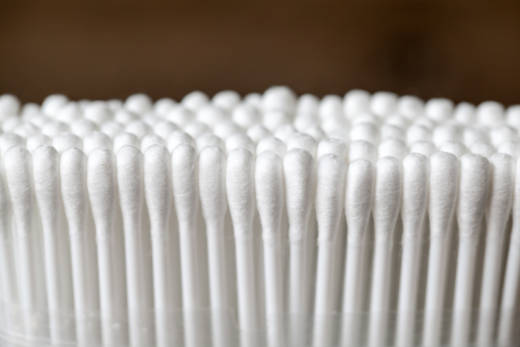
Proove tests of DNA captured by swabbing inside a patient’s cheek were so unreliable that many physicians disregarded the results. There was scant evidence, said the company’s former chief scientist, that the tests improved patient outcomes. (yokeetod/iStock)
For doctors, the brochure from a California medical laboratory sounded like easy money: $30 for every person enrolled in a study of genetic tests meant to help select the best pain medication for each patient. A typical physician could make $144,000 a year in “research fees.”
But the clinical trial was largely a ploy to boost Proove Biosciences’s revenues, and many of the doctors who signed up did no actual work, say current and former employees.
Proove has grown rapidly by tapping into the public angst over surging opioid addiction. It is one of many companies touting personalized DNA-based tests backed by little or no credible scientific data showing their reliability. That’s because a regulatory loophole has left huge swaths of the multibillion-dollar genetic testing industry largely free of government oversight.
A STAT investigation found that Proove employees stationed in physicians’ offices pushed unnecessary tests on patients — a practice called “coercion” by one former manager — and they sometimes completed research evaluation forms on behalf of doctors, rating the tests as highly effective when they weren’t. In fact, Proove tests of DNA captured by swabbing inside a patient’s cheek were so unreliable that many physicians disregarded the results. There was scant evidence, said the company’s former chief scientist, that the tests improved patient outcomes.
The company, located in two modern buildings in a burgeoning life sciences corridor in Irvine, Calif., also billed insurers in misleading ways to bump up payments, according to current and former employees and copies of insurance forms.
Sponsored
Promoting itself as the “leader in personalized pain medicine,” Proove claims its tests predict how patients will react to pain medicines and who might become dependent on opioids.
The company has enjoyed glowing television news coverage suggesting it can help combat the opioid crisis. Current and former employees and doctors who worked with Proove called such portrayals the product of hype generated by CEO Brian Meshkin, who lacks a background in science and is known for his consummate sales abilities and talent for self-promotion.
Meshkin is “in it for the money. He wanted to swab as many people as possible,” regardless of medical need, said Beth Stevens, a former Proove manager who left the company last year after clashing with the CEO. “He wanted people who had a cold to be swabbed for opioid risk.”
Meshkin declined an interview request and responded to only one of many written questions. In an emailed statement, he said, “Proove is acting within the confines of the law … [and intends] to follow both the letter and spirit of the law.”
But legal experts told STAT that the way the company pays physicians involved in two ongoing Proove trials — both key to the firm’s monthly revenues of roughly $2 million — might violate anti-kickback laws.
STAT began its examination of Proove late last year, after being contacted by current and former employees who had read an article about the dearth of evidence supporting the company’s flagship opioid risk test. The investigation included interviews with 12 current and former employees and four doctors who worked with Proove. STAT also obtained thousands of pages of internal memos, billing and insurance records, and reports of test results.
Separately, the FBI and the Office of Inspector General of the Department of Health and Human Services are investigating possible criminal wrongdoing by Proove, according to a former and a current employee who said they were recently interviewed by federal agents. They said the agents were focused on possible kickbacks involving payments to doctors. The FBI and HHS declined to comment.
The government has been concerned about companies marketing tests under the guise of research for several years. In 2014, HHS issued a fraud alert warning laboratories that some ways of paying doctors for “research” might violate laws against kickbacks for lab test referrals. The alert followed a spate of cases involving allegedly improper payments to doctors by laboratory companies.
In response to the HHS alert, Proove’s legal counsel drafted a memo for executives and sales staff stipulating that company practices complied with the law. Among other arguments, it said Proove compensates doctors only for research they personally perform. But current and former employees and doctors who worked with Proove have since disputed that claim.
Dr. Titus Taube, a family practitioner in Warner Robins, Ga., said in an interview that when he signed up as a Proove researcher, “It sounded like it was the wave of the future.” He said he quickly became disillusioned and concluded that the pay was for referring patients to Proove for tests because the research tasks, including filling out questionnaires and assessing the tests’ efficacy, were done by a Proove employee at his office.
If doctors who order tests receive improper financial inducements through a research program — such as compensation without working or payments based on the volume of referrals they make — the company and doctors might be violating federal and state laws against kickbacks or other fraud, said Dr. R. Gregory Cochran, a physician and attorney with expertise on those statutes. Promoting inaccurate or unreliable tests could also leave a company vulnerable to claims of fraud and abuse, he said.
Proove conducts “laboratory developed tests” — designed and used inside a single company or hospital lab — that can be sold as long as they are ordered by a doctor. Last year, the Silicon Valley blood-testing firm Theranos became Exhibit A of what can go wrong with these tests: Its claims of rapid diagnosis of dozens of diseases from a tiny vial of blood were exposed as overblown. Theranos is now the subject of a federal criminal probe.
The Food and Drug Administration warned in 2015 that some laboratory developed tests harm patients by leading to erroneous diagnoses and treatments. But the agency withdrew proposed regulatory guidelines for these tests late last year, deferring to President Trump’s yet-to-be named FDA commissioner and Congress to decide what, if any, rules to put in place.
“The current gaps in oversight … pose a challenge for the continued evolution of precision medicine,” undermining patient and physician confidence and potentially slowing the adoption of validated tests, said Andrew Fish, who directs AdvaMedDx, a trade group for leading diagnostic-test developers.
For now at least, Proove and similar companies can sell tests without having to show that results are valid and meaningful. STAT obtained Proove laboratory reports with gene-test results for six patients that included numerous incompatible clinical recommendations.
In one case — called typical by former and current employees — a report cautioned that a patient was highly susceptible to breathing problems when given the powerful synthetic opioid fentanyl, yet suggested a normal dose. The records do not show if fentanyl was prescribed, or if the patient suffered harm from the recommendation.
Christopher Coston, who managed Proove research assistants in western states until his job was eliminated last March, said “a lot of doctors looked at the reports and said, ‘I don’t think so. This doesn’t make sense.’”
Dr. Oleg Gavrilyuk, a San Diego physical medicine specialist, defended Proove. Tests of how his patients would respond to particular drugs validate his clinical judgment most of the time, he said. When they don’t, he ignores the results.
Ford created the first car,” he said. “Of course it was not perfect. Now Tesla is the state of the art. You cannot choke development based on the idea that it’s not perfect. It’s the first step.”
Proove’s first clinical study subjected to peer review, based on data from 134 patients, wasn’t published until late January in the Journal of Psychiatric Research. It found that doctors said most patients improved after treatment decisions guided by a Proove pain-perception test.
Dr. Eric Fung, a biotech executive who briefly served as the firm’s chief scientific officer in 2015 and coauthored the study, said in an interview that it emerged from an effort to mine Proove’s database of tens of thousands of patient records for evidence of some kind of testing benefit. He acknowledged that the lack of a comparison group, made up of patients who did not get the test, weakens the findings.
Fung added that he left the company over doubts about the utility of its tests.
“I could not find a good statistical or clinical benefit for these tests,” he said. “I didn’t feel comfortable with the science being done at Proove.”
A push to swab every patient
The questionable science hasn’t stopped Meshkin from building the privately held Proove into what Deloitte Consulting and Inc. magazine call one of the nation’s fastest-growing businesses. His formula is simple: recruit doctors as paid “researchers,” providing them with a financial stake in ordering tests for their patients.
Here is how it works, according to current and former employees: Proove conducts large trials — two in progress aim to test 150,000 patients — that ask clinicians to rate how much various Proove tests help patients.
Company sales representatives pitch research contracts to doctors, often targeting financially troubled practices that need a new revenue stream. They promise steady income for light work. Meshkin said last year that about 150 doctors had signed on, out of 400 who order Proove tests. But there has been substantial turnover as dissatisfied doctors drop out.
Proove places some of its 300 employees inside doctor’s offices, and instructs them to try to collect cheek-swab DNA samples from each patient and recruit them for clinical trials. Patients are informed that trial participants will not be billed for test fees, according to a current Proove employee. They also are supposed to tell patients their doctor has insisted on the tests.
Even patients without pain, seen at family medicine and OB-GYN practices, were enlisted for pain- and addiction-related tests, Coston said. It seemed illogical, the former regional manager said, but Meshkin became angry when research assistants failed to sign up every patient.
Many doctors “would test every single soul who walked in,” said Coston. “But they didn’t do research. The doctor is steadily getting paid, and did nothing to deserve it except ‘rent’ space” to Proove.
Research assistants completed all research tasks at least half the time, said Stevens and other managers who supervised the assistants. Asked whether doctors profited from work they didn’t do, she said, “If it quacks like duck and it walks like a duck, it is.”
Stevens said each research assistant had a quota of at least five cheek swabs a day. Documents obtained by STAT show they were offered escalating cash bonuses for meeting numerical goals above the quota.
Stevens called Meshkin’s tactics to push tests on patients who didn’t need them “coercion.”
To avoid disrupting the flow of patients into exam rooms, the research assistants fly through patient surveys and consent forms. This leaves some patients feeling bullied, several former and current employees said.
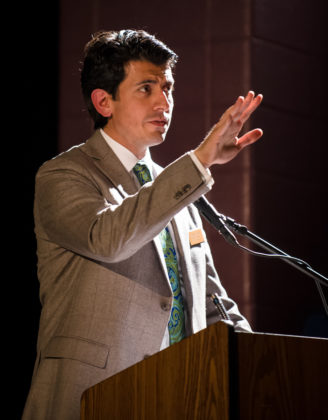
Brian Meshkin, President and CEO of Proove Bioscience (Howard County Library System/Creative Commons)
Some research assistants grew uneasy with the high-pressure tactics and quit. “People got tired of trying to get patients to participate who didn’t want to participate,” Stevens said.
Recruitment of patients became increasingly scripted and sales-oriented, said a current employee who spoke anonymously for fear of reprisals. Research assistants were told to avoid the word “study” when signing patients up for a trial, the employee said, after some objected to being used as “guinea pigs.”
The title “research assistant” was even changed to “patient engagement representative,” and Meshkin told managers to find attractive young people to fill that role, according to a former manager who spoke anonymously, citing a confidentiality agreement.
Crucially, Proove urges all doctors — whether participating in a trial or not — to sign a “standing order” for all their patients to get any Proove genetic tests, such as those for risk of opioid abuse, pain sensitivity, and response to opioids and other drugs.
Many doctors have been reluctant to sign. But by 2015 about 70 percent had done so under pressure from Meshkin, said the former manager. Examples of orders obtained by STAT authorize Proove research assistants to collect DNA from any patient under the doctor’s care.
Meshkin emphasized that under a standing order, the decision to be tested “is not up to [the patients], it’s up to the doctors,” Stevens said — that patients “don’t have a choice.”
Standing orders are common in medicine, although not in such circumstances. Doctors often issue standing orders to streamline care when patients need regular tests or treatments for a known chronic condition. Such orders rarely apply to a wide range of genetic tests for all patients in a diverse practice.
Standing orders “are often a red flag, particularly in a situation, like here, where the patients have varying diagnoses and needs,” said Cochran, associate director of a joint health policy and law degree program at the University of California, San Francisco, and UC Hastings College of the Law. “There’s absolutely a kickback concern if the doctor knows he’s going to get a check based on the number of patients who sign up and get tested.”
In his written statement, Meshkin said, “Proove seeks to ensure that each participating clinician independently determines the medical necessity” for tests, “and that every patient signs an informed consent to have the testing performed.”
Meshkin spins a good story
The man behind the Proove enterprise has an elaborate personal website, featuring flattering photos of himself and his family. Effusive language praises his character, business acumen, and civic accomplishments as a former school board member, and the site lists his accolades, including an “Entrepreneur of the Year” award from the Orange County Business Journal in Southern California.
“Volunteer. Public Servant. Entrepreneur. Coach. There are many words used to describe Brian Meshkin. But if you ask Brian, he’s just Brian — a guy who works hard, dreams big, and rolls up his sleeves to help others,” the site’s unsigned biography begins.
He also calls himself a “published researcher,” although he lacks any formal scientific training, and says nothing about the legal problems of a previous genetic testing venture.
That “nutrigenomics” company sold genetically customized dietary supplements through Las Vegas spas and directly to consumers. In an interview last year, Meshkin said he sold that company, Salugen, in 2009, soon after California authorities sent a cease-and-desist letter for improper marketing.
Former and current Proove doctors and employees said the site aptly captures a man who deeply believes in himself and grasps the power of spinning a good story.
Meshkin has been listed as a coauthor on study abstracts, Proove posters presented at scientific meetings, and the recently published study. His involvement in research was one of the reasons that Dr. Daniel A. Schwarz, Proove’s former research and development director, said he decided to resign.
A Michigan pain specialist, Schwarz said he left Proove in 2015 over concerns about the company’s lack of scientific integrity. “You can’t have a CEO trying to run the science who doesn’t have a science background,” he said. “It was marketing. It wasn’t science, and I couldn’t be a part of that.”
Schwarz said scientific control became a key issue when he began to doubt the validity of Proove’s work and wanted to repair the company’s research and development. Meshkin “wasn’t listening,” he said. “He didn’t take the advice, and I felt that he just wanted to do it his way.”
Schwarz also grew alarmed when coworkers said patient research records were not stored securely. Another former Proove executive, who requested anonymity due to a confidentiality agreement, said data sheets languished for long periods, stacked in heaps at Proove’s main office.
“The patient comes first, and if you have a product where you are not doing the right thing by the patient, I can’t be a part of it,” Schwarz said.
According to Stevens, company insiders hoped for vast improvements after Fung, a respected biotech executive who earned his MD and PhD degrees at Johns Hopkins University, was hired with fanfare in 2015.
“I remember one of the clinical people who worked underneath [Fung] said to me, ‘If he leaves this company, we all need to go,’” Stevens said.
Fung quit after three months.
‘Can I trust the data?’
Taube, the Georgia family doctor, said he saw firsthand how untrustworthy Proove’s tests and studies are. He signed on with Proove about four months ago after he was approached by a sales rep. Taube said he was intrigued by Proove’s ideas for advancing precision medicine and impressed by the support of Medicare and other insurers, described by Proove as study “sponsors.”
At first, he filled out the research forms himself, including an “investigator intervention evaluation” used to assess whether Proove tests helped patients or affected their care. But he said Proove managers told him, “No, no, [the Proove employee] will take care of it.”
This practice was widely adopted after some doctors filled out research forms partially or not at all, but still expected to be paid, said a former Proove executive who spoke anonymously due to a confidentiality agreement.
Taube then would sign the evaluations prepared by a Proove research assistant without giving them a close look. But he began to view the clinical trials as mostly marketing and looked more closely at the evaluations he signed. He was startled to see that Proove tests always received top ratings, though they were having little impact on his practice.
The results often were refuted by a patient’s experience, he said. For example, they showed that several of his patients should not take losartan, a blood pressure medicine, because they metabolized it poorly. But they had taken it successfully for years.
Taube recently stopped signing up new patients for Proove, saying he wondered, “Can I trust the data?”
His experience was typical, according to current and former Proove employees. They said Proove managers told representatives always to rate tests a 4 or 5 on a 5-point scale of benefit to the patient, even when a test had no bearing on clinical care.
Another former Proove executive, who also signed a confidentiality agreement, said even the principal investigator of a 50,000-patient Proove clinical trial — Dr. Daniel R. Kendall, a McLean, Va., osteopath for National Spine & Pain Centers — didn’t rely on the tests. The former executive said an audit of 1,500 patient charts from Kendall’s practice showed no changes in care based on Proove tests.
Via email, Kendall disputed that conclusion. He would not provide the audit and referred all questions to Proove. In his email statement, Meshkin said National Spine & Pain Center patients showed “significant improvement in treatment,” but did not provide any details.
Profit innovation: ‘unbundled’ charges
Clinical trials helped increase testing, but insurers often rejected claims, leading Proove to devise another way to pump up its bottom line: creative billing.
Insurers deem many Proove tests experimental due to a lack of evidence that they could aid diagnosis or treatment of the patient. One consequence of the denials, said some former employees, is that Proove periodically stops paying many sales reps and even fires them.
Proove also has failed to pay many physicians, including Taube, for research services — even doctors who actually did the work. Coston called it “the main thing I was getting yelled about by my doctors.” Taube said the company blamed slow insurance reimbursements.
By 2014, Proove could complete numerous tests using a single cheek swab. But insurance payments were less than what the company thought it could get for the same tests if they had been billed based on several different swabs, said current and former employees.
So Proove adopted a new billing strategy in 2015. Documents show that instead of submitting an invoice for multiple genetic tests from one date of service — when the patient’s cheek was swabbed — Proove “unbundled” the charges, dividing them up among several invoices keyed to the dates lab reports were issued. Current and former employees said this process has become the norm.
The company might bill insurers for its “opioid risk test” on Monday, for its “pain perception” test the following Monday, and so on — suggesting that the patient was tested on several occasions. Combined billings were often in the range of $7,000 to $10,000.
A Southern California doctor, who would only comment anonymously, said he kicked Proove out of his practice. “[T]hey billed the insurance four times more than what they told me they would bill initially. … Several patients of mine became very upset at the unreasonable amount of money that they were charging the insurance company,” the doctor said in an email. Such reactions were common among physicians, said current and former employees.Michelle Cavanaugh, an expert with the California-based medical billing firm Kareo, called unbundling “working the system.”
“What is the clinical justification for assigning it different dates?” said P. Thomas Hirsch, president of Laboratory Billing Solutions in Portsmouth, N.H., after hearing a description of Proove’s practices. “If they can’t give one, it’s just a scam.”
Sponsored
This story was originally published by STAT, an online publication of Boston Globe Media that covers health, medicine, and scientific discovery
lower waypoint
Explore tiny wildlife wonders and get science news that matters
Subscribe to Nature Unseen to get captivating science and nature stories, delivered weekly.
To learn more about how we use your information, please read our privacy policy.
window.__IS_SSR__=true
window.__INITIAL_STATE__={
"attachmentsReducer": {
"audio_0": {
"type": "attachments",
"id": "audio_0",
"imgSizes": {
"kqedFullSize": {
"file": "https://ww2.kqed.org/news/wp-content/themes/KQED-unified/img/audio_bgs/background0.jpg"
}
}
},
"audio_1": {
"type": "attachments",
"id": "audio_1",
"imgSizes": {
"kqedFullSize": {
"file": "https://ww2.kqed.org/news/wp-content/themes/KQED-unified/img/audio_bgs/background1.jpg"
}
}
},
"audio_2": {
"type": "attachments",
"id": "audio_2",
"imgSizes": {
"kqedFullSize": {
"file": "https://ww2.kqed.org/news/wp-content/themes/KQED-unified/img/audio_bgs/background2.jpg"
}
}
},
"audio_3": {
"type": "attachments",
"id": "audio_3",
"imgSizes": {
"kqedFullSize": {
"file": "https://ww2.kqed.org/news/wp-content/themes/KQED-unified/img/audio_bgs/background3.jpg"
}
}
},
"audio_4": {
"type": "attachments",
"id": "audio_4",
"imgSizes": {
"kqedFullSize": {
"file": "https://ww2.kqed.org/news/wp-content/themes/KQED-unified/img/audio_bgs/background4.jpg"
}
}
},
"placeholder": {
"type": "attachments",
"id": "placeholder",
"imgSizes": {
"thumbnail": {
"file": "https://cdn.kqed.org/wp-content/uploads/2024/12/KQED-Default-Image-816638274-2000x1333-1-160x107.jpg",
"width": 160,
"height": 107,
"mimeType": "image/jpeg"
},
"medium": {
"file": "https://cdn.kqed.org/wp-content/uploads/2024/12/KQED-Default-Image-816638274-2000x1333-1-800x533.jpg",
"width": 800,
"height": 533,
"mimeType": "image/jpeg"
},
"medium_large": {
"file": "https://cdn.kqed.org/wp-content/uploads/2024/12/KQED-Default-Image-816638274-2000x1333-1-768x512.jpg",
"width": 768,
"height": 512,
"mimeType": "image/jpeg"
},
"large": {
"file": "https://cdn.kqed.org/wp-content/uploads/2024/12/KQED-Default-Image-816638274-2000x1333-1-1020x680.jpg",
"width": 1020,
"height": 680,
"mimeType": "image/jpeg"
},
"1536x1536": {
"file": "https://cdn.kqed.org/wp-content/uploads/2024/12/KQED-Default-Image-816638274-2000x1333-1-1536x1024.jpg",
"width": 1536,
"height": 1024,
"mimeType": "image/jpeg"
},
"fd-lrg": {
"file": "https://cdn.kqed.org/wp-content/uploads/2024/12/KQED-Default-Image-816638274-2000x1333-1-1536x1024.jpg",
"width": 1536,
"height": 1024,
"mimeType": "image/jpeg"
},
"fd-med": {
"file": "https://cdn.kqed.org/wp-content/uploads/2024/12/KQED-Default-Image-816638274-2000x1333-1-1020x680.jpg",
"width": 1020,
"height": 680,
"mimeType": "image/jpeg"
},
"fd-sm": {
"file": "https://cdn.kqed.org/wp-content/uploads/2024/12/KQED-Default-Image-816638274-2000x1333-1-800x533.jpg",
"width": 800,
"height": 533,
"mimeType": "image/jpeg"
},
"post-thumbnail": {
"file": "https://cdn.kqed.org/wp-content/uploads/2024/12/KQED-Default-Image-816638274-2000x1333-1-672x372.jpg",
"width": 672,
"height": 372,
"mimeType": "image/jpeg"
},
"twentyfourteen-full-width": {
"file": "https://cdn.kqed.org/wp-content/uploads/2024/12/KQED-Default-Image-816638274-2000x1333-1-1038x576.jpg",
"width": 1038,
"height": 576,
"mimeType": "image/jpeg"
},
"xxsmall": {
"file": "https://cdn.kqed.org/wp-content/uploads/2024/12/KQED-Default-Image-816638274-2000x1333-1-160x107.jpg",
"width": 160,
"height": 107,
"mimeType": "image/jpeg"
},
"xsmall": {
"file": "https://cdn.kqed.org/wp-content/uploads/2024/12/KQED-Default-Image-816638274-2000x1333-1-672x372.jpg",
"width": 672,
"height": 372,
"mimeType": "image/jpeg"
},
"small": {
"file": "https://cdn.kqed.org/wp-content/uploads/2024/12/KQED-Default-Image-816638274-2000x1333-1-672x372.jpg",
"width": 672,
"height": 372,
"mimeType": "image/jpeg"
},
"xlarge": {
"file": "https://cdn.kqed.org/wp-content/uploads/2024/12/KQED-Default-Image-816638274-2000x1333-1-1020x680.jpg",
"width": 1020,
"height": 680,
"mimeType": "image/jpeg"
},
"full-width": {
"file": "https://cdn.kqed.org/wp-content/uploads/2024/12/KQED-Default-Image-816638274-2000x1333-1-1920x1280.jpg",
"width": 1920,
"height": 1280,
"mimeType": "image/jpeg"
},
"guest-author-32": {
"file": "https://cdn.kqed.org/wp-content/uploads/2025/01/KQED-Default-Image-816638274-1333x1333-1-160x160.jpg",
"width": 32,
"height": 32,
"mimeType": "image/jpeg"
},
"guest-author-50": {
"file": "https://cdn.kqed.org/wp-content/uploads/2025/01/KQED-Default-Image-816638274-1333x1333-1-160x160.jpg",
"width": 50,
"height": 50,
"mimeType": "image/jpeg"
},
"guest-author-64": {
"file": "https://cdn.kqed.org/wp-content/uploads/2025/01/KQED-Default-Image-816638274-1333x1333-1-160x160.jpg",
"width": 64,
"height": 64,
"mimeType": "image/jpeg"
},
"guest-author-96": {
"file": "https://cdn.kqed.org/wp-content/uploads/2025/01/KQED-Default-Image-816638274-1333x1333-1-160x160.jpg",
"width": 96,
"height": 96,
"mimeType": "image/jpeg"
},
"guest-author-128": {
"file": "https://cdn.kqed.org/wp-content/uploads/2025/01/KQED-Default-Image-816638274-1333x1333-1-160x160.jpg",
"width": 128,
"height": 128,
"mimeType": "image/jpeg"
},
"detail": {
"file": "https://cdn.kqed.org/wp-content/uploads/2025/01/KQED-Default-Image-816638274-1333x1333-1-160x160.jpg",
"width": 160,
"height": 160,
"mimeType": "image/jpeg"
},
"kqedFullSize": {
"file": "https://cdn.kqed.org/wp-content/uploads/2024/12/KQED-Default-Image-816638274-2000x1333-1.jpg",
"width": 2000,
"height": 1333
}
}
},
"futureofyou_346449": {
"type": "attachments",
"id": "futureofyou_346449",
"meta": {
"index": "attachments_1716263798",
"site": "futureofyou",
"id": "346449",
"found": true
},
"parent": 345800,
"imgSizes": {
"small": {
"file": "https://ww2.kqed.org/app/uploads/sites/13/2017/03/swab-520x347.jpg",
"width": 520,
"mimeType": "image/jpeg",
"height": 347
},
"twentyfourteen-full-width": {
"file": "https://ww2.kqed.org/app/uploads/sites/13/2017/03/swab-1038x576.jpg",
"width": 1038,
"mimeType": "image/jpeg",
"height": 576
},
"thumbnail": {
"file": "https://ww2.kqed.org/app/uploads/sites/13/2017/03/swab-160x107.jpg",
"width": 160,
"mimeType": "image/jpeg",
"height": 107
},
"fd-sm": {
"file": "https://ww2.kqed.org/app/uploads/sites/13/2017/03/swab-960x640.jpg",
"width": 960,
"mimeType": "image/jpeg",
"height": 640
},
"post-thumbnail": {
"file": "https://ww2.kqed.org/app/uploads/sites/13/2017/03/swab-672x372.jpg",
"width": 672,
"mimeType": "image/jpeg",
"height": 372
},
"xsmall": {
"file": "https://ww2.kqed.org/app/uploads/sites/13/2017/03/swab-375x250.jpg",
"width": 375,
"mimeType": "image/jpeg",
"height": 250
},
"kqedFullSize": {
"file": "https://ww2.kqed.org/app/uploads/sites/13/2017/03/swab-e1488387633366.jpg",
"width": 1920,
"height": 1280
},
"large": {
"file": "https://ww2.kqed.org/app/uploads/sites/13/2017/03/swab-1020x680.jpg",
"width": 1020,
"mimeType": "image/jpeg",
"height": 680
},
"xlarge": {
"file": "https://ww2.kqed.org/app/uploads/sites/13/2017/03/swab-1180x787.jpg",
"width": 1180,
"mimeType": "image/jpeg",
"height": 787
},
"guest-author-50": {
"file": "https://ww2.kqed.org/app/uploads/sites/13/2017/03/swab-50x50.jpg",
"width": 50,
"mimeType": "image/jpeg",
"height": 50
},
"guest-author-96": {
"file": "https://ww2.kqed.org/app/uploads/sites/13/2017/03/swab-96x96.jpg",
"width": 96,
"mimeType": "image/jpeg",
"height": 96
},
"medium": {
"file": "https://ww2.kqed.org/app/uploads/sites/13/2017/03/swab-800x533.jpg",
"width": 800,
"mimeType": "image/jpeg",
"height": 533
},
"guest-author-64": {
"file": "https://ww2.kqed.org/app/uploads/sites/13/2017/03/swab-64x64.jpg",
"width": 64,
"mimeType": "image/jpeg",
"height": 64
},
"guest-author-32": {
"file": "https://ww2.kqed.org/app/uploads/sites/13/2017/03/swab-32x32.jpg",
"width": 32,
"mimeType": "image/jpeg",
"height": 32
},
"fd-lrg": {
"file": "https://ww2.kqed.org/app/uploads/sites/13/2017/03/swab-1920x1280.jpg",
"width": 1920,
"mimeType": "image/jpeg",
"height": 1280
},
"fd-med": {
"file": "https://ww2.kqed.org/app/uploads/sites/13/2017/03/swab-1180x787.jpg",
"width": 1180,
"mimeType": "image/jpeg",
"height": 787
},
"full-width": {
"file": "https://ww2.kqed.org/app/uploads/sites/13/2017/03/swab-1920x1280.jpg",
"width": 1920,
"mimeType": "image/jpeg",
"height": 1280
},
"detail": {
"file": "https://ww2.kqed.org/app/uploads/sites/13/2017/03/swab-150x150.jpg",
"width": 150,
"mimeType": "image/jpeg",
"height": 150
},
"medium_large": {
"file": "https://ww2.kqed.org/app/uploads/sites/13/2017/03/swab-768x512.jpg",
"width": 768,
"mimeType": "image/jpeg",
"height": 512
},
"guest-author-128": {
"file": "https://ww2.kqed.org/app/uploads/sites/13/2017/03/swab-128x128.jpg",
"width": 128,
"mimeType": "image/jpeg",
"height": 128
},
"xxsmall": {
"file": "https://ww2.kqed.org/app/uploads/sites/13/2017/03/swab-240x160.jpg",
"width": 240,
"mimeType": "image/jpeg",
"height": 160
}
},
"publishDate": 1488387613,
"modified": 1488387731,
"caption": "Proove tests of DNA captured by swabbing inside a patient’s cheek were so unreliable that many physicians disregarded the results. There was scant evidence, said the company’s former chief scientist, that the tests improved patient outcomes.",
"description": null,
"title": "Close up of cotton Buds",
"credit": "yokeetod/iStock",
"status": "inherit",
"fetchFailed": false,
"isLoading": false
}
},
"audioPlayerReducer": {
"postId": "stream_live",
"isPaused": true,
"isPlaying": false,
"pfsActive": false,
"pledgeModalIsOpen": true,
"playerDrawerIsOpen": false
},
"authorsReducer": {
"byline_futureofyou_345800": {
"type": "authors",
"id": "byline_futureofyou_345800",
"meta": {
"override": true
},
"slug": "byline_futureofyou_345800",
"name": "Charles Piller\u003cbr />\u003ca href=\"https://www.statnews.com/\">STAT\u003c/a>",
"isLoading": false
}
},
"breakingNewsReducer": {},
"pagesReducer": {},
"postsReducer": {
"stream_live": {
"type": "live",
"id": "stream_live",
"audioUrl": "https://streams.kqed.org/kqedradio",
"title": "Live Stream",
"excerpt": "Live Stream information currently unavailable.",
"link": "/radio",
"featImg": "",
"label": {
"name": "KQED Live",
"link": "/"
}
},
"stream_kqedNewscast": {
"type": "posts",
"id": "stream_kqedNewscast",
"audioUrl": "https://www.kqed.org/.stream/anon/radio/RDnews/newscast.mp3?_=1",
"title": "KQED Newscast",
"featImg": "",
"label": {
"name": "88.5 FM",
"link": "/"
}
},
"futureofyou_345800": {
"type": "posts",
"id": "futureofyou_345800",
"meta": {
"index": "posts_1716263798",
"site": "futureofyou",
"id": "345800",
"found": true
},
"parent": 0,
"labelTerm": {
"site": "futureofyou"
},
"blocks": [],
"publishDate": 1488404055,
"format": "standard",
"disqusTitle": "Big Genetics Company Conducted Needless, Inaccurate Tests, Employees Say",
"title": "Big Genetics Company Conducted Needless, Inaccurate Tests, Employees Say",
"headTitle": "KQED Future of You | KQED Science",
"content": "\u003cp>For doctors, \u003ca href=\"https://www.documentcloud.org/documents/3475304-STAT-Proove-Investigation-Documents.html#document/p2/a340190\" target=\"_blank\">the brochure\u003c/a> from a California medical laboratory sounded like easy money: $30 for every person enrolled in a study of genetic tests meant to help select the best pain medication for each patient. A typical physician could make $144,000 a year in “research fees.”\u003c/p>\n\u003cp>But the clinical trial was largely a ploy to boost \u003ca href=\"https://www.proove.com/\" target=\"_blank\">Proove Biosciences’s\u003c/a> revenues, and many of the doctors who signed up did no actual work, say current and former employees.\u003c/p>\n\u003cp>Proove has grown rapidly by tapping into the public angst over surging opioid addiction. It is one of many companies touting personalized DNA-based tests backed by little or no credible scientific data showing their reliability. That’s because a regulatory loophole has left huge swaths of the multibillion-dollar genetic testing industry largely free of government oversight.\u003c/p>\n\u003cp>[contextly_sidebar id=\"Uz4xTjqnrRiF1ro9zctmTWf7ka4Kpqr6\"]A STAT investigation found that Proove employees stationed in physicians’ offices pushed unnecessary tests on patients — a practice called “coercion” by one former manager — and they sometimes completed research evaluation forms on behalf of doctors, rating the tests as highly effective when they weren’t. In fact, Proove tests of DNA captured by swabbing inside a patient’s cheek were so unreliable that many physicians disregarded the results. There was scant evidence, said the company’s former chief scientist, that the tests improved patient outcomes.\u003c/p>\n\u003cp>The company, located in two modern buildings in a burgeoning life sciences corridor in Irvine, Calif., also billed insurers in misleading ways to bump up payments, according to current and former employees and copies of insurance forms.\u003c/p>\n\u003cp>[ad fullwidth]\u003c/p>\n\u003cp>Promoting itself as the “leader in personalized pain medicine,” Proove claims its tests predict how patients will react to pain medicines and who might become dependent on opioids.\u003c/p>\n\u003cp>The company has enjoyed glowing television news \u003ca href=\"http://www.cnbc.com/2016/09/07/the-genetic-test-that-can-help-fix-americas-opioid-painkiller-addiction.html\" target=\"_blank\">coverage\u003c/a> suggesting it can help combat the opioid crisis. Current and former employees and doctors who worked with Proove called such portrayals the product of hype generated by CEO Brian Meshkin, who lacks a background in science and is known for his consummate sales abilities and talent for self-promotion.\u003c/p>\n\u003cp>Meshkin is “in it for the money. He wanted to swab as many people as possible,” regardless of medical need, said Beth Stevens, a former Proove manager who left the company last year after clashing with the CEO. “He wanted people who had a cold to be swabbed for opioid risk.”\u003c/p>\n\u003cp>Meshkin declined an interview request and responded to only one of many written questions. In an emailed statement, he said, “Proove is acting within the confines of the law … [and intends] to follow both the letter and spirit of the law.”\u003c/p>\n\u003cp>But legal experts told STAT that the way the company pays physicians involved in two ongoing Proove trials — both key to the firm’s monthly revenues of roughly $2 million — might violate anti-kickback laws.\u003c/p>\n\u003cp>STAT began its examination of Proove late last year, after being contacted by current and former employees who had read an \u003ca href=\"https://www.statnews.com/2016/12/13/proove-opioid-risk-test/\" target=\"_blank\">article\u003c/a> about the dearth of evidence supporting the company’s flagship opioid risk test. The investigation included interviews with 12 current and former employees and four doctors who worked with Proove. STAT also obtained thousands of pages of internal memos, billing and insurance records, and reports of test results.\u003c/p>\n\u003cp>Separately, the FBI and the Office of Inspector General of the Department of Health and Human Services are investigating possible criminal wrongdoing by Proove, according to a former and a current employee who said they were recently interviewed by federal agents. They said the agents were focused on possible kickbacks involving payments to doctors. The FBI and HHS declined to comment.\u003c/p>\n\u003cp>The government has been concerned about companies marketing tests under the guise of research for several years. In 2014, HHS issued a \u003ca href=\"https://oig.hhs.gov/fraud/docs/alertsandbulletins/2014/OIG_SFA_Laboratory_Payments_06252014.pdf\" target=\"_blank\">fraud alert\u003c/a> warning laboratories that some ways of paying doctors for “research” might violate laws against kickbacks for lab test referrals. The alert followed a spate of cases involving allegedly improper payments to doctors by laboratory companies.\u003c/p>\n\u003caside class=\"pullquote alignright\">[Meshkin] 'is in it for the money. He wanted to swab as many people as possible.'\u003ccite>Beth Stevens, a former Proove manager\u003c/cite>\u003c/aside>\n\u003cp>In response to the HHS alert, \u003ca href=\"https://www.documentcloud.org/documents/3475304-STAT-Proove-Investigation-Documents.html#document/p3/a340191\" target=\"_blank\">Proove’s legal counsel drafted a memo\u003c/a> for executives and sales staff stipulating that company practices complied with the law. Among other arguments, it said Proove compensates doctors only for research they personally perform. But current and former employees and doctors who worked with Proove have since disputed that claim.\u003c/p>\n\u003cp>Dr. Titus Taube, a family practitioner in Warner Robins, Ga., said in an interview that when he signed up as a Proove researcher, “It sounded like it was the wave of the future.” He said he quickly became disillusioned and concluded that the pay was for referring patients to Proove for tests because the research tasks, including filling out questionnaires and assessing the tests’ efficacy, were done by a Proove employee at his office.\u003c/p>\n\u003cp>If doctors who order tests receive improper financial inducements through a research program — such as compensation without working or payments based on the volume of referrals they make — the company and doctors might be violating federal and state laws against kickbacks or other fraud, said Dr. R. Gregory Cochran, a physician and attorney with expertise on those statutes. Promoting inaccurate or unreliable tests could also leave a company vulnerable to claims of fraud and abuse, he said.\u003c/p>\n\u003cp>Proove conducts “laboratory developed tests” — designed and used inside a single company or hospital lab — that can be sold as long as they are ordered by a doctor. Last year, the Silicon Valley blood-testing firm \u003ca href=\"https://www.statnews.com/2017/01/12/arizona-theranos-lawsuit/\" target=\"_blank\">Theranos\u003c/a> became Exhibit A of \u003ca href=\"https://ww2.kqed.org/futureofyou/2016/07/14/the-rise-and-fall-of-theranos-a-cartoon-history/\">what can go wrong with these tests\u003c/a>: Its claims of rapid diagnosis of dozens of diseases from a tiny vial of blood were exposed as overblown. Theranos is now the subject of a federal criminal probe.\u003c/p>\n\u003cp>The Food and Drug Administration warned in 2015 that some laboratory developed tests harm patients by leading to erroneous diagnoses and treatments. But the agency \u003ca href=\"https://www.statnews.com/2016/11/18/fda-lab-test-loophole/\" target=\"_blank\">withdrew\u003c/a> proposed regulatory guidelines for these tests late last year, deferring to President Trump’s yet-to-be named FDA commissioner and Congress to decide what, if any, rules to put in place.\u003c/p>\n\u003cp>“The current gaps in oversight … pose a challenge for the continued evolution of precision medicine,” undermining patient and physician confidence and potentially slowing the adoption of validated tests, said Andrew Fish, who directs AdvaMedDx, a trade group for leading diagnostic-test developers.\u003c/p>\n\u003cp>\u003c!-- iframe plugin v.4.3 wordpress.org/plugins/iframe/ -->\u003cbr>\n\u003ciframe width=\"600\" height=\"338\" src=\"//content.jwplatform.com/players/vTPizGb8-jEuQjxp9.html\" frameborder=\"0\" scrolling=\"no\" class=\"iframe-class\">\u003c/iframe>\u003c/p>\n\u003cp>For now at least, Proove and similar companies can sell tests without having to show that results are valid and meaningful. STAT obtained \u003ca href=\"https://www.documentcloud.org/documents/3475304-STAT-Proove-Investigation-Documents.html#document/p7/a340193\" target=\"_blank\">Proove laboratory reports\u003c/a> with gene-test results for six patients that included numerous incompatible clinical recommendations.\u003c/p>\n\u003cp>In one case — called typical by former and current employees — a report cautioned that a patient was highly susceptible to breathing problems when given the \u003ca href=\"https://www.statnews.com/2016/09/29/fentanyl-heroin-photo-fatal-doses/\" target=\"_blank\">powerful synthetic opioid fentanyl\u003c/a>, yet suggested a normal dose. The records do not show if fentanyl was prescribed, or if the patient suffered harm from the recommendation.\u003c/p>\n\u003cp>Christopher Coston, who managed Proove research assistants in western states until his job was eliminated last March, said “a lot of doctors looked at the reports and said, ‘I don’t think so. This doesn’t make sense.’”\u003c/p>\n\u003cp>Dr. Oleg Gavrilyuk, a San Diego physical medicine specialist, defended Proove. Tests of how his patients would respond to particular drugs validate his clinical judgment most of the time, he said. When they don’t, he ignores the results.\u003c/p>\n\u003cp>Ford created the first car,” he said. “Of course it was not perfect. Now Tesla is the state of the art. You cannot choke development based on the idea that it’s not perfect. It’s the first step.”\u003c/p>\n\u003cp>Proove’s first clinical \u003ca href=\"http://www.journalofpsychiatricresearch.com/article/S0022-3956(16)30304-1/abstract\" target=\"_blank\">study\u003c/a> subjected to peer review, based on data from 134 patients, wasn’t published until late January in the Journal of Psychiatric Research. It found that doctors said most patients improved after treatment decisions guided by a Proove pain-perception test.\u003c/p>\n\u003cp>Dr. Eric Fung, a biotech executive who briefly served as the firm’s chief scientific officer in 2015 and coauthored the study, said in an interview that it emerged from an effort to mine Proove’s database of tens of thousands of patient records for evidence of some kind of testing benefit. He acknowledged that the lack of a comparison group, made up of patients who did not get the test, weakens the findings.\u003c/p>\n\u003cp>Fung added that he left the company over doubts about the utility of its tests.\u003c/p>\n\u003cp>“I could not find a good statistical or clinical benefit for these tests,” he said. “I didn’t feel comfortable with the science being done at Proove.”\u003c/p>\n\u003ch2>A push to swab every patient\u003c/h2>\n\u003cp>The questionable science hasn’t stopped Meshkin from building the privately held Proove into what Deloitte Consulting and Inc. magazine call one of the nation’s fastest-growing businesses. His formula is simple: recruit doctors as paid “researchers,” providing them with a financial stake in ordering tests for their patients.\u003c/p>\n\u003cp>Here is how it works, according to current and former employees: Proove conducts large trials — two in progress aim to test 150,000 patients — that ask clinicians to rate how much various Proove tests help patients.\u003c/p>\n\u003cp>Company sales representatives pitch research contracts to doctors, often targeting financially troubled practices that need a new revenue stream. They promise steady income for light work. Meshkin said last year that about 150 doctors had signed on, out of 400 who order Proove tests. But there has been substantial turnover as dissatisfied doctors drop out.\u003c/p>\n\u003cp>Proove places some of its 300 employees inside doctor’s offices, and instructs them to try to collect cheek-swab DNA samples from each patient and recruit them for clinical trials. Patients are informed that trial participants will not be billed for test fees, according to a current Proove employee. They also are supposed to tell patients their doctor has insisted on the tests.\u003c/p>\n\u003cp>Even patients without pain, seen at family medicine and OB-GYN practices, were enlisted for pain- and addiction-related tests, Coston said. It seemed illogical, the former regional manager said, but Meshkin became angry when research assistants failed to sign up every patient.\u003c/p>\n\u003cp>Many doctors “would test every single soul who walked in,” said Coston. “But they didn’t do research. The doctor is steadily getting paid, and did nothing to deserve it except ‘rent’ space” to Proove.\u003c/p>\n\u003cp>Research assistants completed all research tasks at least half the time, said Stevens and other managers who supervised the assistants. Asked whether doctors profited from work they didn’t do, she said, “If it quacks like duck and it walks like a duck, it is.”\u003c/p>\n\u003cp>Stevens said each research assistant had a quota of at least five cheek swabs a day. Documents obtained by STAT show they were offered escalating cash bonuses for meeting numerical goals above the quota.\u003c/p>\n\u003cp>Stevens called Meshkin’s tactics to push tests on patients who didn’t need them “coercion.”\u003c/p>\n\u003cp>To avoid disrupting the flow of patients into exam rooms, the research assistants fly through patient surveys and consent forms. This leaves some patients feeling bullied, several former and current employees said.\u003c/p>\n\u003cfigure id=\"attachment_346445\" class=\"wp-caption alignright\" style=\"max-width: 328px\">\u003cimg class=\"wp-image-346445 size-full\" src=\"https://ww2.kqed.org/futureofyou/wp-content/uploads/sites/13/2017/03/meshkin.jpg\" alt=\"meshkin\" width=\"328\" height=\"420\" srcset=\"https://ww2.kqed.org/app/uploads/sites/13/2017/03/meshkin.jpg 328w, https://ww2.kqed.org/app/uploads/sites/13/2017/03/meshkin-160x205.jpg 160w, https://ww2.kqed.org/app/uploads/sites/13/2017/03/meshkin-240x307.jpg 240w\" sizes=\"(max-width: 328px) 100vw, 328px\">\u003cfigcaption class=\"wp-caption-text\">Brian Meshkin, President and CEO of Proove Bioscience \u003ccite>(Howard County Library System/Creative Commons)\u003c/cite>\u003c/figcaption>\u003c/figure>\n\u003cp>Some research assistants grew uneasy with the high-pressure tactics and quit. “People got tired of trying to get patients to participate who didn’t want to participate,” Stevens said.\u003c/p>\n\u003cp>Recruitment of patients became increasingly scripted and sales-oriented, said a current employee who spoke anonymously for fear of reprisals. Research assistants were told to avoid the word “study” when signing patients up for a trial, the employee said, after some objected to being used as “guinea pigs.”\u003c/p>\n\u003cp>The title “research assistant” was even changed to “patient engagement representative,” and Meshkin told managers to find attractive young people to fill that role, according to a former manager who spoke anonymously, citing a confidentiality agreement.\u003c/p>\n\u003cp>Crucially, Proove urges all doctors — whether participating in a trial or not — to sign a “\u003ca href=\"https://www.documentcloud.org/documents/3475304-STAT-Proove-Investigation-Documents.html#document/p18/a340196\" target=\"_blank\">standing order\u003c/a>” for all their patients to get any Proove genetic tests, such as those for risk of opioid abuse, pain sensitivity, and response to opioids and other drugs.\u003c/p>\n\u003cp>Many doctors have been reluctant to sign. But by 2015 about 70 percent had done so under pressure from Meshkin, said the former manager. Examples of orders obtained by STAT authorize Proove research assistants to collect DNA from any patient under the doctor’s care.\u003c/p>\n\u003cp>Meshkin emphasized that under a standing order, the decision to be tested “is not up to [the patients], it’s up to the doctors,” Stevens said — that patients “don’t have a choice.”\u003c/p>\n\u003cp>Standing orders are common in medicine, although not in such circumstances. Doctors often issue standing orders to streamline care when patients need regular tests or treatments for a known chronic condition. Such orders rarely apply to a wide range of genetic tests for all patients in a diverse practice.\u003c/p>\n\u003caside class=\"pullquote alignright\">'I could not find a good statistical or clinical benefit for these tests. I didn’t feel comfortable with the science being done at Proove.'\u003ccite>Dr. Eric Fung, former Chief Scientific Officer at Proove Biosciences\u003c/cite>\u003c/aside>\n\u003cp>Standing orders “are often a red flag, particularly in a situation, like here, where the patients have varying diagnoses and needs,” said Cochran, associate director of a joint health policy and law degree program at the University of California, San Francisco, and UC Hastings College of the Law. “There’s absolutely a kickback concern if the doctor knows he’s going to get a check based on the number of patients who sign up and get tested.”\u003c/p>\n\u003cp>In his written statement, Meshkin said, “Proove seeks to ensure that each participating clinician independently determines the medical necessity” for tests, “and that every patient signs an informed consent to have the testing performed.”\u003c/p>\n\u003ch2>Meshkin spins a good story\u003c/h2>\n\u003cp>The man behind the Proove enterprise has an elaborate personal \u003ca href=\"http://www.brianmeshkin.com/\" target=\"_blank\">website\u003c/a>, featuring flattering photos of himself and his family. Effusive language praises his character, business acumen, and civic accomplishments as a former school board member, and the site lists his accolades, including an “Entrepreneur of the Year” award from the Orange County Business Journal in Southern California.\u003c/p>\n\u003cp>“Volunteer. Public Servant. Entrepreneur. Coach. There are many words used to describe Brian Meshkin. But if you ask Brian, he’s just Brian — a guy who works hard, dreams big, and rolls up his sleeves to help others,” the site’s unsigned biography begins.\u003c/p>\n\u003cp>He also calls himself a “published researcher,” although he lacks any formal scientific training, and says nothing about the legal problems of a previous genetic testing venture.\u003c/p>\n\u003cp>That “nutrigenomics” company sold genetically customized dietary supplements through Las Vegas spas and directly to consumers. In an interview last year, Meshkin said he sold that company, Salugen, in 2009, soon after California authorities sent a cease-and-desist letter for improper marketing.\u003c/p>\n\u003cp>Former and current Proove doctors and employees said the site aptly captures a man who deeply believes in himself and grasps the power of spinning a good story.\u003c/p>\n\u003cp>Meshkin has been listed as a coauthor on study abstracts, Proove posters presented at scientific meetings, and the recently published study. His involvement in research was one of the reasons that Dr. Daniel A. Schwarz, Proove’s former research and development director, said he decided to resign.\u003c/p>\n\u003cp>A Michigan pain specialist, Schwarz said he left Proove in 2015 over concerns about the company’s lack of scientific integrity. “You can’t have a CEO trying to run the science who doesn’t have a science background,” he said. “It was marketing. It wasn’t science, and I couldn’t be a part of that.”\u003c/p>\n\u003cp>Schwarz said scientific control became a key issue when he began to doubt the validity of Proove’s work and wanted to repair the company’s research and development. Meshkin “wasn’t listening,” he said. “He didn’t take the advice, and I felt that he just wanted to do it his way.”\u003c/p>\n\u003cp>Schwarz also grew alarmed when coworkers said patient research records were not stored securely. Another former Proove executive, who requested anonymity due to a confidentiality agreement, said data sheets languished for long periods, stacked in heaps at Proove’s main office.\u003c/p>\n\u003cp>“The patient comes first, and if you have a product where you are not doing the right thing by the patient, I can’t be a part of it,” Schwarz said.\u003c/p>\n\u003cp>According to Stevens, company insiders hoped for vast improvements after Fung, a respected biotech executive who earned his MD and PhD degrees at Johns Hopkins University, was hired with fanfare in 2015.\u003c/p>\n\u003cp>“I remember one of the clinical people who worked underneath [Fung] said to me, ‘If he leaves this company, we all need to go,’” Stevens said.\u003c/p>\n\u003cp>Fung quit after three months.\u003c/p>\n\u003ch2>‘Can I trust the data?’\u003c/h2>\n\u003cp>Taube, the Georgia family doctor, said he saw firsthand how untrustworthy Proove’s tests and studies are. He signed on with Proove about four months ago after he was approached by a sales rep. Taube said he was intrigued by Proove’s ideas for advancing precision medicine and impressed by the support of Medicare and other insurers, described by Proove as study “sponsors.”\u003c/p>\n\u003cp>At first, he filled out the research forms himself, including an “investigator intervention evaluation” used to assess whether Proove tests helped patients or affected their care. But he said Proove managers told him, “No, no, [the Proove employee] will take care of it.”\u003c/p>\n\u003cp>This practice was widely adopted after some doctors filled out research forms partially or not at all, but still expected to be paid, said a former Proove executive who spoke anonymously due to a confidentiality agreement.\u003c/p>\n\u003caside class=\"pullquote alignright\">'It was marketing. It wasn’t science, and I couldn’t be a part of that.’\u003ccite>Dr. Daniel A. Schwarz, Proove’s former research and development director\u003c/cite>\u003c/aside>\n\u003cp>Taube then would sign the evaluations prepared by a Proove research assistant without giving them a close look. But he began to view the clinical trials as mostly marketing and looked more closely at the evaluations he signed. He was startled to see that Proove tests always received top ratings, though they were having little impact on his practice.\u003c/p>\n\u003cp>The results often were refuted by a patient’s experience, he said. For example, they showed that several of his patients should not take losartan, a blood pressure medicine, because they metabolized it poorly. But they had taken it successfully for years.\u003c/p>\n\u003cp>Taube recently stopped signing up new patients for Proove, saying he wondered, “Can I trust the data?”\u003c/p>\n\u003cp>His experience was typical, according to current and former Proove employees. They said Proove managers told representatives always to rate tests a 4 or 5 on a 5-point scale of benefit to the patient, even when a test had no bearing on clinical care.\u003c/p>\n\u003cp>Another former Proove executive, who also signed a confidentiality agreement, said even the principal investigator of a 50,000-patient Proove clinical trial — Dr. Daniel R. Kendall, a McLean, Va., osteopath for National Spine & Pain Centers — didn’t rely on the tests. The former executive said an audit of 1,500 patient charts from Kendall’s practice showed no changes in care based on Proove tests.\u003c/p>\n\u003cp>Via email, Kendall disputed that conclusion. He would not provide the audit and referred all questions to Proove. In his email statement, Meshkin said National Spine & Pain Center patients showed “significant improvement in treatment,” but did not provide any details.\u003c/p>\n\u003ch2>Profit innovation: ‘unbundled’ charges\u003c/h2>\n\u003cp>Clinical trials helped increase testing, but insurers often rejected claims, leading Proove to devise another way to pump up its bottom line: creative billing.\u003c/p>\n\u003cp>Insurers deem many Proove tests experimental due to a lack of evidence that they could aid diagnosis or treatment of the patient. One consequence of the denials, said some former employees, is that Proove periodically stops paying many sales reps and even fires them.\u003c/p>\n\u003cp>Proove also has failed to pay many physicians, including Taube, for research services — even doctors who actually did the work. Coston called it “the main thing I was getting yelled about by my doctors.” Taube said the company blamed slow insurance reimbursements.\u003c/p>\n\u003cp>By 2014, Proove could complete numerous tests using a single cheek swab. But insurance payments were less than what the company thought it could get for the same tests if they had been billed based on several different swabs, said current and former employees.\u003c/p>\n\u003cp>So Proove adopted a new billing strategy in 2015. \u003ca href=\"https://www.documentcloud.org/documents/3475304-STAT-Proove-Investigation-Documents.html#document/p19\" target=\"_blank\">Documents show\u003c/a> that instead of submitting an invoice for multiple genetic tests from one date of service — when the patient’s cheek was swabbed — Proove “unbundled” the charges, dividing them up among several invoices keyed to the dates lab reports were issued. Current and former employees said this process has become the norm.\u003c/p>\n\u003cp>The company might bill insurers for its “opioid risk test” on Monday, for its “pain perception” test the following Monday, and so on — suggesting that the patient was tested on several occasions. Combined billings were often in the range of $7,000 to $10,000.\u003c/p>\n\u003cp>A Southern California doctor, who would only comment anonymously, said he kicked Proove out of his practice. “[T]hey billed the insurance four times more than what they told me they would bill initially. … Several patients of mine became very upset at the unreasonable amount of money that they were charging the insurance company,” the doctor said in an email. Such reactions were common among physicians, said current and former employees.Michelle Cavanaugh, an expert with the California-based medical billing firm Kareo, called unbundling “working the system.”\u003c/p>\n\u003cp>“What is the clinical justification for assigning it different dates?” said P. Thomas Hirsch, president of Laboratory Billing Solutions in Portsmouth, N.H., after hearing a description of Proove’s practices. “If they can’t give one, it’s just a scam.”\u003c/p>\n\u003cp>[ad floatright]\u003c/p>\n\u003cp>\u003cem>This \u003ca href=\"https://www.statnews.com/2017/02/28/proove-biosciences-genetic-tests/\" target=\"_blank\">story\u003c/a> was originally published by STAT, an online publication of Boston Globe Media that covers health, medicine, and scientific discovery\u003c/em>\u003c/p>\n\n",
"disqusIdentifier": "345800 https://ww2.kqed.org/futureofyou/?p=345800",
"disqusUrl": "https://ww2.kqed.org/futureofyou/2017/03/01/proove-employees-say-company-pushed-unneccesary-inaccurate-genetic-tests/",
"stats": {
"hasVideo": false,
"hasChartOrMap": false,
"hasAudio": false,
"hasPolis": false,
"wordCount": 3868,
"hasGoogleForm": false,
"hasGallery": false,
"hasHearkenModule": false,
"iframeSrcs": [],
"paragraphCount": 81
},
"modified": 1488501847,
"excerpt": "Critics and former employees say Proove Biosciences conducts needless genetic tests while scamming doctors, patients and insurers. ",
"headData": {
"twImgId": "",
"twTitle": "",
"ogTitle": "",
"ogImgId": "",
"twDescription": "",
"description": "Critics and former employees say Proove Biosciences conducts needless genetic tests while scamming doctors, patients and insurers. ",
"title": "Big Genetics Company Conducted Needless, Inaccurate Tests, Employees Say | KQED",
"ogDescription": "",
"schema": {
"@context": "https://schema.org",
"@type": "Article",
"headline": "Big Genetics Company Conducted Needless, Inaccurate Tests, Employees Say",
"datePublished": "2017-03-01T13:34:15-08:00",
"dateModified": "2017-03-02T16:44:07-08:00",
"image": "https://ww2.kqed.org/app/uploads/sites/13/2017/03/swab-1020x680.jpg"
},
"authorsData": [
{
"type": "authors",
"id": "byline_futureofyou_345800",
"meta": {
"override": true
},
"slug": "byline_futureofyou_345800",
"name": "Charles Piller\u003cbr />\u003ca href=\"https://www.statnews.com/\">STAT\u003c/a>",
"isLoading": false
}
],
"imageData": {
"ogImageSize": {
"file": "https://ww2.kqed.org/app/uploads/sites/13/2017/03/swab-1020x680.jpg",
"width": 1020,
"mimeType": "image/jpeg",
"height": 680
},
"ogImageWidth": "1020",
"ogImageHeight": "680",
"twitterImageUrl": "https://ww2.kqed.org/app/uploads/sites/13/2017/03/swab-1020x680.jpg",
"twImageSize": {
"file": "https://ww2.kqed.org/app/uploads/sites/13/2017/03/swab-1020x680.jpg",
"width": 1020,
"mimeType": "image/jpeg",
"height": 680
},
"twitterCard": "summary_large_image"
},
"tagData": {
"tags": [
"DNA",
"genetic testing",
"opioids",
"Proove Bioscience"
]
}
},
"guestAuthors": [],
"slug": "proove-employees-say-company-pushed-unneccesary-inaccurate-genetic-tests",
"status": "publish",
"nprByline": "Charles Piller\u003cbr />\u003ca href=\"https://www.statnews.com/\">STAT\u003c/a>",
"path": "/futureofyou/345800/proove-employees-say-company-pushed-unneccesary-inaccurate-genetic-tests",
"audioTrackLength": null,
"parsedContent": [
{
"type": "contentString",
"content": "\u003cdiv class=\"post-body\">\u003cp>\u003cp>For doctors, \u003ca href=\"https://www.documentcloud.org/documents/3475304-STAT-Proove-Investigation-Documents.html#document/p2/a340190\" target=\"_blank\">the brochure\u003c/a> from a California medical laboratory sounded like easy money: $30 for every person enrolled in a study of genetic tests meant to help select the best pain medication for each patient. A typical physician could make $144,000 a year in “research fees.”\u003c/p>\n\u003cp>But the clinical trial was largely a ploy to boost \u003ca href=\"https://www.proove.com/\" target=\"_blank\">Proove Biosciences’s\u003c/a> revenues, and many of the doctors who signed up did no actual work, say current and former employees.\u003c/p>\n\u003cp>Proove has grown rapidly by tapping into the public angst over surging opioid addiction. It is one of many companies touting personalized DNA-based tests backed by little or no credible scientific data showing their reliability. That’s because a regulatory loophole has left huge swaths of the multibillion-dollar genetic testing industry largely free of government oversight.\u003c/p>\n\u003cp>\u003c/p>\u003cp>\u003c/p>\u003cp>A STAT investigation found that Proove employees stationed in physicians’ offices pushed unnecessary tests on patients — a practice called “coercion” by one former manager — and they sometimes completed research evaluation forms on behalf of doctors, rating the tests as highly effective when they weren’t. In fact, Proove tests of DNA captured by swabbing inside a patient’s cheek were so unreliable that many physicians disregarded the results. There was scant evidence, said the company’s former chief scientist, that the tests improved patient outcomes.\u003c/p>\n\u003cp>The company, located in two modern buildings in a burgeoning life sciences corridor in Irvine, Calif., also billed insurers in misleading ways to bump up payments, according to current and former employees and copies of insurance forms.\u003c/p>\n\u003cp>\u003c/p>\u003c/div>",
"attributes": {
"named": {},
"numeric": []
}
},
{
"type": "component",
"content": "",
"name": "ad",
"attributes": {
"named": {
"label": "fullwidth"
},
"numeric": [
"fullwidth"
]
}
},
{
"type": "contentString",
"content": "\u003cdiv class=\"post-body\">\u003cp>\u003c/p>\n\u003cp>Promoting itself as the “leader in personalized pain medicine,” Proove claims its tests predict how patients will react to pain medicines and who might become dependent on opioids.\u003c/p>\n\u003cp>The company has enjoyed glowing television news \u003ca href=\"http://www.cnbc.com/2016/09/07/the-genetic-test-that-can-help-fix-americas-opioid-painkiller-addiction.html\" target=\"_blank\">coverage\u003c/a> suggesting it can help combat the opioid crisis. Current and former employees and doctors who worked with Proove called such portrayals the product of hype generated by CEO Brian Meshkin, who lacks a background in science and is known for his consummate sales abilities and talent for self-promotion.\u003c/p>\n\u003cp>Meshkin is “in it for the money. He wanted to swab as many people as possible,” regardless of medical need, said Beth Stevens, a former Proove manager who left the company last year after clashing with the CEO. “He wanted people who had a cold to be swabbed for opioid risk.”\u003c/p>\n\u003cp>Meshkin declined an interview request and responded to only one of many written questions. In an emailed statement, he said, “Proove is acting within the confines of the law … [and intends] to follow both the letter and spirit of the law.”\u003c/p>\n\u003cp>But legal experts told STAT that the way the company pays physicians involved in two ongoing Proove trials — both key to the firm’s monthly revenues of roughly $2 million — might violate anti-kickback laws.\u003c/p>\n\u003cp>STAT began its examination of Proove late last year, after being contacted by current and former employees who had read an \u003ca href=\"https://www.statnews.com/2016/12/13/proove-opioid-risk-test/\" target=\"_blank\">article\u003c/a> about the dearth of evidence supporting the company’s flagship opioid risk test. The investigation included interviews with 12 current and former employees and four doctors who worked with Proove. STAT also obtained thousands of pages of internal memos, billing and insurance records, and reports of test results.\u003c/p>\n\u003cp>Separately, the FBI and the Office of Inspector General of the Department of Health and Human Services are investigating possible criminal wrongdoing by Proove, according to a former and a current employee who said they were recently interviewed by federal agents. They said the agents were focused on possible kickbacks involving payments to doctors. The FBI and HHS declined to comment.\u003c/p>\n\u003cp>The government has been concerned about companies marketing tests under the guise of research for several years. In 2014, HHS issued a \u003ca href=\"https://oig.hhs.gov/fraud/docs/alertsandbulletins/2014/OIG_SFA_Laboratory_Payments_06252014.pdf\" target=\"_blank\">fraud alert\u003c/a> warning laboratories that some ways of paying doctors for “research” might violate laws against kickbacks for lab test referrals. The alert followed a spate of cases involving allegedly improper payments to doctors by laboratory companies.\u003c/p>\n\u003caside class=\"pullquote alignright\">[Meshkin] 'is in it for the money. He wanted to swab as many people as possible.'\u003ccite>Beth Stevens, a former Proove manager\u003c/cite>\u003c/aside>\n\u003cp>In response to the HHS alert, \u003ca href=\"https://www.documentcloud.org/documents/3475304-STAT-Proove-Investigation-Documents.html#document/p3/a340191\" target=\"_blank\">Proove’s legal counsel drafted a memo\u003c/a> for executives and sales staff stipulating that company practices complied with the law. Among other arguments, it said Proove compensates doctors only for research they personally perform. But current and former employees and doctors who worked with Proove have since disputed that claim.\u003c/p>\n\u003cp>Dr. Titus Taube, a family practitioner in Warner Robins, Ga., said in an interview that when he signed up as a Proove researcher, “It sounded like it was the wave of the future.” He said he quickly became disillusioned and concluded that the pay was for referring patients to Proove for tests because the research tasks, including filling out questionnaires and assessing the tests’ efficacy, were done by a Proove employee at his office.\u003c/p>\n\u003cp>If doctors who order tests receive improper financial inducements through a research program — such as compensation without working or payments based on the volume of referrals they make — the company and doctors might be violating federal and state laws against kickbacks or other fraud, said Dr. R. Gregory Cochran, a physician and attorney with expertise on those statutes. Promoting inaccurate or unreliable tests could also leave a company vulnerable to claims of fraud and abuse, he said.\u003c/p>\n\u003cp>Proove conducts “laboratory developed tests” — designed and used inside a single company or hospital lab — that can be sold as long as they are ordered by a doctor. Last year, the Silicon Valley blood-testing firm \u003ca href=\"https://www.statnews.com/2017/01/12/arizona-theranos-lawsuit/\" target=\"_blank\">Theranos\u003c/a> became Exhibit A of \u003ca href=\"https://ww2.kqed.org/futureofyou/2016/07/14/the-rise-and-fall-of-theranos-a-cartoon-history/\">what can go wrong with these tests\u003c/a>: Its claims of rapid diagnosis of dozens of diseases from a tiny vial of blood were exposed as overblown. Theranos is now the subject of a federal criminal probe.\u003c/p>\n\u003cp>The Food and Drug Administration warned in 2015 that some laboratory developed tests harm patients by leading to erroneous diagnoses and treatments. But the agency \u003ca href=\"https://www.statnews.com/2016/11/18/fda-lab-test-loophole/\" target=\"_blank\">withdrew\u003c/a> proposed regulatory guidelines for these tests late last year, deferring to President Trump’s yet-to-be named FDA commissioner and Congress to decide what, if any, rules to put in place.\u003c/p>\n\u003cp>“The current gaps in oversight … pose a challenge for the continued evolution of precision medicine,” undermining patient and physician confidence and potentially slowing the adoption of validated tests, said Andrew Fish, who directs AdvaMedDx, a trade group for leading diagnostic-test developers.\u003c/p>\n\u003cp>\u003c!-- iframe plugin v.4.3 wordpress.org/plugins/iframe/ -->\u003cbr>\n\u003ciframe width=\"600\" height=\"338\" src=\"//content.jwplatform.com/players/vTPizGb8-jEuQjxp9.html\" frameborder=\"0\" scrolling=\"no\" class=\"iframe-class\">\u003c/iframe>\u003c/p>\n\u003cp>For now at least, Proove and similar companies can sell tests without having to show that results are valid and meaningful. STAT obtained \u003ca href=\"https://www.documentcloud.org/documents/3475304-STAT-Proove-Investigation-Documents.html#document/p7/a340193\" target=\"_blank\">Proove laboratory reports\u003c/a> with gene-test results for six patients that included numerous incompatible clinical recommendations.\u003c/p>\n\u003cp>In one case — called typical by former and current employees — a report cautioned that a patient was highly susceptible to breathing problems when given the \u003ca href=\"https://www.statnews.com/2016/09/29/fentanyl-heroin-photo-fatal-doses/\" target=\"_blank\">powerful synthetic opioid fentanyl\u003c/a>, yet suggested a normal dose. The records do not show if fentanyl was prescribed, or if the patient suffered harm from the recommendation.\u003c/p>\n\u003cp>Christopher Coston, who managed Proove research assistants in western states until his job was eliminated last March, said “a lot of doctors looked at the reports and said, ‘I don’t think so. This doesn’t make sense.’”\u003c/p>\n\u003cp>Dr. Oleg Gavrilyuk, a San Diego physical medicine specialist, defended Proove. Tests of how his patients would respond to particular drugs validate his clinical judgment most of the time, he said. When they don’t, he ignores the results.\u003c/p>\n\u003cp>Ford created the first car,” he said. “Of course it was not perfect. Now Tesla is the state of the art. You cannot choke development based on the idea that it’s not perfect. It’s the first step.”\u003c/p>\n\u003cp>Proove’s first clinical \u003ca href=\"http://www.journalofpsychiatricresearch.com/article/S0022-3956(16)30304-1/abstract\" target=\"_blank\">study\u003c/a> subjected to peer review, based on data from 134 patients, wasn’t published until late January in the Journal of Psychiatric Research. It found that doctors said most patients improved after treatment decisions guided by a Proove pain-perception test.\u003c/p>\n\u003cp>Dr. Eric Fung, a biotech executive who briefly served as the firm’s chief scientific officer in 2015 and coauthored the study, said in an interview that it emerged from an effort to mine Proove’s database of tens of thousands of patient records for evidence of some kind of testing benefit. He acknowledged that the lack of a comparison group, made up of patients who did not get the test, weakens the findings.\u003c/p>\n\u003cp>Fung added that he left the company over doubts about the utility of its tests.\u003c/p>\n\u003cp>“I could not find a good statistical or clinical benefit for these tests,” he said. “I didn’t feel comfortable with the science being done at Proove.”\u003c/p>\n\u003ch2>A push to swab every patient\u003c/h2>\n\u003cp>The questionable science hasn’t stopped Meshkin from building the privately held Proove into what Deloitte Consulting and Inc. magazine call one of the nation’s fastest-growing businesses. His formula is simple: recruit doctors as paid “researchers,” providing them with a financial stake in ordering tests for their patients.\u003c/p>\n\u003cp>Here is how it works, according to current and former employees: Proove conducts large trials — two in progress aim to test 150,000 patients — that ask clinicians to rate how much various Proove tests help patients.\u003c/p>\n\u003cp>Company sales representatives pitch research contracts to doctors, often targeting financially troubled practices that need a new revenue stream. They promise steady income for light work. Meshkin said last year that about 150 doctors had signed on, out of 400 who order Proove tests. But there has been substantial turnover as dissatisfied doctors drop out.\u003c/p>\n\u003cp>Proove places some of its 300 employees inside doctor’s offices, and instructs them to try to collect cheek-swab DNA samples from each patient and recruit them for clinical trials. Patients are informed that trial participants will not be billed for test fees, according to a current Proove employee. They also are supposed to tell patients their doctor has insisted on the tests.\u003c/p>\n\u003cp>Even patients without pain, seen at family medicine and OB-GYN practices, were enlisted for pain- and addiction-related tests, Coston said. It seemed illogical, the former regional manager said, but Meshkin became angry when research assistants failed to sign up every patient.\u003c/p>\n\u003cp>Many doctors “would test every single soul who walked in,” said Coston. “But they didn’t do research. The doctor is steadily getting paid, and did nothing to deserve it except ‘rent’ space” to Proove.\u003c/p>\n\u003cp>Research assistants completed all research tasks at least half the time, said Stevens and other managers who supervised the assistants. Asked whether doctors profited from work they didn’t do, she said, “If it quacks like duck and it walks like a duck, it is.”\u003c/p>\n\u003cp>Stevens said each research assistant had a quota of at least five cheek swabs a day. Documents obtained by STAT show they were offered escalating cash bonuses for meeting numerical goals above the quota.\u003c/p>\n\u003cp>Stevens called Meshkin’s tactics to push tests on patients who didn’t need them “coercion.”\u003c/p>\n\u003cp>To avoid disrupting the flow of patients into exam rooms, the research assistants fly through patient surveys and consent forms. This leaves some patients feeling bullied, several former and current employees said.\u003c/p>\n\u003cfigure id=\"attachment_346445\" class=\"wp-caption alignright\" style=\"max-width: 328px\">\u003cimg class=\"wp-image-346445 size-full\" src=\"https://ww2.kqed.org/futureofyou/wp-content/uploads/sites/13/2017/03/meshkin.jpg\" alt=\"meshkin\" width=\"328\" height=\"420\" srcset=\"https://ww2.kqed.org/app/uploads/sites/13/2017/03/meshkin.jpg 328w, https://ww2.kqed.org/app/uploads/sites/13/2017/03/meshkin-160x205.jpg 160w, https://ww2.kqed.org/app/uploads/sites/13/2017/03/meshkin-240x307.jpg 240w\" sizes=\"(max-width: 328px) 100vw, 328px\">\u003cfigcaption class=\"wp-caption-text\">Brian Meshkin, President and CEO of Proove Bioscience \u003ccite>(Howard County Library System/Creative Commons)\u003c/cite>\u003c/figcaption>\u003c/figure>\n\u003cp>Some research assistants grew uneasy with the high-pressure tactics and quit. “People got tired of trying to get patients to participate who didn’t want to participate,” Stevens said.\u003c/p>\n\u003cp>Recruitment of patients became increasingly scripted and sales-oriented, said a current employee who spoke anonymously for fear of reprisals. Research assistants were told to avoid the word “study” when signing patients up for a trial, the employee said, after some objected to being used as “guinea pigs.”\u003c/p>\n\u003cp>The title “research assistant” was even changed to “patient engagement representative,” and Meshkin told managers to find attractive young people to fill that role, according to a former manager who spoke anonymously, citing a confidentiality agreement.\u003c/p>\n\u003cp>Crucially, Proove urges all doctors — whether participating in a trial or not — to sign a “\u003ca href=\"https://www.documentcloud.org/documents/3475304-STAT-Proove-Investigation-Documents.html#document/p18/a340196\" target=\"_blank\">standing order\u003c/a>” for all their patients to get any Proove genetic tests, such as those for risk of opioid abuse, pain sensitivity, and response to opioids and other drugs.\u003c/p>\n\u003cp>Many doctors have been reluctant to sign. But by 2015 about 70 percent had done so under pressure from Meshkin, said the former manager. Examples of orders obtained by STAT authorize Proove research assistants to collect DNA from any patient under the doctor’s care.\u003c/p>\n\u003cp>Meshkin emphasized that under a standing order, the decision to be tested “is not up to [the patients], it’s up to the doctors,” Stevens said — that patients “don’t have a choice.”\u003c/p>\n\u003cp>Standing orders are common in medicine, although not in such circumstances. Doctors often issue standing orders to streamline care when patients need regular tests or treatments for a known chronic condition. Such orders rarely apply to a wide range of genetic tests for all patients in a diverse practice.\u003c/p>\n\u003caside class=\"pullquote alignright\">'I could not find a good statistical or clinical benefit for these tests. I didn’t feel comfortable with the science being done at Proove.'\u003ccite>Dr. Eric Fung, former Chief Scientific Officer at Proove Biosciences\u003c/cite>\u003c/aside>\n\u003cp>Standing orders “are often a red flag, particularly in a situation, like here, where the patients have varying diagnoses and needs,” said Cochran, associate director of a joint health policy and law degree program at the University of California, San Francisco, and UC Hastings College of the Law. “There’s absolutely a kickback concern if the doctor knows he’s going to get a check based on the number of patients who sign up and get tested.”\u003c/p>\n\u003cp>In his written statement, Meshkin said, “Proove seeks to ensure that each participating clinician independently determines the medical necessity” for tests, “and that every patient signs an informed consent to have the testing performed.”\u003c/p>\n\u003ch2>Meshkin spins a good story\u003c/h2>\n\u003cp>The man behind the Proove enterprise has an elaborate personal \u003ca href=\"http://www.brianmeshkin.com/\" target=\"_blank\">website\u003c/a>, featuring flattering photos of himself and his family. Effusive language praises his character, business acumen, and civic accomplishments as a former school board member, and the site lists his accolades, including an “Entrepreneur of the Year” award from the Orange County Business Journal in Southern California.\u003c/p>\n\u003cp>“Volunteer. Public Servant. Entrepreneur. Coach. There are many words used to describe Brian Meshkin. But if you ask Brian, he’s just Brian — a guy who works hard, dreams big, and rolls up his sleeves to help others,” the site’s unsigned biography begins.\u003c/p>\n\u003cp>He also calls himself a “published researcher,” although he lacks any formal scientific training, and says nothing about the legal problems of a previous genetic testing venture.\u003c/p>\n\u003cp>That “nutrigenomics” company sold genetically customized dietary supplements through Las Vegas spas and directly to consumers. In an interview last year, Meshkin said he sold that company, Salugen, in 2009, soon after California authorities sent a cease-and-desist letter for improper marketing.\u003c/p>\n\u003cp>Former and current Proove doctors and employees said the site aptly captures a man who deeply believes in himself and grasps the power of spinning a good story.\u003c/p>\n\u003cp>Meshkin has been listed as a coauthor on study abstracts, Proove posters presented at scientific meetings, and the recently published study. His involvement in research was one of the reasons that Dr. Daniel A. Schwarz, Proove’s former research and development director, said he decided to resign.\u003c/p>\n\u003cp>A Michigan pain specialist, Schwarz said he left Proove in 2015 over concerns about the company’s lack of scientific integrity. “You can’t have a CEO trying to run the science who doesn’t have a science background,” he said. “It was marketing. It wasn’t science, and I couldn’t be a part of that.”\u003c/p>\n\u003cp>Schwarz said scientific control became a key issue when he began to doubt the validity of Proove’s work and wanted to repair the company’s research and development. Meshkin “wasn’t listening,” he said. “He didn’t take the advice, and I felt that he just wanted to do it his way.”\u003c/p>\n\u003cp>Schwarz also grew alarmed when coworkers said patient research records were not stored securely. Another former Proove executive, who requested anonymity due to a confidentiality agreement, said data sheets languished for long periods, stacked in heaps at Proove’s main office.\u003c/p>\n\u003cp>“The patient comes first, and if you have a product where you are not doing the right thing by the patient, I can’t be a part of it,” Schwarz said.\u003c/p>\n\u003cp>According to Stevens, company insiders hoped for vast improvements after Fung, a respected biotech executive who earned his MD and PhD degrees at Johns Hopkins University, was hired with fanfare in 2015.\u003c/p>\n\u003cp>“I remember one of the clinical people who worked underneath [Fung] said to me, ‘If he leaves this company, we all need to go,’” Stevens said.\u003c/p>\n\u003cp>Fung quit after three months.\u003c/p>\n\u003ch2>‘Can I trust the data?’\u003c/h2>\n\u003cp>Taube, the Georgia family doctor, said he saw firsthand how untrustworthy Proove’s tests and studies are. He signed on with Proove about four months ago after he was approached by a sales rep. Taube said he was intrigued by Proove’s ideas for advancing precision medicine and impressed by the support of Medicare and other insurers, described by Proove as study “sponsors.”\u003c/p>\n\u003cp>At first, he filled out the research forms himself, including an “investigator intervention evaluation” used to assess whether Proove tests helped patients or affected their care. But he said Proove managers told him, “No, no, [the Proove employee] will take care of it.”\u003c/p>\n\u003cp>This practice was widely adopted after some doctors filled out research forms partially or not at all, but still expected to be paid, said a former Proove executive who spoke anonymously due to a confidentiality agreement.\u003c/p>\n\u003caside class=\"pullquote alignright\">'It was marketing. It wasn’t science, and I couldn’t be a part of that.’\u003ccite>Dr. Daniel A. Schwarz, Proove’s former research and development director\u003c/cite>\u003c/aside>\n\u003cp>Taube then would sign the evaluations prepared by a Proove research assistant without giving them a close look. But he began to view the clinical trials as mostly marketing and looked more closely at the evaluations he signed. He was startled to see that Proove tests always received top ratings, though they were having little impact on his practice.\u003c/p>\n\u003cp>The results often were refuted by a patient’s experience, he said. For example, they showed that several of his patients should not take losartan, a blood pressure medicine, because they metabolized it poorly. But they had taken it successfully for years.\u003c/p>\n\u003cp>Taube recently stopped signing up new patients for Proove, saying he wondered, “Can I trust the data?”\u003c/p>\n\u003cp>His experience was typical, according to current and former Proove employees. They said Proove managers told representatives always to rate tests a 4 or 5 on a 5-point scale of benefit to the patient, even when a test had no bearing on clinical care.\u003c/p>\n\u003cp>Another former Proove executive, who also signed a confidentiality agreement, said even the principal investigator of a 50,000-patient Proove clinical trial — Dr. Daniel R. Kendall, a McLean, Va., osteopath for National Spine & Pain Centers — didn’t rely on the tests. The former executive said an audit of 1,500 patient charts from Kendall’s practice showed no changes in care based on Proove tests.\u003c/p>\n\u003cp>Via email, Kendall disputed that conclusion. He would not provide the audit and referred all questions to Proove. In his email statement, Meshkin said National Spine & Pain Center patients showed “significant improvement in treatment,” but did not provide any details.\u003c/p>\n\u003ch2>Profit innovation: ‘unbundled’ charges\u003c/h2>\n\u003cp>Clinical trials helped increase testing, but insurers often rejected claims, leading Proove to devise another way to pump up its bottom line: creative billing.\u003c/p>\n\u003cp>Insurers deem many Proove tests experimental due to a lack of evidence that they could aid diagnosis or treatment of the patient. One consequence of the denials, said some former employees, is that Proove periodically stops paying many sales reps and even fires them.\u003c/p>\n\u003cp>Proove also has failed to pay many physicians, including Taube, for research services — even doctors who actually did the work. Coston called it “the main thing I was getting yelled about by my doctors.” Taube said the company blamed slow insurance reimbursements.\u003c/p>\n\u003cp>By 2014, Proove could complete numerous tests using a single cheek swab. But insurance payments were less than what the company thought it could get for the same tests if they had been billed based on several different swabs, said current and former employees.\u003c/p>\n\u003cp>So Proove adopted a new billing strategy in 2015. \u003ca href=\"https://www.documentcloud.org/documents/3475304-STAT-Proove-Investigation-Documents.html#document/p19\" target=\"_blank\">Documents show\u003c/a> that instead of submitting an invoice for multiple genetic tests from one date of service — when the patient’s cheek was swabbed — Proove “unbundled” the charges, dividing them up among several invoices keyed to the dates lab reports were issued. Current and former employees said this process has become the norm.\u003c/p>\n\u003cp>The company might bill insurers for its “opioid risk test” on Monday, for its “pain perception” test the following Monday, and so on — suggesting that the patient was tested on several occasions. Combined billings were often in the range of $7,000 to $10,000.\u003c/p>\n\u003cp>A Southern California doctor, who would only comment anonymously, said he kicked Proove out of his practice. “[T]hey billed the insurance four times more than what they told me they would bill initially. … Several patients of mine became very upset at the unreasonable amount of money that they were charging the insurance company,” the doctor said in an email. Such reactions were common among physicians, said current and former employees.Michelle Cavanaugh, an expert with the California-based medical billing firm Kareo, called unbundling “working the system.”\u003c/p>\n\u003cp>“What is the clinical justification for assigning it different dates?” said P. Thomas Hirsch, president of Laboratory Billing Solutions in Portsmouth, N.H., after hearing a description of Proove’s practices. “If they can’t give one, it’s just a scam.”\u003c/p>\n\u003cp>\u003c/p>\u003c/div>",
"attributes": {
"named": {},
"numeric": []
}
},
{
"type": "component",
"content": "",
"name": "ad",
"attributes": {
"named": {
"label": "floatright"
},
"numeric": [
"floatright"
]
}
},
{
"type": "contentString",
"content": "\u003cdiv class=\"post-body\">\u003cp>\u003c/p>\n\u003cp>\u003cem>This \u003ca href=\"https://www.statnews.com/2017/02/28/proove-biosciences-genetic-tests/\" target=\"_blank\">story\u003c/a> was originally published by STAT, an online publication of Boston Globe Media that covers health, medicine, and scientific discovery\u003c/em>\u003c/p>\n\n\u003c/div>\u003c/p>",
"attributes": {
"named": {},
"numeric": []
}
}
],
"link": "/futureofyou/345800/proove-employees-say-company-pushed-unneccesary-inaccurate-genetic-tests",
"authors": [
"byline_futureofyou_345800"
],
"categories": [
"futureofyou_1",
"futureofyou_1064"
],
"tags": [
"futureofyou_17",
"futureofyou_1015",
"futureofyou_938",
"futureofyou_1194"
],
"featImg": "futureofyou_346449",
"label": "futureofyou",
"isLoading": false,
"hasAllInfo": true
}
},
"programsReducer": {
"all-things-considered": {
"id": "all-things-considered",
"title": "All Things Considered",
"info": "Every weekday, \u003cem>All Things Considered\u003c/em> hosts Robert Siegel, Audie Cornish, Ari Shapiro, and Kelly McEvers present the program's trademark mix of news, interviews, commentaries, reviews, and offbeat features. Michel Martin hosts on the weekends.",
"airtime": "MON-FRI 1pm-2pm, 4:30pm-6:30pm\u003cbr />SAT-SUN 5pm-6pm",
"imageSrc": "https://cdn.kqed.org/wp-content/uploads/2024/04/All-Things-Considered-Podcast-Tile-360x360-1.jpg",
"officialWebsiteLink": "https://www.npr.org/programs/all-things-considered/",
"meta": {
"site": "news",
"source": "npr"
},
"link": "/radio/program/all-things-considered"
},
"american-suburb-podcast": {
"id": "american-suburb-podcast",
"title": "American Suburb: The Podcast",
"tagline": "The flip side of gentrification, told through one town",
"info": "Gentrification is changing cities across America, forcing people from neighborhoods they have long called home. Call them the displaced. Now those priced out of the Bay Area are looking for a better life in an unlikely place. American Suburb follows this migration to one California town along the Delta, 45 miles from San Francisco. But is this once sleepy suburb ready for them?",
"imageSrc": "https://cdn.kqed.org/wp-content/uploads/2024/04/American-Suburb-Podcast-Tile-703x703-1.jpg",
"officialWebsiteLink": "/news/series/american-suburb-podcast",
"meta": {
"site": "news",
"source": "kqed",
"order": 19
},
"link": "/news/series/american-suburb-podcast/",
"subscribe": {
"npr": "https://rpb3r.app.goo.gl/RBrW",
"apple": "https://itunes.apple.com/WebObjects/MZStore.woa/wa/viewPodcast?mt=2&id=1287748328",
"tuneIn": "https://tunein.com/radio/American-Suburb-p1086805/",
"rss": "https://ww2.kqed.org/news/series/american-suburb-podcast/feed/podcast",
"google": "https://podcasts.google.com/feed/aHR0cHM6Ly9mZWVkcy5tZWdhcGhvbmUuZm0vS1FJTkMzMDExODgxNjA5"
}
},
"baycurious": {
"id": "baycurious",
"title": "Bay Curious",
"tagline": "Exploring the Bay Area, one question at a time",
"info": "KQED’s new podcast, Bay Curious, gets to the bottom of the mysteries — both profound and peculiar — that give the Bay Area its unique identity. And we’ll do it with your help! You ask the questions. You decide what Bay Curious investigates. And you join us on the journey to find the answers.",
"imageSrc": "https://cdn.kqed.org/wp-content/uploads/2024/04/Bay-Curious-Podcast-Tile-703x703-1.jpg",
"imageAlt": "\"KQED Bay Curious",
"officialWebsiteLink": "/news/series/baycurious",
"meta": {
"site": "news",
"source": "kqed",
"order": 3
},
"link": "/podcasts/baycurious",
"subscribe": {
"apple": "https://podcasts.apple.com/us/podcast/bay-curious/id1172473406",
"npr": "https://www.npr.org/podcasts/500557090/bay-curious",
"rss": "https://ww2.kqed.org/news/category/bay-curious-podcast/feed/podcast",
"google": "https://podcasts.google.com/feed/aHR0cHM6Ly93dzIua3FlZC5vcmcvbmV3cy9jYXRlZ29yeS9iYXktY3VyaW91cy1wb2RjYXN0L2ZlZWQvcG9kY2FzdA",
"stitcher": "https://www.stitcher.com/podcast/kqed/bay-curious",
"spotify": "https://open.spotify.com/show/6O76IdmhixfijmhTZLIJ8k"
}
},
"bbc-world-service": {
"id": "bbc-world-service",
"title": "BBC World Service",
"info": "The day's top stories from BBC News compiled twice daily in the week, once at weekends.",
"airtime": "MON-FRI 9pm-10pm, TUE-FRI 1am-2am",
"imageSrc": "https://cdn.kqed.org/wp-content/uploads/2024/04/BBC-World-Service-Podcast-Tile-360x360-1.jpg",
"officialWebsiteLink": "https://www.bbc.co.uk/sounds/play/live:bbc_world_service",
"meta": {
"site": "news",
"source": "BBC World Service"
},
"link": "/radio/program/bbc-world-service",
"subscribe": {
"apple": "https://itunes.apple.com/us/podcast/global-news-podcast/id135067274?mt=2",
"tuneIn": "https://tunein.com/radio/BBC-World-Service-p455581/",
"rss": "https://podcasts.files.bbci.co.uk/p02nq0gn.rss"
}
},
"californiareport": {
"id": "californiareport",
"title": "The California Report",
"tagline": "California, day by day",
"info": "KQED’s statewide radio news program providing daily coverage of issues, trends and public policy decisions.",
"imageSrc": "https://cdn.kqed.org/wp-content/uploads/2024/04/The-California-Report-Podcast-Tile-703x703-1.jpg",
"imageAlt": "KQED The California Report",
"officialWebsiteLink": "/californiareport",
"meta": {
"site": "news",
"source": "kqed",
"order": 8
},
"link": "/californiareport",
"subscribe": {
"apple": "https://podcasts.apple.com/us/podcast/kqeds-the-california-report/id79681292",
"google": "https://podcasts.google.com/feed/aHR0cHM6Ly9mZWVkcy5tZWdhcGhvbmUuZm0vS1FJTkM1MDAyODE4NTgz",
"npr": "https://www.npr.org/podcasts/432285393/the-california-report",
"stitcher": "https://www.stitcher.com/podcast/kqedfm-kqeds-the-california-report-podcast-8838",
"rss": "https://ww2.kqed.org/news/tag/tcram/feed/podcast"
}
},
"californiareportmagazine": {
"id": "californiareportmagazine",
"title": "The California Report Magazine",
"tagline": "Your state, your stories",
"info": "Every week, The California Report Magazine takes you on a road trip for the ears: to visit the places and meet the people who make California unique. The in-depth storytelling podcast from the California Report.",
"airtime": "FRI 4:30pm-5pm, 6:30pm-7pm, 11pm-11:30pm",
"imageSrc": "https://cdn.kqed.org/wp-content/uploads/2024/04/The-California-Report-Magazine-Podcast-Tile-703x703-1.jpg",
"imageAlt": "KQED The California Report Magazine",
"officialWebsiteLink": "/californiareportmagazine",
"meta": {
"site": "news",
"source": "kqed",
"order": 10
},
"link": "/californiareportmagazine",
"subscribe": {
"apple": "https://podcasts.apple.com/us/podcast/the-california-report-magazine/id1314750545",
"google": "https://podcasts.google.com/feed/aHR0cHM6Ly9mZWVkcy5tZWdhcGhvbmUuZm0vS1FJTkM3NjkwNjk1OTAz",
"npr": "https://www.npr.org/podcasts/564733126/the-california-report-magazine",
"stitcher": "https://www.stitcher.com/podcast/kqed/the-california-report-magazine",
"rss": "https://ww2.kqed.org/news/tag/tcrmag/feed/podcast"
}
},
"city-arts": {
"id": "city-arts",
"title": "City Arts & Lectures",
"info": "A one-hour radio program to hear celebrated writers, artists and thinkers address contemporary ideas and values, often discussing the creative process. Please note: tapes or transcripts are not available",
"imageSrc": "https://ww2.kqed.org/radio/wp-content/uploads/sites/50/2018/05/cityartsandlecture-300x300.jpg",
"officialWebsiteLink": "https://www.cityarts.net/",
"airtime": "SUN 1pm-2pm, TUE 10pm, WED 1am",
"meta": {
"site": "news",
"source": "City Arts & Lectures"
},
"link": "https://www.cityarts.net",
"subscribe": {
"tuneIn": "https://tunein.com/radio/City-Arts-and-Lectures-p692/",
"rss": "https://www.cityarts.net/feed/"
}
},
"closealltabs": {
"id": "closealltabs",
"title": "Close All Tabs",
"tagline": "Your irreverent guide to the trends redefining our world",
"info": "Close All Tabs breaks down how digital culture shapes our world through thoughtful insights and irreverent humor.",
"imageSrc": "https://cdn.kqed.org/wp-content/uploads/2025/02/CAT_2_Tile-scaled.jpg",
"imageAlt": "\"KQED Close All Tabs",
"officialWebsiteLink": "/podcasts/closealltabs",
"meta": {
"site": "news",
"source": "kqed",
"order": 1
},
"link": "/podcasts/closealltabs",
"subscribe": {
"apple": "https://podcasts.apple.com/us/podcast/close-all-tabs/id214663465",
"rss": "https://feeds.megaphone.fm/KQINC6993880386",
"amazon": "https://music.amazon.com/podcasts/92d9d4ac-67a3-4eed-b10a-fb45d45b1ef2/close-all-tabs",
"spotify": "https://open.spotify.com/show/6LAJFHnGK1pYXYzv6SIol6?si=deb0cae19813417c"
}
},
"code-switch-life-kit": {
"id": "code-switch-life-kit",
"title": "Code Switch / Life Kit",
"info": "\u003cem>Code Switch\u003c/em>, which listeners will hear in the first part of the hour, has fearless and much-needed conversations about race. Hosted by journalists of color, the show tackles the subject of race head-on, exploring how it impacts every part of society — from politics and pop culture to history, sports and more.\u003cbr />\u003cbr />\u003cem>Life Kit\u003c/em>, which will be in the second part of the hour, guides you through spaces and feelings no one prepares you for — from finances to mental health, from workplace microaggressions to imposter syndrome, from relationships to parenting. The show features experts with real world experience and shares their knowledge. Because everyone needs a little help being human.\u003cbr />\u003cbr />\u003ca href=\"https://www.npr.org/podcasts/510312/codeswitch\">\u003cem>Code Switch\u003c/em> offical site and podcast\u003c/a>\u003cbr />\u003ca href=\"https://www.npr.org/lifekit\">\u003cem>Life Kit\u003c/em> offical site and podcast\u003c/a>\u003cbr />",
"airtime": "SUN 9pm-10pm",
"imageSrc": "https://cdn.kqed.org/wp-content/uploads/2024/04/Code-Switch-Life-Kit-Podcast-Tile-360x360-1.jpg",
"meta": {
"site": "radio",
"source": "npr"
},
"link": "/radio/program/code-switch-life-kit",
"subscribe": {
"apple": "https://podcasts.apple.com/podcast/1112190608?mt=2&at=11l79Y&ct=nprdirectory",
"google": "https://podcasts.google.com/feed/aHR0cHM6Ly93d3cubnByLm9yZy9yc3MvcG9kY2FzdC5waHA_aWQ9NTEwMzEy",
"spotify": "https://open.spotify.com/show/3bExJ9JQpkwNhoHvaIIuyV",
"rss": "https://feeds.npr.org/510312/podcast.xml"
}
},
"commonwealth-club": {
"id": "commonwealth-club",
"title": "Commonwealth Club of California Podcast",
"info": "The Commonwealth Club of California is the nation's oldest and largest public affairs forum. As a non-partisan forum, The Club brings to the public airwaves diverse viewpoints on important topics. The Club's weekly radio broadcast - the oldest in the U.S., dating back to 1924 - is carried across the nation on public radio stations and is now podcasting. Our website archive features audio of our recent programs, as well as selected speeches from our long and distinguished history. This podcast feed is usually updated twice a week and is always un-edited.",
"airtime": "THU 10pm, FRI 1am",
"imageSrc": "https://cdn.kqed.org/wp-content/uploads/2024/04/Commonwealth-Club-Podcast-Tile-360x360-1.jpg",
"officialWebsiteLink": "https://www.commonwealthclub.org/podcasts",
"meta": {
"site": "news",
"source": "Commonwealth Club of California"
},
"link": "/radio/program/commonwealth-club",
"subscribe": {
"apple": "https://itunes.apple.com/us/podcast/commonwealth-club-of-california-podcast/id976334034?mt=2",
"google": "https://podcasts.google.com/feed/aHR0cDovL3d3dy5jb21tb253ZWFsdGhjbHViLm9yZy9hdWRpby9wb2RjYXN0L3dlZWtseS54bWw",
"tuneIn": "https://tunein.com/radio/Commonwealth-Club-of-California-p1060/"
}
},
"forum": {
"id": "forum",
"title": "Forum",
"tagline": "The conversation starts here",
"info": "KQED’s live call-in program discussing local, state, national and international issues, as well as in-depth interviews.",
"airtime": "MON-FRI 9am-11am, 10pm-11pm",
"imageSrc": "https://cdn.kqed.org/wp-content/uploads/2024/04/Forum-Podcast-Tile-703x703-1.jpg",
"imageAlt": "KQED Forum with Mina Kim and Alexis Madrigal",
"officialWebsiteLink": "/forum",
"meta": {
"site": "news",
"source": "kqed",
"order": 9
},
"link": "/forum",
"subscribe": {
"apple": "https://podcasts.apple.com/us/podcast/kqeds-forum/id73329719",
"google": "https://podcasts.google.com/feed/aHR0cHM6Ly9mZWVkcy5tZWdhcGhvbmUuZm0vS1FJTkM5NTU3MzgxNjMz",
"npr": "https://www.npr.org/podcasts/432307980/forum",
"stitcher": "https://www.stitcher.com/podcast/kqedfm-kqeds-forum-podcast",
"rss": "https://feeds.megaphone.fm/KQINC9557381633"
}
},
"freakonomics-radio": {
"id": "freakonomics-radio",
"title": "Freakonomics Radio",
"info": "Freakonomics Radio is a one-hour award-winning podcast and public-radio project hosted by Stephen Dubner, with co-author Steve Levitt as a regular guest. It is produced in partnership with WNYC.",
"imageSrc": "https://ww2.kqed.org/news/wp-content/uploads/sites/10/2018/05/freakonomicsRadio.png",
"officialWebsiteLink": "http://freakonomics.com/",
"airtime": "SUN 1am-2am, SAT 3pm-4pm",
"meta": {
"site": "radio",
"source": "WNYC"
},
"link": "/radio/program/freakonomics-radio",
"subscribe": {
"npr": "https://rpb3r.app.goo.gl/4s8b",
"apple": "https://itunes.apple.com/us/podcast/freakonomics-radio/id354668519",
"tuneIn": "https://tunein.com/podcasts/WNYC-Podcasts/Freakonomics-Radio-p272293/",
"rss": "https://feeds.feedburner.com/freakonomicsradio"
}
},
"fresh-air": {
"id": "fresh-air",
"title": "Fresh Air",
"info": "Hosted by Terry Gross, \u003cem>Fresh Air from WHYY\u003c/em> is the Peabody Award-winning weekday magazine of contemporary arts and issues. One of public radio's most popular programs, Fresh Air features intimate conversations with today's biggest luminaries.",
"airtime": "MON-FRI 7pm-8pm",
"imageSrc": "https://cdn.kqed.org/wp-content/uploads/2024/04/Fresh-Air-Podcast-Tile-360x360-1.jpg",
"officialWebsiteLink": "https://www.npr.org/programs/fresh-air/",
"meta": {
"site": "radio",
"source": "npr"
},
"link": "/radio/program/fresh-air",
"subscribe": {
"npr": "https://rpb3r.app.goo.gl/4s8b",
"apple": "https://itunes.apple.com/WebObjects/MZStore.woa/wa/viewPodcast?s=143441&mt=2&id=214089682&at=11l79Y&ct=nprdirectory",
"tuneIn": "https://tunein.com/radio/Fresh-Air-p17/",
"rss": "https://feeds.npr.org/381444908/podcast.xml"
}
},
"here-and-now": {
"id": "here-and-now",
"title": "Here & Now",
"info": "A live production of NPR and WBUR Boston, in collaboration with stations across the country, Here & Now reflects the fluid world of news as it's happening in the middle of the day, with timely, in-depth news, interviews and conversation. Hosted by Robin Young, Jeremy Hobson and Tonya Mosley.",
"airtime": "MON-THU 11am-12pm",
"imageSrc": "https://cdn.kqed.org/wp-content/uploads/2024/04/Here-And-Now-Podcast-Tile-360x360-1.jpg",
"officialWebsiteLink": "http://www.wbur.org/hereandnow",
"meta": {
"site": "news",
"source": "npr"
},
"link": "/radio/program/here-and-now",
"subsdcribe": {
"apple": "https://itunes.apple.com/WebObjects/MZStore.woa/wa/viewPodcast?mt=2&id=426698661",
"tuneIn": "https://tunein.com/radio/Here--Now-p211/",
"rss": "https://feeds.npr.org/510051/podcast.xml"
}
},
"hidden-brain": {
"id": "hidden-brain",
"title": "Hidden Brain",
"info": "Shankar Vedantam uses science and storytelling to reveal the unconscious patterns that drive human behavior, shape our choices and direct our relationships.",
"imageSrc": "https://ww2.kqed.org/radio/wp-content/uploads/sites/50/2018/05/hiddenbrain.jpg",
"officialWebsiteLink": "https://www.npr.org/series/423302056/hidden-brain",
"airtime": "SUN 7pm-8pm",
"meta": {
"site": "news",
"source": "NPR"
},
"link": "/radio/program/hidden-brain",
"subscribe": {
"apple": "https://itunes.apple.com/us/podcast/hidden-brain/id1028908750?mt=2",
"tuneIn": "https://tunein.com/podcasts/Science-Podcasts/Hidden-Brain-p787503/",
"rss": "https://feeds.npr.org/510308/podcast.xml"
}
},
"how-i-built-this": {
"id": "how-i-built-this",
"title": "How I Built This with Guy Raz",
"info": "Guy Raz dives into the stories behind some of the world's best known companies. How I Built This weaves a narrative journey about innovators, entrepreneurs and idealists—and the movements they built.",
"imageSrc": "https://ww2.kqed.org/news/wp-content/uploads/sites/10/2018/05/howIBuiltThis.png",
"officialWebsiteLink": "https://www.npr.org/podcasts/510313/how-i-built-this",
"airtime": "SUN 7:30pm-8pm",
"meta": {
"site": "news",
"source": "npr"
},
"link": "/radio/program/how-i-built-this",
"subscribe": {
"npr": "https://rpb3r.app.goo.gl/3zxy",
"apple": "https://itunes.apple.com/us/podcast/how-i-built-this-with-guy-raz/id1150510297?mt=2",
"tuneIn": "https://tunein.com/podcasts/Arts--Culture-Podcasts/How-I-Built-This-p910896/",
"rss": "https://feeds.npr.org/510313/podcast.xml"
}
},
"hyphenacion": {
"id": "hyphenacion",
"title": "Hyphenación",
"tagline": "Where conversation and cultura meet",
"info": "What kind of no sabo word is Hyphenación? For us, it’s about living within a hyphenation. Like being a third-gen Mexican-American from the Texas border now living that Bay Area Chicano life. Like Xorje! Each week we bring together a couple of hyphenated Latinos to talk all about personal life choices: family, careers, relationships, belonging … everything is on the table. ",
"imageSrc": "https://cdn.kqed.org/wp-content/uploads/2025/03/Hyphenacion_FinalAssets_PodcastTile.png",
"imageAlt": "KQED Hyphenación",
"officialWebsiteLink": "/podcasts/hyphenacion",
"meta": {
"site": "news",
"source": "kqed",
"order": 15
},
"link": "/podcasts/hyphenacion",
"subscribe": {
"apple": "https://podcasts.apple.com/us/podcast/hyphenaci%C3%B3n/id1191591838",
"spotify": "https://open.spotify.com/show/2p3Fifq96nw9BPcmFdIq0o?si=39209f7b25774f38",
"youtube": "https://www.youtube.com/c/kqedarts",
"amazon": "https://music.amazon.com/podcasts/6c3dd23c-93fb-4aab-97ba-1725fa6315f1/hyphenaci%C3%B3n",
"rss": "https://feeds.megaphone.fm/KQINC2275451163"
}
},
"jerrybrown": {
"id": "jerrybrown",
"title": "The Political Mind of Jerry Brown",
"tagline": "Lessons from a lifetime in politics",
"info": "The Political Mind of Jerry Brown brings listeners the wisdom of the former Governor, Mayor, and presidential candidate. Scott Shafer interviewed Brown for more than 40 hours, covering the former governor's life and half-century in the political game – and Brown has some lessons he'd like to share. ",
"imageSrc": "https://cdn.kqed.org/wp-content/uploads/2024/04/The-Political-Mind-of-Jerry-Brown-Podcast-Tile-703x703-1.jpg",
"imageAlt": "KQED The Political Mind of Jerry Brown",
"officialWebsiteLink": "/podcasts/jerrybrown",
"meta": {
"site": "news",
"source": "kqed",
"order": 18
},
"link": "/podcasts/jerrybrown",
"subscribe": {
"npr": "https://www.npr.org/podcasts/790253322/the-political-mind-of-jerry-brown",
"apple": "https://itunes.apple.com/us/podcast/id1492194549",
"rss": "https://ww2.kqed.org/news/series/jerrybrown/feed/podcast/",
"tuneIn": "http://tun.in/pjGcK",
"stitcher": "https://www.stitcher.com/podcast/kqed/the-political-mind-of-jerry-brown",
"spotify": "https://open.spotify.com/show/54C1dmuyFyKMFttY6X2j6r?si=K8SgRCoISNK6ZbjpXrX5-w",
"google": "https://podcasts.google.com/feed/aHR0cHM6Ly93dzIua3FlZC5vcmcvbmV3cy9zZXJpZXMvamVycnlicm93bi9mZWVkL3BvZGNhc3Qv"
}
},
"latino-usa": {
"id": "latino-usa",
"title": "Latino USA",
"airtime": "MON 1am-2am, SUN 6pm-7pm",
"info": "Latino USA, the radio journal of news and culture, is the only national, English-language radio program produced from a Latino perspective.",
"imageSrc": "https://ww2.kqed.org/radio/wp-content/uploads/sites/50/2018/04/latinoUsa.jpg",
"officialWebsiteLink": "http://latinousa.org/",
"meta": {
"site": "news",
"source": "npr"
},
"link": "/radio/program/latino-usa",
"subscribe": {
"npr": "https://rpb3r.app.goo.gl/xtTd",
"apple": "https://itunes.apple.com/WebObjects/MZStore.woa/wa/viewPodcast?s=143441&mt=2&id=79681317&at=11l79Y&ct=nprdirectory",
"tuneIn": "https://tunein.com/radio/Latino-USA-p621/",
"rss": "https://feeds.npr.org/510016/podcast.xml"
}
},
"marketplace": {
"id": "marketplace",
"title": "Marketplace",
"info": "Our flagship program, helmed by Kai Ryssdal, examines what the day in money delivered, through stories, conversations, newsworthy numbers and more. Updated Monday through Friday at about 3:30 p.m. PT.",
"airtime": "MON-FRI 4pm-4:30pm, MON-WED 6:30pm-7pm",
"imageSrc": "https://cdn.kqed.org/wp-content/uploads/2024/04/Marketplace-Podcast-Tile-360x360-1.jpg",
"officialWebsiteLink": "https://www.marketplace.org/",
"meta": {
"site": "news",
"source": "American Public Media"
},
"link": "/radio/program/marketplace",
"subscribe": {
"apple": "https://itunes.apple.com/WebObjects/MZStore.woa/wa/viewPodcast?s=143441&mt=2&id=201853034&at=11l79Y&ct=nprdirectory",
"tuneIn": "https://tunein.com/radio/APM-Marketplace-p88/",
"rss": "https://feeds.publicradio.org/public_feeds/marketplace-pm/rss/rss"
}
},
"masters-of-scale": {
"id": "masters-of-scale",
"title": "Masters of Scale",
"info": "Masters of Scale is an original podcast in which LinkedIn co-founder and Greylock Partner Reid Hoffman sets out to describe and prove theories that explain how great entrepreneurs take their companies from zero to a gazillion in ingenious fashion.",
"airtime": "Every other Wednesday June 12 through October 16 at 8pm (repeats Thursdays at 2am)",
"imageSrc": "https://cdn.kqed.org/wp-content/uploads/2024/04/Masters-of-Scale-Podcast-Tile-360x360-1.jpg",
"officialWebsiteLink": "https://mastersofscale.com/",
"meta": {
"site": "radio",
"source": "WaitWhat"
},
"link": "/radio/program/masters-of-scale",
"subscribe": {
"apple": "http://mastersofscale.app.link/",
"rss": "https://rss.art19.com/masters-of-scale"
}
},
"mindshift": {
"id": "mindshift",
"title": "MindShift",
"tagline": "A podcast about the future of learning and how we raise our kids",
"info": "The MindShift podcast explores the innovations in education that are shaping how kids learn. Hosts Ki Sung and Katrina Schwartz introduce listeners to educators, researchers, parents and students who are developing effective ways to improve how kids learn. We cover topics like how fed-up administrators are developing surprising tactics to deal with classroom disruptions; how listening to podcasts are helping kids develop reading skills; the consequences of overparenting; and why interdisciplinary learning can engage students on all ends of the traditional achievement spectrum. This podcast is part of the MindShift education site, a division of KQED News. KQED is an NPR/PBS member station based in San Francisco. You can also visit the MindShift website for episodes and supplemental blog posts or tweet us \u003ca href=\"https://twitter.com/MindShiftKQED\">@MindShiftKQED\u003c/a> or visit us at \u003ca href=\"/mindshift\">MindShift.KQED.org\u003c/a>",
"imageSrc": "https://cdn.kqed.org/wp-content/uploads/2024/04/Mindshift-Podcast-Tile-703x703-1.jpg",
"imageAlt": "KQED MindShift: How We Will Learn",
"officialWebsiteLink": "/mindshift/",
"meta": {
"site": "news",
"source": "kqed",
"order": 12
},
"link": "/podcasts/mindshift",
"subscribe": {
"apple": "https://podcasts.apple.com/us/podcast/mindshift-podcast/id1078765985",
"google": "https://podcasts.google.com/feed/aHR0cHM6Ly9mZWVkcy5tZWdhcGhvbmUuZm0vS1FJTkM1NzY0NjAwNDI5",
"npr": "https://www.npr.org/podcasts/464615685/mind-shift-podcast",
"stitcher": "https://www.stitcher.com/podcast/kqed/stories-teachers-share",
"spotify": "https://open.spotify.com/show/0MxSpNYZKNprFLCl7eEtyx"
}
},
"morning-edition": {
"id": "morning-edition",
"title": "Morning Edition",
"info": "\u003cem>Morning Edition\u003c/em> takes listeners around the country and the world with multi-faceted stories and commentaries every weekday. Hosts Steve Inskeep, David Greene and Rachel Martin bring you the latest breaking news and features to prepare you for the day.",
"airtime": "MON-FRI 3am-9am",
"imageSrc": "https://cdn.kqed.org/wp-content/uploads/2024/04/Morning-Edition-Podcast-Tile-360x360-1.jpg",
"officialWebsiteLink": "https://www.npr.org/programs/morning-edition/",
"meta": {
"site": "news",
"source": "npr"
},
"link": "/radio/program/morning-edition"
},
"onourwatch": {
"id": "onourwatch",
"title": "On Our Watch",
"tagline": "Deeply-reported investigative journalism",
"info": "For decades, the process for how police police themselves has been inconsistent – if not opaque. In some states, like California, these proceedings were completely hidden. After a new police transparency law unsealed scores of internal affairs files, our reporters set out to examine these cases and the shadow world of police discipline. On Our Watch brings listeners into the rooms where officers are questioned and witnesses are interrogated to find out who this system is really protecting. Is it the officers, or the public they've sworn to serve?",
"imageSrc": "https://cdn.kqed.org/wp-content/uploads/2024/04/On-Our-Watch-Podcast-Tile-703x703-1.jpg",
"imageAlt": "On Our Watch from NPR and KQED",
"officialWebsiteLink": "/podcasts/onourwatch",
"meta": {
"site": "news",
"source": "kqed",
"order": 11
},
"link": "/podcasts/onourwatch",
"subscribe": {
"apple": "https://podcasts.apple.com/podcast/id1567098962",
"google": "https://podcasts.google.com/feed/aHR0cHM6Ly9mZWVkcy5ucHIub3JnLzUxMDM2MC9wb2RjYXN0LnhtbD9zYz1nb29nbGVwb2RjYXN0cw",
"npr": "https://rpb3r.app.goo.gl/onourwatch",
"spotify": "https://open.spotify.com/show/0OLWoyizopu6tY1XiuX70x",
"tuneIn": "https://tunein.com/radio/On-Our-Watch-p1436229/",
"stitcher": "https://www.stitcher.com/show/on-our-watch",
"rss": "https://feeds.npr.org/510360/podcast.xml"
}
},
"on-the-media": {
"id": "on-the-media",
"title": "On The Media",
"info": "Our weekly podcast explores how the media 'sausage' is made, casts an incisive eye on fluctuations in the marketplace of ideas, and examines threats to the freedom of information and expression in America and abroad. For one hour a week, the show tries to lift the veil from the process of \"making media,\" especially news media, because it's through that lens that we see the world and the world sees us",
"airtime": "SUN 2pm-3pm, MON 12am-1am",
"imageSrc": "https://ww2.kqed.org/radio/wp-content/uploads/sites/50/2018/04/onTheMedia.png",
"officialWebsiteLink": "https://www.wnycstudios.org/shows/otm",
"meta": {
"site": "news",
"source": "wnyc"
},
"link": "/radio/program/on-the-media",
"subscribe": {
"apple": "https://itunes.apple.com/us/podcast/on-the-media/id73330715?mt=2",
"tuneIn": "https://tunein.com/radio/On-the-Media-p69/",
"rss": "http://feeds.wnyc.org/onthemedia"
}
},
"pbs-newshour": {
"id": "pbs-newshour",
"title": "PBS NewsHour",
"info": "Analysis, background reports and updates from the PBS NewsHour putting today's news in context.",
"airtime": "MON-FRI 3pm-4pm",
"imageSrc": "https://cdn.kqed.org/wp-content/uploads/2024/04/PBS-News-Hour-Podcast-Tile-360x360-1.jpg",
"officialWebsiteLink": "https://www.pbs.org/newshour/",
"meta": {
"site": "news",
"source": "pbs"
},
"link": "/radio/program/pbs-newshour",
"subscribe": {
"apple": "https://itunes.apple.com/us/podcast/pbs-newshour-full-show/id394432287?mt=2",
"tuneIn": "https://tunein.com/radio/PBS-NewsHour---Full-Show-p425698/",
"rss": "https://www.pbs.org/newshour/feeds/rss/podcasts/show"
}
},
"perspectives": {
"id": "perspectives",
"title": "Perspectives",
"tagline": "KQED's series of daily listener commentaries since 1991",
"info": "KQED's series of daily listener commentaries since 1991.",
"imageSrc": "https://cdn.kqed.org/wp-content/uploads/2025/01/Perspectives_Tile_Final.jpg",
"officialWebsiteLink": "/perspectives/",
"meta": {
"site": "radio",
"source": "kqed",
"order": 14
},
"link": "/perspectives",
"subscribe": {
"apple": "https://podcasts.apple.com/us/podcast/id73801135",
"npr": "https://www.npr.org/podcasts/432309616/perspectives",
"rss": "https://ww2.kqed.org/perspectives/category/perspectives/feed/",
"google": "https://podcasts.google.com/feed/aHR0cHM6Ly93dzIua3FlZC5vcmcvcGVyc3BlY3RpdmVzL2NhdGVnb3J5L3BlcnNwZWN0aXZlcy9mZWVkLw"
}
},
"planet-money": {
"id": "planet-money",
"title": "Planet Money",
"info": "The economy explained. Imagine you could call up a friend and say, Meet me at the bar and tell me what's going on with the economy. Now imagine that's actually a fun evening.",
"airtime": "SUN 3pm-4pm",
"imageSrc": "https://ww2.kqed.org/radio/wp-content/uploads/sites/50/2018/04/planetmoney.jpg",
"officialWebsiteLink": "https://www.npr.org/sections/money/",
"meta": {
"site": "news",
"source": "npr"
},
"link": "/radio/program/planet-money",
"subscribe": {
"npr": "https://rpb3r.app.goo.gl/M4f5",
"apple": "https://itunes.apple.com/us/podcast/planet-money/id290783428?mt=2",
"tuneIn": "https://tunein.com/podcasts/Business--Economics-Podcasts/Planet-Money-p164680/",
"rss": "https://feeds.npr.org/510289/podcast.xml"
}
},
"politicalbreakdown": {
"id": "politicalbreakdown",
"title": "Political Breakdown",
"tagline": "Politics from a personal perspective",
"info": "Political Breakdown is a new series that explores the political intersection of California and the nation. Each week hosts Scott Shafer and Marisa Lagos are joined with a new special guest to unpack politics -- with personality — and offer an insider’s glimpse at how politics happens.",
"airtime": "THU 6:30pm-7pm",
"imageSrc": "https://cdn.kqed.org/wp-content/uploads/2024/04/Political-Breakdown-2024-Podcast-Tile-703x703-1.jpg",
"imageAlt": "KQED Political Breakdown",
"officialWebsiteLink": "/podcasts/politicalbreakdown",
"meta": {
"site": "radio",
"source": "kqed",
"order": 5
},
"link": "/podcasts/politicalbreakdown",
"subscribe": {
"apple": "https://podcasts.apple.com/us/podcast/political-breakdown/id1327641087",
"google": "https://podcasts.google.com/feed/aHR0cHM6Ly9mZWVkcy5tZWdhcGhvbmUuZm0vS1FJTkM5Nzk2MzI2MTEx",
"npr": "https://www.npr.org/podcasts/572155894/political-breakdown",
"stitcher": "https://www.stitcher.com/podcast/kqed/political-breakdown",
"spotify": "https://open.spotify.com/show/07RVyIjIdk2WDuVehvBMoN",
"rss": "https://ww2.kqed.org/news/tag/political-breakdown/feed/podcast"
}
},
"possible": {
"id": "possible",
"title": "Possible",
"info": "Possible is hosted by entrepreneur Reid Hoffman and writer Aria Finger. Together in Possible, Hoffman and Finger lead enlightening discussions about building a brighter collective future. The show features interviews with visionary guests like Trevor Noah, Sam Altman and Janette Sadik-Khan. Possible paints an optimistic portrait of the world we can create through science, policy, business, art and our shared humanity. It asks: What if everything goes right for once? How can we get there? Each episode also includes a short fiction story generated by advanced AI GPT-4, serving as a thought-provoking springboard to speculate how humanity could leverage technology for good.",
"airtime": "SUN 2pm",
"imageSrc": "https://cdn.kqed.org/wp-content/uploads/2024/04/Possible-Podcast-Tile-360x360-1.jpg",
"officialWebsiteLink": "https://www.possible.fm/",
"meta": {
"site": "news",
"source": "Possible"
},
"link": "/radio/program/possible",
"subscribe": {
"apple": "https://podcasts.apple.com/us/podcast/possible/id1677184070",
"spotify": "https://open.spotify.com/show/730YpdUSNlMyPQwNnyjp4k"
}
},
"pri-the-world": {
"id": "pri-the-world",
"title": "PRI's The World: Latest Edition",
"info": "Each weekday, host Marco Werman and his team of producers bring you the world's most interesting stories in an hour of radio that reminds us just how small our planet really is.",
"airtime": "MON-FRI 2pm-3pm",
"imageSrc": "https://cdn.kqed.org/wp-content/uploads/2024/04/The-World-Podcast-Tile-360x360-1.jpg",
"officialWebsiteLink": "https://www.pri.org/programs/the-world",
"meta": {
"site": "news",
"source": "PRI"
},
"link": "/radio/program/pri-the-world",
"subscribe": {
"apple": "https://itunes.apple.com/us/podcast/pris-the-world-latest-edition/id278196007?mt=2",
"tuneIn": "https://tunein.com/podcasts/News--Politics-Podcasts/PRIs-The-World-p24/",
"rss": "http://feeds.feedburner.com/pri/theworld"
}
},
"radiolab": {
"id": "radiolab",
"title": "Radiolab",
"info": "A two-time Peabody Award-winner, Radiolab is an investigation told through sounds and stories, and centered around one big idea. In the Radiolab world, information sounds like music and science and culture collide. Hosted by Jad Abumrad and Robert Krulwich, the show is designed for listeners who demand skepticism, but appreciate wonder. WNYC Studios is the producer of other leading podcasts including Freakonomics Radio, Death, Sex & Money, On the Media and many more.",
"airtime": "SUN 12am-1am, SAT 2pm-3pm",
"imageSrc": "https://ww2.kqed.org/radio/wp-content/uploads/sites/50/2018/04/radiolab1400.png",
"officialWebsiteLink": "https://www.wnycstudios.org/shows/radiolab/",
"meta": {
"site": "science",
"source": "WNYC"
},
"link": "/radio/program/radiolab",
"subscribe": {
"apple": "https://itunes.apple.com/us/podcast/radiolab/id152249110?mt=2",
"tuneIn": "https://tunein.com/radio/RadioLab-p68032/",
"rss": "https://feeds.wnyc.org/radiolab"
}
},
"reveal": {
"id": "reveal",
"title": "Reveal",
"info": "Created by The Center for Investigative Reporting and PRX, Reveal is public radios first one-hour weekly radio show and podcast dedicated to investigative reporting. Credible, fact based and without a partisan agenda, Reveal combines the power and artistry of driveway moment storytelling with data-rich reporting on critically important issues. The result is stories that inform and inspire, arming our listeners with information to right injustices, hold the powerful accountable and improve lives.Reveal is hosted by Al Letson and showcases the award-winning work of CIR and newsrooms large and small across the nation. In a radio and podcast market crowded with choices, Reveal focuses on important and often surprising stories that illuminate the world for our listeners.",
"airtime": "SAT 4pm-5pm",
"imageSrc": "https://ww2.kqed.org/radio/wp-content/uploads/sites/50/2018/04/reveal300px.png",
"officialWebsiteLink": "https://www.revealnews.org/episodes/",
"meta": {
"site": "news",
"source": "npr"
},
"link": "/radio/program/reveal",
"subscribe": {
"apple": "https://itunes.apple.com/us/podcast/reveal/id886009669",
"tuneIn": "https://tunein.com/radio/Reveal-p679597/",
"rss": "http://feeds.revealradio.org/revealpodcast"
}
},
"rightnowish": {
"id": "rightnowish",
"title": "Rightnowish",
"tagline": "Art is where you find it",
"info": "Rightnowish digs into life in the Bay Area right now… ish. Journalist Pendarvis Harshaw takes us to galleries painted on the sides of liquor stores in West Oakland. We'll dance in warehouses in the Bayview, make smoothies with kids in South Berkeley, and listen to classical music in a 1984 Cutlass Supreme in Richmond. Every week, Pen talks to movers and shakers about how the Bay Area shapes what they create, and how they shape the place we call home.",
"imageSrc": "https://cdn.kqed.org/wp-content/uploads/2024/04/Rightnowish-Podcast-Tile-500x500-1.jpg",
"imageAlt": "KQED Rightnowish with Pendarvis Harshaw",
"officialWebsiteLink": "/podcasts/rightnowish",
"meta": {
"site": "arts",
"source": "kqed",
"order": 16
},
"link": "/podcasts/rightnowish",
"subscribe": {
"npr": "https://www.npr.org/podcasts/721590300/rightnowish",
"rss": "https://ww2.kqed.org/arts/programs/rightnowish/feed/podcast",
"apple": "https://podcasts.apple.com/us/podcast/rightnowish/id1482187648",
"stitcher": "https://www.stitcher.com/podcast/kqed/rightnowish",
"google": "https://podcasts.google.com/feed/aHR0cHM6Ly9mZWVkcy5tZWdhcGhvbmUuZm0vS1FJTkMxMjU5MTY3NDc4",
"spotify": "https://open.spotify.com/show/7kEJuafTzTVan7B78ttz1I"
}
},
"science-friday": {
"id": "science-friday",
"title": "Science Friday",
"info": "Science Friday is a weekly science talk show, broadcast live over public radio stations nationwide. Each week, the show focuses on science topics that are in the news and tries to bring an educated, balanced discussion to bear on the scientific issues at hand. Panels of expert guests join host Ira Flatow, a veteran science journalist, to discuss science and to take questions from listeners during the call-in portion of the program.",
"airtime": "FRI 11am-1pm",
"imageSrc": "https://cdn.kqed.org/wp-content/uploads/2024/04/Science-Friday-Podcast-Tile-360x360-1.jpg",
"officialWebsiteLink": "https://www.wnycstudios.org/shows/science-friday",
"meta": {
"site": "news",
"source": "npr"
},
"link": "/radio/program/science-friday",
"subscribe": {
"apple": "https://itunes.apple.com/WebObjects/MZStore.woa/wa/viewPodcast?s=143441&mt=2&id=73329284&at=11l79Y&ct=nprdirectory",
"tuneIn": "https://tunein.com/radio/Science-Friday-p394/",
"rss": "http://feeds.wnyc.org/science-friday"
}
},
"snap-judgment": {
"id": "snap-judgment",
"title": "Snap Judgment",
"tagline": "Real stories with killer beats",
"info": "The Snap Judgment radio show and podcast mixes real stories with killer beats to produce cinematic, dramatic radio. Snap's musical brand of storytelling dares listeners to see the world through the eyes of another. This is storytelling... with a BEAT!! Snap first aired on public radio stations nationwide in July 2010. Today, Snap Judgment airs on over 450 public radio stations and is brought to the airwaves by KQED & PRX.",
"airtime": "SAT 1pm-2pm, 9pm-10pm",
"imageSrc": "https://cdn.kqed.org/wp-content/uploads/2024/05/Snap-Judgment-Podcast-Tile-703x703-1.jpg",
"officialWebsiteLink": "https://snapjudgment.org",
"meta": {
"site": "arts",
"source": "kqed",
"order": 4
},
"link": "https://snapjudgment.org",
"subscribe": {
"apple": "https://podcasts.apple.com/us/podcast/snap-judgment/id283657561",
"npr": "https://www.npr.org/podcasts/449018144/snap-judgment",
"stitcher": "https://www.pandora.com/podcast/snap-judgment/PC:241?source=stitcher-sunset",
"spotify": "https://open.spotify.com/show/3Cct7ZWmxHNAtLgBTqjC5v",
"rss": "https://snap.feed.snapjudgment.org/"
}
},
"soldout": {
"id": "soldout",
"title": "SOLD OUT: Rethinking Housing in America",
"tagline": "A new future for housing",
"info": "Sold Out: Rethinking Housing in America",
"imageSrc": "https://cdn.kqed.org/wp-content/uploads/2024/04/Sold-Out-Podcast-Tile-703x703-1.jpg",
"imageAlt": "KQED Sold Out: Rethinking Housing in America",
"officialWebsiteLink": "/podcasts/soldout",
"meta": {
"site": "news",
"source": "kqed",
"order": 13
},
"link": "/podcasts/soldout",
"subscribe": {
"npr": "https://www.npr.org/podcasts/911586047/s-o-l-d-o-u-t-a-new-future-for-housing",
"apple": "https://podcasts.apple.com/us/podcast/introducing-sold-out-rethinking-housing-in-america/id1531354937",
"rss": "https://feeds.megaphone.fm/soldout",
"spotify": "https://open.spotify.com/show/38dTBSk2ISFoPiyYNoKn1X",
"stitcher": "https://www.stitcher.com/podcast/kqed/sold-out-rethinking-housing-in-america",
"tunein": "https://tunein.com/radio/SOLD-OUT-Rethinking-Housing-in-America-p1365871/",
"google": "https://podcasts.google.com/feed/aHR0cHM6Ly9mZWVkcy5tZWdhcGhvbmUuZm0vc29sZG91dA"
}
},
"spooked": {
"id": "spooked",
"title": "Spooked",
"tagline": "True-life supernatural stories",
"info": "",
"imageSrc": "https://cdn.kqed.org/wp-content/uploads/2024/10/Spooked-Podcast-Tile-703x703-1.jpg",
"imageAlt": "",
"officialWebsiteLink": "https://spookedpodcast.org/",
"meta": {
"site": "news",
"source": "kqed",
"order": 7
},
"link": "https://spookedpodcast.org/",
"subscribe": {
"apple": "https://podcasts.apple.com/us/podcast/spooked/id1279361017",
"npr": "https://www.npr.org/podcasts/549547848/snap-judgment-presents-spooked",
"spotify": "https://open.spotify.com/show/76571Rfl3m7PLJQZKQIGCT",
"rss": "https://feeds.simplecast.com/TBotaapn"
}
},
"tech-nation": {
"id": "tech-nation",
"title": "Tech Nation Radio Podcast",
"info": "Tech Nation is a weekly public radio program, hosted by Dr. Moira Gunn. Founded in 1993, it has grown from a simple interview show to a multi-faceted production, featuring conversations with noted technology and science leaders, and a weekly science and technology-related commentary.",
"airtime": "FRI 10pm",
"imageSrc": "https://cdn.kqed.org/wp-content/uploads/2024/04/Tech-Nation-Radio-Podcast-Tile-360x360-1.jpg",
"officialWebsiteLink": "http://technation.podomatic.com/",
"meta": {
"site": "science",
"source": "Tech Nation Media"
},
"link": "/radio/program/tech-nation",
"subscribe": {
"rss": "https://technation.podomatic.com/rss2.xml"
}
},
"ted-radio-hour": {
"id": "ted-radio-hour",
"title": "TED Radio Hour",
"info": "The TED Radio Hour is a journey through fascinating ideas, astonishing inventions, fresh approaches to old problems, and new ways to think and create.",
"airtime": "SUN 3pm-4pm, SAT 10pm-11pm",
"imageSrc": "https://ww2.kqed.org/radio/wp-content/uploads/sites/50/2018/04/tedRadioHour.jpg",
"officialWebsiteLink": "https://www.npr.org/programs/ted-radio-hour/?showDate=2018-06-22",
"meta": {
"site": "news",
"source": "npr"
},
"link": "/radio/program/ted-radio-hour",
"subscribe": {
"npr": "https://rpb3r.app.goo.gl/8vsS",
"apple": "https://itunes.apple.com/WebObjects/MZStore.woa/wa/viewPodcast?s=143441&mt=2&id=523121474&at=11l79Y&ct=nprdirectory",
"tuneIn": "https://tunein.com/radio/TED-Radio-Hour-p418021/",
"rss": "https://feeds.npr.org/510298/podcast.xml"
}
},
"thebay": {
"id": "thebay",
"title": "The Bay",
"tagline": "Local news to keep you rooted",
"info": "Host Devin Katayama walks you through the biggest story of the day with reporters and newsmakers.",
"imageSrc": "https://cdn.kqed.org/wp-content/uploads/2024/04/The-Bay-Podcast-Tile-703x703-1.jpg",
"imageAlt": "KQED The Bay",
"officialWebsiteLink": "/podcasts/thebay",
"meta": {
"site": "radio",
"source": "kqed",
"order": 2
},
"link": "/podcasts/thebay",
"subscribe": {
"apple": "https://podcasts.apple.com/us/podcast/the-bay/id1350043452",
"google": "https://podcasts.google.com/feed/aHR0cHM6Ly9mZWVkcy5tZWdhcGhvbmUuZm0vS1FJTkM4MjU5Nzg2MzI3",
"npr": "https://www.npr.org/podcasts/586725995/the-bay",
"stitcher": "https://www.stitcher.com/podcast/kqed/the-bay",
"spotify": "https://open.spotify.com/show/4BIKBKIujizLHlIlBNaAqQ",
"rss": "https://feeds.megaphone.fm/KQINC8259786327"
}
},
"thelatest": {
"id": "thelatest",
"title": "The Latest",
"tagline": "Trusted local news in real time",
"info": "",
"imageSrc": "https://cdn.kqed.org/wp-content/uploads/2025/05/The-Latest-2025-Podcast-Tile-703x703-1.jpg",
"imageAlt": "KQED The Latest",
"officialWebsiteLink": "/thelatest",
"meta": {
"site": "news",
"source": "kqed",
"order": 6
},
"link": "/thelatest",
"subscribe": {
"apple": "https://podcasts.apple.com/us/podcast/the-latest-from-kqed/id1197721799",
"npr": "https://www.npr.org/podcasts/1257949365/the-latest-from-k-q-e-d",
"spotify": "https://open.spotify.com/show/5KIIXMgM9GTi5AepwOYvIZ?si=bd3053fec7244dba",
"rss": "https://feeds.megaphone.fm/KQINC9137121918"
}
},
"theleap": {
"id": "theleap",
"title": "The Leap",
"tagline": "What if you closed your eyes, and jumped?",
"info": "Stories about people making dramatic, risky changes, told by award-winning public radio reporter Judy Campbell.",
"imageSrc": "https://cdn.kqed.org/wp-content/uploads/2024/04/The-Leap-Podcast-Tile-703x703-1.jpg",
"imageAlt": "KQED The Leap",
"officialWebsiteLink": "/podcasts/theleap",
"meta": {
"site": "news",
"source": "kqed",
"order": 17
},
"link": "/podcasts/theleap",
"subscribe": {
"apple": "https://podcasts.apple.com/us/podcast/the-leap/id1046668171",
"google": "https://podcasts.google.com/feed/aHR0cHM6Ly9mZWVkcy5tZWdhcGhvbmUuZm0vS1FJTkM0NTcwODQ2MjY2",
"npr": "https://www.npr.org/podcasts/447248267/the-leap",
"stitcher": "https://www.stitcher.com/podcast/kqed/the-leap",
"spotify": "https://open.spotify.com/show/3sSlVHHzU0ytLwuGs1SD1U",
"rss": "https://ww2.kqed.org/news/programs/the-leap/feed/podcast"
}
},
"the-moth-radio-hour": {
"id": "the-moth-radio-hour",
"title": "The Moth Radio Hour",
"info": "Since its launch in 1997, The Moth has presented thousands of true stories, told live and without notes, to standing-room-only crowds worldwide. Moth storytellers stand alone, under a spotlight, with only a microphone and a roomful of strangers. The storyteller and the audience embark on a high-wire act of shared experience which is both terrifying and exhilarating. Since 2008, The Moth podcast has featured many of our favorite stories told live on Moth stages around the country. For information on all of our programs and live events, visit themoth.org.",
"airtime": "SAT 8pm-9pm and SUN 11am-12pm",
"imageSrc": "https://ww2.kqed.org/radio/wp-content/uploads/sites/50/2018/04/theMoth.jpg",
"officialWebsiteLink": "https://themoth.org/",
"meta": {
"site": "arts",
"source": "prx"
},
"link": "/radio/program/the-moth-radio-hour",
"subscribe": {
"apple": "https://itunes.apple.com/us/podcast/the-moth-podcast/id275699983?mt=2",
"tuneIn": "https://tunein.com/radio/The-Moth-p273888/",
"rss": "http://feeds.themoth.org/themothpodcast"
}
},
"the-new-yorker-radio-hour": {
"id": "the-new-yorker-radio-hour",
"title": "The New Yorker Radio Hour",
"info": "The New Yorker Radio Hour is a weekly program presented by the magazine's editor, David Remnick, and produced by WNYC Studios and The New Yorker. Each episode features a diverse mix of interviews, profiles, storytelling, and an occasional burst of humor inspired by the magazine, and shaped by its writers, artists, and editors. This isn't a radio version of a magazine, but something all its own, reflecting the rich possibilities of audio storytelling and conversation. Theme music for the show was composed and performed by Merrill Garbus of tUnE-YArDs.",
"airtime": "SAT 10am-11am",
"imageSrc": "https://cdn.kqed.org/wp-content/uploads/2024/04/The-New-Yorker-Podcast-Tile-360x360-1.jpg",
"officialWebsiteLink": "https://www.wnycstudios.org/shows/tnyradiohour",
"meta": {
"site": "arts",
"source": "WNYC"
},
"link": "/radio/program/the-new-yorker-radio-hour",
"subscribe": {
"apple": "https://itunes.apple.com/us/podcast/id1050430296",
"tuneIn": "https://tunein.com/podcasts/WNYC-Podcasts/New-Yorker-Radio-Hour-p803804/",
"rss": "https://feeds.feedburner.com/newyorkerradiohour"
}
},
"the-sam-sanders-show": {
"id": "the-sam-sanders-show",
"title": "The Sam Sanders Show",
"info": "One of public radio's most dynamic voices, Sam Sanders helped launch The NPR Politics Podcast and hosted NPR's hit show It's Been A Minute. Now, the award-winning host returns with something brand new, The Sam Sanders Show. Every week, Sam Sanders and friends dig into the culture that shapes our lives: what's driving the biggest trends, how artists really think, and even the memes you can't stop scrolling past. Sam is beloved for his way of unpacking the world and bringing you up close to fresh currents and engaging conversations. The Sam Sanders Show is smart, funny and always a good time.",
"airtime": "FRI 12-1pm AND SAT 11am-12pm",
"imageSrc": "https://cdn.kqed.org/wp-content/uploads/2025/11/The-Sam-Sanders-Show-Podcast-Tile-400x400-1.jpg",
"officialWebsiteLink": "https://www.kcrw.com/shows/the-sam-sanders-show/latest",
"meta": {
"site": "arts",
"source": "KCRW"
},
"link": "https://www.kcrw.com/shows/the-sam-sanders-show/latest",
"subscribe": {
"rss": "https://feed.cdnstream1.com/zjb/feed/download/ac/28/59/ac28594c-e1d0-4231-8728-61865cdc80e8.xml"
}
},
"the-splendid-table": {
"id": "the-splendid-table",
"title": "The Splendid Table",
"info": "\u003cem>The Splendid Table\u003c/em> hosts our nation's conversations about cooking, sustainability and food culture.",
"imageSrc": "https://cdn.kqed.org/wp-content/uploads/2024/04/The-Splendid-Table-Podcast-Tile-360x360-1.jpg",
"officialWebsiteLink": "https://www.splendidtable.org/",
"airtime": "SUN 10-11 pm",
"meta": {
"site": "radio",
"source": "npr"
},
"link": "/radio/program/the-splendid-table"
},
"this-american-life": {
"id": "this-american-life",
"title": "This American Life",
"info": "This American Life is a weekly public radio show, heard by 2.2 million people on more than 500 stations. Another 2.5 million people download the weekly podcast. It is hosted by Ira Glass, produced in collaboration with Chicago Public Media, delivered to stations by PRX The Public Radio Exchange, and has won all of the major broadcasting awards.",
"airtime": "SAT 12pm-1pm, 7pm-8pm",
"imageSrc": "https://ww2.kqed.org/radio/wp-content/uploads/sites/50/2018/04/thisAmericanLife.png",
"officialWebsiteLink": "https://www.thisamericanlife.org/",
"meta": {
"site": "news",
"source": "wbez"
},
"link": "/radio/program/this-american-life",
"subscribe": {
"apple": "https://itunes.apple.com/WebObjects/MZStore.woa/wa/viewPodcast?s=143441&mt=2&id=201671138&at=11l79Y&ct=nprdirectory",
"rss": "https://www.thisamericanlife.org/podcast/rss.xml"
}
},
"tinydeskradio": {
"id": "tinydeskradio",
"title": "Tiny Desk Radio",
"info": "We're bringing the best of Tiny Desk to the airwaves, only on public radio.",
"airtime": "SUN 8pm and SAT 9pm",
"imageSrc": "https://cdn.kqed.org/wp-content/uploads/2025/04/300x300-For-Member-Station-Logo-Tiny-Desk-Radio-@2x.png",
"officialWebsiteLink": "https://www.npr.org/series/g-s1-52030/tiny-desk-radio",
"meta": {
"site": "news",
"source": "npr"
},
"link": "/radio/program/tinydeskradio",
"subscribe": {
"rss": "https://feeds.npr.org/g-s1-52030/rss.xml"
}
},
"wait-wait-dont-tell-me": {
"id": "wait-wait-dont-tell-me",
"title": "Wait Wait... Don't Tell Me!",
"info": "Peter Sagal and Bill Kurtis host the weekly NPR News quiz show alongside some of the best and brightest news and entertainment personalities.",
"airtime": "SUN 10am-11am, SAT 11am-12pm, SAT 6pm-7pm",
"imageSrc": "https://cdn.kqed.org/wp-content/uploads/2024/04/Wait-Wait-Podcast-Tile-300x300-1.jpg",
"officialWebsiteLink": "https://www.npr.org/programs/wait-wait-dont-tell-me/",
"meta": {
"site": "news",
"source": "npr"
},
"link": "/radio/program/wait-wait-dont-tell-me",
"subscribe": {
"npr": "https://rpb3r.app.goo.gl/Xogv",
"apple": "https://itunes.apple.com/WebObjects/MZStore.woa/wa/viewPodcast?s=143441&mt=2&id=121493804&at=11l79Y&ct=nprdirectory",
"tuneIn": "https://tunein.com/radio/Wait-Wait-Dont-Tell-Me-p46/",
"rss": "https://feeds.npr.org/344098539/podcast.xml"
}
},
"weekend-edition-saturday": {
"id": "weekend-edition-saturday",
"title": "Weekend Edition Saturday",
"info": "Weekend Edition Saturday wraps up the week's news and offers a mix of analysis and features on a wide range of topics, including arts, sports, entertainment, and human interest stories. The two-hour program is hosted by NPR's Peabody Award-winning Scott Simon.",
"airtime": "SAT 5am-10am",
"imageSrc": "https://cdn.kqed.org/wp-content/uploads/2024/04/Weekend-Edition-Podcast-Tile-360x360-1.jpg",
"officialWebsiteLink": "https://www.npr.org/programs/weekend-edition-saturday/",
"meta": {
"site": "news",
"source": "npr"
},
"link": "/radio/program/weekend-edition-saturday"
},
"weekend-edition-sunday": {
"id": "weekend-edition-sunday",
"title": "Weekend Edition Sunday",
"info": "Weekend Edition Sunday features interviews with newsmakers, artists, scientists, politicians, musicians, writers, theologians and historians. The program has covered news events from Nelson Mandela's 1990 release from a South African prison to the capture of Saddam Hussein.",
"airtime": "SUN 5am-10am",
"imageSrc": "https://cdn.kqed.org/wp-content/uploads/2024/04/Weekend-Edition-Podcast-Tile-360x360-1.jpg",
"officialWebsiteLink": "https://www.npr.org/programs/weekend-edition-sunday/",
"meta": {
"site": "news",
"source": "npr"
},
"link": "/radio/program/weekend-edition-sunday"
}
},
"racesReducer": {},
"racesGenElectionReducer": {},
"radioSchedulesReducer": {},
"listsReducer": {},
"recallGuideReducer": {
"intros": {},
"policy": {},
"candidates": {}
},
"savedArticleReducer": {
"articles": [],
"status": {}
},
"pfsSessionReducer": {},
"subscriptionsReducer": {},
"termsReducer": {
"about": {
"name": "About",
"type": "terms",
"id": "about",
"slug": "about",
"link": "/about",
"taxonomy": "site"
},
"arts": {
"name": "Arts & Culture",
"grouping": [
"arts",
"pop",
"trulyca"
],
"description": "KQED Arts provides daily in-depth coverage of the Bay Area's music, art, film, performing arts, literature and arts news, as well as cultural commentary and criticism.",
"type": "terms",
"id": "arts",
"slug": "arts",
"link": "/arts",
"taxonomy": "site"
},
"artschool": {
"name": "Art School",
"parent": "arts",
"type": "terms",
"id": "artschool",
"slug": "artschool",
"link": "/artschool",
"taxonomy": "site"
},
"bayareabites": {
"name": "KQED food",
"grouping": [
"food",
"bayareabites",
"checkplease"
],
"parent": "food",
"type": "terms",
"id": "bayareabites",
"slug": "bayareabites",
"link": "/food",
"taxonomy": "site"
},
"bayareahiphop": {
"name": "Bay Area Hiphop",
"type": "terms",
"id": "bayareahiphop",
"slug": "bayareahiphop",
"link": "/bayareahiphop",
"taxonomy": "site"
},
"campaign21": {
"name": "Campaign 21",
"type": "terms",
"id": "campaign21",
"slug": "campaign21",
"link": "/campaign21",
"taxonomy": "site"
},
"checkplease": {
"name": "KQED food",
"grouping": [
"food",
"bayareabites",
"checkplease"
],
"parent": "food",
"type": "terms",
"id": "checkplease",
"slug": "checkplease",
"link": "/food",
"taxonomy": "site"
},
"education": {
"name": "Education",
"grouping": [
"education"
],
"type": "terms",
"id": "education",
"slug": "education",
"link": "/education",
"taxonomy": "site"
},
"elections": {
"name": "Elections",
"type": "terms",
"id": "elections",
"slug": "elections",
"link": "/elections",
"taxonomy": "site"
},
"events": {
"name": "Events",
"type": "terms",
"id": "events",
"slug": "events",
"link": "/events",
"taxonomy": "site"
},
"event": {
"name": "Event",
"alias": "events",
"type": "terms",
"id": "event",
"slug": "event",
"link": "/event",
"taxonomy": "site"
},
"filmschoolshorts": {
"name": "Film School Shorts",
"type": "terms",
"id": "filmschoolshorts",
"slug": "filmschoolshorts",
"link": "/filmschoolshorts",
"taxonomy": "site"
},
"food": {
"name": "KQED food",
"grouping": [
"food",
"bayareabites",
"checkplease"
],
"type": "terms",
"id": "food",
"slug": "food",
"link": "/food",
"taxonomy": "site"
},
"forum": {
"name": "Forum",
"relatedContentQuery": "posts/forum?",
"parent": "news",
"type": "terms",
"id": "forum",
"slug": "forum",
"link": "/forum",
"taxonomy": "site"
},
"futureofyou": {
"name": "Future of You",
"grouping": [
"science",
"futureofyou"
],
"parent": "science",
"type": "terms",
"id": "futureofyou",
"slug": "futureofyou",
"link": "/futureofyou",
"taxonomy": "site"
},
"jpepinheart": {
"name": "KQED food",
"relatedContentQuery": "posts/food,bayareabites,checkplease",
"parent": "food",
"type": "terms",
"id": "jpepinheart",
"slug": "jpepinheart",
"link": "/food",
"taxonomy": "site"
},
"liveblog": {
"name": "Live Blog",
"type": "terms",
"id": "liveblog",
"slug": "liveblog",
"link": "/liveblog",
"taxonomy": "site"
},
"livetv": {
"name": "Live TV",
"parent": "tv",
"type": "terms",
"id": "livetv",
"slug": "livetv",
"link": "/livetv",
"taxonomy": "site"
},
"lowdown": {
"name": "The Lowdown",
"relatedContentQuery": "posts/lowdown?",
"parent": "news",
"type": "terms",
"id": "lowdown",
"slug": "lowdown",
"link": "/lowdown",
"taxonomy": "site"
},
"mindshift": {
"name": "Mindshift",
"parent": "news",
"description": "MindShift explores the future of education by highlighting the innovative – and sometimes counterintuitive – ways educators and parents are helping all children succeed.",
"type": "terms",
"id": "mindshift",
"slug": "mindshift",
"link": "/mindshift",
"taxonomy": "site"
},
"news": {
"name": "News",
"grouping": [
"news",
"forum"
],
"type": "terms",
"id": "news",
"slug": "news",
"link": "/news",
"taxonomy": "site"
},
"perspectives": {
"name": "Perspectives",
"parent": "radio",
"type": "terms",
"id": "perspectives",
"slug": "perspectives",
"link": "/perspectives",
"taxonomy": "site"
},
"podcasts": {
"name": "Podcasts",
"type": "terms",
"id": "podcasts",
"slug": "podcasts",
"link": "/podcasts",
"taxonomy": "site"
},
"pop": {
"name": "Pop",
"parent": "arts",
"type": "terms",
"id": "pop",
"slug": "pop",
"link": "/pop",
"taxonomy": "site"
},
"pressroom": {
"name": "Pressroom",
"type": "terms",
"id": "pressroom",
"slug": "pressroom",
"link": "/pressroom",
"taxonomy": "site"
},
"quest": {
"name": "Quest",
"parent": "science",
"type": "terms",
"id": "quest",
"slug": "quest",
"link": "/quest",
"taxonomy": "site"
},
"radio": {
"name": "Radio",
"grouping": [
"forum",
"perspectives"
],
"description": "Listen to KQED Public Radio – home of Forum and The California Report – on 88.5 FM in San Francisco, 89.3 FM in Sacramento, 88.3 FM in Santa Rosa and 88.1 FM in Martinez.",
"type": "terms",
"id": "radio",
"slug": "radio",
"link": "/radio",
"taxonomy": "site"
},
"root": {
"name": "KQED",
"image": "https://ww2.kqed.org/app/uploads/2020/02/KQED-OG-Image@1x.png",
"imageWidth": 1200,
"imageHeight": 630,
"headData": {
"title": "KQED | News, Radio, Podcasts, TV | Public Media for Northern California",
"description": "KQED provides public radio, television, and independent reporting on issues that matter to the Bay Area. We’re the NPR and PBS member station for Northern California."
},
"type": "terms",
"id": "root",
"slug": "root",
"link": "/root",
"taxonomy": "site"
},
"science": {
"name": "Science",
"grouping": [
"science",
"futureofyou"
],
"description": "KQED Science brings you award-winning science and environment coverage from the Bay Area and beyond.",
"type": "terms",
"id": "science",
"slug": "science",
"link": "/science",
"taxonomy": "site"
},
"stateofhealth": {
"name": "State of Health",
"parent": "science",
"type": "terms",
"id": "stateofhealth",
"slug": "stateofhealth",
"link": "/stateofhealth",
"taxonomy": "site"
},
"support": {
"name": "Support",
"type": "terms",
"id": "support",
"slug": "support",
"link": "/support",
"taxonomy": "site"
},
"thedolist": {
"name": "The Do List",
"parent": "arts",
"type": "terms",
"id": "thedolist",
"slug": "thedolist",
"link": "/thedolist",
"taxonomy": "site"
},
"trulyca": {
"name": "Truly CA",
"grouping": [
"arts",
"pop",
"trulyca"
],
"parent": "arts",
"type": "terms",
"id": "trulyca",
"slug": "trulyca",
"link": "/trulyca",
"taxonomy": "site"
},
"tv": {
"name": "TV",
"type": "terms",
"id": "tv",
"slug": "tv",
"link": "/tv",
"taxonomy": "site"
},
"voterguide": {
"name": "Voter Guide",
"parent": "elections",
"alias": "elections",
"type": "terms",
"id": "voterguide",
"slug": "voterguide",
"link": "/voterguide",
"taxonomy": "site"
},
"guiaelectoral": {
"name": "Guia Electoral",
"parent": "elections",
"alias": "elections",
"type": "terms",
"id": "guiaelectoral",
"slug": "guiaelectoral",
"link": "/guiaelectoral",
"taxonomy": "site"
},
"futureofyou_1": {
"type": "terms",
"id": "futureofyou_1",
"meta": {
"index": "terms_1716263798",
"site": "futureofyou",
"id": "1",
"found": true
},
"relationships": {},
"featImg": null,
"name": "KQED Future Of You",
"description": null,
"taxonomy": "category",
"headData": {
"twImgId": null,
"twTitle": null,
"ogTitle": null,
"ogImgId": null,
"twDescription": null,
"description": null,
"title": "KQED Future Of You Archives | KQED Arts",
"ogDescription": null
},
"ttid": 1,
"slug": "future-of-you",
"isLoading": false,
"link": "/futureofyou/category/future-of-you"
},
"futureofyou_1064": {
"type": "terms",
"id": "futureofyou_1064",
"meta": {
"index": "terms_1716263798",
"site": "futureofyou",
"id": "1064",
"found": true
},
"relationships": {},
"featImg": null,
"name": "Your Genes",
"description": null,
"taxonomy": "category",
"headData": {
"twImgId": null,
"twTitle": null,
"ogTitle": null,
"ogImgId": null,
"twDescription": null,
"description": null,
"title": "Your Genes Archives | KQED Arts",
"ogDescription": null
},
"ttid": 1064,
"slug": "your-genes",
"isLoading": false,
"link": "/futureofyou/category/your-genes"
},
"futureofyou_17": {
"type": "terms",
"id": "futureofyou_17",
"meta": {
"index": "terms_1716263798",
"site": "futureofyou",
"id": "17",
"found": true
},
"relationships": {},
"featImg": null,
"name": "DNA",
"description": null,
"taxonomy": "tag",
"headData": {
"twImgId": null,
"twTitle": null,
"ogTitle": null,
"ogImgId": null,
"twDescription": null,
"description": null,
"title": "DNA Archives | KQED Arts",
"ogDescription": null
},
"ttid": 17,
"slug": "dna",
"isLoading": false,
"link": "/futureofyou/tag/dna"
},
"futureofyou_1015": {
"type": "terms",
"id": "futureofyou_1015",
"meta": {
"index": "terms_1716263798",
"site": "futureofyou",
"id": "1015",
"found": true
},
"relationships": {},
"featImg": null,
"name": "genetic testing",
"description": null,
"taxonomy": "tag",
"headData": {
"twImgId": null,
"twTitle": null,
"ogTitle": null,
"ogImgId": null,
"twDescription": null,
"description": null,
"title": "genetic testing Archives | KQED Arts",
"ogDescription": null
},
"ttid": 1015,
"slug": "genetic-testing",
"isLoading": false,
"link": "/futureofyou/tag/genetic-testing"
},
"futureofyou_938": {
"type": "terms",
"id": "futureofyou_938",
"meta": {
"index": "terms_1716263798",
"site": "futureofyou",
"id": "938",
"found": true
},
"relationships": {},
"featImg": null,
"name": "opioids",
"description": null,
"taxonomy": "tag",
"headData": {
"twImgId": null,
"twTitle": null,
"ogTitle": null,
"ogImgId": null,
"twDescription": null,
"description": null,
"title": "opioids Archives | KQED Arts",
"ogDescription": null
},
"ttid": 938,
"slug": "opioids",
"isLoading": false,
"link": "/futureofyou/tag/opioids"
},
"futureofyou_1194": {
"type": "terms",
"id": "futureofyou_1194",
"meta": {
"index": "terms_1716263798",
"site": "futureofyou",
"id": "1194",
"found": true
},
"relationships": {},
"featImg": null,
"name": "Proove Bioscience",
"description": null,
"taxonomy": "tag",
"headData": {
"twImgId": null,
"twTitle": null,
"ogTitle": null,
"ogImgId": null,
"twDescription": null,
"description": null,
"title": "Proove Bioscience Archives | KQED Arts",
"ogDescription": null
},
"ttid": 1194,
"slug": "proove-bioscience",
"isLoading": false,
"link": "/futureofyou/tag/proove-bioscience"
}
},
"userAgentReducer": {
"userAgent": "Mozilla/5.0 AppleWebKit/537.36 (KHTML, like Gecko; compatible; ClaudeBot/1.0; +claudebot@anthropic.com)",
"isBot": true
},
"userPermissionsReducer": {
"wpLoggedIn": false
},
"localStorageReducer": {},
"browserHistoryReducer": [],
"eventsReducer": {},
"fssReducer": {},
"tvDailyScheduleReducer": {},
"tvWeeklyScheduleReducer": {},
"tvPrimetimeScheduleReducer": {},
"tvMonthlyScheduleReducer": {},
"userAccountReducer": {
"user": {
"email": null,
"emailStatus": "EMAIL_UNVALIDATED",
"loggedStatus": "LOGGED_OUT",
"loggingChecked": false,
"articles": [],
"firstName": null,
"lastName": null,
"phoneNumber": null,
"fetchingMembership": false,
"membershipError": false,
"memberships": [
{
"id": null,
"startDate": null,
"firstName": null,
"lastName": null,
"familyNumber": null,
"memberNumber": null,
"memberSince": null,
"expirationDate": null,
"pfsEligible": false,
"isSustaining": false,
"membershipLevel": "Prospect",
"membershipStatus": "Non Member",
"lastGiftDate": null,
"renewalDate": null,
"lastDonationAmount": null
}
]
},
"authModal": {
"isOpen": false,
"view": "LANDING_VIEW"
},
"error": null
},
"youthMediaReducer": {},
"checkPleaseReducer": {
"filterData": {
"region": {
"key": "Restaurant Region",
"filters": [
"Any Region"
]
},
"cuisine": {
"key": "Restaurant Cuisine",
"filters": [
"Any Cuisine"
]
}
},
"restaurantDataById": {},
"restaurantIdsSorted": [],
"error": null
},
"location": {
"pathname": "/futureofyou/345800/proove-employees-say-company-pushed-unneccesary-inaccurate-genetic-tests",
"previousPathname": "/"
}
}