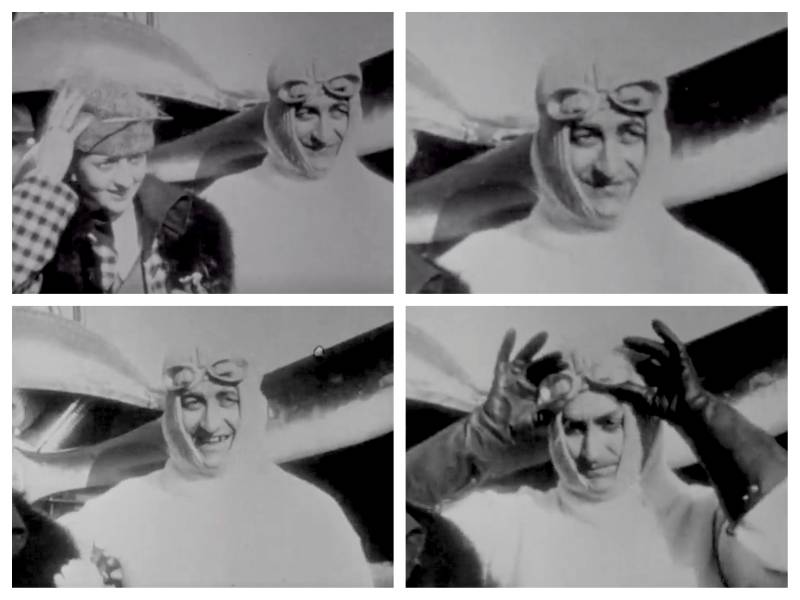
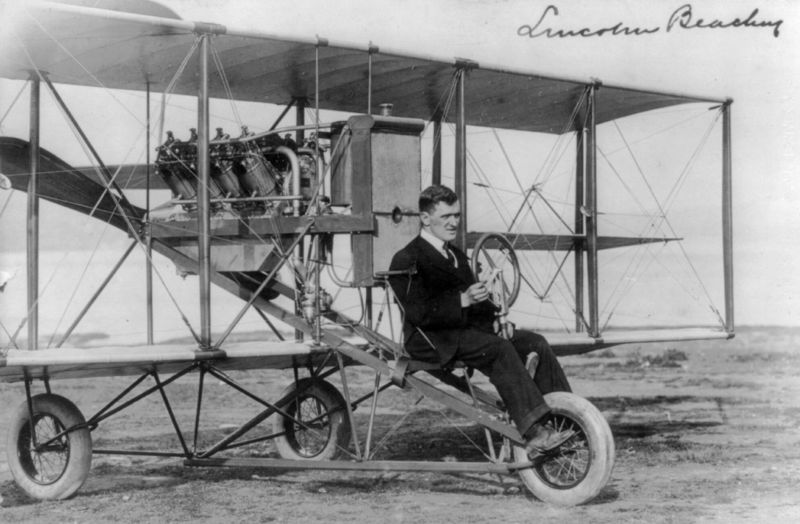
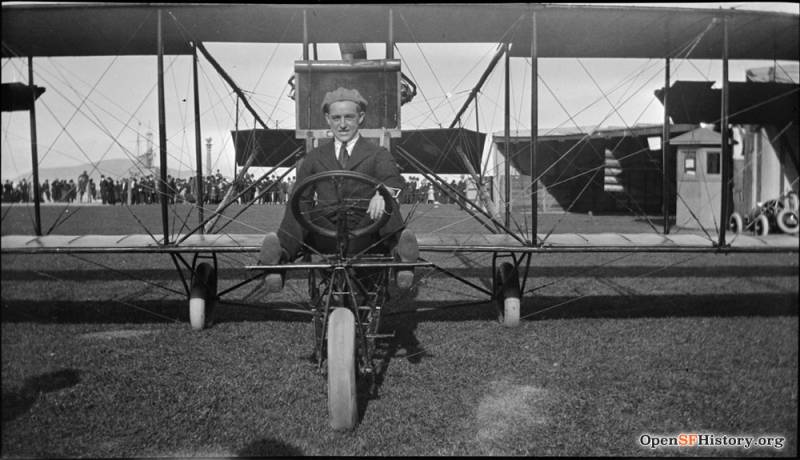
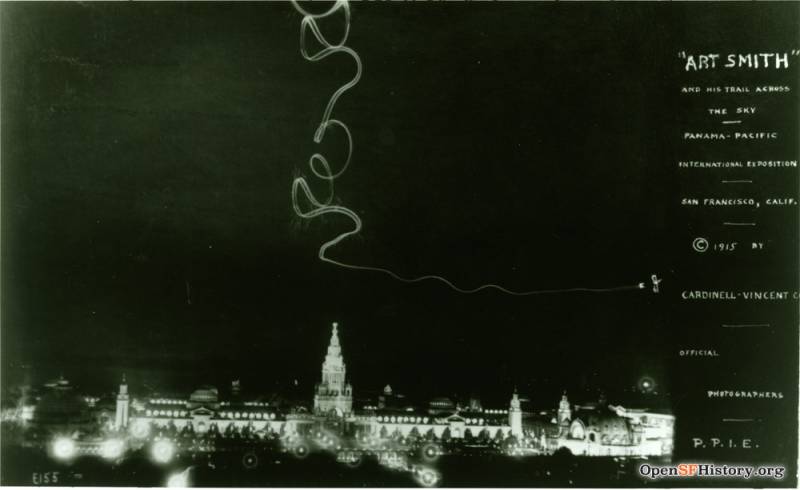
On March 14, 1915, less than a month into San Francisco’s Panama-Pacific International Exposition, a 28-year-old stunt pilot named Lincoln Beachey crashed his plane into the Bay. The most daring flyer in America had been killed in front of a stunned audience of approximately 50,000 people.
Doubts had been publicly raised for years about Beachey’s ability to stay safe while performing his hair-raising stunts. In 1912, the Oakland Tribune described Beachey’s flying style as “curvetting with death.” Wright Brothers manager Roy Knabenshue appeared in the press expressing concern about whether or not Beachey’s planes could withstand the loop-the-loop and diving maneuvers he so loved. Despite it all, Beachey remained steadfastly confident in his own airborne abilities.
“I never will be killed flying,” he once declared. “Only the careless or overly daring die in falls. I am too careful. Why, I am safer in my aeroplane than walking a busy street.”
It was a remarkable statement to make, given just how many of Beachey’s young, daring pilot friends had died. In 1912, less than a decade after the Wright Brothers first invented the airplane, Rutherford Page died during a race against Beachey. That same year, Phil Parmelee died while trying to emulate one of Beachey’s stunts. (The move involved making a hands-free figure eight, using only strategic shifts with body weight to change the direction of the plane. Parmelee lost control in turbulence and died.)
Beachey’s friend Horace Kearney (and a journalist named Chester Lawrence) died over the Pacific somewhere between San Francisco and Los Angeles. Their bodies were never recovered. Other friends of Beachey’s who died in small plane crashes included Andrew Drew, Cromwell Dixon, Cal Rodgers, John Frisbie, Ralph Johnston and Archibald Hoxey. A photo of all of the pilots together, taken before misfortune began befalling the group, was later referred to as “the death reel” by newspapers.