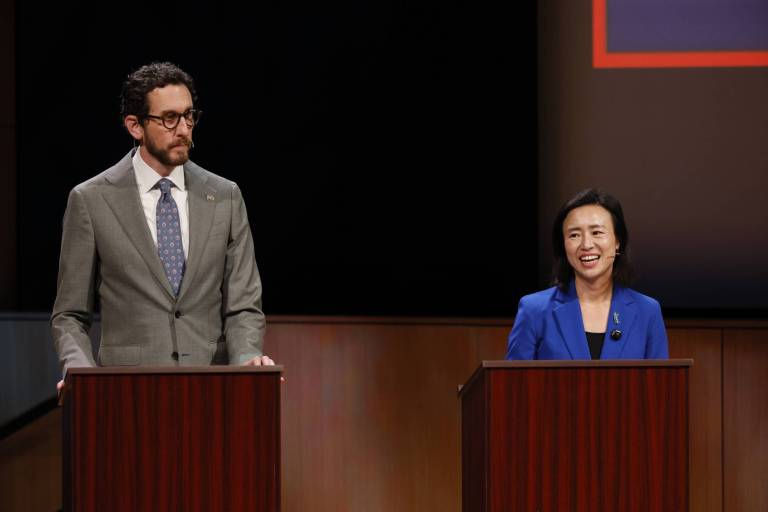
Read a transcript of the program below.
00:00:00 MICHAEL KRASNY
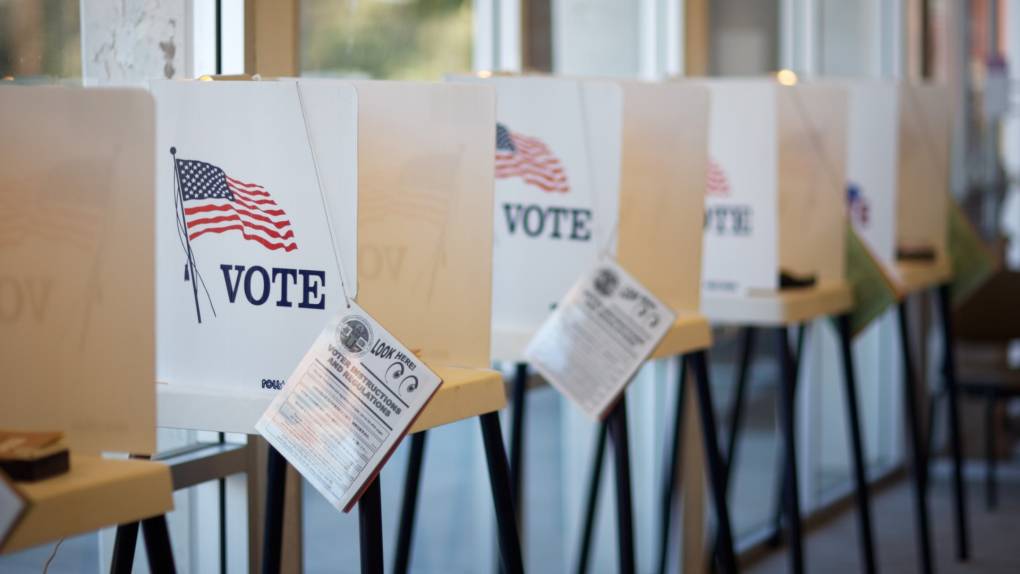
This is "Forum." I'm Michael Krasny. And in this "Forum" segment, we're going to turn our attention to another proposition, Proposition 24, which will appear on the state's November ballot. The Tax Fairness Act would repeal a number of business tax breaks that business interests argue helps businesses and keeps job numbers intact, while opponents of the measure are strongly convinced that passage could lose up to 140,000 jobs and be a virtual job tax. We take up the debate in this, uh, half hour. Lenny Goldberg is joining us. He's on the pro side and executive director of California Tax Reform Association, supporter of Prop. 24. And he joins us from Sacramento. Good morning, Lenny Goldberg.
00:00:34 LENNY GOLDBERG
Good morning, Michael. I'm glad to be here.
00:00:36 MICHAEL KRASNY
Glad to have you here. We also have Tim Valderrama with us in studio. He's California executive director of Technet, a bipartisan political network of CEOs in opposition of Prop. 24. And welcome to the program, Tim Valderrama.
00:00:47 TIM VALDERRAMA
Thank you for having me.
00:00:48 MICHAEL KRASNY
Thank you for being here. Lenny Goldberg, we begin with the pro side first. Why repeal these tax breaks?
00:00:53 LENNY GOLDBERG
Well, these tax breaks were done in the dead of night without any discussion. And, in fact, they were done so badly and so poorly that they are an embarrassment to the state of California in terms of tax policy. What was once a reasonably good (STAMMERS) corporation tax, looked at around the country as fair and reasonable, now has such gaping loopholes put in by the tax revisions that are repealed by 24, that people can manipulate the tax system endlessly. The other reason to repeal it-- (STAMMERS) and this is a unique initiative because it just repeals these very--this very bad decision by the legislature.
00:01:31 LENNY GOLDBERG (CONTINUED)
It does not say that, going forward, we can't change each tax policy. Unlike most initiatives, it ties no later hands, but it says these are so bad, that it deserves to be repealed. And what that means--these are (STAMMERS) loopholes that went in permanently but have not yet even taken (STAMMERS) place. They have not gone into effect. So here we are in a $19 billion budget crisis, about to give huge tax cuts to corporations. They haven't started yet. They're not part of the corporate tax base (WORD?) been moving along with where we are in the--in--in our tax system. We are--have a huge deficit.
00:02:10 LENNY GOLDBERG (CONTINUED)
We made temporary taxes on ordinary people, and instead, we've put in permanent tax loopholes with no scrutiny that total deserves to be repealed. And I assume we'll have enough time to explain it, but let me just give you one piece of this. It gives major multinational and multistate corporations the choice every year as to how much income they want to attribute to California. This is an embarrassment. It's called--these--the opponents say, oh, single sales factor. That's a good thing. Well, this is not single sales factor.
00:02:44 LENNY GOLDBERG (CONTINUED)
This is an election of choice every year about whether you want to use one formula for attributing income to California or another. So if you have a lot of losses, you will be able to attribute more income to California. And then you can roll those losses against your income from future--and from past--years. That's another big mistake we made. But the, um, that gets repealed in Prop. 24, but if you have a lot of--a lot of income in a particular year, you choose a formula that attributes less income to California. So, heads, you win no matter what. That is just an embarrassing, bad tax policy that needs to be repealed.
00:03:23 MICHAEL KRASNY
(OVERLAPPING) The only embarrassment notwithstanding, the opponents say that these (STAMMERS) tax breaks attract and grow businesses and also provide jobs. Uh, that is (STAMMERS) at least one of the central arguments.
00:03:34 LENNY GOLDBERG
(OVERLAPPING) Well, you know...
00:03:34 MICHAEL KRASNY
And you're saying that they lose jobs. How do they--I mean, they--how do they...
00:03:36 LENNY GOLDBERG
(OVERLAPPING) Yeah, well, here's the--here's the--here's the irony of elective single sales factor. The--you know, you can have an argument about whether or not, by telling out-of-state corporations that they'll get a benefit from (STAMMERS) uh, investing in California, and in-state corporations will get a benefit from staying in California. That's an argument to have, but this doesn't do that. (STAMMERS) That's why the opponents are trying to confuse it. This says if you're out of state, you don't have any (STAMMERS) you--you have every incentive to stay out of state so as to not increase your tax, uh, liability.
00:04:08 LENNY GOLDBERG (CONTINUED)
And if you're in state, you get to choose, and you can stay in state. So the (STAMMERS) you know, all of the argument about this so-called tax incentive has to do with benefiting--with giving an incentive to out-of-state companies to invest in California. This just doesn't do that. So what we end up doing is losing billions of dollars every year with no incentive effect. And here's another one that's in there. They--this allows you to roll back--if you take a loss in a given year, you can get a refund for taxes you paid two years ago.
00:04:41 LENNY GOLDBERG
Now, that's not an incentive. You made your decisions. You've--you've calculated your dollars, uh, you--you can carry your losses forward if you make a new investment. But if this had been in--this is repealed by Prop. 24--it had never even had a hearing in the legislature because it's such--bad in destabilizing policy. But here's--here's what would happen. And in--if--if this had been in place previously countrywide and--and, uh, WAMU who (STAMMERS) paid their tab, made a lot of money in 2006 in the (SOUNDS LIKE) sub prime market, paid their (STAMMERS) --would've paid their taxes.
00:05:13 LENNY GOLDBERG (CONTINUED)
In 2008, when they went belly-up, the state went in deep, deep financial trouble, would have been forced to write them refund checks for the (STAMMERS) taxes they already paid. It has nothing to do with an incentive. It has to do with a dead loss to the California economy and a dead loss to the California budget.
00:05:30 MICHAEL KRASNY
(OVERLAPPING) And a dead loss, uh, to the economy means--as you see it--uh, getting back to my original question--a loss of jobs.
00:05:35 LENNY GOLDBERG
Well, a loss of jobs, a loss of public sector dollars, a (STAMMERS) --you know, a--an increasing budget crisis in the public sector, which has a lot to do with the jobs in California.
00:05:45 MICHAEL KRASNY
And again, Lenny Goldberg is executive director of the California Tax Reform Association and a supporter of Prop. 24. In opposition to Prop. 24 is Tim Valderrama, who's here with us in studio. He's California executive director of Technet. They're a bipartisan political network of CEOs who oppose Prop. 24, and oppose it, why, Tim Valderrama?
00:06:04 TIM VALDERRAMA
Uh, we're opposed, uh, it's quite simple actually. We're opposed because, uh, you know, Mr. Goldberg skirted the question a little bit. But this--this initiative will cost California jobs. Um, at a time when 2 million Californians are out of work, Prop. 24 literally taxes new job creation. Uh, it hits California employers, uh, major employers and small businesses with higher taxes, and it stifles job growth in our most, uh, promising industries.
00:06:28 MICHAEL KRASNY
Also, uh, Lenny Goldberg said this was done in the dead of the night, and there's corporate loopholes that make for really, relative inequity where taxpayers are concerned. Uh, can you address that?
00:06:37 TIM VALDERRAMA
Yeah, you know, the first thing I would say is that loopholes insinuates that this is, uh--uh, something that--that was unintentional and that--that, you know, businesses will take advantage of, which is clearly not the case. This was a reform that was passed, uh, by the legislature on a broad bipartisan, uh--uh, front. Um, they, uh, they did have hearings. These--these, uh, policies have been around for years. Uh, a lot of them had been debated since the early '90s.
00:07:04 TIM VALDERRAMA (CONTINUED)
Um, they'd been proven to work in other states. A lot of them, uh, are used on the federal, uh, on the federal side. Um, and so (STAMMERS) it's just not true that--that, uh, that it was kind of this dead of night deal that, uh, that lead to, um, that--you know, a--a dead of night deal that basically, uh--uh, was--was, uh, you know, that, uh, you know, we didn't have a--a legislative hearing, which is--it is patently false.
00:07:31 MICHAEL KRASNY
Well, the proponents are also saying that corporations have to pay their fair share and that this was not only done in the dead of night, but that you've got $1.3 billion now, uh, that could be made up as a result of, uh, these going into effect. Which as Lenny Goldberg said have not, uh, gone--they have not gone into effect yet. In fact, David Sanchez, who is head of the, uh, American Federation of Teachers said that, um, this could save the schools, that you have the revenue to save the schools.
00:07:55 MICHAEL KRASNY (CONTINUED)
I guess the argument of those of you on the opposing side is, even if you generated more revenue, it doesn't necessarily ensure the fact that it's going to go to the schools, right?
00:08:03 TIM VALDERRAMA
Yeah, I mean, that's true. Uh, I would also say that revenue doesn't just kind of magically appear, right? I mean, you know, properly funding our schools and our hospitals, roads and other vital services, uh, you know, it's directly dependent upon California's ability to grow jobs and to have a, you know, a--a positive business environment. Uh, Proposition 24 is kind of a shortsighted gimmick that repeals the very reforms we--we need to regenerate our economy. Uh, (STAMMERS) and Proposition 24 (STAMMERS) --you know, its passage will ensure that state and local deficits will remain.
00:08:33 MICHAEL KRASNY
Let me open the phone lines. Uh, those of you who are listening may want to weigh in on this proposition. You have questions, then certainly bring them to the fore here. We welcome your phone calls. You can call us now. Our toll-free number, 866-733-6786. Again, please, feel free to call us and let us know what you think about this proposition or ask any questions you may have. It's toll-free, 866-733-6786. You can also, of course, lend your voice to this program and join the conversation by e-mailing us. Our e-mail address is forum@kqed.org, or you can post a question or comment on our website, simply by going to kqed.org/forum and clicking on this segment. Uh, Tim Valderrama, uh, tell us a little bit about, uh, which of these--there--there are actually three we're talking about. We want to get listeners aware of these.
00:09:19 TIM VALDERRAMA
Mm hmm.
00:09:20 MICHAEL KRASNY
Three business or corporate tax, um--uh...
00:09:26 TIM VALDERRAMA
Incentives.
00:09:27 MICHAEL KRASNY
(LAUGH) Well, all right. I'm looking--I'm--I'm hunting for the word, but we'll use your word. Incentive's fine. Uh, which is--which is the one that is most invaluable or that's most really valuable where business is concerned and most necessary?
00:09:37 TIM VALDERRAMA
You know what? (STAMMERS) That's an interesting point. All three are very important. Technet is a--a (WORD?) association that represents, you know, big tech companies, uh, you know, that are major employers that you would traditionally think of, but also smaller start-ups in the kind of clean and green tech, uh, sector. And--and, uh, you know, different, uh, the--the three different ones, uh, affect different businesses in--in very different ways.
00:09:59 MICHAEL KRASNY
(OVERLAPPING) Well, Lenny Goldberg mentioned two and kind of took them on as being, again, inequitable.
00:10:04 TIM VALDERRAMA
Sure, so--so, uh, the single sales factor that he brings up, the--the return to the three factor (WORD?) formula, which would happen under Proposition 24, goes back to a system where you actually (STAMMERS) tax job creation. (BACKGROUND NOISE) For every new job that you create in California, you pay extra taxes. Also, for any new facility you build in California, you pay extra taxes. Twenty-four states across the nation have begun (STAMMERS) repealing it or have repealed, uh, measures that--that do the same thing. And it's a kind of a nationwide trend where people are realizing that it makes no sense to tax job creation and--and expansion.
00:10:39 MICHAEL KRASNY
But there's a sense of a choice, uh, Lenny Goldberg said of how much income, uh, you want to distribute...
00:10:43 LENNY GOLDBERG
(OVERLAPPING) (UNINTELLIGIBLE)
00:10:44 MICHAEL KRASNY
...or of--about out-of-state people actually in (LAUGH) -- having the incentive to stay out of state because of...
00:10:50 LENNY GOLDBERG
(OVERLAPPING) Yeah, you--you notice that nobody who opposes Prop. 24 will ever speak to the issue of elective single sales factor. That is the choice, and--and, you know, (STAMMERS) that sounds like jargon to people, so let me be clear. It gives you the choice of how much--if you're multistate, multinational--it gives you the choice of how much income to attribute to California. Now--now, also notice you have to be multistate or multinational, so if you're a start-up in the state of California, you'd get nothing from this. If you're a small business in the state of California, you'll get nothing from this.
00:11:23 LENNY GOLDBERG (CONTINUED)
The only way you could get something from it, which is ironic, is if you move out of state or if you put a new subsidiary out of state, then you can play the manipulative games that this total mistake of this--of the legislature and the governor, uh, done in the dark of night. There was never a hearing. And, in fact, since then, we've had hearings on elective single sales. Not one person, not one industry, not one special interest has been able to get up in public and (UNINTELLIGIBLE)
00:11:52 MICHAEL KRASNY
(OVERLAPPING) Mr. Valderrama said there was bipartisan support, Lenny. You dispute that?
00:11:55 LENNY GOLDBERG
It--it--they--it was part of a--in the mid of night budget deal. The state of California--this was in February when we were going over the cliff, right. And we passed temporary taxes on ordinary people at that very--as part of that very deal. And what we did instead was give this really huge--this was February '09--this huge mistaken, uh, ill-conceived, embarrassing tax loophole that allows endless manipulation year after year, how much I want to attribute to California, only to the largest multinationals. (STAMMERS) They, uh, California Budget Project did a study and showed that it's only a handful of corporations.
00:12:36 LENNY GOLDBERG (CONTINUED)
They--there is also very uniquely here because when we do these budget things, we say--when we do these tax deals, we say, you know, we will have to evaluate the number of jobs that are created, and we (WORD?) if it doesn't create jobs. There is not a requirement that a single job be created. So as a result, the biggest supporters of this are NBC Universal, which gets a huge tax windfall, Disney, which gets a huge tax windfall, CBS, which gets a huge tax windfall. These are, like, big tax windfall for media companies, who every year are multinational, multistate, and yet they get to manipulate.
00:13:12 MICHAEL KRASNY
(OVERLAPPING) Lenny Goldberg, let me jump in here because I--I want to get--I want to get a response from Tim Valderrama. And then I want to get to our callers. But (STAMMERS) let's cut to the chase here, too, Tim Valderrama. Elective single sales factor, small businesses aren't being helped. You said that elective single sales factor, which sounds a bit jargon-ish admittedly, is never addressed.
00:13:30 TIM VALDERRAMA
Yeah, so I would say that that argument might be (STAMMERS) you know, relevant if--if the initiative was about mandatory verse elective single sales factor. And that's a conversation we can have. Unfortunately, the--the, uh, initiative doesn't deal with that issue. It completely wipes out single sales factor, which is actually a--a, uh, a taxation...
00:13:49 MICHAEL KRASNY
(OVERLAPPING) So you're saying it's a red herring in this, uh, (WORD?)
00:13:50 TIM VALDERRAMA
I think it is. And--and--and single sales factor is a tax provision that the state's nonpartisan legislative analyst office has said numerous times, California needs to adopt to remain competitive.
00:13:59 MICHAEL KRASNY
How do small businesses get helped by this?
00:14:01 TIM VALDERRAMA
So small businesses are helped by the net operating losses, uh, loss provisions that are contained also within this, uh, any--any business that is carrying a loss from year to year--in our industry, it's a lot of kind of clean tech and bio tech start-ups. You look at--they will--they will carry losses for 10, 12 years before they ever make a profit. It's pretty well-established tax policy that once you start making a profit, you don't want to hit, uh, a company with a huge tax liability the second they start turning a profit. So that--that (STAMMERS) net operating losses allow you to carry those over from years, uh--uh, ahead.
00:14:33 MICHAEL KRASNY
Uh, let me find out what our listeners have to say. And, Travis, you're first up. Welcome to the program. Good morning.
00:14:38 TRAVIS (CALLER)
Yeah, good morning. You know, uh, that--Goldenberg (SIC) said that just the big companies who are making a big profit, are those the only ones that are--just (SOUNDS LIKE) raking it in right now? And, uh, are they going to be the ones that are virtually affected by this?
00:14:50 MICHAEL KRASNY
Let me ask you (STAMMERS) that question to you, Tim Valderrama.
00:14:53 TIM VALDERRAMA
Uh, no, it's, uh, we--we have, uh, a number of--of small businesses that are opposed to--to no on 24. Um, large businesses, uh, you know, do benefit for some of the provisions. But they are major employers. But I will tell you, the Franchise Tax Board has said that this initiative will negatively impact 120,000 businesses in California.
00:15:12 MICHAEL KRASNY
Lenny Goldberg.
00:15:13 LENNY GOLDBERG
Well, the only way you can take advantage of the hugest break in here, which is a billion dollars--is on elective single sales--is if you're multistate or multinational. And the California Budget Project looked at this, and there is a--only a (STAMMERS) --most of the benefits, the vast majority of benefits go to a handful of very large corporations. That, and, not only that, they--the cost of elective single sales--Tim is wrong. (STAMMERS) This would repeal elective single sales. You can come back to the legislature and have a discussion of single sales.
00:15:48 LENNY GOLDBERG (CONTINUED)
And the legislative analyst said to repeal electives version, and that turns out, they didn't think it cost so much. It's cost between 850 and a billion of the total cost of this initiative. So wipe out that manipulative mistake, which, Tim, can--as you noticed--cannot defend. And go back and have a real discussion in the legislature. And if single sales is so good, it'll pass.
00:16:11 MICHAEL KRASNY
All right. We go to more of your calls. And we'll welcome Sharon from Pleasanton. Hi, Sharon.
00:16:15 SHARON (CALLER)
Hi, Sharon. (LAUGH) I mean, hi, there, guys at "Forum." Thank you so much for taking my call. I was...
00:16:21 MICHAEL KRASNY
(OVERLAPPING) Sure.
00:16:21 SHARON (CALLER)
...seriously wondering why don't we, um, make any brand-new, um, subset here initiating those brand-new jobs that we need with brand-new business models and then clear the sunset (WORD?) on it, offer the same thing going forward (SOUNDS LIKE) as well as through incorporation? And at the same time, we'll bring more new jobs to California instead of losing those new jobs that are leaving California? We've got to remember California is number seven in the world in economy. Let's not forget that.
00:16:56 MICHAEL KRASNY
All right. We...
00:16:57 SHARON (CALLER)
(OVERLAPPING) And (STAMMERS) (UNINTELLIGIBLE)
00:16:58 MICHAEL KRASNY
Thank you. Thank you for that suggestion. We'll let it stand, and, uh, we'll go to another caller here. Gabrielle, good morning.
00:17:03 GABRIELLE (CALLER)
Hi, there.
00:17:04 MICHAEL KRASNY
Hi.
00:17:05 GABRIELLE (CALLER)
Can you hear me?
00:17:05 MICHAEL KRASNY
(OVERLAPPING) Yeah, fine.
00:17:06 GABRIELLE (CALLER)
Hi, there. So I have to say that the--someone who's purporting to be representing CEOs and supporting job growth, to me that just seems sort of like a--a contradiction in terms. We live in an enormous corporatocracy where the--the first expense that these large corporations seem to be willing to expend is their people. I've been laid off twice, uh, one was a large tech company, who is probably on the list of supporters of the--the no on this. And it--it just seems like in any discussion where you're talking about job growth, uh, it--it--it seems completely disingenuous for CEOs to be purporting to be representing the people.
00:17:47 MICHAEL KRASNY
And let me hear from you on that, Tim Valderrama.
00:17:50 TIM VALDERRAMA
Uh, I would just say that--that, uh, you know, that I--I feel sorry for the caller in having lost their job. Unfortunately, that's happened to far too many people in California. Uh, one thing's certain, is passage of Proposition 24 will result in more job losses. Uh, in fact the Rose Institute, uh, just released a study that estimates somewhere between 150,000 and 322,000 jobs will be lost if Prop. 24 passes.
00:18:14 MICHAEL KRASNY
Can you address that, Lenny Goldberg?
00:18:15 LENNY GOLDBERG
Yeah, I read that study. It just pulls those numbers pretty much out of thin air. Because it says all these corporations that are putting millions of dollars, like Disney and, uh, and NBC Universal into this proposition are going to add all these jobs. Well, we don't see it. They will (STAMMERS) --they will make their decision about California irrespective of this measure. Uh, Prop. 24--one other thing that Tim said that was wrong--is that we (STAMMERS) --this does not repeal loss carry forward.
00:18:43 LENNY GOLDBERG (CONTINUED)
Loss carry--anybody makes a new investment, they carry over their losses against their profits. And that's what we've been doing for years. What this does do is allow (STAMMERS) banks and others that have made big money and then take losses to get a refund, just as we have to fund vital services. This measure (STAMMERS) --none of this has taken effect yet. These have not taken effect, so we can say, look, we've got a huge budget crisis.
00:19:09 LENNY GOLDBERG (CONTINUED)
And, in fact, the legislature is considering suspending these. They know that if you--why would we give big corporate tax cuts that go into effect permanently at a time when we're in a huge budget crisis, particularly since they are so ill-conceived that they allow endless manipulation of the tax system by major multinational corporations? So 24 does not cut off any discussion that can go on about what's good tax policy. It eliminates (STAMMERS) bad tax policy done in the dead of night.
00:19:41 MICHAEL KRASNY
Tim Valderrama, we come back to that point again about bad tax policy, embarrassing--Lenny Goldberg calls it-- (STAMMERS) done in the dead of night.
00:19:48 TIM VALDERRAMA
Uh, I, you know, I would say to--to Mr. Goldberg, with all due respect, that the legislature can amend any of this stuff on their own. I mean, they--they chose to pass it with broad bipartisan support, as I said. Uh, if they feel at this time, that--that, uh, you know, anything in--in what they passed is objectionable, they have all the authority in the world to go back and change those. We don't need an initiative to do that.
00:20:10 MICHAEL KRASNY
Other than the Rose report, though, how do you, um, convince us that this job loss would be inevitable?
00:20:15 TIM VALDERRAMA
You know, we see it in other states--24 other states, as I said earlier, have adopted, uh, measures similar to these. And--and that's how the Rose report got its numbers, is they looked at other states and what other states have been doing. And, uh, they have noticed an increase in jobs, and they--they think that that will transfer to California and that--and, uh, we agree with them.
00:20:33 MICHAEL KRASNY
And again, uh...
00:20:34 LENNY GOLDBERG
(OVERLAPPING) Actually...
00:20:34 MICHAEL KRASNY
...Tim Valderrama is California executive director of Technet. I'm sorry. Go ahead, Lenny Goldberg.
00:20:39 LENNY GOLDBERG
Actually, no other states have done this. Uh, Missouri has had elective single sales and has had job decline in industry and everything for many, many years. All the other states he's talking about, none of them have elective single sales, precisely because the alleged benefits--and I say alleged, but, you know, you look at other states--alleged benefits of the--of the single sales factor have to do with encouraging out-of-state companies to invest in California. Well, with the election, they have no incentives to do that. So we've done a--a so-called economic incentive policy that we've completely cut off the economic incentive. And it's nothing but a giveaway.
00:21:16 MICHAEL KRASNY
You are listening to "Forum." We're talking with Lenny Goldberg, again, (BACKGROUND NOISE) who is executive director of California Tax Reform Association and a supporter of Proposition 24. And Tim Valderrama, who is California executive director of Technet, they're a bipartisan political network of CEOs who are opposed to Proposition 24. And this is a fundraising period for KQED public radio. For more information about how to support KQED, go to kqed.org. I'm Michael Krasny. And we'll bring in a caller this time from Richmond. Mary, hi.
00:21:47 MARY (CALLER)
Hi. Um, I--I have read a lot flyers and political flyers in trying to get me to vote for this and that. And what I keep hearing in those flyers and what I'm hearing today from the CEO guy--sorry, I forgot your name--...
00:22:03 MICHAEL KRASNY
It's Tim Valderrama.
00:22:04 MARY (CALLER)
(OVERLAPPING) ...is--thanks, Tim. Um...
00:22:07 MICHAEL KRASNY
No, that was Michael. But that's okay. (LAUGH)
00:22:09 MARY (CALLER)
Oh, okay. (LAUGH) So what I always hear, and I find it really offensive, is that when people are against, uh, cutting taxes for the wealthy, they always use this threat. It feels like a threat. If you vote for this, you're going to lose more jobs. If you vote for this, we're going to run away with our jobs, and you're going to suffer. Uh, I just find it offensive, and I wish that people who actually genuinely believe this point of view could explain clearly and succinctly and honestly how that's going to happen. How are we going to lose more jobs if we change our tax policy? So that's...
00:22:53 MICHAEL KRASNY
To Valderrama, I think that's to you. And, again, let's talk about this perhaps just from a logical standpoint. Because I think that's your argument, isn't it?
00:23:01 TIM VALDERRAMA
Sure, uh, I--I think that, you know, the best way to explain this is that California already has a pretty--pretty bad business climate. And more and more, when other states are adopting the same types of measures that--that, uh, that the California legislature has recently adopted in its wisdom, it makes (STAMMERS) places outside of California a much more (STAMMERS) attractive place to do business. Some of our major companies, the ones that were founded here that--that, uh, started in the Silicon Valley, they're not probably picking up and leaving.
00:23:28 TIM VALDERRAMA (CONTINUED)
But they do want to expand, and they continually expand. And when they do that, it makes absolutely no sense for them to expand into California.
00:23:37 MICHAEL KRASNY
Business climate bad here, jobs will be lost, Lenny Goldberg?
00:23:40 LENNY GOLDBERG
Well, all I can--I'm--I'm old, Michael. So let me tell you a story. (STAMMERS) In 1975, the big California business roundtable said California's business climate is 47th (STAMMERS) in--out of the 48 states. And then we had incredible world-class explosion of Silicon Valley. We had biotechnology. We had the .com boom. Somehow, this business climate always caused (STAMMERS) business to be 47th and out of 48 in this 1970s turned out to explode worldwide.
00:24:13 LENNY GOLDBERG (CONTINUED)
So all I can do is look at history. And, you know, our business (STAMMERS) --there are regulatory issues, I think. There are--I--I would totally agree there are changes could--that could be made in the tax system. But this Prop. 24 repeals exactly the wrong changes that were made in the tax system that were pushed in by special interests--major Hollywood interests, in fact--uh, and--and the time when ordinary taxpayers were being taxed temporarily, they put these permanent--blew these permanent loopholes in.
00:24:43 LENNY GOLDBERG (CONTINUED)
So take it back. Start again. I would perfectly say they--they're--and I've had these conversations with the high tech guys. There are changes in the tax system that would be beneficial all around and not harm the budget. The other way--this is--these are stupid changes, embarrassing changes in the tax system that should be repealed. And we'll go back and do it again.
00:25:04 MICHAEL KRASNY
Let me go to a couple of e-mails here before we, um, call it a day as far as Prop. 24. Richard writes, "I'm confused. Does Prop. 24 really negatively impact small businesses or just major companies?" I think that seems to be where you two are crossing swords here. Um, Tim Valderrama.
00:25:18 TIM VALDERRAMA
Yeah, uh, as I said before, the Franchise Tax Board estimates 120,000 businesses, uh, will be impacted. And--and a lot of those are small businesses. Then that operating loss provisions that this, uh, this initiative attacks are very important to--to small--to small businesses from, you know, clean tech start-ups all the way to your mom-and-pop hardware store.
00:25:39 MICHAEL KRASNY
Let me read a few more e-mails here. Jordan says, "I won't take it from a group of CEOs and some tax costs jobs. They say that to everything. And as best I can tell, they're the ones that cost jobs by shipping them overseas." Another listener, Rick from Palo Alto, says, "Multinational corporations are being characterized as the enemy here. Let us not forget where most of all our jobs come from. Even the pampered SEIU workers would have nothing if these major employees (SIC) were to disappear--employers were to disappear. Let's get real here."
00:26:03 MICHAEL KRASNY (CONTINUED)
And another listener, Mark from Point Reye, says, "As a small business owner who last year had its first profitable result in a decade, current California law did not let me carry forward our loss in 2009. And we were forced to pay a large tax. There was a promise that one day our losses can be accounted for, but we'll never recover that paid tax." That'll have to end it because we have come to the end of, uh, of the segment. But, uh, now it's up to you listeners and voters to decide on Prop. 24.
00:26:30 MICHAEL KRASNY (CONTINUED)
I want to extend thanks to our guests, Lenny Goldberg, executive director to the California Tax Reform Association, supporter of Prop. 24, and Tim Valderrama, California executive director of Technet, a bipartisan political network of CEOs in opposition to Prop. 24. Thank you both. And thank you, our listeners, and another hour of "Forum" coming your way. In the hour ahead we're going to find out all about youth radio, which is, uh, a real phenomenon and (STAMMERS) actually hear some of the stories that youth radio has put together. I want to remind you that we are here with you Monday through Friday, 9 to 11. And hours repeat at 10 to 11 in the evening.
00:27:01 MICHAEL KRASNY (CONTINUED)
And, uh, we always remind you that you can let us know what you think about what you hear on "Forum" by e-mailing us forum@kqed.org or calling our listener call-in response line at 415-553-3300.