Read a transcript of the program below.
00:00:10 MICHAEL KRASNY
From KQED Public Radio in San Francisco, I'm Michael Krasny. Coming up on "Forum" this morning in our opening hour, we'll continue our coverage of the upcoming November 2010 California election. We'll feature a debate on two propositions, which will be appearing on the ballot. Prop. 21 would establish an $18 annual vehicle surcharge to help fund state parks and wildlife programs. We'll hear from both sides in our first half hour. Then in the bottom half hour, we shift our attention to Proposition 24, which proposes a repeal of major business tax breaks. "Forum" is next. We'll include your calls, e-mails and online questions and comments after this.
[INTERMISSION]
00:01:00 MICHAEL KRASNY
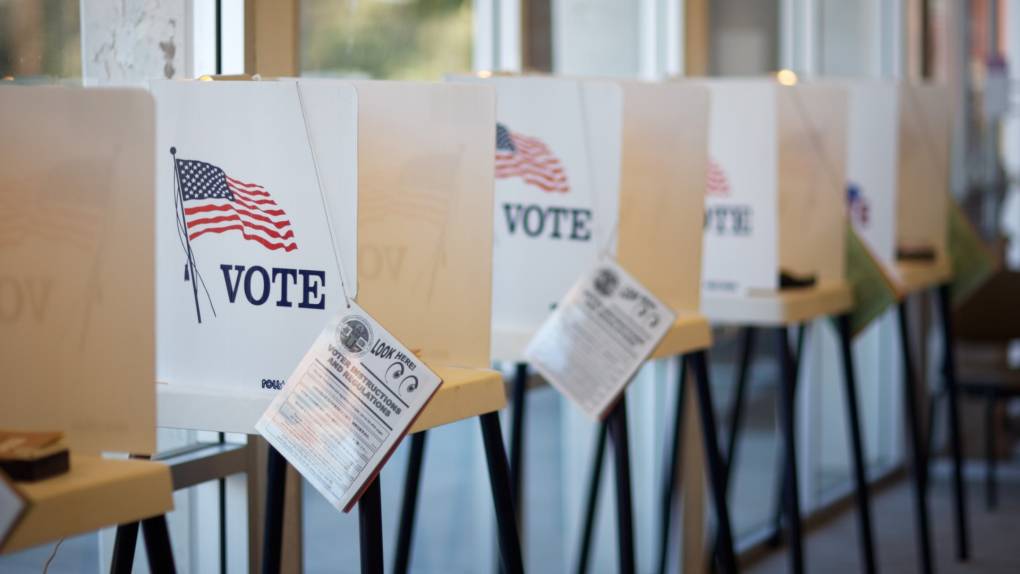
From KQED Public Radio in San Francisco, I'm Michael Krasny. Good morning, and welcome to this morning's "Forum" program. When Californians go to vote in the upcoming election, they'll decide on Proposition 21, which would establish an annual $18 vehicle surcharge to be paid by all vehicles to motor vehicle registration, except for trailers, mobile homes and commercial vehicles. The estimated $500 million in revenue would then be set aside for conservation and put in a lockbox for funding for state parks and wildlife programs. And in this opening half hour, we want to take up the debate on Prop. 21. Joining us is Traci Verardo-Torres, who is vice president for government affairs with the California State Parks Foundation. She's in support of the proposition, and she's joining us this morning from Sacramento. Good morning.
00:01:43 TRACI VERARDO-TORRES
Good morning, Michael.
00:01:44 MICHAEL KRASNY
Glad to have you with us. Also glad to have, from the state capitol, Patrick Dorinson, who is a political commentator and a supporter of no on Prop. 21. That campaign, his blog is (STAMMERS) The Cowboy Libertarian. And welcome, Patrick Dorinson.
00:01:55 PATRICK DORINSON
Uh, thank you, Michael. And good morning, Traci.
00:01:58 TRACI VERARDO-TORRES
Morning.
00:01:59 MICHAEL KRASNY
Good morning to both of you. Uh, we begin on the pro side as a general rule of thumb here. Traci Verardo-Torres, uh, obviously, uh, this money is--is needed. Our state parks are about $1.3 billion just in building maintenance, and, um--uh, I understand, uh, you're concerned about keeping them well-maintained and aesthetic and all that. Uh, why tie it to the vehicle registration though? I mean, there are those who are concerned that maybe money for vehicle registration would more logically go to--say, to transportation.
00:02:27 TRACI VERARDO-TORRES
Well, that's a--that's a good question. And you may remember, Michael, we--we talked about this issue back in November right after we filed this with the Secretary of State. So it's nice to be on your program again talking about it now that we've got our ballot number, Prop. 21. Um, the--the nexus between the--the car registration and state parks is actually a pretty clear one. One of the--the (STAMMERS) biggest benefits of Prop. 21 is that it does provide Californians free day's access to their state parks.
00:02:52 TRACI VERARDO-TORRES (CONTINUED)
And right now, day's access is (STAMMERS) in effect, um, charged per vehicle, so that when you're going to visit a state park, and you are paying that posted fee for day use, you're in essence, being charged a parking fee. And that's why it makes sense to connect this to cars, so that we can, um, go ahead and--and raise the amount of money that would be, uh, an important investment in our state parks and provide Californians with a clear benefit, uh, which is access to their state park system.
00:03:22 MICHAEL KRASNY
Why not just raise the fees?
00:03:24 TRACI VERARDO-TORRES
Well, you may recall that fees were raised last year, that after state parks were--were now twice proposed to be closed by Gov. Schwarzenegger, last (STAMMERS) --or excuse me, last August, fees were increased significantly. Um, but fees alone do not provide enough funding to keep what is a statewide resource available for now and in the future. And in our perspective, from the State Parks Foundation and the partners who are supporting Prop. 21, is that there can't be--we--we can't expect the state parks to be available for future generations if we don't guarantee a future for the parks, and that's what Prop. 21 does.
00:03:59 MICHAEL KRASNY
You're getting a lot of business, mainly Chambers of Commerce and other businesses because of the tourism.
00:04:04 TRACI VERARDO-TORRES
Absolutely. We've got over, uh, 15 Chambers right now. We've got over 40 organizations, including convention and visitors' bureaus, film commissions, (STAMMERS) all because these organizations recognize the economic engine factor that California State Parks provide. And--and let me just for a minute say sort of the flip side of it when--when we don't provide that. I mean, I've--I've got some examples right here. Uh, (STAMMERS) in Santa Cruz, I just heard from someone who went to Sunset Beach last week and, um, you know, the--the campsite that they were at, the wastewater treatment system failed. Sewage was backing up, and they couldn't use the restroom.
00:04:39 TRACI VERARDO-TORRES (CONTINUED)
So people were not able to camp over Labor Day weekend. In Monterey County, we know that, um, the state park there over at Carmel River State Beach had to close the bathrooms because they didn't pay their bills. Um, we know in San Benito County at Fremont Peak, the park had been closed because of budget cuts, and then it recently was reopened because the state said it was costing too much to deal with vandalism. so when we don't take care of our parks, we not only have the pressures on the state budget to deal with that, but we also create problems for economies--local economies that depend on people coming to parks and having these good experiences, so they can bring in the tourism dollars.
00:05:16 MICHAEL KRASNY
Again, Traci Verardo-Torres is vice president for government affairs for the California State Parks Foundation. And Patrick Dorinson is a political commentator and supporter of no on Prop. 21. Uh, and the campaign against Prop. 21, uh, (STAMMERS) Patrick Dorinson, you call it a scam. You say the money's already there? They don't--we don't need this revenue?
00:05:33 PATRICK DORINSON
Well, we've already fully funded the parks in--in Gov. Schwarzenegger's latest budget. Um, and it was interesting that in June 2010 at a (STAMMERS) budget conference committee, uh, in a rare bit of honesty, a senator of--for the legislature, that is--Sen. Lowenthal said, part of the argument for voting for the park pass is that we didn't fully fund state parks. That's really why we were putting it on the ballot. And now that we are fully funding, they're going to say, why do we need this park pass?
00:06:01 PATRICK DORINSON (CONTINUED)
It's just going to be very hard to sell if we fully fund. Look, I'm a native Californian, and I grew up with the parks--the state parks. And definitely they're in disrepair. Uh, Traci, and you mentioned--excuse me--that the state, the backlog is $1.3 billion. Well, in 2001 it was $600 million. So once again, the legislature, not doing their job, uh, and--and maintaining the parks over this long period of time, now, they want to figure a way to pay for it. And they want to put this on the burden, uh, in the vehicle license fee. Um, you know, the--the parks need to have, uh, funding, but it needs to come from the general fund.
00:06:40 PATRICK DORINSON (CONTINUED)
We don't need to have more ballot box budgeting in California. One of the problems that they're facing, uh, as their discussing the budget today, is that we have so many designated funds, there's not a lot of room to, uh, to make the necessary changes that need to happen to completely fund California. So this is also a regressive tax. It will make s--it will, uh, put this on small families, and they can't afford this burden right now. Also, it would also put, uh, the tax on commercial vehicles under 10,000 pounds. Well, let's look at what some of those are.
00:07:12 PATRICK DORINSON (CONTINUED)
Those are tractors, like a backhoe used in heavy construction, uh, panel trucks and vans used by FedEx and UPS for deliveries or service calls by AT&T or Comcast, utility trucks, pickups and flatbeds used by contractors -- all of these things are going to be taxed. And right now the business community and the citizens of California do not need one more brick on their tax burden.
00:07:34 MICHAEL KRASNY
Well, there--there is the notion, as you say, of a kind of, uh, opposition because of what's called ballot box budgeting. Um, but there's also the fact that, uh, Gov. Schwarzenegger threatened to close down 200 of the 278 parks, uh, and those who are in favor of this are saying, uh, this is the only way we can get security about money for parks in the future.
00:07:55 PATRICK DORINSON
Well, I think the real decision here for the legislature and for the governor is that they have to begin to prioritize. They have to figure out what California really needs and what California has to fund. And the parks are definitely a part of that mix, as is public safety and education and other issues. But the way to do it is not through the vehicle fee. You know, the vehicle license fee, in the current budget proposals by the--by the legislature, are to go up another 1.15 percent, when in actuality, they're supposed to go down next July by .65 percent. So you're going to raise it in the state budget, then you're going to add another $18 on this load. It's just too much of a tax burden at this time for the citizens and for the businesses of California.
00:08:38 PATRICK DORINSON (CONTINUED)
And I think it's something that we should really look into our budget, uh, the way we do the budget and figure out a way to fund our parks in the future.
00:08:46 MICHAEL KRASNY
Patrick Dorinson, again, is political commentator and supporter of no on Proposition 21 campaign. His blog is The Cowboy Libertarian. This is a half-hour segment, so let me open the phone lines and find out what you, our listeners, think. And you can join us. Uh, is this a tax? Is it a fee? That's one of the sort of elemental questions, and should this money be appropriated specifically from the vehicle registration for parks and for conservation of those parks, uh, and maintenance? Uh, you're welcome to join us now. Our toll-free number's available to you at 866-733-6786, and we do indeed welcome your call. So if you have something you'd like to register or say or ask, call us now. It's 866-733-6786.
00:09:26 MICHAEL KRASNY (CONTINUED)
You can also send an e-mail to us, forum@kqed.org is our e-mail address. Or you can post a question or comment on our website, simply by going to kqed.org/forum and clicking on the segment. Here is Lisa who writes, "State parks, like our local parks, are an inheritance. That puts them in a special category. These are properties and habitats donated or transferred to the state for safe-keeping. That means we have an obligation to keep them in good condition and ensure that they remain accessible for future generations." And that certainly ties in with the Pro. 21 people, but, Traci Verardo-Torres, there was an article in the, uh--uh, Contra Costa Times, uh, back on Thursday, where they said the $500 million figure really needs to be scrutinized because it was estimated that about $200 million of that could be used to replace existing, um--uh, well, actually funding things where, uh, we've already got that money going into, and, uh, that we would lose about (SOUNDS LIKE) $50 million a year in, uh, in single use fee.
00:10:20 MICHAEL KRASNY (CONTINUED)
Uh, and there would still be the ability to charge for activities in the park. So in other words, the savings of $500 million doesn't seem to square, at least not where the Contra Costa Times is concerned.
00:10:31 TRACI VERARDO-TORRES
Well, I think the--the Contra Costa Times piece, um, you know, certainly looked at this and--and suggested, um, you know, a--a number of positive things around Prop. 21. But I think it's important to acknowledge a couple of things. Um, first, I--I appreciate Patrick's expectations of the legislature's responsibility, but I--I don't share his optimism. I mean, today we are now the longest--we--we have now passed, um, the time that is the longest in state history without having a state budget. So if we were to wait for the legislature to take action in this issue, I--I think we'd be waiting even longer than we are now.
00:11:02 TRACI VERARDO-TORRES (CONTINUED)
Um, what Prop. 21 does in addition to funding our state parks and our, uh, important conservation programs--and giving that free days' access that I mentioned--is that it intentionally does a positive thing for the overall state budget climate. And that is intentionally in the language of Prop. 21, we are giving back the funding that is currently going from the general fund to state parks, so that that $130 million annually--that right now is supposed to be coming to state parks, um, if we--if we ever get a budget, but it's supposed to be coming to state parks--will then be available for the state to spend on other priority services.
00:11:39 TRACI VERARDO-TORRES (CONTINUED)
So it is intentionally that, um, Prop. 21 raises a significant, um, amount of money for state parks but also gives some of that back to the state budget to try to provide relief in these very difficult budget times.
00:11:51 MICHAEL KRASNY
Let me have Patrick Dorinson respond to that, if you would, Patrick.
00:11:54 PATRICK DORINSON
Well, um, you know, I--I (LAUGH) I must, uh, agree in partial with Traci on the legislature's ability to get a budget done. But that's their responsibility, and their responsibility is to take care of--of education, the parks, our roads. And they have been absent on that. Now, putting a burden on the taxpayers through the car tax, um, is not the way to do this. Uh, again, she's right if they're going to take that $130 million and spend it on something else. But that's what that money was designated for. And at this budgetary time and at this--they're very difficult economic times, let's not throw that burden onto the taxpayers. They have the money to fund it. The user fees there will provide another, uh--uh, portion of money that will help, uh, fund the parks.
00:12:39 PATRICK DORINSON (CONTINUED)
And let's prioritize what we need to do. One of the things that's very interesting--you know, over the--since 19--2001, we've also added many new parks to the system without providing the requisite, uh, funding to put those forward. Now, a lot of that was approved by the voters. And they were sold to the voters that were going to p--you know, were going to protect more park land. Sounds like a good idea. The problem is, (STAMMERS) it's always that legislature and--and--and when we vote for these initiatives, great, we're going to get a new park. But nobody ever then figures out how we're going to pay for it, uh, going forward and to maintain that park.
00:13:13 PATRICK DORINSON (CONTINUED)
We added new parks, and we couldn't maintain the ones we had. The (WORD?) -- once again, this is a system of ballot box budgeting where you're going to sequester money for a specific purpose. The second part is, you're going to have a situation where this is going to unfairly fall on poorer families. And then the other problem is that the legislature will refuse to set priorities. We cannot treat the car tax, what--you know, as--as--as the new syntax of--of--of the 21st century.
00:13:38 MICHAEL KRASNY
You know, for years we used to tax tobacco and alcohol. Well, if you didn't drink or didn't smoke, it didn't matter.
00:13:43 MICHAEL KRASNY (CONTINUED)
Well, we're still taxing alcohol here in San Francisco. (LAUGH) We should mention that.
00:13:45 PATRICK DORINSON
(OVERLAPPING) Oh, we're still (STAMMERS) ...
00:13:46 MICHAEL KRASNY
(STAMMERS) I'm looking at a comment from our website though that says, "If Prop. 21 doesn't pass, how can we possibly think Sacramento will solve the problem, those legislators?" Uh, but let me go to our callers. And let's bring in first, uh, Richard from Petaluma. Good morning.
00:13:59 RICHARD (CALLER)
Yeah, hi.
00:14:00 MICHAEL KRASNY
Hi.
00:14:00 RICHARD (CALLER)
(OVERLAPPING) Um, I hope you can hear me well. Thanks for the show. Um, I'm from England, and we pay a lot more taxes in England than we do in the United States. And the--the car registration fee for me seems very low, and I can't believe that an $18 per year per vehicle fee on--especially on the commercial vehicles that were mentioned earlier, would really be crippling to those small businesses. It just--it's ridiculous. And to say the state parks, it--it seems a small price to pay.
00:14:31 MICHAEL KRASNY
All right. I thank you. You've talked about it, uh, Patrick, as a regressive tax. And you said it would, uh, hit the poor more heavily although they would have, uh, they would be entitled to go to the parks for free. Um, $18 doesn't sound like a lot to many people. You want to talk about that for a moment?
00:14:46 PATRICK DORINSON
Well, you know, it's nice that everybody thinks that $18 isn't a lot of money. But, you know, for families that are struggling right now, that $18 may--$18 could be the difference between three squares a day and maybe missing a meal. That could mean you might not be able new pair of (STAMMERS) --a new pair of shoes for your kid. But, remember, in California there are 6.8 million commercial vehicles that will fall into this category. That's about--if you average that out at 18 bucks, that's about $123 million new tax burden on California burden, uh, businesses that are already struggling in a weak economy.
00:15:18 PATRICK DORINSON (CONTINUED)
And for larger companies, that (STAMMERS) price will probably be, uh, shifted back to the consumers at some point. Again, fixing the parks is not the issue. It's the issue of how we do this, and at what-- (STAMMERS) and can we afford to do it by taxing people at this time? Um, you know...
00:15:33 MICHAEL KRASNY
(OVERLAPPING) Let me bring on...
00:15:34 PATRICK DORINSON
...I go to--I go to the--I go take my dogs up to Folsom Lake all the time. And I buy an annual pass because I'm a user of the park. And I don't mind paying that pass because I'm going to use it. But I don't think other people who might not be able to get to these parks or--or--should have to pay that fee.
00:15:49 MICHAEL KRASNY
Uh, let me bring in more callers. And, uh, Sarah, you're on. Good morning.
00:15:53 SARAH (CALLER)
Hi. Thank you for taking my call. Um, I'm a state park volunteer, and I'm a long-time lover of state parks. I have a couple of comments and questions, and I'd like to take them (STAMMERS) uninterrupted. And then I'll take my comments and questions or for--for the comments from the panelists off the air if I could. First of all, I'd like to correct the panelist that this is not a tax. I'm one who (STAMMERS) who collected petition signatures for this proposition, and I appreciate everybody who's supporting it.
00:16:20 SARAH (CALLER) (CONTINUED)
This is not a tax. It's an initiative, and we are all allowed to vote on this as an initiative. And if you paid your park pass, I thank you for doing that. But that park pass went into the general fund, and that park pass is now giving one cent on $1 to every state park right now. That means that this--because this is not fully funding our state parks, as you are saying it is in this--in the budget, my sister is still getting furlough days. My sister has been cut by huge percentages in her budget--on her family budget because she is a state park ranger. And she's still seeing her personal budget cut over and over again, just simply because she's a state park ranger.
00:17:03 SARAH (CALLER) (CONTINUED)
This is not (WORD?) to our citizens who are state park employees and to us who use our state parks. When you talk about our (STAMMERS) poorer families being affected by this--this, um, what you're calling a tax--$18 is three times you pay, or less, that you go to a state park and pay a day use fee. That's $6 or $8 per time you use a park. When you put that in perspective and get these families outside using the outdoors, that's not very much. $130 a year for a state park pass isn't even five vehicles in a household paying the $18 total.
00:17:41 MICHAEL KRASNY
All right. Sarah, I'm going to have to move along here because we've got a short amount of time on this segment. And, uh, I want to hear some more from Traci Verardo-Torres. Uh, you may be heartened by the fact that almost all the calls and e-mails that are coming in are in favor of the proposition. But, uh, are we talking about an aggressive tax that can hit the poor pretty hard here? $18 may not seem like a lot. But what about Patrick Dorinson's point that, uh, those who are out of work--and the unemployment numbers are high--are going to be hit harder?
00:18:06 TRACI VERARDO-TORRES
Well, we're absolutely sensitive to the fact that these are difficult times for California. And that's part of the reason why Prop. 21 provides this relief of giving $130 million back to the state, so that we can put that money into programs that will help put people back to work, support working families, (STAMMERS) all of those important things. Um, (COUGH) in terms of the regressivity, (STAMMERS) it's important that, you know, Prop. 21 is a very clear proposition. It is an up-or-down question before voters about whether they're willing to make an investment in state parks.
00:18:35 TRACI VERARDO-TORRES (CONTINUED)
And--and anyone knows exactly what they would pay under this. They would pay $18 for each vehicle they have. For low-income families that have only one car, they only pay $18. That's $1.50 a month. And I'm heartened, and I'm--I'm heartened by all of the--the positive responses coming in. And I'm--I'm recalling, Michael, the last time we talked about this issue back in November, um, Jonathan Coupal and Howard Jarvis Taxpayers Association was on the line. And he mentioned...
00:18:59 MICHAEL KRASNY
(OVERLAPPING) And they are in opposition still to this.
00:19:01 TRACI VERARDO-TORRES
(COUGH) They are in opposition, and I...
00:19:02 MICHAEL KRASNY
(OVERLAPPING) Yeah...
00:19:02 TRACI VERARDO-TORRES
You know, I believe Patrick may be working with them. Um, and Jonathan mentioned the same point and--and said, you know, I don't think low-income families should have to pay for this. And I remember quite vividly there was a young woman from Richmond who called in, who said, I'm a single mom. Um, (STAMMERS) in fact, I don't agree with the statement from the opponent because state parks are the only place where I can take my child and my children for our vacations and for our relaxation.
00:19:26 TRACI VERARDO-TORRES (CONTINUED)
So I--I think it's--it's a little bit of a misnomer, um, to think that low-income Californians don't want low-cost access to their state parks. And this is the way to give it to them.
00:19:36 MICHAEL KRASNY
Well, now, here's a caller who is opposed. Stewart, let's get you on here. Good morning. Why are you opposed to 21?
00:19:41 STEWART (CALLER)
Well, my issue is that as a long-time (STAMMERS) hunter and fisherman in California, um, I have seen year after year increases in, um, hunting license fees and tag fees and everything else. And rather than the money going into the game and fish department to help the system and to encourage people to be hunters and fishermen, um, the money goes into the general fund. And then every year, the--the number of rangers and the resources for the game and fish department are cut. I think it's (STAMMERS) it's a very similar situation in that any money generated for the--for the parks--unless it's--it's--it's designated for the parks--is going to be diverted.
00:20:15 MICHAEL KRASNY
So you see it as a shell game?
00:20:17 STEWART (CALLER)
Yeah, I absolutely do. And I--and last year in the legislature they had a bill in which, um, you know, they had the opportunity to--to, um, write into the law and to require that the--the monies raised in the game and fish department stay in the game and fish department. And the legislator and the governor killed it because they--they want that money for the general fund.
00:20:36 MICHAEL KRASNY
Well, thank you for your call, Stewart. Uh...
00:20:38 TRACI VERARDO-TORRES
(OVERLAPPING) Well, Michael...
00:20:38 MICHAEL KRASNY
...we've had Patrick Dorinson. Yeah, (STAMMERS) I'm just thinking aloud here, but, uh...
00:20:43 PATRICK DORINSON
Mm hmm.
00:20:44 MICHAEL KRASNY
... (STAMMERS) I'm sure you hear the argument, uh, despite maybe what the caller is suggesting of a shell game, which kind of conforms to what you were saying earlier. Uh, the state parks support local economies. They generate tax revenues, don't they? I mean, this is why we need to invest in them in the best way we possibly can--the most optimal way.
00:21:00 PATRICK DORINSON
Well, it--you know, everybody who says that, well, you know, it's not too much money. What's next for the vehicle license fee? Let's look--separate the parks issue for a second. What's next? They'll have another issue in a few years that will use the car tax. Let's put another couple of bucks on it. Let's do another couple of bucks here. And before you know it, it'll become as I said earlier, the new syntax in California. Look, this is about ballot box budgeting once again sequestering funds. And it's also about the legislature not doing their job. And I agree with Traci that they haven't been good at it. I agree with the last caller. They haven't been good at it.
00:21:35 PATRICK DORINSON (CONTINUED)
But--but, you know, we have a new governor going to come in next year. We also have a--many new members of legislature. And I think right now we have to tighten our belts, and we have to look at what we have to prioritize. We have to fully fund the parks through the general fund. We have to use the fees that are already there. And we have to triage our parks and do the best we can at this point. And then we have to figure out how to fund them going forward and maybe, you know, the ideas--we, you know, (STAMMERS) as Traci said, well, you know, they're going to use that money that they're taking away from the parks, and they're going to use it on other things.
00:22:06 PATRICK DORINSON (CONTINUED)
Well, maybe some of those other things need to (STAMMERS) be prioritized, so the parks can get what they need. Uh, again, I don't think we should continually throw new burdens on the taxpayers at a difficult time and to small business and everybody else who's involved.
00:22:19 MICHAEL KRASNY
(OVERLAPPING) Now, let me...
00:22:19 PATRICK DORINSON
This is not going to fix the problem long-term.
00:22:22 MICHAEL KRASNY
Let me try to get one more caller on here. And that's you, Mercedes. Join us. Hi.
00:22:25 MERCEDES (CALLER)
Hi, there. Yes, I am, uh, also a supporter of Prop. 21. And my perspective on this "ballot box budgeting issue" is that until we have a functional Senate that can actually pass a budget and pass a balanced budget, it's all we have. We have to use band-aids. And I am all for using this band-aid for the parks. And $18, I think it's very disingenuous to tout this as a--as an extreme fee. It's not. And, uh...
00:22:51 MICHAEL KRASNY
(OVERLAPPING) What about a slippery slope, uh, we're hearing from Patrick Dorinson, $18 now, but a few more tacked on here and there as we move along?
00:22:57 MERCEDES (CALLER)
No, I'm--yeah, you know, (STAMMERS) I'm just not so concerned about that in the sense that--at a certain point, hopefully, the Senate and the--the--the state legislator--legislature will address the two-thirds majority issue, which is a structural problem underlying why we can't get a balanced budget.
00:23:13 MICHAEL KRASNY
All right. That's going to have to be the final word because we've come to the end. And, uh, I want to thank, uh, both Patrick Dorinson and Traci Verardo-Torres for giving us their perspectives here on Prop. 21. We're going to shift gears and look at another proposition in our second half-hour. That's Proposition 24, the Tax Fairness Act taking away from--well, exemptions that corporations and businesses presently have, where taxes are concerned. Stay tuned for that. I'm Michael Krasny.